Here, we present a protocol to conduct a comprehensive bibliometric analysis of hydrogel technologies for diabetic foot ulcer healing from 2001 to 2024, using Web of Science data and visualization tools to identify global trends, collaborations, and research frontiers.
Research Article
Bibliometric Insights into Hydrogel Technology For Diabetic Foot Ulcer Healing (2001-2024)
Opens in a new tab
In This Article
Summary
Loading...
$$\rightleftharpoonup{xx}$$
$$\longleftharp{xx}$$,
$$\longrightharp{xx}$$,
Abstract
Loading...
$$\rightleftharpoonup{xx}$$
$$\longleftharp{xx}$$,
$$\longrightharp{xx}$$,
This study establishes a bibliometric and visualization-based protocol to systematically evaluate the research landscape, thematic evolution, and collaboration networks of hydrogel technologies for diabetic foot ulcer (DFU) healing from 2001 to 2024. Publications were retrieved from the Web of Science Core Collection, and analyses were conducted using Bibliometrix, VOSviewer, and CiteSpace to examine publication trends, citation performance, and research frontiers. A total of 403 publications from 48 countries were included, with China, the United States, and India as leading contributors. The results show an exponential rise in research output over the past two decades, reflecting growing interdisciplinary interest in advanced hydrogel systems. Research hotspots have evolved from early studies on hydrogel biocompatibility and moisture retention to innovations such as macrophage polarization, angiogenesis–neurogenesis crosstalk, antimicrobial and smart hydrogels, and green synthesis strategies. Unlike previous narrative reviews, this study introduces a quantitative and visualization-based bibliometric framework that objectively maps global scientific evolution and reveals collaboration patterns and emerging research frontiers. The developed protocol provides a reproducible model for mapping scientific knowledge and guiding future translational and clinical applications in DFU management.
Introduction
Loading...
$$\rightleftharpoonup{xx}$$
$$\longleftharp{xx}$$,
$$\longrightharp{xx}$$,
Diabetic foot ulcers (DFUs), affecting 15–25% of diabetes patients, are chronic wounds driven by neuropathy, ischemia, and infection1,2. Their recalcitrant healing leads to high risks of amputation, mortality, and socioeconomic burdens, underscoring the urgent need for innovative therapies3. Hydrogels, three-dimensional hydrophilic polymer networks, have gained prominence in DFU management due to their unique wound-healing advantages2,3. Their high water content mimics physiological environments, while their tunable porosity facilitates gas exchange, exudate absorption, and controlled delivery of therapeutics (e.g., antimicrobials, growth factors)4. Additionally, their biocompatibility and ability to conform to irregular wounds make them superior to traditional dressings.
Over the past two decades, hydrogel technology has evolved from passive moisture-retentive materials to multifunctional "smart" systems4. Early 2000s research focused on basic hydrogel formulations, while recent advances integrate stimuli-responsive properties (pH-/temperature-sensitive), bioactive components (stem cells, nanoparticles), and biomimetic designs that replicate extracellular matrix functions5,6,7,8. These innovations address DFU-specific challenges, such as bacterial resistance, oxidative stress, and impaired angiogenesis9,10,11. Recent studies have further demonstrated the potential of advanced hydrogels to actively participate in the wound-healing process. For instance, cationic dendritic hydrogels with inherent antibacterial activity promote hemostasis, modulate macrophage polarization, and accelerate collagen deposition and angiogenesis in diabetic wound models12. Likewise, biopolymer hydrogels reinforced with cuttlefish ink nanoparticles show excellent tissue adhesion, reactive oxygen species scavenging, and photothermal antibacterial functions, significantly enhancing re-epithelialization and vascularization in diabetic ulcers13. Moreover, hyperthermia-enhanced oxygenating immunoregulatory hydrogels have been developed to balance oxidative stress and improve immune regulation, providing an effective microenvironment for diabetic wound repair. Recent research on bioactive hydrogel formulations for pathological bone regeneration further highlights their ability to overcome adverse microenvironments and sustain bioactive agent delivery, underscoring the versatility of hydrogel platforms in regenerative medicine14.
Together, these findings indicate that hydrogel technologies have evolved from passive carriers to bioactive and multifunctional systems capable of orchestrating complex wound-healing pathways. Nevertheless, despite these significant experimental advances, the interdisciplinary literature remains fragmented, and few studies have quantitatively evaluated the overall research trajectory or global collaboration patterns in this field15.
Bibliometric analysis offers a systematic, data-driven approach to map this field's evolution, identifying trends, collaborations, and emerging frontiers, which traditional narrative reviews cannot provide16. While existing reviews summarize hydrogel mechanisms or clinical outcomes, none quantitatively analyze the research trajectory, global contributions, or knowledge gaps across the 2001–2024 period. In contrast to traditional narrative reviews, bibliometric analysis offers objective, quantitative insights into the global research landscape and collaboration patterns, making it a powerful tool for identifying emerging research areas and high-impact innovations. This study establishes a systematic, quantitative, and reproducible bibliometric protocol that visualizes the global evolution, key contributors, and emerging frontiers of hydrogel technologies in DFU healing. The findings aim to guide future research toward high-impact innovations and accelerate the translation of hydrogel-based therapies into clinical practice for DFU patients.
Protocol
Loading...
$$\rightleftharpoonup{xx}$$
$$\longleftharp{xx}$$,
$$\longrightharp{xx}$$,
This study conducted a systematic bibliometric analysis to identify and visualize research trends in hydrogel technologies for diabetic foot ulcer (DFU) healing between 2001 and 2024. The overall workflow included four major steps: literature retrieval, data screening, bibliometric analysis, and visualization of scientific networks and thematic evolution. Publications were analyzed using Bibliometrix (R package, version 4.1), VOSviewer (version 1.6.17), and CiteSpace (version 5.7.R5), with Microsoft Excel (2016) used for data organization and tabulation.
Literature search and data collection
A systematic literature search was conducted in the Web of Science Core Collection (WOSCC) on 1 March 2024. The search strategy employed the following topic-specific query:
((((((TS=(diabetic foot)) OR TS=(Diabetic Foot Ulcer)) OR TS=(DFU)) OR TS=(Diabetic Ulcer)) OR TS=(diabetic wound)) OR TS=(chronic diabetic wound)) AND ((((TS=(hydrogel)) OR TS=(hydrogel-based)) OR TS=(hydrogel scaffold)) OR TS=(smart hydrogel))). Publications were filtered to include only original research articles written in English between 2001 and 2024. After retrieval, duplicate records were removed manually, and studies unrelated to diabetic wounds or hydrogel applications were excluded to ensure data accuracy and relevance. Non-English articles were excluded to maintain consistency in the dataset. A total of 403 eligible articles were retained for analysis. The cleaned dataset was exported in both "Plain Text" and "BibTeX" formats to ensure compatibility with multiple bibliometric tools. The detailed screening process is shown in Figure 1.
Bibliometric and visualization analysis
To ensure the rigor, reproducibility, and comprehensiveness of the bibliometric analysis, four specialized tools were integrated to address distinct analytical objectives. Detailed protocols for each tool, including parameter settings, data processing workflows, and result interpretation, are elaborated below. All operations adhered to standardized parameters across platforms, and the entire process was independently verified by two researchers to confirm analytical stability and accuracy16.
Bibliometrix (R Package, Version 4.1)
Bibliometrix was employed for quantitative bibliometric indicator calculation and thematic evolution mapping, leveraging its robust statistical functions and integration with R's data processing ecosystem17. The core workflow is as follows:
Data preparation: The cleaned dataset (exported from WOSCC in "Plain Text" and "BibTeX" formats) was imported into RStudio (Version 2023.09.1) using the readFiles() function, which supports multi-format data integration. Duplicate records were further validated using duplicated() to ensure consistency with manual screening.
Quantitative indicator calculation:
Annual publication output: The biblio Analysis() function was used to generate a comprehensive bibliometric object, from which annual publication counts were extracted using annual Prod(). The compound annual growth rate (CAGR) was calculated via the cagr() function with start.year = 2001 and end.year = 2024.
Author productivity: Author contributions were quantified using author Prod(), with parameters k = 15 to identify the top 15 most prolific authors. The H-index for each author was computed using the hindex() function, which adheres to the Hirsch definition (number of papers with ≥h citations).
Institutional and national contributions: Institutional and national output was analyzed using affiliation Prod() and country Prod(), respectively, with min.prod = 1 to include all contributing entities. Percentage contributions were derived by normalizing individual outputs against the total dataset (n = 403).
Journal performance: Journal productivity and impact were evaluated using journalProd(), which extracts publication counts per journal. Impact factor (IF) data were linked using the journalImpactFactor() function, integrating 2023 JCR (Journal Citation Reports) metrics.
Thematic mapping and evolution:
Keyword extraction was performed using term Extraction(), with field = c("TI", "AB", "DE") (title, abstract, author keywords) and min.freq = 5 to retain terms appearing at least 5 times. Thematic mapping was generated using thematicMap(), with method = "MCA" (Multiple Correspondence Analysis) to cluster keywords into thematic domains (e.g., foundational research vs. emerging frontiers). Temporal thematic evolution was analyzed by splitting the dataset into two periods (2001–2021 and 2022–2024) using split By Year(), followed by comparative thematic mapping to identify paradigm shifts.
Citation analysis: Total citations and average annual citations per publication were extracted using citation Analysis(), with time. window = 1 to calculate annual citation rates.
VOSviewer (Version 1.6.17)
VOSviewer was used for network visualization of collaborations (authors, institutions, countries) and co-citation relationships, emphasizing structural patterns of knowledge exchange18. The detailed protocol is as follows:
Data import and preprocessing: The BibTeX-format dataset was imported into VOSviewer: File > Import > Bibliographic data > BibTeX files. Records were filtered to retain only original research articles (consistent with the dataset cleaning step), and author names, institutional affiliations, and country names were standardized (e.g., "Univ" → "University", "China" → "People's Republic of China") to avoid duplicate nodes.
Collaboration network visualization:
Country collaboration network: For country collaboration network, the options selected were as follows: Analysis type > Collaboration > Countries with a minimum number of documents per country = 1 (to include all 48 contributing countries). The VOS clustering algorithm was applied with resolution = 0.5 to generate clusters, and the network was visualized using a Force-directed layout with node size proportional to publication count and edge thickness proportional to the number of co-authored publications. The Multiple Country Publication (MCP) rate for each country was calculated as (number of co-authored documents)/(total documents per country) × 100%.
Institutional collaboration network: Here, Analysis type > Collaboration > Organizations with minimum number of documents per organization = 5 (to focus on major contributors) was selected. Clustering and visualization parameters were consistent with the country network, with node color representing institutional clusters and edge thickness indicating collaboration frequency. Network density and centralization were computed via Network > Network statistics.
Author co-citation network: Analysis type > Co-citation > Authors was selected with minimum number of co-citations = 5 to identify influential authors. Node size corresponds to total co-citations, and edge thickness denotes co-citation frequency.
Co-citation network of references: Analysis type > Co-citation > References was selected with minimum number of co-citations = 2 (consistent with the study's inclusion criterion for core references). The Walktrap clustering algorithm was applied to group references into intellectual clusters, and betweenness centrality was calculated to identify pivotal studies bridging different research domains.
CiteSpace (Version 5.7.R5)
CiteSpace was utilized for co-citation cluster analysis and burst detection, aiming to identify emerging research frontiers and paradigm shifts19. The step-by-step protocol is detailed below:
Data conversion and import: The WOSCC "Plain Text" dataset was converted to CiteSpace-compatible format using Data > Import > Web of Science. The time span was set to 2001–2024 with annual time slices (Time Slice = 1 year), and the top 50 most frequent terms per time slice were retained (Top N = 50).
Co-citation cluster analysis:
For co-citation cluster analysis, Node Type > References and Linkage Strength > Cosine were selected with minimum co-citation count = 2 to filter meaningful co-citation relationships. The Walktrap clustering algorithm was applied (Clustering Algorithm = Walktrap) to generate intellectual clusters, with cluster labels derived from the most frequent keywords in the citing articles. Betweenness centrality (Centrality Threshold = 0.1) was used to identify "bridge references" that connect distinct clusters, indicating interdisciplinary integration points.
Burst detection:
Burst terms and burst references were identified using Detect Bursts with Burst Threshold = 2.0 (burst strength) and Minimum Duration = 2 years (minimum burst period). Burst terms reflect emerging research hotspots, while burst references indicate influential studies that drove short-term research attention. Temporal trends of burst terms were visualized using Time-Line View to track the rise and decline of research themes over the 24-year period.
Thematic evolution tracking: Combined co-citation clusters and burst terms to construct a historiographic map (Map > Historiographic), with edges representing direct citations between landmark studies. This map illustrates the chronological development of core research themes.
Microsoft Excel (2016)
Microsoft Excel (spreadsheet) served as a complementary tool for data cleaning, descriptive statistics, and tabulation, ensuring data integrity and accessibility for cross-tool validation20. The workflow is as follows:
Data cleaning: The "Plain Text" dataset exported from WOSCC was imported into a spreadsheet using Data > From Text/CSV, with delimiters set to tab-separated values (TSV). Duplicate records were removed using Data > Remove Duplicates (key columns: DOI, Title, Authors). Irrelevant studies (e.g., non-English, reviews, conference proceedings) were excluded via Data > Filter (filter criteria: Language = English, Document Type = Article).
Descriptive statistics:
The study calculated basic metrics for quantitative indicators: e.g., total publications per country (using COUNTIF(range, criteria)), percentage contributions ((Country Publications / Total Publications) × 100%), and average annual citations (Total Citations / Publication Years). The journal impact factors (IFs) were summarized by linking journal names to 2023 JCR data using VLOOKUP() to match journals and extract their IFs.
Tabulation and validation:
Structured tables were constructed for key results (e.g., Top 15 Countries/Institutions/Authors/Journals) with columns including "Entity Name", "Publications", "Percentage", "Total Citations", and "Average Citations". Data with Bibliometrix outputs (e.g., author H-index, annual publication counts) were cross-validated to ensure consistency, resolving discrepancies via manual checks of original records.
Results
Loading...
$$\rightleftharpoonup{xx}$$
$$\longleftharp{xx}$$,
$$\longrightharp{xx}$$,
Publication output and growth trends
The initial search retrieved 1610 publications related to hydrogel applications in diabetic foot ulcer (DFU) healing from the Web of Science Core Collection. After excluding non-article publications (e.g., reviews, conference proceedings, editorials) and non-English studies, 403 original research articles published between 2001 and 2024 were retained for bibliometric visualization and analysis. This refined dataset ensures a focused examination of peer-reviewed advancements in hydrogel technology for DFU management.
The annual scientific production curve (Figure 2A) demonstrates an exponential growth in publications on hydrogel applications for diabetic foot ulcer (DFU) healing over the past 24 years, with a compound annual growth rate of 28.6% (calculated from 2001–2024). Prior to 2001, no studies existed in this domain. From 2001 to 2010, there was limited scientific output in the field, with an average of approximately three publications annually. A gradual shift occurred from 2010 onward, with annual publications rising to 3 in 2010 and 4 in 2011, followed by fluctuating growth (e.g., 6 publications in 2012, 2 in 2013, and 6 in 2014). The field entered a sustained expansion phase after 2015, reaching 9 publications in 2016 and 21 in 2019. A dramatic acceleration began in 2020, with annual outputs surging to 34 publications, followed by 38 (2021), 66 (2022), 86 (2023), and 93 in 2024. This trajectory suggests a rapidly growing research focus, driven by advances in smart hydrogel design and translational clinical trials. Citation analysis revealed that 2019 marked the peak of academic influence, with publications from that year achieving the highest average citations (14.3 citations per year) (Figure 2B, Supplementary Table 1).
Global contributions by countries and institutions
Over the past 24 years, research on hydrogel technology for diabetic foot ulcer (DFU) healing has involved 48 countries. The top 15 most productive countries span Europe (n = 5), Asia (n = 4), North America (n = 2), South America (n = 1), Africa (n = 1), and the Middle East (n = 2) (Supplementary Table 2). China dominates the field with a publication frequency of 1,089 occurrences (64.3% of total output), followed by the United States (184, 10.9%) and India (143, 8.4%). Together, these three nations account for over 83% of global research output in this domain (Figure 3A). The United States pioneered hydrogel research for DFUs, publishing the first study in 2001. China entered the field in 2012 and rapidly accelerated its output, surpassing the United States in 2019 and maintaining global leadership over the past five years (Figure 3B). Figure 3C indicates substantial co-authorship connections between different countries, with thicker brown lines denoting more co-authored publications and closer collaboration. The MCP signifies the proportion of documents per country with at least one co-author from a different country. In Figure 3C, the top three countries, China, India, and the United States, have co-authorship rates of 18.4, 11.4, and 17.2%, respectively. Although China demonstrates a "moderate" level of international collaboration compared with Western research systems, this pattern likely reflects a self-sufficient and domestically networked research ecosystem driven by a large number of local institutions and funding bodies. In contrast, the United States and European countries, despite smaller overall output, exhibit higher transnational connectivity, often serving as bridges that link otherwise regionally concentrated Asian networks. This structural asymmetry suggests that global DFU-hydrogel research is characterized by a core–periphery configuration—with China as the productivity core, while the USA and a few European collaborators act as central hubs that enhance global knowledge exchange. Strengthening cross-continental collaboration could therefore accelerate methodological standardization and translational progress in this field. Citation analysis highlights China's outsized academic influence, with its publications receiving 8,377 total citations—nearly six times higher than India (1,402) and the United States (1,372) (Figure 3D). This disparity underscores China's pivotal role in advancing high-impact hydrogel innovations for DFUs.
A total of 691 institutions contributed to this research, with 12 institutions publishing over 20 articles each (Supplementary Table 2). Universities dominate the field, occupying all top 10 positions in institutional rankings (Figure 3E). Chinese institutions lead decisively: Wenzhou Medical University ranks first (54 publications), followed by Huazhong University Of Science And Technology (52 publications) and Shanghai Jiao Tong University (45 publications). The only non-Asian institutions in the top 10 are the United States' Northwestern University (27 publications, ranked 9th) and Iran's Tehran University of Medical Sciences (39 publications, ranked 6th). Additionally, we performed a network analysis to examine the collaborative relationships between institutions. Nodes of different colors represent institutions, with thicker connecting lines indicating greater cooperation (Figure 3F). Quantitatively, the institutional collaboration network exhibited a moderate density (0.127), indicating that while cooperation across universities is present, it remains somewhat fragmented. The degree of centralization (0.356) suggests that a few dominant nodes play a central coordinating role. Among them, Chongqing University showed the highest betweenness centrality (179.0) and closeness (0.014), implying a pivotal bridging position connecting otherwise weakly linked institutional clusters. Huazhong University of Science and Technology and Harvard Medical School also demonstrated high PageRank values (0.058 and 0.054, respectively), reflecting strong global visibility and frequent citation or co-authorship linkage.
Collectively, these metrics reveal a hub-and-spoke collaboration pattern, where several Chinese universities form dense intra-national clusters (e.g., Wenzhou Medical University, Sichuan University, Nanjing Medical University), while a few international institutions, such as Harvard Medical School, act as bridges facilitating cross-regional scientific exchange. Strengthening these inter-cluster connections could foster a more integrated global research network in hydrogel-based DFU treatment.
Journals and author productivity
A total of 190 journals have published research on hydrogel applications for diabetic foot ulcer (DFU) healing. Among these, 4 journals contributed 10 or more articles (Figure 4A). International Journal of Biological Macromolecules led with 17 publications, followed by Advanced Healthcare Materials (14 publications) and Pharmaceutics (11 publications). Of the top 18 most productive journals (Supplementary Table 3), 13 are classified as JCR Q1, with three journals achieving impact factors (IF) ≥10: Advanced Healthcare Materials (Q1, IF 10.0), Advanced Functional Materials (Q1, IF 18.5), and Chemical Engineering Journal (Q1, IF 13.3). Using Bradford's Law, 17 core journals were identified as the primary dissemination platforms for this field, with International Journal of Biological Macromolecules and Advanced Healthcare Materials ranking as the two most influential (Figure 4B). Temporal trends in author productivity and influence were analyzed for the top 10 most prolific authors (Figure 4C). Node size corresponds to annual publication volume, and color intensity reflects yearly citation counts. Li Y, and Liu Y emerged as leading contributors, with sustained output from 2018 to 2024. Liu Y's work, particularly on antimicrobial hydrogels, garnered exceptional citation impact (Figure 4D). Among the top 15 authors by publication count (Figure 4E), Wang X (19 articles, H-index 12), Liu Y (16, H-index 10), and Zhao Y (15, H-index 9) demonstrated the highest scholarly recognition, underscoring their pivotal roles in advancing the field (Supplementary Table 4).
Highly cited articles and co-citation analysis
Global citations (GCs) measure the citation frequency across the entire literature database. Over the past 24 years, research on hydrogel technology for diabetic foot ulcer (DFU) healing has accumulated 15,279 GCs. According to GC rankings, 11 articles received over 200 citations each (Supplementary Table 5). Notably, Wang et al.'s 2019 study in Theranostics titled "Bioactive Self-Healing Antibacterial Exosome Hydrogels for Chronic Diabetic Wound Healing and Complete Skin Regeneration" topped the list with 625 GCs, reflecting its pivotal role in advancing bioactive hydrogel design for DFU therapy (Figure 5A)21. Local citations (LCs), calculated by bibliometrics through the entire set of references used in our study, gauge the citation number a document receives from the literature included in the analyzed set. In our literature collection, 98 articles were cited in this field, accumulating a total of 337 LCs, including four articles with more than 10 LCs (Supplementary Table 6). The most influential study, by Guan et al. (2019), demonstrated that "Sustained Oxygenation Accelerates Diabetic Wound Healing by Promoting Epithelialization, Angiogenesis, and Inflammation Reduction", earning the highest LC count (28 LCs), underscoring its foundational impact on hypoxia-targeted hydrogel strategies (Figure 5B)22.
Co-citation analysis serves as a tool to unveil shifts in paradigms and schools of thought in longitudinal studies. We conducted a co-citation analysis of the references to investigate the interrelations among the literature. Co-citation analysis, employing the Walktrap clustering algorithm, mapped intellectual linkages among 50 references (minimum co-citation edges = 2) (Figure 5C). The 2005 review "Wound Healing and Its Impairment in the Diabetic Foot" by Falanga V, which was published in Lancet, achieved the highest betweenness centrality (204), signifying its critical role as a conceptual bridge connecting multidisciplinary research on DFU pathophysiology and hydrogel-based interventions2. This landmark work remains a cornerstone in understanding diabetic wound healing barriers and therapeutic innovation.
Thematic evolution and research frontiers
Guided by the exponential growth of hydrogel research for diabetic foot ulcers (DFUs) after 2020, we segmented the timeline into two distinct periods, 2001–2021 and 2022–2024, to analyze the thematic evolution of this field (Figure 6A). From 2001 to 2021, studies predominantly focused on foundational aspects of hydrogel technology, including material design (e.g., biocompatibility testing, scaffold optimization) and clinical management strategies (e.g., moisture retention, infection prevention). Key terms such as "in-vitro validation" and "wound dressing efficacy" dominated the literature, reflecting efforts to establish hydrogels as a reliable alternative to traditional wound care methods. In contrast, the 2022–2024 period witnessed a paradigm shift toward mechanistic exploration and precision therapeutic development, with researchers prioritizing topics such as "fibroblast-growth-factor delivery," "macrophage polarization modulation," and "neurovascular crosstalk." This transition underscores the field's maturation from material-centric innovation to mechanism-driven customization, aiming to address the biological complexity of chronic diabetic wounds.
The historical trajectory of research was mapped through historiographic analysis, revealing four interconnected thematic clusters (Figure 6B). The red cluster centered on inflammatory regulation, beginning with Lohmann et al. (2017), who demonstrated that glycosaminoglycan-based hydrogels could sequester inflammatory chemokines in diabetic wounds, rescuing impaired healing in murine models23. This work laid the groundwork for Shen et al. (2020), who advanced the field by designing sulfated chitosan hydrogels to reprogram dysfunctional macrophages, thereby accelerating wound closure in diabetic mice24. The blue cluster highlighted clinical translation, exemplified by Moon et al. (2021), whose randomized controlled trial validated the efficacy of allogeneic adipose-derived stem cell-hydrogel composites in DFU patients, bridging preclinical innovation to real-world clinical practice25. The green cluster focused on mechanistic breakthroughs, epitomized by Xiong et al. (2022), who uncovered a neurogenesis-angiogenesis crosstalk mechanism mediated by hydrogel systems, enabling full-thickness diabetic wound regeneration26.
Keyword co-occurrence clustering further delineated the research landscape (Figure 6C,D). Core themes with high centrality and density included "hydrogel foot ulcers angiogenesis" (exploring vascularization strategies via growth factor-loaded hydrogels) and "management dressings diabetic foot ulcers" (optimizing clinical-grade formulations for exudate control). Meanwhile, emerging niches such as "human skin marrow stromal cells safety" (investigating stem cell-hydrogel interactions for scarless healing) and "binding gels proteins" (developing adhesive hydrogels for anatomically challenging wounds) signaled frontier areas of exploration. Notably, the interplay between "double-blind model cytokines" and "oxidative stress prevention infections" underscored growing interest in rigorous clinical trial designs and multifunctional hydrogel systems. These trends collectively illustrate the field's progression from addressing generic wound management challenges to tackling the multifactorial pathophysiology of DFUs through interdisciplinary innovation. Thematic continuity between periods—such as sustained focus on macrophage modulation—reflects both the interdependence of foundational and translational research and the unmet need for therapies that reconcile biological complexity with clinical practicality.
DATA AVAILABILITY:
All raw data used for the analyses in this study—specifically the bibliometric records exported from the Web of Science Core Collection—have been uploaded as Supplementary File 7 (savedrecs.zip).
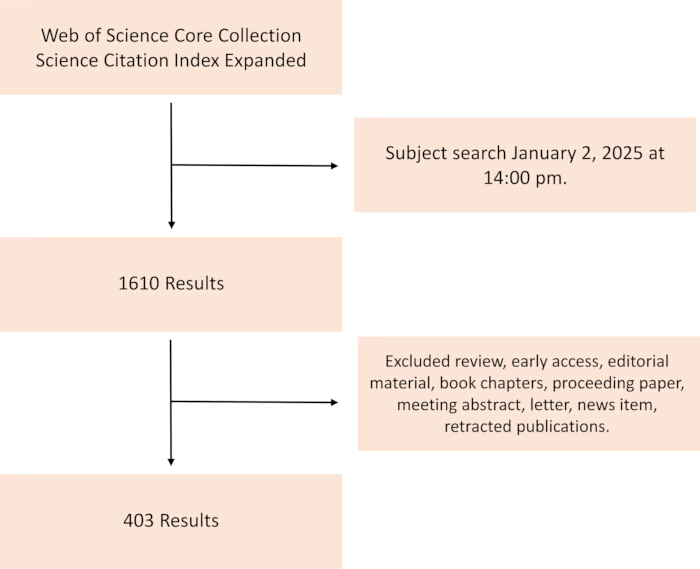
Figure 1: Study flow diagram. Please click here to view a larger version of this figure.
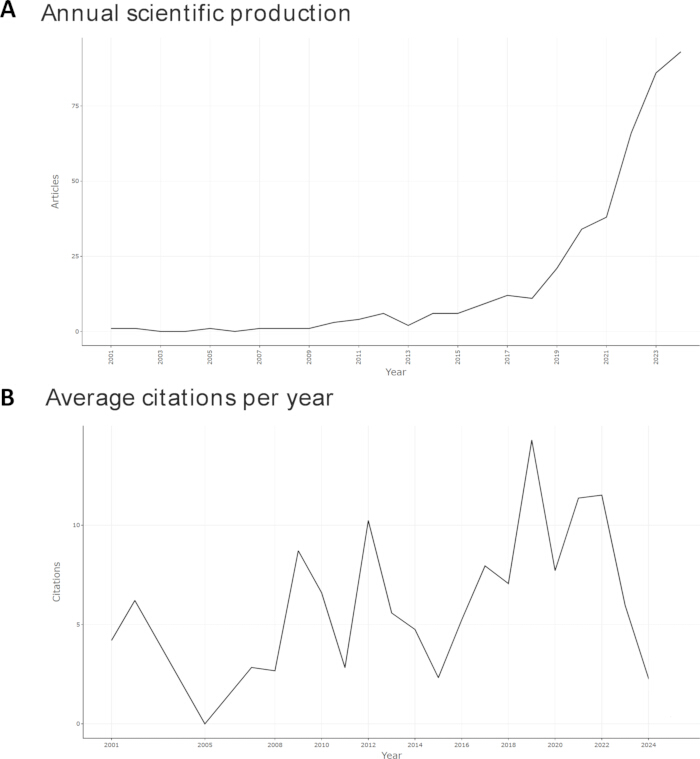
Figure 2: Evolution of scientific production in hydrogel applications for diabetic foot ulcer healing (2001–2024). (A) Annual scientific production. Annual growth rate: 20.72%. (B) Average citations per year. Please click here to view a larger version of this figure.
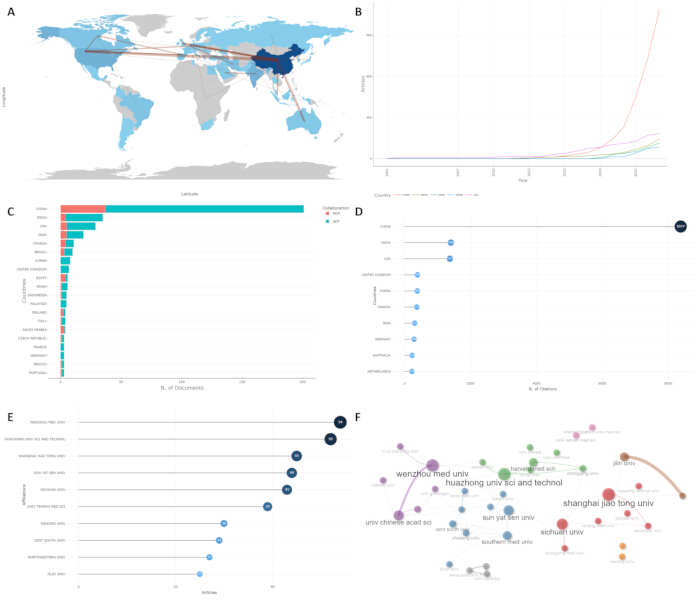
Figure 3: Analysis of contributions from countries and affiliations. (A) Country scientific production and collaboration map. (B) Country production over time. (C) Corresponding author's countries. (D) The top 10 most cited countries and citations. (E) The top 10 most relevant affiliations and productions. (F) Collaboration network of affiliations. MCP: Multiple countries publication. SCP: Single country publication. Please click here to view a larger version of this figure.
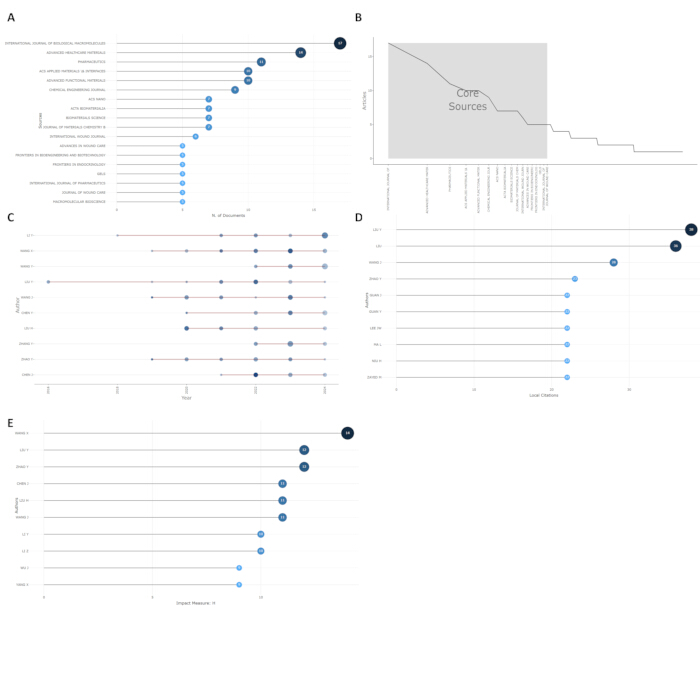
Figure 4: Analysis of contributions from journals and authors. (A) The top 15 most relevant sources. (B) Analysis of core sources by Bradford's law. (C) Authors' production over time. (D) Author's local citations. (E) Author's local impact by H index. Please click here to view a larger version of this figure.
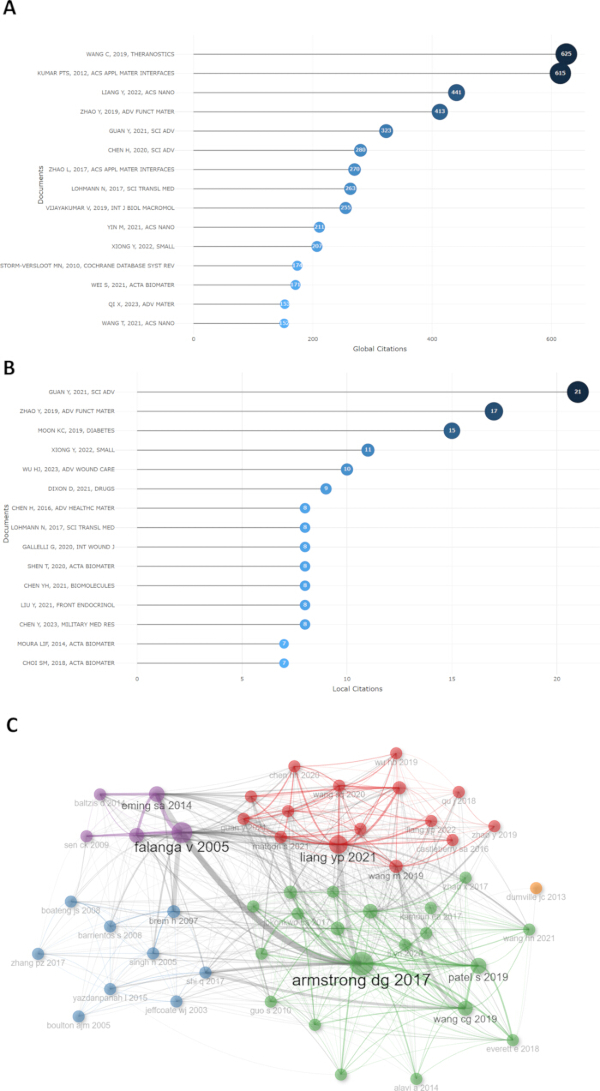
Figure 5: Analysis of reference citations and co-citation. (A) The top 15 most global cited articles. (B) The top 15 most local cited articles. (C) Co-citation network by intellectual structure. Please click here to view a larger version of this figure.
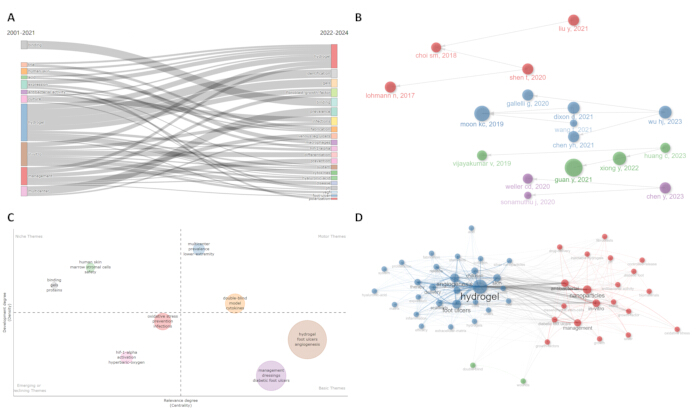
Figure 6: Analysis of research focus and frontiers. (A) Thematic evolution. (B) Historiographic map (Each edge represents a direct citation). (C) Thematic map. (D) Co-occurrence network. Please click here to view a larger version of this figure.
Supplementary Table 1: Annual scientific production and average citations.Please click here to download this file.
Supplementary Table 2: The top 15 countries and institutions on research of hydrogel applications for diabetic foot ulcer healing.Please click here to download this file.
Supplementary Table 3: The top 18 most productive journals on research of hydrogel applications for diabetic foot ulcer healing.Please click here to download this file.
Supplementary Table 4: Summary information of the top 15 productive authors.Please click here to download this file.
Supplementary Table 5: The top 15 publications by global citations.Please click here to download this file.
Supplementary Table 6: The top 15 publications by local citations. Abbreviations: LC, local citations; GC, global citations.Please click here to download this file.
Supplementary File 7: savedrecs.zip.Please click here to download this file.
Discussion
Loading...
$$\rightleftharpoonup{xx}$$
$$\longleftharp{xx}$$,
$$\longrightharp{xx}$$,
This bibliometric analysis provides a comprehensive evaluation of research trends in hydrogel applications for diabetic foot ulcer (DFU) healing from 2001 to 2024. Hydrogel technology emerged as a transformative approach in wound care during the early 2000s, driven by the urgent need to address the persistent clinical challenges of DFUs—chronic inflammation, impaired angiogenesis, and microbial infections27,28. The first pivotal study in 2001 explored the use of glycosaminoglycan-based hydrogels to modulate wound microenvironments in diabetic rodent models, laying the groundwork for subsequent innovations. Between 2001 and 2010, research output remained sparse, averaging fewer than 1 publication annually, reflecting the nascent stage of hydrogel technology in DFU management. A turning point occurred in 2012 when Lohmann et al. demonstrated that hydrogels could sequester inflammatory chemokines in diabetic wounds, rescuing defective healing in murine models23. This discovery catalyzed a shift toward designing hydrogels with bioactive functionalities, such as controlled drug delivery and immunomodulation.
From 2015 onward, the field experienced exponential growth, with annual publications surging from 6 in 2015 to 93 in 2024. This surge aligns with advancements in "smart" hydrogels—materials responsive to pH, temperature, or enzymatic activity—that dynamically interact with wound microenvironments6. For instance, Shen et al. (2020) developed sulfated chitosan hydrogels to reprogram dysfunctional macrophages, accelerating wound closure in diabetic mice24. Similarly, Xiong et al. (2022) engineered neurogenesis-angiogenesis crosstalk systems using hydrogel scaffolds, achieving full-thickness diabetic wound regeneration26. The dominance of Chinese institutions (e.g., Wenzhou Medical University, Fudan University) in publication volume (64.3% of global output) underscores China's strategic investments in biomedical materials science, particularly in addressing the escalating burden of diabetic complications. However, this overwhelming contribution from China requires further analysis to determine whether it reflects research quantity or quality. Although China leads in publication volume, this high output may be influenced by several factors, including large-scale funding, a growing number of research institutions, and a focus on increasing publication metrics. While the quantity of publications is impressive, citation biases may exist, where studies from leading Chinese institutions are disproportionately cited, potentially inflating the perceived impact of their research within the global landscape. Furthermore, regional publication practices and limited international collaboration may contribute to this skewed citation pattern, as Chinese researchers often publish in local journals or conduct research with fewer cross-border collaborations.
Recent trends highlight a paradigm shift from passive hydrogel dressings to multifunctional systems integrating diagnostics and therapeutics. Key emerging themes include macrophage polarization modulation, angiogenesis-neurogenesis crosstalk, and antimicrobial hydrogels. For example, Zhang et al. (2023) designed hypoxia-responsive hydrogels that release IL-4 to polarize macrophages toward a pro-healing M2 phenotype, significantly reducing wound size in diabetic rats29. Similarly, hydrogels functionalized with nerve growth factor (NGF) and vascular endothelial growth factor (VEGF) synergistically promote nerve regeneration and vascularization. Wang et al. (2021) reported a dual-loaded hydrogel that enhanced diabetic wound closure by 40% compared to single-factor systems30. Additionally, silver nanoparticle-embedded hydrogels and antibiotic-eluting systems (e.g., vancomycin-loaded chitosan hydrogels) have demonstrated potent antibiofilm activity while maintaining biocompatibility. Emerging innovations in hydrogel systems include AI-enhanced hydrogel design for optimized drug release and biodegradability31, extracellular vesicle-loaded hydrogels to enhance tissue regeneration32, and nanocomposite hydrogels with nanozymes for managing oxidative stress in diabetic wounds33. Additionally, green synthesis methods are being explored to improve cost-effectiveness and sustainability.
Despite preclinical success, clinical adoption of hydrogel therapies faces significant hurdles. Variability in hydrogel mechanical strength, degradation rates, and drug release kinetics complicates regulatory approval. For instance, while Moon et al. (2021) achieved promising results with stem cell-hydrogel composites in an RCT, scalability and batch-to-batch consistency remain unresolved25. High production costs of "smart" hydrogels (e.g., those requiring recombinant growth factors) limit accessibility in low-resource settings. Green synthesis approaches using plant-derived polymers (e.g., alginate from brown algae) may offer sustainable alternatives. Although hydrogels are generally biocompatible, chronic exposure to degradation byproducts (e.g., acrylic acid monomers) raises concerns about systemic toxicity. Rigorous post-market surveillance will be critical for next-generation formulations.
Beyond these practical challenges, the bibliometric results also reveal several underexplored areas that represent important knowledge gaps in the current research landscape. Keyword co-occurrence and citation-burst analyses showed a limited presence of terms such as "clinical trial," "patient outcome," and "standardized evaluation," indicating that clinical translation and unified assessment criteria remain insufficiently developed. Similarly, the integration of hydrogels with digital health tools, including biosensors and wearable monitoring systems34, appears sporadic, highlighting the need for data-driven and personalized wound management strategies. Long-term mechanistic and multi-omics studies that investigate immune modulation and microbiome dynamics are also scarce, suggesting opportunities to clarify hydrogel–host interactions through systems-level approaches. In addition, although several studies have explored sustainable or green synthesis strategies3,4,28, their frequency within the bibliometric network remains relatively low, pointing to the necessity of improving scalability, cost-effectiveness, and environmental sustainability in hydrogel design. Addressing these gaps through interdisciplinary collaboration could accelerate the safe, equitable, and clinically meaningful translation of hydrogel technologies for diabetic foot ulcer management.
To bridge the gap between laboratory innovation and clinical utility, future research should prioritize personalized hydrogel systems, integration with digital health technologies, and global collaboration networks. Leveraging patient-specific biomarkers (e.g., MMP-9 levels, microbial profiles) to tailor hydrogel composition and drug release profiles could enhance therapeutic efficacy7,34,35. Combining hydrogels with wearable sensors for real-time monitoring of wound pH, temperature, and infection status represents a promising frontier. Expanding partnerships between academia, industry, and policymakers in regions disproportionately affected by diabetes, such as South Asia and Sub-Saharan Africa, will be essential to ensure equitable access to these innovations.
However, it is important to acknowledge several limitations in our analysis. One major limitation is database dependency—the analysis relies solely on publications indexed in the Web of Science Core Collection (WOSCC), potentially excluding relevant studies published in non-English journals or other databases like Scopus or Google Scholar. This may lead to the omission of important contributions, particularly from non-English speaking regions. Additionally, citation bias is an inherent issue in bibliometric analyses, where citation counts may be influenced by factors such as journal prestige, self-citation practices, and geographic biases. These biases could skew the representation of research impact, potentially overemphasizing studies from leading research hubs or well-established institutions. Thus, while bibliometric analysis provides valuable insights into publication trends, it is crucial to complement these results with qualitative assessments and more comprehensive literature reviews to address these biases.
This study proposes a reproducible bibliometric protocol that systematically maps the global evolution of hydrogel technologies for DFU healing and provides a quantitative foundation for identifying emerging research directions36. The findings contribute to the advancement of this scientific field by integrating data from multiple disciplines and revealing how material innovations align with biological mechanisms such as angiogenesis, neurogenesis, and immune modulation6,24,26. Compared with narrative reviews or qualitative summaries, this quantitative approach provides a transparent and objective framework for understanding scientific progress, which may help optimize research priorities and policy development in biomaterials and wound-healing research.
However, several limitations should be acknowledged. The analysis relies solely on bibliometric indicators from a single database (WOSCC), which may exclude relevant studies published in non-English or regional journals. Citation-based metrics can also introduce temporal and regional biases, potentially underrepresenting newly emerging but high-impact research. Moreover, bibliometric analysis cannot directly evaluate experimental efficacy or clinical outcomes, highlighting the need to complement these results with clinical data and translational studies.
Alternative approaches, such as systematic reviews, meta-analyses, or text-mining–based analyses, could provide deeper insights into specific hydrogel mechanisms or clinical effects without replacing the value of this bibliometric framework. The present protocol's importance lies in its applicability to other regenerative biomaterial fields, offering a standardized and reproducible analytical model that supports interdisciplinary collaboration. Future studies should aim to integrate bibliometric analysis with clinical and translational datasets, enabling more comprehensive evaluations of research impact and facilitating data-driven innovation in hydrogel therapy for chronic wounds.
Over the past two decades, hydrogel technology has evolved from simple moisture-retentive dressings to sophisticated platforms capable of modulating immune responses, delivering therapeutics, and promoting tissue regeneration. While challenges in standardization and scalability persist, the convergence of biomaterials science, bioengineering, and clinical research holds immense potential to revolutionize DFU care. Building on the findings of this analysis, future work should focus on enhancing global collaboration, improving accessibility in low-resource settings, and developing sustainable and patient-centered hydrogel solutions.
This bibliometric study mapped the evolution of hydrogel technologies for DFU healing from 2001 to 2024, showing exponential growth dominated by China, the United States, and India. Research focus has shifted from basic biocompatibility and moisture retention to antimicrobial hydrogels, immune modulation, angiogenesis–neurogenesis crosstalk, and smart multifunctional systems. Despite these advances, limited international collaboration, inconsistent evaluation standards, and translational barriers persist. Based on the keyword co-occurrence and citation-burst analyses, future research should move beyond general calls for innovation toward specific, data-driven directions. In particular, the integration of "smart hydrogels" with biomarker-responsive sensing platforms and digital monitoring technologies represents a promising next step. Multi-omics-guided strategies may further refine hydrogel formulations and enable precise, patient-specific therapeutic designs. Future efforts should prioritize cross-disciplinary cooperation, rigorous clinical validation, and integration with digital health and biosensing technologies to ensure sustainable, cost-effective, and accessible hydrogel therapies capable of transforming DFU management globally.
Disclosures
Loading...
$$\rightleftharpoonup{xx}$$
$$\longleftharp{xx}$$,
$$\longrightharp{xx}$$,
The authors declare no conflicts of interest related to this study. There were no financial or personal relationships that could influence the work presented in this manuscript. All authors have approved the final version of the manuscript for submission.
Acknowledgements
Loading...
$$\rightleftharpoonup{xx}$$
$$\longleftharp{xx}$$,
$$\longrightharp{xx}$$,
This research is supported by the Joint TCM Science & Technology Projects of National Demonstration Zones for Comprehensive TCM Reform (NO.GZY-KJS-ZJ-2025-040). We would like to express our sincere gratitude to everyone who supported and contributed to this research. Your guidance, assistance, and feedback have been invaluable in completing this work.
Materials
| Name | Company | Catalog Number | Comments |
|---|---|---|---|
| Bibliometrix (R package) | CRAN (R environment) | Version 4.1 | Used for bibliometric analysis of publications, institutions, countries, and themes. |
| CiteSpace | CiteSpace | Version 5.7.R5 | Applied for co-citation analysis, burst detection, and keyword trends. |
| Excel | Microsoft | 2016 | Used for data cleaning, organization, and tabulation. |
| VOSviewer | VOSviewer | Version 1.6.17 | Used for citation, co-citation, and collaboration network visualization. |
| Web of Science Core Collection (WOSCC) | Clarivate | N/A | Database used for literature retrieval (2001–2024). |
References
Loading...
$$\rightleftharpoonup{xx}$$
$$\longleftharp{xx}$$,
$$\longrightharp{xx}$$,
- Managing diabetes with nanomedicine: challenges and opportunities. Nat Rev Drug Discov. 14 (1), 45-57 (2015).">Veiseh, O., et al. Managing diabetes with nanomedicine: challenges and opportunities. Nat Rev Drug Discov. 14 (1), 45-57 (2015).
- Wound healing and its impairment in the diabetic foot. Lancet. 366 (9498), 1736-1743 (2005).">Falanga, V. Wound healing and its impairment in the diabetic foot. Lancet. 366 (9498), 1736-1743 (2005).
- Recent advances on silver nanoparticle and biopolymer-based biomaterials for wound healing applications. Int J Biol Macromol. 115, 165-175 (2018).">Kumar, S. S. D., et al. Recent advances on silver nanoparticle and biopolymer-based biomaterials for wound healing applications. Int J Biol Macromol. 115, 165-175 (2018).
- Biopolymer-based biomaterials for accelerated diabetic wound healing: a critical review. Int J Biol Macromol. 139, 975-993 (2019).">Shah, S. A., et al. Biopolymer-based biomaterials for accelerated diabetic wound healing: a critical review. Int J Biol Macromol. 139, 975-993 (2019).
- Emerging nanotherapeutic approaches for diabetic wound healing. Int J Nanomedicine. 19, 8815-8830 (2024).">Shi, S., et al. Emerging nanotherapeutic approaches for diabetic wound healing. Int J Nanomedicine. 19, 8815-8830 (2024).
- pH/Glucose dual responsive metformin release hydrogel dressings with adhesion and self-healing via dual-dynamic bonding for athletic diabetic foot wound healing. ACS Nano. 16 (2), 3194-3207 (2022).">Liang, Y., et al. pH/Glucose dual responsive metformin release hydrogel dressings with adhesion and self-healing via dual-dynamic bonding for athletic diabetic foot wound healing. ACS Nano. 16 (2), 3194-3207 (2022).
- Hydrogel dressings for diabetic foot ulcer: a systematic review and meta-analysis. Diabetes Obes Metab. 26 (6), 2305-2317 (2024).">Zhao, H., et al. Hydrogel dressings for diabetic foot ulcer: a systematic review and meta-analysis. Diabetes Obes Metab. 26 (6), 2305-2317 (2024).
- Nano hydrogel-based oxygen-releasing stem cell transplantation system for treating diabetic foot. J Nanobiotechnol. 21 (1), 202(2023).">Chen, L., et al. Nano hydrogel-based oxygen-releasing stem cell transplantation system for treating diabetic foot. J Nanobiotechnol. 21 (1), 202(2023).
- An oxygen release system to augment cardiac progenitor cell survival and differentiation under hypoxic condition. Biomaterials. 33 (25), 5914-5923 (2012).">Li, Z., et al. An oxygen release system to augment cardiac progenitor cell survival and differentiation under hypoxic condition. Biomaterials. 33 (25), 5914-5923 (2012).
- A thermosensitive hydrogel capable of releasing bFGF for enhanced differentiation of mesenchymal stem cells into cardiomyocyte-like cells under ischemic conditions. Biomacromolecules. 13 (6), 1956-1964 (2012).">Li, Z., et al. A thermosensitive hydrogel capable of releasing bFGF for enhanced differentiation of mesenchymal stem cells into cardiomyocyte-like cells under ischemic conditions. Biomacromolecules. 13 (6), 1956-1964 (2012).
- Collagen three-dimensional hydrogel matrix carrying basic fibroblast growth factor for the cultivation of mesenchymal stem cells and osteogenic differentiation. Tissue Eng Part A. 18 (9-10), 1087-1100 (2012).">Oh, S. A., et al. Collagen three-dimensional hydrogel matrix carrying basic fibroblast growth factor for the cultivation of mesenchymal stem cells and osteogenic differentiation. Tissue Eng Part A. 18 (9-10), 1087-1100 (2012).
- Dendritic hydrogels with robust inherent antibacterial properties for promoting bacteria-infected wound healing. ACS Appl Mater Interfaces. 14 (9), 11144-11155 (2022).">Cheng, S., et al. Dendritic hydrogels with robust inherent antibacterial properties for promoting bacteria-infected wound healing. ACS Appl Mater Interfaces. 14 (9), 11144-11155 (2022).
- A cuttlefish ink nanoparticle-reinforced biopolymer hydrogel with robust adhesive and immunomodulatory features for treating oral ulcers in diabetes. Bioact Mater. 39, 562-581 (2024).">Xiang, Y., et al. A cuttlefish ink nanoparticle-reinforced biopolymer hydrogel with robust adhesive and immunomodulatory features for treating oral ulcers in diabetes. Bioact Mater. 39, 562-581 (2024).
- Bioactive hydrogel formulations for regeneration of pathological bone defects. J Control Release. 380, 686-714 (2025).">Li, Z., et al. Bioactive hydrogel formulations for regeneration of pathological bone defects. J Control Release. 380, 686-714 (2025).
- Insights of biopolymeric blended formulations for diabetic wound healing. Int J Pharm. 656, 124099(2024).">Sharma, A., et al. Insights of biopolymeric blended formulations for diabetic wound healing. Int J Pharm. 656, 124099(2024).
- Worldwide trends in prediabetes from 1985 to 2022: a bibliometric analysis using bibliometrix R-tool. Front Public Health. 11, 1072521(2023).">Zhao, J., Li, M. Worldwide trends in prediabetes from 1985 to 2022: a bibliometric analysis using bibliometrix R-tool. Front Public Health. 11, 1072521(2023).
- Knowledge mapping of neonatal electroencephalogram: a bibliometric analysis (2004–2022). Brain Behav. 14 (e3483), (2024).">Zhang, R., et al. Knowledge mapping of neonatal electroencephalogram: a bibliometric analysis (2004–2022). Brain Behav. 14 (e3483), (2024).
- A method for analyzing text using VOSviewer. MethodsX. 11, 102339(2023).">Bukar, U. A., et al. A method for analyzing text using VOSviewer. MethodsX. 11, 102339(2023).
- Freshwater microplastics pollution: detecting and visualizing emerging trends based on Citespace II. Chemosphere. 245, 125627(2020).">Yao, L., et al. Freshwater microplastics pollution: detecting and visualizing emerging trends based on Citespace II. Chemosphere. 245, 125627(2020).
- Global research trends and hotspots in the application of lasers for acne treatment from 1986 to 2022: bibliometric and visual analysis. Lasers Med Sci. 40 (1), 88(2025).">Zyoud, S. H., et al. Global research trends and hotspots in the application of lasers for acne treatment from 1986 to 2022: bibliometric and visual analysis. Lasers Med Sci. 40 (1), 88(2025).
- Engineering bioactive self-healing antibacterial exosomes hydrogel for promoting chronic diabetic wound healing and complete skin regeneration. Theranostics. 9 (1), 65-76 (2019).">Wang, C., et al. Engineering bioactive self-healing antibacterial exosomes hydrogel for promoting chronic diabetic wound healing and complete skin regeneration. Theranostics. 9 (1), 65-76 (2019).
- Sustained oxygenation accelerates diabetic wound healing by promoting epithelialization and angiogenesis and decreasing inflammation. Sci Adv. 7 (35), eabj0153(2021).">Guan, Y., et al. Sustained oxygenation accelerates diabetic wound healing by promoting epithelialization and angiogenesis and decreasing inflammation. Sci Adv. 7 (35), eabj0153(2021).
- Glycosaminoglycan-based hydrogels capture inflammatory chemokines and rescue defective wound healing in mice. Sci Transl Med. 9 (386), eaai9044(2017).">Lohmann, N., et al. Glycosaminoglycan-based hydrogels capture inflammatory chemokines and rescue defective wound healing in mice. Sci Transl Med. 9 (386), eaai9044(2017).
- Sulfated chitosan rescues dysfunctional macrophages and accelerates wound healing in diabetic mice. Acta Biomater. 117, 192-203 (2020).">Shen, T., et al. Sulfated chitosan rescues dysfunctional macrophages and accelerates wound healing in diabetic mice. Acta Biomater. 117, 192-203 (2020).
- Potential of allogeneic adipose-derived stem cell–hydrogel complex for treating diabetic foot ulcers. Diabetes. 68 (4), 837-846 (2019).">Moon, K. C., et al. Potential of allogeneic adipose-derived stem cell–hydrogel complex for treating diabetic foot ulcers. Diabetes. 68 (4), 837-846 (2019).
- A whole-course-repair system based on neurogenesis–angiogenesis crosstalk and macrophage reprogramming promotes diabetic wound healing. Adv Mater. 35 (19), e2212300(2023).">Xiong, Y., et al. A whole-course-repair system based on neurogenesis–angiogenesis crosstalk and macrophage reprogramming promotes diabetic wound healing. Adv Mater. 35 (19), e2212300(2023).
- Platelet extracellular vesicles-loaded hydrogel bandages for personalized wound care. Trends Biotechnol. 43 (1), 24-25 (2025).">Szunerits, S., et al. Platelet extracellular vesicles-loaded hydrogel bandages for personalized wound care. Trends Biotechnol. 43 (1), 24-25 (2025).
- Research advances in smart responsive-hydrogel dressings with potential clinical diabetic wound healing properties. Mil Med Res. 10 (1), 37(2023).">Chen, Y., et al. Research advances in smart responsive-hydrogel dressings with potential clinical diabetic wound healing properties. Mil Med Res. 10 (1), 37(2023).
- Hybrid hydrogels constructed from drug-loaded mesoporous silica and multi-responsive copolymers as intelligent dressings for diabetic wound healing. , Journal of Suzhou University. (2023).">Zhang, W., et al. Hybrid hydrogels constructed from drug-loaded mesoporous silica and multi-responsive copolymers as intelligent dressings for diabetic wound healing. , Journal of Suzhou University. (2023).
- Continuous Release of Tibetan Medicine Hydrogel Promotes Diabetic Wound Healing. , Journal of Southwest Jiaotong University. (2021).">Wang, Z. X., et al. Continuous Release of Tibetan Medicine Hydrogel Promotes Diabetic Wound Healing. , Journal of Southwest Jiaotong University. (2021).
- AI energized hydrogel design, optimization and application in biomedicine. Mater Today Bio. 25, 101014(2024).">Li, Z., et al. AI energized hydrogel design, optimization and application in biomedicine. Mater Today Bio. 25, 101014(2024).
- Multifunctional hydrogel-based engineered extracellular vesicles delivery for complicated wound healing. Theranostics. 14 (11), 4198-4217 (2024).">Li, Z., et al. Multifunctional hydrogel-based engineered extracellular vesicles delivery for complicated wound healing. Theranostics. 14 (11), 4198-4217 (2024).
- A nanozyme-immobilized hydrogel with endogenous ROS-scavenging and oxygen generation abilities for significantly promoting oxidative diabetic wound healing. Adv Healthc Mater. 11 (22), e2201524(2022).">Li, Z., et al. A nanozyme-immobilized hydrogel with endogenous ROS-scavenging and oxygen generation abilities for significantly promoting oxidative diabetic wound healing. Adv Healthc Mater. 11 (22), e2201524(2022).
- Wireless matrix metalloproteinase-9 sensing by smart wound dressing with controlled antibacterial nanoparticles release toward chronic wound management. Biosens Bioelectron. 268, 116860(2025).">Deng, P., et al. Wireless matrix metalloproteinase-9 sensing by smart wound dressing with controlled antibacterial nanoparticles release toward chronic wound management. Biosens Bioelectron. 268, 116860(2025).
- Silver nanoparticle impregnated chitosan-PEG hydrogel enhances wound healing in diabetes induced rabbits. Int J Pharm. 559, 23-36 (2019).">Masood, N., et al. Silver nanoparticle impregnated chitosan-PEG hydrogel enhances wound healing in diabetes induced rabbits. Int J Pharm. 559, 23-36 (2019).
- Microenvironment-responsive multifunctional hydrogels with spatiotemporal sequential release of tailored recombinant human collagen type III for the rapid repair of infected chronic diabetic wounds. J Mater Chem B. 9 (47), 9684-9699 (2021).">Hu, C., et al. Microenvironment-responsive multifunctional hydrogels with spatiotemporal sequential release of tailored recombinant human collagen type III for the rapid repair of infected chronic diabetic wounds. J Mater Chem B. 9 (47), 9684-9699 (2021).
Reprints and Permissions
Request permission to reuse the text or figures of this JoVE article
Request Permission