Here, we present how pedagogical approaches influence Chinese mathematic learners’ academic engagement, and loyalty, with motivation as a mediator. Integrating multiple theoretical frameworks, survey data from 410 mathematic students were analyzed using PLS-SEM. Findings reveal that teaching styles significantly impact motivation, offering implications for mathematic instructional design and teacher development.
A subscription to JoVE is required to view this content. Sign in or start your free trial.
Research Article
Influence of Pedagogical Approaches on Academic Engagement and Satisfaction Among Chinese Mathematic Learner's Contexts
In This Article
Summary
Abstract
This study examines the effects of Pedagogical Approaches on mathematic learners’ academic engagement, satisfaction, and loyalty in Chinese mathematic learners’ settings, focusing on the mediating role of motivation at the tertiary level. Unlike previous research that primarily examined direct causal relationships among variables, this investigation integrates multiple theoretical frameworks, including the Teaching Style Inventory, Self-Determination Theory, Student Involvement Theory, Social Cognitive Theory, and Customer Satisfaction Theory, to construct a comprehensive research model. Data were collected through surveys distributed to 410 students of mathematic department at public universities, in China, using systematic random sampling, final sample was n = 375. Analysis was performed using Partial Least Squares Structural Equation Modeling (PLS-SEM) with SmartPLS. Results indicate that different teaching styles (Assertive, Suggestive, Collaborative, and Facilitative) significantly influence students’ motivation for language learning at the higher education level. The findings of this investigation hold significant implications for mathematic pedagogy in Chinese higher education. Understanding how specific teaching styles influence student motivation and subsequent engagement can inform instructional design and teacher professional development initiatives.
Introduction
The global prominence of English as a lingua franca has positioned English for Academic Purposes (EAP) instruction as a critical component of higher education in non-native English-speaking contexts1. In China, the Ministry of Education has consistently emphasized enhancing college English instruction to cultivate internationally competitive graduates capable of engaging with global academic discourse2. In Chinese EAP classrooms where mathematic is taught as a subject, instructors' pedagogical approaches play a fundamental role in shaping not only linguistic outcomes but also students' psychological engagement with the learning process and their overall satisfaction with educational experiences3. The relationship between teaching styles and student outcomes has garnered considerable scholarly attention over the past decades4. Research has demonstrated that teaching styles influence multiple dimensions of student experience, including cognitive engagement, emotional investment, and behavioural participation5,6. However, despite these findings, there remains a lack of clarity regarding how specific pedagogical approaches influence multiple student outcomes simultaneously within EAP contexts, particularly in Chinese higher education.
Motivation, as conceptualized within Self-Determination Theory, represents a potentially crucial mediating mechanism linking teaching styles to student engagement and satisfaction7,8. In the Chinese educational context, where traditional teacher-centered approaches have historically predominated, understanding how different teaching styles affect student motivation is particularly significant9. Academic engagement, encompassing students' active involvement, investment of effort, and psychological connection to learning activities, has been identified as a robust predictor of educational success10. Engaged students demonstrate greater persistence, employ deeper learning strategies, and achieve superior academic outcomes compared to their disengaged counterparts11. Despite extensive research on direct relationships between teaching styles and student outcomes in mathematics education, current literature lacks an integrated model that examines the mediating role of motivation in linking specific pedagogical approaches in current contexts13. Specifically, there is limited research integrating teaching styles, motivation, engagement, satisfaction, and loyalty within a single comprehensive model in EAP settings.
Furthermore, the concept of student loyalty, defined as students' intention to maintain relationships with their educational institution and to recommend it to others, has emerged as an important consideration in higher education research14. Drawing from Customer Satisfaction Theory, satisfied students are expected to demonstrate greater loyalty toward their educational providers. The present study addresses a critical gap in the existing literature, where prior research has largely examined teaching styles, motivation, academic engagement, and satisfaction in isolation or within fragmented theoretical frameworks, with limited attention to their integrative mechanisms within English for Academic Purposes (EAP) contexts in China. Despite increasing emphasis on student-centered pedagogy in EAP, there is limited empirical clarity on how teaching styles influence student engagement and satisfaction, particularly through mediating factors such as motivation in Chinese tertiary contexts. Despite increasing emphasis on student-centered pedagogy in EAP, there is limited empirical clarity on how teaching styles influence student engagement and satisfaction, particularly through mediating factors such as motivation in Chinese tertiary contexts. Therefore, the objective of this study is to examine the relationships between teaching styles, motivation, academic engagement, satisfaction, and student loyalty among Chinese EAP learners. This study advances research by simultaneously examining the mediating role of motivation in the relationships between four distinct teaching styles assertive, suggestive, collaborative, and facilitative and academic engagement, while also investigating the sequential pathway from engagement to satisfaction to loyalty. This study is novel in integrating multiple pedagogical and psychological constructs within a unified structural model in the Chinese EAP context. By offering a holistic model that captures both pedagogical antecedents and outcome pathways, this research provides these relationships within Chinese tertiary mathematics education, offering fresh insights into how assertive, suggestive, collaborative, and facilitative teaching styles drive student engagement, satisfaction, and loyalty through motivational pathways, thereby extending theoretical integration and empirical evidence in the field.
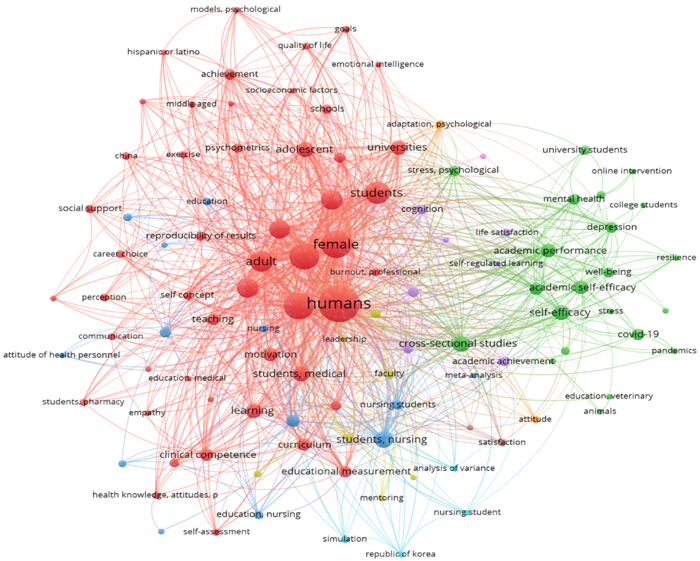
Figure 1: Graphical Representation of Literature Review Maps the co-occurrence and interrelationships of major concepts identified in the reviewed studies. The network visualization was generated using bibliometric analysis software. Red nodes represent terms associated with student populations, while blue nodes denote general human subjects and contextual factors. Please click here to view a larger version of this figure.
The educational experiences of EFL learners are strongly shaped by teachers’ teaching styles. Drawing on teaching style models, this study examines how teachers’ strategies influence students. As shown in Table 1, different teaching styles can affect learners’ motivation and engagement in different ways. In higher education, motivation and academic engagement are often strengthened by supportive teachers, respectful classroom relationships15, and positive peer interaction16. Teaching styles that promote learning, build confidence, and support language development are therefore essential for successful language learning17,18. In addition, pedagogical practices, technology integration, lesson planning, and instructional integrity can further influence students’ motivation in English language classes19. HA1: EFL teachers’ teaching styles significantly affect different dimensions of Chinese EFL students’ motivation at the tertiary level.
| Authors | Construct Name | Construct Definition |
| Audas & Willms (2002) | Engagement | The degree to which a student is involved in academic and extracurricular activities, aligning with and valuing educational goals. |
| Skinner, Kindermann, & Furrer (2009) | Engagement | How deeply students connect with their educational activities, encompassing the values, people, goals, and environments involved. |
| Skinner, Wellborn, & Connell (1990) | Engagement | The level of a student’s effort, engagement, and emotional experience during educational activities. |
| Willms (2003) | Student Engagement at School | The extent to which a student finds school outcomes necessary and engages in classroom and extracurricular activities. |
| Newmann, Wehlage, & Lamborn (1992) | Student Engagement in Academic Work | The intensity of a student’s psychological commitment to acquiring the skills and knowledge offered by the school. |
| Wehlage, Rutter, Smith, Lesko, & Fernandez (1989) | Educational Engagement | Mental commitment is necessary to acquire and understand the skills and knowledge taught in schools. |
| Kuh (2003) | Student Engagement | The effort and time a student spends on academically beneficial activities are supported by institutional practices and policies. |
| Schaufeli, Salanova, Gonzalez-Roma, & Bakker (2002) | Study Engagement | A rewarding and positive mental state associated with studying, marked by dedication, vigour, and complete involvement. |
| Christenson, Reschly, Appleton, Berman-Young, Spanjers & Varro (2008) | Student Engagement | The level of a student’s commitment to learning and active participation in school life is aimed at achieving educational goals. |
Table 1: Definitions of Academic Engagement by different authors. This table summarizes how academic engagement has been conceptualized by different scholars across the literature. The definitions highlight students’ involvement, psychological commitment, effort, participation, and emotional connection to learning activities. Please click here to download this Table.
This figure summarizes key definitions and perspectives of academic engagement reported by different scholars. It highlights the multidimensional nature of academic engagement across behavioural, emotional, and cognitive aspects.
Extensive research has examined factors that motivate language learning; consequently, motivation is an essential construct that affects all stages of language learning at the higher education level24,25. Students must remain actively engaged in class to feel motivated; hence, there is a motivation to foster more effective classroom participation26. In addition to this, teachers possess extraordinary power by connecting with students and leading their teaching style in favour of better learning and mastery of the topic27. Hence, when teachers fail to engage their students academically, they do not motivate them28. Thus, the process proves fruitless. Motivation in treating the SLL process is crucial, and engaging our EFL learners in higher education is pivotal29. HA2: EFL mathematic Chinese students’ motivation impacts their academic engagement at the tertiary level.
Students who demonstrate strong engagement and high self-efficacy in the classroom tend to manage their time effectively, perform well academically30, complete their studies, and actively participate in a variety of activities31. This involvement not only enhances their academic experience but also allows them to enjoy the learning process and derive satisfaction from tackling tasks32. According to the theory of success, high self-efficacy and active classroom participation lead students to view their academic goals as attainable33. As a result, their attitudes towards mastering English become increasingly positive, and their level of engagement intensifies34. Students’ academic confidence, participation, and satisfaction are interconnected, and this linkage enhances the likelihood of academic success and a more positive academic experience35. However, lower academic self-efficacy may diminish engagement, leading to failure36,37. In line with this, previous empirical studies have consistently found a strong influence of student self-efficacy on academic engagement38. HA3: EFL mathematic Chinese students’ academic self-efficacy significantly impacts their academic engagement.
The success and effectiveness of both students and universities are closely linked to student satisfaction and academic achievement, as these institutions aim to motivate and meet students' needs39. However, prioritizing higher levels of student engagement is crucial to fostering both academic success and satisfaction40. Student motivation and satisfaction are essential components of academic success, underscoring the need for teachers to actively engage students in classroom activities to meet their academic and personal needs41,42. Explored the role of institutional infrastructure, focusing on factors such as sports facilities, accommodation, and transportation systems, in influencing student satisfaction43,44. Sports and transportation have a significant positive relationship with student satisfaction, whereas accommodation has a minimal and insignificant impact on academic performance and satisfaction45,46. HA4: EFL mathematic Chinese students’ academic engagement significantly impacts their satisfaction at the tertiary level.
Students’ satisfaction is influenced by a range of personal and institutional factors, making it a multi-dimensional construct47. The quality of instructors, well-structured lesson plans, timely feedback, resource accessibility, and effective use of technology significantly affect students' satisfaction and sense of connection with the institution48. Besides that, teaching ability, flexible behaviour, the prestige and the status of the university/college too are the key factors that can form a happy and loyal student at higher education level49. The objective of this study is to evaluate how different teaching styles influence student motivation and academic engagement among Chinese EAP learners using a structural equation modelling framework. HA5: EFL mathematic Chinese students’ satisfaction significantly impacts their loyalty at the tertiary level. HA6: EFL mathematic Chinese students’ motivation mediates the relationship between EFL teachers’ teaching style and students’ academic engagement.
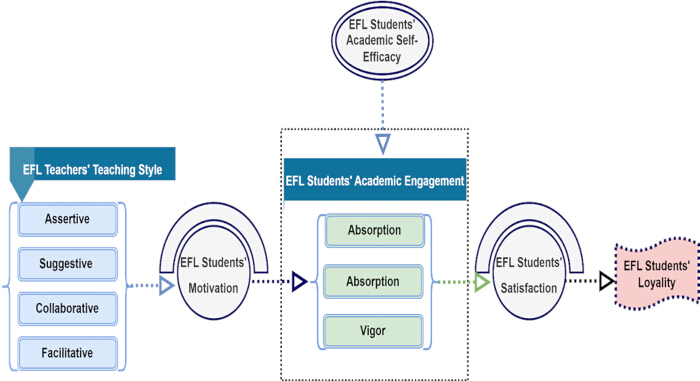
Figure 2: Research Model of the Present Study Proposed Research Model Illustrating the Relationships Among Study Variables. The hypothesized relationships between EFL teachers' teaching styles (Assertive, Suggestive, Collaborative, Facilitative) and EFL students' academic self-efficacy as antecedents. Please click here to view a larger version of this figure.
The novelty of this study lies in its integrated examination of how four distinct teaching styles assertive, suggestive, collaborative, and facilitative shape Chinese tertiary EFL learners’ motivation, academic engagement, satisfaction, and loyalty within a single structural model. Unlike prior studies that have typically focused on isolated or direct relationships, this research highlights the mediating role of motivation and the sequential pathway from engagement to satisfaction and loyalty, thereby offering a more comprehensive explanation of how pedagogical approaches influence student outcomes in higher education. In doing so, the study makes a unique theoretical and practical contribution by combining multiple frameworks and providing context-specific evidence for Chinese university classrooms.
Access restricted. Please log in or start a trial to view this content.
Protocol
Ethics statement:
This study adhered to strict ethical guidelines throughout the research process. Formal approval was given by relevant institutional review board of China National Institute of Standardization, with Approval number (202507). This study did not involve any experiments on human beings or on human tissue samples as it only involved anonymous surveys with participants who provided informed consent. No personal or sensitive data was collected, and all responses were treated confidentially for research purposes only. Participation was voluntary, and respondents were informed of the study’s objectives before providing their input.
The protocol commenced with the identification of the target population, which comprised undergraduate students enrolled in the Department of English at four public-sector universities in Jiangsu Province, China. Upon securing institutional permissions, Systematic random sampling was employed to select participants from complete student rosters, where the sampling interval (*k*) was determined by dividing the total enrollment figure at each institution by the target sample size from that institution (*k* = 5, meaning every 5th student on the roster was selected), ensuring proportional representation across participating universities. Data was collected through in-person questionnaire administration during regular class sessions, ensuring standardized conditions across all participating sites. Prior to distribution, participants were provided with detailed information sheets explaining the study's objectives, the voluntary nature of participation, and assurances of confidentiality. The variables and corresponding constructs are summarized in Table 2.
| Constructs | Item codes | One Sample Item | Mean (SD) of variable | No. of Items | α | Rating scale | Source |
| (Type of Constructs) | |||||||
| Assertive | A1 | The teacher points out the right direction to solve problems. | 3.9893 | 7 | 0.628 | Five-point Likert scale: (1) strongly disagree to (5) strongly agree. | Leung et al. (2003) |
| (Reflective) | -0.48529 | ||||||
| Suggestive | S1 | The teacher uses my own experience to help students in problem-solving. | 4.0062 | 6 | 0.696 | Five-point Likert scale: (1) strongly disagree to (5) strongly agree. | Leung et al. (2003) |
| (Reflective) | -0.5192 | ||||||
| Collaborative | C1 | The teacher listens to students’ own experiences. | 4.0682 | 7 | 0.809 | Five-point Likert scale: (1) strongly disagree to (5) strongly agree. | Leung et al. (2003) |
| (Reflective) | -0.54471 | ||||||
| Facilitative | F1 | The teacher encourages students’ discussion. | 3.8873 | 8 | 0.774 | Five-point Likert scale: (1) strongly disagree to (5) strongly agree. | Leung et al. (2003) |
| (Reflective) | -0.5877 | ||||||
| Students’ Motivation | SM1 | Teachers set high expectations, but students can achieve them. | 3.8768 | 5 | 0.63 | Five-point Likert scale: (1) strongly disagree to (5) strongly agree. | Obiosa, (2020). |
| (Reflective) | -0.53943 | ||||||
| Absorption | SEA1 | English is necessary for my career (to get a good job, earn incentives, and get promotions). | 3.7191 | 3 | 0.604 | Five-point Likert scale: (1) strongly disagree to (5) strongly agree. | Snijders et al. (2019). |
| (Reflective) | -0.70347 | ||||||
| Dedication (Reflective) | SED1 | I did my study with full of meaning and purpose | 4.008 | 3 | 0.606 | Five-point Likert scale: (1) strongly disagree to (5) strongly agree. | Snijders et al. (2019). |
| -0.61492 | |||||||
| Vigor | SEV1 | While at the university, I felt bursting with energy. | 3.5378 | 3 | 0.633 | Five-point Likert scale: (1) strongly disagree to (5) strongly agree. | Snijders et al. (2019). |
| (Reflective) | -0.77485 | ||||||
| Student Academic Self-Efficacy (Reflective) | ASE1 | I believe I will receive an excellent grade in this ESL course. | 4.0509 | 5 | 0.736 | Five-point Likert scale: (1) strongly disagree to (5) strongly agree. | Snijders et al. (2019). |
| -0.54334 | |||||||
| Students Satisfaction (Reflective) | SS1 | The teacher’s lecture is coherent in explaining issues and has made the lecture fascinating (attractive). | 3.0048 | 5 | 0.736 | Five-point Likert scale: (1) strongly disagree to (5) strongly agree. | Obiosa, (2020). |
| -0.87879 | |||||||
| Students’ Loyalty (Reflective) | SL | I will recommend my institution to my friends and relatives. | 4.0347 | 3 | 0.685 | Five-point Likert scale: (1) strongly disagree to (5) strongly agree. | Wong et al. (2016) |
| -0.69651 | |||||||
| Overall Instrument Reliability | 55 | 0.885 |
Table 2: Variables used in the present study. This table presents the study variables, sample items, number of items, descriptive statistics, reliability coefficients, rating scale, and original sources of the adopted measurement instruments. Please click here to download this Table.
The following procedures are described in sufficient detail to enable replication of the study in similar educational settings
Research design
This study employs a cross-sectional survey design (as shown in Figure 3) to examine the relationships among teaching styles, motivation, academic engagement, and satisfaction among EFL students in Chinese tertiary institutions. The primary aim is to investigate how different teaching styles influence students' motivation and academic engagement, using a comprehensive research model adapted from prior studies. A structured questionnaire was used to collect quantitative data from undergraduate students in mathematic subject in the Department of English across public universities. The questionnaire consisted of [5] sections with [55] items measured on a 5-point Likert scale (1 = strongly disagree to 5 = strongly agree). Each participant completed the survey in approximately [20] minutes under supervision.
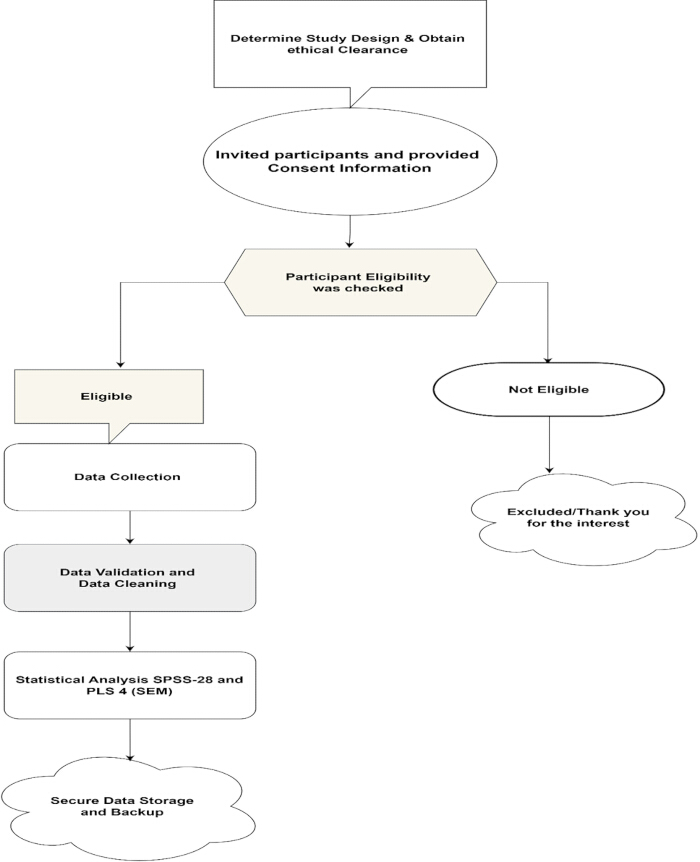
Figure 3: Flow chart for study Design The flowchart includes participant screening, eligibility assessment, data collection, analysis, and data storage steps. It illustrates the study design, from ethical clearance and participant recruitment through data validation, statistical analysis using SPSS-28 and PLS‑SEM (PLS 4), to secure data storage. Please click here to view a larger version of this figure.
Data collection procedure
Data were collected from four major public-sector universities in Jiangsu Province, and Beijing, China. Data collection for this study was conducted between March 2025 to May 2025. A structured questionnaire, adapted from well-established, previously validated instruments, was administered to 400 undergraduate EFL students. The questionnaire comprised multiple sections designed to assess teaching styles, student motivation, academic engagement, and satisfaction. Specific scales included Grasha’s50, Teaching Style Inventory, the Self-Determination Theory-based Motivation Scale by Deci and Ryan51, and an academic engagement scale adapted from Snijders et al52. After screening the data for missing values and outliers, the final sample included n = 375 valid responses.
Questionnaires were administered in person by the researcher at four major public-sector general universities in China. Participants were assembled in classrooms, given standardized instructions, allowed a fixed time to respond, and questionnaires were collected immediately upon completion. Data were collected through surveys distributed to 410 undergraduate students from the Department of English studying mathematic subject at public universities in China using systematic random sampling. After data screening, the final sample consisted of 375 valid responses. A data screening procedure was performed in which missing data were addressed using Little’s MCAR test (χ2 = 267.579, 108 df, p < 0.001). *0.000, we chose multiple imputation as our method since Little’s MCAR test was significant. Thus, after excluding outliers, the study sample comprised 375 participants (173 men and 202 women). The investigator adhered to all ethical procedures53. Agreement forms were administered to students, allowing them to participate voluntarily without experiencing any harm; confidentiality and anonymity were ensured throughout the research process.
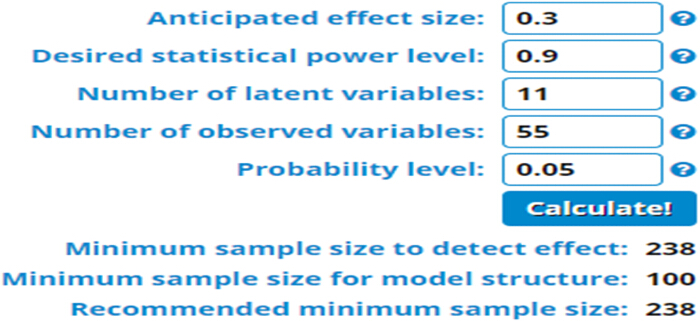
Figure 4: Daniel Sooper Calculator Results This figure shows Sample Size Determination Using Daniel Soper's Calculator. This figure presents the a priori sample size calculation for structural equation modeling, based on an anticipated effect size of 0.3, a desired statistical power of 0.9, 11 latent variables, and 55 observed variables. The figure indicates a minimum required sample size of 238 based on the specified parameter. Please click here to view a larger version of this figure.
Sample Size Determination Using Daniel Soper's Calculator. This figure presents the a priori sample size calculation for structural equation modeling, based on an anticipated effect size of 0.3, a desired statistical power of 0.9, 11 latent variables, and 55 observed variables.
Sampling technique and final sample size
The sampling procedure involved obtaining complete student rosters from each participating institution and selecting every student from these lists, with the sampling interval determined by the total population size and desired sample allocation. The sample size was calculated using Daniel Sooper Calculator which anticipated response rates (Figure 4). This target was informed by the minimum sample size calculated that 365 participants would be required to detect a medium effect size with adequate statistical power in a structural equation modeling framework. The systematic selection process continued until the target of 400 responses was achieved, ensuring proportional representation from each participating university.
Following data collection, the dataset underwent rigorous cleaning procedures to address missing data and outliers before finalizing the sample for analysis. Missing values were handled through multiple imputation techniques, which preserve statistical power and reduce bias compared to traditional deletion methods. Subsequently, multivariate outliers were identified and assessed using Mahalanobis distance, resulting in the removal of 25 cases that exceeded the critical threshold and threatened the validity of subsequent analyses. These data refinement procedures yielded a final sample of 375 valid responses, which comfortably exceeds the minimum recommended sample size of 365. The final sample comprised 173 male and 202 female students, reflecting the typical gender distribution of English departments in Chinese universities.
Data analysis technique
The data analysis for this study was conducted in a systematic, multi-stage process to ensure the robustness and replicability of the findings. The initial phase involved preparing the dataset for analysis using SPSS (See Table of Materials for details). This began with a comprehensive screening for missing values and univariate outliers. To address the missing data, a diagnostic Little's Missing Completely at Random (MCAR) test was first performed.
Primary analysis
With a clean dataset established, the main analysis proceeded using PLS-SEM. PLS-SEM was selected as the primary analytical technique due to its suitability for examining complex models that incorporate multiple constructs, mediating variables, and causal relationships, which aligns with the theoretical framework of this study.
Measurement model
The analysis was conducted in two key stages. In SmartPLS 4, the dataset was imported, measurement models were specified using reflective constructs, and the PLS algorithm was run with default settings. Bootstrapping was conducted using 5,000 subsamples, with a two-tailed significance level of 0.05. The first stage involved assessing the measurement model to confirm the reliability and validity of the constructs. Internal consistency reliability was evaluated using two criteria: Cronbach’s alpha and composite reliability, with values exceeding the recommended threshold of 0.70 considered acceptable. Convergent validity was established by examining the Average Variance Extracted (AVE) for each construct, with an AVE of 0.50 or higher serving as the criterion.
Structural model and mediation analysis
After confirming the adequacy of the measurement model, the second stage focused on evaluating the structural model and testing the study's hypotheses. The primary analysis examined the proposed mediating effect of motivation on the relationship between teaching styles and academic engagement. To test the significance of these direct and indirect effects, a bootstrapping procedure was applied with a resample of 5,000. This nonparametric technique generated standard errors and t-statistics to assess the statistical significance of the path coefficients.
Common method variance (CMV) bias
To assess the potential for common method variance, two widely recommended post hoc tests were conducted. First, Harman’s single-factor test revealed that a single factor accounted for only 20.636% of the total variance, well below the 50% threshold, indicating no substantial CMV bias. Second, a full collinearity test was performed, yielding variance inflation factors (VIFs) ranging from 1.075 to 2.614, all below the conservative cutoff of 3.3. These results confirm that common method bias does not threaten the validity of the findings in this study.
Access restricted. Please log in or start a trial to view this content.
Results
Primary analysis
Before hypothesis testing, descriptive statistics were computed to examine the distributional properties of the data and provide an overview of participant characteristics and construct-level responses. This section presents the demographic profile of respondents, assesses potential common method variance bias, and reports the means, standard deviations, and bivariate correlations among the eleven latent constructs included in the study.
Access restricted. Please log in or start a trial to view this content.
Discussion
The present study examined the influence of teaching styles on EFL students' academic engagement, satisfaction, and loyalty, and explored the mediating role of motivation. This study proposes an integrated model linking teaching styles, motivation, academic engagement, satisfaction, and loyalty within Chinese EAP contexts. These findings align with recent studies indicating that student-centered teaching enhances engagement and satisfaction through motivational processes. However, the non-significant relationship bet...
Access restricted. Please log in or start a trial to view this content.
Disclosures
All authors declare no conflicts of interest.
Materials
| Name | Company | Catalog Number | Comments |
|---|---|---|---|
| Academic Engagement Scale | Snijders et al. (2019) | N/A | Used to measure absorption, dedication, and vigor using 9 items on a five-point Likert scale. |
| Daniel Soper Sample Size Calculator | Daniel Soper | N/A | Web-based calculator used to determine the minimum sample size for SEM (effect size=0.3, power=0.9). |
| Grasha’s Teaching Style Inventory | Grasha (2002) | N/A | Adapted to assess assertive, suggestive, collaborative, and facilitative teaching styles. |
| Informed Consent Form | Author-developed | N/A | Provided to participants to ensure voluntary participation and confidentiality. |
| Self-Determination Theory-Based Motivation Scale | Deci and Ryan (2012); adapted from Obiosa (2020) | N/A | Five-item scale measuring student motivation on a five-point Likert scale. |
| SmartPLS 3 | SmartPLS GmbH | SCR_022040 | Used for PLS-SEM, including measurement and structural model assessment with 5,000 bootstrap resamples. |
| SPSS Version 26 | IBM | SCR_002865-5 | Used for data screening, missing value analysis, outlier detection, and descriptive statistics. |
| Structured Questionnaire | Author-adapted | N/A | A 55-item structured questionnaire compiled from validated scales. |
| Student Academic Self-Efficacy Scale | Snijders et al. (2019) | N/A | Five-item scale measuring academic self-efficacy on a five-point Likert scale. |
| Student Loyalty Scale | Wong et al. (2016) | N/A | Three-item scale measuring student loyalty on a five-point Likert scale. |
| Student Satisfaction Scale | Obiosa (2020) | N/A | Five-item scale measuring student satisfaction on a five-point Likert scale. |
References
- Li, F. The relationship between EAP learning motivation and learning engagement: a mixed-methods study on Chinese undergraduates. Asia Pac J Educ. , 1-21 (2025).
- Zhang, F., Zhang, Z. Exploring Chinese college students’ engagement in an online EAP course. System. 120, 103214(2024).
- Khoso, A. K., Honggang, W., Darazi, M. A. Trust and attitude towards AI as pathways to creativity: a TAM Model study of EFL students’ digital literacy and AI acceptance. Humanit Soc Sci Commun. 13 (1), 1-19 (2026).
- Coghlan, E. How an increased awareness of the Chinese education system can improve online student engagement when teaching English for Academic Purposes (EAP). Int J Engl Acad Purp Res Pract. 3 (2), 201-218 (2023).
- Li, B., Miao, G. On the role of Chinese English as a foreign language: Teachers’ well-being and loving pedagogy in their academic engagement. Front Psychol. 13, 941226(2022).
- Pan, Z., Wang, Y., Derakhshan, A. Unpacking Chinese EFL students’ academic engagement and psychological well-being: The roles of language teachers’ affective scaffolding. J Psycholinguist Res. 52 (5), 1799-1819 (2023).
- Khoso, A. K., Honggang, W., Tahir, S. R., Nusrat, A., Younas, M. Integrating Sustainable Development Goals (SDGs) and Generative AI to Enhance Language Digital Literacy and Creativity in EFL Learning Environments. J Vis Exp. (228), e69445(2026).
- Chen, L. Problematising the English-only policy in EAP: A mixed-methods investigation of Chinese international students’ perspectives of academic language policy. J Multiling Multicult Dev. 41 (8), 718-735 (2020).
- Liu, Y., Zuo, X. Chinese university students’ engagement in project-based learning of English for academic purposes. US China Foreign Lang. 20, 321-329 (2022).
- Adarkwah, M. A., Zeyuan, Y. Perceptions of the Effect of an EAP Course on English Self-Efficacy and English Proficiency: Voices of International Students in China. Online Submission. 10 (2), 1-17 (2020).
- Hakim, R., Rima, R. Development of the Massive Open Online Course (MOOC) Module for English for Academic Purposes Course. J Engl Lang Stud. 9 (1), 122-139 (2024).
- Zhang, Z., Xu, L. Student engagement with automated feedback on academic writing: A study on Uyghur ethnic minority students in China. J Multiling Multicult Dev. 45 (8), 3466-3479 (2024).
- Du, J., Alm, A. The impact of ChatGPT on English for academic purposes (EAP) students’ language learning experience: A self-determination theory perspective. Educ Sci. 14 (7), 726(2024).
- Wang, S., Pan, Z., Wang, Y. A mixed-methods investigation into complex components of multilingual international students' self-regulated learning in English as a foreign language context: A social cognitive perspective. Learn Motiv. 88, 102055(2024).
- Khoso, A. K., Honggang, W., Younas, M., Salam El-Dakhs, D. A. The Dual Forces of AI: How Generative AI and Perceived AI Dependency Influence Fear of Missing Out (FoMO) and EFL Students' Vocabulary Acquisition. J Vis Exp. (226), e69637(2025).
- Alsowat, H. An EFL flipped classroom teaching model: Effects on English language higher-order thinking skills, student engagement and satisfaction. J Educ Pract. 7 (9), 108-121 (2016).
- Sadoughi, M., Hejazi, S. Y. Teacher support and academic engagement among EFL learners: The role of positive academic emotions. Stud Educ Eval. 70, 101060(2021).
- Astin, H. S. The meaning of work in women’s lives a sociopsychological model of career choice and work behavior. Couns Psychol. 12 (4), 117-126 (1984).
- Ali, M., Kan, K. A. S., Sarstedt, M. Direct and configurational paths of absorptive capacity and organizational innovation to successful organizational performance. J Bus Res. 69 (11), 5317-5323 (2016).
- Bandura, A. Self-efficacy mechanism in human agency. Am Psychol. 37 (2), 122(1982).
- Tinto, V. From theory to action: Exploring the institutional conditions for student retention. Higher Education: Handbook of Theory and Research. 25, 51-89 (2010).
- Kruk, M., Zawodniak, J. On the possible interactions of varied EFL activities and learning styles with EFL students’ motivational changes. Innov Lang Learn Teach. 13 (2), 178-193 (2019).
- Ghaedi, Z., Jam, B. Relationship between Learning Styles and Motivation for Higher Education in EFL Students. Theory Pract Lang Stud. 4 (6), (2014).
- Almira, N. F., Almira, Z. F., Vircavani, C., Agustina, E. A Systematic Review of Teachers’ Teaching Styles and Their Impact on EFL Student Learning Outcomes. J Appl Linguist Engl Educ. 3 (1), 1-15 (2025).
- Asan, S. M., Wahyuni, S., Yulianto, H. J. Teaching styles and learning facilities influencing student motivation in English learning. Lang Circle J Lang Lit. 19 (2s), 167-179 (2025).
- Marina, I., Natalia, M., Tatiana, K., Nataliya, S. The influence of the teaching style of communication on the motivation of students to learn foreign languages. J Lang Educ. 5 (2), 67-77 (2019).
- Sheikh, A., Mahmood, N. Effect of different teaching styles on students’ motivation towards English language learning at secondary level. Sci Int Lahore. 26 (20), 825-830 (2014).
- Sugita McEown, M., Takeuchi, O. Motivational strategies in EFL classrooms: How do teachers impact students' motivation? Innov Lang Learn Teach. 8 (1), 20-38 (2014).
- Wu, Z. Academic motivation, engagement, and achievement among college students. Coll Stud J. 53 (1), 99-113 (2019).
- Dogan, U. Student engagement, academic self-efficacy, and academic motivation as predictors of academic performance. Anthropologist. 20 (3), 553-561 (2015).
- Fuertes, H., Evangelista, I., Marcellones, I. J., Bacatan, J. Student engagement, academic motivation, and academic performance of intermediate level students. Int J Novel Res Educ Learn. 10 (1), 133-149 (2023).
- Saeed, S., Zyngier, D. How motivation influences student engagement: A qualitative case study. J Educ Learn. 1 (2), 252-267 (2012).
- Cobo-Rendón, R., López-Angulo, Y., Sáez-Delgado, F., Mella-Norambuena, J. Engagement, academic motivation, and adjustment of university students. Rev Electron Educare. 26 (3), 256-274 (2022).
- Afzal, M., Junejo, A., Khoso, A. K. Bridging Instructional Excellence and Student Success: Exploring How Faculty Management Influences Academic Performance and Loyalty Through the Lens of Student Self-Efficacy. Int Premier J Lang Lit. 3 (1), 54-75 (2025).
- Zhang, Y., Guan, X., Ahmed, M. Z., Jobe, M. C., Ahmed, O. The association between university students’ achievement goal orientation and academic engagement: Examining the mediating role of perceived school climate and academic self-efficacy. Sustainability. 14 (10), 6304(2022).
- Gutiérrez, M., Tomás, J. M. The role of perceived autonomy support in predicting university students’ academic success mediated by academic self-efficacy and school engagement. Educ Psychol. 39 (6), 729-748 (2019).
- Wang, Y., Tambi, F. B. Correlation between students perceived parental expectations and students’ academic engagement: The intermediary effect of academic self-efficacy. J Pedagog Res. 8 (3), 16-33 (2024).
- Abdi Zarrin, S., Soleimani, M. The role of epistemological beliefs and academic self-efficacy in predicting academic engagement in students. Thinking Child. 12 (1), 159-180 (2021).
- Jaya, F., Nurqamarani, A. S. Understanding student engagement in hybrid learning: An analysis impact digital literacy and academic self-efficacy. J Kependidikan. 9 (3), 833-845 (2023).
- Beri, N., Stanikzai, M. I. Self-efficacy beliefs, student engagement and learning in the classroom: A review paper. Am Int J Res Humanit Arts Soc Sci. 22 (1), 213-222 (2018).
- Chen, W. W., Wong, Y. L. The relationship between goal orientation and academic achievement in Hong Kong: The role of context. Asia Pac Educ Res. 24 (1), 169-176 (2015).
- Johnson, D. M., Shoulders, C. W., Edgar, L. D., Graham, D. L., Rucker, K. J. Relationship between academic engagement, self-reported grades, and student satisfaction. NACTA J. 60 (3), 318-323 (2016).
- Sharif Nia, H., Marôco, J., She, L., Khoshnavay Fomani, F., Rahmatpour, P., et al. Student satisfaction and academic efficacy during online learning with the mediating effect of student engagement: A multi-country study. PLoS One. 18 (10), e0285315(2023).
- Satuti, J. R., Satuti, S., Nuris, D. M. R. Does student satisfaction mediate the correlation between E-learning Service Quality, Academic Engagement and Academic Achievement? J Account Bus Educ. 5 (1), 38-53 (2020).
- Pham, T. T. H., Ho, T. T. Q., Nguyen, B. T. N., Nguyen, H. T., Nguyen, T. H. Academic motivation and academic satisfaction: a moderated mediation model of academic engagement and academic self-efficacy. J Appl Res High Educ. 16 (5), 1999-2012 (2024).
- Lau, K. L., Lee, J. Examining Hong Kong students’ achievement goals and their relations with students’ perceived classroom environment and strategy use. Educ Psychol. 28 (4), 357-372 (2008).
- Ng, M. M., Priyono, İ The effect of service quality on student satisfaction and student loyalty: An empirical study. J Soc Stud Educ Res. 9 (3), 109-131 (2018).
- Annamdevula, S., Bellamkonda, R. S. The effects of service quality on student loyalty: the mediating role of student satisfaction. J Model Manag. 11 (2), 446-462 (2016).
- Bakrie, M., Sujanto, B., Rugaiyah, R. The Influence of Service Quality, Institutional Reputation, Students Satisfaction on Students Loyalty in Higher Education Institution. Int J Educ Vocat Stud. 1 (5), 379-391 (2019).
- Grasha, A. F. The dynamics of one-on-one teaching. Coll Teach. 50 (4), 139-146 (2002).
- Deci, E. L., Ryan, R. M. Self-determination theory. Handbook of theories of social psychology. 1 (20), 416-436 (2012).
- Snijders, I., Wijnia, L., Rikers, R. M., Loyens, S. M. Alumni loyalty drivers in higher education. Soc Psychol Educ. 22 (3), 607-627 (2019).
- Hair, J., Alamer, A. Partial Least Squares Structural Equation Modeling (PLS-SEM) in second language and education research: Guidelines using an applied example. Res Methods Appl Linguist. 1 (3), 100027(2022).
- Bryman, A. Social research methods. , Oxford Univ Press. (2016).
- Khoso, A. K., Darazi, M. A., Mahesar, K. A., Memon, M. A., Nawaz, F. The impact of ESL teachers' emotional intelligence on ESL Students academic engagement, reading and writing proficiency: mediating role of ESL student’s motivation. Int J Early Child Spec Educ. 14, 3267-3280 (2022).
- Afzal, M., Junejo, A., Khoso, A. K. Bridging Instructional Excellence and Student Success: Exploring How Faculty Management Influences Academic Performance and Loyalty Through the Lens of Student Self-Efficacy. International Premier Journal of Languages & Literature. 3 (1), 54-75 (2025).
- Chan, S., Maneewan, S., Koul, R. Teacher educators’ teaching styles: relation with learning motivation and academic engagement in pre-service teachers. Teaching in Higher Education. 28 (8), 2044-2065 (2025).
- Xiong, X. Influence of teaching styles of higher education teachers on students ‘engagement in learning: The mediating role of learning motivation. Education for Chemical Engineers. 51, 87-102 (2025).
- Susan, M., Winarto, J., Aribowo, A., Raihin, Y. O., Kambono, H., et al. The Impact of Student Satisfaction on Student Loyalty: The Role of Student Trust. J High Educ Theory Pract. 23 (6), (2023).
- Khoso, A. K., Honggang, W., Darazi, M. A. Empowering creativity and engagement: The impact of generative artificial intelligence usage on Chines EFL students' language learning experience. Comput Hum Behav Rep. 18, 100627(2025).
- Yu, G. B., Kim, J. H. Testing the mediating effect of the quality of college life in the student satisfaction and student loyalty relationship. Appl Res Qual Life. 3 (1), 1-21 (2008).
- Alhempi, R. R., Anuar, S., Elfina, R., Shaddiq, S. Enhancing employee loyalty through work environment and social support with the mediating role of engagement. Jurnal Ilmiah Manajemen Kesatuan. 13 (3), 1647-1658 (2025).
Access restricted. Please log in or start a trial to view this content.