This review summarizes prognostic tools for end-stage kidney disease, highlighting their application in mortality risk assessment, shared decision-making, conservative kidney management, and individualized treatment planning for older adults.
A subscription to JoVE is required to view this content. Sign in or start your free trial.
Review Article
Prognostication in End-Stage Kidney Disease: Tools, Evidence, and Clinical Applications
In This Article
Summary
Abstract
Prognostication in end-stage kidney disease is fundamental to person-centered care and shared decision-making. This review summarizes the current evidence on prognostic assessment in older adults with end-stage kidney disease who are considering dialysis or conservative kidney care. It examines the rationale for prognostication and reviews the principal clinical, functional, and laboratory predictors of mortality, including comorbidity burden, frailty, functional status, and biochemical parameters. The review discusses validated prognostic tools, including the Charlson Comorbidity Index, the Surprise Question, and multivariable prediction models, as well as emerging machine learning approaches for individualized risk prediction. It also examines the effects of functional decline, hospitalization, and limited survival benefit on treatment decisions and highlights the role of prognostic information in advance care planning and goal-concordant care. In addition, the review discusses the communication of prognosis and the practical challenges associated with implementing prognostic tools in routine nephrology practice. By integrating evidence-based prognostic assessment with individualized clinical evaluation and patient values, prognostication can support informed treatment decisions and facilitate personalized care for older adults with end-stage kidney disease.
Introduction
Chronic kidney disease (CKD) affects an estimated 843.6 million people worldwide, with more than 2 million people living with end-stage kidney disease (ESKD)1,2,3,4,5. Older adults are at increased risk of developing advanced kidney disease, particularly those with cardiovascular disease and other comorbid conditions. Despite major advances in medical therapies, ESKD continues to confer substantial risks of mortality and morbidity1,4.
An important aspect of CKD care is advance care planning for the possibility of progression to ESKD. Kidney transplantation is the preferred form of renal replacement therapy because it provides the best outcomes in terms of survival and quality of life. However, transplantation may not be available to patients without a viable donor and may be contraindicated in those with high surgical or medical risk, frailty, or limited life expectancy. This is often the case for older patients, who may face an uncertain future and a difficult choice between initiating lifelong dialysis, either at home or in a clinic, or choosing medical management focused on symptom control, with the understanding that this approach may shorten survival. Physicians have clinical, ethical, and legal responsibilities to provide an individualized, person-centered approach while recognizing that, in some circumstances, dialysis may increase suffering without necessarily prolonging life6.
In this context, advance care planning is an important tool that supports patients, families, and healthcare professionals by aligning future decisions with each person’s values, wishes, and changing clinical circumstances6. Patients and families are better able to make informed choices that align with their values and preferences when they receive clear and comprehensive information about the benefits and harms of dialysis. They should be invited and encouraged to participate in a shared decision-making process. Although dialysis may improve survival and relieve symptoms, its benefits may be modest in older and frail patients, and treatment may be associated with substantial reductions in independence and quality of life7. Prognostication is therefore a key component of patient education and shared decision-making. To consider the trade-offs between survival and quality of life, patients need to understand the potential survival benefit of initiating dialysis and how treatment may affect their quality of life.
This review discusses the key features of strategies and tools used to estimate prognosis in patients considering or initiating dialysis. It also examines how these approaches can support renal care teams, patients, and families in making shared decisions about treatment options and care pathways in ESKD (Figure 1).
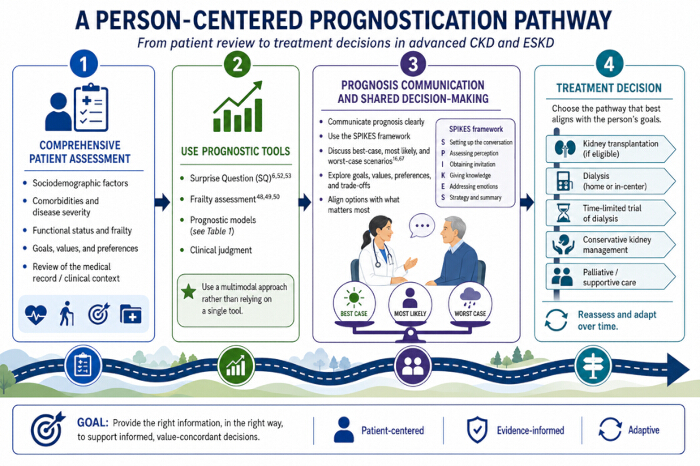
Figure 1. Person-centered prognostication pathway in advanced chronic kidney disease (CKD) and end-stage kidney disease (ESKD). The schematic summarizes comprehensive patient assessment, multimodal prognostic assessment, prognosis communication and shared decision-making, treatment selection, and ongoing reassessment to support person-centered care. Superscript numbers correspond to the references cited in the manuscript. The figure was generated with the assistance of an OpenAI image-generation tool and subsequently reviewed and approved by the authors for scientific and clinical accuracy. Please click here to view a larger version of this figure.
Access restricted. Please log in or start a trial to view this content.
Review and Perspective
The Importance of Prognostication in Chronic Kidney Disease
An understanding of prognosis and the expected course of disease progression can substantially influence therapeutic goals and life decisions. This understanding is essential for delivering person-centered care, fostering shared decision-making, and facilitating advance care planning. However, studies involving people with cancer and older adults have shown that healthcare professionals rarely communicate prognostic information, whereas patients often maintain overly optimistic expectations about the future8.
Prognostic assessment is a central component of discussions between patients and physicians, as information about life expectancy is frequently sought when deciding whether to initiate dialysis. Personal, cultural, and religious preferences and values also play important roles in whether an individual chooses dialysis to prolong life6. A risk prediction model that anticipates early mortality may help personalize treatment and support shared decision-making among healthcare professionals, people living with kidney disease, and their family members9. This is particularly important for patients being considered for more conservative treatment pathways. Conservative kidney care (CKC), which involves the continuation of active medical care, symptom control, and multidisciplinary support without dialysis initiation, is increasingly recognized by international guidelines as a legitimate treatment pathway rather than a default option for patients who are not candidates for renal replacement therapy10. Dialysis has been shown to provide a longer median survival than CKC overall (3.1 versus 1.5 years from the time of treatment decision); however, this survival advantage disappears in patients aged 80 years or older (P = 0.08) and is substantially reduced in those with severe cardiovascular comorbidity11,12. Beyond mortality outcomes, hospitalization rates were significantly lower among patients receiving CKC (incidence rate ratio, 0.40; 95% confidence interval [CI], 0.32–0.49)13.
CKC has also been associated with improved quality of life, reduced symptom burden, and a greater likelihood of dying at home rather than in the hospital12. These findings support the prospective integration of CKC according to a patient’s trajectory of vulnerability rather than its use solely as a residual treatment option. Prognostic assessment may help identify individuals who are most likely to benefit from this treatment philosophy. For example, if a patient is expected to have a high risk of death within the first year after dialysis initiation, CKC or modified dialysis strategies may be appropriate options to consider9. Jassal et al. proposed frailty-informed dialysis care pathways that tailor treatment intensity, dietary restrictions, and in-home support according to frailty status, with periodic reassessment allowing bidirectional transitions as a patient’s condition changes14.
Prediction tools are likely to assist healthcare professionals in guiding patients and their families through decisions regarding ESKD treatment15,16. Although international guidelines strongly recommend communicating prognosis to patients17,18,19, and evidence suggests that most patients wish to receive prognostic information20,21,22, this practice has not been consistently implemented in routine clinical care. Several barriers hinder effective communication of prognosis. Nephrologists may lack tools that provide accurate, individualized risk estimates and may feel uncomfortable discussing prognosis because of concerns about its potential emotional impact on patients. Studies have also shown that patients generally prefer broader discussions about prognosis rather than predictions expressed solely as estimated survival time23. Furthermore, many prognostic models are not easily implemented in routine clinical practice because they lack external validation, and relatively few have been developed using cohorts that include patients receiving peritoneal dialysis. Beyond predicting early mortality, Dusseux et al. developed a 3-year mortality score for older French patients receiving dialysis (aged ≥70 years) to identify candidates who may be suitable for kidney transplantation, demonstrating that prognostic tools have applications beyond the initial decision to initiate dialysis (Table 1)24.
Overall Mortality in Older Adults with End-Stage Kidney Disease
Life expectancy for older adults living with ESKD and receiving dialysis remains substantially lower than that of the general population. According to the United States Renal Data System (USRDS, 2024)4, the 5-year survival rate among adults aged 65–74 years is 35.6%, compared with 23.8% among those aged 75 years or older, with only modest improvements over the past decade. When analyzed by dialysis modality, outcomes are comparable. In hemodialysis (HD), the 5-year survival rate remains approximately 34%, whereas in peritoneal dialysis (PD), it ranges from 22% to 35%, depending on age.
The most recent USRDS data also indicate that, in 2022, the estimated remaining life expectancy for people receiving dialysis was approximately 4.6 years for women and 4.5 years for men aged 65–69 years. This decreased to 3.5 years for women and 3.3 years for men aged 75–79 years. In contrast, kidney transplant recipients within these age groups are expected to gain an additional 7–11 years of life, whereas individuals in the general population have a remaining life expectancy of approximately 16–18 years. Despite technological advances and improved candidate selection, these findings confirm that gains in longevity associated with dialysis remain limited4.
Although contemporary data demonstrate stabilization in survival, similar prognostic patterns have been reported previously. In a population-based analysis of more than 350,000 adults aged 65 years or older in the United States, Kurella et al.25 reported that life expectancy after dialysis initiation declines progressively with increasing age. Median survival (50th percentile) decreased from 2.5 years among adults aged 65–69 years to 0.6 years among those aged 90 years or older. Likewise, the 75th percentile declined from 4.6 years to 1.7 years, whereas the 25th percentile decreased from 0.9 years to 0.2 years across the same age groups. This wide variation illustrates the substantial prognostic heterogeneity among individuals of similar age and highlights that chronological age alone does not determine prognosis. Mortality risk is greatest during the early period after dialysis initiation. Among adults who begin dialysis after the age of 75 years, the probability of survival is 71% at 1 year and 54% at 2 years in Europe, compared with 59% and 43%, respectively, in the United States. More than 10% of patients die within the first 3 months after starting dialysis26.
Despite these epidemiological findings, patients’ perceptions of prognosis often differ substantially from observed survival outcomes. In a cohort of 993 patients receiving dialysis, only 11.2% expected to live for less than 5 years, whereas 33.0% anticipated surviving for more than 10 years, despite USRDS data indicating that 60.3% died within 5 years. Patients who expected longer survival were substantially less likely to document treatment preferences or prioritize comfort-focused care and were more likely to choose cardiopulmonary resuscitation (adjusted odds ratio [aOR], 5.3) or mechanical ventilation (aOR, 2.2) than patients with more realistic survival expectations8.
Medical Morbidity and Hospitalizations in Older Adults with End-Stage Kidney Disease
Older adults who initiate renal replacement therapy have a high burden of medical comorbidity and acute clinical events that directly affect prognosis. According to the USRDS (2024)4, in 2022, 59% of incident patients with ESKD had diabetes mellitus, 25% had heart failure, and 17%–28% had various forms of cardiovascular disease. The same report showed adjusted all-cause hospitalization rates of 1.37 and 1.42 events per person-year among individuals aged 65–74 years and ≥75 years, respectively, receiving PD, compared with 1.46 and 1.49 events per person-year among those receiving HD4.
Older adults initiating dialysis frequently experience multimorbidity, which substantially influences their clinical course. Comorbidity also has a profound effect on health outcomes and survival among patients with stage 5 CKD. Multiple studies have reported no significant difference in survival between patients who choose dialysis and those managed with a conservative approach. This finding likely reflects the high competing risk of death before progression to ESKD, together with the limited survival benefit associated with dialysis therapy27,28.
In a United States cohort of 391 Medicare beneficiaries aged ≥65.5 years, nearly two-thirds had four or more chronic conditions, and 73% initiated dialysis during hospitalization. Both factors were independently associated with a 1-year mortality rate exceeding 50%29. Similarly, a national registry study including 28,049 adults aged ≥67 years found that patients older than 80 years spent an average of 67 days in hospitals or nursing facilities during the first year after dialysis initiation, with the greatest healthcare utilization observed among those with dementia or cardiovascular disease30.
Beyond the high prevalence of comorbidity, the early period after dialysis initiation is characterized by recurrent hospitalizations, infections, and functional decline. In a European cohort of more than 10,000 individuals who initiated dialysis in 2017, 82.8% experienced at least one hospitalization and 33.8% died within the first year, highlighting the substantial burden of early complications31. Infection-related admissions remain a leading cause of morbidity, accounting for approximately one-third of all hospitalizations and affecting nearly half of older patients during follow-up. Diabetes mellitus, heart failure, and hypoalbuminemia are among the principal risk factors for these admissions32.
Functional Decline in Older Adults Initiating Dialysis
Functional frailty and dependence further increase the risks associated with dialysis initiation in older adults. Among older adults receiving HD, 46% were classified as frail, 55% were malnourished, and 21% were dependent in basic activities of daily living33. Functional decline after dialysis initiation is common and has important clinical implications.
In a landmark study by Tamura et al.34, involving more than 3,700 nursing home residents in the United States, the Minimum Data Set–Activities of Daily Living (MDS-ADL) score, a standardized measure of dependence in basic self-care activities derived from the Minimum Data Set used in long-term care facilities35, increased from a median of 12 before dialysis initiation to 16 afterward. At 3 months, only 39% of participants had maintained their baseline functional status. By 1 year, 58% had died, and only 13% retained their previous level of function. Similarly, Jassal et al.36 reported that, among adults aged 80 years or older, more than 30% experienced loss of independence within the first 6 months after dialysis initiation. Neither dialysis modality (HD versus PD) nor the setting of dialysis initiation (inpatient versus outpatient) was associated with subsequent functional decline36.
More recent evidence indicates that this pattern also occurs among community-dwelling older adults. In a Dutch cohort study by Goto et al.37, 40% of adults aged 65 years or older experienced functional deterioration during the first 6 months after initiating dialysis, with the greatest risk observed among older and frail individuals. In addition, 79% of participants had some degree of functional dependence at baseline, and caregiver burden increased from 23% to 38% during follow-up37.
International studies have consistently demonstrated that functional dependence is associated with poorer outcomes. A Dialysis Outcomes and Practice Patterns Study published in 2016 found that severe functional dependence (functional score <8/13) was associated with a 2.37-fold higher risk of mortality, independent of age and comorbidity38. Pereira et al.33 also reported high rates of frailty and functional dependence among adults aged 75 years or older receiving HD, together with frequent post-dialysis fatigue. These findings reinforce the importance of comprehensive geriatric assessment and early implementation of rehabilitation and supportive care strategies from the initiation of dialysis.
Development of Prognostic Tools for Mortality Prediction in CKD and ESKD Populations
Although population-based mortality data provide a general perspective on the potential benefits of dialysis for older adults, they do not provide individualized estimates of prognosis. To support more personalized prognostic assessment, investigators from multiple countries have developed risk prediction tools for patients with CKD and those who progress to ESKD. These tools differ substantially in both their design and intended clinical application. Some rely on a single subjective clinical assessment, whereas others incorporate routinely available laboratory parameters, structured comorbidity indices, or multivariable and machine learning models that require dedicated data infrastructure. This heterogeneity has important practical implications because the tools that are most feasible for use in busy outpatient settings are not necessarily those with the greatest predictive performance.
Impact of Comorbidity on Survival During Dialysis
Comorbidity burden is a well-established determinant of early mortality and hospitalization among older adults initiating dialysis, and several groups have translated this risk into prognostic models with good predictive performance and clinical applicability. Certain comorbid conditions are included in most prediction models, particularly vascular disease, especially peripheral vascular disease, and cognitive disorders such as dementia. Other common conditions, including congestive heart failure (CHF), demonstrate variable predictive performance across different models. Serious life-threatening illnesses, including active or metastatic cancer, as well as other end-organ diseases such as liver dysfunction and respiratory failure, are incorporated into some prognostic models26,39.
Among tools that summarize multimorbidity, the Charlson Comorbidity Index (CCI) remains one of the most widely used. In its adaptation for patients with ESKD, Hemmelgarn et al.40 confirmed the validity of the original CCI and demonstrated improved performance with the ESKD Comorbidity Index (Table 1). Within the CCI, metastatic disease, lymphoma, and CHF carry the greatest weighting, emphasizing that mortality risk is influenced more by overall comorbidity burden than by chronological age alone. The validity of the CCI has subsequently been confirmed in several independent studies41,42,43,44. Although incorporating a greater number of comorbidities may improve predictive accuracy, it also increases the complexity of implementing these models in routine clinical practice.
Differences in predictive performance among prognostic models likely reflect variation in the populations from which they were derived. Most models have been developed within a single geographic region and have not undergone external validation45. In addition, selection bias may influence model performance because patients with terminal illnesses, such as metastatic cancer, or those with a very limited life expectancy may not be offered dialysis and therefore may be underrepresented in the populations used to develop these models. This potential indication bias should be considered when interpreting and applying prognostic estimates in clinical practice.
Use of Functional Scales and the Surprise Question
Frailty is recognized as an independent predictor of mortality and hospitalization among older adults living with CKD. Frailty is common in this population. Gimena-Muñoz et al.46 reported a frailty prevalence of 27% among individuals with advanced CKD using the Fried Frailty Phenotype to define frailty status. They also identified type 2 diabetes mellitus and anemia as independent predictors of frailty. In addition, frailty may significantly increase the risk of incident CKD47.
In a systematic review and meta-analysis by Puri et al.48, which included 105 studies involving individuals with advanced CKD, frailty assessed using either the Fried Frailty Phenotype or the Rockwood Clinical Frailty Scale (CFS) was associated with a twofold increase in mortality risk compared with that of non-frail individuals (Table 1). Frailty also doubled the risk of hospitalization, confirming its prognostic value beyond chronological age and comorbidity. These findings underscore the importance of incorporating frailty assessment into routine risk stratification in nephrology practice.
Consistent with these findings, Kennard et al.49 reported that frailty is associated with a two- to sixfold increase in the risk of mortality, hospitalization, and progression to dialysis among individuals with advanced CKD. Frailty in patients receiving dialysis is also associated with frequent complications50, including infections, cardiovascular events, vascular access failure, prolonged post-dialysis recovery, and reduced treatment adherence. Among older adults, these complications contribute to greater disease burden, increased functional dependence, and higher healthcare utilization. Frailty remains a strong predictor of morbidity and mortality in patients with CKD, including those receiving renal replacement therapy and those managed conservatively, even after adjustment for chronological age and multimorbidity51. Integrating functional assessment scales with objective clinical parameters may further improve the predictive performance of risk prediction tools for ESKD6,26.
Several prognostic models for CKD and ESKD incorporate the Surprise Question (SQ), which asks, “Would you be surprised if this person died in the next 12 months?” These models include those developed by Cohen et al.52, Schmidt et al.6, and Javier et al.53 (Table 1). The SQ reflects a healthcare professional’s overall clinical judgment of a patient’s health status and may be considered a measure of clinical gestalt. In a prospective multicenter study, Schmidt et al.6 developed a prognostic model incorporating three independent predictors: a negative response to the SQ (odds ratio [OR], 3.29), an intermediate or low Karnofsky Performance Score (KPS) (OR, 2.09 for KPS 50–70; OR, 4.69 for KPS ≤40), and increasing age (OR, 1.41 per additional decade). The model demonstrated good predictive performance and highlighted the value of combining clinical judgment with objective functional assessment to estimate adverse outcomes in advanced CKD (Table 1)6.
Javier et al.53 evaluated the SQ in a prospective study of 388 adults aged 60 years or older with CKD stages 4–5 who were not receiving dialysis (Table 1). They used a three-category version of the SQ (Yes/Uncertain/No), which demonstrated a clear gradient in mortality risk: 5% for “Yes,” 15% for “Uncertain,” and 27% for “No” (P < 0.001). The binary version of the SQ improved sensitivity (66%) but reduced specificity (68%). Although interpretation of the SQ is inherently subjective and may vary among clinicians53, its principal advantages are its simplicity, intuitive application, and ease of use in routine clinical practice.
Laboratory Parameters
Several routinely measured laboratory parameters have demonstrated prognostic significance at the time of dialysis initiation, including estimated glomerular filtration rate (eGFR), serum albumin, hemoglobin, and dialysis adequacy indices such as Kt/V54,55,56. Among these, serum albumin and hemoglobin are readily available markers that reflect a patient’s nutritional, inflammatory, and functional status. In a retrospective cohort of older adults with CKD stages 1–4, lower serum albumin levels were independently associated with higher all-cause mortality after adjustment for age, sex, and kidney function55. Similarly, anemia at the time of dialysis initiation has emerged as a strong predictor of early mortality, with patients initiating treatment with hemoglobin levels below 10 g/dL demonstrating substantially higher mortality despite subsequent correction56. This observation suggests that low hemoglobin at dialysis initiation may reflect chronic inflammation or suboptimal predialysis care rather than simply reversible anemia. Higher eGFR at the time of dialysis initiation has also been associated with increased early mortality, despite appearing counterintuitive54. This association likely reflects indication bias, whereby patients with severe comorbidity or acute illness initiate dialysis earlier despite relatively preserved kidney function. It may also reflect the effects of malnutrition and reduced muscle mass.
| Author / Year | Tool Type | Study Population | Objective / Prognostic Horizon | Main Variables | Clinical Applicability / Limitations | |
| Schmidt et al.6 | Clinical prediction model | CKD stages 4–5 (non-dialysis) | 12-month mortality | Surprise Question, KPS, age | Simple, validated model useful for supporting decisions regarding dialysis initiation or conservative kidney management. | |
| Obi et al.9 | Clinical prediction model | 35,878 US veterans | 1-year mortality (eGFR <15 vs. ≥15 mL/min/1.73 m²) | Age, comorbidities, eGFR, albumin, cancer | Separate models based on eGFR; predominantly male cohort; does not include frailty or functional measures. | |
| Couchoud et al.15 | Clinical prediction model | ≥75 years (France, REIN) | 3-month mortality | Age, sex, CHF, arrhythmia, peripheral vascular disease, active cancer, hypoalbuminemia, functional dependence, behavioral disorders | Classifies patients into low-, intermediate-, and high-risk groups; broadly applicable to older adults with ESKD. | |
| Davison et al.18 | Clinical prediction model | Peritoneal dialysis | 6–18-month mortality | Adapted Cohen model plus Surprise Question completed by nursing staff | Externally validated in PD; overestimates mortality in high-risk patients; highlights the nursing role and the importance of functional assessment. | |
| Dusseux et al.24 | Clinical prediction model | Incident dialysis, ≥70 years (France, REIN) | 3-year mortality | Age, sex, diabetes, CVD, dependency, low BMI, temporary catheter | Designed to identify candidates for kidney transplant referral rather than dialysis initiation; moderate discrimination (c-statistic 0.71), good calibration, but not externally validated outside France. | |
| Thamer et al. 39 | Clinical prediction model | ≥67 years, USA | 3- and 6-month mortality | Comprehensive and simplified models (age, dependency, albumin, cancer, CHF, hospitalization, institutional residence) | Simplified bedside score; does not incorporate quality-of-life or patient-preference measures. | |
| Hemmelgarn et al.40 | Comorbidity index | Maintenance HD | Overall mortality | Comorbidities (CHF, cancer, lymphoma, metastasis) | The ESKD Index outperforms the CCI. Performance improves further when combined with machine learning (Noh et al.43; AUC 0.8357). | |
| Santos et al.44 | Clinical prediction model | ≥65 years, Portugal | 6-month mortality after dialysis initiation | Age, coronary artery disease, stroke with hemiplegia, low albumin, late nephrology referral | Outperformed the Couchoud model; excluded non-dialysis patients and did not include frailty assessment. | |
| Ivory et al.45 | Clinical prediction model | Incident HD/PD, ≥15 years (ANZDATA) | 6-month mortality | Twelve clinical variables (age, BMI, comorbidities, diabetes, late referral) | Outperformed the Couchoud and Wagner models; applicability may be limited outside Australia and New Zealand. | |
| Puri et al.48 | Frailty/functional scale | Adults with CKD (all stages, including dialysis) | Mortality and hospitalization | FFP, CFS, modified FFP, FRAIL Scale, Frailty Index | FFP and CFS demonstrated the strongest prognostic value for mortality and hospitalization. Modified FFP is a practical alternative when performance-based testing is not feasible; clinical judgment alone is insufficient. | |
| Oki et al.50 | Frailty/functional scale | Incident HD/PD patients | 2-year mortality and hospitalization | CFS | Applied retrospectively by nurses; excluded prolonged hospitalizations; practical for routine clinical use. | |
| Cohen et al.52 | Clinical prediction model | Maintenance HD | 6-month mortality | Age, dementia, peripheral vascular disease, albumin, Surprise Question | Combines clinical judgment with objective variables; demonstrates strong discrimination (AUC 0.80–0.87). | |
| Javier et al.53 | Subjective assessment tool | ≥60 years, CKD stages 4–5 | 12-month mortality | Surprise Question (three- and two-category versions) | Predicts 1-year mortality; requires prior knowledge of the patient; moderate inter-rater agreement and good test–retest reliability. | |
| Sun et al.55 | Laboratory indicator | CKD stages 1–4 (70% ≥65 years) | Long-term all-cause mortality | Serum albumin, age | Retrospective single-center cohort (n = 201); useful as a complementary marker rather than a stand-alone predictor. | |
| Wick et al. 54 | Clinical prediction model | ≥65 years at dialysis initiation | 6-month mortality | Age ≥80 years, eGFR ≥15 mL/min/1.73 m², prior hospitalization, CHF, AF, cancer | Stratifies short-term mortality risk; eGFR ≥15 mL/min/1.73 m² may reflect early or unplanned dialysis initiation; good discrimination (ROC 0.73). | |
| Karaboyas et al.56 | Laboratory indicator | International incident HD (DOPPS) | 1-year mortality | Baseline hemoglobin, ESA, and IV iron doses | Demonstrates a U-shaped association with iron dosing; higher mortality with hemoglobin <10 g/dL or higher ESA doses; useful as a complementary biomarker. | |
| García-Montemayor et al.57 | Machine learning model | Incident HD (Spain) | 6–24-month mortality | Fifteen clinical and laboratory variables (Random Forest) | Modest improvement over logistic regression (ΔAUC 0.007–0.046); creatinine, Kt/V, and hemoglobin are important predictors of early mortality. | |
| Sheng et al.59 | Machine learning model | Incident HD (China) | 1-year mortality | Age, eGFR, CRP, hemoglobin, comorbidities (XGBoost) | AUC 0.83–0.85; retained 15 of 42 candidate variables; requires external validation in diverse populations. | |
Table 1: Tools for predicting mortality in patients with advanced chronic kidney disease and end-stage kidney disease. This table summarizes validated prognostic tools, frailty assessments, laboratory markers, and machine learning models developed to estimate mortality in patients with advanced chronic kidney disease (CKD) and end-stage kidney disease (ESKD). For each study, the table outlines the study population, prognostic horizon, principal predictor variables, and key considerations for clinical application, including strengths and limitations. Abbreviations: AF, atrial fibrillation; AUC, area under the receiver operating characteristic curve; BMI, body mass index; CCI, Charlson Comorbidity Index; CFS, Clinical Frailty Scale; CHF, congestive heart failure; CKD, chronic kidney disease; CRP, C-reactive protein; CVD, cardiovascular disease; eGFR, estimated glomerular filtration rate; ESA, erythropoiesis-stimulating agent; ESKD, end-stage kidney disease; FFP, Fried Frailty Phenotype; HD, hemodialysis; IV, intravenous; KPS, Karnofsky Performance Status; PD, peritoneal dialysis; REIN, Renal Epidemiology and Information Network; ROC, receiver operating characteristic; US, United States; XGBoost, Extreme Gradient Boosting. Please click here to download this Table.
Machine Learning Models for Mortality Prediction
Machine learning (ML) algorithms have increasingly been applied to mortality prediction in patients receiving dialysis, with several studies demonstrating improved discrimination compared with traditional regression-based models. Garcia-Montemayor et al.57 reported that a random forest model outperformed logistic regression in predicting mortality at 6 months, 1 year, and 2 years among patients receiving hemodialysis, with an area under the receiver operating characteristic curve (AUC) ranging from 0.68 to 0.73 (Table 1). Yang et al.58 applied a CatBoost classifier to patients receiving peritoneal dialysis, achieving an AUC of 0.80 while identifying age, body weight, and serum albumin as the most influential predictors. Sheng et al.59 developed and externally validated an Extreme Gradient Boosting (XGBoost) model for predicting first-year mortality across 97 renal centers. The model achieved an AUC of 0.83–0.85, substantially exceeding the performance of previously published regression models (Table 1). Similarly, Koh et al.60 demonstrated that a random forest model outperformed the established REIN and Wick prognostic scores in an older Southeast Asian cohort, achieving an AUC of 0.83.
Despite these promising findings, important limitations remain. Most ML models have been developed using retrospective data from single-center cohorts, with limited external validation and reduced interpretability. Although explainability methods, such as SHapley Additive exPlanations (SHAP), have improved model transparency, interpretability remains an important barrier to routine clinical implementation. To date, no prospective randomized trial has evaluated whether ML-guided prognostication improves clinical outcomes or the quality of shared decision-making in patients with CKD or ESKD, representing an important evidence gap.
Barriers to Implementation of Prognostic Tools in Clinical Practice
Despite the increasing availability of prognostic tools for patients with advanced CKD and ESKD, their integration into routine clinical practice remains limited. Surveys of Canadian nephrologists have shown that more than 80% rely primarily on clinical gestalt for prognostication, whereas approximately 70% never or rarely use formal prediction tools61. Reported barriers include concerns regarding the applicability of population-based risk estimates to individual patients, time constraints, and limited familiarity with available tools and the evidence supporting their use. Notably, healthcare professionals consistently distinguished between the value of prognostic tools at the population level and their application to individual patients, highlighting a challenge that external validation alone is unlikely to resolve62.
The practical implementation of many prognostic models is further limited because some publications do not provide a usable format, such as a complete regression equation or risk score, making routine clinical application difficult63. In addition, only 26.7% of published models have undergone external validation, and formal impact studies evaluating whether prognostic tools improve shared decision-making or patient outcomes remain uncommon63. Real-world adoption of prognostic tools in nephrology therefore remains low, potentially reflecting limited clinician confidence, lack of experience, and uncertainty regarding their clinical usefulness in improving patient outcomes64.
Addressing this implementation gap will require efforts beyond the development and validation of new prognostic models. Integration of prognostic tools into electronic health records may reduce barriers related to time, accessibility, and workflow that clinicians consistently identify62. In addition, training nephrologists to communicate probabilistic risk information effectively during serious illness conversations, rather than simply presenting numerical estimates, may be as important as further improving model accuracy62,65.
Limitations
Several limitations of the existing literature merit acknowledgment. Most prognostic models9,26,39,45,55,66 have been developed using geographically restricted cohorts, and their generalizability to other healthcare settings remains uncertain. Although some tools were specifically developed for older adults, many validated models include younger dialysis populations, and dedicated prognostic tools for frail older adults remain limited. The current literature is also heavily weighted toward hemodialysis cohorts, whereas validated prognostic models for patients receiving peritoneal dialysis remain scarce, with the work of Davison et al.18 representing one of the few available examples. Machine learning models, although promising, have not yet been evaluated in prospective clinical trials, and no currently available prognostic tool has demonstrated, in a randomized study, that its use improves the quality of shared decision-making or patient outcomes.
Future research should prioritize the development and external validation of prognostic models across diverse populations and dialysis modalities, prospective evaluation of prognostication-guided care, and the integration of patient-reported preferences into clinical risk assessment frameworks.
Access restricted. Please log in or start a trial to view this content.
Conclusions
Prognostication is an important component of shared decision-making. Nephrologists should provide prognostic information accurately and in a person-centered manner to help align proposed treatments with patients’ values and preferences. Prognostic tools, including risk prediction models, can assist nephrologists in providing more nuanced risk assessments. These tools may facilitate the early identification of individuals who could benefit from comprehensive geriatric assessment, advance care planning, or, in select...
Access restricted. Please log in or start a trial to view this content.
Disclosures
The authors declare no competing financial interests or conflicts of interest. Also, the authors used an OpenAI image-generation tool to create the initial version of Figure 1. The figure was subsequently reviewed, revised, and approved by the authors, who take full responsibility for its scientific content and clinical accuracy.
References
- Kovesdy CP. Epidemiology of chronic kidney disease: an update 2022. Kidney Int Suppl. 2022;12:7-11. doi:10.1016/j.kisu.2021.11.003.
- Couser WG, Remuzzi G, Mendis S, Tonelli M. The contribution of chronic kidney disease to the global burden of major noncommunicable diseases. Kidney Int. 2011;80(12):1258-70. doi:10.1038/ki.2011.368.
- Tamura MK. Incidence, management, and outcomes of end-stage renal disease in the elderly. Curr Opin Nephrol Hypertens. 2009;18:252-7. doi:10.1097/MNH.0b013e328326f3ac.
- United States Renal Data System. 2024 USRDS Annual Data Report: Epidemiology of Kidney Disease in the United States [Internet]. 2024 [cited 2025 Oct 5]. Available from: https://usrds-adr.niddk.nih.gov/2024/suggested-citation.
- Merchant A, Moideen A. Comprehensive insights into palliative nephrology: a chapter in contemporary renal medicine. In: Bolling G, Zelko E, editors. Palliative Care—Current Practice and Future Perspectives. IntechOpen; 2023. doi:10.5772/intechopen.1003074.
- Schmidt RJ, et al. Derivation and validation of a prognostic model to predict mortality in patients with advanced chronic kidney disease. Nephrol Dial Transplant. 2019;34(9):1517-25. doi:10.1093/ndt/gfy305.
- Merchant AA, Ling E. An approach to treating older adults with chronic kidney disease. CMAJ. 2023;195:E612-8. doi:10.1503/cmaj.221427.
- O’Hare AM, et al. Assessment of self-reported prognostic expectations of people undergoing dialysis: United States Renal Data System Study of Treatment Preferences (USTATE). JAMA Intern Med. 2019;179(10):1325-33. doi:10.1001/jamainternmed.2019.2879.
- Obi Y, et al. Development and validation of prediction scores for early mortality at transition to dialysis. Mayo Clin Proc. 2018;93(9):1224-35. doi:10.1016/j.mayocp.2018.04.017.
- Kidney Disease: Improving Global Outcomes (KDIGO) CKD Work Group. KDIGO 2024 clinical practice guideline for the evaluation and management of chronic kidney disease. Kidney Int. 2024;105(4 Suppl):S117-314. doi:10.1016/S0085-2538(24)00110-8.
- Verberne WR, et al. Comparative survival among older adults with advanced kidney disease managed conservatively versus with dialysis. Clin J Am Soc Nephrol. 2016;11(4):633-40. doi:10.2215/CJN.07510715.
- Buur LE, et al. Does conservative kidney management offer a quantity or quality of life benefit compared with dialysis? A systematic review. BMC Nephrol. 2021;22:307. doi:10.1186/s12882-021-02516-6.
- Kobayashi A, et al. Comprehensive conservative kidney management among older populations: a nationwide administrative claims database analysis. Kidney360. 2025;6:1713-21. doi:10.34067/KID.0000000923.
- Jassal SV, Van Loon I. Redesigning peritoneal dialysis care: the introduction of frailty-informed pathways. Perit Dial Int. 2025;45(2):70-3. doi:10.1177/08968608241304272.
- Couchoud C, et al. Supportive care: time to change our prognostic tools and their use in CKD. Clin J Am Soc Nephrol. 2016;11(10):1892-901. doi:10.2215/CJN.12631115.
- Zimmermann CJ, et al. Opportunities to improve shared decision making in dialysis decisions for older adults with life-limiting kidney disease: a pilot study. J Palliat Med. 2020;23(5):627-34. doi:10.1089/jpm.2019.0340.
- Schell JO, et al. Discussions of the kidney disease trajectory by elderly patients and nephrologists: a qualitative study. Am J Kidney Dis. 2012;59(4):495-503. doi:10.1053/j.ajkd.2011.11.023.
- Davison SN, Rathwell S. External validation of a prognostic model in routine practice for short- and long-term survival in peritoneal dialysis. Perit Dial Int. 2026;46(2):105-14. doi:10.1177/08968608251364097.
- Davison SN, et al. Executive summary of the KDIGO Controversies Conference on Supportive Care in Chronic Kidney Disease: developing a roadmap to improving quality care. Kidney Int. 2015;88:447-59. doi:10.1038/ki.2015.110.
- Milders J, et al. Living with chronic kidney disease: future perspectives and prognostic needs of patients—a qualitative study. BMC Nephrol. 2025;26:301. doi:10.1186/s12882-025-04243-8.
- Milders J, et al. Dealing with an uncertain future: a survey study on what patients with chronic kidney disease actually want to know. Clin Kidney J. 2024;17(8):1-8. doi:10.1093/ckj/sfae225.
- Saeed F, et al. Patients’ perspectives on dialysis decision-making and end-of-life care. Clin Nephrol. 2019;91(5):294-300. doi:10.5414/CN109608.
- Liu A, et al. Prognostic preferences of older adults on maintenance hemodialysis and their care partners: a qualitative study. Clin J Am Soc Nephrol. 2025;20(10):1387-95. doi:10.2215/CJN.0000000782.
- Dusseux E, et al. A simple clinical tool to inform the decision-making process to refer elderly incident dialysis patients for kidney transplant evaluation. Kidney Int. 2015;88(1):121-9. doi:10.1038/ki.2015.25.
- Tamura MK, Tan JC, O’Hare AM. Optimizing renal replacement therapy in older adults: a framework for making individualized decisions. Kidney Int. 2012;82:261-9. doi:10.1038/ki.2011.384.
- Couchoud CG, et al. Development of a risk stratification algorithm to improve patient-centered care and decision making for incident elderly patients with end-stage renal disease. Kidney Int. 2015;88(5):1178-86. doi:10.1038/ki.2015.245.
- Chandna SM, et al. Survival of elderly patients with stage 5 CKD: comparison of conservative management and renal replacement therapy. Nephrol Dial Transplant. 2011;26(5):1608-14. doi:10.1093/ndt/gfq630.
- Murtagh FEM, et al. Dialysis or not? A comparative survival study of patients older than 75 years with stage 5 chronic kidney disease. Nephrol Dial Transplant. 2007;22(7):1955-62. doi:10.1093/ndt/gfm153.
- Wachterman MW, et al. One-year mortality after dialysis initiation among older adults. JAMA Intern Med. 2019;179(7):985-7. doi:10.1001/jamainternmed.2018.8690.
- Montez-Rath ME, et al. Hospitalizations and nursing facility stays during the transition from CKD to ESRD on dialysis: an observational study. J Gen Intern Med. 2017;32(11):1220-7. doi:10.1007/s11606-017-4151-6.
- Kolbrink B, et al. Patient-focused outcomes after initiation of dialysis for ESRD: mortality, hospitalization, and functional impairment. Nephrol Dial Transplant. 2023;38(11):2528-36. doi:10.1093/ndt/gfad099.
- Dalrymple LS, et al. Infection-related hospitalizations in older patients with ESRD. Am J Kidney Dis. 2010;56(3):522-30. doi:10.1053/j.ajkd.2010.04.016.
- Pereira M, et al. Dependency and frailty in the older haemodialysis patient. BMC Geriatr. 2024;24:416. doi:10.1186/s12877-024-04973-8.
- Kurella Tamura M, et al. Functional status of elderly adults before and after initiation of dialysis. N Engl J Med. 2009;361(16):1539-47. doi:10.1056/NEJMoa0904655.
- Morris JN, Pries B, Morris S. Scaling activities of daily living within the Minimum Data Set. J Gerontol A Biol Sci Med Sci. 1999;54(11):M546-53. doi:10.1093/gerona/54.11.M546.
- Jassal SV, Chiu E, Hladunewich M. Loss of independence in patients starting dialysis at 80 years of age or older. N Engl J Med. 2009;361(16):1612-3. doi:10.1056/NEJMc0905289.
- Goto NA, et al. Association of initiation of maintenance dialysis with functional status and caregiver burden. Clin J Am Soc Nephrol. 2019;14(7):1039-47. doi:10.2215/CJN.13131118.
- Jassal SV, et al. Functional dependence and mortality in the international Dialysis Outcomes and Practice Patterns Study. Am J Kidney Dis. 2016;67(2):283-92. doi:10.1053/j.ajkd.2015.09.024.
- Thamer M, et al. Predicting early death among elderly dialysis patients: development and validation of a risk score to assist shared decision making for dialysis initiation. Am J Kidney Dis. 2015;66(6):1024-32. doi:10.1053/j.ajkd.2015.05.014.
- Hemmelgarn BR, Manns BJ, Quan H, Ghali WA. Adapting the Charlson Comorbidity Index for use in patients with ESRD. Am J Kidney Dis. 2003;42(1 Suppl 2):125-32. doi:10.1016/S0272-6386(03)00415-3.
- Lin YT, et al. High cost and low survival rate in high-comorbidity incident elderly hemodialysis patients. PLoS One. 2013;8(9):e75318. doi:10.1371/journal.pone.0075318.
- Flores-Mendoza AP, et al. Charlson Comorbidity Index and all-cause mortality in patients with delayed hemodialysis initiation: a prospective cohort study. BMC Nephrol. 2025;26:376. doi:10.1186/s12882-025-04197-x.
- Noh J, et al. Predicting early mortality in hemodialysis patients: a deep learning approach using a nationwide prospective cohort in South Korea. Sci Rep. 2024;14:29658. doi:10.1038/s41598-024-80900-6.
- Santos J, et al. Predicting 6-month mortality in incident elderly dialysis patients: a simple prognostic score. Kidney Blood Press Res. 2020;45(1):38-50. doi:10.1159/000504136.
- Ivory SE, et al. Predicting 6-month mortality risk of patients commencing dialysis treatment for end-stage kidney disease. Nephrol Dial Transplant. 2017;32(9):1558-65. doi:10.1093/ndt/gfw383.
- Gimena Muñoz R, et al. Assessment of frailty in patients with advanced chronic kidney disease and the role of microvesicles: a single-center study. PLoS One. 2025;20(9):e0332653. doi:10.1371/journal.pone.0332653.
- Zou S, et al. Frailty, genetic predisposition, and incident chronic kidney disease. Sci Rep. 2025;15(1):14625. doi:10.1038/s41598-025-97280-0.
- Puri A, et al. Frailty assessment tools in chronic kidney disease: a systematic review and meta-analysis. Kidney Med. 2025;7(3):100960. doi:10.1016/j.xkme.2024.100960.
- Kennard AL, Glasgow NJ, Rainsford SE, Talaulikar GS. Clinical implications and assessment of frailty in patients with advanced CKD: a narrative review. Kidney Int Rep. 2024;9:791-806. doi:10.1016/j.ekir.2023.12.022.
- Oki R, et al. Clinical frailty assessment might be associated with mortality in incident dialysis patients. Sci Rep. 2022;12(1):17651. doi:10.1038/s41598-022-22483-8.
- Nair D, et al. Frailty in kidney disease: a comprehensive review to advance its clinical and research applications. Am J Kidney Dis. 2025;85(1):89-103. doi:10.1053/j.ajkd.2024.04.018.
- Cohen LM, Ruthazer R, Moss AH, Germain MJ. Predicting six-month mortality for patients receiving maintenance hemodialysis. Clin J Am Soc Nephrol. 2010;5(1):72-9. doi:10.2215/CJN.03860609.
- Javier AD, et al. Reliability and utility of the Surprise Question in CKD stages 4-5. Am J Kidney Dis. 2017;70(1):93-101. doi:10.1053/j.ajkd.2016.11.025.
- Wick JP, et al. A clinical risk prediction tool for 6-month mortality after dialysis initiation among older adults. Am J Kidney Dis. 2017;69(5):568-75. doi:10.1053/j.ajkd.2016.08.035.
- Sun J, Su H, Lou Y, Wang M. Association between serum albumin level and all-cause mortality in patients with chronic kidney disease: a retrospective cohort study. Am J Med Sci. 2021;361(4):451-60. doi:10.1016/j.amjms.2020.07.020.
- Karaboyas A, et al. Low hemoglobin at hemodialysis initiation: an international study of anemia management and mortality in the early dialysis period. Clin Kidney J. 2020;13(3):425-33. doi:10.1093/ckj/sfz065.
- Garcia-Montemayor V, et al. Predicting mortality in hemodialysis patients using machine learning analysis. Clin Kidney J. 2021;14(5):1388-95. doi:10.1093/ckj/sfaa126.
- Yang J, et al. Machine learning algorithms for the prediction of adverse prognosis in patients undergoing peritoneal dialysis. BMC Med Inform Decis Mak. 2024;24:8. doi:10.1186/s12911-023-02412-z.
- Sheng K, et al. Prognostic machine learning models for first-year mortality in incident hemodialysis patients: development and validation study. JMIR Med Inform. 2020;8(10):e20578. doi:10.2196/20578.
- Koh BTG, et al. Predicting mortality in elderly chronic kidney disease patients using algorithmic risk assessment: a Southeast Asian perspective. BMC Nephrol. 2025;26:489. doi:10.1186/s12882-025-04389-5.
- Forzley B, et al. A survey of Canadian nephrologists assessing prognostication in end-stage renal disease. Can J Kidney Health Dis. 2017;4:1-9. doi:10.1177/2054358117725294.
- Bergeron J, et al. Nephrology providers’ perspectives and use of mortality prognostic tools in dialysis patients. BMC Nephrol. 2024;25:425. doi:10.1186/s12882-024-03861-y.
- Milders J, et al. Prognostic models in nephrology: where do we stand and where do we go from here? Mapping the evidence in a scoping review. J Am Soc Nephrol. 2024;35(3):367. doi:10.1681/ASN.0000000000000285.
- Siriwardana A, et al. Utilizing risk prediction models for older patients with chronic kidney disease. Kidney Int. 2026;109(3):474-83. doi:10.1016/j.kint.2025.11.021.
- Anderson RT, et al. Prediction of risk of death for patients starting dialysis: a systematic review and meta-analysis. Clin J Am Soc Nephrol. 2019;14(8):1213-27. doi:10.2215/CJN.00050119.
- Thorsteinsdottir B, et al. Validation of prognostic indices for short-term mortality in an incident dialysis population of adults older than 75 years. PLoS One. 2021;16(1):e0244081. doi:10.1371/journal.pone.0244081.
- Grubbs V. Time to recast our approach for older patients with ESRD: the best, the worst, and the most likely. Am J Kidney Dis. 2018;71(5):605-7. doi:10.1053/j.ajkd.2018.02.002.
Access restricted. Please log in or start a trial to view this content.