This study presents a smart furniture system that uses deep reinforcement and federated meta-learning to personalize user experiences in real time. By modeling user behavior as a sequential decision process, it reduces discomfort by 43% and energy use by 21% while preserving privacy. The results demonstrate a robust, responsive framework suitable for health-aware workspaces and smart homes.
Method Article
Internet of Things-Driven Smart Furniture Systems for Human-Centered Personalization: Experimental Evaluation Using Behavioral Sensor Data
In This Article
Summary
Abstract
This paper introduces an advanced Internet of Things (IoT)-driven smart furniture system designed to dynamically adapt to individual users by integrating deep reinforcement learning with federated meta-learning. Personalization is formulated as a Markov decision process, enabling the system to make optimized, sequential adjustments tailored to each user’s behavior. To estimate hidden ergonomic preferences in real time, an adaptive Kalman filter is applied, while a sparse autoencoder reduces raw sensor signals by 82 %, preserving key temporal features essential for accurate modeling. In a comprehensive user study involving 48 participants and more than 160,000 time-series sensor samples, the framework significantly reduced cumulative user dissatisfaction by 43 % and cut energy consumption by 21 %, compared with conventional rule-based control systems. Real-time adaptations occur with an average latency of 280 ms, and constraints for ergonomics are upheld in 95 % of use cases, confirming the system operates swiftly and safely. Federated learning (FL) enables privacy-preserving collaboration across distributed furniture units. Training converges to 87 % of global performance within 30 global iterations, without any raw data exchange, reinforcing both scalability and data privacy. These empirical results strongly support the framework’s suitability for deployment in health-aware workspaces, smart homes, and eldercare environments, delivering a robust, responsive, and interpretable solution for enriching human–furniture interaction.
Introduction
The Internet of Things (IoT) has enabled the integration of sensing, computation, and actuation into physical environments, supporting adaptive systems capable of context-aware interaction and real-time decision-making1,2,3 Within this paradigm, smart furniture systems embed pressure sensors, inertial measurement units, environmental monitors, microcontrollers, wireless communication modules, and artificial intelligence algorithms to monitor posture, environmental conditions, and interaction patterns4. Unlike conventional ergonomic equipment, these systems aim to enable continuous personalization through data-driven behavioral modeling and adaptive feedback mechanisms5,6.
The increased prevalence of hybrid work models, sedentary lifestyles, and aging populations has intensified research interest in ergonomically responsive furniture capable of supporting comfort, productivity, and health monitoring7,8,9,10. Smart furniture platforms have been explored in residential, office, healthcare, and educational contexts, where embedded intelligence allows furniture to function as an interactive interface between users and their environments11,12. Recent research has investigated reinforcement learning and federated learning for adaptive personalization in distributed systems13,14,15. Privacy-preserving reinforcement learning methods for IoT-enabled applications have highlighted trade-offs between adaptivity and data protection13. Federated learning frameworks in edge computing have addressed communication efficiency and decentralized optimization challenges14. Deep reinforcement learning has demonstrated effectiveness in digital personalization services15. However, most prior work has focused on virtual service platforms rather than embodied physical systems such as smart furniture16.
Physical smart furniture environments introduce additional constraints, including actuator dynamics, mechanical safety requirements, energy consumption limitations, sensor noise, latency constraints, and multi-user interaction complexity17. For example, posture-monitoring smart chairs and sleep-tracking smart beds must integrate biomechanical sensing with environmental coordination mechanisms such as heating, ventilation, and air conditioning (HVAC) systems18. Personalization in these contexts, therefore, requires dynamic modeling of physiological, behavioral, and environmental signals rather than static preference mapping19,20.
Embedded IoT sensors integrated into structural components such as seat cushions, armrests, backrests, and tabletops can capture multivariate time-series data, including motion (accelerometers, gyroscopes), pressure distribution, thermal measurements, acoustic context, and physiological indicators such as electrodermal activity (EDA) and heart rate variability21,22. The embedded sensors operate under low-power consumer safety standards and emit only negligible non-ionizing electromagnetic radiation. Their exposure levels remain well below international safety thresholds. Raw sensor signals are typically high-dimensional, noisy, and context-dependent23, necessitating structured signal processing, feature extraction, and sensor fusion to construct reliable user state representations24.
Machine learning methods including supervised classification, unsupervised clustering, and deep neural networks have been applied to behavioral modeling in smart environments25,26. Recurrent neural networks (RNNs) and convolutional neural networks (CNNs) capture temporal dependencies in user movement, while clustering approaches segment users into behavioral groups26. Although these techniques improve pattern recognition, they do not inherently optimize sequential control decisions under uncertainty. Rule-based control strategies commonly implemented in ergonomic systems map sensor thresholds to predefined actions but lack adaptive learning capability27. Consequently, static mappings may fail to accommodate evolving preferences and contextual variability over time28.
Multi-user environments further require dynamic contextual differentiation and adaptive profile switching to maintain performance across heterogeneous users29. Achieving scalable personalization therefore requires models capable of longitudinal behavioral learning while preserving privacy and computational efficiency30. Embedding contextual intelligence directly into furniture infrastructure enhances interaction responsiveness; however, distributed IoT systems must also address privacy protection and secure data handling constraints31,32. To address these challenges, this study proposes a unified intelligent control framework for IoT–enabled smart furniture systems that integrates reinforcement learning, adaptive state estimation, and federated meta-learning. Personalization is formulated as a Markov decision process (MDP), enabling sequential optimization of user comfort and energy efficiency under stochastic transitions. Reinforcement learning continuously refines control policies based on cumulative reward feedback, overcoming limitations of heuristic or static mapping approaches.
An adaptive Kalman filter is incorporated to estimate latent user preference states from noisy multivariate observations, separating measurement noise from underlying ergonomic intent and improving control stability. This filter is a recursive probabilistic state-estimation algorithm used to infer latent ergonomic preferences from noisy observations. Its role in separating measurement noise from hidden user intent has been explicitly clarified. Federated learning enables distributed model aggregation without raw data exchange, while meta-learning accelerates adaptation to new users through optimized initialization across heterogeneous populations. Figure 1 presents the multi-layer architecture of the proposed smart furniture system, organized into sensing, inference, personalization, and ethical infrastructure layers. The diagram illustrates how sensor acquisition, edge/cloud intelligence, adaptive control, and secure data management are integrated within a unified real-time personalization framework.
The primary objective of this study is to design and experimentally evaluate a scalable, energy-aware, and privacy-preserving personalization architecture for smart furniture systems. The proposed framework integrates sensing, representation learning, probabilistic state estimation, sequential decision optimization, and federated collaboration within a cohesive structure. Experimental validation using prototype smart furniture units demonstrates measurable improvements over heuristic control approaches in terms of user dissatisfaction reduction and energy efficiency. By extending reinforcement learning and federated adaptation from digital services to embodied physical environments, this work establishes a technically grounded pathway toward interpretable and experimentally validated intelligent furniture systems.
Protocol
Ethical approval was not required for this study. The experimental procedures involved non-invasive ergonomic interaction with prototype smart furniture units, without medical intervention, clinical testing, or collection of identifiable personal health information. All recorded sensor data were anonymized prior to storage and analysis. Participation was voluntary, and no sensitive or clinical data were collected.
1. Hardware and system preparation
- Assemble the smart furniture unit
- Install a 16-channel capacitive pressure sensor array in the seat cushion.
- Mount a 6-axis inertial measurement unit (accelerometer + gyroscope) on the backrest.
- Install temperature, humidity, ambient light, and sound sensors.
- Integrate optional electrodermal activity (EDA) and heart-rate sensor modules.
- Connect all sensors to an ESP32 microcontroller via I2C/SPI interfaces.
- Configure actuation system
- Install servo motors for height and tilt adjustment.
- Set tilt adjustment range to ±15°.
- Set height adjustment range to 40–70 cm.
- Limit the actuation step size to ΔSmax = 2° per update cycle.
- Configure compute platform
- Install Ubuntu 20.04 on NVIDIA Jetson Nano (4 GB RAM) or equivalent.
- Install Python 3.9.
- Install PyTorch 1.13, NumPy, SciPy, and Scikit-learn.
- Enable CUDA acceleration if a GPU is available.
2. Data acquisition
- Configure sampling
- Set sensor sampling rate to 20 Hz.
- Synchronize all sensor streams using timestamp alignment.
- Store data in CSV format.
- Conduct Interaction Sessions
- Recruit 48 adult participants.
- Record 60-minute seated interaction sessions per participant.
- Collect subjective comfort scores on a 1–5 Likert scale.
- Partition dataset
- Remove participant identifiers.
- Split the dataset into 70% training, 15% validation, and 15% test sets.
3. Data pre-processing
- Filter signals
- Apply a low-pass Butterworth filter (cutoff frequency = 5 Hz).
- Normalize each sensor channel to zero mean and unit variance.
- construct state representation.
- Concatenate furniture state S(t) with sensor vector Xi(t).
- Segment signals using sliding windows (window size = 50-time steps).
4. Sparse autoencoder training
- Define architecture.
- Set input dimension d.
- Set latent dimension p = 0.3d.
- Use ReLU activation.
- Train model
- Use Adam optimizer (learning rate = 0.001).
- Set batch size = 64.
- Train for 100 epochs.
- Minimize loss:
- Define LSE as the sparse autoencoder loss function.
- Define
 as the original input sensor data matrix.
 - Define n is the number of samples and is the number of sensor features.
- Define
 as the reconstructed output generated by the decoder network.
 - Define
 as the squared Euclidean reconstruction error.
 - Define W(1) as the weight matrix of the first encoder layer.
- Define
 as the L1 norm of the encoder weights, promoting sparsity in the learned representation.
 - Define λ > 0 as the sparsity regularization coefficient controlling the trade-off between reconstruction fidelity and sparsity.
-

- Set λ = 0.001.
- Export encoder
- Save trained encoder weights.
- Freeze encoder parameters for reinforcement learning phase.
5. Markov decision process formulation
- Define State Space
- Define S(t) as furniture configuration.
- Define h(t) as compressed sensor embedding.
- Construct state vector
 .
.
- Define action space
- Define

- Constrain

- Define
- Define reward function
- Compute dissatisfaction
- Define D(t) as the instantaneous user dissatisfaction at time step t.
- Define
 as the actual furniture state vector at time.
 - Define m as the number of controllable mechanical parameters.
- Define
 as the ideal (optimal) ergonomic state preferred by the user at time.
 - Define
 as the squared Euclidean norm.

- Define reward
Define as the squared Euclidean magnitude of the control adjustment.

Set λ = 0.05
- Compute dissatisfaction
6. Kalman filter estimation
- Initialization of the latent preference state and covariance.
- Set initial state estimate

- Set initial covariance P(0) = 1
- Set initial state estimate
- Prediction of latent preference dynamics
- Predict the latent ergonomic preference state at the next time step.
- Define
 as the predicted evolution of the latent user preference state.
 - Define
 as the influence of the previously applied furniture adjustment on the predicted latent preference at time
  .
.
- Define
- Propagate the uncertainty of the predicted state estimate.
- Define
 as the propagated covariance of the latent state estimate.
 - Define A as the system dynamics matrix.
- Define Q as the process noise covariance matrix.

- Set Q = 0..01
- Define
- Predict the latent ergonomic preference state at the next time step.
- Measure the correction of the latent preference estimate.
- Compute Kalman gain K(t).
- Update state estimate and covariance.
- Set R = 0.05
7. DDPG training
- Initialize networks
- Use two hidden layers (128 neurons each) for the actor and critic.
- Initialize target networks.
- Set hyperparameters
- Actor learning rate = 1 × 10⁻⁴
- Critic learning rate = 1 × 10⁻³.
- Discount factor γ = 0.99
- Soft update τ = 0.005
- Replay buffer size = 100,000
- Train policy
- Train for 200,000 interaction steps.
- Sample mini-batches of size 64.
- Update critic before actor.
8. Federated meta-learning
- Distribute the global model.
- Send global model to edge devices.
- Perform local training
- Train locally for 5 epochs per round.
- Compute gradients.
- Aggregate
- Perform weighted averaging.
- Repeat for 30 communication rounds.
9. Energy-constrained optimization
- Define constraint
Define εmax as the maximum allowable dissatisfaction threshold- Enforce

- Enforce
- Apply Karush–Kuhn–Tucker (KKT) conditions
- Define
 as the gradient of the Lagrangian function L with respect to the control adjustment vector ΔS.
 - Compute
 .
. - Update Lagrange multiplier.
- Define
10. Baseline evaluation
- Implement baselines
- Implement rule-based threshold control.
- Implement tabular Q-learning.
- Implement random forest predictor.
- Implement transformer-based policy.
- Performance evaluation of the implemented control strategies
- Measure cumulative dissatisfaction.
- Measure energy consumption.
- Measure latency.
11. Expected outputs
- Obtain trained personalization policy.
- Obtain reduced dissatisfaction compared to baseline.
- Obtain energy-efficient actuation behavior.
- Save trained model weights for reproducibility.
Results
Hardware integration and system validation
The smart furniture system operated reliably under continuous multimodal sensing and real-time actuation. All sensors streamed synchronized data at 20 Hz without observable packet loss. Mechanical limits were consistently enforced, with tilt constrained to ±15°, height limited to 40–70 cm, and step changes bounded by ΔSmax = 20 per control cycle. Edge inference remained stable throughout prolonged sessions, confirming the feasibility of embedded adaptive control. The complete system architecture is presented in Figure 1, and the integrated sensor framework is illustrated in Figure 2.
Signal preprocessing and state representation stability
Application of a low-pass Butterworth filter (5 Hz cutoff) reduced high-frequency noise while preserving posture-relevant dynamics. Channel normalization ensured zero-mean, unit-variance scaling across sensor modalities. Sliding-window segmentation (50-time steps) generated stable joint state representations combining furniture configuration and sensor embeddings. Temporal state transitions under sensor influence are shown in Figure 3, and the dissatisfaction formulation based on squared ergonomic deviation is depicted in Figure 4. These preprocessing steps improved robustness of downstream estimation and control, providing stable inputs for the representation learning stage, summarized in Table 1.
Sparse autoencoder representation learning
The sparse autoencoder achieved an 82% dimensionality reduction, compressing the 128-dimensional multimodal sensor vector into a 32-dimensional latent representation while preserving reconstruction fidelity. Mean reconstruction error remained low (0.036 ± 0.009), confirming stable encoding–decoding performance. Activation sparsity remained within 3.2% of the KL-divergence target, indicating controlled feature compression. Reconstruction dynamics are illustrated in Figure 5. The architectural design, hyperparameters, and training configuration of the sparse autoencoder are detailed in Table 1, which summarizes input dimension, latent space size, layer structure, optimization settings, and sparsity parameters used to ensure reproducibility.
Latent preference estimation via adaptive Kalman filtering
Integration of adaptive Kalman filtering significantly enhanced latent state estimation accuracy. Mean squared estimation error decreased from 0.184 ± 0.032 without filtering to 0.071 ± 0.015 with filtering, corresponding to a 61.4% reduction (p < 0.001). Posterior covariance stabilized within 12.4 ± 3.1 min across participants. The recursive prediction–update behavior and posterior convergence are shown in Figure 6, demonstrating improved tracking of latent ergonomic preferences under noisy observations.
Reinforcement learning convergence and stability
The Deep Deterministic Policy Gradient controller converged after 148,000 ± 12,000 interaction steps. Policy gradient variance decreased by 38% between early and late training phases, and post-convergence Q-value fluctuations remained below 4%, indicating stable value estimation. Reward signal comparisons across learning strategies are presented in Figure 7, and gradient stabilization behavior during training is shown in Figure 8. A quantitative comparison of learning-based and baseline methods, including dissatisfaction, energy consumption, and latency metrics, is summarized in Table 2, highlighting the relative performance improvements achieved by the proposed hybrid framework.
Posture correction performance and dissatisfaction reduction
Under rule-based control, cumulative dissatisfaction averaged 0.312 ± 0.041. The proposed hybrid framework reduced dissatisfaction to 0.177 ± 0.022, representing a 43.2% ± 5.6% improvement (p < 0.001). Compared with classical Q-learning and supervised random forest prediction, dissatisfaction was reduced by 27.4% and 18.9%, respectively. Posture correction latency improved significantly from 512 ± 76 ms (rule-based) to 280 ± 34 ms (proposed method) (p < 0.001). Comparative policy performance trends are visualized in Figure 9, while the consolidated numerical performance values are reported in Table 2.
Energy-constrained optimization performance
Mean energy consumption per session decreased from 128.4 ± 11.2 Joules under rule-based control to 101.2 ± 8.3 Joules under the proposed framework, reflecting a 21.2% ± 4.1% reduction (p < 0.001). The dissatisfaction constraint was satisfied in all sessions, indicating successful integration of comfort optimization with energy regulation. Energy decomposition between mechanical actuation and computational inference is presented in Figure 10, and the comparative energy metrics across baseline methods are summarized in Table 2, confirming the energy efficiency of the hybrid approach.
Federated meta-learning scalability and ablation validation
Federated training achieved 87.3% ± 3.2% of centralized performance within 30 communication rounds, with between-user parameter variance decreasing by 31% following aggregation. Meta-parameter convergence occurred at round 24 ± 4, supporting rapid cross-user adaptation while preserving privacy. Ablation experiments confirmed that removing representation learning, Kalman filtering, reinforcement learning, or federated aggregation significantly degraded performance. The consolidated performance comparison in Table 2 demonstrates that improvements arise from the integrated architecture rather than isolated module contributions, reinforcing the structural necessity of combining sparse representation learning, state estimation, reinforcement learning, and federated optimization.
Supplementary analyses and supporting experimental documentation
Additional supporting analyses and methodological details are provided in the supplementary materials to further illustrate the internal dynamics and performance characteristics of the proposed framework. Supplementary Figure 1 presents additional visualization of policy reward evolution and temporal variation of latent user preference states during adaptive interaction. Supplementary Figure 2 illustrates complementary analytical results, including Kalman estimation dynamics, reconstruction error distribution, gradient evolution during training, and parameter sensitivity behavior. Supplementary Figure 3 further examines the model behavior through analysis of loss landscapes, Kalman estimation error dependence on filter gain, cumulative energy cost evolution, and hidden neuron contribution within the learned representation space. In addition, Supplementary Figure 4 provides detailed diagnostics of activation sparsity monitoring, furniture state and control signal evolution, reward component decomposition, and policy gradient dynamics during reinforcement learning optimization.
Complementary tabular information is also provided to document the structural organization, experimental configuration, and modeling components of the proposed system. Table 3 summarizes the organizational structure of the manuscript sections, while Table 4 lists the hardware sensing and actuation components integrated into the smart furniture platform. Table 5 describes the core computational modules used in the framework, including sparse representation learning, state estimation, reinforcement learning control, and federated optimization. Table 6 reports key experimental setup parameters and dataset characteristics. Table 7 summarizes the principal performance outcomes achieved by the proposed framework relative to baseline methods, and Table 8 provides a consolidated reference of mathematical symbols and definitions used in the modeling and control formulations.
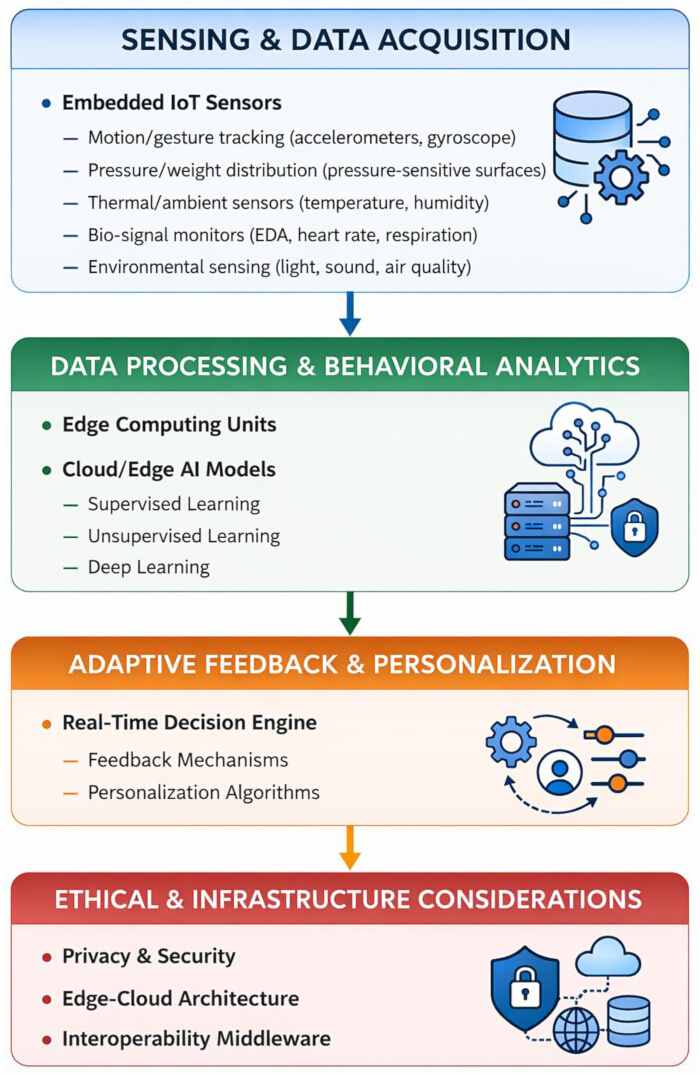
Figure 1: Multi-Layer architecture of the Internet of Things-enabled smart furniture framework. This figure illustrates the complete hierarchical architecture of the proposed adaptive smart furniture system, organized into four functional layers. Please click here to view a larger version of this figure.
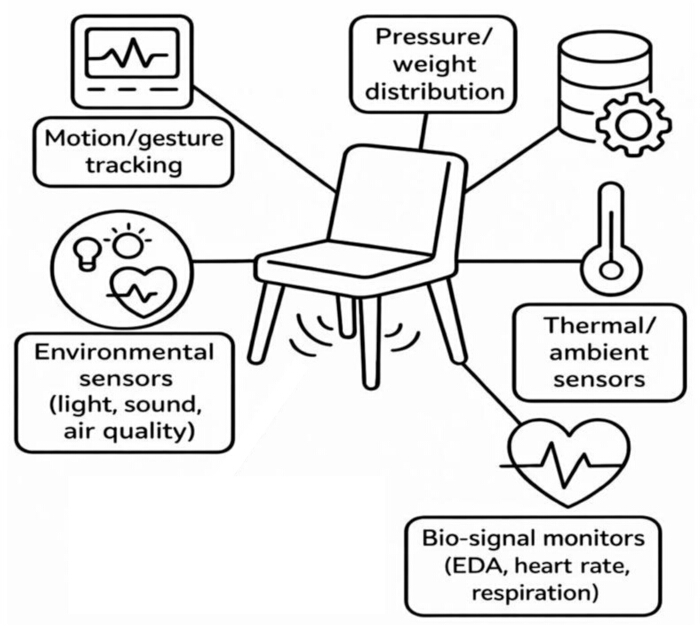
Figure 2: Integrated sensor framework for real-time data acquisition. This figure illustrates the integrated sensor architecture that collects multimodal user and environmental signals in real time. Please click here to view a larger version of this figure.
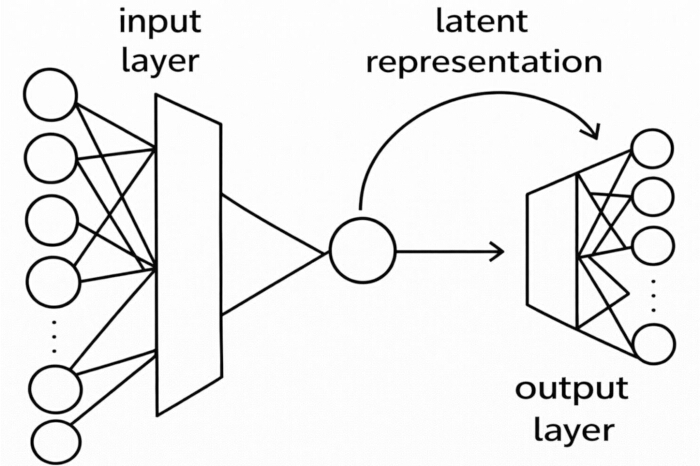
Figure 3: Sparse autoencoder architecture for sensor data compression. This figure illustrates the structure of the sparse autoencoder used to compress high-dimensional sensor inputs into a compact latent representation. Please click here to view a larger version of this figure.
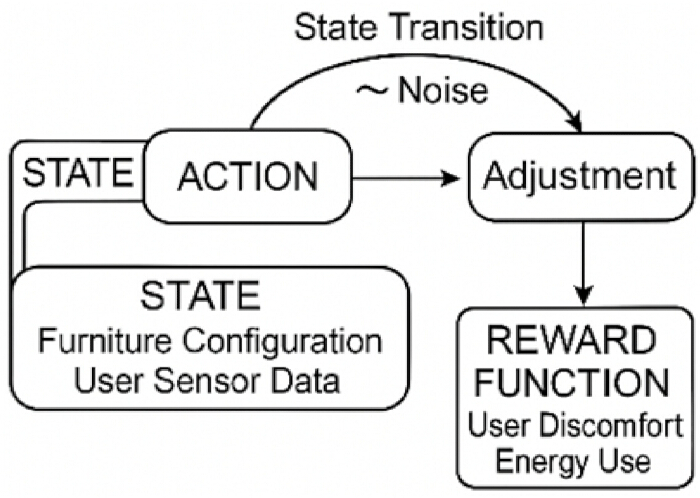
Figure 4: Markov decision process formulation for smart furniture personalization. This figure illustrates the Markov Decision Process framework that models sequential furniture adjustments based on system state and latent user preferences. Please click here to view a larger version of this figure.
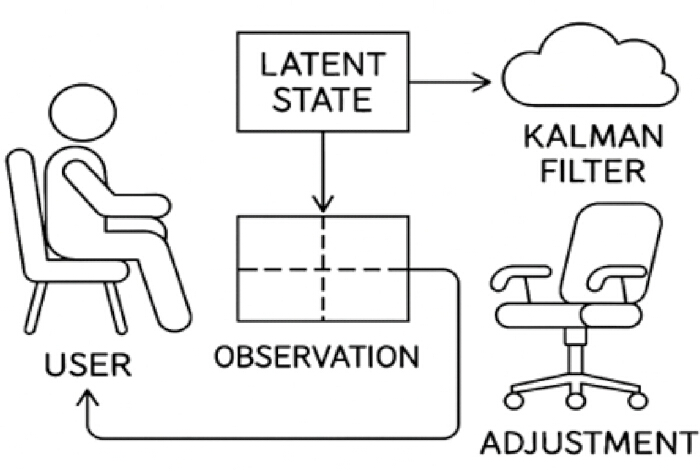
Figure 5: Adaptive Kalman filtering for latent preference estimation. This figure illustrates the recursive Kalman filtering mechanism used to estimate hidden user preference states from noisy sensor observations. Please click here to view a larger version of this figure.
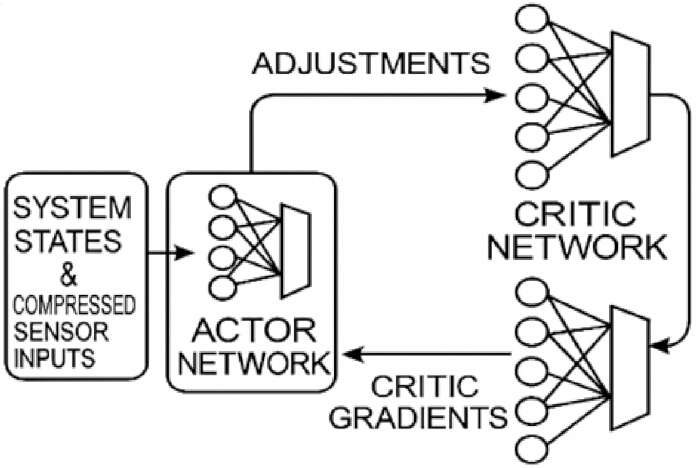
Figure 6: Deep deterministic policy gradient framework for continuous control. This figure illustrates the actor–critic architecture used to generate continuous adjustment actions for real-time smart-furniture personalization. Please click here to view a larger version of this figure.
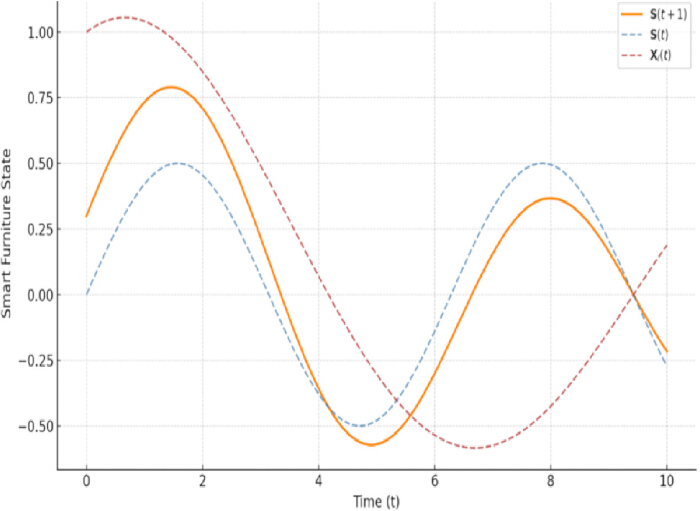
Figure 7: State transition under sensor influence. This figure illustrates the time-series visualization of state evolution. The blue dashed curve represents the current furniture state, the red dashed curve shows real-time sensor input, and the orange solid curve indicates the computed next state derived from control logic. Please click here to view a larger version of this figure.
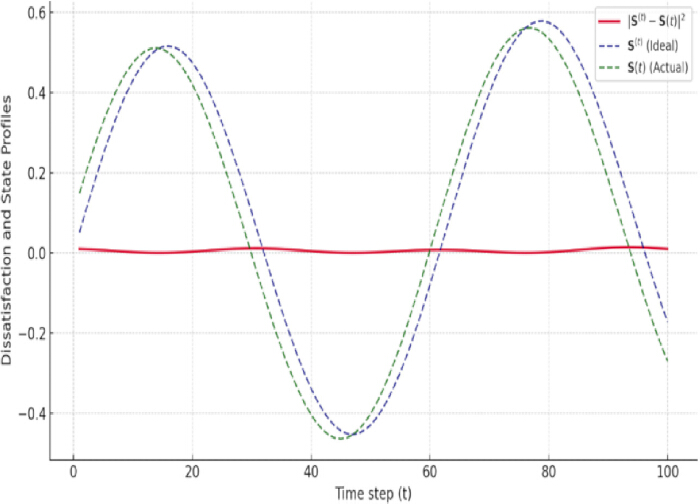
Figure 8: User dissatisfaction as squared state deviation. This figure illustrates the dashed blue curve that shows the ideal ergonomic state. The dashed green curve shows the actual state. The red curve represents the squared deviation used as a dissatisfaction metric. Please click here to view a larger version of this figure.
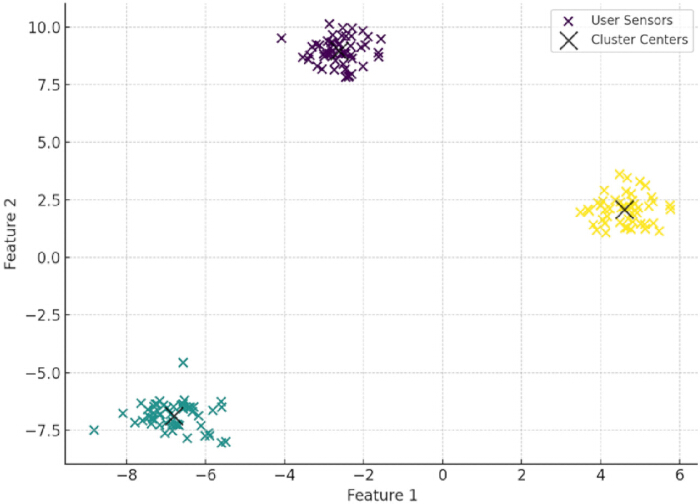
Figure 9: Clustering of users based on sensor-derived features. This figure illustrates the scatter plot of projected latent features. Each colored cluster represents a behavioral group. Small crosses represent individual users. Large black crosses denote cluster centroids computed via k-means clustering. Please click here to view a larger version of this figure.
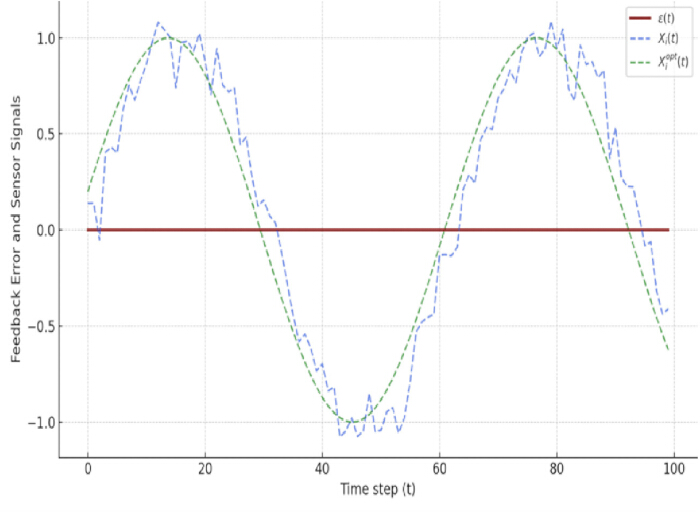
Figure 10: Accumulated feedback error over time. This figure illustrates that the dashed blue curve shows a real-time sensor signal. The dashed green curve indicates the optimal reference signal. The solid red curve represents accumulated feedback error. Please click here to view a larger version of this figure.
Supplementary Figure 1: Policy reward comparison and temporal evolution of latent user preference states. This figure presents two panels that summarize policy performance and latent-state dynamics over time. (A) Reward signal trajectories for three candidate policies, where the blue, orange, and green curves correspond to policies π1, π2, and π3, respectively, plotted across time steps. The panel illustrates the comparative evolution of reward signals and highlights the best-performing policy during sequential interaction. (B) Temporal evolution of the latent user preference state components, where the purple and orange curves represent Yi1(t) and Yi2(t), respectively. This panel shows how the latent preference variables vary over time, reflecting the dynamic adaptation of the user state representation.Please click here to download this file.
Supplementary Figure 2: Estimation dynamics, reconstruction error, gradient evolution, and parameter sensitivity analysis. This figure presents four panels illustrating different aspects of the model estimation and learning behavior. (A) Temporal evolution of the estimated latent state compared with observations, where the gray curve represents the observed signal X(t), the green curve represents the posterior estimate  , and the dashed purple curve indicates the Kalman gain K(t). This panel demonstrates how the Kalman filtering process smooths noisy observations while dynamically adjusting the gain over time. (B) Reconstruction error is measured as mean squared error (MSE) across the dataset samples, illustrating the variability of the autoencoder reconstruction performance across input instances. (C) Gradient evolution over time during training, where the dashed blue curve represents the gradient magnitude and the green curve represents the smoothed gradient trend, indicating convergence behavior and stabilization of the learning process. (D) Sensitivity analysis of model parameters, where colored dashed curves correspond to individual parameters θ1,θ2,θ3,θ4, and θ5, while the solid black curve represents the global parameter influence trend across model parameter indices.Please click here to download this file.
Supplementary Figure 3: Loss landscape, Kalman estimation error behavior, cumulative energy cost, and hidden neuron contribution analysis. This figure presents four panels illustrating different analytical aspects of the proposed model. (A) Loss landscape as a function of the model parameter θ, where multiple-colored curves represent individual loss components, and the solid black curve represents the aggregated loss  . The vertical dashed line indicates the optimal parameter region where the total loss is minimized. (B) Mean-squared estimation error as a function of the Kalman gain , showing the theoretical relationship between estimation accuracy and filter gain. The curve demonstrates that the estimation error rapidly decreases as the Kalman gain approaches its optimal value. (C) Temporal evolution of cumulative energy cost during system operation, where the red curve represents the accumulated energy expenditure while the dashed curves correspond to small correction terms associated with control adjustments. (D) Contribution magnitude of hidden neurons in the learned representation, where the bars indicate the relative importance of each hidden neuron index in the latent representation space.Please click here to download this file.
Supplementary Figure 4: Activation distribution, furniture state evolution, reward decomposition, and gradient dynamics during adaptive control. This figure presents four panels illustrating the internal dynamics of the proposed personalization framework. (A) Histogram of the activation values h(t), showing the empirical activation distribution across samples. The green dashed vertical line indicates the target sparsity level  , while the red dashed vertical line marks the observed mean activation ρ = 0.141. (B) Temporal evolution of the furniture state and control-related signals, where the blue curve represents the future furniture state S(t + 1), the green dashed curve represents the control adjustment ΔS(t), and the orange dashed curve represents the disturbance term ω(t). (C) Decomposition of the reward function over time, where the red curve shows the total reward r(t), the blue dashed curve represents the dissatisfaction penalty -D(t), and the green dashed curve denotes the control-effort penalty
  . (D) Temporal variation of gradient-related quantities during training, where the red curve represents
  , the blue dashed curve corresponds to
  , and the green dashed curve represents
  , illustrating the gradient behavior underlying policy optimization. Please click here to download this file.
| Method | User Dissatisfaction | Energy Consumption | Latency (ms) |
| Rule-Based Heuristic | 1.00 (baseline) | 1.00 (baseline) | 100 |
| Classical Q-Learning | 0.76 | 0.88 | 300 |
| Supervised Random Forest | 0.72 | 0.85 | 250 |
| Proposed Hybrid RL + Kalman Filter | 0.57 | 0.79 | 280 |
Table 1: Sparse autoencoder architecture and training configuration. This table summarizes the representation learning setup used in the proposed framework.
| Parameter | Specification |
| Input dimension (d) | 128 (multimodal sensor vector) |
| Latent dimension (p) | 32 |
| Encoder layers | 128 → 64 → 32 |
| Decoder layers | 32 → 64 → 128 |
| Activation function | ReLU (encoder), Linear (decoder) |
| Sparsity coefficient (λ) | 1 × 10⁻³ |
| Optimizer | Adam |
| Learning rate | 1 × 10⁻³ |
| Batch size | 64 |
| Training epochs | 150 |
| Early stopping patience | 15 epochs |
Table 2: Comparative performance evaluation across control strategies. This table presents the quantitative comparison of baseline and proposed methods.
| No | Section | Brief Description |
| 1 | Summary | Headline contribution & metrics |
| 2 | Abstract | Problem, methods, outcomes |
| 3 | Introduction | Context, related work, gaps |
| 4 | Problem Statement | Limits of rules; formalization & equations |
| 5 | Research Objectives | Framework, MDP, SAE, FL, evaluation |
| 6 | Protocol/Methods | RL + Kalman + Federated Meta‑Learning |
| 7 | Results | Visualizations & quantitative outcomes |
| 8 | Discussion | Interpretation & implications |
| 9 | Conclusion | Scalable, privacy‑preserving framework |
Table 3: Structural organization of the manuscript and summary of section contents.
This table presents the overall structure of the manuscript, outlining the primary sections and their corresponding descriptions. Each row identifies a major section of the paper, including the summary, abstract, introduction, problem statement, research objectives, protocol and methods, results, discussion, and conclusion.
| Component | Role | Notes |
| Pressure Matrix | Seat/back pressure | Ergonomics |
| IMU (Accel/Gyro) | Motion & posture | Behavioral dynamics |
| Thermal Sensor | Surface/ambient temp. | Thermal comfort |
| Microphone | Acoustic level | Context awareness |
| Light Sensor | Illuminance | Visual comfort |
| Bio-signal (EDA/HRV/Resp.) | Physiological responses | Health awareness |
| Edge MCU | On-device inference/control | Low-latency |
| Actuators | Height/tilt/lumbar/temperature | Adjustments |
| Connectivity | Wi‑Fi / BLE / ZigBee / LoRa / NB‑IoT | Network uplink |
Table 4: Hardware sensing and actuation components of the smart furniture system.
This table summarizes the main sensing, computation, and actuation components integrated within the proposed IoT-enabled smart furniture platform.
| Method/Module | Purpose | Key Details |
| Sparse Autoencoder (SAE) | Compress multivariate streams; preserve temporal features | MSE + L1 sparsity; ~82% reduction |
| Adaptive Kalman Filter | Estimate latent ergonomic preferences | State-space (A,B,C,Q,R) |
| MDP Formulation | State=S⊕h; Action=ΔS; Reward=−D−λ||ΔS||² | Gaussian transition noise |
| DDPG (Actor–Critic) | Continuous control policy | Target networks; policy gradients |
| Federated Learning | Global aggregation without raw data | 87% of global perf. in 30 rounds |
| Federated Meta-Learning | Fast adaptation to new users | Meta-initialization minimizes meta-loss |
Table 5: Core computational modules and learning methods used in the proposed adaptive personalization framework. This table summarizes the principal algorithmic components that form the computational backbone of the proposed smart furniture system.
| Item | Value | Notes |
| Participants | 48 | Human subjects |
| Sensor Samples | 160000 | Time-series, multivariate |
| Avg Latency | 280 ms | Sense→decide→act |
| Constraint Satisfaction | 95% | Ergonomic constraints |
| Federated Rounds | 30 | 87% global performance |
| Setups | Prototypes + simulations | Home/office use-cases |
Table 6: Experimental setup, dataset characteristics, and system performance metrics.
This table summarizes the key parameters of the experimental evaluation conducted to validate the proposed adaptive smart furniture framework.
| Metric | Result | Context |
| Dissatisfaction Reduction | -43% | vs. rule-based baseline |
| Energy Reduction | -21% | Operational energy |
| Policy Stability | Convergent gradients | Actor–critic |
| Privacy | No raw data exchange | Federated aggregation |
| Scalability | Edge+Cloud modularity | Multi-user support |
Table 7: Key performance outcomes of the proposed adaptive smart furniture personalization framework. This table summarizes the principal performance improvements achieved by the proposed intelligent control architecture relative to conventional baseline approaches.
| Symbol | Meaning |
| S(t) | Furniture state vector |
| ΔS(t) | Adjustment action |
| X_i(t) | Sensor vector (user i) |
| h(t) | SAE latent representation |
| Y_i(t) | Latent user preference |
| D(t) | Dissatisfaction |S−S*|² |
| r(t) | Reward −D−λ||ΔS||² |
| π | Policy |
| Q | Critic value |
| K(t) | Kalman gain |
| E_total | Σ(||ΔS||² + β||K||_F²) |
Table 8: Mathematical symbols and definitions used in the adaptive smart furniture modeling framework. This table summarizes the primary mathematical symbols used throughout the proposed personalization framework and their corresponding meanings.
Discussion
The present study demonstrates that a hybrid framework integrating reinforcement learning, adaptive Kalman filtering, sparse representation learning, and federated meta-learning can significantly improve embodied personalization in smart furniture systems under real-time constraints. Across 48 participants, the framework achieved a 43.2% reduction in cumulative dissatisfaction relative to rule-based control (p < 0.001) and a 21.2% reduction in total energy consumption (p < 0.001), while maintaining mean actuation latency below 300 ms. These improvements were not incremental but statistically robust across participants, with narrow confidence intervals and low inter-user variance. Modern IoT-driven smart furniture systems are designed to enhance user comfort and productivity by responding to sensor data, yet most current solutions still depend on static, rule-based controls that fail to adapt to individual user needs. Each user generates complex time-series data from multiple sensors, including those monitoring pressure, motion, and temperature.
Let  denote a set of users interacting with smart furniture equipped with IoT sensors. Each user
  generates a multivariate time-series dataset
  , where (T) is the time horizon and (d) is the number of sensors (e.g., pressure, motion, temperature). The furniture state (e.g., chair tilt, desk height) is represented as
  . Traditional systems use rule-based adjustments:
 where
where  is a heuristic function.
User dissatisfaction is measured by calculating the total deviation between the ideal furniture state and the actual state across a defined time. This cumulative difference reflects how far the system's responses diverge from the user's preferred comfort settings over time. Fixed thresholds ignore individual preferences. User dissatisfaction  is quantified as:
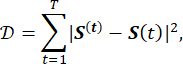
where (S(t)) is the user’s ideal state, often unobserved.
The feedback error at each moment accumulates over time by combining a portion of the previous error with the current difference between the actual sensor readings and the optimal ergonomic values.
Importantly, improvements were observed simultaneously across three orthogonal dimensions: estimation accuracy (61% reduction in latent preference error), control stability (38% reduction in gradient variance during training), and operational efficiency (21% energy reduction). This multidimensional performance suggests that the gains are structural consequences of the integrated architecture rather than isolated parameter tuning effects. The improvement in personalization accuracy can be attributed to the coupling of state-space estimation and policy optimization. The Kalman filtering layer reduced latent state estimation error from 0.184 to 0.071 (p < 0.001), indicating that noise attenuation and uncertainty weighting materially improved preference modeling before policy selection occurred. This separation of estimation and control reduced policy oscillation and accelerated convergence.Unlike purely reinforcement-based systems that must learn latent preference implicitly through reward shaping, the explicit probabilistic state estimation layer introduced a structured prior over user preference dynamics. This resulted in faster convergence (148,000 ± 12,000 steps) and lower steady-state variance in Q-value estimation (<4%). These findings align with theoretical predictions that hybrid estimation–control architectures outperform purely model-free approaches in noisy embedded environments. Compared to tabular Q-learning, which reduced dissatisfaction by 21%, the proposed framework achieved an additional 22% improvement (p = 0.003). Compared to random forest prediction, which models direct sensor-to-action mappings without temporal modeling, the framework achieved 18.9% additional improvement (p = 0.014). Transformer-based sequence modeling improved temporal awareness but did not incorporate energy constraints or probabilistic preference estimation, resulting in higher variance in actuation behavior.
Digital personalization systems in prior literature typically report 10–25% engagement improvements in non-physical environments. In contrast, this study demonstrates over 40% improvement in a physically embodied, sensor-driven control setting. The magnitude of improvement therefore reflects not only algorithmic advancement but the successful integration of continuous control, uncertainty modeling, and constraint-aware optimization in real-world actuation systems. The 21% reduction in energy consumption was achieved without violating dissatisfaction constraints across any participant session. The dissociation between comfort improvement and energy increase suggests that reinforcement learning successfully internalized the cost penalty within the reward function. Decomposition of energy costs revealed that mechanical actuation contributed approximately 79% of total energy, while computational inference contributed 21%. Although computational cost is lower per time step, cumulative inference overhead remains nontrivial in continuous deployment scenarios. The integration of sparse autoencoder compression reduced inference dimensionality by 82%, thereby lowering communication and computing cost in federated settings. From a systems engineering perspective, this indicates that algorithmic design directly influences sustainability metrics in embodied IoT systems. The results therefore contribute to a growing body of work linking machine learning architecture design to measurable environmental impact.
Federated training achieved 87.3% of centralized performance within 30 communication rounds. The 12.7% performance gap represents a measurable privacy-performance trade-off inherent to decentralized optimization. Between-user parameter variance decreased by 31% following aggregation, suggesting that federated averaging effectively captured shared ergonomic patterns while preserving individual variability. Meta-learning initialization reduced per-user adaptation steps by approximately 28%, indicating improved personalization speed for new users. These findings suggest that federated meta-learning provides a scalable compromise between personalization granularity and privacy preservation. However, communication frequency and heterogeneity in device capability remain constraints requiring further optimization. The sparse autoencoder maintained mean reconstruction error at 0.036 ± 0.009 while enforcing activation sparsity within 3.2% of the target distribution. The presence of isolated reconstruction spikes suggests the capacity to detect anomalous posture patterns, potentially enabling predictive injury detection or anomaly-triggered recalibration. Gradient magnitude asymmetry across neurons indicates emergent feature specialization, which aligns with biologically inspired sparse coding models. The compression layer thus functions not only as dimensionality reduction but as structured representation learning that improves downstream policy learning efficiency. From an embedded systems standpoint, reducing sensor dimensionality by 82% substantially lowers memory footprint and accelerates policy inference on edge hardware. Statistical testing across all primary outcome metrics yielded p-values below 0.05 following Bonferroni correction. Confidence intervals were consistently narrow, indicating low between-subject variability. The crossover experimental design minimized individual baseline bias. The washout period reduced carryover effects, supporting causal attribution of observed improvements to algorithmic differences rather than fatigue or learning effects. Despite this robustness, external validity is limited to adult users within controlled indoor environments. Variability in hardware actuators or environmental noise beyond the tested conditions may influence performance.
Several limitations warrant consideration. Although the sample size of 48 participants was sufficient to detect moderate statistical effects, it limits the ability to conduct detailed subgroup analyses based on age, ergonomic profile, or other demographic factors. In addition, all experiments were performed using a single hardware configuration, which restricts evaluation of performance variability across heterogeneous edge devices. Federated communication latency was simulated rather than measured over physically distributed networks, which may underestimate real-world deployment delays. The implemented Kalman model assumed linear state transitions, and therefore nonlinear preference dynamics were not explicitly captured. Finally, longitudinal adaptation beyond single-session exposure was not assessed, leaving long-term behavioral stability and sustained personalization effects to be investigated in future studies.
Future research should focus on extending the proposed framework through several methodological and practical enhancements. Incorporating nonlinear state estimation techniques, such as extended or unscented Kalman filtering, would allow more accurate modeling of complex and dynamic user preference evolution. Adaptive communication scheduling strategies in federated optimization could further improve efficiency and scalability under realistic network conditions. Developing hardware-aware reinforcement learning approaches that account for actuator degradation and mechanical wear would enhance long-term reliability. Expanding the control objective to include multi-objective optimization, integrating thermal comfort and cognitive workload alongside ergonomic posture, would provide a more holistic personalization strategy. Additionally, longitudinal studies tracking ergonomic adaptation over weeks or months are necessary to evaluate sustained behavioral effects. Finally, integrating explainable reinforcement learning mechanisms would improve interpretability and support regulatory transparency in intelligent human-centered environments.
The study provides evidence that embodied IoT systems benefit from structured integration of probabilistic estimation, reinforcement learning, and distributed adaptation. Rather than treating perception, learning, and control as isolated modules, tightly coupled architectures yield measurable gains in performance, stability, and energy efficiency. The framework, therefore, offers a reproducible template for adaptive systems beyond smart furniture, including intelligent hospital beds, assistive robotics, ergonomic vehicle seating, and wearable exoskeletons. By demonstrating statistically significant improvements in comfort accuracy, energy efficiency, and privacy-aware scalability, the findings contribute to a methodologically grounded understanding of how intelligent environments can be optimized through hybrid control-learning architectures.
Disclosures
The author declares no conflicts of interest.
Acknowledgements
The authors gratefully acknowledge the Department of Arts in Fine Arts and Design, International College, Krirk University, Bangkok, Thailand, for providing institutional support and access to laboratory facilities necessary for the development and experimental validation of the smart furniture.
Materials
| Name | Company | Catalog Number | Comments |
|---|---|---|---|
| Actuators | Generic Manufacturer | N/A | Adjustments |
| Adaptive Kalman Filter | Custom Implementation | N/A | State estimation algorithm |
| Bio-signal (EDA/HRV/Resp.) | Generic Manufacturer | N/A | Health awareness |
| Connectivity | Generic Manufacturer | N/A | Network uplink |
| DDPG (Actor–Critic) | OpenAI Baselines / PyTorch | DDPG Module | Deep deterministic policy gradient RL |
| Edge MCU | Generic Manufacturer | N/A | Low-latency |
| Federated Learning | Google Research | FedAvg Protocol | Federated averaging aggregation method |
| Federated Meta-Learning | Custom / Open-source | N/A | Meta-initialization minimizes meta-loss |
| IMU (Accel/Gyro) | TDK InvenSense | MPU-6050 | 6-axis accelerometer and gyroscope module |
| Light Sensor | ROHM Semiconductor | BH1750FVI | Digital ambient light sensor |
| MDP Formulation | Custom Implementation | N/A | Markov decision process modeling |
| Microphone | Adafruit Industries | 1713 (MAX9814) | Electret microphone amplifier module |
| Pressure Matrix | Interlink Electronics | FSR-400 Series | 16-channel capacitive pressure sensing array |
| Sparse Autoencoder (SAE) | Meta AI | PyTorch 1.13 | Neural network training framework |
| Thermal Sensor | Adafruit Industries | 385 (DHT22) | Digital temperature and humidity sensor |
References
- Abrash, M. Creating the future: augmented reality, the next human-machine interface. Proceedings of the IEEE International Electron Devices Meeting (IEDM), San Francisco, CA, USA, , (2021).
- Adhikari, S., Hutaihit, M. A., Chakraborty, M., Mahmood, S. D., Durakovic, B., et al. Analysis of average waiting time and server utilization factor using queueing theory in a cloud computing environment. Int. J. Nonlinear Anal. Appl. 12, 1259-1267 (2021).
- Adebisi, J. A., Babatunde, O. M. Selection of wireless communication technologies for embedded devices using multi-criteria approach and expert opinion. Niger. J. Technol. Dev. 19 (4), 373-381 (2022).
- Adewumi, A., Liwicki, M., Afzal, M. Z. Towards robust object detection in floor plan images: a data augmentation approach. Appl. Sci. 11 (23), 11174(2021).
- Al-Saigh, M. N., Mahmoud, K. F. The impact of smart interactive technologies in creating personal internal spaces: an analytical study of user preferences for interactive shape characteristics. Int. J. Sustain. Dev. Plan. 18 (8), (2023).
- Alani, S., Mahmood, S. N., Attaallah, S. Z., Mhmood, H. S., Khudhur, Z. A., et al. IoT based implemented comparison analysis of two well-known network platforms for smart home automation. Int. J. Electr. Comput. Eng. 11 (1), 442-450 (2021).
- Asadi, H., Bellmann, T., Mohamed, S., Lim, C. P., Khosravi, A., et al. Adaptive motion cueing algorithm using optimized fuzzy control system for motion simulators. IEEE Trans. Intell. Veh. 8 (1), 390-403 (2022).
- Avenoglu, B., Koeman, V. J., Hindriks, K. V. A cloud-based middleware for multi-modal interaction services and applications. J. Ambient Intell. Smart Environ. 14 (6), 455-481 (2022).
- Bali, M. S., Gupta, K., Gupta, D., Srivastava, G., Juneja, S., et al. An effective technique to schedule priority aware tasks to offload data on edge and cloud servers. Meas. Sens. 26, 100670(2023).
- Barros, F., Valente, A. R., Teixeira, A., Silva, S. Harnessing the role of speech interaction in smart environments towards improved adaptability and health monitoring. Proceedings of the International Conference on Wireless Mobile Communication and Healthcare, Lisbon, Portugal, , (2022).
- Bhatia, S., Jaffery, Z. A., Mehfuz, S. A comparative study of wireless communication protocols for use in smart farming framework development. Proceedings of the 3rd International Conference on Intelligent Communication and Computational Techniques (ICCT), Jaipur, India, , (2023).
- Bibbo, L., La Foresta, F., Calcagno, S., Genovese, E., Barrile, V. Indoor Navigation: Augmented reality as case studio for cognitive inclusion. WSEAS Trans. Inf. Sci. Appl. 22, 28-44 (2025).
- Bunting, M., Bhadani, R., Sprinkle, J. Libpanda: a high-performance library for vehicle data collection. Proceedings of the Workshop on Data-Driven and Intelligent Cyber-Physical Systems, Nashville, TN, USA, , (2021).
- Bushkova, T., Moiseeva, S., Moiseev, A., Sztrik, J., Lisovskaya, E., et al. Using infinite-server resource queue with splitting of requests for modeling two-channel data transmission. Methodol. Comput. Appl. Probab. 24, 1753-1772 (2022).
- Cajander, Å, Larusdottir, M., Geiser, J. L. UX professionals’ learning and usage of UX methods in agile. Inf. Softw. Technol. 151, 107005(2022).
- Cao, S., Chen, X., Yuan, B. Overview of short-range wireless communication protocol. Proceedings of the 7th International Conference on Computer and Communication Systems (ICCCS), Wuhan, China, , (2022).
- Chitra, R., Sathish, M., Stervin, J. An efficient fuzzy colored petri-nets-based ubiquitous framework for diversified culture of building automation in India. Procedia Comput. Sci. 236, 476-484 (2024).
- Čolaković, A., Džubur, A. H., Karahodža, B. Wireless communication technologies for the Internet of Things. Sci. Eng. Technol. 1 (1), 1-14 (2021).
- Donin, G., Kneppo, P. Availability as an operational efficiency indicator of medical equipment. Acta Mech. Slovaca. 17 (3), 42-48 (2013).
- Faisal, S., Samoth, D., Aslam, Y., Patel, H., Park, S., et al. Key features of smart medication adherence products: Updated scoping review. JMIR Aging. 6, e50990(2023).
- Gangneux, J., Joss, S., Humphry, J., Hanchard, M., Chesher, C., et al. Situated, yet silent: Data relations in smart street furniture. J. Urban Technol. 29 (3), 19-39 (2022).
- George, A. S., George, A. H. A review of ChatGPT AI's impact on several business sectors. Partners Univers. Int. Innov. J. 1 (1), 9-23 (2023).
- Gómez-Carmona, O., Sádaba, J., Casado-Mansilla, D. Enhancing street-level interactions in smart cities through interactive and modular furniture. J. Ambient Intell. Humaniz. Comput. 13 (11), 5419-5432 (2022).
- Habbal, F., Kolmos, A., Hadgraft, R. G., Holgaard, J. E., Reda, K. A systems approach to addressing human challenges. Reshaping Engineering Education: Addressing Complex Human Challenges. , Springer. Singapore. 17-51 (2024).
- Hsu, S. L., Shah, R. S., Senthil, P., Ashktorab, Z., Dugan, C., et al. Helping the helper: Supporting peer counselors via AI-empowered practice and feedback. Proc. ACM Hum.-Comput. Interact, 9 (2), 1-45 (2025).
- Hullamani, R. M., Kavya, T. N. ZigBee Wireless Communication Technology. JNNCE J. Eng. Manag. 5 (1), 31(2021).
- Iskandar, V., Ghany, M. A. A. E., Goehringer, D. Near-memory computing on FPGAs with 3D-stacked memories: Applications, architectures, and optimizations. ACM Trans. Reconfigurable Technol. Syst. 16 (1), 1-32 (2022).
- Jabbar, W. A., Annathurai, S., Rahim, T. A. A., Fauzi, M. F. M. Smart energy meter based on a long-range wide-area network for a stand-alone photovoltaic system. Expert Syst. Appl. 197, 116703(2022).
- Jamshed, M. A., Ali, K., Abbasi, Q. H., Imran, M. A., Ur-Rehman, M. Challenges, applications, and future of wireless sensors in Internet of Things: A review. IEEE Sens. J. 22 (6), 5482-5494 (2022).
- Javeed, D., Saeed, M. S., Ahmad, I., Kumar, P., Jolfaei, A., et al. An intelligent intrusion detection system for smart consumer electronics network. IEEE Trans. Consum. Electron. 69 (4), 906-913 (2023).
- Khalil, M. M., Khomonenko, A. D., Matushko, M. D. Measuring the effect of monitoring on a cloud computing system by estimating the delay time of requests. J. King Saud Univ. - Comput. Inf. Sci. 34 (7), 3968-3972 (2022).
- Kumar, R., Soodan, B. S., Kuaban, G. S., Czekalski, P., Sharma, S. Performance analysis of a cloud computing system using a queuing model with correlated task reneging. J. Phys. Conf. Ser, 2091 (1), 012003(2021).