Downregulation of LINC00426 promotes the progression of diabetic kidney disease (DKD) by inducing apoptosis in renal cells and increasing inflammation.
Research Article
The Diagnostic Value of LINC00426 in Type 2 Diabetes and Diabetic Kidney Disease and its Regulatory Effects on Renal Cells
1Department of Nephrology, Tianyou Hospital, Wuhan University of Science and Technology, 2Department of Endocrinology, Changsha Central Hospital, 3Nephrology Department, Shanghai Putuo District People's Hospital, 4Cardiology Department, The Third Xiangya Hospital of Central South University, 5Health Clinic, General Office of Nanning Municipal People's Government
Opens in a new tab
In This Article
Summary
Loading...
$$\rightleftharpoonup{xx}$$
$$\longleftharp{xx}$$,
$$\longrightharp{xx}$$,
Abstract
Loading...
$$\rightleftharpoonup{xx}$$
$$\longleftharp{xx}$$,
$$\longrightharp{xx}$$,
The study investigates the diagnostic value of LINC00426 in type 2 diabetes (T2DM) and diabetic kidney disease (DKD), along with its regulatory effects on renal cells. The study included 280 T2DM patients (146 cases of DKD), and 186 healthy controls who visited during the same period. Reverse transcription quantitative real-time polymerase chain reaction (RT-qPCR) confirmed that serum LINC00426 is downregulated in patients with T2DM and DKD. Receiver operating characteristic (ROC) analysis assessed LINC00426’s diagnostic value for T2DM and DKD. Multivariate logistic regression identified independent DKD risk factors. LINC00426 showed diagnostic value for both diseases and negatively correlated with the urine albumin-to-creatinine ratio (UACR). Its downregulation independently predicted DKD development. A high-glucose (HG) environment inhibits LINC00426 expression in HK-2 and HGMC cells. CCK8 assay, flow cytometry, and enzyme-linked immunosorbent assays confirmed that HG also suppressed proliferation while promoting apoptosis and inflammation. In contrast, overexpression of LINC00426 enhances the proliferative capacity of HK-2 and HGMC cells, inhibits apoptosis, and reduces inflammatory responses. Downregulation of LINC00426 may exacerbate DKD progression by inhibiting the proliferation of renal cells (HK-2 and HGMC) and promoting apoptosis and inflammatory responses.
Introduction
Loading...
$$\rightleftharpoonup{xx}$$
$$\longleftharp{xx}$$,
$$\longrightharp{xx}$$,
Type 2 diabetes mellitus (T2DM) is a chronic metabolic disorder1. Reports indicate that T2DM and its complications have become a significant global public health concern2,3, posing threats to human health and societal development. Due to unhealthy lifestyle habits acquired over time4, the prevalence of T2DM has been increasing annually5. Diabetic nephropathy (DN) was renamed diabetic kidney disease (DKD) in 20076,7. As a common complication of T2DM8, its incidence and mortality rates among diabetic patients continue to rise annually9. DKD often remains latent in patients with long-standing diabetes10 or manifests abruptly11. DKD can cause kidney dysfunction and endothelial damage12,13. DKD primarily manifests as the urinary loss of large molecules such as proteins following renal filtration system damage 14. However, for patients, blood biochemical markers (fasting glucose, insulin) serve as the gold standard for diagnosing T2DM, yet DKD remains difficult to detect. Conventional treatment approaches fail to promptly identify or assess DKD progression15. Therefore, raising awareness of the disease and identifying novel diagnostic biomarkers is crucial for the prevention and treatment of both T2DM and DKD.
In recent years, the involvement of long non-coding RNA (lncRNA) in diverse functions such as immunity16, cancer regulation, and metabolism has become increasingly recognized17. Accumulating evidence now implicates dysregulated lncRNA expression in the pathogenesis of complex chronic diseases, notably DKD18,19. For instance, Zhang et al.20 identified through high-throughput sequencing that lncRNA evf-2 interacts with hnRNP, promoting DKD development by enhancing expression of cell cycle-related genes and inflammatory factors. In a DKD rat model, lncRNA USR0000B2476D was identified as involved in immune regulation21. LINC00426 is a newly discovered lncRNA that plays an important role in the regulation of inflammatory factors22. Recent comparative microarray studies suggest LINC00426 may hold potential as a biomarker for T2DM development23. Furthermore, bioinformatics strategies have captured LINC00426's involvement in immune regulation within renal cell carcinoma24. Numerous studies have also highlighted the pivotal involvement of inflammation in diabetes and DKD25 in diabetes and DKD. Existing studies have shown that T2DM26 and prediabetes-related conditions27, including metabolic syndrome28, obesity29, and cardiovascular metabolic heart disease30, are all associated with a high inflammatory burden. In addition, diabetic microvascular complications, such as neuropathy31, nephropathy32, and retinopathy33, as well as macrovascular complications34, are all chronic inflammatory responses. Therefore, studying the relationship between LINC00426 and T2DM and DKD is very important for discovering new diagnostic markers and revealing the mechanisms of DKD. Nevertheless, current literature regarding the role of LINC00426 in TD2M and DKD remains limited, with no clinical evidence clarifying its expression pattern, independent risk value, and diagnostic efficacy in DKD patients.
To fill this research gap, the present study enrolled 466 participants, detected serum LINC00426 expression via RT-qPCR, identified independent risk factors for DKD using logistic regression, and further evaluated the diagnostic potential of LINC00426 for T2DM and DKD by ROC analysis. Our findings preliminarily clarify the expression characteristics and clinical significance of LINC00426 in DKD, thereby filling the existing knowledge gap and providing new insights into DKD pathogenesis and biomarker exploration.
Protocol
Loading...
$$\rightleftharpoonup{xx}$$
$$\longleftharp{xx}$$,
$$\longrightharp{xx}$$,
This study has been approved by the Medical Ethics Committee of The Third Xiangya Hospital of Central South University. All patients and their families expressed support and signed written informed consent forms.
Sample Collection
The sample size was calculated using G*Power software. The significance level (α) was set at 0.05, statistical power (1-β) at 0.8, effect size (f) at 0.25, and a 10% dropout rate was considered. The calculation results indicated that at least 123 participants per group were required when studying the control group, T2DM, and DKD populations. In the actual study, 186 participants were included in the control group, 134 patients in the T2DM group, and 146 patients in the DKD group. All were volunteers who received treatment at The Third Xiangya Hospital of Central South University from July 2022 to June 2023. Among these, 72 patients had no complications, whereas 208 patients presented with one or more complications. The complications primarily included diabetic neuropathy, diabetic retinopathy, and diabetic kidney disease (DKD), with 146 patients diagnosed with DKD. Diabetes classification was determined based on fasting insulin and fasting blood glucose levels; patients with type 1 diabetes were excluded to avoid diagnostic ambiguity. Cases of gestational diabetes and special diabetes conditions were excluded.
The inclusion criteria were as follows: Age ≥ 18 years; complete medical records and documentation available; compliance with the 2020 Chinese Guidelines for the Prevention and Treatment of Type 2 Diabetes37. Exclusion criteria included comorbid psychiatric disorders, cognitive impairment, or inability to cooperate with the study; acute infectious conditions; organ failure; and malignant tumors.
A control group of 186 healthy individuals undergoing routine medical examinations during the same period was selected. Control group participants must meet the following criteria: no history of diabetes or other metabolic disorders; normal fasting blood glucose (<6.1 mmol/L), 2-hour postprandial glucose (<7.8 mmol/L), and glycated hemoglobin (<5.7%); and no history of renal disease or complications, with normal renal function indicators (glomerular filtration rate, urine albumin/creatinine ratio).
Diabetes-Related Indicator Testing
Basic demographic information was recorded for each study participant upon admission. The following morning, 5 mL of venous blood was collected from each subject in a fasting state for testing biochemical indicators. Fasting blood glucose (FBG) levels were analyzed using a blood glucose meter35. Glycated hemoglobin (HbA1c) was measured with a fully automated HbA1c analyzer36. Urine samples were collected within 24 hours of study inclusion. Urinary albumin concentration was measured using a protein analyzer37 via the immune-turbidimetric method38. The degree of renal impairment in DKD patients was assessed by the urinary albumin-to-creatinine ratio (UACR), a well-established index for assessing early renal injury and disease progression in DKD3,39.
Cell Culture and Processing
Human renal epithelial cells HK-2 and glomerular mesangial cells HGMC were purchased. Specifically, HK-2 cells were cultured in K-SFM medium containing 10% fetal bovine serum, supplemented with 1% antibiotic solution. HGMC cells were cultured in primary cell complete medium. Cells were maintained in a 37 °C, 5% CO2 incubator. Passaging and transfection were performed when confluence exceeded 70%. For high-glucose (HG) induction, cells were seeded in 6-well plates and exposed to 30 mM D-glucose in 2 mL of culture medium per well for 48 h (HK-240 and HGMC cells41). A low-glucose control group was treated with 5.5 mM D-glucose + 24.5 mM mannitol.
The full-length sequence of LINC00426 was cloned into the eukaryotic expression plasmid pcDNA3.1 to construct the pcDNA3.1 LINC00426 overexpression plasmid. The empty pcDNA3.1 vector was used as the negative control. Cell transfection was performed using Lipofectamine 3000 reagent according to the manufacturer’s instructions. Briefly, HG-induced HK-2 and HGMC cells were seeded into 6-well plates and transfected at 70%–80% confluence. For each well, 2.5 µg of plasmid DNA (pcDNA 3.1 or pcDNA3.1 LINC00426) was mixed with 5 µL of Lipofectamine 3000 reagent in 250 µL Opti-MEM for 15 min at room temperature according to previous research10. The transfection complex was then added dropwise to cells in complete culture medium. After 6 h of incubation at 37 °C, the medium was replaced with fresh medium, and cells were cultured for an additional 42 h before subsequent experiments.
Total RNA Extraction and Reverse Transcription
The remaining blood was centrifuged again at 3000 x g for 15 min, and the supernatant was collected and stored at -80 °C. Total RNA was extracted from serum and cell samples using the Trizol-phenol-chloroform method, precipitated with equal-volume ethanol according to previous research42. RNA concentration and purity were assessed using a UV spectrophotometer. Total cDNA was synthesized from samples using the RT reagent mix via a gene PCR amplifier. Reaction conditions were 42 °C for 15 min, followed by 85 °C for 5 s. Samples were stored briefly at 4 °C.
Reverse transcription quantitative real-time polymerase chain reaction (RT-qPCR)
RT-qPCR was performed using SYBR qPCR master mix. Serum LINC00426 expression was quantified via the quantitative PCR instrument. Data was normalized using β-tubulin as the internal reference gene, calculated via the 2−ΔΔCt method. The average Ct value of β-tubulin was approximately 25, ranging from 23 to 27 across all serum samples. The Ct coefficient of variation (CV) was 2.5%. One-way ANOVA showed no significant difference in β-tubulin Ct values among the control, T2DM, and DKD groups, confirming its stable expression and suitability as an internal reference for serum LINC00426 normalization. The primers involved in the reaction are listed in Supplementary Table 1. Reaction conditions: pre-denaturation at 95 °C for 10 min; 40 cycles of 95 °C for 10 s and 60 °C for 30 s; final extension at 60 °C for 15 s.
Western blot analysis
Western blot analysis was performed following our established experimental protocols. Briefly, cells were lysed with RIPA lysis buffer supplemented with 1% protease inhibitor cocktail. After incubation at room temperature for 30 min, protein quantification was conducted. Protein samples were denatured at 95 °C, and equal amounts of 30 µg protein were separated by SDS-PAGE, followed by electrotransfer onto 0.45 µm PVDF membranes. Membranes were blocked with non-fat milk at room temperature for 2 h. Primary antibodies against Bax, Bcl-2, Caspase-3, IκBα, and p-P65 were diluted at 1:1000 with TBST, while β-actin was diluted at 1:3000. Membranes were incubated with primary antibodies overnight at 4 °C. Subsequently, membranes were incubated with corresponding horseradish peroxidase-conjugated secondary antibodies at room temperature for 1 h. Protein bands were visualized using an ECL substrate on a gel imaging system. Band gray values were quantified with ImageJ software.
Cell Counting Kit-8 (CCK8)
Digest transfected cells with 0.25% trypsin (EDTA-free) for approximately 3 min, then centrifuge at 800 x g for 5 min. Collect the pellet and resuspend in cell culture medium. Seed 100 µL of cell suspension (2 x 10³ cells) into a 96-well plate. After incubation for 24 h at 37 °C with 5% CO2 to allow cell adherence, add 10 µL of CCK8 solution. The initial addition of CCK8 solution is designated as 0 h. The absorbance at 450 nm is measured using a microplate reader at 0, 24, 48, and 72 h.
Flow Cytometry
The effect of transfection on cell apoptosis was assessed using the Annexin V-fluorescein isothiocyanate (FITC)/propidium iodide (PI) staining solution. After transfection, cells were digested using the same trypsin digestion procedure as described above. The cells were washed with phosphate-buffered saline (PBS) and resuspended. Cell pellets were collected by centrifugation at 800 x g for 5 min. Transfer 100 µL (approximately 1 x 10⁵ cells) to a flow cytometry tube, centrifuge at 800 x g for 5 min at room temperature and discard the supernatant. Resuspend cells in 195 µL Annexin V-FITC binding buffer. Add 5 µL Annexin V-FITC and 10 µL PI staining solution to the mixture, then mix thoroughly. Incubate in the dark at room temperature for 20 min. Subsequently, place the treated flow cytometry tube in an ice bath for temporary storage. Before analysis, filter the cell suspension through a 200-micron mesh filter and resuspend. Collect cell signals using the flow cytometry system under excitation at 488 nm/636 nm.
Enzyme-linked immunosorbent assay (ELISA)
Cell inflammatory cytokines were measured using commercially available ELISA kits for tumor necrosis factor alpha (TNF-α), interleukin-6 (IL-6) IL-1 beta (IL-1β). The specific detection procedure is as follows: Add 100 µL of the appropriately diluted standard to the standard wells. Add 100 µL of cell basal medium to all blank wells. Add 50 µL of cell supernatant and 50 µL of 1 x detection buffer to the sample wells. Subsequently, add 50 µL of the detection antibody solution to the appropriate wells. Cover the microplate and incubate at room temperature for 2 h. Discard the liquid from the wells and wash 6 times with wash buffer. To achieve optimal results, ensure the wells are thoroughly dried. Add 100 µL of streptavidin working solution to each well again, seal the plate, and incubate at room temperature for 45 min. Finally, add 100 µL of chromogenic substrate, then incubate them in the dark for 20 min. Then add 100 µL of stop solution and gently mix. The solution will now appear as a clear, yellowish liquid of varying intensity. Measure the optical density (OD) of the solution at 450 nm and 630 nm using a microplate reader. The difference between these two values corresponds to the concentration of the inflammatory factor in the sample.
Statistical Analysis
Data was processed and analyzed using commercially available statistical software. All experimental results comprised three valid replicates. Intergroup comparisons employed independent samples t-tests and analysis of variance (ANOVA). Multiple comparisons were performed using the Tukey method. The ROC curve was used to evaluate the diagnostic value of LINC00426 for T2DM and DKD. Logistic regression analysis assessed risk factors for DKD. P < 0.05 indicated statistical significance for the respective data results.
Results
Loading...
$$\rightleftharpoonup{xx}$$
$$\longleftharp{xx}$$,
$$\longrightharp{xx}$$,
Comparison of Baseline Characteristics Between Healthy Individuals and T2DM Patients
The study enrolled 280 T2DM patients and 186 healthy individuals as controls. Analysis of the participants' medical records (see Table 1) revealed that the mean age of the control group was 58.91 ± 17.63 years, compared to 59.50 ± 17.14 years for the T2DM patients. However, there were no significant differences in gender or obesity between the two groups of patients. Further comparison revealed that, compared with the control group, T2DM patients had significantly higher body mass index (BMI), triglycerides, low-density lipoprotein cholesterol (LDL-C), blood pressure, fasting blood glucose (FBG), glycated hemoglobin (HbA1c), and fasting insulin levels (P < 0.0001). T2DM patients exhibited markedly reduced high-density lipoprotein cholesterol (HDL-C) levels.
Expression and Diagnostic Value of LINC00426 in T2DM Patients
Clinical analysis revealed significantly reduced expression of LINC00426 in serum samples from T2DM patients (P < 0.0001, Figure 1A). ROC analysis showed that LINC00426 had an AUC of 0.7698 (P < 0.0001, 95% CI: 0.7275–0.8128, Figure 1B) for predicting T2DM, with a sensitivity of 67.86% and a specificity of 73.66%.
Impact of LINC00426 Expression on Patients with DKD and Other Complications
Based on the above findings, we reclassified the study cohort according to the newly proposed diagnostic criteria. Results revealed that patients with complications exhibited markedly lower serum LINC00426 expression compared to those with T2DM alone (P < 0.0001, Figure 2A). Furthermore, DKD patients exhibited significantly lower serum LINC00426 expression levels than patients with other T2DM complications (P < 0.0001, Figure 2B). At the same time, we compared the clinical information of DKD patients and non-DKD patients. The results showed (Table 2) that DKD patients had significantly higher BMI, as well as significantly increased triglycerides (P = 0.008), H/LDL-C (P < 0.0001), blood pressure (P < 0.0001), HbA1c (P < 0.0001), and fasting insulin (P = 0.006). Compared with non-DKD patients, DKD patients had significantly elevated levels of urinary microalbumin (mAlb) and UACR (P < 0.0001).
Diagnostic Value of LINC00426 in Predicting DKD
UACR is a key indicator for assessing renal injury in patients. Therefore, we employed Pearson correlation analysis to examine the relationship between serum LINC00426 expression and UACR in DKD patients. Results revealed a significant negative correlation between LINC00426 expression and UACR levels in DKD patients (r = −0.7402, P < 0.0001; Figure 3A). In addition, we used multivariate logistic regression to assess risk factors for the occurrence of DKD. The results showed that LINC00426 (P = 0.008, OR = 0.537), FBG (P = 0.030, OR = 1.668), and HbA1c (P = 0.025, OR = 1.723) may be potential independent factors associated with DKD (Table 3). ROC analysis revealed that LINC00426 demonstrated an AUC of 0.8557 (P < 0.0001, 95% CI: 0.8162–0.8952, Figure 3B) for predicting DKD, with a sensitivity of 79.59% and specificity of 73.66%. After random distribution, the cross-validated model had an average AUC of 0.8796, with AUCs for each fold ranging from 0.8411 to 0.9264 (Supplementary Figure 1). At the optimal cutoff value (maximizing the Youden index), the model's average sensitivity was 82.14% and average specificity was 81.16%. The AUC of UACR for predicting DKD was 0.9166 (95% CI: 0.8895–0.9436), with a sensitivity of 81.28% and specificity of 87.63% (Supplementary Figure 2). However, combining LINC00426 with UACR for DKD diagnosis increased the AUC to 0.9650 (Supplementary Figure 3).
The Regulatory Effect of LINC00426 on HG-induced HK-2 and HGMC
Based on the above clinical findings, we established an in vitro cell model of DKD. In addition, to explore the role of LINC00426 in DKD, we constructed knockdown/overexpression cell lines by transfecting si-LINC00426/pcDNA3.1-LINC00426, respectively (Supplementary Figure 4A, Figure 4A). The results showed that HG induction/transfection with si-LINC00426 led to downregulation of LINC00426 in HK-2 and HGMC cells, slowed proliferation, and increased apoptosis and inflammation (Figure 4A-F, Supplementary Figure 4A-D). After transfection with the pcDNA3.1-LINC00426 plasmid, LINC00426 expression was significantly elevated in both kidney cell types, and their proliferative capacity was markedly increased (P < 0.0001, Figure 4A,B). Although a high-glucose environment promoted apoptosis in both kidney cell types (P < 0.0001, Figure 4C), mainly manifested as accumulation of pro-apoptotic gene (Bax, Caspase3) mRNA and decreased expression of the anti-apoptotic gene Bcl-2 mRNA (P < 0.05, Figure 4D), overexpression of LINC00426 reduced apoptosis levels and pro-apoptotic gene expression in both kidney cells. Furthermore, we found that HG-induced secretion of inflammatory cytokines (TNF-α, IL-6, IL-1β), HG-induced upregulation of p65 and p50 mRNA, and HG-induced downregulation of IκBα mRNA level (P < 0.0001, Figure 4E,F and Supplementary Figure 5) were all suppressed after transfection with pcDNA3.1-LINC00426. Furthermore, Western blot analysis was performed in both cell types to verify the protein changes related to the apoptotic and NF-κB signaling pathways. As shown in Figures 5A-D and Supplementary Figure 7, HG treatment increased the protein levels of Bax, Caspase 3, and p-65, and reduced the IκBα and Bcl-2, while these promoting effects were significantly inhibited by LINC00426 overexpression (P < 0.001).
DATA AVAILABILITY:
All data generated or analyzed during this study are included in this article and its supplementary material files. Further enquiries can be directed at the corresponding author.
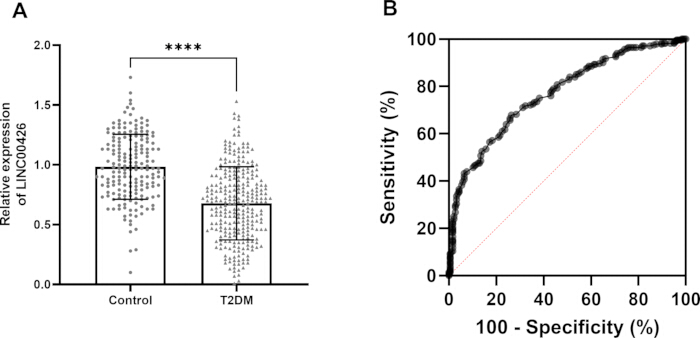
Figure 1: Expression of LINC00426 in T2DM and its diagnostic value for T2DM. A. Expression of LINC00426 in the control group and T2DM group. B. ROC curve evaluating the diagnostic value of LINC00426 for predicting T2DM (AUC = 0.7698, 95% CI: 0.7275-0.8128, Sensitivity = 67.86%, Specificity = 73.66%). The red dotted diagonal line represents the null curve. AUC: Area under the curve, ranging from [0,1]. An AUC value closer to 1 indicates superior model performance. The x-axis (1-specificity) denotes the probability of detecting a positive result in the negative population. The y-axis represents sensitivity, i.e., the probability of detecting a positive result in the positive population. CI indicates the confidence interval, signifying 95% confidence that the AUC value lies within this range. * P < 0.05, ** P < 0.01, *** P < 0.001, **** P < 0.0001. Please click here to view a larger version of this figure.
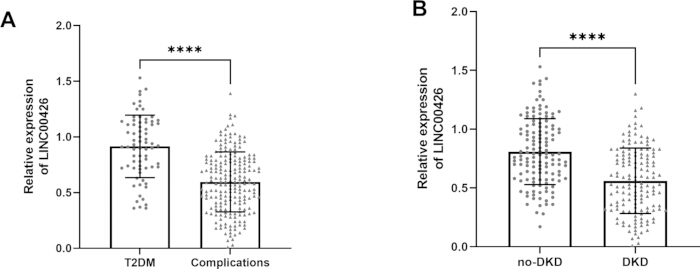
Figure 2: Expression of LINC00426 in different patient subgroups. A. Expression of LINC00426 in patients with uncomplicated T2DM and those with T2DM and complications. B. Differential expression of LINC00426 between T2DM patients without DKD and those with DKD. * P < 0.05, ** P < 0.01, *** P < 0.001, **** P < 0.0001. Please click here to view a larger version of this figure.
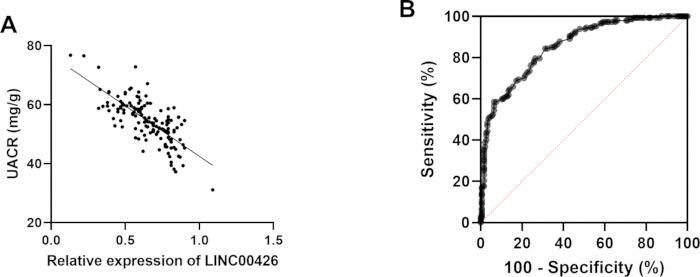
Figure 3: Relationship between LINC00426 expression and DKD patients, and its diagnostic value. A. Correlation analysis between LINC00426 expression and the renal injury marker UACR in DKD patients (r = -0.7402). B. ROC curve evaluating the diagnostic value of LINC00426 in predicting DKD (AUC = 0.8557, 95% CI: 0.8162-0.8952, Sensitivity = 79.59%, Specificity = 73.66%). * P < 0.05, ** P < 0.01, *** P < 0.001, **** P < 0.0001. Please click here to view a larger version of this figure.
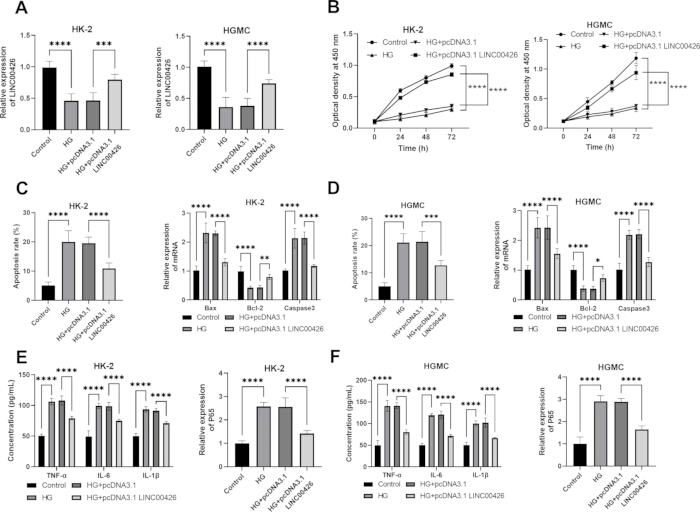
Figure 4: Effects of LINC00426 overexpression on HG-induced HK-2 and HGMC cells. A. Changes in LINC00426 expression in HK-2 and HGMC cells after HG induction and establishment of overexpressing cell lines. B. Proliferation changes in the two renal cell types after HG treatment and pcDNA3.1 LINC00426 transfection. HK-2 (C) and HGMC (D) cell apoptosis levels and expression changes of apoptosis-related genes after high glucose treatment and LINC00426 overexpression. (E–F) Levels of inflammatory factors and P65 mRNA expression in the two renal cell types after HG induction. * P < 0.05, ** P < 0.01, *** P < 0.001, **** P < 0.0001. Please click here to view a larger version of this figure.
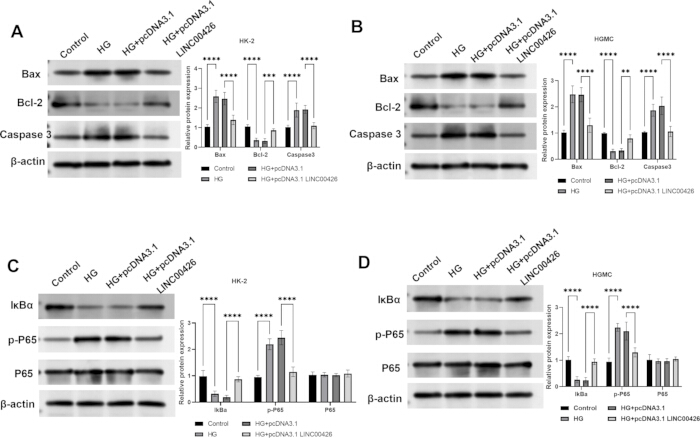
Figure 5: Western blot analysis of apoptosis and NF-κB signaling-associated proteins (Bax, caspase-3, Bcl2, IκBα, p-P65). A–B. HG treatment increased the protein levels of Bax, Caspase 3 and reduced the Bcl-2, while these promoting effects were significantly inhibited by LINC00426 overexpression. C–D. HG treatment increased the protein levels of p-65, and reduced the IκBα, while these promoting effects were significantly inhibited by LINC00426 overexpression in the HCGM. * P < 0.05, ** P < 0.01, *** P < 0.001, **** P < 0.0001. Please click here to view a larger version of this figure.
| Characteristics | Control (n=186) | T2DM (n=280) | P value |
| Age (years) | 58.91±17.63 | 59.50±17.14 | 0.722 |
| BMI (kg/m2) | 23.03±2.11 | 25.40±5.62 | <0.0001 |
| Gender (n, man%) | 95 (51.08%) | 130 (46.43%) | 0.345 |
| Obesity | 0.636 | ||
| No | 93 (50.00%) | 133 (47.50%) | |
| Yes | 93 (50.00%) | 147 (52.50%) | |
| Triglycerides (mmol/L) | 0.99±0.37 | 1.91±0.46 | <0.0001 |
| HDL-C (mmol/L) | 1.82±0.32 | 1.01±0.34 | <0.0001 |
| LDL-C (mmol/L) | 2.53±0.40 | 3.36±0.51 | <0.0001 |
| SBP (mmHg) | 120.40±10.09 | 128.01±10.00 | <0.0001 |
| DBP (mmHg) | 70.10±8.06 | 78.09±9.27 | <0.0001 |
| FBG (mmol/L) | 5.08±1.07 | 7.17±1.39 | <0.0001 |
| HbA1c (%) | 5.02±0.49 | 6.39±0.53 | <0.0001 |
| Fasting insulin (μU/ml) | 13.67±3.90 | 22.92±4.82 | <0.0001 |
| T2DM, type 2 diabetes mellitus. BMI, body mass index. HDL-C, high-density lipoprotein cholesterol. LDL-C, low-density lipoprotein cholesterol. | |||
| SBP, systolic blood pressure. DBP, diastolic blood pressure. FBG, fasting blood glucose. HbA1c, glycosylated hemoglobin. | |||
| P<0.05 indicates that the data results are significantly different from those of the control group. | |||
Table 1: Comparison of clinical baseline characteristics between healthy people and patients with T2DM. The two groups showed similar age, gender, and obesity distribution. T2DM patients had significantly higher BMI, blood pressure, triglycerides, LDL‑C, FBG, HbA1c, and fasting insulin, and lower HDL‑C than controls. T2DM, type 2 diabetes mellitus. BMI, body mass index. HDL-C, high-density lipoprotein cholesterol. LDL-C, low-density lipoprotein cholesterol. SBP, systolic blood pressure. DBP, diastolic blood pressure. FBG, fasting blood glucose. HbA1c, glycosylated hemoglobin. P < 0.05 indicates that the data results are significantly different from those of the control group.
| Characteristics | Non-DKD | DKD | P value |
| (n=134) | (n=146) | ||
| Age (years) | 57.26±17.61 | 61.55±16.50 | 0.037 |
| BMI (kg/m2) | 23.80±4.92 | 26.87±5.83 | <0.0001 |
| Gender (n, man%) | 60 (44.78%) | 70 (47.95%) | 0.632 |
| Obesity | 0.042 | ||
| No | 55 (41.04%) | 78 (53.42%) | |
| Yes | 79 (58.96%) | 68 (46.58%) | |
| Triglycerides (mmol/L) | 1.83±0.33 | 1.98±0.54 | 0.008 |
| HDL-C (mmol/L) | 1.23±0.23 | 0.82±0.31 | <0.0001 |
| LDL-C (mmol/L) | 3.17±0.56 | 3.53±0.40 | <0.0001 |
| SBP (mmHg) | 125.56±8.85 | 130.26±10.48 | <0.0001 |
| DBP (mmHg) | 74.44±6.33 | 81.44±10.24 | <0.0001 |
| FBG (mmol/L) | 7.01±1.72 | 7.31±0.99 | 0.075 |
| HbA1c (%) | 6.02±0.37 | 6.73±0.42 | <0.0001 |
| Fasting insulin (μU/ml) | 22.09±5.31 | 23.69±4.19 | 0.006 |
| mAlb (mg/L) | 19.56±8.40 | 34.13±4.01 | <0.0001 |
| UACR (mg/g) | 23.28±5.05 | 36.46±7.68 | <0.0001 |
| DKD, diabetic kidney disease. BMI, body mass index. HDL-C, high-density lipoprotein cholesterol. LDL-C, low-density lipoprotein cholesterol. SBP, systolic blood pressure. DBP, diastolic blood pressure. FBG, fasting blood glucose. HbA1c, glycosylated hemoglobin. mAlb, urine microalbumin. UACR, urine albumin-creatinine ratio. P<0.05 indicates that the data results are significantly different from those of the non-DKD group. | |||
Table 2: Comparison of DKD or non-DKD patients in patients with T2DM. Compared with non-DKD patients, DKD patients showed significantly higher BMI, triglycerides, lipid ratios, blood pressure, HbA1c, and fasting insulin. Urinary mAlb and UACR were also significantly increased in DKD patients. DKD, diabetic kidney disease. BMI, body mass index. HDL-C, high-density lipoprotein cholesterol. LDL-C, low-density lipoprotein cholesterol. SBP, systolic blood pressure. DBP, diastolic blood pressure. FBG, fasting blood glucose. HbA1c, glycosylated hemoglobin. mAlb: urine microalbumin. UACR, urine albumin-creatinine ratio. P < 0.05 indicates that the data results are significantly different from those of the non-DKD group.
| Indicators | P | OR | 95%CI |
| LINC00426 | 0.008 | 0.537 | 0.339-0.851 |
| Age | 0.247 | 1.319 | 0.825-2.109 |
| Gender | 0.804 | 1.061 | 0.665-1.692 |
| BMI | 0.278 | 1.304 | 0.807-2.106 |
| Obesity | 0.559 | 1.148 | 0.723-1.822 |
| Triglycerides | 0.67 | 1.114 | 0.679-1.828 |
| HDL-C | 0.269 | 0.769 | 0.484-1.224 |
| LDL-C | 0.448 | 1.198 | 0.751-1.912 |
| SBP | 0.163 | 1.386 | 0.876-2.194 |
| DBP | 0.122 | 1.449 | 0.906-2.316 |
| FBG | 0.03 | 1.668 | 1.052-2.646 |
| HbA1c | 0.025 | 1.723 | 1.072-2.767 |
| Fasting insulin | 0.139 | 1.345 | 0.909-1.990 |
| BMI, body mass index. HDL-C, high-density lipoprotein cholesterol. LDL-C, low-density lipoprotein cholesterol. | |||
| SBP, systolic blood pressure. DBP, diastolic blood pressure. FBG, fasting blood glucose. | |||
| HbA1c, glycosylated hemoglobin. P<0.05 indicates that the data results are significantly different. | |||
Table 3: Risk factors for developing DKD in healthy individuals predicted by logistic regression. The results showed that LINC00426, FBG, and HbA1c may be potential independent factors associated with DKD. BMI, body mass index. HDL-C, high-density lipoprotein cholesterol. LDL-C, low-density lipoprotein cholesterol. SBP, systolic blood pressure. DBP, diastolic blood pressure. FBG, fasting blood glucose. HbA1c, glycosylated hemoglobin. P<0.05 indicates that the data results are significantly different.
Supplementary Table 1: RT-qPCR primer sequence information.Please click here to download this file.
Supplementary Figure 1: Five-fold ROC validation of LINC00426 predicting DKD. After random distribution, the cross-validated model had an average AUC of 0.8796, with AUCs for each fold ranging from 0.8411 to 0.9264.Please click here to download this file.
Supplementary Figure 2: ROC curve of UACR predicting DKD. The AUC of UACR for predicting DKD was 0.9166 (95% CI: 0.8895–0.9436), with a sensitivity of 81.28% and specificity of 87.63%.Please click here to download this file.
Supplementary Figure 3: ROC curve of LINC00426 combined with UACR predicting DKD. The AUC of LINC00426 combined with UACR for DKD diagnosis was 0.9650.Please click here to download this file.
Supplementary Figure 4: Effects of LINC00426 knockdown on HK-2 and HGMC cell functions and inflammation levels. (A) Establishment of LINC00426 knockdown cell lines in HK-2 and HGMC cells. (B) Apoptosis levels of the two kidney cell types after transfection with si-LINC00426. (C) Effects of LINC00426 knockdown on the proliferation of the two kidney cell types. (D) Accumulation of inflammatory factors in the two kidney cell types after si-LINC00426 transfection. * P < 0.05, ** P < 0.01, *** P < 0.001, **** P < 0.0001. Please click here to download this file.
Supplementary Figure 5: RT-qPCR was performed to detect mRNA levels of P50 and IκBα, key components of the NF-κB signaling pathway. Overexpression of LINC00426 reduced P50 expression while increasing IκBα expression in HG-induced HK-2 (A,B) and HGMC (C,D) cells under normal glucose and HG conditions. * P < 0.05, ** P < 0.01, *** P < 0.001, **** P < 0.0001. Please click here to download this file.
Supplementary Figure 6: Relative expression levels of LINC00426 in the serum of patients with chronic nephritis and DKD. LINC00426 was still significantly downregulated in the serum of DKD patients compared with chronic kidney disease patients. **** P < 0.0001. Please click here to download this file.
Supplementary Figure 7: Western blot analysis of uncut original membrane images for apoptosis-related proteins and NF-κB signaling pathway proteins was performed in HG-stimulated HK-2 and HGMC cells with LINC00426 overexpression. HG treatment elevated the protein levels of Bax, Caspase 3, IκBα and p65, whereas LINC00426 overexpression markedly abolished such HG-induced upregulation.Please click here to download this file.
Discussion
Loading...
$$\rightleftharpoonup{xx}$$
$$\longleftharp{xx}$$,
$$\longrightharp{xx}$$,
DKD represents a severe microvascular complication in T2DM. Its earliest manifestation is the presence of microalbuminuria; detecting this in the early stages could potentially delay DKD progression. However, microalbuminuria lacks sensitivity in routine urine analysis and is consequently frequently overlooked43. This study found that LINC00426 is downregulated in T2DM patients and possesses diagnostic value for both T2DM and DKD. Furthermore, LINC00426 may prevent DKD by reducing apoptosis in HG renal epithelial cells and lowering cellular inflammatory levels.
The results of this study show that the AUC of UACR in predicting DKD was 0.917 (0.890–0.944), with a sensitivity of 81.3% and a specificity of 87.6%. The ROC of LINC00426 in predicting DKD was 0.856 (0.816–0.895), with a sensitivity of 79.59% and a specificity of 73.66%. Previous studies found that neutrophil gelatinase-associated lipocalin (NGAL)44 had a predictive ROC for DKD of 0.705 (0.646–0.765), with a sensitivity of 60.4% and a specificity of 76.9%. Urinary kidney injury molecule-1 (KIM-1)45 had a predictive ROC for DKD of 0.838. The AUC of eGFR for diagnosing DKD was below 0.65046. Compared with NGAL, KIM-1, and eGFR, LINC00426 demonstrated higher sensitivity and specificity for diagnosing DKD. Although UACR has better diagnostic accuracy for DKD than LINC00426, further analysis showed that the combination of LINC00426 and UACR for diagnosing DKD increased the AUC to 0.965. This result suggests that LINC00426 has good auxiliary diagnostic value, and our prediction is relatively reliable. However, due to resource limitations, we did not conduct further analysis through a validation cohort, which is a limitation.
High-throughput transcriptomic analysis has revealed the presence of numerous LncRNAs within the human genome, which participate in processes such as development, differentiation, and metabolism47. Polymorphisms in the LncRNA GAS5 gene have been found to correlate with DKD progression48. Downregulation of lncRNA XLOC in diabetic patients may predict the development of renal complications49. Furthermore, multiple studies report that LncRNAs may serve as biomarkers for renal disease progression and assess clear cell renal cell carcinoma (ccRCC) progression50,51. Consequently, it is plausible that certain LncRNAs could also function as biomarkers for DKD prevention and treatment. This study found that T2DM patients exhibited higher levels of FBG, HbA1c, and fasting insulin compared to healthy individuals, indicating poorer physical condition among T2DM patients. Additionally, we observed a significant downregulation of serum LINC00426 levels in T2DM patients, demonstrating predictive value for T2DM diagnosis. Analysis of medical records from patients with T2DM with or without DKD revealed more pronounced increases in renal injury markers (microalbuminuria and the urine albumin-to-creatinine ratio) in patients with DKD. Further analysis showed an apparent negative correlation between serum LINC00426 expression and urine albumin-creatinine ratio in DKD patients. LINC00426 is one of the risk factors for DKD development and demonstrates favorable diagnostic value for predicting DKD. Overexpression of LINC00426 in renal epithelial cells promotes cellular proliferation while reducing rates of apoptosis and inflammation.
Research indicates that FBG is a key indicator for assessing diabetes52. Elevated HbA1c levels can lead to renal damage, thereby promoting the development of DKD53. Further research indicates that urinary albumin is a recognized diagnostic markers for DKD54,55, and is closely associated with T2DM progression and DKD development56. Persistently elevated proteinuria levels in T2DM patients serve as an early indicator of DKD onset57. Meanwhile, UACR and eGFR are commonly used in clinical practice to evaluate renal function and stage renal disease58,59. Our statistical results indicate that LINC00426 is downregulated in T2DM, and this downregulation is more significant in DKD. We therefore conclude that LINC00426 expression may be closely associated with the onset and progression of DKD. Furthermore, ROC analysis reveals the diagnostic and predictive value of LINC00426 for DKD. These findings may have important implications for the prevention and diagnosis of T2DM and DKD.
Currently, LINC00426 has been employed in biomarker research for multiple diseases. For instance, as a potential immunophenotypic biomarker, LINC00426 demonstrates diagnostic value for PAM50 luminal B breast cancer60. Furthermore, multivariate Cox regression analysis indicates that LINC00426 possesses independent prognostic value in renal cell carcinoma progression24. Additional research suggests LINC00426 involvement in lung adenocarcinoma progression61. Recently, scholars have identified LINC00426 as a potential marker for T2DM23. However, based on this, the present study further explored the diagnostic value and role of LINC00426 in T2DM and DKD. The main new findings are as follows. The level of LINC00426 in the serum of DKD patients is significantly downregulated compared to that of T2DM patients, and LINC00426 expression is negatively correlated with renal function indicators (UACR) in DKD patients. In addition, based on LINC00426 expression levels, we constructed a diagnostic model for T2DM/DKD. The results show that the LINC00426 diagnostic model has high sensitivity and specificity and can accurately distinguish between T2DM/DKD patients and healthy individuals. This represents a development beyond previous studies where LINC00426 was used alone for T2DM diagnosis. Furthermore, this study preliminarily explored the potential of LINC00426 as a therapeutic target. We found that upregulating LINC00426 expression can alleviate kidney inflammation and cell apoptosis by inhibiting genes related to the NF-κB and apoptotic signaling pathways. This provides an experimental basis for developing targeted therapies against LINC00426. These findings allow us to gain a more comprehensive understanding of the changes in LINC00426 expression in T2DM/DKD and its relationship with renal pathological changes, providing more direct evidence for revealing its biological function.
However, the possible downstream mechanism and clinical value of kidney injury in DKD patients caused by LINC00426 dysregulation remain poorly clarified. The results of this study showed that LINC00426 overexpression reduced the apoptosis of HK-2 and HGMC cells (apoptosis pathway). Specifically, transfection with pcDNA3.1-LINC00426 decreased the expression of pro-apoptotic genes Bax and Caspase3, while increasing the expression of the anti-apoptotic gene Bcl-2. In addition, the LINC00426 overexpression was associated with reduced mRNA levels of NF-κB (p65) in both kidney cell types, which was consistent with the decreased secretion of inflammatory cytokines. These observations establish a correlative relationship between LINC00426 and p65. Notably, we further verified relevant pathway alterations at the protein level via Western blot. Under high glucose conditions, elevated protein levels of p-P65m, Bax, and Caspase 3 confirmed the activation of the NF-κB and apoptotic signaling. In addition, LINC00426 overexpression was accompanied by reduced NF-κB mRNA expression, downregulated p-P65 protein levels, and restored abnormal expression of apoptosis-related protein in both kidney cell types. These molecular changes were consistent with the decreased secretion of inflammatory cytokines after LINC00426 upregulation. These observations indicated HG indeed triggers the activation of NF-κB and apoptotic pathways, whereas LINC00426 overexpression markedly reverses such HG-induced pathway activation. This suggests that LINC00426 may be involved in the progression of DKD through apoptosis signaling and pathways related to NF-κB p65 expression. Previous studies have shown that NF-κB-related signaling and apoptosis play important roles in the regulation of DKD. For example, lnc-Traf3ip2 was found to induce renal fibrosis exacerbation in DKD mice through the transcription factor NF-κB p6562. The inflammatory factor highly active group 1 (HMGB1) in the cytoplasm promotes the inflammatory response of glomerular mesangial cells by directly binding to Iα to accelerate NF-κB signaling pathway activation63. In addition, Yu et al.64 reported that the downregulated lncRNA SNHG10 in DKD mice induced apoptosis and fibrosis of HK-2 cells. This further suggests that LINC00426 may have certain research value for the development of drug targets for DKD. In addition, although indicators such as UACR and eGFR are valuable in the diagnosis of DKD, they often appear abnormally when kidney damage is already more obvious65. This study shows that LINC00426 is significantly downregulated in the early stage of DKD, even in the stage of microalbuminuria, suggesting that it has potential for early diagnosis. By detecting LINC00426 expression levels, it may be possible to identify high-risk groups at an early stage of the disease, providing opportunities for timely intervention and treatment. Therefore, LINC00426 is expected to be a novel biomarker for the early diagnosis of DKD.
In addition, the current limitations of this study need to be discussed in detail. First, when performing logistic regression analysis, we did not adjust for key confounding variables, including medication use, diabetes duration, and glycemic control history. This limitation significantly affects the interpretation of LINC00426 as an independent risk factor for DKD. We also ignored the impact of these confounders on the assessment of DKD, which may have reduced the specificity of the results. In future studies, we will actively conduct multicenter, large-sample studies and consider more possible influencing factors to improve the representativeness and reliability of the study. Secondly, DKD is a complex pathological process involving the regulation and upstream and downstream mechanisms of various types of kidney cells. In this study, we preliminarily explored the effects of LNC00426 on tubular epithelium and glomerular mesangial cells. It was found that NF-κB and the apoptosis signaling pathway may be one of the downstream mechanisms of DKD. However, we cannot determine whether the effect of LINC00426 occurs only in the two cell types mentioned above, and the specific downstream signaling pathways have not yet been explored. In addition, due to the limitations of our experimental design, the upstream mechanisms of LINC00462 involvement in DKD have not been explored. In the future, we will consider methylation-specific PCR (MSP), chromatin immunoprecipitation (ChIP) and other techniques to detect the methylation level and histone modification status of LINC00426 promoter regions, and analyze their correlation with LINC00426 expression downregulation. Through single-cell sequencing technology, kidney cells from DKD populations were analyzed to find specific cell groups. Transcriptomics and proteomics methods were used to further predict and verify the target genes and related pathways involved in LINC00426 regulation of DKD. In addition, it is of great interest that preliminary testing found that there is still a significant down-regulated LINC00426 in the serum of DKD patients compared to patients with chronic kidney disease (Supplementary Figure 6). Whether this is due to the narrowness of the sample or the unique characteristics of DKD patients is not clear. In subsequent studies, we will further observe the gene expression information of different patients through high-throughput sequencing methods.
DKD is a slow-progressing disease, and its development process may take several years. In the current cross-sectional study, we observed that LINC00426 is downregulated in the serum or kidney cells of DKD patients and is negatively correlated with UACR in these patients. Based on this, we speculate that LINC00426 may be one of the factors leading to kidney damage in diabetic patients. However, this study cannot observe the trend of changes in LINC00426 expression and kidney damage in patients over time. Therefore, under conditions where experiments are feasible, we plan to conduct a longitudinal cohort study lasting several years. We will recruit a certain number of DKD patients and healthy controls, and regularly (such as every six months or a year) collect their blood, urine, and kidney tissue samples to measure LINC00426 expression levels as well as related kidney damage indicators. Through longitudinal data analysis, we aim to observe the trend of LINC00426 expression over time and the temporal relationship between these changes and the progression of kidney damage.
In summary, LINC00426 is downregulated in patients with T2DM, with more pronounced downregulation observed in patients with DKD. Downregulation of LINC00426 is a risk factor for DKD development and has diagnostic value in predicting T2DM and DKD progression. Conversely, overexpressing LINC00426 can prevent DKD by improving hyperglycemic renal epithelial cell function and reducing inflammatory levels. Consequently, LINC00426 holds promise as a biomarker for predicting T2DM and DKD progression. However, the pathways and mechanisms through which LINC00426 participates in T2DM and DKD progression require further investigation.
Disclosures
Loading...
$$\rightleftharpoonup{xx}$$
$$\longleftharp{xx}$$,
$$\longrightharp{xx}$$,
There is no conflict of interest in this study.
Acknowledgements
Loading...
$$\rightleftharpoonup{xx}$$
$$\longleftharp{xx}$$,
$$\longrightharp{xx}$$,
Not applicable.
Materials
| Name | Company | Catalog Number | Comments |
|---|---|---|---|
| 0.25% trypsin | Gibco | 25200056 | |
| Annexin V-FITC Apoptosis Detection Kit | Beyotime | C1062S | |
| Antibiotics for cell culture | Gibco | R-015-10 | |
| Aristo specific protein detector | GOLDSITE | GPP-100 | |
| Bax Antibody | Cell signaling Technology | 2772 | |
| BCA protein assay kit | Beyotime | P0013B | |
| Bcl-2 (124) Mouse Monoclonal Antibody | Cell signaling Technology | 15071 | |
| beta-Actin (13E5) Rabbit Monoclonal Antibody | Cell signaling Technology | 4970 | |
| Blood glucose monitor | Yuwell | 710 | |
| Caspase-3 Antibody | Cell signaling Technology | 9662 | |
| CCK-8 reagent | Sigma | 96992 | |
| ChamQ Universal SYBR qPCR Master Mix | Vazyme | Q711 | |
| Chloroform | Sigma-Aldrich | C2432 | |
| Clarity Western ECL Substrate | Bio-Rad | 1705061 | |
| Constant-temperature cell incubator | SaiLun | DHP-9032 | |
| D-Glucose | MedChemExpress | HY-B0389 | |
| Flow cytometer | Beckman coulted | CytoFLEX | Chloroform |
| Fluorescent quantitative PCR instrument | Roche | Light Cycler 96 | |
| Foetal bovine serum | Sigma-Aldrich | F0193 | |
| Fully automated glycated haemoglobin analyser | Hanyu medical | HLC-723G11 | Phenol |
| Gene PCR amplifier | Bio Rad | S1000 | |
| Glomerular mesangial cells, HGMC | Sunncell Biotechnology Co., Ltd. | SNP-H252 | |
| Human Basic IL-1 beta ELISA Kit | Invitrogen | ECH002 | |
| Human IL-6 ELISA Kit | Invitrogen | EH2IL6 | |
| Human kidney epithelial cells, HK-2 | Sunncell Biotechnology Co., Ltd. | SNL-165 | |
| Human TNF alpha ELISA Kit | Invitrogen | KAC1751 | |
| IkappaB alpha (L35A5) Mouse Monoclonal Antibody | Cell signaling Technology | 4814 | |
| K-SFM medium | Invitrogen | 17005-042 | |
| Lipofectamine 3000 | Invitrogen | L3000015 | |
| Mannitol | Sigma-Aldrich | M9647 | |
| Multifunctional enzyme-linked immunosorbent assay reader | TECAN | GENios Plus | |
| NF-kappaB p65 (D14E12) Rabbit Monoclonal Antibody | Cell signaling Technology | 8242 | |
| non-fat milk | Biosharp | BS102-500g | |
| Opti-MEM™ I Reduced Serum Medium | Invitrogen | 31985062 | |
| P3000 Reagent | Invitrogen | L3000-015 | |
| PBS buffer | Sangon Biotech | E607080 | |
| Phenol | Sigma-Aldrich | P1037 | |
| Phospho-NF-kappaB p65 (Ser536) (93H1) Rabbit Monoclonal Antibody | Cell signaling Technology | 3033 | |
| Primary cell complete medium | Sunncell Biotechnology Co., Ltd. | SNPM-H252 | |
| Prime Script RT reagent Kit | Takara | RR037A | |
| PVDF membranes | Merck Millipore | SE1M003M00 | |
| rotease and phosphatase inhibitor cocktail | Beyotime | P1045 | |
| Trizol | Invitrogen | 15596026CN | |
| Ultraviolet spectrophotometer | Thermo | Nanodrop 2000 |
References
Loading...
$$\rightleftharpoonup{xx}$$
$$\longleftharp{xx}$$,
$$\longrightharp{xx}$$,
- Amerkamp, J., Benli, S., Isenmann, E., Brinkmann, C. Optimizing the lifestyle of patients with type 2 diabetes mellitus - systematic review on the effects of combined diet-and-exercise interventions. Nutr Metab Cardiovasc Dis. 35 (5), 103746(2025).
- Mousavi, F. S., et al. Assessing renal function as a predictor of adverse outcomes in diabetic patients undergoing percutaneous coronary intervention. Acta Cardiol. 79 (7), 824-832 (2024).
- He, Y., et al. Predictive efficacy assessment of serum beta(2)-microglobulin combined with urinary albumin-to-creatinine ratio for renal function deterioration in type 2 diabetic patients with kidney disease. Am J Transl Res. 17 (12), 9982-9995 (2025).
- Wang, M., et al. Association of dietary live microbe intake with diabetic kidney disease in patients with type 2 diabetes mellitus in us adults: A cross-sectional study of nhanes 1999-2018. Acta Diabetol. 61 (6), 705-714 (2024).
- Saeedi, P., et al. Global and regional diabetes prevalence estimates for 2019 and projections for 2030 and 2045: Results from the international diabetes federation diabetes atlas, 9(th) edition. Diabetes Res Clin Pract. 157, 107843(2019).
- National Kidney Foundation. Kdoqi clinical practice guideline for diabetes and ckd: 2012 update. Am J Kidney Dis. 60 (5), 850-886 (2012).
- Tuttle, K. R., et al. Diabetic kidney disease: A report from an ada consensus conference. Am J Kidney Dis. 64 (4), 510-533 (2014).
- Du, N., Zhang, X., He, C., Zhang, Z. Mir-423-5p mediates linc00886 regulation of ovarian cancer aggressiveness and immune evasion via the tlr4/myd88/nf-kappab/pd-l1 pathway. Hereditas. 162 (1), 184(2025).
- Joshi, S. R., et al. Therapeutic potential of alpha-glucosidase inhibitors in type 2 diabetes mellitus: An evidence-based review. Expert Opin Pharmacother. 16 (13), 1959-1981 (2015).
- Chen, S., et al. Predicting and validating the regulation of podocyte injury and treatment of diabetic kidney disease by yinhuo tang. J Vis Exp. (220), e67939(2025).
- Zahra, S., et al. Prevalence of nephropathy among diabetic patients in north american region: A systematic review and meta-analysis. Medicine (Baltimore). 103 (38), e39759(2024).
- Wang, Y., Liu, T., Liu, W., Zhao, H., Li, P. Research hotspots and future trends in lipid metabolism in chronic kidney disease: A bibliometric and visualization analysis from 2004 to 2023. Front Pharmacol. 15, 1401939(2024).
- Shi, M., et al. Integrated transcriptomic and secretome proteomic analysis of hyperglycemia-stimulated endothelial cells and screening of target compounds. J Vis Exp. (226), e69578(2025).
- Sagoo, M. K., Gnudi, L. Diabetic nephropathy: An overview. Methods Mol Biol. 2067, 3-7 (2020).
- Kopel, J., Pena-Hernandez, C., Nugent, K. Evolving spectrum of diabetic nephropathy. World J Diabetes. 10 (5), 269-279 (2019).
- Chen, Y., Li, Z., Chen, X., Zhang, S. Long non-coding rnas: From disease code to drug role. Acta Pharm Sin B. 11 (2), 340-354 (2021).
- Yao, D., Zhang, B., Zhan, X., Zhang, B., Li, X. K. Predicting lncrna-disease associations based on a dual-path feature extraction network with multiple sources of information integration. ACS Omega. 9 (32), 35100-35112 (2024).
- Wang, Z., et al. Lncrna meg3 alleviates diabetic cognitive impairments by reducing mitochondrial-derived apoptosis through promotion of fundc1-related mitophagy via rac1-ros axis. ACS Chem Neurosci. 12 (13), 2280-2307 (2021).
- Ting, K. H., Yang, P. J., Tsai, P. Y., Lee, C. Y., Yang, S. F. Correlations between the long noncoding rna meg3 and clinical characteristics for diabetic kidney disease in type 2 diabetes mellitus. Diabetol Metab Syndr. 16 (1), 260(2024).
- Zhang, C., et al. Lncrna evf-2 exacerbates podocyte injury in diabetic nephropathy by inducing cell cycle re-entry and inflammation through distinct mechanisms triggered by hnrnpu. Adv Sci (Weinh). 11 (47), e2406532(2024).
- Lan, F., Zhao, J., Liang, D., Mo, C., Shi, W. Comprehensive analysis of cuproptosis-related cerna network and immune infiltration in diabetic kidney disease. Heliyon. 10 (16), e35700(2024).
- Zhou, B., et al. Linc00426 promotes the progression of atherosclerosis by regulating mir-873-5p/srrm2 axis. Cytokine. 191, 156938(2025).
- Ma, Q., et al. Long non-coding rna screening and identification of potential biomarkers for type 2 diabetes. J Clin Lab Anal. 36 (4), e24280(2022).
- Xiang, Z., et al. Potential prognostic biomarkers related to immunity in clear cell renal cell carcinoma using bioinformatic strategy. Bioengineered. 12 (1), 1773-1790 (2021).
- Mobeen, A., et al. Nf-kappab signaling is the major inflammatory pathway for inducing insulin resistance. 3 Biotech. 15 (2), 47(2025).
- Aktas, G. Exploring the link: Hemogram-derived markers in type 2 diabetes mellitus and its complications. World J Diabetes. 16 (7), 105233(2025).
- Balci, S. B., Atak, B. M., Duman, T., Ozkul, F. N., Aktas, G. A novel marker for prediabetic conditions: Uric acid-to-hdl cholesterol ratio. Bratisl Lek Listy. 125 (3), 145-148 (2024).
- Basaran, E., Aktas, G. J. O. E., Diseases, M. Waist-to-height ratio as a novel marker of metabolic syndrome in patients with type 2 diabetes mellitus. Exploration of Endocrine and Metabolic Diseases. , (2025).
- Duman, T. T., Tel, B. M. A., Bilgin, S., Dervisevic, A., Aktas, G. Evaluation of the effects of intermittent fasting on clinical and laboratory parameters in metabolic syndrome. Experimental Biomedical Research. 8 (2), (2025).
- Cosgun, M., Cosgun, Z., Kalfaoglu, M. E., Aktas, G. Systemic inflammatory markers and epicardial fat volume as predictors of cardiometabolic risk in type 2 diabetes. Postgrad Med J. , (2025).
- Aktas, G. Serum c-reactive protein to albumin ratio as a reliable marker of diabetic neuropathy in type 2 diabetes mellitus. Biomol Biomed. 24 (5), 1380-1386 (2024).
- Aktas, G., Duman, T. T., Atak Tel, B. Controlling nutritional status (conut) score is a novel marker of type 2 diabetes mellitus and diabetic microvascular complications. Postgrad Med. 136 (5), 496-503 (2024).
- Aktas, G. Association between the prognostic nutritional index and chronic microvascular complications in patients with type 2 diabetes mellitus. J Clin Med. 12 (18), (2023).
- Aktas, G. An overview of the role of serum uric acid to high-density lipoprotein cholesterol ratio in type 2 diabetes mellitus and in other inflammatory and metabolic conditions. Minerva Med. 116 (5), 405-415 (2025).
- Ohuche, I. O., Chikani, U. N., Oyenusi, E. E., Onu, J. U., Oduwole, A. Correlates of fasting blood glucose among children living with hiv in a nigerian tertiary hospital: A cross-sectional study. BMC Pediatr. 20 (1), 458(2020).
- Girlescu, N., et al. Thanatochemical study of glycated hemoglobin in diabetic status assessment. Medicina (Kaunas). 57 (4), (2021).
- Yu, G. Z., et al. Persistent hematuria and kidney disease progression in iga nephropathy: A cohort study. Am J Kidney Dis. 76 (1), 90-99 (2020).
- Zhao, H., et al. Branched-chain amino acids contribute to diabetic kidney disease progression via pkm2-mediated podocyte metabolic reprogramming and apoptosis. Nat Commun. 16 (1), 7846(2025).
- Mao, L., Yin, R., Yang, L., Zhao, D. Elucidating the function of clusterin in the progression of diabetic kidney disease. Front Pharmacol. 16, 1573654(2025).
- Cheng, D., et al. Moringa isothiocyanate activates nrf2: Potential role in diabetic nephropathy. AAPS J. 21 (2), 31(2019).
- Geng, Z., et al. Lncrna zfas1 regulates the proliferation, oxidative stress, fibrosis, and inflammation of high glucose-induced human mesangial cells via the mir-588/rock1 axis. Diabetol Metab Syndr. 14 (1), 21(2022).
- Dalmadi, A., Miloro, F., Abdu, A., Kis, A., Havelda, Z. Remote precursor elements can modulate rna induced silencing complex-loading efficiency of mir168 in arabidopsis. Plant J. 122 (3), e70195(2025).
- Vigersky, R. A. An overview of management issues in adult patients with type 2 diabetes mellitus. J Diabetes Sci Technol. 5 (2), 245-250 (2011).
- Zou, L. X., Hou, Z. L., Qian, C. H., Wang, X., Sun, L. Performance of novel biomarkers for prediction of diabetic kidney disease in patients with diabetes mellitus. Ann Med. 57 (1), 2562996(2025).
- Liu, T., et al. Serum high mobility group box 1 as a potential biomarker for the progression of kidney disease in patients with type 2 diabetes. Front Immunol. 15, 1334109(2024).
- Oshima, M., et al. Trajectories of kidney function in diabetes: A clinicopathological update. Nat Rev Nephrol. 17 (11), 740-750 (2021).
- Wang, S., et al. Grk2 protein mediates the anril, a lncrna, to affect the proliferation and apoptosis of kasumi-1 cells. Front Biosci (Landmark Ed). 29 (10), 362(2024).
- Yang, P. J., Ting, K. H., Tsai, P. Y., Su, S. C., Yang, S. F. Association of long noncoding rna gas5 gene polymorphism with progression of diabetic kidney disease. Int J Med Sci. 21 (11), 2201-2207 (2024).
- Li, B., Wu, Z., Xu, H., Ye, H., Yang, X. Downregulation of lncrna xloc_032768 in diabetic patients predicts the occurrence of diabetic nephropathy. Open Med (Wars). 19 (1), 20240903(2024).
- Liu, H., et al. A panel of four-lncrna signature as a potential biomarker for predicting survival in clear cell renal cell carcinoma. J Cancer. 11 (14), 4274-4283 (2020).
- Zhu, H., et al. Functional long noncoding rnas (lncrnas) in clear cell kidney carcinoma revealed by reconstruction and comprehensive analysis of the lncrna-mirna-mrna regulatory network. Med Sci Monit. 24, 8250-8263 (2018).
- Lu, X., et al. Glycemic status affects the severity of coronavirus disease 2019 in patients with diabetes mellitus: An observational study of ct radiological manifestations using an artificial intelligence algorithm. Acta Diabetol. 58 (5), 575-586 (2021).
- Wang, M. H., Liu, Z. H., Zhang, H. X., Liu, H. C., Ma, L. H. Hsa_circrna_000166 accelerates breast cancer progression via the regulation of the mir-326/elk1 and mir-330-5p/elk1 axes. Ann Med. 56 (1), 2424515(2024).
- Barutta, F., Bellini, S., Canepa, S., Durazzo, M., Gruden, G. Novel biomarkers of diabetic kidney disease: Current status and potential clinical application. Acta Diabetol. 58 (7), 819-830 (2021).
- Casagrande, V., Federici, M., Menghini, R. Timp3 involvement and potentiality in the diagnosis, prognosis and treatment of diabetic nephropathy. Acta Diabetol. 58 (12), 1587-1594 (2021).
- Ye, S., et al. Lipidomics profiling reveals serum phospholipids associated with albuminuria in early type 2 diabetic kidney disease. ACS Omega. 8 (39), 36543-36552 (2023).
- Thipsawat, S. Early detection of diabetic nephropathy in patient with type 2 diabetes mellitus: A review of the literature. Diab Vasc Dis Res. 18 (6), 14791641211058856(2021).
- Zhang, Z., et al. Association of estimated glomerular filtration rate from serum creatinine and cystatin c with new-onset diabetes: A nationwide cohort study in china. Acta Diabetol. 58 (9), 1269-1276 (2021).
- Yan, P., et al. Association of remnant cholesterol with chronic kidney disease in middle-aged and elderly chinese: A population-based study. Acta Diabetol. 58 (12), 1615-1625 (2021).
- Fonseca-Montano, M. A., Cisneros-Villanueva, M., Coales, I., Hidalgo-Miranda, A. Linc00426 is a potential immune phenotype-related biomarker and an overall survival predictor in pam50 luminal b breast cancer. Front Genet. 14, 1034569(2023).
- Li, H., et al. Author correction: Linc00426 accelerates lung adenocarcinoma progression by regulating mir-455-5p as a molecular sponge. Cell Death Dis. 15 (8), 564(2024).
- Wu, K., et al. Nf-kappab p65 mediated lnc-traf3ip2 exacerbates renal fibrosis in diabetic kidney disease. Acta Diabetol. 62 (11), 1915-1927 (2025).
- Wu, K., et al. Cytosolic hmgb1 accumulation in mesangial cells aggravates diabetic kidney disease progression via nfkappab signaling pathway. Cell Mol Life Sci. 81 (1), 408(2024).
- Hao, J., Li, H., Yu, W. Xanthohumol ameliorates diabetic kidney disease through suppression of renal fibrosis by regulating snhg10/mir-378b. Front Pharmacol. 16, 1532517(2025).
- Rodriguez, F., et al. Real-world diagnosis and treatment of diabetic kidney disease. Adv Ther. 38 (8), 4425-4441 (2021).
Reprints and Permissions
Request permission to reuse the text or figures of this JoVE article
Request Permission