This review delineates the gut–liver immunometabolic axis in metabolic dysfunction–associated steatotic liver disease and its inflammatory–fibrotic phenotype (MASH), spanning barrier failure to inflammasome activation, and evaluates multi-target natural products and biomarker-stratified strategies for precise intervention.
Review Article
Traditional Chinese Medicine Modulation of the Gut–Liver Axis: From Barrier Disruption to Inflammasome Activation in MASLD/MASH
Opens in a new tab
In This Article
Summary
Loading...
$$\rightleftharpoonup{xx}$$
$$\longleftharp{xx}$$,
$$\longrightharp{xx}$$,
Abstract
Loading...
$$\rightleftharpoonup{xx}$$
$$\longleftharp{xx}$$,
$$\longrightharp{xx}$$,
Metabolic dysfunction–associated steatotic liver disease (MASLD) and its inflammatory–fibrotic phenotype (MASH) exhibit pronounced immunometabolic coupling. This review synthesizes evidence along the gut–liver axis, from epithelial tight-junction and gut vascular barrier (GVB) failure to TLR4–MyD88/TRIF–NF-κB amplification and NLRP3 inflammasome activation and outlines the logic of the gut-derived exposure spectrum—lipopolysaccharide (LPS), endogenous ethanol, bile acids (BAs), short-chain fatty acids (SCFAs), and trimethylamine N-oxide (TMAO). We position BA-FXR/TGR5, SCFAs-GPR41/43, and AMPK/Nrf2 as upstream/downstream modulators that reset inflammatory thresholds and confer stage-dependent druggability. Based on node-to-pathway mapping, we summarize mechanisms and translational signals for berberine (BBR), Qushihuayu (QSHY), Da-Chai-Hu Decoction (DCHD), and polysaccharides (e.g., Astragalus, Ganoderma), emphasizing pharmacokinetic and site-of-exposure constraints that support “gut-first” actions. We propose a minimal companion biomarker set—LBP/sCD14, BA profiles with FGF19–C4 dynamics, and IL-1β/GSDMD-N—paired with hierarchical imaging gates (≥30% relative MRI-PDFF decline; MRE/ELF) to underpin response typing and go/no-go decisions. Finally, we highlight critical gaps (direct human GVB readouts; longitudinal multi-omics bridged to clinical outcomes) and outline a biomarker-driven multi-arm multi-stage (MAMS) pathway for adaptive, stratified development of multi-target traditional medicine interventions in MASLD/MASH.
Introduction
Loading...
$$\rightleftharpoonup{xx}$$
$$\longleftharp{xx}$$,
$$\longrightharp{xx}$$,
Metabolic dysfunction–associated steatotic liver disease (MASLD) and its inflammatory–fibrotic phenotype, MASH, are increasingly framed not as isolated metabolic disorders but as systemic conditions driven by dysregulated immunometabolic coupling. Converging evidence places the gut–liver axis at the center of disease evolution: when intestinal barrier integrity loosens, luminal pathogen-associated molecular patterns and metabolic signals more readily access the portal circulation, initiating and amplifying intrahepatic innate immune responses1. Mechanistically, barrier dysfunction encompasses epithelial tight-junction remodeling and disruption of the gut vascular barrier (GVB), together increasing portal delivery of microbe- and diet-derived cues that lower the activation threshold of hepatic innate immunity.
Beneath the epithelium, the gut vascular barrier (GVB) functions as a second checkpoint with selectivity principles analogous to the blood–brain barrier. Experimental and translational data indicate that GVB destabilization can precede overt steatohepatitis, and that barrier stabilization is mechanistically linked to reduced portal inflammatory load.
Circulating endotoxin (lipopolysaccharide, LPS) shows the most consistent positive association with progression from MASLD to MASH and advanced fibrosis, anchoring a population-level link between gut-derived molecular load and hepatic injury1. An “autobrewing” route is also causal: high alcohol-producing Klebsiella pneumoniae associates with MASLD, and experimental colonization induces fatty liver in the absence of exogenous ethanol2. Additional gut-derived metabolites (e.g., bile acids, SCFAs, and TMAO) shape host immunometabolic tone and may contribute to interindividual heterogeneity in disease trajectories and treatment response.
At the receptor and pathway levels, portal inputs are sensed in the sinusoid by TLR4/MD-2, which signals through MyD88/TRIF→IKK to activate NF-κB, upregulating TNF-α, IL-1β, and CCL2 and driving leukocyte infiltration and parenchymal injury3. TLR4 further downregulates the TGF-β pseudoreceptor BAMBI in hepatic stellate cells, sensitizing fibrogenic signaling, and recruits monocytes via the CCL2/CCR2 axis, thereby bridging inflammation to fibrosis4,5. Downstream, the NLRP3 inflammasome requires NF-κB-mediated priming (signal 1) together with activation cues from mitochondrial ROS, ATP–P2X7, or cholesterol crystals (signal 2) to activate caspase-1, release IL-1β/IL-18, and execute pyroptosis; pharmacologic inhibition (e.g., MCC950) is effective across several models, but histologic benefit is not uniform in high-fat/high-cholesterol contexts, indicating that “druggability” is constrained by DAMP composition and timing6,7,8. In parallel, BA–FXR/TGR5, SCFA–GPR41/43, and AMPK/Nrf2 pathways modulate the spine at multiple tiers, resetting inflammatory thresholds and conferring stage-dependent responsiveness9,10,11.
This framework delineates actionable nodes for multi-target intervention. Berberine (BBR) exemplifies a low-systemic-exposure strategy that inhibits bacterial BSH, remodels the BA pool, and activates the ileal FXR–FGF15 axis to “remotely” recalibrate intrahepatic immunometabolic readouts12,13; its ionic complex BUDCA/HTD1801 reduced MRI-PDFF in a phase 2 randomized, controlled trial (RCT)14. Formulas, such as Qushihuayu (QSHY), have shown coordinated microbiome–metabolite responses with improvements in liver enzymes and fibrosis surrogates in multicenter randomization15. Da-Chai-Hu Decoction (DCHD) and polysaccharides (e.g., Astragalus, Ganoderma) map to stabilization of the GVB and to mucosal-immunity/ inflammasome plasticity, respectively16,17,18. However, the evidentiary landscape for traditional Chinese medicine (TCM) in MASLD/MASH remains uneven, spanning a small number of randomized trials with heterogeneous endpoints and variable reporting quality, alongside a larger body of preclinical and hypothesis-generating work.
Accordingly, a central goal of this review is to provide a structured, critical synthesis of TCM evidence, separating robust human data from preclinical inference, and evaluating trial design, risk of bias, effect sizes, safety signals, and durability of response. We further emphasize practical translational constraints that are particularly salient for TCM interventions, including product standardization, batch-to-batch consistency, and Q-marker frameworks, as well as regulatory considerations that govern evidentiary thresholds for development and clinical adoption.
Against this backdrop, the review pursues three lines. First, we trace the continuum from epithelial/GVB failure to TLR4–NF-κB and NLRP3 activation, integrating key evidence across human, animal, and cellular levels. Second, we synthesize systems pharmacology and representative clinical/translational data on TCM-derived and other natural agents targeting the barrier–receptor–inflammasome spine and its immunometabolic crosstalk, with explicit alignment of pharmacokinetics, exposure, and mechanism. Third, we outline measurable biomarkers and response-typing schemes that pair with these pathways to improve interpretability and external reproducibility in heterogeneous MASLD/MASH cohorts. By linking mechanism to intervention and to quantifiable readouts, the gut–liver immune axis is rendered into a testable translational framework that can inform future stratified therapy (Figure 1). Recent syntheses further position microbiome-centered strategies as a major translational axis in MASLD/MASH, spanning diet-based modulation, pre/pro/synbiotics, fecal microbiota transplantation, and emerging approaches such as engineered bacteria and bacteriophages, reinforcing the clinical relevance of gut-targeted interventions19.
Review and Perspective
Loading...
$$\rightleftharpoonup{xx}$$
$$\longleftharp{xx}$$,
$$\longrightharp{xx}$$,
The gut–liver axis: from barrier failure to inflammasome activation
Epithelial barrier disequilibrium and increased paracellular leak
The intestinal epithelial barrier is maintained by a luminal MUC2-based mucus layer together with apical tight-junction (TJ) complexes; ZO-1, occludin, and multiple claudins define paracellular selectivity and thereby limit direct encounters between luminal microbe-associated molecular patterns and epithelial innate immune receptors. In metabolically inflamed states, tumor necrosis factor-α (TNF-α) engages an NF-κB–dependent program that upregulates myosin light-chain kinase (MLCK), driving occludin endocytosis and perijunctional actomyosin reorganization to create a “leak” pathway—an effect demonstrated in both in vivo and in vitro models20,21.
These mechanistic observations align with clinical phenotypes. Human studies consistently demonstrate increased intestinal permeability in MASLD that correlates with steatosis and inflammatory severity. In biopsy-linked physiological studies, patients with nonalcoholic fatty liver disease (now within the MASLD framework) show increased 51Cr-EDTA permeability along with TJ abnormalities and small-intestinal bacterial overgrowth, with permeability positively correlating with steatosis and inflammatory activity. A subsequent systematic review of dual-sugar permeability tests confirmed significantly higher small-intestinal permeability in MASLD versus healthy controls, consolidating epithelial barrier injury as a reproducible population-level feature. In this context, luminal PAMPs and metabolic signals more readily access the portal circulation, providing upstream inputs that prime hepatic TLR4–NF-κB signaling and license NLRP3 inflammasome activation.
Gut microbiota–barrier coupling in homeostasis and MASLD/MASH
In physiological conditions, the gut microbiota contributes to barrier maintenance through coordinated effects on mucus, tight junctions, and mucosal immunity. Commensal community structure influences mucus barrier properties, while epithelial–microbial interactions shape tight-junction remodeling and trans-epithelial permeability, thereby limiting microbial product translocation under homeostasis22,23,24. SCFAs produced by microbial fermentation act as signaling metabolites that can support epithelial barrier programs and buffer inflammatory transcriptional responses, providing functional resilience against barrier disruption23,25.
In MASLD/MASH, dysbiosis and altered microbial functional output can erode these stabilizing programs and amplify barrier dysfunction. Altered permeability and microbial product translocation increase portal exposure and lower the threshold for hepatic innate immune activation, creating a feed-forward axis from dysbiosis to barrier failure and inflammatory amplification23. A mechanistically direct illustration is endogenous ethanol production by high alcohol–producing Klebsiella pneumoniae, which can drive fatty liver phenotypes without exogenous alcohol, linking a specific microbial function to host metabolic injury and downstream inflammatory susceptibility2.
This subsection consolidates the “microbiota → barrier tone → portal exposure” linkage to provide an explicit entry point for interpreting gut-proximal TCM interventions that claim barrier restoration or microbiota remodeling.
Disruption of the gut vascular barrier and early portal exposure
Situated beneath the epithelium, the gut vascular barrier (GVB) is formed by submucosal capillary endothelial cells and their junctional complexes; functionally analogous to the blood–brain barrier, it restricts translocation of bacteria and macromolecules across the gut wall into the portal circulation26. Experimental steatohepatitis models demonstrate that GVB disruption precedes hepatic inflammation, whereas pharmacologic reinforcement of endothelial FXR–β-catenin signaling mitigates portal inflammatory load27.
Together, these findings operationalize a layered interception model—“epithelial barrier → GVB → portal exposure”—and nominate the GVB as a tractable early pathologic node in MASLD/MASH28. Mechanistically, GVB integrity reflects crosstalk between Wnt/β-catenin and FXR pathways; upregulation of plasmalemmal vesicle-associated protein (PLVAP/PV-1) marks fenestral opening and correlates with leakiness26,27. Combined epithelial and vascular barrier compromise increases the effective portal delivery of inflammatory cues, thereby lowering the threshold for intrahepatic sensing and amplification27.
Flux of gut-derived molecules and the hepatic sinusoidal exposure landscape
At the population level, circulating endotoxin (LPS) is the most consistently associated molecular signal with MASLD progression. A recent meta-analysis shows higher LPS levels in MASLD than in controls, correlating with disease stage and inflammatory readouts, thereby supporting a “barrier failure → endotoxemia → hepatic inflammation” chain of evidence1. Endogenous ethanol represents a second key input: high alcohol-producing Klebsiella pneumoniae is enriched in a Chinese MASLD cohort, and oral colonization is sufficient to induce fatty liver in the absence of exogenous ethanol, establishing a causal link between a specific strain, its metabolite, and liver injury2. Other gut-derived metabolites (e.g., bile acids and SCFAs) modulate inflammatory thresholds but are treated here as contextual regulators rather than primary exposure drivers29,30,31.
Activation and effector programs of the hepatic TLR4–MyD88/TRIF–NF-κB cascade
Once portal inputs reach the hepatic sinusoids, TLR4/MD-2 complexes on Kupffer cells, hepatocytes, and liver sinusoidal endothelial cells sense LPS and lipid ligands, recruit MyD88 or TRIF adaptors to engage the IKK complex, and drive NF-κB nuclear translocation, thereby inducing TNF-α, IL-1β, and CCL2 and culminating in monocyte–macrophage infiltration and parenchymal injury3,32.
TLR4 signaling also amplifies injury through chemotactic and fibrogenic axes. The CCL2/CCR2 pathway recruits bone-marrow–derived monocytes to the liver, and pharmacologic or genetic CCR2 blockade reduces Ly6C⁺ monocyte infiltration and attenuates inflammation and fibrosis in dietary MASH models4. In hepatic stellate cells, TLR4 downregulates the TGF-β pseudoreceptor BAMBI, sensitizing cells to TGF-β and coupling innate immune activation to fibrogenic programming across pathways5. Accordingly, when evaluating TCM interventions, evidence for attenuation of the TLR4–NF-κB–CCL2 axis (and downstream fibrogenic sensitization) is treated as mechanistically higher-value than isolated changes in general inflammatory markers.
Dual-signal activation of the NLRP3 inflammasome and pyroptosis
TLR–NF-κB signaling provides the priming step (signal 1) for NLRP3 and pro-IL-1β/IL-18, whereas mitochondrial ROS, ATP–P2X7 activation, and free or crystalline cholesterol act as activation cues (signal 2) that assemble the NLRP3–ASC–caspase-1 complex, yielding mature IL-1β/IL-18 and gasdermin-D (GSDMD) pore formation to execute pyroptosis and propel inflammatory–fibrotic progression33. Across MASH models and human tissues, NLRP3 hyperactivation tracks with inflammatory and fibrotic severity, and cholesterol crystals constitute a key DAMP and source of signal 2 in steatohepatitis6,34.
Disease stage and model context are critical qualifiers. In high-fat, high-cholesterol (HFHC) settings, either Nlrp3 deficiency or MCC950 treatment failed to improve histologic endpoints, indicating that DAMP composition and dosing window determine the druggability of the inflammasome; within the natural history of MASLD/MASH, NLRP3 is thus best viewed as a key amplifier rather than a universal rate-limiting step, with direct implications for stratified and combination interventions8,35. This stage-dependence motivates explicit separation of (i) preclinical inflammasome-targeting claims from (ii) human evidence that links inflammasome readouts (e.g., IL-1β/IL-18, GSDMD-N) to clinically relevant endpoints.
Modulatory crosstalk pathways
BA–FXR/TGR5, SCFA–GPR41/43, and AMPK/Nrf2 pathways modulate inflammatory thresholds across this cascade. Rather than expanding these pathways in detail, we retain them as modulatory tiers that influence stage-dependent druggability of the barrier–TLR4–NLRP3 spine9,27.
When epithelial and vascular defenses fail sequentially, gut-derived molecules amplify intrahepatic innate immune signaling, culminating in inflammasome-driven pyroptosis and fibrotic progression6,27,36. This streamlined mechanistic scaffold provides the anchor against which TCM interventions are evaluated in the following sections (see Table 1).
| Axis node (anatomical level) | Core mechanistic event | Contribution to inflammasome activation and inflammation | Translational readouts | Representative studies |
| Gut microbiota ecology | Dysbiosis alters microbial products (endotoxin burden, ethanol production, bile acid transformation, SCFA output) | Increases portal inflammatory load and lowers hepatic innate immune activation threshold | Stool microbiome (16S/metagenomics); stool metabolome; circulating LBP/sCD14 | Yuan et al., 20192; Tilg et al, 201637 |
| Mucus layer and epithelial tight junctions | TNF–NF-κB–MLCK–dependent TJ remodeling; occludin endocytosis; claudin-2 pore formation | Enhanced paracellular permeability facilitates PAMP translocation (signal 1 priming) | ZO-1/occludin expression; dual-sugar permeability tests; 51Cr-EDTA; LBP/sCD14 | Ye et al., 200638; Marchiando et al., 201021 |
| Gut vascular barrier (GVB) | Endothelial leakiness via Wnt/β-catenin and FXR-dependent pathways; PLVAP/PV-1 upregulation | Amplifies portal delivery of microbial and metabolic inflammatory cues | PLVAP staining; paired portal/inflammatory markers; exposure-linked imaging indices | Mouries et al., 201927 |
| Portal molecular exposure | Circulating endotoxin elevation; endogenous ethanol; altered BA/SCFA milieu | Strengthens TLR4 priming; modulates inflammasome permissiveness | LPS (method-dependent); LBP; sCD14; BA profile; SCFA quantification | Farhadi et al., 200839; Yuan et al., 20192 |
| Hepatic TLR4 signaling | TLR4–MyD88/TRIF–NF-κB activation; BAMBI downregulation; CCL2 induction | Signal 1 priming of NLRP3; chemotaxis; stellate cell sensitization to TGF-β | Hepatic TLR4/NF-κB targets; CCL2; α-SMA; collagen transcripts | Seki et al., 20075; Sharifnia et al., 20153 |
| NLRP3 inflammasome activation | NF-κB priming (signal 1) + DAMP triggers (ROS, ATP–P2X7, cholesterol crystals) (signal 2) | Caspase-1 activation; IL-1β/IL-18 release; pyroptotic amplification | IL-1β; IL-18; caspase-1 activity; GSDMD cleavage | Wree et al., 201440; Mridha et al., 20177 |
| Metabolic–immune cross-talk nodes | BA–FXR/TGR5; SCFA–GPR41/43; AMPK/Nrf2 pathways | Reset inflammatory thresholds and stage-dependent druggability | FGF19–C4; BA signatures; SCFA levels; AMPK/Nrf2 targets | Neuschwander-Tetri et al., 20159; Kimura et al., 201325 |
Table 1: Mechanistic checkpoints linking barrier failure to hepatic inflammasome activation in MASLD/MASH.
Systems pharmacology and molecular mechanisms of TCM interventions
A systems-pharmacology framework with multi-omics validation
Using systems/network pharmacology as a hypothesis generator—projecting “compound–target–pathway” relationships onto the pathobiology of MASLD/MASH and then closing the loop with multi-omics and cross-scale experimentation—offers a tractable route to reproducible mechanistic claims41.
However, in this Review, systems pharmacology is explicitly treated as hypothesis-generating rather than confirmatory. Network-derived inferences are considered translationally anchored only when aligned with (i) human clinical data, (ii) dose–exposure plausibility, (iii) anatomically consistent site-of-action, and (iv) reproducible pathway readouts.
Database-driven screening and enrichment alone are prone to inflated false-positive rates; proposed networks therefore need to be stress-tested against dose–exposure constraints, site- and time-of-action, and clinical linkage before they are advanced as explanatory models42.
This workflow already has paradigm-level support for berberine (BBR). Orally administered BBR inhibits microbial bile salt hydrolase (BSH), increases luminal conjugated bile acids such as taurocholic acid (TCA), activates the ileal FXR–FGF15 axis, and downregulates hepatic lipid-uptake programs (for example, Cd36), collectively improving hepatic lipid handling and reducing downstream gut–liver inflammatory load12,13. In integrated animal–omics studies, the inferred BSH→TCA→FXR/FGF15 cascade aligns with hepatic transcriptional responses, pointing to an intestinal locus of action rather than efficacy driven by high systemic exposure12,43,44.
Evidence at the formula level is emerging. In a double-blind randomized trial, Qushihuayu (QSHY) improved liver enzymes and surrogate fibrosis indices, accompanied by coordinated shifts in the gut microbiome and metabolite profiles, supporting the feasibility of a “network→multi-omics→clinical endpoints” validation triad15,45. However, across TCM interventions in MASLD/MASH, the number of adequately powered RCTs remains limited, endpoints are often surrogate-based, and reporting of allocation concealment/blinding and concomitant therapy varies, necessitating structured grading of evidence strength.
Evidence grading and risk-of-bias dimensions. To address heterogeneity and enable a structured synthesis, we classify evidence into four levels: Level 1, randomized controlled trials with prespecified endpoints; Level 2, controlled non-randomized or observational human studies; Level 3, animal models; and Level 4, in vitro, computational, or network-based inference46,47. Risk-of-bias dimensions considered include randomization and allocation concealment, blinding, endpoint hierarchy and multiplicity, follow-up duration, preregistration, attrition, adherence, and background therapy control. Beyond study type alone, evidentiary strength in this Review is interpreted as a composite of (i) study design hierarchy, (ii) internal validity and risk-of-bias domains, (iii) consistency across independent studies, (iv) alignment between mechanistic node engagement and clinical endpoints, and (v) pharmacokinetic plausibility of target exposure. Mechanistic coherence without human endpoint alignment is considered hypothesis-generating, whereas clinical signals lacking pathway concordance are interpreted cautiously as potentially non-specific effects. This integrative appraisal is applied across all TCM interventions discussed below.
Intervention mapping along the gut–liver immune spine
At the barrier tier, early MASLD/MASH features disruption of the intestinal epithelium and the gut vascular barrier (GVB), elevating the portal load of PAMPs. FXR agonism stabilizes GVB via endothelial Wnt/β-catenin signaling, thereby reducing downstream hepatic exposure and inflammatory activation—an axis validated in dietary MASH models27,48. Within traditional Chinese medicine (TCM) interventions, polysaccharides increase ZO-1/occludin expression, reduce permeability, and diminish portal endotoxin influx, constituting an upstream “de-exposure” strategy49. Most barrier-protective claims remain Level 3 evidence unless supported by human permeability measures or portal/exposure proxies paired with clinical endpoints.
The TLR4–MyD88–NF-κB module acts as an initiating amplifier for hepatic proinflammatory and chemotactic programs. In hepatic stellate cells, TLR4 signaling downregulates the TGF-β pseudoreceptor BAMBI, sensitizing cells to TGF-β and facilitating the transition from inflammation to fibrosis5,50. Consistent with targeting this node, astragalus polysaccharides (APS) suppress TLR4 and phospho-NF-κB in both gut and liver and lower downstream TNF-α/IL-6 outputs, indicating coupled inhibition along the “barrier→TLR4” continuum49. For translational inference, pathway-consistent readouts (e.g., TLR4–NF-κB–CCL2 axis attenuation with fibrosis surrogates) are weighted more heavily than isolated changes in general inflammatory markers51,52,53.
As a second-hit platform, the NLRP3 inflammasome requires NF-κB-dependent priming (NLRP3 and pro-IL-1β upregulation) together with activation cues from lipotoxicity, ROS, or cholesterol crystals. In clinical samples and multiple murine MASH models, NLRP3 inhibition or blockade of its activation reduces hepatic inflammation and fibrosis, although effect sizes vary across diets and metabolic contexts—implicating DAMP composition and timing as determinants of druggability7,40. In TCM-oriented studies, APS decreases NLRP3 signaling and maturation/release of IL-1β/IL-18, amounting to dual restraint on priming and activation; Ganoderma-derived polysaccharides remodel the microbiota and attenuate low-grade endotoxemia, indirectly lowering the propensity to trigger NLRP349,54. These findings are predominantly Level 3 evidence; linkage to human fibrosis endpoints or imaging measures remains sparse and should be interpreted cautiously. At the level of pathway crosstalk, BA–FXR/TGR5 and SCFA–GPR41/43 jointly tune immunometabolic coupling; SCFAs engage their receptors to stabilize energy and immune homeostasis, thereby modulating hepatic vulnerability25. Integrating these nodes, barrier readouts (ZO-1/occludin, permeability, LBP/EAA), proinflammatory outputs (TNF-α, IL-6 and associated chemotaxis axes), inflammasome outputs (IL-1β/IL-18, caspase-1/GSDMD), and nuclear-receptor/metabolic readouts (BA profiles with FXR/TGR5 targets; SCFAs with GPR41/43) can be co-registered across multi-omics layers to strengthen external validity of mechanistic inference25,27,49. In this Review, such co-registration is used to assess mechanistic coherence, but human endpoint alignment remains the primary determinant of evidentiary strength.
Pharmacokinetic and site-of-exposure constraints on mechanistic inference
In rats, the absolute oral bioavailability of berberine (BBR) is ~0.36%–0.68%, limited by intestinal first-pass clearance and P-gp efflux; tissue distribution reveals high hepatic partitioning despite low plasma levels55,56,57. These features define BBR as a local gut–liver axis modulator whose luminal exposure is sufficient to engage the BSH→BA→FXR/FGF15 cascade55,57. Formulation strategies that markedly raise systemic exposure may shift the principal site of action and the safety window; mechanistic claims should therefore report portal and systemic concentrations alongside exposure–response relationships57.
Low systemic exposure does not preclude BBR from reducing portal PAMP input through a local microbiota–bile acid–nuclear-receptor axis and from lowering hepatic TLR4/NLRP3 activation propensity—findings repeatedly supported by multi-omics and segment-specific experiments12,13,58. By contrast, polysaccharides/oligosaccharides largely remain luminal after oral delivery, with efficacy driven by barrier repair and microbial fermentation products (SCFAs). Their effectiveness depends on luminal attainable dose, fermentation kinetics, and the temporal windows of secondary bile acids and SCFAs; accordingly, time-series BA/SCFA metabolomics coupled to barrier proteins and permeability metrics provide appropriate readouts for attribution25,59,60. Failure to integrate pharmacokinetic plausibility (luminal exposure, fermentation kinetics, temporal metabolite windows) is a recurrent weakness in mechanistic attribution across TCM studies and contributes to limited reproducibility.
Evidence hierarchy, companion biomarkers, and quality control
Translational signals have emerged at multiple levels. In a phase 2 randomized controlled trial of the berberine–ursodeoxycholate ionic complex (HTD1801/BUDCA), MRI-PDFF decreased significantly alongside improvements in metabolic parameters, consistent with population-level translatability of BA–FXR–linked immunometabolic modulation14,61. At the formula level, a double-blind multicenter RCT of Qushihuayu (QSHY) demonstrated concordant shifts in the gut microbiome and metabolite profiles together with improvements in liver enzymes and FIB-4, underscoring how companion biomarkers strengthen causal interpretability of clinical readouts15. Where available, Level 1 endpoints (imaging-based fat or fibrosis surrogates) are prioritized over biochemical-only outcomes.
Neutral and negative findings should be incorporated to mitigate selective reporting. In subsets of MASLD, berberine has not outperformed control for liver enzymes or lipids, with heterogeneity plausibly driven by baseline metabolic phenotype, permeability status, concomitant medications, and dose/exposure differences—arguing for prespecified response typing and biomarker-led stratification in future trials62. A 2024 updated clinical meta-analysis reports overall improvements in liver enzymes, lipids, and insulin sensitivity with berberine but highlights study heterogeneity and the need for higher-quality RCTs to define population boundaries63. Across interventions, variability in study design, surrogate endpoint selection, follow-up duration, and background therapy complicates cross-trial comparability. Effect sizes are frequently modest, and reporting of risk-of-bias domains is inconsistent.
For reproducibility, quality markers (Q-markers) and end-to-end quality control—linking material basis and in vivo exposure to pharmacodynamic readouts—have been proposed as foundational elements for standardizing TCM investigations; coupled with advances in systems/network pharmacology and multi-omics validation, this framework can improve external reproducibility and clinical translatability41. Standardization, batch-to-batch consistency, and regulatory alignment are critical determinants of scalability and cross-study comparability and are treated here as integral components of translational credibility rather than ancillary considerations. Taken together, the current body of evidence supports biological plausibility for multiple TCM interventions along the barrier–TLR4–NLRP3 spine. However, only a subset (e.g., berberine-based formulations and selected formula trials) meet Level 1 criteria with imaging-supported human endpoints, and even these are constrained by modest effect sizes and heterogeneity. The majority of pathway-level claims—particularly those involving inflammasome modulation or GVB stabilization—remain supported primarily by Level 3 preclinical data and should be regarded as mechanistically coherent yet clinically provisional.
Representative interventions: Translational evidence along the barrier–TLR4–NLRP3 axis
Berberine restores intestinal barrier function and attenuates NLRP3-inflammasome signaling
Orally administered berberine exhibits low systemic exposure with high luminal availability: in rodents, absolute oral bioavailability is ~0.36%–0.68%, limited by intestinal first-pass clearance and P-glycoprotein efflux55,57. The gut microbiota can reduce BBR to dihydroberberine, a more absorbable form, consistent with a “gut-first, liver-second” exposure trajectory64. These pharmacokinetic and biotransformation features position BBR to modulate upstream gut–liver processes that shape downstream hepatic inflammatory transduction.
At the barrier interface, BBR mitigates endotoxin/pro-inflammatory cytokine-induced mislocalization of ZO-1/occludin/claudins and reduces paracellular leak, in part via inhibition of the NF-κB–MLCK axis; this indirectly lowers portal LPS load and hepatic sinusoidal exposure65. BBR also suppresses NF-κB activity in colonic mucosa and lamina propria macrophages, decreasing TNF-α and IL-6 and further dampening the TLR4–MyD88–NF-κB cascade66,67. These barrier and TLR4-axis effects are predominantly supported by Level 3 (animal) evidence, with limited direct permeability quantification in human MASLD cohorts.
At the inflammasome node, BBR restrains NLRP3 activation and pyroptosis in nutritional/lipotoxic stress models, in part by down-modulating the ROS–TXNIP axis that integrates priming and activation cues, thereby reducing caspase-1 activation and IL-1β/IL-18 release68. While mechanistically coherent, these inflammasome findings remain largely preclinical and require validation against human fibrosis or imaging endpoints.
BBR further acts through the bile-acid (BA) endocrine axis: inhibition of microbial bile salt hydrolase (BSH) increases luminal conjugated BAs, notably taurocholic acid, activates the ileal FXR–FGF15 pathway, and downregulates hepatic lipid-uptake programs such as Cd36—linking metabolic reprogramming to reduced inflammasome susceptibility12. This BA–FXR mechanism provides biological plausibility for cross-scale effects but does not, by itself, establish clinical efficacy.
In clinical studies, a phase 2 RCT of the berberine–ursodeoxycholate ionic complex (BUDCA/HTD1801) demonstrated significant reductions in MRI-PDFF with concomitant metabolic benefits versus placebo, consistent with cross-scale translatability from the gut–BA–FXR axis to hepatic lipotoxic/inflammatory readouts14. Recent meta-analyses report overall moderate effect sizes for ALT/AST and hepatic steatosis, while noting heterogeneity across RCTs in dose, formulation, and enrollment profiles—underscoring the need for companion biomarkers and response-type stratification63,69. Risk-of-bias considerations include variable blinding, limited follow-up duration, and surrogate endpoint reliance. Safety data are generally favorable but long-term hepatotoxicity surveillance and drug–drug interaction profiling (e.g., CYP/P-gp modulation) remain incompletely characterized.
For translational design, permeability indices, LBP, and MRI-PDFF provide rational companion markers. Future trials would benefit from prespecified response typing and effect-size reporting stratified by baseline permeability or inflammasome activation status. Overall, berberine represents one of the few TCM-derived interventions supported by Level 1 imaging-based evidence, albeit with moderate effect sizes, heterogeneity across formulations, and limited histologic confirmation. Mechanistic claims beyond bile-acid/FXR modulation—particularly inflammasome suppression—remain largely preclinical and should be regarded as translationally plausible but not yet clinically established.
Qushihuayu (QSHY): Multicenter clinical and multi-omics evidence along the barrier–bile acid–TLR4 axis
In preclinical studies, QSHY and its progenitor formula QHD restore colonic tight junctions and limit LPS translocation; colonic phosphoproteomic profiling points to MAPK signaling as an upstream regulator, consistent with the sequence “barrier repair → reduced portal PAMP load → dampened hepatic TLR signaling”70. At the hepatocellular level, QHD activates AMPK, enhances CPT-1A–dependent β-oxidation, and thereby reduces lipotoxic drive and secondary inflammatory inputs71,72. Multi-omics analyses further show concomitant remodeling of the gut microbiota and serum lipid/metabolite profiles, indicating that the intervention spans multiple nodes of the gut–liver metabolic interface73. Collectively, these findings constitute predominantly Level 3 mechanistic evidence that supports biological plausibility, but they do not define clinical effect size or durability in humans.
Clinically, a 2024 multicenter, double-blind, double-dummy RCT (n=246) using VCTE-LFC and ALT as co-primary endpoints found QSHY superior to control for ALT, AST, and FIB-4, with microbiome and metabolite signatures tracking clinical response—linking “microbiota–metabolites” shifts to transaminase and elastography readouts15, but interpretation is constrained by reliance on surrogate endpoints, the 24-week duration, and potential residual confounding from lifestyle co-interventions. Effects on several secondary imaging endpoints were limited, and between-subject heterogeneity (including baseline permeability and inflammatory status) likely diluted the signal, supporting permeability/inflammation-based stratification in subsequent trials. Where available, reporting of allocation concealment, adherence, and protocol deviations is critical to contextualize risk of bias for the observed effect sizes.
Two translational priorities follow. First, companion biomarkers and prespecified strata: patients with elevated baseline LBP, abnormal fecal secondary bile-acid proportions, or higher IL-1β are theoretically more likely to benefit from coordinated inhibition along the barrier–BA–TLR4 axis15. Second, quality and exposure traceability: adopt fingerprint-based Q-markers (representative flavonoids/phenolic acids) and map them to in vivo exposure and pharmacodynamic effects. Given the formula-based nature of QSHY, batch-to-batch consistency and transparent characterization of active fractions are prerequisites for cross-study comparability and regulatory-grade development74,75. Combination strategies are anatomically and mechanistically complementary—resmetirom predominantly targets hepatocellular lipid handling/fibrosis endpoints, whereas GLP-1 receptor agonists act on weight and insulin resistance—making co-development with QSHY a rational path to broader response coverage76,77. Such combinations should be evaluated with prespecified safety monitoring and interaction-aware background therapy documentation, particularly where concomitant metabolic medications are common in MASLD/MASH cohorts. In summary, QSHY is supported by Level 1 evidence for biochemical and elastography-based outcomes, but its effect magnitude and durability remain to be confirmed in longer, imaging-centered or histology-driven trials. Most mechanistic node-mapping claims remain Level 3, and regulatory advancement will depend on standardization and replication across independent cohorts.
Da-Chai-Hu Decoction (DCHD): Maintaining the gut vascular barrier and retuning PPARα/AMPK–NF-κB cross-talk
DCHD improves lipids, insulin resistance, and liver histology in HFD-MASLD models, accompanied by remodeling of the gut microbiota and serum metabolome, consistent with coordinated action at the upstream barrier and intrahepatic immunometabolic nodes16,78. At the “second barrier,” the gut vascular barrier (GVB), DCHD preserves endothelial integrity under nutrient overload in gut–liver interaction models, lowers portal flux of pathogenic molecules, and reduces hepatic translocation events, highlighting the plasticity of PLVAP/PV-1 and endothelial junctions; although derived in a gut–liver metastasis context, these findings provide Level 3 mechanistic support for GVB stabilization and motivate testing in MASLD-relevant settings with permeability/endotoxin-linked endpoints. At the hepatic signaling hub, DCHD’s effects align with modulation at the PPARα/AMPK–NF-κB intersection, indicating systems-level influence over immunometabolic coupling79. Overall, current evidence for DCHD remains predominantly preclinical and hypothesis-generating, with limited Level 1–2 human data directly anchored to pathway-concordant outcomes.
On evidentiary strength, a 2024 systematic review suggests overall benefit of DCHD on transaminases, lipids, and some imaging measures, while emphasizing limitations from study quality and endpoint heterogeneity; available clinical studies are heterogeneous in design, frequently rely on surrogate endpoints, and provide limited tiered outcome reporting (MRI-PDFF/ELF/MRE), constraining inference about effect size and durability80. Risk-of-bias concerns include variable blinding/allocation concealment, background therapy control, and incomplete reporting of adherence and attrition, which complicate cross-trial comparability. A next translational step is a mechanism-enriched RCT that dual-targets GVB and epithelial barrier endpoints—for example, fecal/serum permeability–endotoxin markers plus PDFF/ELF—and prospectively enriches participants with high portal PAMP load, to increase the probability of detecting pathway-concordant clinical benefit80. Given the likelihood of concomitant metabolic medications (e.g., statins, metformin) in MASLD/MASH cohorts, interaction-aware documentation and prespecified safety monitoring should be incorporated into trial design. Taken together, DCHD currently rests predominantly on Level 3 mechanistic data and heterogeneous clinical signals. Its positioning as a GVB-modulating intervention is biologically coherent but remains clinically provisional pending pathway-concordant human endpoint validation.
Polysaccharides from Traditional Chinese Medicine (Astragalus, Ganoderma): Enhancing mucosal immunity and coordinated suppression of TLR4–NF-κB–NLRP3
TCM polysaccharides are predominantly luminally exposed and thus well positioned to act on mucosal immune–barrier programs and microbiota–metabolite cross-talk. Astragalus polysaccharides (APS) remodel bile-acid homeostasis and microbiota–BA coupling in HFD-MASLD models, improving hepatic steatosis and inflammatory readouts and indicating activity across the “barrier–BA–liver” bridge18,81. Ganoderma polysaccharides increase secretory IgA, restore goblet cells and tight junctions, and upregulate TLR2/4/6 transcripts in immunosuppression settings, consistent with upstream “noise reduction” of mucosal immunity–barrier–TLR tone82. Within the liver, Ganoderma polysaccharides suppress the NLRP3 inflammasome and lower IL-1β/IL-18 output, supporting interruption of the pyroptosis–fibrosis relay17. A recent synthesis catalogued multi-dimensional mechanisms whereby polysaccharides improve MASLD via the gut–liver axis and proposed standards for Q-marker definition and exposure–effect mapping83. Collectively, these data are predominantly Level 3 (preclinical) evidence; robust Level 1–2 human studies with imaging- or fibrosis-centered endpoints remain limited.
Several constraints warrant clarification. Most polysaccharide studies remain preclinical or early-phase; manufacturing heterogeneity and molecular-weight distributions vary widely, and in vivo attainable concentrations with batch-to-batch consistency are recurrent bottlenecks. This heterogeneity complicates reproducibility, because “polysaccharide” often denotes a mixture with variable molecular-weight spectra, purity, and bioactivity across preparations. Neutral findings on imaging or inflammatory endpoints occur and are plausibly driven by formulation differences, suboptimal duration, and concomitant medications. Accordingly, negative or neutral results should be reported and incorporated to mitigate publication bias and overestimation of efficacy. For clinical translation, a barrier-dominant response schema—elevated permeability, high LBP, and low sIgA at baseline—paired with tiered endpoints (sIgA/microbiota/SCFAs → LBP/16S rDNA → MRI-PDFF/ELF) provides an auditable chain of attribution, while polysaccharide fingerprints and molecular-weight spectra can serve as Q-marker primitives aligned to exposure and pharmacodynamic effects84,85. In addition, chemical/structural characterization (e.g., monosaccharide composition, glycosidic linkage profiling, and molecular-weight distribution) can strengthen traceability and regulatory-grade standardization beyond coarse “polysaccharide content” measures86,87. Combination strategies with resmetirom or GLP-1 receptor agonists are mechanistically complementary, the former emphasizing hepatocellular lipid handling and fibrosis readouts and the latter weight and insulin resistance74,88,89. Such combinations should be evaluated with prespecified safety monitoring and careful background-therapy documentation, particularly in populations receiving multiple metabolic agents.
Across four intervention classes, the anchoring nodes along the barrier–TLR4–NLRP3 spine are distinct yet convergent in evidence flow—from pharmacokinetics and site of action through multi-omics readouts to population endpoints. Berberine operates via high intestinal exposure and BA–FXR signaling; QSHY delivers coordinated control across the barrier–bile-acid–TLR4 axis; DCHD establishes a dual defense at the GVB and epithelial barrier with immunometabolic retuning; polysaccharides lower upstream noise across mucosal immunity–barrier–inflammasome circuitry. Elevating mechanistic markers (permeability/LBP, sIgA, BA profiles, IL-1β/IL-18) together with tiered imaging endpoints (MRI-PDFF and ELF/MRE where feasible) to prespecified stratifiers can improve interpretability and reduce heterogeneity; embedding these within Q-marker-driven quality control and exposure–effect linkage is essential for reproducibility and regulatory-grade translatability. Future trials should lock in hierarchical endpoints that pair barrier/GVB indices with MRI-PDFF/ELF/MRE and a priori enrich “high permeability–inflammation” subgroups to sharpen the signal-to-outcome pathway. Thus, while polysaccharides demonstrate compelling immunomodulatory coherence across barrier and inflammasome nodes, the present evidence base remains largely preclinical. Clinical validation with standardized preparations, reproducible Q-markers, and tiered imaging endpoints is necessary before firm conclusions regarding efficacy can be drawn.
Across interventions, evidentiary strength is uneven. Berberine-based formulations currently have the strongest human imaging-supported data, whereas QSHY demonstrates emerging multicenter RCT support primarily for surrogate endpoints. DCHD and polysaccharides remain mechanistically coherent but predominantly supported by preclinical or heterogeneous clinical evidence. This asymmetry underscores the importance of structured grading, replication, and standardized formulations before broad translational claims are advanced (see Table 2).
| Intervention class | Primary node(s) on the spine | Key mechanistic claims | Reported translational readouts in original studies | Human evidence status | Evidence level | Representative studies |
| Berberine / berberine-based formulation (HTD1801/BUDCA) | Barrier/BA–FXR; downstream TLR4/NLRP3 (mainly preclinical) | Microbial BSH inhibition → ↑tauro-conjugated BA (e.g., TCA) → ileal FXR–FGF15 activation → ↓hepatic Cd36; barrier/TLR4-axis attenuation and inflammasome restraint proposed | Imaging: MRI-PDFF; Biochemical: ALT/AST, metabolic parameters; Mechanistic: ileal FXR/FGF15 targets, BA profiles | Phase 2 placebo-controlled RCT with MRI-PDFF reduction (plus metabolic outcomes) | Level 1–2 for imaging/biochemical endpoints; Level 3 for inflammasome claims | Harrison, et.al, 202114; Sun, et.al, 201712; Nejati, et.al, 202262; Nie, et.al, 202463 |
| Qushihuayu (QSHY) / progenitor QHD | Barrier; BA/AMPK-related metabolic tuning; TLR4 axis (mechanistic) | TJ restoration and reduced LPS translocation; MAPK-related upstream regulation (preclinical); AMPK/CPT-1A-linked FAO and metabolic reprogramming; microbiota–lipidome remodeling | Human: ALT/AST, FIB-4; VCTE-LFC (co-primary with ALT); microbiome/metabolite signatures tracking response; Preclinical: AMPK/CPT-1A/FAO readouts; microbiome + lipidomics shifts | Multicenter double-blind, double-dummy RCT with co-primary endpoints (VCTE-LFC + ALT), secondary fibrosis surrogates | Level 1 for surrogate clinical endpoints + omics association; Level 3 for mechanistic node claims | Liu, et.al, 202415; Feng, et.al, 201371; Sun, et.al, 202272 |
| Da-Chai-Hu Decoction (DCHD) | GVB; upstream barrier; PPAR/AMPK–NF-κB crosstalk (preclinical) | Preserves GVB integrity (PLVAP/PV-1–linked) under hypernutrition; reduces portal flux/translocation events; improves metabolic and inflammatory phenotype in NAFLD models | Preclinical: histology, lipids/IR measures; gut microbiota + serum metabolomics; GVB integrity markers (PLVAP/PV-1) | Clinical evidence mainly from heterogeneous studies summarized in systematic review; limited imaging-tier endpoints | Predominantly Level 3; clinical signals heterogeneous | Cui, et.al, 202016; Wang, et.al, 202378; Mou, et.al, 202480 |
| TCM polysaccharides (Astragalus, Ganoderma) | Mucosal immunity/barrier; TLR4–NF-κB; NLRP3 (mostly preclinical) | Barrier reinforcement (TJ proteins), mucosal immune modulation (sIgA); reduced endotoxemia; inflammasome restraint reported; microbiota/BA coupling in NAFLD models | Preclinical: TJ proteins (ZO-1/occludin), sIgA, cytokines; gut microbiota composition; BA homeostasis (including BA pathway-focused readouts); Liver: inflammasome markers (IL-1β/IL-18/NLRP3 in injury models) | Robust human imaging-/fibrosis-centered trials limited; evidence mainly mechanistic/preclinical | Predominantly Level 3 | Zheng, et.al, 202418; Ying, et.al, 202082; Zhong, et.al, 202249 |
Table 2: Representative interventions mapped to the barrier–TLR4–NLRP3 axis and reported translational readouts.
Biomarkers and response typing anchored to the gut–liver immune spine
Minimal biomarker panel and threshold definitions
Operationalizing the “barrier–TLR4–NLRP3” spine requires a minimal, in vivo repeatable panel that tracks with imaging and clinical endpoints. For gut-derived molecular load, systematic review and meta-analysis indicate that circulating lipopolysaccharide rises across the spectrum from MASLD to MASH and advanced fibrosis, supporting its use for stratification and as a proximal exposure readout1,90,91. Because LPS quantification is methodologically heterogeneous, studies commonly use LPS-binding protein and soluble CD14 (sCD14) as surrogates; both correlate with LPS activity but lack specificity and are sensitive to postprandial fluctuation, arguing for paired fasting baseline and standardized postprandial sampling with explicit reporting of timing and interpretive caveats1,92. Moreover, structural diversity in lipid A alters TLR4 triggering thresholds, so cross-study comparisons should specify LPS source and assay format to avoid “same name, different molecule” bias93.
Accordingly, in TCM-oriented clinical trials, biomarker selection should prioritize assay reproducibility and cross-cohort comparability over theoretical completeness, and methodological transparency should accompany all exposure readouts.
Bile-acid profiling provides a window on BA–FXR/TGR5 dysregulation. In MASH, fecal and plasma BA totals and specific species (e.g., cholic acid, chenodeoxycholic acid) are frequently elevated and associate with fibrosis stage and insulin resistance, supporting a “BA–FXR-dominant” subtype94. In plasma, 7α-hydroxy-4-cholesten-3-one (C4) reflects BA synthesis and typically inversely tracks ileal FXR–FGF19 feedback; readouts that integrate FGF19 with C4 help resolve dynamic FXR status and can be used to gauge responsiveness to BA–FXR–targeted interventions95,96,97. For short-chain fatty acids (SCFAs), associations with steatosis and fibrosis are directionally diet- and ecology-dependent; pairing fecal or plasma SCFAs with metagenomic functional capacity (SCFA biosynthetic pathways) and receptor readouts (GPR41/43) improves external validity98.
Because BA and SCFA measurements are sensitive to dietary intake, microbiome ecology, and LC-MS platform variability, prespecified sampling protocols and analytical pipelines are essential if these markers are to serve as companion biomarkers in TCM trials.
Direct measures of “permeability” remain unsettled. Human zonulin corresponds to pre–haptoglobin-2, yet commonly used ELISAs lack specificity and may cross-react with properdin or other “zonulin-family” members, yielding unstable results across cohorts; zonulin is best treated as exploratory and cross-validated with functional permeability testing or barrier transcriptional signatures to minimize false-positive guidance99,100. Molecular evidence of bacterial translocation (circulating or hepatic 16S rDNA) is intrinsically low biomass and prone to reagent and batch contamination; rigorous negative controls and decontamination pipelines are mandatory, and causal interpretation should be cautious even where differences are reported in metabolic/obese liver tissue101.
Thresholded imaging and fibrosis readouts provide standardized “go/no-go” gates. A ≥30% relative reduction in MRI-PDFF correlates with histologic response (NAS improvement/MASH resolution) and is suitable for 4–12 week interim decision-making and sample-size planning102,103. Enhanced Liver Fibrosis (ELF) thresholds of 9.8 and 11.3 support long-term risk stratification and surveillance triggers. Magnetic resonance elastography (MRE) liver stiffness around 3.3 kPa, when combined with FIB-4 ≥ 1.6 as the MEFIB rule, enriches ≥F2 fibrosis with high confidence across cohorts, enabling rapid identification of high-risk populations and guiding enrollment104. For TCM development, coupling proximal immune markers (e.g., LBP, IL-1β) with tiered imaging thresholds provides a hierarchical framework that reduces reliance on biochemical surrogates alone.
Response typing anchored to the immune spine
Using the sequence “epithelium/GVB → LPS–TLR4–NF-κB → NLRP3” as the organizing scaffold, MASLD/MASH can be operationally partitioned into three intervention-matchable subtypes. A barrier-dominant phenotype is characterized by elevated fasting or standardized postprandial LBP/sCD14, a shift toward higher primary/secondary bile-acid ratios, and mucosal immune imbalance. Imaging typically shows a high MRI-PDFF with MRE/ELF still in low-to-intermediate risk ranges, favoring first-line strategies that reinforce epithelial and GVB integrity, remodel the microbiota, and normalize the bile-acid pool; early response is best judged by coupled declines in LBP/sCD14 together with a PDFF reduction1,92.
This subtype is particularly relevant for TCM strategies emphasizing barrier stabilization and microbiota remodeling (e.g., polysaccharides or QSHY-like formulas), and provides a rational basis for enrichment in barrier-targeted trials. An inflammasome-dominant phenotype features elevated IL-1β in blood or liver, positive NLRP3 and pyroptosis (GSDMD-N) signatures at the transcript/protein level, and concordant worsening of fibrosis readouts. Human tissues and animal models show that GSDMD-N increases with disease activity and fibrosis, and that selective NLRP3 inhibition reduces hepatic inflammation and fibrosis while exerting limited effects on steatosis—highlighting a mismatch risk in which fat reduction does not equate to inflammatory/fibrotic improvement. In this subtype, pairing NLRP3–caspase-1–IL-1β blockade with AMPK/Nrf2-guided metabolic reprogramming may increase the probability of response7,36.
In TCM contexts, this phenotype aligns mechanistically with agents reported to modulate inflammasome signaling (e.g., BBR, APS) and highlights the risk that “fat-only” endpoints may fail to capture pathway-concordant benefit. A BA–FXR-dysregulated phenotype is indicated by abnormal fecal/plasma BA composition and disrupted FGF19/C4 dynamics, implicating a non-physiologic state of the gut–liver BA–FXR/TGR5 circuit. Beyond barrier/microbiota measures, this subtype warrants explicit assessment of FXR/TGR5 responsiveness and safety margins; efficacy should be judged by physiologic re-alignment of BA profiles together with concordant improvements in PDFF and MRE94,95. For TCM interventions that influence bile-acid pools or FXR activity, this subtype offers a biologically coherent enrichment strategy, provided safety margins and off-target bile-acid effects are monitored.
Stratified alignment and longitudinal follow-up
To translate mechanism → biomarkers → outcomes at the individual level, a three-time-point framework is recommended: baseline → interim (4–12 weeks) → outcome (≥24–48 weeks). Baseline workup should include the minimal panel (LBP/sCD14, BA profiling, and—where informative—SCFAs and rigorously decontaminated 16S rDNA), imaging with MRI-PDFF/MRE, and risk classification (e.g., MEFIB), with prespecified common and subtype-specific secondary endpoints derived from the three-class schema105. At interim, MRI-PDFF functions as a go/no-go signal: a ≥30% relative reduction within 4–12 weeks, accompanied by synchronous declines in LBP/sCD14, indicates that the barrier arm has been effectively engaged. If PDFF declines but IL-1β/GSDMD-N or ELF/MRE fail to improve, the pattern suggests an inflammasome-dominant mismatch and should trigger addition or switch to NLRP3–caspase-1–directed strategies102,103.
The outcome window prioritizes MRE/ELF and clinical endpoints over ≥24–48 weeks to capture fibrosis dynamics; ELF thresholds of 9.8/11.3 and an MRE gate around 3.3 kPa—combined with FIB-4 ≥1.6 in the MEFIB rule—support risk re-stratification and event adjudication104. Supporting the feasibility of multi-omics–anchored risk stratification, a recent fecal microbiome–metabolome study in cirrhosis identified complication-dependent microbial and metabolic signatures with good diagnostic performance and correlations with clinical markers, illustrating how gut-derived omics can be coupled to clinically meaningful outcomes78. For intrinsically low-biomass assays, negative controls and decontamination pipelines must be disclosed; zonulin should remain exploratory and be cross-validated with functional permeability tests or epithelial barrier signatures to avoid false-positive guidance101.
Within this framework, the minimal biomarker panel and tiered imaging thresholds underpin a coherent system for response typing and follow-up. The barrier-dominant, inflammasome-dominant, and BA–FXR-dysregulated classes map to actionable strategies—epithelial/GVB protection with microbiota–BA remodeling; NLRP3–caspase-1 inhibition with metabolic retuning; and FXR/TGR5 modulation, respectively—with validation through coordinated changes in LBP/sCD14, BA profiles, IL-1β/GSDMD-N, and MRI-PDFF/MRE/ELF. In this way, the immune spine is rendered into testable “who benefits” criteria that inform interim stopping rules, enrichment, and surveillance within trials1,103. By explicitly linking subtype, intervention class, and hierarchical endpoints, the immune spine is converted into testable “who benefits” criteria that can improve trial efficiency, reduce heterogeneity, and strengthen causal attribution in TCM studies.
Illustrative, protocol-level, worked examples for biomarker-guided designs
To improve implementability of the proposed biomarker and adaptive-design concepts, we provide two protocol-level worked examples that are anchored to published trial designs and validated imaging/biomarker thresholds, rather than hypothetical parameter choices. The purpose is to demonstrate how mechanistic subtyping can be operationalized with prespecified endpoints, interim decision rules, and reproducible assays.
Worked example 1: Barrier-enriched formula trial (QSHY) with imaging gate and fibrosis readout.
A practical implementation of the barrier-dominant schema can leverage the existing multicenter, double-blind, double-dummy randomized trial design of Qushi Huayu (QSHY) in NAFLD populations, which used co-primary endpoints aligned with liver fat content by vibration-controlled transient elastography and ALT at 24 weeks. An enriched protocol could prespecify entry criteria of baseline steatosis by MRI-PDFF (e.g., ≥10%) and elevated barrier-associated exposure (LBP and/or sCD14 above the screened cohort’s upper tertile/quartile), while retaining the same blinding and comparator structure for feasibility and interpretability15. An interim decision at week 12 would use MRI-PDFF as a gate: a ≥30% relative decline would be defined as an early response signal based on meta-analytic evidence linking this threshold to histologic response and NASH resolution102 and to fibrosis regression odds103. Participants would continue to week 24–48 with fibrosis-focused outcomes prioritized (ELF and/or MRE), using established prognostic ELF strata (e.g., <9.8 vs ≥11.3) for risk reclassification and outcome interpretation104. Where fibrosis enrichment is desired, the MEFIB rule-in (MRE ≥3.3 kPa plus FIB-4 ≥1.6) can be prespecified at baseline either as an eligibility stratum or as a key subgroup to strengthen power for fibrosis-relevant inference105. Companion biomarkers (LBP/sCD14, exploratory IL-1β/GSDMD-N) would be collected at baseline and week 12 to test pathway engagement and to support mechanistic interpretation of discordant imaging/biochemical trajectories.
Worked example 2: BA–FXR-enriched intervention trial (berberine-based formulation) with PDFF gate and metabolic co-endpoints.
A BA–FXR-dysregulated implementation can be anchored to the phase 2, placebo-controlled trial of berberine ursodeoxycholate (HTD1801/BUDCA), which demonstrated significant MRI-PDFF reduction alongside metabolic improvements in presumed NASH with type 2 diabetes14. A realizable protocol would prespecify BA-axis enrichment using baseline BA profiles and/or FGF19–C4 dynamics (as described in the manuscript), while retaining MRI-PDFF as the primary early imaging endpoint. A 12–18 week interim gate could again adopt the ≥30% relative PDFF decline threshold to support go/no-go decisions and sample size planning, consistent with early-phase evidence102. Because clinical signals with berberine products show heterogeneity—including RCTs reporting neutral effects on liver enzymes and metabolic measures in subsets of NAFLD—protocols should prespecify response typing and planned heterogeneity analyses rather than treating null signals as post hoc surprises62. A recent meta-analysis also highlights variability across berberine trials in formulation, dose, and patient profiles, supporting the need for companion biomarkers and stratified interpretation63. Safety monitoring should be prospectively defined with particular attention to gastrointestinal tolerability and drug–drug interaction potential in metabolically treated cohorts, aligned with the adverse-event patterns reported in the HTD1801 trial14.
Implementation template: simplified biomarker-driven MAMS
A pragmatic multi-arm multi-stage approach can be framed as three prespecified, clinically familiar gates rather than a highly parameterized adaptive platform: Stage 1 selects interventions by early liver fat response (MRI-PDFF ≥30% relative decline) using evidence-based gates102; Stage 2 evaluates fibrosis dynamics using ELF and/or MRE (with optional MEFIB enrichment) over 24–48 weeks104,105; Stage 3 confirms durability with a prespecified composite outcome and safety profile. Reporting should follow the Adaptive designs CONSORT Extension (ACE) to ensure transparency of preplanned adaptations, stopping rules, and type I error control106. This “execution template” keeps the framework implementable while preserving mechanistic enrichment via companion biomarkers (LBP/sCD14, BA/FGF19–C4, IL-1β/GSDMD-N).
Conclusions
Loading...
$$\rightleftharpoonup{xx}$$
$$\longleftharp{xx}$$,
$$\longrightharp{xx}$$,
Across the contiguous sequence of epithelial and gut vascular barrier failure, portal molecular influx, TLR4–NF-κB amplification, and NLRP3-mediated pyroptosis, current evidence delineates an immunometabolic disease architecture for MASLD/MASH. Reorganization of epithelial tight junctions together with GVB leakage lowers the activation threshold of sinusoidal innate immunity; gut-derived inputs—LPS, endogenous ethanol, and disordered bile-acid profiles—are then sensed by hepatic TLR4 and propagated through inflammatory cascades, ultimately converging on NLRP3–caspase-1–IL-1β/IL-18 signaling to drive inflammation and fibrosis26,27,33. This spine is hierarchically coupled to BA–FXR/TGR5, SCFA–GPR41/43, and AMPK/Nrf2 circuits, enabling bidirectional tuning between metabolism and immunity9,10. Within this biological context, multi-target natural agents permit “coaxial” intervention on barriers, receptor–signaling nodes, and metabolic thresholds: berberine, by inhibiting bacterial BSH, remodeling the bile-acid pool, and activating the ileal FXR–FGF15 axis, exerts low-systemic-exposure control over intrahepatic immunometabolic readouts and reduces MRI-PDFF in a phase 2 trial of its ionic complex12,13. Formula-based therapies and polysaccharides add translational signals for barrier repair and inflammasome restraint15,17. Together, the gut–liver axis provides a practical basis to align mechanisms, biomarkers, and clinical endpoints within a single coordinate system.
Translating this knowledge into outcomes requires three key developments. First, direct human evidence for the GVB and reproducible functional readouts are needed. Composite measures that capture coordinated epithelial–endothelial breach—time-series profiling of fasting and standardized postprandial LBP/sCD14 linked to FGF19/C4 dynamics of bile-acid synthesis and ileal feedback—embedded within longitudinal imaging and clinical follow-up would establish a verifiable “barrier → exposure → organ” chain26,27. Second, bridges from multi-omics to tiered endpoints should be made explicit: prospective metagenomics/transcriptomics with plasma and fecal BA spectra and SCFAs aligned to imaging thresholds—≥30% relative MRI-PDFF decline at 12–24 weeks as an interim gate, and MRE (~3.3–3.5 kPa) with ELF (9.8/11.3) at 24–48 weeks for fibrosis and prognostic stratification—so that mechanistic signals occupy the same frame as structural and outcome readouts102,105. Third, stratification hypotheses should be prespecified and falsifiable: individuals in the upper quartile of fasting or standardized postprandial LBP/sCD14 should be more likely to achieve ≥30% PDFF reduction with coordinated barrier/GVB protection and microbiota–BA normalization, accompanied by concordant LBP/sCD14 declines; those with elevated IL-1β or NLRP3/pyroptosis (GSDMD-N) signatures should preferentially exhibit ELF/MRE improvement when NLRP3–caspase-1 blockade is coupled to AMPK/Nrf2 retuning; reliance on barrier-only strategies in inflammasome-dominant biology risks the familiar mismatch of steatosis reduction without fibrosis benefit1,7,102.
Methodologically, multi-arm multi-stage and biomarker-driven adaptive designs can increase efficiency and reproducibility in multi-mechanism programs. An initial stage gated by ≥30% MRI-PDFF decline can triage low-probability arms; a second stage incorporating ELF/MRE can update randomization within barrier-dominant, inflammasome-dominant, and BA–FXR-dysregulated strata; a third stage can evaluate 48-week composite clinical–imaging outcomes. Gate thresholds, stopping rules, and α allocation should be preregistered and transparently reported; low-biomass assays (e.g., circulating or tissue 16S rDNA) require rigorous negative controls and decontamination pipelines, and Q-markers should ensure batch consistency and traceability across material basis, in vivo exposure, and pharmacodynamic readouts101,106. Integrating the barrier–innate-immunity–metabolic spine with prespecified strata, hierarchical endpoints, and adaptive trials can move multi-target interventions from proof-of-concept to durable benefit in defined populations, illuminating biological heterogeneity in MASLD/MASH and providing an operational framework for precise and translatable combination therapy.
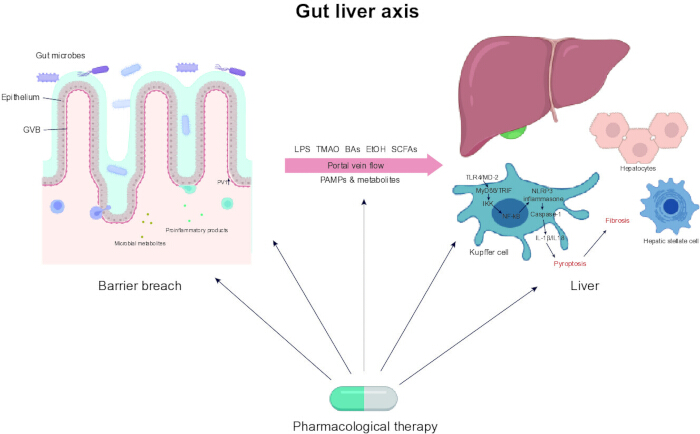
Figure 1: Graphical abstract of gut–liver axis in MASLD/MASH. This diagram summarizes the key mechanisms and therapeutic implications of the gut–liver axis in MASLD and its progression to MASH. It illustrates how gut-derived substances (e.g., LPS, BAs, SCFAs, TMAO) translocate to the liver via the portal vein upon intestinal barrier impairment, activating immune responses (e.g., TLR4–NF-κB, NLRP3 inflammasome) that drive inflammation, hepatocyte injury, and fibrosis. The framework also highlights multi-target therapies, underpinning a strategy for biomarker-guided, stratified intervention in MASLD/MASH. Abbreviations: MASLD = metabolic dysfunction–associated steatotic liver disease; MASH = metabolic dysfunction–associated steatohepatitis; LPS = lipopolysaccharide; BAs = bile acids; SCFAs = short-chain fatty acids; TMAO = trimethylamine N-oxide; TLR4 = Toll-like receptor 4; NF-κB = nuclear factor kappa B; NLRP3 = NOD-, LRR-, and pyrin domain-containing protein 3. Please click here to view a larger version of this figure.
Disclosures
Loading...
$$\rightleftharpoonup{xx}$$
$$\longleftharp{xx}$$,
$$\longrightharp{xx}$$,
The authors have no conflicts of interest to disclose.
Acknowledgements
Loading...
$$\rightleftharpoonup{xx}$$
$$\longleftharp{xx}$$,
$$\longrightharp{xx}$$,
This work was supported by the Zhejiang Provincial Traditional Chinese Medicine Science and Technology Program (No. 2024ZL1181), and the Jinhua Municipal Science and Technology Program, Key Project for Social Development (No. 2024-3-071).
References
Loading...
$$\rightleftharpoonup{xx}$$
$$\longleftharp{xx}$$,
$$\longrightharp{xx}$$,
- Blood endotoxin levels as biomarker of nonalcoholic fatty liver disease: a systematic review and meta-analysis. Clin Gastroenterol Hepatol. 21, 2746-2758 (2023).">Soppert, J., et al. Blood endotoxin levels as biomarker of nonalcoholic fatty liver disease: a systematic review and meta-analysis. Clin Gastroenterol Hepatol. 21, 2746-2758 (2023).
- Fatty liver disease caused by high-alcohol-producing Klebsiella pneumoniae. Cell Metab. 30, 675-688.e7 (2019).">Yuan, J., et al. Fatty liver disease caused by high-alcohol-producing Klebsiella pneumoniae. Cell Metab. 30, 675-688.e7 (2019).
- Hepatic TLR4 signaling in obese NAFLD. Am J Physiol Gastrointest Liver Physiol. 309, G270-G278 (2015).">Sharifnia, T., et al. Hepatic TLR4 signaling in obese NAFLD. Am J Physiol Gastrointest Liver Physiol. 309, G270-G278 (2015).
- Hepatic recruitment of macrophages promotes nonalcoholic steatohepatitis through CCR2. Am J Physiol Gastrointest Liver Physiol. 302, G1310-G1321 (2012).">Miura, K., Yang, L., van Rooijen, N., Ohnishi, H., Seki, E. Hepatic recruitment of macrophages promotes nonalcoholic steatohepatitis through CCR2. Am J Physiol Gastrointest Liver Physiol. 302, G1310-G1321 (2012).
- TLR4 enhances TGF-beta signaling and hepatic fibrosis. Nat Med. 13, 1324-1332 (2007).">Seki, E., et al. TLR4 enhances TGF-beta signaling and hepatic fibrosis. Nat Med. 13, 1324-1332 (2007).
- NLRP3 inflammasome activation results in hepatocyte pyroptosis, liver inflammation, and fibrosis in mice. Hepatology. 59, 898-910 (2014).">Wree, A., et al. NLRP3 inflammasome activation results in hepatocyte pyroptosis, liver inflammation, and fibrosis in mice. Hepatology. 59, 898-910 (2014).
- NLRP3 inflammasome blockade reduces liver inflammation and fibrosis in experimental NASH in mice. J Hepatol. 66, 1037-1046 (2017).">Mridha, A. R., et al. NLRP3 inflammasome blockade reduces liver inflammation and fibrosis in experimental NASH in mice. J Hepatol. 66, 1037-1046 (2017).
- Genetic deletion or pharmacologic inhibition of the Nlrp3 inflammasome did not ameliorate experimental NASH. J Lipid Res. 64, 100330(2023).">Ioannou, G. N., et al. Genetic deletion or pharmacologic inhibition of the Nlrp3 inflammasome did not ameliorate experimental NASH. J Lipid Res. 64, 100330(2023).
- Farnesoid X nuclear receptor ligand obeticholic acid for non-cirrhotic, non-alcoholic steatohepatitis (FLINT): a multicentre, randomised, placebo-controlled trial. Lancet. 385, 956-965 (2015).">Neuschwander-Tetri, B. A., et al. Farnesoid X nuclear receptor ligand obeticholic acid for non-cirrhotic, non-alcoholic steatohepatitis (FLINT): a multicentre, randomised, placebo-controlled trial. Lancet. 385, 956-965 (2015).
- TGR5-mediated bile acid sensing controls glucose homeostasis. Cell Metab. 10, 167-177 (2009).">Thomas, C., et al. TGR5-mediated bile acid sensing controls glucose homeostasis. Cell Metab. 10, 167-177 (2009).
- Dissecting the crosstalk between Nrf2 and NF-κB response pathways in drug-induced toxicity. Front Cell Dev Biol. 9, 809952(2021).">Gao, W., et al. Dissecting the crosstalk between Nrf2 and NF-κB response pathways in drug-induced toxicity. Front Cell Dev Biol. 9, 809952(2021).
- Orally administered berberine modulates hepatic lipid metabolism by altering microbial bile acid metabolism and the intestinal FXR signaling pathway. Mol Pharmacol. 91, 110-122 (2017).">Sun, R., et al. Orally administered berberine modulates hepatic lipid metabolism by altering microbial bile acid metabolism and the intestinal FXR signaling pathway. Mol Pharmacol. 91, 110-122 (2017).
- Berberine directly affects the gut microbiota to promote intestinal farnesoid X receptor activation. Drug Metab Dispos. 47, 86-93 (2019).">Tian, Y., et al. Berberine directly affects the gut microbiota to promote intestinal farnesoid X receptor activation. Drug Metab Dispos. 47, 86-93 (2019).
- A phase 2, proof of concept, randomised controlled trial of berberine ursodeoxycholate in patients with presumed non-alcoholic steatohepatitis and type 2 diabetes. Nat Commun. 12, 5503(2021).">Harrison, S. A., et al. A phase 2, proof of concept, randomised controlled trial of berberine ursodeoxycholate in patients with presumed non-alcoholic steatohepatitis and type 2 diabetes. Nat Commun. 12, 5503(2021).
- Efficacy and safety of Qushi Huayu, a traditional Chinese medicine, in patients with nonalcoholic fatty liver disease in a randomized controlled trial. Phytomedicine. 130, 155398(2024).">Liu, Q., et al. Efficacy and safety of Qushi Huayu, a traditional Chinese medicine, in patients with nonalcoholic fatty liver disease in a randomized controlled trial. Phytomedicine. 130, 155398(2024).
- Da-Chai-Hu decoction ameliorates high fat diet-induced nonalcoholic fatty liver disease through remodeling the gut microbiota and modulating the serum metabolism. Front Pharmacol. 11, 584090(2020).">Cui, H., et al. Da-Chai-Hu decoction ameliorates high fat diet-induced nonalcoholic fatty liver disease through remodeling the gut microbiota and modulating the serum metabolism. Front Pharmacol. 11, 584090(2020).
- Anti-inflammatory and hepatoprotective effects of Ganoderma lucidum polysaccharides against carbon tetrachloride-induced liver injury in Kunming mice. Pharmacology. 103, 143-150 (2019).">Chen, Y. S., Chen, Q. Z., Wang, Z. J., Hua, C. Anti-inflammatory and hepatoprotective effects of Ganoderma lucidum polysaccharides against carbon tetrachloride-induced liver injury in Kunming mice. Pharmacology. 103, 143-150 (2019).
- Astragalus polysaccharide attenuates nonalcoholic fatty liver disease through THDCA in high-fat diet-fed mice. J Ethnopharmacol. 320, 117401(2024).">Zheng, N., Wang, H., Zhu, W., Li, Y., Li, H. Astragalus polysaccharide attenuates nonalcoholic fatty liver disease through THDCA in high-fat diet-fed mice. J Ethnopharmacol. 320, 117401(2024).
- Microbiome-centered therapies for the management of metabolic dysfunction-associated steatotic liver disease. Clin Mol Hepatol. 31, S94-S111 (2025).">Saeed, H., et al. Microbiome-centered therapies for the management of metabolic dysfunction-associated steatotic liver disease. Clin Mol Hepatol. 31, S94-S111 (2025).
- TNF-α modulation of intestinal tight junction permeability is mediated by NIK/IKK-α axis activation of the canonical NF-κB pathway. Am J Pathol. 186, 1151-1165 (2016).">Al-Sadi, R., Guo, S., Ye, D., Rawat, M., Ma, T. Y. TNF-α modulation of intestinal tight junction permeability is mediated by NIK/IKK-α axis activation of the canonical NF-κB pathway. Am J Pathol. 186, 1151-1165 (2016).
- Caveolin-1-dependent occludin endocytosis is required for TNF-induced tight junction regulation in vivo. J Cell Biol. 189, 111-126 (2010).">Marchiando, A. M., et al. Caveolin-1-dependent occludin endocytosis is required for TNF-induced tight junction regulation in vivo. J Cell Biol. 189, 111-126 (2010).
- The composition of the gut microbiota shapes the colon mucus barrier. EMBO Rep. 16, 164-177 (2015).">Jakobsson, H. E., et al. The composition of the gut microbiota shapes the colon mucus barrier. EMBO Rep. 16, 164-177 (2015).
- Gut microbiota and intestinal trans-epithelial permeability. Int J Mol Sci. 21, 6402(2020).">Allam-Ndoul, B., Castonguay-Paradis, S., Veilleux, A. Gut microbiota and intestinal trans-epithelial permeability. Int J Mol Sci. 21, 6402(2020).
- Intestinal barrier and gut microbiota: shaping our immune responses throughout life. Tissue Barriers. 5, e1373208(2017).">Takiishi, T., Fenero, C. I. M., Câmara, N. O. S. Intestinal barrier and gut microbiota: shaping our immune responses throughout life. Tissue Barriers. 5, e1373208(2017).
- The gut microbiota suppresses insulin-mediated fat accumulation via the short-chain fatty acid receptor GPR43. Nat Commun. 4, 1829(2013).">Kimura, I., et al. The gut microbiota suppresses insulin-mediated fat accumulation via the short-chain fatty acid receptor GPR43. Nat Commun. 4, 1829(2013).
- A gut-vascular barrier controls the systemic dissemination of bacteria. Science. 350, 830-834 (2015).">Spadoni, I., et al. A gut-vascular barrier controls the systemic dissemination of bacteria. Science. 350, 830-834 (2015).
- Microbiota-driven gut vascular barrier disruption is a prerequisite for non-alcoholic steatohepatitis development. J Hepatol. 71, 1216-1228 (2019).">Mouries, J., et al. Microbiota-driven gut vascular barrier disruption is a prerequisite for non-alcoholic steatohepatitis development. J Hepatol. 71, 1216-1228 (2019).
- The gut-vascular barrier as a new protagonist in intestinal and extraintestinal diseases. Int J Mol Sci. 24, 1470(2023).">Di Tommaso, N., Santopaolo, F., Gasbarrini, A., Ponziani, F. R. The gut-vascular barrier as a new protagonist in intestinal and extraintestinal diseases. Int J Mol Sci. 24, 1470(2023).
- Regulation of inflammation by short chain fatty acids. Nutrients. 3, 858-876 (2011).">Vinolo, M. A., Rodrigues, H. G., Nachbar, R. T., Curi, R. Regulation of inflammation by short chain fatty acids. Nutrients. 3, 858-876 (2011).
- Regulation of immune cell function by short-chain fatty acids. Clin Transl Immunology. 5, e73(2016).">Corrêa-Oliveira, R., Fachi, J. L., Vieira, A., Sato, F. T., Vinolo, M. A. Regulation of immune cell function by short-chain fatty acids. Clin Transl Immunology. 5, e73(2016).
- Bile acids as modulators of gut microbiota composition and function. Gut Microbes. 15, 2172671(2023).">Larabi, A. B., Masson, H. L. P., Bäumler, A. J. Bile acids as modulators of gut microbiota composition and function. Gut Microbes. 15, 2172671(2023).
- Pro-inflammatory hepatic macrophages generate ROS through NADPH oxidase 2 via endocytosis of monomeric TLR4-MD2 complex. Nat Commun. 8, 2247(2017).">Kim, S. Y., et al. Pro-inflammatory hepatic macrophages generate ROS through NADPH oxidase 2 via endocytosis of monomeric TLR4-MD2 complex. Nat Commun. 8, 2247(2017).
- The NLRP3 inflammasome in non-alcoholic fatty liver disease and steatohepatitis: therapeutic targets and treatment. Front Pharmacol. 13, 780496(2022).">Yu, L., et al. The NLRP3 inflammasome in non-alcoholic fatty liver disease and steatohepatitis: therapeutic targets and treatment. Front Pharmacol. 13, 780496(2022).
- The NLRP3 inflammasome: mechanism of action, role in disease and therapies. Mol Aspects Med. 76, 100889(2020).">Wang, L., Hauenstein, A. V. The NLRP3 inflammasome: mechanism of action, role in disease and therapies. Mol Aspects Med. 76, 100889(2020).
- Dietary cholesterol promotes steatohepatitis related hepatocellular carcinoma through dysregulated metabolism and calcium signaling. Nat Commun. 9, 4490(2018).">Liang, J. Q., et al. Dietary cholesterol promotes steatohepatitis related hepatocellular carcinoma through dysregulated metabolism and calcium signaling. Nat Commun. 9, 4490(2018).
- Gasdermin D plays a key role as a pyroptosis executor of non-alcoholic steatohepatitis in humans and mice. J Hepatol. 68, 773-782 (2018).">Xu, B., et al. Gasdermin D plays a key role as a pyroptosis executor of non-alcoholic steatohepatitis in humans and mice. J Hepatol. 68, 773-782 (2018).
- Gut microbiome and liver diseases. Gut. 65, 2035-2044 (2016).">Tilg, H., Cani, P. D., Mayer, E. A. Gut microbiome and liver diseases. Gut. 65, 2035-2044 (2016).
- Molecular mechanism of tumor necrosis factor-alpha modulation of intestinal epithelial tight junction barrier. Am J Physiol Gastrointest Liver Physiol. 290, G496-G504 (2006).">Ye, D., Ma, I., Ma, T. Y. Molecular mechanism of tumor necrosis factor-alpha modulation of intestinal epithelial tight junction barrier. Am J Physiol Gastrointest Liver Physiol. 290, G496-G504 (2006).
- Susceptibility to gut leakiness: a possible mechanism for endotoxaemia in non-alcoholic steatohepatitis. Liver Int. 28, 1026-1033 (2008).">Farhadi, A., et al. Susceptibility to gut leakiness: a possible mechanism for endotoxaemia in non-alcoholic steatohepatitis. Liver Int. 28, 1026-1033 (2008).
- NLRP3 inflammasome activation is required for fibrosis development in NAFLD. J Mol Med (Berl). 92, 1069-1082 (2014).">Wree, A., et al. NLRP3 inflammasome activation is required for fibrosis development in NAFLD. J Mol Med (Berl). 92, 1069-1082 (2014).
- Trends and pitfalls in the progress of network pharmacology research on natural products. Pharmaceuticals (Basel). 18, 538(2025).">Panossian, A. Trends and pitfalls in the progress of network pharmacology research on natural products. Pharmaceuticals (Basel). 18, 538(2025).
- Network pharmacology: a bright guiding light on the way to explore the personalized precise medication of traditional Chinese medicine. Chin Med. 18, 146(2023).">Li, L., et al. Network pharmacology: a bright guiding light on the way to explore the personalized precise medication of traditional Chinese medicine. Chin Med. 18, 146(2023).
- Intestinal FXR-mediated FGF15 production contributes to diurnal control of hepatic bile acid synthesis in mice. Lab Invest. 90, 1457-1467 (2010).">Stroeve, J. H., et al. Intestinal FXR-mediated FGF15 production contributes to diurnal control of hepatic bile acid synthesis in mice. Lab Invest. 90, 1457-1467 (2010).
- Hepatic FXR-FGF4 is required for bile acid homeostasis via an FGFR4-LRH-1 signal node under cholestatic stress. Cell Metab. 37, 104-120.e9 (2025).">Song, L., et al. Hepatic FXR-FGF4 is required for bile acid homeostasis via an FGFR4-LRH-1 signal node under cholestatic stress. Cell Metab. 37, 104-120.e9 (2025).
- Hepatoprotective effect of Qushihuayu formula on non-alcoholic steatohepatitis induced by MCD diet in rat. Chin Med. 16, 27(2021).">Lan, Q., et al. Hepatoprotective effect of Qushihuayu formula on non-alcoholic steatohepatitis induced by MCD diet in rat. Chin Med. 16, 27(2021).
- 2: a revised tool for assessing risk of bias in randomised trials. BMJ. 366, 14898(2019).">Sterne, J. A. C., et al. 2: a revised tool for assessing risk of bias in randomised trials. BMJ. 366, 14898(2019).
- ROBINS-I: a tool for assessing risk of bias in non-randomised studies of interventions. BMJ. 355, i4919(2016).">Sterne, J. A., et al. ROBINS-I: a tool for assessing risk of bias in non-randomised studies of interventions. BMJ. 355, i4919(2016).
- The FXR agonist obeticholic acid prevents gut barrier dysfunction and bacterial translocation in cholestatic rats. Am J Pathol. 185, 409-419 (2015).">Verbeke, L., et al. The FXR agonist obeticholic acid prevents gut barrier dysfunction and bacterial translocation in cholestatic rats. Am J Pathol. 185, 409-419 (2015).
- Astragalus mongholicus polysaccharides ameliorate hepatic lipid accumulation and inflammation as well as modulate gut microbiota in NAFLD rats. Food Funct. 13, 7287-7301 (2022).">Zhong, M., et al. Astragalus mongholicus polysaccharides ameliorate hepatic lipid accumulation and inflammation as well as modulate gut microbiota in NAFLD rats. Food Funct. 13, 7287-7301 (2022).
- Toll-like receptor 4 signaling augments transforming growth factor-β responses: a novel mechanism for maintaining and amplifying fibrosis in scleroderma. Am J Pathol. 182, 192-205 (2013).">Bhattacharyya, S., et al. Toll-like receptor 4 signaling augments transforming growth factor-β responses: a novel mechanism for maintaining and amplifying fibrosis in scleroderma. Am J Pathol. 182, 192-205 (2013).
- The promising role of CCL2 as a noninvasive marker for nonalcoholic steatohepatitis diagnosis in Egyptian populations. Eur J Gastroenterol Hepatol. 33, e954-e960 (2021).">Ali, A. A., Fouda, A., Abdelaziz, E. S., Abdelkawy, K., Ahmed, M. H. The promising role of CCL2 as a noninvasive marker for nonalcoholic steatohepatitis diagnosis in Egyptian populations. Eur J Gastroenterol Hepatol. 33, e954-e960 (2021).
- Common and novel markers for measuring inflammation and oxidative stress ex vivo in research and clinical practice-which to use regarding disease outcomes. Antioxidants (Basel). 10, 414(2021).">Menzel, A., et al. Common and novel markers for measuring inflammation and oxidative stress ex vivo in research and clinical practice-which to use regarding disease outcomes. Antioxidants (Basel). 10, 414(2021).
- Effectiveness and safety of a shorter treatment regimen in a setting with a high burden of multidrug-resistant tuberculosis. Int J Environ Res Public Health. 18, 4121(2021).">Trubnikov, A., et al. Effectiveness and safety of a shorter treatment regimen in a setting with a high burden of multidrug-resistant tuberculosis. Int J Environ Res Public Health. 18, 4121(2021).
- Ganoderma lucidum reduces obesity in mice by modulating the composition of the gut microbiota. Nat Commun. 6, 7489(2015).">Chang, C. J., et al. Ganoderma lucidum reduces obesity in mice by modulating the composition of the gut microbiota. Nat Commun. 6, 7489(2015).
- Extensive intestinal first-pass elimination and predominant hepatic distribution of berberine explain its low plasma levels in rats. Drug Metab Dispos. 38, 1779-1784 (2010).">Liu, Y. T., et al. Extensive intestinal first-pass elimination and predominant hepatic distribution of berberine explain its low plasma levels in rats. Drug Metab Dispos. 38, 1779-1784 (2010).
- Tissue distribution of berberine and its metabolites after oral administration in rats. PLoS One. 8, e77969(2013).">Tan, X. S., et al. Tissue distribution of berberine and its metabolites after oral administration in rats. PLoS One. 8, e77969(2013).
- Bioavailability study of berberine and the enhancing effects of TPGS on intestinal absorption in rats. AAPS PharmSciTech. 12, 705-711 (2011).">Chen, W., et al. Bioavailability study of berberine and the enhancing effects of TPGS on intestinal absorption in rats. AAPS PharmSciTech. 12, 705-711 (2011).
- Hepatic NLRP3-derived Hsp70 binding to TLR4 mediates MASLD to MASH progression upon inhibition of PP2A by harmful algal bloom toxin microcystin, a second hit. Int J Mol Sci. 24, 16354(2023).">Roy, S., et al. Hepatic NLRP3-derived Hsp70 binding to TLR4 mediates MASLD to MASH progression upon inhibition of PP2A by harmful algal bloom toxin microcystin, a second hit. Int J Mol Sci. 24, 16354(2023).
- Secondary bile acids and short chain fatty acids in the colon: a focus on colonic microbiome, cell proliferation, inflammation, and cancer. Int J Mol Sci. 20, 1214(2019).">Zeng, H., Umar, S., Rust, B., Lazarova, D., Bordonaro, M. Secondary bile acids and short chain fatty acids in the colon: a focus on colonic microbiome, cell proliferation, inflammation, and cancer. Int J Mol Sci. 20, 1214(2019).
- The role of short-chain fatty acids and bile acids in intestinal and liver function, inflammation, and carcinogenesis. Front Cell Dev Biol. 9, 703218(2021).">Visekruna, A., Luu, M. The role of short-chain fatty acids and bile acids in intestinal and liver function, inflammation, and carcinogenesis. Front Cell Dev Biol. 9, 703218(2021).
- Pharmacokinetics and pharmacodynamics of HTD1801 (berberine ursodeoxycholate, BUDCA) in patients with hyperlipidemia. Lipids Health Dis. 19, 239(2020).">Di Bisceglie, A. M., et al. Pharmacokinetics and pharmacodynamics of HTD1801 (berberine ursodeoxycholate, BUDCA) in patients with hyperlipidemia. Lipids Health Dis. 19, 239(2020).
- The effect of berberine on lipid profile, liver enzymes, and fasting blood glucose in patients with non-alcoholic fatty liver disease (NAFLD): a randomized controlled trial. Med J Islam Repub Iran. 36, 39(2022).">Nejati, L., Movahedi, A., Salari, G., Moeineddin, R., Nejati, P. The effect of berberine on lipid profile, liver enzymes, and fasting blood glucose in patients with non-alcoholic fatty liver disease (NAFLD): a randomized controlled trial. Med J Islam Repub Iran. 36, 39(2022).
- The clinical efficacy and safety of berberine in the treatment of non-alcoholic fatty liver disease: a meta-analysis and systematic review. J Transl Med. 22, 225(2024).">Nie, Q., et al. The clinical efficacy and safety of berberine in the treatment of non-alcoholic fatty liver disease: a meta-analysis and systematic review. J Transl Med. 22, 225(2024).
- Transforming berberine into its intestine-absorbable form by the gut microbiota. Sci Rep. 5, 12155(2015).">Feng, R., et al. Transforming berberine into its intestine-absorbable form by the gut microbiota. Sci Rep. 5, 12155(2015).
- Berberine ameliorates intestinal epithelial tight-junction damage and down-regulates myosin light chain kinase pathways in a mouse model of endotoxinemia. J Infect Dis. 203, 1602-1612 (2011).">Gu, L., et al. Berberine ameliorates intestinal epithelial tight-junction damage and down-regulates myosin light chain kinase pathways in a mouse model of endotoxinemia. J Infect Dis. 203, 1602-1612 (2011).
- Berberine promotes recovery of colitis and inhibits inflammatory responses in colonic macrophages and epithelial cells in DSS-treated mice. Am J Physiol Gastrointest Liver Physiol. 302, G504-G514 (2012).">Yan, F., et al. Berberine promotes recovery of colitis and inhibits inflammatory responses in colonic macrophages and epithelial cells in DSS-treated mice. Am J Physiol Gastrointest Liver Physiol. 302, G504-G514 (2012).
- Berberine suppresses LPS-induced inflammation through modulating Sirt1/NF-κB signaling pathway in RAW264.7 cells. Int Immunopharmacol. 52, 93-100 (2017).">Zhang, H., et al. Berberine suppresses LPS-induced inflammation through modulating Sirt1/NF-κB signaling pathway in RAW264.7 cells. Int Immunopharmacol. 52, 93-100 (2017).
- Berberine inhibits Nod-like receptor family pyrin domain containing 3 inflammasome activation and pyroptosis in nonalcoholic steatohepatitis via the ROS/TXNIP axis. Front Pharmacol. 11, 185(2020).">Mai, W., et al. Berberine inhibits Nod-like receptor family pyrin domain containing 3 inflammasome activation and pyroptosis in nonalcoholic steatohepatitis via the ROS/TXNIP axis. Front Pharmacol. 11, 185(2020).
- The therapeutic effect of berberine in the treatment of nonalcoholic fatty liver disease: a meta-analysis. Evid Based Complement Alternat Med. 2016, 3593951(2016).">Wei, X., Wang, C., Hao, S., Song, H., Yang, L. The therapeutic effect of berberine in the treatment of nonalcoholic fatty liver disease: a meta-analysis. Evid Based Complement Alternat Med. 2016, 3593951(2016).
- Amelioration of non-alcoholic steatohepatitis by Qushi Huayu decoction is associated with inhibition of the intestinal mitogen-activated protein kinase pathway. Phytomedicine. 66, 153135(2020).">Leng, J., et al. Amelioration of non-alcoholic steatohepatitis by Qushi Huayu decoction is associated with inhibition of the intestinal mitogen-activated protein kinase pathway. Phytomedicine. 66, 153135(2020).
- Qushi Huayu decoction inhibits hepatic lipid accumulation by activating AMP-activated protein kinase in vivo and in vitro. Evid Based Complement Alternat Med. 2013, 184358(2013).">Feng, Q., et al. Qushi Huayu decoction inhibits hepatic lipid accumulation by activating AMP-activated protein kinase in vivo and in vitro. Evid Based Complement Alternat Med. 2013, 184358(2013).
- Qushi Huayu decoction attenuated hepatic lipid accumulation via JAK2/STAT3/CPT-1A-related fatty acid β-oxidation in mice with non-alcoholic steatohepatitis. Pharm Biol. 60, 2124-2133 (2022).">Sun, Q., et al. Qushi Huayu decoction attenuated hepatic lipid accumulation via JAK2/STAT3/CPT-1A-related fatty acid β-oxidation in mice with non-alcoholic steatohepatitis. Pharm Biol. 60, 2124-2133 (2022).
- Qushi Huayu decoction ameliorates non-alcoholic fatty liver disease in rats by modulating gut microbiota and serum lipids. Front Endocrinol (Lausanne). 14, 1272214(2023).">Ni, Y., et al. Qushi Huayu decoction ameliorates non-alcoholic fatty liver disease in rats by modulating gut microbiota and serum lipids. Front Endocrinol (Lausanne). 14, 1272214(2023).
- Approaches to establish Q-markers for the quality standards of traditional Chinese medicines. Acta Pharm Sin B. 7, 439-446 (2017).">Yang, W., et al. Approaches to establish Q-markers for the quality standards of traditional Chinese medicines. Acta Pharm Sin B. 7, 439-446 (2017).
- Batch-to-batch quality consistency evaluation of botanical drug products using multivariate statistical analysis of the chromatographic fingerprint. AAPS PharmSciTech. 14, 802-810 (2013).">Xiong, H., Yu, L. X., Qu, H. Batch-to-batch quality consistency evaluation of botanical drug products using multivariate statistical analysis of the chromatographic fingerprint. AAPS PharmSciTech. 14, 802-810 (2013).
- Resmetirom: the first disease-specific treatment for MASH. Int J Endocrinol. 2025, 6430023(2025).">Mousa, A. M., Mahmoud, M., AlShuraiaan, G. M. Resmetirom: the first disease-specific treatment for MASH. Int J Endocrinol. 2025, 6430023(2025).
- Unlocking the potential of THR-β agonist therapies: resmetirom's chemistry, biology, and patent insights. Naunyn Schmiedebergs Arch Pharmacol. 398, 9703-9720 (2025).">Dahiya, K., Palkar, M., Sharma, S. Unlocking the potential of THR-β agonist therapies: resmetirom's chemistry, biology, and patent insights. Naunyn Schmiedebergs Arch Pharmacol. 398, 9703-9720 (2025).
- Dachaihu decoction inhibits hypernutrition-induced liver metastasis from colorectal cancer by maintaining the gut vascular barrier. Cancer Pathog Ther. 1, 98-110 (2023).">Wang, R., et al. Dachaihu decoction inhibits hypernutrition-induced liver metastasis from colorectal cancer by maintaining the gut vascular barrier. Cancer Pathog Ther. 1, 98-110 (2023).
- Da-Chai-Hu-Tang protects from acute intrahepatic cholestasis by inhibiting hepatic inflammation and bile accumulation via activation of PPARα. Front Pharmacol. 13, 847483(2022).">Xu, S., et al. Da-Chai-Hu-Tang protects from acute intrahepatic cholestasis by inhibiting hepatic inflammation and bile accumulation via activation of PPARα. Front Pharmacol. 13, 847483(2022).
- The efficacy and safety of Dachaihu decoction in the treatment of nonalcoholic fatty liver disease: a systematic review and meta-analysis. Front Med (Lausanne). 11, 1397900(2024).">Mou, Z., et al. The efficacy and safety of Dachaihu decoction in the treatment of nonalcoholic fatty liver disease: a systematic review and meta-analysis. Front Med (Lausanne). 11, 1397900(2024).
- Polysaccharides from traditional Chinese medicines: extraction, purification, modification, and biological activity. Molecules. 21, 1705(2016).">Chen, Y., et al. Polysaccharides from traditional Chinese medicines: extraction, purification, modification, and biological activity. Molecules. 21, 1705(2016).
- Ganoderma atrum polysaccharide ameliorates intestinal mucosal dysfunction associated with autophagy in immunosuppressed mice. Food Chem Toxicol. 138, 111244(2020).">Ying, M., et al. Ganoderma atrum polysaccharide ameliorates intestinal mucosal dysfunction associated with autophagy in immunosuppressed mice. Food Chem Toxicol. 138, 111244(2020).
- Research progress on the therapeutic effect of polysaccharides on non-alcoholic fatty liver disease through the regulation of the gut-liver axis. Int J Mol Sci. 23, 11710(2022).">Chen, X., et al. Research progress on the therapeutic effect of polysaccharides on non-alcoholic fatty liver disease through the regulation of the gut-liver axis. Int J Mol Sci. 23, 11710(2022).
- The relevance of intestinal barrier dysfunction, antimicrobial proteins and bacterial endotoxin in metabolic dysfunction-associated steatotic liver disease. Eur J Clin Invest. 54, e14224(2024).">Bergheim, I., Moreno-Navarrete, J. M. The relevance of intestinal barrier dysfunction, antimicrobial proteins and bacterial endotoxin in metabolic dysfunction-associated steatotic liver disease. Eur J Clin Invest. 54, e14224(2024).
- Multiple fingerprints and spectrum-effect relationship of polysaccharides from Saposhnikoviae Radix. Molecules. 27, 5278(2022).">Yu, M., et al. Multiple fingerprints and spectrum-effect relationship of polysaccharides from Saposhnikoviae Radix. Molecules. 27, 5278(2022).
- Structure-based standardization of prebiotic soluble dietary fibers based on monosaccharide composition, degree of polymerization, and linkage composition. Carbohydr Polym. 367, 123949(2025).">Swackhamer, C., Jang, S., Park, B. R., Hamaker, B. R., Jung, S. K. Structure-based standardization of prebiotic soluble dietary fibers based on monosaccharide composition, degree of polymerization, and linkage composition. Carbohydr Polym. 367, 123949(2025).
- Monosaccharide composition and glycosidic linkages analysis by ultra high performance liquid chromatography-triple quadrupole tandem mass spectrometry-case study of plant polysaccharides. Int J Biol Macromol. 281, 136471(2024).">Zhu, Y., et al. Monosaccharide composition and glycosidic linkages analysis by ultra high performance liquid chromatography-triple quadrupole tandem mass spectrometry-case study of plant polysaccharides. Int J Biol Macromol. 281, 136471(2024).
- Characterization and comparison of bioactive polysaccharides from Grifola frondosa by HPSEC-MALLS-RID and saccharide mapping based on HPAEC-PAD. Polymers. 15, 208(2022).">Zhu, B., et al. Characterization and comparison of bioactive polysaccharides from Grifola frondosa by HPSEC-MALLS-RID and saccharide mapping based on HPAEC-PAD. Polymers. 15, 208(2022).
- Efficacy and safety of resmetirom, a selective thyroid hormone receptor-β agonist, in the treatment of metabolic dysfunction-associated steatotic liver disease (MASLD): a systematic review and meta-analysis. Sci Rep. 14, 19790(2024).">Suvarna, R., Shetty, S., Pappachan, J. M. Efficacy and safety of resmetirom, a selective thyroid hormone receptor-β agonist, in the treatment of metabolic dysfunction-associated steatotic liver disease (MASLD): a systematic review and meta-analysis. Sci Rep. 14, 19790(2024).
- The role of gut-derived lipopolysaccharides and the intestinal barrier in fatty liver diseases. J Gastrointest Surg. 26, 671-683 (2022).">An, L., et al. The role of gut-derived lipopolysaccharides and the intestinal barrier in fatty liver diseases. J Gastrointest Surg. 26, 671-683 (2022).
- Gut microbiome in metabolic dysfunction-associated steatotic liver disease and associated hepatocellular carcinoma. Nat Rev Gastroenterol Hepatol. 22, 619-638 (2025).">Lau, H. C., Zhang, X., Yu, J. Gut microbiome in metabolic dysfunction-associated steatotic liver disease and associated hepatocellular carcinoma. Nat Rev Gastroenterol Hepatol. 22, 619-638 (2025).
- An observational study to evaluate the association between intestinal permeability, leaky gut related markers, and metabolic health in healthy adults. Healthcare (Basel). 9, 1583(2021).">Hoshiko, H., et al. An observational study to evaluate the association between intestinal permeability, leaky gut related markers, and metabolic health in healthy adults. Healthcare (Basel). 9, 1583(2021).
- Lipopolysaccharide and the gut microbiota: considering structural variation. FEBS Lett. 596, 849-875 (2022).">Mohr, A. E., Crawford, M., Jasbi, P., Fessler, S., Sweazea, K. L. Lipopolysaccharide and the gut microbiota: considering structural variation. FEBS Lett. 596, 849-875 (2022).
- Serum bile acid patterns are associated with the presence of NAFLD in twins, and dose-dependent changes with increase in fibrosis stage in patients with biopsy-proven NAFLD. Aliment Pharmacol Ther. 49, 183-193 (2019).">Caussy, C., et al. Serum bile acid patterns are associated with the presence of NAFLD in twins, and dose-dependent changes with increase in fibrosis stage in patients with biopsy-proven NAFLD. Aliment Pharmacol Ther. 49, 183-193 (2019).
- Fibroblast growth factor 19 and 7α-hydroxy-4-cholesten-3-one in the diagnosis of patients with possible bile acid diarrhea. Clin Transl Gastroenterol. 3, e18(2012).">Pattni, S. S., Brydon, W. G., Dew, T., Walters, J. R. Fibroblast growth factor 19 and 7α-hydroxy-4-cholesten-3-one in the diagnosis of patients with possible bile acid diarrhea. Clin Transl Gastroenterol. 3, e18(2012).
- The response of patients with bile acid diarrhoea to the farnesoid X receptor agonist obeticholic acid. Aliment Pharmacol Ther. 41, 54-64 (2015).">Walters, J. R., et al. The response of patients with bile acid diarrhoea to the farnesoid X receptor agonist obeticholic acid. Aliment Pharmacol Ther. 41, 54-64 (2015).
- Cell-autonomous hepatocyte-specific GP130 signaling is sufficient to trigger a robust innate immune response in mice. J Hepatol. 74, 407-418 (2021).">Schumacher, N., et al. Cell-autonomous hepatocyte-specific GP130 signaling is sufficient to trigger a robust innate immune response in mice. J Hepatol. 74, 407-418 (2021).
- Short-chain fatty acids in nonalcoholic fatty liver disease: new prospects for short-chain fatty acids as therapeutic targets. Heliyon. 10, e26991(2024).">Li, X., et al. Short-chain fatty acids in nonalcoholic fatty liver disease: new prospects for short-chain fatty acids as therapeutic targets. Heliyon. 10, e26991(2024).
- Widely used commercial ELISA does not detect precursor of haptoglobin2, but recognizes properdin as a potential second member of the zonulin family. Front Endocrinol (Lausanne). 9, 22(2018).">Scheffler, L., et al. Widely used commercial ELISA does not detect precursor of haptoglobin2, but recognizes properdin as a potential second member of the zonulin family. Front Endocrinol (Lausanne). 9, 22(2018).
- Identification of human zonulin, a physiological modulator of tight junctions, as prehaptoglobin-2. Proc Natl Acad Sci U S A. 106, 16799-16804 (2009).">Tripathi, A., et al. Identification of human zonulin, a physiological modulator of tight junctions, as prehaptoglobin-2. Proc Natl Acad Sci U S A. 106, 16799-16804 (2009).
- Reagent and laboratory contamination can critically impact sequence-based microbiome analyses. BMC Biol. 12, 87(2014).">Salter, S. J., et al. Reagent and laboratory contamination can critically impact sequence-based microbiome analyses. BMC Biol. 12, 87(2014).
- Change in MRI-PDFF and histologic response in patients with nonalcoholic steatohepatitis: a systematic review and meta-analysis. Clin Gastroenterol Hepatol. 19, 2274-2283.e5 (2021).">Stine, J. G., et al. Change in MRI-PDFF and histologic response in patients with nonalcoholic steatohepatitis: a systematic review and meta-analysis. Clin Gastroenterol Hepatol. 19, 2274-2283.e5 (2021).
- Clinical utility of 30% relative decline in MRI-PDFF in predicting fibrosis regression in non-alcoholic fatty liver disease. Gut. 71, 983-990 (2022).">Tamaki, N., et al. Clinical utility of 30% relative decline in MRI-PDFF in predicting fibrosis regression in non-alcoholic fatty liver disease. Gut. 71, 983-990 (2022).
- Enhanced liver fibrosis test predicts liver-related outcomes in the general population. JHEP Rep. 5, 100765(2023).">Saarinen, K., et al. Enhanced liver fibrosis test predicts liver-related outcomes in the general population. JHEP Rep. 5, 100765(2023).
- MRE combined with FIB-4 (MEFIB) index in detection of candidates for pharmacological treatment of NASH-related fibrosis. Gut. 70, 1946-1953 (2021).">Jung, J., et al. MRE combined with FIB-4 (MEFIB) index in detection of candidates for pharmacological treatment of NASH-related fibrosis. Gut. 70, 1946-1953 (2021).
- The adaptive designs CONSORT extension (ACE) statement: a checklist with explanation and elaboration guideline for reporting randomised trials that use an adaptive design. BMJ. 369, m115(2020).">Dimairo, M., et al. The adaptive designs CONSORT extension (ACE) statement: a checklist with explanation and elaboration guideline for reporting randomised trials that use an adaptive design. BMJ. 369, m115(2020).
Reprints and Permissions
Request permission to reuse the text or figures of this JoVE article
Request Permission