This study established a novel in vivo beagle model of chronic moderate renal insufficiency combined with atrial fibrillation via transcatheter renal artery embolization and rapid atrial pacing, and demonstrated that this combination severely impaired left atrial endothelial function, enhanced procoagulant activity, and elevated thrombosis risk through inflammatory and RAAS-mediated pathways.
Research Article
Effects of Chronic Renal Insufficiency Combined with Atrial Fibrillation on Left Atrial Endothelial Function in a Beagle Model
Yan Yin*1 , Fukun Chen*2 , Lifeng Liu3 , Jian Li4 , Xu Liu1 , Zhipeng Hu1 , Jiawei Zhang1 , Yunlong Wang1 , Zhuo Liang1
Opens in a new tab
In This Article
Summary
Loading...
$$\rightleftharpoonup{xx}$$
$$\longleftharp{xx}$$,
$$\longrightharp{xx}$$,
Abstract
Loading...
$$\rightleftharpoonup{xx}$$
$$\longleftharp{xx}$$,
$$\longrightharp{xx}$$,
The co-occurrence of atrial fibrillation (AF) and renal insufficiency (RI) represents a clinically complex phenomenon with high prevalence. This study investigated the impact of chronic moderate RI combined with AF on left atrial endothelial function in beagles. Chronic RI was induced by transcatheter embolization of the main branch of the left renal artery using gelatin sponge granules, with animals maintained for 3 months to allow chronic renal parenchymal damage to develop. AF was subsequently induced by continuous rapid atrial pacing (basic cycle length, 60 ms; voltage, 4 times the diastolic pacing threshold; 180 min). Histological changes were assessed using hematoxylin and eosin staining. Parameters associated with endothelial function, coagulation, fibrinolysis, inflammation, and renin–angiotensin–aldosterone system (RAAS) activity in plasma and heart tissues were examined using enzyme-linked immunosorbent assay, quantitative real-time polymerase chain reaction, and western blotting. The results demonstrated successful establishment of a chronic kidney damage model with moderate RI, confirmed by significantly elevated plasma creatinine, urea nitrogen, and reduced creatinine clearance. Left atrial endothelial function was significantly impaired in beagles with combined RI and AF, accompanied by enhanced procoagulant effects and decreased fibrinolysis. Inflammatory markers were elevated following the RI procedure or AF induction and were further enhanced in the combined RI+AF group. Additionally, RAAS activity, evidenced by increased renin and aldosterone levels, was elevated following RI and further augmented upon combination with AF. In summary, this study successfully established an in vivo animal model of chronic moderate RI combined with AF in beagles, demonstrating that this combination significantly disturbed left atrial endothelial function and increased thrombotic risk.
Introduction
Loading...
$$\rightleftharpoonup{xx}$$
$$\longleftharp{xx}$$,
$$\longrightharp{xx}$$,
Atrial fibrillation (AF), the most prevalent form of sustained cardiac arrhythmia, is closely linked to unfavorable clinical outcomes. Owing to the systemic pathophysiological characteristics of AF, this arrhythmia frequently engages in intricate pathophysiological crosstalk with a range of concomitant comorbidities, including cognitive decline, depression, and systemic embolism1. Chronic kidney disease (CKD) has been identified as an independent risk factor for both the development of AF and the occurrence of thromboembolic events. Approximately 15% to 20% of patients diagnosed with CKD are affected by AF, while the proportion of patients receiving renal replacement therapy who develop AF ranges from 15% to 40%2. Meanwhile, approximately 30% to 60% of patients diagnosed with AF concurrently present with mild-to-moderate renal insufficiency (RI)3. Therefore, the co-occurrence of AF and RI has become a complex clinical phenomenon with a high prevalence among patient populations. The bidirectional relationship between AF and RI severely increases the incidence risk of AF and also aggravates the progression of renal impairment, eventually contributing to worse clinical outcomes4.
In previous studies, rats have often been used to establish RI models; however, their small heart size renders them unsuitable for cardiac electrophysiological experiments. Dogs, by contrast, are frequently employed in medium- and large-animal models of renal insufficiency, with nephrectomy serving as the primary modeling method5. Nevertheless, this approach is associated with a limited modeling success rate. More importantly, since nephrectomy does not directly induce renal parenchymal damage, it fails to effectively simulate the pathological processes of renal insufficiency. Therefore, establishing a suitable animal model with RI and AF is essential. Of note, Liang Z et al. successfully established a mild RI model in beagles by embolization of small branches of the renal artery in the left kidney for two weeks using gelatin sponge granules, which was associated with AF6; however, a two-week observation period is generally considered insufficient for simulating clinical CKD, as the hallmark features of chronic nephropathy, including glomerulosclerosis and tubulointerstitial fibrosis, require prolonged periods of sustained renal parenchymal damage to fully develop in animal models7,8. This highlights the need for a chronic model with a longer observation period that more faithfully recapitulates the progressive nature of clinical CKD.
The present study, therefore, aimed to establish an animal model of chronic moderate RI combined with AF by performing transcatheter embolization of the main trunk of the left renal artery in beagles and maintaining the animals for 3 months to allow the development of established chronic renal pathology. In addition, we explored the pathogenesis of left atrial endothelial dysfunction under these pathological conditions, testing the hypothesis that the combination of chronic moderate RI and AF would synergistically impair left atrial endothelial function through enhanced inflammation and RAAS activation, thereby increasing thrombosis risk beyond either condition alone. These findings may provide further understanding of chronic RI combined with AF and lay a basis for further investigations into the benefits of anticoagulant therapy in patients with AF and RI.
Protocol
Loading...
$$\rightleftharpoonup{xx}$$
$$\longleftharp{xx}$$,
$$\longrightharp{xx}$$,
This study was carried out in strict accordance with the recommendations in the Guide for the Care and Use of Laboratory Animals from the National Institutes of Health (Publication No. 85-23, revised 1996). The study protocol was approved by the Institutional Animal Care and Use Committee of Beijing Anzhen Hospital (Approval No. 81700293). The study protocol was reviewed and approved by the Institutional Animal Care and Use Committee of our institution. All efforts were made to minimize animal suffering and reduce the number of animals used in the study. The reagents and the equipment used are listed in the Table of Materials.
1. Animal model and experimental design
- Animal preparation and housing
Twenty-four healthy male beagles, aged 4–5 years and weighing 10–12 kg, were obtained from Shanghai Jiao Tong University Agricultural Experimental Animal Farm Co., Ltd. (see Table of Materials). Only male beagles were used to minimize potential confounding effects of hormonal fluctuations associated with the estrous cycle on coagulation, endothelial function, and inflammatory responses. All beagles were housed individually in standard cages maintained at a temperature of 22–25 °C with 40%–60% humidity and a 12 h:12 h light–dark cycle. The animals were provided with a standard laboratory canine diet and water ad libitum. Prior to the initiation of experimental procedures, all beagles underwent a 1-week acclimation period. Transthoracic echocardiography (TTE) was performed on all animals using an ultrasound system equipped with a 3.5 MHz phased-array transducer to exclude valvular pathologies, cardiomyopathy, and other structural heart diseases. - Anesthesia and vascular access
All beagles were fasted for 12 h prior to the procedure. Anesthesia was induced by intravenous administration of sodium pentobarbital at a dosage of 20 mg/kg via the cephalic vein, delivered slowly over approximately 3–5 min until loss of the palpebral reflex was confirmed. Once adequate anesthesia was achieved, endotracheal intubation was performed using an appropriately sized (internal diameter 7.0–8.0 mm) cuffed endotracheal tube, and mechanical ventilation was initiated at a tidal volume of 15 mL/kg and a respiratory rate of 12–15 breaths/min. Continuous hemodynamic monitoring was maintained throughout the procedure. A 3-lead surface electrocardiogram (ECG) was applied to monitor heart rate and cardiac rhythm, and pulse oximetry was used to monitor oxygen saturation. A peripheral intravenous line was maintained for fluid administration (lactated Ringer's solution, infused at a rate of 5–10 mL/kg/h) and supplemental anesthetic doses if required.
Subsequently, a skin incision of approximately 3–4 cm was made in the right inguinal region under aseptic conditions to expose the common femoral artery using blunt dissection. Successful arterial access was confirmed by pulsatile blood return. A 6F vascular sheath was placed into the right femoral artery using the modified Seldinger technique. Heparin sodium (4000 IU, diluted in 10 mL of normal saline) was administered through the sheath to prevent thromboembolism.
2. Renal artery embolization for the induction of chronic moderate RI
A 5F multipurpose catheter was introduced through the arterial sheath and advanced under C-arm fluoroscopic guidance into the abdominal aorta. Selective left renal artery cannulation was performed, and baseline renal artery angiography was conducted by injecting 5–8 mL of non-ionic iodinated contrast medium at a rate of 3 mL/s to visualize the complete renal arterial tree. Successful catheter positioning was verified by demonstration of the entire left renal artery and its branches on the angiographic images.
Thereafter, RI was induced through transcatheter embolization of the main branch of the left renal artery using absorbable gelatin sponge granules (50-mg diameter). The gelatin sponge granules were prepared as a slurry by mixing approximately 50 mg of granules with a 1:1 mixture of contrast medium and normal saline to a total volume of approximately 2–3 mL. The embolization slurry was injected slowly by manual injection through the catheter over approximately 2–3 min under continuous fluoroscopic monitoring. Successful embolization was confirmed by repeat left renal artery angiography, which demonstrated the absence of distal arterial opacification in the embolized branches. Following angiographic confirmation, the catheter and sheath were removed, and the femoral artery was repaired with a 6-0 polypropylene suture. The surgical wound was closed in layers, and the animals were allowed to recover under close monitoring.
For the Control group and AF group (sham procedure), the identical catheterization process was performed, and an equal volume (2–3 mL) of normal saline was injected into the left renal artery through the multipurpose catheter following renal artery angiography.
3. AF induction by rapid atrial pacing
Three months following the RI procedure (or sham procedure), AF was induced in the AF group and the RI+AF group. AF was induced in a total of 12 beagles (n = 6 in the AF group and n = 6 in the RI+AF group). Following re-anesthetization and vascular access as described above, the right femoral vein was cannulated for catheter insertion. A 6F quadripolar electrode catheter (see Table of Materials) was advanced under fluoroscopic guidance and positioned on the lateral wall of the right atrium. Correct catheter positioning was confirmed by the recording of characteristic atrial electrograms on the intracardiac channel, displaying clear, sharp atrial deflections. The diastolic pacing threshold was determined by progressively decreasing the stimulator output voltage in 0.1 V decrements from 5 V until loss of atrial capture was observed; the lowest voltage achieving consistent 1:1 atrial capture was recorded as the diastolic pacing threshold. Rapid atrial pacing (basic cycle length, 60 ms, corresponding to a pacing rate of 1000 beats per min; output pulse width, 2 ms; voltage, 4 times the diastolic pacing threshold, typically corresponding to 2–4 V) was delivered continuously for 180 min using a Cardiac Stimulator to induce AF, as previously described9. Successful AF induction was confirmed by the appearance of sustained irregular R-R intervals on the surface ECG and rapid, disorganized atrial potentials on the intracardiac electrogram persisting for at least 1 min following brief cessation of pacing. All 12 beagles (100%) achieved sustained AF upon completion of the pacing protocol. The mean duration of sustained AF following cessation of pacing ranged from 3–8 min before spontaneous cardioversion to sinus rhythm.
It is important to note that, unlike burst pacing protocols (typically 3–10 s bursts) used to assess AF susceptibility, the continuous 180-min rapid atrial pacing approach employed in this study was specifically designed to model sustained AF and to elicit early molecular remodeling. This protocol has been well established and extensively validated in canine AF research9,10.
4. Experimental design and group assignment
Experimental animals were randomly assigned to four groups (n = 6 per group): Control group, RI group, AF group, and RI combined with AF (RI+AF) group. Beagles in the RI group and the RI+AF group underwent the RI embolization procedure at baseline, and beagles in the Control group and AF group received the sham injection of normal saline into the renal artery. Three months later, AF was induced in the AF and RI+AF groups as described above. A schematic overview of the entire experimental design and timeline is presented in Figure 1.
5. Creatinine clearance determination
Creatinine clearance (CCr) was determined using the 30-min endogenous creatinine clearance method11. Briefly, following anesthesia, a Foley catheter was inserted into the urinary bladder under aseptic conditions, and the bladder was emptied completely. The 30-min urine collection period was then initiated, during which all urine output was collected via the catheter into a calibrated collection vessel. At the end of the 30-min collection period, the bladder was again emptied to ensure complete urine recovery. Simultaneously, a midpoint blood sample was drawn from the jugular vein for plasma creatinine determination. CCr was calculated using the standard formula: CCr (mL/min/kg) = (urine creatinine concentration × urine volume) / (plasma creatinine concentration × collection time), normalized to body weight.
6. Tissue and blood sample collection
Blood samples were collected from the jugular vein at baseline and before sacrifice into EDTA-anticoagulated and plain serum-separator tubes11. Eventually, all beagles were euthanized with an intravenous injection of a lethal dose of sodium pentobarbital at a dosage of 150 mg/kg before recovery from anesthesia. Kidneys were harvested for histological examination. Hearts were harvested, and the left atrial appendage (LAA) was carefully dissected, snap-frozen in liquid nitrogen within 5 min of excision, and stored at −80 °C until molecular analysis. The LAA was selected for tissue analysis because it is the most common site of thrombus formation in patients with AF and therefore represents the most clinically relevant anatomical location for assessing endothelial function and thrombosis risk.
7. Histological observation
The kidney tissues were fixed in 10% neutral buffered paraformaldehyde for 24 h, dehydrated through a graded ethanol series (70%, 80%, 90%, 95%, and 100% ethanol, 1 h each), cleared with xylene (two changes, 30 min each), embedded in paraffin, and cut into 5 µm thickness slices using a rotary microtome. Thereafter, the slices were stained with HE to observe histopathological changes. Specifically, sections were deparaffinized in xylene (two changes, 10 min each), rehydrated through a descending ethanol series, stained with hematoxylin solution for 5 min, differentiated in 1% hydrochloric acid–ethanol for 30 s, rinsed in running tap water for 10 min, counterstained with eosin solution for 2 min, dehydrated, cleared, and mounted with neutral balsam. Sections were examined under a light microscope at magnifications of 100× and 400×.
8. Enzyme-Linked Immunosorbent Assay (ELISA)
The blood samples were centrifuged at 3000 × g at 4 °C for 20 min, and then the supernatant (plasma) was collected and stored at −80 °C until analysis. The plasma levels of creatinine, urea nitrogen, Von Willebrand factor (vWF), thrombomodulin (TM), asymmetric dimethylarginine (ADMA), nitric oxide (NO), plasminogen activator inhibitor-1 (PAI-1), tissue plasminogen activator (t-PA), tumor necrosis factor-α (TNF-α), high sensitivity C-reactive protein (hs-CRP), interleukin-6 (IL-6), renin, and aldosterone (ALD) were examined using commercial ELISA kits according to the manufacturers' instructions. Briefly, 100 µL of plasma sample or standard was added to antibody-coated 96-well microplates, incubated at 37 °C for 2 h, washed four times with wash buffer, incubated with biotinylated detection antibody for 1 h at 37 °C, washed again, incubated with streptavidin-HRP conjugate for 30 min at 37 °C, followed by TMB substrate development for 15–20 min in the dark. The reaction was stopped with 50 µL of stop solution, and absorbance was measured at 450 nm using a microplate reader. All samples were assayed in duplicate.
9. Quantitative Real-Time PCR (qRT-PCR)
Extraction of total RNA from the LAA tissues was carried out using TRIzol reagent, followed by detection of RNA purity and concentration using a spectrophotometer at absorbance ratios of 260/280 nm (acceptable range 1.8–2.0). A total of 1 µg of RNA was reverse transcribed into complementary DNA (cDNA) using a PrimeScript RT reagent kit. The reverse transcription reaction was performed at 37 °C for 15 min, followed by inactivation at 85 °C for 5 s. Quantitative real-time PCR was then performed on the PCR system using SYBR Green Master Mix. The thermal cycling program consisted of initial denaturation at 95 °C for 5 min, followed by 40 cycles of denaturation at 95 °C for 10 s and annealing/extension at 60 °C for 30 s. The fluorescence signal was detected at the end of each extension step using the SYBR Green channel. The threshold cycle (Ct) values were determined automatically by the instrument software. The fold changes of mRNA levels were determined using the 2−ΔΔCt method. β-actin served as the internal control. All samples were run in triplicate.
10. Western blotting
Total protein was extracted from the LAA tissues using radioimmunoprecipitation assay (RIPA) lysis buffer (composed of 50 mM Tris-HCl, pH 7.4, 150 mM NaCl, 1% NP-40, 0.5% sodium deoxycholate, 0.1% SDS, supplemented with protease and phosphatase inhibitor cocktail; see Table of Materials). Tissues were homogenized on ice and centrifuged at 12,000 × g at 4 °C for 15 min, and the supernatant was collected. Protein concentration was quantified using a BCA Protein Assay kit. Subsequently, equal amounts of protein (30 µg per lane) were subjected to 12% SDS-PAGE for separation at 80 V for 30 min (stacking gel) followed by 120 V for approximately 60 min (resolving gel) and then transferred onto polyvinylidene fluoride (PVDF) membranes at 300 mA for 90 min in transfer buffer (25 mM Tris, 192 mM glycine, 20% methanol). Membranes were blocked with 5% nonfat milk dissolved in TBST (Tris-buffered saline with 0.1% Tween-20) at room temperature for 2 h, and then probed with primary antibodies (see Table of Materials for antibody sources, catalog numbers, and dilutions) at 4 °C overnight. On the following day, membranes were washed three times with TBST (10 min each) and incubated with the corresponding HRP-conjugated secondary antibody (see Table of Materials) for 2 h at room temperature. After three additional TBST washes (10 min each), blots were visualized with an enhanced chemiluminescence (ECL) kit using a chemiluminescence imaging system. Glyceraldehyde-3-phosphate dehydrogenase (GAPDH) served as the internal control. Densitometric analysis was performed using ImageJ software, and the relative protein expression levels were normalized to GAPDH. The approximate molecular weights of the detected proteins were as follows: vWF (~260 kDa), TM (~60 kDa), endothelial nitric oxide synthase (eNOS, ~130 kDa), inducible nitric oxide synthase (iNOS, ~130 kDa), PAI-1 (~45 kDa), t-PA (~70 kDa), and GAPDH (~36 kDa). Full-length, uncropped Western blot images are provided in Supplementary Figure 1 and Supplementary Figure 2.
11. Statistical analysis
All values were analyzed using a statistical and graphing software and are presented as mean ± standard deviation (SD). Normality of data distribution was assessed using the Shapiro-Wilk test prior to parametric analysis. Homogeneity of variance was evaluated using Levene's test. For data meeting the assumptions of normality and homogeneity of variance, difference comparison was conducted employing one-way ANOVA followed by Dunnett's post hoc test for multiple comparisons against the control group. For data not meeting the normality assumption, the non-parametric Kruskal-Wallis test followed by Dunn's post hoc test was applied. In this study, all variables satisfied the normality and equal variance assumptions; therefore, parametric analyses were applied throughout. In the analysis software, data were entered into grouped data tables, one-way ANOVA was selected from the Column Analyses menu, Dunnett's test was chosen for post hoc comparisons, and the significance threshold was set at p < 0.05.
Results
Loading...
$$\rightleftharpoonup{xx}$$
$$\longleftharp{xx}$$,
$$\longrightharp{xx}$$,
Animal model of chronic moderate RI and AF
A schematic overview of the experimental design and timeline is presented in Figure 1. The representative images of left renal artery angiography before and after transcatheter embolization, shown in Figure 2A,B revealed that the small renal artery branches were successfully occluded following transcatheter embolization, as evidenced by the absence of distal arterial opacification on repeat angiography. Three months following the RI procedure, beagles were sacrificed, and the kidneys were removed and photographed. It was observed that the left kidney was markedly reduced in size with multifocal, irregular pale regions compared with the right kidney (Figure 2C,D). Histological examination via HE staining revealed that glomeruli were severely damaged in the RI group in comparison to the Control group, indicating the loss of function in the majority of nephrons following the RI procedure (Figure 2E,F). Meanwhile, as shown in Table 1, there were no significant differences in the levels of plasma creatinine and urea nitrogen at baseline among the groups. However, three months after renal artery embolization, plasma creatinine and urea nitrogen levels in the embolized animals were significantly increased, while the CCr decreased by one-third to two-thirds compared to the control group. These results confirmed the successful establishment of a chronic kidney damage model with moderate RI.
In addition, three months following the RI procedure, the embolized beagles in the RI+AF group received AF induction, and the right atrial action potentials in sinus rhythm were recorded. As shown in Figure 3A,B, a consistently irregular R-R interval was observed after AF induction, indicating successful simulation of AF in beagles. All 12 beagles subjected to rapid atrial pacing (6 in the AF group and 6 in the RI+AF group) achieved sustained AF (100% induction success rate). The mean duration of sustained AF following cessation of pacing ranged from 3–8 min before spontaneous cardioversion to sinus rhythm. Tissue samples for molecular analysis were collected during the 180-min pacing period while AF was ongoing.
The effects of chronic moderate RI combined with AF on left atrial endothelial function
To assess the endothelial function of the left atrium, a series of parameters, including vWF, TM, ADMA, NO, eNOS, iNOS, nitric oxide synthase 2 (NOS2), and NOS3 in plasma or LAA tissues, were measured. As shown in Figure 4A, the vWF level in the plasma was unchanged in the RI and AF groups relative to the control group but rose markedly in the RI+AF group. Compared to the Control group, both plasma TM and ADMA levels were unchanged in the RI group but were greatly increased in the AF group and RI+AF group (Figure 4B,C). The NO level in the plasma was unchanged in the RI and AF groups relative to the control group, but decreased markedly in the RI+AF group (Figure 4D). Meanwhile, the mRNA and protein levels of TM and vWF were slightly increased in the RI and AF groups compared to the control group, but significantly increased in the RI+AF group (Figure 5A,B, and Figure 6). Compared to the Control group, the mRNA level of NOS3 and NOS2 was markedly elevated in the RI group but unchanged in the AF group; however, the NOS3 and NOS2 levels were significantly reduced in the RI+AF group in comparison to the AF group (Figure 5C,D). In addition, a decrease in eNOS and iNOS protein expression was observed in the AF group relative to the control group (Figure 6). These findings indicated that the combination of chronic moderate RI and AF led to a more pronounced impairment of left atrial endothelial function.
The effects of chronic moderate RI combined with AF on coagulation and fibrinolysis function
To assess the changes in coagulation and fibrinolysis function in beagles, relevant parameters, including PAI-1 and t-PA in plasma and LAA tissues, were examined. As exhibited in Figure 7A–D and Figure 8, PAI-1 expression in both plasma and LAA tissues was elevated in the RI and AF groups compared to the control group, and the elevated PAI-1 level was further enhanced in the RI+AF group. Conversely, t-PA expression was reduced in the RI group and AF group compared to the control group, and was further decreased in the RI+AF group. These findings indicated that the combination of chronic moderate RI and AF enhanced procoagulant effects and decreased fibrinolysis.
The effects of chronic moderate RI combined with AF on inflammation and RAAS activity
Finally, parameters associated with inflammation and RAAS activity, including plasma levels of TNF-α, hs-CRP, IL-6, renin, and ALD, were assessed. As exhibited in Figure 9A–C, compared with the Control group, the levels of plasma hs-CRP, TNF-α, and IL-6 were greatly elevated in the RI group and AF group and were further enhanced in the RI+AF group, suggesting that the inflammatory response was promoted following the RI procedure and AF induction. In addition, an increase in renin and ALD levels was found in the RI group in comparison to the Control group, which was further enhanced in the RI+AF group (Figure 10A,B), indicating that the combination of chronic moderate RI and AF was associated with enhanced RAAS activity.
Conclusion
In conclusion, this study successfully established an in vivo animal model of chronic moderate RI combined with AF. The combination of RI and AF was associated with severely impaired left atrial endothelial function, a significantly elevated risk of thrombosis, and enhanced inflammation and RAAS activity. These data suggest that the coexistence of chronic moderate RI and AF may synergistically disturb the balance between procoagulant and anticoagulant factors in the left atrium.
DATA AVAILABILITY:
Data supporting the findings of this study are provided in Supplementary File 1.
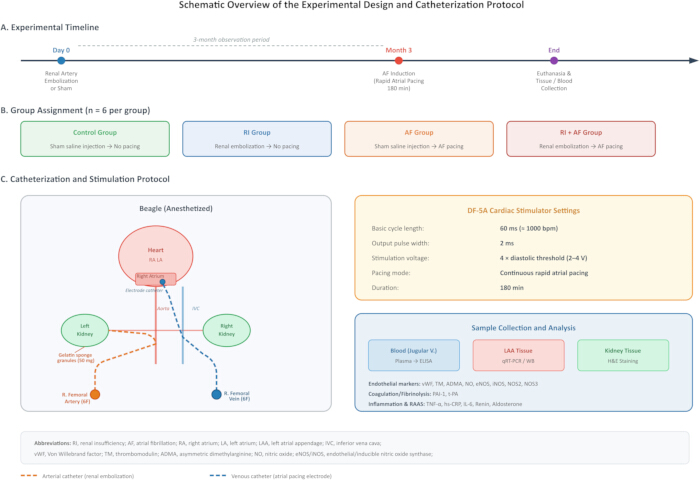
Figure 1: Schematic overview of the experimental design and timeline. The diagram illustrates the four experimental groups (Control, RI, AF, and RI+AF), the timeline of renal artery embolization (Day 0), the 3-month observation period for development of chronic RI, subsequent AF induction by rapid atrial pacing, and tissue/blood sample collection. The catheterization approach (femoral artery access for renal embolization; femoral vein access for right atrial pacing electrode placement) and cardiac stimulator settings (basic cycle length 60 ms, pulse width 2 ms, voltage 4× diastolic threshold) are depicted. Please click here to view a larger version of this figure.
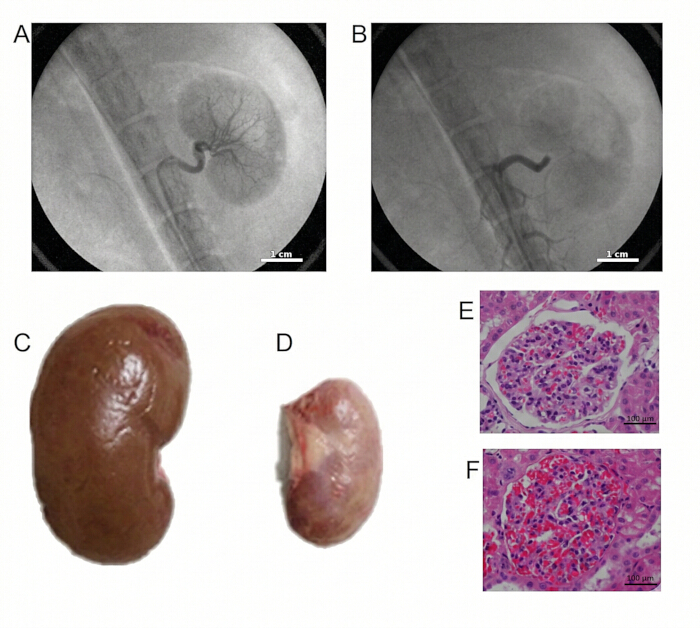
Figure 2: Establishment of an animal model of chronic renal insufficiency (RI). Representative left renal artery angiography before transcatheter embolization (A) and after transcatheter embolization (B) in the RI group. Scale bars represent 1 cm in panels (A,B). Gross appearance of the right (C) and left kidney (D) after 3 months of embolization in the RI group. Representative HE staining of the left kidney 3 months after sham surgery or embolization in the Control (E) and RI (F) groups. Scale bars represent 100 µm in panels (E,F). Original magnification: 400×. Please click here to view a larger version of this figure.
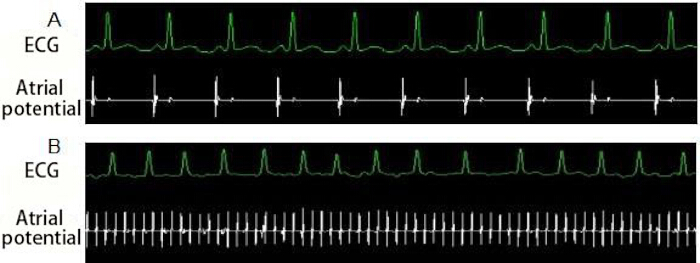
Figure 3: The electrocardiogram (ECG) and atrial action potentials before (A) and after (B) rapid stimulation of the right atrium. Calibration markers: paper speed 25 mm/s, voltage scale 10 mm/mV. ECG, electrocardiogram. Please click here to view a larger version of this figure.
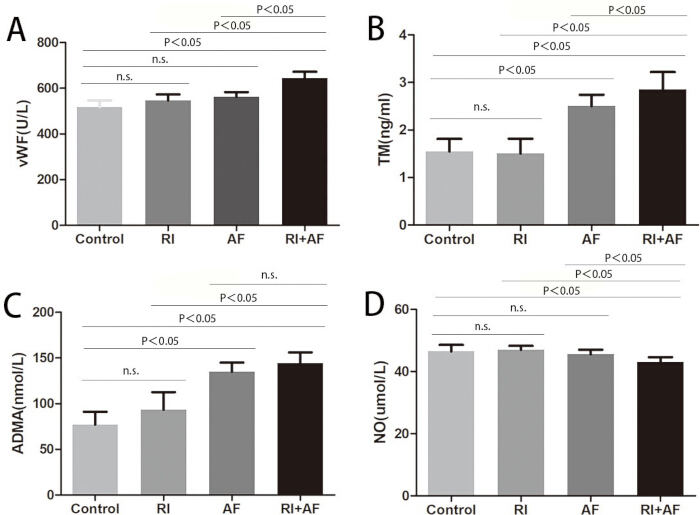
Figure 4: ELISA measurements of plasma proteins associated with left atrial endothelial function: (A) vWF, (B) TM, (C) ADMA, and (D) NO. Data are presented as mean ± SD (n = 6 per group). RI, renal insufficiency; AF, atrial fibrillation; vWF, von Willebrand factor; TM, thrombomodulin; ADMA, asymmetric dimethylarginine; NO, nitric oxide. Please click here to view a larger version of this figure.
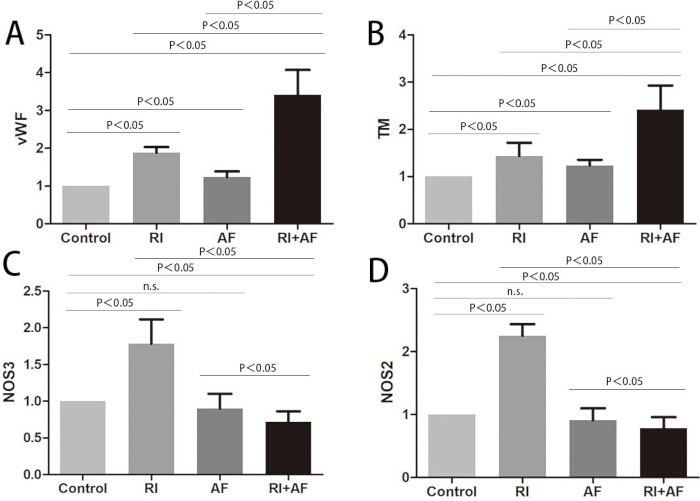
Figure 5: The mRNA expression of parameters associated with left atrial endothelial function measured by qRT-PCR in left atrial appendage tissue. (A) vWF, (B) TM, (C) NOS3, and (D) NOS2. Data are presented as mean ± SD (n = 6 per group). RI, renal insufficiency; AF, atrial fibrillation; vWF, von Willebrand factor; TM, thrombomodulin; NOS, nitric oxide synthase. Please click here to view a larger version of this figure.
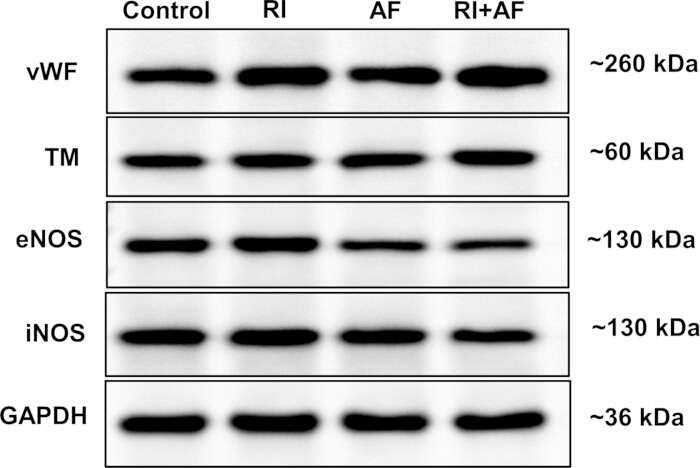
Figure 6: Protein expression of parameters associated with left atrial endothelial function was measured by Western blotting in left atrial appendage tissue. GAPDH was the reference protein. Molecular weights: vWF (~260 kDa), TM (~60 kDa), eNOS (~130 kDa), iNOS (~130 kDa), GAPDH (~36 kDa). Full-length, uncropped blots are presented in Supplementary Figure 1. RI, renal insufficiency; AF, atrial fibrillation; vWF, Von Willebrand factor; TM, thrombomodulin; eNOS, endothelial nitric oxide synthase; iNOS, inducible nitric oxide synthase; GAPDH, glyceraldehyde-3-phosphate dehydrogenase. Please click here to view a larger version of this figure.
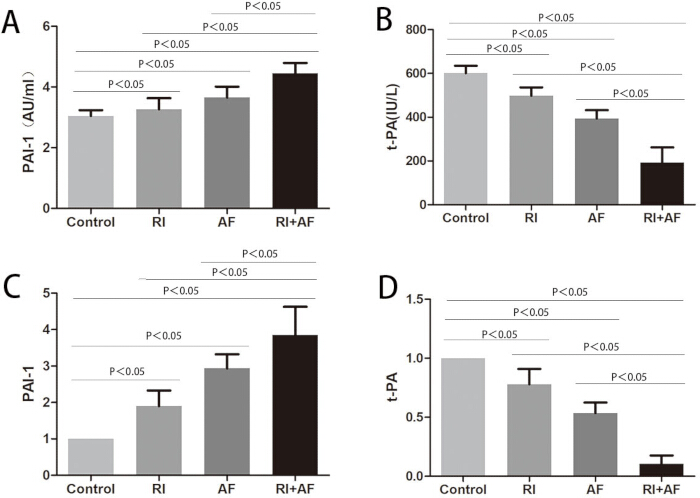
Figure 7: ELISA (A,B) and qRT-PCR (C,D) were used to examine parameters associated with left atrial coagulation and fibrinolysis in the plasma and left atrial appendage tissue, respectively. Data are presented as mean ± SD (n = 6 per group). RI, renal insufficiency; AF, atrial fibrillation; PAI-1, plasminogen activator inhibitor-1; t-PA, tissue plasminogen activator. Please click here to view a larger version of this figure.
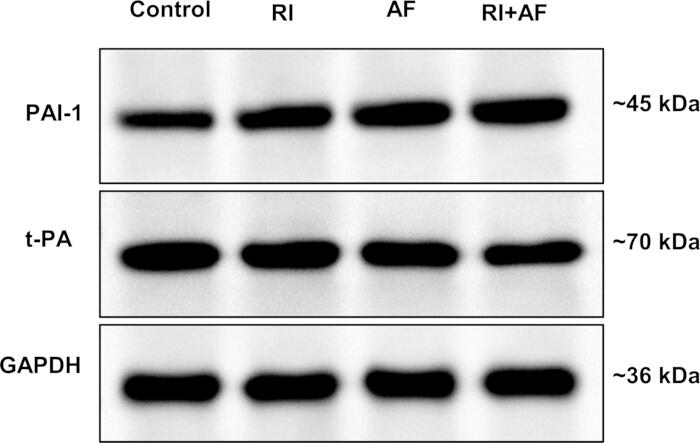
Figure 8: Proteins associated with left atrial coagulation and fibrinolysis were detected using Western blotting in left atrial appendage tissue. Molecular weights: PAI-1 (~45 kDa), t-PA (~70 kDa), GAPDH (~36 kDa). RI, renal insufficiency; AF, atrial fibrillation; PAI-1, plasminogen activator inhibitor-1; t-PA, tissue plasminogen activator; GAPDH, glyceraldehyde-3-phosphate dehydrogenase. Please click here to view a larger version of this figure.
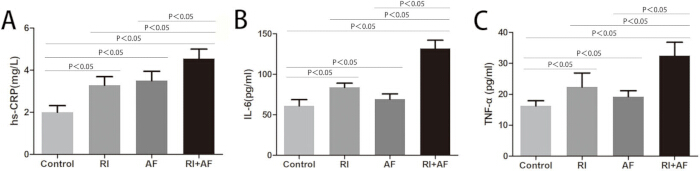
Figure 9: ELISA measurements of plasma proteins associated with inflammation. (A) hs-CRP, (B) TNF-α, and (C) IL-6. Data are presented as mean ± SD (n = 6 per group). RI, renal insufficiency; AF, atrial fibrillation; hs-CRP, high sensitivity C-reactive protein; TNF-α, tumor necrosis factor-α; IL-6, interleukin-6. Please click here to view a larger version of this figure.
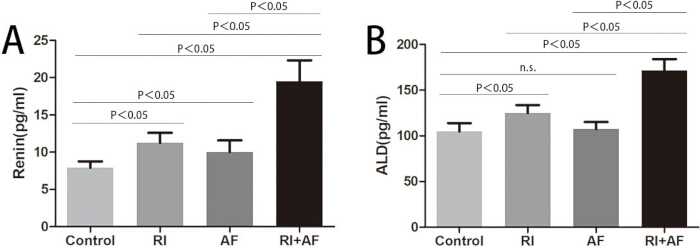
Figure 10: ELISA measurements of plasma proteins associated with RAAS activity. (A) renin and (B) ALD. Data are presented as mean ± SD (n = 6 per group). RI, renal insufficiency; AF, atrial fibrillation; RAAS, renin–angiotensin–aldosterone system; ALD, aldosterone. Please click here to view a larger version of this figure.
| Control | RI | AF | RI+AF | |
| Creatinine at baseline (μmol/L) | 25.5±1.7 | 25.8±1.7 | 25.7±1.3 | 24.9±1.8 |
| Creatinine after 3 months (μmol/L) | 26.0±3.0 | 58.7±9.9* | 26.0±1.3 | 62.0±7.9# |
| CCr after 3 months (ml/min/kg) | 4.4±0.3 | 1.8±0.1* | 4.5±0.3 | 1.7±0.2# |
| Urea nitrogen at baseline (mmol/L) | 3.3±0.4 | 3.2±0.4 | 3.2±0.5 | 3.4±0.6 |
| Urea nitrogen after 3 months (mmol/L) | 4.3±0.6 | 6.1±0.8* | 4.3±0.8 | 6.2±0.7# |
| *p<0.05 vs. the Control group; #p<0.05 vs. the AF group. |
Table 1: Parameters associated with renal function in each experimental group. Plasma creatinine and urea nitrogen levels were measured at baseline and 3 months after renal artery embolization or a sham procedure. Creatinine clearance (CCr) was determined after 3 months and normalized to body weight. Data are presented as mean ± SD (n = 6 per group). RI, renal insufficiency; AF, atrial fibrillation; CCr, creatinine clearance. *p < 0.05 vs. the Control group; #p < 0.05 vs. the AF group.
Supplementary Figure 1: Full-length, uncropped Western blot images corresponding to Figure 6. Uncropped blot images are shown for vWF, TM, eNOS, iNOS, and GAPDH in left atrial appendage tissues from the Control, RI, AF, and RI+AF groups. Molecular weight markers are shown on the left, and the cropped bands used for Figure 6 are indicated. RI, renal insufficiency; AF, atrial fibrillation; vWF, von Willebrand factor; TM, thrombomodulin; eNOS, endothelial nitric oxide synthase; iNOS, inducible nitric oxide synthase; GAPDH, glyceraldehyde-3-phosphate dehydrogenase. Please click here to download this file.
Supplementary Figure 2: Full-length, uncropped Western blot images corresponding to Figure 8. Uncropped blot images are shown for PAI-1, t-PA, and GAPDH in left atrial appendage tissues from the Control, RI, AF, and RI+AF groups. Molecular weight markers are shown on the left, and the cropped bands used for Figure 8 are indicated. RI, renal insufficiency; AF, atrial fibrillation; PAI-1, plasminogen activator inhibitor-1; t-PA, tissue plasminogen activator; GAPDH, glyceraldehyde-3-phosphate dehydrogenase. Please click here to download this file.
Supplementary File 1: Data supporting the findings of this study. Please click here to download this file.
Discussion
Loading...
$$\rightleftharpoonup{xx}$$
$$\longleftharp{xx}$$,
$$\longrightharp{xx}$$,
The present study established an in vivo animal model of moderate RI combined with AF and explored the pathogenesis of left atrial endothelial dysfunction under these pathological conditions. The main findings of this study are as follows: firstly, embolization of the left main renal artery for 3 months in beagles successfully induced moderate RI. Secondly, an AF model was effectively established in beagles. Thirdly, left atrial endothelial function was significantly impaired in animals with both RI and AF, accompanied by enhanced procoagulant effects and decreased fibrinolysis, which may lead to an increased risk of thrombosis. Fourthly, the combination of chronic moderate RI and AF was associated with significantly promoted inflammatory response and enhanced RAAS activity.
Evaluating the risk of thrombosis and bleeding in patients with RI combined with AF is a critical topic in clinical practice. Recent studies have also emphasized the complex interplay between renal function and atrial fibrillation in influencing thromboembolic events12. The lack of suitable RI animal models has been a bottleneck restricting basic research on this topic. To our knowledge, no appropriate large-animal model for chronic moderate RI combined with AF had been reported prior to this study. A classical model of RI in rats using subtotal (5/6) nephrectomy was widely adopted in previous research; however, the high mortality rate and serious complications such as infection after surgery limited its application. We have previously10 established an animal model of mild RI by embolizing the distal branches of the left renal artery in dogs6. In the present study, an in vivo animal model of moderate RI was successfully established by directly embolizing the main trunk of the left renal artery in beagles. This method was less traumatic than the reported subtotal nephrectomy method and had a very high survival rate (100%), which was crucial for inducing RI and AF in the same dog and thus establishing an animal model of AF with concurrent moderate RI. The establishment of such a model was essential to this study. It is worth noting that contralateral renal compensatory hypertrophy is a well-recognized phenomenon following unilateral renal injury in canine models13. Despite the expected adaptive hypertrophy and hyperfiltration of the contralateral right kidney, plasma creatinine and urea nitrogen remained significantly elevated, and the creatinine clearance decreased by one-third to two-thirds in the embolized animals, consistent with moderate RI according to established classification criteria. This finding suggests that the degree of left renal parenchymal damage induced by main trunk embolization was sufficiently severe to overwhelm the compensatory capacity of the contralateral kidney, thereby justifying the classification of this model as "moderate" rather than "mild" RI. Formal assessment of right kidney weight and histology was not performed and is recommended for future investigations.
Meanwhile, the current findings revealed that left atrial endothelial function was significantly impaired in animals with combined RI and AF, characterized by increased expression of procoagulant substances such as vWF, TM, and ADMA, alongside decreased expression of anticoagulant substances like NO. These results were consistent with a previous study by Fukuchi et al., which indicated that endothelial injury could lead to an imbalance between the coagulation and fibrinolysis systems, thereby promoting thrombosis14.
Anticoagulant therapy must be cautiously administered to patients with AF combined with RI due to the increased bleeding risk associated with RI15,16. However, it remains unclear how left atrial endothelial function is affected in this patient population. The intact endothelial cells can produce NO, t-PA, and other substances to prevent thrombus formation and can also inactivate coagulation factors and clear activated platelets17. Conversely, endothelial injury leads to an imbalance in coagulation and fibrinolysis, marked by elevated procoagulant factors (e.g., vWF, TM, ADMA, PAI-1) and reduced anticoagulant factors (e.g., NO, t-PA)18,19. vWF, synthesized and stored by endothelial cells, promotes platelet adhesion by binding to glycoproteins on the platelet surface following endothelial damage20,21. TM, synthesized and secreted by endothelial cells, forms complexes with thrombin after endothelial injury17,22. NO, produced and secreted by endothelial cells, inhibits platelet adhesion and aggregation, with its production diminished upon endothelial damage23. ADMA, an endogenous inhibitor of eNOS, may reduce NO production by inhibiting eNOS expression24,25. This study demonstrated that vWF, TM, ADMA, and NO expression levels were unchanged in the RI group or AF group alone; however, their expression was significantly altered in the RI+AF group, with increased procoagulant factors and decreased NO, indicating a substantially elevated thrombosis risk. These data suggested that the risk of thrombosis was significantly increased following RI combined with AF. It is worth mentioning that NOS expression in the left atrium was significantly increased in the RI group, given that inducible iNOS expression is known to be activated during infection and inflammation26,27. The increase in NOS expression in the study might represent a protective mechanism to counter thrombosis. The NOS expression was unchanged in the AF group but significantly decreased in the RI+AF group, suggesting that the regulatory function to counter thrombosis was significantly reduced when RI coexisted with AF. PAI-1 and t-PA exist in a dynamic equilibrium under normal conditions. The study revealed elevated PAI-1 and reduced t-PA in the RI group or AF group, with a further exacerbation of this imbalance in the RI+AF group, indicating impaired fibrinolytic function following RI combined with AF.
Inflammation and RAAS activation play an important role in chronic RI and AF28,29. Endothelial injury is often accompanied by activation of inflammation. Furthermore, inflammation and RAAS activation can aggravate endothelial injury30,31. Recent research has highlighted the pivotal role of chronic inflammation in driving both renal dysfunction and atrial remodeling, which in turn affects endothelial function32,33. This study found that inflammation and RAAS activity were significantly higher in the RI+AF group than in other groups. These changes were associated with and may have contributed to left atrial endothelial injury in animals that underwent both the RI procedure and AF induction. However, since this study did not employ pathway-specific inhibitors (e.g., ACE inhibitors, angiotensin receptor blockers, or anti-inflammatory agents) to block these pathways and observe whether endothelial dysfunction could be rescued, the relationship between elevated inflammation and RAAS activity and endothelial impairment remains correlational rather than definitively causal. Future studies employing such pharmacological interventions are needed to establish causal relationships.
It should be acknowledged that endothelial function in this study was assessed through molecular biomarkers (including vWF, TM, ADMA, NO, eNOS, iNOS, PAI-1, and t-PA at the protein and mRNA levels) rather than through direct physiological assessments of vascular reactivity, such as flow-mediated dilation or acetylcholine-induced vasodilation. While biomarker-based assessments provide valuable mechanistic insights into the molecular state of the endothelium, they may not fully capture the functional complexity of endothelial behavior in vivo. Future studies incorporating physiological vascular reactivity testing would complement and strengthen the molecular findings reported herein.
However, there were several limitations in this study. Firstly, the duration of AF induction (180 min) was relatively short, which reflects an acute model of AF that primarily captures early-stage molecular and electrophysiological changes, rather than the chronic structural and electrical remodeling observed in persistent or permanent clinical AF. Although prior studies have demonstrated that acute rapid atrial pacing can induce measurable changes in mRNA and protein expression within hours, the magnitude and pattern of these changes may differ from those observed in chronic AF models involving weeks to months of sustained pacing. These findings should therefore be interpreted as reflecting the early molecular response to acute AF superimposed upon a chronically impaired renal background. Future studies employing longer-term persistent AF models combined with RI are warranted to characterize the full spectrum of endothelial remodeling. Secondly, large-scale clinical data analysis is needed to clarify the weight of RI in thrombosis risk assessment for AF patients, which may be helpful for developing personalized anticoagulant treatment strategies for the reduction of bleeding and thrombosis risks. Thirdly, only male beagles were used in this study to minimize potential confounding effects of hormonal fluctuations associated with the estrous cycle. Biological sex is a recognized modifier of both AF susceptibility and CKD progression, with clinical studies reporting differential thromboembolic risk between males and females with AF. Future studies should include female animals to determine whether the observed effects of RI combined with AF on endothelial function are sex-dependent. Fourthly, a formal assessment of right kidney compensatory hypertrophy was not performed and should be addressed in future investigations. Fifthly, pathway-specific inhibitors were not used in this study, and future research utilizing such interventions is needed to establish causal relationships between the observed molecular changes and endothelial dysfunction.
In summary, this study successfully established an animal model of chronic RI combined with AF, and disclosed that this combination was associated with severely impaired left atrial endothelial function, leading to a significantly increased risk of thrombosis, potentially mediated by increased inflammation and RAAS activity. In clinical practice, both the risk of bleeding and the risk of thrombosis must be considered in patients with AF and RI. The high risk of bleeding should not be a contraindication for anticoagulant therapy in patients with a high risk of thrombosis.
Disclosures
Loading...
$$\rightleftharpoonup{xx}$$
$$\longleftharp{xx}$$,
$$\longrightharp{xx}$$,
The authors declare no competing interests.
Acknowledgements
Loading...
$$\rightleftharpoonup{xx}$$
$$\longleftharp{xx}$$,
$$\longrightharp{xx}$$,
This work was supported by the Noncommunicable Chronic Disease-National Science and Technology Major Project (No. 2024ZD052500, No. 2024ZD0521504), the National Natural Science Foundation of China (Grant No. 81700293 and No. 81970272) and the Beijing Anzhen Hospital High Level Research Funding (Funding Project No. 2025AZB5005).
Materials
| Name | Company | Catalog Number | Comments |
|---|---|---|---|
| 6-0 Polypropylene suture | Ethicon (Johnson & Johnson) | 8706H | For femoral artery repair |
| 5F Multipurpose catheter | Cordis (Cardinal Health) | 521-550S | For renal artery cannulation and embolization |
| 6F Quadripolar electrode catheter | St. Jude Medical | 401443 | For right atrial pacing |
| 6F Vascular introducer sheath | Terumo | RS*A60K10SQ | For femoral artery access |
| ABI 7500 Real-Time PCR System | Applied Biosystems (Thermo Fisher Scientific) | 4351105 | For qRT-PCR thermal cycling and fluorescence detection |
| Absorbable gelatin sponge granules (50 mg diameter) | Jinling Pharmaceutical | — | For transcatheter renal artery embolization; prepared as slurry with contrast medium and saline (1:1) |
| ADMA ELISA Kit (canine) | Cusabio | CSB-E09297c | For plasma asymmetric dimethylarginine measurement |
| Aldosterone ELISA Kit (canine) | Cusabio | CSB-E08014c | For plasma aldosterone measurement |
| BCA Protein Assay Kit | Thermo Fisher Scientific | 23225 | For protein concentration quantification |
| Beagles (male, 4–5 years, 10–12 kg) | Shanghai Jiao Tong University Agricultural Experimental Animal Farm Co., Ltd. | — | Healthy male beagles; housed individually under standard conditions |
| C-arm Fluoroscopy System | GE Healthcare | OEC 9900 Elite | For fluoroscopic guidance during catheterization and angiography |
| Chemiluminescence Imaging System | Bio-Rad | ChemiDoc XRS+ | For Western blot band visualization |
| Creatinine ELISA Kit (canine) | Nanjing Jiancheng Bioengineering Institute | C011-2-1 | For plasma creatinine measurement |
| Cuffed endotracheal tube (ID 7.0–8.0 mm) | Covidien (Medtronic) | 86449 | For endotracheal intubation and mechanical ventilation |
| DF-5A Cardiac Stimulator | Suzhou Dongfang Electronic Technology Research Institute | DF-5A | For rapid atrial pacing; settings: BCL 60 ms, pulse width 2 ms, voltage 4× threshold |
| ECL Western Blotting Substrate | Thermo Fisher Scientific | 32106 | Enhanced chemiluminescence kit for blot visualization |
| EDTA Anticoagulant Tubes | BD Vacutainer | 367835 | For blood collection (plasma separation) |
| eNOS Primary Antibody (rabbit) | Cell Signaling Technology | 32027 | Dilution 1:1000; for Western blotting (~130 kDa) |
| Eosin Y Solution (aqueous) | Solarbio | G1100 | For H&E counterstaining (2 min) |
| Foley Urinary Catheter (8 Fr) | C.R. Bard | 0165SI08 | For timed urine collection during CCr determination |
| GAPDH Primary Antibody (rabbit) | Cell Signaling Technology | 5174 | Dilution 1:1000; internal control for Western blotting (~36 kDa) |
| GraphPad Prism (version 8.0) | GraphPad Software | — | https://www.graphpad.com; for statistical analysis (one-way ANOVA, Dunnett's test) |
| Hematoxylin Solution (Harris) | Solarbio | G1140 | For H&E nuclear staining (5 min) |
| Heparin Sodium Injection (unfractionated) | Changzhou Qianhong Biopharma | H32022088 | 4000 IU diluted in 10 mL normal saline; for anticoagulation during catheterization |
| HRP-conjugated Goat Anti-Mouse IgG Secondary Antibody | Cell Signaling Technology | 7076 | Dilution 1:5000; for Western blotting |
| HRP-conjugated Goat Anti-Rabbit IgG Secondary Antibody | Cell Signaling Technology | 7074 | Dilution 1:5000; for Western blotting |
| hs-CRP ELISA Kit (canine) | Cusabio | CSB-E08557c | For plasma high sensitivity C-reactive protein measurement |
| IL-6 ELISA Kit (canine) | R&D Systems | CA6000 | For plasma interleukin-6 measurement |
| ImageJ Software (version 1.53) | National Institutes of Health | — | https://imagej.nih.gov/ij/; for Western blot densitometric analysis |
| iNOS Primary Antibody (rabbit) | Abcam | ab178945 | Dilution 1:1000; for Western blotting (~130 kDa) |
| Lactated Ringer's Solution | Baxter | 2B2324 | Intravenous fluid; infused at 5–10 mL/kg/h during procedures |
| Light Microscope | Olympus | BX53 | For histological examination of HE-stained kidney sections |
| Mechanical Ventilator (veterinary) | Midmark | Matrx Model 3000 | Tidal volume 15 mL/kg; respiratory rate 12–15 breaths/min |
| Microplate Reader | BioTek | Synergy HTX | For ELISA absorbance measurement at 450 nm |
| Neutral Buffered Paraformaldehyde (10%) | Solarbio | P1110 | For kidney tissue fixation (24 h) |
| NO ELISA Kit (canine) | Nanjing Jiancheng Bioengineering Institute | A012-1-2 | For plasma nitric oxide measurement |
| Non-ionic Iodinated Contrast Medium (Iohexol) | GE Healthcare | Omnipaque 350 | 5–8 mL per injection at 3 mL/s for renal artery angiography |
| PAI-1 ELISA Kit (canine) | Cusabio | CSB-E13043c | For plasma plasminogen activator inhibitor-1 measurement |
| PAI-1 Primary Antibody (rabbit) | Abcam | ab66705 | Dilution 1:1000; for Western blotting (~45 kDa) |
| Paraffin Wax | Leica Biosystems | 39601006 | For tissue embedding |
| PrimeScript RT Reagent Kit | Takara Bio | RR037A | For reverse transcription of RNA to cDNA |
| Protease and Phosphatase Inhibitor Cocktail | Thermo Fisher Scientific | 78440 | Added to RIPA buffer for protein extraction |
| Pulse Oximeter (veterinary) | Nonin Medical | 9847V | For continuous SpO2 monitoring during procedures |
| PVDF Membranes (0.45 μm) | Millipore | IPVH00010 | For protein transfer in Western blotting |
| Renin ELISA Kit (canine) | Cusabio | CSB-E08700c | For plasma renin measurement |
| RIPA Lysis Buffer | Beyotime | P0013B | 50 mM Tris-HCl pH 7.4, 150 mM NaCl, 1% NP-40, 0.5% sodium deoxycholate, 0.1% SDS |
| Rotary Microtome | Leica Biosystems | RM2235 | For cutting 5 μm paraffin sections |
| SDS-PAGE Gel Preparation Kit (12%) | Beyotime | P0012A | For protein electrophoresis separation |
| Serum Separator Tubes | BD Vacutainer | 367986 | For blood collection (serum separation) |
| Sodium Pentobarbital | Sigma-Aldrich | P3761 | Anesthesia: 20 mg/kg IV induction; 150 mg/kg IV for euthanasia |
| Spectrophotometer (NanoDrop) | Thermo Fisher Scientific | ND-2000 | For RNA purity and concentration assessment (A260/A280) |
| SYBR Green PCR Master Mix | Applied Biosystems (Thermo Fisher Scientific) | 4309155 | For quantitative real-time PCR |
| Three-lead ECG Monitor | Philips | IntelliVue MX40 | For continuous heart rate and rhythm monitoring |
| TM (Thrombomodulin) ELISA Kit (canine) | Cusabio | CSB-E12913c | For plasma thrombomodulin measurement |
| TM Primary Antibody (rabbit) | Abcam | ab230010 | Dilution 1:1000; for Western blotting (~60 kDa) |
| TNF-α ELISA Kit (canine) | R&D Systems | CATA00 | For plasma tumor necrosis factor-α measurement |
| t-PA ELISA Kit (canine) | Cusabio | CSB-E08438c | For plasma tissue plasminogen activator measurement |
| t-PA Primary Antibody (rabbit) | Abcam | ab157469 | Dilution 1:1000; for Western blotting (~70 kDa) |
| TRIzol Reagent | Invitrogen (Thermo Fisher Scientific) | 15596026 | For total RNA extraction from LAA tissues |
| Ultrasound System with 3.5 MHz Phased-Array Transducer | Philips | EPIQ 7C | For pre-operative transthoracic echocardiography |
| Urea Nitrogen ELISA Kit (canine) | Nanjing Jiancheng Bioengineering Institute | C013-2-1 | For plasma urea nitrogen measurement |
| vWF ELISA Kit (canine) | Cusabio | CSB-E08437c | For plasma Von Willebrand factor measurement |
| vWF Primary Antibody (rabbit) | Abcam | ab6994 | Dilution 1:1000; for Western blotting (~260 kDa) |
Reprints and Permissions
Request permission to reuse the text or figures of this JoVE article
Request Permission