This retrospective cohort study evaluates the clinical efficacy of Paiteling, a Traditional Chinese Medicine compound, compared to recombinant human interferon gel in treating persistent high-risk human papillomavirus (HR-HPV) infection following cervical cancer surgery.
Research Article
Efficacy Analysis of Paiteling in Treating Persistent High-Risk Human Papillomavirus after Cervical Cancer Surgery
Opens in a new tab
In This Article
Summary
Loading...
$$\rightleftharpoonup{xx}$$
$$\longleftharp{xx}$$,
$$\longrightharp{xx}$$,
Abstract
Loading...
$$\rightleftharpoonup{xx}$$
$$\longleftharp{xx}$$,
$$\longrightharp{xx}$$,
Persistent infection with high-risk human papillomavirus (HR-HPV) following cervical cancer surgery poses a significant risk for disease recurrence and progression to vaginal intraepithelial neoplasia. This retrospective cohort study evaluated the comparative efficacy of Paiteling, a Traditional Chinese Medicine compound, versus recombinant human interferon gel in treating persistent HR-HPV infection post-hysterectomy. Thirty-six patients with persistent HR-HPV positivity were allocated to either Paiteling (n = 17) or interferon (n = 19) treatment groups. Comprehensive assessment included HPV DNA load, ThinPrep cytologic test results, and colposcopic findings at baseline, 6-month, and 12-month follow-ups. At 6 months, the interferon group demonstrated significantly higher cure rates (68.4% vs 17.6%, 2= 7.646, p = 0.006). However, a remarkable reversal was observed at 12 months, with Paiteling achieving superior clearance rates (94.1% vs 63.2%, 2=4.976, p = 0.044). Multivariable analysis confirmed Paiteling treatment as a strong predictor of HPV clearance (adjusted OR = 9.52, 95% CI: 1.11–220.32, p = 0.039). Subgroup analysis revealed consistent treatment effects across all HPV genotypes. Adverse events were mild and self-limiting, with no significant differences between groups (29.4% vs 10.5%, p. = 0.226). This study demonstrates Paiteling’s superior long-term efficacy for persistent postoperative HR-HPV infection, characterized by a unique delayed-but-sustained response pattern. The multi-targeted mechanism, favorable safety profile, and sustained viral clearance support Paiteling’s potential as an effective therapeutic option in postoperative management, though validation through larger prospective trials is warranted.
Introduction
Loading...
$$\rightleftharpoonup{xx}$$
$$\longleftharp{xx}$$,
$$\longrightharp{xx}$$,
Cervical cancer remains a significant global health burden, with persistent infection by high-risk human papillomavirus (HR-HPV) established as its primary cause1. While surgical intervention is a cornerstone treatment for early-stage disease, persistent or re-emergent HR-HPV infection post-surgery poses a serious risk for cancer recurrence and the development of vaginal intraepithelial neoplasia (VAIN)2. The key to ensuring long-term surgical success and improving patient survival lies in the effective clearance of residual HPV. The clinical challenge is substantial; studies indicate that a significant proportion of patients, reported between 10% to 25%, may remain HR-HPV positive after conization or hysterectomy, placing them in a high-risk category for disease recurrence3. This persistence is often attributed to the presence of residual virus in the vaginal vault or multifocal field changes that are not completely eradicated by localized surgical excision. Current conventional strategies for managing persistent HPV, including laser and cryotherapy, are often limited by factors such as tissue trauma and variable efficacy4. Furthermore, immunomodulators like interferon, while widely used, can exhibit inconsistent long-term clearance rates, potentially due to the development of antiviral resistance or failure to fully restore local immune surveillance in the postoperative microenvironment5.
Recent genomic studies underscore the importance of considering population-specific genetic backgrounds in disease management and therapeutic development. The Hmong people, an ethnic minority group primarily located in southern China and Southeast Asia, exhibit unique genetic lineages and adaptation histories as revealed by genome-wide analyses6, and specific genetic susceptibilities to infectious diseases within Hmong communities highlight how population genetics can influence health outcomes7. These findings align with broader efforts, such as the Chinese Pangenome Consortium, which aims to create inclusive genomic references by sequencing diverse ethnic groups, thereby addressing disparities in genomic medicine8. Simultaneously, educational research highlights the need to broaden participation in STEM among underrepresented groups, including Hmong students, to ensure diverse perspectives in scientific research and healthcare9. In this context, Traditional Chinese Medicine (TCM) has garnered attention as a valuable resource for new drug development, offering potential benefits such as fewer side effects and lower cost10. Paiteling, a compound TCM preparation containing ingredients like honeysuckle and Sophora flavescens., has been used clinically to treat HPV infections11. Recent studies have additionally demonstrated the robust clinical efficacy of Paiteling versus recombinant human interferon gel in treating persistent HR-HPV infections12. Its proposed mechanisms include promoting the shedding of virus-infected cervical epithelial cells and inducing apoptosis in cancerous cells through the inhibition of the E6/E7-PI3K/Akt signaling pathway13. The multi-targeted approach of Paiteling is particularly relevant given the complex pathogenesis of HPV persistence. Beyond its direct effects on viral oncogenes, emerging evidence suggests that its active components may also modulate the local tumor microenvironment, potentially inhibiting pro-inflammatory pathways that support viral replication14. For instance, the suppression of Topoisomerase IIα-mediated secretion of IL-6 and IL-8, key cytokines in viral persistence, represents a plausible complementary mechanism that warrants further investigation15. This multifaceted action may provide a therapeutic advantage over single-target modalities, especially in the context of postoperative residual disease, where multiple pathogenic pathways are often involved.
While previous studies have reported its efficacy against condyloma acuminatum, its effectiveness specifically for persistent HR-HPV infection following cervical cancer surgery requires further robust clinical investigation. This evidence gap is critical to address, as the postoperative anatomical and immunological milieu differs significantly from the primary infection setting. The healing tissues, altered local vascularity, and potential for biofilm formation present a unique therapeutic challenge that may respond differently to topical agents. It was hypothesized that Paiteling’s multi-targeted mechanism provides superior long-term HR-HPV clearance compared to interferon by specifically addressing this unique postoperative microenvironment. Therefore, the objective of this study was to retrospectively analyze and compare the clinical efficacy of Paiteling against the conventional therapy of recombinant human interferon gel in eradicating persistent HR-HPV in post-surgical cervical cancer patients, aiming to provide a novel, conservative local therapy for this high-risk cohort.
Protocol
Loading...
$$\rightleftharpoonup{xx}$$
$$\longleftharp{xx}$$,
$$\longrightharp{xx}$$,
This retrospective cohort study was conducted at Shengjing Hospital of China Medical University and approved by the Institutional Medical Ethics Review Committee (2023PS846K). The research adhered to the principles of the Declaration of Helsinki, and written informed consent was obtained from all participants before study enrollment. The reagents and the equipment used are listed in the Table of Materials.
1. Patient selection
A total of 36 patients who underwent hysterectomy for cervical malignancy were enrolled based on predefined criteria. Inclusion criteria comprised: age 32–76 years; documented preoperative HR-HPV positivity; persistent HR-HPV positivity at the 6-month postoperative follow-up; and the absence of colposcopic or histopathological abnormalities. Exclusion criteria included: acute genital tract inflammation; renal or hepatic dysfunction; inability to comply with follow-up requirements; cardiopulmonary abnormalities; and detection of HSIL/LSIL.
2. Treatment procedure and dosing regimen
Patients allocated to the Paiteling treatment group received therapy administered in 7-day cycles, typically spanning 4–8 cycles. The therapeutic protocol involved three progressive stages tailored to lesion regression and visual inspection with acetic acid findings. In the first stage, healthcare professionals applied a local wet dressing with Paiteling solution for 15 min, three consecutive days per week, with sea buckthorn oil administered on intervening days to facilitate wound healing. This initial phase continued for 1–8 weeks until the complete resolution of visible lesions. The second stage involved the continuation of the application protocol for 3–6 weeks to consolidate therapeutic effects. Finally, the third maintenance stage involved dressings with a 2% diluted Paiteling solution applied for 10 min daily during the first month, transitioning to an every-other-day application for the subsequent 2 months. Conversely, patients in the interferon treatment group received recombinant human interferon gel administered via .a graduated vaginal applicator. The gel was applied to the cervical surface and cervical canal at a standardized dosage of 1 g per session every other day for a 3-month duration. Patients maintained recumbency for approximately 30 min post-application to optimize drug retention. For both treatment groups, follow-up evaluations were conducted three months post-treatment cessation.
3. Efficacy evaluation and follow-up
The primary efficacy endpoint was HPV clearance at the 12-month follow-up, defined as a composite of HPV-DNA <1.0 pg/mL, normal cytological findings, and the absence of colposcopic abnormalities. HPV nucleic acid detection employed the second-generation hybrid capture methodology, enabling the genotyping of 14 high-risk HPV types. Analytical thresholds defined positivity at an HPV DNA content ≥1.0 pg/mL and negativity at <1.0 pg/mL, following standard specifications. ThinPrep cytologic test samples were collected using approved disposable cervical cell collection systems during non-menstrual intervals, with strict avoidance of vaginal medication preceding sampling. Cervical secretions were cleared using a saline wipe or cotton ball before specimen collection to minimize blood and mucus contamination. Cytological abnormalities were defined as findings of atypical squamous cells of undetermined significance or greater severity. Furthermore, patients with persistent HPV positivity underwent comprehensive colposcopic evaluation using standard equipment. The examination protocol included a systematic assessment of cervical coloration, vascular architecture, and tissue characteristics. Dynamic tissue responses were documented following acetic acid application, and iodine staining patterns were recorded (Figure 1).
4. Statistical analysis
Data analysis utilized R software (version 4.5.1) with complementary packages including tidyverse, broom, survival, gtsummary, pROC, and logistf. Analytical approaches encompassed descriptive statistics, group comparisons using t-tests, Chi-square tests, or Fisher’s exact tests as appropriate, univariable and multivariable logistic regression, subgroup analysis employing Firth’s penalized likelihood method, and predictive modeling with ROC curve analysis. Statistical significance was established at p. < 0.05 (two-tailed). Due to the modest sample size, 95% confidence intervals for logistic regression models were estimated using the profile likelihood method, and corresponding p-values were derived from likelihood ratio tests.
Results
Loading...
$$\rightleftharpoonup{xx}$$
$$\longleftharp{xx}$$,
$$\longrightharp{xx}$$,
The final analytical cohort comprised 36 patients with persistent high-risk HPV infection following cervical cancer surgery, while baseline characteristics demonstrated general comparability between treatment groups (Table 1), a statistically significant age difference was noted (Interferon group: 56.0 ± 5.6 years vs. Paiteling group: 50.0 ± 5.0 years; p. = 0.005). As illustrated in Figure 2, participants were allocated to either Paiteling (n = 17) or interferon (n = 19) treatment groups through a standardized screening and enrollment process. The comprehensive treatment protocol for Paiteling administration across the three therapeutic stages is detailed in Figure 3A, while Figure 3B presents the comparative timeline of both treatment regimens with key assessment points.
Treatment efficacy demonstrated a striking temporal pattern, with a complete reversal of outcomes between the two groups during the follow-up period (Figure 4A). At the 6-month assessment, the Interferon group showed significantly higher cure rates (68.4%, 13/19) compared to the Paiteling group (17.6%, 3/17; 2= 7.646, p = 0.006). However, by the 12-month follow-up, this relationship reversed dramatically, with the Paiteling group achieving 94.1% clearance (16/17) versus 63.2% (12/19) in the Interferon group (2= 4.976, p. = 0.044). The number needed to treat analysis indicated that only 3.2 patients required Paiteling treatment to achieve one additional clearance compared to interferon. The viral load dynamics revealed distinct patterns between treatments (Figure 4B), with the Paiteling group exhibiting gradual but sustained viral suppression throughout the 12 months, while the Interferon group demonstrated an initial rapid response followed by viral rebound in 36.8% of cases. This pattern provides a mechanistic explanation for the observed long-term efficacy advantage of Paiteling treatment. Subgroup analysis revealed consistent treatment effects favoring Paiteling across all HPV genotypes (Figure 4C), with particularly strong effects observed for HPV 16 (100% vs 57.1% clearance) and HPV 18 (100% vs 66.7% clearance). The genotype-specific treatment effects were further supported by Firth’s penalized likelihood method, which demonstrated the consistent benefit of Paiteling across all subgroups.
Statistical analyses robustly supported these clinical findings. Univariable logistic regression (Table 2) identified treatment group as a significant predictor of HPV clearance (OR = 9.33, 95% CI: 1.40–187.02, p = 0.019), while multivariable analysis adjusting for age, baseline viral load, and HPV genotype (Table 3) maintained this strong association (adjusted OR = 9.52, 95% CI: 1.11–220.32, p. = 0.039). Importantly, by incorporating age into this multivariable model, it was confirmed that the superior therapeutic effect of Paiteling remained significant independent of the baseline age disparity. None of the covariates reached statistical significance in the adjusted model, confirming treatment group as the primary determinant of therapeutic outcome.
The multivariable prediction model for HPV clearance demonstrated moderate discriminative ability with an area under the ROC curve of 0.583 (95% CI: 0.35–0.82) (Figure 5A). The model achieved 63.6% overall accuracy, 75.0% sensitivity, and 33.3% specificity. Variable importance analysis (Figure 5B) confirmed treatment group as the strongest predictor in the model, consistent with the primary efficacy analyses. The calibration plot (Figure 5C) showed reasonable agreement between predicted probabilities and observed outcomes across the risk spectrum.
Safety monitoring documented a favorable tolerability profile for both interventions (Table 4). Adverse events occurred in 29.4% (5/17) of Paiteling recipients and 10.5% (2/19) of Interferon patients (p. = 0.226), with all events being mild to moderate in severity and resolving completely without treatment discontinuations. The most common adverse events included a local burning sensation, pruritus, and local pain, all of which were managed conservatively.
Comprehensive data quality assessment confirmed complete follow-up for all 36 enrolled patients, with no missing values for primary efficacy endpoints. The statistical approaches employed, including profile likelihood estimation and Firth’s correction for small sample limitations, ensured robust and reliable estimation of treatment effects despite the modest sample size. All analyses were conducted according to pre-specified statistical plans, maintaining methodological rigor and transparency throughout the reporting of results.
DATA AVAILABILITY:
The raw data supporting the conclusions of this study are provided in Supplementary File 1.
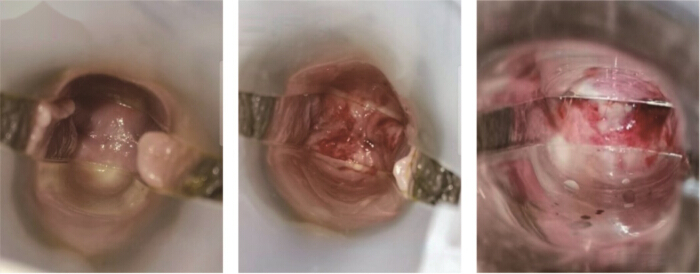
Figure 1: Representative Images of cervical surface following iodine staining. Colposcopic images demonstrating the appearance of cervical epithelium after iodine solution application. Yellow/White areas indicate typical iodine-negative regions corresponding to potential lesions. Please click here to view a larger version of this figure.
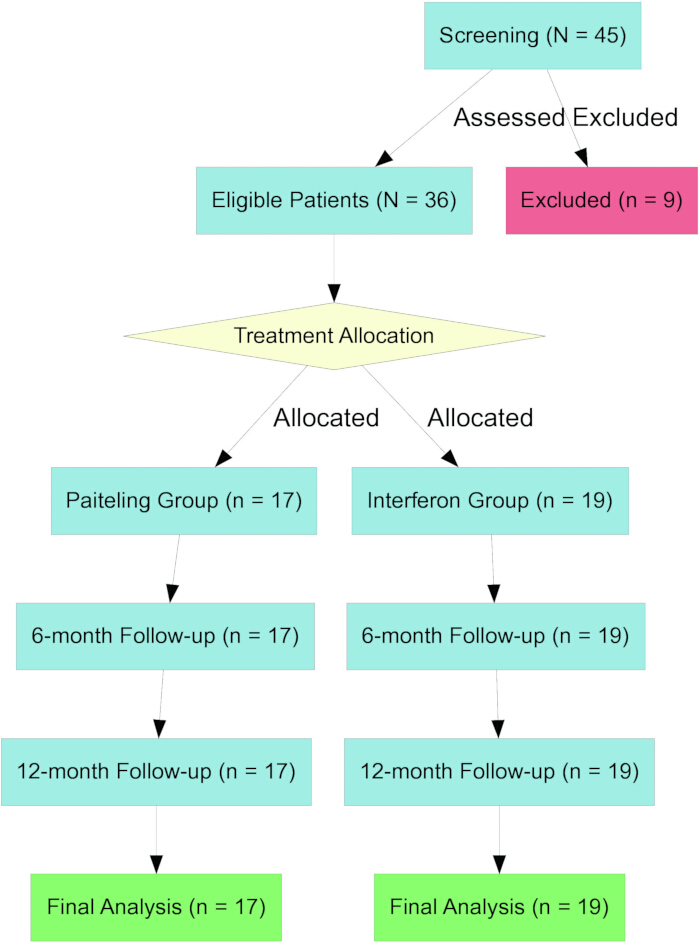
Figure 2: Schematic representation of the retrospective cohort design illustrating participant flow from screening to final analysis, including treatment allocation and follow-up assessments. Please click here to view a larger version of this figure.
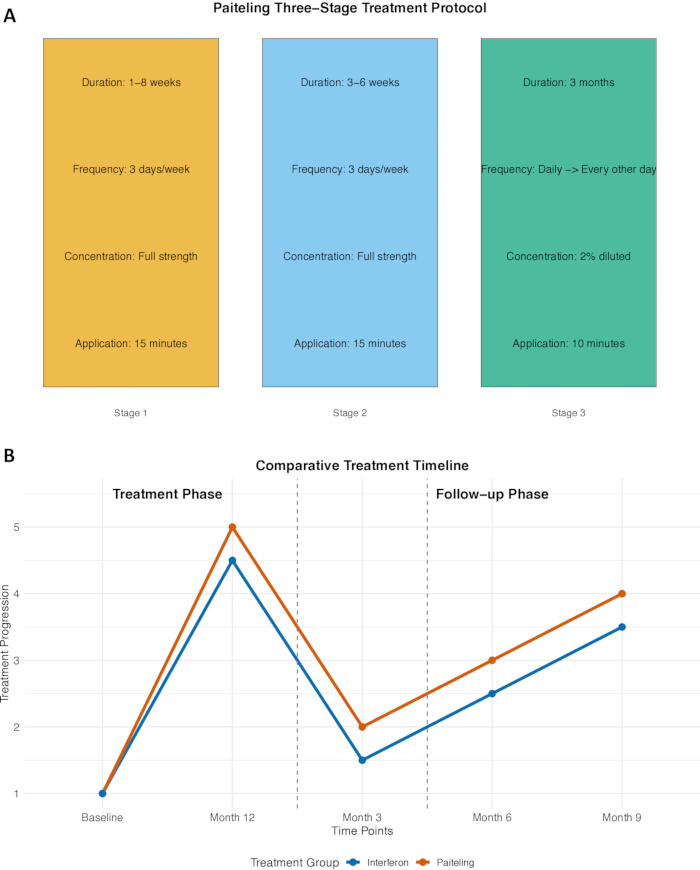
Figure 3: Treatment protocol overview. (A) Schematic representation of the three-stage Paiteling administration protocol, including timing, concentration specifications, and application methodology. (B) Comparative treatment timeline of the two intervention regimens, highlighting key efficacy evaluation time points at 6 and 12 months. Please click here to view a larger version of this figure.
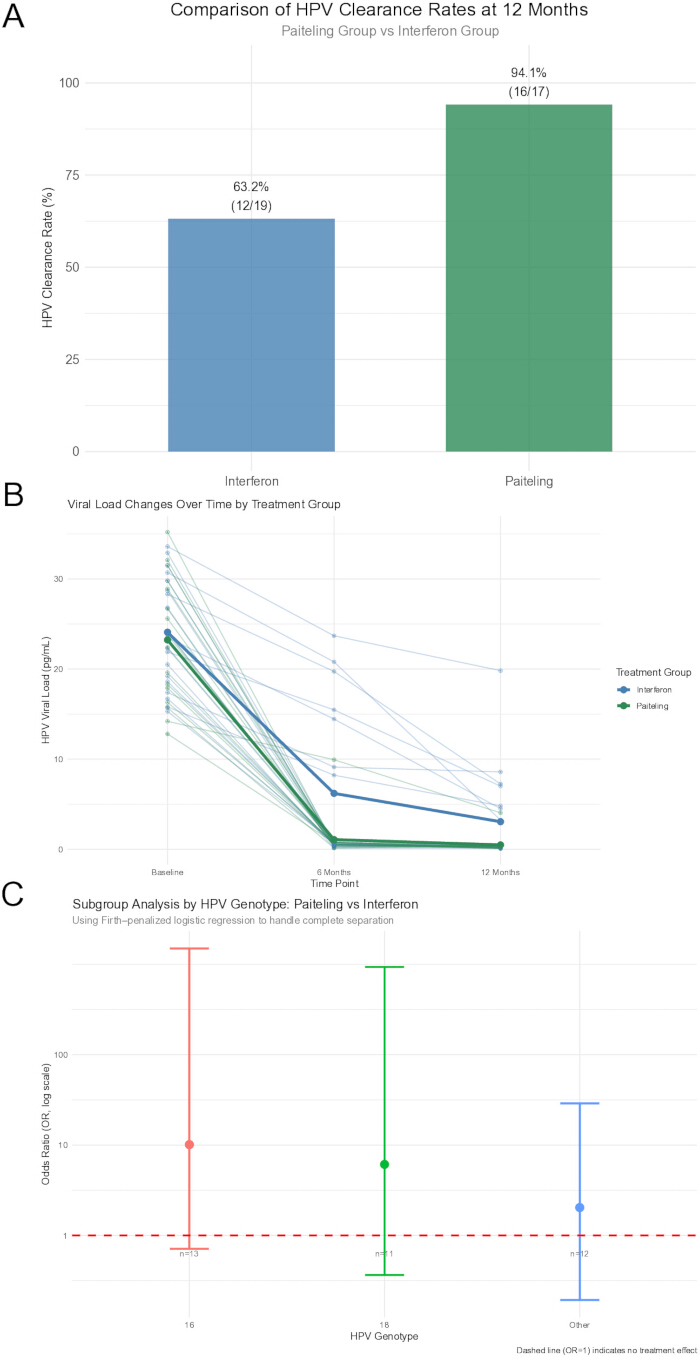
Figure 4: Comprehensive analysis of treatment efficacy and subgroup results. (A) Temporal patterns of HPV clearance rates demonstrating the significant efficacy reversal between Paiteling and Interferon groups from 6 to 12 months follow-up. (B) Longitudinal viral load dynamics showing distinct response trajectories, with Paiteling exhibiting sustained viral suppression and interferon showing initial response followed by viral rebound in 36.8% of cases. (C) Forest plot of genotype-specific subgroup analysis using Firth’s penalized likelihood method, illustrating consistent treatment benefit of Paiteling across all HPV genotypes with corresponding odds ratios and confidence intervals. Data are expressed as frequencies (percentages) for categorical outcomes. Where applicable, error bars represent the standard error of the mean (SEM) or 95% confidence intervals. Statistical significance is denoted as *p < 0.05 or p. < 0.01. Please click here to view a larger version of this figure.
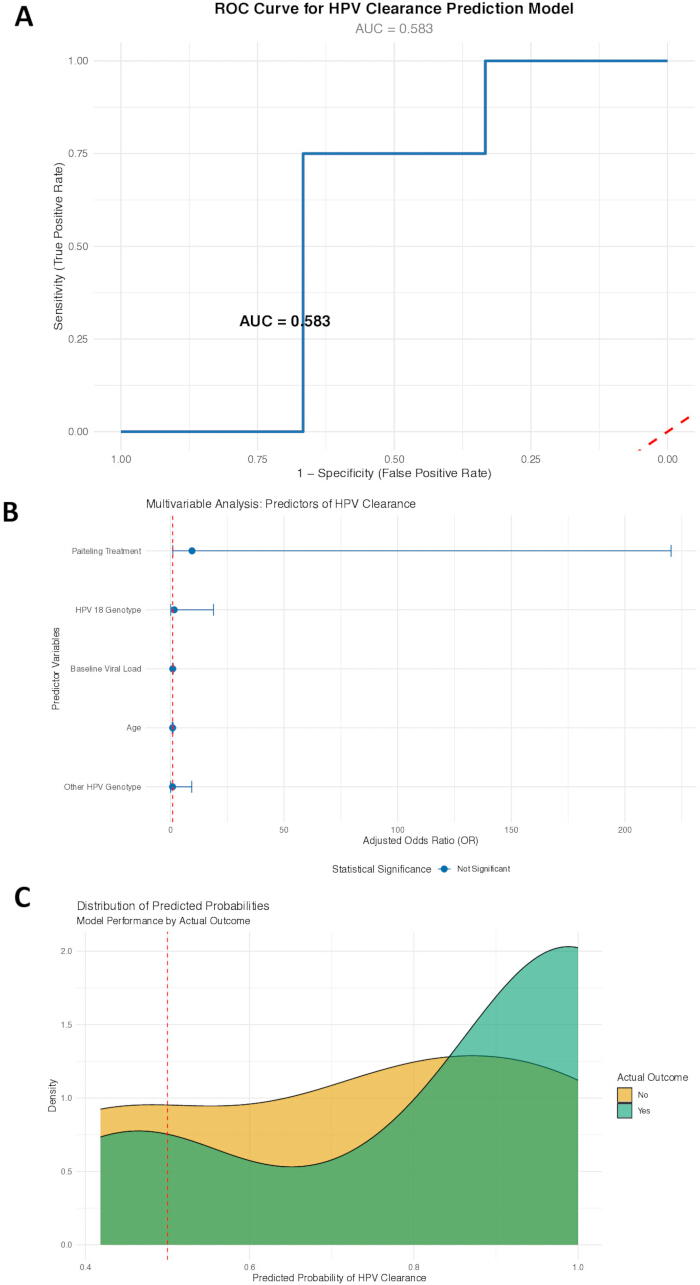
Figure 5: Statistical modeling and predictive performance evaluation. (A) ROC curve analysis of the multivariable prediction model for HPV clearance showing moderate discriminative ability. (B) Variable importance plot from the multivariable logistic regression model demonstrating the relative contribution of each predictor variable, with treatment group identified as the strongest predictor. (C) Calibration plot showing the relationship between predicted probabilities and observed outcomes, indicating reasonable model calibration across the risk spectrum. Error bars in the calibration plot represent 95% confidence intervals. Please click here to view a larger version of this figure.
| Characteristic | Overall (N=36) | Interferon (N=19) | Paiteling Group (N=17) | p-value |
| Age (years) | 53.2 ± 6.1 | 56.0 ± 5.6 | 50.0 ± 5.0 | 0.005 |
| Baseline Viral Load (pg/mL) | 23.7 ± 6.4 | 24.1 ± 6.1 | 23.2 ± 6.8 | 0.7 |
| HPV Genotype | >0.9 | |||
| 16 | 13 (36%) | 7 (37%) | 6 (35%) | |
| 18 | 11 (31%) | 6 (32%) | 5 (29%) | |
| Other | 12 (33%) | 6 (32%) | 6 (35%) | |
| 12-month HPV Clearance | 28 (78%) | 12 (63%) | 16 (94%) | 0.044 |
Table 1: Baseline characteristics of study participants. Demographic and clinical characteristics of the 36 patients with persistent high-risk HPV infection following cervical cancer surgery, stratified by treatment group. Continuous variables are presented as mean ± standard deviation (SD); categorical variables as counts (percentages). P-values were calculated using t-tests for continuous variables and 2 tests or Fisher’s exact tests for categorical variables.
| Variable | Term | Odds Ratio | 95% CI | p-value |
| Treatment | Paiteling Group | 9.33 | 1.40-187.02 | 0.019 |
| Age | Per year increase | 0.92 | 0.79-1.05 | 0.223 |
| Baseline Viral Load | Per unit increase | 1.02 | 0.90-1.16 | 0.796 |
| HPV Genotype 18 | vs HPV 16 | 1.35 | 0.18-12.09 | 0.769 |
| HPV Genotype Other | vs HPV 16 | 0.9 | 0.13-5.99 | 0.91 |
Table 2: Univariable analysis for predictors of HPV clearance. Unadjusted logistic regression analysis examining the association between each predictor variable and HPV clearance at the 12-month follow-up. Odds ratios (OR) with 95% confidence intervals (CI) and p-values are presented for the treatment group and all covariates, demonstrating the treatment group as a significant predictor. To ensure robust estimation in this modest sample size, 95% CIs were estimated using the profile likelihood method, and corresponding p-values were derived from likelihood ratio tests.
| Variable | Term | Adjusted Odds Ratio | 95% CI | p-value |
| Treatment | Paiteling Group | 9.52 | 1.11-220.32 | 0.039 |
| Age | Per year increase | 0.98 | 0.82-1.18 | 0.866 |
| Baseline Viral Load | Per unit increase | 1.04 | 0.89-1.23 | 0.581 |
| HPV Genotype 18 | vs HPV 16 | 1.66 | 0.18-18.97 | 0.655 |
| HPV Genotype Other | vs HPV 16 | 0.96 | 0.10-9.42 | 0.973 |
Table 3: Multivariable analysis for predictors of HPV clearance. Adjusted logistic regression analysis examining the independent association between treatment group and HPV clearance after controlling for age, baseline viral load, and HPV genotype. Adjusted odds ratios (aOR) with 95% confidence intervals and p-values demonstrate the robustness of the treatment effect. Consistent with univariable analyses, 95% CIs were calculated via. the profile likelihood method, with p-values obtained from likelihood ratio tests.
| Adverse Reactions | Paiteling Group (n=17) | Interferon Group (n=19) | χ² | p-value |
| Local Burning Sensation | 1 (5.9%) | 0 (0%) | 1.15 | 0.284 |
| Itching | 1 (5.9%) | 1 (5.3%) | 0.007 | 0.935 |
| Local Pain | 2 (11.8%) | 1 (5.3%) | 0.496 | 0.479 |
| Mild Joint Aches | 1 (5.9%) | 0 (0%) | 1.15 | 0.284 |
| Total | 5 (29.4%) | 2 (10.5%) | 2.043 | 0.153 |
Table 4: Safety profile and adverse events comparison. Safety assessment documenting the frequency, types, and severity of adverse events in both treatment groups. All reported adverse events were mild to moderate in severity, with no serious adverse events or treatment discontinuations observed. Statistical comparisons were performed using2 tests or Fisher’s exact tests.
Supplementary File 1: Raw data supporting the conclusions of this study.Please click here to download this file.
Discussion
Loading...
$$\rightleftharpoonup{xx}$$
$$\longleftharp{xx}$$,
$$\longrightharp{xx}$$,
This study provides compelling evidence supporting the superior long-term efficacy of Paiteling compared to interferon in managing persistent HR-HPV infection following cervical cancer surgery. Paiteling is proposed as an effective, conservative local therapy specifically tailored for the unique postoperative microenvironment, an area that currently lacks standardized treatment guidelines. The findings reveal a remarkable temporal pattern: while interferon demonstrated better initial response rates at 6 months, Paiteling achieved significantly higher clearance rates by 12 months (94.1% vs 63.2%). This delayed but sustained efficacy pattern aligns with the proposed multi-targeted mechanism of action of traditional Chinese medicine compounds, which may require a longer duration to exert their full therapeutic effects through immunomodulation and viral clearance pathways. By demonstrating this unique response trajectory, this research advances the field by providing critical clinical evidence for TCM’s role in postoperative viral eradication.
The robustness of these findings is strengthened by comprehensive statistical analyses. Multivariable logistic regression confirmed Paiteling treatment as the strongest predictor of HPV clearance (adjusted OR = 9.52, p. = 0.039). Importantly, there was a statistically significant baseline age difference between the cohorts (56.0 vs. 50.0 years). Given that advancing age can impair local immune function and viral clearance, this disparity posed a potential confounding risk. However, the adjusted model demonstrated that Paiteling’s superior efficacy remained highly significant independent of patient age and baseline viral load. Furthermore, consistent treatment effects were observed across all HPV genotype subgroups. This genotype-independent effectiveness is particularly noteworthy given the differential responses often observed with conventional antiviral therapies, underscoring Paiteling’s broad potential application across diverse HR-HPV strains.
The molecular mechanisms underlying Paiteling’s efficacy can be attributed to its multi-component nature. Active ingredients, including kaempferol, quercetin, matrine, and genistein, have demonstrated synergistic effects against HPV-related pathologies through multiple pathways. Kaempferol enhances apoptosis via. PI3K/AKT and telomerase pathways in cervical cancer cells16, while quercetin induces cell cycle arrest in HPV-transformed keratinocytes and promotes apoptosis through cytochrome c release and ROS accumulation17,18. Matrine exhibits broad-spectrum antiviral and anti-inflammatory properties19, and genistein upregulates Bax expression to induce apoptosis in cervical cancer cells20. This multi-target approach may explain Paiteling’s superior long-term efficacy compared to single-mechanism interventions like interferon.
From a clinical perspective, the safety profile observed in this study merits attention. Adverse events associated with Paiteling were predominantly mild to moderate and self-limiting, with no treatment discontinuations reported. This favorable safety profile, coupled with the non-invasive nature of topical application, positions Paiteling as a valuable option, particularly for patients concerned about preserving cervical integrity, including those with future pregnancy plans21. The absence of structural tissue damage represents a significant advantage over physical ablation methods4. However, practical considerations warrant discussion. The extended treatment duration required for Paiteling may impact patient compliance compared to the more convenient interferon regimen22. Additionally, the localized discomfort experienced by some patients during application highlights the need for careful patient education.
This study has several important limitations that must be explicitly acknowledged. First, the retrospective design inherently introduces potential selection and information biases. Second, the relatively small sample size (n = 36) limits the statistical power and the generalizability of the findings, although this was mitigated by employing robust statistical methods such as profile likelihood estimation and Firth’s correction. Furthermore, the single-center setting and the highly specific post-hysterectomy population restrict external validity. To further investigate this hypothesis and overcome these clinical limitations, alternative research approaches, such as developing in vitro. 3D organoid models of the post-surgical cervical microenvironment, could be utilized to directly observe Paiteling’s pharmacodynamics and immune modulation at the cellular level23.
In conclusion, this study demonstrates that Paiteling offers superior long-term efficacy for persistent HR-HPV infection following cervical cancer surgery compared to conventional interferon therapy. The multi-targeted mechanism, favorable safety profile, and sustained viral clearance support its consideration as an effective treatment option. Future directions must urgently focus on designing large-scale, prospective, multicenter randomized controlled trials to definitively validate these findings, standardize the dosing regimen, and explore molecular biomarkers for predicting individual treatment responses24.
Disclosures
Loading...
$$\rightleftharpoonup{xx}$$
$$\longleftharp{xx}$$,
$$\longrightharp{xx}$$,
All authors disclosed no conflicts of interest.
Acknowledgements
Loading...
$$\rightleftharpoonup{xx}$$
$$\longleftharp{xx}$$,
$$\longrightharp{xx}$$,
The study was supported by the Foundation of Liaoning Educational Committee (Grant No: LJKZ0750).
Materials
| Name | Company | Catalog Number | Comments |
|---|---|---|---|
| 5% Acetic Acid | Chemical reagent | Shenzhen Andoff High-Tech Co., Ltd. | Shenzhen |
| Disposable Cervical Sampling Brush | Medical device | Hangzhou Aipeng Medical Instruments Co., Ltd. | Hangzhou |
| High-Risk HPV Nucleic Acid Detection Kit | Diagnostic reagent | Chaozhou Hybribio Biochemistry Co., Ltd. | Chaozhou |
| Lugol's Iodine Solution | Chemical reagent | Shenzhen Andoff High-Tech Co., Ltd. | Shenzhen |
| Opto-electronic Colposcope | Laboratory equipment | Leica Microsystems | Wetzlar |
| Paiteling Solution | Herbal preparation | Beijing Paiteling Biotechnology Co., Ltd. | Beijing |
| R Software (version 4.5.1) | Statistical software | R Foundation for Statistical Computing | Vienna |
| Recombinant Human Interferon $\alpha$-2b Gel | Pharmaceutical preparation | Zhaoke Pharmaceutical Co., Ltd. | Hefei |
| Sea Buckthorn Oil | Herbal preparation | Shengjing Hospital Pharmacy | Shenyang |
| ThinPrep® System (JY-8000B) | Laboratory equipment | Beijing Beidou Xinghang Biotechnology Co., Ltd. | Beijing |
References
Loading...
$$\rightleftharpoonup{xx}$$
$$\longleftharp{xx}$$,
$$\longrightharp{xx}$$,
- Cohen, P. A., Jhingran, A., Oaknin, A., Denny, L. Cervical cancer. Lancet. 393 (10167), 169-182 (2019).
- Tang, Y., Tong, Q., Dai, N., Xu, C. Evaluation of the clinical efficacy of vaginal treatment options for persistent high-risk human papillomavirus infection after excisional treatment of cervical high-grade squamous intraepithelial lesions: a systematic review and Bayesian network meta-analysis. Virol J. 20 (1), 47(2023).
- Kocken, M., et al. Persistent human papillomavirus infection as an indicator of risk for recurrence after treatment for cervical intraepithelial neoplasia. J Clin Virol. 76, Suppl 1. S58-S63 (2016).
- Wang, S. J., et al. Plants and cervical cancer: An overview. Expert Opin Investig Drugs. 22 (9), 1133-1156 (2013).
- Wadler, S., et al. Lack of efficacy of interferon-alpha therapy in recurrent, advanced cervical cancer. J Interferon Cytokine Res. 15 (12), 1011-1016 (1995).
- He, G., et al. Genome-wide allele and haplotype-sharing patterns suggested one unique Hmong-Mein-related lineage and biological adaptation history in Southwest China. Hum Genomics. 17 (1), 3(2023).
- He, G., et al. Differentiated genomic footprints suggest isolation and long-distance migration of Hmong-Mien populations. BMC Biol. 22 (1), 18(2024).
- Gao, Y., et al. A pangenome reference of 36 Chinese populations. Nature. 619, 112-121 (2023).
- Vue, Z., et al. Stories from Hmong in STEMM. Trends Genet. 39 (8), 587-592 (2023).
- Liu, S. H., Chuang, W. C., Lam, W., Jiang, Z., Cheng, Y. C. Safety surveillance of traditional Chinese medicine: current and future. Drug Saf. 38 (2), 117-128 (2015).
- Hu, Y., et al. Clinical efficacy of paiteling in the treatment of condyloma acuminatum infected with different subtypes of HPV. Dermatol Ther. 32 (5), e13065(2019).
- Cobbinah, P., Zheng, S., Oklah, F., Yuyang, Z. Comparative analysis of Paiteling, a traditional Chinese medicine (TCM) and CO2 laser therapy for high-risk HPV-associated with LSIL (CIN1) lesions. Eur J Obstet Gynecol Reprod Biol. 302, 81-86 (2024).
- Liu, Y., et al. Paiteling induces apoptosis of cervical cancer cells by down-regulation of the E6/E7-Pi3k/Akt pathway: A network pharmacology. J Ethnopharmacol. 305, 116062(2023).
- Ladoukakis, E., Andriamiadana, G., Hajizadah, F., James, L. G. E., Nedjai, B. Epigenetic Biomarkers for Cervical Cancer Progression: A Scoping Review. Int J Mol Sci. 26 (19), 9423(2025).
- Liu, Y., et al. Topoisomerase IIα orchestrates secretion of IL-6 and IL-8 with human papillomavirus replication. Virol Sin. 40 (6), 946-961 (2025).
- Kashafi, E., Moradzadeh, M., Mohamadkhani, A., Erfanian, S. Kaempferol increases apoptosis in human cervical cancer HeLa cells via PI3K/AKT and telomerase pathways. Biomed Pharmacother. 89, 573-577 (2017).
- Beniston, R. G., Campo, M. S. Quercetin elevates p27(Kip1) and arrests both primary and HPV16 E6/E7 transformed human keratinocytes in G1. Oncogene. 22 (35), 5504-5514 (2003).
- Bishayee, K., et al. Quercetin induces cytochrome-c release and ROS accumulation to promote apoptosis and arrest the cell cycle in G2/M, in cervical carcinoma: Signal cascade and drug-DNA interaction. Cell Prolif. 46 (2), 153-163 (2013).
- Huang, J., Xu, H. Matrine: Bioactivities and structural modifications. Curr Top Med Chem. 16 (28), 3365-3378 (2016).
- Kim, S. H., Kim, S. H., Lee, S. C., Song, Y. S. Involvement of both extrinsic and intrinsic apoptotic pathways in apoptosis induced by genistein in human cervical cancer cells. Ann N Y Acad Sci. 1171, 196-201 (2009).
- Tao, P., et al. Effect of paiteling on human papillomavirus infection of the cervix. Mol Clin Oncol. 7 (6), 957-964 (2017).
- Jin, G., et al. Efficacy and safety of Chinese patent medicine paiteling in condyloma acuminatum: A systematic review and meta-analysis. J Ethnopharmacol. 318 (Pt B), 116894(2024).
- Kutle, I., et al. Tumor organoid and spheroid models for cervical cancer. Cancers (Basel). 15 (9), 2518(2023).
- Li, Y., et al. Peripheral blood lymphocytes influence human papillomavirus infection and clearance: a retrospective cohort study. Virol J. 20 (1), 80(2023).
Reprints and Permissions
Request permission to reuse the text or figures of this JoVE article
Request Permission