This bibliometric analysis reveals rapid growth in research on Traditional Chinese Medicine for knee osteoarthritis, with China leading contributions. Current hotspots include ginger, peony., and Duhuo Jisheng Decoction. Mechanistic studies on inflammation, oxidative stress, and apoptosis are likely to be a future research trend.
Research Article
Research Trends and Hotspots of Traditional Chinese Medicine for Knee Osteoarthritis from 2005 to 2025: A Bibliometric Analysis
Xueyan Liu*1,2 , Chenxi Zeng*2 , Jun Zhou*1 , Fuqing Ren*2 , Jingwei Mao2 , Yiwen Deng2 , Jiangyan Wei1 , Fang Yuan1 , Bin Li1
libin@bjzhongyi.com
lululalavictor1985@126.com
Corresponding Authors: Bin Li <libin@bjzhongyi.com>, Lu Liu <lululalavictor1985@126.com>
* These authors contributed equally
Opens in a new tab
In This Article
Summary
Loading...
$$\rightleftharpoonup{xx}$$
$$\longleftharp{xx}$$,
$$\longrightharp{xx}$$,
Abstract
Loading...
$$\rightleftharpoonup{xx}$$
$$\longleftharp{xx}$$,
$$\longrightharp{xx}$$,
Knee osteoarthritis (KOA) is a prevalent degenerative joint disease that causes significant pain, functional impairment, and reduced quality of life, particularly among the aging population worldwide. While Traditional Chinese Medicine (TCM) has been widely used in clinical practice for KOA management, there has been a lack of systematic, data-driven synthesis to map the global research trends, key contributors, and core themes in this area. This study conducts a comprehensive bibliometric analysis to map the research landscape, identify trends, and forecast future directions in the application of TCM for KOA. Articles published between 2005 and 2025 were retrieved from the Web of Science Core Collection. A total of 339 relevant publications were analyzed using VOSviewer, CiteSpace, and the Bibliometric R package to assess contributions and trends related to countries, institutions, journals, authors, references, and keywords. Our study elucidates the global research landscape of TCM for KOA. Findings indicate a rapidly growing trend in publications, with China as the predominant contributor, although international collaboration remains limited. Leading contributors include authors Wang Peimin and Liu Jun, the Journal of Ethnopharmacology (publication volume), and Osteoarthritis & Cartilage .(citation impact). Research focuses on herbs such as ginger and peony, as well as on formulas such as Duhuo Jisheng Decoction. Emerging methodologies such as network pharmacology and molecular docking are clarifying the mechanisms of TCM, with future trends pointing to inflammation, oxidative stress, and apoptosis. This study provides valuable insights to guide future research and advance the modernization of TCM for KOA.
Introduction
Loading...
$$\rightleftharpoonup{xx}$$
$$\longleftharp{xx}$$,
$$\longrightharp{xx}$$,
Knee osteoarthritis (KOA) is the most common degenerative joint disease and has become a major public health challenge affecting the quality of life of middle-aged and elderly populations1. According to statistics from the World Health Organization (WHO), nearly 10% of men and 18% of women over 60 years old worldwide are affected by KOA, and its incidence is rising rapidly with the acceleration of population aging2,3. These conditions manifest through a series of clinical symptoms, such as pain, knee swelling, and functional impairment, bringing significant difficulties to patients, families, and society, while imposing a heavy economic burden4. Faced with this severe reality, although modern medicine has various approaches to the treatment of KOA, such as non-steroidal anti-inflammatory drugs (NSAIDs) to relieve pain, intra-articular injections to improve function, and ultimate joint replacement surgery, it has always been difficult to avoid multiple predicaments, including drug dependence, long-term side effects, surgical risks, and economic costs5,6. Therefore, exploring effective therapeutic strategies and drugs against KOA is a key and challenging long-term pursuit. Our goal is to identify promising pharmaceutical interventions that can hinder or improve KOA to a certain extent, while investigating the underlying mechanisms, in order to reveal new insights and methods for its management.
Traditional Chinese medicine (TCM), with a long history and documented records in ancient medical literature, is one of the oldest continuously practiced therapeutic systems7. TCM refers to the medicines used in the traditional Chinese medical system for preventing and treating diseases, which has been widely applied worldwide. It encompasses Chinese herbal medicines (including botanical, mineral, and animal-derived medicines), herbal formulas, proprietary Chinese medicines (TCM preparations), and TCM extracts. It not only demonstrates prominent efficacy in anti-inflammation and antioxidation but also further inhibits cell apoptosis through these effects while improving the body's microcirculation8,9,10. In modern pharmacological studies of TCM in KOA, it has been found that the active ingredients of Chinese medicinal herbs can exert synergistic protective effects through multiple pathways, such as inhibiting inflammatory factors, regulating cartilage metabolism, improving microcirculation, and resisting oxidative stress11,12. A large number of clinical randomized controlled trials (RCTs) have also confirmed that comprehensive TCM therapies have definite efficacy in significantly relieving pain, improving joint function, delaying disease progression, and enhancing quality of life, with generally good safety13. Currently, in the field of degenerative diseases such as KOA, where the efficacy of Western Medicine remains elusive, TCM provides new perspectives and potential new approaches.
With the vigorous development of research on TCM for the prevention and treatment of KOA, a massive amount of academic literature has shown explosive growth. However, the surge in knowledge has also brought new challenges: vague core issues, insufficient depth of interdisciplinary integration, and unclear context of knowledge inheritance and innovation have become increasingly prominent. Therefore, it is crucial to thoroughly grasp the current situation, research trends, and emerging themes in this field. Bibliometrics applies mathematical and statistical methods to quantitatively analyze the external characteristics of literature, such as the number of publications, authors, institutions, countries, journal distribution, and citation networks. Combined with content analysis, it can objectively depict the academic influence, cooperation networks, and evolution of research hotspots in specific fields14. However, comprehensive and systematic bibliometric reports specifically focusing on TCM for KOA remain limited.
This study aims to conduct a systematic, in-depth analysis of the research literature on TCM for the treatment of KOA from the Web of Science Core Collection (WOSCC) database over the past two decades, using bibliometric and visual analysis methods. By drawing the annual number of articles, country/institution collaboration networks, author co-occurrence networks, journal co-citations, literature co-citations, and keyword co-occurrence and clustering maps, we aim to conduct in-depth research on the current status, popular themes, and constantly developing trends in this field, with the aim of providing potential theoretical foundations for clinical drug development and strong evidence for the treatment of KOA.
Protocol
Loading...
$$\rightleftharpoonup{xx}$$
$$\longleftharp{xx}$$,
$$\longrightharp{xx}$$,
The entire process of bibliometric analysis is presented in Supplementary Figure 1.
Data sources and retrieval strategy
This study utilized Web of Science (WoS) as its primary database due to its reliability, broad multidisciplinary scope, and the inclusion of over 12,000 international academic journals15. A comprehensive bibliometric search was performed in the Web of Science Core Collection (SCI-Expanded) on July 23, 2025. Two researchers independently screened the literature, and disagreements were resolved by a third researcher. The search strategy is illustrated in the Supplementary Table. A total of 743 records were initially identified. Following the removal of 404 duplicates and studies deemed irrelevant based on title and abstract screening by two independent reviewers, 339 studies were included for analysis. The search and screening process is illustrated in Figure 1. All tools are described in the Table of Materials.
Data analysis and result visualization
The bibliometric analysis and the generation of scientific knowledge maps in this study were conducted employing the Bibliometric package in R software (version 5.1.0), VOSviewer (version 1.6.20), and CiteSpace (version 6.3.R1 Basic). CiteSpace (version 6.3.R1 Basic) was applied to perform a multi-dimensional visual analysis, including co-authorship, co-citation, clustering, timeline, and burst detection, across entities such as countries, institutions, references, and keywords. This process mapped the complex scientific landscape of TCM and KOA research16. For more accessible visualizations, VOSviewer (version 1.6.20)17 and the biblioshiny web interface of the Bibliometrix package (version 5.1.0) were used to illustrate straightforward relationship networks and the spatial distribution of publications, respectively. To balance the retention of critical core nodes with a moderate density of node connections while ensuring visualization readability, the parameters for VOSviewer and CiteSpace were selected accordingly in Supplementary Figure 1. The parameter settings in this study (e.g., a minimum publication count of 3 for authors in VOSviewer, and a g-index of k = 25 in CiteSpace) were aligned with widely adopted benchmarks in the field of bibliometric visualization16,17, thereby ensuring comparability of our analytical results with the existing literature.
Results
Loading...
$$\rightleftharpoonup{xx}$$
$$\longleftharp{xx}$$,
$$\longrightharp{xx}$$,
Global trends in publication and citations
Using the implemented search strategy, a total of 6847 publications related to TCM and KOA were identified, spanning from January 1st, 2005, to July 23rd, 2025. Among these, 273 articles (80.53%) and 66 reviews (19.47%) were encompassed. The global trend in annual publications and citations is illustrated in Figure 2. The annual number of global publications on TCM for KOA has shown a fluctuating upward trend year by year. From 2005 to 2012, this field was in its infancy, with an annual publication volume of no more than 10 articles. From 2013 to 2022, this field was in its development stage, with a rapid increase in annual publication volume, reaching 49 articles by 2022. Since 2023, the field's development has declined slightly, but the overall trend remains upward.
Distribution of countries/regions
Analysis of national publication output identified 45 contributing countries/regions. China was the most productive, contributing 249 publications (73.5% of the total), followed by South Korea (34, 10.0%), the USA (22, 6.5%), India (11, 3.2%), and Germany (9, 2.7%) (see full top 10 list in Table 1). Further analysis of collaboration networks (Figure 3A) revealed China's central role, with the China-USA collaboration being the strongest (frequency = 11). Notably, China was involved in four of the top six collaborative pairs. The global collaboration network was visualized using CiteSpace (Figure 3B). China demonstrated the highest publication volume and maintained close cooperative ties with other nations, reflecting its predominant role in international partnerships. In the network map, node size corresponds to collaboration strength, and the outer ring color denotes the distribution of collaborative links. The four countries with the highest centrality scores were China (0.47), the United States (0.33), England (0.19), and the Netherlands (0.18), signifying their leading influence within the research domain. Regarding international collaboration among the top 20 corresponding author countries, Australia demonstrated the highest Multiple Country Publication (MCP) ratio (5 articles, 80%), followed by the USA (10 articles, 70%) (Figure 3C). In terms of temporal publication trends, China exhibited the most substantial growth, while the output from other countries remained relatively stable without notable recent surges (Figure 3D).
Contributions of institutions
A total of 557 institutions were engaged in research on Traditional Chinese Medicine (TCM) for knee osteoarthritis (KOA). The top 10 institutions by publication count are listed in Table 2. The list is dominated by China, which contributes nine institutions, with a single entry from South Korea. Nanjing University of Chinese Medicine led in output (n = 23), followed by Guangzhou University of Chinese Medicine (n = 21) and Shanghai University of Traditional Chinese Medicine (n = 16). To delve into inter-institutional collaborations, we employed CiteSpace for network analysis, the results of which are presented in Figure 4A. Despite ranking third (16 articles) and tenth (9 articles) in publication volume, Shanghai University of Traditional Chinese Medicine and the China Academy of Chinese Medical Sciences, respectively, exhibited the strongest influence in this field, as indicated by their shared centrality score (0.05). Institutions such as the Chinese Academy of Sciences (centrality = 0.04, ranked second) have been instrumental in advancing cooperation. However, collaborative efforts across different institutions in this domain are generally insufficient. A visualization map of the institutional collaboration network was created with VOSviewer (Figure 4B), providing insights into the cooperative dynamics within this research field. China emerged as a key player in scientific research, with closer cooperation between Shanghai University of Traditional Chinese Medicine and Zhejiang University of Traditional Chinese Medicine.
Journals and co-cited journals
This study included 339 articles published in 142 journals. Table 3 and Supplementary Figure 2 present the leading ten journals that have published articles in the field of Traditional Chinese Medicine (TCM) and knee osteoarthritis (KOA). The Journal of Ethnopharmacology (n = 30, IF = 5.4/Q1) secured the top spot, trailed by Medicine (n = 29, IF = 1.4/Q2) and Evidence-Based Complementary and Alternative Medicine (n = 23, IF = -/-). Additionally, Evidence-Based Complementary and Alternative Medicine. was excluded from the Science Citation Index (SCI) in 2023. Using VOSviewer, the network visualization in Figure 5A offers insights into journal citations. Evidence-Based Complementary and Alternative Medicine has active citation relationships with Medicine.
Table 3 and Supplementary Figure 3 showcase the top 10 co-cited journals. Among them, the most cited journal is Osteoarthritis & Cartilage (IF = 9.0/Q1), with 742 citations, followed by Annals of the Rheumatic Diseases (IF = 20.6/Q1), with 326 citations, and Journal of Ethnopharmacology. (IF = 5.4/Q1) ranks third with 279 citations. Journals meeting the criterion of a minimum of 30 citations were included for the co-citation analysis of source titles, which was conducted using VOSviewer. A total of 90 journals were retained for further analysis based on their total link strength, as detailed in Figure 5B. As can be seen from Figure 5B, the cited journals are divided into three clusters. The blue cluster mainly focuses on research progress in the field of osteoarthritis and rheumatoid arthritis; the red cluster primarily centers on the pharmacological mechanisms and molecular effects of traditional Chinese medicine; and the green cluster is mainly concerned with the mechanisms of traditional Chinese medicine in treating arthritis and the efficacy evaluation of traditional Chinese medical therapies.
Analysis of authors and cited authors
In the field of traditional Chinese medicine treatment for KOA, a total of 1979 authors have contributed to relevant articles. Table 4 lists the top 10 authors with the most publications and the top 10 authors with the most citations. Wang Peimin and Liu Jun led the field with 10 papers each. They were closely followed by Li Xiaochen and Liao Taiyang with 7 papers, and Shi Xiaoqing with 7 papers. Interestingly, the highest citation counts were received by Tong Peijian (238) and Wang Peimin (198), respectively. In academic research, a co-authorship relationship is defined when two authors collaborate on a publication; this network of collaborations among authors is depicted in Figure 6A. A number of collaborative research teams have emerged within this field, centered around Wang Peimin, Li Xiaochen, and Huang Zeling. Co-cited authors refer to authors who are cited simultaneously in different references. As shown in Figure 6B, the network of co-cited authors reveals those with higher citation frequencies, who are thereby recognized as pivotal contributors to the field's knowledge foundation. Zhang W. and Hunter DJ.'s research has been cited the most (co-citations = 66). Zhang W.'s research mainly focuses on the efficacy and mechanism of traditional Chinese medicine in treating osteoarthritis, while Hunter DJ.'s research mainly revolves around the relationship between MRI, muscle loss, and the incidence rate of osteoarthritis. In addition, Altman R. (co-citations = 40) and Hochberg MC. (co-citations = 40) are also among the top authors in citation counts, demonstrating their significant influence in the field. Figure 6C shows the authors' production over time.
Co-cited references and reference bursts
Within the domain of Traditional Chinese Medicine (TCM) for KOA research, 11,853 references were frequently co-cited. To pinpoint the most influential publications among these, a co-citation analysis was conducted employing VOSviewer (Figure 7A), with the resulting top 10 most-cited references detailed in Table 5. This publication, entitled "Osteoarthritis," written by Hunter DJ., was cited 41 times, followed by "Osteoarthritis," written by Glyn Jones S., which was cited 30 times, and "Role of proinflammatory cytokines in the pathophysiology of osteoarthritis" with 30 citations. Among the 10 publications, three were guidelines that provide significant guidance in the field. Additionally, CiteSpace was employed to detect the most prominent citation bursts within the TCM for KOA literature. This analysis revealed the top 25 references exhibiting the strongest citation bursts, as displayed in Figure 7B. Among them, "Osteoarthritis" (strength: 7.11), "Diagnosis and Treatment of Hip and Knee Osteoarthritis: A Review" (strength: 6.36), and "Traditional Chinese Medications for Knee Osteoarthritis Pain: A Meta-Analysis of Randomized Controlled Trials" (strength: 5.8) were the top three references with the most influential citation bursts. Notably, all six cited articles that emerged between 2021 and 2025 are the latest reviews on KOA, covering guidelines, early symptoms, diagnosis, and treatment, as well as pathogenesis. This suggests that the field has garnered considerable attention and experienced notable progress.
Analysis of keywords and hotspots
Keyword co-occurrence analysis serves to delineate dominant research trends in the literature, thereby highlighting the central themes that engage scholars within a specific field. The top 15 keywords, ranked by their frequency and centrality, are presented in Table 6, while the co-occurrence network among keywords with a minimum occurrence of 10 is visualized in Figure 8A. From the analysis, a total of 261 keywords were identified. Among these, 29 keywords appeared more than 10 times, with three of them exceeding 50 occurrences. The high-frequency words "Knee Osteoarthritis" and "Traditional Chinese Medicine" reflect the research topic. The frequent occurrence of "network pharmacology" and the high centrality of "double-blind" indicate that the core research emphasis currently lies in evaluating the molecular mechanisms and efficacy of TCM through network pharmacology and randomized controlled clinical trials. The terms "efficacy" and "management" reflect that scholars are currently paying more attention to the therapeutic effect of TCM and the treatment management methods for KOA. "Activation" and "expression" reflect the mechanism of action of Chinese herbal medicines, describing the key processes of their efficacy from the perspectives of molecular biology and pharmacology, respectively, which also indicates that scholars are paying more attention to in-depth research on mechanisms. "Extract" refers to active ingredients extracted from Chinese herbal medicines through specific methods, which is currently a research hotspot in this field. Compared with traditional Chinese herbal medicines, it has certain advantages in terms of purity and efficacy. Notably, "pain, "" inflammation, and "apoptosis" demonstrate the intricate mechanistic connections among these factors. The co-occurrence of these keywords reflects two distinct yet interconnected research streams. One stream investigates the complex interplay among the core factors, and the other focuses on deciphering the associated mechanisms of TCM in the management of KOA. Supplementary Figure 4 displayed a treemap of keywords by Bibliometric.
Keyword clustering analysis was performed using CiteSpace (Figure 8B). The number of clusters was set according to the keyword count within each, resulting in eight clusters, with the largest designated as #0. #0 and #3 reflect that the research methods of this study mainly include network pharmacology and clinical randomized controlled trials; #2 indicates that most studies in this field use western medicine as the clinical control; #1 shows that this field emphasizes the treatment and management methods for KOA; #4, #5 and #7 reveal that the Chinese herbal medicines in this field are natural plants represented by ginger and peony.; #6 indicates that the mechanism of this study focuses on the protective effect of Chinese herbal medicines on articular cartilage.
The temporal variations of keywords in each cluster are illustrated in Figure 8C. From 2005 to 2010, the research keywords in this field were mainly concentrated on articular cartilage, arthritis, non-steroidal anti-inflammatory drugs, double blind, and herbal medicine. Among them, the term "angiogenesis" emerged in 2009, and in the same year, "apoptosis" and "extract" began to gain attention. "Network pharmacology" has remained a key research focus throughout this period. From 2011 to 2025, keywords such as oxidative stress, pain, inflammation, Boswellia serrata., Duhuo Jisheng Decoction, molecular docking, signaling pathway, NF-κB, subchondral bone, and mesenchymal stem cells have become the focus of attention. Supplementary Figure 5 displayed a trend of keywords by Bibliometric.
Keyword bursts function as detectors of intellectual hotspots during specific timeframes, which, in turn, help identify and illuminate nascent research trends. This study used Citespace to analyze the top 25 keywords by their strongest bursts (Figure 8D). As illustrated in the figure, network pharmacology, systematic review, articular cartilage, and pathogenesis have been consistent areas of research focus for two decades. In contrast, recent research has shifted to molecular docking, traditional Chinese medicine, subchondral bone, and signaling pathways. This indicates an evolution in the TCM for KOA research landscape, marked by the integration of novel methodologies and the advancement of insights into pathogenesis. Figure 9 shows the affiliation between KOA and TCM research fields, as well as the relationship between authors and keywords.
DATA AVAILABILITY:
All raw data associated with the figures are available in the Supplementary Files.
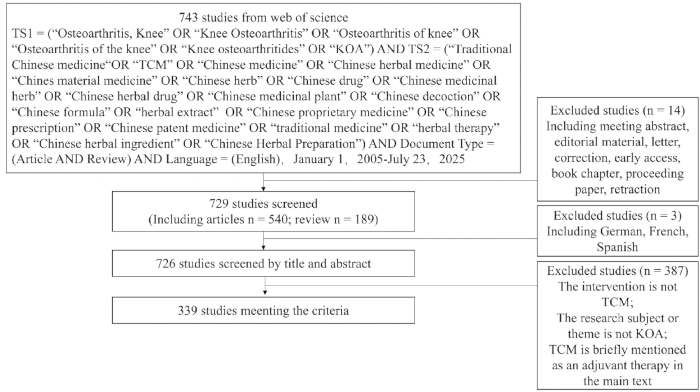
Figure 1: Flow chart for the article selection process. It illustrates the literature screening process, which resulted in the final inclusion of 339 publications. Please click here to view a larger version of this figure.
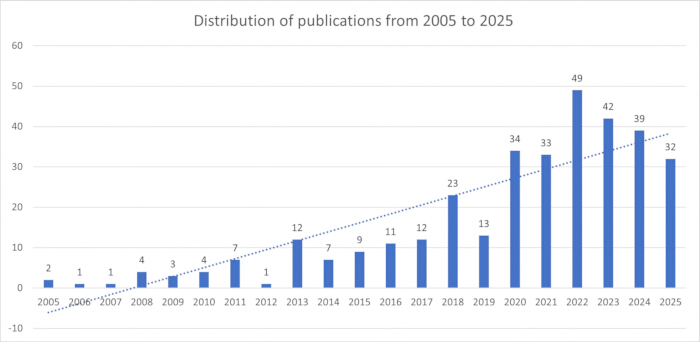
Figure 2: The number of research articles addressing the application of TCM for KOA from 2005 to 2025. It illustrates the global trend in annual publications and citations, with the year 2022 showing the highest number of publications. Please click here to view a larger version of this figure.
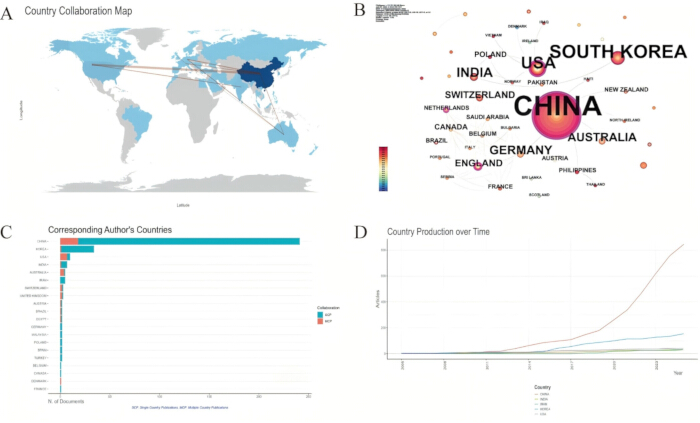
Figure 3: Global scientific collaboration and publication trends by country: network structure, output, and temporal evolution. (A) A visual map for country collaboration that illustrates China's central role in the global collaboration network. (B) Country/regional collaboration analysis showing the worldwide collaborative network and confirming that China is the leading country in terms of publication output. (C) The top 20 countries by total publications, and the top 20 countries by corresponding authors, among which Australia demonstrated the highest Multiple Country Publication (MCP) ratio. (D) Time evolution of the top 5 countries, which shows the temporal trend in publications, with China exhibiting the greatest growth. Please click here to view a larger version of this figure.
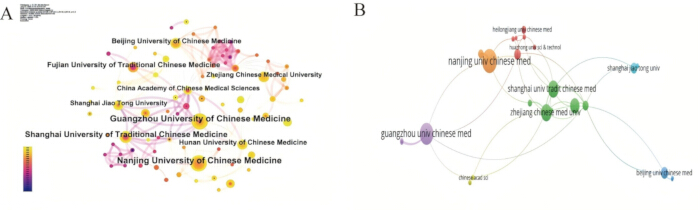
Figure 4: Institutional and author collaboration networks: co-authorship analysis using CiteSpace and VOSviewer. (A) Institutional collaboration analysis that presents collaboration networks at the institutional and author levels, conducted using CiteSpace and VOSviewer, respectively. (B) Co-authorship maps for organizations illustrate the author co-authorship network. Please click here to view a larger version of this figure.
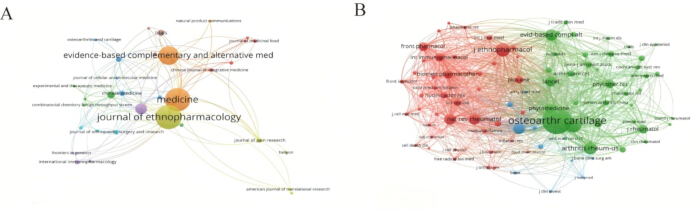
Figure 5: Journal co-occurrence and co-citation network analysis. (A) Co-occurrence maps for journals. (B) Co-occurrence maps for Co-Cited Journals. Please click here to view a larger version of this figure.
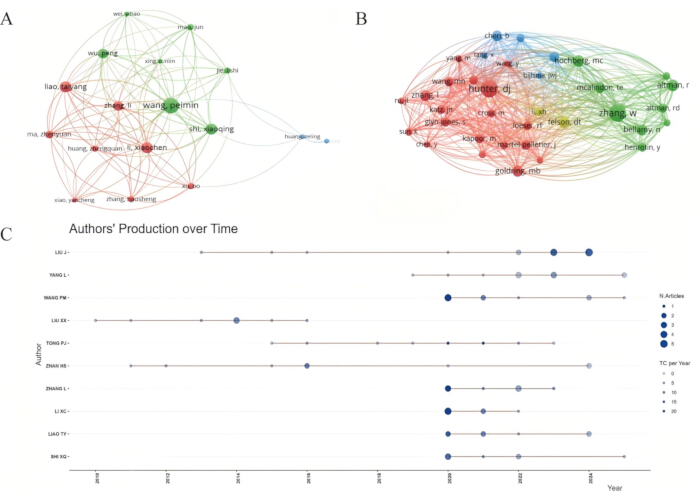
Figure 6: Author collaboration, co-citation networks, and productivity trends. (A) map of the author collaboration network. (B) collaborative network map of cited authors. (C) Timeline distribution of the top 10 most productive authors. Please click here to view a larger version of this figure.
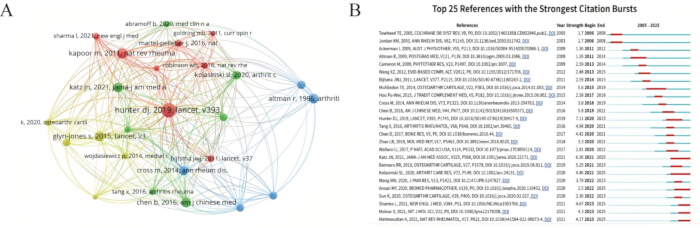
Figure 7: Co-cited reference network and citation burst analysis. (A) map of the co-cited references network; (B) co-cited references with the strongest citation bursts. Please click here to view a larger version of this figure.
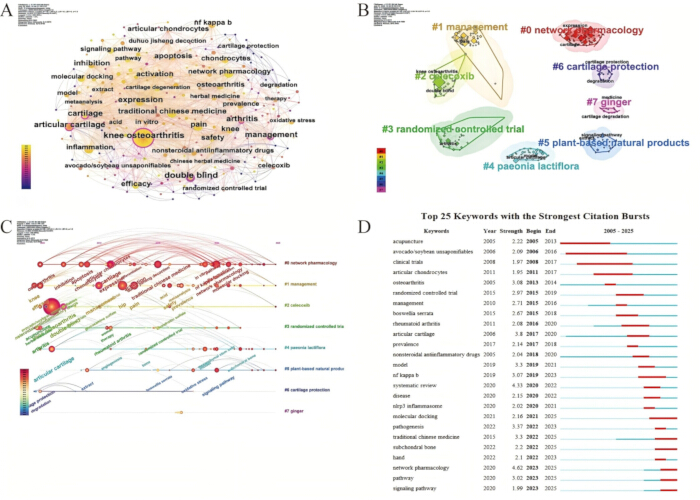
Figure 8: Keyword co-occurrence, clustering, and temporal evolution with citation burst analysis. (A) network visualization map of keywords. (B) cluster map of keywords. (C) Keyword timeline map. (D) top 25 keywords with the strongest citation bursts. Please click here to view a larger version of this figure.
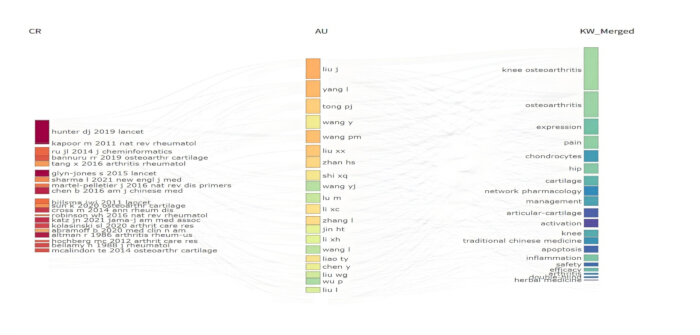
Figure 9: Three-field plot of the keywords analysis: (middle field: affiliations; left field: authors; right field: keywords). It shows the affiliation between KOA and TCM research fields, as well as the relationship between authors and keywords. The central area of the figure represents the affiliation network, with authors displayed on the left and keywords on the right. Please click here to view a larger version of this figure.
| Rank | Country | Time of first publication | Publications | Citations | Centrality |
| 1 | China | 2005 | 249 | 3075 | 0.47 |
| 2 | South Korea | 2005 | 34 | 585 | 0 |
| 3 | USA | 2008 | 22 | 780 | 0.33 |
| 4 | India | 2007 | 11 | 256 | 0.08 |
| 5 | Germany | 2011 | 9 | 323 | 0.09 |
| 6 | Australia | 2005 | 8 | 336 | 0 |
| 7 | Iran | 2018 | 5 | 138 | 0 |
| 8 | Switzerland | 2006 | 5 | 422 | 0.02 |
| 9 | England | 2011 | 5 | 310 | 0.19 |
| 10 | Canada | 2016 | 3 | 201 | 0.07 |
Table 1: Top 10 countries in terms of the number of publications and citations. Table 1 presents the top 10 countries by publication count and total citations, with China ranking first in both categories.
| Rank | Organizations | Time of first publication | Publications | Citations | Centrality |
| 1 | Nanjing University of Chinese Medicine | 2012 | 23 | 410 | 0.02 |
| 2 | Guangzhou University of Chinese Medicine | 2011 | 21 | 285 | 0.03 |
| 3 | Shanghai University of Traditional Chinese Medicine | 2005 | 16 | 412 | 0.05 |
| 4 | Zhejiang University of Chinese Medicine | 2021 | 16 | 317 | 0.01 |
| 5 | Fujian University of Traditional Chinese Medicine | 2011 | 14 | 273 | 0 |
| 6 | Kyung Hee University | 2005 | 11 | 124 | 0 |
| 7 | Beijing University of Chinese Medicine | 2016 | 11 | 178 | 0.03 |
| 8 | Hunan University of Chinese Medicine | 2015 | 10 | 64 | 0.01 |
| 9 | Shanghai Jiao Tong University | 2011 | 10 | 106 | 0.02 |
| 10 | China Academy of Chinese Medical Sciences | 2011 | 9 | 211 | 0.05 |
Table 2: Top 10 organizations in terms of the number of publications and citations. Table 2 presents the top 10 institutions ranked by the number of publications and citations, with Nanjing University of Chinese Medicine ranking first.
| Rank | Journals | Publications | IF/JCR | Rank | Journals | Cited | IF/JCR |
| 1 | Journal of Ethnopharmacology | 30 | 5.4/Q1 | 1 | Osteoarthritis & Cartilage | 742 | 9.0/Q1 |
| 2 | Medicine | 29 | 1.4/Q2 | 2 | Annals of the Rheumatic Diseases | 326 | 20.6/Q1 |
| 3 | Evidence-based Complementary And Alternative Medicine | 23 | -/- | 3 | Journal of Ethnopharmacology | 279 | 5.4/Q1 |
| 4 | Frontiers in Pharmacology | 13 | 4.8/Q1 | 4 | Arthritis & Rheumatology | 240 | -/- |
| 5 | Journal of Traditional Chinese Medicine | 8 | 2.2/Q2 | 5 | Evidence-based Complementary And Alternative Medicine | 217 | -/- |
| 6 | Trials | 7 | 2.0/Q3 | 6 | Arthritis Research & Therapy | 205 | 4.6/Q1 |
| 7 | Phytomedicine | 6 | 8.3/Q1 | 7 | Nature Reviews Rheumatology | 203 | 32.7/Q1 |
| 8 | Chinese Medicine | 6 | 5.7/Q1 | 8 | International Journal of | 201 | 4.9/Q1 |
| Molecular Sciences | |||||||
| 9 | Journal of Pain Research | 5 | 2.5/Q2 | 9 | Lancet | 179 | 88.5/Q1 |
| 10 | International Immunopharmacology | 5 | 4.7/Q1 | 10 | Frontiers in Pharmacology | 164 | 4.8/Q1 |
Table 3: Top 10 journals in terms of number of publications and citations. Table 3 presents the top 10 journals ranked by publication and citation counts, with the Journal of Ethnopharmacology ranking first.
| Rank | Author | Publications | Rank | Author | Cited |
| 1 | Wang Peimin | 10 | 1 | Zhang W | 66 |
| 2 | Liu Jun | 10 | 2 | Hunter DJ | 66 |
| 3 | Li Xiaochen | 7 | 3 | Altman R | 40 |
| 4 | Liao Taiyang | 7 | 4 | Hochberg MC | 40 |
| 5 | Shi Xiaoqing | 7 | 5 | Goldring MB | 39 |
| 6 | Zhang Li | 6 | 6 | Felson DT | 37 |
| 7 | Liu Xiaoxiang | 6 | 7 | Zhang L | 37 |
| 8 | Wu Peng | 6 | 8 | Bellamy N | 36 |
| 9 | Tong Peijian | 6 | 9 | Chen B | 35 |
| 10 | Lu Min | 6 | 10 | Bannuru RR | 35 |
Table 4: Top 10 authors in terms of number of publications and citations. Table 4 presents the top 10 authors ranked by the number of publications and citations, with Wang Peimin ranking first.
| Rank | Co-Cited References Title | First author | Journal/IF | year | Cited |
| 1 | Osteoarthritis | Hunter DJ | Lancet/88.5 | 2019 | 41 |
| 2 | Osteoarthritis | Glyn-Jones S | Lancet/88.5 | 2015 | 30 |
| 3 | Role of proinflammatory cytokines in the pathophysiology of osteoarthritis | Kapoor M | Nat Rev Rheumatol/32.7 | 2011 | 30 |
| 4 | Traditional Chinese Medications for Knee Osteoarthritis Pain: A Meta-Analysis of Randomized Controlled Trials | Chen B | Am J Chin Med/5.5 | 2016 | 28 |
| 5 | Development of criteria for the classification and reporting of osteoarthritis. Classification of osteoarthritis of the knee. Diagnostic and Therapeutic Criteria Committee of the American Rheumatism Association | Altman R | Arthritis Rheum/- | 1986 | 28 |
| 6 | Diagnosis and Treatment of Hip and Knee Osteoarthritis: A Review | Katz Jn | JAMA/50.0 | 2021 | 27 |
| 7 | The global burden of hip and knee osteoarthritis: estimates from the global burden of disease 2010 study | Cross M | Ann Rheum Dis/20.6 | 2014 | 26 |
| 8 | 2019 American College of Rheumatology/Arthritis Foundation Guideline for the Management of Osteoarthritis of the Hand, Hip, and Knee | Kolasinski SL | Arthrit Care Res/3.3 | 2020 | 25 |
| 9 | Validation study of WOMAC: a health status instrument for measuring clinically important patient relevant outcomes to antirheumatic drug therapy in patients with osteoarthritis of the hip or knee | Bellamy N | J Rheumatol/3.4 | 1988 | 24 |
| 10 | OARSI guidelines for the non-surgical management of knee osteoarthritis | McAlindon TE | Osteoarthritis & Cartilage/9.0 | 2014 | 23 |
Table 5: Top 10 co-cited references. Table 5 presents the top 10 co-cited references, with Osteoarthritis ranking first.
| Rank | Keywords | Counts | Rank | Keywords | Centrality |
| 1 | knee osteoarthritis | 171 | 1 | double blind | 0.24 |
| 2 | pain | 65 | 2 | knee osteoarthritis | 0.19 |
| 3 | expression | 43 | 3 | articular cartilage | 0.18 |
| 4 | management | 39 | 4 | cartilage | 0.14 |
| 5 | cartilage | 38 | 5 | arthritis | 0.13 |
| 6 | network pharmacology | 37 | 6 | management | 0.11 |
| 7 | traditional chinese medicine | 34 | 7 | knee | 0.1 |
| 8 | efficacy | 33 | 8 | expression | 0.09 |
| 9 | inflammation | 32 | 9 | osteoarthritis | 0.09 |
| 10 | chondrocytes | 30 | 10 | apoptosis | 0.09 |
| 11 | articular cartilage | 29 | 11 | efficacy | 0.08 |
| 12 | knee | 28 | 12 | cartilage protection | 0.08 |
| 13 | double blind | 27 | 13 | chondrocytes | 0.07 |
| 14 | osteoarthritis | 23 | 14 | activation | 0.07 |
| 15 | arthritis | 23 | 15 | extract | 0.07 |
Table 6: Top 15 keywords in terms of number of publications and centrality. Table 6 presents the top 15 keywords based on publication frequency and centrality, with "knee osteoarthritis" ranking first.
Supplementary Figure 1: Flow chart for the entire process of bibliometric analysis. Supplement Figure 1 illustrates the complete workflow of the bibliometric analysis.Please click here to download this file.
Supplementary Figure 2: Top 10 journals that have disseminated articles pertaining to TCM and KOA. Supplementary Figure 2 presents the top 10 journals publishing articles in the field of TCM for KOA, with the Journal of Ethnopharmacology ranking first.Please click here to download this file.
Supplementary Figure 3: Top 10 co-cited journals. Supplementary Figure 3 displays the 10 most co-cited journals, among which Osteoarthritis & Cartilage is the most frequently cited.Please click here to download this file.
Supplementary Figure 4: Treemap of keywords by Bibliometric. Supplementary Figure 4 presents a treemap of keywords, showing that "knee osteoarthritis" accounted for the largest proportion.Please click here to download this file.
Supplementary Figure 5: Trend topics of keywords by Bibliometric. Supplementary Figure 5 presents an analysis of keyword dynamics over time.Please click here to download this file.
Discussion
Loading...
$$\rightleftharpoonup{xx}$$
$$\longleftharp{xx}$$,
$$\longrightharp{xx}$$,
KOA is a degenerative joint disease characterized by decreased chondrocyte synthesis and increased catabolism, infiltration of macrophages and T lymphocytes into the synovium, abnormal functions of osteoblasts and osteoclasts, and impaired repair capacity of mesenchymal stem cells. These abnormal cellular changes interact with each other, ultimately leading to joint structural destruction and functional impairment18,19,20. TCM, primarily used as an adjuvant therapy for KOA, can alleviate symptoms, delay disease progression, and improve quality of life. Modern studies have also confirmed that many Chinese medicinal herbs and their active ingredients, such as Zingiber officinale Roscoe in ginger. and paeoniflorin in peony, have anti-inflammatory, cartilage degeneration-inhibiting, and cartilage repair-promoting effects, providing scientific evidence for the treatment of KOA with TCM21,22,23. However, TCM treatment also faces certain challenges. For instance, the material basis and mechanism of action of some compound prescriptions remain unclear, and the standardization and normalization of clinical studies need to be enhanced24. To further investigate and map the present and future of TCM in treating KOA, we adopted a bibliometric analysis method to analyze publications in this field from 2005 to 2025, systematically sorted out the research status and hotspots of TCM in KOA, and revealed the core issues, methodological trends, and future directions in this field.
Over the past 20 years, a marked growth in the number of publications addressing TCM for KOA has been observed, with a significant increase in the past 5 years. The low output observed in 2025 is likely due to the mid-year data retrieval (July); overall, the insights highlight the expanding relevance of TCM for KOA and signify a research domain that merits sustained investigation. As the birthplace of TCM, China accounts for 73.5% (249 publications) of the total number of articles and plays a pivotal role in this field. It is followed by South Korea (10%) and the United States (6.5%), which have also made significant contributions to this field. Most active contributors are from developed countries, including Europe and the United States, as well as Asian countries. This pattern may reflect the growing recognition and acceptance of TCM across different cultural settings. Notably, China and the United States have established close academic collaboration to advance research on Chinese herbal medicines for KOA. Nevertheless, international cooperation in this field remains limited, which may be due to differences in cultural contexts, disease burden, and healthcare insurance policies across countries and regions. Chinese institutions account for nine of the ten most prolific contributors, with Nanjing University of Chinese Medicine (n = 23) occupying the leading position. Shanghai University of Traditional Chinese Medicine and China Academy of Chinese Medical Sciences have the strongest influence in this field. Shanghai University of Traditional Chinese Medicine and Zhejiang Chinese Medical University have closer cooperation, while less collaboration is observed among other institutions. The Journal of Ethnopharmacology, Medicine, and Evidence-Based Complementary & Alternative Medicine are the core journals in this field. The publications in Osteoarthritis & Cartilage and Annals of the Rheumatic Diseases have a significant influence, and researchers should pay close attention to the latest research results in these journals. In terms of publications, the teams led by Wang Peimin and Liu Jun have the highest output. Wang Peimin's research focuses on clinical and mechanistic studies of TCM external therapies and Chinese herbal compound prescriptions for KOA, while Liu Jun focuses on the formulation of clinical guidelines for KOA and the standardization of integrated traditional Chinese and Western medicine treatment. Wang Peimin, Li Xiaochen, and Huang Zeling have close cooperative relationships. Zhang W. and Hunter DJ. are the most cited authors, having made extensive contributions to research on the herbal treatment of osteoarthritis and significantly advancing clinical and basic research on TCM for KOA. The publication entitled "Osteoarthritis" was authored by Hunter DJ. et al. indicates the international recognition of TCM alternative therapies and promotes their inclusion in clinical guidelines. A systematic review of 23 RCTs found that Chinese herbal medicines are safe and effective in improving pain, function, and health in the treatment of KOA. These findings highlight the potential of TCM as a viable alternative for the treatment and management of KOA.
Bibliometric analysis reveals significant trends in research methods in this field, evolving from early efficacy verification dominated by "clinical observation" and "double-blind trial" to mechanism-based studies such as "network pharmacology", "molecular docking", and "signaling pathway". At the clinical research level, the high centrality of keywords like "RCT", "double-blind", and "efficacy" reflects the profound influence of evidence-based medicine concepts on TCM research. In recent years, the proportion of clinical studies using Western medicines (e.g., non-steroidal anti-inflammatory drugs) as controls has increased, indicating that the effectiveness of TCM in treating KOA is being verified through standardized clinical trials, providing evidence support for its clinical promotion25. Meanwhile, more emphasis has been placed on the whole-process management from early prevention to middle and late-stage intervention of KOA, embodying the characteristics of TCM such as "preventive treatment of disease" and "treatment based on syndrome differentiation"26. By combining the overlay visualization map and burst map of keyword co-occurrence, it is found that the high-frequency occurrence of "network pharmacology" and "molecular docking" reflects the integration of modern systems biology with TCM theory. The "multi-component, multi-target, multi-pathway" characteristics of TCM compound prescriptions can be analyzed for the correlation between active component prediction and action targets through network pharmacology, providing a new tool for explaining the complex "Chinese medicine-disease" interaction network27. In addition, research has increasingly expanded from compound Chinese medicine preparations to individual pharmacological components. Consequently, the integration of molecular docking with multi-omics analyses has emerged as a promising and increasingly adopted strategy in TCM research for KOA treatment28. For example, Research has demonstrated that through network pharmacology, molecular docking, and experiments that the extract of Ligusticum chuanxiong. is related to the activation of the MAPK signaling pathway and PI3K-AKT signaling pathway29. To sum up, network pharmacology and molecular docking technology have important value in the fields of drug design and biological research due to their ability to efficiently predict the action targets and binding affinity of drug components. In addition, from the perspective of keyword bursts and reference bursts, it can be observed that the research paradigm has evolved from solely validating efficacy to probing underlying mechanisms, such as "signaling pathway". Evidence from the literature indicates that the AMPK signaling pathway can regulate processes including autophagy, inflammation, and oxidative stress through the SIRT and FoxO families30.
The clustering results of keywords such as "herb", "extract", "Duhuo Jisheng Decoction", "ginger", and "peony" reflect the diversity of TCM interventions for KOA: there are both studies on active ingredients of single Chinese medicinal herbs (e.g., ginger, peony) and explorations on the overall efficacy of classic prescriptions (e.g., Duhuo Jisheng Decoction). This is consistent with the theoretical characteristics of TCM, such as "treatment based on syndrome differentiation" and "compound compatibility", suggesting that while inheriting traditional experience, researchers are gradually exploring its scientific connotation. Duhuo Jisheng Decoction, a classic prescription for treating KOA, exerts its therapeutic effect on KOA through multi-target and multi-pathway synergistic actions. For example, a network pharmacology study showed that quercetin, ammidin, and β-sitosterol in Duhuo Jisheng Decoction can act on KOA-related targets such as TNF, TP53, and NOS2, involving multiple biological processes, including inflammatory response, apoptosis, and bone metabolism, reflecting the multi-target synergistic effect under the "monarch, minister, assistant, and guide" compatibility31. Research has also demonstrated clinically that Duhuo Jisheng Decoction can relieve pain, improve stiffness, and enhance the quality of life of KOA patients32. Keyword analysis reveals that ginger and its extracts are current research trends in TCM treatment of KOA. Previous study has suggested that ginger can reduce serum glycosaminoglycan (GAG) and has strong anti-osteoarthritic activity33. Evidence from the literature indicates that Manjarix, a herbal combination consisting of ginger and curcumin extracts, can decrease the levels of serum inflammatory mediators IL-6 and TNF-α in MIA-induced rats and inhibit joint pain34. Similar conclusions have been drawn in clinical studies35. Peony and its extracts are also among the emerging research trends. A systematic review and analysis of 63 RCTs showed that total glucosides of paeony can improve symptoms and reduce inflammation levels in patients with inflammatory arthritis36. Research has demonstrated that, through in vitro and in vivo experiments, paeonol can inhibit IL-1β-induced inflammation via the PI3K/Akt/NF-κB signaling pathway37. Studies have shown that through in vitro and in vivo experiments, the Chinese herbal formula GBT suppresses chondrocyte degeneration by inhibiting abnormal activation of the PI3K/AKT pathway38. Clinical trials established that Boswellia serrata, as a natural plant extract, is commonly used in OA treatment39. Data suggested that Boswellia serrata. has antioxidant, anti-inflammatory, and anti-catabolic activities, exerting a protective effect on cartilage40. We predict that more types of herbal medicines and their new formulations will be applied in KOA treatment in the future.
From keyword co-occurrence, keyword timeline, and keyword burst analyses, the high frequency of terms such as "inflammation", "oxidative stress", "apoptosis", and "subchondral bone" indicates that inflammation, oxidative stress, and apoptosis are current research frontiers. Chronic low-grade inflammation plays a crucial role in the pathological progression of KOA41. Evidence shows that Chinese medicinal herbs can regulate multiple core inflammatory pathways such as NF-κB, MAPK, and JAK-STAT, inhibit the release of inflammatory factors, and exert anti-inflammatory and analgesic effects42,43,44. Meanwhile, in clinical trials, Chinese medicinal herbs have emerged as a potential complementary treatment for KOA, as they can reduce serum levels of IL-1β, IL-6, and TNF-α in KOA patients, thereby alleviating pain45. A growing body of evidence is increasingly recognizing that Chinese herbal medicines also appear to regulate oxidative stress, which is associated with chronic inflammation of the joints46. Studies have shown that Chinese medicinal herbs can significantly increase the activities of superoxide dismutase (SOD) and glutathione peroxidase (GSH-Px) in KOA cartilage tissue, while reducing the content of malondialdehyde (MDA), a lipid peroxidation product. This suggests that they can enhance the activity of antioxidant enzymes, scavenge excessive reactive oxygen species (ROS), and alleviate the damage of oxidative stress to chondrocytes47,48,49. The Nrf2/HO-1 pathway is the most important endogenous antioxidant regulatory pathway in the body, and its activation can enhance the antioxidant defense system50. Puerarin, ginkgolide, and other components can activate this pathway, coordinate the expression of antioxidant genes, maintain the oxidation-antioxidation balance, and thus protect cartilage51,52. Evidence from recent research suggests that cell apoptosis plays a pivotal role in the pathogenesis of knee osteoarthritis (KOA) within chondrocytes53. One of the core pathological features of KOA is excessive apoptosis of articular chondrocytes, which leads to degradation of the cartilage matrix and destruction of the cartilage structure. The core regulatory factors of cell apoptosis include the Bcl-2 family (anti-apoptotic proteins Bcl-2, Bcl-xL; pro-apoptotic proteins Bax, Bak) and the Caspase family (apoptosis-executing proteins such as Caspase-3, Caspase-9)54. Chinese medicinal herbs can reduce chondrocyte apoptosis by upregulating anti-apoptotic proteins, downregulating pro-apoptotic proteins, and inhibiting Caspase activation55.
Although a review can summarize the main research directions of traditional Chinese medicine in the treatment of knee osteoarthritis, it often lacks sufficient data support. In contrast, visualized research offers a more intuitive means to identify current research hotspots and potential future trends in this field. With the continuous improvement of research methods, the integration of network pharmacology and molecular docking technology with clinical RCTs can establish a complete chain of "theoretical prediction-experimental verification - clinical translation", thereby improving the evidence-based system for TCM in the treatment of KOA. In addition, dual objectives for subsequent research will likely center on refining the assessment of clinical efficacy and deciphering the fundamental mechanisms of action. More high-quality clinical studies will be conducted; meanwhile, as research on mechanisms such as inflammation, oxidative stress, and apoptosis becomes more refined, future efforts will delve into exploring TCM regulation of mechanisms like subchondral bone remodeling and stem cell differentiation, as well as the precise delivery and clinical translation of active components of Chinese medicinal herbs. These endeavors will provide new research ideas and directions for TCM in the treatment of KOA.
However, our study also has some limitations. Firstly, we specifically analyzed data from the Web of Science Core Collection, which may restrict the comprehensiveness of the final results. In addition, the focus on English papers has hindered our ability to evaluate research on TCM treatments for KOA in countries where other languages are used. Furthermore, the included literature was predominantly original research articles, with a limited number of reviews. As citation and keyword patterns fundamentally differ between these publication types, the lack of a stratified analysis may introduce bias in hotspot identification. Furthermore, since the literature search was concluded on July 23, 2025, the inclusion criteria captured only articles published in the first seven months of 2025. This partial coverage necessitates caution when interpreting 2025 publication volumes, as it may lead to an underestimation of the year's total output rather than reflecting a genuine decline in research interest. Accordingly, our discussion of long-term trends relies primarily on the complete data from 2005 to 2024, while treating 2025 figures solely as preliminary indicators of ongoing activity. Future analyses should consider covering a broader range of literature to enhance comprehensiveness.
This study demonstrates that research on TCM for KOA has grown rapidly over the past two decades, with China remaining the predominant contributor, though international collaboration remains relatively limited. Wang Peimin and Liu Jun are the authors with the highest output; Journal of Ethnopharmacology has the largest number of publications, while Osteoarthritis & Cartilage has the most influential publications. The main Chinese medicinal prescriptions and herbs focus on ginger, peony,. and its extracts, as well as Duhuo Jisheng Decoction. The emerging interdisciplinary fields such as network pharmacology combined with molecular docking provide a clearer basis for further understanding the mechanisms of TCM in KOA treatment. Mechanistic studies on inflammation, oxidative stress, and apoptosis will be the trends of future research. These findings provide directional guidance for subsequent studies and contribute to the precise, modern development of TCM for the treatment of KOA.
Disclosures
Loading...
$$\rightleftharpoonup{xx}$$
$$\longleftharp{xx}$$,
$$\longrightharp{xx}$$,
The authors declare that the research was conducted in the absence of any commercial or financial relationships that could be construed as a potential conflict of interest. The authors declare that no Generative AI was used in the creation of this manuscript.
Acknowledgements
Loading...
$$\rightleftharpoonup{xx}$$
$$\longleftharp{xx}$$,
$$\longrightharp{xx}$$,
We would like to acknowledge all the participants of the study. This study was funded by the China National Natural Science Foundation (82274642, 82474631, 82205246), the Beijing Hospital Management Center "peak" talent training plan team (DFL20241001), and the Fundamental Research Funds for the Beijing Municipal Universities (XJJS202555).
Materials
| Name | Company | Catalog Number | Comments |
|---|---|---|---|
| CiteSpace | Developed and maintained by Professor Chaomei Chen of Drexel University. | CiteSpace 6.3. R1 Basic | CiteSpace (version 6.3. R1 Basic) was employed for visual analysis, illustrating the intricate yet informative scientific landscapes concerning TCM and KOA.This analysis encompassed diverse dimensions ranging from Countries, institutions, references, to keywords, leveraging methods such as co-authorship, co-citation, clustering, timelines and burstiness. |
| R software | RStudio | R software version 5.1.0 | The biblioshiny within the Bibliometric package (version 5.1.0) enables a reproducible workflow for data import, transformation, cleaning, comprehensive scientometric analysis, and direct visualization of scientific knowledge structures. |
| VOSviewer | Centre for Science and Technology Studies (CWTS) | VOSviewer version 1.6.20 | It transforms massive and complex literature data (such as thousands of academic papers) into intuitive and easy-to-understand visual network maps, thereby helping researchers quickly grasp the macro-level structure, evolutionary trajectory, and emerging trends of a research field. |
References
Loading...
$$\rightleftharpoonup{xx}$$
$$\longleftharp{xx}$$,
$$\longrightharp{xx}$$,
- Tang, S., et al. Osteoarthritis. Nat Rev Dis Primers. 11 (1), 10(2025).
- Perruccio, A. V., et al. Osteoarthritis year in review 2023: Epidemiology & therapy. Osteoarthritis Cartilage. 32 (2), 159-165 (2024).
- Bijlsma, J. W., Berenbaum, F., Lafeber, F. P. Osteoarthritis: An update with relevance for clinical practice. Lancet. 377 (9783), 2115-2126 (2011).
- Gelber, A. C. Knee osteoarthritis. Ann Intern Med. 177 (9), Itc129-Itc144 (2024).
- Courties, A., Kouki, I., Soliman, N., Mathieu, S., Sellam, J. Osteoarthritis year in review 2024: Epidemiology and therapy. Osteoarthritis Cartilage. 32 (11), 1397-1404 (2024).
- Lützner, J., Kasten, P., Günther, K. P., Kirschner, S. Surgical options for patients with osteoarthritis of the knee. Nat Rev Rheumatol. 5 (6), 309-316 (2009).
- Hou, P. W., Fu, P. K., Hsu, H. C., Hsieh, C. L. Traditional chinese medicine in patients with osteoarthritis of the knee. J Tradit Complement Med. 5 (4), 182-196 (2015).
- Chen, P., et al. Cinnamic aldehyde inhibits lipopolysaccharide-induced chondrocyte inflammation and reduces cartilage degeneration by blocking the nuclear factor-kappa B signaling pathway. Front Pharmacol. 11, 949(2020).
- Peng, Y., Yang, Z., Li, J., Liu, S. Research progress on nanotechnology of traditional Chinese medicine to enhance the therapeutic effect of osteoarthritis. Drug Deliv Transl Res. 14 (6), 1517-1534 (2024).
- Qiu, M., et al. Liquiritin reduces chondrocyte apoptosis through p53/puma signaling pathway to alleviate osteoarthritis. Life Sci. 343, 122536(2024).
- Li, W., et al. Prevention and treatment of inflammatory arthritis with traditional Chinese medicine: Underlying mechanisms based on cell and molecular targets. Ageing Res Rev. 89, 101981(2023).
- Zhang, S., et al. Therapeutic potential of traditional Chinese medicine against osteoarthritis: Targeting the Wnt signaling pathway. Am J Chin Med. 52 (7), 2021-2052 (2024).
- Liang, Y., et al. Efficacy and safety of Chinese herbal medicine for knee osteoarthritis: Systematic review and meta-analysis of randomized controlled trials. Phytomedicine. 100, 154029(2022).
- Ninkov, A., Frank, J. R., Maggio, L. A. Bibliometrics: Methods for studying academic publishing. Perspect Med Educ. 11 (3), 173-176 (2022).
- De Granda-Orive, J. I., Alonso-Arroyo, A., Roig-Vázquez, F. Which database should we use for our literature analysis? Web of science versus scopus. Arch Bronconeumol. 47 (4), 213(2011).
- Li, J., et al. Emerging insights into traditional Chinese medicine interventions for chemotherapy-induced cardiotoxicity. J Ethnopharmacol. 358, 121032(2026).
- Lian, Y., Sun, J., Yang, L., Yu, W. A bibliometric and visualization analysis of the role of traditional Chinese medicine in cancer immunotherapy. Front Immunol. 16, 1499026(2025).
- Peters, H., Rockel, J. S., Little, C. B., Kapoor, M. Synovial fluid as a complex molecular pool contributing to knee osteoarthritis. Nat Rev Rheumatol. 21 (8), 447-464 (2025).
- Liu, Y., et al. Single-cell transcriptomics reveals novel chondrocyte and osteoblast subtypes and their role in knee osteoarthritis pathogenesis. Signal Transduct Target Ther. 10 (1), 40(2025).
- Fan, M., et al. Detrimental alteration of mesenchymal stem cells by an articular inflammatory microenvironment results in deterioration of osteoarthritis. BMC Med. 21 (1), 215(2023).
- Wang, Z., Efferth, T., Hua, X., Zhang, X. A. Medicinal plants and their secondary metabolites in alleviating knee osteoarthritis: A systematic review. Phytomedicine. 105, 154347(2022).
- Szymczak, J., Grygiel-Górniak, B., Cielecka-Piontek, J. Zingiber officinale roscoe: The antiarthritic potential of a popular spice-preclinical and clinical evidence. Nutrients. 16 (5), (2024).
- Wu, B., et al. Paeoniflorin mitigates iron overload-induced osteoarthritis by suppressing chondrocyte ferroptosis via the p53/slc7a11/gpx4 pathway. Int Immunopharmacol. 162, 115111(2025).
- You, L., Liang, K., An, R., Wang, X. The path towards FDA approval: A challenging journey for traditional Chinese medicine. Pharmacol Res. 182, 106314(2022).
- Zeng, C., et al. Relative efficacy and safety of topical non-steroidal anti-inflammatory drugs for osteoarthritis: A systematic review and network meta-analysis of randomized controlled trials and observational studies. Br J Sports Med. 52 (10), 642-650 (2018).
- Bowden, J. L., et al. Core and adjunctive interventions for osteoarthritis: Efficacy and models for implementation. Nat Rev Rheumatol. 16 (8), 434-447 (2020).
- Kong, X., et al. Batman-tcm 2.0: An enhanced integrative database for known and predicted interactions between traditional Chinese medicine ingredients and target proteins. Nucleic Acids Res. 52 (D1), D1110-d1120 (2024).
- Rigby, S. P. Uses of molecular docking simulations in elucidating synergistic, additive, and/or multi-target (SAM) effects of herbal medicines. Molecules. 29 (22), (2024).
- Xiang, C., et al. Network pharmacology and molecular docking to elucidate the potential mechanism of Ligusticum chuanxiong against osteoarthritis. Front Pharmacol. 13, 854215(2022).
- Chen, L., et al. Ampk signaling in osteoarthritis: From mechanisms to targeted therapeutics. Front Pharmacol. 16, 1681610(2025).
- Kou, H., Ma, J. Network pharmacology prediction and molecular docking-based strategy to explore the potential mechanism of duhuo-jisheng pair against osteoarthritis. J Pharm Pharmacol. 76 (7), 743-752 (2024).
- Chan, K. H., et al. Therapeutic effect of duhuo jisheng decoction add-on tui-na manipulation on osteoarthritis of knee: A randomized controlled trial. Chin Med. 18 (1), 82(2023).
- Nirmal, P., et al. Influence of six medicinal herbs on collagenase-induced osteoarthritis in rats. Am J Chin Med. 41 (6), 1407-1425 (2013).
- Abdel-Rahman, R. F., Abd-Elsalam, R. M., Amer, M. S., El-Desoky, A. M., Mohamed, S. O. Manjarix attenuated pain and joint swelling in a rat model of monosodium iodoacetate-induced osteoarthritis. Food Funct. 11 (9), 7960-7972 (2020).
- Bartels, E. M., et al. Efficacy and safety of ginger in osteoarthritis patients: A meta-analysis of randomized placebo-controlled trials. Osteoarthritis Cartilage. 23 (1), 13-21 (2015).
- Yang, K., et al. Efficacy and safety of total glucosides of paeony in the treatment of 5 types of inflammatory arthritis: A systematic review and meta-analysis. Pharmacol Res. 195, 106842(2023).
- Lou, Y., et al. Paeonol inhibits il-1β-induced inflammation via PI3K/Akt/nf-κb pathways: In vivo and in vitro studies. Inflammation. 40 (5), 1698-1706 (2017).
- Yu, X. B., et al. Chondroprotective effects of gubitong recipe via inhibiting excessive mitophagy of chondrocytes. Evid Based Complement Alternat Med. 2022, 8922021(2022).
- Majeed, M., Majeed, S., Narayanan, N. K., Nagabhushanam, K. A pilot, randomized, double-blind, placebo-controlled trial to assess the safety and efficacy of a novel Boswellia serrata extract in the management of osteoarthritis of the knee. Phytother Res. 33 (5), 1457-1468 (2019).
- Sanchez, C., et al. Curcuma longa and Boswellia serrata extracts modulate different and complementary pathways on human chondrocytes in vitro: Deciphering of a transcriptomic study. Front Pharmacol. 13, 931914(2022).
- Zhang, Y., Ji, Q. Current advances of photobiomodulation therapy in treating knee osteoarthritis. Front Cell Dev Biol. 11, 1286025(2023).
- Guan, T., et al. Combined administration of curcumin and chondroitin sulfate alleviates cartilage injury and inflammation via nf-κb pathway in knee osteoarthritis rats. Front Pharmacol. 13, 882304(2022).
- Li, J., et al. Unraveling the mechanisms of shaoyang shenggu decoction in treating knee osteoarthritis through mass spectrometry and bioinformatics. J Ethnopharmacol. 348, 119835(2025).
- Zhao, C., Liu, Q., Wang, K. Artesunate attenuates ACLT-induced osteoarthritis by suppressing osteoclastogenesis and aberrant angiogenesis. Biomed Pharmacother. 96, 410-416 (2017).
- Lao, L., et al. Huo-luo-xiao-ling (hlxl)-dan, a traditional Chinese medicine, for patients with osteoarthritis of the knee: A multi-site, randomized, double-blind, placebo-controlled phase II clinical trial. Osteoarthritis Cartilage. 23 (12), 2102-2108 (2015).
- Ansari, M. Y., Ahmad, N., Haqqi, T. M. Oxidative stress and inflammation in osteoarthritis pathogenesis: Role of polyphenols. Biomed Pharmacother. 129, 110452(2020).
- Zhuang, C., Wang, Y., Zhang, Y., Xu, N. Oxidative stress in osteoarthritis and antioxidant effect of polysaccharide from angelica sinensis. Int J Biol Macromol. 115, 281-286 (2018).
- Chen, K., et al. Astragalus polysaccharide alleviates oxidative stress and senescence in chondrocytes in osteoarthritis via GCN2/ATF4/txn axis. Int J Biol Macromol. 310 (Pt 3), 143285(2025).
- Bai, B., Li, Y. Danshen prevents articular cartilage degeneration via antioxidation in rabbits with osteoarthritis. Osteoarthritis Cartilage. 24 (3), 514-520 (2016).
- Wu, J., Li, H., Hu, F., Luo, P. Stevioside attenuates osteoarthritis via regulating Nrf2/ho-1/nf-κb pathway. J Orthop Translat. 38, 190-202 (2023).
- Chen, X., et al. Puerarin suppresses inflammation and ECM degradation through the Nrf2/HO-1 axis in chondrocytes and alleviates pain symptoms in osteoarthritic mice. Food Funct. 12 (5), 2075-2089 (2021).
- Ma, T., et al. Ginkgolide c slows the progression of osteoarthritis by activating Nrf2/HO-1 and blocking the nf-κb pathway. Front Pharmacol. 13, 1027553(2022).
- Lotz, M., Hashimoto, S., Kühn, K. Mechanisms of chondrocyte apoptosis. Osteoarthritis Cartilage. 7 (4), 389-391 (1999).
- Yu, E., Zhang, M., Xu, G., Liu, X., Yan, J. Consensus cluster analysis of apoptosis-related genes in patients with osteoarthritis and their correlation with immune cell infiltration. Front Immunol. 14, 1202758(2023).
- Yu, H., et al. Morroniside attenuates chondrocyte apoptosis and pyroptosis and ameliorates osteoarthritic development by inhibiting NF-κB signaling. J Ethnopharmacol. 266, 113447(2021).
Reprints and Permissions
Request permission to reuse the text or figures of this JoVE article
Request Permission