This meta-analysis indicates that transcranial random noise stimulation produces a small, non-significant effect on cognitive functions in healthy adults. Online stimulation showed the most promising pattern, whereas effects of stimulation site, duration, and cognitive domain should be interpreted cautiously.
Research Article
Effects of Transcranial Random Noise Stimulation On Cognitive Functions in Healthy Adults: Evidence From A Systematic Review And Meta-analysis
Opens in a new tab
In This Article
Summary
Loading...
$$\rightleftharpoonup{xx}$$
$$\longleftharp{xx}$$,
$$\longrightharp{xx}$$,
Abstract
Loading...
$$\rightleftharpoonup{xx}$$
$$\longleftharp{xx}$$,
$$\longrightharp{xx}$$,
Transcranial random noise stimulation (tRNS) has attracted increasing attention as a neuromodulation tool; however, findings on its cognitive effects remain inconsistent. This study systematically reviewed and meta-analyzed the effects of tRNS on cognitive functions in healthy adults. A comprehensive search of the Cochrane Library, PubMed, EMBASE, and Web of Science databases was conducted up to September 15, 2025. Randomized controlled trials using either parallel or crossover designs were included. Data were analyzed using random-effects models. Thirteen randomized controlled trials involving 403 participants met the inclusion criteria. The pooled analysis showed a small positive but non-significant overall effect of tRNS on cognitive functions (Hedges’ g = 0.17, 95% CI [-0.06, 0.40], p = 0.145). Subgroup analyses indicated that online stimulation produced a significant positive effect (Hedges’ g = 0.37, 95% CI [0.04, 0.70], p = 0.026), whereas offline stimulation did not; however, the between-subgroup difference was not statistically significant. No significant differences were observed across cognitive domains, stimulation sites, or stimulation durations. Egger’s regression test did not indicate significant publication bias. Overall, current evidence suggests that tRNS has limited and uncertain effects on cognitive functions in healthy adults. Larger, well-powered studies using standardized protocols and incorporating neurophysiological outcomes are needed.
Introduction
Loading...
$$\rightleftharpoonup{xx}$$
$$\longleftharp{xx}$$,
$$\longrightharp{xx}$$,
Transcranial random noise stimulation (tRNS) is a form of transcranial electrical stimulation (tES) that delivers oscillatory currents with randomly varying frequencies and amplitudes to modulate brain activity and behavior1. Since its introduction in human research in 20082, tRNS has gained increasing attention as a non-invasive neuromodulation technique. Compared with transcranial direct current stimulation (tDCS), tRNS is polarity-independent, is generally perceived as more comfortable, and is well suited for double-blind experimental designs. Although the underlying mechanisms remain incompletely understood, proposed explanations include stochastic resonance, which enhances the signal-to-noise ratio of neuronal activity3, and modulation of voltage-gated sodium channels, leading to increased cortical excitability4.
tRNS has been investigated across neuropsychiatric, sensory, motor, and cognitive domains. Previous studies have examined its potential applications in major depressive disorder5, schizophrenia6, tinnitus7, Parkinson’s disease with mild cognitive impairment8, and multiple sclerosis-related fatigue9. Many of these conditions involve impairments in cognitive processing or rely on cognitive control mechanisms, indicating that cognition represents a central domain of interest for tRNS-related modulation.
Cognitive function arises from coordinated activity across distributed neural networks rather than from isolated brain regions10. As a neuromodulatory technique, tRNS has been applied to cognitive domains including working memory11, inhibitory control12, and skill learning13. However, findings remain inconsistent. Some studies report improvements in cognitive functions, whereas others show no measurable effects. Evidence suggests that outcomes may depend on methodological factors, including stimulation parameters, stimulation site, task characteristics, and the timing of stimulation relative to task performance14,15,16. For example, stimulation of the dorsolateral prefrontal cortex (DLPFC) has been associated with both positive and null effects on working memory14, while cerebellar stimulation has not consistently improved visuomotor performance17. Such variability limits the ability to draw definitive conclusions.
Despite the increasing number of randomized controlled trials, no clear consensus has been established regarding the magnitude or reliability of tRNS effects on cognitive functions in healthy adults. Individual studies are often limited by small sample sizes and methodological heterogeneity, reducing statistical power and comparability. A systematic and quantitative synthesis of the available evidence is therefore necessary to estimate the overall effect and to examine potential sources of variability.
The present study conducts a systematic review and meta-analysis of randomized controlled trials to evaluate the effects of tRNS on cognitive functions in healthy adults. The objectives are to quantify the overall effect size and to examine the influence of stimulation characteristics and cognitive domains on the observed outcomes.
Protocol
Loading...
$$\rightleftharpoonup{xx}$$
$$\longleftharp{xx}$$,
$$\longrightharp{xx}$$,
This study was conducted in accordance with the Preferred Reporting Items for Systematic Reviews and Meta-Analyses (PRISMA) guidelines18. The protocol was prospectively registered in the PROSPERO database on September 18, 2025 (Registration ID: CRD420251150327). All procedures were designed to ensure reproducibility and transparency in study selection, data extraction, and statistical analysis. As this study involved secondary analysis of previously published data, no ethical approval or informed consent was required. The research tools used in this protocol are listed in the Table of Materials.
1. Eligibility criteria
Study eligibility was determined using the PICOS framework, including participants, interventions, comparators, outcomes, and study design. Eligible studies included healthy adults aged 18–60 years receiving transcranial random noise stimulation (tRNS) or high-definition tRNS (HD-tRNS), compared with sham stimulation. Outcomes were required to assess cognitive functions, including working memory, skill learning, and inhibitory control. Only randomized controlled trials employing crossover or parallel-group designs were included. Studies were excluded if they were reviews, conference abstracts, theses, case reports, or animal studies. Only studies published in English were considered. The study selection process is summarized in Figure 1.
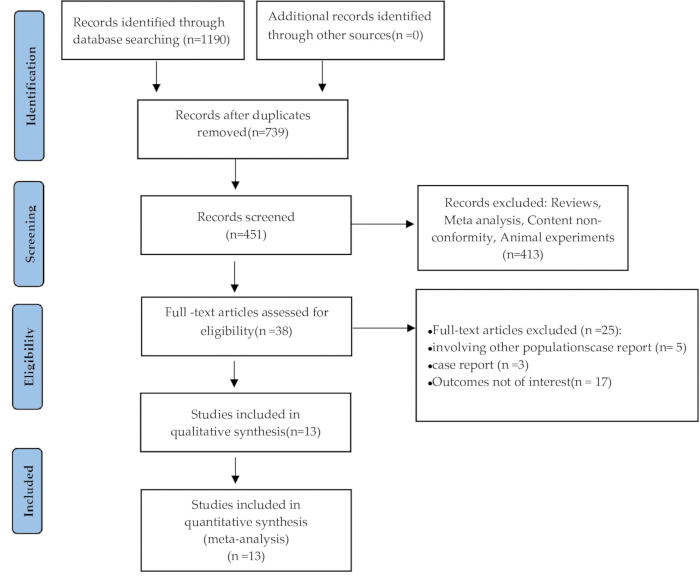
Figure 1: PRISMA flow diagram of study selection. Flow diagram illustrating the identification, screening, eligibility assessment, and inclusion of studies in the meta-analysis, including the number of records retrieved, excluded, and included at each stage. Please click here to view a larger version of this figure.
2. Information sources and search strategy
A comprehensive literature search was conducted through September 15, 2025, using PubMed, EMBASE, Web of Science, and the Cochrane Library. No restrictions or filters were applied. Search terms included combinations of “transcranial random noise stimulation,” “tRNS,” “high-definition tRNS,” and cognitive-related terms such as “working memory,” “skill learning,” and “inhibitory control.” Search strategies were adapted to the syntax of each database.
3. Study selection
All retrieved records were imported into a reference management system, and duplicate records were removed. Titles and abstracts were screened independently by two reviewers, followed by full-text assessment for eligibility. Discrepancies were resolved through consultation with a third reviewer. When full-text articles were unavailable, corresponding authors were contacted. Studies were excluded if no response was received after three attempts.
4. Data extraction
Data extraction was performed independently by two reviewers using a standardized approach. Extracted variables included participant characteristics, study design, stimulation parameters, and cognitive outcome measures. Outcome measures included accuracy, d-prime scores, and error-based metrics. Disagreements were resolved through discussion to ensure consistency and accuracy.
5. Quality assessment
Risk of bias was assessed using the Cochrane Risk of Bias Tool in accordance with the Cochrane Handbook for Systematic Reviews of Interventions19. Evaluations were conducted across domains including randomization, allocation concealment, blinding, incomplete outcome data, selective reporting, and other biases. Each domain was classified as low, high, or unclear risk. Assessments were performed independently by two reviewers, with disagreements resolved by consensus.
6. Statistical analysis
Meta-analysis was conducted using the metafor package in R. For outcomes in which lower values indicated better performance, values were transformed so that positive effect sizes consistently reflected improved performance under active stimulation. Effect sizes were calculated as Hedges’ g with 95% confidence intervals. A random-effects model with restricted maximum likelihood estimation was applied. Heterogeneity was assessed using Cochran’s Q and the I2 statistic. Subgroup analyses examined the influence of cognitive domain, stimulation site, stimulation duration, and stimulation timing. Meta-regression was performed to assess stimulation duration as a continuous moderator. Publication bias was evaluated using funnel plots and Egger’s regression test. Sensitivity analyses were conducted using leave-one-out procedures. Statistical significance was defined as p < 0.05.
Results
Loading...
$$\rightleftharpoonup{xx}$$
$$\longleftharp{xx}$$,
$$\longrightharp{xx}$$,
Overall analysis
The overall meta-analysis included 13 randomized controlled trials. Due to the inclusion of crossover designs, participant counts in the forest plot reflect condition-specific sample sizes rather than unique individuals.
The random-effects model demonstrated a small positive but non-significant overall effect of transcranial random noise stimulation (tRNS) on cognitive functions in healthy adults (Hedges’ g = 0.17, 95% CI [-0.06, 0.40], p = 0.145), with moderate heterogeneity (I2 = 48.63%) (Figure 2). Funnel plot inspection did not indicate marked asymmetry (Figure 3), and Egger’s regression test was not significant (p = 0.940) (Figure 4).
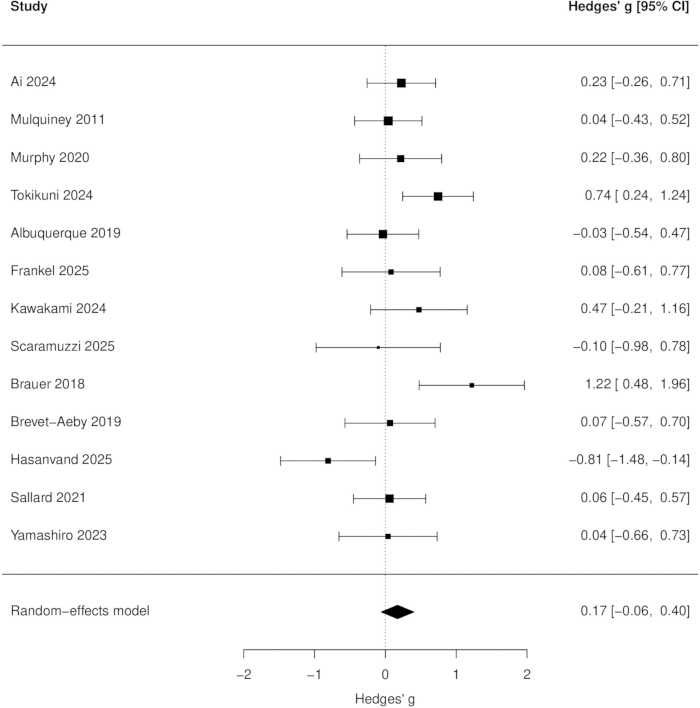
Figure 2: Forest plot of the overall effect of tRNS on cognitive functions. Forest plot showing individual study effect sizes and pooled effect estimate using a random-effects model. Squares represent study-specific effect sizes, with size proportional to study weight; horizontal lines indicate 95% confidence intervals; the diamond represents the overall pooled effect. Please click here to view a larger version of this figure.
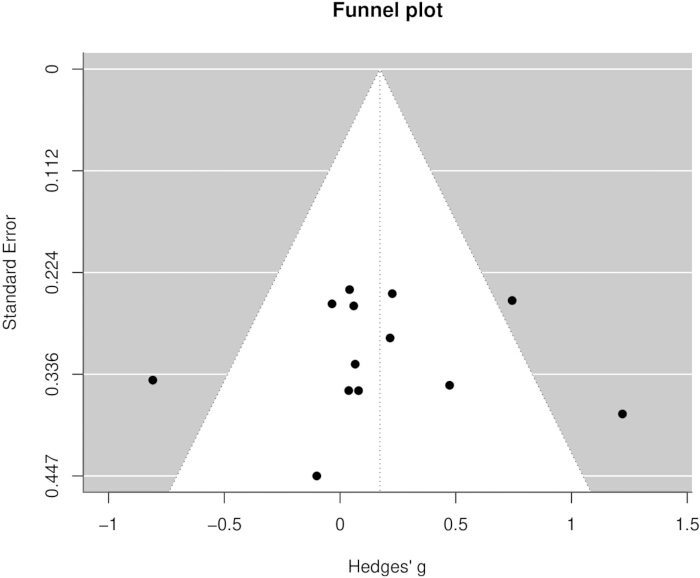
Figure 3: Funnel plot assessing publication bias. Funnel plot of effect sizes against their standard errors for included studies. The distribution of points is used to visually assess potential publication bias. Please click here to view a larger version of this figure.
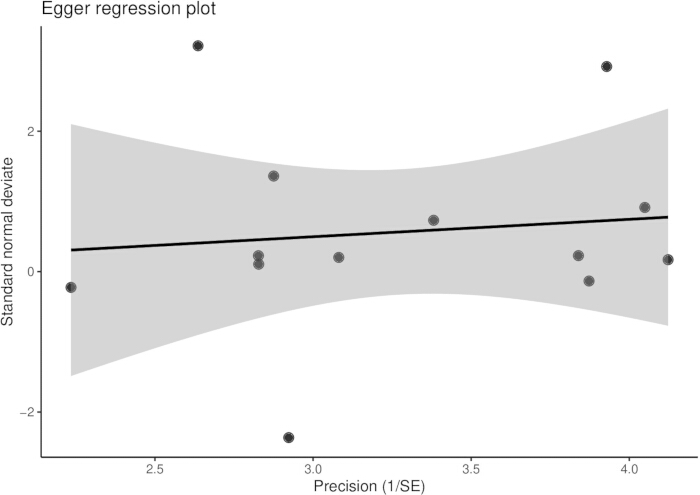
Figure 4: Egger’s regression plot for publication bias. Regression plot illustrating the relationship between standardized effect sizes and their precision to evaluate funnel plot asymmetry using Egger’s test. Please click here to view a larger version of this figure.
Subgroup analysis by stimulation site
Subgroup analysis by stimulation site showed no statistically significant effects across all regions. The pooled effect sizes were 0.11 for dorsolateral prefrontal cortex stimulation (95% CI [-0.23, 0.44], p = 0.53), -0.01 for primary motor cortex stimulation (95% CI [-0.56, 0.54], p = 0.96), 0.54 for inferior frontal gyrus stimulation (95% CI [-0.10, 1.19], p = 0.100), and 0.47 for cerebellar stimulation (95% CI [-0.48, 1.43], p = 0.33). No significant between-subgroup differences were observed (p = 0.52)(Figure 5).
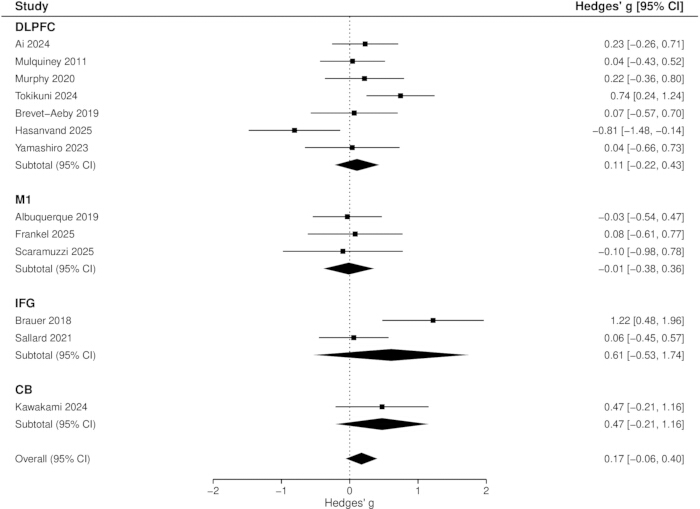
Figure 5: Forest plot of subgroup analysis by stimulation site. Forest plot showing pooled effect sizes for different stimulation sites, including dorsolateral prefrontal cortex, primary motor cortex, inferior frontal gyrus, and cerebellum, with corresponding confidence intervals. Please click here to view a larger version of this figure.
Subgroup analysis by stimulation duration
No statistically significant effects were observed across stimulation durations. Effect sizes were 0.06 for 10 min protocols (95% CI [-0.48, 0.60], p = 0.83), 0.04 for 15 min protocols (95% CI [-0.99, 1.06], p = 0.94), 0.23 for 20 min protocols (95% CI [-0.12, 0.57], p = 0.20), and 0.22 for 22 min protocols (95% CI [-0.73, 1.17], p = 0.66) (Figure 6). Meta-regression analysis did not identify a significant association between stimulation duration and effect size (β = 0.02, p = 0.53) (Figure 7).
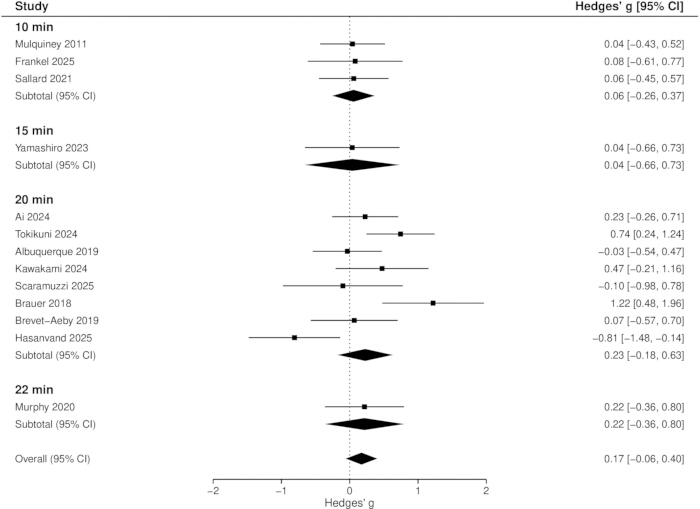
Figure 6: Forest plot of subgroup analysis by stimulation duration. Forest plot presenting pooled effect sizes across different stimulation durations, including 10 min, 15 min, 20 min, and 22 min protocols. Please click here to view a larger version of this figure.
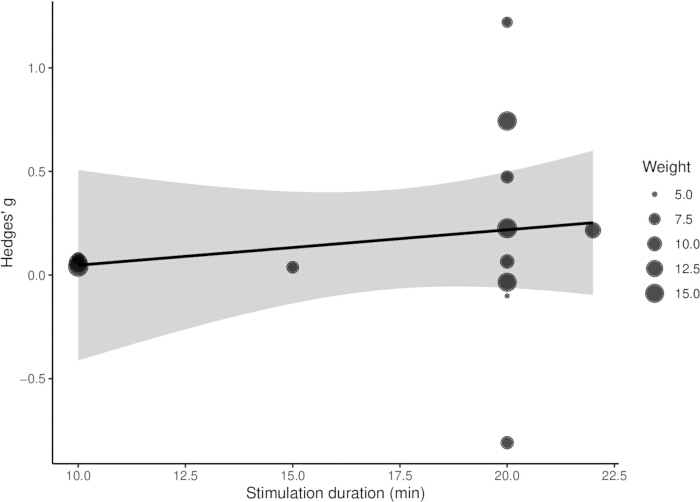
Figure 7: Meta-regression of stimulation duration and effect size. Scatter plot illustrating the relationship between stimulation duration and effect size, with a fitted regression line representing the meta-regression analysis. Please click here to view a larger version of this figure.
Subgroup analysis by cognitive domain
Subgroup analysis based on cognitive domain revealed no statistically significant effects. The largest effect size was observed for working memory (Hedges’ g = 0.31, 95% CI [-0.11, 0.72], p = 0.15), followed by skill learning (Hedges’ g = 0.11, 95% CI [-0.36, 0.58], p = 0.66) and inhibitory control (Hedges’ g = 0.09, 95% CI [-0.32, 0.50], p = 0.67) (Figure 8).
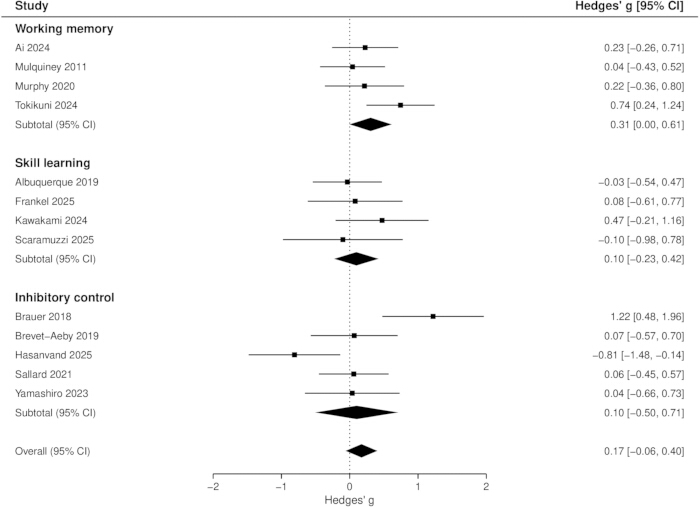
Figure 8: Forest plot of subgroup analysis by cognitive domain. Forest plot showing pooled effect sizes across cognitive domains, including working memory, skill learning, and inhibitory control. Please click here to view a larger version of this figure.
Subgroup analysis by stimulation timing
Subgroup analysis based on stimulation timing indicated that online stimulation produced a statistically significant effect (Hedges’ g = 0.37, 95% CI [0.04, 0.70], p = 0.03), whereas offline stimulation did not (Hedges’ g = 0.00, 95% CI [-0.30, 0.30], p = 0.98). The between-subgroup difference was not statistically significant (p = 0.10) (Figure 9).
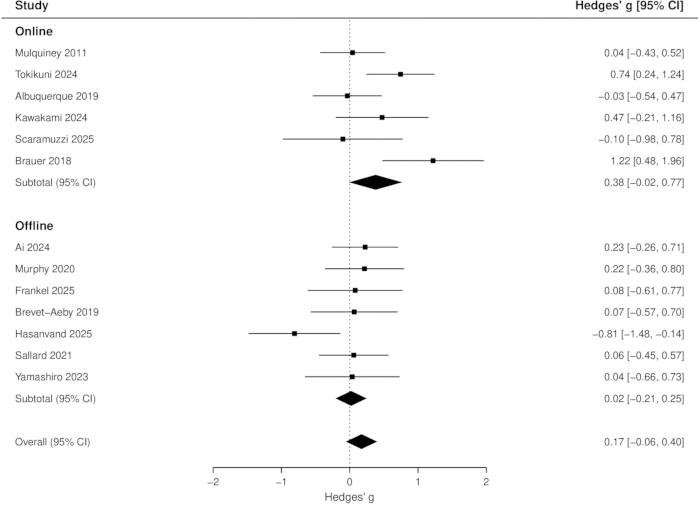
Figure 9: Forest plot of subgroup analysis by stimulation timing. Forest plot comparing pooled effect sizes between online and offline stimulation conditions, with corresponding confidence intervals. Please click here to view a larger version of this figure.
Sensitivity analyses
Leave-one-out analyses demonstrated that the overall effect remained non-significant following removal of individual studies in most cases. However, exclusion of Hasanvand et al. (2025) resulted in a statistically significant pooled effect (Hedges’ g = 0.24, 95% CI [0.05, 0.43], p = 0.01).
Risk of bias
Risk-of-bias assessment indicated low risk for random sequence generation, selective reporting, and other bias domains across all studies. Allocation concealment was unclear in all trials. One study was rated as high risk for blinding of participants and personnel due to a single-blind design, while the remaining studies were classified as low risk in this domain. Several studies lacked sufficient information regarding blinding of outcome assessment and were categorized as unclear risk. One study was rated as high risk for incomplete outcome data. Overall, the included studies demonstrated generally acceptable methodological quality, although some concerns remain regarding blinding and allocation concealment (Figure 10).
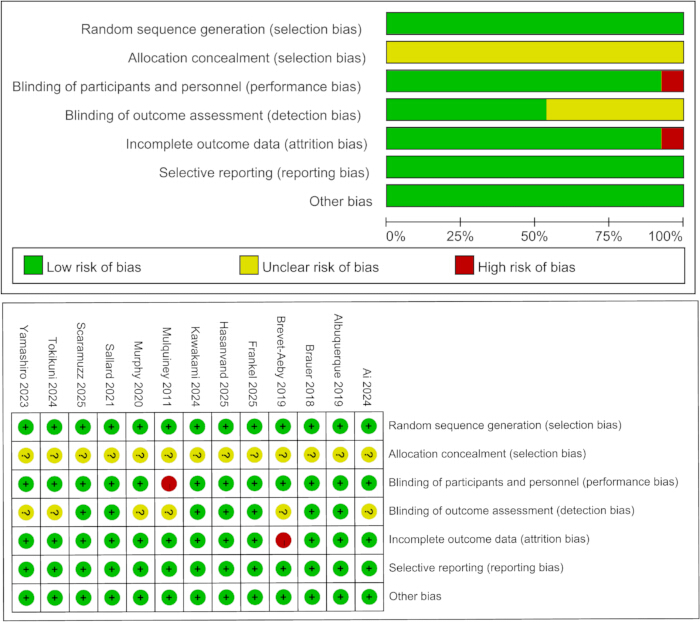
Figure 10: Risk-of-bias summary for included studies. Graphical summary of risk-of-bias assessments across included studies, showing judgments for each domain, including randomization, allocation concealment, blinding, incomplete outcome data, and selective reporting. Please click here to view a larger version of this figure.
The characteristics of the included studies, including participant demographics, stimulation parameters, and outcome measures, are summarized in Table 1.
| Study | Study Design | Participants (N, male) | Mean Age (years) | Stimulation Parameters | Duration (min) | Stimulation Site (cm²) | Task / Outcome | Timing | Reported Effect |
| Mulquiney et al., 2011²⁰ | Crossover | 20 (4) | 29.5 ± 5.9 | 1 mA, 101–640 Hz | 10 | DLPFC (35) | OCL / 1-back / 2-back, ACC | Online | No significant effect on working memory |
| Brauer et al., 2018¹⁶ | Crossover | 23 (7) | 22.91 ± 3.44 | 1 mA, 0.1–640 Hz | 20 | IFG (25) | GN, NE | Online | No significant effect on inhibitory control |
| Brevet-Aeby et al., 2019¹² | Parallel | 33 (16) | 24.72 ± 4.32 | 2 mA, 100–500 Hz | 20 | DLPFC (35) | GN, RT | Offline | Significant improvement in reaction time |
| Albuquerque et al., 2019¹⁵ | Parallel | 34 (34) | 23.1 ± 2.8 | 2 mA, 101–640 Hz | 20 | M1/SO (35) | GPT, EE | Online | No significant effect on skill learning |
| Murphy et al., 2020²¹ | Parallel | 33 (11) | 25.25 ± 7.73 | 1 mA, 101–640 Hz | 22 | DLPFC/SO (35) | SWM, ACC | Offline | Significant improvement in working memory |
| Sallard et al., 2021³⁷ | Crossover | 19 (5) | 28 ± 6 | 1 mA, 101–640 Hz | 10 | IFG (16) | GN, FA | Offline | No significant effect on inhibitory control |
| Yamashiro et al., 2023²² | Crossover | 16 (16) | 20.6 ± 0.9 | 1.5 mA, 101–640 Hz | 15 | DLPFC (25) | GN, CE | Offline | No significant effect on inhibitory control |
| Ai et al., 2024¹⁴ | Crossover | 33 (9) | 22.17 ± 1.78 | 1.5 mA, 0–200 Hz | 20 | DLPFC (NA) | VWM, ACC | Offline | No significant effect on working memory |
| Tokikuni et al., 2024¹¹ | Parallel | 59 (30) | 22.79 ± 2.01 | 2 mA, 101–640 Hz | 20 | DLPFC/OC (35) | 2-back, DPS | Online | Significant improvement in working memory |
| Kawakami et al., 2024¹⁷ | Parallel | 34 (17) | 21.7 ± 1.0 | 1 mA, 0.1–640 Hz | 20 | Cerebellum (35) | VTT, LR | Online | No significant effect on motor learning |
| Hasanvand et al., 2025⁴⁶ | Parallel | 32 (32) | 22.91 ± 3.44 | 1 mA, 101–640 Hz | 20 | DLPFC/OC (25) | SST, SSRT | Offline | No significant effect on inhibitory control |
| Scaramuzzi et al., 2025¹³ | Parallel | 37 (31) | 26.26 ± 9.2 | 2 mA, 100–640 Hz | 20 | M1 (18.49) | DT, RE | Online | Reduction in radial error |
| Frankel et al., 2025⁴⁷ | Crossover | 30 (15) | 24.53 ± 2.37 | 1 mA, 101–640 Hz | 10 | M1/SO (35) | SPPM, MT | Offline | Significant improvement in motor performance |
Table 1: Characteristics of the included studies, participants, and tRNS protocols. This table summarizes the characteristics of the included randomized controlled trials, including study design, participant demographics, stimulation parameters (intensity, frequency range, duration, and electrode site), cognitive tasks, outcome measures, and stimulation timing (online/offline). Please click here to download this Table.
Abbreviations:. M, male; F, female; SD, standard deviation; ACC, accuracy; DPS, d-prime score; EE, endpoint error; MT, movement time; LR, learning rate; RE, radial error; NE, number of errors; RT, reaction time; SSRT, stop-signal reaction time; FA, false alarm; CE, commission error; OC, orbitofrontal cortex; SO, supraorbital region; IFG, inferior frontal gyrus; VWM, visual working memory; NA, not reported; OCL, one-card learning task; SWM, Sternberg working memory; GPT, golf putting task; SPPM, sequential point-to-point movement task; VTT, visuomotor tracking task; DT, dart-throwing task; GN, Go/No-Go task; SST, stop-signal task.
DATA AVAILABILITY:
All raw data used for the present systematic review and meta-analysis are publicly available through the Open Science Framework (OSF) at https://doi.org/10.17605/OSF.IO/7QD63.
Discussion
Loading...
$$\rightleftharpoonup{xx}$$
$$\longleftharp{xx}$$,
$$\longrightharp{xx}$$,
To current knowledge, this study provides a comprehensive quantitative synthesis to quantitatively evaluate the effects of transcranial random noise stimulation (tRNS) on cognitive functions in healthy adults. Based on 13 randomized controlled trials, a small positive but non-significant overall effect was observed. Although online stimulation demonstrated a statistically significant effect, the absence of a significant between-subgroup difference suggests that this finding should be interpreted with caution.
The observed effect size (Hedges’ g = 0.17) is small and unlikely to represent a meaningful cognitive enhancement in real-world settings under current experimental conditions. The overall magnitude of the observed effects was modest. Several methodological factors may account for this pattern, including the predominance of single-session designs, relatively small sample sizes, and the use of controlled laboratory-based cognitive tasks. In addition, substantial heterogeneity across studies, including differences in stimulation parameters, target regions, task paradigms, and outcome measures, likely contributed to variability in the findings. These limitations may reduce both statistical power and external validity. Nevertheless, tRNS remains a non-invasive and low-burden intervention, and its effects may become more apparent under optimized conditions such as repeated training paradigms or optimized protocols. For example, a two-week intervention combining tRNS with cognitive training has been shown to improve neural oscillatory activity and sleep outcomes in children with ADHD23.
Across cognitive domains, no statistically significant subgroup effects were observed for working memory, skill learning, or inhibitory control. Although working memory showed the largest point estimate, the effect did not reach statistical significance, and several included studies reported null findings14,15,16,17,18,19,20. Working memory relies heavily on distributed frontoparietal networks, particularly the dorsolateral prefrontal cortex (DLPFC), which is involved in maintaining and manipulating information43,44. The absence of consistent effects suggests that such complex, network-level processes may be difficult to modulate under heterogeneous stimulation conditions. Similarly, the lack of significant effects for inhibitory control and skill learning may reflect domain-specific neural requirements and limited statistical power within subgroups. Previous work has suggested potential improvements in inhibitory control following tRNS12; however, these effects were not replicated consistently in the current analysis.
Subgroup analyses based on stimulation protocols did not reveal statistically significant differences across stimulation site or duration. Although numerically larger effects were observed in some conditions, these patterns were inconsistent. The DLPFC is considered a central hub for higher-order cognitive processes due to its extensive connectivity with cortical and subcortical regions30,31,32, and stimulation of this region has been associated with changes in neural oscillations and functional connectivity21. However, no significant advantage of DLPFC stimulation was observed in the present analysis. Similarly, stimulation of M1, IFG, and the cerebellum did not produce significant effects, which may reflect differences in functional specialization or limited study numbers within each subgroup15’34,35,36,37,38.
Stimulation duration did not demonstrate a significant relationship with effect size. Previous evidence suggests that tRNS effects may depend on achieving a minimum stimulation threshold and may follow a non-linear dose–response pattern39’40. In the current analysis, although longer durations such as 20–22 min showed numerically larger effects, meta-regression did not support a significant linear association. This suggests that stimulation duration likely interacts with other factors, including task demands and individual variability, rather than exerting an independent effect.
The finding that online stimulation showed a significant effect, whereas offline stimulation did not, may provide insight into underlying mechanisms. tRNS applied during task performance may enhance neural processing through stochastic resonance, improving the detection and transmission of task-relevant signals11,25. In contrast, offline stimulation is more commonly associated with transient increases in cortical excitability mediated by sodium channel activity26,27, which may not consistently translate into behavioral improvements. However, given the absence of a significant between-subgroup difference, this interpretation remains tentative and should be considered exploratory.
Several limitations should be acknowledged. Methodological heterogeneity across studies, particularly in stimulation parameters and cognitive tasks, may limit comparability. Many included studies had relatively small sample sizes, reducing statistical power and increasing the likelihood of both type I and type II errors. Neurophysiological evidence remains limited, as only a subset of studies incorporated measures such as electroencephalography or functional imaging. In addition, potential moderating factors, including sex differences and baseline cognitive ability, were not systematically examined. These limitations may constrain the generalizability of the findings.
Future research should aim to standardize stimulation protocols and experimental designs to improve comparability across studies. Larger, adequately powered randomized trials are needed to provide more precise estimates of effect size. The integration of behavioral and neurophysiological measures, such as EEG and fMRI, may help clarify the mechanisms underlying tRNS effects. In addition, systematic evaluation of individual differences, including baseline performance and demographic factors, may improve understanding of variability in response to stimulation.
Conclusion:
This systematic review and meta-analysis indicate that transcranial random noise stimulation may produce a small positive effect on cognitive functions in healthy adults; however, the overall effect is not statistically significant. Although online stimulation showed a more favorable pattern, no significant differences were observed across cognitive domains, stimulation sites, or stimulation durations. Current evidence remains insufficient to support a robust cognitive-enhancing effect of tRNS. Future studies should incorporate larger sample sizes, standardized protocols, clearly defined stimulation paradigms, and combined behavioral and neurophysiological outcomes to better determine the efficacy and mechanisms of tRNS.
Disclosures
Loading...
$$\rightleftharpoonup{xx}$$
$$\longleftharp{xx}$$,
$$\longrightharp{xx}$$,
The authors declare no conflicts of interest related to this work.
Acknowledgements
Loading...
$$\rightleftharpoonup{xx}$$
$$\longleftharp{xx}$$,
$$\longrightharp{xx}$$,
The authors thank Capital University of Physical Education and Sports for general institutional support.
Materials
| Name | Company | Catalog Number | Comments |
|---|---|---|---|
| R software with metafor package | R Foundation for Statistical Computing | N/A | Used to conduct the meta-analysis, including effect size calculation, random-effects models, subgroup analyses, meta-regression, Egger’s regression test, and leave-one-out sensitivity analyses. |
| Review Manager 5.4 | Cochrane | N/A | Used for risk-of-bias assessment and preparation of risk-of-bias figures. |
Reprints and Permissions
Request permission to reuse the text or figures of this JoVE article
Request Permission