This protocol describes an in utero. fetal lamb model of mitral inflow obstruction using balloon-based restriction of left atrial inflow to induce hypoplastic left heart syndrome-like physiology, with continuous hemodynamic monitoring and refined left atrial balloon implantation techniques.
Method Article
In Utero Fetal Lamb Model of Mitral Inflow Obstruction To Induce Hypoplastic Left Heart Syndrome-like Physiology
Opens in a new tab
In This Article
Summary
Loading...
$$\rightleftharpoonup{xx}$$
$$\longleftharp{xx}$$,
$$\longrightharp{xx}$$,
Abstract
Loading...
$$\rightleftharpoonup{xx}$$
$$\longleftharp{xx}$$,
$$\longrightharp{xx}$$,
Hypoplastic left heart syndrome (HLHS) is a severe congenital heart defect characterized by underdevelopment of the left ventricle (LV), mitral valve, aortic valve, and ascending aorta. Based on the “no flow, no grow” theory, this protocol describes a reproducible fetal sheep model that restricts mitral inflow to impair LV growth in utero. At approximately 120 days of gestation, maternal laparotomy and hysterotomy are performed, followed by fetal left thoracotomy. A balloon catheter is introduced into the left atrium (LA), left deflated at surgery, and subsequently inflated beginning at approximately postoperative day 3 to restrict mitral inflow until antegrade flow in the ascending aorta is markedly reduced or abolished, as verified by a flow probe after maternal recovery. Hemodynamic changes are continuously monitored via fetal carotid arterial pressure and an ascending aortic flow probe. Fetuses are maintained for up to three weeks and undergo necropsy. Critical steps include atraumatic placement and securement of the aortic flow probe and the LA balloon in the fragile fetus, as well as meticulous prevention of amniotic fluid loss before and after uterine closure. This model provides a platform for investigating HLHS mechanisms, validating imaging biomarkers, evaluating prenatal or perinatal therapeutic interventions, and guiding the development of preventive strategies.
Introduction
Loading...
$$\rightleftharpoonup{xx}$$
$$\longleftharp{xx}$$,
$$\longrightharp{xx}$$,
Hypoplastic left heart syndrome (HLHS) is a severe form of congenital heart disease characterized by underdevelopment of the left heart structures and the aorta1. Because the small left ventricle (LV) cannot support systemic perfusion, circulation becomes dependent on the right ventricle, resulting in single-ventricle physiology. Consequently, HLHS typically requires a series of staged open-heart surgeries.
The etiology of HLHS is multifactorial, with both genetic factors2,3 and alterations in embryonic mechanical blood flow3,4,5,6,7,8 recognized as major contributors to disease development. Recently, fetal interventions aimed at modifying blood flow to promote LV growth have received increasing attention9,10, highlighting a critical need for large-animal HLHS models to improve mechanistic understanding and support the development of therapeutic strategies.
Fetal sheep are frequently used to model human congenital heart disease because they tolerate chronic instrumentation and surgical procedures and have a body size at birth similar to that of human neonates11. Although swine models are widely used in cardiovascular research and more closely resemble the human heart in certain genetic and anatomical aspects, they are difficult to manage when extracorporeal cables are required, as they may pull on or become entangled in externalized lines. Therefore, for studies requiring chronic exteriorized electrical cables and/or pressure monitoring catheters, sheep or cattle are often preferred. These ruminants are generally calmer than pigs and can be more readily managed in restricted environments.
Currently, large-animal attempts to replicate the HLHS phenotype have primarily used in utero fetal lamb models. Sheep hearts closely resemble human hearts, with a four-chamber configuration, atrioventricular and semilunar valve structures, and similar coronary artery patterns. The first fetal lamb model of HLHS was reported by Fishman et al.12 in the 1970s, with additional models developed more than four decades later. Several approaches have been used to induce mitral inflow obstruction and create LV hypoplasia in fetal lambs7,8,13, including in utero. occlusion of the fetal foramen ovale using a stent7, occlusion of LV inflow using platinum coils placed above the mitral valve8, and insertion and inflation of a balloon catheter within the left atrium (LA) to obstruct mitral inflow13. However, survival rates (to a defined postoperative endpoint) remain relatively low, ranging from 42%8,13 to 58%7, underscoring the need for safer and less invasive approaches.
The model described here uses left atrial balloon inflation to obstruct mitral inflow and represents a promising experimental approach for inducing HLHS-like physiology and testing interventions aimed at reversing LV unloading. However, as with other fetal lamb models, relatively low survival rates remain a significant limitation. Further surgical refinement toward less invasive techniques is therefore necessary. This study describes methodologies to improve the safety and feasibility of LA balloon implantation in chronic fetal lambs. The primary focus is on surgical feasibility and safety; although long-term outcome data remain limited, this model may be useful for investigating mechanisms of impaired LV development and for developing therapeutic strategies.
Protocol
Loading...
$$\rightleftharpoonup{xx}$$
$$\longleftharp{xx}$$,
$$\longrightharp{xx}$$,
This experimental protocol was approved by the Institutional Animal Care and Use Committee of the Abigail Wexner Research Institute at Nationwide Children’s Hospital (AR24-00184). All procedures followed the guidelines in the National Institutes of Health Guide for the Care and Use of Laboratory Animals. This study adhered to the ARRIVE guidelines (Animal Research: Reporting of In Vivo. Experiments). Dorset pregnant sheep (65–79 kg, 117–120 days of gestation) were housed in a specific pathogen-free environment with free access to food and water for at least 1 week prior to surgery. The equipment used in this study is listed in the Table of Materials.
Humane Endpoint Criteria:
Complications from line maintenance.
The catheters and flow probe cable inserted into the fetus are externalized through the ewe’s uterus and flank and secured outside the body. These externalized lines may become occluded due to thrombosis or kinking, or may be displaced by animal movement. Resulting complications may include infection or major bleeding. Signs of complications include lack of blood return during sampling, persistent monitoring errors, inability to inject through the line, line dislodgement, and major bleeding. Occluded lines may remain in place if there are no signs of infection or bleeding. In cases of uncontrolled bleeding following line removal, or clear signs of infection related to an occluded line, the ewe and fetuses will be euthanized.
Preterm labor.
Preterm labor may occur at any stage of pregnancy and is more likely following fetal cardiac intervention. Early signs include vulvar swelling and relaxation. The appearance of the amniotic sac indicates imminent delivery, which typically occurs within 30 min after rupture. If signs of preterm labor are observed, the ewe and fetuses will be euthanized to terminate the experiment and proceed to necropsy.
Fetal demise.
Fetal demise may occur at any stage of pregnancy, particularly following fetal cardiac intervention. Although fetal demise often leads to preterm labor, it may also result in systemic infection in the ewe. If the ewe shows clear signs of labor progression or if a fetus is determined to be nonviable, a terminal procedure will be performed, and the ewe and fetuses will be euthanized.
Abortion with dystocia following fetal demise.
If one fetus expires while a co-twin survives, retention of the deceased fetus may increase the risk of abortion with or without dystocia. This may present as changes in vital signs or agitation in the ewe. If dystocia occurs, the ewe and fetuses will be euthanized to terminate the experiment and proceed to necropsy.
Massive maternal bleeding.
A pregnant ewe may experience hemorrhage as a complication of uterine or abdominal incision. Signs include vaginal bleeding, lethargy, and persistent abnormalities in vital signs. Severe hemorrhage may result in hematoma formation or shock. If blood loss prevents maintenance of physiological mean arterial pressure, or if tachycardia persists despite intervention, and signs of impending cardiovascular collapse are observed, euthanasia will be performed.
Balloon damage or migration.
Balloon damage or displacement may result in ineffective occlusion of LV inflow. Simple balloon deflation due to damage may not produce clinical signs if fetal hemodynamics remain stable. If dislodgement occurs in the inside-LA configuration, intrathoracic bleeding and fetal demise may result. In cases of significant bleeding leading to fetal demise, the ewe and fetuses will be euthanized.
Surgical site dehiscence and/or wound infection.
Surgical site dehiscence typically occurs 5–8 days after surgery and may present with infection, tissue necrosis, or herniation of internal organs. Wound infections may occur within several weeks postoperatively. If intervention is feasible, treatment will be provided; if the condition becomes life-threatening, euthanasia will be considered.
1. Animal preparation
- Collect blood from the ewe’s jugular vein to confirm Q fever negativity upon arrival.
- Acclimate the sheep to a stanchion for postoperative continuous monitoring.
- Evaluate the sheep by the veterinary team 1 week prior to surgery. Fast healthy animals overnight before anesthesia.
- Administer diazepam (0.5 mg/kg) and ketamine (4 mg/kg) via the internal jugular vein for sedation.
- Intubate the ewe with an 8–9 mm single-lumen endotracheal tube and initiate anesthesia with isoflurane (1%–5%). Maintain anesthesia with isoflurane (1%–5% in oxygen) or a continuous propofol infusion (starting at 30 mg/kg/h; range: 20–45 mg/kg/h).
- Insert an orogastric tube to decompress the stomach and rumen.
- Insert a single-lumen venous catheter (16–18G) into the cephalic or jugular vein for fluid administration, propofol infusion, and drug delivery as needed.
- Place an arterial line (22–24G) in the auricular, femoral, or radial artery for continuous blood pressure monitoring and blood sampling.
- Shave the entire abdominal area, extending to the dorsal and inguinal regions. Prepare the surgical site using chlorhexidine, povidone-iodine, or alcohol.
- Transfer the sheep to the surgical suite. Place the animal in a supine position on a surgical table and position a warming device beneath the ewe to prevent hypothermia. Secure all limbs.
- Apply noninvasive monitors, including a blood pressure cuff on the right forelimb, a pulse oximeter on the ear or tongue, and electrocardiogram leads to monitor maternal blood pressure, oxygen saturation, and heart rate.
- Administer cefazolin (50 mg/kg) for antibiotic prophylaxis before incision. Repeat every 4 h during the procedure as needed.
2. Laparotomy and hysterotomy of the ewe and thoracotomy of the fetus
- Perform a midline laparotomy to expose the uterus. Palpate the uterus and count the number of fetuses.
- Gently exteriorize the uterus. Select a hysterotomy site measuring approximately 10–15 cm, depending on fetal size.
- Place a purse-string suture (1 absorbable braided suture) before performing the hysterotomy to control amniotic fluid leakage. Open the uterine wall layer by layer using electrocautery.
- Place four Babcock clamps along the uterine incision to secure all layers and prevent amniotic fluid loss. Ensure that the amniotic membrane (innermost layer) is included.
- Place a continuous over-and-over suture along the incision edge using 2-0 silk to maintain apposition of the amniotic membrane to the uterine wall.
- Gently externalize the fetal head and secure the uterine purse-string suture with a hemostat (Figure 1A). Cover the fetal face with a custom plastic cover with an opening for the intracardiac echocardiography (ICE) probe to maintain moisture.
- Stabilize the fetal head using gauze to maintain a supine position.
- Insert an ICE probe into the fetal esophagus via the mouth and perform transesophageal echocardiography (TEE) (Figure 1A).
- Acquire baseline echocardiographic measurements.
NOTE: Baseline echocardiographic assessment includes qualitative evaluation of cardiac anatomy and ventricular contractility, as well as quantitative measurements of ventricular chamber size and systolic function when image quality is sufficient. - Administer an intramuscular drug combination containing an analgesic, an anticholinergic, and a neuromuscular blocking agent (fentanyl 20 µg/kg, atropine 20 µg/kg, and vecuronium 20 µg/kg) into the fetal thigh to reduce movement during surgery.
- Make a neck incision and expose the jugular vein and carotid artery.
- Insert a fluid-filled catheter into the carotid artery for arterial pressure monitoring and another into the jugular vein for central venous pressure monitoring (Figure 1B).
NOTE: Ligate distal vessel ends and secure catheters with two 2-0 silk sutures. - Close the neck incision using 2-0 silk sutures while externalizing the catheters.
- Align the two pressure lines with an additional amniotic pressure line and secure them along the fetal neck using 3-0 silk sutures.
- Expose the upper fetal body by releasing the uterine purse-string suture. Place stay sutures at the xiphoid and dorsal aspect to secure positioning.
- Secure the fetal head and forelimbs using gauze to position the fetus in the right lateral decubitus position.
- Perform a fetal thoracotomy at the fourth intercostal space and open the rib cage using a rib spreader.
- Open the pericardium and suspend it with 4-0 silk stay sutures to expose the left atrium (LA) and pulmonary artery (PA).
- Dissect the pulmonary artery and ascending aorta and encircle each with vessel loops.
- Pass the cable of a 6 mm flow probe through the second intercostal space and position it around the ascending aorta.
- Confirm adequate signal quality by connecting the probe to the flow measurement unit.
3. Balloon implantation method 1: inside the left atrium (LA) (fetuses older than GA110)
- Clamp the left atrium (LA) slightly above the atrioventricular groove using a small angled vessel clamp (Figure 2A).
- Place a purse-string suture (6-0 polypropylene suture) on the LA appendage and secure it with a tourniquet.
- Incise the LA wall within the purse-string suture using fine scissors. Confirm that the opening is sufficient for balloon insertion.
- Insert the custom-made balloon catheter into the LA. Secure the catheter using the previously placed purse-string suture and reinforce fixation with two additional 4-0 silk sutures (Figure 2B).
NOTE: The balloon diameter is approximately 1.5 cm at 5 mL and 2.7 cm at 10 mL of 30% glycerin. Although the balloon was bench-tested to tolerate inflation up to 17 mL, approximately 10 mL was used as the practical upper limit for in vivo. inflation because larger volumes may indicate malposition or leakage and may increase the risk of excessive compression or tissue injury. - Perform transesophageal echocardiography (TEE) to confirm proper balloon positioning. Confirm that the balloon lies on the mitral plane and does not remain within the appendage. Temporarily inflate the balloon to confirm functional obstruction by reduction in mitral inflow on TEE and reduction or disappearance of antegrade ascending aortic flow on the flow probe, then deflate it.
- Close the rib cage loosely using three 2-0 silk sutures. Avoid compressing the balloon catheter.
- Externalize the balloon catheter from the thoracic cavity into the same subcutaneous plane as the flow probe cable and route both to the dorsal skin.
- Secure both cables to the dorsal skin at a minimum of two points using 2-0 silk sutures (anchor the skin, tie one cable, tie the second cable, and re-anchor the skin).
4. Balloon implantation method 2: outside the left atrium (LA) (fetuses younger than GA110)
- Release the pericardial suspension around the LA and assess the relationship between the pericardium and the LA wall (Figure 3).
- Place two 6-0 polypropylene sutures on the balloon catheter (one at the tip and one at the base). Anchor these sutures to the pericardium at the corresponding positions.
NOTE: Position the balloon at the superior aspect of the LA when the pericardium is closed. - Close the pericardium loosely using 2-0 silk sutures.
- Adjust balloon position under TEE guidance to achieve adequate LA compression. Ensure that the inflated balloon compresses the LA from the caudal aspect rather than the posterior aspect. Temporarily inflate the balloon to confirm the hemodynamic effect, then deflate it.
NOTE: Adequate compression is defined qualitatively as visible reduction of LA size and mitral inflow on TEE without compression of adjacent structures, and functionally as reduction or disappearance of antegrade ascending aortic flow on the flow probe. - Close the rib cage loosely using three 2-0 silk sutures. Avoid compressing the balloon catheter.
- Externalize the balloon catheter from the thoracic cavity into the same subcutaneous plane as the flow probe cable and route both to the dorsal skin.
- Secure both cables to the dorsal skin at a minimum of two points using 2-0 silk sutures (anchor the skin, tie one cable, tie the second cable, and re-anchor the skin).
5. Closure of hysterotomy and laparotomy with externalization of cables and catheters
- Return the fetus gently to the uterus. Preserve as much amniotic fluid and as many placentas as possible.
- Remove the purse-string suture and the 2-0 silk over-and-over suture. Remove all residual sutures from the uterine incision.
- Close the uterus using absorbable braided sutures in three continuous layers: horizontal mattress, over-and-over, and continuous covering suture.
NOTE: Externalize the three pressure lines, the flow probe cable, and the balloon catheter between the suture layers (Figure 4). - Administer antibiotics (ampicillin 500–1000 mg and ciprofloxacin 2 mg) into the amniotic sac via the amniotic pressure catheter to reduce the risk of intra-amniotic infection after hysterotomy, fetal thoracotomy, and chronic catheter/cable externalization.
- Return the uterus to the abdominal cavity.
- Place a purse-string suture in the abdominal fascia 2–3 cm to the right of the linea alba and pass the cables through the opening.
- Adjust the cable length within the abdomen and secure the purse-string suture at the fascia. Allow slight mobility of the cables; do not overtighten.
- Insert a custom-made tunneling device into the subcutaneous tissue of the ewe’s right flank and advance it toward the dorsal region for approximately 50–60 cm.
- Identify the exit site. Make a small skin incision at the distal tip of the tunneling device and remove the inner core.
- Pass two additional PVC tubes through the tunneling device. Connect the three pressure lines and the balloon catheter to a single PVC tube, then pull them through the tunnel.
- Connect the flow probe cable to the second PVC tube and externalize it through the tunnel.
- Remove the tunneling device from the flank.
- Close the laparotomy in three layers: fascia, subcutaneous tissue, and skin using appropriate sutures.
- Partially close the cable exit site using a 3-0 polyglactin 910 suture.
- Secure a storage pouch to the ewe’s right flank using 0 braided polyester sutures. Position the pouch 2–3 cm dorsal to the cable exit site to minimize friction. The total operative time is typically 4–4.5 h from skin incision to closure.
6. Recovery
- Discontinue anesthetics and remove the orogastric tube. Extubate the ewe after confirming spontaneous respiration.
NOTE: Extubation typically occurs after signs of arousal, including neck movement, blinking, jaw tone, and chewing. - Remove the arterial line from the ewe.
- Transfer the ewe to an isolated recovery area. Assist the animal into sternal recumbency until it can stand and ambulate independently.
- Administer intramuscular buprenorphine (0.015–0.05 mg/kg) every 8–12 h for postoperative analgesia. Administer meloxicam (0.3–1 mg/kg) as needed, following veterinary guidance.
- Monitor the ewe closely in an individual enclosure for the first 3 days during the acute recovery period.
7. Chronic housing and evaluation
- House the ewe in a custom stanchion designed to enable continuous hemodynamic monitoring while minimizing stress.
- Connect the externalized catheters to monitoring systems. Continuously measure fetal aortic pressure, central venous pressure, amniotic fluid pressure, and aortic flow.
- Obtain fetal blood gas samples from the arterial catheter when abnormal hemodynamic values are observed.
- Initiate balloon inflation at approximately postoperative day 3 using sterile 30% glycerin. Increase balloon volume by 1 mL/day. After each 0.5 mL increment, monitor the fetal hemodynamic response for at least 5–10 min to ensure stability, including absence of bradycardia or a mean arterial pressure below 30 mm Hg. Continue inflation until antegrade ascending aortic flow is reduced to zero.
- If zero antegrade flow is not achieved by 10 mL of balloon inflation, suspect balloon leakage or malposition, rather than continuing inflation toward the bench-tested maximum balloon capacity. Deflate the balloon and evaluate for leakage or displacement using catheter inspection or ultrasound imaging.
8. Necropsy
- Disconnect the monitoring catheters and flow probe cable and store them in the external pouch.
- Sedate and intubate the ewe. Maintain anesthesia and insert an orogastric tube and vascular catheters using the same protocol as the initial surgery.
- Transfer the ewe to the surgical suite. Position the animal supine on a surgical table and place a warming device beneath the ewe. Secure all limbs.
- Apply noninvasive monitors as described in the initial procedure.
- Reconnect the pressure catheters and flow probe to the monitoring system.
- Reopen the previous laparotomy and uterine incision. Exteriorize the experimental fetus.
- Stabilize the fetal head using gauze to maintain a supine position.
- Insert an intracardiac echocardiography (ICE) probe into the fetal esophagus via the mouth and perform transesophageal echocardiography (TEE).
- Acquire balloon position images and collect echocardiographic, flow, and pressure data. Deflate the balloon and repeat measurements.
- Administer heparin (10,000 U) to the fetus. Ligate the umbilical cord and inject saturated potassium chloride into the umbilical vein to arrest the heart in diastole.
- Remove the experimental fetus. Reopen the thoracic cavity and assess balloon position, migration, and evidence of infection.
- Excise the heart, measure heart weight, and collect myocardial tissue samples.
- Repeat steps 8.6–8.12. for the control fetus.
- Euthanize the ewe using sodium pentobarbital while under anesthesia.
Results
Loading...
$$\rightleftharpoonup{xx}$$
$$\longleftharp{xx}$$,
$$\longrightharp{xx}$$,
Surgical outcomes
A total of three ewes carrying twins underwent laparotomy and hysterotomy. Three fetuses (one from each ewe) underwent balloon implantation, while the co-twins served as controls. The procedures were performed at a gestational age of 119 ± 1.4 days, with a maternal body weight of 73 ± 4.2 kg.
All three experimental fetuses survived for at least 1 week without surgical complications during the procedure or acute recovery phase. No pre-existing cardiac abnormalities were detected on baseline echocardiography in any fetus. Balloon inflation was initiated at approximately postoperative day 3 and increased gradually using sterile 30% glycerin, consistent with the protocol described above. Inflation was continued until antegrade ascending aortic flow was reduced or abolished, provided that fetal hemodynamics remained stable.
In two fetuses, the balloon was implanted inside the left atrium (LA), and these animals survived until postoperative day (POD) 8 and POD 11. In the remaining fetus, the balloon was placed outside the LA, and survival was maintained until POD 21. All three control fetuses survived until necropsy. No major bleeding or tissue injury occurred in any case, and acute fetal recovery was uncomplicated.
Hemodynamic evaluation of the two methods in non-survival experiments
To compare hemodynamic changes between inside- and outside-LA configurations, one representative acute experimental case for each method is shown in Figure 5 and Figure 6. These non-survival experiments were conducted as pilot studies prior to the chronic experiments. The co-twin fetuses served as contemporaneous controls for descriptive comparison of survival, gross anatomy, and baseline fetal condition. Because this feasibility study included only three experimental fetuses and three co-twin controls, no formal statistical comparison was performed.
For the inside-LA configuration, the balloon was implanted in a fetus at a gestational age of 120 days (2.9 kg). For the outside-LA configuration, the balloon was placed in a fetus at a gestational age of 117 days (2.4 kg). Detailed hemodynamic assessments were performed during balloon inflation, including echocardiography, blood pressure monitoring, and aortic flow measurements. No pre-existing cardiac abnormalities were identified on baseline echocardiography in either fetus.
Figure 5 demonstrates changes in pressure and aortic flow with balloon inflation in both configurations. Figure 6 summarizes echocardiographic measurements, including ventricular chamber dimensions and ejection fraction (EF), at each balloon volume. With the inside-LA configuration, decreases in aortic pressure, aortic flow, left ventricular (LV) end-diastolic volume, LV stroke volume, and left ventricular ejection fraction (LVEF) were observed, without notable changes in central venous pressure or right-sided parameters, consistent with previous reports13. The outside-LA configuration demonstrated similar hemodynamic trends; however, this observation is preliminary and based on a single representative case for each method.
The long-term effects of these two approaches will be evaluated in future studies with a larger number of experimental and control animals.
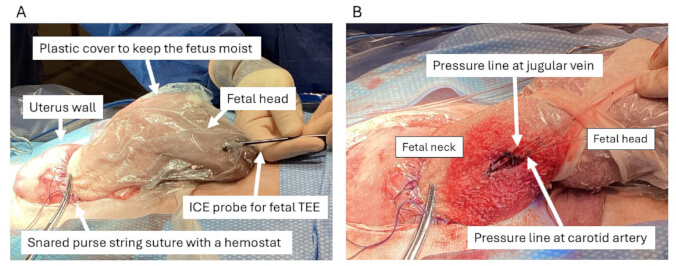
Figure 1: Exposure of the fetal head and neck. (A) An intracardiac echocardiography (ICE) probe is used to perform fetal transesophageal echocardiography (TEE). The fetal head and neck are exposed, and a purse-string suture on the uterine wall is secured to prevent amniotic fluid loss. The fetal head is covered with a plastic cover to maintain moisture. (B) Surgical view of the neck incision. Fluid-filled catheters are inserted into the jugular vein and carotid artery. LA, left atrium; MPA, main pulmonary artery. Please click here to view a larger version of this figure.
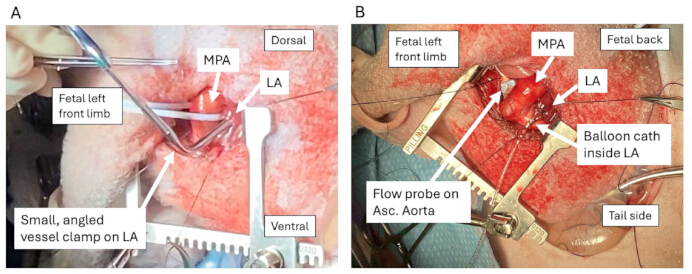
Figure 2: Fetal thoracotomy and balloon implantation into the left atrium (LA). (A) The LA is clamped with a small angled vessel clamp prior to balloon implantation. (B) Appearance after balloon implantation inside the LA. ICE, intracardiac echocardiography; TEE, transesophageal echocardiography. Please click here to view a larger version of this figure.
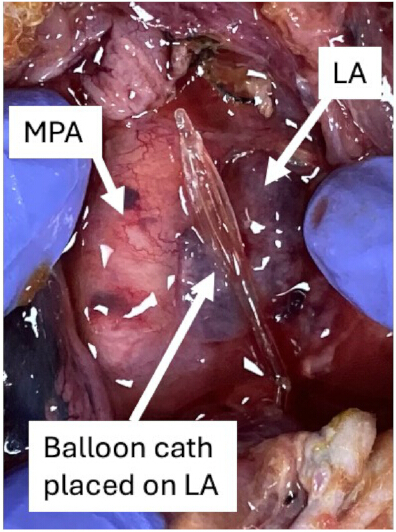
Figure 3: Final balloon position following implantation. Necropsy image illustrating the final balloon position and anatomical relationships. The balloon is positioned outside the left atrium (LA) beneath the pericardium. MPA, main pulmonary artery. Please click here to view a larger version of this figure.
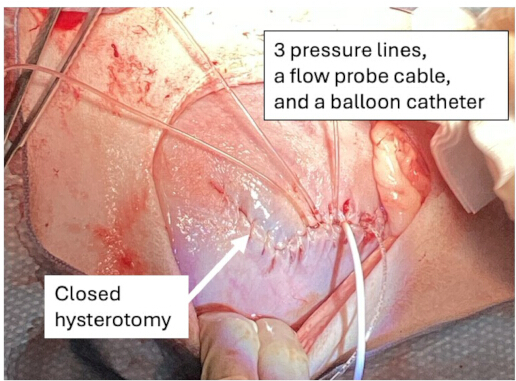
Figure 4: Externalization of catheters and cables after hysterotomy closure. Surgical view showing three pressure lines, a flow probe cable, and a balloon catheter externalized from the uterine incision. Please click here to view a larger version of this figure.
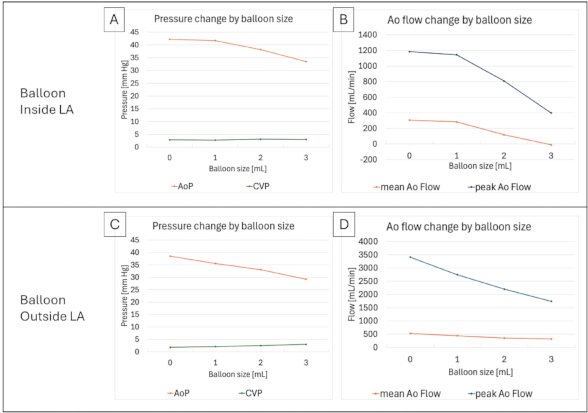
Figure 5: Hemodynamic changes during balloon inflation (representative non-survival case, gestational age 120 days). (A, B): Changes in pressure and aortic flow with increasing balloon volume when the balloon is implanted inside the left atrium (LA). (C, D): Changes in pressure and aortic flow with increasing balloon volume when the balloon is placed outside the LA. Ao, aorta; AoP, aortic pressure; CVP, central venous pressure. Please click here to view a larger version of this figure.
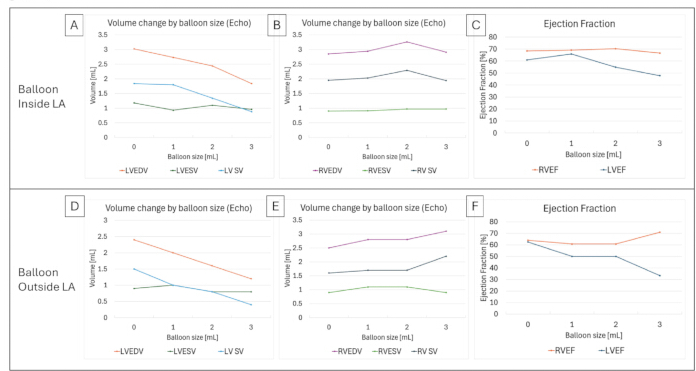
Figure 6: Echocardiographic changes during balloon inflation (representative non-survival case, gestational age 117 days). (A–C): Changes in left ventricular (LV) and right ventricular (RV) dimensions and ejection fraction (EF) with increasing balloon volume when the balloon is implanted inside the left atrium (LA). (D–F): Changes in LV and RV dimensions and EF with increasing balloon volume when the balloon is placed outside the LA. LVEDV, left ventricular end-diastolic volume; LVESV, left ventricular end-systolic volume; LVSV, left ventricular stroke volume. Please click here to view a larger version of this figure.
Discussion
Loading...
$$\rightleftharpoonup{xx}$$
$$\longleftharp{xx}$$,
$$\longrightharp{xx}$$,
A fetal lamb model of mitral inflow obstruction using a balloon inserted into the left atrium (LA) has previously been described13; however, a key limitation has been the short duration of mitral inflow restriction. Longer periods of restricted left ventricular (LV) inflow have been suggested to induce more pronounced HLHS-like changes8,13. Therefore, implantation of the LA balloon at earlier gestational ages is necessary. However, younger fetuses have more fragile tissues and significantly smaller body size (approximately 2.5 kg at 120 days vs. 1 kg at 100 days of gestation), necessitating simpler, safer, and less invasive techniques.
This study demonstrates refined surgical approaches for LA balloon implantation to establish a fetal mitral inflow obstruction model that induces HLHS-like physiology. In prior reports using this method13, LA balloon implantation represented the most critical step. The original technique frequently resulted in bleeding from the LA, leading to acute fetal death. To address this limitation, a vessel clamp was introduced to create a bloodless operative field, allowing sufficient time for balloon insertion while minimizing hemorrhage.
An alternative, less invasive method involving placement of the balloon outside the LA was developed. This configuration produced hemodynamic changes similar to those observed with the inside-LA approach; however, these findings remain preliminary and are based on a limited number of animals. In the most recent three chronic cases, neither approach resulted in bleeding or acute fetal death.
A potential limitation of the inside-LA method is the risk of LA wall injury from the vessel clamp, particularly if excessive force is applied or the clamp tip perforates the atrial wall. In addition, incomplete capture of the LA by the clamp may lead to bleeding during appendage incision. Therefore, careful selection of an appropriately sized angled vessel clamp is essential. The clamp should allow adequate exposure without obstructing the operative field, enabling simultaneous placement of the purse-string suture and balloon insertion.
In the outside-LA configuration, the procedure is less invasive; however, balloon migration into the pericardium may occur if fixation is inadequate, leading to insufficient LA compression. Fixation sutures should be adjusted under repeated fetal transesophageal echocardiography (TEE) guidance. The balloon should compress the LA from the caudal aspect rather than the posterior aspect, and its position should be reassessed after rib closure.
Placement of the flow probe around the ascending aorta is another critical step, with risk of major bleeding due to potential injury to the left pulmonary artery. When passing a right-angle instrument beneath the ascending aorta, the tip position should be continuously monitored. If resistance is encountered, the instrument should be withdrawn and redirected. In the event of left pulmonary artery injury, temporary clamping of the main pulmonary artery followed by suture repair may be required. Further refinement of this step is needed to improve safety.
During chronic monitoring, catheter- or cable-related complications should be considered when abnormal hemodynamic waveforms or values are observed. In such cases, fetal blood gas analysis should be obtained when feasible, as severe acidosis may indicate fetal demise. The external length of cables and catheters must be carefully adjusted to prevent entanglement or interference by the ewe.
In summary, this study presents practical refinements to fetal lamb mitral inflow obstruction to reduce procedural invasiveness and improve acute survival. By addressing key intraoperative risks (atrial bleeding and great-vessel injury) and postoperative challenges (amniotic fluid preservation and catheter/cable management), these methods may enhance reproducibility and support longer-term studies to investigate mechanisms and evaluate prenatal or perinatal interventions in HLHS. Further studies with larger sample sizes are required to evaluate the long-term safety and effectiveness of these refinements.
At present, this model should be interpreted as a fetal mitral inflow obstruction model rather than a fully validated HLHS model. Although balloon inflation reduced LV inflow and produced HLHS-like hemodynamic changes, the chronic sample size remains small, and the study was not designed to confirm the complete HLHS phenotype, including sustained LV hypoplasia, mitral and aortic valve hypoplasia, ascending aortic hypoplasia, and characteristic myocardial remodeling. Therefore, these findings should not be interpreted as definitive disease replication. Further studies with larger cohorts, extended follow-up across gestation, serial quantitative fetal imaging, and histological assessment will be required.
Disclosures
Loading...
$$\rightleftharpoonup{xx}$$
$$\longleftharp{xx}$$,
$$\longrightharp{xx}$$,
The authors declare no competing financial interests.
Acknowledgements
Loading...
$$\rightleftharpoonup{xx}$$
$$\longleftharp{xx}$$,
$$\longrightharp{xx}$$,
This work was supported by Additional Ventures Single Ventricle Research Fund #1284695 (PI: Onohara)
Materials
| Name | Company | Catalog Number | Comments |
|---|---|---|---|
| 0 Ti-Cron suture | Covidien | 88863374-62 | To fix the pouch to the ewe's right flank |
| 1 Polysorb suture | Covidien | CL-932 | Purse string suture on the uterus and closure of the uterus |
| 16 G intravenous catheter | BD | 382259 | For fluid and drug administration |
| 2-0 perma-hand silk (no needle) | Ethicon | A185H | For blood vessel ligation and to fix the pressure catheters at the vessels of the fetus |
| 2-0 silk suture | DemeTECH | SK262026B0P | To fix the catheters and cables at the fetal skin and close the fetal rib cage and skin |
| 22 G intravascular catheter | BD | 381423 | For arterial blood pressure monitoring |
| 3-0 silk suture | Ethicon | K832H | To fix the catheters and cables at the fetal skin |
| 3-0 Vicryl plus | Ethicon | VCP944H | Laparotomy closure of the ewe |
| 4-0 silk suture | Covidien | GS-64-M | For stay sutures on pericardium of the fetus |
| 6 mm flow probe | Transonic System Inc. (ADInstruments) | 6PSS | For blood flow measurement |
| 6-0 Prolene suture | Ethicon | 8805H | Purse string suture on the fetal left atrium |
| 7-0 Prolene suture | Ethicon | 8702H | Purse string suture on the fetal left atrium and to stop bleeding from the fetal tissues |
| 70% isoptopyl alchohol | Aspen Vet | 11795782 | Topical cleaning solution |
| Acuson Acunav Ultrasound catheter | Johnson&Johnson | IPX8 | Intracardiac echocardiography probe to perform fetal transesophageal echocardiography |
| Ampicillin | Hospira Pharmaceuticals | Pharmacy | Antibiotic prophylaxis |
| Atropine | Hospira Pharmaceuticals | Pharmacy | To prevent fetal bradicardia |
| Babcock tissue forceps | NIFTY medical supplies | 1100-FCP-03 | To hold the wall of the uterus |
| Balloon catheter | handmade | To occlude the blood flow to the fetal left ventricle | |
| Blant fill needle 18G | Medline | SYR110021Z | To connect V8 PVC tube to infusion catheter or male-male connecters |
| Blant needle 25G | SAI Infusion Technologies | B25-50 | To connect Gilson PVC tube to infusion catheter or male-male connecters |
| Blood pressure cuff | Royal Pilips | 989803000000 | Non-invasive blood pressure monitoring |
| Buprenorphine | Hospira Pharmaceuticals | Pharmacy | postoperative pain control: concentration 0.3 mg/mL, dose 0.03 mg/kg |
| Cautery pencil | Medline | ESRK3002L | For cut and dissection using electrocautery |
| Cefazolin | Hospira Pharmaceuticals | Pharmacy | Antibiotic prophylaxis |
| Centurion Heplock injection site adapters | Medline | HL50LT100 | To cap the pressure lines and for injection or blood drawing |
| Chloraprep | BD | 930825 | Topical antiseptic |
| Ciprofloxacin | Hospira Pharmaceuticals | Pharmacy | Antibiotic prophylaxis |
| Cooley bulldog vessel clamp | NAZMED SMS SDN BHD | SMS-05-7237 | For clamping the fetal left atrium |
| DELTA-CAL transducer simulator and tester | ADInstruments | MLA6595 | Pressure transducer simulater/tester |
| ECG leads | 3M | 2570 | ECG monitoring |
| Endotracheal tube, size 8-9 | Covidien | 86452, 86114, or 86454 | To secure airway |
| Flow measurement unit | Transonic System Inc. (ADInstruments) | TS420 | For blood flow measurement |
| Gilson pump | Gilson. Inc | F155006 | For precise continuous infusion of small amount of fluid for fetuses |
| Heparin | Hospira Pharmaceuticals | Pharmacy | Anticoagulant: 1,000 USP units/mL |
| Isoflurane | Baxter Healthcare Corporation | Pharmacy | Anesthetic: dose 1-5% |
| Laparotomy drape with pouches | Medline | AAMI PB70 | Sterile drape |
| M/M adapter | Medline | DYNJADAPMM | Male-male adapter for pressure catheters |
| Orogastric tube | Jorgensen Lab, Inc. | J0348R | For stomach and rumen decompression |
| Plastic Occluding Tube Clamp (Hemostat) | Cardinal Health | X0029XO5ET | For tube clamp of the pressure catheters and balloon catheter |
| Potassium chloride | Hospira Pharmaceuticals | Pharmacy | To arrest the fetal heart in diastole |
| PowerLab system (instrument interface, quad bridge AMP) | ADInstruments | FE224, PLCF1/4 | Recording of the pressures, blood flow, heart rate |
| Probe cover kit | Medline | DYNJE5930 | Sterile cover of the echocardiographic probe |
| Propofol | Fresenius Kabi | Pharmacy | Anesthetic: concentration 10 mg/mL, dose 20-45 mg/kg/hr |
| Pulse oximeter lingual clip | Nellcor | PO736 | For pulse oxmetry monitoring |
| PVC tubing for Gilson pump (Orange/Green) | Gilson. Inc | F117933 | For Gilson pump tubing |
| Rib spreader for newborn | Surgical Republic | 550-020-030 | For fetal thoracotomy |
| Scalpel #10 blade | Bard-Parker | 371610 | For skin incisions of the ewe |
| Sodium pentobarbital | Hospira Pharmaceuticals | Pharmacy | For an ewe's euthanasia |
| Tunnelling device (metal round tube) | Everbilt | N/A | To exteriorize the cables and catheters to the ewe's flank |
| Umbilical tape | McKesson | 894782 | To ligate the umbilical cord at necropsy |
| V8 PVC tube (micro medical tubing) | Scientific Commodities, Inc. | BB31785-V/8 | Fluid-filled catheter for pressure monitoring of the fetus |
| Vecuronium | Hospira Pharmaceuticals | Pharmacy | To prevent fetal movement during surgery |
| Vein pick | Fisher Scientific | 50-19506098 | To insert pressure lines into vessels |
| Vessel loop | Medline | DYNJVL03 | To hold ascending aorta and main pulmonary artery |
| Warming blanket | Jorgensen Lab, Inc. | J1034B | To maintain animal's body tempreture |
Reprints and Permissions
Request permission to reuse the text or figures of this JoVE article
Request Permission