This protocol establishes a dynamic lung-on-a-chip co-culture system combining human primary airway epithelial and pulmonary microvascular endothelial cells for two models: healthy and COPD model. The system reproduces airway-vascular interactions under air-liquid interface and flow, and provides barrier assessment, cell phenotyping and RNA analysis.
Method Article
Establishing An Epithelial-Endothelial Co-Culture Lung-on-a-chip For Investigation In Healthy and COPD Conditions
In This Article
Summary
Loading...
Abstract
Loading...
Introduction
Loading...
Protocol
Loading...
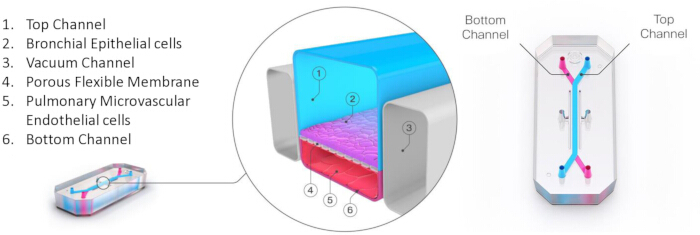
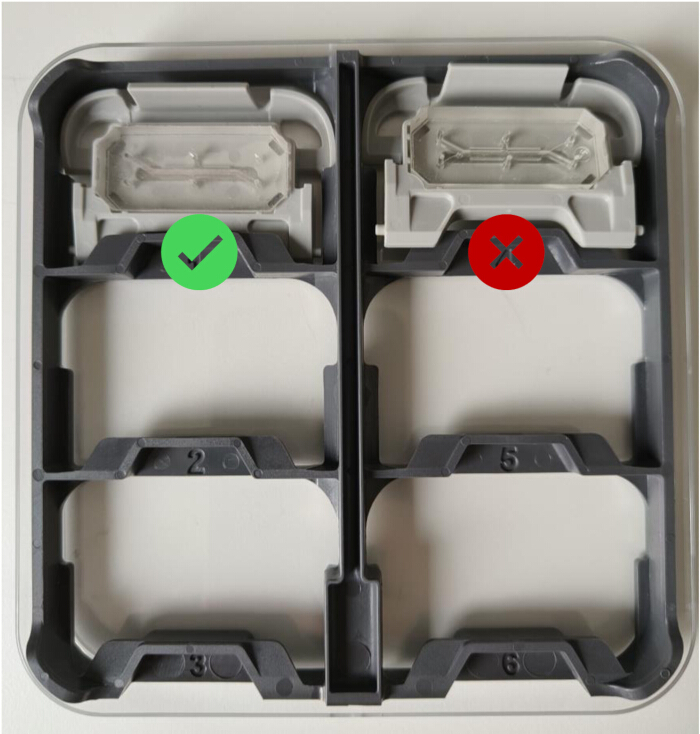
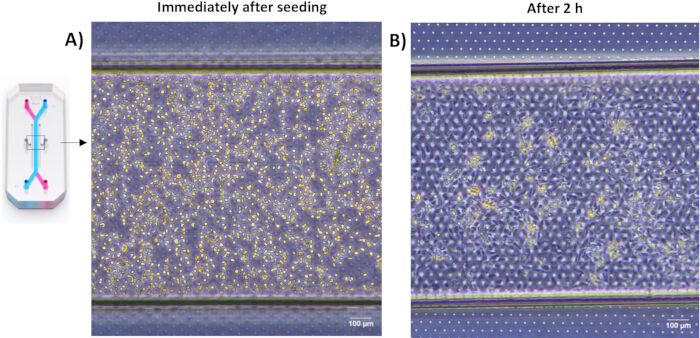
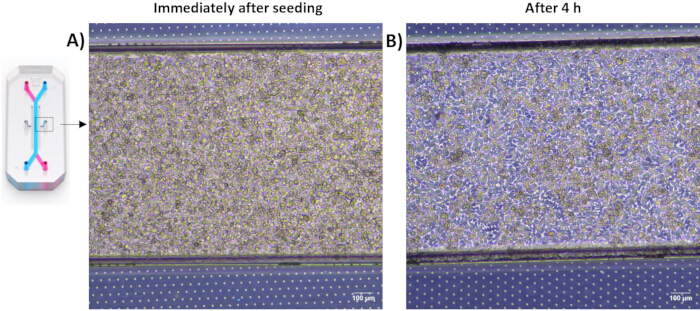

Results
Loading...
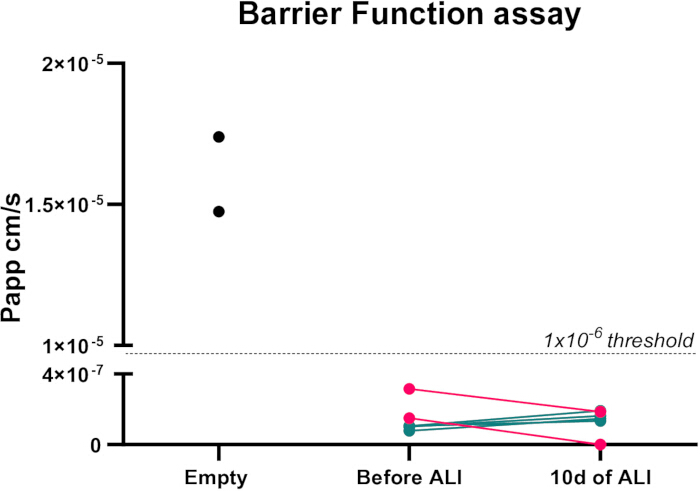
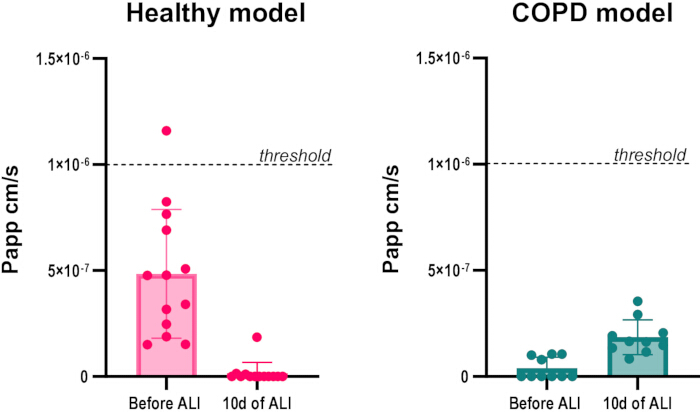
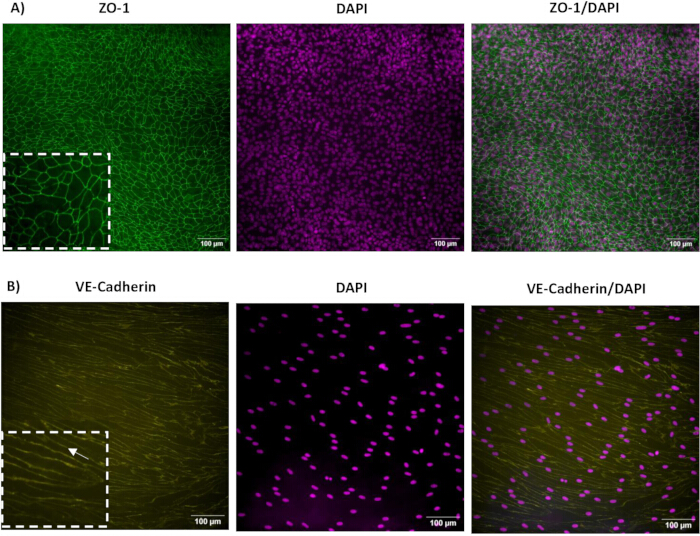
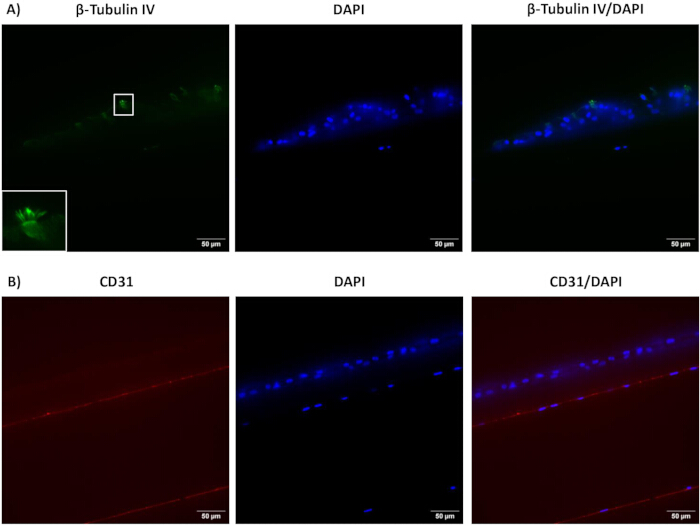
Discussion
Loading...
Disclosures
Loading...
Acknowledgements
Loading...
Materials
| Name | Company | Catalog Number | Comments |
|---|---|---|---|
| 0.25% trypsin-EDTA (1X) (for endothelial cells) | Gibco | 25200-056 | Used for enzymatic detachment of pulmonary microvascular endothelial cells. |
| 120 mm x 120 mm square cell culture dish | VWR | 688161 | Used to hold chip cradle during chip preparation and handling. |
| 2100 Bioanalyzer | Agilent | G2939A | Used to assess RNA quality and integrity. |
| 2-propanol | Sigma-Aldrich | I9516 | Used to precipitate RNA during extraction. |
| 4′,6-diamidino-2-phenylindole (DAPI) | Invitrogen | D1306 | Used to stain cell nuclei during immunofluorescence. |
| 50 mL conical tubes | Cellstar | 227261 | Used for cell collection, centrifugation, and preparation of cell suspensions. |
| Agilent RNA 6000 Nano Kit | Agilent | 5067-1511 | Used for RNA quality analysis with the Bioanalyzer. |
| Amphotericin B | Gibco | 15290-026 | Used to prevent fungal contamination during cell culture. |
| Automatic cell counter | NanoEntek | EVE PLUS | Used to determine cell concentration and viability prior to seeding. |
| Cell culture multiwell plates, 48 well, sterile | Falcon | 353078 | Used to hold cross-sections during staining procedures. |
| Centrifuge | Hettich | 320R | Used to pellet cells prior to seeding. |
| Chip Cradle | Emulate | support@emulatebio.com | Used to support and hold chips during surface activation, coating, and cell seeding. |
| Chloroform | Sigma-Aldrich | 366927 | Used for phase separation during RNA extraction. |
| Cicero spinning disk module | CrestOptics S.p.A. | Used to perform high-speed confocal fluorescence imaging. | |
| Cover slips | Epredia | BB02400600AC13MNZ0 | Used to support chips during confocal imaging. Desciption: 24 x 60 mm, #1.5 |
| Cryostat | Thermo Fisher Scientific | NX70 | Used to section OCT-embedded samples. |
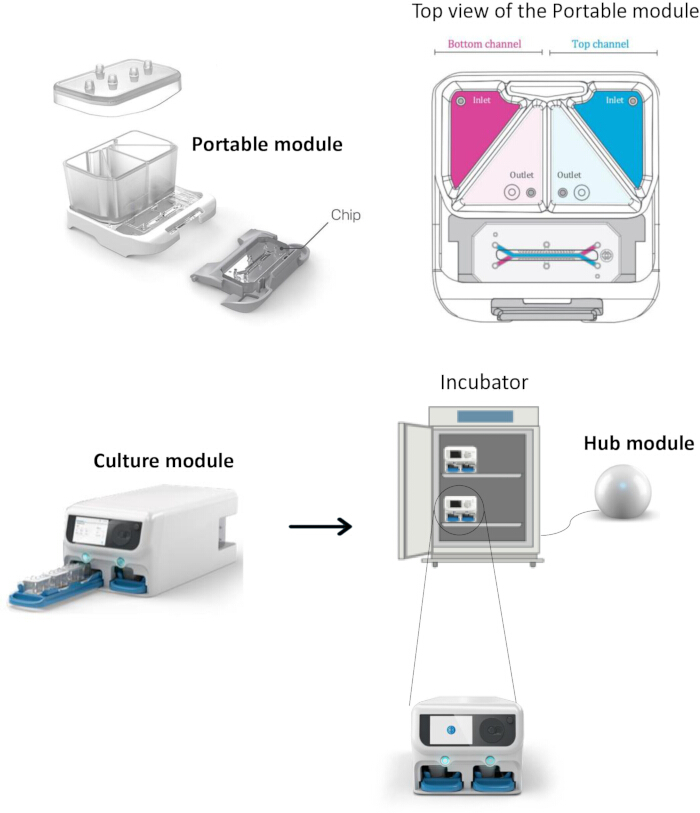
| Culture module (Zoë-CM) | Emulate | support@emulatebio.com | Used to control environmental conditions for cell culture within the microfluidic system. |
| Define trypsin inhibitor (DTI) | Thermo Fisher | R007100 | Used to neutralize trypsin activity after epithelial cell detachment. |
| Dextran Cascade Blue 3KDa | Thermo Fisher | D7132 | Used as a fluorescent tracer to assess barrier permeability. |
| Endothelial cells Growth Medium MV2 kit | PromoCell | C-22022 | Used for maintenance and expansion of pulmonary microvascular endothelial cells. |
| ER-1 surface activation reagent (light-sensitive activation reagent powder) | Emulate | support@emulatebio.com | Used to activate chip surfaces for subsequent coating. |
| ER-2 surface activation reagent (buffer) | Emulate | support@emulatebio.com | Used as a buffer during surface activation of the chip. |
| Ethanol absolute | Thermo Fisher Scientific | 437433T | Used to wash RNA pellets during extraction. |
| Fluorescent plate reader | Agilent | BioTek Sinergy H1 microplate reader | Used to measure fluorescence intensity for permeability assays. |
| Gelatin from bovine skin | Sigma-Aldrich | G9391 | Used to coat culture surfaces to promote endothelial cell adhesion. |
| Goat Anti-Mouse Alexa Fluor 488 (for ZO-1 and β-tubulin IV) | Thermo Fisher | A11001 | Used to detect mouse primary antibodies with green fluorescence. |
| Goat Anti-Mouse Alexa Fluor 594 (for CD31) | Thermo Fisher | A11005 | Used to detect mouse primary antibodies with red fluorescence. |
| Goat Anti-Rabbit Alexa Fluor 555 (for VE-cadherin) | Thermo Fisher | A21429 | Used to detect rabbit primary antibodies with orange-red fluorescence. |
| Hub module (Orb-HM) | Emulate | support@emulatebio.com | Used to supply gas and power to the culture module. |
| Human Bronchial Epithelial Cells (HBEC) | Lonza | CC-2540S | Used as airway epithelial cells to establish the healthy co-culture model. |
| Human Collagen IV | Sigma | C5533 | Used to coat T25 flasks to promote epithelial cell attachment. |
| Human Collagen type I | Advanced Biomatrix | 5007 | Used as a component of the extracellular matrix solution for chip coating. |
| Human Fibronectin | Sigma-Aldrich | F0895 | Used as a component of the extracellular matrix solution for chip coating. |
| Human Laminin | Sigma -Aldrich | L4544 | Used as a component of the extracellular matrix solution for chip coating. |
| Human Pulmonary Microvascular Endothelial Cells (HPMEC) | PromoCell | C-12281 | Used as pulmonary microvascular endothelial cells to establish the healthy co-culture model. |
| human recombinant epidermal growth factor (hrEGF) | PromoCell | C-60182 | Used to promote epithelial cell proliferation. |
| Hydrocortisone stock solution | StemCell Technologies | 7925 | Used as a supplement in culture media to support airway epithelial cell differentiation. |
| ImageJ | Fiji software | version ImageJ 1.54p | Used to process and analyze acquired images. |
| Inverted microscope for cell culture | Leica Microsystems | DMi1 | Used to monitor cell morphology and confluency during culture. |
| iSpacer | SUNJin Lab | IS307 | Used to create a defined chamber for sample mounting during imaging. Thickness: 0.3 mm. |
| Kinetix camera | Teledyne Photometrics | Used to capture high-resolution fluorescence images. | |
| Microscope Camera | Leica Microsystems | FLEXA CAM C1 | Used to capture images of cells during culture and experiments. |
| Microscope cover glass circular | Marienfeld | 0111620 | Used for covering chip sections on glass slides. Description: 22 mm  |
| Monoclonal Mouse Anti Human CD31 - clone JC70A | Agilent | M082329-2 | Used to detect endothelial cell marker CD31. |
| Monoclonal Mouse Anti ZO-1 - clone ZO1-1A12 | Invitrogen | 33-9100 (100µg) | Used to detect tight junction protein ZO-1. |
| Monoclonal Mouse Anti β-tubulin IV antibody - clone ONS.1A6 | Sigma-Aldrich | T7941 (0.2 mL) | Used to detect ciliated epithelial cells. |
| Monoclonal Rabbit Anti VE-Cadherin | Cell Signaling Tech. | D87F2 | Used to detect endothelial junction protein VE-cadherin. |
| Mounting medium | Ibidi | 50001 | Used to mount samples and preserve fluorescence signal during imaging. |
| Nikon Ti2 inverted microscope | Nikon | Used to image chip samples under fluorescence conditions. | |
| NIS-Elements | Nikon Instruments Europe B.V. | version 6.10.01 / 6.20.01 | Used to control image acquisition during microscopy experiments. |
| Normal goat serum | Abcam | ab7481 | Used to block non-specific antibody binding during immunostaining. |
| Optimal Cutting Temperature (OCT) | VWR | 361603E | Used to embed samples for cryosectioning. |
| Paraformaldehyde (PFA) | Sigma-Aldrich | 1.04003 | Used to fix cells prior to staining. |
| Penicillin/Streptomycin | Gibco | 15140-122 | Used to prevent bacterial contamination during cell culture. |
| Perfusion module (Pod) | Emulate | support@emulatebio.com | Used to drive controlled fluid flow through microfluidic chips. |
| Phosphate Buffered Saline (DPBS -/-) | Gibco | 14190-094 | Used for washing cells, preparing extracellular matrix solutions, and performing washing steps during staining. |
| Pic 21 Microcentrifuge | Thermo Fisher Scientific | 75002415 | Used to pellet RNA and separate phases during extraction. |
| PneumaCult ALI medium (epithelial differentiation medium) kit | StemCell Technologies | 5002 | Used to support differentiation of airway epithelial cells at air-liquid interface. |
| PneumaCult ExPlus medium (airway epithelial expansion medium) kit | StemCell Technologies | 5041 | Used for expansion of airway epithelial cells. |
| Razor blade | Thermo Fisher Scientific | 11904325 | Used to cut the chip. |
| RNA-free Glycogen | Thermo Fisher Scientific | R0551 | Used as a carrier to enhance RNA precipitation. |
| RNAse ZAP | Invitrogen | AM9780 | Used to decontaminate surfaces from RNases. |
| RNase-free water | Thermo Fisher Scientific | R0551 | Used to resuspend purified RNA. |
| Steriflip-HV, 0.45 µm, PVDF, sterilized | EMD Millipore | SE1M003M00 | Used to filter and degas medium prior to use. |
| Stretchble chip (Chip-S1) | Emulate | support@emulatebio.com | Used to culture cells under dynamic mechanical stimulation within a microfluidic environment. |
| Superfrost TMPlus Adhesion Microscope Slides | Epredia | J1800AMNZ | Used to mount and retain chip sections during staining. |
| Synthetic light-stable retinoic acid (EC-23) | Tocris | 4011 | Used to promote differentiation of airway epithelial cells. |
| T25 flask | Falcon | 353108 | Used to culture and expand airway epithelial cells. |
| T75 flask | Falcon | 353136 | Used to culture and expand pulmonary microvascular endothelial cells. |
| Triton X-100 | Sigma-Aldrich | T8787 | Used to permeabilize cells during immunostaining. |
| TRIzol (phenol-based RNA isolation reagent ) | Invitrogen | 15596026 | Used to lyse cells and isolate RNA. |
| Trypan Blue | Invitrogen | T10282 | Used to assess cell viability. |
| TrypLE Express (for epithelial cells) | Thermo Fisher | 12604013 | Used for enzymatic detachment of airway epithelial cells. |
| UV lamp | nailstar professional | NS-01-EU | Used to activate chip surfaces. |
| Vacuum set-up | / | / | Used to degas culture media prior to use. |
| Vascular endothelial growth factor (VEGF) | Gibco | PHC9394 | Used to support endothelial cell growth and maintenance. |
| Vitamin C | Lonza | CC-4398 | Used to support endothelial cell growth and maintenance. |
| Vortex | VWR | 444-0996 | Used to mix samples during RNA extraction. |
References
Loading...
Reprints and Permissions
Request permission to reuse the text or figures of this JoVE article
Request Permission