Multi-sensor telemetry data (current, voltage, temperature, humidity, vibration) from servo motors are processed using unsupervised structural clustering, isolation-based anomaly detection, and physics-informed risk mapping. This framework outputs deterministic binary pseudo-labels and highly accurate real-time diagnostic states for condition monitoring.
A subscription to JoVE is required to view this content. Sign in or start your free trial.
Method Article
Cold-Start Motor Condition Monitoring Using Multi-Sensor Signals and Pseudo-Supervised Machine Learning
In This Article
Summary
Abstract
As predictive maintenance transitions from the data-centric paradigm of Industry 4.0 to the sustainable, human-centric framework of Industry 5.0, diagnosing servo motor conditions faces the dual challenges of data scarcity and a profound lack of labeled fault samples. To address this cold-start problem, we present a pseudo-supervised machine learning framework evaluated on a custom five-channel dataset comprising 199 servo motor telemetry samples (current, voltage, temperature, humidity, and vibration). The methodology integrates hard structural partitioning (k-means) and soft posterior confidence estimation (Gaussian Mixture Models) to characterize operating modes without prior annotation. Concurrently, an Isolation Forest model quantifies anomaly intensity and establishes a dynamic quantile-based threshold. A critical innovation of this research is the deterministic risk mapping derived from engineering priors; it defines the "high-risk" (abnormal) state by inversely weighting the physical safety margins of the sensors. This mechanism strictly maps unsupervised clusters to binary pseudo-labels. These labels are subsequently used to supervise downstream discriminators (Random Forest and Support Vector Machine). The final online diagnostic outputs a score-level fusion of the classifier probability and the GMM posterior, gated by the anomaly threshold. Quantitative evaluation demonstrates that the Random Forest model achieved a perfect F1 score of 1.000, while the comparative SVM yielded an F1 score of 0.997, proving the framework to be a robust, interpretable, and highly accurate solution for cold-start industrial health monitoring.
Introduction
The reliability of servo motor control systems has historically been a critical performance indicator within industrial automation. As predictive maintenance evolves from the data-centric paradigm of Industry 4.0 towards the sustainable, human-centric framework of industry 5.0, systems must ensure high precision while actively promoting energy efficiency and operational resilience1,2,3. Faults occurring during long-term ion under harsh environments can lead to catastrophic equipment shutdowns, severe structural damage, and significant economic losses4,5,6. Consequently, the early diagnosis of incipient faults has transitioned from a luxury to a core requirement. To achieve robust state assessment, modern industrial systems increasingly rely on multi-sensor technology. By simultaneously acquiring diverse signal modalities—such as current, voltage, temperature, and vibration- engineers can construct a comprehensive, high-dimensional view of the motor's health7,8. The fusion of multi-source sensor data significantly enhances the robustness and accuracy of diagnostic systems compared to single-sensor approaches9,10.
Despite advancements in sensor fusion and machine learning, a critical bottleneck in real-world deployment remains: the "cold-start" challenge. In a typical production environment, machines operate normally for the vast majority of their lifecycle, resulting in extreme class imbalances where healthy samples vastly outnumber faulty ones. Standard supervised deep learning models require massive, balanced, and precisely annotated datasets to converge effectively11,12. When labels are entirely unavailable or prohibitively expensive to obtain, these supervised paradigms break down13. Therefore, the fundamental problem addressed in this study is converting unlabeled multi-sensor motor data into a reliable, binary diagnostic warning signal without the prerequisite of manually labeled training data.
In response to the data scarcity challenge, recent research has pivoted toward unsupervised anomaly detection techniques. Common approaches include one-class support vector machines (OC-SVM), deep autoencoders, and direct isolation-based anomaly scoring14. While these methods effectively flag statistical deviations, their direct application to motor fault diagnosis presents significant limitations. OC-SVMs are notoriously sensitive to the nonstationary characteristics of dynamic industrial loads, often yielding high false-positive rates. Autoencoders, while powerful at minimizing reconstruction errors15, function as uninterpretable black boxes; they struggle to translate a mathematical reconstruction loss into an actionable, physical fault category16. Furthermore, direct anomaly scoring approaches, such as standard isolation forests17, merely indicates that a sample is a statistical outlier. They fail to establish a deterministic decision boundary between "working" and "failure" states rooted in engineering realities. Essentially, these approaches lack the semantic bridge required to map unsupervised data clusters to explicit diagnostic labels.
To bridge this methodological gap, this study proposes a unified pseudo-supervised machine-learning framework. The design logic of the proposed workflow differs fundamentally from that of standalone anomaly detectors. Rather than relying on a single global reconstruction error or boundary, the pipeline first partitions the multi-sensor feature space using unsupervised hard-soft clustering (k-means and Gaussian Mixture Models) to identify distinct operational modes. Subsequently, instead of assigning arbitrary labels, a deterministic risk-mapping function is constructed based on established engineering priors (i.e., the physical safety margins for vibration and temperature). This physical mapping acts as a heuristic anchor, automatically assigning binary pseudo-labels ("Working" or "Failure") to the unsupervised clusters. These physics-informed pseudo-labels are then utilized to train supervised discriminators (Random Forest and SVM) to learn complex, non-linear boundaries. Concurrently, an Isolation Forest serves as an independent anomaly gate, filtering extreme outliers that do not conform to any established cluster. This combined pipeline is highly advantageous because it leverages the discriminative power of supervised learning while maintaining the label-free autonomy of unsupervised clustering.
The primary scientific objective of this research is to develop an automated condition-monitoring system capable of operating under stringent cold-start constraints. We explicitly test the hypothesis that coupling unsupervised structural clustering with an engineering-prior-driven pseudo-labeling mechanism can yield a supervised classification boundary with diagnostic performance rivaling that of models trained on manually annotated data. By validating this semi-supervised framework on a custom multi-sensor servo-motor dataset, this study demonstrates that integrating classical feature interpretability with anomaly gating enables highly accurate fault classification without labeled training data, thereby reducing the cognitive burden on field engineers and advancing the collaborative ethos of Industry 5.0.
Access restricted. Please log in or start a trial to view this content.
Protocol
1. Experimental setup and data preprocessing
NOTE: The data processing and modeling framework proposed in this study was implemented via custom scripts developed in a high-level programming language, leveraging standard open-source libraries for numerical computation and machine learning. The experimental validation was conducted on a high-performance computational workstation equipped with a multi-core processor and a discrete graphics processing unit (GPU). Specific details regarding all software environments, computational hardware, and sensor components are provided in the Table of Materials. A schematic overview of the proposed framework, illustrating the data flow from offline unsupervised learning to the online dual-threshold decision process, is presented in Figure 1. The dataset comprises 203 aggregated time-window samples rather than instantaneous raw readings, collected while the servo motor operated under varied load regimes to simulate realistic shop-floor conditions.
- Strategically deploy sensor nodes.
- Mount vibration accelerometers on the motor casing, while current, voltage, and temperature probes were integrated into the drive circuit.
- Synchronize all sensor signals via a centralized data acquisition (DAQ) board at a sampling frequency of 10 kHz.
- Apply standard calibration procedures and digital low-pass filtering to eliminate high-frequency electromagnetic noise prior to feature extraction.
- Extract a statistical summary (e.g., mean or Root Mean Square) from a 1-second measurement cycle for each of the 203 samples. These specific five variables—current (A), voltage (V), temperature (°C), humidity (%), and vibration (mm/s2 or g)—were deliberately selected.
- Remove records containing missing values (NaN) to ensure modeling stability, establishing a refined dataset of 199 valid samples.
- Apply Z-score normalization to each sensor channel
 for every sample
  to eliminate scale disparities critical for distance-based structural learning algorithms:
 (1)
(1)
where xij represents the raw value, μj is the mean of the feature j, and σj is the standard deviation. - Store the normalized matrix as Xs for all subsequent processing steps.
NOTE: Principal Component Analysis (PCA) was used solely for visualization by projecting Xs into a two-dimensional embedding matrix (Figure 5), and did not serve as an input to the downstream models.
2. Unsupervised Structure Learning
- Determine the optimal number of clusters (K*) by evaluating candidate K values (ranging from 2 to 10).
- Compute the Within-Cluster Sum of Squares (WCSS) to generate an Elbow Curve (Figure 3):
 (2)
(2) - Calculate the Silhouette Coefficient S(I) for each K simultaneously (Figure 4) to evaluate structural cohesion and separation:
(3) - Establish the optimal cluster number at the maximum average Silhouette score (e.g., K*=2 ).
- Apply the k-means algorithm to Xs, minimizing the WCSS to obtain the centroids μc and the hard cluster labels
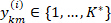 for each sample.
 - Train a Gaussian Mixture Model (GMM) with K* components to capture the inherent uncertainty of the condition boundaries.
- Calculate the posterior probability
 for each sample after estimating the parameters
  , and extract the maximum posterior probability as a soft confidence metric:
 (4)
(4)
3. Anomaly modeling and dynamic thresholding
- Train an Isolation Forest model on Xs to identify outliers deviating from the main cluster structures.
- Compute the anomaly score sif(z), ranging from 0 to 1, based on the expected path length E[h(z)]:
![Static equilibrium equation \( s_{if}(z) = \frac{2E[h(z)]}{c(n)} \), relevant to physics study.](/files/ftp_upload/70810/70810eq27.jpg "figure-protocol-11") (5)
(5) - Determine the static anomaly threshold τanom by analytically modeling the anomaly score (sif) distribution using Kernel Density Estimation (KDE).
- Derive the quantile mathematically to bound the 90% confidence interval of the normal operational variance.
NOTE: In this dataset, this yielded a deterministic threshold of τanom = 0.592, whereby samples with sif(z) > 0.592 were flagged as anomalies. - Establish a sliding window covering the most recent N telemetry samples to periodically recalculate the anomaly score distribution.
- Dynamically update the threshold using an Exponentially Weighted Moving Average (EWMA):
 , where α serves as the forgetting factor and Ylocal is the quantile derived from the current operational window.
4. Pseudo-label generation via risk mapping
- Calculate the risk score ri for each sample as a linear combination of the normalized features to bridge the semantic gap:
 (6)
(6) - Define the risk score R for each cluster centroid by applying a weighted linear combination of the normalized feature means.
- Calculate the specific value of each weight (wj) as the inverse of the corresponding sensor channel's physical safety margin.
- Normalize these inverse margins using the following equation, where vj represents the inverse safety margin for channel :
 (7)
(7)
\mu_r()g\max_cm - Validate these initialized weights by ensuring a positive Spearman rank correlation (
 ) between the cluster risk scores and the median Isolation Forest anomaly scores.
 - Calculate the mean risk score
 for each k-means cluster.
 - Identify the cluster exhibiting the maximum mean risk as the failure mode:
 .
. - Generate binary pseudo-labels ysuper for all samples, assigning 0 (Failure) to the high-risk cluster and 1 (Working) otherwise:
 (8)
(8)
5. Supervised Classifier Training and Online Fusion
- Implement a 5-fold cross-validation scheme to rigorously evaluate model performance and prevent information leakage.
- Confine the entire pseudo-labeling pipeline strictly to the training split within each fold.
- Transform the isolated validation split using only the parameters learned exclusively from the training fold.
- Train a Random Forest (RF) classifier utilizing Xs as features and the dynamically generated ysuper as the target. The model outputs the probability estimate for the working class, denoted as prf(z).
- Train a Support Vector Machine (SVM) equipped with an RBF kernel to generate a decision function value f(z) as a comparative validator.
- Deploy a score-level fusion mechanism during the online inference phase.
- Synthesize a fused score s(z) for a newly acquired sample
 by combining the supervised RF probability and the unsupervised GMM confidence:
 (9)
(9) - Classify the final status using a dual-threshold logic: a state is classified as "Working" if and only if
 AND
AND  .
.
 (.
(.
Access restricted. Please log in or start a trial to view this content.
Results
The proposed framework was validated using a self-collected multi-sensor dataset. After removing incomplete records, the final dataset comprised 199 valid aggregated time-window samples. The system environment and algorithm parameters are detailed in Table 1.
Feature correlation and dataset composition
To assess the redundancy and complementarity of the sensor channels prior to modeling, a feature correlation analysis was performed. As illustrated in the P...
Access restricted. Please log in or start a trial to view this content.
Discussion
This protocol presents a robust methodology for motor condition identification in cold-start scenarios where labeled data is absent. By integrating unsupervised structure learning with pseudo-supervised classification, the method overcomes the limitations of traditional supervised learning, which relies heavily on human annotation13,18,19. A critical step in this protocol is the selection of the number of clusters (K). ...
Access restricted. Please log in or start a trial to view this content.
Disclosures
The authors have nothing to disclose.
Acknowledgements
We thank the Hubei Water Resources Technical College for providing the experimental platform and computational resources. This work was supported by the departmental research fund for industrial automation. We also acknowledge the contributions of the laboratory staff who assisted with data acquisition and sensor calibration.
Access restricted. Please log in or start a trial to view this content.
Materials
| Name | Company | Catalog Number | Comments |
|---|---|---|---|
| Category | Component and version | ||
| Operating system | Windows 11 Professional 23H2 | ||
| Processor | Intel Core i9-14900HX | ||
| Memory | 32 GB | ||
| Graphics processor | NVIDIA GeForce RTX 4070 Laptop GPU (8 GB) | ||
| Python | 3.12 | ||
| NumPy | 1.26 | ||
| pandas | 2.2 | ||
| scikit-learn | 1.5 | ||
| Matplotlib | 3.8 | ||
| Seaborn | 0.13 | ||
| Random seed |
References
- Achouch, M. On predictive maintenance in Industry 4.0: overview, models, and challenges. Appl Sci. 12 (16), 8081 (2022).
- Wu, M. An intelligent predictive maintenance system based on random forest for addressing industrial conveyor belt challenges. Front Mech Eng. 10, 1383202 (2024).
- Zhang, B., Li, H., Kong, W., Fu, M., Ma, J. Early-stage fault diagnosis of motor bearing based on kurtosis weighting and fusion of current–vibration signals. Sensors. 24 (11), 3373 (2024).
- Luo, J., Zhu, L., Li, Q., Liu, D., Chen, M. Imbalanced fault diagnosis of rotating machinery based on deep generative adversarial networks with gradient penalty. Processes. 9 (10), 1751 (2021).
- Aradi, A., Varga, A. K. Servo motor predictive maintenance by Kafka Streams and deep learning based on acoustic data. Eng Proc. 113 (1), 1 (2025).
- Thomas, K. Comprehensive fault diagnosis of three-phase induction motors using synchronized multi-sensor data collection. Sci Data. 12 (1), 1468 (2025).
- Qiu, S. Deep learning techniques in intelligent fault diagnosis and prognosis for industrial systems: a review. Sensors. 23 (3), 1305 (2023).
- Long, Q., Li, B., Chen, L. CNN-based feature fusion motor fault diagnosis. Electronics. 11 (17), 2746 (2022).
- Kullu, O., Cinar, E. A deep-learning-based multi-modal sensor fusion approach for the detection of equipment faults. Machines. 10 (11), 1105 (2022).
- Zhao, J., Wang, W., Huang, J., Ma, X. A comprehensive review of deep learning-based fault diagnosis approaches for rolling bearings: advancements and challenges. AIP Adv. 15 (2), (2025).
- Wang, H., Wang, H., Tang, X. A review of deep learning in rotating machinery fault diagnosis and its prospects for port applications. Appl Sci. 15 (21), 11303 (2025).
- Choi, Y., Joe, I. Motor fault diagnosis and detection with convolutional autoencoder (CAE) based on analysis of electrical energy data. Electronics. 13 (19), 3946 (2024).
- Cheng, X. A bearing fault diagnosis method in scenarios of imbalanced samples and insufficient labeled samples. Appl Sci. 14 (19), 8582 (2024).
- Velásquez, D. A hybrid machine-learning ensemble for anomaly detection in real-time Industry 4.0 systems. IEEE Access. 10, 72024-72036 (2022).
- Principi, E., Rossetti, D., Squartini, S., Piazza, F. Unsupervised electric motor fault detection by using deep autoencoders. IEEE/CAA J Autom Sin. 6 (2), 441-451 (2019).
- Hiruta, T., Maki, K., Kato, T., Umeda, Y. Unsupervised learning based diagnosis model for anomaly detection of motor bearing with current data. Procedia CIRP. 98, 336-341 (2021).
- Brito, L. C., Susto, G. A., Brito, J. N., Duarte, M. A. V. An explainable artificial intelligence approach for unsupervised fault detection and diagnosis in rotating machinery. Mech Syst Signal Process. 163, 108105 (2022).
- Nie, G. A novel study on a generalized model based on self-supervised learning and sparse filtering for intelligent bearing fault diagnosis. Sensors. 23 (4), 1858 (2023).
- Cheng, C., Liu, X., Zhou, B., Yuan, Y. Intelligent fault diagnosis with noisy labels via semisupervised learning on industrial time series. IEEE Trans Ind Inform. 19 (6), 7724-7732 (2023).
- Onumanyi, A. J., Molokomme, D. N., Isaac, S. J., Abu-Mahfouz, A. M. Autoelbow: an automatic elbow detection method for estimating the number of clusters in a dataset. Appl Sci. 12 (15), 7515 (2022).
- Ding, X. An edge intelligent method for bearing fault diagnosis based on a parameter transplantation convolutional neural network. Electronics. 12 (8), 1816 (2023).
- Zhou, Z. A deployment method for motor fault diagnosis application based on edge intelligence. Sensors. 25 (1), 9 (2025).
- Liu, L. A novel edge intelligence application model with lightweight network and antinoise ability for bearing fault diagnosis. Struct Health Monit. , 14759217251329165 (2025).
- Kfir, T., Tuvyahu, S., Moshe, B. B., Anidjar, O. H. Real-time detection of acoustic anomalies in drone servo motors using edge-based machine learning. Mach Learn Appl. 22, 100755 (2025).
- Jiao, X., Zhang, J., Cao, J. A bearing fault diagnosis method based on dual-stream hybrid-domain adaptation. Sensors. 25 (12), 3686 (2025).
- Zhao, X. A novel intelligent multicross domain fault diagnosis of servo motor-bearing system based on domain generalized graph convolution autoencoder. Struct Health Monit. 24 (3), 1485-1499 (2025).
Access restricted. Please log in or start a trial to view this content.