This review explores polysaccharide-based colon-targeted delivery systems using chitosan, pectin, alginate, and hyaluronic acid for improved colon cancer therapy, highlighting preclinical promise, challenges, and future personalized approaches.
Review Article
Biopolymeric Approaches for Colon Cancer Treatment: A Comprehensive Review of Polysaccharide-based Delivery Systems
In This Article
Summary
Abstract
Globally, colon cancer remains one of the leading causes of mortality. Multidrug resistance, systemic toxicity, and poor tumor selectivity significantly limit conventional chemotherapy. This review highlights the need for localized therapy to increase efficacy and minimize systemic side effects. Colon-targeted drug delivery systems (CDDS) are designed and developed to overcome these challenges. Both natural and synthetic polysaccharides act as carriers in CDDS because of their biodegradability, biocompatibility, pH- and enzyme-responsiveness, and mucoadhesive properties. Polysaccharides such as chitosan, dextran, pectin, alginate, and hyaluronic acid have been formulated into nanoparticles, microparticles, and hydrogels, enabling controlled and site-specific delivery. These carriers deliver chemotherapeutics, nucleic acids, and immunotherapeutics, as well as theranostic agents that combine imaging and therapy. Preclinical evidence demonstrates significant translational potential for polysaccharide-based CDDS. However, clinical trials remain limited, which highlights the gap between laboratory findings and clinical applications. Major challenges in colon-targeted drug delivery include variability in polysaccharide sources and quality, difficulties in large-scale manufacturing, and regulatory challenges. Addressing these challenges will be essential to move towards commercialization and clinical adoption. Personalized therapy through microbiome profiling, integration with nanotechnology and bioinformatics, and smart, biosensor-responsive carriers will be the focus going forward. Polysaccharide-based CDDS provide safer, more effective, and more personalized treatment with continued research to optimize delivery and overcome existing limitations.
Introduction
Globally, colon cancer continues to represent a significant public health burden and remains among the leading causes of cancer-related morbidity and mortality. According to the most recent estimates from GLOBOCAN 2022 (International Agency for Research on Cancer), colon cancer accounts for approximately 1.14 million new cases and over 0.53 million deaths worldwide, ranking fourth in incidence and fifth in mortality among all cancers1. Although global reporting is often combined under colorectal cancer, colon cancer alone constitutes a major proportion of this burden. The incidence is disproportionately higher in developed regions such as Europe and North America; however, a rapidly increasing trend is observed in low- and middle-income countries, particularly in Asia, driven by urbanization, dietary transitions, and lifestyle changes. Projections indicate a substantial rise in global cases, with estimates suggesting that the burden of colorectal cancer may reach nearly 3.2 million new cases by 2040. Furthermore, recent epidemiological trends highlight a concerning increase in early-onset colon cancer among younger populations (<50 years), especially in high-income countries2. Colon cancer is more prevalent in males than females, and modifiable risk factors such as obesity, physical inactivity, smoking, alcohol consumption, and dietary patterns continue to play a critical role in disease progression. These evolving trends underscore the urgent need for improved preventive strategies, early screening programs, and the development of more effective and targeted therapeutic approaches3.
Epidemiological data for colon cancer are often reported together with rectal cancer under the broader category of colorectal cancer (CRC). Modifiable risk factors such as physical inactivity and other lifestyle factors such as smoking and drinking affect the risk of colon cancer. Physically inactive individuals have a 25%–50% higher risk of developing colon cancer than physically active individuals. The risk of colon cancer is reduced through physical activity by inhibiting fat accumulation, suppressing inflammation, and improving human health4. Overweight and obesity are also risk factors of colon cancer5,6. Compared to normal-weight individuals, the risk of colon cancer is higher in obese men (50%) and women (10%). A greater impact on the risk in women and men is early body mass index and late body weight gain, respectively5. In patients with long-standing inflammatory bowel disease, the risk of colorectal cancer increases with disease duration. Historical estimates suggest a cumulative risk of approximately 15%–20% after 30 years, particularly in extensive ulcerative colitis; however, risk varies with disease extent, inflammatory burden, family history, coexisting primary sclerosing cholangitis, and surveillance practices6. Recent advances in diagnostic technologies have focused on the development of highly sensitive electrochemical biosensors for early detection of circulating tumor cells in colon cancer, offering promising tools for improved screening and disease monitoring7,8. Delays in diagnosis and limited access to optimal multidisciplinary care in low- and middle-income countries increase the risk of colon cancer9. Multiple factors, ranging from social to cultural to structural, contribute to a lack of early disease detection. These challenges are driven by inadequate healthcare facilities, limited resources, socioeconomic constraints including poverty and misconceptions, and restricted access in remote regions10. Delay in diagnosis makes treatment more difficult and less effective, as surgery alone may be insufficient. To reduce the mortality rate in low- and middle-income countries, there is an immediate need to conduct national cancer screening and increase public awareness. The lack of healthcare professionals, such as surgeons and oncologists, may also delay or cause incomplete colon cancer treatment6,10. In CDDS, polysaccharides are used to improve the specificity and efficacy of colon cancer treatments. They are biocompatible, biodegradable, and tumor-selective. These properties enable site-specific drug delivery, increase tumor apoptosis, minimize systemic adverse effects, and enhance patient compliance11. Natural polysaccharides are low-cost, sustainable, and eco-friendly12. These are generally recognized as safe (GRAS) by the Food and Drug Administration, such as chitosan and cellulose13. They are safe, non-toxic, non-reactive, and stable. For biodegradability, polysaccharides are degraded by enzymes produced by the colonic microbiota, such as dextranases, enabling targeted drug release in the colon14. Polysaccharides also selectively target tumor-specific characteristics to enhance drug delivery to the tumor site and reduce systemic toxicity. Folate receptors are usually overexpressed on the cancer cell surface but underexpressed on healthy cells. A study showed that the folic acid-chitosan conjugate performed better in selectively targeting tumor cells and exhibited higher cytotoxicity15.
This article critically examines a comprehensive overview of recent advances in polysaccharide-based CDDS for colon cancer. It explains the role of the colon as a target site, different types of polysaccharides and their modifications, and recent developments from 2020 to 2026. It also discusses conventional and advanced polysaccharide-based CDDS as well as therapeutic applications in colon cancer. These are supported by the preclinical evidence. Moreover, the challenges, limitations, and future perspectives are highlighted to develop safer, more effective polysaccharide-based CDDS for colon cancer treatment. Unlike previous reviews, this work integrates recent advances in polysaccharide-based carrier design with tumor microenvironment responsiveness, hybrid delivery systems, and translational challenges, providing a more comprehensive perspective on the clinical potential of CDDS for colon cancer therapy.
Review and Perspective
Limitations of conventional chemotherapies
Chemotherapy serves as an adjuvant therapy (post-surgery) to eliminate residual microscopic disease and reduce recurrence risk and as neoadjuvant therapy (pre-surgery) in select cases (more commonly for rectal cancer, but sometimes for advanced colon cancer to downstage tumors or target metastases). It is mainly used before (neoadjuvant) and after (adjuvant) surgery to decrease the number of tumor cells, eradicate micrometastases, and reduce the risk of recurrence. Chemotherapy aims to target the drug-sensitive cancer cells. It most likely fails if the tumor cells reappear, as the cells that are resistant to the drugs will no longer respond to them. Exposure of cancer cells to multiple anticancer drugs may also lead to multidrug resistance and, eventually, chemotherapy failure9. Chemoresistance can be intrinsic or acquired. Acquired resistance develops during treatment and progressively diminishes responsiveness to chemotherapeutic drugs, often necessitating higher doses that may increase toxicity without improving efficacy. Intrinsic resistance can be observed in cancer cells upon administration of the first dose of the drug. It occurs due to inter-individual variability, leading to pre-existing resistance9. Various mechanisms of drug resistance are evasion of cell death pathways, overexpression of drug transporters, enhanced drug inactivation, reduced drug activation, alteration in drug targets, and interactions with the components of the tumor microenvironment9.
Other limitations of using chemotherapeutic agents in chemotherapy are poor aqueous solubility, lack of selectivity, short blood circulation, and low drug concentration at the tumor site16. Their effectiveness is further limited by poor serum stability, severe adverse effects on normal cells, non-specific drug distribution, immune reactions, rapid body clearance, and high treatment costs. Such groups of patients frequently experience adverse effects such as neuropathy, hair loss, anemia, and weight changes. Therefore, there is a strong need to develop advanced therapeutic strategies that can lower both cancer incidence and mortality17.
Advantages of colon-targeted drug delivery systems (CDDS)
CDDS provides a localized treatment for colon diseases such as ulcerative colitis, Crohn’s disease, and colon cancer11,12. Ideally, these systems allow drug release specifically in the colon. CDDS enables the formulation, control, and release, and prevents degradation in the stomach and intestine12,17. CDDS should protect drugs from stomach acid and enzymes, as well as improve transport across the mucus barrier11. This process gives a higher local drug level, lesser systemic exposure, and a lower risk of systemic side effects and toxicity. The colon also has relatively low enzymatic activity, a neutral pH, and a longer transit time, which helps protect sensitive or poorly absorbed molecules, such as peptides and proteins, from degradation in the stomach or small intestine. The oral bioavailability of such drugs can be improved. The slow transit in the colon allows for sustained and controlled drug release due to longer drug retention time to improve patient compliance18,19.
For the rectal route, such as suppositories and enemas, reach the colon directly but are poorly efficacious due to uneven distribution20. Therefore, the oral route is more recommended for CDDS due to its ease of use, affordability, and patient comfort21. It is biodegradable, highly biocompatible, and free of pro-inflammatory reactions, promoting patient adherence22. Such systems should also provide fast action at the target site, allow a lower drug dose, and ensure timed drug release23. Figure 1 shows the ideal drug release profile for colon-targeted drug delivery systems for site-specific therapy
Barriers to effective colon-targeted drug delivery in colon cancer therapy
The colonic mucosa is a complex structure with many cell types. The drug absorption is limited by the colonic epithelium. The colon has a smaller surface area for passive absorption than the small intestine because it lacks villi. Reduced paracellular passive absorption is observed because the colonic epithelium has higher electrical resistance than that of the small intestine. The activity of efflux and uptake transporters and enzymes also affects drug absorption and metabolism. Their expression varies along the colon, making absorption less predictable24.
Another barrier is mucus that forms two thick layers in the colon. The inner layer is dense and without bacteria. Whereas the outer layer is thick and more porous, with the microbiome. The drug penetration becomes harder, and the bioavailability of the drug may be reduced. The diffusion of drugs through the mucus layer depends on their properties. Drug diffusion through the mucus layer depends on physicochemical properties, with small, hydrophilic, and neutral molecules diffusing more readily, while lipophilic or charged compounds interact with mucins and diffuse more slowly25,26. DDS is challenging to achieve due to the complex variable conditions of the GIT. Gastrointestinal variables such as gastric pH, transit time, fluid volume, and the presence of food and enzymes complicate oral drug delivery and hinder drug stability in the stomach and small intestine. Drug solubility is further influenced by colonic pH and the increasing viscosity of colonic contents as water is absorbed. This viscous, enzyme-rich environment plays a key role in maintaining drug stability and enabling controlled release in the colon26.
Polysaccharides in drug delivery: Structural characteristics and classification of polysaccharides for drug delivery applications
Polysaccharides are the most common type of carbohydrate, which is the third main class of biopolymers. Their sources include animals, plants, algae, and microorganisms. Structurally, they consist of monosaccharide units linked by glycosidic bonds. Homopolysaccharides, also known as homoglycans, are formed by a single type of monosaccharide. Heteropolysaccharides (heteroglycans) contain two or more different monosaccharide residues, such as glucose, galactose, mannose, xylose, and uronic acids. Based on their structure or function, polysaccharides are grouped into three main classes, which are structural polysaccharides (such as cellulose and chitin), storage polysaccharides (such as starch and glycogen), and gel-forming polysaccharides (such as alginic acid and mucopolysaccharides). Polysaccharides may be cationic, anionic, or non-ionic, and exist in either branched or linear-chained27,28. Different structures of the polysaccharide contribute to stability, site-specificity, and drug release behavior in CDDS27. A bioadhesive layer is formed through interactions between hydrophilic groups (e.g., OH, COOH, and NH₂) and epithelial and mucous membrane tissues28. Figure 2 shows the types of polysaccharides and their functional advantages in CDDS.
Polysaccharide-based delivery systems for colon cancer
Polysaccharides are versatile for targeted drug delivery because they can encapsulate a wide range of active ingredients. These include proteins, peptides, nucleic acids, and small molecules14. They have been developed into various delivery systems, offering multiple strategies for therapeutic intervention and drug administration, including nanoparticles (NPs), hydrogels, scaffolds, and films13,19.
Chitosan and derivatives
Chitosan is abundantly sourced from crustacean exoskeletons and fungal cell walls, with recent emphasis on sustainable, low-cost extraction from seafood waste to enhance scalability and environmental benefits for pharmaceutical applications. High-quality chitosan has been efficiently produced from mud crab (Scylla spp.) shells through demineralization, deproteinization, and deacetylation, yielding approximately 26.8% by dry weight and exhibiting excellent physicochemical properties, including high fat-binding (200%–300%) and water-binding (~680.9%) capacities, good solubility in acetic acid, and structural confirmation via FT-IR, TGA, and SEM analyses29. This waste-derived chitosan, with a degree of deacetylation around 75% in related studies, supports eco-friendly production while maintaining the biocompatibility and biodegradability required for colon-targeted systems. Comprehensive reviews further highlight chitosan’s biomedical versatility, including its application in nanoparticle formulations for targeted cancer therapy, such as TPGS-coated systems that enhance efficacy and reduce toxicity in colorectal models30. Additionally, chitosan’s adaptability for composite materials is demonstrated through crosslinking strategies, including flavonoid-loaded matrices prepared via glutaraldehyde crosslinking with ~80% loading efficiency, which form porous structures with synergistic functional properties confirmed by FT-IR, UV–vis, and SEM, supporting multifunctional antibacterial composite applications31.
Chitosan can be widely applied, such as for tissue engineering, in various wound dressings, and as dietary supplements that inhibit fat absorption32,33. In terms of solubility, chitosan does not dissolve at neutral or alkaline pH. However, it is soluble under acidic conditions due to amine protonation34. Therefore, it is not ideal to use unmodified chitosan alone for CDDS. To achieve effective CDDS, chitosan should be crosslinked (genipin)35, blended with other polymers (pectin)36, and used in nanoparticle-in-microparticle systems37. Various functional groups on the chitosan molecule, such as –NH2 and –OH, are chemically modified to enhance their bioactivity. Several chitosan derivatives include trimethyl chitosan, carboxymethyl chitosan, and N-succinyl-chitosan38.
The distinction between chitin and chitosan is primarily based on the degree of acetylation (DA), where polymers containing >50% N-acetyl-glucosamine units are classified as chitin, and those with <50% correspond to chitosan34,38. Molecular weight (MW) is a formulation-dependent parameter. Low-MW chitosan (<90 kDa) generally offers lower viscosity, greater solubility, faster enzymatic degradation, and easier processing, whereas high-MW chitosan may provide stronger mucoadhesion, greater mechanical strength, and more sustained drug release but can exhibit increased viscosity and reduced solubility36. Therefore, no single MW or degree of deacetylation (DDA) is universally optimal for colon-targeted drug delivery systems. Although chitosan with a DDA of 70%-80% and an MW >300 kDa has shown favorable performance in specific formulations, its suitability depends on the drug, dosage form, crosslinking method, desired release profile, and manufacturing requirements34.
Studies have shown that chitosan has anticancer properties by penetrating tumor cell membranes and inducing apoptosis39. Chitosan modified with polyethylene glycol (PEG) and oleic acid forms micelles loaded with camptothecin (CPT). In vitro studies using HCT116, Caco-2, and HT-29 colorectal cancer cell lines demonstrated strong anticancer activity, resulting in reduced tumor growth. The formulation also improved drug solubility and cell targeting, and is safe for normal tissues40. Another study showed that the chitosan modified by PLGA was formulated into nanoparticles loaded with cranberry extract. This formulation demonstrated increased permeation, cell targeting, and antitumor efficacy41. However, despite these advantages, chitosan-based systems face limitations, including pH-dependent solubility, variability in deacetylation levels, and challenges in achieving consistent drug release profiles, which may affect reproducibility and clinical translation.
Pectin and pectinate formulations
Pectin is a long-chain, anionic heteropolysaccharide that consists of D-galacturonic acid units linked by α-1-4-glycosidic bonds. This backbone is attached to rhamnose. Some neutral sugars, such as galactose and arabinose, attach to the side chain42. Commercial pectin is primarily extracted from citrus peels and apple pomace. The source and extraction method affect the pectin’s structure. Pectin is usually found in the plant cell walls and middle lamina17. It is widely applied in the pharmaceutical and biomedical engineering fields, including as a stabilizer, gelling agent, thickener, and carrier. Natural and modified pectin have high and low molecular weights, respectively42. In CDDS, pectins with low esterification and high amidation are used because of their good gelling properties and their ability to improve hydrophobicity through the introduction of amide groups17.
Several studies have demonstrated that pectin-based formulations enable controlled, colon-targeted drug release and exhibit promising anticancer activity. These systems include pectin-based nanoparticles, microspheres, and hybrid polymeric formulations that enhance drug stability, targeting efficiency, and therapeutic efficacy in colorectal cancer42,43,44. Pectin-based microspheres serve as effective carriers in CDDS, where precise formulation ratios are critical to prevent premature swelling and ensure colon-specific drug release44. Enzymatically extracted apple pectin (PC) has also shown potential as an adjunct to irinotecan therapy, reducing viability of HCT116 and Caco-2 colorectal cancer cells, inducing apoptosis, increasing ROS levels, and inhibiting bacterial β-glucuronidase (GUS), thereby mitigating irinotecan-associated intestinal toxicity45.
A study on thymoquinone–pectin beads (TQ-PB) demonstrated controlled drug release, colon-specific delivery, and significant anticancer activity46. Calcium pectinate gel beads are typically prepared by introducing a drug-loaded pectin solution into an agitated calcium chloride solution, where drug release is influenced by crosslinking duration, pectin type, and the presence of enzymes. Modifying pectin composition further protects the drug from degradation in the stomach and small intestine14. Despite their favorable biodegradability and colon-specific enzymatic responsiveness, pectin-based systems may suffer from premature swelling, variable gel strength depending on source and extraction method, and limited mechanical stability.
Alginate-based carriers
Alginate is a negatively charged polysaccharide derived from seaweeds that binds strongly to cationic drugs and polymers, enhancing complex formation and drug encapsulation efficiency. It is compatible with both hydrophilic and hydrophobic compounds and becomes more biodegradable at intestinal pH47, although this may lead to burst drug release48. Alginate has been formulated into nanoparticles, microspheres, and hydrogels, with microspheres being more commonly used in CDDS due to their pH sensitivity. It enables targeted and sustained drug delivery by forming stable gel networks with other polymers, thereby slowing drug release and maintaining controlled delivery49. Structurally, alginate is a linear copolymer composed of β-D-mannuronic acid (M) and α-L-gulonuronic acid (G) residues linked through (1 4) glycosidic bonds. The M ratio influences encapsulation efficiency, formulation stability, and drug-release behavior. Higher M content enhances elasticity, water uptake, and freeze–thaw stability, whereas higher G content increases viscosity, gel firmness, and particle porosity. Alginate hydrogels are formed through ionic crosslinking of G-blocks with divalent cations such as Ca2+. Notably, emulsion-alginate beads with a low M/G ratio (1:2) exhibit greater stability, stronger mechanical properties, lower oil load, and improved resistance to swelling and disintegration in simulated gastrointestinal conditions compared to those with a high M/G ratio (2:1). These crosslinked systems also demonstrate controlled drug release, making them more suitable for CDDS50.
In CDDS, alginate is formulated into nanoparticles51,52, microbeads53,54, beads50, microspheres55,56, and microparticles57. Gel bead formation occurs through ionic interaction between alginic acid (e.g., sodium alginate) and divalent cations such as Ca2+. Calcium alginate beads remain relatively stable at acidic pH with minimal swelling, whereas at higher pH they swell and dissolve rapidly, enabling pH-responsive drug release50,52. Calcium alginate microspheres have also been developed as tumor microenvironment (TME)-responsive CDDS, demonstrating effective antitumor activity, targeted colon delivery, and reduced drug toxicity56. Figure 3 illustrates the nanoparticles-in-microparticles (NPs-in-MPs) system, where drug-loaded nanoparticles are encapsulated within microparticles to achieve colon-targeted delivery. Nevertheless, alginate-based systems are limited by burst release at intestinal pH, weak mechanical strength, and sensitivity to environmental conditions, which can compromise controlled drug delivery performance.
Dextran, pullulan, and starch derivatives
Dextran is produced intra- or extracellularly by lactic acid bacteria (LAB) and undergoes enzymatic degradation in the colon by dextranase (1,6-α-D-glucan 6-glucanohydrolase, EC 3.2.1.11) from colonic microbiota, yielding oligosaccharides that are subsequently excreted via the kidneys depending on molecular weight. In nanoparticle-based systems, dextran serves as a protective and stabilizing coating, enhancing controlled drug release, and is also widely used as a hydrogel and nanocarrier in CDDS58. As a soluble exopolysaccharide, dextran forms hydrogels by absorbing large amounts of water, with solubility increasing alongside branching due to enhanced amorphous regions that promote water uptake and retention59. Dual-targeted lipid nanoparticle-loaded microgels incorporating microfluidized dextran have demonstrated antitumor activity by inhibiting tumor growth and reducing peritoneal cancer spread60. Additionally, polycarboxylic acid dextran has been used as a micellar coating to reduce toxicity and improve biocompatibility61.
Pullulan is an exopolysaccharide produced by Aureobasidium pullulans, composed of repeating maltotriose units linked by α-(14) bonds and interconnected via α-(16) glycosidic linkages. It acts as a prebiotic by promoting the growth of Bifidobacterium species and serves as an enzyme-responsive polymer for modulating drug release. Pullulan is non-toxic, odourless, tasteless, highly water-soluble, and resistant to intestinal enzymatic degradation, with inherent adhesive properties. Films derived from pullulan exhibit good thermal stability, elasticity, and antistatic properties, making them suitable for 3D printing and direct compression under heat and humidity62,63. Hydrophobically modified pullulan, prepared by grafting chenodeoxycholic acid (CDCA), has demonstrated anticancer activity along with sustained drug release63.
Starch, composed of amylose and amylopectin, is plant-derived, easily purified, and widely used as a pharmaceutical excipient (e.g., binder, lubricant, disintegrant, and diluent) due to its safety, biocompatibility, and accessibility17. Chemically modified resistant starch is also applied in CDDS44. Hyaluronic acid-modified porous starch exhibits cancer cell-targeting capability, evidenced by nuclear drug accumulation and significant apoptosis, making it suitable for hydrophobic anticancer drugs intended for colon-specific delivery64. Carboxymethyl starch has also been used as a coating to reduce premature drug release and enhance release in simulated intestinal and colonic conditions65.
Hyaluronic acid-based systems
Hyaluronic acid (HA) is a linear glycosaminoglycan that consists of repeating disaccharide units of N-acetyl-D-glucosamine and D-glucuronic acid linked via β-1,3 glycosidic bonds. It is negatively charged and does not contain sulphate groups. High MW HA fragments, which have anti-inflammatory and immunosuppressive properties, are preferable for CDDS66. Sources of HA include the human body (skin, joints, connective tissue, and umbilical cord), animals (rooster combs), recombinant DNA technology, and bacteria (Streptococcus). Notably, unlike other mucopolysaccharides, the Golgi apparatus does not produce HA. Because of its hydrophilicity and anionic nature, it is also used as a coating for nanocarriers to reduce drug toxicity66.
HA has a cell targeting property. It is the ligand of CD44 receptors that are often overexpressed on most malignant colon cancer cells types to enhance its level in TME. Cancer cells with high metastatic potential exhibit stronger binding and uptake of HA66,67,68. Oligosaccharide HA (oHA) competes with endogenous HA and inhibits CD44v6 receptors, thereby reducing or reversing oxaliplatin resistance. This interaction enhances nanoparticle uptake by cancer cells, thereby increasing intracellular drug concentration. Consequently, oHA demonstrates higher cytotoxicity and improved tumor suppression compared to oxaliplatin alone or liposomes without oHA68.
Inulin, guar gum, xanthan, carrageenan, and other emerging polysaccharides
Inulin is naturally produced in various plants such as artichoke, garlic and onion. Its structure comprises β-(21) linked D-fructose units with a terminal glucosyl group at the reducing end. Since it is resistant to hydrolysis by digestive tract secretions, it remains intact when it reaches the colon. It is then selectively fermented by colonic bacteria, such as Bifidobacteria69,70. Inulin exists as nanoparticles, microparticles, hydrogels, complexes, conjugates, and solid dispersions in CDDS70. For example, the inulin- β-cyclodextrin bioconjugate showed complete enzymatic degradation in the colon and high cyrocompatibility with Caco-2 cells, without penetrating the monolayer, which mimics the intestinal barrier69.
A non-ionic polysaccharide called guar gum is obtained from the Cyamopsis tetragonolobus seeds. It is made up of a linear backbone of (14)-β-D-mannopyranosyl units with α-D-galactopyranosyl branches linked via (16) bonds. The galactose side chains promote intermolecular entanglement, contributing to high viscosity. Guar gum forms hydrophilic matrices by swelling in aqueous media and undergoing enzymatic degradation in the colon. It also hydrates and swells at approximately pH 7 to form a viscous colloidal dispersion, or sols71,72. Its swelling ability and its susceptibility to degradation by colonic microbes make it well-suited for CDDS71,72. Compared to free drug, guar gum-based hydrogel also decreases cell viability72.
Xanthan gum is a heteropolysaccharide that is produced by Xanthomonas campestris bacteria via fermentation. Since it is non-sensitizing and non-toxic, it can be applied in the food products with the approval of the FDA. Its safety and physicochemical properties also make it applicable in the pharmaceutical industry, starting from the last few decades. This gum only breaks down in the colon by the colonic bacteria73. In the multi-particulate formulation, the microsphere with a higher xanthan gum concentration showed better-controlled drug release and a higher maximum drug entrapment efficiency73. Therefore, it has the potential to be used in the CDDS.
Carrageenans are sulfated linear polysaccharides obtained from red algae. The most widely used types are κ-, ι-, and λ-carrageenan, which differ mainly in the number and position of sulfate ester groups and their content of 3,6-anhydro-D-galactose. Their backbones comprise of alternating β-(13)-linked D-galactose and α-(14)-linked D-galactose or 3,6-anhydro D-galactose residues. In CDDS, carrageenans are formulated as hydrogels, nanoparticles, and conjugates74. Microcapsules with carrageenan also possessed controlled release profile, thermal stability, high swelling in colonic pH, and strong acid resistance74.
Hybrid polysaccharide blends
Hybrid polysaccharide blends combine two or more different polysaccharides to improve their efficacy and properties in CDDS. Several studies demonstrated improved drug release control, synergistic therapeutic effects, and multifunctionality. For instance, a magnetically driven, dual-targeted nanoparticle system was developed using pectin and iron oxide (Fe3O4-OA) modified with oleic acid. It was loaded with chlorogenic acid. Pectinase specifically degrades pectin in the colon, and the external magnetic field facilitated targeted localization and retention of the nanoparticle system. This system showed strong anticancer activity and safety as well as good drug release75.
A study showed that a pH-sensitive, biodegradable hydrogel was fabricated from a combination of pectin–poly(methacrylic acid)/sodium carboxymethyl cellulose via aqueous free-radical polymerization. The hydrogel used ammonium persulfate and methylene bisacrylamide as the initiator and crosslinker, respectively. It showed a swelling ratio of 39, drug loading of 48%–82%, and sustained cytarabine release of 83%–85% at pH 7.4 over 24 hours76. Polylactic acid-polyethyleneimine (PLA-PEI) and hyaluronic acid-inulin (HA-IN) loaded with paclitaxel formed double-targeted nanoparticles. Compared to free drugs, the nanoparticles showed better antitumor effects, including cytotoxicity and apoptosis induction. It has also been shown that PLA-PEI/HA-IN is a safe vector for CDDS77.
Challenges and Limitations
Challenges in the clinical translation of polysaccharide-based CDDS include variations in polysaccharide source, differences in processing methods, difficulties in scalability and reproducibility, patient physiological heterogeneity, and the lack of unified regulatory guidelines78,79,80. To overcome these issues, standardized extraction and purification procedures, stringent regulatory frameworks, and strong quality control are needed to ensure batch consistency and therapeutic reliability78. Simultaneously, cost-effective continuous manufacturing technologies and improved scale-up strategies should be adopted to reduce production variability and safety concerns79,80. Greater consideration of disease-specific gastrointestinal conditions, transit-time variability, and microbiota diversity is also needed to enhance targeting accuracy and patient-to-patient reproducibility22,24,78. Moreover, long-term safety assessment, standardized in vitro and in vivo evaluation, and strict regulatory oversight by the FDA and EMA are required to facilitate clinical approval78,79. Despite promising preclinical outcomes, clinical translation remains limited, with few polysaccharide-based CDDS progressing to clinical trials. Key barriers include regulatory uncertainty, lack of standardized evaluation protocols, and insufficient long-term safety and efficacy data in humans. To bridge the translational gap, combining complementary preclinical models and patient-relevant systems will be essential for developing reliable, effective, and clinically translatable polysaccharide-based CDDS13,33,78.
Conclusions
Colon-targeted drug delivery systems (CDDS) based on polysaccharide materials have significant potential for personalized, precise therapy. Microbiome profiling offers opportunities for patient-specific drug release, improved therapeutic efficacy, and reduced toxicity. Integration with nanotechnology and bioinformatics, including artificial intelligence and machine learning, enables optimized carrier design, prediction of drug–microbiome interactions, and advancement of precision medicine. Additionally, biosensor-based smart and responsive carriers further enhance targeting by enabling drug release in response to specific physiological or pathological stimuli.
Despite these advances, scalable manufacturing, regulatory compliance, and robust clinical evidence remain essential for successful translation into clinical practice. Collaboration among academia, industry, regulatory agencies, clinicians, and patients will be critical to support effective adoption and commercialization of these systems.
Polysaccharide-based CDDS exhibit strong potential in colon cancer therapy due to their biodegradability, mucoadhesive properties, and responsiveness to environmental stimuli, which protect drugs from degradation in the upper gastrointestinal tract and enable controlled release in the colon. Studies involving microparticles and nanoparticles demonstrate improved drug retention, stability, and absorption compared to conventional systems. However, challenges such as premature drug release and interpatient variability persist.
Overall, combining diverse polysaccharides and advancing formulation strategies can enhance therapeutic precision and clinical outcomes. Future research should focus on novel polysaccharides, advanced delivery platforms, and comprehensive in vivo and clinical studies to validate efficacy and safety. With continued development, these systems hold promise for delivering more precise, effective, and reliable therapies for colon cancer.
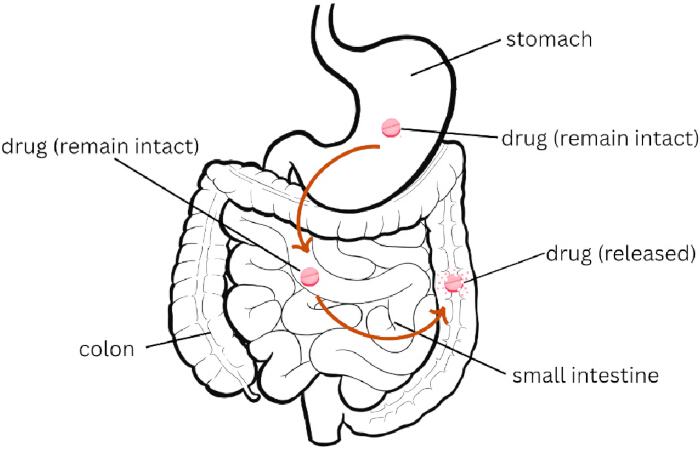
Figure 1: Ideal drug release profile for colon-targeted drug delivery systems (CDDS). Schematic representation of site-specific drug release, showing minimal drug release in the stomach and small intestine, followed by targeted and controlled release in the colon. This profile highlights the importance of protecting the drug from premature degradation and ensuring localized delivery to enhance therapeutic efficacy and reduce systemic side effects. Please click here to view a larger version of this figure.
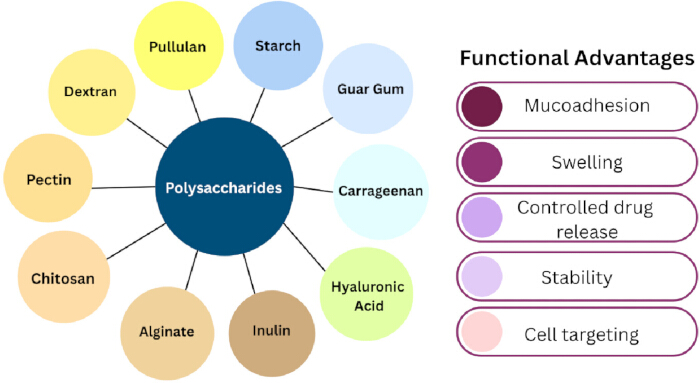
Figure 2: Types of polysaccharides and their functional advantages in colon-targeted drug delivery systems (CDDS). Overview of commonly used polysaccharides, including chitosan, pectin, alginate, dextran, and hyaluronic acid, along with their key functional properties such as biodegradability, biocompatibility, mucoadhesion, and pH- or enzyme-responsive behavior. Please click here to view a larger version of this figure.
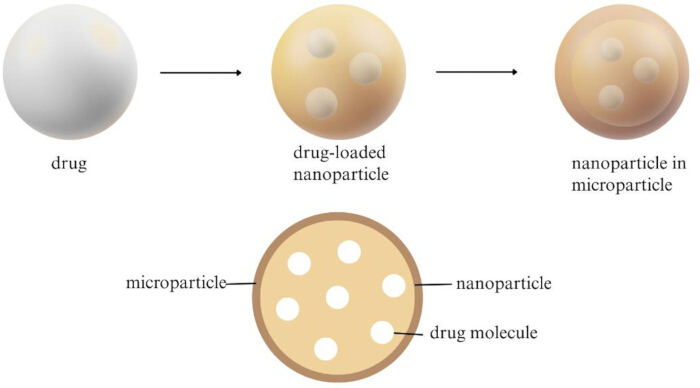
Figure 3: Nanoparticles-in-microparticles (NPs-in-MPs) system for colon-targeted drug delivery. Illustration of a hierarchical delivery system in which drug-loaded nanoparticles are encapsulated within a larger microparticle matrix. Please click here to view a larger version of this figure.
Disclosures
The authors declare no competing financial interests or personal relationships that could have influenced the work reported in this paper.
Acknowledgements
The authors acknowledge the support of the UCSI University Research Excellence & Innovation Grant (REIG-FPS-2024/008). The authors also thank all contributors for their valuable input and support in this work.
References
- Wu, S., Zhang, Y., Lin, Z., Wei, M. Global burden of colorectal cancer in 2022 and projections to 2050: incidence and mortality estimates from GLOBOCAN. BMC Cancer. 25, 1770 (2025).
- Siegel, R. L., et al. Colorectal cancer statistics, 2026. CA Cancer J Clin. , e70067 (2026).
- Fink, H., et al. Global and regional cancer burden attributable to modifiable risk factors to guide prevention. Nat Med. , (2026).
- Sung, H., et al. Global cancer statistics 2020: GLOBOCAN estimates of incidence and mortality worldwide for 36 cancers in 185 countries. CA Cancer J Clin. 71, 209-249 (2021).
- Xi, Y., Xu, P. Global colorectal cancer burden in 2020 and projections to 2040. Transl Oncol. 14, 101174 (2021).
- Alrushaid, N., Khan, F. A., Al-Suhaimi, E., Elaissari, A. Progress and perspectives in colon cancer pathology, diagnosis, and treatments. Diseases. 11, 148 (2023).
- Saputra, H. A., Karim, M. M. Fundamentals and research progression on electrochemical sensing of colorectal cancer. Mikrochim Acta. 192, 355 (2025).
- Saputra, H. A., et al. Idarubicin-labeled electrochemical biosensor for detection of circulating tumor cells in colon cancer patients. Biosens Bioelectron. 292, 118101 (2026).
- Ashique, S., et al. Multidrug resistance in colorectal cancer: approaches to overcome, advancements and future success. Adv Cancer Biol Metastasis. 10, 100114 (2024).
- Zafar, A., et al. Advancements and limitations in traditional anti-cancer therapies: a comprehensive review of surgery, chemotherapy, radiation therapy, and hormonal therapy. Discov Oncol. 16, 607 (2025).
- Uboldi, M., et al. Administration strategies and smart devices for drug release in specific sites of the upper GI tract. J Control Release. 348, 537-552 (2022).
- Lou, J., et al. Advances in oral drug delivery systems: challenges and opportunities. Pharmaceutics. 15, 484 (2023).
- Shao, H., Liu, M., Jiang, H., Zhang, Y. Polysaccharide-based drug delivery targeted approach for colon cancer treatment: a comprehensive review. Int J Biol Macromol. 302, 139177 (2025).
- Behrooznia, Z., Nourmohammadi, J. Polysaccharide-based materials as an eco-friendly alternative in biomedical, environmental, and food packaging. Giant. 19, 100301 (2024).
- Qiu, A., Wang, Y., Zhang, G., Wang, H. Natural polysaccharide-based nanodrug delivery systems for treatment of diabetes. Polymers. 14, 3217 (2022).
- Haynes, J., Manogaran, P. Mechanisms and strategies to overcome drug resistance in colorectal cancer. Int J Mol Sci. 26, 1988 (2025).
- Dey, A., et al. Recent advancements, limitations, and future perspectives of the use of personalized medicine in treatment of colon cancer. Technol Cancer Res Treat. 22, (2023).
- Ion, D., et al. An up-to-date review of natural nanoparticles for cancer management. Pharmaceutics. 14, 18 (2021).
- Hsu, C. Y., et al. Recent advances in polysaccharide-based drug delivery systems for cancer therapy: a comprehensive review. Artif Cells Nanomed Biotechnol. 52, 564-586 (2024).
- Alshammari, N. D., Elkanayati, R., Vemula, S. K., Al Shawakri, E., Uttreja, P., et al. Advancements in colon-targeted drug delivery: a comprehensive review on recent techniques with emphasis on hot-melt extrusion and 3D printing technologies. AAPS PharmSciTech. 25, 236 (2024).
- Gvozdeva, Y., Staynova, R. pH-dependent drug delivery systems for ulcerative colitis treatment. Pharmaceutics. 17, 226 (2025).
- McCoubrey, L. E., et al. Colonic drug delivery: formulating the next generation of colon-targeted therapeutics. J Control Release. 353, 1107-1126 (2023).
- Alqahtani, M. S., Kazi, M., Alsenaidy, M. A., Ahmad, M. Z. Advances in oral drug delivery. Front Pharmacol. 12, (2021).
- Homayun, B., Lin, X., Choi, H. J. Challenges and recent progress in oral drug delivery systems for colon targeting. Pharmaceutics. 14, 567 (2022).
- Glaus Garzon, J. F., Pastrello, C., Jurisica, I., Hottiger, M. O., Wenger, R. H., et al. Tumor cell endogenous HIF-1α activity induces aberrant angiogenesis and interacts with TRAF6 pathway required for colorectal cancer development. Neoplasia. 22, 745-758 (2020).
- Lemmens, G., Van Camp, A., Kourula, S., Vanuytsel, T., Augustijns, P. Drug disposition in the lower gastrointestinal tract: targeting and monitoring. Pharmaceutics. 13, 161 (2021).
- Jiang, Z., et al. Enzymatic regulation of the gut microbiota: mechanisms and implications for host health. Biomolecules. 14, 1638 (2024).
- Vemula, S. K., Veerareddy, P. R. Colon-specific drug delivery systems: design strategies and recent advancements. Pharmaceutics. 15, 1023 (2023).
- Benalaya, I., Alves, G., Lopes, J., Silva, L. R. A review of natural polysaccharides: sources, characteristics, properties, food, and pharmaceutical applications. Int J Mol Sci. 25, 1322 (2024).
- Mohammed, A. S. A., Naveed, M., Jost, N. Polysaccharides: classification, chemical properties, and future perspective applications in pharmacology and biological medicine. J Polym Environ. 29, 2359-2371 (2021).
- Yue, Z., et al. Bletilla striata polysaccharide-coated andrographolide nanomicelles for targeted drug delivery to enhance anti-colon cancer efficacy. Front Immunol. 15, (2024).
- Huang, S., Chen, F., Cheng, H., Huang, G. Modification and application of polysaccharides from traditional Chinese medicine such as Dendrobium officinale. Int J Biol Macromol. 157, 385-393 (2020).
- Nataraj, A., et al. Effects of carboxymethyl modification on acidic polysaccharides from Calocybe indica: physicochemical, antioxidant, antitumor, and anticoagulant activities. Antioxidants. 12, 105 (2022).
- Xie, L., et al. Carboxymethylated and sulfated Cyclocarya paliurus polysaccharides inhibit colon cancer cell growth via PI3K/AKT-MAPKs/NF-κB pathways and immunomodulation. Food Biosci. 58, 103836 (2024).
- Kurl, S., et al. Challenges, opportunities, and future prospects of polysaccharide-based nanoparticles for colon targeting: a comprehensive review. Carbohydr Polym Technol Appl. 6, 100361 (2023).
- Pellis, A., Guebitz, G. M., Nyanhongo, G. S. Chitosan: sources, processing and modification techniques. Gels. 8, 393 (2022).
- Hua, S., et al. Advances in oral colon-targeted drug delivery systems: mechanisms and applications. J Control Release. 345, 67-85 (2022).
- Di Santo, M. C., et al. Chitosan-tripolyphosphate nanoparticles designed to encapsulate polyphenolic compounds for biomedical and pharmaceutical applications: a review. Biomed Pharmacother. 142, 111970 (2020).
- Aranaz, I., et al. Chitosan: an overview of its properties and applications. Polymers. 13, 3256 (2021).
- Mishra, N., et al. Crosslinked and PEGylated pectin-chitosan nanoparticles for delivery of phytic acid to colon. Int J Pharm. 639, 122937 (2023).
- Martins, A., et al. Understanding the role of colon-specific microparticles based on retrograded starch/pectin in the delivery of chitosan nanoparticles along the gastrointestinal tract. Eur J Pharm Biopharm. 158, 371-378 (2021).
- Choukaife, H., et al. Current advances in chitosan nanoparticles based oral drug delivery for colorectal cancer treatment. Int J Nanomedicine. 17, 3933-3966 (2022).
- Almeida, A., et al. Oral delivery of camptothecin-loaded multifunctional chitosan-based micelles is effective in reducing colorectal cancer. J Control Release. 349, 731-743 (2022).
- Mostafa, M. M., et al. Chitosan surface-modified PLGA nanoparticles loaded with cranberry powder extract as a potential oral delivery platform for targeting colon cancer cells. Pharmaceutics. 15, 606 (2023).
- Farhaj, S., et al. Carbohydrate polymer-based targeted pharmaceutical formulations for colorectal cancer: systematic review of the literature. Polysaccharides. 3, 692-714 (2022).
- Carrion, C. C., et al. Lignin, lipid, protein, hyaluronic acid, starch, cellulose, gum, pectin, alginate and chitosan-based nanomaterials for cancer nanotherapy: challenges and opportunities. Int J Biol Macromol. 178, 193-228 (2021).
- Ema, N. J., et al. Development of resistant starch-pectin microsphere for improving oral colon-specific drug delivery of 5-fluorouracil. Bangladesh Pharm J. 26, 36-44 (2023).
- Li, Y., et al. Dextran sulfate-coated curcumin nanocrystals for the treatment of DSS-induced ulcerative colitis in mice. Int J Pharm. 674, 125428 (2025).
- Berg, S., et al. Intestinal absorption of FITC-dextrans and macromolecular model drugs in the rat intestinal instillation model. Mol Pharm. 19, 2564-2572 (2022).
- Mahesh, H., et al. Development of guar gum-pectin-based colon targeted solid self-nanoemulsifying drug delivery system of xanthohumol. Pharmaceutics. 14, 2384 (2022).
- Patel, M., et al. Polysaccharide-based nanocarriers for targeted colorectal cancer therapy: recent advances and future perspectives. Int J Biol Macromol. 235, 123-138 (2023).
- Khan, F., Ahmad, S. R. Polysaccharide-based biomaterials in drug delivery and cancer therapy: recent trends and challenges. Carbohydr Polym. 289, 119401 (2022).
- Sharma, A., et al. Colon-targeted drug delivery systems: design strategies, mechanisms, and recent advancements. J Control Release. 347, 172-190 (2022).
- Palko-Łabuz, A., et al. Newly obtained apple pectin as an adjunct to irinotecan therapy of colorectal cancer reducing E. coli adherence and β-glucuronidase activity. Cancers. 13, 2952 (2021).
- Alfatama, M., et al. Thymoquinone pectin beads produced via electrospray: enhancing oral targeted delivery for colorectal cancer therapy. Pharmaceutics. 16, 1460 (2024).
- Swastha, D., et al. Alginate-based drug carrier systems to target inflammatory bowel disease: a review. Int J Biol Macromol. 244, 125472 (2023).
- Sheng, Y., Gao, J., Yin, Z. Z., Kang, J., Kong, Y., et al. Dual-drug delivery system based on hydrogels of alginate and sodium carboxymethyl cellulose for colorectal cancer treatment. Carbohydr Polym. 269, 118325 (2020).
- Kang, R. X., et al. Application of alginate in inflammatory bowel disease. Biomed Eng Commun. 3, 9 (2024).
- Wu, L., Schroën, K., Corstens, M. Structural stability and release properties of emulsion-alginate beads under gastrointestinal conditions. Food Hydrocoll. 150, 109702 (2024).
- Mirdamadian, S. Z., Varshosaz, J., Minaiyan, M., Taheri, A. 3D printed tablets containing oxaliplatin loaded alginate nanoparticles for colon cancer targeted delivery: an in vitro/in vivo study. Int J Biol Macromol. 205, 90-109 (2022).
- Azad, A. K., et al. A dataset of microstructure features of electro-hydrodynamic assisted 5-fluorouracil-grafted alginate microbeads and physicochemical properties for effective colon targeted carriers drug delivery. Data Brief. 53, 110202 (2024).
- Zhang, , et al. Preparation of colon-targeted alginate microspheres loaded with honokiol-doxorubicin conjugate and their therapeutic effect on colon cancer. Particuology. 99, 69-79 (2025).
- Oshi, M. A., et al. pH-responsive alginate-based microparticles for colon-targeted delivery of pure cyclosporine A crystals to treat ulcerative colitis. Pharmaceutics. 13, 1412 (2020).
- Petrovici, A. R., Pinteala, M., Simionescu, N. Dextran formulations as effective delivery systems of therapeutic agents. Molecules. 28, 1086 (2023).
- Díaz-Montes, E. Dextran: sources, structures, and properties. Polysaccharides. 2, 554-565 (2021).
- Lu, I. L., et al. Microfluidized dextran microgels loaded with cisplatin/SPION lipid nanotherapeutics for local colon cancer treatment via oral administration. Adv Healthc Mater. 11, 2201140 (2022).
- Sanati, S., et al. Fabrication of anionic dextran-coated micelles for aptamer-targeted delivery of camptothecin and survivin-shRNA to colon adenocarcinoma. Gene Ther. 29, 55-68 (2022).
- Sarangi, M. K., Rao, M. E. B., Parcha, V. Smart polymers for colon targeted drug delivery systems: a review. Int J Polym Mater Polym Biomater. 70, 1130-1166 (2020).
- Zhang, Y., et al. A Study of Hydrophobically Modified Pullulan Nanoparticles with Different Hydrophobic Densities on the Effect of Anti-Colon Cancer Cell Efficiency. J Biomed Nanotechnol. 17, 1972-1983 (2021).
- Zhao, B., et al. Colon-targeted release and uptake of paclitaxel loaded in modified porous starch. Carbohydr Polym. 318, 121126 (2023).
- Pooresmaeil, M., Namazi, H. Development of a new pH-driven carrier from alginate/carboxymethyl starch bio-coated co-drugs@COF-OH for controlled and concomitant colon cancer treatment. Int J Biol Macromol. 239, 124322 (2023).
- Jhundoo, H. D., et al. Hyaluronic acid increases anti-inflammatory efficacy of rectal 5-amino salicylic acid administration in a murine colitis model. Biomol Ther. 29, 536-544 (2021).
- Buckley, C., Murphy, E., Montgomery, T., Major, I. Hyaluronic acid: a review of the drug delivery capabilities of this naturally occurring polysaccharide. Polymers. 14, 3442 (2022).
- Tiwari, A., et al. Hyaluronic acid-functionalized liposomes embedded in biodegradable beads for dual drug delivery to oxaliplatin-resistant colon cancer. J Drug Deliv Sci Technol. 77, 103891 (2022).
- Du, W., et al. Hyaluronic acid oligosaccharide-loaded and CD44v6-targeting oxaliplatin nanoparticles for treatment of colorectal cancer. Drug Deliv. 28, 920-929 (2021).
- Singh, R., Lillard, J. W. Nanoparticle-based targeted drug delivery. Exp Mol Pathol. 122, 104683 (2021).
- Catenacci, L., et al. Combination of inulin and β-cyclodextrin properties for colon delivery of hydrophobic drugs. Int J Pharm. 589, 119861 (2020).
- De Anda-Flores, Y., et al. Polysaccharide-based nanoparticles for colon-targeted drug delivery systems. Polysaccharides. 2, 626-647 (2021).
- Prusty, A., Patra, A. Formulation and evaluation of ciprofloxacin colon targeted tablets by compression coating technique using guar gum and hydroxypropyl methylcellulose. J Res Pharm. 26, 1593-1607 (2022).
- Zarbab, A., Sajjad, A., Rasul, A., Jabeen, F., Iqbal, M. J., et al. Synthesis and characterization of guar gum-based biopolymeric hydrogels as carrier materials for controlled delivery of methotrexate to treat colon cancer. Saudi J Biol Sci. 30, 103731 (2023).
- Amidon, S., Brown, J. E., Dave, V. S. Colon-targeted oral drug delivery systems: design and mechanisms. Pharm Res. 38, 1347-1366 (2021).
- Gao, X., Homayoonfal, M. Exploring the anti-cancer potential of Ganoderma lucidum polysaccharides and their role in enhancing drug delivery systems. Cancer Cell Int. 23, 324 (2023).
- Liu, Z., et al. Polysaccharide-based nanocarriers for cancer therapy: recent progress and future perspectives. Int J Biol Macromol. 223, 1150-1165 (2022).
- Zhu, H., et al. Targeted therapeutic effects of oral magnetically driven pectin nanoparticles containing chlorogenic acid on colon cancer. Particuology. 84, 53-59 (2024).
- Liu, L., Yang, S., Chen, F., Cheng, K. W. Polysaccharide-zein composite nanoparticles for enhancing cellular uptake and oral bioavailability of curcumin: characterization, anti-colorectal cancer effect, and pharmacokinetics. Front Nutr. 9, (2022).
- Kumar, A., et al. Effect of co-administration of probiotics with guar gum, pectin, and eudragit S100-based colon targeted mini tablets containing 5-fluorouracil for site-specific release. J Drug Deliv Sci Technol. 60, 102004 (2020).
- Zhang, Y., Chan, H. F., Leong, K. W. Advanced materials and strategies for drug delivery to the colon. Adv Drug Deliv Rev. 182, 114112 (2022).
- Yeung, C., McCoubrey, L. E., Basit, A. W. Advances in colon-targeted drug technologies. Curr Opin Gastroenterol. 41, 9-15 (2025).
- Ma, Z., Li, B., Peng, J., Gao, D. Recent development of drug delivery systems through microfluidics: from synthesis to evaluation. Pharmaceutics. 14, 434 (2022).
- Batool, N., et al. Development and evaluation of cellulose derivative and pectin-based swellable pH-responsive hydrogel network for controlled delivery of cytarabine. Gels. 9, 60 (2023).
- Shirani-Bidabadi, S., et al. Gene network analysis of oxaliplatin-resistant colorectal cancer targeting a crucial gene using chitosan/hyaluronic acid/protamine polyplexes containing CRISPR-Cas9. Biochim Biophys Acta Gen Subj. 1867, 130385 (2023).
- Strelez, C., et al. Human colorectal cancer-on-chip model to study microenvironmental influence on early metastatic spread. iScience. 26, 106480 (2023).