Olive oil-based lipid emulsions mitigate immune checkpoint inhibitor-induced myocarditis by targeting the NF-κB/NLRP3/IL-1β pathway, demonstrating their potential in suppressing inflammatory cascades. These findings highlight its promise as an adjunctive therapy for immune-related cardiac injury.
Research Article
Olive Oil-Based Lipid Emulsion Ameliorates Immune Checkpoint Inhibitor-Induced Myocarditis via Inhibition of the NF-κB/NLRP3/IL-1β Pathway
Opens in a new tab
In This Article
Summary
Loading...
$$\rightleftharpoonup{xx}$$
$$\longleftharp{xx}$$,
$$\longrightharp{xx}$$,
Abstract
Loading...
$$\rightleftharpoonup{xx}$$
$$\longleftharp{xx}$$,
$$\longrightharp{xx}$$,
The present study aimed to investigate the therapeutic efficacy and underlying mechanism of olive oil-based lipid emulsions (OOLE) in mitigating immune checkpoint inhibitor (ICI)-induced myocarditis triggered by ipilimumab (IPI) and nivolumab (NIVO). An in vitro model of inflammatory cardiomyocytes was established by co-culturing HL-1 cells with CD4⁺/CD8⁺ T cells isolated from ICI-treated mice. Cells were treated with 10% OOLE, followed by flow cytometry for apoptosis, ELISA for cytokine profiling (TNF-α, IL-1β, IL-6), and Western blot/qPCR for pathway analysis (NF-κB, NLRP3, IL-1β). In vivo, myocarditis was induced in mice via IPI/NIVO administration. Cardiac function was assessed using echocardiography, and inflammatory markers were evaluated in serum and myocardial tissue. The results showed that OOLE significantly reduced T cell-induced apoptosis and suppressed inflammatory cytokine production in HL-1 cells, while the expression of NF-κB, NLRP3, and IL-1β was downregulated. In vivo., OOLE improved left ventricular functional parameters and attenuated systemic inflammation. Molecular analyses confirmed that these protective effects were mediated via the inhibition of the NF-κB/NLRP3/IL-1β signaling axis. In conclusion, OOLE mitigates acute ICI-induced myocarditis by targeting the NF-κB/NLRP3/IL-1β pathway, demonstrating its potential in suppressing early inflammatory cascades and providing rapid cardioprotection. These findings highlight its promise as an adjunctive therapy for immune-related cardiac injury.
Introduction
Loading...
$$\rightleftharpoonup{xx}$$
$$\longleftharp{xx}$$,
$$\longrightharp{xx}$$,
Immune checkpoint inhibitors (ICIs), such as those targeting programmed cell death-1 (PD-1) and cytotoxic T-lymphocyte-associated protein 4 (CTLA-4), have revolutionized the treatment landscape for various malignancies. However, the widespread clinical application of ICIs is frequently complicated by immune-related adverse events (irAEs). Among these, ICI-induced myocarditis is a rare but potentially fatal complication, characterized by a rapid clinical course and high mortality rates ranging from 25% to 50%1,2. Despite its severity, current therapeutic options for ICI-induced myocarditis remain largely limited to high-dose corticosteroids and non-specific immunosuppressants3,4. These traditional interventions often yield suboptimal responses and may compromise the anti-tumor efficacy of ICIs1, creating a critical knowledge gap in the search for safer and more targeted cardioprotective strategies that can mitigate cardiac inflammation without systemic immunosuppression.
The NOD-like receptor protein 3 (NLRP3) inflammasome, activated via the NF-κB signaling pathway, has emerged as a central driver of the cytokine storm observed in ICI-induced myocarditis5,6. Excessive production of pro-inflammatory cytokines, particularly IL-1β and IL-6, leads to profound cardiomyocyte injury and heart failure7. Although several lipid-based interventions have been explored in cardiovascular diseases, the potential of olive oil-based lipid emulsions (OOLE) in this specific context remains unexplored. OOLE is rich in oleic acid, a monounsaturated fatty acid known for its unique ability to modulate membrane fluidity and suppress inflammatory cascades8,9. However, whether OOLE can specifically ameliorate the hyper-inflammatory state characteristic of ICI-induced myocarditis has not been established.
In this study, we aim to address this gap by investigating the therapeutic potential of OOLE. We hypothesize that OOLE exerts a potent cardioprotective effect by inhibiting the NF-κB/NLRP3/IL-1β signaling axis, thereby suppressing the inflammatory surge and preserving cardiac function. By combining an in vitro co-culture model of HL-1 cardiomyocytes and T cells with an in vivo. mouse model of ICI-induced myocarditis, we demonstrate that OOLE intervention provides rapid functional recovery and mitigates myocardial injury. This study provides the first evidence for OOLE as a novel, targeted nutritional pharmacological approach to managing ICI-related cardiotoxicity.
Protocol
Loading...
$$\rightleftharpoonup{xx}$$
$$\longleftharp{xx}$$,
$$\longrightharp{xx}$$,
All procedures were approved by the Animal Ethics Committee of Guangzhou Miles Biotechnology Co., Ltd., with approval number IACUC-MIS2023076. The company mentioned is an animal experimentation center; our animal experiments are conducted here and are therefore subject to review by the center's ethics committee.
Animals and experimental design
Thirty BALB/c mice (male, 8 weeks old, weighing 22 ± 2 g) were purchased commercially. Model induction and validation criteria: An immune checkpoint inhibitor (ICI)-induced myocarditis model was established by intravenous injection of ipilimumab (5 mg/kg) and nivolumab (10 mg/kg) for 2 consecutive weeks. Dosing occurred every 3 days for a total modeling duration of 2 weeks. This protocol has previously been shown to induce significant immune-mediated cardiac injury10. At 24 h after the final injection, blood samples were collected via the retro-orbital plexus and centrifuged at 300 x g. for 15 min at 4 °C to isolate the serum; subsequently, serum cTnT levels were quantified using a specific ELISA kit, involving sequential steps of sample loading, HRP-conjugated antibody incubation, automated washing, and TMB chromogen reaction, with the optical density measured at 450 nm to calculate concentrations based on a four-parameter logistic curve, and a cTnT concentration ≥10 ng/mL was considered a successful model establishment.
Six model mice with the closest body weight and cTnT concentration were randomly divided into two groups: a control group and a treatment group (n=3 for both, biological replication). The control group received daily intravenous injections of normal saline at a dose of 5 mL/kg. The treatment group received daily intravenous injections of 5% olive oil-based lipid emulsion (OOLE) at a dose of 5 mL/kg via the tail vein for 6 days (this represents the dosage we employ for clinical treatment within our institution; it was extrapolated for use in mice based on body surface area ratios). The following tests were performed on a 6-day observation window: Cardiac function was assessed at baseline (day 0) and post-treatment (day 6) using an ultrasound photoacoustic imaging system. Blood was collected via the retroorbital vein on day 6, and serum cytokines were quantified by ELISA. After euthanizing the animals with an overdose of anesthesia, the heart tissue was flash-frozen for protein analysis.
T cell isolation
The mice in the control group were euthanized with an overdose of anesthesia. The spleens were aseptically excised after a 5 min surface sterilization in 75% ethanol, and all connective tissues were removed. The spleens were mechanically dissociated using a 70 µm cell strainer with PBS supplemented with 2% FBS to create a single-cell suspension. This suspension was then centrifuged at 300 x g., 4 °C for 5 min, and erythrocytes were lysed with 1 mL of ACK Lysing Buffer for 2 min at room temperature. The lysis process was terminated by washing with PBS. T cells were negatively enriched to prevent activation using a mouse T cell isolation kit. For every 10 million cells, 50 µL of selection cocktail was added and incubated at room temperature for 10 min. This was followed by the addition of 75 µL of streptavidin magnetic beads per 10 million cells, with a 5 min incubation. Bead-bound cells were retained using a magnet for 3 min, and the enriched T cells (with over 94% purity) were collected from the supernatant. For sorting the CD4⁺ and CD8⁺ subsets, the enriched cells were stained with anti-CD3ε-PE, anti-CD4-APC, and anti-CD8-FITC antibodies for 15 min in the dark, then washed 3x with pre-cooled PBS. Sorting was performed on a flow cytometer using the following gating strategy: lymphocytes (FSC/SSC), then CD3⁺, then CD4⁺ or CD8⁺ subsets. Cells were sorted in Purity Mode into collection tubes pre-filled with 200 µL of PBS, yielding target subsets with greater than 98% purity.
Construction and treatment of the myocarditis cell model
The HL-1 cells were cultured in DMEM/F12 medium supplemented with 10% fetal bovine serum (FBS) and 1% penicillin-streptomycin (PS) under standard conditions (37 °C, 5% CO₂). Cells were divided into three groups: Control group (untreated), model group (HL-1 cells treated with CD4+/CD8+ T cells for 24 h), and OOLE group (Model group co-treated with 10% OOLE for 24 h).
ELISA for serum detection of myocardial injury-related proteins
Incubate 50 µL of serum sample in the pre-coated antibody-rich microplate wells of the kit for 30 minutes, then wash three times with PBST to remove unbound components. Add the prepared horseradish peroxidase (HRP)-labeled avidin solution for a second incubation. Wash three times again with PBST, add 100 µL of 3,3',5,5'-tetramethylbenzidine (TMB) substrate to initiate the colorimetric reaction, and terminate the reaction with 100 µL of stop solution within 30–45 minutes after initiation. Measure the absorbance (OD) at 450 nm using a microplate reader and quantify the concentration of the target analyte using a standard curve plotted with known reference standards.
Western blot
Cardiac tissues were pulverized using a tissue homogenizer with liquid nitrogen. Subsequently, both tissue and cellular samples were lysed in 200 µL of RIPA buffer on ice for 30 min. The lysates were centrifuged at 12,000 x g. for 15 min at 4 °C to collect protein supernatants. Protein concentrations were determined using a BCA protein assay kit. After adjusting the protein concentration to 5 µg/µL, the samples were mixed with 5× loading buffer and denatured by heating at 95 °C for 10 min. Proteins were separated on 10% SDS-PAGE gels (run at 100 V for 90 min) and subsequently transferred to PVDF membranes via semi-dry electroblotting at 15 V for 30 min. The membranes were blocked with 5% non-fat milk and then probed overnight at 4 °C with primary antibodies (including IL-1β, NLRP3, MyD88, NF-κB p65, and Tubulin; 1:1,000 dilution)2. After washing the membranes three times for 10 min each with Tris-buffered saline containing 0.1% Tween 20 (TBST), they were incubated with horseradish peroxidase (HRP)-conjugated secondary antibodies (1:10,000 dilution) for 1 h at room temperature. Protein bands were visualized by applying an enhanced chemiluminescence (ECL) substrate, and the signals were captured using a chemiluminescence imaging system. Finally, relative expression levels were quantitatively analyzed by normalizing the densitometric values of the target protein bands to the Tubulin internal control using ImageJ software.
Cell apoptosis assay by flow cytometry
The HL-1 cells were washed 2x with phosphate-buffered saline (PBS). For cell dissociation, 1 mL of trypsin was added and incubated for 1 min, followed immediately by neutralization with 2 mL of complete culture medium. The cell suspension was then centrifuged at 250 x g. for 5 min at 4 °C, and the supernatant was discarded. The collected cell pellet was washed 2x with ice-cold PBS and resuspended in 1x binding buffer to achieve a cell density of 1 x 10⁶ cells/mL. A 100 µL aliquot of this cell suspension was transferred into a flow cytometry tube, followed by the addition of 5 µL of FITC-Annexin V and 5 µL of propidium iodide (PI). After gentle vortexing, the mixture was incubated for 15 min at room temperature (25 °C) in the dark. Finally, 400 µL of 1 x binding buffer was added to each tube, and cell apoptosis was subsequently analyzed using a flow cytometer. For the gating strategy, events were first gated on forward scatter (FSC) and side scatter (SSC) to exclude subcellular debris and isolate the intact HL-1 cell population. Within this primary gate, apoptotic cells were quantified using quadrant analysis, with early apoptotic cells defined as FITC-Annexin V⁺/PI⁻ and late apoptotic cells defined as FITC-Annexin V⁺/PI⁺.
Statistical analysis
Each experiment was performed in triplicate, and statistical analysis was conducted using statistical software. Differences between two groups were analyzed using the independent samples t-test; differences among three or more groups were analyzed using one-way ANOVA followed by the Bonferroni post-hoc test. Data are expressed as mean ± standard error (SEM). p < 0.05 was considered statistically significant.
Results
Loading...
$$\rightleftharpoonup{xx}$$
$$\longleftharp{xx}$$,
$$\longrightharp{xx}$$,
Ipilimumab and Novolumab combination induce ICI-induced Myocarditis in an animal model
To establish an ICI-induced myocarditis model, BALB/c mice were administered intravenous injections of ipilimumab (5 mg/kg) and nivolumab (10 mg/kg) via the tail vein. Serum levels of cardiac troponin T (cTnT) were subsequently measured using an enzyme-linked immunosorbent assay (ELISA). A cTnT level ≥ 10 ng/mL was defined as the threshold for successful model induction. As shown in Figure 1A, serum analysis of the 30 mice subjected to the modeling protocol revealed that 10 mice exhibited cTnT concentrations exceeding 10 ng/mL, confirming successful model induction in these animals.
OOLE improves partial cardiac function in mice with immune myocarditis
In the ICI-induced myocarditis model, echocardiography typically reveals an increased heart rate and enlarged left ventricular internal diameters during both systole (LVIDs) and diastole (LVIDd). These changes indicate early ventricular dilation and impaired myocardial compliance. Simultaneously, the ejection fraction (EF) and fractional shortening (FS) are significantly reduced, which is a result of decreased systolic ejection and increased end-systolic volume (ESV)—hallmarks of left ventricular systolic dysfunction11. Collectively, these changes reflect the adverse effects of myocardial inflammation on cardiac contractility and geometry. As the condition progresses, cardiac output (CO) tends to decrease in moderate to severe cases due to impaired contractility and arrhythmias. Structural changes may also occur, such as increased left ventricular mass (LVM) and temporary thickening of the anterior and posterior walls (LVAWTs/d, LVPWTs/d) during the acute phase, often due to myocardial edema. Some of these changes may persist long-term due to fibrotic remodeling2,11,12. Overall, these parameters signify the functional and morphological changes associated with myocardial inflammation. In this study, we treated mice with immune myocarditis using OOLE and conducted ultrasound examinations before and after the treatment. As shown in Table 1 and Figure 2, following OOLE treatment, we observed significant decreases in heart rate (HR; p < 0.01), LVIDs (p < 0.01), LVIDd (p < 0.05), EF (p < 0.01), and FS (p < 0.01). At the same time, ESV increased significantly (p < 0.01). However, there were no significant changes in CO, LVM, Left Ventricular Mass Correction (LVM Cor), LVAWTs, LVAWTd, LVPWTs, and LVPWTd. These findings suggest that OOLE treatment alleviates myocardial inflammatory damage, restores the contractile ability of myocardial cells, enhances ventricular emptying, and improves pumping efficiency. The reduction in heart rate indicates that the heart no longer needs to rely on compensatory tachycardia to maintain perfusion. However, OOLE did not reverse ventricular hypertrophy or structural remodeling. This is consistent with the common observation that, in the early stages of myocarditis treatment, functional improvement precedes structural reversal.
OOLE reduces inflammation levels in mice with immune myocarditis
We confirmed that OOLE ameliorated cardiac function in mice with experimental autoimmune myocarditis (EAM). As shown in Figure 3, subsequent measurements of serum inflammatory cytokine levels in EAM mice before and after treatment revealed significant reductions in IL-6 (p < 0.01), IL-1β (p < 0.001), TNF-α (p < 0.01), and IFN-γ (p < 0.05). These findings indicate that OOLE can significantly reduce systemic inflammation in murine experimental autoimmune myocarditis.
OOLE reduces immune inflammation caused by CD4+/CD8+ T cells in cardiomyocytes
As shown in Figure 4A, CD4⁺ and CD8⁺ T cells were successfully isolated from the splenic tissues of mice with immune myocarditis. To investigate inflammatory interactions, HL-1 cardiomyocytes were co-cultured with CD4⁺ and CD8⁺ T cells, with or without OOLE intervention. Flow cytometric analysis (Figure 4B) revealed that co-culturing with CD4⁺/CD8⁺ T cells significantly increased HL-1 cell apoptosis, rising from 9.66% to 28.19% (p < 0.001). This pro-apoptotic effect was mitigated by OOLE treatment, which reduced apoptosis to 20.21% (p < 0.001). Additionally, ELISA quantification of inflammatory cytokines (Figure 4C) demonstrated that T cell co-culture markedly elevated inflammatory mediators in HL-1 cells: IFN-γ increased from 5.97 pg/mL to 26.47 pg/mL (p < 0.001), IL-6 increased from 1.7 pg/mL to 335.06 pg/mL (p < 0.01), IL-1β increased from 4.24 pg/mL to 56.89 pg/mL (p < 0.001), TNF-α increased from 1.43 pg/mL to 49.96 pg/mL (p < 0.001). The OOLE intervention significantly reduced these inflammatory responses: IFN-γ decreased to 6.36 pg/mL (p < 0.001), IL-6 decreased to 109.48 pg/mL (p < 0.001), IL-1β decreased to 18.46 pg/mL (p < 0.001), and TNF-α decreased to 10.82 pg/mL (p < 0.001). In conclusion, OOLE effectively attenuates T cell-mediated inflammatory responses in cardiomyocytes.
OOLE reduces ICI-induced myocarditis by targeting the IL-1β/NLRP3/NT-κB signaling pathway
We have found that OOLE can reduce immune inflammation levels in cardiomyocytes and protect their survival. Numerous studies have demonstrated a connection between the IL-1β/NLRP3/NF-κB signaling pathway and immune inflammation induced by immune checkpoint inhibitors13,14,15. To further investigate whether OOLE protects cardiomyocytes by inhibiting the activation of the NF-κB/NLRP3/IL-1β signaling pathway, we conducted additional experiments. As shown in Figure 5, following the induction of the disease model, the NF-κB/NLRP3/IL-1β signaling pathway in the mouse cardiac tissue was activated. Compared to the control group, we observed a 2.11-fold increase (p < 0.05) in IL-1β expression, a 2.07-fold increase (p < 0.05) in MYD88 expression, a 2.16-fold increase (p < 0.001) in NLRP3 expression, and a 1.6-fold increase (p < 0.01) in p65 expression. Upon intervention with OOLE, the expression levels of IL-1β, MYD88, NLRP3, and p65 decreased significantly: IL-1β to 1.39-fold (p < 0.05), MYD88 to 1.6-fold (p < 0.05), NLRP3 to 1.68-fold (p < 0.01), and p65 to 1.38-fold (p < 0.01). These results indicate that OOLE effectively inhibits the activation of the NF-κB/NLRP3/IL-1β signaling pathway.
Data Availability:
We have uploaded the raw data related to the project to the public repository ScienceDB, at https://www.scidb.cn/s/j2IJ3a. The data is open access.
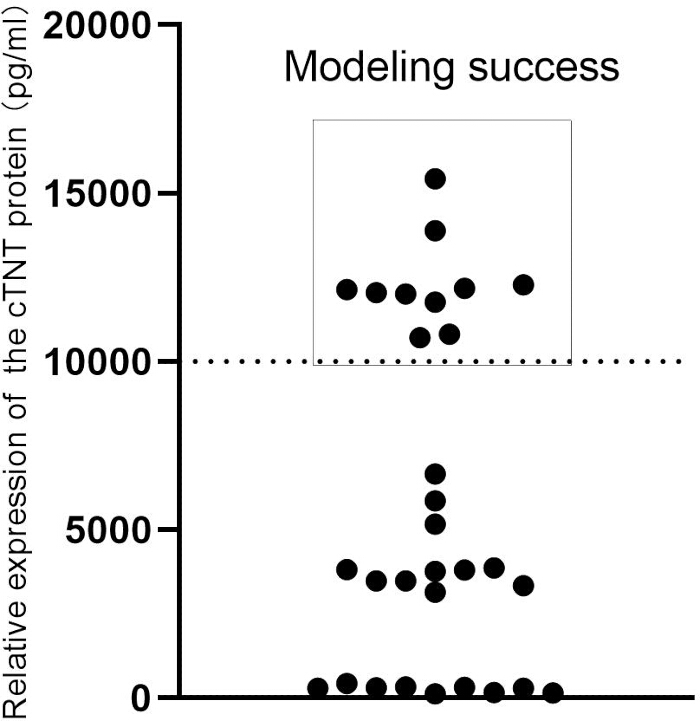
Figure 1: ELISA was used to determine the cTnT content in mouse serum. A threshold of 10 ng/mL was used to determine whether the disease model was successfully established. Abbreviations: cTnT=Cardiac Troponin T. Please click here to view a larger version of this figure.
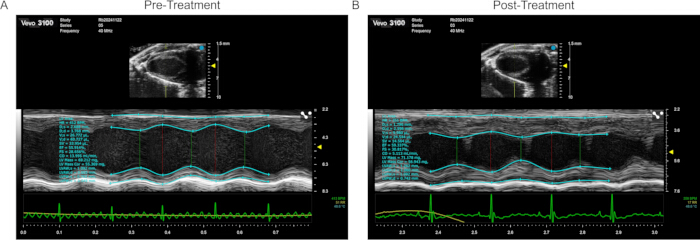
Figure 2: Cardiac function improved in the myocarditis mouse model following OOLE intervention. Improved urodynamic parameters in rats with stress urinary incontinence. (A) Echocardiographic results of the myocarditis mouse model prior to OOLE intervention. (B) Echocardiographic results of the myocarditis mouse model following OOLE intervention. Abbreviations: OOLE = olive oil-based lipid emulsions. Please click here to view a larger version of this figure.
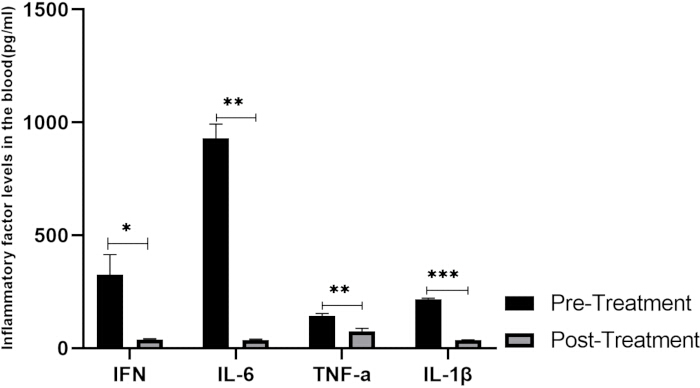
Figure 3: Serum inflammatory factor levels decrease in mice with myocarditis following OOLE intervention. * represents p < 0.05, ** represents p < 0.01, *** represents p < 0.001; differences among three or more groups were analyzed using one-way ANOVA followed by the Bonferroni post-hoc test. Please click here to view a larger version of this figure.
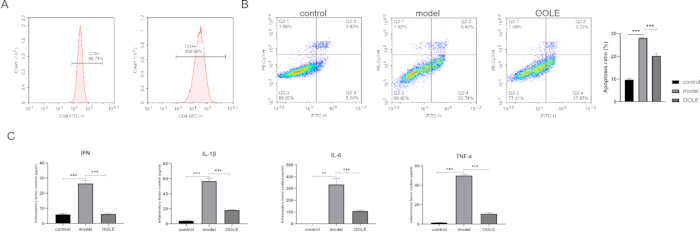
Figure 4: OOLE attenuates immune cell-mediated damage to cardiomyocytes. (A) Flow cytometry was used to detect the purity of CD4+/CD8+ T cells. (B) Flow cytometry was used to detect the apoptosis level of HL-1 cells under different treatments. (C) ELISA was used to detect the expression level of inflammatory factors in HL-1 cells under different treatments. *** represents p < 0.001; differences among three or more groups were analyzed using one-way ANOVA followed by the Bonferroni post-hoc test. Please click here to view a larger version of this figure.
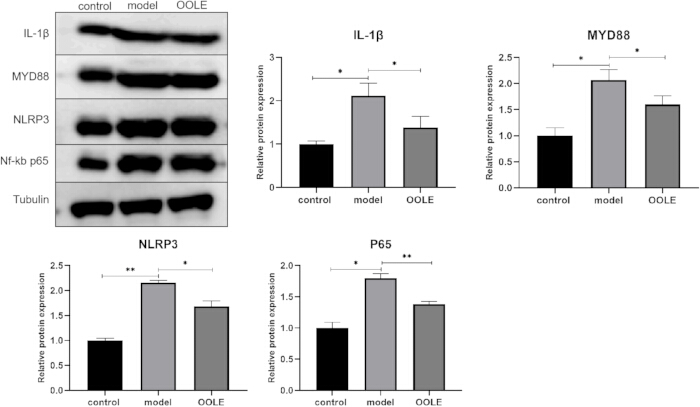
Figure 5. OOLE inhibits the activation of the NF-κB/NLRP3/IL-1β signaling pathway. WB detection of NF-KB/NLRP3/IL-1β pathway-related protein expression in. The data were analyzed using one-way ANOVA, followed by a Bonferroni post-hoc test. Results are presented as mean ± standard deviation; * represents p < 0.05, ** represents p < 0.01, *** represents p < 0.001; differences among three or more groups were analyzed using one-way ANOVA followed by the Bonferroni post-hoc test. Please click here to view a larger version of this figure.
| Pre-Treatment(n=3) | Post-Treatment(n=3) | Significance | |
| Heart Rate(BPM) | 445.3728±29.03424 | 335.8978±15.88891 | p=0.005 |
| LVIDs(mm) | 2.5354±0.2495 | 1.2678±0.22614 | P=0.003 |
| LVIDd(mm) | 3.3981±0.34666 | 2.7268±0.19834 | P=0.044 |
| ESV(uL) | 23.4016±5.43628 | 4.1056±1.87597 | P=0.004 |
| EDV(uL) | 47.9757±11.7944 | 27.8996±5.06311 | P=0.054 |
| SV(uL) | 24.5741±8.13562 | 23.7940±5.40989 | P=0.897 |
| EF(%) | 50.8935±7.31503 | 85.0196±7.5998 | P=0.005 |
| FS(%) | 25.2933±4.50871 | 53.3851±8.88473 | P=0.008 |
| CO(mL/min) | 9.337±4.03701 | 10.5976±2.44295 | P=0.668 |
| LVM(mg) | 91.2085±19.8195 | 63.3325±4.33125 | P=0.076 |
| LVM Cor(mg) | 72.9668±15.8556 | 50.666±3.465 | P=0.076 |
| LVAWTs(mm) | 1.1323±0.10007 | 1.3145±0.09726 | P=0.087 |
| LVAWTd(mm) | 0.8716±0.23534 | 0.8308±0.05748 | P=0.785 |
| LVPWTs(mm) | 0.9691±0.2949 | 1.3953±0.2572 | P=0.132 |
| LVPWTd(mm) | 0.7516±0.20226 | 0.759±0.04893 | P=0.954 |
Table 1: Pre- versus post-treatment comparative analysis of cardiac structure and function in an animal model of ICI-induced myocarditis. Abbreviations: HR=Heart Rate; LVIDs=Left Ventricular Systolic Dimension; LVIDd=Left Ventricular Diastolic Dimension; ESV=End-Systolic Volume; EDV=End-Diastolic Volume; SV=Stroke Volume; EF=Ejection Fraction; FS=Fractional Shortening; CO=Cardiac Output; LVM=Left Ventricular Mass; LVM Cor=Left Ventricular Mass Correction; LVAWTs=Left Ventricular Anterior Wall Thickness at End-Systole; LVAWTd=Left Ventricular Anterior Wall Thickness at End-Diastole; LVPWTs=Left Ventricular Posterior Wall Thickness at End-Systole; LVPWTd=Left Ventricular Posterior Wall Thickness at End-Diastole. The independent samples t-test was used to compare the two groups.
Discussion
Loading...
$$\rightleftharpoonup{xx}$$
$$\longleftharp{xx}$$,
$$\longrightharp{xx}$$,
In this study, we demonstrated for the first time that olive oil-based lipid emulsions (OOLE) effectively attenuate immune checkpoint inhibitor (ICI)-induced myocarditis by suppressing the IL-1β/NLRP3/NF-κB signaling pathway. Our results provide both mechanistic and functional evidence that OOLE not only improves cardiac function but also alleviates myocardial inflammation in both in vivo and in vitro. models of ICI-induced myocarditis.
Mechanistically, the findings support a model in which T cell-mediated cardiac injury triggers excessive activation of the IL-1β cascade through NLRP3 inflammasome assembly and NF-κB signaling16. This inflammatory axis is known to exacerbate myocardial necrosis, promote Th17 polarization, and induce long-term cardiac remodeling17,18 In line with this, we observed marked increases in TLR4, MyD88, NLRP3, and phosphorylated p65 expression following CD4⁺/CD8⁺ T cell co-culture with HL-1 cardiomyocytes. Notably, OOLE treatment significantly downregulated these pro-inflammatory mediators, suggesting its role as a negative regulator of this immunopathogenic pathway.
At the functional level, OOLE significantly reversed several hallmark features of ICI-induced cardiac dysfunction. Echocardiographic analysis showed that ejection fraction (EF), fractional shortening (FS), and end-systolic volume (ESV) were significantly improved, suggesting enhanced cardiac contractile efficacy19. In parallel, the systemic inflammatory response, as indicated by serum levels of IL-6, TNF-α, IFN-γ, and IL-1β, was also markedly inhibited. This finding is consistent with previous clinical studies20 showing that OOLE can effectively reduce circulating inflammatory markers and improve metabolic stability in critically ill patients. However, the present study primarily focused on the restoration of mechanical contractile function and has not yet evaluated cardiac electrophysiological stability. Given that malignant arrhythmias and sudden death are critical features of ICI-related myocarditis21,22, it is necessary to introduce continuous electrocardiogram monitoring in the future to clarify the potential of OOLE in preventing fatal conduction disorders and improving long-term survival prognosis. Furthermore, a noteworthy phenomenon is that despite the significant recovery of functional indicators, structural indicators such as left ventricular mass (LVM) and wall thickness did not change synchronously within the 6-day observation period. This discrepancy of functional recovery preceding structural reversal precisely aligns with the pathophysiological evolution of acute myocarditis23,24. In the acute phase, ventricular wall thickening and decreased contractility are driven by intense inflammatory infiltration and myocardial interstitial edema25,26. OOLE and its rich oleic acid can quickly block the inflammatory cascade by rapidly integrating into lipid rafts and inhibiting the NF-κB/NLRP3/IL-1β signaling axis; therefore, under a short-term intervention of 6 days, the resolution of edema is sufficient to drive immediate improvement in contractile function27,28. In contrast, the regression of myocardial hypertrophy and the degradation of the extracellular matrix (ECM) are chronic pathological reversal processes, which typically require 14 to 28 days in mouse models to observe significant structural remodeling29. In summary, this study not only confirms the immediate therapeutic value of OOLE in alleviating ICI-related acute myocardial injury but also lays the foundation for future exploration of its long-term effects on myocardial fibrosis and electrophysiological stability.
One potential explanation for the anti-inflammatory effects of OOLE is its high content of oleic acid6, a monounsaturated fatty acid that integrates into lipid raft domains, disrupting TLR4-dependent signaling and reducing NF-κB nuclear translocation1,2,10. Additionally, OOLE may modulate membrane fluidity and mitochondrial integrity in cardiomyocytes, further contributing to its cardioprotective effects. While these possibilities were not directly addressed in this study, they represent important avenues for future mechanistic investigations.
Interestingly, while OOLE improved myocardial contractile function, it failed to reverse structural remodeling features such as increased ventricular wall thickness or myocardial mass. This observation aligns with the clinical phenomenon where functional recovery often precedes structural regression during the resolution phase of myocarditis. Given the relatively short treatment window (6 days), it is plausible that extended OOLE therapy might produce further structural benefits.
Despite yielding promising results, this study presents several limitations that warrant acknowledgment. First, it is crucial to recognize the inherent translational limitations of mouse models relative to human disease. Human ICI-induced myocarditis is typically highly heterogeneous and often co-occurs with other underlying medical conditions or multi-organ immune-related adverse events (irAEs); the single mouse model employed in this study struggles to fully recapitulate this complex clinical landscape. Furthermore, regarding the in vitro model utilized in this study—which involved co-culturing T cells isolated from mice with HL-1 cardiomyocytes—it must be clarified that there are limitations regarding the extent to which this in vitro. interaction specifically represents ICI-induced myocarditis rather than generalized inflammatory injury. While this model successfully simulated the T cell-mediated inflammatory microenvironment of the myocardium, future studies will require more precise disease models (such as specific antigen recognition models) to validate the specific pathological mechanisms associated with ICI-induced disease.
Second, regarding mechanistic interpretation, the conclusions drawn in this study concerning the NF-κB/NLRP3/IL-1β pathway remain correlational in nature. Due to the absence of causal validation using specific pathway inhibitors (such as MCC950) or gene knockout models, we cannot definitively assert that this pathway constitutes the sole mechanism through which OOLE exerts its effects. Moreover, the direct assessment of this pathway was somewhat incomplete: although we evaluated p65 phosphorylation as an indicator of NF-κB activation, we did not directly assess its nuclear translocation; similarly, regarding inflammasome activation, the study primarily measured total IL-1β expression but did not directly quantify caspase-1 cleavage or the levels of mature IL-1β release. These mechanistic gaps require further investigation and validation through subsequent, in-depth molecular biology experiments.
Third, the specificity of the observed cardioprotective and anti-inflammatory effects requires further clarification. It remains unclear whether these effects are unique to the olive oil-based lipid emulsion (which is rich in monounsaturated fatty acids) or whether they represent a generalized effect common to lipid emulsions. Future studies should incorporate other lipid emulsions—such as those based on soybean oil or fish oil—as comparative controls. At the same time, it is essential to distinguish the anti-inflammatory effects of lipid-based therapies from their potential metabolic or nutritional effects. Cardiomyocytes frequently undergo metabolic remodeling under inflammatory stress30; as a lipid-based energy source, OOLE may—beyond its direct anti-inflammatory actions—exert indirect cardioprotective effects by enhancing cardiomyocyte substrate utilization and mitochondrial metabolic stability. The mechanisms underlying this metabolic dimension await elucidation through future experimental studies.
In summary, our findings underscore the therapeutic potential of OOLE in ameliorating immune-mediated myocardial injury by inhibiting the IL-1β/NLRP3/NF-κB axis. Given its clinical accessibility and favorable safety profile, OOLE represents a promising adjunctive strategy for managing ICI-related cardiotoxicity. However, the clear and pragmatic scope for its future clinical application should position it as an adjunctive therapy rather than a substitute for primary immunosuppressants. It is not intended to replace first-line treatments such as corticosteroids; instead, it holds promise for use in combination with them to reduce the required dosages of conventional immunosuppressants, mitigate the risk of systemic toxicity, and provide early cardio protection during the acute phase. Future research should aim to explore optimal dosing regimens, validate causal mechanisms, and evaluate their practical translational value in human subjects.
Disclosures
Loading...
$$\rightleftharpoonup{xx}$$
$$\longleftharp{xx}$$,
$$\longrightharp{xx}$$,
The authors have no conflicts of interest to declare.
Acknowledgements
Loading...
$$\rightleftharpoonup{xx}$$
$$\longleftharp{xx}$$,
$$\longrightharp{xx}$$,
This work was supported by the Guangzhou Science and Technology Plan Project(Fund Number:202201020040), the International Science Foundation of Guangzhou Fuda Cancer Hospital (Fund Number: Y2023-ZD-05).
Materials
| Name | Company | Catalog Number | Comments |
|---|---|---|---|
| 0.22um PVDF membranes | Millipore | ISEQ00010 | |
| 4% paraformaldehyde | Guangzhou Jadeite Biotechnology Co., Ltd. | BL539A | |
| BALB/c mice | Guangdong Zhiyuan Biomedicine Technology Co., Ltd. | ||
| BCA assay kit | Dingguo Biotech | BCA02 | |
| bright-field microscopy | MSHOT | ml31 | |
| cTnT elisa kit | lunchangshuobiotech | ED-28107 | |
| Electrophoresis apparatus | WIX | miniPro4 | |
| Fully Automated Chemiluminescence Image Analysis System | FUJIFILM | LAS-3000 | |
| hematoxylin-eosin kit | Guangzhou Jadeite Biotechnology Co., Ltd. | BL2236A | |
| IFN-γ ELISA kits | Xiamen Lenchangshuo Biotechnology Co., Ltd. (Fujian, China). | ED-10284 | |
| IL-1β antibody | affinity | BF8021 | |
| IL-1βELISA kits | Xiamen Lenchangshuo Biotechnology Co., Ltd. (Fujian, China). | ED-10351 | |
| IL-6 ELISA kits | Xiamen Lenchangshuo Biotechnology Co., Ltd. (Fujian, China). | ED-10377 | |
| ImageJ 1.54 software | NIH | ||
| Ipilimumab | MCE | CAS: 477202-00-9 | |
| MyD88 antibody | affinity | AF5195 | |
| NF-κB p65 antibody | affinity | BF8005 | |
| nivolumab | MCE | CAS: 946414-94-4 | |
| NLRP3 antibody | affinity | BF8029 | |
| Olive oil-based lipid emulsion | the Nutrition Department of Guangzhou Fuda Cancer Hospital | ||
| Rapid semi-dry rotary film apparatus | Bio-Rad | 788BR04132 | |
| Real-time fluorescence qPCR quantitative system | YARUI | MA-6000 | |
| RIPA lysis buffer | Beyotime | P0013B | |
| rotary microtome | Leica | RM2235 | |
| SDS-PAGE gels | Beyotime | P0052A,P0053A | |
| The Annexin V-FITC/PI Apoptosis Detection Kit | Dalian Meilun Biotechnology Co., Ltd. | MA0220-1 | |
| the EasySep Mouse CD4+ T Cell Isolation Kit | Stemcell | 19765 | |
| The HL-1 rat cardiomyocyte cell line | Guangzhou All-perfect Biotechnology Co., Ltd. | TCM-C783 | |
| TNF-α ELISA kits | Xiamen Lenchangshuo Biotechnology Co., Ltd. (Fujian, China). | ED-11776 | |
| ultrasound photoacoustic imaging system | Fujifilm VisualSonics | VEvo3100 | |
| Urodynamic testing system | Techman | BL-420 |
References
Loading...
$$\rightleftharpoonup{xx}$$
$$\longleftharp{xx}$$,
$$\longrightharp{xx}$$,
- Heemelaar, J. C., Louisa, M., Neilan, T. G. Treatment of Immune Checkpoint Inhibitor-associated Myocarditis. J Cardiovasc Pharmacol. 83 (5), 384-391 (2024).
- Feng, S., et al. Overview of immune checkpoint inhibitor associated myocarditis mechanisms diagnostics and treatment. Front Immunol. 16, 1677984(2025).
- Frascaro, F., et al. Immune Checkpoint Inhibitors-Associated Myocarditis: Diagnosis, Treatment and Current Status on Rechallenge. J Clin Med. 12 (24), 7737(2023).
- Wu, N. C., et al. Clinical Features and Outcomes of Immune Checkpoint Inhibitor-Associated Cardiovascular Toxicities. Acta Cardiol Sinica. 38 (1), 39-46 (2022).
- Abbate, A., Booz, G. W. Cardiovascular Pharmacology of the NLRP3 Inflammasome. J Cardiovasc Pharmacol. 74 (3), 173-174 (2019).
- Yao, J., Li, Y., Jin, Y., Chen, Y., Tian, L., He, W. Synergistic cardioptotection by tilianin and syringin in diabetic cardiomyopathy involves interaction of TLR4/NF-κB/NLRP3 and PGC1a/SIRT3 pathways. Int Immunopharmacol. 96, 107728(2021).
- Fujimura, K., et al. NLRP3 inflammasome-produced pro-inflammatory cytokines IL-1b and IL-18 are critical exacerbating factors of septic cardiomyopathy. Eur Heart J. 44 (Supplement_2), ehad655.3081(2023).
- Santamarina, A. B., et al. Anti-inflammatory effects of oleic acid and the anthocyanin keracyanin alone and in combination: effects on monocyte and macrophage responses and the NF-κB pathway. Food Funct. 12 (17), 7909-7922 (2021).
- Harvey, K. A., et al. Oleic acid inhibits stearic acid-induced inhibition of cell growth and pro-inflammatory responses in human aortic endothelial cells. J Lipid Res. 51 (12), 3470-3480 (2010).
- Tay, W. T., et al. Programmed Cell Death-1: Programmed Cell Death-Ligand 1 Interaction Protects Human Cardiomyocytes Against T-Cell Mediated Inflammation and Apoptosis Response In Vitro. Int J Mol Sci. 21 (7), 2399(2020).
- Taniguchi, K., et al. Left ventricular myocardial remodeling and contractile state in chronic aortic regurgitation. Clin Cardiol. 23 (8), 608-614 (2000).
- Arbune, A., Soufer, A., Baldassarre, L. A. Clinical and Advanced MRI Techniques for Detection of Checkpoint Inhibitor Associated Myocarditis. Curr Cardiovasc Imaging Rep. 13, 3(2020).
- Quagliariello, V., et al. Evidences of CTLA-4 and PD-1 Blocking Agents-Induced Cardiotoxicity in Cellular and Preclinical Models. J Personal Med. 10 (4), 179(2020).
- Zhang, H., et al. Protective Effect of Crocin on Immune Checkpoint Inhibitors-Related Myocarditis Through Inhibiting NLRP3 Mediated Pyroptosis in Cardiomyocytes via NF-κB Pathway. J Inflammat Res. 15, 1653-1666 (2022).
- Wang, Y., et al. NLRP3 inflammasome, an immune-inflammatory target in pathogenesis and treatment of cardiovascular diseases. Clin Translat Med. 10 (1), 91-106 (2020).
- Theofilis, P., Oikonomou, E., Chasikidis, C., Tsioufis, K., Tousoulis, D. Inflammasomes in Atherosclerosis-From Pathophysiology to Treatment. Pharmaceuticals (Basel, Switzerland). 16 (9), 1211(2023).
- Madaudo, C., et al. The Role of Inflammation in Takotsubo Syndrome: From Pathogenic Pathways To Imaging Insights and Therapeutic Perspectives. Curr Cardiol Rep. 28 (1), 20(2026).
- Su, L., et al. NLRP3 inflammasome regulates Th17/Treg cell balance in experimental autoimmune myocarditis. Biochem Biophys Rep. 45, 102447(2026).
- Lang, R. M., et al. Recommendations for cardiac chamber quantification by echocardiography in adults: an update from the American Society of Echocardiography and the European Association of Cardiovascular Imaging. Eur Heart J Cardiovasc Imaging. 16 (3), 233-270 (2015).
- Cuartero-Corbalán, N., et al. Comparison of n-3 PUFA-Enriched vs. Olive-Oil-Based Lipid Emulsion on Oxidative Stress and Inflammatory Response in Critically Ill Post-Surgery Adults: Secondary Analysis of a Randomized Controlled Trial. Int J Mol Sci. 25 (21), 11739(2024).
- Power, J. R., et al. Association of early electrical changes with cardiovascular outcomes in immune checkpoint inhibitor myocarditis. Arch Cardiovasc Dis. 115 (5), 315-330 (2022).
- De Perna, M. L., Rigamonti, E., Zannoni, R., Espeli, V., Moschovitis, G. Immune Checkpoint Inhibitors and Cardiovascular Adverse Events. ESC Heart Failure. 12 (4), 2404-2416 (2025).
- Ammirati, E., Cooper, L. T. Jr Recovery from mRNA COVID-19 vaccine-related myocarditis. Lancet Child Adolescent Health. 6 (11), 749-751 (2022).
- Abbate, A., et al. Apoptosis in patients with acute myocarditis. Am J Cardiol. 104 (7), 995-1000 (2009).
- Riera Sagrera, M., et al. Acute myocarditis and left ventricular "hypertrophy". Echocardiography (Mount Kisco, NY). 17 (6 Pt 1), 567-570 (2000).
- Vasques-Nóvoa, F., Angélico-Gonçalves, A., Bettencourt, N., Leite-Moreira, A. F., Roncon-Albuquerque, R. Jr Myocardial Edema and Remodeling: A Link Between Acute Myocarditis and Septic Cardiomyopathy. J Am College Cardiol. 75 (12), 1497-1498 (2020).
- Shaikh, S. R. Biophysical and biochemical mechanisms by which dietary N-3 polyunsaturated fatty acids from fish oil disrupt membrane lipid rafts. J Nutri Biochem. 23 (2), 101-105 (2012).
- Radzikowska, U., et al. The Influence of Dietary Fatty Acids on Immune Responses. Nutrients. 11 (12), 2990(2019).
- Li, A. H., Liu, P. P., Villarreal, F. J., Garcia, R. A. Dynamic changes in myocardial matrix and relevance to disease: translational perspectives. Circ Res. 114 (5), 916-927 (2014).
- Cho, S., Ying, F., Sweeney, G. Sterile inflammation and the NLRP3 inflammasome in cardiometabolic disease. Biomed J. 46 (5), 100624(2023).
Reprints and Permissions
Request permission to reuse the text or figures of this JoVE article
Request Permission