This systematic article and meta‑analysis of four randomized controlled trials (366 participants) show that oral methotrexate moderately reduces pain, stiffness, and impairment of physical function in knee osteoarthritis compared with placebo.
Research Article
Efficacy of Methotrexate on Pain Severity Reduction and Functional Improvement in Knee Osteoarthritis: A Systematic Review and Meta-Analysis
Opens in a new tab
In This Article
Summary
Loading...
$$\rightleftharpoonup{xx}$$
$$\longleftharp{xx}$$,
$$\longrightharp{xx}$$,
Abstract
Loading...
$$\rightleftharpoonup{xx}$$
$$\longleftharp{xx}$$,
$$\longrightharp{xx}$$,
Knee osteoarthritis (KOA) is a prevalent degenerative joint disease among the elderly, leading to severe pain and functional impairment. Methotrexate (MTX), a disease-modifying antirheumatic drug with anti-inflammatory properties, may alleviate pain and stiffness in KOA patients and improve functional status. This meta-analysis aims to evaluate the efficacy of oral MTX in patients with KOA. A comprehensive search was conducted in PubMed, Embase, the Cochrane Central Register of Controlled Trials, and the China National Knowledge Infrastructure (CNKI) databases for literature published up to May 1, 2026, without language restrictions. Randomized controlled trials comparing oral MTX with placebo in adult patients with symptomatic KOA were included. The primary outcome was the change in the WOMAC total score. Secondary outcomes included changes in WOMAC pain, stiffness, and function. Four randomized controlled trials encompassing 366 randomized participants were included. For the primary outcome, data from 343 participants were available for analysis. Secondary outcomes (pain, stiffness, physical function) were based on three trials (281 patients), all showing improvements. MTX moderately reduced the WOMAC total score compared to placebo or control groups (mean difference [MD] = −8.69; 95% confidence interval [CI]: −16.92 to −0.46). Moderate improvements were also observed in WOMAC pain (MD = −2.66; 95% CI: −3.34 to −1.97), stiffness (MD = −0.51; 95% CI: −0.87 to −0.15), and function (MD = −7.10; 95% CI: −13.39 to −0.80). Sensitivity analyses confirmed the robustness of these findings. Oral methotrexate moderately alleviates pain and stiffness in patients with knee osteoarthritis and improves functional status. These preliminary results suggest that methotrexate may have a beneficial effect on pain and function in KOA, providing symptomatic relief without evidence of structural modification. However, the evidence is currently limited and does not support routine clinical use. Further large-scale RCTs are warranted.
Introduction
Loading...
$$\rightleftharpoonup{xx}$$
$$\longleftharp{xx}$$,
$$\longrightharp{xx}$$,
Knee osteoarthritis (KOA) is among the most prevalent degenerative joint disorders worldwide, particularly common in the elderly population, and a leading cause of pain and disability. Globally, an estimated 654.1 million individuals were living with knee osteoarthritis in 2020, with an age-standardized prevalence rate of 8.3%1. As the condition advances, patients often experience significant pain and functional impairment, accompanied by a marked increase in the burden of treatment, accounting for 21.3 million years lived with disability2; The functional impact is profound: over 80% of patients with KOA have some degree of movement limitation, and 25% cannot perform major activities of daily living. While KOA has traditionally been regarded as a non-inflammatory disease driven by mechanical wear and tear, recent studies have highlighted the pivotal role of synovitis in KOA pathogenesis3,4,5. Synovitis is not only closely associated with pain and stiffness in KOA patients but also accelerates cartilage deterioration and the progression of the disease. Thus, targeting synovitis has emerged as a promising therapeutic strategy for KOA management.
The current clinical guidelines for the American College of Rheumatology6 primarily focus on symptom relief, including topical treatments (e.g., NSAID gels), oral analgesics (e.g., acetaminophen and NSAIDs), and non-pharmacological interventions such as physical therapy and weight management. Although these approaches provide short-term relief, they do not effectively halt the persistent inflammatory processes. Although NSAIDs are currently the most commonly recommended treatment for KOA in international guidelines and clinical practice, their potential adverse effects and contraindications make them unsuitable for many patients7. This has led to a growing need for novel therapeutic options that can both alleviate symptoms.
Methotrexate, as a disease-modifying antirheumatic drug, is the standard therapy for treating inflammatory arthritis. MTX inhibits dihydrofolate reductase, thereby reducing the synthesis of purines and pyrimidines, which suppresses the proliferation and activation of inflammatory cells8. Additionally, MTX increases adenosine concentrations, further modulating immune responses and reducing the production of pro-inflammatory cytokines (e.g., TNF-α and IL-6)9. These actions effectively inhibit synovitis, a key pathological component of KOA. Given the central role of synovitis in KOA, MTX holds the potential for reducing pain, alleviating stiffness, and improving joint function by modulating inflammation.
Despite the well-established efficacy of MTX in the treatment of rheumatoid arthritis, its effectiveness in managing KOA remains a topic of ongoing debate. Some randomized controlled trials have failed to demonstrate moderate clinical benefits of MTX over placebo, while other studies have shown notable improvements in pain relief, stiffness reduction, and functional improvement. In adult patients with symptomatic knee osteoarthritis, does oral methotrexate compared with placebo or non‑methotrexate control improve pain, stiffness, and physical function as measured by the WOMAC scale.
Protocol
Loading...
$$\rightleftharpoonup{xx}$$
$$\longleftharp{xx}$$,
$$\longrightharp{xx}$$,
The study was performed following the Preferred Reporting Items for Systematic Reviews and Meta-Analyses (PRISMA) guidelines10. The study protocol was registered with PROSPERO (CRD42024584767). The databases, software, risk-of-bias tool, GRADE approach, and methodological resources used in this systematic review and meta-analysis are listed in the Table of Materials.
1. Criteria for considering studies
Studies were considered eligible if they included adults aged ≥18 years diagnosed with symptomatic knee osteoarthritis. Eligible interventions involved the use of methotrexate administered orally, irrespective of formulation, dose, or treatment duration. Studies were included only if any concomitant medications or cointerventions were administered equally across all study groups. The comparison intervention was placebo, and studies were eligible when the only difference between the intervention and control groups was the addition of methotrexate. If additional treatments such as nonsteroidal anti-inflammatory drugs were used, they had to be identical in both groups to avoid confounding effects.
The primary outcome of interest was the change in the Western Ontario and McMaster Universities Osteoarthritis Index (WOMAC) total score. Secondary efficacy outcomes included changes in WOMAC pain, WOMAC stiffness, and WOMAC physical function scores. All included studies reported outcomes using the same standardized WOMAC 0–100 scale; therefore, no score conversion was required. For studies reporting multiple follow-up time points, the time point closest to 24 weeks was selected because this represented the most common treatment duration among the included trials. The available follow-up durations were 16 and 24 weeks, and when both were reported, the 24-week data were preferentially included in the analysis. Only randomized controlled trials were considered eligible for inclusion, whereas crossover trials were excluded.
2. Search strategy
One reviewer (YT) conducted systematic searches in PubMed, Embase, Cochrane Central Register of Controlled Trials (CENTRAL), and China National Knowledge Infrastructure (CNKI) from inception to May 1, 2026, without language restrictions. The core search terms combined “Knee Osteoarthritis” (MeSH and free‑text: knee osteoarthritis, knee OA, gonarthrosis) and “Methotrexate” (MeSH and free‑text: methotrexate, MTX, rheumatrex) using the Boolean operator AND. A randomized controlled trial filter and a human studies filter were applied. All searches were performed in the title, abstract, and keyword fields. Database‑specific adaptations were made: PubMed used MeSH and Title/Abstract syntax; Embase used EMTREE terms; CENTRAL used the standard Cochrane RCT filter; CNKI used Chinese keywords. In addition, the WHO International Clinical Trials Registry Platform (ICTRP) was searched using the terms “knee osteoarthritis” AND “methotrexate” to identify ongoing or unpublished trials (grey literature). The exact execution date for all databases was May 1, 2026. To ensure thoroughness, the reference lists of identified trials and systematic reviews were manually reviewed. The complete search strategy is provided in Supplementary Table 1.
3. Study selection
After eliminating duplicate studies, the relevance of all titles and abstracts was independently evaluated by two reviewers (YT and NW). Moreover, full texts of the selected articles were obtained to assess their eligibility for inclusion. Disagreements among the reviewers were resolved either through consensus or by consulting a third reviewer (SH).
4. Data collection process
Two reviewers (YT and NW) employed a standardized form for data extraction from the included trials independently. When change SDs were not reported, they were imputed using the formula SD_change = √(SD_baseline² + SD_final² – 2r·SD_baseline·SD_final) with a conservative correlation coefficient r = 0.5. Corresponding authors were additionally contacted via email to acquire any necessary missing data. Discrepancies were resolved either through consensus or by inviting a third reviewer (SH) for assistance.
5. Safety outcomes
Safety outcomes were additionally extracted from each included trial, including adverse events, serious adverse events, treatment discontinuations or withdrawals, liver-function abnormalities, blood-count abnormalities, and other reported laboratory abnormalities. These outcomes were summarized in a structured descriptive table because the included trials differed in safety-outcome definitions, reporting formats, and completeness of laboratory-abnormality data.
6. Quality assessment
Two independent reviewers (YT and NW) assessed the risk of bias according to the Cochrane tool in randomized clinical trials11, which consists of five domains. Each trial was assigned a study-level risk for each domain, indicating the level of bias risk as low, high, or some concerns. The certainty of evidence in the meta-analysis was assessed using the Grading of Recommendations, Assessment, Development, and Evaluation (GRADE) methodology, based on established guidelines12. Any disagreements in the assessments were resolved by consensus or by inviting a third reviewer (SH) to make the final decision when consensus could not be reached.
7. Data synthesis
Data synthesis was conducted using RevMan (The Cochrane Collaboration). To maintain consistency and account for potential biases, all analyses were conducted by the intention-to-treat principle, which includes all randomized participants regardless of their adherence to the intervention. For continuous variables, the inverse variance random-effects model was used to pool the data. The between-study variance (τ²) was estimated using the DerSimonian-Laird estimator13, the default method in RevMan 5.4. All four included trials reported WOMAC scores on a standardized 0–100 scale; therefore, mean differences (MD) were used instead of standardized mean differences (SMD), as MD is more clinically interpretable when the same metric is used. The results are reported as MD with the corresponding 95% confidence intervals (CI). A p-value below 0.05 was considered statistically significant. Heterogeneity was quantified using the I² test. Because only four studies were included (k < 10), publication bias was not formally assessed (e.g., funnel plot or Egger’s test), as such tests lack sufficient power and are not recommended by Cochrane guidance in this setting. These rigorous statistical methods and principles were adopted to provide a comprehensive and robust analysis of the available data. Additionally, as only four studies were included, formal publication bias tests (e.g., funnel plot asymmetry or Egger’s test) were not performed, which are unreliable when the number of studies is less than 10 and could lead to misleading conclusions.
8. Subgroup analysis
Subgroup analyses were conducted according to follow-up duration (<6 months and ≥6 months).
9. Sensitivity analyses
Sensitivity analyses were performed in this meta-analysis through (1) using fixed-effects models, (2) excluding trials with a high or unknown risk of bias, (3) excluding trials with less than or equal to 6 months, and (4) only including English literature. These analyses aimed to assess the robustness of the findings and enhance the reliability of the results.
Results
Loading...
$$\rightleftharpoonup{xx}$$
$$\longleftharp{xx}$$,
$$\longrightharp{xx}$$,
Included studies and study characteristics
Figure 1 presents the PRISMA diagram depicting the process of the meta-analysis. A total of 538 records were identified from the databases. After removing 32 duplicates, 506 records were screened. Of these, 499 were excluded based on title and abstract. The full texts of the remaining 7 articles were assessed for eligibility; 3 were excluded (1 was not a randomized controlled trial, and 2 did not report the relevant outcomes). Ultimately, four14,15,16,17 trials met the eligibility criteria and were included in the meta-analysis.
The main characteristics of the included trials are shown in Table 1. The four included trials showed substantial heterogeneity in key design features. Methotrexate doses varied: Haroldo et al.17 and Afsaneh et al.15 used 7.5 mg weekly; Kong et al.16 used 10–15 mg weekly plus a fixed NSAID regimen (60 mg three times daily); Sarah et al.14employed an escalating schedule from 10 mg to 25 mg over 6 weeks. Treatment duration ranged from 16 weeks to 48 weeks. Concomitant NSAID use was permitted only in the Kong trial, where it was administered equally to both groups. Radiographic severity (K‑L grade III) was present in 93.1%17, 57.1%15 and 31.6%14; Kong et al.16 did not report this information. Sample sizes ranged from 58 to 155. Eligibility criteria consistently required symptomatic knee osteoarthritis, but pain severity thresholds differed: Haroldo et al.17 and Afsaneh et al.15 required moderate‑to‑severe pain (WOMAC pain ≥5 or ≥6), whereas Sarah et al.14 required knee pain for ≥3 months without a specified baseline score.
Risk-of-bias assessments
Risk-of-bias assessments are presented in Supplementary Table 2. The analysis identifies that two trials14,15 were identified as having a low risk of bias, whereas the remaining two were deemed to have unclear17 or high16 risk of bias for deviations from intended intervention.
The primary outcome
A total of 4 studies, involving 343 patients, reported the change in the WOMAC total score. The forest plot is presented in Figure 2. The meta-analysis suggests that methotrexate was associated with a statistically moderate reduction in the WOMAC scores from baseline (MD -8.69, 95% CI -16.92 to -0.46, I2 = 89%; τ2 = 60.58; p < 0.00001) compared to placebo or control. Summary of findings and strength of evidence is presented in Table 2. The meta-analysis findings regarding the reduction in the WOMAC scores from baseline were generally robust in sensitivity analyses (Supplementary Table 3). Sensitivity analyses (Supplementary Table 3) yielded similar results: fixed‑effect model MD −14.65 (95% CI −16.61 to −12.69); excluding high/unclear risk‑of‑bias trials (Haroldo and Kong) gave MD −12.02 (95% CI −23.81 to −0.22); excluding the <6‑month trials gave MD −12.02 (95% CI −23.81 to −0.22); English‑only studies gave MD −12.02 (95% CI −23.81 to −0.22). The subgroup analyses did not identify any moderate interactions based on the length of treatment (<6 months and ≥ 6 months) (Supplementary Figure 1). The test for subgroup differences was performed to assess the interaction. No significant interaction was found (p = 0.32).
Secondary efficacy outcomes
The secondary efficacy outcomes were evaluated and presented in Figure 3. Three trials provided data on the changes in WOMAC pain, WOMAC stiffness, and WOMAC physical function. The analysis revealed that methotrexate was associated with a statistically moderate reduction in WOMAC pain from baseline (3 studies, 281 participants; MD -2.66, 95% CI -3.34 to -1.97; I2 = 94%; p < 0.00001), WOMAC stiffness from baseline (3 studies, 281 participants; MD -0.51, 95% CI -0.87 to -0.15; I2 = 0%; τ2 = 0.00; p = 0.006), and WOMAC physical function from baseline (3 studies, 281 participants; MD -7.10, 95% CI -13.39 to -0.80; I2 = 84%; τ2 = 25.22; p = 0.03) compared to placebo or control. This indicates that methotrexate can indeed improve the symptoms of knee osteoarthritis compared to a placebo or control.
Safety outcomes
Safety outcomes are summarized in Table 3. Across the four included trials, no consistent excess of serious adverse events was observed in the methotrexate groups. The largest trial reported similar numbers of serious adverse events between methotrexate and placebo, and these events were considered unrelated to the study drug. However, non-serious adverse events were variably reported across trials. Gastrointestinal intolerance, treatment discontinuation, and transient liver-function abnormalities were reported in some methotrexate-treated participants, whereas blood-count abnormalities were not consistently observed or were not separately reported. Overall, the available evidence does not suggest a clear serious safety signal, but it remains insufficient to establish the long-term safety profile of methotrexate in knee osteoarthritis.
DATA AVAILABILITY:
The RevMan project file (.rm5) has been uploaded as the raw data file with this manuscript (Supplementary File 1). No custom code was used; all analyses were performed using RevMan 5.4.
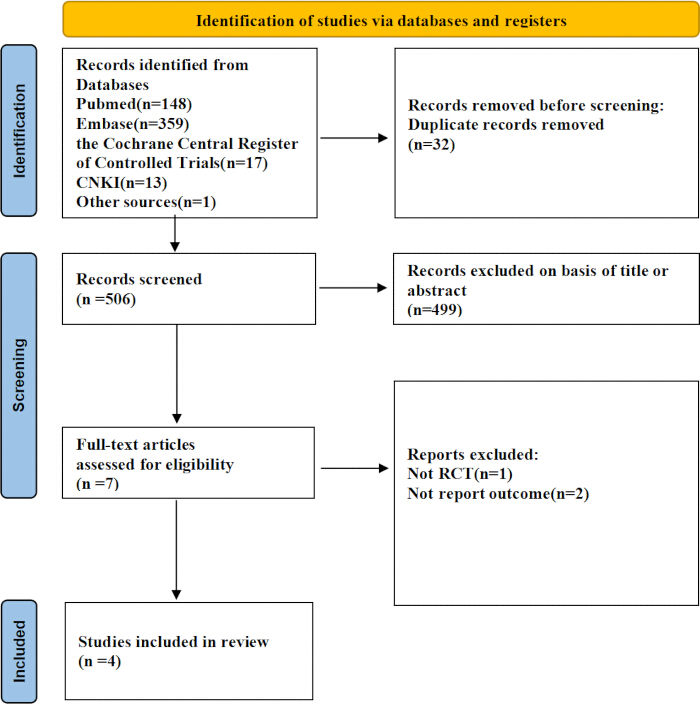
Figure 1: PRISMA flow diagram of study selection. This figure shows the identification, screening, eligibility assessment, and final inclusion of studies. A total of 538 records were identified, and four randomized controlled trials were included in the systematic review and meta-analysis. Please click here to view a larger version of this figure.

Figure 2: Forest plot of methotrexate versus control for change in WOMAC total score. This figure shows the pooled mean difference in WOMAC total score change from baseline. Negative mean differences favor methotrexate. Four studies with 343 participants were included. Please click here to view a larger version of this figure.
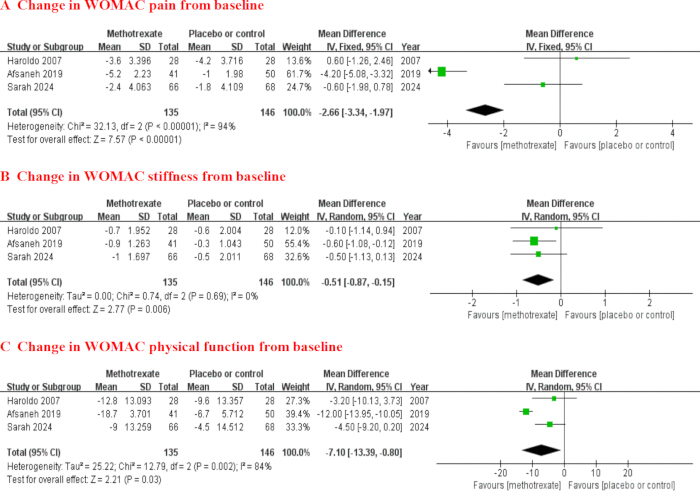
Figure 3: Forest plots of methotrexate versus control for secondary WOMAC outcomes. (A) shows WOMAC pain, (B) shows WOMAC stiffness, and (C) shows WOMAC physical function. Negative mean differences favor methotrexate. Three studies with 281 participants were included. Please click here to view a larger version of this figure.
| Study | Patients, n | Male, n (%) | Age, years, mean | Intervention | Control | Follow-up, weeks | K-L score III, n (%) |
| Haroldo et al., 2007 | 58 | 10 (17.2) | 61.1 | Oral MTX 7.5 mg weekly | Oral placebo 7.5 mg weekly | 16 | 54 (93.1) |
| Kong et al., 2013 | 62 | 22 (35.5) | 55–73* | Oral MTX 10–15 mg/week + NSAID 60 mg 3 times daily | NSAID 60 mg 3 times daily | 16 | NR |
| Afsaneh et al., 2019 | 91 | 34 (37.4) | 53.0 | Oral MTX 7.5 mg weekly | Oral placebo 7.5 mg weekly | 24 | 52 (57.1) |
| Sarah et al., 2024 | 155 | 56 (36.1) | 61.0 | Oral MTX once weekly, escalating from 10 mg to 25 mg over 6 weeks | Oral placebo once weekly, escalating from 10 mg to 25 mg over 6 weeks | 48 | 49 (31.6) |
| Abbreviations: K-L score III = Kellgren-Lawrence score III; MTX = methotrexate; NR = not reported; NSAID = non-steroidal anti-inflammatory drug. | |||||||
| * Age range. | |||||||
Table 1: Characteristics of included studies. This table summarizes the study characteristics, including sample size, sex distribution, age, intervention, control treatment, follow-up duration, and Kellgren–Lawrence grade III distribution.
| Outcome | No. of patients (trials) | Relative effect, mean difference (95% CI) | Quality of the evidence | Downgrade reason(s) |
| Change in WOMAC total score | 343 (4) | MD −8.69 (95% CI −16.92 to −0.46) | Moderate | Inconsistency |
| Change in WOMAC pain | 281 (3) | MD −2.66 (95% CI −3.34 to −1.97) | Moderate | Inconsistency |
| Change in WOMAC stiffness | 281 (3) | MD −0.51 (95% CI −0.87 to −0.15) | High | None |
| Change in WOMAC physical function | 281 (3) | MD −7.10 (95% CI −13.39 to −0.80) | Low | Inconsistency and imprecision |
| Abbreviations: CI = confidence interval; MD = mean difference; WOMAC = Western Ontario and McMaster Universities Osteoarthritis Index. | ||||
Table 2: Summary of findings and strength of evidence. This table summarizes the main efficacy outcomes, pooled mean differences with 95% confidence intervals, quality of evidence, and downgrade reasons based on the GRADE assessment.
| Study | Groups and follow-up | Adverse events (AEs) | Serious AEs | Discontinuations / withdrawals | Laboratory abnormalities |
| Kingsbury et al., 2024 | MTX 10–25 mg/week + usual care (n=77) vs placebo + usual care (n=78); 12 months. | MTX group: 172 non-serious AE events. Control group: 187 non-serious AE events. No substantive between-group difference in AE profile was observed. | SAEs: 2/77 vs 2/78; all were considered unrelated to the study drug. | MTX group: AE-related withdrawal by 12 months: 6/77. Control group: AE-related withdrawal by 12 months: 2/78. | Blood monitoring was performed; no treatment-emergent laboratory-abnormality counts were reported. |
| Enteshari-Moghaddam et al., 2019 | MTX 7.5 mg/week, increased to 15 mg/week, + folic acid (n=50) vs placebo (n=50); 6 months. | MTX group: no MTX-related adverse effects were observed/reported. Control group: AE counts were not separately reported. | Not specifically reported; no serious adverse events were described. | MTX group: No treatment discontinuation was reported; 9 patients were excluded from the final analysis because of corticosteroid use, not for safety reasons. Control group: No treatment discontinuation was reported; no patients were excluded from the final analysis. | CBC, liver function, BUN, and creatinine were monitored; no MTX adverse effects were reported, but separate laboratory-abnormality counts were not provided. |
| Kong et al., 2013 | MTX 10–15 mg/week + NSAID (n=31) vs NSAID alone (n=31); 16 weeks. | MTX group: 17/31 patients (54.8%) had adverse reactions, including 13/31 patients (41.9%) with mild gastrointestinal symptoms. Control group: 3/31 patients (9.7%) had upper abdominal discomfort after 3–4 weeks of NSAID treatment. | Not specifically reported; no serious adverse events were described. | MTX group: GI intolerance led to MTX discontinuation in 1/31 and dose reduction in 2/31. Control group: upper abdominal discomfort led to NSAID discontinuation or treatment switch in 3/31. | ALT elevation >2-fold occurred in 2/31 MTX patients and resolved after temporary discontinuation; no leukopenia or thrombocytopenia was observed. |
| Holanda et al., 2007 | MTX 7.5 mg/week (n=29) vs placebo (n=29); 4 months. | MTX group: 3/29 patients (10.3%) had epigastric pain, and 3/29 patients (10.3%) had nausea. Control group: 4/29 patients (13.8%) had epigastric pain, and 2/29 patients (6.9%) had nausea. | Not specifically reported; no serious adverse events were described. | MTX group: withdrawal: 1/29, due to seronegative symmetric polyarthritis. Control group: withdrawal: 1/29, due to participation in another clinical trial. | Hemoglobin, leukocyte count, AST, and ALT values after 4 months were similar between groups; clinically important laboratory-abnormality counts were not reported. |
| Abbreviations: AE = adverse event; ALT = alanine aminotransferase; AST = aspartate aminotransferase; BUN = blood urea nitrogen; CBC = complete blood count; GI = gastrointestinal; MTX = methotrexate; NR = not reported; NSAID = non-steroidal anti-inflammatory drug; SAE = serious adverse event. | |||||
Table 3: Safety outcomes in included randomized controlled trials of methotrexate for knee osteoarthritis. This table summarizes adverse events, serious adverse events, discontinuations or withdrawals, and laboratory abnormalities reported in the included trials.
Supplementary Figure 1: Subgroup analysis of meta-analysis for the primary outcomes. This figure presents the subgroup analysis for the primary outcome according to follow-up duration. Please click here to download this file.
Supplementary Table 1: Search strategy. This table provides the complete search strategy for PubMed, Embase, the Cochrane Central Register of Controlled Trials, and CNKI. Please click here to download this file.
Supplementary Table 2: Risk of bias summary. This table presents RoB 2 domain-level and overall risk-of-bias judgments for each included study. Please click here to download this file.
Supplementary Table 3: Sensitivity analysis of meta-analysis. This table reports sensitivity analyses for the primary outcome, including alternative model choice and exclusion-based analyses. Please click here to download this file.
Supplementary File 1: The RevMan project file (.rm5).Please click here to download this file.
Discussion
Loading...
$$\rightleftharpoonup{xx}$$
$$\longleftharp{xx}$$,
$$\longrightharp{xx}$$,
This systematic review and meta-analysis included a total of 366 participants from four trials. The study demonstrated that oral methotrexate moderately alleviates pain and stiffness associated with knee osteoarthritis and improves functional status compared to placebo or control groups. Overall, these findings support the potential role of methotrexate in the treatment of knee osteoarthritis.
Recent randomized controlled trials14,15,16,17 have investigated the efficacy of methotrexate in the management of knee osteoarthritis. However, the findings from these studies have been inconsistent, highlighting the urgent need for a comprehensive meta-analysis. By synthesizing the data from these trials, this meta-analysis of randomized controlled trials was conducted. The results demonstrate that oral methotrexate moderately alleviates pain and stiffness associated with knee osteoarthritis while improving functional status compared to placebo or control groups. Although a recent meta-analysis18 has shown that methotrexate benefits multiple joint sites in osteoarthritis, similar to the present findings, the present meta-analysis concentrates solely on knee osteoarthritis, thereby substantially reducing the disease heterogeneity inherent in mixed-joint analyses. Given that the pathophysiology and treatment response of knee osteoarthritis may differ from those of the hand or hip, evidence from mixed populations may not be directly applicable. Thus, this focused analysis fills a specific evidence gap and provides direct, condition-specific guidance for clinical decision-making in knee osteoarthritis.
The mechanisms through which methotrexate is utilized in the treatment of knee osteoarthritis are not yet fully understood. The following are several potential explanations: Recent studies indicate that synovitis plays a crucial role in the pathogenesis of KOA. This condition not only exacerbates joint pain and stiffness but also promotes the degeneration and destruction of cartilage. Thus, there is an urgent need for effective therapeutic strategies targeting synovitis. MTX, due to its anti-inflammatory and immunomodulatory properties, has emerged as a promising treatment option. First, MTX inhibits dihydrofolate reductase, leading to a reduction in the synthesis of purines and pyrimidines, which suppresses the proliferation and activation of inflammatory cells, thereby mitigating the inflammatory response in the synovium8. Second, MTX increases the concentration of adenosine in the body, which possesses anti-inflammatory and immunoregulatory effects. Accumulating evidence suggests that KOA encompasses multiple phenotypes, including an inflammatory subtype driven by active synovitis, which is distinctly different from the non-inflammatory, mechanically driven forms. The trials included in this meta-analysis did not systematically screen participants for synovitis or conduct subgroup analyses based on inflammatory status. Therefore, the observed treatment benefit of methotrexate may be concentrated in, or even limited to, patients with significant synovial inflammation. This possibility aligns with the drug’s established mechanism in suppressing synovitis and may partly account for the inconsistent results seen across individual studies. These findings should thus not be generalized to all KOA populations without considering the underlying phenotype.
This meta-analysis has several limitations. First, although a structured descriptive synthesis of safety outcomes was added, the available safety evidence remains limited and inconsistently reported across the included trials. Methotrexate is an immunomodulatory drug that requires monitoring of liver function, renal function, and blood counts in routine clinical use; however, adverse events, serious adverse events, treatment discontinuations or withdrawals, and laboratory abnormalities were not uniformly defined or completely reported. Therefore, the current evidence is insufficient to establish the long-term safety or overall risk–benefit profile of methotrexate in knee osteoarthritis. Second, most included studies had relatively short follow-up periods, which restricts the assessment of long-term efficacy, safety, disease progression, and functional outcomes. Third, there was considerable variability in methotrexate dosing, treatment duration, and comparator regimens across trials, which may have contributed to heterogeneity and may limit the evaluation of optimal treatment protocols. Currently, there are no clear guidelines regarding the optimal dosage or administration strategy of methotrexate for knee osteoarthritis. Fourth, the included trials did not systematically stratify patients by inflammatory phenotype or synovitis status. Therefore, the observed treatment effect may have been diluted or confounded by KOA phenotype heterogeneity, and it remains uncertain whether methotrexate provides meaningful clinical benefit in non-inflammatory knee osteoarthritis. Finally, the evidence base was limited by the small number of trials and participants, high statistical heterogeneity, incomplete safety and risk-of-bias data, untested publication or language bias, and minor uncertainty regarding WOMAC score harmonization. These findings should therefore be interpreted with caution. Future large-scale randomized controlled trials should systematically report adverse events by type and severity, discontinuation rates and reasons, laboratory monitoring outcomes including liver function, renal function, and blood counts, folic acid use and adherence, and long-term safety outcomes.
Conclusions
This meta-analysis provides preliminary evidence that oral methotrexate may alleviate pain and stiffness and improve function in knee osteoarthritis compared to placebo. Overall, these findings support the potential role of oral methotrexate for symptomatic management of knee osteoarthritis, without evidence of structural modification. However, due to the limited number of studies, variable quality, and lack of long-term safety data, these findings should be interpreted cautiously and do not yet support routine clinical use. High-quality, large-scale RCTs are needed to confirm efficacy and establish optimal protocols.
Disclosures
Loading...
$$\rightleftharpoonup{xx}$$
$$\longleftharp{xx}$$,
$$\longrightharp{xx}$$,
The authors declare no conflicts of interest.
Materials
| Name | Company | Catalog Number | Comments |
|---|---|---|---|
| China National Knowledge Infrastructure (CNKI) | CNKI https://oversea.cnki.net/index/ | Search date: May 1, 2026 | Chinese-language literature search |
| Cochrane Central Register of Controlled Trials (CENTRAL) | Cochrane Library https://www.cochranelibrary.com/central/about-central | Search date: May 1, 2026 | Randomized controlled trial search |
| Cochrane Handbook | Cochrane https://www.cochrane.org/authors/handbooks-and-manuals/handbook/current | Current online version used by authors | Methodological guidance for systematic review and meta-analysis |
| Embase | Elsevier https://www.elsevier.com/products/embase https://www.embase.com/ | Search date: May 1, 2026 | Bibliographic database search |
| GRADE approach | GRADE Working Group https://www.gradeworkinggroup.org/ | GRADE framework | Certainty-of-evidence assessment |
| Microsoft Excel | Microsoft | Microsoft Excel 2021 | Data extraction and table preparation |
| PRISMA 2020 checklist | PRISMA https://www.prisma-statement.org/ | 2020 statement | Reporting checklist |
| PubMed | National Library of Medicine https://pubmed.ncbi.nlm.nih.gov/ | Search date: May 1, 2026 | Bibliographic database search |
| RevMan | The Cochrane Collaboration https://revman.cochrane.org/ | Version 5.4 | Meta-analysis and forest plots |
| RoB 2 tool | Cochrane https://www.riskofbias.info/welcome/rob-2-0-tool/current-version-of-rob-2 | Current online version used by authors | Risk-of-bias assessment |
| WHO International Clinical Trials Registry Platform (ICTRP) | World Health Organization https://trialsearch.who.int/ | Search date: May 1, 2026 | Identification of ongoing or unpublished trials |
Reprints and Permissions
Request permission to reuse the text or figures of this JoVE article
Request Permission