This review suggests that social support facilitates rehabilitation following athletic injury by fostering motivation and adaptive pain coping. This interconnected relationship may help athletes distinguish harmful pain from therapeutic progress, thereby supporting the transition from recovery to peak performance.
A subscription to JoVE is required to view this content. Sign in or start your free trial.
Review Article
Motivation, Pain, and Social Support in Athletic Injury Rehabilitation: A Systematic Review and Narrative Synthesis
In This Article
Summary
Abstract
The rehabilitation process from athletic injury to peak performance is influenced by complex psychosocial factors. This systematic review synthesizes evidence regarding the effects of training motivation, pain, and social support on rehabilitation outcomes. The review was conducted and reported in accordance with the PRISMA 2020 guidelines. A comprehensive search of PubMed, PsycINFO, SPORTDiscus, and Web of Science was performed. Following duplicate removal, two independent reviewers screened titles, abstracts, and full-text articles according to predefined eligibility criteria. Fifteen studies met the inclusion criteria and were included in a narrative synthesis. The findings suggest that motivation, pain, and social support are dynamically interconnected. Social support from family members, clinicians, and particularly peers may serve as a foundational resource that promotes autonomous motivation. In turn, this motivated engagement appears to facilitate adaptive pain coping. Based on the interpretive synthesis of the included studies, athletes who learn to distinguish between “good” pain (indicative of therapeutic progress) and “bad” pain (signaling potential harm) may experience a more favorable rehabilitation trajectory. Available evidence further suggests that such a trajectory is associated with sustained performance outcomes. Conversely, inadequate support may undermine motivation and promote fear-avoidance responses to pain, potentially contributing to poor rehabilitation outcomes or premature career termination in some cases. The therapeutic alliance and peer support emerged as critical mechanisms through which social support may exert its enabling effects. Interventions should therefore adopt a holistic approach that simultaneously strengthens support networks, nurtures autonomous motivation, and promotes adaptive pain appraisal. However, given the interpretive nature of this synthesis and the limitations of the available evidence, these conclusions should be interpreted cautiously. This review proposes an integrated conceptual model illustrating the potential reciprocal interplay among motivation, pain, and social support throughout the rehabilitation process.
Introduction
Sport participation, while conferring numerous physical and psychological benefits, inherently carries a significant risk of injury1. Epidemiological data indicate that injury rates remain substantial across competitive and recreational athletic populations, with musculoskeletal injuries representing the most prevalent category2. For the affected athlete, injury represents not merely a physical disruption but a profound psychological challenge, threatening athletic identity, social connections, and carefully cultivated performance trajectories3. The subsequent rehabilitation process requires not only physical healing but also sustained psychological engagement during what is often a prolonged and uncertain recovery period4. Traditionally, successful rehabilitation has been defined in biomedical terms, emphasizing tissue healing, restoration of range of motion, and functional strength gains5. However, growing evidence suggests that physical recovery alone does not guarantee a return to pre-injury performance, let alone peak performance6. For example, only 65% of athletes return to their pre-injury level of sport following anterior cruciate ligament reconstruction, with psychological factors emerging as stronger predictors of return than physical function7. Consequently, increasing attention has been directed toward the psychosocial dimensions of rehabilitation, particularly the roles of training motivation, pain experience, and social support8.
Within this literature, key concepts require explicit definition. Autonomous motivation, grounded in Self‑Determination Theory, refers to engagement in rehabilitation driven by intrinsic enjoyment, personal challenge9, as opposed to controlled motivation characterized by external pressure, guilt, or coercion. Adaptive pain coping describes a set of cognitive and behavioural strategies through which athletes interpret pain during rehabilitation not solely as a threat to be avoided but as meaningful sensory information that can guide load management and clinical decisions10. The therapeutic alliance refers to the collaborative, trust‑based relationship between athlete and clinician, characterized by shared goals, mutual respect, and open communication, which has been shown to enhance treatment adherence and psychological outcomes11. Training motivation has been consistently implicated in rehabilitation adherence and outcomes. Drawing upon Self‑Determination Theory, researchers have distinguished between autonomous motivation and controlled motivation. Evidence suggests that athletes reporting higher autonomous motivation demonstrate superior adherence to rehabilitation protocols and more positive psychological responses to the recovery process12. Conversely, controlled forms of motivation have been associated with poorer adherence and heightened psychological distress. Pain represents an equally ubiquitous yet complex factor in the rehabilitation experience13. As the primary symptom precipitating medical consultation and the most salient physical experience throughout recovery, pain might reasonably be expected to influence psychological responses and behavioural engagement. Traditional conceptualizations have positioned pain as a negative experience to be minimized, with fear‑avoidance models demonstrating that pain catastrophizing and associated fear of re‑injury can precipitate disabling avoidance behaviours14. However, emerging evidence suggests that some athletes develop more sophisticated relationships with pain, interpreting discomfort as informative feedback a form of adaptive pain coping that appears closely linked to both motivational resources and the quality of social support available15.
Social support is a cornerstone of positive rehabilitation experiences, with different providers contributing in distinct ways. Emotional support from family helps maintain morale and a sense of normalcy outside sport16, while a strong therapeutic alliance between athlete and practitioner promotes motivation and rehabilitation adherence through collaborative and respectful relationships. Although motivation, pain, and social support have each been widely studied, their dynamic interactions remain incompletely understood, as most research has examined these factors in isolation17. In addition, the literature has focused primarily on return to sport rather than the attainment and maintenance of peak performance18. In this review, peak performance refers to the consistent achievement of sport-specific functioning at or above an athlete’s pre-injury competitive level, encompassing physical, technical, tactical, and psychological capabilities. This distinction is important because successful rehabilitation and return to sport do not necessarily equate to a return to pre-injury performance potential19.
To anchor the present synthesis within broader theoretical frameworks, we draw upon several complementary perspectives. The biopsychosocial model posits that rehabilitation outcomes emerge from dynamic interactions among biological (e.g., tissue healing), psychological (e.g., motivation, pain beliefs), and social (e.g., support networks) factors, providing an overarching structure for understanding recovery as more than a biomedical process20. Resilience theory offers insights into how athletes positively adapt to the adversity of injury, with motivational and social resources functioning as protective factors that buffer against maladaptive responses21. Athletic identity research highlights that injury threatens a core aspect of self‑definition; the strength and exclusivity of athletic identity may shape motivation for rehabilitation and responses to pain22. Finally, cognitive appraisal approaches (e.g., Lazarus and Folkman’s transactional model) explain how athletes’ primary appraisals of injury as threat or challenge, and secondary appraisals of available coping resources, influence emotional and behavioral outcomes, including whether pain is interpreted catastrophically or adaptively15. Integrating these frameworks allows a more holistic, process-oriented understanding of athletic rehabilitation. This systematic review addresses existing gaps by synthesizing evidence on the roles of training motivation, pain, and social support throughout the rehabilitation journey, from injury onset to peak performance. The review examines the independent contributions of these factors to rehabilitation outcomes, explores their dynamic interrelationships, and develops an integrated conceptual model illustrating how their interplay may facilitate or hinder recovery and performance attainment. By synthesizing findings from 15 studies using PRISMA-guided methodology, this review advances understanding beyond isolated factor analysis toward a more integrated conceptualization of athletic rehabilitation (Figure 1).
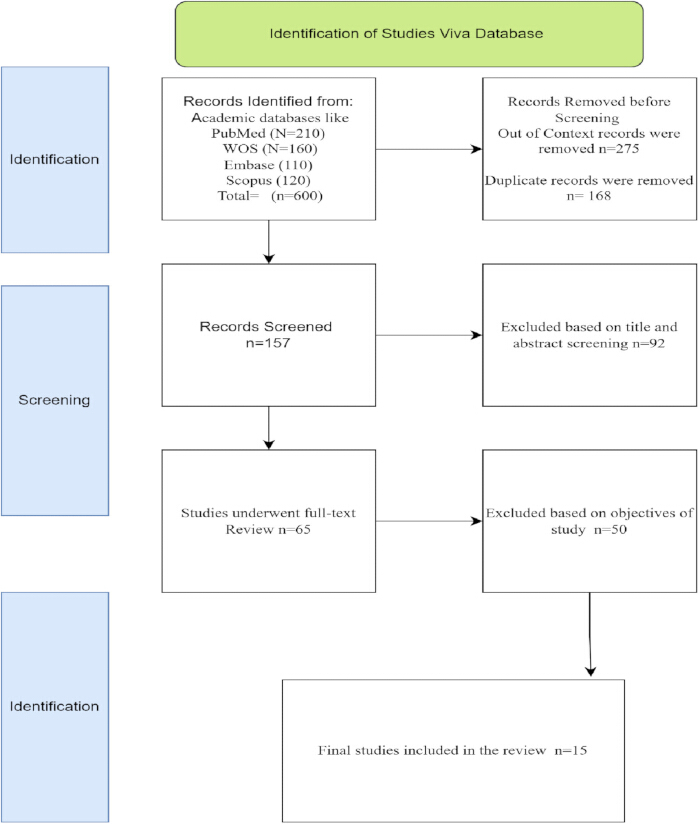
Figure 1: PRISMA flow diagram. The PRISMA flow diagram illustrates the study selection process. A total of 600 records were identified through database searching. After removal of out-of-context records (n = 275) and duplicate records (n = 168), 157 records underwent title and abstract screening. Subsequently, 65 full-text articles were assessed for eligibility, and 15 studies met the inclusion criteria and were included in the final review. Please click here to view a larger version of this figure.
Access restricted. Please log in or start a trial to view this content.
Review and Perspective
This systematic review was conducted and reported in accordance with the Preferred Reporting Items for Systematic Reviews and Meta-Analyses (PRISMA) 2020 guidelines to ensure methodological transparency and reporting clarity23.
1. Search methodology - PCC framework
Studies were included based on the Population, Concept, and Context (PCC) framework.
- Population
The primary population of interest comprised athletes or highly active individuals undergoing rehabilitation following sports-related musculoskeletal injury. However, to capture the broader psychosocial mechanisms relevant to rehabilitation, studies involving physically active non-athletic populations were also considered when they addressed one or more of the core psychosocial constructs under investigation.
This broader inclusion strategy was justified by the transdiagnostic nature of the psychosocial mechanisms underlying rehabilitation motivation, pain interpretation, and social support, as well as the relatively limited number of studies that have examined all three constructs simultaneously within athletic populations. Findings derived from non-athletic populations were interpreted cautiously and discussed in relation to their conceptual relevance to athletic rehabilitation. - Concept
The concepts investigated in this review included training motivation, particularly autonomous versus controlled motivation, rehabilitation adherence, and psychological readiness; pain, including pain perception, pain catastrophizing, fear avoidance, and adaptive pain coping; and social support, including support from clinicians, peers, family members, teammates, and the therapeutic alliance.
These psychosocial constructs were examined in relation to rehabilitation processes and recovery outcomes irrespective of injury type or rehabilitation modality, provided that the underlying mechanisms remained relevant to physical rehabilitation and return-to-performance trajectories. - Context
The context of interest encompassed rehabilitation settings and recovery processes ranging from the immediate post-injury or post-diagnosis phase through return to previous activity levels and, in athletic populations, progression toward peak performance.
2. Eligibility criteria
Studies were eligible for inclusion if they were peer-reviewed original research articles employing quantitative, qualitative, or mixed-methods designs and published in English. Studies were required to examine at least one of the three core psychosocial constructs—motivation, pain, or social support—within a rehabilitation or recovery context.
Opinion articles, editorials, conference abstracts, dissertations, and studies lacking sufficient methodological detail were excluded. Studies unrelated to rehabilitation processes or psychosocial recovery mechanisms were also excluded.
3. Information sources and search strategy
A comprehensive literature search was conducted across PubMed/MEDLINE, PsycINFO (via EBSCOhost), SPORTDiscus (via EBSCOhost), and Web of Science Core Collection. These databases were selected to ensure broad interdisciplinary coverage across sports medicine, rehabilitation, psychology, and health sciences.
The initial search was conducted on October 26, 2025, and updated on January 15, 2026, to identify recently published studies. Reference lists of included articles and relevant review papers were also manually screened to identify additional eligible studies.
Search strategies combined keywords and controlled vocabulary related to athletic injury rehabilitation, motivation, pain, and social support. Database-specific syntax adjustments were applied where necessary.
4. Narrative synthesis
Due to methodological heterogeneity among the included studies, a narrative synthesis approach was adopted rather than quantitative meta-analysis. The synthesis focused on identifying recurring psychosocial themes, conceptual relationships, and rehabilitation-related mechanisms associated with adherence, recovery trajectories, and return-to-performance outcomes.
The findings are presented thematically according to the three principal psychosocial domains investigated: training motivation, pain experience, and social support. A summary of the characteristics, methodologies, and principal findings of the included studies is presented in Table 1.
| Reference Number | Author & Year | Study Type | Design | Population / Sample | Key Findings (summarized) | ||||
| 24 | Griffin et al. | Theoretical | Narrative review / Book chapter | Not applicable (theoretical) | Synthesizes social support literature in sport injury rehabilitation; identifies types, sources, and mechanisms of support; emphasizes role of support providers in facilitating positive recovery outcomes. | ||||
| 25 | Williamson, J. | Empirical | Qualitative / Interview study | 6 Swedish elite female athletes | Sport-specific medical professionals perceived as most supportive; family and friends support physical rehab and socialization; consistent, nonjudgmental coach support encourages healthy rehab; isolation and poor coordination of professionals are debilitating factors. | ||||
| 26 | Chronister et al. | Empirical | Meta-analysis | 6 Swedish elite female athletes (as reported; note: meta-analysis typically has larger N – potential discrepancy) | Demonstrates significant positive relationships between social support and rehabilitation outcomes across disability populations; functional support more strongly associated with outcomes than structural support. | ||||
| 27 | Nätterlund and Ahlström | Empirical | Qualitative / Phenomenological interview study with validation | 21 women and 16 men (total N=37) with muscular dystrophy | Nine themes emerged: psychosocial support, meeting others with muscular dystrophy, knowledge/learning, daily life adjustment, coping, work adjustment, physical disability management, medical treatment, and involvement of relatives. Participants felt “seen and confirmed.” | ||||
| 28 | Levy et al. | Empirical | Pre- and post-rehabilitation treatment (longitudinal) | 70 patients (athletes undergoing rehabilitation) | In initial rehab phase, learning goal orientation, attitudes, and perceived severity predicted rehabilitation intention; intentions mediated relationship between these variables and clinic rehabilitation adherence. | ||||
| 29 | Arvinen-Barrow et al. | Theoretical | Narrative review / Book chapter | Not applicable (theoretical) | Provides comprehensive overview of social support in sport injury and rehabilitation; discusses support types, providers, and interventions; emphasizes need for multidisciplinary approaches. | ||||
| 30 | Ludewig, AB. | Empirical | Quantitative (ANOVA) | Injured athletes and athletic trainers (exact sample size not reported) | ANOVA indicated athletic trainers play a vital role in injured athletes’ motivation and social support during rehabilitation. | ||||
| 31 | Podlog et al. | Theoretical | Narrative review | Not applicable (theoretical) | Synthesizes psychosocial factors in injury rehabilitation and return to play; identifies motivation, confidence, and social support as critical; proposes integrated model of return-to-play decision-making. | ||||
| 32 | Barato et al. | Empirical | Quantitative / Cross-sectional | 73 athletes with anterior cruciate ligament (ACL) injuries | Latent profile analysis identified two profiles: (1) higher athletic identity + higher perceptions of sport social support; (2) lower athletic identity + lower perceptions of sport social support. No significant differences in rehabilitation adherence between profiles. | ||||
| 33 | Liu and Fu | Empirical | Quantitative / Moderation-mediation framework | 355 Chinese athletes from various regions and sports | Training programs, recovery strategies, motivation, psychological well-being, support systems, and experience significantly influence sports performance. Psychological health emerged as a mediator; athlete experience moderated effects. | ||||
| 34 | Chan et al. | Empirical | Quantitative / Longitudinal (two studies) | Study 1: 115 recreational athletes with ACL rupture; Study 2: 206 professional athletes | Study 1: Autonomous and controlled sport motivation associated with corresponding treatment motivation, controlling for autonomy support. Study 2: Autonomy orientation associated with autonomous motivation and autonomy support from coaches and physiotherapists. | ||||
| 35 | Davis et al. | Empirical | Quantitative / Experimental | Sample size not reported; handgrip force task | Social support cue (viewing support figure vs. stranger) significantly increased handgrip force production, especially during more difficult trials; participants perceived trials as less difficult in support condition despite higher output. | ||||
| 36 | Brewer et al. | Empirical | Quantitative / Prospective | N=93 at baseline; N=69 at 6-month follow-up post-surgery | Similar to Davis et al.: social support cue increased handgrip performance, with greater effect on difficult trials; perceived difficulty reduced in support condition. (Note: findings overlap with Davis et al.; both reported due to different populations/timing.) | ||||
| 37 | Kisley | Empirical | Mixed-methods / Master’s thesis | Injured athletes (exact sample size not specified) | Mental skills training and social support interact to influence rehabilitation outcomes; athletes using both resources demonstrate superior adherence and psychological readiness for return to sport. | ||||
| 38 | Rackow et al. | Empirical | Qualitative study | 10 professional male football (n=4) and rugby union (n=6) players (mean age 22.4±3.4 years) | Athletes viewed injuries as inherent to sport but reported frustration and diminished self-confidence during recovery. They perceived that sports medicine professionals should primarily address physical aspects; psychosocial interventions (motivation, confidence) require subtle, indirect approaches. | ||||
Table 1: Summary of included studies (n = 15). The included studies comprised narrative reviews, qualitative interviews, meta-analyses, quantitative cross-sectional and longitudinal studies, experimental paradigms, and mixed-methods research designs. Please click here to download this Table.
5. Training motivation during rehabilitation
The reviewed literature consistently indicates that training motivation plays a central role in rehabilitation adherence, psychological adaptation, and return-to-performance outcomes. Across the included studies, autonomous forms of motivation were generally associated with greater engagement in rehabilitation, greater persistence during recovery, and more adaptive emotional responses throughout rehabilitation.
Grounded primarily in Self-Determination Theory, several studies suggested that athletes who perceived rehabilitation activities as personally meaningful demonstrated greater adherence to prescribed rehabilitation programs and greater resilience during prolonged recovery periods24,25. In contrast, controlled forms of motivation characterized by external pressure, fear of disappointing others, or obligation were more commonly associated with emotional distress, frustration, and inconsistent rehabilitation adherence26.
The reviewed evidence further suggests that motivational quality may influence how athletes interpret rehabilitation setbacks and recovery challenges. Athletes demonstrating more autonomous forms of motivation appeared more likely to perceive rehabilitation obstacles as manageable aspects of the recovery process rather than threats to athletic identity or career continuity27.
Several studies also emphasized the importance of psychological readiness during rehabilitation progression and return-to-sport transitions28,29. Athletes demonstrating greater rehabilitation confidence and intrinsic engagement often reported greater psychological preparedness during the later stages of recovery.
Importantly, motivation did not appear to operate independently of other psychosocial variables. Several included studies suggested that motivational processes were closely intertwined with pain appraisal, rehabilitation confidence, and the quality of available social support24,25,26,27,28,29.
Collectively, the reviewed literature suggests that rehabilitation motivation is not solely an internal psychological characteristic, but rather a dynamic process shaped by interpersonal support, pain interpretation, rehabilitation experiences, and perceptions of recovery progress.
6. Pain experience and adaptive pain coping
Pain emerged across the reviewed literature as both a physical and psychological component of rehabilitation30,31,32,33,34,35. Several included studies emphasized that athletes frequently interpreted pain not solely as an indicator of tissue damage, but also as meaningful sensory information associated with rehabilitation progress, training adaptation, and recovery monitoring.
Traditional fear-avoidance models have demonstrated that pain catastrophizing and fear of re-injury may contribute to avoidance behaviors, reduced rehabilitation engagement, delayed return to sport, and diminished psychological confidence30,31. Athletes who perceived pain primarily as a threat were more likely to demonstrate anxiety, uncertainty, and reduced willingness to participate fully in rehabilitation activities.
However, the reviewed literature also suggests that some athletes develop more adaptive pain appraisal strategies during rehabilitation. Several studies reported that athletes who learned to distinguish between discomfort associated with therapeutic loading and pain indicative of potential injury exacerbation were more likely to maintain rehabilitation adherence and psychological confidence32,33,34.
This adaptive pain coping process appeared closely associated with rehabilitation education, clinician communication, and supportive rehabilitation environments. Athletes who perceived pain as understandable, expected, and manageable demonstrated lower levels of fear avoidance and greater confidence during return-to-sport progression35.
Importantly, pain experiences were not interpreted uniformly across studies. Individual differences in injury history, psychological resilience, social support, and rehabilitation context appeared to influence how athletes interpreted and responded to pain during recovery.
The reviewed evidence therefore suggests that pain should not be conceptualized solely as a negative symptom to be minimized, but rather as a multidimensional experience shaped by psychological, interpersonal, and rehabilitation-related factors.
7. Social support and therapeutic alliance
Social support emerged as a foundational psychosocial resource throughout rehabilitation36,37,38,39,40,41,42. Across the reviewed literature, support from clinicians, peers, teammates, coaches, and family members appeared to influence emotional well-being, rehabilitation adherence, psychological confidence, and return-to-performance expectations.
Particular emphasis was placed on the therapeutic alliance between athlete and clinician. Several studies reported that collaborative communication, empathy, trust, shared goal setting, and individualized rehabilitation planning were associated with more positive rehabilitation experiences and stronger adherence behaviors36,37,38.
Athletes who perceived clinicians as supportive and communicative often reported greater rehabilitation confidence and improved psychological adjustment during prolonged recovery periods. In contrast, poor communication, inconsistent feedback, or perceived emotional detachment were associated with frustration, uncertainty, and reduced rehabilitation engagement.
Peer support also emerged as an important component of rehabilitation adjustment. Athletes who maintained social connectedness with teammates or interacted with individuals who had previously experienced similar injuries frequently reported reduced feelings of isolation and stronger motivational engagement39,40.
Family support was similarly associated with emotional stability and practical assistance during recovery. However, several studies cautioned that excessive external pressure from coaches, teammates, or family members could contribute to anxiety, controlled motivation, and premature return-to-sport decisions41,42.
Collectively, the reviewed literature suggests that social support may function not merely as emotional encouragement but also as a critical enabling mechanism that influences motivation, pain appraisal, rehabilitation adherence, and psychological resilience throughout recovery.
8. Interrelationship between motivation, pain, and social support
A central finding emerging from the reviewed literature is that motivation, pain appraisal, and social support appear to function as dynamically interconnected psychosocial processes throughout rehabilitation.
Several included studies suggested that social support may serve as a foundational enabling resource through which athletes develop autonomous motivation, adaptive coping strategies, and rehabilitation confidence43,44,45,46,47. In turn, motivated rehabilitation engagement appeared to facilitate more constructive interpretations of pain, while adaptive pain coping often reinforced rehabilitation persistence and return-to-performance confidence48,49,50,51,52.
The reviewed evidence additionally suggests that disruptions within one psychosocial domain may negatively influence the others. For example, inadequate social support may undermine motivation, contribute to fear-avoidance responses to pain, and reduce rehabilitation adherence53,54,55,56. Conversely, strong therapeutic alliances and supportive rehabilitation environments may promote psychological resilience and facilitate more adaptive rehabilitation trajectories57,58,59.
Figure 2 presents a conceptual framework derived from the narrative synthesis of the included studies, illustrating the reciprocal interplay among social support, motivation, and adaptive pain coping throughout rehabilitation.
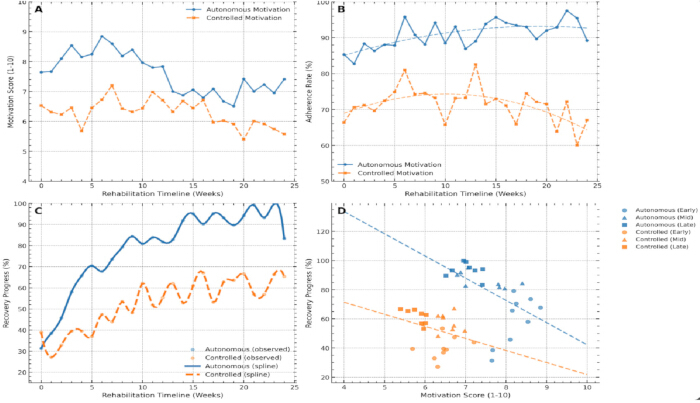
Figure 2: Temporal dynamics of motivation, adherence, and recovery in rehabilitation: contrasting autonomous and controlled motivation. The line charts illustrate hypothetical weekly trends in motivation scores and rehabilitation adherence for autonomous and controlled motivation trajectories during rehabilitation. Please click here to view a larger version of this figure.
Importantly, these relationships remain primarily interpretive in nature due to methodological heterogeneity across the included studies and the limited availability of longitudinal evidence examining all three psychosocial constructs simultaneously.
Nevertheless, the reviewed literature consistently supports the view that rehabilitation experiences cannot be fully understood through isolated psychosocial variables alone. Rather, motivation, pain interpretation, and social support appear to operate synergistically throughout recovery and return-to-performance processes.
9. Clinical perspectives and future directions
The reviewed evidence highlights the importance of adopting psychologically informed rehabilitation approaches that extend beyond physical recovery alone. Rehabilitation programs may benefit from integrating motivational support, pain education, and structured social support strategies throughout the rehabilitation process. Figure 3 presents a conceptual overview of psychologically informed rehabilitation strategies derived from the reviewed literature.
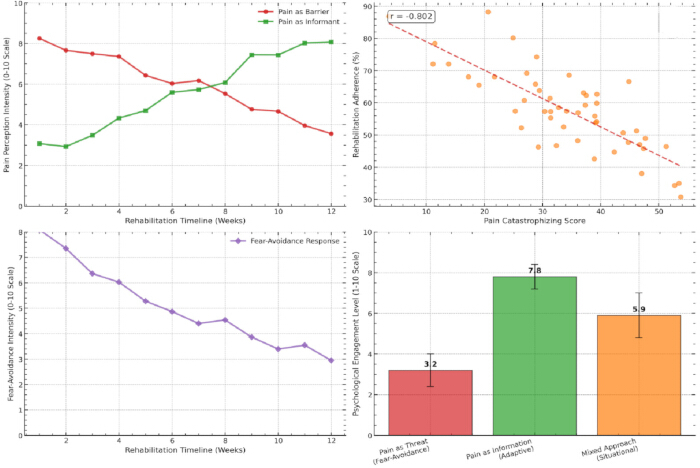
Figure 3: Patterns of pain as a barrier and informant in rehabilitation. The top-left line chart illustrates the temporal evolution of pain perception, showing the shifting balance between pain as a barrier (e.g., fear and avoidance) and as an informant (e.g., guidance and rehabilitation decision-making) over a 12-week rehabilitation period. Please click here to view a larger version of this figure.
Clinicians should foster collaborative therapeutic alliances characterized by clear communication, shared goal-setting, individualized rehabilitation planning, and consistent emotional support. Peer-support initiatives and psychologically supportive team environments may also help reduce isolation and promote sustained engagement in rehabilitation.
The literature further suggests that rehabilitation interventions should support athletes in developing adaptive pain appraisal strategies, particularly the ability to differentiate between therapeutic discomfort and pain signaling potential harm.
At the same time, several limitations remain within the current evidence base. The included studies demonstrated substantial methodological heterogeneity, variable definitions of psychosocial constructs, inconsistent outcome measures, and limited longitudinal follow-up. Furthermore, relatively few studies examined all three psychosocial domains simultaneously within athletic populations.
Future research should therefore prioritize longitudinal, intervention-based designs that examine the reciprocal relationships among motivation, pain appraisal, and social support across diverse rehabilitation contexts. Greater conceptual consistency and standardized psychosocial outcome measures may further strengthen understanding of rehabilitation trajectories and return-to-performance outcomes.
Access restricted. Please log in or start a trial to view this content.
Conclusions
This systematic review synthesizes current evidence regarding the interconnected roles of motivation, pain appraisal, and social support during athletic injury rehabilitation. Across the reviewed literature, these psychosocial constructs consistently emerged as dynamically interrelated factors influencing rehabilitation adherence, psychological adaptation, recovery trajectories, and return-to-performance outcomes. The evidence suggests that supportive rehabilitation environments may foster autonomous motivation and more ...
Access restricted. Please log in or start a trial to view this content.
Disclosures
The author declares no conflicts of interest.
Acknowledgements
This research received no external funding.
Access restricted. Please log in or start a trial to view this content.