This review examines how sedation strategies and circadian-related environmental interventions influence sleep organization, melatonin levels, delirium risk, and neurological recovery in patients receiving mechanical ventilation therapy in the intensive care unit (ICU).
Review Article
Targeted Sedation And Circadian Interventions In Mechanically Ventilated ICU Patients: A Narrative Review
Opens in a new tab
In This Article
Summary
Loading...
$$\rightleftharpoonup{xx}$$
$$\longleftharp{xx}$$,
$$\longrightharp{xx}$$,
Abstract
Loading...
$$\rightleftharpoonup{xx}$$
$$\longleftharp{xx}$$,
$$\longrightharp{xx}$$,
Circadian rhythms regulate sleep-wake cycles, hormone secretion, immune functions, and cardiovascular activity. However, they are frequently disrupted in mechanically ventilated ICU patients due to critical illness, environmental factors, and sedative exposure. This narrative review aims to examine the interaction between sedation practices, environmental interventions, and circadian disruption. A structured, non-systematic search of MEDLINE/PubMed, Web of Science, and Scopus (200-2025) was performed to identify mechanistic and clinical studies. Evidence indicates that deep and prolonged sedation is associated with decreased melatonin secretion, disrupted sleep architecture, and increased delirium risk, whereas minimal sedation combined with circadian-aligned non-pharmacological interventions, such as light and noise modulation and care clustering, may support organization. However, findings remain conflicting and are largely derived from observational studies. The use of a combined sedation-circadian rhythms care strategy represents a novel, untested approach. Future studies should incorporate standardized circadian outcomes and controlled designs to establish causality and evaluate clinical efficacy.
Introduction
Loading...
$$\rightleftharpoonup{xx}$$
$$\longleftharp{xx}$$,
$$\longrightharp{xx}$$,
Circadian rhythms are endogenous 24-hour biological cycles that regulate sleep-wake, hormonal secretion, immune function, and heart rate. Circadian rhythms are regulated by a master clock in the suprachiasmatic nucleus and drive peripheral rhythms via patterns of neural and hormonal activity1,2.
Circadian rhythms are often disrupted in ICU patients. ICUs are characterized by constant exposure to artificial lighting, noise, frequent nursing care, and extreme physiopathology, which disrupts circadian rhythms. The latter is associated with sleep fragmentation, loss of night-time predominance of sleep, and circadian hormone oscillations3,4. Polysomnography and actigraphy studies show that patients in the ICU have decreased slow-wave and REM sleep and spend most of their sleep during the day3. Recent studies on actigraphy, melatonin, and EEG demonstrate persistent circadian disruption in patients with delirium and patients with prolonged ICU stay. Circadian disruption may also continue after ICU discharge and result in cognitive impairment5,6,7,8.
Circadian disruption is associated with mechanical ventilation and sedative drugs. Propofol and benzodiazepines alter the electroencephalogram and block sleep3,9. Sedated critically ill patients on a ventilator have reduced melatonin secretion during the night and a higher risk of delirium than other patients10,11. Changes in sleep processes and melatonin secretion are associated with delirium and cognitive dysfunction1,3,10. In particular, delirium is linked to decreased melatonin amplitude and phase shift, which may indicate a role for these changes in brain dysfunction.
Critical illness circadian dysfunction also involves molecular clock processes. This includes altered expression of key clock genes like brain and muscle ARNT-like protein-1 (BMAL1), period (PER), and cryptochrome (CRY) with increasing illness severity, ICU admission, and haemodynamic instability12,13. These changes indicate a desynchronization of central and peripheral clocks. There are other causes of circadian disruption. Night-time light reduces melatonin levels and dim light during the day impairs entrainment1,14. Alarms, noise and variable schedules of care activities disturb sleep and circadian rhythms3,15. Circadian-sensitive interventions, such as bundling care and providing a circadian-sensitive environment, improve sleep and reduce delirium16.
Non-ICU chronobiological research has demonstrated that the time of day of therapeutic interventions (chronotherapy) impacts physiological and clinical outcomes16,17. But these are underdeveloped in mechanically ventilated ICU patients. These processes provide an approach to integrate sedation and circadian interventions for ICU patients on mechanical ventilation. This review aims to do more than simply provide a narrative account of the science of sedation, circadian biology, and the environment, to weave the science of sedation with circadian biology and the environment in a conceptual framework, highlighting key mechanisms, clinical relevance, and research opportunities.
Review and Perspective
Loading...
$$\rightleftharpoonup{xx}$$
$$\longleftharp{xx}$$,
$$\longrightharp{xx}$$,
This narrative review examines mechanistic and clinical evidence on sedation, circadian disruption, and environmental intervention in mechanically ventilated ICU patients. A structured but non-systematic literature search was conducted to identify suitable publications. PubMed/MEDLINE, Scopus, and Web of Science were searched for relevant studies. To increase methodological transparency and reproducibility, detailed database-specific search strategies are provided in the supplementary materials. Searches used Boolean operators and keywords related to circadian biology and critical care. Limits included English language studies in adult ICU populations (2000-2025). The complete search strings are provided in the Supplementary file. Search terms included: "circadian rhythm," "chronobiology," "melatonin," clock genes, BMAL1, PER, CRY, sleep, mechanical ventilation, intensive care unit, ICU, sedation, propofol, benzodiazepines, dexmedetomidine, delirium, light exposure, and noise.
The reference list of included studies was also screened for additional studies. Studies were selected based on their relevance to circadian disruption and restoration in mechanically ventilated patients. In addition, observational, interventional, and related mechanistic studies were also included. Inclusion criteria included studies that focused on adult ICU patients, especially patients who received mechanical ventilation, and studies that studied circadian rhythms, sedation, sleep architecture, delirium, or environmental factors. Both observational and interventional studies were included, and the chosen mechanistic and translational studies were needed. Pediatric-based studies, non-ICU setting, non-human based studies (except where mechanistically relevant), or non-circadian biology related studies (non-sedation in critical care) were not considered. Due to the narrative format of the current review, no formal risk-of-bias assessment and study quality grading were performed; however, studies were filtered based on their relevance and contribution to the conceptual framework.
Selection of studies was conducted through preliminary screening of titles and abstracts and full-text validation based on relevance to the conceptual framework; any disagreements in interpretation were sorted out by consensus. Since it is a narrative review, the risk-of-bias assessment was not formally conducted; the study was not graded, and no quantitative synthesis was conducted. It aimed to offer an integrative, hypothesis-generating synthesis of existing evidence and to suggest a concept model of circadian-based sedation and ICU care.
Mechanism of circadian Disruption in mechanically ventilated ICU patients
The manifestation of circadian disruption in patients in mechanically ventilated ICUs results from complex interactions among environmental stressors, mechanical ventilation, the use of sedation, and other factors, rather than a single factor alone. Environmental, clinical and physiologic factors disrupt circadian organization in mechanically ventilated patients in the ICU. In healthy people, circadian timing is controlled by the suprachiasmatic nucleus, which synchronizes peripheral clocks via light, hormones and behaviour1. This synchronization is disrupted in the ICU environment. Circadian misalignment is highly driven by environmental factors. Day-night signals are disrupted by continuous artificial light, insufficient daytime light exposure, and excessive night lighting, all of which inhibit melatonin secretion1. Noise, alarms and nighttime caregiving further disrupt sleep continuity and circadian entrainment3.
Mechanical ventilation further disrupts sleep architecture and circadian rhythms. Polysomnographic examinations show that, in patients placed on a ventilator, the slow-wave and rapid eye movement sleep phases, which are associated with circadian stability, are significantly reduced3. The asynchrony between patient ventilators and some ventilatory modes increases the frequency of arousals, thereby worsening sleep fragmentation and circadian desynchronization. Sedative drugs also affect circadian regulation. Propofol and benzodiazepine alter the electroencephalographic activity and suppress the physiological sleep patterns3. Sedation impairs circadian hormonal signaling, with reduced nocturnal melatonin levels and increased delirium risk reported in mechanically ventilated patients10. Recent comparative evidence demonstrates that sedative agents exert distinct effects on sleep patterns and circadian regulation. Dexmedetomidine, which is an α2-adrenergic agonist, was reported to induce a more physiologic sleep-like state with relative sparing of the slow-wave sleep and lower incidences of delirium than with benzodiazepines and propofol. In contrast, benzodiazepines and propofol are consistently associated with the suppression of rapid eye movement sleep, circadian hormonal cues, and delirium predisposition. Moreover, new evidence indicates that the degree and duration of sedation are key factors of circadian mismatch, with deeper and extended sedation being a contributing factor towards greater disruption of circadian rhythmicity and sleep continuity18,19,20,21. Dexmedetomidine is associated with more physiologic sleep-like patterns and lower delirium incidence than benzodiazepines and propofol, although it may still disrupt normal sleep architecture and circadian hormone rhythms.
In addition to sedative medications, analgesic medications, particularly opioids, can independently influence sleep architecture and circadian regulation in critically ill patients. Opioids are known to suppress rapid eye movement and slow-wave sleep, distort the melatonin secretion, and contribute to sleep fragmentation. Moreover, under-treatment of pain as well as overexposure to opioids has been linked to elevated risks of delirium and disrupted rest-activity cycles in populations in the ICU. The interaction between analgesia and sedation is therefore clinically of interest, and combined exposure may have additive effects on circadian misalignment and the neurocognitive outcome. Although pertinent, the role of analgesia in circadian disruption is under-researched and requires further investigations within integrated circadian care-sedation contexts8,22,23.
Circadian disruption occurs at the molecular level, as evidenced by the altered expression of core clock genes. Dysregulation of BMAL1, PER, and CRY genes has been reported in ICU patients and is linked to the severity of illness, length of ICU stay, and cardiovascular instability12. This evidence indicates disorganization of central and peripheral clocks, as well as increased stress and inflammatory signaling in cells. Circadian misalignment is linked with poor neurological and cardiovascular outcomes. Reduced sleep amplitude and disrupted sleep are associated with increased risk of delirium and cognitive impairment in mechanically ventilated patients1,10. Abnormal heart rate variability and blood pressure rhythms are also linked to circadian disturbance, which is a symptom of autonomic and cardiovascular imbalance12.
The interpretation of circadian disruption across studies is limited by heterogeneity in circadian assessment methods, as described in the limitations section. Lastly, the use of direct comparative evidence to isolate the effects of integrated circadian-aligned interventions, rather than examining individual aspects, is limited. The majority of current information has been collected through bundled care methods or observational designs rather than controlled factorial designs, and thus cannot be used to draw definitive conclusions on the additive or synergistic effects of combining sedation with the environmental intervention. Circadian-specific factorial trials should be used to reveal interaction effects and to support causal attribution. Figure 1 presents a conceptual synthesis of the interrelations among environmental stressors, mechanical ventilation, sedative exposure, and behavioral, hormonal, and molecular circadian indicators, derived from complementary evidence rather than a single, quantitatively fitted causal model. These interrelating mechanisms highlight that circadian disruption is multidimensional, which is why interventions must comprehensively address the environmental, behavioral, and pharmacological factors contributing to this disorder.
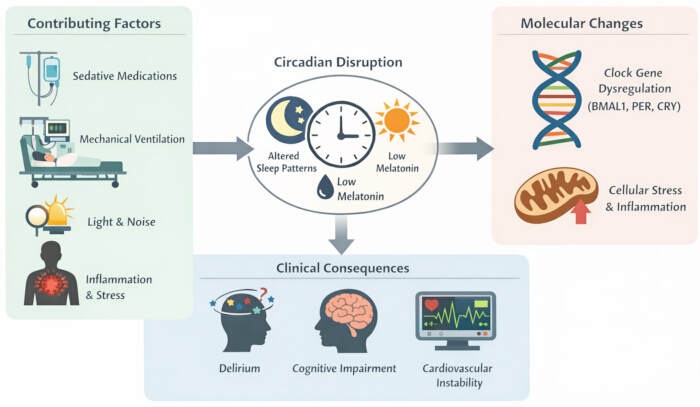
Figure 1: Circadian disruption conceptual framework in mechanically ventilated ICU patients The schematic illustrates the relationships between environmental stressors (e.g., light, noise, inflammation), mechanical ventilation, and sedative exposure, and their downstream behavioral ( sleep-wake disruption), hormonal (melatonin suppression), and molecular (dysregulation of core clock genes such as BMAL1, PER, and CRY) effects. Disruption across these domains is associated with adverse neurological and cardiovascular effects, such as delirium, cognitive impairment, and autonomic instability. This model is a construct based on consistent data (see Limitations) and is supported by complementary evidence. This framework integrates observational and mechanistic evidence and should be interpreted as a conceptual model rather than a confirmed causal pathway Please click here to view a larger version of this figure.
Circadian-based non-pharmacological Interventions in the ICU
Expanding on the multifactorial nature of circadian disruption, non-pharmacological treatments address aspects of the environment and behavior that can be modified and interact with sedation practices and inherent circadian regulation. Also, non-pharmacological interventions are important for maintaining and restoring circadian synchronization in mechanically ventilated ICU patients, alongside sedation practice. External time cues (zeitgebers), such as exposure to light, sound, exercise, and socialization, regulate circadian rhythms1. Alterations in these signals in the ICU setting are among the factors that add to circadian mismatch. The regulator of circadian timing is mostly light exposure. Bright daylight helps to reinforce circadian entrainment in healthy people, and nighttime darkness promotes melatonin secretion. Conversely, the conditions in ICUs are likely to be poor daytime lighting and high nocturnal light exposure, which result in inhibited melatonin secretion and diminished circadian amplitude1. Clinical experiments have shown that the exposure of critically ill patients to light at night is correlated with disturbed melatonin cycles and predisposition to delirium3.
Circadian-aligned care also requires noise reduction and environmental management. Day and night noise levels in ICUs are often above recommended limits, which adds to the sleep fragmentation and disruption of the circadian rhythm3. Organized noise-reduction measures, such as alarm optimization and designated quiet periods, have been associated with improved sleep continuity and fewer delirium episodes in critically ill populations, mostly in observational and single-center interventional studies16. Circadian stability is also affected by the timing and structure of the nursing and medical care. Relentless nighttime interventions impair day-night signaling. It has also been shown that organizing care activities and aligning nursing interventions with the principles of circadian improvement of sleep quality and reduction of anxiety and delirium in ICU patients16, so care organization is a manipulable circadian determinant.
The secondary zeitgebers that facilitate circadian entrainment are daytime mobilization and early awakening. Mobilization improves normal activity-rest patterns and can increase sleep-wake organization in patients in critical care3. Although some patients may be restricted in movement due to mechanical ventilation, detailed passive and active mobilization plans can help towards circadian reinforcement, provided these practices are used regularly. Although these methods are likely to promote melatonin release and sleep-wake processes, these processes must be verified with standardized circadian measurements. Emerging evidence from quality improvement initiatives and small interventional studies suggests that ICU care strategies involving light adjustment, noise reduction, care clustering, and daytime activity may be associated with reduced delirium and improved long-term cognitive outcomes; however, circadian-aligned bundle large randomized trials have not been done specifically23. These models do not focus on restoring environmental rhythmicity; instead, they focus on single circadian pathways isolated from one another.
Limited but informative interventional studies on circadian-based ICU interventions exist. Melatonin rhythmicity and circadian alignment have been found to be affected in critically ill patients by dynamic light application therapy, which aims to imitate physiological light-dark cycles. Likewise, multicomponent interventions that include sleep-promotion guidelines, noise reduction, and care clustering have shown improvements in perceived sleep quality and reduced delirium. However, the circadian heterogeneity (e.g., melatonin secretion, actigraphy, EEG) of the study design, intervention delivery, and outcome measures does not permit a direct comparison between studies, nor does it give a definitive finding on the circadian effect8,23,24,25,26,27. Circadian intervention has also been studied as melatonin supplementation. Whereas endogenous melatonin secretion is often impaired in ICU patients, exogenous melatonin has demonstrated variable effects on sleep quality and delirium prevention, where results are dependent on dose, timing, and patient factors28. The existing evidence, mostly on melatonin, but also on circadian timing, suggests that it should be taken regularly.
In addition to sedation management, non-pharmacological circadian-based treatments can be considered a complementary approach to help organize the biological rhythms of mechanically ventilated patients in the ICU. Table 1 is a brief compilation of the most important factors of circadian disruption, the pharmacological and non-pharmacological interventions suggested to address them, and the clinical outcomes, and is likely not a prescriptive bedside intervention guide (but could be used to generate hypotheses and write protocols). The suggested categorization has not been operationalized into a tested clinical decision algorithm; specific thresholds, intervention prioritization, and inter-rater reliability for application at the bedside have not been defined and tested. Moreover, no quantitative benchmarking or predictive validation of the categorization in Table 1 was conducted using established ICU care bundles, clinical guidelines, or big data. They did not estimate effect sizes, confidence intervals, or measures of relative performance; thus, the comparative predictive or decision-making superiority of this framework over currently used care models is still to be determined [Place Table 1 here]. Though single interventions are used to rectify one or more factors of circadian disruption, their combination may be more effective, according to models of sedation-circadian care integration.
Integrated sedation-circadian care models and Clinical Outcomes.
Although numerous studies report associations among sedation practices, circadian disruption, and clinical outcomes, the database is fairly heterogeneous and primarily observational. Such inconsistencies in findings can be attributed to variability in study design, patient populations, sedation regimens, and measurement of circadian rhythms. Indicatively, lighter sedation may be associated with reduced incidence of delirium and improved behavioral rhythms, but it is unclear whether these benefits are attributed to particular circadian restorative effects or to more general neurological restorative effects. Similarly, the effects of environmental circadian cue interventions, such as light exposure and sleep promotion, are inconsistent, affecting melatonin rhythmicity and sleep architecture, likely due to differences in intervention timing and measurement procedures. Overall, the evidence presented is suggestive rather than conclusive, underscoring the need for standardized circadian endpoints and controlled interventional studies.
Care should be taken to differentiate among various levels of evidence on which present conclusions are based. The mechanisms of circadian disruption are supported by biological plausibility and mechanistic and translational studies, but most clinical findings are based on observational studies that reveal only associations and not causation. There is still a lack of interventional evidence, and the available evidence is heterogeneous, with variation in circadian assessment methods, including melatonin profiling, actigraphy, and ECG-based sleep analysis. These methodological differences lead to inconsistent findings and make cross-study interpretation difficult. Based on this, conclusions should be drawn with caution, and future studies are needed to standardize circadian endpoints and enhance causal inference by controlled study design.
Furthermore, it is also suggested that an integrated model of care incorporate environment-specific and behavioral approaches, along with circadian-based sedation. The conceptual model of circadian alignment views sedation practices, sleep disruption, delirium, and downstream neurological, cardiovascular, and immune dysfunction as part of a single physiological pathway. Such integrated models can only be assessed in terms of the magnitude, generalizability, and longevity of their benefits through formal systematic appraisal and comparative effectiveness studies29,30. The evidence from observational studies and secondary analyses of ICU care bundles indicates that reducing sedative exposure, combined with enhancing external circadian cues, can have an additive effect, though this has not been tested directly in factorial randomized trials. Lower levels of sedation appear to be associated with preserved melatonin release and behavioral alertness, whereas day-neutral environmental interventions are supported by circadian-timed ones1,10.
Current evidence highlights the interplay between sedation practices, environmental exposures, and intrinsic circadian biology rather than their independent effects. The effects of sedative agents on central nervous system activity and hormonal signaling, and the impact of external agents that synchronize circadian rhythms, are environmental factors, such as exposure to light, noise, and the time of the day during which the care is provided. The cumulative or synergistic impact of these internal and external regulators may be on circadian misalignment, sleep architecture, and downstream neurological and cardiovascular consequences. Alternatively, complementary actions, such as decreasing sedation and increasing light exposure during the day and darkness at night, might function to restore circadian organization. However, few direct indications of such effects of interaction exist, as most of the studies have measured them separately1,3,30. This indicates a significant gap in the literature and underscores the importance of factoring in factorial, integrated study designs to determine whether combination circadian-sedation plans have a quantifiable clinical value above and beyond that of each of the constituent elements. Circadian-sensitive environmental and behavioral interventions combined with targeted sedation have been associated with improvements in selected circadian markers and patient outcomes compared with user care in individual studies10,16. However, these findings, derived from heterogeneous designs, are to be understood as hypothesis-generating. Circadian-based care can be useful for cardiovascular stability, based on associative evidence linking circadian disturbance and autonomic and hemodynamic oscillation in observational research. Circadian regulation is important for heart rate variability and blood pressure rhythmicity, and deregulation of these rhythms has been linked to hemodynamic instability in critically ill patients12. Strategies aimed at preserving circadian timing have been associated with more stable autonomic patterns and recovery of physiological cardiovascular variability in observational analyses, but causal associations remain to be confirmed.
Circadian-guided sedation can improve neurological outcome, but specific randomized studies directly assessing circadian-consistent sedation regimens are scarce. Circadian desynchrony in sedative administration disrupts cortical activity patterns related to deep sleep and synaptic plasticity3. Approaches that consider sedation depth and circadian timing may reduce exposure during periods of biological vulnerability and could potentially benefit cognitive recovery and lessen neurocognitive impairment over the long term10. Integrated strategies could affect clock-gene regulation at the molecular level. Evidence of circadian desynchronization in critically ill patients, including changes in the expression of central clock genes such as BMAL1, PER, and CRY, has been demonstrated to continue after ICU discharge12. Circadian-consistent models of care may facilitate molecular re-entrainment during recovery by reducing sedative load and strengthening environmental time cues; this interpretation is largely based on mechanistic and translational data rather than direct interventional trials in ICU populations.
Biological plausibility for additive effect is supported by improved survival and functional outcomes observed in modern ICU care bundles that include minimizing sedation, promoting early mobility, promoting sleep, and delirium monitoring31. However, these bundles were not intended as circadian-specific interventions, and their circadian-specific effects are inductive. New paradigms of chronobiological ICU care are based on the coherence of pharmacologic therapy, nursing, and environmental interventions with circadian physiology, with a focus on timing and the selection of intervention1. In general, the concept of integrated sedation-circadian care models is a broad, hypothesis-driven approach to the issue of physiological susceptibility among the patients of the mechanically ventilated ICU. These models can aid neurological and physiological recovery by addressing the environmental, pharmacological, and molecular factors of circadian disruption. Figure 2 presents a suggested integrated care model that connects specific sedation and circadian-adjusted environmental treatment with the organization of biological rhythms and clinical outcomes. The biological plausibility of the model is supported by basic associations between delirium, cognitive impairment, and delayed recovery, disrupted sleep architecture, and altered melatonin rhythmicity1,3.
Nevertheless, the framework assumes that improvements in melatonin rhythmicity, sleep organization, and clock-gene expression are the valid surrogates of delirium, cognitive, and cardiovascular outcomes. There is a lack of formal mediation analysis linking circadian biomarker alignment to clinical outcomes, as confirmed in mechanically ventilated ICU cohorts, and future research is needed to determine causal relationships and clinical efficacies.
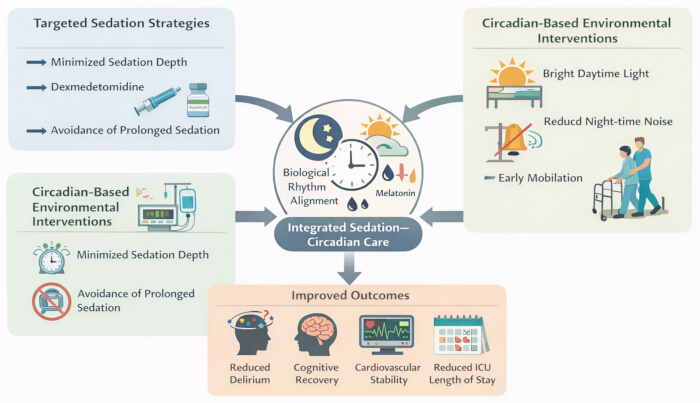
Figure 2: Integrated sedation-circadian care model in mechanically ventilated ICU patients. This conceptual model depicts how circadian alignment may be facilitated by combining specific sedation practices (e.g., minimizing sedation depth when feasible) with circadian-in-line interventions (e.g., exposure to light during the day, reduction of night noise, clustering of care, and early mobilization). Improved circadian organization is hypothesized to be associated with reduced delirium, improved cognitive outcomes, enhanced cardiovascular stability, and shorter ICU length of stay; however, these associations remain largely untested and need prospective confirmation. The model represents a synthesis of available evidence and indicates potential interactions, yet most of the relationships have not been confirmed in subsequent interventional studies. The model is also intended for hypothesis generation and to focus the future study design (see limitations). Please click here to view a larger version of this figure.
Clinically, a circadian approach to sedation could include reducing sedation depth when appropriate, matching sedation to day-night cycles, and, at the same time, maximizing suitable environmental stimuli, like exposure to light during the day and minimizing noise during the night. Some practical applications include daily interruption of sedation, preventing unwarranted nighttime interventions, and establishing organized sleep promotion regimens. These strategies, however, have to be counterbalanced with clinical necessity since deep sedation is still necessary in certain situations like severe respiratory failure or ventilator asynchrony. Thus, circadian-based care can be regarded as an adaptable, patient-oriented practice rather than a rigid set of guidelines, and its modifications should be tailored to the severity of illness and the ICU’s limitations.
Challenges and limitations in circadian-aligned ICU care
Although there is increasing evidence for the use of circadian-oriented strategies in sedation and care, there are multiple limitations to their extensive use in patients on mechanical ventilation in ICUs. Critical illness itself causes significant physiological instability, systemic inflammation, and metabolic stress that are not independent of environmental exposure or pharmacologic interventions1,3. This means that restoring circadian organization in the ICU is an intrinsically complex process and likely requires multimodal interventions over time. A significant drawback is that there is a clinical requirement in selected groups of patients to be deeply or long-term sedated. Deep sedation is also a common practice in patients with severe acute respiratory distress syndrome, refractory hypoxemia, or high ventilator demand to promote ventilator synchrony and preclude self-inflicted lung injury in patients. In such settings, circadian-sparing sedation strategies may not be feasible, and the inhibition of melatonin release and physiological sleep organization may therefore be unavoidable10,32,33.
Practical challenges are also encountered in environmental modification within the ICU. The ability to control light and noise exposure is constrained by structural factors, such as limited access to natural light, the sharing of patient rooms, and the need to monitor patients around the clock. Although protocols for light modulation and noise reduction exist, their implementation may be inconsistent due to staffing requirements, emergency intervention, and fluctuating unit workload10,15,34, thereby undermining the effectiveness of circadian-congruent environmental strategies. There is little evaluation of circadian activity among critically ill patients. Although informative in research contexts, regular melatonin profiles, actigraphy, or sleep-staging measurements are uncommon in clinical practice. A Mechanistic assessment of molecular circadian markers, including clock-gene expression, requires specialized laboratory techniques and is not feasible at the bedside12. The absence of standardized, simultaneous circadian measurements limits real-time assessment of circadian status and responsiveness to interventions.
Patient heterogeneity also complicates circadian-aligned care. Age, comorbid conditions, underlying chronotype, and preexisting sleep disorders are determinants of circadian control and may alter responses to both sedative and environmental intervention1. Moreover, circadian dysregulation may persist beyond ICU discharge and contribute to long-term neurological and functional impairment that is not routinely evaluated in an acute care setting. A second weakness is the lack of standardized procedures specifically designed to incorporate circadian rhythm concepts into sedation management. The majority of currently available ICU care bundles were designed to improve safety and reduce complications, such as delirium, rather than to reestablish circadian biology31. Consequently, circadian effects are frequently the endpoints in clinical trials that are not quantified as such. Furthermore, the synthesis presented in Figure 1, and Figure 2, and Table 1, is based on a narrative review and does not include a formal risk-of-bias assessment; thus, selection and publication bias, and unmeasured heterogeneity may influence the conclusion drawn.
Lastly, the variety of study designs, patient populations, and outcome measures prevents direct comparisons across studies and the assessment of the strength of the evidence behind individual circadian-based interventions23. Large-scale prospective trials incorporating standardized circadian endpoints and factorial designs are needed to define optimal strategies and clarify cause-and-effect. Comprehensively, although circadian-consistent ICU care is potentially an effective modality, its use is limited by clinical necessity, environmental and structural constraints, measurement issues, and gaps in standardized evidence. Addressing these challenges will be necessary to translate advances in circadian biology into routine critical care practice.
Future directions in circadian-aligned sedation and ICU care
The future of circadian-aligned ICU care relies on integrating circadian physiology into common practice of sedation and care. The current sedation initiatives are largely grounded in comfort and safety, with little consideration of the time of day. Research on chronopharmacology has shown that pharmacodynamic and pharmacokinetic responses may vary across circadian cycles, suggesting that the timing of sedation may influence the neurological recovery and circadian preservation35. Nevertheless, this idea is mostly an extrapolation from non-ICU groups and must be confirmed in prospective research involving patients on mechanical ventilation. It is possible that incorporating circadian timing into sedation programs could reduce hormonal suppression while maintaining the clinical efficacy.
The opportunities of personal circadian treatment have benefited from technological advancements in monitoring. Wearable sensors, actigraphy, and physiologic rhythm analysis have been shown to be feasible for estimating circadian phase and rhythm integrity in hospitalized patients36. The reliability, responsiveness, and clinical utility of these tools in critically ill, mechanically ventilated populations are questions that need to be established in future research. The application of these tools in the ICU monitoring system may provide an opportunity to coordinate sedation, mobilization, and care with the patient’s circadian status. Even acute illness on a molecular level does not prevent circadian disruption. The change in clock gene expression, observed in the ICU, suggests circadian dysregulation12. Experimental models suggest that modulation of molecular clock pathways may enhance stress resilience and recovery37. The ability of circadian-synchronous clinical interventions to normalize these molecular changes, and whether their normalization can result in better patient-centered outcomes, remains an unanswered questions that need to be addressed through mechanistic and interventional studies.
Environmental design is an important area for development. The reason is that dynamic lighting that imitates the natural light-dark cycle improves the stability of circadian rhythms and the quality of sleep in hospitals38. To establish the additive or synergistic effects of circadian alignment on clinical outcomes of such environmental interventions, prospective ICU-specific trials are required to determine whether these interventions, alone or in combination with sedation-reduction strategies, have additive or synergistic effects. Future clinical trials should also use standardized circadian and clinical endpoints. Such circadian endpoints as the serial evaluation of melatonin rhythmicity (amplitude and phase timing), objective sleep architecture, actigraphy-based rest-activity rhythm assessment, and, where possible, peripheral clock gene expression profiles are recommended. Experts have proposed that circadian outcome measures, such as melatonin rhythmicity and sleep timing, should be used to assess the effectiveness of chronobiological interventions in critical care39. These measures will be important in strengthening the evidence and implementation.
Challenges and limitations in circadian-aligned ICU care
The findings of this narrative review are limited in several ways, which should be taken into account when interpreting these findings. Circadian dysregulation of critically ill patients is complicated and depends upon systemic inflammation, organ damage, environmental contact, mechanical ventilation, and pharmacologic therapies. These mutually supporting systems complicate the separation of the independent effects of sedation depth and environmental modification on circadian alignment. The available evidence base is heterogeneous in study design and circadian measurement methodology. They provide assessments based on melatonin sampling, actigraphy, EEG-based sleep measures, and peripheral clock gene expression, none of which are standardized across studies. This heterogeneity makes comparison impossible and rules out quantitative synthesis.
It is important to note that the majority of information linking circadian disruption to neurological and cardiovascular outcomes is of an associative character. Findings from observational studies and secondary analysis of bundled interventions in the ICU indicate that exposure to sedation, environmental cues, circadian biomarkers, and clinical outcomes were related, but not causally related. There is limited direct comparative evidence assessing the additive or synergistic effects of concomitant targeted sedation and circadian-aligned environmental interventions, and factorial randomized trials are not available. Implementation is also constrained by practical reasons. The clinical indications for deep sedation can be tailored to specific patient groups, whereas environmental adaptations can be limited by the ICU’s structural and operational conditions. Lastly, this is a narrative review, so there is no risk-of-bias evaluation and evidence grading. The findings are therefore to be construed as experimental hypotheses rather than as conclusive work on comparative effectiveness.
Conclusions
Loading...
$$\rightleftharpoonup{xx}$$
$$\longleftharp{xx}$$,
$$\longrightharp{xx}$$,
This study supports an integrated approach where sedation and circadian interventions play a complementary role in the ICU. ICU patients who are receiving mechanical ventilation are particularly vulnerable to circadian disruption from the combined effects of disease, sedation, and environment. Combined sedation-circadian interventions are a promising but untested intervention that needs to be rigorously evaluated in experimental studies focusing on standardized circadian markers.
| Study type | Contributing factors | Factors that contributed to circadian regulation | Clinical consequences | References |
| ICU environment | High noise level, excessive nighttime illumination, continuous artificial light and frequent care interruptions | Intermittent sleep, loss of day-night signaling, suppression of melatonin secretion | Cognitive dysfunction, poor sleep quality, and delirium | 3,16 |
| Mechanical ventilation | Respiratory support settings, ventilator mode, and patient-ventilator asynchrony | Intermittent sleep, reduction of slow wave and REM sleep | Prolonged ICU stay and impaired neurological recovery | 6 |
| Sedative medications | Prolonged or deep sedation, propofol, benzodiazepines | Reduced circadian hormone release, altered sleep architecture | Neurological instability, increased delirium risk | 8 |
| Molecular circadian regulation | Altered expression of clock genes such as BMAL1, PER, and CRY | Desynchronization of central and peripheral clocks | Prolonged physiological dysregulation, cardiovascular instability | 1,12 |
| Non-pharmacological interventions | Noise reduction, light modulation, early mobilization, care clustering | Reinforcement of circadian entrainment and rhythm amplitude | Reduced delirium, improved sleep quality | 1,12 |
| Integrated care approaches | Combined targeted sedation and circadian based interventions | Proposed restoration of behavioral, hormonal and molecular rhythms | Improved cardiovascular and neurological outcomes | 6,8 |
Table 1: This table provides the summaries of the evidence-based findings, along with the idea of hypothesis generating, and is not to be considered an established clinical decision-making tool.
Disclosures
Loading...
$$\rightleftharpoonup{xx}$$
$$\longleftharp{xx}$$,
$$\longrightharp{xx}$$,
The authors declare that they have no competing interests or conflicts of interest related to this manuscript.
Acknowledgements
Loading...
$$\rightleftharpoonup{xx}$$
$$\longleftharp{xx}$$,
$$\longrightharp{xx}$$,
The authors did not receive any funding for this work. The authors conducted this review without financial support from any public, commercial, or not-for-profit funding agency
References
Loading...
$$\rightleftharpoonup{xx}$$
$$\longleftharp{xx}$$,
$$\longrightharp{xx}$$,
- Clinical chronobiology: a timely consideration in critical care medicine. Critical care (London, England). 22 (1), 124(2018).">McKenna, H., van der Horst, G. T. J., Reiss, I., Martin, D. Clinical chronobiology: a timely consideration in critical care medicine. Critical care (London, England). 22 (1), 124(2018).
- The suprachiasmatic nucleus and the circadian timing system. Progress in molecular biology and translational science. 119, 1-28 (2013).">Moore, R. Y. The suprachiasmatic nucleus and the circadian timing system. Progress in molecular biology and translational science. 119, 1-28 (2013).
- Annual Update in Intensive Care and Emergency Medicine 2019. , 651-664 (2019).">Telias, I., Wilcox, M. E. Sleep and circadian rhythm in critical illness. Annual Update in Intensive Care and Emergency Medicine 2019. , 651-664 (2019).
- Sleep deprivation in critical illness: its role in physical and psychological recovery. Journal of intensive care medicine. 27 (2), 97-111 (2012).">Kamdar, B. B., Needham, D. M., Collop, N. A. Sleep deprivation in critical illness: its role in physical and psychological recovery. Journal of intensive care medicine. 27 (2), 97-111 (2012).
- Sleep disturbance in ICU: a pathway to delirium. Intensive and Critical Care Nursing. 90, 104138(2025).">Delaney, L. J., Elliott, R. Sleep disturbance in ICU: a pathway to delirium. Intensive and Critical Care Nursing. 90, 104138(2025).
- Critical care delirium: prevention, identification and management: a narrative review. Anaesthesia. , (2026).">Kieswick, S., Gibbison, B. Critical care delirium: prevention, identification and management: a narrative review. Anaesthesia. , (2026).
- Impact of sleep disturbances on outcomes in intensive care units. Critical Care. 28 (1), 331(2024).">Marchasson, L., et al. Impact of sleep disturbances on outcomes in intensive care units. Critical Care. 28 (1), 331(2024).
- Sleep disturbances in critically ill patients in ICU: how much do we know? Acta anaesthesiologica scandinavica. 56 (8), 950-958 (2012).">Boyko, Y., Ørding, H., Jennum, P. Sleep disturbances in critically ill patients in ICU: how much do we know? Acta anaesthesiologica scandinavica. 56 (8), 950-958 (2012).
- General anesthesia and altered states of arousal: a systems neuroscience analysis. Annual review of neuroscience. 34 (1), 601-628 (2011).">Brown, E. N., Purdon, P. L., Van Dort, C. J. General anesthesia and altered states of arousal: a systems neuroscience analysis. Annual review of neuroscience. 34 (1), 601-628 (2011).
- Serum melatonin concentration in critically ill patients randomized to sedation or non-sedation. Annals of Intensive Care. 11 (1), 40(2021).">Oxlund, J., Knudsen, T., Strøm, T., Lauridsen, J. T., Jennum, P. J., et al. Serum melatonin concentration in critically ill patients randomized to sedation or non-sedation. Annals of Intensive Care. 11 (1), 40(2021).
- Temporal disorganization of circadian rhythmicity and sleep-wake regulation in mechanically ventilated patients receiving continuous intravenous sedation. Sleep. 35 (8), 1105-1114 (2012).">Gehlbach, B. K., et al. Temporal disorganization of circadian rhythmicity and sleep-wake regulation in mechanically ventilated patients receiving continuous intravenous sedation. Sleep. 35 (8), 1105-1114 (2012).
- Interaction between clock genes, melatonin and cardiovascular outcomes from ICU patients. Intensive Care Medicine Experimental. 13 (1), 19(2025).">Jiménez-Pastor, J. M., et al. Interaction between clock genes, melatonin and cardiovascular outcomes from ICU patients. Intensive Care Medicine Experimental. 13 (1), 19(2025).
- Mistimed sleep disrupts circadian regulation of the human transcriptome. Proceedings of the National Academy of Sciences. 111 (6), E682-E691 (2014).">Archer, S. N., et al. Mistimed sleep disrupts circadian regulation of the human transcriptome. Proceedings of the National Academy of Sciences. 111 (6), E682-E691 (2014).
- Action spectrum for melatonin regulation in humans: evidence for a novel circadian photoreceptor. Journal of Neuroscience. 21 (16), 6405-6412 (2001).">Brainard, G. C., et al. Action spectrum for melatonin regulation in humans: evidence for a novel circadian photoreceptor. Journal of Neuroscience. 21 (16), 6405-6412 (2001).
- The Effectiveness of the Interventions to Reduce Sound Levels in the ICU: A Systematic Review. Critical care explorations. 5 (4), e0885(2023).">Vreman, J., Lemson, J., Lanting, C., van der Hoeven, J., van den Boogaard, M. The Effectiveness of the Interventions to Reduce Sound Levels in the ICU: A Systematic Review. Critical care explorations. 5 (4), e0885(2023).
- The effect of nursing care provided to coronary intensive care patients according to their circadian rhythms on sleep quality, pain, anxiety, and delirium: a randomised controlled trial. BMC nursing. 24 (1), 1-14 (2025).">Pelin, M., Sert, H. The effect of nursing care provided to coronary intensive care patients according to their circadian rhythms on sleep quality, pain, anxiety, and delirium: a randomised controlled trial. BMC nursing. 24 (1), 1-14 (2025).
- Fundamentals and applications of controlled release drug delivery. , 359-443 (2011).">Smolensky, M. H., Siegel, R. A., Haus, E., Hermida, R., Portaluppi, F. Biological rhythms, drug delivery, and chronotherapeutics. Fundamentals and applications of controlled release drug delivery. , 359-443 (2011).
- Evidence-based clinical practice guidelines for the management of sedoanalgesia and delirium in critically ill adult patients. Medicina Intensiva (English Edition). 44 (3), 171-184 (2020).">Celis-Rodríguez, E., et al. Evidence-based clinical practice guidelines for the management of sedoanalgesia and delirium in critically ill adult patients. Medicina Intensiva (English Edition). 44 (3), 171-184 (2020).
- Effects of dexmedetomidine on postoperative sleep quality: a systematic review and meta-analysis of randomized controlled trials. BMC anesthesiology. 23 (1), 88(2023).">Liu, H., et al. Effects of dexmedetomidine on postoperative sleep quality: a systematic review and meta-analysis of randomized controlled trials. BMC anesthesiology. 23 (1), 88(2023).
- Dexmedetomidine vs other sedatives in critically ill mechanically ventilated adults: a systematic review and meta-analysis of randomized trials. Intensive care medicine. 48 (7), 811-840 (2022).">Lewis, K., et al. Dexmedetomidine vs other sedatives in critically ill mechanically ventilated adults: a systematic review and meta-analysis of randomized trials. Intensive care medicine. 48 (7), 811-840 (2022).
- Abnormal sleep, circadian rhythm disruption, and delirium in the ICU: are they related? Frontiers in Neurology. 11, 549908(2020).">Daou, M., Telias, I., Younes, M., Brochard, L., Wilcox, M. E. Abnormal sleep, circadian rhythm disruption, and delirium in the ICU: are they related? Frontiers in Neurology. 11, 549908(2020).
- Clinical practice guidelines for the prevention and management of pain, agitation/sedation, delirium, immobility, and sleep disruption in adult patients in the ICU. Critical care medicine. 46 (9), e825-e873 (2018).">Devlin, J. W., et al. Clinical practice guidelines for the prevention and management of pain, agitation/sedation, delirium, immobility, and sleep disruption in adult patients in the ICU. Critical care medicine. 46 (9), e825-e873 (2018).
- The effect of a quality improvement intervention on perceived sleep quality and cognition in a medical ICU. Critical care medicine. 41 (3), 800-809 (2013).">Kamdar, B. B., et al. The effect of a quality improvement intervention on perceived sleep quality and cognition in a medical ICU. Critical care medicine. 41 (3), 800-809 (2013).
- Dynamic light application therapy to reduce the incidence and duration of delirium in intensive-care patients: a randomised controlled trial. The lancet Respiratory medicine. 4 (3), 194-202 (2016).">Simons, K. S., et al. Dynamic light application therapy to reduce the incidence and duration of delirium in intensive-care patients: a randomised controlled trial. The lancet Respiratory medicine. 4 (3), 194-202 (2016).
- Lighting, sleep and circadian rhythm: An intervention study in the intensive care unit. Intensive and Critical Care Nursing. 31 (6), 325-335 (2015).">Engwall, M., Fridh, I., Johansson, L., Bergbom, I., Lindahl, B. Lighting, sleep and circadian rhythm: An intervention study in the intensive care unit. Intensive and Critical Care Nursing. 31 (6), 325-335 (2015).
- The effect of a multicomponent multidisciplinary bundle of interventions on sleep and delirium in medical and surgical intensive care patients. Anaesthesia. 69 (6), 540-549 (2014).">Patel, J., Baldwin, J., Bunting, P., Laha, S. The effect of a multicomponent multidisciplinary bundle of interventions on sleep and delirium in medical and surgical intensive care patients. Anaesthesia. 69 (6), 540-549 (2014).
- The quality and duration of sleep in the intensive care setting: an integrative review. International journal of nursing studies. 48 (3), 384-400 (2011).">Elliott, R., McKinley, S., Cistulli, P. The quality and duration of sleep in the intensive care setting: an integrative review. International journal of nursing studies. 48 (3), 384-400 (2011).
- Melatonin: an overlooked factor in schizophrenia and in the inhibition of anti-psychotic side effects. Metabolic Brain Disease. 27 (2), 113-119 (2012).">Anderson, G., Maes, M. Melatonin: an overlooked factor in schizophrenia and in the inhibition of anti-psychotic side effects. Metabolic Brain Disease. 27 (2), 113-119 (2012).
- Modification in ICU Design May Affect Delirium and Circadian Melatonin: A Proof of Concept Pilot Study. Critical care medicine. 52 (4), e182-e192 (2024).">Spies, C., Piazena, H., Deja, M., Wernecke, K. -D., Willemeit, T., et al. Modification in ICU Design May Affect Delirium and Circadian Melatonin: A Proof of Concept Pilot Study. Critical care medicine. 52 (4), e182-e192 (2024).
- Light, sleep and circadian rhythm in critical illness. Current opinion in critical care. 30 (4), 283-289 (2024).">Perry, H., Alight, A., Wilcox, M. E. Light, sleep and circadian rhythm in critical illness. Current opinion in critical care. 30 (4), 283-289 (2024).
- Effectiveness and safety of the awakening and breathing coordination, delirium monitoring/management, and early exercise/mobility bundle. Critical care medicine. 42 (5), 1024-1036 (2014).">Balas, M. C., et al. Effectiveness and safety of the awakening and breathing coordination, delirium monitoring/management, and early exercise/mobility bundle. Critical care medicine. 42 (5), 1024-1036 (2014).
- Limiting sedation for patients with acute respiratory distress syndrome - time to wake up. Current opinion in critical care. 23 (1), 45-51 (2017).">Shah, F. A., Girard, T. D., Yende, S. Limiting sedation for patients with acute respiratory distress syndrome - time to wake up. Current opinion in critical care. 23 (1), 45-51 (2017).
- ESICM guidelines on acute respiratory distress syndrome: definition, phenotyping and respiratory support strategies. Intensive care medicine. 49 (7), 727-759 (2023).">Grasselli, G., et al. ESICM guidelines on acute respiratory distress syndrome: definition, phenotyping and respiratory support strategies. Intensive care medicine. 49 (7), 727-759 (2023).
- Noise reduction in the ICU: a best practice implementation project. JBI evidence implementation. 20 (4), 385-393 (2022).">Souza, R. C., da, S., Calache, A. L. S. C., Oliveira, E. G., Nascimento, J. C., Silva, N. D., et al. Noise reduction in the ICU: a best practice implementation project. JBI evidence implementation. 20 (4), 385-393 (2022).
- Chronobiology, drug delivery, and chronotherapeutics. Advanced drug delivery reviews. 59 (9-10), 828-851 (2007).">Smolensky, M. H., Peppas, N. A. Chronobiology, drug delivery, and chronotherapeutics. Advanced drug delivery reviews. 59 (9-10), 828-851 (2007).
- Sleep and circadian rhythms in hospitalized patients with decompensated cirrhosis: effect of light therapy. Neurochemical research. 40 (2), 284-292 (2015).">De Rui, M., et al. Sleep and circadian rhythms in hospitalized patients with decompensated cirrhosis: effect of light therapy. Neurochemical research. 40 (2), 284-292 (2015).
- Medicine in the fourth dimension. Cell metabolism. 30 (2), 238-250 (2019).">Cederroth, C. R., et al. Medicine in the fourth dimension. Cell metabolism. 30 (2), 238-250 (2019).
- Therapeutic Landscape Design: Methods, Design Strategies and New Scientific Approaches. , 81-92 (2023).">Manfredini, R., Cappadona, R., Tiseo, R., Bagnaresi, I., Fabbian, F. Light, circadian rhythms and health. Therapeutic Landscape Design: Methods, Design Strategies and New Scientific Approaches. , 81-92 (2023).
- Aligning work and circadian time in shift workers improves sleep and reduces circadian disruption. Current Biology. 25 (7), 907-911 (2015).">Vetter, C., Fischer, D., Matera, J. L., Roenneberg, T. Aligning work and circadian time in shift workers improves sleep and reduces circadian disruption. Current Biology. 25 (7), 907-911 (2015).
Reprints and Permissions
Request permission to reuse the text or figures of this JoVE article
Request Permission