This scoping review explores the risk of bleeding in patients receiving novel oral anticoagulants in the intensive care unit (ICU), with a primary focus on risk factors unique to critical care and management plans, as well as the need for critical care-specific risk evaluation models.
Review Article
Bleeding Risk Associated with Novel Oral Anticoagulants in Critically Ill Patients: A Scoping Review
Zhichao Lin1 , Xiaoping Yu1 , Ruibin Ma1 , Zuo Wang1 , Xuanyi Fu2 , Hui Jiao1 , Dan Wang3 , Jie Yu1 , Jing Wang1 , Yanli An1 , Yan Lu4
1Department of Hepatobiliary Surgery, People's Armed Police Force Xinjiang Corps General Hospital, 2Deputy Director, People's Armed Police Force Xinjiang Corps General Hospital, 3Outpatient Department, People's Armed Police Force Xinjiang Corps General Hospital, 4Nursing Department, People's Armed Police Force Xinjiang Corps General Hospital
Opens in a new tab
In This Article
Summary
Loading...
$$\rightleftharpoonup{xx}$$
$$\longleftharp{xx}$$,
$$\longrightharp{xx}$$,
Abstract
Loading...
$$\rightleftharpoonup{xx}$$
$$\longleftharp{xx}$$,
$$\longrightharp{xx}$$,
Novel oral anticoagulants (NOACs) are widely used for the prevention and treatment of thromboembolic disease; nevertheless, critically ill patients were mostly excluded from the landmark randomized clinical trials. The purpose of this scoping review is to systematically map and synthesize the available evidence on bleeding risk associated with NOACs use in critically ill patients. Furthermore, we have also focused on ICU-specific risk factors, pathophysiological mechanisms and management strategies. Critical illness is characterized by dynamic pathophysiology, dysfunction of organs, and systemic inflammation that might change the exposure to anticoagulants and the risk of bleeding. A scoping review approach was utilized to synthesize findings of reviews, observational studies, clinical trials, and guideline documents on NOAC-associated bleeding. The focus was on populations related to critically ill units, such as patients with organ dysfunction, sepsis, malignancy, and invasive operations. The evidence summary was not conducted quantitatively. Bleeding is always prone to renal and hepatic dysfunction, old age, malignancy, polypharmacy, and concomitant antiplatelet treatment. The most clinically important manifestations of bleeding are the gastrointestinal and intracranial haemorrhages. The bleeding risk in critically ill patients receiving NOACs is highly heterogeneous and dynamic, with several patient- and illness-specific factors affecting the outcome, but current evidence is neither adequate nor tailored to capture heterogeneity across clinical contexts. Prospective studies of ICU-specific bleeding would better define bleeding risk and inform anticoagulation use and risk classification among this group.
Introduction
Loading...
$$\rightleftharpoonup{xx}$$
$$\longleftharp{xx}$$,
$$\longrightharp{xx}$$,
The most commonly used novel oral anticoagulants (NOACs) are direct thrombin inhibitors (dabigatran) and factor Xa inhibitors (apixaban, rivaroxaban, and edoxaban). Large randomized controlled clinical trials in patients with atrial fibrillation and venous thromboembolism has also been displayed, showing these agents provide non-inferior efficacy with warfarin by similar or lower rates of major bleeding and reduced rates of intracranial bleeding, respectively1,2,3. These findings are further supported by meta-analysis across the classes of NOACs4.
Despite these benefits, the applicability of safety data from trials to patients in a critical condition is questionable. Acute renal failure, hepatic dysfunction, and systemic inflammation frequently occur in patients hospitalized in the intensive care unit (ICU). These conditions can change the volume of distribution and plasma protein binding. Thus, they have a major effect on anticoagulant pharmacodynamics (drug effect) and pharmacokinetics (drug exposure)5,6. Additionally, critically ill patients are often exposed to polypharmacy, concomitant antiplatelet therapy, and invasive procedures, all of which increase the risk of bleeding7. Besides, enteral drug absorption can be compromised in critical illness because of gastrointestinal hypoperfusion, altered motility, and vasopressor administration, which introduces further variability to NOACs exposure8.
Notably, most critically ill patients were excluded from key NOACs trials, so the available bleeding risk estimates cannot be generalized to the ICU4. Therefore, when treating acute disease with NOACs, the clinicians tend to extrapolate information from stable outpatient groups. The accumulating evidence from observational studies and pharmacological examinations indicates that the combined effects of inflammation and organ dysfunction in critical illness, can independently alter the risk of bleeding and anticoagulant exposure, but not in combination with traditional patient-level risk factors9. The use of standard bleeding risk prediction tools, developed in ambulatory populations, has limited performance in critically ill patients and fails to encompass dynamic ICU-specific variables10.
The objective of this scoping review is to map the current evidence on bleeding risk associated with NOACs use critically ill patients, with a focus on ICU-specific risk factors and pharmacological determinants.
Review and Perspective
Loading...
$$\rightleftharpoonup{xx}$$
$$\longleftharp{xx}$$,
$$\longrightharp{xx}$$,
This scoping review was performed using established methodological frameworks for evidence mapping11,12, with detailed methodological procedures provided in the supplementary materials to ensure transparency and reproducibility. The protocol for this scoping review was not registered prospectively. However, this scoping review followed Arksey and O’Malley’s framework, with methodological refinements informed by Levac et al. and the Joanna Briggs Institute guidance.
This approach was selected to allow for a broad identification of knowledge gaps and variation in the available evidence, especially given that critically ill populations are often excluded from randomized trials13,14.
The rationale for this methodology was to integrate evidence from heterogeneous ICU populations and designs on bleeding risk determinants without conducting quantitative synthesis or comparative effectiveness analysis. Reporting was guided by the Preferred Reporting Items for Systematic Reviews and Meta-analysis extension for Scoping Reviews14. A Preferred Reporting Items for Systematic Reviews and Meta-analysis flow diagram outlining the study selection process is presented in the supplementary materials.
Eligibility criteria
Eligibility included reviews, randomized controlled trials and non-randomized controlled trials, observational studies, guidelines or consensus documents describing NOACs-related bleeding endpoints. Studies were required to include adult critically ill patients, intensive care unit populations, or clinical conditions directly related to a critical illness (eg, sepsis, acute organ dysfunction) or invasive procedures. Studies targeting stable outpatient populations were excluded. Table 1 summarizes the eligibility criteria.
| Domain | Inclusion Criteria | Exclusion Criteria | Reference |
| Population | Adult patients receiving NOACs in critical illness, ICU settings | Pediatric populations, pregnant patients, and stable outpatient populations | 11, 13 |
| Intervention/Exposure | Use of NOACs (apixaban, rivaroxaban, dabigatran, edoxaban), including continuation, interruption, or management during critical illness | Studies focusing on vitamin K antagonists or parenteral anticoagulants without NOAC data | 12 |
| Outcomes of Interest | Bleeding events, bleeding risk factors, reversal strategies, and resumption of anticoagulants | Studies not reporting bleeding-related outcomes | 13 |
| Study design | Randomized controlled trials, observational studies, reviews, and guidelines | Case reports, editorials, conference abstracts, and commentaries | 11, 12 |
| Clinical Context | ICU populations and conditions relevant to critical illness (sepsis, invasive procedures, organ dysfunction) | Studies without relevance to critical illness or ICU practice | 13 |
| Language and publication type | English and peer-reviewed publications | Non-English publications and non-peer-reviewed sources | 12 |
Table 1: Eligibility criteria for study selection Summary of inclusion and exclusion criteria applied to studies based on population, intervention or exposure (NOAC use), outcomes of interest, study design, clinical context, and publication characteristics..
Search strategy and information sources
Structured search queries (increasing in complexity) were used to search major biomedical databases (PubMed, Embase, and Web of Science), covering the period from January 2009 to March 2025. An updated search was conducted through March 2025 to find more recent studies. The search strategy was a combination of controlled vocabulary (MeSH/Emtree) and free-text terms for NOACs, bleeding or haemorrhagic complications, and critical illness or intensive care, combined using Boolean operators. Additional articles were screened in the reference lists of relevant articles. Duplicates were removed by using reference management software before screening. Full strategy (including Boolean operators, database-specific filters, and date limits) is available in the Supplementary Materials. The search was limited to studies published in English and involving human subjects. Given the scoping nature of the review, no limits were placed on study design. Furthermore, this review did not comprehensively include gray literature sources such as conference abstracts, theses, and non-peer-reviewed reports. The inclusion of guidance documents and consensus statements, where relevant, ensured an all-encompassing approach regarding clinical recommendations.
Selection of study and charting of data.
Two reviewers independently performed study selection at both title/abstract screening and full-text review stages. Reviewer discrepancies were resolved through discussion and, if necessary, consultation with a third reviewer. Two reviewers independently extracted data using a standardized data charting form and cross-verified to ensure consistency. Furthermore, study screening and selection were facilitated by reference management software for organizing records and duplicate removal.
Results were synthesized narratively applying scoping review methodology due to considerable heterogeneity in study design, patient populations, and reported outcomes.
Database searching and reference screening
Database searching and reference screening identified 1,050 records. After duplicates were removed (n = 607), based on title and abstract, 443 studies were screened, of which 139 were excluded. We screened 304 full-text articles for eligibility, excluding 254 due to low relevance to ICU settings or bleeding outcomes. This scoping review ultimately included 50 studies (Supplementary Figure 1S).
The studies included were primarily observational, with randomized trials and secondary literature (narrative reviews and clinical guidelines). Much of the evidence came from noncritically ill populations or retrospective analysis, and there is little prospective data specific to the ICU. The included studies differed in study design, patient populations, and definitions for bleeding outcomes.
The evidence included was mainly in the form of secondary literature (e.g., narrative reviews and clinical guidelines) with a smaller number of primary studies directly addressing NOACs-associated bleeding events in critically ill patients. This means that existing evidence is scarce and largely based on extrapolated data or expert opinion.
Clinical situations of NOACs use in the ICU
NOACs therapy can be given to patients in the ICU as continuation of chronic therapy or for acute thromboembolic events in the setting of hospitalization. Common ICU scenarios include atrial fibrillation, venous thromboembolism, cancer-associated thrombosis and perioperative anticoagulation management15,16. Often, NOAC therapy is continued in the setting of acute physiological compromise due to the absence of ICU-specific guidelines and unease with regard to thromboembolic reoccurrence17.
Critical illness often requires invasive procedures, temporary discontinuation of anticoagulation, or bridging strategies, all making NOAC management challenging7. Furthermore, alterations in gastrointestinal absorption, enteral feeding intolerance, as well as drug–drug interactions with antimicrobials, antifungals, and antiarrhythmic agents corrode the safe use of NOACs in ICU5,18. These factors lead to significant interpatient variability in anticoagulant exposure, which in turn imposes considerable uncertainty in dosing and bleeding risk among critically ill patients19. Such variability underscores the lack of standardized ICU-specific anticoagulation treatment strategies, implying that all critically ill patients should undergo an individualized risk assessment. In most available studies, these clinical scenarios exhibit heterogeneity in terms of thromboembolic risk and are predominantly influenced by the degree of organ dysfunction, concomitant therapies, and procedural exposure. This variability may be due to the lack of data-driven guidelines specific to anticoagulation in ICU patients and reinforces impactful risk stratification for critically ill patients. This section synthesizes findings from seven included studies addressing this theme. To understand these clinical scenarios or situations requires consideration of such underlying pathophysiological mechanisms that plays key role in bleeding risk in critical illness.
Pathophysiological mechanisms of the risk of bleeding in critical illness
Critical illness is characterized by profound disturbances in haemostasis due to systemic inflammation, endothelial dysfunction, and dysregulated coagulation pathways. Such altered activation of the procoagulant and anticoagulant pathways, which is frequently mediated by sepsis and systemic inflammation20, leads to a disrupted haemostatic biosystem with an increased bleeding tendency. Microvascular bleeding is dominated by diffuse bleeding at the capillary level rather than large-vessel bleeding and occurs due to endothelial damage and loss of glycocalyx. The phenomenon is particularly pertinent in ICU cohort such as sepsis, systemic inflammation and shock. In the absence of focal vascular injury, endothelial dysfunction can lead to oozing, mucosal bleeding, and procedure-related bleeding. In the setting of severe illness21, endothelial injury and glycocalyx degradation further exacerbate microvascular bleeding risk.
Organ dysfunction also impacts NOACs pharmacodynamics and pharmacokinetics. Acute renal failure can cause drug accumulation, especially in the case of renally excreted agents such as dabigatran, whereas hepatic dysfunction can decrease factor Xa inhibitor metabolism5,22 Hypoalbuminemia, often seen in critically ill patients, may augment the free fraction of drugs and consequently increase bleeding. These mechanisms indicate that bleeding in critically ill patients taking NOACs cannot simply be ascribed to the intensity of anticoagulation and instead are a reflection of the interaction between drug exposure and critical illness-specific pathophysiology. However, much of the evidence for these mechanisms comes from observational studies or is inferred from noncritically ill populations, limiting the strength of conclusions and underscoring the need for ICU-specific mechanistic and clinical investigations. Four studies were included to synthesizes this section. The concept-based qualitative synthesis of determinants is illustrated in Figure 1, highlighting how pathophysiological transformations related to critical illness and pharmacokinetic–pharmacodynamic changes may interact to generate dynamic, context-specific bleeding risk in patients taking NOAC in the ICU These pathophysiological changes are exhibited in the clinical presentation of bleeding suggesting its pattern variation and severity among those critically ill patients who receives NOACs.
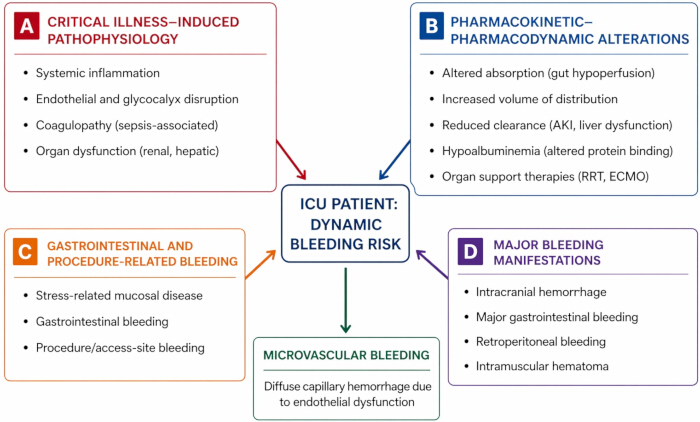
Figure 1. Conceptual framework of bleeding risk determinants in critically ill patients receiving NOACs (A–D) illustrate the interaction between critical illness–related pathophysiology and pharmacokinetic–pharmacodynamic alterations contributing to bleeding risk. (A) summarizes systemic inflammation, endothelial and glycocalyx disruption, coagulopathy, and organ dysfunction. (B) outlines pharmacokinetic changes, including altered absorption, increased volume of distribution, reduced clearance, and hypoalbuminemia. (C and D) depict major bleeding manifestations, including gastrointestinal, intracranial, and procedure-related bleeding. Microvascular bleeding refers to diffuse capillary-level hemorrhage associated with endothelial dysfunction. Please click here to view a larger version of this figure.
Pattern and type of bleeding among the critically ill patients on NOACs.
Bleeding complications in critically ill patients receiving NOACs have different patterns than that of stable populations. Gastrointestinal bleeding is the most frequently reported haemorrhagic complication and occurs most often in patients with malignancy, hepatic disease, or following endoscopic or surgical procedures23,24. Gastrointestinal haemorrhage in critically ill patients may be additional to stress-related mucosal disease, altered splanchnic perfusion and the concomitant use of antiplatelet agents25. Although not common, intracranial haemorrhage is associated with high morbidity and mortality in ICU settings26.
Furthermore, other clinically significant bleeding patterns include access-site related bleeding, retroperitoneal bleeding and intervention-related bleeding in those having undergone surgery or after insertion of central venous catheters27. These manifestations are correlated with underlying microvascular bleeding tendencies induced by endothelial dysfunction and coagulopathy associated with critical illness, resulting in attenuation of the risk of bleeding macrovascularly while receiving anticoagulation. Procedural bleeding is an especially relevant topic in critically ill patients because of the high potential for urgent procedures and limited opportunities to wash out anticoagulants18. Remarkably, traditional bleeding risk estimation tools like hypertension, abnormal renal/liver function, stroke, bleeding history or predisposition, labile international normalized ratio, elderly and drugs/alcohol score and the anticoagulation and risk factors in atrial fibrillation score do not work as expected in critically ill patients hence their limited use to estimate haemorrhagic complications among ICU patients23. These data suggest that epidemiological and procedural factors both modulate bleeding patterns in critically ill patients, and risk prediction tools fail to adequately account for this heterogeneity. This highlights the importance of the establishment of ICU-specific models to optimize bleeding risk stratification and to direct anticoagulant utilization. Table 2 presents a structured overview of the most common bleeding manifestations with their clinical characteristics. For the synthesis of this section, six studies were included. Furthermore, because of the diversity in bleeding manifestations, proper clinical management strategies are necessary to facilitate decision making in critically ill patients.
| Bleeding Type | Clinical Context | Predisposing Factors | Clinical Significance | References |
| Gastrointestinal bleeding | Malignancy, hepatic disease, post-endoscopic or surgical procedure | Stress-related mucosal disease, altered splanchnic perfusion, antiplatelet use | Most frequently reported | 23, 25 |
| Intracranial hemorrhage | ICU settings | Critical illness-related factors | High morbidity and mortality | 26 |
| Procedure-related bleeding | Central venous catheter insertion, surgery | Urgent interventions, lack of anticoagulant washout | Clinically significant | 18, 27 |
| Access-site bleeding | Catheterization | Anticoagulation, vascular injury | Clinically significant | 27 |
| Retroperitoneal bleeding | Critical illness | Coagulopathy, anticoagulation | Less common but significant | 27 |
Table 2: Summary of bleeding patterns in critically ill patients receiving NOACs. Overview of major bleeding types, associated clinical contexts, and predisposing factors relevant to critically ill patients.
Guidelines on NOAC-associated bleeding in critical illness.
Acute bleeding in critically ill patients treated with NOACs should be evaluated promptly regarding the severity of bleeding, haemodynamic status, organ function, and timing of the last dose of anticoagulant. Overall, supportive measures remain key, including haemodynamic resuscitation, blood product transfusions, coagulopathy correction, and local haemostatic control where possible28,29. In minor bleeding, temporary stoppage of anticoagulation may suffice, given the short half-lives associated with NOACs; however, major or life-threatening bleeding requires targeted reversal strategies. Early involvement of a multidisciplinary team, including critical care, haematology and interventional teams, is key in attempting to optimize bleeding control and curb complications30.
Management becomes more difficult in critically ill patients due to concurrent organ dysfunction and the necessity for urgent procedures. Renal dysfunction may slow drug clearance, whereas hepatic impairment and systemic inflammation further disrupt coagulation homeostasis31,32. Furthermore, anaemia and thrombocytopenia and coagulopathy related to critical illness may independently increase bleeding risk33. Based on the available data, management strategies are largely supportive and individualized, underscoring the lack of standardized protocols designed for ICU patients. Relief relies heavily on clinician judgment, revealing gaps where the evidence reveals a need for structured, evidence-based approaches specific to critically ill populations. Additionally, in the life-threating bleeding cases, adoption of specific reversal strategies regarding the resumption of anticoagulants becomes the most vital component of management. Six studies were included to synthesize this section.
Reversal strategy and re-emergence of anticoagulation.
Specific reversal agents have been shown to manage severe bleeding associated with NOACs. Idarucizumab allows for rapid reversal of dabigatran andexanet alfa is motivated by the desire to reverse factor Xa inhibitors, should uncontrolled or life-threatening bleeding events occur29,34. While available evidence shows effective reversal of anticoagulant activity, there is little to confirm improved clinical outcomes in critically ill populations, and the risk for thromboembolic events after reversal remains an ongoing concern26.
When specific antidotes are not available, non-specific agents may be tried (e.g. prothrombin complex concentrate), although the evidence for their benefit is inconsistent. Restoration of anticoagulation following bleeding is a challenging clinical dilemma in the critically ill patient. Current observation data suggest that delayed resumption carries a higher thromboembolic risk and may lead to recurrent bleeding when resumed too quickly, especially in patients with persistent unresolved sources of bleeding or organ dysfunction23. The need for individual resumption plans based on the severity of bleeding, thrombotic risk, and organ recovery trajectory as opposed to fixed time intervals is currently endorsed by experts35. Yet, these guidelines are mainly based on observational data and expert opinion, with a scarcity of prospective studies in the ICU setting to inform the optimal timing and strategy for anticoagulation resumption. This represents a crucial evidence gap and a need for validated clinical frameworks applicable to critically ill populations The decisions should thus be individualized and continuously re-evaluated during the ICU course. Figure 2 is a proposed decision framework for manipulating NOACs in critically ill patients, consolidating important domains (e.g., bleeding severity, thrombotic risk, organ dysfunction, and reversal or resumption timing) to generate hypotheses. Further clinical implementation of this framework needs validation in prospective studies. Overall, these findings highlight the complexity and heterogeneity of bleeding risk among critically ill patients who receive NOACs and, hence, provide the foundation for further interpretation. Five studies were included to synthesize this section.
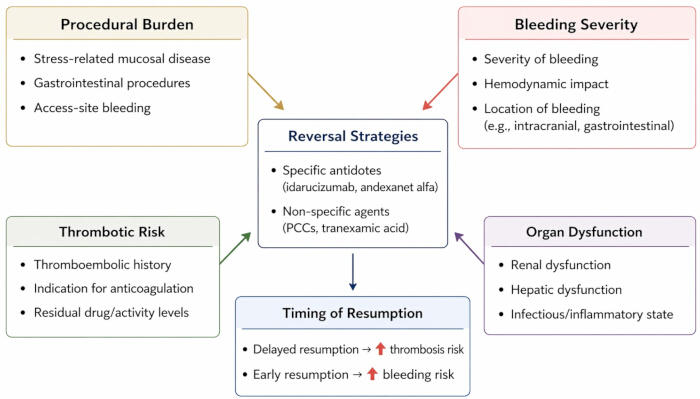
Figure 2: A conceptual framework for clinical decision making in NOACs management among critically ill patients. The figure summarizes key domains influencing anticoagulation management, including bleeding risk, thrombotic risk, organ dysfunction, and timing of anticoagulation reversal and resumption, highlighting their dynamic interaction in ICU settings. Please click here to view a larger version of this figure.
Discussion
This scoping review highlights the complexity, dynamism, and interaction of critical illness–related pathophysiology with pharmacokinetic-pharmacodynamic changes seen in the use NOACs that drive bleeding risk in critically ill patients, instead of anticoagulant identity alone. Fifty studies have been synthesized, all of which demonstrate that the current evidence is heterogeneous and largely from observational studies or secondary literature, with few prospective data specific to the ICU. Such extrapolated evidence is, of course, a fundamental limitation of the field and highlights an important caveat when it is applied to severely ill populations.
A key finding of this review is that patients with critical illness constitute a distinct clinical subgroup whose equilibrium between thrombosis and bleeding is particularly precarious. The combination of these systemic inflammatory, endothelial dysfunction, glycocalyx disruption, and sepsis-associated coagulopathy factors derails the balance between coagulation and lysis, placing patients at risk for both thrombotic events and bleeding. These modifications add to the effects of organ derangements, chiefly renal and liver dysfunctions, that in turn impact NOACs pharmacokinetics and drug exposure36,37. Equally, there is an overall dual-risk state in critically ill patients driven by inflammatory and endothelial mechanisms similar to that observed in cancer-associated thrombosis, where tumor-driven hypercoagulability coexists with bleeding tendency24. This further emphasizes that bleeding in these populations cannot be ascribed solely to the anticoagulant effect but should be viewed within the wider context of disease related haemostatic dysfunction.
The proportion of gastrointestinal bleeding reported in this review is also consistent with broader data on the safety profiles for NOACs. Gastrointestinal bleeding continues to be the most common complication of oral anticoagulation and is impacted by both drug- and host-related factors. While evidence of reduced risk of intracranial haemorrhage has been demonstrated, certain agents (e.g., rivaroxaban and higher-dose dabigatran) are associated with a higher risk of gastrointestinal bleeding compared to warfarin in large randomized trials2,3,4. From a mechanistic perspective, ineffective absorption of factor Xa inhibitors and local mucosal exposure may increase the risk of bleeding, especially in this sensitive mucosal environment23. In the critically ill patient, this risk is further increased by stress-related mucosal disease, impaired splanchnic perfusion, and frequent concomitant medications, including antiplatelet agents. While intracranial haemorrhage is less common, its associated high mortality underscores the clinical significance of prompt identification and treatment.
A second notable observation is the lack of utility of traditional bleeding risk prediction tools, including hypertension, abnormal renal/liver function, stroke, bleeding history or predisposition, labile, elderly, drugs/alcohol score, and anticoagulation and risk factors in atrial fibrillation score in intensive care populations. While these tools have demonstrated moderate predictive performance in general populations, they can be of little utility in settings characterized by acute physiological instability and rapidly-evolving clinical states38,39. Until now, this limitation has been further highlighted by data from oncology populations, which show that available risk models do not accurately predict disease-specific bleeding24,40. Overall, these findings endorse the consideration of ICU-specific risk stratification models that integrate dynamic factors such as organ performance, inflammatory state, and procedural exposure.
The lack of solid ICU-specific evidence means management for NOACs associated bleeding in the critically ill remains largely individualized. Current approaches prioritize early clinical evaluation, hemodynamic stabilization, and temporary anticoagulation cessation, with reversal agents reserved for life-threatening haemorrhage. Management of severe bleeding is now improved with the use of specific reversal agents such as idarucizumab and andexanet alfa, despite concerns around thromboembolic events post-reversal30,41. An enterprise approach of intensivists, haematologists, and interventional specialists can drive optimal outcomes. Importantly, emerging evidence suggests that early resumption of anticoagulation after bleeding control might confer a survival benefit by reducing thromboembolic complications23, although the timing of resumption should be carefully individualized based on the extent and severity of bleeding and the recovery of organic function.
Despite their growing clinical use, significant knowledge gaps remain regarding NOACs. Importantly, none of the studies identified in this review addressed NOACs-related bleeding in critically ill patients receiving extracorporeal therapies (e.g., continuous renal replacement therapy or extracorporeal membrane oxygenation). Because of the significant changes to drug pharmacokinetics and haemostasis associated with these interventions, this is an area for further research. Moreover, the absence of head-to-head comparisons between NOACs agents in ICU settings makes it impossible to determine whether individual drugs provide better safety profiles within critically ill populations. Likewise, safety in advanced disease remains uncertain due to altered metabolism and difficulty of obtaining clear clinical data from DOAC trials in liver disease populations42,43.
In conclusion, clinical decision- making should therefore evolve beyond passive, static risk models to a dynamic, individualized approach that integrates core patient characteristics, the underlying pathophysiology of the conditions being treated, and evolving clinical status. Prospective ICU-based studies, the development of tailored risk-stratification tools, and evaluation of anticoagulation strategies in higher-risk subgroups should be prioritized in future research to improve the safety and effectiveness of NOAC use within critical care settings.
Limitations
Despite several important insights, limitations of this review must be considered upon the interpretation of the findings. As a scoping review, the evidence summary was narrative, and no comparative effectiveness analyses of anticoagulant agents were conducted. Analysis for bleeding risk partitioning between patient- or illness-related factors and anticoagulant characteristics through quantitative modelling, regression, or variance decomposition was therefore not performed, and the conceptual framework remained untested statistically. Thus, it was not feasible to characterize the degree of heterogeneity or assess the comparative importance of bleeding risk determinants in ICU subgroups.
The existing literature is heterogeneous and often based on studies conducted in critically ill populations or on retrospective designs, limiting direct extrapolation to the ICU. In addition, there was no direct head-to-head comparison of bleeding outcomes among the different NOAC agents in critically ill populations. Variability in definitions of bleeding and outcome reporting between studies further limits comparability.
Here, no formal steps in guideline development, such as structured evidence grading using the Grading of Recommendations Assessment Development and Evaluation framework or formal consensus processes among experts, were undertaken, and the proposed framework has not been prospectively validated among ICU populations.
These limitations underscore the inherent constraints of the current evidence base, including reliance on indirect data, methodological heterogeneity, and limited prospective validation, which together limit the force of conclusions and their translation into clinical practice.
Lastly, the results of this review may be affected by publication bias and have limited availability of prospective ICU-based studies. Evidence was synthesized narratively, and information on methodological elements that informed transparency and reproducibility was provided.
Future perspectives
In light of existing evidence gaps and limitations, future research directions are necessary to advance understanding in this field. Prospective studies of the pharmacokinetics, bleeding phenotypes, and clinical outcomes of NOACs are warranted in critically ill patients. In particular, there is a clear need for well-designed ICU-based prospective cohort studies and randomized investigations to more fully characterize drug exposure, bleeding risk, and clinical outcomes in this population.
The development and validation of ICU-specific bleeding risk stratification tools and dynamic clinical decision frameworks may improve anticoagulation management in critically ill patients. Additional studies are needed to define the best strategies for anticoagulant interruption, reversal, and resumption in critically ill patients. Future research should prioritize identifying evidence-based timing for resuming anticoagulation, assessing the safety and efficacy of reversal agents in critically ill populations, and developing standardized protocols as clinical decision aids at the point of care.
Conclusions
Loading...
$$\rightleftharpoonup{xx}$$
$$\longleftharp{xx}$$,
$$\longrightharp{xx}$$,
Bleeding risk associated with NOACs use in critically ill patients is highly heterogeneous and driven by complex interactions between patient characteristics, illness severity, and dynamic pathophysiological changes. This review highlights that current evidence remains limited and insufficient to fully account for variability in bleeding risk across ICU settings, particularly regarding drug-specific effects and time-varying clinical factors.
The most clinically significant and life-threatening bleeding manifestations in this population are gastrointestinal and intracranial haemorrhages. These findings have important implications for clinical decision-making in ICU settings, emphasizing the need for individualized risk assessment, careful monitoring, and context-specific anticoagulation strategies.
From a clinical and research perspective, the lack of validated ICU-specific bleeding risk models and standardized management protocols represents a major gap in current practice. Future efforts should focus on prospective ICU-based studies, the development of dynamic risk stratification tools, and pharmacokinetic investigations to better inform anticoagulant use in critically ill patients.
Advancing evidence in this area will be essential to improve patient safety, optimize anticoagulation strategies, and support the development of evidence-based guidelines tailored to critically ill patients.
Supplementary Figure S1: This supplementary figure shows the flow diagram of the selected studies for the scoping review. The flow diagram shows study selection or identification, its screening and assessment, and inclusion criteria. About 1,047 studies or records were identified using the search database (e.g., Scopus, PubMed, Web of Science, and Embase). However, 3 additional studies were identified during reference screening, resulting in 1,050 total records. Upon screening, only 443 were selected based on title and abstract, of which 139 were excluded because of missing abstract. Upon eligibility assessment, of the 304 articles, 254 were removed or excluded due to low relevance with bleeding outcome and ICU context. Lastly, 50 studies were included in this scoping reviewPlease click here to download this file.
Disclosures
Loading...
$$\rightleftharpoonup{xx}$$
$$\longleftharp{xx}$$,
$$\longrightharp{xx}$$,
Conflict of interest
The authors declare that they have no competing interests or conflicts of interest related to this manuscript.
Funding
The authors did not receive any funding for this work. The authors conducted this review without financial support from any public, commercial, or a not-for-profit funding agency.
Data availability
This manuscript is a scoping review, and no new data were generated or analyzed.
Acknowledgements
Loading...
$$\rightleftharpoonup{xx}$$
$$\longleftharp{xx}$$,
$$\longrightharp{xx}$$,
Not applicable
References
Loading...
$$\rightleftharpoonup{xx}$$
$$\longleftharp{xx}$$,
$$\longrightharp{xx}$$,
- Dabigatran versus warfarin in patients with atrial fibrillation. New England journal of medicine. 361 (12), 1139-1151 (2009).">Connolly, S. J., et al. Dabigatran versus warfarin in patients with atrial fibrillation. New England journal of medicine. 361 (12), 1139-1151 (2009).
- Rivaroxaban versus warfarin in nonvalvular atrial fibrillation. New England Journal of Medicine. 365 (10), 883-891 (2011).">Patel, M. R., et al. Rivaroxaban versus warfarin in nonvalvular atrial fibrillation. New England Journal of Medicine. 365 (10), 883-891 (2011).
- Apixaban versus warfarin in patients with atrial fibrillation. New England Journal of Medicine. 365 (11), 981-992 (2011).">Granger, C. B., et al. Apixaban versus warfarin in patients with atrial fibrillation. New England Journal of Medicine. 365 (11), 981-992 (2011).
- Comparison of the efficacy and safety of new oral anticoagulants with warfarin in patients with atrial fibrillation: a meta-analysis of randomised trials. The Lancet. 383 (9921), 955-962 (2014).">Ruff, C. T., et al. Comparison of the efficacy and safety of new oral anticoagulants with warfarin in patients with atrial fibrillation: a meta-analysis of randomised trials. The Lancet. 383 (9921), 955-962 (2014).
- Implications of augmented renal clearance in critically ill patients. Nature Reviews Nephrology. 7 (9), 539-543 (2011).">Udy, A. A., Roberts, J. A., Lipman, J. Implications of augmented renal clearance in critically ill patients. Nature Reviews Nephrology. 7 (9), 539-543 (2011).
- Risks of bleeding and thrombosis in intensive care unit patients with haematological malignancies. Annals of Intensive Care. 7 (1), 119(2017).">Russell, L., Holst, L. B., Kjeldsen, L., Stensballe, J., Perner, A. Risks of bleeding and thrombosis in intensive care unit patients with haematological malignancies. Annals of Intensive Care. 7 (1), 119(2017).
- Risk factors and impact of major bleeding in critically ill patients receiving heparin thromboprophylaxis. Intensive care medicine. 39 (12), 2135-2143 (2013).">Lauzier, F., et al. Risk factors and impact of major bleeding in critically ill patients receiving heparin thromboprophylaxis. Intensive care medicine. 39 (12), 2135-2143 (2013).
- Individualised antibiotic dosing for patients who are critically ill: challenges and potential solutions. The Lancet infectious diseases. 14 (6), 498-509 (2014).">Roberts, J. A., et al. Individualised antibiotic dosing for patients who are critically ill: challenges and potential solutions. The Lancet infectious diseases. 14 (6), 498-509 (2014).
- A fixed dose approach to thrombosis chemoprophylaxis may be inadequate in heavier critically ill patients. Critical Care and Resuscitation. 23 (1), 94-102 (2021).">Yi, G., Deane, A. M., Ankravs, M., Sharrock, L., Anstey, J., et al. A fixed dose approach to thrombosis chemoprophylaxis may be inadequate in heavier critically ill patients. Critical Care and Resuscitation. 23 (1), 94-102 (2021).
- Antithrombotic therapy according to baseline bleeding risk in patients with atrial fibrillation undergoing percutaneous coronary intervention: applying the PRECISE-DAPT score in RE-DUAL PCI. European Heart Journal-Cardiovascular Pharmacotherapy. 8 (3), 216-226 (2022).">Costa, F., et al. Antithrombotic therapy according to baseline bleeding risk in patients with atrial fibrillation undergoing percutaneous coronary intervention: applying the PRECISE-DAPT score in RE-DUAL PCI. European Heart Journal-Cardiovascular Pharmacotherapy. 8 (3), 216-226 (2022).
- Scoping studies: towards a methodological framework. International journal of social research methodology. 8 (1), 19-32 (2005).">Arksey, H., O’malley, L. Scoping studies: towards a methodological framework. International journal of social research methodology. 8 (1), 19-32 (2005).
- Scoping studies: advancing the methodology. Implementation science. 5 (1), 69(2010).">Levac, D., Colquhoun, H., O’brien, K. K. Scoping studies: advancing the methodology. Implementation science. 5 (1), 69(2010).
- JBI manual for evidence synthesis. , (2020).">Peters, M. D. J., Godfrey, C., McInerney, P., Munn, Z., Tricco, A. C., et al. 10. Scoping reviews. JBI manual for evidence synthesis. , (2020).
- PRISMA extension for scoping reviews (PRISMA-ScR): checklist and explanation. Annals of internal medicine. 169 (7), 467-473 (2018).">Tricco, A. C., et al. PRISMA extension for scoping reviews (PRISMA-ScR): checklist and explanation. Annals of internal medicine. 169 (7), 467-473 (2018).
- Anticoagulation strategies in patients with cancer: JACC review topic of the week. Journal of the American College of Cardiology. 73 (11), 1336-1349 (2019).">Mosarla, R. C., Vaduganathan, M., Qamar, A., Moslehi, J., Piazza, G., et al. Anticoagulation strategies in patients with cancer: JACC review topic of the week. Journal of the American College of Cardiology. 73 (11), 1336-1349 (2019).
- Updated European Heart Rhythm Association practical guide on the use of non-vitamin-K antagonist anticoagulants in patients with non-valvular atrial fibrillation: executive summary. European heart journal. 38 (27), 2137-2149 (2017).">Heidbuchel, H., et al. Updated European Heart Rhythm Association practical guide on the use of non-vitamin-K antagonist anticoagulants in patients with non-valvular atrial fibrillation: executive summary. European heart journal. 38 (27), 2137-2149 (2017).
- Prevention of venous thromboembolism in hospitalized medically ill patients: a US perspective. Thrombosis and Haemostasis. 120 (06), 924-936 (2020).">Spyropoulos, A. C., Ageno, W., Cohen, A. T., Gibson, C. M., Goldhaber, S. Z., et al. Prevention of venous thromboembolism in hospitalized medically ill patients: a US perspective. Thrombosis and Haemostasis. 120 (06), 924-936 (2020).
- Coagulopathies in intensive care medicine: balancing act between thrombosis and bleeding. Journal of clinical medicine. 10 (22), 5369(2021).">Neuenfeldt, F. S., Weigand, M. A., Fischer, D. Coagulopathies in intensive care medicine: balancing act between thrombosis and bleeding. Journal of clinical medicine. 10 (22), 5369(2021).
- Drug–drug interactions with direct oral anticoagulants. Clinical pharmacokinetics. 59 (8), 967-980 (2020).">Foerster, K. I., Hermann, S., Mikus, G., Haefeli, W. E. Drug–drug interactions with direct oral anticoagulants. Clinical pharmacokinetics. 59 (8), 967-980 (2020).
- The third international consensus definitions for sepsis and septic shock (Sepsis-3). Jama. 315 (8), 801-810 (2016).">Singer, M., et al. The third international consensus definitions for sepsis and septic shock (Sepsis-3). Jama. 315 (8), 801-810 (2016).
- The endothelium in sepsis. Shock. 45 (3), 259-270 (2016).">Ince, C., et al. The endothelium in sepsis. Shock. 45 (3), 259-270 (2016).
- Oral anticoagulation in patients with liver disease. Journal of the American College of Cardiology. 71 (19), 2162-2175 (2018).">Qamar, A., Vaduganathan, M., Greenberger, N. J., Giugliano, R. P. Oral anticoagulation in patients with liver disease. Journal of the American College of Cardiology. 71 (19), 2162-2175 (2018).
- Management of gastrointestinal bleeding and resumption of oral anticoagulant therapy in patients with atrial fibrillation: a multidisciplinary discussion. American Journal of Cardiovascular Drugs. 23 (4), 407-418 (2023).">Martin, A. -C., Benamouzig, R., Gouin-Thibault, I., Schmidt, J. Management of gastrointestinal bleeding and resumption of oral anticoagulant therapy in patients with atrial fibrillation: a multidisciplinary discussion. American Journal of Cardiovascular Drugs. 23 (4), 407-418 (2023).
- Cancer-associated venous thromboembolism: a comprehensive review. Thrombosis Journal. 23 (1), 35(2025).">Wan, T., Song, J., Zhu, D. Cancer-associated venous thromboembolism: a comprehensive review. Thrombosis Journal. 23 (1), 35(2025).
- Society of Critical Care Medicine and American Society of Health-System Pharmacists guideline for the prevention of stress-related gastrointestinal bleeding in critically ill adults. Critical Care Medicine. 52 (8), e421-e430 (2024).">MacLaren, R., et al. Society of Critical Care Medicine and American Society of Health-System Pharmacists guideline for the prevention of stress-related gastrointestinal bleeding in critically ill adults. Critical Care Medicine. 52 (8), e421-e430 (2024).
- Principles of reversal of anticoagulation in patients with intracerebral hemorrhage related to oral anticoagulants. European Stroke Journal. 10 (1_suppl), 4-13 (2025).">Christensen, H., et al. Principles of reversal of anticoagulation in patients with intracerebral hemorrhage related to oral anticoagulants. European Stroke Journal. 10 (1_suppl), 4-13 (2025).
- Risk of procedural hemorrhage. Chest. 150 (1), 237-246 (2016).">Wolfe, K. S., Kress, J. P. Risk of procedural hemorrhage. Chest. 150 (1), 237-246 (2016).
- Emergency management of bleeding associated with old and new oral anticoagulants. Clinical Cardiology. 35 (12), 730-737 (2012).">Frank Peacock, W., Gearhart, M. M., Mills, R. M. Emergency management of bleeding associated with old and new oral anticoagulants. Clinical Cardiology. 35 (12), 730-737 (2012).
- Evidence-based Management of Major Bleeding in patients receiving direct oral anticoagulants: an updated narrative review on the role of specific reversal agents. Journal of Cardiovascular Pharmacology and Therapeutics. 28, 10742484231202656(2023).">Al Aseri, Z., AlGahtani, F. H., Bakheet, M. F., Al-Jedai, A. H., Almubrik, S. Evidence-based Management of Major Bleeding in patients receiving direct oral anticoagulants: an updated narrative review on the role of specific reversal agents. Journal of Cardiovascular Pharmacology and Therapeutics. 28, 10742484231202656(2023).
- Healthcare resource utilization in patients receiving idarucizumab for reversal of dabigatran anticoagulation due to major bleeding, urgent surgery, or procedural interventions: interim results from the RE-VERSE AD TM study. Journal of Medical Economics. 20 (5), 435-442 (2017).">Pollack, C. V. Jr, et al. Healthcare resource utilization in patients receiving idarucizumab for reversal of dabigatran anticoagulation due to major bleeding, urgent surgery, or procedural interventions: interim results from the RE-VERSE AD TM study. Journal of Medical Economics. 20 (5), 435-442 (2017).
- Pharmacokinetic alterations associated with critical illness. Clinical Pharmacokinetics. 62 (2), 209-220 (2023).">Morales Castro, D., Dresser, L., Granton, J., Fan, E. Pharmacokinetic alterations associated with critical illness. Clinical Pharmacokinetics. 62 (2), 209-220 (2023).
- Bleeding complications in critically ill patients with liver cirrhosis. The Korean journal of internal medicine. 31 (2), 288(2016).">Cho, J., et al. Bleeding complications in critically ill patients with liver cirrhosis. The Korean journal of internal medicine. 31 (2), 288(2016).
- How I treat disseminated intravascular coagulation. Blood, The Journal of the American Society of Hematology. 131 (8), 845-854 (2018).">Levi, M., Scully, M. How I treat disseminated intravascular coagulation. Blood, The Journal of the American Society of Hematology. 131 (8), 845-854 (2018).
- Andexanet alfa for acute major bleeding associated with factor Xa inhibitors. New England Journal of Medicine. 375 (12), 1131-1141 (2016).">Connolly, S. J., et al. Andexanet alfa for acute major bleeding associated with factor Xa inhibitors. New England Journal of Medicine. 375 (12), 1131-1141 (2016).
- StatPearls. , (2024).">Amaraneni, A., Chippa, V., Goldin, J., Rettew, A. C. Anticoagulation safety. StatPearls. , (2024).
- Coagulation in patients with severe sepsis. Seminars in thrombosis and hemostasis. 41 (01), 9-15 (2015).">Levi, M., van der Poll, T. Coagulation in patients with severe sepsis. Seminars in thrombosis and hemostasis. 41 (01), 9-15 (2015).
- Coagulopathy in COVID-19. Journal of thrombosis and haemostasis. 18 (9), 2103-2109 (2020).">Iba, T., Levy, J. H., Levi, M., Thachil, J. Coagulopathy in COVID-19. Journal of thrombosis and haemostasis. 18 (9), 2103-2109 (2020).
- A novel user-friendly score (HAS-BLED) to assess 1-year risk of major bleeding in patients with atrial fibrillation: the Euro Heart Survey. Chest. 138 (5), 1093-1100 (2010).">Pisters, R., Lane, D. A., Nieuwlaat, R., De Vos, C. B., Crijns, H. J. G. M., et al. A novel user-friendly score (HAS-BLED) to assess 1-year risk of major bleeding in patients with atrial fibrillation: the Euro Heart Survey. Chest. 138 (5), 1093-1100 (2010).
- The HAS-BLED, ATRIA, and ORBIT bleeding scores in atrial fibrillation patients using non-vitamin K antagonist oral anticoagulants. The American journal of medicine. 131 (5), 574-e13(2018).">Lip, G. Y. H., Skjøth, F., Nielsen, P. B., Kjældgaard, J. N., Larsen, T. B. The HAS-BLED, ATRIA, and ORBIT bleeding scores in atrial fibrillation patients using non-vitamin K antagonist oral anticoagulants. The American journal of medicine. 131 (5), 574-e13(2018).
- Risk stratification strategies for cancer-associated thrombosis: an update. Thrombosis research. 133, S35-S38 (2014).">Khorana, A. A., McCrae, K. R. Risk stratification strategies for cancer-associated thrombosis: an update. Thrombosis research. 133, S35-S38 (2014).
- Full study report of andexanet alfa for bleeding associated with factor Xa inhibitors. New England Journal of Medicine. 380 (14), 1326-1335 (2019).">Connolly, S. J., et al. Full study report of andexanet alfa for bleeding associated with factor Xa inhibitors. New England Journal of Medicine. 380 (14), 1326-1335 (2019).
- Sherlock’s Diseases of the Liver and Biliary System. , 53-61 (2018).">Intagliata, N. M., Caldwell, S. H. Coagulation in Cirrhosis. Sherlock’s Diseases of the Liver and Biliary System. , 53-61 (2018).
- Liver disease and hemostatic (dys) function. Seminars in thrombosis and hemostasis. 41 (05), 462-467 (2015).">Tripodi, A. Liver disease and hemostatic (dys) function. Seminars in thrombosis and hemostasis. 41 (05), 462-467 (2015).
Reprints and Permissions
Request permission to reuse the text or figures of this JoVE article
Request Permission