This protocol describes the fabrication of TiO₂–ZnO hybrid binder-based polymer nanocomposites through nanoparticle dispersion, binder integration, homogenization, and curing processes. The method enables uniform nanoparticle distribution and improved interfacial compatibility within polymer matrices and provides a reproducible framework for the preparation and characterization of metal oxide-reinforced polymer nanocomposites.
A subscription to JoVE is required to view this content. Sign in or start your free trial.
Method Article
Examining the Effects of TiO2 and ZnO Binders on Polymer Nanocomposites and Metal Oxide Nanoparticles Production Application
In This Article
Summary
Abstract
This protocol presents a structured method for fabricating polymer nanocomposites using TiO₂ and ZnO nanoparticles as hybrid binder systems to enhance the multifunctional performance of the resulting materials. The primary goal is to achieve uniform nanoparticle dispersion, improved interfacial bonding, and reduced agglomeration within polymer matrices production application. The procedure includes nanoparticle preparation and surface conditioning, controlled dispersion via mechanical and/or ultrasonication, incorporation into the polymer matrix, and composite curing under optimized conditions to ensure structural stability. The synergistic integration of TiO₂ and ZnO enables complementary functional contributions, including thermal stabilization, UV shielding, mechanical reinforcement, and enhanced surface properties. The resulting nanocomposite system provides a scalable, reproducible framework for developing high-performance materials suitable for coatings, flexible electronics, packaging, sensing platforms, and biomedical applications that require durability and multifunctionality.
Introduction
Polymer nanocomposites have emerged as an important class of advanced materials that combine the lightweight characteristics of polymers with the functional advantages of nanofiller production application1. With the inclusion of nanoparticles into polymer matrices, it is possible to achieve significant improvements in mechanical strength, thermal stability, electrical conductivity, optical properties, and chemical resistance2. Metal oxide nanoparticles have become popular among other nanofillers due to their structural stability, tunable surface properties, and compatibility with different polymer systems3. These materials are now being used in fields such as protective finishes, flexible electronics, packaging, sensors, energy devices, and biomedical products4. Irrespective of their benefits, conventional polymer nanocomposites face several challenges that hinder their performance and reliability5.
The inability of nanoparticles to disperse well in the polymer matrix can lead to agglomeration, limiting mechanical integrity and functionality6. Moreover, poor interfacial attachment between the polymer chains and inorganic fillers limits the transfer of stress and results in poor long-term stability7. These problems are magnified when single-type nanoparticles are used, as they can improve a given attribute while harming others8. TiO₂ and ZnO nanoparticles have thus received significant research attention because they are complementary9. Good thermal stability, great refractive index, photocatalytic properties and mechanical reinforcement ability10 characterize TiO₂. ZnO has good UV absorption, antibacterial activity, semiconducting properties, and better electrical characteristics11. The combination of these materials as hybrid binders can be seen as a promising way of addressing the current drawbacks12. By incorporating TiO₂ and ZnO binders into polymer nanocomposites, synergistic interactions between the nanoparticles improve dispersion and enhance interfacial adhesion13. The hybrid system of binders reduces agglomeration, increases the efficiency of load transfer, and provides multifunctional enhancement of structural integrity14. It is also a way to tailor the material's properties by maximizing the concentration and distribution of nanoparticles in the polymer production application15.
This paper has been inspired by the increasing need for lightweight, strong, and multifunctional materials in advanced engineering applications. The exceptional properties of TiO₂ and ZnO nanoparticles as individual materials prompted their application of the two as binders to overcome dispersion and stability issues and to create polymer nanocomposites with improved mechanical, thermal, and functional properties.
Traditional polymer nanocomposites that use single-metal oxide nanoparticles exhibit agglomeration, ineffective interfacial bonding, and a lack of multifunctionality. These concerns decrease mechanical strength, thermal stability, and reliability. A powerful binder strategy is highly needed to maintain uniform dispersion, achieve strong interaction between the filler and polymer, and improve various material properties.
To overcome these limitations, this protocol introduces a hybrid binder-based strategy that integrates TiO₂ and ZnO nanoparticles within a polymer matrix to achieve synergistic performance enhancement. The overall goal of this method is to enable controlled nanoparticle dispersion, strengthen interfacial interactions, and minimize agglomeration through a systematic fabrication process. By leveraging the complementary properties of TiO₂ (thermal stability, mechanical reinforcement) and ZnO (UV shielding, antibacterial activity, electrical functionality), the method establishes a multifunctional composite system with improved structural and functional integrity.
This paper presents a TiO₂ -ZnO hybrid binder strategy to polymer nanocomposites that allows synergistic engagement of the metal oxide nanoparticles that have a strong impact on dispersion consistency as well as to the linking between the metal oxide nanoparticles and the polymer matrix. The suggested nanocomposite shows enhanced mechanical strength, thermal stability, UV-shielding, and surface durability compared to the traditional single-filler polymer composite. The paper provides experimental validation and a performance study, with a focus on the applicability of TiO₂-ZnO reinforced polymer nanocomposites for coating, packaging, flexible electronics, and other advanced functional material production applications.
This protocol is particularly appropriate for applications that require enhanced durability, thermal resistance, UV protection, and multifunctional surface properties, including protective coatings, flexible electronics, smart packaging, sensors, and biomedical devices. However, it may be less suitable for applications requiring ultra-transparent materials, extremely low filler content, or highly specialized surface chemistries, where alternative techniques, such as molecular-level functionalization or sol–gel processing, may be more effective. Careful consideration of processing conditions, nanoparticle concentration, and compatibility with the base polymer is essential to ensure optimal performance.
Recent developments in polymer nanocomposites highlight the importance of metal oxide binders in improving multifunctional characteristics. These methods have also been applied to fine-tune binder-nanoparticle interactions through computational optimization and state-of-the-art spectroscopic and experimental measurements. TiO2 and ZnO are among the most versatile metal oxides, which can be improved in mechanical, thermal, tribological, antimicrobial, and environmental performance across a wide range of applications.
Previous studies have demonstrated that metal oxide nanoparticles can be incorporated into polymer matrices through controlled synthesis, surface functionalization, and dispersion strategies to improve thermal stability, mechanical reinforcement, and multifunctional performance16. TiO₂ and ZnO nanoparticles are particularly attractive because their complementary physicochemical properties enable synergistic enhancement of polymer nanocomposites through improved interfacial interaction and dispersion stability17.
Titania (TiO2) is one of the most versatile materials in polymer science and technology. Over the past few years, much research has been conducted on mixtures of TiO2 with polymers and other carbon nanostructures18. Literature evidence indicates that new optical, electrical, and physicochemical properties emerge at very low levels of TiO2 with nanoscale reinforcement; hence, these nanocomposites (NCs) represent a new type of material19. Thus, the research focuses on enhancing the dispersion, interfacial compatibility, and functional performance of TiO₂-based polymer nanocomposites through the incorporation of suitable modifiers and hybrid nanofiller systems20.
Polymer nanocomposites may be prepared using a variety of polymers and incorporate a single or multiple nanofillers. One of the best uses of such polymers is in the aerospace and automotive industries. In this review, metal oxide nanofillers and hybrid forms are selected to gain insight into the advantages in tribology over the past decades21. Inorganic metals and their metal oxides are also a significant category of antimicrobial agents that can be synthesized as nanoparticles to enhance antimicrobial characteristics. This paper aims to explore the influence of three polymeric binders on the performance and antimicrobial properties of zinc oxide (ZnO) nanoparticles in the finished fabric under the influence of the binders22.
Polymer–metal oxide nanocomposites are widely studied for applications such as coatings, electronics, sensing platforms, and functional materials because their properties can be adjusted through nanoparticle composition, dispersion, and interfacial design23. The study assessed the rheology of traditional asphalt binders with TiO2 and ZnO nanoparticle additions and provided mathematical formulae to predict performance. To examine the Performance Grade (PG), non-recoverable creep compliance, and Aging Index (AI), first, composites were tested at high temperatures. These were followed by fatigue damage tolerance at 20 °C using the Linear Amplitude Sweep (LAS) test24.
Polymer surface modification in conjunction with metal and metal oxide nanoparticles is an important development in nanotechnology that increases the stability, biocompatibility, and functional versatility of these nanoparticles. Such improved qualities enable polymer-coated nanoparticles to be important ingredients in a great number of applications, such as biomedicine, catalysis, environmental remediation, electronics, and energy storage25. This publication is about the development of alternative antifouling paints for use in the marine environment based on composite metal oxides derived from TiO2 and WO3. Composite metal oxides with varying tungsten concentrations were prepared via a sol-gel procedure using titanium isopropoxide and sodium tungstate dihydrate as reactants26.
Table 1 compares the existing studies on polymer nanocomposites and metal oxide nanoparticles.
Despite widespread research on the properties of individual metal oxide nanoparticles and hybrid nanoparticles, there has been no prior systematic optimization of TiO2 -ZnO binders through both integrated computational modelling and high-throughput experimental validation. The overall effects of binder chemistry, interfacial processes, and the structure-property relationship are not well understood. An integrated system combining computational optimization with experimental performance indicators across various fields of application does not yet exist. Therefore, this protocol provides a systematic and reproducible workflow for integrating TiO₂–ZnO hybrid binders into polymer matrices and evaluating the resulting nanocomposite structure and performance27.
Access restricted. Please log in or start a trial to view this content.
Protocol
Ethical Statement:
This article contains no studies performed by the authors with human participants or animals.
1. Prepare the polymer matrix and nanoparticles
- Select epoxy resin, polyethylene, or polyurethane as the polymer matrix for TiO₂–ZnO hybrid binder incorporation. Use TiO₂ and ZnO nanoparticles to prepare multifunctional polymer nanocomposites with enhanced mechanical, thermal, optical, and electrical properties in production application28.
- Prepare a 106.8 g batch containing 100 g polymer matrix, 3 g TiO₂ nanoparticles, 3 g ZnO nanoparticles, and 0.8 g dispersant, such as polyvinylpyrrolidone or a silane coupling agent.
- Dry the polymer matrix in a vacuum oven at 70 °C and −0.09 MPa for 5 h to remove moisture.
- For generalized formulation studies, prepare the polymer nanocomposite matrix with 90 wt% base polymer, 5 wt% TiO₂ nanoparticles, and 5 wt% ZnO nanoparticles. Maintain an equimass TiO₂:ZnO hybrid binder ratio29,30,31.
- For optimization studies, weigh TiO₂ and ZnO nanoparticles at 1–5 wt% relative to the polymer matrix.
2. Disperse TiO₂ and ZnO nanoparticles
- Add TiO₂ nanoparticles with an average size of 20–50 nm to 100 mL ethanol. Add ZnO nanoparticles with an average size of 20–50 nm to 100 mL ethanol.
- Ultrasonicate each nanoparticle suspension for 30 min at 50 kHz, 200 W, and 60% amplitude using pulse mode of 5 s ON and 2 s OFF. Maintain the suspension temperature below 40 °C using an ice bath during ultrasonication.
- Confirm that each suspension appears visually homogeneous and remains sedimentation-free for 10 min. For alternate processing conditions, ultrasonicate the suspensions at 40–60 kHz for 20–30 min while maintaining the temperature below 40 °C.
- Add 0.5–1 wt% dispersant, such as polyvinylpyrrolidone or silane coupling agent, when additional compatibility is required.
CAUTION: Handle nanoparticles in a fume hood while wearing nitrile gloves and an N95 mask or respirator. Handle ethanol away from ignition sources. Perform ultrasonication with acoustic shielding.
3. Form the TiO₂–ZnO hybrid binder dispersion
- Combine the TiO₂ and ZnO suspensions in a 1:1 ratio. Magnetically stir the mixed suspension at 700 rpm for 45 min on a 55 °C hot plate to partially evaporate the solvent and form a stable hybrid nanoparticle dispersion.
- For generalized fabrication, stir the combined TiO₂–ZnO suspension at 500–800 rpm for 30–60 min. Evaporate the solvent under controlled heating at 50–60 °C until a stable hybrid binder dispersion forms.
- Precondition the hybrid binder to remove agglomerates and rearrange surface functional groups for improved polymer compatibility in production application.
4. Integrate the hybrid binder into the polymer matrix
- Soften or activate the polymer chains using controlled thermal or solvent-assisted processing to increase polymer chain mobility. Add the TiO₂–ZnO hybrid binder dispersion gradually into the polymer matrix.
- Mix the dispersion into the polymer matrix at 1000 rpm for 40 min using a high-shear mixer with an impeller diameter of approximately 5 cm. Confirm that the mixture viscosity increases without visible particle clustering.
- For generalized processing, mechanically stir the hybrid binder into the polymer matrix at 800–1200 rpm for 30–45 min. Homogenize the mixture at 10,000 rpm for 15 min to improve interfacial interaction and suppress nanoparticle agglomeration.
- For thermoplastic systems, melt blend the mixture in an internal mixer or twin-screw extruder at 160–200 °C. For thermosetting systems, add curing agent according to material requirements. For epoxy resin, add 10 g amine hardener per 100 g resin and mix at 500 rpm for 10 min.
- Maintain temperature and shear conditions to prevent local concentration gradients, nanoparticle sedimentation, polymer degradation, and agglomeration.
5. Degas, cast, cure, and condition the nanocomposite
- Degas the composite mixture in a vacuum chamber at −0.1 MPa for 12 min or until no air bubbles are visible. For generalized processing, degas the composite mixture at −0.08 to −0.1 MPa for 10–15 min.
- Cast the degassed mixture into pre-cleaned, warmed Teflon molds with a thickness of 2–3 mm. Cure thermosetting samples in a programmed oven at 80 °C for 2 h.
- Post-cure the samples at 120 °C for 3 h using a heating rate of 5 °C·min-1.
- For generalized thermoset processing, cure the samples at 60–120 °C for 2–6 h, followed by slow cooling or post-curing. Cool the cured samples gradually to ambient temperature inside the oven. Demold the samples carefully.
- Condition the nanocomposite samples at 25 °C and 50% relative humidity for 24–48 h before characterization.
6. Apply the structured hybrid binder–polymer integration framework
- Use independent surface engineering, controlled hybrid binder formation, gradual injection, rheological balancing, and dynamic feedback mechanisms to promote uniform nanoparticle dispersion and strong interfacial bonding29-31.
- Inject the hybrid binder sequentially into the polymer phase to prevent local concentration gradients. Maintain rheological equilibrium by matching viscosity and moderating shear stress.
- Control the spatial distribution of nanoparticles through Brownian motion and particle repulsion. Monitor temperature and mixing speed continuously during processing.
- Stabilize the microstructure through final homogenization, degassing, and controlled cooling. Refer to Figure 1 Systematic Fabrication of TiO₂-ZnO Polymer Nanocomposite.
7. Calculate polymer mobility, interfacial bonding, dispersion stability, and shear compatibility
- Calculate the polymer chain mobility and activation index using Equation 1.

NOTE: M₀ denotes the reference mobility of the polymer at baseline temperature. Ea denotes the activation energy for polymer chain movement, R denotes the universal gas constant, and T denotes the processing temperature. Higher Mp values indicate increased chain flexibility. - Calculate the interfacial bonding energy of the hybrid binder–polymer system using Equation 2.

NOTE: The variable φb denotes the volume fraction of hybrid binder nanoparticles. The term Eads corresponds to physical adsorption energy, while Echem represents the chemical bonding energy arising from interactions between surface functional groups. This equation captures the combined physical–chemical nature of interface stabilization. - Calculate the nanoparticle dispersion stability criterion Ds using Equation 3.
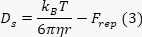
NOTE: The parameter is Boltzmann’s constant, T is the processing temperature, η is the viscosity of the polymer matrix, and r is the effective nanoparticle radius. The term Frep represents inter-particle repulsive forces. Positive values of Ds indicate stable dispersion governed by Brownian motion and repulsion effects. - Calculate the rheological equilibrium and shear compatibility condition using Equation 4.

NOTE: η is the viscosity of the polymer–binder system, and does mechanical stirring impose the shear rate. The term τcrit denotes the critical shear stress threshold beyond which nanoparticle agglomeration or polymer degradation may occur.
8. Optimize hybrid binder synergy and dispersion quality
- Select a suitable polymer base and surface-engineer TiO₂ and ZnO nanoparticles to improve surface energy compatibility and interfacial activity32,33.
- Control nanoparticle size and functionalization to minimize surface defects and agglomeration. Adjust the TiO₂:ZnO ratio to achieve synergistic reinforcement and functional equilibrium.
- Calculate the hybrid binder synergy optimization index Sh using Equation 5.
-

NOTE: The parameters φTiO2 and φZnO represent the volume fractions of TiO2 and ZnO nanoparticles, respectively, within the hybrid binder. The weighting coefficients ω1 and ω2 reflect the relative importance of mechanical reinforcement and functional enhancement, satisfying ω1+ω2=1. - Calculate the nanoparticle dispersion quality factor Dq using Equation 6.
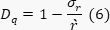
NOTE: σr denotes the standard deviation of nanoparticle cluster size distribution, and r is the mean nanoparticle radius after ultrasonication and high-shear mixing. Higher values of Dq indicate more uniform dispersion and reduced agglomeration34. - Calculate the interfacial reinforcement efficiency ηi using Equation 7.
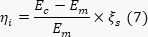
NOTE: Variable Ec denotes the elastic modulus of the TiO2–ZnO polymer nanocomposite, while Em is the elastic modulus of the neat polymer matrix. The factor ξs is the surface functionalization efficiency coefficient that accounts for the improved interfacial activity resulting from nanoparticle surface engineering35.
9. Use algorithm-guided process control
- Use Algorithm 1 (refer to Supplementary file 1) to identify the optimal TiO₂–ZnO hybrid binder composition for homogeneous dispersion and low agglomeration.
- Prepare the binder composition according to the selected TiO₂ and ZnO nanoparticle concentrations. Examine the particle-size dispersion and calculate dispersion indices to estimate the agglomeration factor.
- Adjust nanoparticle concentrations and apply surface functionalization when the agglomeration factor exceeds the specified threshold. Normalize the optimal TiO₂:ZnO ratio to ensure compositional stability.
- Use Algorithm 2 (refer to Supplementary file 1) to control hybrid binder incorporation into the polymer matrix.
- Maintain the processing temperature above the glass transition temperature to activate polymer chains.
- Inject the hybrid binder continuously under controlled shear to eliminate local concentration gradients. Monitor rheological balance continuously and adjust mixing parameters to maintain viscosity compatibility.
- Use Algorithm 3 (refer to Supplementary file 1) to predict multifunctional properties from the microstructure matrix.
- Estimate mechanical strength using the interfacial strength coefficient.
- Estimate thermal resistance using the matrix trace.
- Calculate ultraviolet shielding efficiency using the mean microstructural response.
- Calculate surface stability as a combined mechanical and thermal property.
- Use the resulting property vector to compare nanocomposite performance.
10. Characterize the nanocomposite samples
- Perform differential scanning calorimetry (DSC) from 30–400 °C at 10 °C·min-1 under nitrogen at 50 mL·min-1. Perform thermogravimetric analysis (TGA) from 30–600 °C at 10 °C·min-1. Perform tensile testing at a 5 mm·min-1 crosshead speed according to ASTM D638.
- Sputter-coat the samples with approximately 5 nm gold before scanning electron microscopy. Acquire scanning electron microscopy images at 10–15 kV accelerating voltage. Perform ultraviolet-visible spectroscopy from 200–800 nm.
- Confirm that optimized ultrasonication at 50 kHz and 200 W for 30 min produces uniform nanoparticle distributions with agglomerate sizes below 80–100 nm. Identify suboptimal dispersion when sonication for less than 10 min produces clusters larger than 300 nm.
- Confirm that the optimized 1:1 TiO₂:ZnO ratio at 3 wt% each produces approximately 50 MPa tensile strength, compared with approximately 42 MPa for TiO₂-only systems and approximately 38 MPa for ZnO-only systems.
- Confirm that polymer inclusion and mixing at 1000 rpm for 40 min improve interfacial bonding by 35–45% compared with poorly mixed samples.
- Confirm that curing at 80 °C for 2 h, post-curing at 120 °C for 3 h, and degassing at -0.1 MPa for 12 min increase degradation temperature from approximately 280 °C to approximately 340 °C. Confirm that optimized processing reduces mass loss by approximately 20–25%.
- Identify 3 wt% nanoparticle loading as optimal when tensile performance improves by approximately 50–60%.
- Identify reduced performance when 5 wt% nanoparticle loading causes agglomeration and decreases improvement to approximately 10–15%. Identify marginal improvement when 1 wt% nanoparticle loading produces only approximately 10% improvement.
- Report all results as mean ± standard deviation from three independent replicates. Confirm that the coefficient of variation remains below 5% under optimized conditions. Establish statistical significance using one-way analysis of variance (ANOVA) with p < 0.05.
- Validate the process when tensile strength increases by at least 40%, thermal stability increases by at least 50 °C, agglomeration size remains below 100 nm, and microscopy shows no structural flaws.
NOTE: All measurements are performed with a minimum of three independent replicates (n ≥ 3) for each formulation, including neat polymer (0 wt% filler) and single-filler controls (5 wt% TiO₂ and 5 wt% ZnO), enabling direct comparative assessment with the hybrid TiO₂–ZnO system. Report mechanical, thermal, and UV-resistance properties as mean ± standard deviation. Evaluate statistical significance using ANOVA followed by Tukey’s post hoc multiple comparison test at a 95% confidence level (p < 0.05).
11. Handle waste and complete disposal
- Collect nanoparticle-containing waste liquids in designated hazardous waste containers. Dispose of nanoparticle-containing waste according to institutional environmental health and safety requirements.
- Cure solid composite waste before disposal as non-reactive material.
12. Document expected outcomes
- Record stable nanoparticle dispersions, absence of visible agglomerates during mixing, and bubble-free casting before curing as intermediate successful outcomes.
- Record DSC profiles showing glass transition temperature increases from approximately 95 °C to approximately 118 °C for TiO₂-containing systems and approximately 112 °C for ZnO-containing systems.
- Record tensile strength improvements from approximately 30 MPa for neat polymer to approximately 50 MPa for TiO₂-containing systems and approximately 45 MPa for ZnO-containing systems.
- Record degradation temperature increases from approximately 280 °C to approximately 340 °C for TiO₂-containing systems and approximately 325 °C for ZnO-containing systems.
- Record reduced mass loss rates, delayed peak degradation, and maximum weight loss reductions of approximately 20–25%.
- Record microscopy evidence showing homogeneous dispersion under optimized conditions and visible agglomeration under suboptimal conditions. Record interfacial bonding strength increases of approximately 35–45% compared with the control.
- Use the optimized TiO₂–ZnO nanocomposite for high-performance coating, electronics, sensor, and biomedical applications.
Access restricted. Please log in or start a trial to view this content.
Results
Representative results demonstrated that TiO₂–ZnO reinforced polymer nanocomposites exhibited improved thermal stability, nanoparticle dispersion, interfacial bonding, and tensile performance compared with neat polymer systems and single-filler nanocomposites. Knowledge of interfacial bonding behavior is critical because it dictates nanoparticle dispersion, stress, and performance in high-performance engineering and functional applications.
Figure 2(A)
Access restricted. Please log in or start a trial to view this content.
Discussion
This paper demonstrates that the addition of TiO₂ and ZnO nanoparticles as hybrid binders significantly enhances the overall functionality of polymer nanocomposites36. The synergistic interaction between TiO₂ and ZnO effectively addresses the major shortcomings of traditional fabrication techniques, including poor dispersion, weaker interfacial bonding, and nanoparticle agglomeration37. TiO₂ is also beneficial for improving thermal stability, mechanical st...
Access restricted. Please log in or start a trial to view this content.
Disclosures
Conflict of interest
The authors declare that they have no conflict of interest.
Materials
| Name | Company | Catalog Number | Comments |
|---|---|---|---|
| Copper Oxide (CuO) Nanopowder | Alfa Aesar | 12345 | 30–50 nm, black powder |
| Digital Balance | Shimadzu / Equivalent | — | Used for accurate material measurement |
| High-Shear Mixer | Generic Laboratory Equipment | — | Used for uniform polymer–nanoparticle dispersion |
| Magnesium Oxide (MgO) Nanopowder | Merck | 805083 | Nano grade, 99% purity |
| Magnetic Stirrer with Hot Plate | REMI Equipments | 2MLH | Used for homogeneous mixing |
| N,N-Dimethylformamide (DMF) | Merck | 296547 | Solvent for polymer dissolution |
| Polyvinylidene Fluoride (PVDF) | Solvay | 6010 | Binder polymer for nanocomposite fabrication |
| Programmable Curing Oven | REMI Equipments / Equivalent | — | Used for controlled thermal curing and post-curing |
| Reduced Graphene Oxide (rGO) | Graphenea | RG-001 | Conductive nanofiller material |
| Teflon Mold | Generic Laboratory Equipment | — | Used for casting nanocomposite samples |
| Titanium Dioxide (TiO2) Nanopowder | Sigma-Aldrich | 718467 | Anatase phase, <25 nm particle size |
| Ultrasonicator (Probe Type) | Sonics Vibra-Cell | VCX750 | For nanoparticle dispersion |
| Vacuum Chamber / Vacuum Desiccator | Generic Laboratory Equipment | — | Used for degassing composite mixtures |
| Zinc Oxide (ZnO) Nanopowder | Sigma-Aldrich | 721077 | <50 nm particle size, high purity (99%) |