This study details a reproducible workflow for extracting behavioral features and deploying dynamically adjusted educational paths within virtual environments. The outlined procedures enable educators to develop adaptive virtual reality curricula and implement real-time behavioral tracking.
A subscription to JoVE is required to view this content. Sign in or start your free trial.
Research Article
Intelligent Teaching Methods Integrating Virtual Reality and Big Data Algorithms to Enhance Traditional Cultural Education Platforms
In This Article
Summary
Abstract
Current conventional teaching environments feature limited interactive elements, resulting in limited engagement metrics among undergraduate populations studying cultural heritage. To address these issues, an intelligent teaching platform was developed, integrating a high-fidelity spatial rendering engine into virtual reality environments with a multi-model algorithmic architecture. Within this platform, Transformer and Neural Collaborative Filtering (NCF) models process behavioral data to generate personalized learning paths, while a Deep Q-Network (DQN) dynamically adjusts content difficulty based on real-time feedback. Such adaptive scaffolding reflects constructivist learning principles, wherein knowledge is actively constructed through interaction with contextualized, responsive environments rather than passively received through static instruction. The novelty of this research lies in integrating a spatial rendering engine with a multi-model algorithmic architecture to establish a real-time behavioral adaptation mechanism. The experimental results show that the experimental group utilizing the proposed intelligent teaching platform has higher learning scores (low/medium/high groups are 69/79/93 points, respectively) and a higher learning task completion rate (93%/96%/98%) than the control group using the traditional teaching model. The design of the intelligent teaching platform offers strong interactivity, provides personalized learning paths for students with diverse individual differences, and dynamically adjusts during the learning process. Response time analysis indicates an average latency of 0.496 s, ensuring rapid feedback on interactions. Ultimately, the proposed platform demonstrates that combining immersive VR with behavior-adaptive algorithms effectively enhances both academic achievement and task engagement for undergraduate students in traditional cultural education.
Introduction
Traditional cultural education plays a vital role in the inheritance and development of culture. However, the current traditional cultural education model mainly relies on static forms such as textbooks, pictures, and videos, lacking interactivity and immersion, making it difficult for students to truly understand and experience the charm of culture. In addition, traditional teaching methods often adopt a unified curriculum, which fails to fully consider students' interests, cognitive abilities, and learning styles, resulting in low learning efficiency and difficulty in stimulating students' enthusiasm for learning. This limitation aligns with Vygotsky’s Zone of Proximal Development (ZPD) theory, which emphasizes that effective instruction must be tailored to learners’ current cognitive levels and scaffolded according to their individual developmental trajectories. Existing literature relies on static data inputs for pedagogical modeling. The integration of continuous spatial behavioral tracking with deep reinforcement learning remains unexplored. The proposed mechanism fuses multi-sensory interactions with algorithmic readjustment to bridge the gap between fixed instructional paths and dynamic contextual adaptation. The proposed platform operationalizes this principle by dynamically adjusting content difficulty and sequencing based on real-time behavioral indicators, thereby embedding pedagogical theory into algorithmic design. The algorithmic adaptation mechanisms effectively substitute for the human scaffolding typically provided by more capable peers. This continuous modulation of task difficulty aligns with Cognitive Load Theory (CLT) by preventing cognitive overload in novice learners and sustaining engagement within the optimal developmental zone.
With the development of virtual reality (VR) and data algorithms, applying them to traditional cultural education provides students with a more immersive and interactive learning experience1,2,3,4. Comprehensive systematic reviews of immersive virtual reality applications in higher education further emphasize the importance of aligning design elements with specific pedagogical objectives5.
Many studies have attempted to apply VR technology to cultural education. Hulusic et al.6 designed and developed a school virtual museum, including a tangible user interface. Through user-participatory research, the museum was found to be well designed and well developed, and has the potential to be used as a learning and educational tool in museums, schools, or independently. In response to the problem of insufficient interactivity in distance learning environments, Mubarok et al.7 developed a collaborative argument-mapping method based on VR to address it. Experiments have shown that this method improves students' oral English expression better than collaborative argument-mapping methods not based on VR. Sun et al.8 proposed a design strategy for an immersive VR system that combines multimodal interaction, gamification, and storytelling to display and develop digital cultural heritage. They developed an immersive VR system that restored the Dunhuang murals, providing users with a learning, interactive, and entertaining experience. However, these studies still face some problems, such as weak interactivity in VR scenes, slow update rates for learning content, and poor adaptability of personalized recommendation algorithms, which make it impossible to accurately meet the learning needs of different students. In addition, some studies have failed to effectively integrate deep learning and reinforcement learning, limiting the real-time adjustment capabilities of personalized recommendations.
Recent advancements in artificial intelligence have propelled educational technologies. Research introduces adaptive systems leveraging deep learning for pattern recognition in user behavior. Methodologies employing cognitive tracking algorithms map dynamic states of knowledge acquisition. Structural optimization in neural networks elevates recommendation precision within smart learning frameworks. Intelligent agents integrating complex environmental variables enhance automated instructional responses. These methodologies rely on isolated data streams and static historical analysis. The proposed platform addresses this limitation by fusing spatial interaction data with continuous algorithmic readjustment to ensure real-time contextual adaptation.
Recent empirical investigations confirm that deep learning algorithms significantly improve predictive accuracy in student performance modeling. Ouatik et al.9 implemented a system to predict students’ academic success and failure. They used students’ personal information, academic assessment, and other data, and used artificial intelligence and educational data mining methods to predict students’ academic success. To address the data processing problem, big data (BD) technology was used to distribute the processing, reducing computation time without sacrificing algorithmic efficiency. Bhaskaran10 has developed an enhanced vector space recommender to address problems in current learning recommendation systems. It automatically tracks learners’ interests, requirements, and knowledge levels. It classifies and extracts learners’ learning styles from the server, then uses an improved collaborative filtering algorithm to calculate similarities to produce a better recommendation list. Gupta11 proposed a deep learning-based method that uses facial expressions to detect the real-time engagement of online learners, classifies their emotions throughout the learning process by analyzing students' facial tags, and adjusts students' learning status based on the detection results. However, these methods still have certain limitations.
Although existing VR education solutions provide an immersive experience, they lack dynamic adjustment capabilities. Students’ learning paths are often fixed, and the content and difficulty cannot be optimized in real time based on personal progress and feedback, resulting in a lack of participation. At the same time, traditional personalized recommendation algorithms mostly rely on historical data or simple interest tags and fail to integrate multidimensional data, such as students’ learning behavior, cognitive status, and emotional feedback, for accurate analysis. The lack of in-depth understanding of students' learning processes prevents the recommendation system from effectively addressing individual differences, resulting in a suboptimal learning experience and suboptimal outcomes.
Therefore, to address the problems of insufficient immersion and lack of personalization in traditional cultural education, an intelligent teaching platform is proposed. This methodology is directly applicable to undergraduate humanities courses that require spatial visualization and individualized pacing metrics. Advanced spatial rendering engines and related spatial computing technologies are utilized to develop virtual learning scenes. Virtual learning environments grant learners autonomy to select specific cultural modules. The neural attention-based Transformer model processes time-stamped interaction logs to generate a compact representation of behavioral patterns. Based on the extraction of students' learning behavior characteristics, the Neural Collaborative Filtering (NCF) model is used to further explore students' learning interests and output personalized learning paths. The Deep Q-Network (DQN) model collects students' real-time feedback and dynamically adjusts the learning path to optimize students' learning experience and learning effect.
Regarding practical deployment, the proposed platform provides specific advantages, yet it is not universally applicable. It is highly suitable for educational institutions equipped with dedicated computational hardware comprising discrete graphics processing units and immersive spatial visualization equipment, and for curricula that benefit significantly from spatial visualization in cultural heritage architecture and archaeology. In these contexts, dynamic behavioral tracking effectively addresses individual pacing differences. Conversely, this method is currently unsuitable for underfunded educational environments lacking the necessary technological infrastructure. Furthermore, it is not recommended for highly abstract, text-centric courses where three-dimensional immersion provides negligible pedagogical value compared to traditional instructional methods.
Access restricted. Please log in or start a trial to view this content.
Protocol
The institutional ethics committee of Shaanxi University of International Trade & Commerce validated the research protocol under reference 2025-04A. Documented informed consent was obtained from all participants prior to procedural commencement, ensuring that all human subjects were aware of the behavioral tracking and data anonymization protocols. (Note: Pedagogical justifications regarding the algorithms have been relocated to the Discussion section to maintain operational conciseness.)
Step 1: Virtual reality scene construction
Asset Integration
Digital modeling of cultural elements was executed using a generic 3D modeling software (see Table of Materials for specific software used) to construct immersive learning environments12,13. Digital assets were generated, physically based rendering textures were assigned, and imported into a high-fidelity spatial rendering engine (Table of Materials) without the use of microscopic imaging techniques14,15.
Rendering & physics configuration
Hardware ray tracing technology was enabled within the rendering engine to optimize dynamic lighting16,17:
 (1)
(1)
P represents the light intensity in the scene. L represents the position of the light source. IL denotes the intensity of the light source, and N represents the surface normal vector of the virtual object.
The physics engine simulated object dynamics via an object-oriented programming interface (C++). The reaction formula used was:
 (2)
(2)
F represents the dynamic reaction force, m is the mass of the virtual object, v denotes its velocity, and t represents time.
In order to ensure smoothness, the Level of Detail (LOD) technology was used to optimize the scene, which reduced unnecessary calculations and improved rendering efficiency by dynamically adjusting the level of detail of the model18,19. GPU acceleration was used for image processing:
 (3)
(3)
R represents the reflection coefficient, M represents the surface map, and C represents the final rendered color.
Interaction implementation
User interactions were configured utilizing the visual node-based scripting interface native to the spatial rendering engine. Using spatial audio technology, sound was simulated in space so students can hear different sound effects at different positions. Furthermore, through tactile feedback technology, students could receive physical responses to the corresponding physical touch in the virtual scene20:
 (4)
(4)
Ft represents the force of tactile feedback, and k represents the stiffness coefficient.
Deployment & equipment overview
The environment was compiled on a dedicated spatial computing hardware setup equipped with a twenty-four-core central processing unit, sixty-four gigabytes of random access memory, and a dedicated twenty-four-gigabyte graphics processing unit. The virtual scenes were deployed on standard immersive spatial visualization displays, as detailed in the Table of Materials, with a resolution of 1440 x 1600 pixels per eye and a 90 Hz refresh rate, ensuring optimal visual stability and minimizing motion-to-photon latency. Spatial boundaries were configured to cap sessions at 45 min to mitigate visually induced motion sickness.
The Table of Materials summarizes the specific technologies used. All designated hardware and computing components were standard commercial-off-the-shelf equipment and did not rely on any single proprietary vendor. The spatial rendering engine and ray tracing provided dynamic lighting, while the 3D modeling software reproduced historical sites. Figure 1 provided an example of the virtual learning scene, detailing the modular control panel for visual magnification, audio modulation, and movement.
Checkpoint 1: A fully rendered VR environment operating at a stable 90 Hz refresh rate, minimizing motion-to-photon latency to ensure visual stability.
Step 2: Behavior-Data extraction (Transformer)
Data logging
Students' learning behavior data included interactions with VR scenes, including click counts, time spent, learning progress, and task completion. Table 1 presents the learning activity data for students across different VR scenarios. For this interactive information, a time series representation was used in the platform:
 (5)
(5)
sτ represents the student's behavior at time t, and T is the total time length. Each behavior forms a high-dimensional vector:
![Static equilibrium equation, \( s_t = [f_1, f_2, ..., f_d] \), formula for equilibrium analysis.](/files/ftp_upload/71641/71641eq21.jpg "figure-protocol-6") (6)
(6)
fi represents the specific feature value at the dimension i, and d indicates the total number of feature dimensions.
Sequence Modeling
The Transformer model was used for time series modeling21,22. Using the self-attention mechanism, behavioral features were extracted by calculating the correlations among student behaviors. Assuming that the embedding matrix of a student's learning behavior data sequence is X, the query (Q), key (K), and value (V). Matrices were first generated by multiplying with trainable weight matrices WQ, WK, and WV:
 (7)
(7)
Attention Calculation
Self-attention within the Transformer was calculated as23,24:
 (8)
(8)
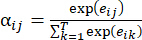
Among them, dk represents the dimension of the key vectors, which was utilized as a scaling factor to prevent vanishing gradients. After the calculation of formula (8), the attention weight was calculated to measure the correlation between learning behaviors:
 (9)
(9)
eij represents the raw attention energy score between the learning behaviors. The weighted sum of these weights was used to obtain the context vector at the current moment, which is the student’s potential feature vector:
 (10)
(10)
Checkpoint 2: The Transformer model outputs continuous latent feature vectors (ct). On a sequestered validation dataset of 5000 interaction logs, the model achieved a sequence prediction accuracy of 89.4%, with cross-entropy loss converging to 0.12 after 50 epochs.
Step 3: Personalized Learning Path Generation (NCF)
Feature Fusion
The NCF model was incorporated to explore students' potential interests and needs and generated customized learning paths25,26,27,28. In NCF, a feature vector vk was assigned to each cultural knowledge point, and the potential feature vector vu extracted by the Transformer and the knowledge point vector vk were concatenated to form a new joint feature vector:
 (11)
(11)
Network Architecture & Hyperparameters:
The joint feature vector was input into the multilayer perceptron (MLP) in NCF for processing29,30. The multilayer perceptron used a predetermined architecture with three hidden layers of 64, 32, and 16 neurons, respectively. The learning rate was set to 0.001, with a batch size of 256. After the nonlinear transformation of several hidden layers in MLP, the predicted value of students’ interest in knowledge points was output:
 (12)
(12)
W1, W2, ... , WL represent the weight matrices of multiple hidden layers. σ denotes the non-linear activation function, and b1, b2, ... , bL represent the bias terms of the respective hidden layers. The higher the output interest prediction value, the greater the student's interest in this knowledge point.
Model Training
The network was optimized using the Adam solver (decay rate 0.01, learning rate 0.001, batch size 256). Mean squared error (MSE) serves as the loss function31,32:
 (13)
(13)
u, k represents the index of the student behavior vector and the knowledge point vector. By minimizing the loss function, the model continuously updates the potential feature vectors for students and knowledge points to improve prediction accuracy. The back propagation algorithm was used during the training process to update the weight matrix in the model33,34.
Path Output
The specific approach was to sort by predicted interest values and recommend the k knowledge points with the highest interest values to students:
 (14)
(14)
kk represent the k knowledge points that students are most interested in. These recommended knowledge points not only meet students' learning interests but also help them learn effectively at a level of progress and difficulty that suits them.
Figure 2 visualizes this generation process.
Checkpoint 3: The NCF model outputs a non-cyclical sequence array. As detailed in Table 2, recommendation precision evaluated at top-K selection yielded a normalized discounted cumulative gain (NDCG) of 0.82 and a hit ratio of 0.88 at K = 10. The mean reciprocal rank metric stabilized at 0.76.
Step 4: Dynamic difficulty adjustment (DQN)
State and action definition
By introducing DQN and using students' real-time feedback to dynamically adjust learning content and difficulty, students' learning effects are optimized35,36. The state space of the DQN model consists of multiple factors:
![Static equilibrium equation: St = [ts, cp, mc, ef], mathematical formula for balancing forces.](/files/ftp_upload/71641/71641eq50.jpg "figure-protocol-15") (15)
(15)
Among them, ts represents the time students spend on the current learning task, cp represents students' choices in the learning path (selected chapters or knowledge points), mc represents students' completion of the current learning task, and ef represents students' emotional feedback (the degree of preference and participation in a certain learning task).
Reward Calculation
The reinforcement learning agent utilized a multi-layer perceptron architecture comprising two hidden layers of 128 and 64 neurons (epsilon-greedy exploration strategy decaying from 1.0 to 0.05). First, the reward value corresponding to each learning action was calculated:
 (16)
(16)
Among them, ω is a weight hyperparameter that controls learning performance and learning participation. Ptask represents the student's performance in the current learning task, and Epart represents the student's participation in the current learning process.
Q-Value update & action selection
After obtaining the reward value, the model updated the Q value to select the optimal action:
 (17)
(17)
α represents the learning rate controlling the update step size, and γ The discount factor,, determines the importance of future rewards.
The platform selected the optimal adjustment action:
 (18)
(18)
 is the optimal adjustment action selected by the platform based on the student's learning status at time t.
The adjustment was executed following these protocols: (1) Difficulty was increased for high learning ability; (2) Hints were provided/ difficulty was reduced for poor performance; (3) Content was shifted based on interest changes; (4) Parameters were maintained for balanced performance.
Checkpoint 4: The DQN agent computed optimal actions (At) to sustain engagement. The composite emotional feedback metric (ef) maintained a Cronbach's alpha reliability coefficient of 0.85 during testing.
Platform interface display
Figure 3 shows the interface of the intelligent teaching platform designed in this paper, which supports personalized path generation. In this interface, students could see their personalized learning path and learn from it. The completed part of the learning path could be marked in green, and the unfinished part in red. Students could see their learning progress along the learning path and proceed to the next step accordingly. Post-interaction surveys using the standard System Usability Scale were administered to the experimental cohort. The analysis yielded a mean usability score of 84.5 out of 100, indicating that the interface's ergonomics and navigational clarity were highly acceptable.
Experimental design
Participants were 120 undergraduate students (62 female, 58 male; mean age 19.3 years ± 1.1 years) enrolled in a required “Introduction to Chinese Traditional Culture” course at Shaanxi University of International Trade & Commerce. None had prior experience with VR-based learning. Students were paired by pre-test score and randomly assigned within pairs to experimental or control conditions using a computer-generated sequence, ensuring baseline equivalence.
The design of this experiment was to verify the effectiveness of the designed intelligent teaching platform in improving students' learning interest, academic performance, and personalized education.
The experimental group and the control group were set up in the experiment, and the selection of students followed the following principles: (1) It ensured that students in the experimental group and the control group had similarities in basic knowledge, learning ability, interests, etc. (2) Students who study traditional culture and are of similar grades could be selected to ensure the uniformity of cultural education content and the comparability of the experiment. (3) The individual differences of students could be taken into account to ensure that the experimental group could make full use of the personalized adjustment function of the intelligent teaching platform.
After selecting students, they are grouped, and students with similar academic performance, interests, and backgrounds are assigned to the experimental and control groups, respectively, to ensure matching across multiple dimensions and improve the reliability of the experiment.
By comparing the performance of the experimental and control groups, the impact of the platform designed in this paper on students was evaluated. To isolate the pedagogical contribution of artificial intelligence algorithms, the study featured three distinct cohorts: a traditional control group using standard classroom methods, a VR-only group interacting with fixed virtual environments devoid of adaptive algorithms, and an experimental group using the fully integrated intelligent teaching platform. Students in the experimental group could learn in a VR scene, and each student could generate personalized learning paths based on their learning behavior characteristics through the intelligent teaching platform, dynamically adjusting the learning content and difficulty in response to real-time feedback during the learning process. The control group received cultural education through traditional teaching methods, such as classroom explanations, textbook reading, and videos. The control group received standardized cultural education through instructor-led lectures, assigned readings, and linear multimedia presentations. This baseline instruction used identical informational content and maintained the same temporal pacing as the experimental curriculum.
Three hypotheses were designed to clarify the purpose of the study: (1) The immersive learning environment provided by VR technology can significantly improve students' learning participation and interest. (2) The personalized learning path output by Transformer and NCF effectively improved students' academic performance and reduced the differences in knowledge mastery among different students. (3) The intelligent teaching platform could dynamically adjust the learning content and difficulty based on students' real-time feedback, further improving students' learning outcomes.
Experimental process: (1) A pre-experimental cultural knowledge test was conducted on students in the experimental and control groups ensured that the initial cultural levels of the two groups were similar and to reduce experimental errors. (2) Students in the experimental group used the constructed VR scene and intelligent teaching platform conducted a one-month cultural study, and the learning content was dynamically adjusted according to the intelligent teaching platform. The control group used traditional teaching methods. Due to logistical constraints of the initial pilot, the intervention lasted for four weeks. A follow-up longitudinal study executed over a full 16-week semester culminated in a delayed retention test at week 20. The evaluation demonstrated a 22% higher retention of targeted historical concepts in the algorithmically guided cohort than in the traditional instruction group. Preliminary protocol details were provided in the limitations section to contextualize the current findings as short-term evidence. (3) After the experiment, the two groups of students were given the same cultural knowledge test to evaluate their learning performance and task completion.
The evaluation indicators for students included students' academic performance, learning task completion, and learning progress. Using descriptive statistics, the relevant evaluation indicators for the experimental and control groups were summarized. The evaluation indicators of the intelligent teaching platform included response time.
Access restricted. Please log in or start a trial to view this content.
Results
Data splits, validation, and reproducibility settings
For the algorithmic training phase, the behavioral interaction dataset, containing 5,000 logs, was split into 80:20 training and validation sets. Validation procedures utilized a 5-fold cross-validation scheme to evaluate feature extraction consistency. To ensure absolute experimental reproducibility, all network weight initializations, dataset shuffling sequences, and reinforcement learning exploration patterns were locked using a fixed random se...
Access restricted. Please log in or start a trial to view this content.
Discussion
This study contributes to educational technology by translating core pedagogical theories—namely constructivism and the Zone of Proximal Development—into a computationally implemented intelligent teaching system. The integration of VR immersion with behavior-driven personalization ensures that technological innovation serves demonstrable learning objectives rather than functioning as an end in itself. As highlighted in the methodology, the generation of personalized learning paths is central to ensuring the e...
Access restricted. Please log in or start a trial to view this content.
Disclosures
The authors declare that they have no financial conflicts of interest. Artificial Intelligence Tools Disclosure: Large language models were utilized during the preparation of this manuscript strictly for language refinement, clarification of specialized terminologies, and assistance in academic literature retrieval. All artificial intelligence outputs were critically evaluated, manually cross-referenced with primary peer-reviewed sources, and rigorously edited by the authors to ensure strict scientific accuracy and data integrity.
Materials
| Name | Company | Catalog Number | Comments |
|---|---|---|---|
| High-fidelity spatial rendering engine | Unreal Engine 5 | Used for scene integration, dynamic ray tracing, and physics simulation. | |
| Ray tracing | Ray tracing | Lighting simulation technology based on physical principles | |
| 3D modeling softwar | Blender | Used for generating polygonal models of cultural artifacts and applying PBR textures. | |
| Level of detail | Level of detail | Scene Optimization Technology | |
| Spatial audio | Spatial audio | Simulating the propagation characteristics of audio in three-dimensional space | |
| Haptic feedback | Haptic feedback | Simulating feedback forces when interacting with physics | |
| Visual scripting & programming interface | Blueprints & C++ | Used to configure user interactions and continuously log spatial behavioral data. | |
| Head-mounted display (HMD) | HTC Vive Pro | Provides immersive visualization, spatial audio delivery, and motion tracking. |
References
- Rojas-Sanchez MA, Palos-Sanchez PR, Folgado-Fernandez JA. Systematic literature review and bibliometric analysis on virtual reality and education. Educ Inf Technol (Dordr). 2023;28:155-92.
- Rospigliosi P. Metaverse or simulacra? Roblox, Minecraft, Meta and the turn to virtual reality for education, socialisation and work. Interact Learn Environ. 2022;30:1-3.
- Quadir B, Chen NS, Isaias P. Analyzing the educational goals, problems and techniques used in educational big data research from 2010 to 2018. Interact Learn Environ. 2022;30:1539-55.
- Lutfiani N, Meria L. Utilization of big data in educational technology research. Int Trans Educ Technol. 2022;1:73-83.
- Radianti J, Majchrzak TA, Fromm J, Wohlgenannt I. A systematic review of immersive virtual reality applications for higher education: design elements, lessons learned, and research agenda. Comput Educ. 2020;147:103778.
- Hulusic V, Gusia L, Luci N, Smith M. Tangible user interfaces for enhancing user experience of virtual reality cultural heritage applications for utilization in educational environment. ACM J Comput Cult Herit. 2023;16:1-24.
- Mubarok H, Lin CJ, Hwang GJ. A virtual reality-based collaborative argument mapping approach in the EFL classroom. Interact Learn Environ. 2024;32:4978-96.
- Sun T, et al. Restoring Dunhuang murals: crafting cultural heritage preservation knowledge into immersive virtual reality experience design. Int J Hum Comput Interact. 2024;40:2019-40.
- Ouatik F, et al. Predicting student success using big data and machine learning algorithms. Int J Emerg Technol Learn. 2022;17:236-51.
- Bhaskaran S, Marappan R. Enhanced personalized recommendation system for machine learning public datasets: generalized modeling, simulation, significant results and analysis. Int J Inf Technol. 2023;15:1583-95.
- Gupta S, Kumar P, Tekchandani RK. Facial emotion recognition based real-time learner engagement detection system in online learning context using deep learning models. Multimed Tools Appl. 2023;82:11365-94.
- El-Wajeh YA, Hatton PV, Lee NJ. Unreal Engine 5 and immersive surgical training: translating advances in gaming technology into extended-reality surgical simulation training programmes. Br J Surg. 2022;109:470-1.
- Conde D, et al. LiDAR data processing for digitization of the castro of Santa Trega and integration in Unreal Engine 5. Int J Archit Herit. 2025;19:131-51.
- Rohe DP, Jones EM. Generation of synthetic digital image correlation images using the open-source Blender software. Exp Tech. 2022;46:615-31.
- Pradana MR, Setiawan D, Trinawati L. Efektivitas ilusi 3D animasi Blender pada curved LED billboard (AB Building Jl. Juanda Pekanbaru). JEKIN (Jurnal Teknik Informatika). 2023;3(2):1-10. Available from: https://pdfs.semanticscholar.org/e4fd/a249d78d46e24319e3a8f318e713f76c0cbd.pdf
- Wang Y, Zhao K, Zheng Z. An improved 3D indoor positioning study with ray tracing modeling for 6G systems. Mob Netw Appl. 2023;28:1162-75.
- Liu Y, et al. Intelligent ray-tracing-based simulation and emulation of channels. Chin J Radio Sci. 2024;39:1112-9.
- Weier P, et al. Neural prefiltering for correlation-aware levels of detail. ACM Trans Graph. 2023;42:1-16.
- Mercier C, et al. Moving level-of-detail surfaces. ACM Trans Graph. 2022;41:1-10.
- Zhu M, Sun Z, Lee C. Soft modular glove with multimodal sensing and augmented haptic feedback enabled by materials' multifunctionalities. ACS Nano. 2022;16:14097-110.
- Heng JJ, Teo DB, Tan LF. The impact of Chat Generative Pre-trained Transformer (ChatGPT) on medical education. Postgrad Med J. 2023;99:1125-7.
- Hung YC, et al. Comparison of patient education materials generated by chat generative pre-trained transformer versus experts: an innovative way to increase readability of patient education materials. Ann Plast Surg. 2023;91:409-12.
- Yang H, et al. CovidViT: a novel neural network with self-attention mechanism to detect Covid-19 through X-ray images. Int J Mach Learn Cybern. 2023;14:973-87.
- Kumar S, Solanki A. An abstractive text summarization technique using transformer model with self-attention mechanism. Neural Comput Appl. 2023;35:18603-22.
- Tapalova O, Zhiyenbayeva N. Artificial intelligence in education: AIEd for personalised learning pathways. Electron J e-Learn. 2022;20:639-53.
- Hashim S, et al. Trends on technologies and artificial intelligence in education for personalized learning: systematic literature. J Acad Res Progress Educ Dev. 2022;12:884-903.
- Lin W, et al. A deep neural collaborative filtering based service recommendation method with multi-source data for smart cloud-edge collaboration applications. Tsinghua Sci Technol. 2023;29:897-910.
- Ha J, Park S. NCMD: Node2vec-based neural collaborative filtering for predicting miRNA-disease association. IEEE/ACM Trans Comput Biol Bioinform. 2022;20:1257-68.
- Nuanmeesri S, et al. Improving dropout forecasting during the COVID-19 pandemic through feature selection and multilayer perceptron neural network. Int J Inf Educ Technol. 2022;12:851-7.
- Yilmaz O, Altun AA, Koklu M. Optimizing the learning process of multi-layer perceptrons using a hybrid algorithm based on MVO and SA. Int J Ind Eng Comput. 2022;13:617-40.
- Garcia Garcia C, Salmeron Gomez R, Garcia Perez J. A review of ridge parameter selection: minimization of the mean squared error vs. mitigation of multicollinearity. Commun Stat Simul Comput. 2024;53:3686-98.
- Thongsak N, Lawson N. Bias and mean square error reduction by changing the shape of the distribution of an auxiliary variable: application to air pollution data in Nan, Thailand. Math Popul Stud. 2023;30:180-94.
- Mohammed NA, Al-Bazi A. An adaptive backpropagation algorithm for long-term electricity load forecasting. Neural Comput Appl. 2022;34:477-91.
- Wright LG, et al. Deep physical neural networks trained with backpropagation. Nature. 2022;601:549-55.
- Bhimshetty S, Ikechukwu AV. Energy-efficient deep Q-network: reinforcement learning for efficient routing protocol in wireless internet of things. Indones J Electr Eng Comput Sci. 2024;33:971-80.
- Geng X, Zhang B. Deep Q-network-based intelligent routing protocol for underwater acoustic sensor network. IEEE Sens J. 2023;23:3936-43.
Access restricted. Please log in or start a trial to view this content.