This protocol presents a standardized targeted biopsy workflow for upper gastrointestinal precancerous lesions using magnifying endoscopy with narrow-band imaging (ME-NBI). The goal is to systematically identify high-risk focal mucosal abnormalities based on predefined microscopic criteria, thereby enhancing diagnostic accuracy, improving biopsy efficiency, and minimizing unnecessary sampling.
Method Article
Standardized Magnifying Endoscopy with Narrow-Band Imaging-Guided Targeted Biopsy Workflow For Upper Gastrointestinal Precancerous Lesions
June 12th, 2026
Opens in a new tab
In This Article
Summary
Loading...
$$\rightleftharpoonup{xx}$$
$$\longleftharp{xx}$$,
$$\longrightharp{xx}$$,
Abstract
Loading...
$$\rightleftharpoonup{xx}$$
$$\longleftharp{xx}$$,
$$\longrightharp{xx}$$,
Although early detection of upper gastrointestinal precancerous lesions is vital, subtle mucosal variations often limit conventional endoscopic screening. To address this limitation, we present a standardized targeted biopsy protocol using magnifying endoscopy with narrow-band imaging (ME-NBI). This systematic workflow integrates key microstructural and microvascular criteria—specifically demarcation lines, irregular microsurfaces, atypical microvasculature, and marked glandular distortion—to identify high-risk focal areas for mucosal sampling. In a prospective clinical evaluation involving 161 patients, this standardized ME-NBI workflow was compared with a conventional white-light endoscopic assessment. The application of this protocol significantly enhanced the first-pass positive rate, overall biopsy positivity, and the diagnostic yield of high-risk lesions per biopsy sample, while simultaneously reducing the total number of biopsy samples required per patient. Furthermore, the standardized workflow demonstrated high diagnostic performance, achieving an area under the curve (AUC) of 0.928, and yielded strong interobserver agreement. By establishing objective criteria for target selection, this reproducible workflow reduces operator subjectivity, supports early neoplasia detection, and provides a practical framework for clinical implementation.
Introduction
Loading...
$$\rightleftharpoonup{xx}$$
$$\longleftharp{xx}$$,
$$\longrightharp{xx}$$,
Esophageal and gastric cancers remain leading causes of gastrointestinal cancer-related mortality worldwide1,2. Despite recent advancements in diagnostic and therapeutic modalities, early detection remains the most critical factor in improving patient survival and quality of life3. The accurate identification and timely management of upper gastrointestinal precancerous lesions—spanning mild, moderate, and severe dysplasia—are therefore essential4. However, under conventional endoscopy, these precursor lesions frequently present with only subtle mucosal changes, poorly defined margins, and heterogeneous distributions. Consequently, accurate diagnosis relies heavily on the endoscopist’s ability to visually identify and sample the most representative high-risk areas against a complex background mucosa5.
In standard clinical practice, biopsies guided by conventional white-light endoscopy (WLE) remain highly subjective. Endoscopists typically select targets based on macroscopic features such as surface erythema, depression, hypopigmentation, or nodularity, and may resort to random multi-quadrant sampling for extensive lesions. This experience-based paradigm has significant limitations. Given the patchy distribution and cellular heterogeneity of dysplasia, the highest-grade neoplastic cells often occupy only a restricted fraction of the total lesion area6,7. Because conventional WLE cannot readily resolve these subtle histological variations, empirical biopsy protocols frequently result in sampling error, pathological under-grading, and missed diagnoses. Furthermore, the necessity for multiple or repeat biopsies increases procedural time, exacerbates patient discomfort, and induces mucosal scarring that complicates subsequent endoscopic surveillance or resection8.
The rationale behind using magnifying endoscopy combined with narrow-band imaging (ME-NBI) is its ability to address these optical limitations. Recent assessments of narrow-band imaging algorithms support the use of advanced optical techniques for resolving subtle microvascular and mucosal variations beyond conventional white-light imaging9. Furthermore, comparative evidence underscores that hyperspectral reconstruction of standard white-light endoscopy substantially improves the precise segmentation of early precancerous boundaries10. By filtering broadband white light and leveraging the specific absorption peaks of hemoglobin, ME-NBI significantly enhances the optical contrast of the superficial mucosal microstructure and microvascular architecture. This optical magnification enables gastroenterologists to distinctly visualize morphological aberrations in epithelial gland openings and capillary loops. However, despite its diagnostic utility, a universally standardized workflow for its application in targeted biopsies remains undefined. Decisions regarding when to initiate magnified observation, how to weight specific morphological criteria, and precisely where to biopsy rely predominantly on subjective physician experience. This lack of standardization leads to notable discrepancies in diagnostic accuracy and interobserver agreement, particularly among endoscopists with varying levels of expertise11.
The overall goal of this method is to establish and systematically evaluate a reproducible, evidence-guided workflow for targeted biopsies of upper gastrointestinal precancerous lesions using ME-NBI. This protocol clearly defines the sequential screening steps, the indications for magnified observation, the criteria for recognizing high-risk focal areas, and the rules for optimizing biopsy allocation. Operationally, high-risk focal regions are delineated by a distinct demarcation line, which encapsulates localized structural disruptions. Within these demarcated borders, the workflow directs investigators to identify irregular microsurface patterns, microvascular abnormalities, and severe glandular distortion as actionable indicators for targeted sampling. The primary advantage of this technique over conventional empirical biopsy is its ability to reduce subjective variation, thereby increasing the detection rate of high-risk histopathology and improving the diagnostic yield per biopsy sample while reducing unnecessary sampling. Ultimately, this workflow provides clinicians with a standardized framework to improve diagnostic consensus across clinical teams, offering an objective methodology for endoscopy facilities aiming to improve the early detection of gastrointestinal neoplasia12.
Protocol
Loading...
$$\rightleftharpoonup{xx}$$
$$\longleftharp{xx}$$,
$$\longrightharp{xx}$$,
This prospective investigation received formal approval from the Institutional Review Board and Ethics Committee of the Central Hospital Affiliated to Shandong First Medical University (Approval No. XAU7781902). Written informed consent was obtained from all individual participants or their legal guardians prior to initiating any endoscopic examinations or mucosal biopsy procedures.
1. Patient enrollment and case selection
- Recruit patients aged over 18 years who are referred for a diagnostic upper gastrointestinal endoscopy.
- Ensure the enrolled patients present with upper gastrointestinal mucosal abnormalities, possess a high-risk background for precancerous lesion development, or have suspicious lesions requiring further histopathological evaluation.
- Exclude patients with a previous diagnosis of upper gastrointestinal malignancy, active gastrointestinal bleeding, or severe thrombocytopenia that makes them unsuitable for biopsy.
- Allocate eligible patients to either the conventional white-light assessment group or the standardized ME-NBI workflow group using a computer-generated randomization sequence to ensure balanced cohorts and minimize selection bias.
NOTE: Figure 1 illustrates the overall workflow of patient selection, grouping, and the distinct observational phases between conventional white-light endoscopy and ME-NBI targeted biopsy13,14.
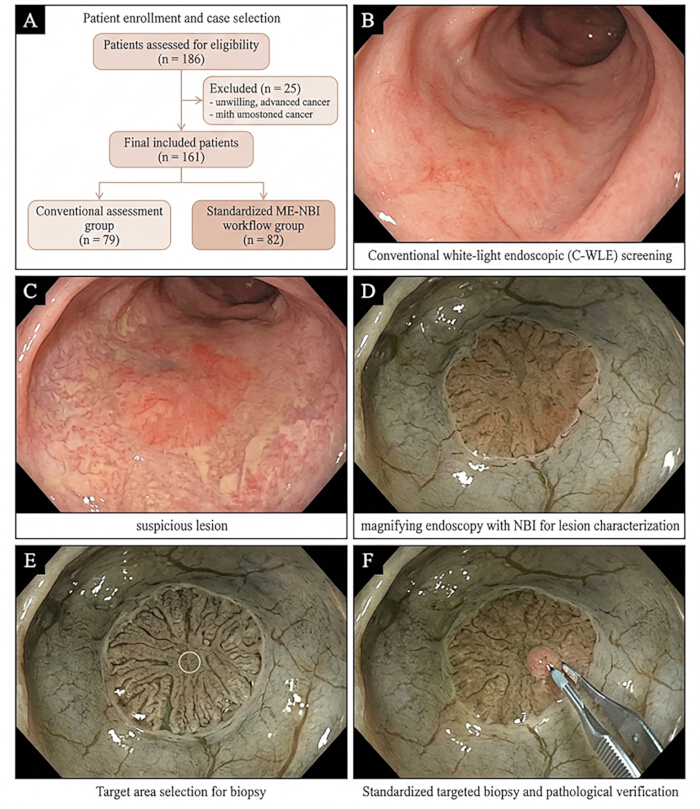
Figure 1: Standardized endoscopic workflow for targeted biopsy of upper gastrointestinal precancerous lesions using magnifying endoscopy with narrow-band imaging. (A) Patient enrollment and study grouping; (B) Conventional white-light endoscopic (C-WLE) screening view; (C) Suspicious precancerous lesion identified under white-light endoscopy; (D) Magnifying endoscopy with narrow-band imaging showing lesion microsurface and microvascular patterns; (E) Targeted biopsy site selection based on ME-NBI findings; (F) Standardized targeted biopsy workflow with pathological verification. Please click here to view a larger version of this figure.
2. Standardized endoscopic examination
- Initiate the upper gastrointestinal examination using a routine conventional white-light endoscopic (C-WLE) system.
- Observe all anatomical regions of the upper gastrointestinal tract sequentially and systematically.
- Record the precise anatomical position, estimated size, color changes, surface roughness, minor protrusions or depressions, and margin clarity of any identified suspicious lesions.
- Switch the endoscopic system to the magnifying endoscopy with narrow-band imaging (ME-NBI) mode immediately after recognizing potentially precancerous lesions or high-risk background mucosa under white light.
- Examine the focal areas in detail, specifically focusing on lesion borders, microsurface structures, microvascular morphologies, and glandular opening architectures.
- Assess the background mucosal features using ME-NBI to establish an internal baseline when evaluating cases with unclear focal lesions or widespread atrophic changes.
3. Target area selection and biopsy execution
- Select the targeted biopsy site strictly based on the following integrated ME-NBI criteria. Classify a focal mucosal region as a high-risk optical impression when a clear demarcation line encapsulates a localized area presenting with a synchronous combination of irregular microsurface patterns, asymmetric or tortuous microvascular arrangements, and marked glandular structural distortion.
- Identify and target the focal area that visually exhibits the most severe or atypical structural abnormality when examining lesions with high internal heterogeneity.
- Obtain mucosal samples directly from these identified high-risk targeted regions using biopsy forceps.
NOTE: The standardized definitions, variables, and operational coding criteria for all endoscopic features are detailed in Table 1. Representative macroscopic and microscopic appearances used to guide target selection are provided in Figure 2 and Figure 315.
Table 1: Standardized endoscopy features definitions and coding criteria for targeted biopsy of upper gastrointestinal precancerous lesions. Please click here to download this Table.
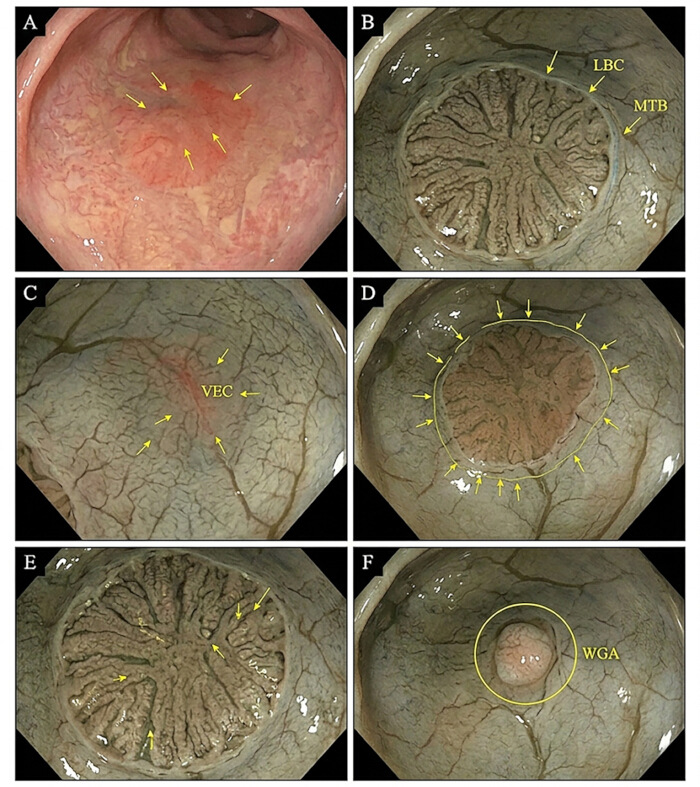
Figure 2: Representative endoscopic features of upper gastrointestinal precancerous lesions under conventional white-light endoscopy and magnifying endoscopy with narrow-band imaging. (A) Conventional white-light endoscopic appearance of a suspicious upper gastrointestinal precancerous lesion; (B) Magnifying NBI image showing intestinal metaplasia-related microface features with light blue crest and marginal turbid band; (C) Magnifying NBI view of focal vascular or epithelial change within a high-risk mucosal area; (D) Magnifying NBI image demonstrating a demarcation line and heterogeneous microsurface architecture; (E) Magnifying NBI view highlighting irregular microsurface and microvascular patterns optimal for targeted biopsy; (F) Magnifying NBI appearance of a localized abnormal glandular structure associated with high-risk pathology. Please click here to view a larger version of this figure.
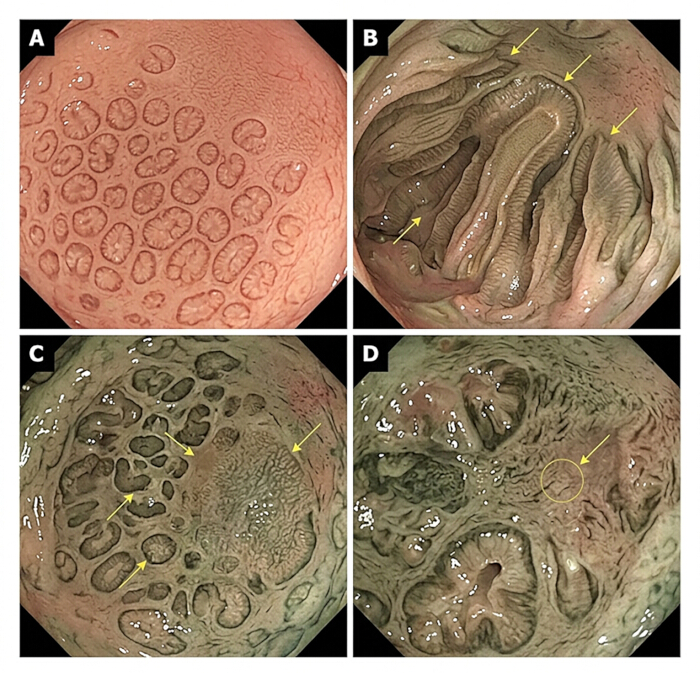
Figure 3: Representative glandular and microsurface patterns of upper gastrointestinal precancerous lesions under magnifying endoscopy with narrow-band imaging. (A) Regular glandular and microsurface pattern in low-risk background mucosa; (B) Intestinal metaplasia-associated glandular pattern with mildly altered but preserved microsurface architecture; (C) Heterogeneous microstructural pattern with focal glandular distortion in a suspicious precancerous lesion; (D) High-risk focal glandular abnormality selected as the prioritized targeted biopsy site. Please click here to view a larger version of this figure.
4. Histopathological evaluation and data analysis
- Grade all obtained biopsy specimens independently in accordance with the revised Vienna classification system for gastrointestinal epithelial neoplasia.
- Engage a third independent pathologist to re-evaluate the specimen and reach a definitive consensus if a grading disagreement arises between the initial two raters. Ensure this adjudicating pathologist remains strictly blinded to all clinical data, prior endoscopic impressions, and assigned procedural groupings by evaluating de-identified slides coded solely with randomized alphanumeric identifiers.
- Calculate the targeted biopsy efficiency indicators, including the average number of biopsy blocks per patient, the average number per lesion, and the diagnostic positivity rate per biopsy block.
- Extract the key endoscopic features detected via C-WLE and ME-NBI, and perform univariate and multivariate logistic regression analyses to determine independent predictors of high-risk pathology.
- Construct Receiver Operating Characteristic (ROC) curves and calculate the Area Under the Curve (AUC) to assess the diagnostic discrimination power of the workflow.
- Evaluate interobserver agreement for both endoscopic interpretation and the initial histopathological grading using the Kappa statistic, and apply Spearman's rank correlation to assess the relationship between specific image features and histopathological severity.
- Perform all statistical comparisons using appropriate tests, including Student's t-tests, Pearson chi-squared tests, or Fisher's exact tests. Define the threshold for statistical significance a priori at P < 0.05.
Results
Loading...
$$\rightleftharpoonup{xx}$$
$$\longleftharp{xx}$$,
$$\longrightharp{xx}$$,
Baseline clinicopathological and lesion characteristics
Prior to formal enrollment, 25 candidates were specifically excluded from the initial eligibility pool of 186 patients due to preexisting conditions precluding safe and meaningful targeted biopsies, namely a previous diagnosis of upper gastrointestinal tract malignancy, active gastrointestinal bleeding, or severe thrombocytopenia. A total of 161 patients were included in the study. Of these, 79 underwent conventional endoscopic evaluation, and 82 were evaluated using the standardized ME-NBI workflow. Baseline demographics and clinical characteristics—including age, sex, body mass index (BMI), smoking and alcohol history, family history of gastric cancer, Helicobacter pylori infection status, and previous history of chronic atrophic gastritis or intestinal metaplasia—were comparable between the two groups, indicating well-matched baseline cohorts (Table 2, all P > 0.05).
Table 2: Clinicopathological data of enrolled patients. Please click here to download this Table.
There were no significant differences in lesion characteristics, such as size, solitary/multiple distribution, anatomical site, or macroscopic appearance between the two groups (all P > 0.05). Overall lesions were primarily distributed in the stomach, most notably in the fundus, antrum, and pylorus areas. Notably, when stratified by histopathological severity, the high-risk precancerous lesions were predominantly located on the lesser curvature of the gastric corpus and at the gastric angle, reflecting the typical topographical progression of severe atrophic gastritis. The most frequently observed macroscopic features included flat morphology or abnormal background mucosal changes. The primary baseline endoscopic findings included suspected intestinal metaplasia and atrophic changes. Final histopathological diagnoses primarily included intestinal metaplasia, atrophy, and low-grade intraepithelial neoplasia, with high-grade intraepithelial neoplasia and intramucosal carcinoma/early adenocarcinoma constituting a relatively lower proportion. The initial histopathological assessment demonstrated substantial interobserver agreement between the two primary pathologists (κ = 0.86). Any discordant evaluations were effectively resolved through joint review with the third independent pathologist to establish a definitive diagnostic consensus.
Endoscopic-histopathological associations of key ME-NBI features
To evaluate the relationship between major ME-NBI characteristics and pathological outcomes in targeted biopsy samples, an initial correlation analysis was performed between endoscopic attributes and histopathological severity.
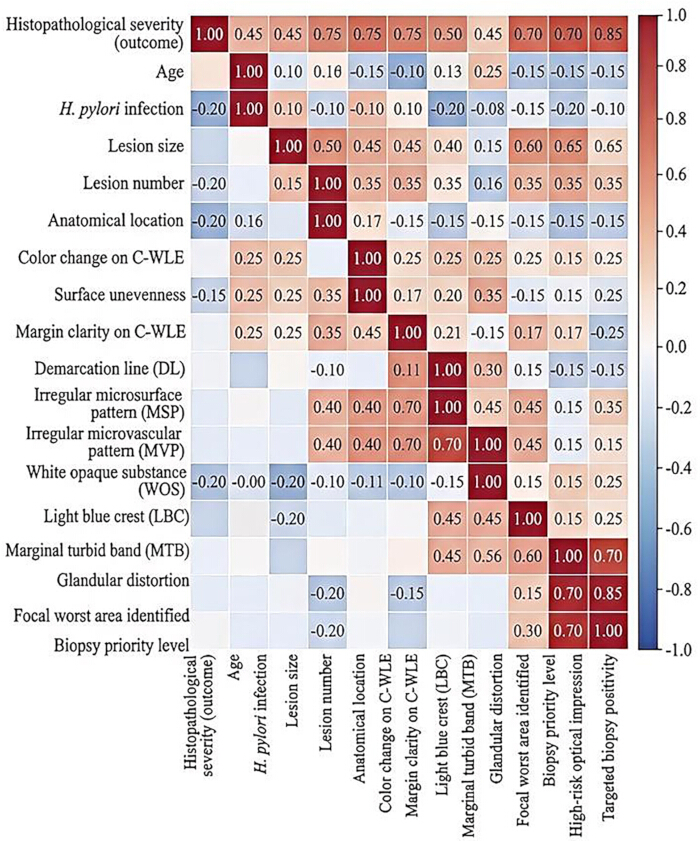
Figure 4: Correlation heatmap demonstrating the relationships between key conventional and magnifying endoscopic features, clinical variables, and histopathological outcomes. The color gradient indicates the strength and direction of the correlation, with deep red representing a strong positive correlation and deep blue indicating a strong negative correlation. Notably, the presence of a demarcation line, irregular microsurface and microvascular patterns, and marked glandular distortion exhibit the most robust positive correlations with histopathological severity and targeted biopsy positivity. Please click here to view a larger version of this figure.
Figure 4 demonstrates a consistent directional trend, albeit with varying degrees of correlation between ME-NBI variables and histopathological progression. Specifically, the presence of a demarcation line, irregular microsurface pattern, irregular microvascular pattern, marked glandular distortion, higher biopsy priority level, and a high-risk optical impression were all strongly correlated with histopathological severity. As the histological grade of the lesions increased, the concentration and prominence of these abnormal endoscopic features became significantly more severe. Conversely, the light blue crest (LBC) and marginal turbid band (MTB) exhibited features more indicative of an intestinal metaplasia background; they demonstrated a relatively weak correlation with the highest pathological grades. Therefore, they are more suitable for describing background mucosal changes rather than predicting focal high-risk pathology.
Table 3: Association of the key magnifying endoscopy with narrow-band imaging features and histopathological outcomes in target biopsies. Please click here to download this Table.
Univariate analysis (Table 3) revealed significant differences in specific features when comparing high-risk and low-risk pathological groups. For this statistical evaluation, high-risk pathology was strictly defined as high-grade intraepithelial neoplasia or early adenocarcinoma, whereas low-risk pathology encompassed atrophy, intestinal metaplasia, and low-grade intraepithelial neoplasia. Features such as a lesion size > 10 mm, clear margins under C-WLE, presence of a demarcation line, irregular microsurface pattern, irregular microvascular pattern, marked glandular distortion, identification of a focal worst area, and a high-risk optical impression were observed at a significantly higher proportion in the high-risk group. Among these, the odds ratios (ORs) for irregular microsurface patterns, irregular microvascular patterns, glandular distortion, and high-risk optical impressions were substantially elevated, marking them as key risk factors. Although irregular white opaque substance (WOS) and certain morphological features were statistically significant, characteristics, such as LBC and MTB, failed to achieve statistical significance for predicting high-risk pathology, reinforcing their role as indicators of lower-risk intestinal metaplasia backgrounds.
Predictors of positive targeted biopsy for high-risk precancerous lesions
To determine which endoscopic criteria independently predict the presence of high-risk precancerous lesions and necessitate targeted biopsy, a multivariate logistic regression analysis was conducted based on the univariate results.
Table 4: Multivariate analyses of endoscopic predictors for positive targeted biopsies in high-risk upper gastrointestinal precancerous lesions. Please click here to download this Table.
After adjusting for lesion size and other major endoscopic indicators (Table 4), the presence of a demarcation line, irregular microsurface pattern, irregular microvascular pattern, marked glandular distortion, and a high-risk optical impression remained robust, independent predictors of a positive high-risk targeted biopsy. Notably, focal structural disorders detected by ME-NBI (microsurface and microvascular abnormalities) strongly correlated with pathological severity and independently determined the necessity for biopsy. Glandular distortion exhibited comparable reliability as a factor for pattern-recognition-guided biopsies. Although a lesion size > 10 mm showed an association with high-risk pathology in the univariate analysis, it failed to reach statistical significance after multivariate adjustment, suggesting its predictive value is superseded by more specific microscopic parameters.
Diagnostic yield and efficiency of the standardized targeted biopsy workflow
The standardized ME-NBI-guided targeted biopsy protocol demonstrated higher diagnostic yield and efficiency compared with conventional non-standardized procedures (Table 5).
Table 5: Comparative analysis of diagnostic sensitivity and biopsy success rate between conventional biopsies and the standardized magnifying endoscopy-guided targeted biopsy procedure. Please click here to download this Table.
Compared with the conventional biopsy group, the standardized workflow group exhibited a significant reduction in the mean number of biopsy samples required per patient and per lesion (both P < 0.001). Furthermore, the increase in the first-pass targeted biopsy positivity rate was notably pronounced (P = 0.016), accompanied by a higher overall biopsy positivity rate (P = 0.021) and an increased high-risk lesion yield per biopsy sample (P = 0.020). This paradigm effectively minimizes non-diagnostic or low-value sampling (P = 0.022) and reduces the need for repeat biopsies (P = 0.045). Although the standardized protocol required a marginally longer mean procedure time (16.2 ± 3.9 min vs. 14.8 ± 3.6 min, P = 0.019), the variance was minimal, and no severe delayed bleeding or major adverse events were recorded in either cohort.
The diagnostic performance and internal robustness are detailed in Figure 5, Figure 6, and Table 6. The standardized workflow achieved a high Area Under the Curve (AUC) of 0.928 (95% CI: 0.872–0.984) for detecting high-risk histopathology, suggesting a favorable balance between sensitivity (86.9%) and specificity (84.8%). This performance closely mirrors that of an integrated theoretical optical-biopsy decision model (AUC = 0.917), indicating that the diagnostic advantage of our protocol stems primarily from the systematic, unified clinical application of key ME-NBI features.
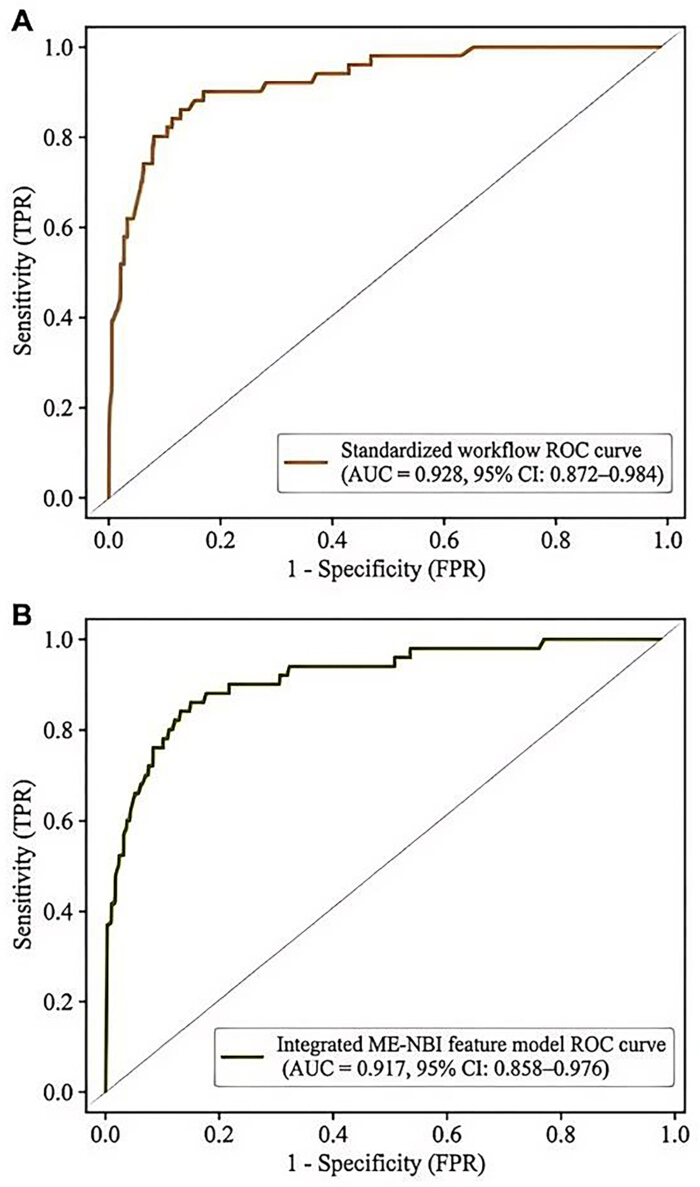
Figure 5: Diagnostic performance of the standardized magnifying endoscopy with narrow-band imaging-guided targeted biopsy workflow for detecting high-risk precancerous lesions. (A) ROC curve of the standardized ME-NBI-guided targeted biopsy workflow for identifying high-risk histopathology; (B) ROC curve of the integrated optical-biopsy decision model based on key ME-NBI features for detecting high-risk precancerous lesions. Please click here to view a larger version of this figure.
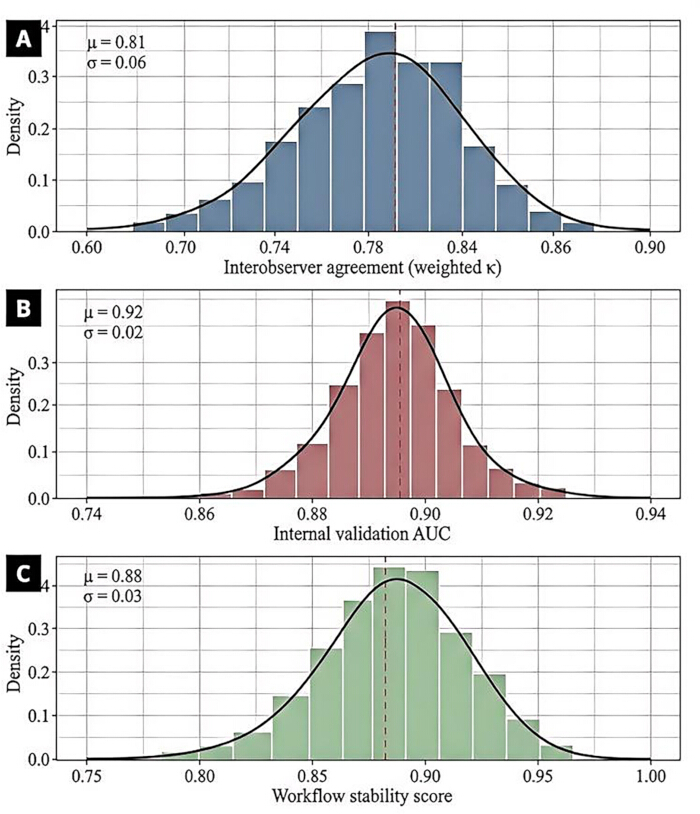
Figure 6: Reproducibility and stability of the standardized magnifying endoscopy with narrow-band imaging assessment workflow across endoscopists. (A) Distribution of interobserver agreement across repeated standardized ME-NBI assessments; (B) Distribution of internal validation AUC values for the standardized ME-NBI-guided workflow; (C) Distribution of workflow stability scores across repeated cross-validation analyses. Please click here to view a larger version of this figure.
Table 6: Diagnostic performance and internal validation of the standardized magnifying endoscopy with narrow-band imaging-guided targeted biopsy workflow. Please click here to download this Table.
Furthermore, the standardized workflow demonstrated strong overall interobserver agreement among endoscopists (mean weighted κ = 0.81). Initial histopathological grading also showed strong agreement between pathologists (κ = 0.86). Specifically, regarding the pivotal features utilized for biopsy targeting, the assessment consistency remained substantial for irregular microvascular patterns (κ = 0.85), marked glandular distortion (κ = 0.82), and the presence of a demarcation line (κ = 0.79). Internal validation (mean accuracy = 91.2%) and cross-validation stability scores confirmed the reproducibility and internal robustness of this approach across multiple testing iterations.
Data Availability
All de-identified raw data and analyzed datasets generated during this study are publicly available in the Zenodo repository and can be accessed at https://doi.org/10.5281/zenodo.19313281.
Discussion
Loading...
$$\rightleftharpoonup{xx}$$
$$\longleftharp{xx}$$,
$$\longrightharp{xx}$$,
Accurate assessment of upper gastrointestinal precancerous lesions is vital for early diagnosis and improved patient outcomes. Historically, the lack of uniform criteria for targeted sampling and unstandardized biopsy procedures resulted in highly variable diagnostic yields and operator dependencies16. The standardized ME-NBI protocol detailed here addresses this deficiency by defining a clear, reproducible reference point for biopsy selection. A critical step in this method involves the systematic transition from macroscopic recognition under white-light endoscopy to precise microscopic evaluation using ME-NBI, which improved diagnostic efficiency and operator consistency in this cohort.
From a clinical perspective, the primary advantage of this standardized ME-NBI workflow is its ability to significantly increase the first-pass positive rate and overall biopsy positivity compared to conventional empirical methods, while simultaneously reducing the mean number of biopsies required per patient17. By substantially increasing the positive predictive value for detecting high-risk lesions per sample, the protocol minimizes ineffective and unsatisfactory biopsies. These results support a "reduced-biopsy" approach; rather than relying on random, multi-quadrant sampling to overcome lesion heterogeneity, this workflow concentrates strictly on the most pathologically significant targets identified through integrated endoscopic signs.
Regarding endoscopic-pathological consistency, features such as a high-risk optical impression, irregular microsurface patterns, disordered microvascular architecture, severe glandular distortion, and the presence of a demarcation line were identified as independent indicators for a positive high-risk targeted biopsy. Among these, the comprehensive high-risk optical impression exhibited the greatest predictive ability, suggesting that an integrated interpretation is more informative than evaluating individual elements in isolation. Admittedly, relying on a comprehensive optical impression inherently introduces a degree of subjective cognitive integration by the endoscopist. While our standardized coding criteria and systematic training aim to mitigate this subjectivity, the holistic evaluation of concurrent microstructural and microvascular abnormalities cannot be entirely divorced from operator experience. Conversely, recognizing intestinal metaplasia-associated features, such as the light blue crest and marginal turbid band, serves a distinctly different clinical purpose. Rather than independently predicting focal high-grade dysplasia or malignancy, these markers are crucial for defining the topographical distribution and extent of mucosal atrophy. They establish the presence of a well-recognized high-risk stomach environment, wherein the targeted application of the ME-NBI procedure becomes clinically prioritized to detect subsequent focal transformations18,19.
The standardized protocol achieved strong diagnostic performance, yielding an AUC of 0.928, with both sensitivity and specificity exceeding 84%. Five-fold cross-validation with bootstrap correction confirmed a stable level of internal validity and reliability20. Furthermore, by providing objective coding criteria for image interpretation, the standardization significantly reduced subjective biases among operators, leading to enhanced diagnostic agreement. Contemporary research integrating hyperspectral imaging with computer-aided diagnostic systems further reinforces the importance of established diagnostic frameworks in minimizing operator subjectivity21. This high interobserver consistency suggests that the protocol may be adopted by endoscopy teams with varying levels of expertise.
Despite these encouraging outcomes, certain limitations of this method must be acknowledged. Our study population was a priori profiled as possessing a high-risk background. We recognize that the precise definition of an at-risk individual remains subject to ongoing debate within the gastroenterological community. In this current study, the classification relied heavily on prior clinical histories of chronic atrophic gastritis or intestinal metaplasia alongside macroscopic mucosal abnormalities. However, varying international consensus guidelines may inherently alter how these clinical risk profiles are determined in broader practice. Crucially, the clinical rationale of our protocol diverges from random or systematic sampling strategies, such as the Sydney system, which primarily map diffuse mucosal pathophysiology and background atrophy. Instead, this workflow is designed specifically for focal, high-risk mucosal abnormalities. Because our study population was pre-profiled and presented with existing abnormalities, it represents a highly selected cohort rather than a consecutive, real-world screening population. In general screening settings where diffuse lesions predominate, systematic screening remains fundamental. However, in specialized or high-risk surveillance clinics, transitioning to our standardized ME-NBI-guided focal biopsy approach can improve diagnostic yield and clinical efficiency. As a single-center prospective study utilizing a specific imaging platform, the external generalizability of this established workflow requires further validation22. Future multicenter trials must intentionally incorporate diverse clinical settings equipped with varying image-enhanced endoscopic systems. Evaluating this protocol across distinct technological platforms and among operators with heterogeneous expertise levels will be crucial to confirm the universal reproducibility of these diagnostic criteria.
Additionally, the relatively small sample size of the high-risk lesion cohort limited the statistical power of certain subgroup analyses. This constrained cohort size inherently widened the confidence intervals and elevated the risk of Type II errors, thereby preventing potentially meaningful clinical differences—such as diagnostic variations among specific morphological subtypes within the high-risk spectrum—from achieving the predefined threshold of statistical significance. Furthermore, a systematic evaluation stratified by specific anatomical locations was deliberately deferred during this initial investigation. Our primary objective was to first establish and prospectively validate a universal set of core optical criteria across the upper gastrointestinal tract before introducing the confounding variables associated with regional mucosal heterogeneity. Subsequent studies must now build upon this foundational workflow by conducting detailed spatial analyses to determine whether these unified biopsy criteria necessitate site-specific adjustments. From a patient-centered perspective within the broader clinical endoscopy workup, this protocol may be useful for surveillance programs managing individuals with established high-risk stomachs. Instead of subjecting patients to exhaustive and untargeted mapping protocols that increase procedure duration, mucosal trauma, and bleeding risk, our ME-NBI workflow refines the intervention. By reserving extensive biopsy sampling exclusively for endoscopically confirmed high-risk focal areas within a previously stratified mucosal background, clinicians can maximize diagnostic precision while simultaneously optimizing procedural tolerability and healthcare resource allocation. While the meticulous optical evaluation required by the ME-NBI protocol adds a marginal increase to initial procedure time, this minor upfront investment may be justified in high-volume endoscopy centers. The brief extension in endoscopic observation may reduce downstream administrative and clinical burdens associated with processing redundant biopsy samples, managing procedure-related mucosal bleeding, and scheduling avoidable repeat examinations.
In conclusion, this study establishes and evaluates a reproducible, standardized workflow for the targeted biopsy of upper gastrointestinal precancerous lesions using ME-NBI20. By relying on core decision-making criteria—namely demarcation lines, irregular microsurfaces, distorted microvasculature, and severe glandular deformation—this protocol offers an alternative to empirical sampling through evidence-based selection of target regions23. In contrast to traditional approaches, it increased the detection efficiency of high-risk lesions in this cohort while lowering the required sample size and reducing the rate of re-biopsy. Ultimately, this standardized ME-NBI-guided biopsy protocol provides a reproducible framework for endoscopy teams to improve the early detection of upper gastrointestinal neoplasia.
Disclosures
Loading...
$$\rightleftharpoonup{xx}$$
$$\longleftharp{xx}$$,
$$\longrightharp{xx}$$,
The authors have no conflicts of interest to disclose.
Acknowledgements
Loading...
$$\rightleftharpoonup{xx}$$
$$\longleftharp{xx}$$,
$$\longrightharp{xx}$$,
We would like to express our sincere gratitude to the clinical and nursing staff at the endoscopy center of the Central Hospital Affiliated to Shandong First Medical University for their invaluable assistance during the patient recruitment and endoscopic procedures. We also sincerely thank all the patients who participated in this study. This research received no specific grant from any funding agency in the public, commercial, or not-for-profit sectors.
Materials
| Name | Company | Catalog Number | Comments |
|---|---|---|---|
| Disposable Biopsy Forceps | Olympus Medical Systems | EndoJaw FB-230U | Collection of targeted mucosal biopsy specimens from high-risk areas identified by ME-NBI |
| Excel | Microsoft Corporation | Microsoft 365 (https://www.microsoft.com) | Data entry, organization, and management of endoscopic, pathological, and clinical variables |
| Hematoxylin and Eosin Stain Kit | Vector Laboratories | Catalog Number: H-3502 | Histopathological staining and morphological evaluation of tissue sections |
| Magnifying Gastroscope | Olympus Medical Systems | GIF-H290Z | Detailed assessment of lesion borders, microsurface patterns, microvascular patterns, and glandular architecture for targeted biopsy |
| Materials / Software | Provider | Version / Identifier | Purpose |
| Rotary Microtome | Leica Biosystems | RM2235 | Preparation of serial tissue sections for histological examination |
| SPSS Statistics Software | IBM Corporation | Version 26.0 (https://www.ibm.com/spss) | Statistical comparisons, logistic regression, ROC curve analysis, inter-observer agreement analysis, and correlation analysis |
| Tissue Embedding Paraffin | Leica Biosystems | Catalog Number: 39601006 | Tissue dehydration, embedding, and preparation for sectioning |
| Video System Center | Olympus Medical Systems | EVIS LUCERA ELITE CV-290 | Routine upper gastrointestinal examination and initial identification of suspicious mucosal lesions |
Reprints and Permissions
Request permission to reuse the text or figures of this JoVE article
Request Permission