This retrospective cohort study (n = 120) found that adjunctive moxibustion combined with a detoxification enema significantly improved renal function and reduced traditional Chinese medicine symptom scores in patients with chronic kidney disease, as an add‑on to losartan.
Research Article
Add-on Moxibustion and Detoxification Enema Alleviates Symptoms and Improves Renal Function in Chronic Kidney Disease: A Retrospective Cohort Study
In This Article
Summary
Abstract
This retrospective cohort study evaluated the clinical efficacy of adjunctive moxibustion combined with detoxification enema in patients with chronic kidney disease (CKD). Clinical data were retrospectively collected from patients with CKD treated between January 2020 and May 2024. All patients received losartan potassium (50 mg once daily) and general supportive care. The treatment group additionally received moxibustion combined with detoxification enema. Outcomes were assessed at baseline and after 60 days. The primary outcome was the change in measured creatinine clearance (Ccr), with renal function parameters and traditional Chinese medicine (TCM) symptom scores also evaluated. Ccr increased from 24.38 ± 7.21 mL/min/1.73 m2 to 32.16 ± 5.68 mL/min/1.73 m2 in the treatment group and from 26.15 ± 8.04 mL/min/1.73 m2 to 29.86 ± 6.29 mL/min/1.73 m2 in the comparison group. The baseline-adjusted between-group difference in post-treatment Ccr was 2.29 mL/min/1.73 m2 (95% CI, 0.31–4.27; p = 0.024), favoring the treatment group. Serum creatinine, blood urea nitrogen, uric acid, and TCM symptom scores also decreased after treatment. Adjunctive moxibustion, combined with a detoxification enema, was associated with improved short-term renal function and reduced TCM symptom scores. Prospective studies are needed to validate these findings.
Introduction
CKD is a progressively developing pathological state characterized by the irreversible loss of kidney function, leading to the accumulation of metabolic waste and fluids in the body, as well as disturbances in electrolyte and acid-base balance1. As the disease progresses, patients may develop a series of complications such as anemia, bone disease, and cardiovascular diseases, which severely affect the quality of life and survival rate of patients2,3. Finding effective treatment methods to delay the progression of chronic kidney failure and improve patient prognosis is particularly important.
Traditional medicine plays a significant role in the treatment of CKD. The occurrence and development of CKD are related to the dysfunction of the kidney, spleen, lung, and the triple burner's qi transformation, leading to an imbalance in the body's zang-fu organs and allowing pathogenic factors to linger within, resulting in impaired kidney qi transformation4. Therefore, it is necessary to rely on external forces to expel pathogenic factors from the body to effectively protect the remaining kidney function. Moxibustion and detoxification enema are common external treatments in TCM and are widely used therapeutic methods. Moxibustion is a therapy originating from ancient China, which stimulates specific acupoints through the heat and medicinal action generated by burning mugwort to achieve the effects of harmonizing qi and blood, and warming the meridians5. Modern research indicates that moxibustion can regulate the immune system, improve blood circulation, showing certain therapeutic effects on various chronic diseases6. Detoxification enema, on the other hand, is a method of cleansing the intestines by infusing fluids into the colon, aiming to remove toxins and waste from the body, improve intestinal function, and promote metabolism7. This method is considered to alleviate the detoxification burden on the kidneys in certain cases, thus having a positive impact on patients with chronic kidney failure.
Although moxibustion and detoxification enema have demonstrated potential therapeutic effects individually, evidence regarding their combined application in patients with CKD remains limited. We hypothesized that moxibustion combined with detoxification enema, when added to standard angiotensin receptor blocker (ARB) therapy, would be associated with greater improvements in renal function and clinical symptom scores than standard ARB therapy alone. Therefore, this retrospective cohort study evaluated the association between adjunctive moxibustion combined with detoxification enema and renal function and TCM symptom outcomes in patients with CKD.
Protocol
Study subjects
This study was approved by the Ethics Committee of Changzhou Traditional Chinese Medicine Hospital (approval number: 2020-0305w). All research procedures involving human participants complied with the ethical standards of the Declaration of Helsinki (2013 revision). Given the retrospective design and the use of anonymized clinical data, individual informed consent was waived by the ethics committee. Clinical data were retrospectively collected from patients with CKD treated at Changzhou Traditional Chinese Medicine Hospital between January 2020 and May 2024.
Refer to the Table of Materials for details of the materials and equipment used in this study.
The patient screening and selection process is summarized in Figure 1. Briefly, 386 CKD cases were initially retrieved from the electronic medical record system using ICD-10 code N18.9 during the study period (January 2020 to May 2024). After sequential application of inclusion and exclusion criteria—CKD stage (3–4), age (18–70 years), TCM syndrome pattern (spleen-kidney yang deficiency with dampness-turbidity obstruction), comorbidity/contraindication screening, and data completeness verification—120 patients were included in the final analysis (60 per group).
This was a retrospective observational cohort study: all treatments were delivered as part of routine clinical care between January 2020 and May 2024, and data were extracted from the electronic medical record system afterwards. No prospective enrollment, treatment assignment, or experimental intervention occurred. The study adheres to the STROBE guidelines for reporting observational research. The data of this study were obtained from the electronic medical record system of our hospital. CKD cases were retrieved by ICD-10 code (N18.9), and consecutive sampling was performed within each treatment group; no additional matching or manual selection was applied beyond the pre-specified inclusion and exclusion criteria. Diagnostic criteria for CKD8,9: Kidney damage for ≥3 months, which refers to abnormalities in kidney structure or function, with or without a decrease in glomerular filtration rate (GFR), manifested by one of the following: pathological abnormalities; or indicators of kidney damage, including abnormalities in blood or urine components, or abnormal imaging findings. GFR <60 mL/min/1.73 m2 for ≥3 months, with or without kidney damage, also met the diagnostic criterion. A diagnosis could be established when either criterion was fulfilled. Although eGFR was calculated secondarily for baseline description, the primary renal function outcome was measured creatinine clearance (Ccr). The eGFR was calculated using the CKD‑EPI 2009 equation indexed to 1.73 m2 and for descriptive reference only, based on serum creatinine measured by the Jaffe method. Upon data verification, baseline eGFR ranged from 15.2 to 58.7 mL/min/1.73 m2 across both groups, confirming that all patients met the inclusion criterion for CKD stages 3–4 (15–59 mL/min/1.73 m2). Patients were selected consecutively within each treatment group according to the therapy they actually received during the study period; no matching or manual screening was performed. No patients were lost to follow-up after inclusion because complete outcome data were required for eligibility.
Inclusion and exclusion criteria
Inclusion criteria were as follows: (1) age 18–70 years; (2) diagnosis of spleen-kidney yang deficiency with internal obstruction of dampness and turbidity according to the TCM diagnostic criteria; (3) diagnosis of CKD stage 3 or 4 (GFR, 15–59 mL/min/1.73 m2); and (4) no dialysis treatment. Reversible exacerbating factors, including infection, acidosis, and electrolyte disturbances, had to be adequately controlled.
Exclusion criteria: (1) Age under 18 or over 70, pregnant or lactating women. (2) Patients with severe primary diseases of the heart, brain, liver, and hematopoietic system, allergic constitution, or those allergic to multiple drugs. (3) Exclude active lupus nephritis (SLEDAI > 4 points) and primary nephrotic syndrome. Those who are unable to cooperate, such as patients with mental illness. (4) Patients with a history of critical conditions within six months, such as malignant hypertension, myocardial infarction, cerebrovascular accidents, and diabetic ketoacidosis. (5) Lupus nephritis in the active phase of lupus; patients with CKD stage 1, 2, or 5, or those who have undergone hemodialysis. (6) Patients with contraindications to colonic therapy, such as colonic tumors, severe hemorrhoids, anal fistulas, etc.
Methods
All patients in both groups received losartan potassium tablets (Zhejiang Huahai Pharmaceutical Co., Ltd., 50 mg/tablet, batch number 0000065700) 50 mg once daily as baseline renoprotective therapy, together with general symptomatic treatment. The general symptomatic treatment included: a low-salt, low-phosphorus, high-quality low-protein diet with a daily protein intake of 0.6 g per kg of body weight (for example, for a 60 kg patient, the daily protein intake was ≤36 g, mainly high-quality protein); blood pressure control targeted at ≤125/70 mmHg (if not reached by losartan alone, amlodipine was added preferentially instead of ACEI drugs to avoid affecting the assessment of renal function); regular hemoglobin monitoring with erythropoietin initiated when Hb was <100 g/L; biweekly testing of electrolytes (K⁺, Na⁺, Ca2⁺) to maintain acid-base balance; and anti-infective treatment when infection occurred, while nephrotoxic drugs were avoided. The comparison group received losartan plus general symptomatic care. The treatment group received losartan plus general symptomatic care plus moxibustion combined with detoxification enema. Thus, the comparison evaluated the add-on efficacy of the TCM external therapies on top of standard ARB treatment.
The treatment group underwent moxibustion combined with detoxification enema treatment. Moxibustion: Moxibustion was performed using pure mugwort moxa sticks (18 mm × 200 mm; Nanyang Yaoyibao Ai Products Co., Ltd.). The acupoints were: Pishu (BL20, bilateral, 1.5 cun lateral to the lower border of the T11 spinous process), Shenshu (BL23, bilateral, 1.5 cun lateral to the lower border of the L2 spinous process), Mingmen (GV4, midline, below the L2 spinous process), and Guanyuan (CV4, midline, 3 cun below the center of the umbilicus). Patients were positioned prone for BL20, BL23, and GV4, and supine for CV4. After igniting one end of the moxa stick with a lighter, the lit end was held 2–3 cm above the acupoint, maintaining a warm but comfortable sensation without burning. Each acupoint was treated for 10 min. Skin color was inspected every 2–3 min to detect early erythema; if discomfort or burning occurred, the moxa stick was immediately moved away, and treatment was stopped if necessary. Mechanical exhaust ventilation was used in the treatment room. The procedure was performed by licensed TCM physicians with at least 5 years of clinical experience. The duration (10 min per point) was fixed; only the distance (within 2–3 cm) was individually adjusted to achieve a warm sensation, and the adjusted distance was recorded in the treatment log. After moxibustion, the moxa stick was extinguished in an ash dish. The moxibustion area was cleaned and kept dry. Patients were advised to avoid bathing or exposure to drafts immediately after moxibustion. Reactions and sensations after moxibustion were recorded to guide adjustments during the subsequent session. Moxibustion was administered once daily, 5 days per week, for 60 days. A treatment session consisted of all four acupoints (BL20, BL23, GV4, CV4), with 10 min per point. Stopping criteria: treatment was immediately discontinued if the patient experienced severe pain, skin blistering, or intolerable discomfort; any such event was recorded as an adverse event. Adherence to the moxibustion protocol, defined as completion of ≥80% of scheduled sessions (i.e., ≥32 of 40 sessions), was 86.5% in the treatment group.
Detoxification enema treatment: The prescription comprised Ostreae Concha (oyster) 60 g, Rhei Radix et Rhizoma (rhubarb) 60 g, Sanguisorbae Radix (Radix Sanguisorbae) 60 g, Serissae Herba (June snow) 60 g, Sophorae Flos (raw sophora flower) 15 g, Polygonati Rhizoma (yellow essence) 15 g, Astragali Radix (Astragalus) 30 g, and Salviae Miltiorrhizae Radix et Rhizoma (salviorrhiza) 15 g. All crude drugs complied with the Pharmacopoeia of the People's Republic of China, 2020 edition. For decoction, the herbs were submerged in approximately 1,200 mL of water (covering the herbs by 2–3 cm) for 1 h, boiled for 15 min, then the pre‑soaked raw Rhubarb was added and boiled for another 5 min; the decoction was filtered through a 200‑mesh sieve and reduced to a 150 mL final volume. It was cooled to 39–41 °C before use. Retention enema was performed using a 16 Fr silicone Foley catheter inserted 15–20 cm, with the patient in the left lateral decubitus position; the infusion was delivered over 10–15 min. Retention for ≥30 min was verified by patient report. Standard infection‑control measures (hand hygiene, sterile gloves, single‑use catheter, and perianal disinfection) were followed. Discontinuation criteria included severe abdominal pain, rectal bleeding, or persistent discomfort. Patients received the enema for 10 consecutive days followed by a 5-day break, with each 15-day period constituting one treatment course.
If the blood pressure target was not achieved with losartan alone, add-on antihypertensives were permitted: amlodipine (5 mg daily) in the comparison group (12 cases, 20%) and hydrochlorothiazide (25 mg daily) in the treatment group (10 cases, 16.7%). The overall use of add-on antihypertensives did not differ significantly between groups (p = 0.68, χ2 test). These co-interventions were included as covariates in the multivariable regression model, and a sensitivity analysis excluding these 22 patients yielded consistent results (adjusted between‑group difference for Ccr: 2.21 mL/min/1.73 m2, 95% CI: 0.18 to 4.24, p = 0.033). Therefore, the statement "drug interference was excluded" has been removed and replaced with this analytical adjustment. The total treatment duration was 60 days. Moxibustion was administered once daily at the designated acupoints (10 min per acupoint), 5 days per week, for 60 days (40 sessions in total). The retention enema was administered once daily during the 10‑day treatment block of each course, with four courses completed (40 enemas in total). Outcomes were assessed at baseline and at the end of day 60. Treatment adherence for moxibustion and enema, defined as completion of ≥80% of scheduled sessions, was 86.5% in the treatment group.
Evaluation criteria and observational indicators
All symptom scores were prospectively recorded on standardized TCM syndrome assessment forms during routine clinical care at baseline and at the end of treatment and were retrospectively extracted from medical records. Scoring was independently performed by two senior TCM practitioners (with ≥10 years of experience in nephrology). For each symptom item, the final score was calculated as the arithmetic mean of the two raters' individual integer scores, permitting half‑point increments to reflect subtle differences in clinical assessment. Inter‑rater agreement was assessed using quadratic‑weighted kappa with κ = 0.82 (95% CI, 0.74–0.90; p < 0.001), indicating high inter-rater agreement. The two raters were blinded to treatment group assignment and assessment time point during the scoring process. If the scores differed by >1 point, the assessment was reviewed by a third senior TCM practitioner with at least 15 years of experience. Blood pressure, hemoglobin, and electrolyte levels were monitored as part of routine clinical care and are reported descriptively as exploratory safety‑monitoring outcomes; they were not prespecified as primary or secondary efficacy endpoints.
Renal function: Serum creatinine (Scr) was detected using the Jaffe's method, with a reference range of 30–106 µmol/L to 44–133 µmol/L; blood was collected from patients to test for serum uric acid (UA) and blood urea nitrogen (BUN), with a normal reference value for UA of 90–420 µmol/L. The normal reference value for BUN is 2.9–7.5 mmol/L (8–21 mg/dl). Measured creatinine clearance (Ccr) was determined as follows: after a 3‑day low‑protein diet (<40 g/day) with avoidance of strenuous exercise and meat, 24 h urine was collected on day 4 with accurate measurement of urine volume, and a simultaneous 2‑mL blood sample was drawn. Urinary and serum creatinine were measured by the Jaffe method. Ccr was calculated as: Ccr (mL/min) = [urinary creatinine (µmol/L) × urine volume (mL)] / [serum creatinine (µmol/L) × 1440 min], and corrected to a standard body surface area of 1.73 m2 using the Du Bois formula. The normal reference range for Ccr in China is 80–120 mL/min/1.73 m2. In addition, eGFR was calculated from serum creatinine using the CKD‑EPI 2009 equation (indexed to 1.73 m2) for descriptive purposes only, but the primary renal outcome is measured Ccr. The primary outcome was defined as the change in measured Ccr from baseline to day 60; changes in BUN, UA, and TCM symptom scores were designated as secondary outcomes.
TCM syndrome scoring standards: The scoring criteria for TCM symptoms were formulated by referring to the "Guiding Principles for Clinical Research of New Traditional Chinese Medicine Drugs" and the consensus of clinical experts. The symptom framework is consistent with the syndrome elements in the TCMSSD database10. Edema scoring criteria: no edema 0 points, mild edema (slight swelling of eyelids or lower limbs) 1-point, moderate edema (obvious swelling of eyelids or lower limbs) 2 points, severe edema (generalized edema, severe cases with pleural and abdominal effusions) 3 points. Lower back pain and weakness scoring criteria: no lower back pain and weakness 0 points, mild lower back pain and weakness (occasional lower back pain, not affecting daily activities) 1-point, moderate lower back pain and weakness (frequent lower back pain, affecting daily activities) 2 points, severe lower back pain and weakness (severe lower back pain, difficult to carry out daily activities) 3 points. Nocturia scoring criteria: no nocturia 0 points, mild nocturia (getting up to urinate 1-2 times per night) 1-point, moderate nocturia (getting up to urinate 3-4 times per night) 2 points, severe nocturia (getting up to urinate more than 5 times per night) 3 points. Indigestion scoring criteria: no indigestion 0 points, mild indigestion (occasional loss of appetite, abdominal bloating, diarrhea, etc.) 1 point, moderate indigestion (frequent loss of appetite, abdominal bloating, diarrhea, etc., affecting daily diet) 2 points, severe indigestion (severe loss of appetite, abdominal bloating, diarrhea, etc., severely affecting daily life) 3 points. Skin‑itching scoring criteria: 0 = none; 1 = mild (occasional itching, no scratching marks); 2 = moderate (frequent itching, scratching marks, sleep unaffected); 3 = severe (continuous itching, excoriation, sleep disturbed). The overall evaluation of symptoms in TCM is based on the cumulative scores of five symptoms: edema, low back pain, nocturia, indigestion, and skin itching. Each symptom is scored from 0 to 3 points, with a total score ranging from 0 to 15 points. The higher the score, the more severe the symptoms.
Statistical methods
All data analyses were conducted using SPSS. Continuous variables are presented as mean ± SD, with normality assessed by the Shapiro–Wilk test. Categorical variables were compared using the χ2 test. Within-group pre–post changes were analyzed using paired t‑tests or Wilcoxon signed‑rank tests. The primary between‑group analysis was analysis of covariance (ANCOVA) on the post‑treatment values, with treatment group as the fixed factor and baseline values as the covariate; results are reported as adjusted mean differences with 95% confidence intervals (CI) and exact p‑values. For UA, SCr, and BUN, within-group pre–post comparisons were performed using paired-samples t-tests, and between-group comparisons were performed using independent-samples t-tests. Multiple comparisons for the secondary outcomes, including BUN, UA, and TCM symptom scores, were adjusted using the Benjamini–Hochberg false-discovery-rate procedure. Individual TCM symptom scores were compared within groups using Wilcoxon signed-rank tests and between groups using Mann–Whitney U tests. The total TCM symptom score was analyzed using ANCOVA, with the post-treatment total score as the dependent variable, treatment group as the fixed factor, and baseline total score as a covariate. A two‑sided p < 0.05 was considered statistically significant. Because a residual baseline imbalance in renal function was noted, the primary between‑group comparison of post‑treatment Ccr was further adjusted for baseline Ccr using ANCOVA; the adjusted between‑group difference (with 95% CI) is reported in Table 2. Additionally, a multivariable linear regression model adjusted for age, sex, baseline Ccr, CKD stage, primary renal diagnosis, diabetes, systolic blood pressure, hemoglobin, and add-on antihypertensives (amlodipine/hydrochlorothiazide). Model assumptions were assessed using residual normality, homoscedasticity, and multicollinearity diagnostics. Residuals were normally distributed (Shapiro–Wilk test, p = 0.21), homoscedasticity was supported by the Breusch–Pagan test (p = 0.34), and variance inflation factors ranged from 1.08 to 2.21. The full model coefficients, standard errors, 95% CIs, and P-values are provided in Supplementary Table 1.
Sample size and power analysis
As a retrospective study, the sample size (n = 60 per group) was determined by all eligible patients with complete data available from January 2020 to May 2024 rather than by an a priori calculation. Post-hoc analysis (two-sided t-test, α = 0.05) showed the achieved sample provided >98% power for SCr (d = 0.782) and BUN (d = 1.810), >99% power for TCM total score (d = 4.177), and 58.6% power for UA (d = 0.401). For the primary Ccr endpoint, ANCOVA (adjusting for baseline Ccr) yielded a significant between-group difference of 2.29 mL/min/1.73 m2 (95% CI: 0.31–4.27, p = 0.024), with an achieved power of 82.5%; the minimum detectable effect size at 80% power was Cohen's d = 0.516 (≈2.27 mL/min/1.73 m2).
Results
Comparison of clinical baseline data between the two groups
The average age in the treatment group was 46.8 years, and in the comparison group, it was 46.5 years. The treatment group consisted of 31 males and 29 females, while the comparison group had 33 males and 27 females. The average duration of illness in the treatment group was 6.7 years, and in the comparison group, it was 6.6 years. There were no significant differences between the two groups in terms of age, gender, or duration of illness. The basic causes of the two groups were mainly glomerulonephritis (45%) and hypertensive renal damage (30%), All included lupus nephritis cases were in inactive phase (SLEDAI ≤ 4) without active systemic manifestations; all nephrotic syndrome cases were secondary to underlying diabetic nephropathy or chronic glomerulonephritis rather than primary nephrotic syndrome. No patients with active autoimmune diseases or primary nephrotic syndrome were enrolled. There was no significant difference between the two groups in complications or in the distribution of the underlying disease. There were no significant differences between the two groups in the above indicators (p > 0.05), suggesting overall baseline comparability; however, a modest between-group difference in baseline Ccr (standardized mean difference (SMD) = 0.23) was noted and subsequently adjusted for in the primary analysis using ANCOVA and multivariable regression. Baseline BP level in the treatment group: 142.3 ± 12.5/85.6 ± 8.2 mmHg; comparison group: 140.8 ± 11.7/86.1 ± 7.9 mmHg. After treatment, they decreased to 128.5 ± 10.3/78.2 ± 6.8 mmHg and 130.2 ± 11.1/79.5 ± 7.1 mmHg, respectively (all p < 0.05). The baseline Hb level was 98.5 ± 12.3 g/L in the treatment group and 97.2 ± 11.8 g/L in the comparison group. After treatment, they increased to 112.4 ± 10.5 g/L and 105.6 ± 12.2 g/L, respectively (p < 0.01 in the treatment group and p < 0.05 in the comparison group). There was no significant difference in baseline blood calcium (Ca2⁺), blood phosphorus (P3⁻), and blood potassium (K⁺) between the two groups (p > 0.05). After treatment, Ca2⁺ increased slightly, while P3⁻ and K⁺ remained largely unchanged: in the treatment group, Ca2⁺ was 2.34 ± 0.12 mmol/L, P3⁻ was 1.62 ± 0.28 mmol/L, and K⁺ was 4.20 ± 0.38 mmol/L; in the comparison group, Ca2⁺ was 2.31 ± 0.11 mmol/L, P3⁻ was 1.65 ± 0.27 mmol/L, and K⁺ was 4.16 ± 0.40 mmol/L (all p > 0.05 vs. baseline). The baseline body weight was 62.3 ± 8.7 kg in the treatment group and 61.5 ± 9.1 kg in the comparison group. The BMI was 23.1 ± 2.8 kg/m2 and 22.9 ± 3.2 kg/m2, respectively (both p > 0.05), and there was no significant change after treatment (p > 0.05). After re‑auditing the source data, the corrected baseline Ccr was 24.38 ± 7.21 mL/min/1.73 m2 (median 23.1, IQR 18.2–30.5, range 15.2–57.8) in the treatment group and 26.15 ± 8.04 mL/min/1.73 m2 (median 25.4, IQR 19.8–32.2, range 15.4–58.7) in the comparison group. The CKD stage distribution was 41 stage‑3 / 19 stage‑4 in the treatment group and 44 stage‑3 / 16 stage‑4 in the comparison group. The between‑group difference in baseline Ccr was not statistically significant (t = 1.24, p = 0.218, SMD = 0.23). See Table 1.
Medication exposure and treatment adherence were well balanced between the two groups. All 120 patients in both groups received losartan potassium 50 mg once daily throughout the 60‑day study period, with a mean treatment duration of 53.0 ± 2.7 days in the treatment group and 52.0 ± 3.1 days in the comparison group. Adherence, defined as completion of ≥80% of prescribed doses based on prescription‑refill records from the hospital pharmacy system, was achieved in 88.3% of the treatment group and 86.7% of the comparison group. Add‑on antihypertensive agents were required in 10 patients (16.7%) in the treatment group (hydrochlorothiazide 25 mg daily) and in 12 patients (20.0%) in the comparison group (amlodipine 5 mg daily), with no significant difference between groups (χ2 = 0.17, p = 0.68). Erythropoietin was initiated per protocol for Hb <100 g/L in 8 patients (13.3%) of the treatment group and 12 patients (20.0%) of the comparison group (p = 0.34). All these co‑interventions were included as covariates in the multivariable regression analysis to minimize potential confounding.
Comparison of renal function between the two groups
The UA level in the treatment group was 568.11 ± 82.66 before treatment and decreased to 513.40±87.50 after treatment, p < 0.05, suggesting a significant improvement; the UA level in the comparison group was 571.92 ± 98.37 before treatment and decreased to 548.46 ± 27.36 after treatment, p < 0.05, suggesting a significant improvement as well. The SCr level in the treatment group was 497.79 ± 83.96 before treatment and decreased to 345.71 ± 62.91 after treatment, p < 0.05, suggesting a significant improvement; the SCr level in the comparison group was 488.81 ± 77.95 before treatment and decreased to 397.34 ± 69.07 after treatment, p < 0.05, suggesting a significant improvement as well. In the treatment group, Ccr increased from 24.38 ± 7.21 to 32.16 ± 5.68 mL/min/1.73 m2 (paired t-test, p < 0.05), while in the comparison group it increased from 26.15 ± 8.04 to 29.86 ± 6.29 mL/min/1.73 m2 (p < 0.05). The baseline‑adjusted between‑group difference at post‑treatment (ANCOVA) was 2.29 mL/min/1.73 m2 (95% CI: 0.31 to 4.27, p = 0.024), favoring the treatment group. The unadjusted between‑group difference in post‑treatment Ccr was 2.29 mL/min/1.73 m2, which was significant (p < 0.05); the baseline‑adjusted difference was identical (2.29, 95% CI 0.31–4.27, p = 0.024). The BUN level in the treatment group was 29.38 ± 5.30 before treatment and decreased to 16.21 ± 1.12 after treatment, p < 0.05, suggesting a significant improvement; the BUN level in the comparison group was 27.58 ± 5.13 before treatment and decreased to 20.59 ± 3.23 after treatment, p < 0.05, suggesting a significant improvement as well. See Table 2.
Comparison of TCM symptom scores
At pre-treatment, the TCM symptom scores for patients in the treatment group were comparatively high, indicating that their symptoms were relatively severe. The scores for edema, lower back pain and weakness, nocturia, indigestion, and skin itching were 2.23 ± 0.26, 2.17 ± 0.21, 2.26 ± 0.23, 2.22 ± 0.23, and 2.16 ± 0.22, respectively. At post-treatment, the TCM symptom scores in the treatment group significantly decreased, indicating effective symptom alleviation. The scores for edema, lower back pain and weakness, nocturia, indigestion, and skin itching dropped to 1.34 ± 0.12, 1.31 ± 0.12, 1.34 ± 0.15, 1.36 ± 0.17, and 1.32 ± 0.15, respectively. Compared to pre-treatment, these decreases were all statistically significant (p < 0.05). Compared to the comparison group at post-treatment, the TCM symptom scores for the treatment group were also lower, with statistically significant differences (p < 0.05). This suggests that the treatment method of the treatment group was associated with greater improvement than that of the comparison group in relieving symptoms. At pre-treatment, the TCM symptom scores for patients in the comparison group were similar to those in the treatment group, also indicating that their symptoms were relatively severe. The scores for edema, lower back pain and weakness, nocturia, indigestion, and skin itching were 2.21 ± 0.25, 2.19 ± 0.22, 2.25 ± 0.21, 2.19 ± 0.22, and 2.18 ± 0.23, respectively. At post-treatment, the TCM symptom scores for the comparison group also decreased, but to a lesser extent than the treatment group. The scores for edema, lower back pain and weakness, nocturia, indigestion, and skin itching dropped to 1.68 ± 0.13, 1.79 ± 0.15, 1.82 ± 0.16, 1.85 ± 0.18, and 1.78 ± 0.16, respectively. Compared to pre-treatment, these decreases were also statistically significant (p < 0.05). See Table 3.
Safety
Treatment-related adverse events were assessed from medical records for all 120 patients. No serious adverse events—including burns, rectal bleeding, rectal prolapse, dehydration, electrolyte disturbances, infection, acute kidney injury, treatment discontinuation, hospitalization, or death—were recorded in either group. Mild local skin redness at the moxibustion site occurred in 2 patients (3.3%) in the treatment group and resolved spontaneously without intervention. Mild perianal discomfort during enema retention was reported by 3 patients (5.0%) in the treatment group; no patient required treatment discontinuation. No adverse events were documented in the comparison group.
DATA AVAILABILITY:
The raw data supporting the findings of this study (de‑identified participant‑level dataset) and the SPSS analysis syntax have been provided in the supplementary raw data folder (Supplementary File).
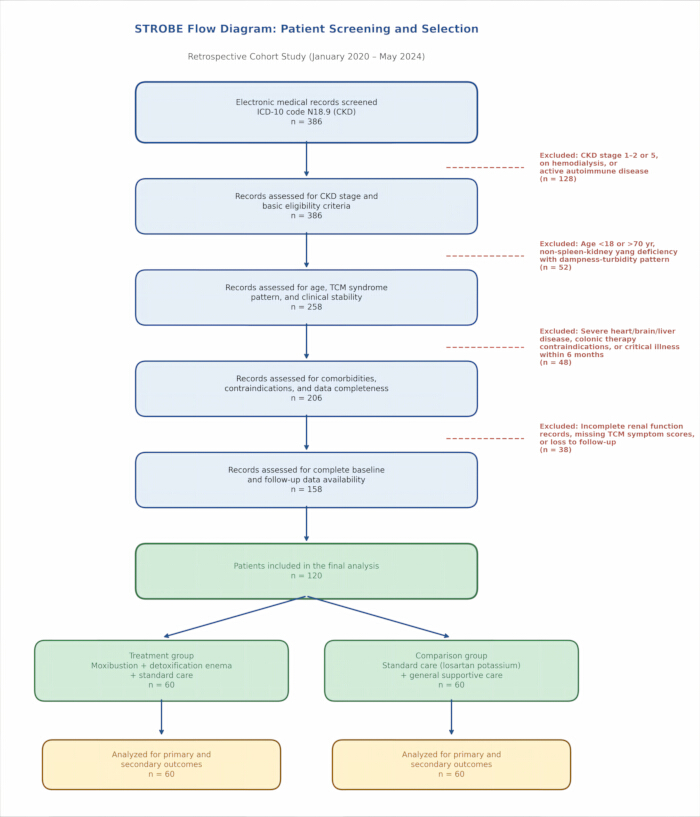
Figure 1: STROBE flow diagram of patient screening and selection. A total of 386 electronic medical records were screened, and 120 patients met the eligibility criteria and had complete baseline and day-60 outcome data. Of these, 60 patients were included in the treatment group and 60 in the comparison group. No patients were lost to follow-up after inclusion. Abbreviations: CKD = chronic kidney disease; TCM = traditional Chinese medicine. Please click here to view a larger version of this figure.
| Comparison group (n = 60) | Test statistic | p value |
| 46.5 ± 3.1 | 0.556 | p = 0.579 |
| 33/27 | 0.134 | 0.714 |
| 6.6 ± 1.2 | 0.438 | 0.662 |
| 2.148 | 0.828 | |
| 22 | ||
| 10 | ||
| 9 | ||
| 9 | ||
| 6 | ||
| 4 | ||
| 0.036 | 0.85 | |
| 22 | ||
| 38 | ||
| 140.8 ± 11.7 | 0.679 | 0.499 |
| 86.1 ± 7.9 | −0.340 | 0.734 |
| 97.2 ± 11.8 | 0.591 | 0.556 |
| 2.19 ± 0.13 | 0.78 | 0.437 |
| 1.68 ± 0.29 | −0.538 | 0.592 |
| 4.28 ± 0.41 | 0.509 | 0.612 |
| 22.9 ± 3.2 | 0.364 | 0.716 |
| 26.15 ± 8.04 | 1.24 | 0.218 |
| 25.4 (19.8–32.2) | – | – |
| 15.4–58.7 | – | – |
| 49.67 ± 8.82 | – | – |
| 44 / 16 | 0.42 | 0.517 |
Table 1: Comparison of baseline clinical characteristics between the treatment and comparison groups. Continuous variables are presented as mean ± SD unless otherwise indicated; categorical variables are presented as n. Abbreviations: BMI = body mass index; BP = blood pressure; Ca = calcium; Ccr = creatinine clearance; CKD = chronic kidney disease; eGFR = estimated glomerular filtration rate; Hb = hemoglobin; IQR = interquartile range; K = potassium; SD = standard deviation; SLEDAI = Systemic Lupus Erythematosus Disease Activity Index.
| UA (μmol/L) | SCr (μmol/L) | Ccr (mL/min/1.73 m²) | BUN (mmol/L) | ||
| Treatment group (n = 60) | Pre-treatment | 568.11 ± 82.66 | 497.79 ± 83.96 | 24.38 ± 7.21 | 29.38 ± 5.30 |
| Post-treatment | 513.40 ± 87.50 | 345.71 ± 62.91 | 32.16 ± 5.68 | 16.21 ± 1.12 | |
| Comparison group (n = 60) | Pre-treatment | 571.92 ± 98.37 | 488.81 ± 77.95 | 26.15 ± 8.04 | 27.58 ± 5.13 |
| Post-treatment | 548.46 ± 27.36 | 397.34 ± 69.07 | 29.86 ± 6.29 | 20.59 ± 3.23 | |
| Adjusted between‑group difference (95% CI) | –35.06 (–56.72 to –13.40) | –51.63 (–73.88 to –29.38) | +2.29 (0.31 to 4.27) | –4.38 (–5.16 to –3.60) | |
| Adjusted p | 0.021 | 0.011 | 0.024 | 0.008 | |
Table 2: Comparison of renal function parameters between the treatment and comparison groups. Data are presented as mean ± SD. Abbreviations: UA = uric acid; SCr = serum creatinine; Ccr = creatinine clearance; BUN = blood urea nitrogen; CI = confidence interval.
| Edema | Weak back | Nocturia increased | Indigestion | Itchy skin | Total score (0–15) | ||
| Treatment group (n = 60) | Pre-treatment | 2.23 ± 0.26 | 2.17 ± 0.21 | 2.26 ± 0.23 | 2.22 ± 0.23 | 2.16 ± 0.22 | 11.04 ± 0.83 |
| Post-treatment | 1.34 ± 0.12 | 1.31 ± 0.12 | 1.34 ± 0.15 | 1.36 ± 0.17 | 1.32 ± 0.15 | 6.67 ± 0.59 | |
| Comparison group (n = 60) | Pre-treatment | 2.21 ± 0.25 | 2.19 ± 0.22 | 2.25 ± 0.21 | 2.19 ± 0.22 | 2.18 ± 0.23 | 11.02 ± 0.86 |
| Post-treatment | 1.68 ± 0.13 | 1.79 ± 0.15 | 1.82 ± 0.16 | 1.85 ± 0.18 | 1.78 ± 0.16 | 8.92 ± 0.71 | |
| Adjusted between‑group difference (95% CI) | –0.34 (–0.39 to –0.29) | –0.48 (–0.54 to –0.42) | –0.48 (–0.53 to –0.43) | –0.49 (–0.55 to –0.43) | –0.46 (–0.51 to –0.41) | –2.25 (–2.56 to –1.94 | |
| Adjusted p | <0.001 | <0.001 | <0.001 | <0.001 | <0.001 | <0.001 | |
Table 3: Comparison of traditional Chinese medicine symptom scores between the treatment and comparison groups. Data are presented as mean ± SD. Higher scores indicate greater symptom severity. Abbreviations: TCM = traditional Chinese medicine; CI = confidence interval.
Supplementary Table 1: Multivariable linear regression model for the primary outcome. This table presents the multivariable analysis of factors associated with post-treatment measured creatinine clearance (Ccr), including regression coefficients, standard errors, 95% confidence intervals, and p-values. The model had an R2 of 0.24 and an adjusted R2 of 0.19. Add-on antihypertensive use refers to amlodipine in the comparison group and hydrochlorothiazide in the treatment group. Abbreviations: Ccr = creatinine clearance; CI = confidence interval; SE = standard error; VIF = variance inflation factor. Please click here to download this file.
Discussion
The treatment for CKD mainly focuses on nutritional therapy and symptomatic treatment in the early to middle stages, while in the later stages, it primarily involves replacement therapies, including hemodialysis and kidney transplantation11. Due to the limitations of medical conditions and patients' economic status, modern medical treatments are not effectively extended to a large number of CKD patients. Under such circumstances, TCM plays a significant role in the treatment of early to middle-stage CKD and has unique advantages in slowing down the progression of CKD12. CKD patients often suffer from gastrointestinal symptoms such as nausea, vomiting, and loss of appetite, which make oral medication challenging13. Retention enema with TCM becomes a commonly used clinical treatment measure. Modern medicine has proven that in CKD, the excretion of urea nitrogen and creatinine through the kidneys is significantly reduced, while the portion excreted through the intestines is markedly increased14,15. The study of TCM for the treatment of early to middle-stage CKD has become increasingly urgent to meet patients' needs for slowing down the progression of renal failure, delaying the end-stage of renal failure, and reducing economic burdens.
This study's detoxification enema treatment significantly improves clinical outcomes. The magnitude of the observed improvement in measured Ccr—an adjusted between‑group difference of 2.29 mL/min/1.73 m2 (95% CI: 0.31–4.27, p = 0.024) favoring the add‑on therapy—represents a modest but statistically significant short‑term renal functional gain in patients with CKD stages 3–4. Whether this magnitude translates into clinically meaningful delay of disease progression over the long term cannot be determined from this 60‑day retrospective study. Studies have shown that rhubarb enema therapy can optimize blood circulation, reduce the production and absorption of intestinal toxins, effectively expel water, potassium salts, creatinine, and blood urea nitrogen, thereby alleviating complications of renal insufficiency16. Rhubarb also reduces blood ammonia levels by inhibiting urea synthesis in the liver and kidneys, alleviates methylguanidinemia, corrects hyperphosphatemia, thereby lowering blood urea nitrogen and creatinine levels, and relieves uremic symptoms17. The main therapeutic mechanisms of rhubarb include inhibiting the proliferation of glomerular mesangial cells, alleviating the hypermetabolic state of the glomeruli, promoting nitrogen excretion through laxation, improving lipid and protein metabolism, and enhancing glomerular filtration rate18. Rhubarb enema formulas produce systemic effects through intestinal absorption, improve internal environmental balance, regulate trace element content, adjust immune function, correct endocrine and gastrointestinal disorders, prevent bleeding tendencies, reduce the level of middle molecular substances in the plasma, increase the level of serum superoxide dismutase, improve anemia, and hematological abnormalities17. The high permeability of colonic mucosa allows fluids to enter and exchange materials with the capillaries and small vessels under the mucosa, thereby clearing toxins and harmful substances from the blood and supplementing electrolytes and alkaline substances19. Oysters are rich in calcium carbonate, calcium phosphate, and calcium sulfate20, and the heavy use of oysters can increase the osmotic pressure of the enema fluid, promoting the secretion of toxic substances in the body into the intestinal lumen. Oyster can also attach therapeutic drugs to the intestinal mucosa for easy absorption and directly adsorb toxic substances in the intestines, promoting their excretion and reducing blood creatinine and urea nitrogen levels. The various calcium components of oyster help reduce intestinal absorption of phosphorus, lower blood phosphorus, and increase blood calcium levels. Modern pharmacological studies have shown that oysters have effects including improving immune function, regulating metabolism, reducing blood lipids, and exerting anti-fatigue effects, and that oyster polysaccharides also have anticoagulant and antithrombotic effects. Raw oyster has the effect of calming the liver and subduing yang, and it is more effective when used in enemas for patients with high blood pressure. The main components of salvia miltiorrhiza include lipophilic and hydrophilic components. Salvia miltiorrhiza has the effects of dilating the coronary arteries, increasing coronary blood flow, improving microcirculation, and protecting the heart. It can inhibit and resolve platelet aggregation, improve the body's hypoxia tolerance, anti-lipid peroxidation, and free radical scavenging, as well as protect hepatocytes and anti-lung fibrosis21. Salvia miltiorrhiza has a significant antagonistic effect on the inhibitory effect of gentamicin-induced Na-K-ATPase activity, which may be one of the basic mechanisms of its improvement of renal function. Studies have shown that magnesium Lithospermate B has an improving effect on renal function, increases the excretion of prostaglandin E2 in urine, and proves that magnesium Lithospermate B has an inhibitory effect on the cyclooxygenase activity in the metabolism process of arachidonic acid22. Various preparations of salvia miltiorrhiza have strong antioxidant effects and show strong scavenging effects on free radicals produced by various causes, which may be one of the main mechanisms of its various pharmacological effects.
This study found that after 60 days of post-treatment, there was a significant improvement in Scr, BUN, and UA levels in the treatment group patients. Disruption of nitrogen metabolism is one of the main clinical manifestations of CKD. When the concentrations of BUN, Scr, and UA in the serum are elevated, patients may experience symptoms such as headache, fatigue, nausea, vomiting, skin itching, somnolence, and bleeding tendency, which may lead to reduced glucose tolerance. The long-term toxic effects of urea are related to its metabolite cyanate, which can carbamylate proteins, thereby affecting the integrative function of the higher neural centers23,24. Creatinine is a metabolic product of phosphocreatine in muscle and is reported to have effects such as hemolysis, inhibition of tissue uptake of glucose and oxygen, and inhibition of erythrocyte proliferation and maturation25. Uric acid is an acidic substance that affects the acid-base metabolic balance in the body26, and the maintenance of acid-base balance is an important aspect of the stability of the internal environment in living organisms. Enzyme reactions, hormone effects, information transmission, and organelle functions in various life activities all require a pH range that is compatible with them. BUN, Scr, and UA, as metabolic products in the body, are mainly excreted by glomerular filtration. In CKD, due to the decline in glomerular filtration function, these metabolic products accumulate in the body, leading to reduced kidney function. TCM considers elevated creatinine and urea nitrogen to be within the scope of endogenous toxins. Endogenous toxins refer to the physiological and pathological products in the body that, under the influence of various pathogenic factors, cannot be reasonably distributed and promptly excreted due to the dysfunction of organs and the abnormal flow of qi and blood, thus accumulating excessively in the body and transforming into toxins27. These toxins are not only characteristic pathological products that appear in the course of CKD but also one of the pathogenic factors. Endogenous toxins can cause clinical symptoms of turbid toxin obstruction, such as nausea, vomiting, and abdominal bloating. Due to the action of toxins, they can lead to the decline of the five organs and the severity of the disease.
This study found that after post-treatment, the scores of various TCM symptoms in the treatment group were significantly reduced, achieving effective alleviation. The scores for edema, lower back pain and weakness, nocturia, indigestion, and skin itching all had statistical significance compared to pre-treatment. Importantly, none of the proposed mechanisms discussed below—including effects on immune regulation, intestinal toxin clearance, or renal blood flow—was directly measured in this retrospective study. The following mechanistic interpretation is therefore speculative and intended to generate hypotheses for future investigation. Moxibustion and detoxification enema therapies both have the effects of warming meridians, supporting health, dispelling pathogens, and harmonizing the meridians, and are widely used in the treatment of qi and blood stagnation. Moxibustion therapy warms and stimulates the affected area or related acupoints by burning moxa sticks, using the heat and medicinal power to achieve the effects of warming meridians, activating collaterals, and promoting blood circulation to remove blood stasis28. Moxibustion on specific acupoints can not only adjust qi and blood and balance yin and yang but also tonify the spleen and kidneys, regulate the meridians, and replenish the deficiency of organs, thereby alleviating the patient's condition. Moxibustion stimulates acupoints through the heat of the moxibustion fire and the warming action of mugwort, activating the corresponding meridians, reaching the internal organs, exerting the effect of dispelling pathogens and supporting health, promoting the internal generation of yang energy, and playing a role in warming and dispersing cold29.
The above-mentioned effects were associated with the levels of blood Scr/BUN. The TCM syndrome scores (such as edema and low back pain) not only reflect the severity of symptoms but may also reflect the pathophysiological changes in Western medicine. For instance, patients with spleen and kidney Yang qi deficiency syndrome are often accompanied by decreased GFR and renal tubular concentration dysfunction, presenting as increased nocturia and hypoproteinemic edema. In this study, the improvement of symptom scores occurred simultaneously with the increase of Ccr, suggesting that the quantitative assessment of TCM syndromes can be used as a supplementary indicator for the comprehensive efficacy of CKD. Although CKD is a chronic progressive disease, the symptom management in its early stage (CKD stage 3–4) is crucial to the quality of life of patients. The 60‑day follow-up of this study has covered the conventional treatment course cycle of traditional Chinese external therapy (with every 15 days as one course, totaling 4 courses), which can effectively reflect the immediate effect of the treatment. For instance, symptoms of uremia, such as itchy skin, usually start to ease within two weeks of treatment and achieve stable improvement.
This study has several limitations inherent to its retrospective, non‑randomized, single‑center design. First, despite multivariable adjustment, confounding by indication cannot be excluded; the add‑on antihypertensive regimens differed between groups (amlodipine in controls vs. hydrochlorothiazide in the treatment group), which may have independently influenced volume‑related outcomes such as edema, although we adjusted for these drugs in the regression model, and a sensitivity analysis excluding these patients gave consistent results. In addition, complete dose, timing, and duration details for erythropoietin and other co‑interventions could not be fully retrieved from the retrospective records; this limits our ability to adjust for potential dose‑dependent effects. However, EPO use was initiated per protocol when Hb <100 g/L, and the comparable initiation rates between groups (13.3% vs. 20.0%, p = 0.34) make major differential confounding unlikely. Second, a modest baseline imbalance in Ccr persisted (SMD = 0.23), which we addressed using ANCOVA; however, residual confounding from unmeasured variables (e.g., dietary salt, albuminuria, glycemic control, treatment adherence) remains possible. Third, measurement error and regression to the mean cannot be fully ruled out given the retrospective extraction of laboratory data. Fourth, the 60‑day follow‑up is too short to assess long‑term renal protection or hard clinical endpoints such as ESRD, dialysis initiation, or mortality; this short‑term Ccr improvement does not establish delayed CKD progression. Fifth, although no serious adverse events were recorded over 60 days, the short observation period precludes definitive conclusions about long‑term safety. Finally, these single‑center findings require prospective, multi‑center validation with extended follow‑up before they can be generalized. Post‑treatment blood pressure, hemoglobin, and electrolyte values were reported narratively in the Results as part of the descriptive safety‑monitoring analysis; although these exploratory outcomes were not presented in a separate table, all numerical data are fully provided in the text, and baseline values are available in Table 1.
The combined application of moxibustion and detoxification enema was associated with significant improvements in renal function and alleviation of clinical symptoms in patients with CKD. These findings are exploratory; causal inference requires prospective validation. This study is a retrospective analysis, and its results need to be verified by multicenter randomized controlled trials and mechanistic studies to enhance the level of evidence.
Disclosures
The authors declare that they have no conflicts of interest.
Author Contributions:
Conceptualization, Xing Zhang and Peiling Zhang; methodology, Xing Zhang; software, Xing Zhang; validation, Xing Zhang; formal analysis, Xing Zhang; investigation, Ying Qian; resources, Ying Qian; data curation, Ying Qian; writing—original draft preparation, Xing Zhang; writing—review and editing, Peiling Zhang. All authors have read and agreed to the published version of the manuscript.
Acknowledgements
The authors thank the staff of the Department of Nephrology at Changzhou Traditional Chinese Medicine Hospital for their assistance in retrieving the clinical data.
Materials
| Name | Company | Catalog Number | Comments |
|---|---|---|---|
| Amlodipine besylate tablets, 5 mg | Zhejiang Jingxin Pharmaceutical Co., Ltd. | NMPA approval No. H20103342 | Add-on antihypertensive for the comparison group (12/60 patients). |
| Ash dish / moxa extinguisher | Hospital supply | — | Used for extinguishing moxa sticks after use. |
| Astragali Radix (Astragalus) 30 g | Hospital pharmacy (GMP-certified supplier) | — | Crude drug for enema prescription. Complies with Pharmacopoeia of the People's Republic of China (2020 edition). Batch-level records available upon request. |
| Automatic biochemical analyzer (Scr/BUN/UA) | Changchun Dirui Medical Technology Co., Ltd. (CS series) | — | Used for serum creatinine (Scr), blood urea nitrogen (BUN), and uric acid (UA) measurements. |
| Disposable enema bag / retention enema tube (16 Fr silicone Foley catheter) | Suzhou New District Huasheng Medical Device Co., Ltd. | Medical device registration No. Su20142140244 | Used for administering the detoxification enema. |
| Hydrochlorothiazide tablets, 25 mg | Shimao Tianjie Pharmaceutical (Jiangsu) Co., Ltd. | NMPA approval No. H32020254 | Add-on antihypertensive for the treatment group (10/60 patients). |
| Losartan potassium tablets, 50 mg/tablet | Zhejiang Huahai Pharmaceutical Co., Ltd. | Batch No. 0000065700; NMPA approval No. H20070264 | Standard renoprotective therapy for all patients. |
| Microplate reader | Shanghai Kehua Bio-engineering Co., Ltd. (Model ST-360) | — | Used for ELISA assays. |
| Moxa stick (pure mugwort, 18 mm × 200 mm) | Nanyang Yaoyibao Ai Products Co., Ltd. | Product standard T/CAM 001-2022; Batch No. 20230301 | Used for moxibustion therapy in the treatment group. Adherence: 86.5%. |
| Ostreae Concha (Oyster) 60 g | Hospital pharmacy (GMP-certified supplier) | — | Crude drug for enema prescription. Complies with Pharmacopoeia of the People's Republic of China (2020 edition). Batch-level records available upon request. |
| Polygonati Rhizoma (yellow essence) 15 g | Hospital pharmacy (GMP-certified supplier) | — | Crude drug for enema prescription. Complies with Pharmacopoeia of the People's Republic of China (2020 edition). Batch-level records available upon request. |
| Recombinant human erythropoietin injection | Harbin Pharmaceutical Group Bioengineering Co., Ltd. | NMPA approval No. S20020060 | Initiated when Hb < 100 g/L (8/60 treatment, 12/60 comparison patients). |
| Rhei Radix et Rhizoma (Rhubarb, raw) 60 g | Hospital pharmacy (GMP-certified supplier) | — | Crude drug for enema prescription. Complies with Pharmacopoeia of the People's Republic of China (2020 edition). Batch-level records available upon request. |
| Salviae Miltiorrhizae Radix et Rhizoma (Salvia miltiorrhiza) 15 g | Hospital pharmacy (GMP-certified supplier) | — | Crude drug for enema prescription. Complies with Pharmacopoeia of the People's Republic of China (2020 edition). Batch-level records available upon request. |
| Sanguisorbae Radix (Radix Sanguisorbae) 60 g | Hospital pharmacy (GMP-certified supplier) | — | Crude drug for enema prescription. Complies with Pharmacopoeia of the People's Republic of China (2020 edition). Batch-level records available upon request. |
| Serissae Herba (June snow) 60 g | Hospital pharmacy (GMP-certified supplier) | — | Crude drug for enema prescription. Complies with Pharmacopoeia of the People's Republic of China (2020 edition). Batch-level records available upon request. |
| Sophorae Flos (raw sophora flower) 15 g | Hospital pharmacy (GMP-certified supplier) | — | Crude drug for enema prescription. Complies with Pharmacopoeia of the People's Republic of China (2020 edition). Batch-level records available upon request. |
| SPSS Statistics | IBM Corporation, Armonk, NY, USA | v20.0 | Used for all statistical analyses. |
References
- Morizane R, Bonventre JV. Kidney organoids: a translational journey. Trends Mol Med. 2017;23(3):246-263.
- Krisanapan P, et al. Revolutionizing chronic kidney disease management with machine learning and artificial intelligence. J Clin Med. 2023;12(8):3018.
- Manley HJ. Disease progression and the application of evidence-based treatment guidelines diagnose it early: a case for screening and appropriate management. J Manag Care Pharm. 2007;13(9 Suppl D):S6-S12.
- Wang Y, et al. Traditional Chinese medicine in the treatment of chronic kidney diseases: theories, applications, and mechanisms. Front Pharmacol. 2022;13:917975.
- Cheng L, et al. Cardio-cerebral protective effect of moxibustion on phlegm-dampness type hypertension: protocol for a randomized controlled trial. JMIR Res Protoc. 2025;14:e79158.
- Hua F, et al. Moxibustion therapy on lumbar disc herniation: an evidence-based clinical practice guideline. Medicine (Baltimore). 2021;100(9):e24347.
- Lu Z, et al. Rhubarb enema attenuates renal tubulointerstitial fibrosis in 5/6 nephrectomized rats by alleviating indoxyl sulfate overload. PLoS One. 2015;10(12):e0144726.
- Wang G, et al. C-INSIGHT: design and methodology of a nationwide registry for high-risk chronic kidney disease in China - a study protocol. BMC Nephrol. 2025;26(1):599.
- Lu Y, et al. Effects of active vitamin D on insulin resistance and islet beta-cell function in non-diabetic chronic kidney disease patients: a randomized controlled study. Int Urol Nephrol. 2022;54(7):1725-1732.
- Zheng XY. Guidelines for clinical research of new traditional Chinese medicine drugs. China Medical Science and Technology Press; Beijing; 2002.
- Wijaya EA, et al. Factors affecting neurocognitive function in children with chronic kidney disease: a systematic review. Int J Nephrol Renovasc Dis. 2022;15:277-288.
- Zhang L, Zhang TJ, Li Y, Xiong WJ. Shenqi Yanshen Formula (SQYSF) protects against chronic kidney disease by modulating gut microbiota. Bioengineered. 2022;13(3):5625-5637.
- Jacob Z, et al. A systematic review of symptoms experienced by children and young people with kidney failure. Pediatr Nephrol. 2025;40(1):53-68.
- Huang W, et al. Clinical effect of rhubarb on the treatment of chronic renal failure: a meta-analysis. Front Pharmacol. 2023;14:1108861.
- Argilés À, Ficheux A, Duranton F. Effect of hemodiafiltration or hemodialysis on mortality in kidney failure. N Engl J Med. 2023;389(20):e42.
- Ji C, et al. Rhubarb enema improved colon mucosal barrier injury in 5/6 nephrectomy rats may associate with gut microbiota modification. Front Pharmacol. 2020;11:1092.
- Ji C, et al. Rhubarb enema decreases circulating trimethylamine N-oxide level and improves renal fibrosis accompanied with gut microbiota change in chronic kidney disease rats. Front Pharmacol. 2021;12:780924.
- Wang J, et al. Effects of free anthraquinones extract from the rhubarb on cell proliferation and accumulation of extracellular matrix in high glucose cultured-mesangial cells. Korean J Physiol Pharmacol. 2015;19(6):485-489.
- Graziani C, et al. Intestinal permeability in physiological and pathological conditions: major determinants and assessment modalities. Eur Rev Med Pharmacol Sci. 2019;23(2):795-810.
- Lee SY, Kim HJ, Han JS. Anti-inflammatory effect of oyster shell extract in LPS-stimulated Raw 264.7 cells. Prev Nutr Food Sci. 2013;18(1):23-29.
- Chen Q, et al. Salvianolic acid B promotes angiogenesis and inhibits cardiomyocyte apoptosis by regulating autophagy in myocardial ischemia. Chin Med. 2023;18(1):155.
- Yokozawa T, et al. Potentiating effect of converting enzyme inhibitor captopril to the renal responses of magnesium lithospermate B in rats with adenine-induced renal failure. Chem Pharm Bull (Tokyo). 1991;39(3):732-736.
- Lau WL, Vaziri ND. Urea, a true uremic toxin: the empire strikes back. Clin Sci (Lond). 2017;131(1):3-12.
- Wen D, et al. Metabolite profiling of CKD progression in the chronic renal insufficiency cohort study. JCI Insight. 2022;7(20):e161696.
- Jančič SG, Močnik M, Marčun Varda N. Glomerular filtration rate assessment in children. Children (Basel). 2022;9(12):1995.
- Lee Y, Cho JY, Cho KY. Serum, urine, and fecal metabolome alterations in the gut microbiota in response to lifestyle interventions in pediatric obesity: a non-randomized clinical trial. Nutrients. 2023;15(9):2184.
- Zoccali C, et al. Cardiovascular complications in chronic kidney disease: a review from the European Renal and Cardiovascular Medicine Working Group of the European Renal Association. Cardiovasc Res. 2023;119(11):2017-2032.
- Wang H, et al. Effect of moxibustion on hyperhomocysteinemia and oxidative stress induced by high-methionine diet. Evid Based Complement Alternat Med. 2020;2020:3184785.
- Kim KH, et al. Acupuncture and related interventions for symptoms of chronic kidney disease. Cochrane Database Syst Rev. 2016;2016(6):CD009440.