We present an analytical model to investigate the propagation of rotating magneto-photo-thermoelastic waves in anisotropic fiber-reinforced semiconductors under optical excitation. The method can be used to analyze temperature, carrier density, displacement, and stress distributions in advanced semiconductor materials.
A subscription to JoVE is required to view this content. Sign in or start your free trial.
Research Article
Rotational Effects on Magneto-Photo-Thermoelastic Wave Propagation in a Fiber-Reinforced Anisotropic Semiconductor Half-Space Under Optical Excitation
In This Article
Summary
Abstract
This study investigates the coupled rotating magneto-photo-thermoelastic behavior of an anisotropic fiber-reinforced semiconductor half-space subjected to optical excitation and an applied magnetic field. The governing equations, incorporating thermal, elastic, carrier-density, electromagnetic, and rotational effects, are formulated within a unified multiphysical framework. The normal mode method is employed to transform the coupled partial differential equations into a system of ordinary differential equations, which is subsequently rewritten as a first-order matrix differential system. An eigenvalue-based formulation is then developed to construct the analytical solution of the coupled problem. The resulting eigenvalue problem, boundary-condition system, and field quantities are evaluated numerically. Numerical results are presented for the temperature, carrier density, displacement components, and stress distributions to examine the effects of the rotation parameter and magnetic field intensity on the coupled physical fields. The results demonstrate the important role of rotational and electromagnetic interactions in modifying wave propagation, attenuation characteristics, and field distributions within the anisotropic semiconductor medium. Numerical computations were carried out for a silicon-based semiconductor medium.
Introduction
Photo-thermoelasticity has become an active area of research owing to its capability to describe the coupled interactions among thermal, mechanical, optical, and carrier-density fields in semiconductor materials subjected to laser irradiation and photothermal excitation. These coupled phenomena play an important role in modern optoelectronic devices, semiconductor technologies, laser-processing systems, and microelectronic applications. Saeed et al.1 investigated wave propagation in semiconductor solids with temperature-dependent properties, while Abbas et al.2 examined photo-thermal interactions in semiconductors containing cylindrical cavities and variable thermal conductivity. Subsequently, Ihtisham Ullah et al.3 analyzed the influence of variable thermal conductivity and laser pulses on reflected elastic waves in semiconductor media. In addition, Yadav4 studied magneto-photothermal plasma wave propagation in diffusion semiconductors under a two-temperature multi-phase-lag thermoelastic framework. More recently, Lute et al.5 and Lute et al.6 developed advanced photo-thermoelastic semiconductor models incorporating photothermal heat generation, memory effects, and nonlocal interactions, whereas Alaofi and El-Dali7 proposed a multiphysics photo-thermo-hygroelastic formulation for semiconductor materials. Furthermore, several generalized photo-thermoelastic models based on phase-lag theories and nonlocal formulations have been reported to improve the description of coupled thermal and carrier transport phenomena in semiconductors8,9,10,11.
The increasing demand for lightweight and high-performance engineering structures has stimulated extensive research on anisotropic and fiber-reinforced materials. Owing to their superior mechanical characteristics and enhanced thermal resistance, fiber-reinforced composites have been widely employed in aerospace, civil, and electronic engineering applications. Khan et al.12 developed a unified micropolar thermoelastic model for temperature-dependent fiber-reinforced composites and demonstrated the significant influence of microstructural parameters on wave propagation characteristics. Pitarresi et al.13 investigated the thermoelastic response of fiber-reinforced plastics and highlighted the role of material heterogeneity on thermal stress distributions. Escalante-Solís et al.14 examined the effect of fiber curvature on the micromechanical behavior of reinforced composites, while Abo-Dahab et al.15 studied wave reflection phenomena in fiber-reinforced thermoelastic media. More recently, Purkait and Kanoria16 analyzed a rotating fiber-reinforced magneto-thermoelastic medium subjected to pulsed laser excitation, whereas Akai et al.17 and Quinlan et al.18 investigated thermoelastic responses in fiber-reinforced composite structures under different loading conditions. These studies confirmed that reinforcement characteristics and anisotropy substantially affect thermal transport, stress concentrations, and wave propagation behavior. Nevertheless, most of the available investigations were devoted to thermoelastic composite materials and did not simultaneously account for photo-thermoelastic semiconductor coupling together with carrier transport mechanisms.
The interaction between magnetic fields and thermoelastic semiconductor media has also attracted considerable attention because of its importance in electromagnetic devices and conducting materials. Yadav19 investigated wave reflection in a rotating orthotropic magneto-thermoelastic half-space with diffusion effects, while Selvamani et al.20 studied magnetoelastic wave propagation in nonlocal fractional nanobeams. Abouelregal et al.21 examined coupled laser-thermomagnetic stimulation in magnetized porous structures with memory-dependent effects, whereas Chandel et al.22 proposed a nonlocal magneto-thermoelastic framework based on Moore-Gibson-Thompson heat conduction. In the context of semiconductors, Abouelregal23 developed a modified fractional photo-thermoelastic model for a rotating semiconductor half-space subjected to a magnetic field, and Sur24 investigated magneto-photo-thermoelastic interactions in media exhibiting hereditary characteristics. More recently, Saidi et al.25 and Rashid et al.26 analyzed magneto-photo-thermoelastic disturbances in generalized rotating semiconductor media and demonstrated the significant influence of magnetic intensity on the propagation of coupled waves. Similar observations were reported in advanced photo-thermo-viscoelastic and Moore-Gibson-Thompson semiconductor models27,28,29.
Rotational effects are another important aspect of generalized thermoelasticity, as rotation introduces additional Coriolis and centripetal forces that considerably modify wave propagation characteristics. Khan et al.30 performed a sensitivity analysis of wave behavior in rotating thermoelastic solids subjected to laser-induced thermal loading. Yadav31 investigated magnetothermoelastic waves in rotating orthotropic media with diffusion effects, whereas Abouelregal et al.32 examined fractional dual-phase-lag thermoelastic responses in rotating stressed media containing spherical cavities. Furthermore, Khan et al.33 studied wave propagation in a rotating porous thermoelastic half-space under a nonlocal fractional three-phase-lag model. Rotational influences on semiconductor thermoelastic nanostructures were also examined by Abo-Dahab et al.34, who demonstrated that rotation can significantly alter thermal and mechanical field distributions. Despite these efforts, rotational effects have rarely been investigated simultaneously with anisotropy, fiber reinforcement, optical excitation, carrier transport, and magnetic field interactions within a unified semiconductor framework.
Although substantial progress has been achieved in the aforementioned studies, most existing investigations have focused on selected combinations of photo-thermoelastic, magnetic, rotational, or reinforcement effects. A comprehensive analytical model that simultaneously incorporates optical excitation, carrier transport dynamics, anisotropy, fiber reinforcement, magnetic field interactions, and rotational influences in a semiconductor medium remains largely unavailable. Therefore, there is still a need for a unified formulation that accurately describes the mutual coupling among these physical mechanisms and clarifies their combined influence on wave propagation.
Motivated by these observations, the present work develops a two-dimensional analytical model to investigate magneto-photo-thermoelastic wave propagation in a rotating, fiber-reinforced, anisotropic semiconductor half-space subjected to optical excitation. The governing equations are formulated within a unified framework that incorporates thermal, mechanical, carrier-density, and electromagnetic fields, and are solved using the normal-mode technique together with the eigenvalue approach. It is noteworthy that Alaofi et al.35 recently investigated the coupled thermo-photoelastic response of anisotropic fiber-reinforced silicon using an eigenvalue formulation. However, magnetic field effects and rotational contributions were not considered in their model. The novelty of the present work lies in extending that formulation by simultaneously incorporating magnetic interactions, rotational effects, carrier transport dynamics, anisotropic reinforcement, and optical excitation within a single magneto-photo-thermoelastic framework. Consequently, the proposed model provides a more comprehensive description of coupled wave propagation phenomena and enables a detailed assessment of the combined influence of magnetic intensity and rotation on the physical fields of interest. Unlike Alaofi et al.35, which considered the thermo-photoelastic response of an anisotropic fiber-reinforced semiconductor without magnetic field and rotational effects, the present formulation incorporates the simultaneous interaction of rotation, magnetic field, optical excitation, carrier transport, and anisotropic reinforcement within a unified framework. In addition, the eigenvalue implementation is extended to this more general coupled system, enabling analysis of coupled physical effects not addressed in the earlier model. Furthermore, a distinctive feature of the present work is the implementation of the eigenvalue approach. While many related studies, including Alaofi et al.35, rely on elimination procedures to reduce the governing system before obtaining the solution, the present formulation is constructed and solved using a matrix-based eigenvalue framework. This implementation is applied to a more general coupled system involving rotation, magnetic field, optical excitation, carrier transport, and fiber reinforcement, thereby extending the scope of the previously published models.
Access restricted. Please log in or start a trial to view this content.
Protocol
The present work is based entirely on analytical modeling, symbolic computation, and numerical simulations to investigate coupled rotating magneto-photo-thermoelastic interactions in anisotropic semiconductor media. No human participants, animal experiments, clinical data, or biological specimens were involved in this study. Therefore, ethical approval and informed consent were not required.
Mathematical formulation of the magneto-photo-thermoelastic problem in a rotating fiber-reinforced anisotropic semiconductor half-space
In the present study, a two-dimensional rotating fiber-reinforced anisotropic semiconductor half-space is investigated under optical excitation and an applied magnetic field. The medium occupies the semi-infinite region x ≥ 0, where the boundary at x = 0 represents the exposed surface subjected to external optical loading. The coordinate system is chosen such that the x - axis extends into the medium, while the y - axis lies along the surface, representing the in-plane behavior of the structure. The applied magnetic field and angular velocity vector are both taken along the z - axis. The semiconductor medium is assumed to be homogeneous and linearly elastic, while anisotropy is introduced through aligned reinforcing fibers embedded in the x - direction. Optical absorption at the boundary produces localized heating and excess charge carriers, resulting in coupled thermal, mechanical, and carrier interactions within the medium. In addition, the magnetic field introduces electromagnetic coupling effects, whereas the rotational motion contributes inertial effects that significantly influence the propagation of thermoelastic waves and the overall physical response. Accordingly, the physical state of the medium is represented by the temperature field T(x, y, t)(K), carrier density N(x, y, t)(m-3), and displacement components u(x, y,t)(m) and v(x,y,t)(m), under the assumption of small deformations. Figure 1 illustrates the geometry of the problem, including the coordinate system, optical excitation, magnetic field, rotational effect, and fiber orientation. The present formulation is applicable to homogeneous anisotropic fiber-reinforced semiconductor media operating within the small-deformation regime and the framework of linear thermoelasticity. The model assumes a fixed fiber orientation and constant material properties throughout the medium. Consequently, nonlinear material behavior, large deformations, material damage, and spatial variations of material properties are not considered in the current study. Therefore, the proposed model is intended for moderate loading conditions where the response remains within the linear range. In the present study, the optical excitation is modeled using prescribed boundary conditions for surface temperature and photo-generated carrier density. The detailed laser-matter interaction process, including optical absorption, penetration depth, and intensity distribution, is not treated explicitly. Instead, its net effect is represented by the boundary amplitudes θ0 and N0, which characterize the thermal and carrier excitations induced by the incident optical field.
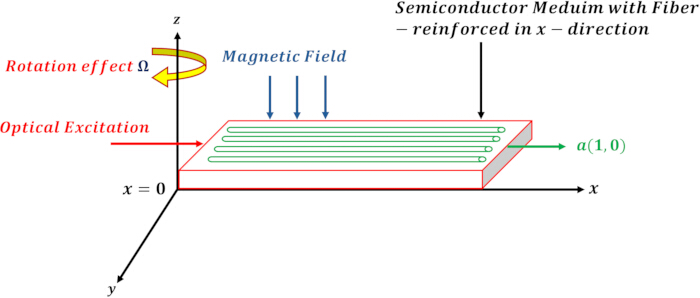
Figure 1: Schematic representation of the rotating anisotropic fiber-reinforced semiconductor half-space subjected to optical excitation and an external magnetic field. The figure illustrates the physical configuration of the problem, including the coordinate system, optical excitation, applied magnetic field, fiber orientation, and rotational effects considered in the present formulation. Please click here to view a larger version of this figure.
The constitutive relation for the stress tensor in a fiber-reinforced anisotropic thermoelastic semiconductor medium can be expressed in the generalized form as follows12,15,16.
 (1)
(1)
Here, σij denotes the stress tensor components, Cijkl are the elastic stiffness coefficients, ekl represents the strain tensor, T is the temperature increment relative to the reference temperature T0, and N denotes the excess carrier density. The tensors βij and ηij correspond to the thermoelastic and carrier coupling coefficients, respectively. Accordingly, the constitutive relation including the explicit influence of fiber reinforcement may be written as12,15:
 (2)
(2)
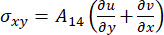
In this formulation, λ and μT are the Lamé elastic constants, while μL denotes the longitudinal shear modulus along the fiber direction. The parameters α and β describe the reinforcement effects associated with the embedded fibers. The quantity δij is the Kronecker delta symbol, and ai are the components of the unit vector defining the fiber orientation. For the present model, the reinforcing fibers are aligned along the x -direction such that a = (1,0). The terms involving βijθ and ηijN represent thermal and carrier coupling effects, respectively. For the present two-dimensional configuration, the governing stress components reduce to the following forms12,15:
 . (3)
. (3)
 . (4)
. (4)
 . (5)
. (5)
Here,  and
and  denote the displacement components along the x - and y -directions, respectively, while Aij are the effective elastic coefficients of the anisotropic fiber-reinforced medium. The thermoelastic and carrier coupling coefficients are defined as follows
 ,
,
 ,
,
 ,
,
 .
.
In the above relations, αij represent the thermal expansion coefficients, whereas ξij denote the carrier expansion coefficients associated with the semiconductor medium. The effective elastic coefficients of the fiber-reinforced anisotropic medium are given by
 ,
,  ,
,  ,
,  .
.
These coefficients characterize the anisotropic elastic response of the reinforced semiconductor material and describe how fiber orientation influences the coupled thermoelastic behavior. To account for the influence of electromagnetic interactions in the present magneto-photo-thermoelastic formulation, a uniform magnetic field is assumed to be applied along the z -direction, which is normal to the x - y plane of deformation. Accordingly, the magnetic field vector is considered in the form23,25 , 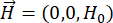 , where H0 denotes the constant magnetic field intensity. Since the present formulation is restricted to two-dimensional deformations, the displacement field of the medium is taken as
  , where and represent the displacement components along the x- and y- directions, respectively.
Under the assumptions of small deformations and a slowly moving electrically conducting semiconductor medium, the interaction between the particle velocity and the applied magnetic field generates an induced electric field.
Based on Maxwell's electromagnetic relations for moving conductive media, the induced electric field vector can be expressed as19,23
 . (6)
. (6)
where μ0 denotes the magnetic permeability and  is the particle velocity vector. Substituting the expressions of and
  into the above relation gives
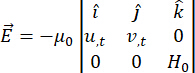 . (7)
. (7)
which yields
 . (8)
. (8)
Taking the time derivative of the induced electric field, we obtain
 . (9)
. (9)
The magnetic perturbation vector generated due to the deformation of the semiconductor medium is defined as23˒25
 . (10)
The above expression automatically satisfies Maxwell’s divergence condition for the magnetic perturbation field, namely
 . (11)
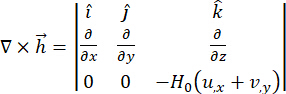
To determine the electric current density, the curl of the magnetic perturbation vector is first evaluated. In determinant form, the curl operator can be written as23
 . (12)
Expanding the determinant leads to
 . (13)
The electric current density vector is then obtained from Maxwell’s electromagnetic equation23
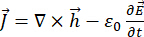 . (14)
where ε0 denotes the electric permittivity of the medium.
The electromagnetic body force acting on the semiconductor medium is determined using the Lorentz force relation23
 . (15)
The vector product  may be evaluated in determinant form as
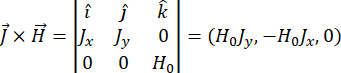 . (16)
Substituting the previous expressions into Eq. (15), the components of the electromagnetic body force vector become
 . (17)
 . (18)
These relations clearly indicate that the applied magnetic field contributes additional coupling mechanisms to the governing equations through both stiffness-like electromagnetic terms and modified inertial terms proportional to  . Consequently, the magnetic field significantly affects the propagation characteristics of thermoelastic waves and the overall dynamic behavior of the fiber-reinforced anisotropic semiconductor medium. In addition to the electromagnetic effects, the influence of rotation is incorporated into the present formulation in order to describe the dynamic response of the medium when observed from a rotating frame of reference. The fiber-reinforced semiconductor medium is assumed to undergo a uniform rigid-body rotation with a constant angular velocity vector given by33
 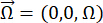 , where
  denotes the constant angular velocity about the z -axis. Since the rotation axis is normal to the x - y plane, when the equations of motion are formulated in a rotating coordinate system, additional inertial accelerations arise due to the non-inertial nature of the rotating frame. These accelerations consist mainly of the Coriolis and centrifugal accelerations. The Coriolis acceleration is associated with the particle velocity field and is expressed as31˒33
 . (19)
Substituting the expressions of  and , we obtain
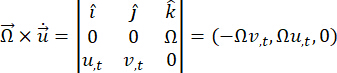 . (20)
Therefore, the Coriolis acceleration becomes
 . (21)
The centrifugal acceleration depends directly on the displacement field itself and is represented by31,35
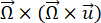 . (22)
First, the vector product  is evaluated as
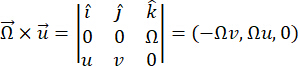 . (23)
Then, substituting the obtained result into the centrifugal acceleration relation yields
 . (24)
Accordingly, the total rotational contribution appearing in the governing equations can be expressed as
 . (25)
Hence, the rotational acceleration components in the x- and y- directions become
 , (26)
 . (27)
The above expressions demonstrate that rotational motion introduces additional coupling between the displacement components via the Coriolis acceleration, in addition to displacement-dependent inertial effects due to the centrifugal acceleration. Therefore, the combined action of the magnetic field and rotation produces significant modifications to the dynamic response and wave-propagation characteristics of the rotating fiber-reinforced anisotropic semiconductor medium. To incorporate the combined influence of electromagnetic interactions and rotational motion, the equations of motion for the fiber-reinforced anisotropic semiconductor medium are generalized to include both the electromagnetic body force and the additional inertial accelerations arising in a rotating frame of reference. Accordingly, the general equation of motion for a deformable rotating continuum can be expressed as follows31˒32
 . (28)
Here, ρ denotes the mass density, and Fi represents the electromagnetic body force components. Moreover, denotes the angular velocity vector of the rotating frame. The Eqs. (22) and (24) correspond to the Coriolis and centrifugal accelerations, respectively. The equations of motion in the x- and y- directions may be written as
 . (29)
 . (30)
Substituting the previously obtained electromagnetic body force components into the above equations gives
 . (31)
 . (32)
Next, substituting the constitutive relations corresponding to the fiber-reinforced anisotropic semiconductor medium into the above equations yields the coupled equations of motion in terms of the displacement components, temperature field, and carrier density32
 . (33)
 . (34)
Finally, using the expression of the magnetic perturbation field given previously in Eq. (15), and substituting it into the above equations, the governing equations of motion can be written in their final coupled form as
 . (35)
 . (36)
These equations reveal the coupled influence of rotational and magnetic field effects on the medium's thermoelastic response. The rotational terms account for both Coriolis and centrifugal contributions, whereas the magnetic field introduces additional electromagnetic coupling and modifies the system's dynamic behavior. Consequently, the governing equations establish a unified framework for analyzing wave propagation and multiphysical interactions in rotating magneto-photo-thermoelastic fiber-reinforced semiconductors. Under optical excitation, the thermal behavior of the semiconductor medium is significantly influenced by the interplay among heat conduction, carrier transport, and mechanical deformation, leading to a strongly coupled thermo-photoelastic process. Unlike the classical heat conduction model, the temperature distribution in semiconductor materials is influenced not only by thermal diffusion but also by carrier recombination and thermoelastic coupling. Consequently, the generalized heat conduction equation for the anisotropic fiber-reinforced semiconductor medium can be expressed as follows7˒23.
 . (37)
The above equation clearly demonstrates that the thermal field inside the rotating magneto-photo-thermoelastic semiconductor medium is governed by the combined influence of anisotropic heat conduction, carrier recombination processes, and thermoelastic interactions. The term  describes the thermal energy generated due to carrier recombination under optical excitation, while the coupling terms involving
  and
and  indicate the influence of time-dependent mechanical deformation on the thermal response of the medium. Consequently, the temperature field becomes strongly coupled with both the carrier density and the elastic field, which plays an important role in the propagation characteristics of thermoelastic waves in fiber-reinforced semiconductor materials. In the present formulation, the evolution of the carrier concentration N(x, y, t) inside the semiconductor medium is governed by the combined effects of carrier diffusion, recombination processes, and thermal activation generated by optical excitation. Accordingly, the carrier transport equation describing the nonequilibrium carrier dynamics can be written as follows4,23
 . (38)
Here, DE denotes the carrier diffusion coefficient, while  represents the two-dimensional Laplacian operator in the x -y plane. The term
  corresponds to the carrier recombination effect associated with the carrier lifetime τ. Furthermore, κ is the thermo-carrier coupling parameter defined by
  , where N0 denotes the equilibrium carrier concentration. The coupling term κT describes the influence of the temperature field on the generation of excess carriers within the semiconductor medium. The above equation demonstrates that the carrier concentration is strongly coupled with the thermal field through thermally activated carrier generation mechanisms. Consequently, the carrier dynamics become highly dependent on both thermal diffusion and recombination effects, which significantly influence the coupled photo-thermoelastic response of the rotating fiber-reinforced anisotropic semiconductor medium. The governing equations and mathematical formulation of the coupled magneto-photo-thermoelastic semiconductor system have now been completely established. The physical and material parameters for the silicon medium are summarized in Table 2, along with their numerical values, units, and corresponding references. These parameters are subsequently utilized in the numerical computations and nondimensionalization procedure.
Nondimensional formulation of the rotating magneto-photo-thermoelastic fiber-reinforced semiconductor model
To simplify the governing equations and obtain a compact mathematical representation of the coupled rotating magneto-photo-thermoelastic system, appropriate characteristic scales are introduced to nondimensionalize the physical variables. This nondimensionalization procedure reduces the number of governing material parameters and facilitates the analytical and numerical treatment of the coupled equations. The selected characteristic quantities are chosen consistently with the thermoelastic, electromagnetic, rotational, and carrier transport properties of the semiconductor medium16,21 Accordingly, the following dimensionless variables are introduced:
 ,
,  ,
,  ,
,  ,
,  ,
,  ,
,  ,
,  ,
,  ,
,  ,
,  .
.
Here, CT denotes the characteristic elastic wave velocity, while t* represents the characteristic thermal relaxation time associated with the coupled thermoelastic process. Furthermore, the parameter defines the nondimensional rotational parameter  that characterizes the influence of rotational motion on the medium's dynamic behavior. Substituting the above dimensionless quantities into the previously derived governing equations transforms the coupled system into normalized form. This transformation considerably simplifies the equations' mathematical structure and provides a suitable framework for investigating the combined effects of magnetic field, optical excitation, rotation, anisotropy, and carrier-transport interactions. For simplicity, the prime notation associated with the dimensionless quantities is omitted in the subsequent analysis. Accordingly, the governing equations of the coupled rotating magneto-photo-thermoelastic system can be written in the following nondimensional form16,20:
 , (39)
 , (40)
 , (41)
 . (42)
The corresponding nondimensional stress components of the rotating anisotropic fiber-reinforced semiconductor medium are obtained as follows:
 , (43)
 , (44)
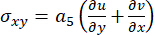 . (45)
The nondimensional coefficients ai (i = 1,2,...,18) represent combinations of the physical, thermal, electromagnetic, carrier, and rotational parameters of the coupled semiconductor medium. These coefficients characterize the influence of anisotropy, fiber reinforcement, magnetic field, thermoelastic coupling, carrier transport, and rotational motion on the overall behavior of the system. Consequently, the obtained nondimensional governing equations provide a compact and efficient mathematical model for analyzing the coupled wave propagation phenomena and multiphysical interactions in rotating magneto-photo-thermoelastic fiber-reinforced semiconductor media. The nondimensional parameters ai, γi, and δi were introduced to represent compact combinations of the physical and material properties governing the coupled rotating magneto-photo-thermoelastic behavior of the fiber-reinforced anisotropic semiconductor medium. Each coefficient reflects a specific interaction mechanism within the coupled system and provides insight into the relative influence of the underlying physical processes. For clarity, the dimensionless parameters and their corresponding definitions are summarized in Table 1.
Table 1: Definitions and physical interpretations of the dimensionless parameters used in the present formulation. The table summarizes the dimensionless parameters appearing in the governing equations together with their physical meanings and their roles in describing the coupled thermoelastic, electromagnetic, carrier-density, and rotational interactions. Please click here to download this Table.
Analytical solution using the normal mode technique
To derive the analytical solution of the coupled rotating magneto-photo-thermoelastic system, the normal mode technique is employed. This method is widely used in generalized thermoelasticity and semiconductor theories due to its effectiveness in transforming the coupled partial differential equations into a reduced system of ordinary differential equations. Such an approach is particularly useful in the analysis of wave propagation, attenuation, and multiphysical interactions in anisotropic semiconductor media. Following the normal mode analysis, all physical field quantities are assumed to vary harmonically with respect to time and the transverse spatial coordinate . Accordingly, the temperature field, carrier-density, displacement components, and stress quantities are represented in the exponential form24,27
 . (46)
Here, ω denotes the complex frequency parameter governing the temporal variation of the physical fields. The real part of ω is associated with the temporal attenuation (or growth) of the wave amplitude, whereas the imaginary part represents the oscillatory behavior of the propagating mode. These interpretations are consistent with the conventional normal mode analysis adopted in the present study, while a represents the wave number associated with the spatial variation along the y-direction. The quantities  , and
, and  correspond to the field amplitudes depending only on the spatial coordinate x. Substituting the above normal mode representations into the previously obtained nondimensional governing equations and simplifying the resulting expressions, the original coupled partial differential system is transformed into a set of ordinary differential equations with respect to the spatial coordinate x. Consequently, the governing equations in the transformed domain take the following form:
 , (47)
 , (48)
 , (49)
 . (50)
Furthermore, the corresponding transformed stress components are obtained as
 , (51)
 , (52)
 . (53)
Here,  , denotes the differential operator with respect to the spatial coordinate . The obtained transformed system forms the mathematical foundation for constructing the characteristic equation and deriving the complete analytical solution of the coupled rotating magneto-photo-thermoelastic problem. The coefficients appearing in the transformed equations are defined as follows:
 ,
,  ,
,  ,
,  ,
,  ,
,  ,
,  ,
,  ,
,  ,
,  ,
,  ,
,  .
.
These coefficients contain the combined contributions of anisotropic elasticity, magnetic field interaction, thermal coupling, carrier transport, and rotational effects. Therefore, the transformed system provides a compact representation suitable for obtaining the characteristic roots and investigating the coupled wave propagation behavior within the rotating fiber-reinforced semiconductor medium.
Supplementary File 1: Analytical Solution Using Matrix Form. This file contains the detailed matrix formulation, the eigenvalue solution procedure, characteristic equation derivation, and intermediate analytical steps used to obtain the general solution of the coupled magneto-photo-thermoelastic model.Please click here to download this file.
The detailed matrix formulation, eigenvalue solution procedure, and characteristic equation derivation are provided in Supplementary File 1.
Boundary conditions and determination of the unknown constants
To complete the analytical formulation, the obtained general solutions were substituted into the prescribed boundary conditions imposed at the surface x = 0. This substitution generated a coupled algebraic system involving the unknown amplitude constants  . Each boundary requirement associated with temperature, carrier density, mechanical displacement, and stress constraints was expressed in terms of the admissible eigenmodes, yielding a linear set of equations relating the coefficients . For convenience, the resulting algebraic system was rewritten in compact matrix form as BC = D, where B denotes the coefficient matrix constructed from the eigenvector components evaluated at the boundary surface,
  represents the vector of unknown constants, and D corresponds to the vector generated from the imposed boundary conditions, including the thermal loading parameter θ0, the carrier excitation term N0, and the prescribed displacement conditions. After evaluating these constants, they were substituted back into the general expressions of the field variables in order to obtain the complete analytical solutions. These expressions were subsequently employed in the numerical computations and graphical visualization of the thermoelastic, carrier-density, and displacement fields within the rotating fiber-reinforced anisotropic semiconductor medium. The adopted boundary conditions represent an optically illuminated semiconductor surface subjected to simultaneous thermal and carrier excitations. The prescribed temperature condition models the thermal loading generated by the incident optical field, while the carrier-density condition accounts for the photo-generated excess carriers produced by optical illumination. In addition, the transverse displacement constraint represents mechanical confinement of the surface in the -direction, whereas the vanishing shear-stress condition corresponds to a tangentially traction-free boundary. Consequently, the selected mixed thermal, electronic, and mechanical boundary conditions provide a physically consistent representation of coupled photo-thermoelastic interactions at the semiconductor surface and supply the necessary constraints required for determining the unknown constants of the solution. The imposed boundary conditions are given as follows:
Temperature constraint:
 . (78)
This condition represents a harmonically varying surface temperature induced by periodic optical heating. It acts as the primary thermal excitation driving the coupled thermoelastic and carrier transport processes within the medium. The amplitude θ0 characterizes the intensity of the applied thermal load.
Carrier density constraint:
 . (79)
This boundary condition describes the photo-generated carrier density resulting from optical illumination. It reflects the electronic excitation due to photon absorption and its harmonic modulation consistent with the incident optical field.
Displacement constraint:
 . (80)
This condition indicates that the boundary is mechanically constrained in the transverse direction. Hence, no displacement occurs along the -direction at the surface.
Shear stress constraint:
 . (81)
This condition corresponds to a traction-free boundary with respect to shear stress. It ensures that no tangential forces act on the surface, which is consistent with a mechanically free boundary in the tangential direction. In addition to the boundary conditions at x = 0, the physical requirement at infinity was imposed as:  ensuring bounded physical solutions within the semi-infinite domain. To provide a clear overview of the analytical and computational procedure adopted in the present study, the main steps of the solution methodology are summarized in Figure 2.
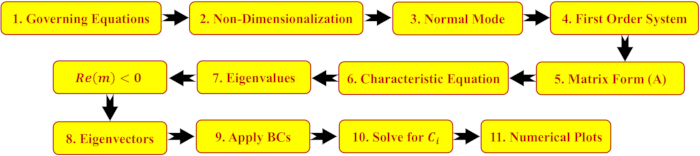
Figure 2: Flowchart of the analytical solution procedure adopted in the present study, including the formulation of the governing equations, normal mode analysis, eigenvalue solution, application of boundary conditions, and evaluation of the physical field variables. The diagram summarizes the main computational steps for obtaining the analytical solution and subsequently evaluating the coupled magneto-photo-thermoelastic response numerically. Please click here to view a larger version of this figure.
Access restricted. Please log in or start a trial to view this content.
Results
To obtain the numerical results presented in this study, silicon (Si) was selected as the representative semiconductor material due to its wide applicability in semiconductor and thermoelastic engineering applications. The physical, thermal, elastic, electromagnetic, and carrier-related material properties employed in the computations are summarized in Table 2. These material constants were substituted into the dimensionless governing equations to generate the numerical results discussed in the subsequen...
Access restricted. Please log in or start a trial to view this content.
Discussion
Eigenvalue admissibility, stability, and boundedness analysis
The admissibility of the obtained eigenvalues is governed by the physical requirement that all field variables remain bounded within the semi-infinite domain x ≥ 0. The general eigensolution is expressed in terms of exponential modes of the form
Access restricted. Please log in or start a trial to view this content.
Disclosures
The authors declare that they have no competing interests.
Acknowledgements
The authors extend their appreciation to the Deanship of Research and Graduate Studies at King Khalid University for funding this work through Large Research Groups Program under grant number RGP2/230/47.
Access restricted. Please log in or start a trial to view this content.
Materials
| Name | Company | Catalog Number | Comments |
|---|---|---|---|
| Computational software (symbolic and numerical analysis) | Wolfram Research | Wolfram Mathematica (Version 12.0) was used | Used for eigenvalue computation, analytical solution implementation, and numerical evaluation |
| Material parameter dataset (silicon semiconductor properties) | Various literature sources | N/A | Physical constants (elastic, thermal, carrier-related) used in computations (Table 1) |
| Personal computer/workstation | HP | N/A | Computations were performed on a standard personal computer running Windows OS with sufficient memory for numerical simulations |
| Equation editor | Microsoft Word and MathType | N/A | Used for formatting and presenting mathematical expressions in the manuscript |
| Reference management software | Elsevier | N/A | Used for managing references and formatting citations (Vancouver style) |
References
- Saeed T, Ali Khan M, Alzahrani ARR, Jahangir A. Rayleigh wave through half space semiconductor solid with temperature dependent properties. Phys Scr. 2024;99(2):025208. doi:10.1088/1402-4896/ad17fe
- Abbas I, Hobiny A, Marin M. Photo-thermal interactions in a semi-conductor material with cylindrical cavities and variable thermal conductivity. J Taibah Univ Sci. 2020;14(1):1369–1376.
- Ullah I, et al. Study on Impact of Variable Thermal Conductivity or Laser Pulse on Reflected Elastic Waves in a Semiconductor Medium. Acoust Phys. 2024;70(2):278–287.
- Yadav AK. Reflection of magneto-photothermal plasma waves in a diffusion semiconductor in two-temperature with multi-phase-lag thermoelasticity. Mech Based Des Struct Mach. 2022;50(12):4117–4138.
- Lute P, Khalsa L, Abouelregal A, Varghese V. Advanced thermoelastic modeling of photothermal-induced heat generation in nonsimple circular semiconductor plates. Mech Based Des Struct Mach. Published online 2025. doi:10.1080/15397734.2025.2524768
- Lute P, Khalsa L, Chandel N, Varghese V. Photothermoelastic behavior of fractal semiconductor media in noninteger-dimensional space via memory and nonlocal effects. Acta Mech. 2025;236(7):4007–4024.
- Alaofi ZM, El-Dali A. A multiphysics model for photo thermo hygroelastic responses in semiconductors with 2D heatmap representation. Int Commun Heat Mass Transf. 2026;175:110976. doi:10.1016/j.icheatmasstransfer.2026.110976
- Li C, Zhou J. Photo-thermoelastic model based on mixed nonlocal dual-phase-lag heat conduction law and transient impact response for 1D semiconducting plate. Acta Mech. Published online April 2, 2026:1–19.
- Nazir R, Kumar V. Photo-thermo-elastic interactions in micropolar generalized thermoelasticity theory in the framework of Green-Naghdi theory. J Therm Stress. 2024;47(4):537–552.
- Zenkour AM. On Generalized Three-Phase-Lag Models in Photo-Thermoelasticity. Int J Appl Mech. 2022;14(2). doi:10.1142/S1758825122500053
- Gupta S, Dutta R, Das S. Photothermal excitation of an initially stressed nonlocal semiconducting double porous thermoelastic material under fractional order triple-phase-lag theory. Int J Numer Methods Heat Fluid Flow. 2022;32(12):3697–3725.
- Khan MA, Moussa S Ben, Jahangir A, Riaz U. Microstructure-driven wave energy control in temperature-dependent fiber-reinforced composites: A unified micropolar thermoelastic model and data-driven design. Results Eng. 2026;29:108811. doi:10.1016/j.rineng.2025.108811
- Pitarresi G, Found MS, Patterson EA. An investigation of the influence of macroscopic heterogeneity on the thermoelastic response of fibre reinforced plastics. Compos Sci Technol. 2005;65(2):269–280.
- Escalante-Solís MA, Valadez-González A, Herrera-Franco PJ. A note on the effect of the fiber curvature on the micromechanical behavior of natural fiber reinforced thermoplastic composites. Express Polym Lett. 2015;9(12):1119–1132.
- Abo-Dahab SM, Jahangir A, Aamir M, Althobaiti S. Load Influence on Waves Reflection Through the Surface Fibre-Reinforced Thermoelastic Media. Mech Solids. 2025;60(5):3671–3685.
- Purkait P, Kanoria M. Memory Response of Refined GN Models on a Rotating Fiber-Reinforced Magneto-Thermoelastic Medium Due to Pulsed Laser and Inclined Load. Int J Comput Methods. 2024;21(9). doi:10.1142/S0219876224500270
- Akai A, Sato Y, Hamada Y, Mikuni A. Fatigue Damage Evaluation of Discontinuous Carbon Fiber-Reinforced Polymer Composites Using Thermoelastic Temperature Variations. Exp Tech. 2025;49(4):609–621.
- Quinlan A, Dulieu-Barton JM, Castro O. Effect of backing fibers on the thermoelastic stress analysis of multi-directional glass/epoxy laminates during fatigue loading. IOP Conf Ser Mater Sci Eng. 2020;942:012040. doi:10.1088/1757-899X/942/1/012040
- Yadav AK. Reflection of plane waves from the free surface of a rotating orthotropic magneto-thermoelastic solid half-space with diffusion. J Therm Stress. 2020;44(1):86–106.
- Selvamani R, et al. Fractional nonlocal couple stress waves in magnetoelastic nanobeam using homotopy perturbation technique. Acta Mech. 2025;236(9):5477–5494.
- Abouelregal AE, et al. Modeling transient responses in magnetized porous structures: a coupled laser-thermomagnetic stimulation study with memory-dependent effects. Arch Appl Mech. 2026;96(4):76. doi:10.1007/S00419-026-03055-Y
- Chandel N, Varghese V, Deotale N, Kotewar M. Spatio-temporal nonlocal magneto-thermoelastic framework via memory-dependent Gurtin–Pipkin–Moore–Gibson–Thompson heat conduction. Mech Adv Mater Struct. 2026;33(1). doi:10.1080/15376494.2026.2650116
- Abouelregal AE. Modified Fractional Photo-Thermoelastic Model for a Rotating Semiconductor Half-Space Subjected to a Magnetic Field. Silicon. 2020;12(12):2837–2850.
- Sur A. Magneto-photo-thermoelastic interaction in a slim strip characterized by hereditary features with two relaxation times. Mech Time-Dependent Mater. 2023;28(3):1465–1490.
- Saidi A, Abouelregal AE, Yahya A, Zakria A. Magneto-Photo-Thermoelastic Disturbances in a Generalized Rotating Semiconductor Medium with Variable Thermal Properties. Iran J Sci Technol Trans Mech Eng. Published online 2026. doi:10.1007/s40997-026-00958-7
- Rashid MM, Abd-Alla AM, Abo-Dahab SM, Alharbi FM. Study of internal heat source, rotation, magnetic field, and initial stress influence on p-waves propagation in a photothermal semiconducting medium. Sci Rep. 2024;14(1):14615. doi:10.1038/s41598-024-63568-w
- Abouelregal AE, Alsaeed SS, Marin M. Advanced fractional photo-thermo-viscoelastic model for rotating semiconductor cylindrical structures under thermal and optical loads. Mech Based Des Struct Mach. Published online 2025. doi:10.1080/15397734.2025.2570391
- Abouelregal AE, Ahmad H, Elagan SK, Alshehri NA. Modified Moore-Gibson-Thompson photo-thermoelastic model for a rotating semiconductor half-space subjected to a magnetic field. Int J Mod Phys C. 2021;32(12):2837–2850.
- Zenkour AM, El-Shahrany HD, El-Mekawy HF. Magneto-photo-thermoelastic influences on a semiconductor hollow cylinder via a series-one-relaxation model. Commun Nonlinear Sci Numer Simul. 2024;139:108295. doi:10.1016/j.cnsns.2024.108295
- Khan MA, et al. Global Sensitivity Analysis of Wave Behavior in Rotating Solids with Laser-Induced Thermal and Stress Effects. Mech Solids. 2025;60(4):3181–3204.
- Yadav AK. Magnetothermoelastic Waves in a Rotating Orthotropic Medium with Diffusion. J Eng Phys Thermophys. 2021;94(6):1628–1637.
- Abouelregal AE, Alsaeed SS, Uzun Yaylacı E, Yaylacı M. Fractional DPL Thermoelasticity With Rabotnov Kernel in a Rotating Stressed Medium With Spherical Cavity. Math Methods Appl Sci. 2025;48(18):16375–16390.
- Khan MA, Jahangir A, Riaz U, Yaylacı M. Rayleigh wave propagation in a rotating porous thermoelastic half-space with nonlocal fractional three phase lag heat conduction under surface thermal loading. Results Eng. 2026;30:110378. doi:10.1016/j.rineng.2026.110378
- Abo-Dahab SM, Jaradat EK, Gafel HS, Elidy ES. Rotational Influence on Wave Propagation in Semiconductor Nanostructure Thermoelastic Solid with Ramp-Type Heat Source and Two-Temperature Theory. Axioms. 2025;14(8):560. doi:10.3390/axioms14080560
- Alaofi ZM, ElShershaby AA, Yusuf M, El-Dali A. Spatiotemporal Analysis of Coupled Thermo–Photoelastic Fields in Anisotropic Fiber-Reinforced Silicon Using an Eigenvalue Method. J Vis Exp. 2026;(231). doi:10.3791/71625
Access restricted. Please log in or start a trial to view this content.