This cross-sectional field study investigated whether embodied experience and place attachment sequentially explain the association between sport-event image and tourist loyalty at a cultural heritage destination.
A subscription to JoVE is required to view this content. Sign in or start your free trial.
Research Article
Associations of Sport-Event Image with Cultural Heritage Tourism Loyalty: Sequential Mediation in a Cross-Sectional Survey
In This Article
Summary
Abstract
Sport events are increasingly used to promote cultural heritage destinations, yet the mechanisms linking event image with tourist loyalty remain insufficiently understood. This field-based cross-sectional survey examined the associations among sport-event image, embodied experience, place attachment, and tourist loyalty. A structured Chinese-language questionnaire was administered to tourists attending a heritage-themed sport event. After data screening, 386 valid responses were retained from 412 collected questionnaires (valid-response rate among returned questionnaires, 93.7%). Each construct was measured using five reflective Likert-scale items. Partial least squares structural equation modeling showed positive associations between event image and embodied experience (β = 0.470, t = 10.82, p < 0.001, 95% confidence interval [CI] = 0.383–0.551), embodied experience and place attachment (β = 0.507, t = 11.36, p < 0.001, 95% CI = 0.421–0.589), and place attachment and tourist loyalty (β = 0.524, t = 10.74, p < 0.001, 95% CI = 0.430–0.611). The direct association between event image and tourist loyalty was weak and not statistically significant (β = 0.100, t = 1.88, p = 0.060, 95% CI = −0.004 to 0.203), whereas the sequential indirect association through embodied experience and place attachment was significant (β = 0.125, p < 0.001, 95% CI = 0.074–0.184). Because the data were cross-sectional, these estimates represent statistical associations rather than temporal causation. These findings are consistent with a sequential association in which a favorable sport-event image is linked to greater tourist loyalty through embodied experience and place attachment in a cultural heritage tourism context.
Introduction
Sport events have become an increasingly visible means of connecting tourism promotion with place-based cultural resources. In heritage destinations, events such as marathons, cycling activities, walking festivals, and community-based sport gatherings can bring tourists into direct contact with historical streets, cultural landscapes, symbolic architecture, and local visitor routes. Recent empirical work on the Yongding Tulou Marathon suggests that sport-event image can be linked to heritage-site loyalty, although this relationship is not necessarily direct1. Earlier sport-tourism research also indicates that event image and destination image may interact in shaping sport tourists’ behavioral responses2. These findings position sport events not only as temporary attractions but also as potential interfaces through which tourists encounter and evaluate heritage places.
The theoretical issue, however, is that destination visibility alone cannot fully explain tourist loyalty. Event tourism research has emphasized that events generate destination value when they are embedded in broader visitor experiences, local meaning, and post-event behavioral responses3. Sport-event leverage perspectives similarly argue that events should be connected to host-place resources rather than treated as isolated spectacles4. This issue is particularly relevant to cultural heritage tourism, where destination value depends on how visitors interpret, experience, and emotionally connect with cultural places5. Heritage tourism is therefore not simply a matter of visiting historical sites or viewing cultural symbols; it involves the interaction between tourists, place meanings, spatial movement, and remembered experiences6.
Embodied experience offers one explanation for this interaction. In heritage sport-event settings, tourists do not merely observe the destination; they walk, run, gather, listen, rest, and move through the heritage environment. Experience-based research has long suggested that tourism and consumption responses are shaped by sensory, emotional, cognitive, and behavioral engagement rather than by information exposure alone7. When this engagement occurs in a meaningful place, it may contribute to place attachment, which refers to the emotional and functional bond between individuals and places8. In tourism research, place attachment has been associated with satisfaction, loyalty, and future behavioral intentions9. Destination-loyalty models have also shown that image, involvement, place attachment, and satisfaction may operate together in explaining tourist loyalty10.
Although previous studies have examined relationships among event image, destination image, place attachment, and tourist loyalty, the conceptual contribution of the present study is more specific and incremental: it evaluates whether embodied experience and place attachment sequentially explain the association between sport-event image and tourist loyalty in a cultural heritage setting1,2,9,10,11. Rather than proposing new constructs or a new theory, this study integrates established constructs to test an embodied, place-based mechanism that has rarely been evaluated as a complete sequential pathway in heritage sport-event research. Accordingly, four hypotheses were examined: H1, sport-event image is positively associated with embodied experience; H2, embodied experience is positively associated with place attachment; H3, place attachment is positively associated with tourist loyalty; and H4, sport-event image is positively associated with tourist loyalty. The direct H4 pathway was retained to determine whether sport-event image remained associated with tourist loyalty after accounting for the sequential mediating roles of embodied experience and place attachment. The conceptual model was evaluated using a field survey and partial least squares structural equation modeling (PLS-SEM), a prediction-oriented analytical approach12.
Access restricted. Please log in or start a trial to view this content.
Protocol
This cross-sectional field survey was conducted in accordance with ethical requirements for research involving human participants. The protocol was reviewed and approved by the Institutional Human Research Ethics Committee of Nanjing Vocational Institute of Transport Technology (Approval No. HJJ1990129). All participants were adults and provided informed consent before completing the questionnaire. Participation was voluntary and anonymous. No names, identity numbers, telephone numbers, facial images, exact home addresses, or other personally identifiable information were collected. Participants could discontinue participation before submitting the questionnaire without providing a reason.
Study design and field setting
This study adopted a field-based cross-sectional survey design to examine associations among sport-event image, embodied experience, place attachment, and tourist loyalty. The survey was conducted during a heritage-themed sport event at a cultural heritage tourism destination in China. The focal event was the 2022 Fujian Yongding Tulou Marathon, held on December 25, 2022, in the Fujian Tulou (Yongding) Scenic Area, a World Cultural Heritage destination in Longyan City, Fujian Province. Fieldwork was conducted from December 20 to 30, 2022, with participant recruitment during pre-event waiting periods (approximately 07:00–08:00), post-event dispersal periods (approximately 09:00–15:00), afternoon heritage-site visiting periods (approximately 14:00–17:00), and evening exit periods (approximately 17:00–18:30). The event combined organized sport participation or spectatorship with exposure to heritage landscapes, local cultural symbols, historical streets, public gathering spaces, and visitor routes within the heritage area. The study was designed to capture tourists’ immediate perceptions after they had experienced both the sport-event atmosphere and the cultural heritage setting. This design was appropriate because sport events can shape destination image, stimulate visitor engagement with place, and strengthen tourists’ emotional connection with the host destination13. Figure 1 shows the complete study workflow, including field preparation, participant screening, informed consent, questionnaire administration, data screening, valid-sample confirmation, construct scoring, measurement assessment, structural model testing, mediation analysis, and robustness checks.
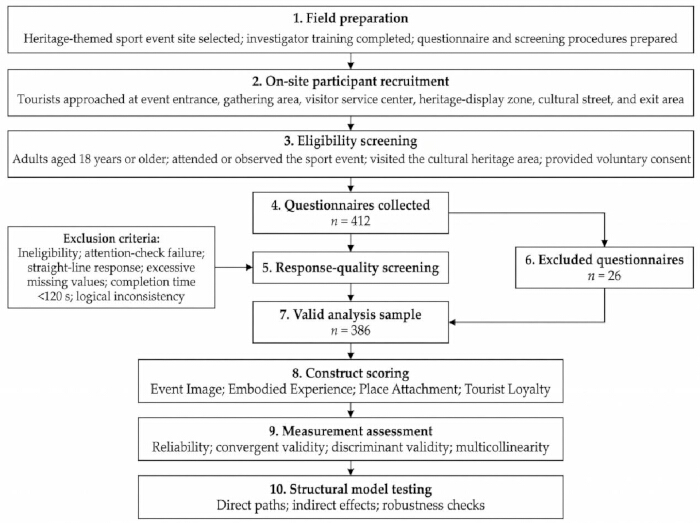
Figure 1. Study workflow and participant screening process.
The figure summarizes the workflow of the cross-sectional field survey, including field preparation, on-site participant recruitment, eligibility screening, informed consent, questionnaire administration, response-quality screening, exclusion of invalid questionnaires, confirmation of the final analysis sample, construct scoring, measurement-model assessment, structural-model testing, mediation analysis, and robustness analyses. A total of 412 questionnaires were collected, and 386 valid responses were retained after data screening. Please click here to view a larger version of this figure.
Participant recruitment and eligibility screening
Participants were recruited on-site at six visitor-flow points: the sport-event entrance area, finish or gathering area, visitor service center, heritage-display zone, main cultural street, and exit area of the heritage destination. Recruitment was conducted across different time blocks, including pre-event waiting periods, post-event dispersal periods, afternoon heritage-site visiting hours, and evening exit periods. This arrangement reduced the risk of collecting responses from only one visitor group or activity stage. A participant was eligible if the participant was 18 years of age or older, had attended, observed, or accompanied someone at the sport event, had visited at least one cultural heritage area during the same trip, could understand the Chinese-language questionnaire, and agreed to complete the anonymous survey voluntarily. Event staff, vendors, volunteers, government personnel, media workers, local administrators, and members of the research team were excluded because their responses could reflect professional or organizational involvement rather than tourist experience. Before providing the questionnaire, trained investigators asked four screening questions: “Are you 18 years of age or older?,” “Did you attend or observe today’s sport event?,” “Have you visited the cultural heritage area during this trip?,” and “Are you willing to complete an anonymous academic questionnaire?” Only individuals who answered “yes” to all four questions were invited to complete the survey.
Sampling procedure and fieldwork control
A time-location convenience sampling strategy was used. During periods of stable visitor flow, investigators approached every third passing adult tourist. During crowded periods, investigators approached the next available eligible tourist after the previous survey was completed. Investigators were instructed not to recruit multiple members of the same travel group unless they completed the questionnaire independently and met all eligibility criteria. The target number of distributed questionnaires was set at more than 400 to ensure that the final valid sample would remain sufficient after the exclusion of incomplete, inattentive, or ineligible responses. This sample-size target was consistent with questionnaire-based sport tourism and heritage tourism studies using structural models with multiple latent variables and mediation pathways14. A total of 412 completed questionnaires were returned. After eligibility and response-quality screening, 386 valid questionnaires were retained, corresponding to a valid-response rate of 93.7% among returned questionnaires. Twenty-six questionnaires were excluded because of ineligibility, attention-check failure, straight-line responding, excessive missing values, an unrealistically short completion time, or logical inconsistency. In total, 486 individuals were approached, 454 were assessed as eligible before invitation, and 42 declined participation. The 26 exclusions comprised ineligibility (n = 4), attention-check failure (n = 4), straight-line responding (n = 5), excessive missing values (n = 4), completion times shorter than 120 s (n = 5), and logical inconsistency (n = 4). Consequently, 93.7% should not be interpreted as an overall participation response rate.
Questionnaire structure and measurement design
The questionnaire contained five sections. The first section recorded screening confirmation and informed consent. The second section measured event image. The third section measured embodied experience. The fourth section measured place attachment and tourist loyalty. The fifth section collected demographic and travel-related information. All core construct items used a 5-point Likert scale, with 1 indicating “strongly disagree” and 5 indicating “strongly agree.” Higher scores indicated stronger agreement with the measured construct. All items were positively worded to reduce confusion during field administration; however, this choice may increase acquiescence bias and is therefore acknowledged as a measurement limitation. Event image was measured using five items assessing tourists’ perceptions of the sport event’s organization, atmosphere, cultural relevance, uniqueness, and destination appeal. Embodied experience was measured using five items assessing bodily movement, sensory engagement, emotional immersion, spatial experience, and interaction with the heritage environment. This construct was included because cultural heritage tourism is not only visually evaluated but also experienced through movement, perception, and bodily presence within the site11.
Place attachment was measured using five items assessing emotional connection, personal meaning, sense of belonging, place dependence, and willingness to maintain a relationship with the destination. Tourist loyalty was measured using five items assessing revisit intention, recommendation intention, positive word-of-mouth, willingness to attend future events, and support for the heritage destination. Item adaptation was informed by destination-loyalty research in sport-event contexts1,2,13,15, event-experience research16,17, place-attachment research8,9,10,18,19, sport-event destination-image and behavioral-intention research20,21, and tourism-loyalty research linking experience and place attachment with loyalty22,23. Procedural controls for common-method bias were informed by previous methodological guidance24. Embodied and sensory experience research also informed the item adaptation11,25. Complete wording and coding rules are provided in Supplementary File 1. The questionnaire constructs, corresponding measurement items, scale format, and original literature sources are summarized in Table 1. All four constructs were specified as reflective measurement models because the items were treated as manifestations of their respective latent constructs.
| Construct | Operational definition | Item codes | Number of items | Response scale | Scoring rule | ||
| Event Image | Tourists' overall perception of the sport event, including its organization, atmosphere, cultural relevance, uniqueness, and destination appeal. | EI1–EI5 | 5 | 1 = strongly disagree; 5 = strongly agree | Mean of EI1–EI5 | ||
| Embodied Experience | Tourists' bodily, sensory, emotional, spatial, and interactive experiences while engaging with the sport event within the cultural heritage setting. | EE1–EE5 | 5 | 1 = strongly disagree; 5 = strongly agree | Mean of EE1–EE5 | ||
| Place Attachment | Tourists' emotional and functional bond with the cultural heritage destination formed through the event-related visit. | PA1–PA5 | 5 | 1 = strongly disagree; 5 = strongly agree | Mean of PA1–PA5 | ||
| Tourist Loyalty | Tourists' intentions to revisit, recommend the destination, engage in positive word-of-mouth, attend future sport events, and support the heritage destination. | TL1–TL5 | 5 | 1 = strongly disagree; 5 = strongly agree | Mean of TL1–TL5 | ||
Table 1: Construct definitions, item structure, and scoring rules.
The table summarizes the operational definitions, item codes, number of questionnaire items, response scale, and construct-scoring procedures for Event Image, Embodied Experience, Place Attachment, and Tourist Loyalty. All constructs were measured using five positively worded items rated on a 5-point Likert scale (1 = strongly disagree; 5 = strongly agree). Construct scores were calculated as the arithmetic mean of the corresponding item scores. Complete questionnaire wording and coding rules are provided in Supplementary File 1.
Questionnaire adaptation, expert review, and pilot testing
The questionnaire was developed by adapting established items from sport-event tourism, heritage tourism, place attachment, and destination loyalty research. Items were revised to fit the context of a sport event held in a cultural heritage destination. The wording avoided abstract academic terms and used visitor-facing expressions suitable for on-site completion. For language adaptation, two bilingual researchers conducted forward translation and back-translation. One researcher translated the initial English item pool into Chinese. A second researcher, who had not reviewed the original version, translated the Chinese version back into English. The research team compared the back-translated version with the initial item meanings and revised items showing semantic deviations. The draft questionnaire was then reviewed by five experts in tourism management, sport-event research, cultural heritage studies, survey methodology, and visitor-experience research. The experts evaluated item clarity, construct relevance, contextual fit, response burden, and suitability for field administration. Items that were repetitive, overly general, or difficult for tourists to understand were revised. A pilot test was conducted with 32 respondents who had recent experience with sport events or cultural heritage tourism. The pilot test assessed completion time, item clarity, response fatigue, missing-response patterns, and the performance of the attention-check item. The final questionnaire required approximately 6–8 min to complete. Questionnaire pretesting was retained as a necessary step because field-based tourism surveys require both construct validity and respondent-level comprehension under real visitor conditions.
Investigator training and fieldwork standardization
All investigators completed a standardized training session before fieldwork. Training covered eligibility screening, informed-consent procedures, neutral recruitment language, questionnaire distribution, handling participant questions, response-quality monitoring, and data-security requirements. Investigators used the same recruitment script throughout fieldwork: “Hello, we are conducting an anonymous academic survey about tourists’ experiences at this sport event and cultural heritage destination. The questionnaire takes approximately 6–8 min to complete. Participation is voluntary, and no personal identity information will be collected. Would you be willing to participate?” Investigators were instructed not to explain the hypothesized relationships among event image, embodied experience, place attachment, and tourist loyalty. They could clarify only procedural issues, such as how to select a response option or how to submit the questionnaire. This procedure reduced interviewer influence and helped preserve response independence. Each investigator completed a fieldwork log for every collection block. The log recorded the date, time, location, number of questionnaires distributed, number returned, number refused, weather conditions, visitor-flow conditions, and unusual fieldwork events. At the end of each fieldwork day, the lead researcher reviewed the returned questionnaires and stored them in a secure research folder.
Questionnaire administration
Both paper and online questionnaire formats were prepared using identical item wording and response options. Paper questionnaires were distributed using clipboards at the field site. Online questionnaires were accessed through a QR code printed on a survey card. Participants completed the questionnaire independently. For paper questionnaires, participants returned the completed questionnaire directly to an investigator or placed it in a sealed collection envelope. Online questionnaires were submitted through the survey platform. Paper and online versions used identical item wording, response options, and screening rules, and the source files were retained separately before data cleaning. A separate paper-versus-online mode-effect analysis was not available in the supplied analysis output; this limitation is acknowledged and should be revisited if the administration-mode identifier is retained in the raw dataset. One attention-check item was placed near the middle of the questionnaire. The item instructed respondents to select a specific response option. Questionnaires that failed this item were excluded during data screening. This procedure was used to reduce inattentive responding, which is a common quality concern in self-administered questionnaire research26.
Data entry, coding, and quality control
Each questionnaire was assigned a unique anonymous identification code from SECHT001 to SECHT412. Paper questionnaires were entered into a spreadsheet independently by two trained researchers. The two data-entry files were compared cell by cell, and all discrepancies were checked against the original questionnaires. Online questionnaire records were exported directly from the survey platform and checked for duplicate submissions, missing values, and completion time. All Likert-scale items were coded from 1 to 5. Demographic and travel-related variables were coded as categorical variables. The categories reported in Table 2 comprised gender, age group, education level, event participation category (heritage fun run, half marathon, full marathon, or cycling/walking event), visit frequency (first, second, or three or more visits), travel party, information source, length of stay, and heritage impression (very weak to very strong). The revised codebook provided in Supplementary File 1 uses the same labels and categories. Construct scores were calculated as the arithmetic mean of their corresponding items. Event image was calculated from EI1–EI5, embodied experience from EE1–EE5, place attachment from PA1–PA5, and tourist loyalty from TL1–TL5. Item-level data were retained for reliability and validity assessment, whereas construct-level scores were used for descriptive statistics and correlation analysis.
| Variable | Category | n | % |
| Gender | Female | 209 | 54.1 |
| Male | 177 | 45.9 | |
| Age group (years) | 18–24 | 79 | 20.5 |
| 25–34 | 140 | 36.3 | |
| 35–44 | 102 | 26.4 | |
| 45–54 | 39 | 10.1 | |
| ≥55 | 26 | 6.7 | |
| Education level | High school or below | 53 | 13.7 |
| Junior college | 91 | 23.6 | |
| Bachelor's degree | 175 | 45.3 | |
| Postgraduate degree | 67 | 17.4 | |
| Event participation category | Heritage fun run | 154 | 39.9 |
| Half marathon | 108 | 28 | |
| Full marathon | 63 | 16.3 | |
| Cycling/walking event | 61 | 15.8 | |
| Visit frequency | First visit | 213 | 55.2 |
| Second visit | 103 | 26.7 | |
| Three or more visits | 70 | 18.1 | |
| Travel party | Alone | 56 | 14.5 |
| Family | 112 | 29 | |
| Friends | 145 | 37.6 | |
| Running club/group | 61 | 15.8 | |
| Other | 12 | 3.1 | |
| Information source | Social media | 168 | 43.5 |
| Event official channel | 76 | 19.7 | |
| Family/friends | 64 | 16.6 | |
| Travel platform | 55 | 14.2 | |
| Offline poster/other | 23 | 6 | |
| Length of stay | 1 day | 83 | 21.5 |
| 2 days | 198 | 51.3 | |
| 3 days | 78 | 20.2 | |
| ≥4 days | 27 | 7 | |
| Heritage impression | Very weak | 15 | 3.9 |
| Weak | 25 | 6.5 | |
| Moderate | 91 | 23.6 | |
| Strong | 184 | 47.7 | |
| Very strong | 71 | 18.4 |
Table 2: Demographic and travel characteristics of the final analysis sample (N = 386).
The table summarizes the demographic characteristics, event participation categories, travel characteristics, and perceived heritage impressions of the 386 respondents included in the final analyses after application of the prespecified eligibility and response-quality screening criteria. Values are presented as the number of respondents (n) and percentage of the final analysis sample (%).
Exclusion rules and final analysis sample
Returned questionnaires were screened before analysis. A questionnaire was excluded if any of the following conditions were present: the respondent did not meet the eligibility criteria; more than 20% of the core construct items were missing; the attention-check item was answered incorrectly; the same response option was selected for all construct items; completion time was less than 120 s; or the response showed an obvious logical contradiction. For questionnaires with minor missing values, item-level imputation was performed only when no more than one item was missing within a construct. The missing value was replaced with the respondent’s mean score for the remaining items within the same construct. Demographic variables were not imputed. Of the 412 collected questionnaires, 26 were excluded after screening. The final analysis sample comprised 386 valid responses. The excluded responses included attention-check failures, straight-line responses, ineligible respondents, questionnaires with excessive missing values, and unrealistically short completion times. The demographic and travel characteristics of the final sample are summarized in Table 2.
Reliability and measurement assessment
Internal consistency was assessed using Cronbach’s alpha and composite reliability. Values greater than 0.70 were considered acceptable for the core constructs. Item loadings were examined to confirm that each observed item represented its intended latent construct. Items with weak loadings were reviewed conceptually before any deletion decision was made. Convergent validity was assessed using average variance extracted (AVE), discriminant validity using the heterotrait-monotrait ratio (HTMT), and multicollinearity using variance inflation factors (VIFs). The prespecified criteria were indicator loadings of at least 0.60, composite reliability of at least 0.70, AVE of at least 0.50, HTMT below 0.85, and VIF below 5.0, consistent with the PLS-SEM guidance used in this study12. Procedural controls for common-method bias included anonymous participation, neutral instructions, separation of construct blocks, and an attention check. As diagnostic indicators, all interconstruct correlations were below 0.90, and the reported VIFs ranged from 1.18 to 1.61. These values did not indicate severe multicollinearity; however, they do not rule out common-method bias arising from single-source, cross-sectional self-report data24.
Structural model specification
The structural model evaluated associations among four latent constructs: Event Image, Embodied Experience, Place Attachment, and Tourist Loyalty. The hypothesized sequence linked Event Image with Embodied Experience, Embodied Experience with Place Attachment, and Place Attachment with Tourist Loyalty. A direct path from Event Image to Tourist Loyalty was included to assess whether event image retained an independent association with tourist loyalty after Embodied Experience and Place Attachment were considered. The model therefore tested both the direct and indirect mechanisms through which a sport event was associated with cultural heritage tourism. The theoretical logic was that event image provides the initial evaluative framework, embodied experience translates the event and heritage environment into lived visitor experience, place attachment captures the emotional bond formed with the destination, and tourist loyalty reflects future behavioral intentions. Figure 2 presents the structural model tested in the study, including the direct path and the sequential indirect pathway from Event Image to Tourist Loyalty through Embodied Experience and Place Attachment.
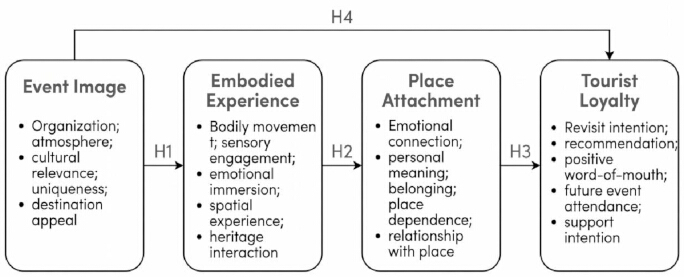
Figure 2. Conceptual model of the hypothesized relationships among Event Image, Embodied Experience, Place Attachment, and Tourist Loyalty.
The figure presents the hypothesized structural model evaluated using partial least squares structural equation modeling (PLS-SEM). Event Image was hypothesized to influence Tourist Loyalty directly and indirectly through Embodied Experience and Place Attachment. H1–H4 denote the four hypothesized structural pathways. PLS-SEM = partial least squares structural equation modeling. Please click here to view a larger version of this figure.
Statistical analysis
Descriptive statistics were first calculated for demographic variables, travel characteristics, and construct scores. Means, standard deviations, minimum values, maximum values, skewness, and kurtosis were computed for the four core constructs. Pearson correlation coefficients were then calculated to examine the bivariate relationships among Event Image, Embodied Experience, Place Attachment, and Tourist Loyalty. Partial least squares structural equation modeling was used for measurement- and structural-model assessment, including indicator loadings, internal consistency, convergent and discriminant validity, path coefficients, explained variance, and indirect associations. The PLS-SEM analysis was conducted in SmartPLS (version 4.1.1.8) using the path weighting scheme and the program-fixed maximum of 3,000 iterations with a convergence criterion of 1 × 10⁻⁷. No bootstrap sign-change correction was applied, and 95% percentile bootstrap confidence intervals were used. Bootstrapping used 5,000 resamples to estimate direct and indirect associations. The mediation analysis estimated the indirect association from Event Image to Tourist Loyalty through Embodied Experience and Place Attachment. Specific indirect effects were also tested for Event Image to Place Attachment through Embodied Experience and for Embodied Experience to Tourist Loyalty through Place Attachment. Because the design was cross-sectional, the results were interpreted as statistical associations rather than causal effects.
Robustness checks
Three robustness checks were conducted. First, the structural model was re-estimated after excluding respondents with unusually short completion times that remained above the primary exclusion threshold. Second, the model was estimated separately for first-time and repeat visitors when subgroup sample sizes were sufficient. Third, construct mean scores were entered into regression models to examine whether the direction and approximate strength of the main associations were consistent with the structural model. The robustness checks were used to evaluate whether the main pattern of associations remained stable across reasonable analytical decisions. Subgroup findings were treated as exploratory and were not used to overstate group differences.
Preparation of verification files
The questionnaire, variable codebook, item wording, response options, construct-scoring procedures, screening criteria, and analysis specification are provided in Supplementary File 1. The complete de-identified raw dataset, variable codebook, and analysis files are publicly available in Zenodo at https://zenodo.org/records/21454968. The shared materials were checked to ensure that they contained no personally identifiable information.
Access restricted. Please log in or start a trial to view this content.
Results
Final analysis sample
A total of 412 questionnaires were returned during the field survey. After eligibility and response-quality screening, 26 questionnaires were excluded, leaving 386 valid responses (valid-response rate among returned questionnaires, 93.7%). The valid sample comprised 54.1% female respondents; the largest age group was 25–34 years (36.3%); 45.3% held a bachelor's degree; 55.2% were first-time visitors; 39.9% participated in the heritage fun-run category; an...
Access restricted. Please log in or start a trial to view this content.
Discussion
This study examined the sequential associations among sport-event image, embodied experience, place attachment, and tourist loyalty in a cultural heritage tourism setting. Event Image was positively associated with Embodied Experience, Embodied Experience was positively associated with Place Attachment, and Place Attachment was positively associated with Tourist Loyalty. The direct Event Image–Tourist Loyalty path was weak and not statistically significant after the two intervening constructs were included. The sig...
Access restricted. Please log in or start a trial to view this content.
Disclosures
Conflict of Interest:
The authors declare no competing interests.
Acknowledgements
The authors thank the tourists who participated in the field survey for their valuable time and insights. The authors also thank the Department of Physical Education at Nanjing Institute of Tourism and Hospitality and the Department of Physical Education at Nanjing Vocational Institute of Transport Technology for their institutional support. This research was financially supported by the 2025 “Vocational Education” Special Project of the 14th Five-Year Plan, Vocational Education Special Committee, China Tao Xingzhi Research Association (Project No. ztz2025066).
Access restricted. Please log in or start a trial to view this content.
Materials
| Name | Company | Catalog Number | Comments |
|---|---|---|---|
| Clipboards | Any commercial supplier | N/A | Used to support paper questionnaire completion at the field site. |
| IBM SPSS Statistics | IBM Corp., Armonk, NY, USA | Version 27.0 | Used for descriptive statistics, Pearson correlation analysis, and robustness checks. |
| Microsoft Excel | Microsoft Corporation, Redmond, WA, USA | Version 16.0 | Used for independent double data entry, cell-by-cell verification, coding, and data management of paper questionnaires. |
| QR-code survey cards | Study investigators | N/A | Printed survey cards used to provide participants with access to the online questionnaire via QR code. |
| Sealable collection envelopes | Any commercial supplier | N/A | Used for secure collection and temporary storage of completed paper questionnaires. |
| SmartPLS | SmartPLS GmbH, Monheim am Rhein, Germany | Version 4.1.1.8 | Used for reflective Mode A measurement-model assessment, structural-model testing, mediation analysis, and bootstrapping (5,000 resamples). |
| Survey questionnaire (paper and online formats) | Study investigators | Supplementary File 1 | Chinese-language questionnaire measuring Event Image, Embodied Experience, Place Attachment, Tourist Loyalty, and participant characteristics. |
| Wenjuanxing online survey platform | Changsha Ranxing Information Technology Co., Ltd., Changsha, China | Web platform (version not applicable) | Used for online questionnaire administration via QR code and export of survey responses (https://www.wjx.cn). |
References
- Du J, Zheng G, Liang J, Ma Y. Research on the impact of sports event image on tourism loyalty in heritage sites: An empirical study based on the Yongding Tulou marathon. PLoS One. 2025;20(6):e0326333.
- Kaplanidou K, Vogt C. The interrelationship between sport event and destination image and sport tourists' behaviours. J Sport Tour. 2007;12(3-4):183-206.
- Getz D, Page SJ. Progress and prospects for event tourism research. Tour Manage. 2016;52:593-631.
- Chalip L. Beyond impact: A general model for sport event leverage. In: Ritchie BW, Adair D, editors. Sport tourism: Interrelationships, impacts and issues. Channel View Publications; Clevedon; 2004. p. 226-52.
- Bessière J. Local development and heritage: Traditional food and cuisine as tourist attractions in rural areas. Sociol Ruralis. 1998;38(1):21-34.
- Timothy DJ, Boyd SW. Heritage tourism. Pearson Education; Harlow; 2003.
- Pine BJ, Gilmore JH. Welcome to the experience economy. Harv Bus Rev. 1998;76(4):97-105.
- Low SM, Altman I. Place attachment: A conceptual inquiry. In: Altman I, Low SM, editors. Place attachment. Plenum Press; New York; 1992. p. 1-12.
- Yuksel A, Yuksel F, Bilim Y. Destination attachment: Effects on customer satisfaction and cognitive, affective and conative loyalty. Tour Manage. 2010;31(2):274-84.
- Prayag G, Ryan C. Antecedents of tourists' loyalty to Mauritius: The role and influence of destination image, place attachment, personal involvement, and satisfaction. J Travel Res. 2012;51(3):342-56.
- Cai S, Hu Y, He J, Li K. The impact of embodied cognition on place attachment and supportive behavior toward historic buildings in heritage sites: Exploring the moderating role of resident identity climate. Front Psychol. 2025;16:1702052.
- Hair JF, Hult GTM, Ringle CM, Sarstedt M. A primer on partial least squares structural equation modeling (PLS-SEM). Sage; Thousand Oaks; 2022.
- Kusumah EP. Destination and sport event: Image, attachment and loyalty relationship. Adv Hosp Tour Res. 2023;11(2):191-209.
- Vada S, Prentice C, Hsiao A. The role of positive psychology in tourists' behavioural intentions. J Retail Consum Serv. 2019;51:293-303.
- Raggiotto F, Scarpi D. This must be the place: A destination-loyalty model for extreme sporting events. Tour Manage. 2021;83:104254.
- Morgan M. What makes a good festival? Understanding the event experience. Event Manage. 2008;12(2):81-93.
- Brakus JJ, Schmitt BH, Zarantonello L. Brand experience: What is it? How is it measured? Does it affect loyalty? J Mark. 2009;73(3):52-68.
- Kyle G, Graefe A, Manning R, Bacon J. Effects of place attachment on users' perceptions of social and environmental conditions in a natural setting. J Environ Psychol. 2004;24(2):213-25.
- Hosany S, et al. Mediating effects of place attachment and satisfaction on the relationship between tourists' emotions and intention to recommend. J Travel Res. 2017;56(8):1079-93.
- Kaplanidou K, Jordan JS, Funk D, Ridinger LL. Recurring sport events and destination image perceptions: Impact on active sport tourist behavioral intentions and place attachment. J Sport Manage. 2012;26(3):237-48.
- Jeong Y, Kim S. The antecedents of tourists' behavioral intentions at sporting events: The case of South Korea. Sustainability. 2020;12(1):333.
- Wang G, Huang L, Zhang Y. Analysis of the mediating role of place attachment in the link between tourists' authentic experiences of involvement in and loyalty to rural tourism. Sustainability. 2022;14(19):12795.
- Zou W, Wang J, Sun S. The relationship between place attachment and tourist loyalty: A meta-analysis. Tour Manage Perspect. 2022;43:100983.
- Podsakoff PM, et al. Common method biases in behavioral research: A critical review of the literature and recommended remedies. J Appl Psychol. 2003;88(5):879-903.
- Kastenholz E, Marques CP, Carneiro MJ. Place attachment through sensory-rich, emotion-generating place experiences in rural tourism. J Destin Mark Manag. 2020;17:100455.
- Meade AW, Craig SB. Identifying careless responses in survey data. Psychol Methods. 2012;17(3):437-55.
- Wang L, Hou Y, Chen Z. The five influencing factors of tourist loyalty: A meta-analysis. PLoS One. 2023;18(4):e0283963.
- Preacher KJ, Hayes AF. Asymptotic and resampling strategies for assessing and comparing indirect effects in multiple mediator models. Behav Res Methods. 2008;40(3):879-91.
Access restricted. Please log in or start a trial to view this content.