This systematic review synthesizes evidence on perioperative offloading for diabetic foot ulcers, yielding 31 graded recommendations across seven domains to guide clinical nursing practice.
Research Article
Perioperative Offloading for Diabetic Foot Ulcers: A Systematic Review and Evidence Synthesis
In This Article
Summary
Abstract
Diabetic foot ulcers (DFUs) affect approximately 18.6 million people worldwide each year. Abnormal plantar pressure during the perioperative period impairs wound healing and promotes ulcer recurrence. Although offloading interventions are fundamental to DFU management, available evidence remains fragmented, and clinical implementation lacks standardization, particularly in perioperative settings. This systematic review and evidence synthesis aimed to systematically retrieve, appraise, and synthesize the best available evidence on perioperative offloading management for DFU patients and to provide evidence-based recommendations for clinical nursing practice. A systematic search following the "6S" evidence pyramid model was conducted across PubMed, Web of Science, Embase, Cumulative Index to Nursing and Allied Health Literature (CINAHL), Cochrane Library, China National Knowledge Infrastructure (CNKI), Wanfang, and Chinese Biomedical Literature Database (CBM) databases, as well as professional society websites, from January 2015 to March 2025. Eligible publication types included clinical guidelines, expert consensus statements, clinical decisions, evidence summaries, and systematic reviews. Quality appraisal used the Appraisal of Guidelines for Research and Evaluation II (AGREE II) instrument for guidelines and Joanna Briggs Institute (JBI) critical appraisal tools for systematic reviews and expert consensus. Evidence was graded using the JBI Evidence Grading System (2014 version). Fifteen publications were included: 8 guidelines, 2 expert consensus statements, and 5 systematic reviews. Thirty-one evidence items were summarized across seven domains: perioperative risk screening and assessment, multidisciplinary team composition, surgical strategy selection, offloading principles, preoperative offloading, postoperative offloading, and health education with monitoring. Evidence levels ranged from 1 to 5, with the majority at Level 5. This systematic review synthesizes comprehensive evidence on perioperative offloading management in patients with DFU. Healthcare providers should contextualize evidence selection based on clinical settings and individual patient characteristics to optimize wound outcomes and quality of life.
Introduction
DFUs are among the most severe chronic complications of diabetes mellitus, defined as full-thickness wounds below the ankle in patients with diabetes, frequently arising from peripheral neuropathy and/or peripheral arterial disease1. The global burden is substantial: an estimated 18.6 million people are affected annually2, and a lower limb amputation occurs every 20 s worldwide as a consequence of diabetes-related foot complications. Five-year mortality after major amputation exceeds 70%, surpassing that of many common cancers3. In the United States, annual DFU-related costs approach US$30 billion2. The lifetime incidence of DFU among people with diabetes is estimated at 15%–25%4,5. Recurrence rates reach approximately 65% within 5 years of initial healing4, perpetuating cycles of rehospitalization and escalating healthcare utilization.
For moderate-to-severe diabetic foot infections, surgical intervention remains the cornerstone of treatment, spanning from minor debridement and revascularization to major amputation6. The perioperative period, however, introduces distinct risks to wound healing. Abnormal plantar pressure—a hallmark of diabetic neuropathy and foot deformity—is a critical and modifiable driver of ulcer persistence and postoperative recurrence7,8. Patients with neuropathy lose protective sensation; when this is combined with structural abnormalities and impaired perfusion, the foot becomes vulnerable to repetitive mechanical trauma during weight-bearing. During the perioperative phase, patients transition from immobility to progressive mobilization, and uncontrolled pressure exposure during this transition can precipitate wound dehiscence, graft failure, or the development of new ulcers at previously intact sites9. Prospective data indicate that even modest reductions in peak plantar pressure—approximately 30%–50%—can substantially improve healing trajectories and lower recurrence risk10. Offloading, defined as any intervention that reduces mechanical load on specific plantar regions11, has therefore become foundational to DFU management, with all major clinical guidelines explicitly recommending it as an essential prerequisite for wound healing.
Despite the strength of the evidence, a notable gap between evidence and practice persists. International surveys report that fewer than 30% of patients with active DFUs receive guideline-recommended offloading devices, and uptake of non-removable knee-high offloading devices—the gold standard for plantar forefoot and midfoot ulcers—is often below 5% in real-world settings10,12. This implementation deficit stems from multiple barriers: patient-related factors include discomfort and poor adherence; provider-related barriers encompass inadequate training and limited device access; system-level barriers include reimbursement constraints and weak multidisciplinary coordination13. These challenges intensify in the perioperative context, where patient mobility and wound conditions fluctuate and frequent dressing changes disrupt consistent offloading application.
Furthermore, the existing evidence base for perioperative offloading remains fragmented. Most guidelines and systematic reviews focus on outpatient or community settings, leaving the unique circumstances of hospitalized perioperative patients largely unaddressed14,15. Critical questions lack clear answers: optimal timing for initiating offloading relative to surgery, device selection tailored to wound characteristics and ischemic severity, safe parameters for progressive mobilization during recovery, and structures ensuring offloading continuity across care transitions10,16. Although individual randomized trials have compared specific devices in heterogeneous populations, their findings do not readily generalize to the complex perioperative DFU population. No previous review has systematically synthesized evidence through a practice-oriented lens covering the full perioperative continuum.
The authors therefore undertook this systematic review and evidence synthesis with three objectives: (1) to systematically retrieve, critically appraise, and synthesize the best available evidence on perioperative offloading for DFU patients; (2) to organize this evidence into an actionable framework spanning seven key care domains; and (3) to formulate specific, graded recommendations to guide healthcare professionals—nurses in particular—in delivering standardized, patient-centered offloading care.
Protocol
Aim
This systematic review and evidence synthesis aimed to retrieve, appraise, and synthesize the best available evidence on perioperative offloading management for patients with DFUs and to generate evidence-based recommendations for clinical nursing practice. Ethical approval was not required for this systematic review of published literature. All materials used in the current study are listed in the Table of Materials.
Design
A systematic review and evidence synthesis were conducted following the JBI methodological framework for evidence summary development17. This methodological approach is appropriate for synthesizing evidence from multiple source types—including clinical guidelines, expert consensus statements, evidence summaries, and systematic reviews—to produce a comprehensive evidence summary for clinical practice. Reporting followed the Preferred Reporting Items for Systematic Reviews and Meta-Analyses (PRISMA) 2020 statement18. The protocol was registered with the Fudan University Centre for Evidence-Based Nursing (registration number: ES20257564).
Research question formulation
The PIPOST framework guided formulation of the review question19: Population—patients with diabetic foot ulcers; Intervention—offloading interventions including pressure-relief devices, therapeutic footwear, and exercise programs; Professional—healthcare providers (nurses, physicians, and allied health professionals); Outcomes—wound healing, pressure reduction, ulcer recurrence prevention, and quality of life; Setting—hospital settings (perioperative care); Type of evidence—clinical decisions, guidelines, evidence summaries, systematic reviews, and expert consensus.
Search strategy
A systematic search was conducted using the "6S" evidence pyramid model20, progressing from highest to lowest evidence levels. The following sources were searched: international databases including UpToDate, BMJ Best Practice, JBI Evidence-Based Healthcare Database, International Guideline Network, National Guideline Clearinghouse (USA), Canadian Medical Association Clinical Practice Guidelines Infobase, and Cochrane Library; professional society websites including Diabetic Foot Australia, International Working Group on the Diabetic Foot (IWGDF), Chinese Medical Association Diabetes Branch, and Chinese Society of Endocrinology; Chinese databases including CNKI, Wanfang Data, and CBM; Yi Maitong (医脉通/Medical Resource Hub) was also searched as an additional source; and international bibliographic databases including PubMed, Web of Science, Embase, and CINAHL.
The search covered publications from January 1, 2015, to March 1, 2025. Medical Subject Headings (MeSH) and free-text terms were combined with Boolean operators. Chinese search terms included:  (diabetic foot/foot ulcer),
  (diabetic foot ulcer/neuropathic foot ulcer/diabetic foot disease), and
  (functional exercise/exercise intervention/pressure relief/offloading). English search terms included: "Diabetic foot ulcers," "Diabetic foot," "foot ulcer," "nerve foot ulcer," "diabetic foot disease," "decompression," "exercise," "functional exercise," and "offloading." Table 1 presents the full PubMed search strategy. This strategy was adapted appropriately for each database, and the complete search strategies for all databases are provided in Supplementary Table 1. Reference lists of included studies and relevant systematic reviews were also hand-searched.
Inclusion and exclusion criteria
Studies were eligible if they met all of the following: (1) Population—patients with diabetic foot ulcers; (2) Intervention—offloading interventions including pressure-relief devices, therapeutic footwear, exercise programs, or combinations; (3) Publication type—clinical decisions, guidelines, systematic reviews, evidence summaries, expert consensus, or expert opinions; (4) Language—English or Chinese. For the purposes of this review, the authors operationally defined "perioperative evidence" as evidence pertaining to any phase of the perioperative trajectory—specifically, the preoperative period (from hospital admission to the day of surgery), the intraoperative period, and the postoperative period (from the completion of surgery to three months postoperatively, or until the ulcer had healed completely, whichever occurred later). Studies were considered eligible if they provided evidence applicable to at least one phase of this continuum. Studies were excluded if they were: (1) conference abstracts, protocols, or reports; (2) full text unavailable or insufficient information for quality appraisal; (3) methodologically low quality as determined by critical appraisal.
Study selection and data extraction
Two reviewers (L.J. and Q.Z.) independently screened titles and abstracts, then retrieved and independently assessed potentially relevant full-text publications. Disagreements were resolved through discussion; if consensus could not be reached, a third reviewer (H.W.) made the final decision.
Duplicate records were identified and removed using reference management software. The deduplication procedure consisted of two stages: first, automated deduplication was performed using the software's "Find Duplicates" function based on title, author, and year; second, two reviewers (L.J. and Q.Z.) independently conducted manual verification of all remaining records to ensure no duplicates were overlooked. Discrepancies during deduplication were resolved through discussion with a third reviewer (H.W.).
Two reviewers (L.C. and K.F.) independently extracted data using a standardized form developed a priori (see Supplementary Table 2 for the template). Extracted information included: first author, year, country, source database, publication type, study topic, and key offloading-related findings. For guidelines, information on the development group and scope was also extracted. A third reviewer (H.W.) cross-checked all extracted data for accuracy.
Quality appraisal
Guidelines
Four trained reviewers independently appraised guidelines using the AGREE II instrument21. This tool contains 23 items across six domains: scope and purpose, stakeholder involvement, rigor of development, clarity of presentation, applicability, and editorial independence. Each item is scored on a 7-point Likert scale (1 = strongly disagree to 7 = strongly agree). For each guideline, the scores assigned by the four reviewers were averaged across the 23 individual items. Domain scores were then computed by summing the item scores within each domain and converting these sums to standardized percentages according to the AGREE II algorithm. Where discrepancies arose between reviewers, these were resolved through team discussion. In the rare instance that the discussion did not resolve the disagreement, the corresponding author (H.W.) made the final determination. As AGREE II does not prescribe a specific threshold for overall recommendation grades, we adopted the following review-specific criteria: Grade A (strongly recommended)—all six domains scored >60%; Grade B (recommended with modifications)—three or more domains scored 30%–60%; Grade C (not recommended)—three or more domains scored <30%. Although the Grade B criterion used in this review was three or more domains scoring between 30% and 60%, one guideline in our review22 was classified as Grade B because its applicability domain scored 52.1%, indicating limited attention to implementation considerations, while the remaining five domains all scored above 60%. This classification was agreed upon by the review team. Only Grade A or B guidelines were included.
Systematic reviews
Systematic reviews were assessed using the JBI Critical Appraisal Checklist for Systematic Reviews and Research Syntheses (2016 version)17. This 11-item checklist evaluates clarity of the review question, appropriateness of inclusion criteria, adequacy of search strategy, sources of studies, quality appraisal methods, independent reviewer processes, data extraction methods, synthesis methods, publication bias assessment, and appropriateness of recommendations. Each item was rated "yes," "no," "unclear," or "not applicable." Reviews with more than two "no" or "unclear" ratings were excluded.
Expert consensus
Expert consensus documents were appraised using the JBI Critical Appraisal Checklist for Text and Opinion Papers (2016 version)23. This six-item checklist assesses source identification, expertise clarity, defined target population, systematic process, consistency with prior literature, and reference to relevant literature. If the first four items contained one or more "no/unclear/not applicable" ratings, the document was excluded. For items 5 and 6, any "no/unclear/not applicable" rating triggered group discussion to decide on inclusion. For clinical decisions and evidence summaries, the original cited studies were retrieved and appraised using the JBI checklist corresponding to the original study design. Only publications with no "no" ratings were included. Disagreements during quality appraisal were resolved through consensus or adjudication by a third reviewer.
Evidence grading
Evidence was graded using the JBI Evidence Grading System (2014 version)24: Level 1—experimental designs (randomized controlled trials [RCTs] and systematic reviews of RCTs); Level 2—quasi-experimental designs; Level 3—observational-analytic designs; Level 4—observational-descriptive designs; Level 5—expert opinion and bench research.
The grading unit was explicitly defined as the synthesized recommendation derived from the evidence synthesis process, rather than the underlying primary studies or individual source documents. When multiple sources provided consistent recommendations, the highest available evidence level was adopted. For disagreements, the following hierarchy was applied: (1) higher-level evidence takes precedence, (2) evidence from higher-quality studies takes precedence, (3) the most recent evidence from authoritative sources takes precedence. Two trained reviewers (L.J. and Q.Z.) independently graded all evidence; a third reviewer (H.W.) verified the grades. Discrepancies were resolved through group discussion.
Evidence synthesis
Synthesized evidence was organized into seven thematic domains following the perioperative DFU care pathway: (1) risk screening and assessment; (2) multidisciplinary team composition; (3) surgical strategy selection; (4) offloading principles; (5) preoperative offloading; (6) postoperative offloading; and (7) health education with monitoring. Each evidence item was presented with its corresponding grade (Level 1–5). Similar items were merged; for divergent recommendations, evidence with higher methodological quality and a more recent publication date was preferentially selected.
Results
Study selection
The search yielded 5,997 records. After removing 2,287 duplicates using reference management software and manual verification, 3,710 records were screened by title and abstract. Of these, 3,401 were excluded for irrelevance, inappropriate design, or failure to meet inclusion criteria. Reports sought for retrieval: n = 309. Reports not retrieved: n = 15. Reports assessed for eligibility: n = 294. Reports excluded after assessment: n = 279, comprising ineligible study type (n = 31) and irrelevant research content (n = 248). Fifteen publications met the inclusion criteria and were included in the final synthesis. The detailed screening records supporting these counts are provided in Figure 1 and summarized in the Results section. Figure 1 presents the PRISMA 2020 flow diagram, and Figure 2 provides an overall schematic of the full review process, from question formulation through evidence synthesis.
Characteristics of included studies
The 15 included publications comprised 8 clinical guidelines (53.3%), 2 expert consensus statements (13.3%), and 5 systematic reviews (33.3%). Publication years ranged from 2016 to 2025; most (n = 11, 73.3%) were published in 2020–2025. Sources included IWGDF, Diabetic Foot Australia, Chinese professional societies, PubMed, Web of Science, CNKI, Wanfang, and CINAHL. All systematic reviews came from PubMed. Table 2 summarizes the characteristics of all included studies.
Methodological quality of included studies
Quality of guidelines
Table 3 presents AGREE II results for the eight guidelines. Seven achieved Grade A, with all six domains scoring above 60%. The guidelines by Bus et al. and Kaminski et al. scored particularly high, with standardized percentages exceeding 90% in scope and purpose, rigor of development, and editorial independence14,15. One guideline by van Netten et al., however, received Grade B22: five domains scored >60%, but applicability scored 52.1%, reflecting limited attention to implementation considerations. No guideline was Grade C.
Quality of systematic reviews
Five systematic reviews were assessed using the JBI checklist (Table 4). All five clearly stated their research questions, used appropriate inclusion criteria, and employed suitable search strategies. Two reviews10,16 had unclear reporting on the adequacy of included study sources. Two reviews10,25 did not clearly report publication bias assessment. All five met the inclusion threshold (no more than two "no/unclear" items).
Quality of expert consensus
Both expert consensus statements were appraised using the JBI Text and Opinion Checklist. Gracia-Sánchez et al. had one "unclear" rating (item 6: consistency with prior literature), as the authors did not explicitly discuss discrepancies with previous studies26. All other items for both consensus documents were rated "yes," confirming adequate methodological quality.
Summary of best evidence
Extracted evidence was organized into seven domains. Table 5–9 present all 31 evidence items with their JBI grades. Level 1 evidence supported four recommendations: comprehensive medical history assessment (Item 1), multidisciplinary team involvement (Item 4), universal offloading regardless of disease stage (Item 10), and non-removable knee-high devices as first-line treatment for neuropathic plantar ulcers (Item 13). Level 3 evidence supported exercise modalities for quality of life improvement and customized footwear for pressure monitoring. Most remaining recommendations (Level 4–5) were derived from expert consensus, reflecting the scarcity of high-quality perioperative randomized controlled trials. Level 2 evidence supported offloading device selection. Most recommendations on exercise prescription, health education, and patient monitoring were derived from Level 3–5 evidence, underscoring the need for higher-quality studies in these areas.
DATA AVAILABILITY:
All data supporting the findings of this systematic review are available within the article and its supplementary files. The PRISMA flow diagram (Figure 1) provides a complete record of the study selection process, including the number of records identified, screened, excluded, and included at each stage. Full search strategies for all databases are available in Supplementary Table 1. The data extraction template used in this review is provided as Supplementary Table 2, and the quality appraisal and evidence grading worksheets are provided as Supplementary Table 3. The appraisal results for the included expert consensus documents are reported in the Results section. All supplementary materials are accessible via the journal's online repository and are cited in the relevant sections of the manuscript.
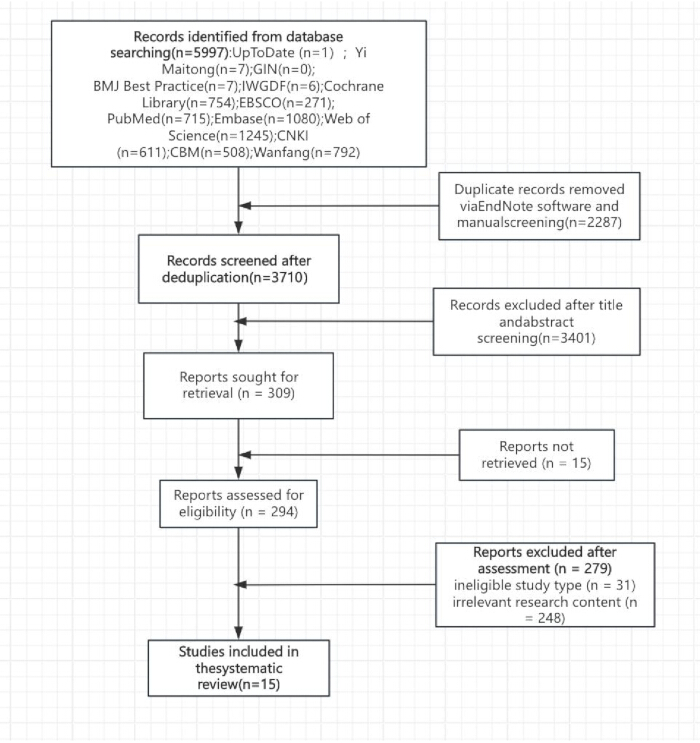
Figure 1: PRISMA 2020 flow diagram. Flow diagram depicting the identification, screening, eligibility assessment, and inclusion process for studies in this systematic review. Records identified from databases (n = 5,997); records screened after duplicates removed (n = 3,710); reports sought for retrieval (n = 309); reports not retrieved (n = 15); reports assessed for eligibility (n = 294); reports excluded after assessment (n = 279): ineligible study type (n = 31), irrelevant research content (n = 248); studies included in synthesis (n = 15). Please click here to view a larger version of this figure.
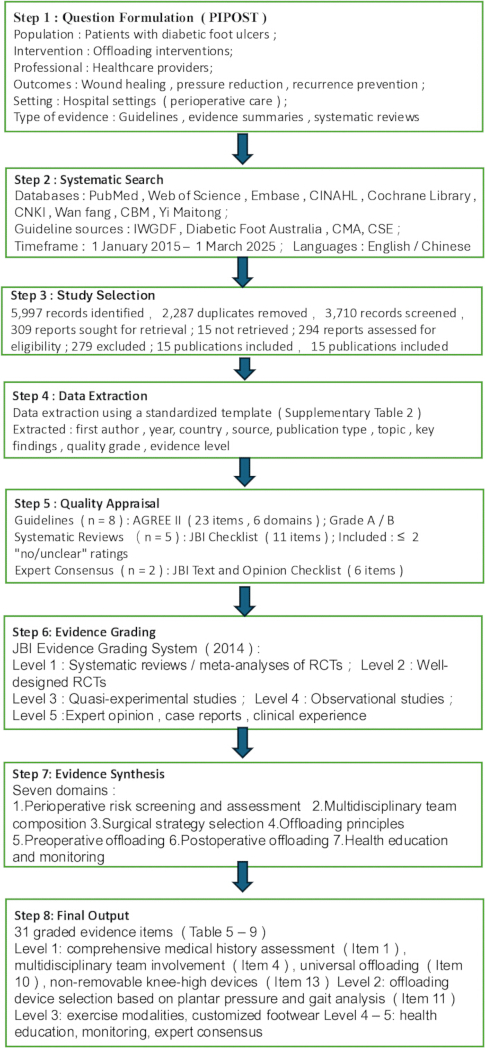
Figure 2: Overall schematic of the systematic review process. Flow diagram illustrating the complete review methodology, from question formulation using the PIPOST framework through systematic search, study selection, data extraction, quality appraisal (AGREE II and JBI checklists), evidence grading (JBI Evidence Grading System, Level 1–5), and evidence synthesis organized into seven clinical domains. The schematic provides an overview of the stepwise approach used to generate the 31 evidence items summarized in Tables 5–9. Please click here to view a larger version of this figure.
| #1 "Diabetic Foot"[Mesh] |
| #2((((Diabetic foot ulcers[Title/Abstract]) OR (Diabetic foot[Title/Abstract])) OR (foot ulcer[Title/Abstract])) OR (nerve foot ulcer[Title/Abstract])) OR (diabetic foot disease[Title/Abstract]) |
| #3 #1 OR #2 |
| #4 "Exercise"[Mesh] |
| #5(((decompression[Title/Abstract]) OR (Exercise[Title/Abstract])) OR (Functional exercise[Title/Abstract])) OR (offloading[Title/Abstract]) |
| #6 #4 OR #5 |
| #7 #3 AND #6 |
Table 1: Search strategy applied in PubMed. Search terms, Boolean operators, and search fields used in PubMed.
| Included Literature | Literature reference | Type of literature | Year of publication (year) | The literature theme |
| Peripheral Vascular Medicine Branch of China International Exchange and Promotive Association for Medical and Health Care et al. (2024) | Chinese Medical Association | Guideline | 2024 | Chinese guidelines for diagnosis and treatment of diabetic foot |
| Chinese Alliance for Diabetic Foot Cell and Interventional Therapy et al. (2024) | Chinese Guidelines Network | Guideline | 2024 | Clinical guidelines for comprehensive diagnosis and treatment of diabetic foot intervention |
| Schaper et al. (2024) | IWGDF | Guideline | 2024 | Prevention and management of diabetes-related foot disease |
| Chinese Diabetes Society (2023) | Yi Maitong | Guideline | 2023 | Clinical pathway for diagnosis and treatment of diabetic foot in China |
| Bus et al. (2024) | IWGDF | Guideline | 2024 | Guidelines on prevention of foot ulcers in persons with diabetes |
| Kaminski et al. (2022) | Web of Science | Guideline | 2022 | Australian guideline on prevention of foot ulceration |
| van Netten et al. (2018) | Web of Science | Guideline | 2018 | Australian guideline on footwear for people with diabetes |
| Bus et al. (2016) | IWGDF | Guideline | 2016 | IWGDF guidance on footwear and offloading interventions |
| Qian et al. (2025) | PubMed | Systematic Review | 2025 | Local management for diabetic foot ulcers |
| Gauna et al. (2024) | PubMed | Systematic Review | 2024 | Offloading systems for neuropathic foot ulcers |
| Lazzarini et al. (2020) | PubMed | Systematic Review | 2020 | Effectiveness of offloading interventions for foot ulcers |
| Matos et al. (2018) | PubMed | Systematic Review | 2018 | Physical activity and exercise on diabetic foot outcomes |
| Elraiyah et al. (2016) | PubMed | Systematic Review | 2016 | Off-loading methods for diabetic foot ulcers |
| Gracia-Sánchez et al. (2023) | PubMed | Expert Consensus | 2023 | Physical activity and exercise in patients with diabetes at risk of foot ulcerations |
| DFU Expert Consensus Group (2020) | Wanfang | Expert Consensus | 2020 | Multidisciplinary cooperation in diabetic foot prevention and treatment |
Table 2: Characteristics of included studies (n = 15). Summary of included publications by literature reference, type of literature, year of publication, and literature theme.
| Guideline | Standardized scores in various domains (%) | Domains ≥60% | Domains ≥30% | Quality evaluation | ||||||
| Scope and purpose | Stakeholder involvement | Rigour of development | Clarity of presentation | Applicability | Editorial independence | |||||
| van Netten et al. (2018) | 61.1 | 69.4 | 64.2 | 75 | 52.1 | 100 | 5 | 6 | B | |
| Peripheral Vascular Medicine Branch et al. (2024) | 97.2 | 83.3 | 71.9 | 72.2 | 72.9 | 75 | 6 | 6 | A | |
| Chinese Alliance for Diabetic Foot Cell and Interventional Therapy et al. (2024 ) | 100 | 91.6 | 69.8 | 86.1 | 68.8 | 83.3 | 6 | 6 | A | |
| Schaper et al. (2024) | 90.3 | 87.5 | 78.1 | 100 | 72.9 | 77.1 | 6 | 6 | A | |
| Chinese Diabetes Society (2023) | 95.8 | 87.5 | 76 | 95.9 | 62.5 | 91.7 | 6 | 6 | A | |
| Bus et al. (2024) | 100 | 93.1 | 98.4 | 98.6 | 78.1 | 100 | 6 | 6 | A | |
| Kaminski et al. (2022) | 98.6 | 94.4 | 95.8 | 98.6 | 87.5 | 100 | 6 | 6 | A | |
| Bus et al. (2016) | 100 | 83.3 | 91.2 | 100 | 72.9 | 97.9 | 6 | 6 | A | |
Table 3: Quality evaluation results of included guidelines (n = 8). Standardized scores across six AGREE II domains, number of domains ≥60% and ≥30%, and overall quality grade (A or B).
| Item | Qian et al. (2025) | Gauna et al. (2024) | Lazzarini et al. (2020) | Matos et al. (2018) | Elraiyah et al. (2016) |
| 1. Clear research question | Yes | Yes | Yes | Yes | Yes |
| 2.Appropriate inclusion criteria | Yes | Yes | Yes | Yes | Yes |
| 3.Adequate search strategy | Yes | Yes | Yes | Yes | Yes |
| 4. Adequate sources of studies | Yes | Unclear | Unclear | Yes | Yes |
| 5.Appropriate quality appraisal criteria | Yes | Yes | Yes | Yes | Yes |
| 6.Independent quality appraisal by ≥2 reviewers | Yes | Yes | Yes | Yes | Yes |
| 7.Appropriate data extraction methods | Yes | Yes | Yes | Yes | Yes |
| 8. Appropriate synthesis methods | Yes | Yes | Yes | Yes | Yes |
| 9.Publication bias assessment | Yes | Yes | Unclear | Unclear | Yes |
| 10.Appropriate recommendations | Yes | Yes | Yes | Yes | Yes |
| 11.Future research directions suggested | Yes | Yes | Yes | Yes | Yes |
Table 4: Quality appraisal of included systematic reviews using JBI checklist (n = 5). Assessment of 11 JBI checklist items for each included systematic review.
| Category | Evidence Content | Level | |||
| Perioperative risk assessment and screening | 1. Comprehensive medical history assessment should include: occupational requirements, family history of diabetes, prior hospitalization history, surgical history, medication allergies, adverse reactions to anesthetics, nutritional status, quality of life, smoking, alcohol use, depression, duration of diabetes, current medications, glycemic status, diabetic complications, comorbidities, other systemic diseases, patient adherence, and treating physician information (Chinese Diabetes Society, 2023; van Netten et al., 2018; DFU Expert Consensus Group, 2020). | 1 | |||
| 2. Comprehensive foot history assessment should include: previous foot conditions, history of foot disease diagnosis and treatment, footwear habits, foot warmth status, exposure to mechanical or chemical agents, lower limb paresthesia or pain, and proximal leg muscle status (van Netten et al., 2018; DFU Expert Consensus Group, 2020). | 5 | ||||
| 3. Ulcer history assessment should include: history of atrophy, weakness, foot deformity, abnormal pressure and callus formation, joint mobility limitation, claudication or rest pain, bilateral or unilateral edema, triggers (irritating events, trauma), duration, recurrence, location, ulcer management status, changes in ulcer dimensions, interference with healing, and use of offloading techniques (Kaminski et al., 2022; Bus et al., 2024; DFU Expert Consensus Group, 2020). | 5 | ||||
Table 5: Perioperative risk screening and assessment. Three evidence items (Items 1–3) on comprehensive medical history, foot history, and ulcer history assessment, with JBI evidence levels ranging from 1 to 5.
| Category | Evidence Content | Level | |||
| Multidisciplinary team | 4. A multidisciplinary team should be established, including specialists from endocrinology, vascular surgery, burn and plastic surgery, general practice, infectious diseases, foot and ankle surgery, orthopedics, traditional Chinese medicine, and specialized nurses (Chinese Diabetes Society, 2023; Chinese Alliance for Diabetic Foot Cell and Interventional Therapy et al., 2024; DFU Expert Consensus Group, 2020). | 1 | |||
| Surgical approach selection | 5. Surgical approach (lower limb revascularization, debridement, skin grafting, amputation, etc.) should be selected based on age, cardiopulmonary function, and wound condition, carefully considering whether the benefits outweigh the risks (DFU Expert Consensus Group, 2020). | 5 | |||
| Principles of offloading management | 6. Wounds should be closed as early as possible to avoid complications such as lower limb disuse atrophy, osteoporosis, deep vein thrombosis, and decreased cardiopulmonary function caused by prolonged wound care (Peripheral Vascular Medicine Branch et al., 2024; Chinese Alliance for Diabetic Foot Cell and Interventional Therapy et al., 2024). | 5 | |||
| 7. Offloading method selection should consider wound clinical assessment results and individual patient needs (Kaminski et al., 2022; Bus et al., 2024; Bus et al., 2016). | 5 | ||||
| 8. The type of offloading device should be selected based on wound location and applied promptly to prevent further development and recurrence (Chinese Diabetes Society, 2023). | 5 | ||||
| 9. For patients with recurrent diabetic foot ulcers where non-surgical prevention is ineffective, surgical offloading should be considered after strictly evaluating surgical indications (Schaper et al., 2024; van Netten et al., 2018; Bus et al., 2024; Gauna et al., 2024; DFU Expert Consensus Group, 2020). | 3 | ||||
Table 6: Multidisciplinary team, surgical strategy, and offloading principles. Six evidence items (Items 4–9) on multidisciplinary team composition, surgical approach selection, and offloading principles, with JBI evidence levels ranging from 1 to 5.
| Category | Evidence Content | Level | |||
| Preoperative foot offloading | 10. Offloading is beneficial for wound healing in both early and late-stage diabetic foot patients, with a very low risk of adverse events (Qian et al., 2025). | 1 | |||
| 11. Based on plantar pressure and gait analysis, offloading devices should be selected appropriately, including custom insoles and socks, therapeutic shoes, total contact casts, instant total contact casts, and removable offloading devices (Lazzarini et al., 2020; van Netten et al., 2018; Gauna et al., 2024). | 2 | ||||
| 12. For non-infected diabetic foot patients, non-weight-bearing exercise for 10–14 min per session should be maintained for at least 8 weeks (DFU Expert Consensus Group, 2020). | 5 | ||||
| 13. For patients with neuropathic plantar forefoot or midfoot ulcers with mild infection or ischemia, non-removable knee-high offloading devices are recommended as the first choice to promote ulcer healing (Lazzarini et al., 2020; Bus et al., 2024; Bus et al., 2016; Elraiyah et al., 2016; DFU Expert Consensus Group, 2020). | 1 | ||||
| 14. When patients have contraindications to or cannot tolerate non-removable knee-high offloading devices, removable knee-high offloading devices with appropriate plantar contact surfaces are recommended as the second choice. When knee-high devices are contraindicated or cannot be tolerated, forefoot offloading shoes, cast shoes, or custom temporary shoes should be considered for treating neuropathic plantar forefoot ulcers. Patients should be encouraged to wear the device consistently (Lazzarini et al., 2020; Bus et al., 2016). | 5 | ||||
| 15. For patients with neuropathic plantar forefoot or midfoot ulcers with moderate to severe infection with or without ischemia, infection and/or ischemia should be addressed first. Removable offloading devices may be considered to promote ulcer healing based on foot function, activity level, and status (Bus et al., 2016). | 5 | ||||
Table 7: Preoperative offloading. Six evidence items (Items 10–15) on preoperative offloading strategies, with JBI evidence levels ranging from 1 to 5.
| Category | Evidence Content | Level | |||
| Postoperative foot offloading | 16. Patients with diabetic foot ulcers should wear medical-grade footwear. Felt foam may be used to reduce plantar pressure and facilitate ulcer healing (Lazzarini et al., 2020; Kaminski et al., 2022; Bus et al., 2016). | 5 | |||
| 17. For patients with infected diabetic foot ulcers, exercise may begin after infection control, local treatment, and negative bacterial culture (DFU Expert Consensus Group, 2020). | 5 | ||||
| 18. All patients should inspect their feet before and after any physical activity (Gracia-Sánchez et al., 2023). | 5 | ||||
| 19. Patients participating in exercise programs demonstrate better quality of life in physical, emotional, and social domains. Multiple effective exercise interventions exist, including balance, strength-based, aerobic exercise, and even multimodal treatment (Matos et al., 2018; Gracia-Sánchez et al., 2023). | 3 | ||||
| 20. For patients requiring frequent dressing changes, removable walking boots and ankle-high walking boots are recommended for offloading (Lazzarini et al., 2020; DFU Expert Consensus Group, 2020). | 5 | ||||
| 21. Early post-intervention patients may consider Buerger-Allen exercises: lying flat, elevate feet 45-60° for 1-3 min; dorsiflexion, plantar flexion, and lateral foot movements; extend and retract toes until foot skin turns pink (2-3 min); rest for 5 min with feet flat and warm; repeat elevation 10 times. Exercise volume should increase gradually, performed 3-4 times daily with intervals >30 min (Chinese Alliance for Diabetic Foot Cell and Interventional Therapy et al., 2024). | 5 | ||||
| 22.Walking exercise for 30 min per session, twice daily, is suggested for post-intervention rehabilitation where tolerated. For those unable to tolerate this duration, walking until pain becomes a limiting factor may be considered as an alternative approach (Chinese Alliance for Diabetic Foot Cell and Interventional Therapy et al., 2024). | 5 | ||||
| 23. Patients with neuropathy should engage in exercise to improve static and dynamic balance, starting with low-to-moderate intensity aerobic exercise appropriate for age and physical characteristics, initially 5-10 min, gradually increasing to 25-30 min daily (Matos et al., 2018; Gracia-Sánchez et al., 2023). | 3 | ||||
| 24. Patients with IWGDF grade 3 open ulcers without PAD should perform seated or supine stretching and strengthening exercises, including ankle range of motion, plantar flexion, dorsiflexion, inversion, eversion, and toe flexion, at least 3 times weekly or every other day. All activities should be adjusted according to patient characteristics (Gracia-Sánchez et al., 2023). | 5 | ||||
| 25. Patients with IWGDF grade 3 ulcers and ulcer history within the previous 15 days should start with activities of daily living, at least 10 min daily, using plantar orthotics and technical aids (such as crutches), gradually increasing over the next 15 days based on physical condition (Peripheral Vascular Medicine Branch et al., 2024; Kaminski et al., 2022; Bus et al., 2024; Gracia-Sánchez et al., 2023). | 3 | ||||
| 26. Plantar pressure and gait analysis should be performed to prescribe appropriate therapeutic shoes, insoles, socks, and orthotics to delay disease progression and reduce DFU incidence. Patients should be encouraged to wear prescribed footwear consistently both indoors and outdoors (Peripheral Vascular Medicine Branch et al., 2024; Kaminski et al., 2022; Bus et al., 2024; Bus et al., 2016; Elraiyah et al., 2016; Gracia-Sánchez et al., 2023; DFU Expert Consensus Group, 2020). | 3 | ||||
Table 8: Postoperative offloading. Eleven evidence items (Items 16–26) on postoperative offloading, exercise, and rehabilitation, with JBI evidence levels ranging from 3 to 5.
| Category | Evidence Content | Level | |||
| Health education and monitoring | 27. Continuous health education should be provided by specialized diabetic foot care professionals to patients, family members, and caregivers, focusing on diabetes-related foot disease knowledge and foot care (Chinese Diabetes Society, 2023; Chinese Alliance for Diabetic Foot Cell and Interventional Therapy et al., 2024; Schaper et al., 2024; van Netten et al., 2018). | 5 | |||
| 28. Blood glucose should be controlled and self-monitored. Recommended glycemic control targets are HbA1c <7.0%, fasting blood glucose <7.8 mmol/L, and random blood glucose <10.0 mmol/L. Standards may be relaxed for patients with hypoglycemic reactions or elderly patients (Chinese Alliance for Diabetic Foot Cell and Interventional Therapy et al., 2024). | 5 | ||||
| 29. Comprehensive foot care should be provided to patients with diabetic foot ulcers to help prevent recurrent foot ulcers (Bus et al., 2024). | 5 | ||||
| 30. Diabetic foot ulcer size and progression should be assessed every 1–4 weeks (DFU Expert Consensus Group, 2020). Patients should be encouraged to inspect foot color and skin integrity daily and perform daily home monitoring of skin temperature on both feet using infrared thermometers. Intervention is required when temperature difference between feet exceeds 2.2 °C (Kaminski et al., 2022; Chinese Alliance for Diabetic Foot Cell and Interventional Therapy et al., 2024; Bus et al., 2024). | 5 | ||||
| 31. After foot ulcers have healed, patients should alternate new footwear with the offloading devices used for healing, and remain vigilant in checking foot health status (van Netten et al., 2018). If abnormalities occur, patients should consult adequately trained healthcare professionals for further diagnosis and treatment (Bus et al., 2024). | 5 | ||||
Table 9: Health education and monitoring. Five evidence items (Items 27–31) on health education, glycemic control, foot care, and remote monitoring, with JBI evidence Level 5.
Supplementary Table 1: Full search strategies for all databases. Search terms and Boolean operators used in PubMed, Web of Science, Embase, Cochrane Library, CINAHL, CNKI, Wanfang Data, CBM, and Yi Maitong.Please click here to download this file.
Supplementary Table 2: Data extraction template. Standardized form used to extract data from each included publication.Please click here to download this file.
Supplementary Table 3: Quality appraisal of included studies and summary of evidence items with JBI grades. AGREE II domain scores for the 8 included guidelines, JBI critical appraisal results for the 5 included systematic reviews, and all 31 evidence items with their corresponding JBI evidence levels (1–5).Please click here to download this file.
Discussion
This review synthesized evidence from 15 publications, generating 31 evidence items across seven domains. To the authors’ knowledge, it is the first evidence summary to focus specifically on the perioperative period—a setting largely overlooked in previous offloading reviews that focused on outpatient or community populations14,15. Several cross-cutting themes emerged from the synthesis: systematic risk stratification and multidisciplinary collaboration are foundational; offloading device selection must be tailored to individual wound characteristics and patient factors; postoperative mobilization should follow structured, clearly defined protocols; and consistent patient education, reinforced by remote monitoring, is critical for preventing recurrence.
The highest-level evidence (Level 1) supports comprehensive medical history assessment (Item 1) and multidisciplinary team involvement (Item 4) as non-negotiable prerequisites for effective perioperative offloading. Level 1 evidence also supports universal offloading (Item 10) and non-removable knee-high devices as first-line treatment for neuropathic plantar ulcers (Item 13). This finding is consistent with the broader evolution of DFU care away from episodic, specialist-centered models and toward integrated, team-based chronic disease management1,2. Multidisciplinary teams in this context typically bring together endocrinologists, vascular and orthopedic surgeons, infectious disease specialists, wound care nurses, and other allied health professionals—a composition that reflects the multisystem nature of diabetic foot disease. Crucially, glycemic control, perfusion, infection clearance, and mechanical offloading must be addressed in parallel rather than sequentially24,27. Specialized nurses take primary responsibility for perioperative foot assessment, device application, patient education, and care continuity across transitions28,29. Implementation faces substantial barriers, including limited specialist availability and inadequate reimbursement; standardized protocols and designated care coordinators may enable more effective DFU care10. The risk assessment framework in Items 1–3 provides a structured method for identifying patients at elevated perioperative risk, extending beyond wound classification to include treatment adherence, cognitive status, and social support3,9.
Items 10–15 and 16–20 provide graded recommendations for offloading device selection across pre- and postoperative phases. Non-removable knee-high devices consistently emerge as the gold standard for neuropathic plantar forefoot and midfoot ulcers, with meta-analyses confirming higher healing rates and shorter healing times than removable alternatives10,16,30,31,32. The pragmatic stepped-care approach in Item 14 provides a clinically useful algorithm that recognizes offloading selection as dynamic rather than a one-time decision. The inclusion of therapeutic exercise recommendations (Items 12, 19, 21–25) extends the offloading paradigm beyond passive device use. However, evidence from exercise is generally of a lower level (3–5), and studies show substantial heterogeneity in protocols, dosing, and outcome measures25,26, which underscores the need for well-powered RCTs of perioperative exercise in DFU populations.
Items 27–31 place strong emphasis on structured health education and continuous monitoring to prevent DFU recurrence—a particularly pressing concern given the 65% recurrence rate observed within 3–5 years of initial healing3. A range of educational modalities was identified in the literature, including individual counseling, motivational interviewing, group sessions, video instruction, written materials, mobile apps, and visual aids. This diversity offers nurses a flexible set of tools that can be adapted to meet the needs of different patient populations5,33. The emphasis on cultural adaptation and health literacy-appropriate materials acknowledges sociocultural determinants of health behavior and reinforces the importance of patient-centered communication in diabetes education34,35. Home-based infrared thermometry (Item 30) represents an innovative, technology-enabled approach to recurrence surveillance, with a specific temperature threshold of 2.2 °C providing a clear, actionable trigger for intervention2. This strategy aligns with the broader shift toward remote monitoring and telehealth-supported chronic disease management.
This review extends the evidence base in three unique ways: first, by focusing on perioperative context previously under-recognized in offloading reviews10,14,15; second, by organizing evidence into seven clinically actionable domains that mirror the patient journey; third, by expanding the offloading paradigm to include postoperative exercise and remote monitoring. Several limitations warrant mention: most evidence items were Level 4–5, reflecting the predominance of expert consensus and observational data; the restriction to English- and Chinese-language publications may have introduced language bias, and this is acknowledged as a limitation of the review. Most included guidelines came from Western healthcare systems. Furthermore, although the search strategy combined MeSH terms and free-text terms and was adapted for each database, it may not have captured all relevant literature, as more specific terms such as "pressure redistribution," "plantar pressure," "total contact cast," "therapeutic footwear," "perioperative care," "surgical offloading," and "pressure relief" were not all explicitly included. This may have resulted in the omission of some potentially relevant studies. In addition, the review protocol was registered in a local institutional registry rather than PROSPERO, which is acknowledged as a limitation. Future research should prioritize RCTs comparing device sequences, implementation studies in diverse settings, and qualitative research exploring patient perspectives on device acceptability. Other study designs could also contribute meaningfully to this field. Prospective cohort studies would be well-suited to track long-term adherence and recurrence patterns, while cost-effectiveness analyses could help determine the value of multidisciplinary offloading programs. Mixed-methods research could further clarify how patient-reported barriers and preferences interact with clinical decision-making in perioperative offloading care. These findings have direct implications for perioperative nursing practice. Nurses should take a central role in risk assessment, multidisciplinary coordination, individualized device selection, structured patient education, and monitoring of adherence and wound progression. Healthcare institutions should develop standardized offloading care pathways based on these recommendations, supported by staff training programs.
Disclosures
The authors declare no conflicts of interest.
Acknowledgements
This work was supported by the Traditional Chinese Medicine Science and Technology Program of Zhejiang Province under Grant No. 2026ZL0450. The authors also acknowledge the Department of Nursing, The First Affiliated Hospital, Zhejiang University School of Medicine, for providing institutional support.
Materials
| Name | Company | Catalog Number | Comments |
|---|---|---|---|
| AGREE II Instrument | AGREE Research Trust | — | |
| EndNote X9 | Clarivate Analytics | Version X9 | |
| JBI Critical Appraisal Checklist for Systematic Reviews and Research Syntheses | Joanna Briggs Institute | 2016 version | |
| JBI Critical Appraisal Checklist for Text and Opinion Papers | Joanna Briggs Institute | 2016 version | |
| JBI Evidence Grading System | Joanna Briggs Institute | 2014 version | |
| Microsoft Excel for Microsoft 365 | Microsoft Corporation | — | |
| PRISMA 2020 Statement | EQUATOR Network | — |
References
- Schaper NC et al. Practical guidelines on the prevention and management of diabetes-related foot disease (IWGDF 2023 update). Diabetes Metab Res Rev. 2024;40(3):e3657.
- Armstrong DG, Tan TW, Boulton AJM, Bus SA. Diabetic foot ulcers: a review. JAMA. 2023;330(1):62–75.
- McDermott K et al. Etiology, epidemiology, and disparities in the burden of diabetic foot ulcers. Diabetes Care. 2023;46(1):209–21.
- Armstrong DG, Boulton AJM, Bus SA. Diabetic Foot Ulcers and Their Recurrence. N Engl J Med. 2017;376(24):2367–75.
- Lo ZJ, Surendra NK, Saxena A, Car J. Clinical and economic burden of diabetic foot ulcers: A 5-year longitudinal multi-ethnic cohort study from the tropics. Int Wound J. 2021;18(3):375–86.
- Senneville É et al. IWGDF/IDSA guidelines on the diagnosis and treatment of diabetes-related foot infections (IWGDF/IDSA 2023). Diabetes Metab Res Rev. 2024;40(3):e3687.
- Fernando ME et al. Plantar pressures are elevated in people with longstanding diabetes-related foot ulcers during follow-up. PLoS One. 2017;12(8):e0181916.
- Ren Y et al. Advancements in diabetic foot insoles: a comprehensive review of design, manufacturing, and performance evaluation. Front Bioeng Biotechnol. 2024;12:1394758.
- Jones K, Backhouse MR, Bruce J. Rehabilitation for people wearing offloading devices for diabetes-related foot ulcers: a systematic review and meta-analyses. J Foot Ankle Res. 2023;16(1):16.
- Lazzarini PA et al. Effectiveness of offloading interventions to heal foot ulcers in persons with diabetes: a systematic review. Diabetes Metab Res Rev. 2020;36(Suppl 1):e3275.
- Lazzarini PA, van Netten JJ. Best practice offloading treatments for diabetic foot ulcer healing, remission, and better plans for the healing-remission transition. Semin Vasc Surg. 2025;38(1):110–20.
- Bus SA et al. Guidelines on offloading foot ulcers in persons with diabetes (IWGDF 2023 update). Diabetes Metab Res Rev.2024;40(3): e3647.
- Xu J et al. Advances in the application of offloading devices in diabetic neuropathic foot ulcers. Chin J Gerontol. 2022;42(1):234–8.
- Kaminski MR et al. Australian guideline on prevention of foot ulceration: part of the 2021 Australian evidence-based guidelines for diabetes-related foot disease. J Foot Ankle Res. 2022;15(1):53.
- Bus SA et al. Guidelines on the prevention of foot ulcers in persons with diabetes (IWGDF 2023 update). Diabetes Metab Res Rev.2024; 40(3):e3651.
- Gauna C et al. Offloading systems for the treatment of neuropathic foot ulcers in patients with diabetes mellitus: a meta-analysis of randomized controlled trials for the development of the Italian guidelines for the treatment of diabetic foot syndrome. Acta Diabetol. 2024;61(6):693–703.
- Aromataris E et al. Summarizing systematic reviews: methodological development, conduct and reporting of an umbrella review approach. Int J Evid Based Healthc. 2015;13(3):132–40.
- Page MJ et al. The PRISMA 2020 statement: an updated guideline for reporting systematic reviews. BMJ. 2021;372:n71.
- Zhu Z, Hu Y, Zhou YF, Xing WJ. Promoting evidence translation into clinical practice (III): topic selection and question formulation. J Nurs Train. 2020;35(9):796–9.
- DiCenso A, Bayley L, Haynes RB. Accessing pre-appraised evidence: fine-tuning the 5S model into a 6S model. Evid Based Nurs.2009;12(4):99–101.
- Brouwers MC et al. AGREE II: advancing guideline development, reporting and evaluation in health care. CMAJ. 2010;182(18):E839–42
- McArthur A, Klugárová J, Yan H, Florescu S. Innovations in the systematic review of text and opinion. Int J Evid Based Healthc.2015;13(3):188–95.
- Wang CQ, Hu Y. JBI evidence pre-grading and evidence recommendation level system (2014 version). J Nurs Train.2015;30(11):964–7.
- DFU Expert Consensus Group. Multidisciplinary cooperation in the prevention and treatment of diabetic foot: expert consensus (2020 edition). Chin J Burns. 2020;36(8):E01–E52.
- Matos M, Mendes R, Silva AB, Sousa N. Physical activity and exercise on diabetic foot related outcomes: a systematic review. Diabetes Res Clin Pract. 2018;139:81–90.
- Gracia-Sánchez A et al. Consensus-based recommendations on physical activity and exercise in patients with diabetes at risk of foot ulcerations: a Delphi study. Braz J Phys Ther. 2023;27(2):100500.
- Peripheral Vascular Medicine Branch of China International Exchange and Promotive Association for Medical and Health Care. Chinese guidelines for diagnosis and treatment of diabetic foot. Chin J Clinicians. 2024;52(11):1287–96
- van Netten JJ et al. Diabetic Foot Australia guideline on footwear for people with diabetes. J Foot Ankle Res. 2018;11:2
- Chinese Diabetes Society. Clinical pathway for diagnosis and treatment of diabetic foot in China (2023 edition). Chin J Endocrinol Metab. 2023;39(2):93–102.
- Bus SA et al. IWGDF guidance on footwear and offloading interventions to prevent and heal foot ulcers in patients withdiabetes. Diabetes Metab Res Rev. 2016;32(Suppl 1):25–36.
- Elraiyah T et al. A systematic review and meta-analysis of off-loading methods for diabetic foot ulcers. J Vasc Surg. 2016;63(2Suppl):59S–68S.e1–2.
- Lazzarini PA et al. Effectiveness of offloading interventions forpeople with diabetes-related foot ulcers: a systematic review andmeta- analysis. Diabetes Metab Res Rev. 2024;40(3):e3650.
- Li LY et al. Research progress on comprehensive management of diabetic foot. Chin Nurs Manag. 2022;22(8):1271–5.
- Krag M et al. The impact of gender on the long-term morbidityand mortality of patients with type 2 diabetes receivingstructured personal care: a 13 year follow-up study. Diabetologia.2016;59(2):275–85.
- Qian H et al. Local management for diabetic foot ulcers: a systematic review and network meta-analysis of randomized controlled trials. Ann Surg. 2025;281(2):243–51.