This narrative review examines traditional Chinese medicine as adjunctive care in cancer and rheumatoid arthritis, integrating evidence on supportive care, disease-specific mechanisms, clinical applications, safety, and evidence gaps. It emphasizes disease-specific interpretation and distinguishes mechanistic plausibility from clinically meaningful benefit.
Review Article
Traditional Chinese Medicine as Adjunctive Care in Cancer and Rheumatoid Arthritis: A Narrative Review of Shared Frameworks and Evidence Gaps
In This Article
Summary
Abstract
Traditional Chinese medicine (TCM) has increasingly been investigated as an adjunctive approach to conventional treatment in chronic and complex diseases, including cancer and rheumatoid arthritis (RA). Although cancer and RA differ substantially in pathogenesis and therapeutic goals, both are associated with persistent symptom burden, treatment-related adverse effects, impaired physical function, psychological distress, and long-term supportive-care needs. This narrative review evaluates TCM within this shared adjunctive-care framework while maintaining disease-specific interpretation of the available evidence. In cancer, TCM-related interventions have been investigated for supportive symptom management, pain relief, treatment tolerance, quality-of-life improvement, and potential modulation of biological processes, including apoptosis, angiogenesis, immune regulation, invasion, metastasis, and multidrug resistance. In RA, Chinese herbal medicines, acupuncture, and related approaches have been evaluated for their potential effects on pain, inflammation, physical function, bone remodeling, and early disease-related processes. TCM-related mind-body practices, such as qigong and tai chi, may also provide psychological support, whereas mindfulness-based interventions are considered supportive-care strategies rather than TCM interventions. Current evidence ranges from mechanistic and preclinical studies to observational studies, single-arm clinical studies, randomized controlled trials, systematic reviews, and meta-analyses, with substantial variation in methodological quality. Overall, TCM should be considered a potential complement to, rather than a replacement for, established oncological or rheumatological treatment. Further well-designed clinical studies, standardized interventions, rigorous quality control, safety monitoring, and clinically meaningful outcome assessment are required to define its appropriate role in multidisciplinary care.
Introduction
Traditional Chinese medicine (TCM) has a long history of clinical use and has increasingly been investigated as a complementary or adjunctive component of contemporary medical care. In rheumatoid arthritis (RA), Chinese herbal medicines and other TCM-related interventions have been evaluated in combination with conventional disease-modifying antirheumatic therapy, with particular attention to pain, inflammation, physical function, and treatment-related outcomes1. In oncology, traditional herbal medicine has likewise been investigated alongside conventional anticancer treatment, particularly for symptom management, treatment tolerance, quality of life, and potential modulation of cancer-related biological pathways2. These applications have generated growing interest in whether selected TCM interventions can contribute to multidisciplinary care without replacing established disease-specific treatment.
The term “adjuvant treatment” requires clarification because its clinical meaning differs between oncology and RA. In oncology, adjuvant therapy conventionally refers to additional treatment administered after primary definitive therapy to reduce the risk of recurrence. However, much of the TCM literature uses the term more broadly to describe interventions administered during or alongside surgery, chemotherapy, radiotherapy, targeted therapy, immunotherapy, or other anticancer treatments. In this broader context, potential objectives include alleviating treatment-related symptoms, improving treatment tolerance and quality of life, and investigating whether TCM-derived interventions influence treatment response or cancer-related biological processes. In RA, “adjuvant treatment” is not a disease-stage-specific concept in the same sense; rather, it refers here to TCM interventions added to standard rheumatological management to support pain and inflammation control, physical function, and treatment-related well-being. Throughout this review, therefore, “adjunctive care” refers to treatment used alongside standard care and does not imply replacement of established oncological or rheumatological therapy.
Cancer and RA are biologically distinct diseases and should not be combined on the assumption that they share a common pathogenesis. Their inclusion in the present review is instead based on a shared question about adjunctive care. Both conditions frequently require prolonged or multimodal treatment and may be accompanied by persistent symptoms, treatment-related adverse effects, functional impairment, and psychological burden. TCM-related approaches may therefore be considered across several comparable domains, including symptom and supportive care, proposed immune-inflammatory or other biological mechanisms, integration with conventional treatment, safety, and long-term patient well-being. At the same time, disease-specific therapeutic goals must remain distinct: cancer-related evidence should be interpreted in relation to symptom control, treatment tolerance, quality of life, and potential antitumor mechanisms, whereas RA-related evidence should be interpreted primarily in relation to pain, inflammation, physical function, structural damage, and possible disease-modifying effects.
Psychological and behavioral support represents another relevant component of this framework, although it should not be conflated with TCM pharmacotherapy. TCM-related mind-body practices such as qigong and tai chi have been evaluated for psychological outcomes in patients with cancer, with systematic review evidence suggesting potential improvement in anxiety and depressive symptoms3. Mindfulness-based interventions, although not themselves TCM, provide complementary evidence for the broader mind-body supportive-care model. Meta-analytic evidence suggests potential benefits for anxiety, depression, and quality of life among patients with malignant tumors4, while evidence in RA suggests improvement in depressive symptoms but less consistent effects on anxiety5. These findings support the consideration of psychological well-being within multidisciplinary care and emphasize the need to distinguish TCM-specific interventions from other supportive approaches.
Importantly, the evidence supporting different TCM interventions is not uniform. Mechanistic and cell- or animal-based investigations can provide biological plausibility but cannot establish clinical effectiveness. Observational studies and small non-randomized or single-arm clinical studies provide preliminary clinical information but remain vulnerable to confounding and bias, whereas randomized controlled trials and systematic reviews or meta-analyses generally provide stronger comparative evidence when the underlying studies are methodologically robust. This narrative review, therefore, evaluates not only reported therapeutic effects but also study design, evidence strength, safety, intervention standardization, and the distinction between mechanistic plausibility and clinically meaningful benefit.
The objectives of the present review are: (1) To critically review TCM as adjunctive care in cancer and RA within a shared framework encompassing symptom and supportive care, proposed biological mechanisms, and integration with conventional treatment. (2) To distinguish the strengths and limitations of evidence derived from preclinical studies, observational and single-arm studies, randomized controlled trials, systematic reviews, and meta-analyses. (3) To identify major challenges related to clinical effectiveness, safety, herb-drug interactions, product standardization, quality control, and future research priorities.
Review and Perspective
Literature identification and selection
Relevant literature was identified through searches of PubMed/MEDLINE, Embase, Web of Science Core Collection, and Scopus, with primary emphasis on studies published from January 2016 through September 2026. Earlier publications were considered when they provided important methodological guidance or foundational evidence directly relevant to the review framework. Search concepts included combinations of terms related to traditional Chinese medicine, Chinese herbal medicine, acupuncture, qigong, tai chi, cancer, oncology, rheumatoid arthritis, adjunctive treatment, complementary treatment, supportive care, quality of life, safety, quality control, and herb-drug interactions. Reference lists of relevant reviews and key publications were also examined to identify additional studies directly relevant to the topics discussed.
As this was a narrative review, study identification and selection were guided by relevance to the article's thematic framework. Priority was given to peer-reviewed systematic reviews, meta-analyses, randomized controlled trials, clinical practice guidelines, observational or prospective clinical studies, and selected mechanistic or preclinical reviews that directly informed the biological pathways discussed in the manuscript. Preference was generally given to more recent and higher-level clinical evidence when multiple publications addressed the same question. Literature focused exclusively on unrelated diseases or conventional Western interventions without a clear connection to TCM-related adjunctive care in cancer or rheumatoid arthritis was excluded.
Representative studies were selected to illustrate different levels of evidence, therapeutic objectives, supportive care applications, mechanistic hypotheses, safety considerations, and evidence gaps. Clinical conclusions were based preferentially on comparative studies, systematic reviews, meta-analyses, and evidence-based guidelines.
Shared supportive care and mind-body context
Psychological and functional burden is an important component of supportive care in both cancer and rheumatoid arthritis (RA), although its causes and clinical manifestations differ between the two diseases. Patients with cancer may experience anxiety, depressive symptoms, uncertainty, fatigue, pain, and impaired quality of life during diagnosis and treatment, whereas patients with RA frequently face persistent pain, fatigue, functional restriction, and psychological distress associated with chronic disease. Within an adjunctive-care framework, these outcomes are clinically relevant because complementary interventions may be evaluated not only for disease-specific biological effects but also for their potential contributions to symptom control, coping, self-management, and quality of life.
Among TCM-related mind-body practices, tai chi and qigong have been investigated for psychological and supportive-care outcomes in patients with cancer. Systematic review evidence suggests that these interventions may reduce anxiety and depressive symptoms and may provide additional benefits for selected quality-of-life outcomes3. These findings support a potential role for tai chi and qigong as components of supportive care; however, improvement in psychological or functional outcomes should not be interpreted as evidence of direct antitumor activity.
Mindfulness-based interventions provide additional evidence for the broader mind-body supportive-care model, although mindfulness should be distinguished from TCM itself. Meta-analytic evidence in patients with malignant tumors suggests potential improvements in anxiety, depression, and quality of life4. Similar research in RA has reported improvement in depressive symptoms, although effects on anxiety have been less consistent5. Accordingly, mindfulness-based interventions are considered here as evidence for contextual supportive care rather than as TCM-specific therapy.
These distinctions are important when interpreting the literature. TCM-related mind-body practices, general psychosocial interventions, herbal medicines, acupuncture, and pharmacologically active TCM-derived compounds differ substantially in therapeutic objectives, intervention characteristics, and evidence base.
TCM as adjunctive care in cancer
TCM-related interventions in oncology have been investigated across substantially different levels of evidence, ranging from experimental studies of tumor biology to clinical studies focused on symptoms, treatment tolerance, and quality of life. These types of evidence should be interpreted separately. Mechanistic and preclinical findings may identify plausible biological targets, whereas clinical evidence is required to determine whether a specific intervention provides meaningful benefit to patients.
Mechanistic and preclinical evidence
Mechanistic and preclinical studies have proposed multiple pathways through which TCM-derived compounds or formulations may influence cancer biology. Reported targets include tumor-cell proliferation, apoptosis, angiogenesis, immune regulation, invasion and metastasis, cellular metabolism, and intracellular signaling pathways associated with tumor progression6. These findings are consistent with the multi-component and multi-target characteristics frequently attributed to TCM formulations. However, most such observations originate from cell-based or animal studies and should therefore be interpreted as evidence of biological plausibility rather than confirmation of clinical antitumor efficacy.
Multidrug resistance (MDR) is a particular area of interest because resistance to systemic anticancer therapy remains a major obstacle to durable treatment response. Proposed mechanisms include altered transmembrane drug transport, adaptation to the tumor microenvironment, hypoxia-related responses, enhanced DNA repair, reduced apoptosis, epithelial-mesenchymal transition (EMT), cancer stem-cell characteristics, and dysregulated signaling pathways7. TCM-derived compounds have been investigated for modulation of these processes, including drug-efflux pathways, but evidence for clinically relevant reversal of drug resistance remains limited.
Proposed anticancer mechanisms of TCM include modulation of multidrug resistance, apoptosis, angiogenesis, invasion and metastasis, immune activity, and intracellular signaling networks (Figure 1). P-glycoprotein (P-gp) and multidrug resistance proteins (MRPs) are ATP-binding cassette transporters involved in drug efflux, whereas death-receptor signaling can activate caspases involved in apoptosis. These pathways represent mechanistic hypotheses and should not be interpreted as evidence of clinical antitumor efficacy6.
Clinical and supportive applications
Clinical evidence is most relevant to patient-centered outcomes such as pain, treatment-related symptoms, treatment tolerance, psychological well-being, and quality of life. These supportive outcomes should be distinguished from direct antitumor efficacy. Cancer pain is one area in which acupuncture has received comparatively structured clinical evaluation. An evidence-based clinical practice guideline developed using the Grading of Recommendations Assessment, Development and Evaluation (GRADE) framework recommended acupuncture over no acupuncture for patients with moderate-to-severe cancer pain and provided more cautious recommendations for acupuncture or acupressure combined with analgesic therapy to reduce pain intensity, opioid requirements, and opioid-related adverse effects8. These findings support acupuncture as a potential adjunct within multidisciplinary pain management, but they do not justify replacing established pharmacological analgesia with TCM-related approaches.
Real-world patterns of TCM use also illustrate its predominantly adjunctive role in oncology. In an observational survey of 287 Chinese oncology outpatients, 84% of participants who used TCM reported using it as an adjunct to cancer treatment, while more than half had also used TCM for non-cancer conditions9. Patients’ beliefs regarding efficacy and familiarity with herbal medicines were associated with their patterns of use. Because this study examined beliefs and utilization rather than treatment outcomes, it provides useful information regarding patient acceptance and clinical context but should not be interpreted as evidence that TCM improves tumor control or survival.
Evidence syntheses have further evaluated the use of TCM in combination with conventional anticancer treatment. In patients with breast cancer, a systematic review and meta-analysis reported that integrated TCM and conventional Western treatment may improve selected quality-of-life outcomes and reduce some treatment-related adverse reactions compared with conventional treatment alone10. However, substantial variation in TCM formulations, conventional treatment regimens, study quality, and outcome assessment limits the certainty and generalizability of these findings. Similar methodological concerns apply across much of the clinical TCM literature in oncology.
Overall, the most clinically defensible roles of TCM-related interventions in cancer currently lie in supportive care rather than established direct anticancer treatment. Improvements in pain, symptom burden, treatment tolerance, or quality of life may be clinically meaningful in their own right, but claims regarding tumor regression, prevention of recurrence, or prolongation of survival require separate and substantially stronger clinical evidence.
Emerging translational strategies
In addition to conventional herbal formulations and acupuncture-based approaches, several emerging research strategies aim to improve the characterization, delivery, and mechanistic interpretation of TCM-derived interventions. These approaches may help address some limitations associated with complex chemical composition, variable bioavailability, and uncertain active components; however, most remain at the translational or methodological stage rather than representing established clinical therapies.
One developing strategy is Chinese medicine self-assembly nanotechnology. Certain TCM-derived bioactive components can form self-assembled nanoparticles through noncovalent interactions, and these systems have been investigated as potential means to improve the solubility, stability, bioavailability, or delivery of selected compounds11. Such physicochemical advantages may facilitate future drug-development research, but evidence of improved formulation or delivery should not be interpreted as evidence of improved cancer-related clinical outcomes.
The interaction between TCM and the gut microbiota represents another area of growing interest. Reviews focusing on colorectal cancer have proposed bidirectional relationships among herbal interventions, intestinal microbial communities, inflammatory and metabolic pathways, and treatment response12. These findings suggest that microbiomes may contribute to some biological effects associated with TCM; nevertheless, differences in herbal formulations, host characteristics, sequencing methods, and microbiome endpoints currently limit reproducibility. Prospective clinical studies using standardized interventions and predefined microbiome outcomes are required to clarify the clinical relevance of these proposed interactions.
A further methodological framework is active metabolite combination therapy (AMCT), which seeks to identify combinations of bioactive metabolites and characterize their potential synergistic effects using molecular biology, pharmacology, analytical chemistry, multi-omics approaches, network modeling, and artificial intelligence13. This strategy may help clarify which constituents contribute to the biological activity of complex TCM formulations and may improve reproducibility and mechanistic interpretation. At present, however, AMCT should be regarded as a research framework for the scientific characterization and development of TCM rather than as an established form of cancer therapy.
Collectively, these emerging approaches illustrate a shift from describing TCM formulations as undifferentiated multi-component interventions toward identifying specific active constituents, delivery systems, biological pathways, and treatment-response mechanisms. Their future value will depend on whether advances in formulation and mechanistic characterization can be linked to reproducible, clinically meaningful outcomes.
Interpretation of cancer evidence
Taken together, the oncology literature suggests that the potential role of TCM varies substantially depending on the outcome considered. Mechanistic and preclinical studies identify numerous candidate pathways through which TCM-derived compounds may influence tumor biology, whereas clinical evidence is currently more directly supportive of selected symptom-oriented and quality-of-life outcomes than of direct antitumor effects. These evidence categories should therefore remain clearly separated.
A central challenge is the gap between mechanistic plausibility and reproducible clinical benefit. Demonstration that a compound affects apoptosis, angiogenesis, drug-efflux proteins, immune signaling, or another cancer-related pathway does not establish that the corresponding intervention improves tumor response, recurrence, progression-free survival, or overall survival. Likewise, improvements in pain or quality of life should not be presented as evidence of disease control, even though such supportive outcomes may be clinically important.
Future clinical research should therefore define the intended role of each TCM intervention before evaluating its effectiveness. Studies designed for symptom relief should use validated symptoms and quality-of-life outcomes, whereas studies proposing effects on anticancer treatment response should incorporate objective tumor-related endpoints and appropriate comparator groups. Standardization of herbal formulations, documentation of concomitant anticancer treatment, adequate sample size, prospective safety monitoring, and sufficiently long follow-up will be essential for determining which interventions provide clinically meaningful adjunctive benefit.
This interpretation also supports a more selective approach to future TCM oncology research: rather than asking whether “TCM” is effective for cancer as a broad category, studies should identify specific interventions, specific clinical objectives, and clearly defined patient populations. Such an approach may help distinguish interventions with realistic supportive-care value from those requiring substantially stronger evidence before claims of direct anticancer activity can be justified.
TCM as adjunctive care in rheumatoid arthritis
Rheumatoid arthritis (RA) is a chronic autoimmune inflammatory disease characterized by persistent synovitis, pain, functional impairment, and progressive structural damage. Current international management recommendations emphasize early initiation and appropriate adjustment of disease-modifying antirheumatic drugs (DMARDs) to achieve sustained control of disease activity14. Conventional pharmacological treatment, therefore, remains the foundation of RA management.
Within this framework, TCM has been investigated primarily as an adjunct to DMARD therapy, including herbal formulations, acupuncture, and related external therapies. Clinical and mechanistic evidence should be interpreted separately because symptomatic improvement does not establish structural protection or durable disease modification.
Clinical evidence for adjunctive symptom management
Clinical evidence for TCM in established RA has primarily evaluated herbal medicines or acupuncture as additions to conventional therapy. An earlier systematic review and meta-analysis found that Chinese herbal medicines, when combined with conventional DMARDs, may improve several RA-related clinical outcomes compared with conventional treatment alone1. More recently, a systematic review and meta-analysis of 36 randomized controlled trials involving 6,934 participants evaluated TCM decoctions as adjunctive treatment for RA and reported improvements in overall clinical response and several measures of inflammatory activity, including erythrocyte sedimentation rate, C-reactive protein, rheumatoid factor, swollen joint count, Disease Activity Score, and morning stiffness15. Nevertheless, the authors emphasized methodological limitations and the need for larger multicenter randomized trials.
Taken together, these findings suggest that selected herbal formulations may have potential as adjunctive interventions in RA, particularly when used alongside established pharmacological treatment. However, considerable variation exists in herbal composition, dose, treatment duration, background DMARD therapy, patient characteristics, and outcome definitions. The term “TCM decoction” therefore does not represent a single standardized intervention, and pooled positive findings should not be generalized indiscriminately to all herbal formulations.
Acupuncture and related techniques have also been evaluated for symptom-oriented management. A systematic review and meta-analysis reported potential benefits of acupuncture-related interventions in patients with RA16. More recent network meta-analytic evidence comparing electroacupuncture, conventional acupuncture, sham procedures, and conventional treatment suggest that electroacupuncture and conventional acupuncture may reduce RA-related pain, while also highlighting the importance of an appropriate sham-control design when interpreting acupuncture trials17. These findings are most relevant to pain and supportive symptom management and should not be interpreted as evidence that acupuncture prevents radiographic progression or replaces disease-modifying therapy.
Overall, the current clinical evidence supports further investigation of herbal medicine and acupuncture as components of multimodal RA care. Future trials should clearly document background DMARD therapy, standardize the TCM intervention, and distinguish patient-reported symptomatic outcomes from validated measures of inflammatory disease activity, physical function, and structural progression.
Early intervention and RA prevention
A more exploratory area concerns whether TCM might have a role during preclinical or high-risk stages of RA. A single-center, one-arm prospective study evaluated Huayu-Qiangshen-Tongbi (HQT) decoction in individuals considered at increased risk of developing RA18. Participants without clinical synovitis who had not previously received DMARDs received HQT for 24 weeks. Outcomes included progression to the 2010 American College of Rheumatology/European League Against Rheumatism (ACR/EULAR) classification criteria, joint-related symptoms, magnetic resonance imaging (MRI) findings, anti-cyclic citrullinated peptide antibodies (anti-CCP), rheumatoid factor (RF), erythrocyte sedimentation rate (ESR), and C-reactive protein (CRP). The study reported acceptable tolerability during the observation period and possible improvement in some joint-related symptoms.
Because the study lacked randomization and a concurrent control group, its findings are preliminary and cannot establish that HQT prevents RA or produces a disease-modifying effect.
Broader reviews examining the interface between TCM and Western medicine in RA prevention have discussed herbal formulations alongside autoantibody status, genetic susceptibility, environmental exposures, imaging abnormalities, and other factors associated with progression toward clinically apparent RA19. Such work provides a conceptual rationale for studying adjunctive interventions during early disease development, but prevention represents a higher evidentiary threshold than symptom control. Future trials should clearly define the at-risk population, baseline autoantibody and imaging status, intervention composition, progression criteria, and duration of follow-up.
Mechanistic evidence: inflammation and bone remodeling
Mechanistic research has explored whether TCM-derived compounds influence inflammatory and structural pathways relevant to RA. A review of active components derived from TCM drugs identified several proposed bone-related mechanisms, including modulation of joint inflammation, osteoclast differentiation, fibroblast proliferation, and signaling pathways associated with bone remodeling20. The gut microenvironment, microRNAs, and neutrophil-related processes have also been proposed as potential contributors to these effects.
These mechanisms are biologically relevant because persistent synovial inflammation and dysregulated interactions among osteoclasts, osteoblast-related pathways, fibroblast-like synoviocytes, and immune cells contribute to progressive structural damage in RA. Nevertheless, evidence that a compound modifies osteoclast differentiation or inflammatory signaling in an experimental model does not establish that a corresponding TCM intervention prevents bone loss or radiographic progression in patients.
Clinical confirmation of a bone-protective effect would require prospective controlled studies incorporating standardized formulations, validated imaging or radiographic endpoints, adequate treatment duration, and clearly documented background DMARD therapy. Mechanistic evidence should therefore be used to identify plausible targets and candidate interventions for clinical testing rather than as a substitute for structural outcome data.
Molecular regulatory networks
Emerging molecular research has investigated non-coding RNA networks as potential mediators of RA pathogenesis and possible targets of TCM-related interventions. Fibroblast-like synoviocytes (FLS), which contribute to synovial inflammation, tissue invasion, and joint destruction, are regulated through complex molecular networks involving long non-coding RNAs (lncRNAs), circular RNAs (circRNAs), microRNAs, and competitive endogenous RNA (ceRNA) interactions. A review of lncRNA/circRNA-mediated ceRNA networks summarized their proposed roles in cellular proliferation, invasion, inflammation, and apoptosis in RA and discussed their potential relevance to TCM-related mechanisms21.
These molecular networks may provide a useful framework for studying how multi-component herbal interventions influence interconnected signaling processes rather than single molecular targets. However, their present significance remains predominantly mechanistic. Altered expressions of a non-coding RNA or ceRNA network should not be interpreted as a validated therapeutic target, predictive biomarker, or explanation of clinical efficacy without independent experimental confirmation and clinical correlation.
Future translational studies should therefore link molecular findings to chemically characterized TCM formulations, pharmacological exposure, disease activity, and clinically meaningful outcomes. Such integration may help determine whether specific molecular networks genuinely mediate therapeutic responses rather than merely accompany changes in inflammatory activity.
Interpretation of the RA evidence
Taken together, the RA literature suggests that the strength of evidence varies considerably depending on the therapeutic objective. Systematic reviews and meta-analyses provide a growing clinical evidence base for selected herbal formulations and acupuncture-based interventions used alongside conventional therapy, particularly for symptom-oriented outcomes and measures of inflammatory activity. By contrast, evidence for prevention of RA, structural protection, or durable disease modification remains substantially less certain and is supported mainly by preliminary clinical or mechanistic research.
The increasing number of evidence syntheses should also not be interpreted automatically as indicating high certainty. A recent overview of systematic reviews examining external TCM therapies for RA identified potential improvements in symptoms and signs but found that the methodological quality and certainty of much of the available systematic-review evidence remained low or very low22. This finding reinforces the need to evaluate the quality of the underlying studies rather than relying only on the number of published reviews or the statistical significance of pooled estimates.
Three therapeutic objectives should therefore remain clearly separated in future RA research: symptom relief, suppression of inflammatory disease activity, and prevention of structural progression or disease onset. Improvement in pain cannot by itself establish disease modification, and changes in inflammatory biomarkers cannot substitute for long-term structural or functional outcomes.
Future studies should prioritize adequately powered, multicenter randomized trials that use standardized formulations, documented background DMARD therapy, validated clinical and structural outcomes, adequate follow-up, and systematic adverse-event monitoring. Rather than evaluating “TCM for RA” as a single, broad intervention category, research should determine which specific interventions are useful for which therapeutic objectives and patient populations. Representative clinical, supportive-care, and mechanistic evidence discussed in this review is summarized in Table 1.
Cross-disease synthesis, challenges, and future directions
The cancer and RA literature indicates that TCM should not be evaluated using a single generic claim of ‘clinical effectiveness’. The therapeutic objectives, clinically relevant outcomes, and strength of evidence differ substantially between the two disease settings. In oncology, the most defensible adjunctive roles currently relate mainly to symptom management, treatment tolerance, pain, quality of life, and other supportive-care outcomes, whereas many proposed direct antitumor effects remain supported predominantly by mechanistic or preclinical evidence. In RA, clinical research more directly addresses pain, inflammation, physical function, and adjunctive use alongside conventional therapy, while evidence for prevention of disease onset, structural protection, or durable disease modification remains considerably less certain. The principal similarity between the two fields, therefore, lies in the adjunctive-care model rather than in identical disease mechanisms or equivalent therapeutic effects.
Distinguishing mechanistic evidence from clinical benefit
A recurring challenge across both disease areas is the gap between mechanistic plausibility and reproducible clinical benefit. TCM research has identified numerous candidate pathways involving apoptosis, angiogenesis, immune regulation, drug resistance, inflammatory signaling, bone remodeling, and molecular regulatory networks6,7,20,21. Such findings are valuable for generating hypotheses, identifying candidate active compounds, and guiding future translational studies, but they do not independently demonstrate clinical effectiveness.
This distinction is particularly important for multi-component herbal formulations. Demonstration that an extract or compound modifies a molecular pathway in cells or animals cannot establish that the corresponding intervention improves symptoms, inflammatory disease activity, tumor response, structural progression, recurrence, or survival in patients. Likewise, observational studies or uncontrolled clinical studies may identify promising treatment signals but remain vulnerable to confounding, selection bias, regression to the mean, and contextual or placebo effects.
Clinical interpretation should therefore depend on the therapeutic objective. In cancer, improvement in pain, fatigue, treatment-related adverse effects, or quality of life should be distinguished from evidence of tumor response or survival benefit. In RA, a reduction in pain or inflammatory markers should likewise be distinguished from the prevention of disease onset, the inhibition of radiographic progression, or durable disease modification. Maintaining these distinctions is essential to avoid overinterpreting positive findings and to compare TCM evidence across clinically distinct diseases.
Methodological limitations and intervention standardization
Several methodological limitations reduce confidence in the current evidence base. Many TCM clinical studies involve relatively small sample sizes, single-center recruitment, inadequate blinding, short follow-up periods, incomplete descriptions of randomization or allocation procedures, or a lack of appropriate control groups. Considerable heterogeneity also exists in intervention composition, dose, treatment duration, background conventional therapy, participant characteristics, and outcome definitions. These differences make direct comparison between studies difficult and limit the generalizability of pooled conclusions.
Intervention standardization is particularly challenging for Chinese herbal medicines. Differences in botanical source, cultivation conditions, harvesting, processing, extraction, manufacturing, storage, and preparation may alter the qualitative and quantitative composition of the final product. Recent work on quality-consistency evaluation of TCM has therefore emphasized the need to integrate chemical characterization with biologically relevant quality assessment rather than assuming that products with the same formulation name are pharmacologically equivalent23. Without adequate characterization, between-study variation may reflect differences in the intervention itself rather than differences in therapeutic response.
Transparent reporting is equally important. The CONSORT Extension for Chinese Herbal Medicine Formulas was developed specifically to improve reporting of randomized trials involving complex herbal formulations, including information on TCM patterns, formula composition, intervention characteristics, outcomes, and harms24. Future studies should provide sufficient information on botanical identity, authentication, preparation methods, formulation composition, dose, treatment duration, quality-control procedures, and concomitant conventional medications to permit replication and meaningful comparison across studies.
Systematic reviews and meta-analyses can provide higher-level evidence, but the certainty of their conclusions remains dependent on the methodological quality, consistency, and risk of bias of the included studies. Consequently, evidence synthesis should not rely solely on pooled statistical significance; intervention comparability, study design, reporting quality, outcome validity, and clinical relevance should also be considered.
Safety, product quality, and herb-drug interactions
Safety is a central consideration when TCM is used alongside conventional oncological or rheumatological treatment. Safety concerns arise not only from the intrinsic pharmacological or toxicological properties of herbal constituents but also from variability in raw materials, processing, manufacturing, and product quality. A systematic review of Chinese medicine safety distinguished intrinsic toxic components from extrinsic hazardous residues and highlighted potential risks associated with contaminants such as heavy metals, pesticide residues, and mycotoxins25. These issues reinforce the importance of authenticated raw materials, standardized production, appropriate contaminant testing, and compliance with relevant quality standards.
Product authenticity is another relevant concern. Substitution, misidentification, or adulteration can alter both efficacy and safety, particularly when complex botanical products are supplied through heterogeneous manufacturing or distribution systems. A recent systematic review of fingerprinting and authentication approaches to Chinese herbal medicines emphasized the increasing use of chromatographic, spectroscopic, molecular identification, and related analytical methods for detecting adulteration and strengthening quality control26.
Herb-drug interactions represent an additional clinical concern because patients with cancer and RA commonly receive multiple conventional medications. Herbal constituents may alter drug exposure by affecting absorption, metabolic enzymes, transporters, or elimination, and pharmacodynamic interactions may either enhance toxicity or modify therapeutic effects. A recent oncology-focused review emphasized the need to consider both pharmacokinetic and pharmacodynamic herb-drug interactions when herbal products are combined with anticancer agents27. A broader review of Chinese herbal formulas likewise described potential interactions involving gastrointestinal processes, gut microbiota, metabolic enzymes, transporters, and other factors affecting absorption, distribution, metabolism, and excretion28.
These considerations have direct implications for clinical practice. All herbal products, prescription medications, over-the-counter products, and relevant supplements should be documented during patient evaluations for those receiving adjunctive TCM. Unexpected changes in treatment response, organ function, or toxicity should prompt consideration of potential interactions. When clinically indicated, hepatic, renal, hematological, or other relevant laboratory parameters may require monitoring, particularly when herbal interventions are used alongside treatments with narrow therapeutic windows or established organ-specific toxicities.
Adverse-event surveillance also requires greater standardization. A systematic review and meta-analysis using pharmacovigilance databases found substantial variation in reported adverse event rates associated with herbal medicines and identified important limitations in the completeness of product and ingredient information29. More recently, a systematic survey of randomized trials of Chinese herbal medicine formulas found that methods for assessing and reporting harms were frequently incomplete, reinforcing the need for more systematic adoption of standardized harm-reporting frameworks30. Suspected adverse reactions should therefore be documented with information on timing, dose, concomitant medications, clinical course, and dechallenge or rechallenge when available, and clinically important events should be incorporated into appropriate pharmacovigilance systems.
Priorities for future research
Future research should move away from broad questions about whether “TCM” is effective for cancer or RA and instead evaluate clearly defined interventions for specific clinical purposes. In oncology, studies should specify whether the intended objective is symptom relief, reduction of treatment-related toxicity, improvement in quality of life, modulation of treatment response, or direct antitumor benefit. In RA, studies should distinguish symptom control from suppression of inflammatory disease activity, structural protection, and prevention of disease onset.
High-quality clinical studies should prioritize adequately powered, multicenter, randomized controlled designs; appropriate comparator groups; standardized intervention protocols; clearly documented background conventional therapy; clinically meaningful primary outcomes; predefined safety endpoints; and sufficiently long follow-up. For herbal formulations, chemical characterization and quality-consistency assessment should accompany clinical evaluation whenever feasible23, while reporting should follow established trial-reporting guidance for Chinese herbal medicine formulations24.
Mechanistic research remains valuable but should increasingly be linked to clinically characterized interventions. Multi-omics technologies, network-based analyses, pharmacokinetic studies, microbiome research, and systems pharmacology approaches may help identify active constituents and relevant biological pathways. Their greatest translational value, however, will come from integration with prospective clinical studies rather than from being interpreted independently as evidence of efficacy.
Safety should likewise be incorporated prospectively rather than treated as a secondary descriptive outcome. Future trials should predefine adverse-event collection and attribution methods, document concomitant medications and herbal products, and report clinically relevant laboratory and safety outcomes in a transparent manner29,30. Standardized safety reporting is especially important when TCM is used alongside anticancer drugs, DMARDs, or other therapies with established toxicity profiles.
Finally, future research should identify which patients are most likely to benefit from specific adjunctive interventions. Cancer and RA are heterogeneous diseases, and treatment effects may vary according to disease stage, conventional therapy, symptom profile, comorbidity, biological characteristics, and the composition of the TCM intervention. More precise patient selection and transparent reporting may therefore be more informative than attempting to establish a universal effect for TCM as a single therapeutic category.
Conclusions
Traditional Chinese medicine (TCM) has potential value as an adjunctive component of multidisciplinary care for cancer and rheumatoid arthritis (RA), but its clinical role should be interpreted in light of the specific disease context, therapeutic objective, intervention type, and strength of evidence. Although cancer and RA are biologically distinct diseases, both involve prolonged treatment, persistent symptom burden, treatment-related adverse effects, and supportive-care needs that provide a clinically relevant framework for evaluating complementary interventions.
In oncology, the most compelling current rationale for adjunctive TCM-related interventions lies in supportive outcomes, including pain management, symptom burden, treatment tolerance, psychological well-being, and quality of life. Mechanistic and preclinical studies have identified potential effects on apoptosis, angiogenesis, immune regulation, invasion and metastasis, intracellular signaling, and multidrug resistance; however, these findings should not be interpreted as established evidence of tumor control, recurrence prevention, or survival benefit. In RA, Chinese herbal medicines, acupuncture, and related approaches have shown potential for improving selected symptoms and measures of inflammatory activity when used alongside conventional treatment, whereas evidence for prevention of RA, structural protection, or durable disease modification remains substantially less certain.
The available evidence also highlights several challenges that limit confident clinical translation. TCM interventions are heterogeneous in composition, preparation, dose, and quality control, and many clinical studies remain limited by small sample sizes, methodological variability, insufficient standardization, or inadequate follow-up. Safety must also be carefully considered, particularly regarding product authenticity, contamination, herb-drug interactions, and systematic monitoring of adverse events. These concerns are especially important when TCM is combined with anticancer agents, DMARDs, or other therapies with established toxicity profiles.
Future research should therefore move beyond broad questions of whether “TCM” is effective and instead evaluate specific, well-characterized interventions for clearly defined clinical purposes and patient populations. Adequately powered multicenter randomized controlled trials, standardized formulations and intervention protocols, clinically meaningful disease-specific outcomes, longer follow-up, transparent safety reporting, and rigorous quality control will be essential. Mechanistic approaches such as multi-omics, network analysis, microbiome research, and pharmacological characterization may further clarify active components and biological pathways, but their clinical significance should ultimately be established through prospective human studies.
Overall, current evidence supports considering selected TCM interventions as potential complements to established oncological and rheumatological care rather than replacements for conventional treatment. A more precise, evidence-based approach that distinguishes supportive benefit from disease-modifying or antitumor efficacy will be necessary to define the appropriate role of TCM in future multidisciplinary practice.
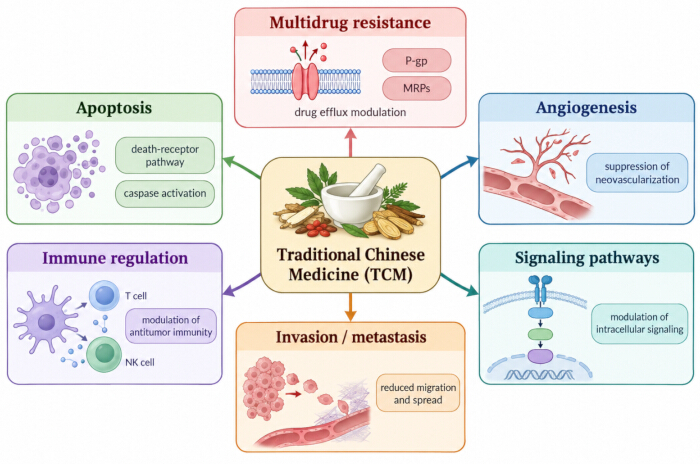
Figure 1. Proposed multi-target anticancer mechanisms of traditional Chinese medicine (TCM). The schematic summarizes proposed effects of TCM-related interventions on multidrug resistance, apoptosis, angiogenesis, intracellular signaling, invasion and metastasis, and immune regulation. P-gp, P-glycoprotein; MRPs, multidrug resistance proteins. Caspase activation refers to the activation of apoptotic proteases downstream of death-receptor signaling. Please click here to view a larger version of this figure.
| Disease/context | Representative study/intervention | Evidence type | Main findings and interpretation | References | ||
| Cancer/psychological supportive care | Tai chi and qigong for psychological outcomes in adults with cancer | Systematic review and meta-regression of RCTs | Tai chi/qigong was associated with improvement in anxiety and depressive symptoms. These findings support a potential role for TCM-related mind-body practices in supportive care but do not indicate direct antitumor activity. | Sun et al.3 | ||
| Cancer/biological mechanisms | Multi-target anticancer mechanisms of TCM, including multidrug resistance | Mechanistic and narrative reviews | Proposed mechanisms include modulation of apoptosis, angiogenesis, immune regulation, invasion/metastasis, signaling pathways, and drug-resistance mechanisms. Most evidence remains preclinical and should not be interpreted as established clinical antitumor efficacy. | Nie et al.6; Wei et al.7 | ||
| Cancer/pain management | Acupuncture for moderate-to-severe cancer pain | Evidence-based clinical practice guideline | Acupuncture was recommended over no acupuncture for moderate-to-severe cancer pain, while acupuncture/acupressure combined with analgesics may reduce pain intensity, opioid requirements, or opioid-related adverse effects. It should be considered an adjunct rather than a replacement for standard analgesia. | Ge et al.8 | ||
| Cancer/real-world TCM use | TCM use among Chinese oncology outpatients | Observational survey | Among TCM users, 84% reported using TCM as an adjunct to cancer treatment. The study describes patient acceptance and patterns of use but does not provide evidence of anticancer efficacy. | Liu et al.9 | ||
| Breast cancer/integration with conventional treatment | TCM combined with conventional Western medicine | Systematic review and meta-analysis | Combined treatment was associated with improvement in selected quality-of-life outcomes and reduction in some treatment-related adverse reactions. Heterogeneity in interventions and study quality limits certainty and generalizability. | Bai et al.10 | ||
| Cancer/translational research | Chinese medicine self-assembly nanotechnology | Translational/mechanistic review | Self-assembled nanoparticles derived from selected TCM components may improve solubility, stability, bioavailability, or delivery. These physicochemical advantages remain translational and do not establish improved clinical cancer outcomes. | Huang et al.11 | ||
| Cancer/microbiome-related mechanisms | TCM–gut microbiota interactions in colorectal cancer | Mechanistic/narrative review | Bidirectional relationships among herbal interventions, intestinal microbiota, inflammatory and metabolic pathways, and treatment response have been proposed. Clinical relevance remains incompletely established. | Zou et al.12 | ||
| Cancer/active-component characterization | Active metabolite combination therapy (AMCT) | Translational/methodological review | AMCT aims to identify combinations of bioactive metabolites and their potential synergistic effects using pharmacology, multi-omics, network modeling, and related approaches. It remains a research framework rather than established cancer therapy. | Gao et al.13 | ||
| RA/herbal medicine plus standard treatment | Chinese herbal medicines or TCM decoctions combined with conventional DMARDs | Systematic reviews and meta-analyses | Adjunctive herbal treatment was associated with improvement in several RA-related clinical outcomes and inflammatory measures. Heterogeneity in formulations, background therapy, and study quality limits firm conclusions and does not justify replacing DMARDs. | Han et al.1, Xu et al.15 | ||
| RA/acupuncture and symptom management | Acupuncture, electroacupuncture, and related techniques | Systematic review/meta-analysis and network meta-analysis | Acupuncture-related interventions showed potential benefits for pain and selected symptom-oriented outcomes. Comparator and sham-control design influence interpretation, and evidence does not establish structural protection or disease modification. | Lu et al.16; Wang et al.17 | ||
| High-risk RA/early intervention | Huayu-Qiangshen-Tongbi (HQT) decoction | Single-center, one-arm prospective study | HQT was tolerated and was associated with possible improvement in some joint-related symptoms among individuals at increased risk of RA. The absence of randomization and a concurrent control group prevents conclusions regarding RA prevention or confirmed disease-modifying efficacy. | Gao et al.18 | ||
| RA/prevention | TCM and Western medicine in RA prevention | Narrative/mechanistic review | Herbal formulations and biological or clinical risk factors potentially relevant to early RA development were discussed. The literature provides a rationale for prevention research, but preventive efficacy remains unconfirmed. | Jakobsson et al.19 | ||
| RA/bone remodeling | Bone-protective mechanisms of TCM-derived active components | Mechanistic review | Proposed pathways include modulation of joint inflammation, osteoclast differentiation, fibroblast proliferation, gut-related mechanisms, microRNAs, and neutrophil-related processes. These findings do not establish prevention of bone loss or radiographic progression in patients. | Lu et al.20 | ||
| RA/molecular regulation | lncRNA/circRNA-mediated ceRNA networks and TCM | Molecular/mechanistic review | ceRNA networks involving lncRNAs and circRNAs may influence proliferation, invasion, inflammation, and apoptosis in RA. Their clinical relevance, biomarker value, and therapeutic utility remain to be validated. | Wen et al.21 | ||
| RA/overall evidence quality | External TCM therapies for RA | Overview of systematic reviews | Existing reviews suggest potential improvements in selected symptoms and signs with acupuncture, moxibustion, and related external TCM therapies; however, much of the available evidence was judged to be of low or very low certainty. | Xu et al.22 | ||
Table 1: Representative evidence on traditional Chinese medicine as adjunctive care in cancer and rheumatoid arthritis. Abbreviations: TCM = traditional Chinese medicine; RA = rheumatoid arthritis; RCTs = randomized controlled trials; DMARDs = disease-modifying antirheumatic drugs; HQT = Huayu-Qiangshen-Tongbi; AMCT = active metabolite combination therapy; lncRNAs = long non-coding RNAs; circRNAs = circular RNAs; ceRNA = competitive endogenous RNA.
Disclosures
The authors have no conflicts of interest to declare.
Acknowledgements
We acknowledge the researchers whose published work formed the evidence base for this review. No specific external funding is associated with the preparation of this review.
References
- Han R, et al. Conventional disease-modifying anti-rheumatic drugs combined with Chinese herbal medicines for rheumatoid arthritis: a systematic review and meta-analysis. J Tradit Complement Med. 2022;12(5):437-46. doi:10.1016/j.jtcme.2022.01.005.
- Huang J, et al. Traditional herbal medicine: a potential therapeutic approach for adjuvant treatment of non-small cell lung cancer in the future. Integr Cancer Ther. 2022;21:15347354221144312. doi:10.1177/15347354221144312.
- Sun F, et al. The effect of Tai Chi/Qigong on depression and anxiety symptoms in adults with cancer: a systematic review and meta-regression. Complement Ther Clin Pract. 2024;56:101850. doi:10.1016/j.ctcp.2024.101850.
- Li Z, et al. The impact of mindfulness intervention on negative emotions and quality of life in malignant tumor patients: a systematic review and meta-analysis. Front Psychol. 2024;15:1443516. doi:10.3389/fpsyg.2024.1443516.
- Zhou B, et al. Mindfulness interventions for rheumatoid arthritis: a systematic review and meta-analysis. Complement Ther Clin Pract. 2020;39:101088. doi:10.1016/j.ctcp.2020.101088.
- Nie J, et al. Efficacy of traditional Chinese medicine in treating cancer. Biomed Rep. 2016;4(1):3-14. doi:10.3892/br.2015.537.
- Wei J, et al. Traditional Chinese medicine reverses cancer multidrug resistance and its mechanism. Clin Transl Oncol. 2022;24(3):471-82. doi:10.1007/s12094-021-02716-4.
- Ge L, et al. Acupuncture for cancer pain: an evidence-based clinical practice guideline. Chin Med. 2022;17:8. doi:10.1186/s13020-021-00558-4.
- Liu J, Sun Y, Liu S, He J. Belief in and use of traditional Chinese medicine in Chinese patients with cancer receiving outpatient care. Eur J Integr Med. 2023;58:102221. doi:10.1016/j.eujim.2022.102221.
- Bai X, et al. Effects of integrated Chinese traditional medicine and conventional Western medicine on the quality of life of breast cancer patients: a systematic review and meta-analysis. Evid Based Complement Alternat Med. 2022;2022:3123878. doi:10.1155/2022/3123878.
- Huang J, et al. Formation of a traditional Chinese medicine self-assembly nanostrategy and its application in cancer: a promising treatment. Chin Med. 2023;18:66. doi:10.1186/s13020-023-00764-2.
- Zou Y, et al. The triangular relationship between traditional Chinese medicines, intestinal flora, and colorectal cancer. Med Res Rev. 2024;44(2):539-67. doi:10.1002/med.21989.
- Gao Q, et al. Active metabolites combination therapies: towards the next paradigm for more efficient and more scientific Chinese medicine. Front Pharmacol. 2024;15:1392196. doi:10.3389/fphar.2024.1392196.
- Smolen JS, et al. EULAR recommendations for the management of rheumatoid arthritis with synthetic and biological disease-modifying antirheumatic drugs: 2022 update. Ann Rheum Dis. 2023;82(1):3-18. doi:10.1136/ard-2022-223356.
- Xu Y, Luo L, Chen Y, Liu X. Efficacy and safety of traditional Chinese medicine decoctions as an adjuvant treatment for rheumatoid arthritis: a systematic review and meta-analysis. Medicine (Baltimore). 2026;105(26):e49452. doi:10.1097/MD.0000000000049452.
- Lu HL, et al. The effects of acupuncture and related techniques on patients with rheumatoid arthritis: a systematic review and meta-analysis. J Chin Med Assoc. 2022;85(3):388-400. doi:10.1097/JCMA.0000000000000659.
- Wang S, et al. Comparative effectiveness of electroacupuncture and conventional acupuncture for rheumatoid arthritis pain: a network meta-analysis with emphasis on placebo control validity. J Integr Med. 2026;24(1):57-64. doi:10.1016/j.joim.2025.09.005.
- Gao K, et al. May traditional Chinese medicine reduce the risk of developing rheumatoid arthritis? An one-armed prospective study. Clin Complement Med Pharmacol. 2024;4(1):100127. doi:10.1016/j.ccmp.2023.100127.
- Jakobsson PJ, et al. Where traditional Chinese medicine meets Western medicine in the prevention of rheumatoid arthritis. J Intern Med. 2022;292(5):745-63. doi:10.1111/joim.13537.
- Lu Q, et al. The bone-protective mechanisms of active components from TCM drugs in rheumatoid arthritis treatment. Front Pharmacol. 2022;13:1000865. doi:10.3389/fphar.2022.1000865.
- Wen J, Liu J, Wan L, Wang F. Long noncoding RNA/circular RNA regulates competitive endogenous RNA networks in rheumatoid arthritis: molecular mechanisms and traditional Chinese medicine therapeutic significances. Ann Med. 2023;55(1):973-89. doi:10.1080/07853890.2023.2172605.
- Xu B, et al. External therapy of traditional Chinese medicine for rheumatoid arthritis: an overview of systematic reviews. Eur J Integr Med. 2026;83:102622. doi:10.1016/j.eujim.2026.102622.
- Liu CL, Jiang Y, Li HJ. Quality consistency evaluation of traditional Chinese medicines: current status and future perspectives. Crit Rev Anal Chem. 2025;55(4):684-701. doi:10.1080/10408347.2024.2305267.
- Cheng CW, et al. CONSORT extension for Chinese herbal medicine formulas 2017: recommendations, explanation, and elaboration. Ann Intern Med. 2017;167(2):112-21. doi:10.7326/M16-2977.
- Chen W, et al. The safety of Chinese medicine: a systematic review of endogenous substances and exogenous residues. Phytomedicine. 2023;108:154534. doi:10.1016/j.phymed.2022.154534.
- Luo Y, Yang H, Tao G. Systematic review on fingerprinting development to determine adulteration of Chinese herbal medicines. Phytomedicine. 2024;129:155667. doi:10.1016/j.phymed.2024.155667.
- Duan X, et al. Herb-drug interactions in oncology: pharmacodynamic/pharmacokinetic mechanisms and risk prediction. Chin Med. 2025;20(1):107. doi:10.1186/s13020-025-01156-4.
- Li M, et al. A comprehensive review on pharmacokinetic mechanism of herb-herb/drug interactions in Chinese herbal formula. Pharmacol Ther. 2024;264:108728. doi:10.1016/j.pharmthera.2024.108728.
- Kongkaew C, Phan DTA, Janusorn P, Mongkhon P. Estimating adverse events associated with herbal medicines using pharmacovigilance databases: systematic review and meta-analysis. JMIR Public Health Surveill. 2024;10:e63808. doi:10.2196/63808.
- Zheng R, et al. Inadequate reporting of harms in RCTs of Chinese herbal medicine formulas: a systematic survey of leading medical journals. J Evid Based Med. 2026:e70174. doi:10.1111/jebm.70174.