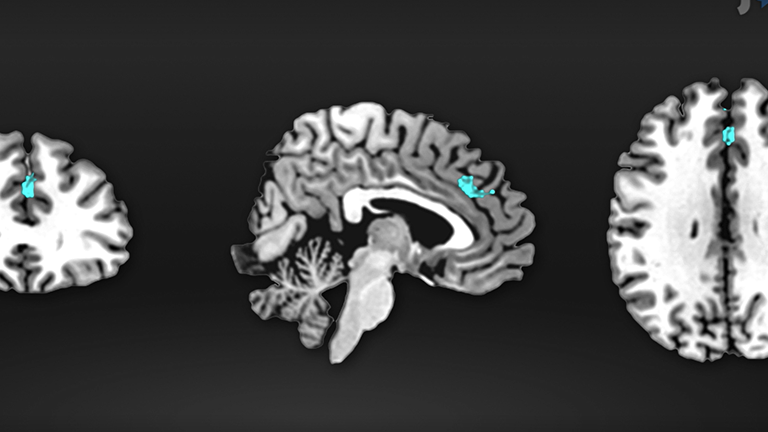
Real-time fMRI Biofeedback Targeting the Orbitofrontal Cortex for Contamination Anxiety
1Department of Diagnostic Radiology, Yale University School of Medicine, 2Department of Psychiatry, Yale University School of Medicine, 3Yale Child Study Center, Yale University School of Medicine, 4Interdepartmental Neuroscience Program, Yale University School of Medicine
Here we present a method for training people to control a brain area involved in contamination anxiety and for probing the relationship between contamination anxiety and brain connectivity patterns.
Intra-Operative Behavioral Tasks in Awake Humans Undergoing Deep Brain Stimulation Surgery
1Nayef Al-Rodhan Laboratories for Cellular Neurosurgery and Neurosurgical Technology, Harvard Medical School, 2Department of Neurosurgery , Massachusetts General Hospital
Deep brain stimulation surgery offers a unique opportunity to examine information encoding in the awake human brain. This article will describe intra-operative methods used to perform cognitive and behavioral tasks while simultaneously acquiring physiological data such as EMG, single-unit neuronal activity and/or local field potentials.
Habituation and Prepulse Inhibition of Acoustic Startle in Rodents
Anatomy and Cell Biology, Schulich School of Medicine and Dentistry, University of Western Ontario
Habituation and prepulse inhibition of startle are operational measures of sensory gating. Sensory gating is disrupted in schizophrenia, and some other mental disorders and neurodegenerative diseases. We here describe a standard protocol to assess short-term and long-term habituation as well as prepulse inhibition of acoustic startle responses in rats and mice.
Assessment of Social Interaction Behaviors
1Samuel Lunenfeld Research Institute, Mount Sinai Hospital, 2Toronto Centre for Phenogenomics, Mount Sinai Hospital, 3Department of Medical Biophysics, University of Toronto, 4Department of Psychology, University of Toronto, 5Department of Psychiatry, University of Toronto
Here we describe a detailed protocol for examination of sociability in mice by using Crawley's sociability and preference for social novelty test. We describe the advantages and possible applications for this procedure, including critical details important for correct interpretation of the results.
Tilt Testing with Combined Lower Body Negative Pressure: a "Gold Standard" for Measuring Orthostatic Tolerance
Department of Biomedical Physiology and Kinesiology, Simon Fraser University
We describe a "gold standard" for evaluating orthostatic tolerance (OT) using tilt testing with combined lower body negative pressure (LBNP). This can be combined with non-invasive evaluations of cardiovascular reflex control. Normal and abnormal responses are defined.
A Strategy to Identify de Novo Mutations in Common Disorders such as Autism and Schizophrenia
1Centre of Excellence in Neuromics, CHUM Research Center and the Department of Medicine, Universite de Montreal, 2Center of Excellence in Neuromics, CHU Sainte Justine and CHUM Notre-Dame Research Centers, Universite de Montreal, 3Department of Medicine, Universite de Montreal
Molecular genetic strategy for finding de novo mutations causing common disorders such as autism and schizophrenia.
Preparation of Oligomeric β-amyloid1-42 and Induction of Synaptic Plasticity Impairment on Hippocampal Slices
Taub Institute for Research on Alzheimer's Disease and Aging Brain, Columbia University
One feature of Alzheimer's Disease is the elevation of Aβ1-42 peptide. Here we provide a protocol for preparing synthetic Aβ1-42 oligomers, which impairs hippocampal Long-Term Potentiation, a cellular correlate of memory. This procedure is useful for investigating mechanisms of Aβ-induced pathology and drug screening.
Fluorescence Recovery After Photobleaching (FRAP) of Fluorescence Tagged Proteins in Dendritic Spines of Cultured Hippocampal Neurons
FRAP has been used to quantify the mobility of Green Fluorescence Protein (GFP)-tagged proteins in cultured cells. We examined the mobile/immobile fractions of the GFP by analyzing the fluorescence recovery percentage after photobleaching. In this study, FRAP was performed at spines of hippocampal neurons.
Synthetic, Multi-Layer, Self-Oscillating Vocal Fold Model Fabrication
Department of Mechanical Engineering, Brigham Young University
The methodology for fabricating synthetic vocal fold models is described. The models are life-sized and mimic the multi-layer structure of the human vocal folds. Results show the models to self-oscillate at pressures comparable to lung pressure and demonstrate flow-induced vibratory responses that are similar to those of human vocal folds.
Portable Intermodal Preferential Looking (IPL): Investigating Language Comprehension in Typically Developing Toddlers and Young Children with Autism
Department of Psychology, University of Connecticut
A reliable home-based way to assess the language comprehension of very young typically developing children, as well as those with autism, is described. The method analyzes children's eye gaze while viewing side-by-side images but hearing an audio that matches only one image. Stimuli are designed with young participants in mind.
Assessment of Sensorimotor Function in Mouse Models of Parkinson's Disease
1Department of Psychology, University of Cincinnati, 2Department of Neurology, University of Cincinnati
In Parkinson's disease and movement disorders in general, sensitive and reliable behavioral assays are essential for testing novel potential therapeutics. Here, we describe a manageable battery of sensorimotor tests for mice that are sensitive to varying degrees of injury to the nigrostriatal system and useful for preclinical studies.
The use of Biofeedback in Clinical Virtual Reality: The INTREPID Project
1Applied Technology for Neuro-Psychology Lab, Istituto Auxologico Italiano, 2Psychology Department, Università Cattolica del Sacro Cuore
The Project on Virtual Reality Intelligent Multi-sensor System for the Treatment of Anxiety-related Disorders (INTREPID) is aimed at developing a multi-sensor context-aware virtual reality system for the treatment of anxiety-related disorders.
Interview: Protein Folding and Studies of Neurodegenerative Diseases
Whitehead Institute for Biomedical Research, MIT - Massachusetts Institute of Technology
In this interview, Dr. Lindquist describes relationships between protein folding, prion diseases and neurodegenerative disorders. The problem of the protein folding is at the core of the modern biology. In addition to their traditional biochemical functions, proteins can mediate transfer of biological information and therefore can be considered a genetic material. This recently discovered function of proteins has important implications for studies of human disorders. Dr. Lindquist also describes current experimental approaches to investigate the mechanism of neurodegenerative diseases based on genetic studies in model organisms.
Targeted Training of Ultrasonic Vocalizations in Aged and Parkinsonian Rats
1Department of Surgery-Division of Otolaryngology, University of Wisconsin, 2Department of Communicative Disorders, University of Wisconsin
Voice disorders are debilitating in aging and Parkinson disease. The ultrasonic vocalizations of rats, also affected by these conditions, can be used to study these voice disorders, their neural substrates, and the nature of functional recovery with behavioral intervention.
Progenitor-derived Oligodendrocyte Culture System from Human Fetal Brain
1Laboratory of Molecular Medicine and Neuroscience, National Institute of Neurological Disorders and Stroke, National Institutes of Health, 2Laboratory of Neurophysiology, National Institute of Neurological Disorders and Stroke, National Institutes of Health
Primary, human fetal brain-derived, multipotential progenitor cells proliferate in vitro while maintaining the capacity to differentiate into neurons and astrocytes. This work shows that neural progenitors can be induced to differentiate through stages of the oligodendrocytic lineage by conditioning with select growth factors.
In vitro Assembly of Semi-artificial Molecular Machine and its Use for Detection of DNA Damage
1Neurosurgery, Baylor College of Medicine, 2Michael E. DeBakey Veterans Affairs Medical Center, 3Molecular & Cellular Biology, Baylor College of Medicine
We demonstrate the assembly and application of a molecular-scale device powered by a topoisomerase protein. The construct is a bio-molecular sensor which labels two major types of DNA breaks in tissue sections by attaching two different fluorophores to their ends.
Surgical Management of Meatal Stenosis with Meatoplasty
Department of Urology, Pediatric Urology, Johns Hopkins School of Medicine
Meatoplasty, surgical management of meatal stenosis.
Simultaneous EEG Monitoring During Transcranial Direct Current Stimulation
1Programa de Pós-Graduação em Ciências Médica, Universidade Federal do Rio Grande do Sul, 2Coordenacao de Aperfeicoamento de Pessoal de Nivel Superior (CAPES), 3Laboratory of Neuromodulation, Department of Physical Medicine & Rehabilitation, Spaulding Rehabilitation Hospital and Massachusetts General Hospital, Harvard Medical School, 4De Montfort University
Transcranial direct current stimulation (tDCS) is a non-invasive brain stimulation technique that has shown initial therapeutic effects in several neurological conditions. The main mechanism underlying these therapeutic effects is the modulation of cortical excitability. Therefore, online monitoring of cortical excitability would help guide stimulation parameters and optimize its therapeutic effects. In the present article we review the use of a novel device that combines simultaneous tDCS and EEG monitoring in real time.
The Structure of Skilled Forelimb Reaching in the Rat: A Movement Rating Scale
Canadian Centre for Behavioural Neuroscience, University of Lethbridge
The skilled reaching scale divides the movement by a forelimb in a reach for food act into composite elements each of which are evaluated with a three-point scale. The rating scale is described for a normal rat and can be applied toward evaluating neurological motor disorders.
Genetic Studies of Human DNA Repair Proteins Using Yeast as a Model System
Laboratory of Molecular Gerontology, National Institute on Aging, NIH
Genetic studies in yeast can be employed to investigate the molecular and cellular functions of human genes in cellular DNA metabolism. Methods are described for the genetic characterization of the human WRN gene product defective in the premature aging disorder Werner syndrome in functionally conserved pathways using yeast as a tractable model system.
Generation of Neural Stem Cells from Discarded Human Fetal Cortical Tissue
1Department of Neurology, Beth Israel Deaconess Medical Center, 2Department of Obstetrics and Gynecology, Brigham and Women's Hospital, 3Department of Pathology, Beth Israel Deaconess Medical Center, 4Department of Pathology, Division of Neuropathology, Brigham and Women's Hospital
A simple and reliable method on isolation and culture of neural stem cells from discarded human fetal cortical tissue is described. Cultures derived from known human neurological disorders can be used for characterization of pathological cellular and molecular processes, as well as provide a platform to assess pharmacological efficacy.
Insulin Injection and Hemolymph Extraction to Measure Insulin Sensitivity in Adult Drosophila melanogaster
1Department of Biology, State University of New York, 2Allied Health Sciences, University of Connecticut
Conserved insulin signaling pathways found in the fruit fly Drosophila melanogaster make this organism a potential tool for modeling metabolic disorders including type II diabetes. To this end, it is critical to establish physiological assays to effectively measure systemic insulin action in peripheral glucose disposal in the adult fly.
Mouse Oocyte Microinjection, Maturation and Ploidy Assessment
Department of Biology, University of Pennsylvania
Oocytes are prone to aneuploidy due to errors in chromosome segregation during meiotic maturation. Aneuploid eggs can cause infertility, miscarriages or developmental disorders like Down syndrome. Here, we describe methods to introduce materials of choice into oocytes and methods to study meiotic maturation and assess ploidy.
Mutagenesis and Analysis of Genetic Mutations in the GC-rich KISS1 Receptor Sequence Identified in Humans with Reproductive Disorders
1Division of Endocrinology and Metabolism, Department of Medicine, University of Miami Miller School of Medicine, 2Department of Molecular and Cellular Pharmacology, University of Miami Miller School of Medicine
Mutations in the kisspeptin receptor (KISS1R) are associated with reproductive disorders in patients. Here we describe how to introduce mutations of interest in the GC-rich sequence of KISS1R as well as the use of KISS1R constructs to characterize the degradation pathway of the receptor by immunoprecipitation and western blot.
Morris Water Maze Test for Learning and Memory Deficits in Alzheimer's Disease Model Mice
Department of Psychiatry, Brain Research Center, University of British Columbia
The Morris Water Maze is a behavioral task to test hippocampal-dependent learning and memory. It has been widely used in the study of neurobiology, neuropharmacology and neurocognitive disorders in rodent models.
Intraspinal Cell Transplantation for Targeting Cervical Ventral Horn in Amyotrophic Lateral Sclerosis and Traumatic Spinal Cord Injury
Department of Neuroscience, Thomas Jefferson University Medical College
Neural precursor transplantation is a promising strategy for protecting and/or replacing lost/dysfunctional cervical phrenic motor neurons in spinal cord injury (SCI) and the motor neuron disorder, amyotrophic laterals sclerosis (ALS). We provide a protocol for cell delivery to cervical spinal cord ventral horn in rodent models of ALS and SCI.
Accurate and Simple Evaluation of Vascular Anastomoses in Monochorionic Placenta using Colored Dye
1Division of Neonatology, Department of Pediatrics, Leiden University Medical Center, 2Division of Fetal Therapy, Department of Obstetrics, Leiden University Medical Center, 3Department of Obstetrics, Leiden University Medical Center
Twin-to-twin transfusion syndrome and twin anemia polycythemia sequence are two potentially devastating problems in perinatal medicine. Both disorders occur only in monochorionic twins and result from unbalanced blood flow through placental vascular anastomoses. We provide a simple protocol to accurately evaluate the presence of vascular anastomoses using colored dye injection of placental vessels after birth.
Visualization of Mitochondrial Respiratory Function using Cytochrome C Oxidase / Succinate Dehydrogenase (COX/SDH) Double-labeling Histochemistry
1Department of Neuroscience, Karolinska Institutet, 2National Institute on Drug Abuse (NIDA)
The cytochrome c oxidase/sodium dehydrogenase (COX/SDH) double-labeling method allows for direct visualization of mitochondrial respiratory enzyme deficiencies in fresh-frozen tissue sections. This is a straightforward histochemical technique and is useful in investigating mitochondrial diseases, aging, and aging-related disorders.
Biomarkers in an Animal Model for Revealing Neural, Hematologic, and Behavioral Correlates of PTSD
1Department of Psychiatry, Center for the Study of Traumatic Stress, Uniformed Services University of the Health Sciences, Bethesda, Maryland, 2Department of Gene and Protein Biomarkers, GenProMarkers, Inc.
We describe a rat model of post traumatic stress disorder (PTSD) that reveals the persistent alterations in neuroendocrine function and the delayed long-term, exaggerated fear response, characteristic of PTSD patients. The animal model and methods described here are useful for correlating biomarkers in brain nuclei, which are mechanistic but cannot be measured in patients, with biomarkers in peripheral white blood cells, which can.
The Measurement and Treatment of Suppression in Amblyopia
1Department of Optometry and Vision Science, University of Auckland, 2Department of Ophthalmology, McGill University, 3Centre for Intelligent Machines, McGill University
Amblyopia is a developmental disorder of the visual cortex that is often accompanied by strong suppression of one eye. We present a new technique for measuring and treating interocular suppression in patients with amblyopia that can be deployed using virtual reality goggles or a portable iPod Touch device.
Measuring Calpain Activity in Fixed and Living Cells by Flow Cytometry
1Immunology, University of Toronto, 2Arthritis and Immune Disorder Research Centre, University Health Network (UHN)
This article will detail the protocol for measuring calpain activity in fixed and living cells using flow cytometry.
Non-invasive Imaging of Leukocyte Homing and Migration in vivo
1Department of Pathology and Immunology, Washington University in St. Louis, 2National Institute of Neurological Disorders and Stroke, NINDS, NIH - National Institute of Health
Here, we describe a non-invasive two-photon (2P) microscopy approach to study leukocyte homing in the mouse footpad. We discuss the technical aspects of our tissue imaging preparation and walk the reader through a typical experiment from initial set up to execution and data collection.
Primary Culture and Plasmid Electroporation of the Murine Organ of Corti.
1Department of Otology and Laryngology, Harvard Medical School, 2Eaton-Peabody Laboratory, Massachusetts Eye and Ear Infirmary, 3Department of Communication Sciences and Disorders, Emerson College, 4Program in Speech and Hearing Bioscience and Technology, Division of Health Science and Technology, Harvard
This procedure describes a method for the isolation and culture of the murine organ of Corti with or without the spiral limbus and spiral ganglion neurons. We also demonstrate a method for the expression of an exogenous reporter gene in the organ of Corti explant by electroporation.
Performing and Processing FNA of Anterior Fat Pad for Amyloid
1Department of Pathology, Medical College of Wisconsin, 2Current Address: Department of Pathology, Wayne State University School of Medicine Detroit Medical Center, 3Department of Neurology, Medical College of Wisconsin, 4Department of Medicine, Medical College of Wisconsin, 5Division of Neoplastic Diseases and Related Disorders, Medical College of Wisconsin
Fat pad aspiration is a preferred, minimally invasive, and low cost approach as compared to other methods to detect amyloid for diagnosis of systemic amyloidosis. This video article demonstrates a procedural outline for performing fat pad aspiration with appropriate processing of the specimen for the optimal diagnostic outcome.
Methods for Patch Clamp Capacitance Recordings from the Calyx
National Institute of Neurological Disorders and Stroke, National Institute of Health
We demonstrate the basic techniques for presynaptic patch clamp recording at the calyx of Held, a mammalian central nervous system nerve terminal.
A Protocol for Comprehensive Assessment of Bulbar Dysfunction in Amyotrophic Lateral Sclerosis (ALS)
1Department of Speech-Language Pathology, University of Toronto, 2ALS/ MN Clinic, Sunnybrook Health Science Centre, 3Department of Special Education and Communication Disorders, University of Nebraska-Lincoln, 4Department of Neurology, Munroe-Meyer Institute, University of Nebraska Medical Center, 5Department of Neurology, University of Toronto
Objective assessments of the physiological mechanisms that support speech are needed to monitor disease onset and progression in persons with ALS and to quantify treatment effects in clinical trials. In this video, we present a comprehensive, instrumentation-based protocol for quantifying speech motor performance in clinical populations.
Quantitative Assessment of Immune Cells in the Injured Spinal Cord Tissue by Flow Cytometry: a Novel Use for a Cell Purification Method
1Institute for Memory Impairments and Neurological Disorders, University of California, 2Physical Medicine & Rehabilitation, University of California, 3Anatomy & Neurobiology, University of California, 4Sue and Bill Gross Stem Cell Research Center, University of California, 5Section of Molecular Biology, University of California, 6Reeve-Irvine Research Center, University of California
Quantification of cellular inflammation in the injured/pathological CNS by flow cytometry is complicated by lipid/myelin debris that can have similar size and granulation to cells, decreasing sensitivity/accuracy. We have advanced a cell preparation method to remove myelin debris and improve cell detection by flow cytometry in the injured spinal cord.
Dissection of Adult Mouse Utricle and Adenovirus-mediated Supporting-cell Infection
1Department of Pathology and Laboratory Medicine, Medical University of South Carolina, 2Department of Microbiology & Immunology, Medical University of South Carolina, 3National Institute on Deafness and Other Communication Disorders, National Institutes of Health
Mechanosensory hair cells are the receptor cells of the inner ear. The best-characterized in vitro model system of mature mammalian hair cells utilizes organ cultures of utricles from adult mice. We present the dissection of the adult mouse utricle, and we demonstrate adenovirus-mediated infection of supporting cells in cultured utricles.
Retrograde Loading of Nerves, Tracts, and Spinal Roots with Fluorescent Dyes
We describe a simple and low cost technique for introducing high concentration of fluorescent and calcium-sensitive dyes into neurons or any neuronal tract using a polyethylene suction pipette.
Production of Lentiviral Vectors for Transducing Cells from the Central Nervous System
In this protocol we describe production, purification and titration of lentiviral vectors. We provide an example of lentiviral vector-mediated gene delivery in primary cultured neurons and astrocytes. Our methods may also apply to other cell types in vitro and in vivo.
Ex vivo Culturing of Whole, Developing Drosophila Brains
1National Institute of Neurological Disorders and Stroke, 2National Human Genome Research Institute, National Institutes of Health, Bethesda, MD
This article describes a method by which one can mimic in vivo development of the Drosophila mushroom body in an ex vivo culture system.
JoVE 9th Issue
Mouse Epidermal Neural Crest Stem Cell (EPI-NCSC) Cultures
1Institute of Human Genetics and Northeast England Stem Cell Institute, Newcastle University, 2Department of Cell Biology, Neurobiology and Anatomy, Medical College of Wisconsin
Here we show our method to isolate mouse epidermal neural crest stem cells (EPI-NCSC). Technique involves micro-dissecting whisker follicles, isolating the bulge and placeing it into tissue culture. EPI-NCSC start to emigrate from bulge explants onto the substratum within 3 - 4 days.
Cancer Borealis Stomatogastric Nervous System Dissection
Volen Center for Complex Systems, Brandeis
The stomatogastric nervous system (STNS) of the Jonah crab (C. borealis) can be used for electrophysiology, immunohistochemistry, and cell culture studies. The STNS extraction is done in two parts: the gross and fine dissection.
Measuring Near Plasma Membrane and Global Intracellular Calcium Dynamics in Astrocytes
We describe how to measure near membrane and global intracellular calcium dynamics in cultured astrocytes using total internal reflection and epifluorescence microscopy.
Application of a C. elegans Dopamine Neuron Degeneration Assay for the Validation of Potential Parkinson's Disease Genes
Department of Biological Sciences, University of Alabama
This video demonstrates how to use C. elegans to assess dopaminergic neuron neurodegeneration as a model for Parkinson's disease. Furthermore, genetic screens are used to identify factors that either enhance degeneration or are neuroprotective.
Generation of Stable Transgenic C. elegans Using Microinjection
Department of Biological Sciences, University of Alabama
This video demonstrates the technique of microinjection into the gonad of C. elegans to create transgenic animals.
How to Culture, Record and Stimulate Neuronal Networks on Micro-electrode Arrays (MEAs)
1Department of Neurology, Emory University School of Medicine, 2Coulter Department of Biomedical Engineering, Laboratory for Neuroengineering, Georgia Institute of Technology and Emory, University School of Medicine, 3Emory University School of Medicine
This protocol provides the necessary information for setting up, caring for, recording from and electrically stimulating cultures on MEAs. In vitro networks provide a means for asking physiologically relevant questions at the network and cellular levels leading to a better understanding of brain function and dysfunction.
Multielectrode Array Recordings of the Vomeronasal Epithelium
Anatomy and Neurobiology, Washington University School of Medicine
Multielectrode array (MEA) recordings provide a method for studying the electrical activity of large populations of neurons. Here, we present the details of a MEA preparation to record from the mouse vomeronasal epithelium while simultaneously stimulating the tissue.
Strategies for Study of Neuroprotection from Cold-preconditioning
Department of Neurology, The University of Chicago Medical Center
We seek to define the neural immune signaling responsible for cold-preconditioning as means to identify novel targets for therapeutics development to protect brain before injury onset. We present strategies for such work that require biological systems, experimental manipulations plus technical capacities that are highly reproducible and sensitive.