التعلم الإحصائي المرئي

1. قم بإنشاء مجموعة من الكائنات التي لا معنى لها وترتيبها في بنية ثلاثية.
- غالبا ما تتم دراسة التعلم الإحصائي المرئي باستخدام كائنات بسيطة مثل المجموعة أدناه. قم بإنشاء مجموعة من الكائنات ، ثم قم بتجميعها في ثلاثة توائم (الشكل 1).
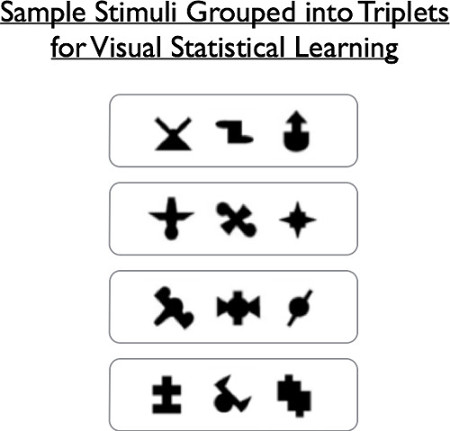
الشكل 1. عينة من المحفزات مجمعة في ثلاثة توائم للتعلم الإحصائي البصري. في الجزء التعليمي من التجربة ، سيظهر التوائم الثلاثة بترتيب عشوائي ، ولكن العناصر الموجودة داخل التوائم الثلاثية ستظهر دائما بالترتيب ، مع ظهور العنصر الموجود على اليسار أولا متبوعا بالعناصر الموجودة على يمينه.
2. تسلسل التجربة.
- تسلسل التجربة باستخدام برامج مثل e-Prime ، أو باستخدام مكتبة روتينية مثل Psychophysical Toolbox في MATLAB ، أو PsycoPy for Python.
- يتم عرض الكائنات غير المنطقية في وسط الشاشة ، واحدة تلو الأخرى ، لمدة 250 مللي ثانية لكل منها.
- اطلب من البرنامج إظهار أعضاء التوائم الثلاثية دائما بالتسلسل ، واختيار الثلاثي الذي سيظهر بعد ذلك بشكل عشوائي ، وينتهي به الأمر بتسلسلات مشابهة للشكل 2.
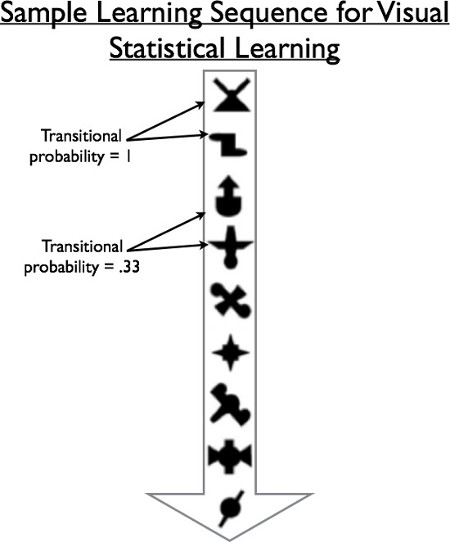
الشكل 2. نموذج تسلسل التعلم للتعلم الإحصائي المرئي. تظهر التوائم الثلاثة بترتيب عشوائي بحيث يكون الاحتمال الانتقالي للعناصر في تسلسلات مختلفة حوالي 0.33 ، بينما الاحتمال الانتقالي داخل التسلسل هو 1. - لاحظ أنه نظرا لأن التوائم الثلاثة تظهر دائما بالتسلسل ، فإن الاحتمال الانتقالي بين عناصر التوائم الثلاثية يكون دائما 1. ولكن نظرا لأن التحولات بين التوائم الثلاثة يتم اختيارها بشكل عشوائي ، فإن الاحتمالات الانتقالية بين العناصر غير ذات الصلة تكون أقل بكثير ، وعادة ما تكون مفتعلة لتكون حوالي 0.33.
- أخيرا ، قم ببناء مهمة تغطية. اطلب من البرنامج عرض أحد الكائنات باللون الأحمر ، بدلا من اللون الرمادي. سيقوم البرنامج بذلك حوالي 20 مرة على مدار تجربة مدتها 10 دقائق ، واختيار اللحظات بشكل عشوائي. ستكون مهمة المشارك هي الضغط على مفتاح كلما ظهر كائن باللون الرمادي ، ولكن حجب الاستجابة عندما تكون باللون الأحمر. هذا سيبقيها منخرطة في المحفزات.
- كتابة برنامج منفصل لاختبار الألفة. في كل تجربة من الاختبار ، يختار البرنامج بشكل عشوائي أحد التوائم الثلاثة الفعلية ، ويولد بشكل عشوائي ثلاثيا جديدا من مكونات التوائم الثلاثة الفعلية. تسمى هذه التوائم الثلاثة التي تم إنشاؤها عشوائيا "رقائق معدنية".
- يتم عرضها جنبا إلى جنب ، ويحتاج المشارك إلى الإشارة إلى أيهما أكثر دراية بضغطة مفتاح.
- يجب أن تتضمن التجربة حوالي 30 تجربة اختبار الألفة.
- تعليمات اختبار الألفة مهمة. يجب أن تتضمن شيئا من هذا القبيل: "أود منك القيام بمهمة أخرى قبل انتهاء التجربة. يجب أن يستغرق الأمر خمس دقائق فقط. ربما لم تلاحظ ذلك ، ولكن في تسلسل الأشكال التي رأيتها للتو ، كان من المرجح أن تظهر بعض الأشكال بعد الآخرين. سأريكم الآن مجموعتين من الأشكال من التجربة ، وتحتاج فقط إلى الضغط على المفتاح 1 أو المفتاح 2 لإعلامي بالتجميع الذي يبدو أكثر دراية لك. قد لا تشعر أنك تدرك أيضا. في جميع التجارب ، أريدك أن تذهب مع حدسك وأن تخمن ما إذا كان عليك ذلك ".
التعلم المنتظم - الهياكل الإحصائية للأشياء في عالمنا الخارجي - جزءا مهما من المعالجة البصرية.
تحدثالأشياء في بيئتنا البصرية في أبعاد المكان والزمان. من المرجح أن تظهر بعض الأشياء بالقرب من أشياء أخرى ، مثل فنجان قهوة بجوار جهاز كمبيوتر.
توفر مثل هذه الأحداث انتظامات تدعم التعرف على الأشياء التي يمكن التنبؤ بها ، حيث يتعلم البشر تلقائيا وبسرعة ، دون وعي واعي.
يوضح هذا الفيديو كيفية إعداد وإجراء تجربة تعلم إحصائي مرئي باستخدام نموذج ترميز عرضي ، بالإضافة إلى كيفية تحليل البيانات وتفسير النتائج.
في هذه التجربة ، يتم عرض المحفزات - مجموعات الكائنات الهراء المجمعة في ثلاثة توائم - على وسط شاشة الكمبيوتر ، واحدة تلو الأخرى ، لمدة 250 مللي ثانية لكل منها.
لإنشاء الانتظام - الهيكل الإحصائي - يتم دائما عرض الكائنات الموجودة داخل التوائم الثلاثية بنفس التسلسل ، ولكن يتم تقديم ترتيب التوائم الثلاثة بشكل عشوائي.
وبالتالي ، فإن الاحتمال الانتقالي بين عناصر ثلاثي معين هو دائما 1 ، في حين أن الاحتمالات الانتقالية بين العناصر غير ذات الصلة أقل بكثير.
من أجل تعريض المشاركين عن غير قصد لتسلسلات الكائنات ، يتم استخدام مهمة الغلاف مع الكائنات الملونة. في هذه الحالة ، يطلب من المشاركين تقديم رد عندما تكون الكائنات رمادية والحجب عندما تظهر الكائنات بشكل عشوائي باللون الأحمر.
بعد اكتمال مهمة التغطية ، يتم إعطاء المشاركين مهمة إلمامية لاختبار مدى ترميز الكائنات غير المنطقية السابقة. خلال كل تجربة ألفة ، يتم تقديم التوائم الثلاثة التي تم عرضها سابقا بشكل عشوائي جنبا إلى جنب مع التوائم الثلاثة التي تم إنشاؤها حديثا ، والتي يشار إليها باسم الرقائق.
الآن ، يطلب من المشاركين تحديد المجموعة الأكثر دراية. المتغير التابع إذن هو عدد المرات التي يحدد فيها المشاركون بشكل صحيح التوائم الثلاثة السابقة على أنها الأكثر دراية ، بدلا من الرقائق.
إذا لم يحدث أي تعلم خلال مرحلة الترميز الأولية ، اختيار التوائم الثلاثة الفعلية والرقائق بنفس عدد المرات. من ناحية أخرى ، إذا حدث التعلم ، اختيار التوائم الثلاثة الفعلية بشكل متكرر أكثر من الرقائق.
قبل وصول المشارك ، تحقق من إنشاء المحفزات ومعلمات الترميز التي سيتم استخدامها.
لبدء التجربة ، قم بتحية المشارك في المختبر واشرح الإجراءات العامة التي سيتم استخدامها للمهمة.
اجعل المشارك يجلس بشكل مريح أمام شاشة الكمبيوتر ولوحة المفاتيح. اشرح أنه عندما يظهر كائن رمادي على الشاشة ، يجب أن يضغط على المفتاح "J" ، وعندما تظهر كائنات حمراء ، يجب أن يحجب الاستجابات.
بمجرد أن يفهم المشارك قواعد المهمة ، ابدأ الجزء الأول من التجربة ، مرحلة الترميز العرضي. عرض المشاركين لتسلسلات الكائنات لمدة 10 دقائق.
بعد فترة التعرض القصيرة ، اشرح أن هناك مهمة أخرى يجب إكمالها في فترة 5 دقائق. اطلب من المشارك أنه سيرى الآن مجموعتين من التوائم الثلاثة ويجب أن يضغط على المفتاح 1 أو المفتاح 2 للإشارة إلى التجميع الذي يبدو أكثر دراية. أخبرهم أنه يجب عليهم التخمين إذا لم يتعرفوا على أي منهما.
بعد التأكد من أن المشارك جاهز للبدء ، ابدأ 30 تجربة ألفة.
لتحليل البيانات في مرحلة الألفة ، قم بتسجيل كل تجربة حيث اختار المشارك الثلاثي المألوف على أنه صحيح وثلاثي الرقائق على أنه غير صحيح.
لتصور النتائج ، قم برسم متوسط النسبة المئوية للردود الصحيحة عبر المشاركين. نظرا لأن أداء الصدفة هو 50٪ ، لاحظ أن التعلم الإحصائي المرئي حدث ، حيث حدد المشاركون بشكل صحيح الأشياء المألوفة حوالي 70٪ من الوقت.
الآن بعد أن أصبحت على دراية بطرق تحفيز واختبار التعلم الإحصائي المرئي ، دعنا نلقي نظرة على الطرق الأخرى التي يستخدم بها علماء النفس التجريبيون الإحصائيات للتحقيق في التعلم.
يمكن ترجمة النموذج إلى فئات أوسع من آليات التعلم الحسي التي تشمل المجال السمعي. على سبيل المثال ، يستخدم الرضع والأطفال الإحصائيات السمعية في تكوين اللغة المبكر لأن الأصوات والحروف في اللغة تميل إلى الظهور بعلاقات إحصائية موثوقة للغاية.
في تجربة أخرى ، قام الباحثون بالتحقيق في كيفية تعلم الارتباطات بين الحروف والألوان عن غير قصد أو ضمنيا. على مدار عدة أيام ، قرأ المشاركون نصوصا تم تخصيصها لتحتوي على أربعة أحرف ملونة بشكل واضح.
عندما طلب منهم تحديد لون الحروف المعروضة على الشاشة ، كان المشاركون أسرع وأكثر دقة لأزواج ألوان الحروف التي كانت متشابهة في النص المخصص. يشير هذا إلى أن التركيب الإحصائي للحروف الملونة قد تم تعلمه ضمنيا.
لقد شاهدت للتو مقدمة JoVE للتعلم الإحصائي المرئي. الآن يجب أن يكون لديك فهم جيد لكيفية إعداد التجربة وتنفيذها ، بالإضافة إلى تحليل النتائج وتقييمها.
شكرا للمشاهدة!
المصدر: مختبر جوناثان فلومباوم - جامعة جونز هوبكنز
تحتوي البيئة المرئية على كميات هائلة من المعلومات التي تنطوي على العلاقات بين الأشياء في المكان وال…
الفصول في هذا الفيديو
0:00
نظرة عامة
0:52
التصميم التجريبي
2:36
إجراء التجربة
3:55
النتائج النموذجية
4:31
التطبيقات
5:40
الملخص
حقوق الطبع والنشر © 2026 MyJoVE Corporation. جميع الحقوق محفوظة.