本研究介绍了一种改良的章鱼技术,用于胸腹主动脉瘤的血管内治疗,并展示了良好的临床效果。
需要JoVE订阅才能观看此内容。 请登录或开始免费试用
本文内容
摘要
摘要
胸腹主动脉瘤(TAAA)累及胸段和腹段主动脉,其外科治疗需要重建多条重要的内脏分支动脉。开放手术被认为是TAAA的标准治疗方法,但具有较高的风险和诸多并发症。随着腔内血管技术的进步,腔内修复术治疗TAAA已逐渐成为新的治疗趋势。
本文报道了一例61岁女性胸腹主动脉瘤(TAAA)病例。该患者在畸胎瘤手术后接受了随访性胸腹主动脉CTA检查,结果显示存在 Crawford III 型胸腹主动脉瘤,瘤体自第六肋间平面延伸至肾动脉下方5 cm处。本病例治疗的难点在于内脏动脉的重建。章鱼技术(octopus technique)是一种平行支架植入术,虽具一定优势,但存在固有的技术局限性,例如需多路径同时植入支架、存在间隙性内漏(gutter endoleak)的潜在风险,以及平行支架之间可能发生相互压迫。
为避免这些缺点,有必要对章鱼技术进行改良。我们将多个小型支架移植物并列且首尾相连地接至主体主动脉支架移植物的单一分支上。这种改进设计有效避免了间隙型内漏和支架受压问题,实现了经单侧上肢入路对内脏动脉进行逐一分期重建。该改良章鱼技术与分支支架的设计理念高度一致。本文旨在介绍一例采用改良章鱼技术联合体外分支技术进行胸腹主动脉瘤完全腔内重建的病例,深入分析具体操作步骤及其临床应用价值。
引言
胸腹主动脉瘤(TAAA)是一种累及主动脉胸段和腹段的严重血管疾病。尽管其相对罕见,仅占所有主动脉瘤的10%1,但其破裂率和死亡率显著较高,若不及时治疗,5年生存率仅为10%-20%2。由于在治疗过程中需谨慎处理腹腔干、肠系膜上动脉及双侧肾动脉,TAAA的治疗长期以来一直是血管外科领域的主要挑战之一。自1955年首次成功实施TAAA修复术以来3,开放手术一直被视为标准治疗方法4。然而,尽管手术技术及围手术期管理已取得诸多进展与优化,开放手术仍伴随相对较高的死亡率和并发症发生率5,6。
随着医疗器械和血管内技术的不断进步,胸腹主动脉瘤的血管内治疗已取得显著进展。根据分支血管重建策略的不同,完全血管内修复方法可分为开窗式和分支型血管内主动脉修复术(F/B EVAR)或平行支架技术7。章鱼技术是一种平行支架技术,其操作方式是在一个大的支架移植物内平行放置多个小型支架移植物。该方法在隔绝动脉瘤囊的同时重建内脏分支动脉,实现保留内脏血流与封闭动脉瘤的双重目标8。
章鱼技术利用现有的支架移植物,无需进行结构改造,通过特定的组合设计实现对复杂主动脉病变的治疗。然而,该技术不可避免地具有平行支架技术相关的局限性8,9。为克服这些不足,本病例采用了改良的章鱼技术。多枚小型支架移植物并行排列,并端对端连接至主体腹主动脉支架移植物的单一分支。这一改进使改良版章鱼技术更接近于分支型支架移植物的方法。
我们报告一例61岁女性胸腹主动脉瘤(TAAA)病例。该患者因畸胎瘤手术后行胸部及腹部增强CTA复查,发现患有Crawford III型胸腹主动脉瘤。近端降主动脉形态正常,直径为24 mm。然而,在胸段降主动脉的中下段以及腹主动脉上段可见动脉瘤样扩张,最大直径达65 mm。腹腔干、肠系膜上动脉及双侧肾动脉均起源于动脉瘤壁,其直径分别为8 mm、5.3 mm、4.5 mm(左肾动脉)和5.5 mm(右肾动脉)。肾下腹主动脉直径为20 mm。本病例的主要挑战在于需同时进行动脉瘤修复及腹腔干、肠系膜上动脉和双侧肾动脉的血运重建。考虑到患者既往有畸胎瘤腹部手术史,且倾向于避免开放手术,故拟采用改良章鱼技术进行完全腔内修复术。
访问受限。请登录或开始试用以查看此内容。
方案
本研究遵守所有机构、国家和国际关于人类福祉的指南。患者已签署书面同意书,并口头同意将其医疗数据和手术视频用于教育和科研目的。
1. 外科手术规划的关键考虑因素
- 直径测量:评估近端胸主动脉、远端腹主动脉、动脉瘤、四条内脏动脉以及股动脉入路点的直径。
- 位置与角度:确定每条内脏动脉开口的12点钟位置,以及各分支与近端主动脉轴线之间的大致夹角。
- 长度测量:评估胸主动脉内健康锚定区的长度、动脉瘤起始处至每条内脏动脉的距离、动脉瘤长度、每条内脏动脉的锚定区长度,以及远端腹主动脉内健康锚定区的长度。
2. 手术策略
- 支架主体
- 将30-200 mm胸主动脉支架移植物延伸至近端锚定区。
- 采用源自腹主动脉支架移植物的改良型"章鱼状"支架进行内部桥接。
- 适当调整分支的释放高度,以实现覆膜支架移植物的无缝桥接。
- 改良章鱼状技术
- 将一段6-150 mm的支架移植物分为四段不同长度的部分,并相应缝合分支。
- 在腹主动脉支架移植物的分叉处缝合腹腔干分支。
- 将肠系膜上动脉和双侧肾动脉的三个分支配对并牢固缝合。
- 通过缝合三个支架移植物之间的区域形成共用缝线,然后在腹主动脉支架移植物的短分支处行端对端吻合(图1)。
注意:术前必须精确计算各分支与每条动脉之间的距离,以确保合适的长度。支架的改造需精细操作,吻合部位的精确缝合对于防止渗漏至关重要。
- 内脏动脉重建
- 置入8-100 mm和7-100 mm的支架移植物,将分支与腹腔干及肠系膜上动脉进行桥接。
- 置入一段6-100 mm的支架移植物,将分支与双侧肾动脉进行桥接。
- 植入一段内部6-60 mm的外周裸金属支架,以增强章鱼状分支与桥接支架之间的锚定强度。
3. 手术步骤
- 从20F输送系统中推进腹主动脉支架移植物的主体部分,释放并置入一段6-150 mm的支架移植物。
- 采用改良章鱼技术(如第2.2节所述)进行支架适配,保留备用(图2)。在释放30-200 mm胸主动脉支架移植物主体后,使用其22F输送系统进行定位。
注意:选择合适的改良支架及其对应的输送系统,对确保手术成功至关重要。 - 通过穿刺右侧股总动脉建立通路,置入9F动脉鞘。将厘米刻度导管送至主动脉弓,显影降主动脉及胸腹主动脉动脉瘤。
- 首先使用胸主动脉支架移植物主体桥接近端,随后置入改良章鱼分支支架。
- 通过穿刺左侧肱动脉建立通路,置入6F动脉鞘。将导丝和导管送至支架主体内,随后将鞘更换为8F、90 cm长的动脉鞘。使用造影导管依次选择腹腔干、肠系膜上动脉及双侧肾动脉。
注意:根据内脏动脉的分支位置,选择合适的改良章鱼吻合方向和释放位置,以确保各分支大致对应目标动脉。 - 分别置入8-100 mm和7-100 mm的支架移植物,重建腹腔干和肠系膜上动脉。对右侧肾动脉置入6-100 mm支架移植物,并以一段6-60 mm的裸金属支架加强连接处。
- 针对左肾动脉的锐角走行,释放一段6-100 mm覆膜支架移植物。释放带有喇叭形分支的长腿侧腹主动脉覆膜支架延长段(尺寸为16-24-124 mm),将远端锚定于腹主动脉远段。置入左肾动脉支架移植物,并以一段6-60 mm的裸金属支架加强连接处。
- 确认血管造影结果满意后,撤出导管、导丝和鞘管。收紧右侧股动脉穿刺部位预先放置的缝线。
- 通过对左侧肱动脉穿刺部位直接压迫实现止血,随后加压包扎。
访问受限。请登录或开始试用以查看此内容。
结果
术中血管造影证实胸腹主动脉瘤已被成功隔绝,未见明显内漏。支架形态和位置满意,支架内及分支动脉的血流通畅无阻。术后6个月,患者接受CTA常规随访,结果显示胸腹主动脉瘤隔绝良好,腹腔干、肠系膜上动脉及双侧肾动脉血流通畅(图3)。
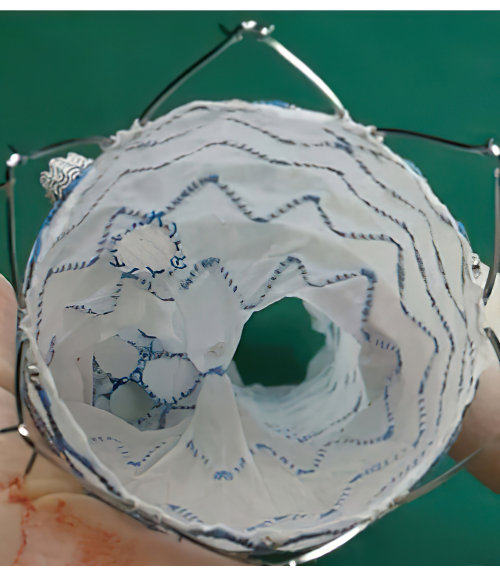
图1:改良覆膜支架移植物。 改良覆膜支架移植物的顶视图,显示无渗漏间隙
访问受限。请登录或开始试用以查看此内容。
讨论
Kasirajan 于 2011 年首次报道使用章鱼技术重建内脏动脉分支,取得了良好的治疗效果10。通过模块化方式利用现有的支架移植物,章鱼技术能够有效隔绝胸腹主动脉瘤,同时保留内脏动脉的灌注11。该方法避免了传统开放手术带来的广泛创伤和高风险,为无法耐受开放手术或需要紧急干预的患者提供了新的治疗选择。值得注意的是,在处理复杂的胸腹主动脉瘤解剖结构时,章鱼技术展现出显著的灵活性和适应性。
章鱼技术是一种并行支架置入方法,与所有并行支架结构一样,其应用受限于并行支架的数量。随着并行支架数量的增加,并支架之间的间隙数量也随之增多,显著提高了支架间沟槽区域发生内漏的风险12,13,14。此外,章鱼技术需要使用直径相对较大的支架,这可能会压迫近端支架,导致其折叠,最终引发内漏...
访问受限。请登录或开始试用以查看此内容。
披露
作者无任何利益冲突需要披露。
材料
| 姓名 | 公司 | 目录编号 | 评论 |
|---|---|---|---|
| Angiographic catheter MP A1 | Cordis | 451-506P0 | 主动脉血管造影。 |
| Centimeter Sizing Catheter | Cook | PIG-CSC-20 | 长度测量和主动脉血管造影。 |
| Endurant stent graft | Medtronic | ETBF3616C145E | 腹主动脉血流重建。 |
| Endurant stent graft | Medtronic | ETLW1624C124E | 内脏动脉重建。 |
| Hi-Torque Supra Core Guide Wire | Abbott | 1002703-02 | 器械的置入与交换。 |
| Lunderquist Extra-Stiff Wire Guide | Cook | TSCMG-35-300-7-LES | 器械的置入与交换。 |
| Perclose ProGlide Suture-Mediated Closure System | Abbott | 12673-03 | 经皮操作后缝合介导的血管闭合。 |
| S.M.A.R.T. Vascular Stent System | Cordis | C06060SL | 增强支架锚定强度。 |
| Valiant Captivia Stent Graft | Medtronic | VAMF3030C200TU | 胸主动脉重建。 |
| VIABAHN Endoprosthesis | Gore | VBCR060501A | 内脏动脉重建。 |
| VIABAHN Endoprosthesis | Gore | VBCR071001A | 内脏动脉重建。 |
| VIABAHN Endoprosthesis | Gore | VBCR081001A | 内脏动脉重建。 |
| VIABAHN Endoprosthesis | Gore | VBCR061501A | 内脏动脉重建。 |
| ZIPwire Hydrophilic Guide Wire | Boston Scientific | M00146151B0 | 促进在血管路径中的导引通过。 |
参考文献
- Tenorio, E. R., Dias-Neto, M. F., Lima, G. B. B., Estrera, A. L., Oderich, G. S. Endovascular repair for thoracoabdominal aortic aneurysms: Current status and future challenges. Ann Cardiothorac Surg. 10 (6), 744-767 (2021).
- Ouzounian, M., et al. Thoracoabdominal aortic disease and repair: Jacc focus seminar, part 3. J Am Coll Cardiol. 80 (8), 845-856 (2022).
- Huu, A. L., Green, S. Y., Coselli, J. S. Thoracoabdominal aortic aneurysm repair: From an era of revolution to an era of evolution. Semin Thorac Cardiovasc Surg. 31 (4), 703-707 (2019).
- Tanaka, A., Safi, H. J., Estrera, A. L. Open thoracoabdominal aortic aneurysm repair. Ann Thorac Surg. S0003-4975 (24), 00676-00683 (2024).
- Khoury, M. K., Acher, C., Wynn, M. M., Acher, C. W. Long-term survival after descending thoracic and thoracoabdominal aortic aneurysm repair. J Vasc Surg. 74 (3), 843-850 (2021).
- Mkalaluh, S., et al. Open surgical thoracoabdominal aortic aneurysm repair: The heidelberg experience. J Thorac Cardiovasc Surg. 156 (6), 2067-2073 (2018).
- Moulakakis, K. G., et al. Hybrid open endovascular technique for aortic thoracoabdominal pathologies. Circulation. 124 (24), 2670-2680 (2011).
- Hsu, M. Y., et al. Use of the octopus technique for endovascular treatment of complex aortic lesions. J Vasc Interv Radiol. 30 (4), 495-502 (2019).
- Sun, Y., et al. Clinical effect of endovascular repair of complex aortic lesions using optimized octopus surgery. Front Bioeng Biotechnol. 11, 1240651(2023).
- Kasirajan, K. Branched grafts for thoracoabdominal aneurysms: Off-label use of fda-approved devices. J Endovasc Ther. 18 (4), 471-476 (2011).
- Li, Z., et al. Octopus endograft technique to treat a ruptured thoracoabdominal aortic aneurysm. J Endovasc Ther. 25 (2), 237-241 (2018).
- Schwierz, E., et al. Experience with the sandwich technique in endovascular thoracoabdominal aortic aneurysm repair. J Vasc Surg. 59 (6), 1562-1569 (2014).
- Tanious, A., et al. Configuration affects parallel stent grafting results. J Vasc Surg. 67 (5), 1353-1359 (2018).
- Kopp, R., Stachowski, L., Puippe, G., Zimmermann, A., Menges, A. L. Long-term outcomes of endovascular aortic repair with parallel chimney or periscope stent grafts for ruptured complex abdominal aortic aneurysms. J Clin Med. 14 (1), 234(2025).
- Mestres, G., et al. The best conditions for parallel stenting during evar: An in vitro study. Eur J Vasc Endovasc Surg. 44 (5), 468-473 (2012).
- Tanaka, A., Oderich, G. S., Estrera, A. L. Total abdominal debranching hybrid thoracoabdominal aortic aneurysm repair versus chimneys and snorkels. JTCVS Tech. 10, 28-33 (2021).
- Anderson, J., Nykamp, M., Danielson, L., Remund, T., Kelly, P. W. A novel endovascular debranching technique using physician-assembled endografts for repair of thoracoabdominal aneurysms. J Vasc Surg. 60 (5), 1177-1184 (2014).
- Wanhainen, A., et al. Editor's choice - European Society for Vascular Surgery (ESVS) 2019 clinical practice guidelines on the management of abdominal aorto-iliac artery aneurysms. Eur J Vasc Endovasc Surg. 57 (1), 8-93 (2019).
- Oderich, G. S., et al. Evolution from physician-modified to company-manufactured fenestrated-branched endografts to treat pararenal and thoracoabdominal aortic aneurysms. J Vasc Surg. 70 (1), 31-42.e7 (2019).
- Chait, J., et al. Five-year outcomes of physician-modified endografts for repair of complex abdominal and thoracoabdominal aortic aneurysms. J Vasc Surg. 77 (2), 374-385.e4 (2023).
- Dua, A., Lavingia, K. S., Deslarzes-Dubuis, C., Dake, M. D., Lee, J. T. Early experience with the octopus endovascular strategy in the management of thoracoabdominal aneurysms. Ann Vasc Surg. 61, 350-355 (2019).
- Wang, M., et al. Endovascular treatment of ruptured or symptomatic thoracoabdominal and pararenal aortic aneurysms using octopus endograft technique: Mid-term clinical outcomes. J Endovasc Ther. 30 (2), 163-175 (2023).
- Liu, J., et al. Total endovascular repair with parallel stent-grafts for postdissection thoracoabdominal aneurysm after prior proximal repair. J Endovasc Ther. 26 (5), 668-675 (2019).
- Guo, B., et al. Endovascular outcomes in aortic arch repair with double and triple parallel stent grafts. J Vasc Interv Radiol. 31 (12), 1984-1992.e1 (2020).
访问受限。请登录或开始试用以查看此内容。
重印与许可
