This video demonstrates antibody-dependent enhancement of Zika virus infection in human primary macrophages, using dengue antibody–virus complexes to model how cross-reactive antibodies facilitate Fcγ receptor–mediated viral entry and replication for studying infection mechanisms and immune interactions.
Un abonnement JoVE est requis pour visualiser ce contenu. Connectez-vous ou commencez votre période d'essai gratuite.
Article de méthode
Antibody-Dependent Enhancement of Zika Virus by Dengue Antibodies in Human Primary Macrophages
190 vues
⸱
31 juillet 2026
Dans cet article
Résumé
Protocole
NOTE: This protocol can be used to examine ADE (antibody-dependent enhancement) of ZIKV (Zika virus) replication in any human cell type that expresses the Fcγ receptor. The protocol consists of three parts (Figure 1).
1. Cell Seeding and Infection Setup:
NOTE: For this particular study, human primary macrophages or U937 myelomonocytic cell line (ATCC-CRL-1593.2) were used. The cells were maintained in Roswell Park Memorial Institute (RPMI) growth medium supplemented with 10% fetal bovine serum (FBS) at a 37 °C incubator with 5% carbon dioxide (CO2). All the steps were carried out in a biosafety level 2 (BSL-2) biosafety cabinet in sterile conditions.
- Seed 3 x 10⁴ cells per well in a sterile flat-bottom 96-well plate along with 100 µL of medium and place them in the 37 °C incubator with 5% CO2.
- After seeding the cells, thaw serum samples at room temperature and make 10-fold serial dilutions (i.e., 1/10, 1/100, 1/1,000, 1/10,000) by mixing the samples in serum-free medium. Aliquot the dilutions into a sterile 96-well plate. Use the virus without serum as an additional control.
- Thaw the ZIKV stock at 37 °C in a water bath for 1-2 min and quickly transfer it to ice for future use.
- Add a 0.1 multiplicity of infection (MOI) equivalent amount of ZIKV strain MR766 to the serum aliquots.
NOTE: Make sure the dilution factor remains constant and the total volume is ~200 µL; this is enough for triplicate samples for each treatment. Keep three wells uninfected as negative controls for downstream analysis. - Incubate the serum dilutions with the added virus in the 37 °C incubator with 5% CO2 for 1 h in order to allow the DENV (dengue virus) antibodies to form complexes with the Zika virions (for convenience, hereafter referred to as "immune complexes").
- Aspirate the media from the cells that were seeded in the flat-bottom 96-well plate. Wash the cells with sterile 1x phosphate-buffered saline (1x PBS).
- Add 50 µL of the immune complexes to each well and incubate at 37 °C in a 5% CO2 incubator for 2 h.
- After 2 h of incubation, aspirate the media containing the immune complexes from the cells, using a multichannel pipette, and wash the cells 2x with 1x PBS to completely remove the immune complexes and any unattached virions.
- Add 100 µL of fresh complete media supplemented with 10% FBS to each well, and incubate the cells at 37 °C with 5% CO2 for 48 h.
Accès restreint. Veuillez vous connecter ou commencer un essai pour afficher ce contenu.
Résultats
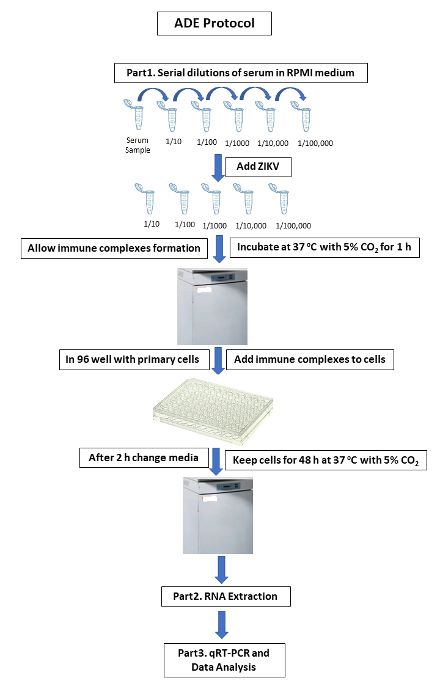
Figure 1: Diagrammatic illustration of the ADE protocol. A step-by-step illustration shows all the steps involved in the whole protocol.
Accès restreint. Veuillez vous connecter ou commencer un essai pour afficher ce contenu.
Matériaux
| Nom | Entreprise | Numéro de catalogue | Commentaires |
|---|---|---|---|
| Fetal Bovine Serum | GEMINI | 100-106 | |
| RPMI-medium | Gibco | 11875093 |
