This study describes a bedside protocol for semi-quantitative assessment of sputum consistency in mechanically ventilated patients with severe pneumonia receiving nebulized antibiotic therapy and evaluates its association with extubation outcomes.
Article de recherche
Association Between Sputum Consistency and Extubation in Mechanically Ventilated Patients with Severe Pneumonia Receiving Nebulized Antibiotic Therapy
Dans cet article
Résumé
Résumé
Thick airway secretions may impair airway clearance and contribute to extubation failure in mechanically ventilated patients with severe pneumonia. Bedside sputum consistency assessment is commonly used in intensive care unit (ICU) practice, but its relationship with extubation outcomes remains insufficiently studied. Thus, we conducted a single-center prospective observational study of 80 mechanically ventilated adults with severe pneumonia who received nebulized sulfadiazine-polymyxin B as part of ICU care. Bedside sputum consistency was assessed using a semi-quantitative clinical scale before and after therapy. Change in bedside sputum consistency score was defined as the pre-treatment score minus the post-treatment score. The primary outcome was extubation success, defined as removal of the endotracheal tube without reintubation within 72 h. Nebulizer type, clinical characteristics, ventilator parameters, microbiological findings, and outcomes were recorded. Multivariable logistic regression was used to evaluate the association between changes in consistency and extubation success. Eighty patients were included: 27 received jet nebulization, 23 mesh nebulization, and 30 ultrasonic nebulization. Extubation success occurred in 50 patients. Patients with successful extubation had a greater improvement in the bedside sputum consistency score than patients without successful extubation (1.28 ± 0.78 vs 0.63 ± 1.00; p = 0.004). In a baseline-adjusted analysis, successful extubation was associated with a 0.63-point lower post-treatment score (adjusted mean difference, -0.63; 95% CI, -1.06 to -0.21; p = 0.003). In the parsimonious multivariable analysis, greater improvement in the bedside sputum consistency score remained associated with successful extubation (OR, 2.90; 95% CI, 1.51–5.56; p = 0.001), whereas baseline score was not independently associated with the outcome. Nebulizer type was not significantly associated with extubation success. In conclusion, the mechanically ventilated patients with severe pneumonia receiving nebulized sulfadiazine-polymyxin B, greater improvement in bedside sputum consistency was associated with successful extubation. Bedside secretion assessment may provide useful supportive information during extubation readiness evaluation. Further controlled studies using standardized and objective rheological measurements are warranted.
Introduction
Critically ill patients on invasive ventilation for severe pneumonia commonly develop thick, tenacious airway secretions that impair clearance1. The viscoelastic gel matrix of airway mucus (rich in large mucin glycoproteins and trapped DNA) becomes even more tenacious in inflammation. Accumulated secretions increase airway resistance, promote lung atelectasis, and hinder ventilation and oxygenation2. Effective sputum clearance is thus crucial for recovery and successful weaning. In practice, clinicians often administer humidification and mucolytic agents (e.g., hypertonic saline, N-acetylcysteine, dornase alfa) to liquefy sputum3. However, despite widespread use, randomized trials of mucolytics in acute respiratory failure have generally failed to demonstrate consistent benefit on clinical outcomes2. In particular, high-quality evidence is lacking to guide suctioning or nebulization practices for “thick secretions”, even though poor secretion management is thought to contribute to extubation failure4,5.
Aerosolized antibiotics have emerged as an adjunctive therapy for ventilator-associated pneumonia (VAP) caused by multidrug-resistant (MDR) Gram-negative bacteria6. Polymyxin antibiotics, especially polymyxin B (PMB), are often used as a last-resort treatment for carbapenem-resistant pathogens7. Inhaled PMB achieves very high local drug concentrations in the lungs with limited systemic absorption, potentially improving efficacy while sparing systemic toxicity. Moreover, PMB is a cationic peptide that disrupts bacterial outer membranes, which may facilitate penetration of co-administered antibiotics8. Sulfadiazine, a broad-spectrum sulfonamide, is not conventionally used by inhalation for pneumonia, but it has historical activity against Gram-positive and some Gram-negative organisms9. The combination of sulfadiazine with PMB may thus leverage synergistic antimicrobial effects, although data on this regimen are scarce10.
The use of nebulized medication during mechanical ventilation is critically dependent on the type and method of the device used. The traditional jet nebulizers have been largely replaced by vibrating mesh nebulizers (VMNs); VMNs generate fine, uniform airborne particles, with a high percentage of the dose delivered to the lower airways11. Conversely, ultrasonic nebulizers - although quiet and capable of producing small particles - generate heat and can have larger residual volumes, leading to reduced lung deposition. According to bench studies, VMNs have been found to be more effective for lung delivery and shorter treatment time than jet or ultrasonic nebulizers. However, in the clinical setting, the selection of nebulizers is less consistent, and differences among devices do not necessarily result in significant changes in clinical outcomes, such as clearance of secretions or extubation12.
A key outcome in critically ill patients is successful extubation (removal of the endotracheal tube without reintubation)13. The variables influencing the success of extubation are respiratory mechanics, muscle strength, airway patency, and clearance of underlying pathology. Sputum consistency reduction may help clear the airways and enhance the chances of successful extubation, yet limited data exist regarding the relationship14.
To our knowledge, few studies have directly evaluated the relationship between sputum rheological changes and extubation outcomes in mechanically ventilated patients receiving inhaled antibiotic therapy. Therefore, we conducted a single-center prospective observational study to evaluate the association between change in bedside sputum consistency score and extubation success in mechanically ventilated patients with severe pneumonia receiving nebulized antibiotic therapy as part of ICU care. The primary objective was to determine whether improvement in bedside sputum consistency score was associated with extubation success, defined as successful removal of the endotracheal tube without reintubation within 72 hours. Secondary objectives were to compare bedside sputum characteristics and extubation outcomes across documented nebulizer types and to describe ventilatory, microbiological, and clinical outcomes in the study population.
Protocole
The single-center, prospective, observational study was approved by the Medical Ethics Committee of the First Affiliated Hospital of Guangxi Medical University before patient enrollment (Approval No. 2023-S089-01). The study was conducted in accordance with the ethical principles of the Declaration of Helsinki and complied with institutional guidelines for research involving human participants. Written informed consent was obtained from all participants or, when patients lacked decision-making capacity because of critical illness, from their legally authorized representatives before enrollment.
Study design and patients
Adult patients with severe pneumonia requiring invasive mechanical ventilation were screened for eligibility and enrolled after meeting predefined inclusion criteria. An overview of participant screening, enrollment, nebulized therapy, serial bedside sputum consistency assessments, ventilator-liberation procedures, outcome classification, and statistical analysis is presented in Figure 1.
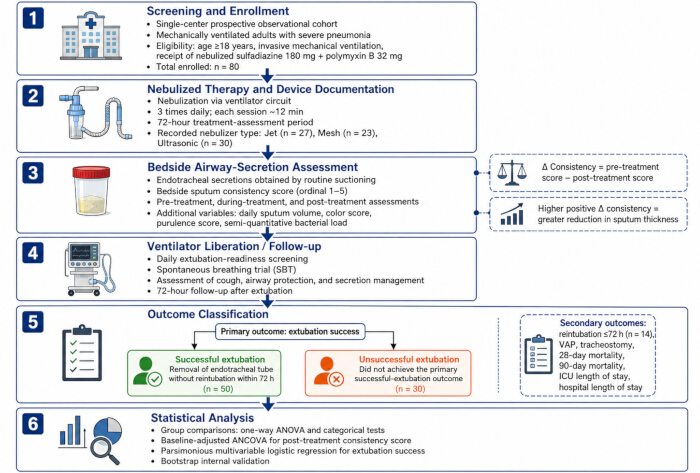
Figure 1: Overall study design and workflow. Please click here to view a larger version of this figure.
The study evaluated the association between improvement in bedside sputum consistency and extubation success in patients receiving nebulized antibiotic therapy as part of ICU care. Inclusion criteria were: age ≥18 years and a diagnosis of severe pneumonia requiring invasive mechanical ventilation, as determined by the treating clinical team based on standard clinical, radiological, and microbiological assessment in routine ICU practice. In addition, patients were included if they received nebulized sulfadiazine 180 mg and polymyxin B 32 mg, as per the institutional ICU protocol. Nebulization was administered via the ventilator circuit three times daily, with each session lasting approximately 12 min per institutional protocol.
Nebulized treatment schedule and discontinuation
Nebulized sulfadiazine 180 mg plus polymyxin B 32 mg was administered through the ventilator circuit three times daily at approximately 8 h intervals. Each nebulization session lasted approximately 12 min. The planned treatment-assessment period was 72 h and comprised nine nebulization sessions. Nebulized treatment was not discontinued on the basis of the bedside sputum consistency score. Treatment could be discontinued earlier when clinically indicated because of extubation, a clinically significant treatment-related adverse event, withdrawal or limitation of active treatment, or a decision by the attending physician based on a change in the patient’s clinical condition. Exclusion criteria included do-not-intubate status, allergy to study medications, or missing consistency measurements.
All patients received standard ICU care, including lung-protective ventilation and antimicrobial therapy per infectious disease consultation. The choice of nebulizer device was at the treating team’s discretion, based on availability: a conventional jet nebulizer, a vibrating mesh nebulizer, or an ultrasonic nebulizer. Nebulizer type was recorded according to the device documented in the clinical record. Humidification practices and ventilator circuit management followed routine ICU care. All eligible patients during the study period were included. No formal sample size calculation was performed because this was an observational study that enrolled all eligible patients during the predefined study period. Instead, all eligible patients meeting the inclusion criteria during the predefined study period were included to minimize selection bias and maximize statistical power within the available dataset.
Data collection
Clinical data were collected prospectively using predefined case-report forms and supplemented by routine ICU medical records. Variables included age, sex, body mass index, smoking history, comorbidities, acute physiology and chronic health evaluation II (APACHE II) score, sequential organ failure assessment (SOFA) score, nebulizer type, and bedside sputum characteristics.
Airway secretions were collected during routine endotracheal suctioning using the institutional closed-suction procedure and transferred directly into a sterile, transparent sputum container. No saline or other diluent was added to the sample before assessment. Samples were assessed at the bedside within 5 min of collection under routine room lighting. The container was placed on a level surface for initial visual inspection and was then gently tilted to assess the mobility, adherence, thickness, and tenacity of the secretions. The bedside nurse responsible for the patient performed the assessment and recorded the findings immediately on the predefined study case-report form. Before undertaking study assessments, participating ICU nurses were trained using the study scoring sheet, written category descriptors, and representative examples derived from the published assessment framework. The institutionally adapted scale used in this study was not identical to the previously published tool and was not independently validated. Bedside sputum consistency was graded using an institutionally standardized ordinal 1–5 clinical scale. Score 1 indicated thin, watery, or nearly watery secretions that moved immediately and freely when the container was gently tilted, with minimal adherence to the container wall. Score 2 indicated slightly thick secretions that flowed readily with gentle tilting but produced a light coating on the container wall. Score 3 indicated moderately thick secretions that moved slowly when the container was tilted, partly retained their shape, and showed moderate adherence to the container. Score 4 indicated thick secretions that moved only after repeated or prolonged tilting, substantially retained their shape, and adhered prominently to the container wall. Score 5 indicated very thick or highly tenacious secretions that showed little or no movement with gentle tilting and remained strongly adherent to the container. Higher scores, therefore, represented thicker and more tenacious secretions. Change in bedside sputum consistency score, designated Δ consistency, was calculated as the pre-treatment score minus the post-treatment score. A positive Δ consistency value indicated improvement, with a larger positive value representing a greater reduction in sputum thickness.
The pre-treatment assessment was performed immediately before initiation of nebulized antibiotic treatment. During-treatment assessments were performed during the subsequent treatment period, and the post-treatment assessment was performed after completion of the 72-h treatment-assessment period, following approximately nine nebulization sessions. The trained ICU nurse responsible for the patient at each time point performed the assessment. The protocol did not require all assessments for an individual patient to be performed by the same nurse, and assessor identity was not incorporated into the analysis. Daily sputum volume was defined as the cumulative volume of airway secretions collected through endotracheal suctioning during each 24-h period. Bedside nursing staff recorded the volume in milliliters after each suction episode, and the recorded volumes were summed to calculate the total daily sputum volume.
Sputum color was assessed by visual inspection of the freshly collected sample in a transparent container under routine room lighting. Color was recorded using an institutionally standardized four-point ordinal scale: score 1, clear or white; score 2, pale yellow; score 3, yellow; and score 4, yellow-green or green. Assessors selected the category that most closely matched the sample's predominant color.
Sputum purulence was assessed visually according to the amount and density of opaque purulent material within the sample. Purulence was recorded using an institutionally standardized four-point ordinal scale: score 1, nonpurulent or predominantly mucoid secretions; score 2, slightly purulent secretions with a small amount of opaque material or purulent streaking; score 3, moderately purulent secretions containing an approximately mixed mucoid and purulent appearance; and score 4, markedly or grossly purulent secretions composed predominantly of dense, opaque purulent material. Higher scores indicated greater visible purulence.
Semi-quantitative bacterial load was obtained directly from routine institutional microbiology reports and was not assigned by the bedside nurse or study investigator. Respiratory-culture growth was categorized as +, ++, +++, or ++++ according to the microbiology laboratory’s standard operating procedure, with increasing numbers of plus signs indicating progressively greater reported growth. The bacterial load category reflected growth in the available respiratory specimen. Serial pre-treatment and post-treatment cultures were not systematically obtained; therefore, these categories were not used to assess microbiological clearance.
Before study assessments began, participating ICU nurses received standardized instruction on airway-secretion collection, observation conditions, the written category definitions, and completing the study case-report form. Training included a review of the scoring guide and representative examples for each bedside sputum consistency category. Assessors were instructed to evaluate freshly collected, undiluted secretions in a transparent container under comparable lighting conditions, to use gentle container tilting when evaluating secretion mobility and adherence, and to select the single category that most closely matched the predefined descriptors. Findings were recorded immediately after assessment. Assessors were instructed not to modify the score based on the documented nebulizer type, the patient’s previous score, or the anticipated extubation outcome.
The nurse responsible for the patient at each assessment performed the scoring. Repeated assessments for an individual patient were not necessarily performed by the same nurse; assessor identity was not incorporated into the analysis, and formal intra-observer and inter-observer reproducibility testing was not performed. These measures were pragmatic bedside clinical descriptors. The consistency scale was not independently validated against objective viscometry or rheometry, and the recorded scores should not be interpreted as direct measurements of the viscous, elastic, or other rheological properties of airway secretions.
Ventilator liberation and extubation readiness
Patients were screened daily for readiness to undergo a spontaneous breathing trial after improvement of the condition responsible for respiratory failure. Standard readiness criteria were a spontaneous respiratory rate ≤ 35 breaths/min; adequate oxygenation, defined as SpO₂ ≥ 90% with FiO₂ ≤ 0.40 and PEEP ≤ 8 cmH₂O or PaO₂/FiO₂ ≥ 150 with PEEP ≤ 8 cmH₂O; hemodynamic stability with no or minimal vasopressor support; the ability to initiate spontaneous inspiratory effort; an awake or readily arousable state; and adequate cough and airway-secretion control. Continuous sedative infusions were reduced or discontinued before assessment whenever clinically appropriate.
Eligible patients underwent a 30-min spontaneous breathing trial using pressure-support ventilation of 8 cmH₂O. FiO₂ was maintained at the pre-trial level and was not routinely increased during the trial. Respiratory rate, tidal volume, rapid shallow breathing index, oxygen saturation, heart rate, blood pressure, breathing pattern, and clinical signs of respiratory distress were monitored throughout the trial.
The spontaneous breathing trial was considered unsuccessful if the patient developed a respiratory rate > 35 breaths/min for at least 5 min, SpO₂ < 90%, heart rate > 140 beats/min or a sustained change > 20% from baseline, systolic blood pressure < 90 or >180 mmHg, a new clinically significant arrhythmia, marked agitation or anxiety, diaphoresis, accessory-muscle use, paradoxical breathing, or other evidence of intolerance.
Rapid shallow breathing index (RSBI), negative inspiratory force, vital capacity, and spontaneous respiratory rate were recorded as supportive objective measures. An RSBI ≤ 105 breaths/min/L was considered favorable but was not used as an isolated mandatory criterion. The decision to extubate was based on the integrated physiologic and clinical assessment rather than any single respiratory index.
After successful completion of the spontaneous breathing trial, airway competence was evaluated separately. Cough strength was graded using a semiquantitative 0–5 scale: 0, no cough on command; 1, audible movement of air without an audible cough; 2, weakly audible cough; 3, clearly audible cough; 4, strong cough; and 5, multiple sequential strong coughs. A cough score ≥ 3, together with the ability to manage airway secretions, was considered adequate for extubation. Neurological status, airway patency, secretion burden, and the need for frequent endotracheal suctioning were also assessed. A cuff-leak test was performed in patients considered at increased risk of post-extubation upper-airway obstruction. The final extubation decision was made by the attending ICU physician after successful completion of the spontaneous breathing trial and confirmation of adequate airway protection.
Outcomes
The primary outcome was extubation success, defined as successful removal of the endotracheal tube without reintubation within 72 h. The primary exposure of interest was the change in bedside sputum consistency score, defined as the difference between pre-treatment and post-treatment consistency scores. Secondary outcomes included reintubation within 72 h, ventilator-associated pneumonia, tracheostomy, 28-day mortality, 90-day mortality, duration of mechanical ventilation, ICU length of stay, and hospital length of stay. Ventilator-associated pneumonia during follow-up was defined as a new or recurrent episode diagnosed after enrollment according to institutional clinical criteria. Secondary exploratory analyses compared bedside sputum characteristics and extubation outcomes across documented nebulizer types.
Statistical analysis
Continuous variables are presented as mean ± standard deviation, and categorical variables as number and percentage. Comparisons of continuous variables across the three documented nebulizer groups were performed using one-way analysis of variance. Categorical variables were compared using Pearson’s chi-square test. Comparisons of continuous variables between the successful and unsuccessful extubation groups were performed using Welch’s two-sample t-test. All statistical tests were two-sided, and p < 0.05 was considered statistically significant. Because analysis of the change score alone does not fully account for potential differences in the baseline bedside sputum score, the principal baseline-adjusted analysis used analysis of covariance. Post-treatment bedside sputum score was entered as the dependent variable, extubation outcome as the grouping factor, and baseline sputum score as a covariate. Heteroskedasticity-Consistent 3 (HC3) heteroscedasticity-robust standard errors were used. The adjusted mean difference, 95% confidence interval, and p-value are reported.
The pre-treatment minus post-treatment change score was retained as a supportive analysis, with a positive value indicating improvement. For the unadjusted comparison of change scores between extubation groups, rank-biserial correlation was calculated as an effect-size measure, and its 95% confidence interval was obtained using 20,000 stratified bootstrap resamples.
A parsimonious multivariable logistic-regression model was constructed for successful extubation. The model included documented nebulizer modality, change in the bedside sputum consistency score, baseline bedside sputum consistency score, and APACHE II score. The Jet nebulizer group was used as the reference category. APACHE II was retained as the sole global illness severity measure, whereas SOFA was excluded to reduce overlap with other severity measures. Age and COPD were excluded from the final model to reduce the number of estimated parameters relative to the 30 patients without successful extubation.
Multicollinearity was evaluated using variance-inflation factors. Overall model significance was evaluated using the likelihood-ratio test, and model fit was assessed using the Hosmer–Lemeshow goodness-of-fit test. Discrimination was described using the area under the receiver-operating-characteristic (ROC) curve, and overall predictive error was described using the Brier score. Internal validation was performed using 1,000 bootstrap resamples to estimate optimism-corrected discrimination and the calibration slope. Odds ratios with 95% confidence intervals and two-sided p-values are reported. Because of the modest sample size, the model was considered exploratory rather than a validated clinical prediction model. Statistical analyses were performed using R version 4.4.1 (R Project for Statistical Computing; RRID:SCR_001905).
Résultats
Baseline characteristics
Eighty patients met the inclusion criteria. Nebulizer type was jet (n = 27), mesh (n = 23), or ultrasonic (n = 30). Baseline patient demographics and clinical severity scores were similar among the three nebulization groups (Table 1). The mean age was 73.8 ± 8.8 years in the Jet group, 70.3 ± 11.4 in the Mesh group, and 73.8 ± 10.9 in the Ultrasonic group (p = 0.393). Body mass index and duration of illness did not differ significantly (p = 0.138 and p = 0.892, respectively). Severity of illness scores were comparable: APACHE II scores were 23.4 ± 4.9 (Jet), 20.4 ± 6.1 (Mesh), 22.7 ± 5.1 (Ultrasonic) (p = 0.123), and SOFA scores were 8.85 ± 2.67, 7.04 ± 3.90, and 7.53 ± 2.83, respectively (p = 0.106).
| Variable | Jet (n = 27) | Mesh (n = 23) | Ultrasonic (n = 30) | p-value |
| Age (years) | 73.81 ± 8.75 | 70.26 ± 11.40 | 73.77 ± 10.93 | 0.393 |
| Body Mass Index (kg/m²) | 26.23 ± 3.86 | 25.23 ± 4.96 | 23.92 ± 4.22 | 0.138 |
| APACHE II Severity Score | 23.44 ± 4.92 | 20.39 ± 6.09 | 22.67 ± 5.11 | 0.123 |
| SOFA Organ Dysfunction Score | 8.85 ± 2.67 | 7.04 ± 3.90 | 7.53 ± 2.83 | 0.106 |
| Duration of Illness (days) | 9.74 ± 4.30 | 9.17 ± 4.07 | 9.33 ± 4.67 | 0.892 |
| Sex | ||||
| Female | 12 (44.4%) | 13 (56.5%) | 10 (33.3%) | 0.24 |
| Male | 15 (55.6%) | 10 (43.5%) | 20 (66.7%) | |
| Smoking Status | ||||
| No | 9 (33.3%) | 11 (47.8%) | 22 (73.3%) | 0.009 |
| Yes | 18 (66.7%) | 12 (52.2%) | 8 (26.7%) | |
| Chronic Obstructive Pulmonary Disease | ||||
| No | 17 (63.0%) | 15 (65.2%) | 19 (63.3%) | 0.985 |
| Yes | 10 (37.0%) | 8 (34.8%) | 11 (36.7%) | |
| Diabetes Mellitus | ||||
| No | 20 (74.1%) | 16 (69.6%) | 21 (70.0%) | 0.923 |
| Yes | 7 (25.9%) | 7 (30.4%) | 9 (30.0%) | |
| Hypertension | ||||
| No | 14 (51.9%) | 12 (52.2%) | 14 (46.7%) | 0.899 |
| Yes | 13 (48.1%) | 11 (47.8%) | 16 (53.3%) | |
| Primary Infecting Pathogen | ||||
| Acinetobacter | 8 (29.6%) | 5 (21.7%) | 6 (20.0%) | 0.669 |
| Klebsiella | 4 (14.8%) | 5 (21.7%) | 5 (16.7%) | |
| MRSA | 3 (11.1%) | 4 (17.4%) | 6 (20.0%) | |
| None | 4 (14.8%) | 7 (30.4%) | 6 (20.0%) | |
| Pseudomonas | 8 (29.6%) | 2 (8.7%) | 7 (23.3%) | |
| Invasive Ventilation Mode | ||||
| PCV | 9 (33.3%) | 9 (39.1%) | 13 (43.3%) | 0.747 |
| PSV | 4 (14.8%) | 1 (4.3%) | 4 (13.3%) | |
| SIMV | 3 (11.1%) | 5 (21.7%) | 5 (16.7%) | |
| VCV | 11 (40.7%) | 8 (34.8%) | 8 (26.7%) | |
| ARDS Severity Classification | ||||
| Mild | 12 (44.4%) | 11 (47.8%) | 15 (50.0%) | 0.996 |
| Moderate | 10 (37.0%) | 8 (34.8%) | 10 (33.3%) | |
| None | 5 (18.5%) | 4 (17.4%) | 5 (16.7%) | |
Table 1: Baseline characteristics by nebulization method. Study population: Eighty mechanically ventilated patients with severe pneumonia receiving nebulized sulfadiazine–polymyxin B. Reported values: Mean ± SD or n (%). Comparison: Baseline demographic, clinical, microbiological, and ventilatory characteristics among the Jet (n = 27), Mesh (n = 23), and Ultrasonic (n = 30) nebulizer groups. Statistical analysis: Continuous variables were compared using one-way ANOVA and categorical variables using Pearson's χ2 test.
The distribution of sex and comorbidities was also similar across groups (all p > 0.1). Notably, smoking history was more prevalent in the Jet group (66.7% smokers) than in the Ultrasonic group (26.7% smokers), with the difference reaching statistical significance (p = 0.009). Rates of COPD, diabetes, and hypertension were not significantly different (p = 0.985, 0.923, and 0.899, respectively). The spectrum of primary pathogens (Acinetobacter, Klebsiella, MRSA, Pseudomonas) was balanced across groups (p = 0.669). Modes of mechanical ventilation and ARDS severity classification did not differ by group (both p > 0.7). Thus, aside from the higher smoking rate in the Jet group, baseline characteristics and disease severity were comparable among the Jet, Mesh, and Ultrasonic cohorts.
Bedside sputum consistency and other secretion characteristics by nebulizer type
Bedside sputum characteristics by nebulizer type are shown in Table 2. Baseline sputum consistency score did not differ significantly among groups: 4.07 ± 0.92 in the Jet group, 4.39 ± 0.89 in the Mesh group, and 4.20 ± 0.81 in the Ultrasonic group (p = 0.439). During-treatment and post-treatment consistency scores were also similar across groups (p = 0.255 and p = 0.906, respectively). The mean change in sputum consistency was 0.96 ± 0.98 in the Jet group, 1.13 ± 0.92 in the Mesh group, and 1.03 ± 0.89 in the Ultrasonic group, with no significant difference among nebulizer types (p = 0.817). Daily sputum volume, sputum color, and sputum purulence scores were also not significantly different among nebulizer groups. Overall, bedside sputum characteristics were comparable across documented nebulizer types (Figure 2A).
| Variable | Jet (n = 27) | Mesh (n = 23) | Ultrasonic (n = 30) | p-value |
| Baseline Bedside Sputum Consistency Score | 4.07 ± 0.92 | 4.39 ± 0.89 | 4.20 ± 0.81 | 0.439 |
| In-Treatment Bedside Sputum Consistency Score | 3.29 ± 0.90 (n=21) | 3.76 ± 1.00 (n=21) | 3.44 ± 0.93 (n=27) | 0.255 |
| Post-Treatment Bedside Sputum Consistency Score | 3.11 ± 1.25 | 3.26 ± 1.25 | 3.17 ± 1.09 | 0.906 |
| Change in Bedside Sputum Consistency (Δ Consistency) | 0.96 ± 0.98 | 1.13 ± 0.92 | 1.03 ± 0.89 | 0.817 |
| Daily Sputum Volume (mL/day) | 113.89 ± 51.56 | 134.61 ± 53.37 | 121.23 ± 47.31 | 0.351 |
| Sputum color score | 2.33 ± 0.76 | 2.57 ± 0.73 | 2.37 ± 0.76 | 0.446 |
| Sputum purulence score | 2.63 ± 0.63 | 2.74 ± 0.62 | 2.70 ± 0.65 | 0.759 |
Table 2: Bedside sputum characteristics by nebulization method. Study population: Eighty mechanically ventilated patients with severe pneumonia. Reported values: Mean ± SD. Comparison: Bedside sputum consistency and secretion characteristics among the three nebulizer groups. Statistical analysis: Continuous variables were compared using one-way ANOVA. During-treatment assessments were analyzed using available-case analysis without imputation.
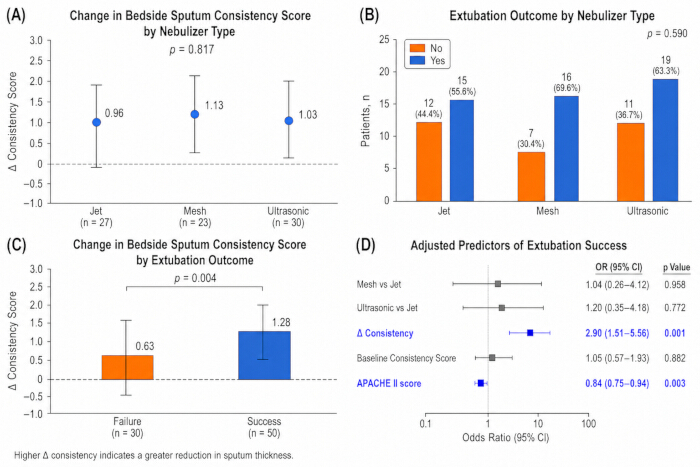
Figure 2: Association between bedside sputum consistency, nebulizer type, and extubation outcome. (A) Change in bedside sputum consistency score according to documented nebulizer type (Jet, n = 27; Mesh, n = 23; Ultrasonic, n = 30). Positive Δ consistency values indicate improvement and were calculated as the pre-treatment bedside sputum consistency score minus the post-treatment score; therefore, higher positive values represent a greater reduction in sputum thickness. Blue circles indicate group means, and error bars represent standard deviations (SD). Overall group differences were compared using one-way analysis of variance (ANOVA). (B) Extubation outcome according to documented nebulizer type. Blue bars represent patients with successful extubation, and orange bars represent patients without successful extubation. Values above the bars indicate the number and percentage of patients within each nebulizer group. Group proportions were compared using the Pearson χ2 test. (C) Change in bedside sputum consistency score according to extubation outcome. Orange bars represent patients without successful extubation (n = 30), and blue bars represent patients with successful extubation (n = 50). Positive Δ consistency values indicate greater improvement in bedside sputum consistency, calculated as the pre-treatment score minus the post-treatment score. Error bars represent SD. Between-group comparison was performed using the independent-samples t-test. (D) Forest plot showing the parsimonious multivariable logistic regression model for successful extubation. Squares represent adjusted odds ratios (ORs), horizontal lines represent 95% confidence intervals (CIs), and the vertical dashed line indicates an OR of 1.0 (no association). Blue markers indicate statistically significant predictors (p < 0.05), whereas gray markers indicate non-significant predictors. Abbreviations: OR, odds ratio; CI, confidence interval; SD, standard deviation; APACHE II, Acute Physiology and Chronic Health Evaluation II. Please click here to view a larger version of this figure.
Bacterial load in sputum
Semi-quantitative sputum bacterial load (graded +, ++, +++, ++++) did not significantly differ by nebulizer group (Table 3). The distribution of bacterial load categories (“+” through “++++”) was statistically similar (p = 0.594). For example, “+” load was present in 22.2% of Jet cases, 26.1% of Mesh, and 16.7% of Ultrasonic; “+++” and “++++” categories also showed no clear trend by device. Thus, baseline semi-quantitative bacterial load appeared broadly similar across nebulizer groups. These semi-quantitative categories reflect typical ICU reporting of respiratory cultures and provide a general estimate of airway bacterial burden.
| Level | Jet | Mesh | Ultrasonic | p-value |
| + | 6 (22.2%) | 6 (26.1%) | 5 (16.7%) | 0.594 |
| ++ | 15 (55.6%) | 11 (47.8%) | 13 (43.3%) | |
| +++ | 3 (11.1%) | 4 (17.4%) | 4 (13.3%) | |
| ++++ | 3 (11.1%) | 2 (8.7%) | 8 (26.7%) |
Table 3: Bacterial load category by nebulization method. Study population: Eighty mechanically ventilated patients with severe pneumonia. Reported values: n (%). Comparison: Semi-quantitative respiratory bacterial-load categories among the three nebulizer groups. Statistical analysis: Group distributions were compared using Pearson's χ2 test.
These bacterial load categories represented routine respiratory-culture reporting at the available assessment time point. Serial pre-treatment and post-treatment cultures were not systematically analyzed; therefore, these data cannot be used to evaluate microbiological clearance or an antibiotic-associated change in bacterial burden.
Ventilatory and gas exchange responses
Ventilatory parameters and gas-exchange changes before versus after aerosol therapy are summarized in Table 4. The duration of mechanical ventilation and the lengths of ICU and hospital stay were not significantly different among groups, indicating comparable overall clinical courses.
| Variable | Jet | Mesh | Ultrasonic | p-value |
| Duration of Mechanical Ventilation (days) | 8.89 ± 5.03 | 11.30 ± 3.38 | 9.07 ± 4.43 | 0.106 |
| ICU Length of Stay (days) | 16.22 ± 8.19 | 16.43 ± 7.89 | 16.23 ± 7.38 | 0.994 |
| Hospital Length of Stay (days) | 24.85 ± 9.93 | 25.78 ± 8.51 | 25.47 ± 9.34 | 0.936 |
| Change in Respiratory Compliance (Δ Compliance) | 0.86 ± 2.28 | 2.74 ± 2.52 | 1.22 ± 3.18 | 0.041 |
| Change in Oxygenation Index (Δ PaO₂/FiO₂) | 16.18 ± 36.19 | 32.84 ± 27.47 | 21.99 ± 32.02 | 0.193 |
| Change in Peak Airway Pressure (cmH₂O) | −0.19 ± 2.29 | −2.17 ± 2.79 | −1.07 ± 2.64 | 0.029 |
Table 4: Ventilation and gas exchange response by nebulization method. Study population: Eighty mechanically ventilated patients with severe pneumonia. Reported values: Mean ± SD. Comparison: Changes in ventilatory parameters and gas-exchange variables among the three nebulizer groups. Statistical analysis: Overall group differences were evaluated using one-way ANOVA.
Two ventilatory metrics did differ significantly. The Mesh nebulizer group showed a greater improvement in static respiratory compliance than the Jet group (mean Δ compliance: 2.74 vs 0.86 mL/cmH₂O, p = 0.041). Similarly, mean peak airway pressure decreased more in the Mesh group (-2.17 cmH₂O) than in the Jet group (-0.19 cmH₂O), with this difference reaching significance (p = 0.029). These findings indicate that the Mesh device showed greater improvement in lung mechanics, although these changes did not translate into differences in clinical outcomes. Changes in the oxygenation index (PaO₂/FiO₂) showed a trend favoring Mesh (ΔP/F increase of 32.84 vs 16.18), but did not reach significance (p = 0.193). In summary, although overall gas-exchange gains were not significantly different, the Mesh nebulizer group showed greater compliance and lower peak airway pressure.
Clinical outcomes
Extubation and clinical outcomes are presented in Table 5. Overall, 50 of 80 patients achieved the primary successful extubation outcome, whereas 30 did not. These 30 patients should not be interpreted as 30 reintubation events. Reintubation within 72 h occurred in 14 patients—4 in the Jet group, 4 in the Mesh group, and 6 in the Ultrasonic group—corresponding to 17.5% of the full cohort. Extubation success rates were numerically higher in the Mesh group, but the difference among the documented nebulizer types was not statistically significant (Figure 2B). The rate of successful extubation (liberation from the ventilator without reintubation) was 55.6% in the Jet group, 69.6% in the Mesh group, and 63.3% in the Ultrasonic group; this difference was not statistically significant (p = 0.590). Correspondingly, rates of reintubation within 72 h (14.8% Jet, 17.4% Mesh, 20.0% Ultrasonic; p = 0.876) and ventilator-associated pneumonia (14.8%, 8.7%, 20.0%; p = 0.521) were similar across modalities. Tracheostomy was required in 33.3% of Jet cases, 30.4% of Mesh cases, and 20.0% of Ultrasonic cases (p = 0.495).
| Clinical Outcome | Category | Jet | Mesh | Ultrasonic | p-value |
| Extubation Success | Yes | 15 (55.6%) | 16 (69.6%) | 19 (63.3%) | 0.59 |
| No | 12 (44.4%) | 7 (30.4%) | 11 (36.7%) | ||
| Reintubation (≤72 h) | No | 23 (85.2%) | 19 (82.6%) | 24 (80.0%) | 0.876 |
| Yes | 4 (14.8%) | 4 (17.4%) | 6 (20.0%) | ||
| Ventilator-Associated Pneumonia (VAP) | No | 23 (85.2%) | 21 (91.3%) | 24 (80.0%) | 0.521 |
| Yes | 4 (14.8%) | 2 (8.7%) | 6 (20.0%) | ||
| Tracheostomy | No | 18 (66.7%) | 16 (69.6%) | 24 (80.0%) | 0.495 |
| Yes | 9 (33.3%) | 7 (30.4%) | 6 (20.0%) | ||
| 28-day Mortality | Alive | 20 (74.1%) | 14 (60.9%) | 21 (70.0%) | 0.594 |
| Dead | 7 (25.9%) | 9 (39.1%) | 9 (30.0%) | ||
| 90-day Mortality | Alive | 15 (55.6%) | 11 (47.8%) | 9 (30.0%) | 0.136 |
| Dead | 12 (44.4%) | 12 (52.2%) | 21 (70.0%) | ||
| 90-day Functional Status | Independent | 5 (18.5%) | 7 (30.4%) | 5 (16.7%) | 0.128 |
| Partially Dependent | 5 (18.5%) | 4 (17.4%) | 2 (6.7%) | ||
| Fully Dependent | 5 (18.5%) | 0 (0.0%) | 2 (6.7%) | ||
| Dead | 12 (44.4%) | 12 (52.2%) | 21 (70.0%) |
Table 5: Extubation and major clinical outcomes by nebulization method. Study population: Eighty mechanically ventilated patients with severe pneumonia. Reported values: n (%). Comparison: Extubation success and major clinical outcomes among the three nebulizer groups. Statistical analysis: Categorical outcomes were compared using Pearson's χ2 test.
Mortality outcomes were likewise comparable: 28-day mortality was 25.9% (Jet), 39.1% (Mesh), and 30.0% (Ultrasonic), with no significant difference (p = 0.594). Ninety-day mortality showed a non-significant trend toward worse survival in the Ultrasonic group (70% deceased) versus Mesh (52.2%) and Jet (44.4%) (p = 0.136), but this did not reach statistical significance. Functional status at 90 days did not differ significantly by group (p = 0.128). In summary, no major differences in extubation success or other key outcomes were observed among the three nebulizer groups. Extubation success rates were modestly higher in the Mesh group, but this difference was not statistically significant (Figure 2B). Other outcomes (reintubation, VAP, tracheostomy, mortality) showed no significant modality-dependent variation (all p > 0.5).
Association of change in bedside sputum consistency score with extubation success
Baseline bedside sputum scores were similar between patients with successful and unsuccessful extubation (4.26 ± 0.85 vs 4.13 ± 0.90, respectively; p = 0.537) (Table 6). The corresponding post-treatment scores were 2.98 ± 1.20 in patients who successfully extubated and 3.50 ± 1.07 in those who did not. In the baseline-adjusted analysis of covariance, successful extubation was associated with a lower post-treatment bedside sputum score. The adjusted mean difference between the successful- and unsuccessful-extubation groups was -0.63 points (95% CI, -1.06 to -0.21; p = 0.003).
| Variable | Unsuccessful extubation, n | Unsuccessful extubation, mean ± SD | Successful extubation, n | Successful extubation, mean ± SD | p-value |
| Baseline bedside sputum Consistency score | 30 | 4.13 ± 0.90 | 50 | 4.26 ± 0.85 | 0.537 |
| Post-treatment bedside sputum score | 30 | 3.50 ± 1.07 | 50 | 2.98 ± 1.20 | 0.049 |
| Change in bedside sputum score | 30 | 0.63 ± 1.00 | 50 | 1.28 ± 0.78 | 0.004 |
| Duration of Mechanical Ventilation (days) | 30 | 10.50 ± 4.63 | 50 | 9.14 ± 4.31 | 0.197 |
| ICU Length of Stay (days) | 30 | 16.77 ± 7.68 | 50 | 16.00 ± 7.79 | 0.669 |
| Hospital Length of Stay (days) | 30 | 25.60 ± 9.72 | 50 | 25.20 ± 8.98 | 0.855 |
Table 6: Association between change in bedside sputum consistency score and extubation outcome. Study population: Eighty mechanically ventilated patients with severe pneumonia. Reported values: Mean ± SD. Comparison: Bedside sputum consistency scores and clinical outcomes between patients with successful and unsuccessful extubation. Statistical analysis: Unadjusted comparisons were performed using Welch's two-sample t test; the primary adjusted analysis used ANCOVA, and effect size was summarized using the rank-biserial correlation.
The supportive change-score analysis produced consistent findings. Patients with successful extubation had a greater mean reduction in bedside sputum score than patients without successful extubation (1.28 ± 0.78 vs 0.63 ± 1.00; p = 0.004) (Figure 2C). A mean reduction was observed in both outcome groups, with a 0.63-point decrease among patients without successful extubation. Therefore, although the average improvement was greater among successfully extubated patients, the score changes overlapped between groups and do not define a threshold for clinically meaningful improvement. The rank-biserial correlation was 0.368 (bootstrap 95% CI, 0.126–0.596), indicating a moderate effect in the direction of greater improvement among successfully extubated patients. Duration of mechanical ventilation, ICU length of stay, and hospital length of stay did not differ significantly between the extubation groups.
Multivariable logistic regression for extubation success
To reduce model complexity relative to the 30 patients without successful extubation, the final parsimonious model included documented nebulizer modality, change in the bedside sputum consistency score, baseline consistency score, and APACHE II score (Table 7). SOFA was excluded because of its overlap with APACHE II, and age and COPD were excluded to reduce the number of estimated parameters. Removing age and COPD did not significantly reduce model fit compared with the preceding expanded model (likelihood-ratio χ2 = 0.48, 2 degrees of freedom; p = 0.789), and the parsimonious model had a lower Akaike information criterion value (96.98 vs 100.50).
Greater improvement in the bedside sputum consistency score remained independently associated with successful extubation. Each one-point increase in the pre-treatment minus post-treatment change score was associated with higher odds of successful extubation (OR, 2.90; 95% CI, 1.51–5.56; p = 0.001). Baseline bedside sputum consistency score was not independently associated with the outcome (OR, 1.05; 95% CI, 0.57–1.93; p = 0.882). Higher APACHE II score was associated with lower odds of successful extubation (OR per point, 0.84; 95% CI, 0.75–0.94; p = 0.003). Neither Mesh nor Ultrasonic nebulization was independently associated with successful extubation compared with Jet nebulization (Table 7; Figure 2D). Variance-inflation factors ranged from 1.04 to 1.43, indicating no significant multicollinearity. The overall model was statistically significant (likelihood-ratio χ2 = 20.87, 5 degrees of freedom; p < 0.001), and the Hosmer–Lemeshow test did not indicate lack of fit (χ2 = 9.98, 8 degrees of freedom; p = 0.266). The apparent area under the receiver-operating-characteristic curve was 0.778, and the Brier score was 0.179. After internal validation using 1,000 bootstrap resamples, the optimism-corrected area under the curve was 0.724, and the estimated calibration slope was 0.76. The model should therefore be interpreted as exploratory and requires external validation.
| Predictor | OR | 95% CI | p-value |
| Nebulization modality: Mesh vs Jet | 1.04 | 0.26–4.12 | 0.958 |
| Nebulization modality: Ultrasonic vs Jet | 1.2 | 0.35–4.18 | 0.772 |
| Change in bedside sputum consistency score | 2.9 | 1.51–5.56 | 0.001 |
| Baseline bedside sputum consistency score | 1.05 | 0.57–1.93 | 0.882 |
| APACHE II score | 0.84 | 0.75–0.94 | 0.003 |
Table 7: Parsimonious multivariable logistic regression for extubation success. Study population: Eighty mechanically ventilated patients with severe pneumonia. Reported values: Odds ratios (ORs) with 95% confidence intervals (CIs). Comparison: Independent associations between selected clinical variables and successful extubation. Statistical analysis: Multivariable logistic regression.
Overall, a greater improvement in the bedside sputum consistency score was associated with successful extubation. In contrast, the documented nebulizer type was not independently associated with changes in bedside sputum consistency or extubation success. Although the Mesh nebulizer group demonstrated greater improvements in static respiratory compliance and peak airway pressure than the Jet group, these physiological differences did not translate into significant differences in extubation outcomes. In the adjusted analysis, improvement in the bedside sputum consistency score remained independently associated with successful extubation, while a higher APACHE II score was associated with lower odds of successful extubation.
DATA AVAILABILITY:
The datasets used and analyzed during the current study are available as supplementary material (Supplementary File 1).
Supplementary File 1: The raw dataset used in this study.Please click here to download this file.
Discussion
In this cohort of mechanically ventilated patients with severe pneumonia, we observed that reductions in sputum consistency were independently associated with successful extubation. While we also evaluated different nebulization modalities, the primary finding of this study relates to the association between sputum rheological improvement and clinical outcomes. Nebulizer type did not significantly influence these outcomes, supporting the interpretation that secretion characteristics, rather than delivery method, may play a more relevant role in extubation readiness.
The cause of the observed change in bedside sputum consistency cannot be determined from this study. All enrolled patients received nebulized sulfadiazine–polymyxin B, and the study did not include an untreated, nebulized-saline, or standard-therapy-only comparator group. Furthermore, serial microbiological clearance was not systematically evaluated. The semi-quantitative bacterial-load categories were obtained from routine respiratory-culture reporting and did not demonstrate a treatment-related reduction in bacterial burden. Changes in the bedside consistency score may have reflected several concurrent influences, including humidification, endotracheal suctioning, routine airway-clearance management, systemic antimicrobial therapy, changes in hydration, the natural course of pneumonia, or regression to the mean. Because these potential explanations could not be separated in the present observational design, the score changes should not be attributed to nebulized antibiotic therapy. Neither a direct pharmacological effect nor an indirect infection-control-mediated effect of sulfadiazine-polymyxin B on airway-secretion properties can be inferred from these data.
Controlled studies incorporating an untreated or active-comparator group, serial microbiological assessment, and objective rheological measurements are required to examine this question2,14.
The results here fill a significant gap in the existing literature on the effects of inhaled therapies on mucous biophysical properties. While aerosolized polymyxins are used in MDR VAP, the effect of inhaled antibiotics on mucus rheology is not well described6. We used a predefined bedside ordinal score to characterize sputum consistency and examined its association with the clinically important outcome of extubation; objective rheological properties were not directly measured. The idea that secretion rheology might mediate weaning success is physiologically plausible as thick, viscoelastic mucus is known to be resistant to mucociliary transport and cough clearance2. This physiologic rationale gives us a coherent framework in which to interpret our clinical observations.
Our findings further support the established importance of secretion burden in extubation physiology. Previous studies have identified copious or difficult-to-clear secretions as key predictors of extubation failure. For example, frequent suctioning requirements have been associated with increased reintubation risk15, while impaired cough strength in the presence of excessive secretions has been linked to poor outcomes16. Larger cohort studies have also demonstrated that difficult-to-clear secretions are among the strongest predictors of reintubation17,18. Although these studies did not directly assess sputum consistency, they reinforce the clinical relevance of secretion characteristics, which is consistent with our observation that inadequate improvement in sputum consistency was associated with lower extubation success. No minimal clinically important difference has been established for this bedside consistency scale. Accordingly, the observed between-group difference should be interpreted as a statistical association rather than evidence that a particular magnitude of score reduction is clinically meaningful or sufficient to predict successful extubation in an individual patient.
Beyond secretion characteristics themselves, we also examined whether the method of aerosol delivery influenced clinical outcomes. Another key finding of our study is that nebulizer device type did not significantly alter clinical outcomes when delivering the aerosol therapy. In our cohort, the mean bedside sputum consistency score decreased by approximately one point in each of the three documented nebulizer groups. At the same time, extubation success rates did not differ significantly among the groups. The clinical importance of a one-point change in this unvalidated ordinal score has not been established. In this prospective observational cohort, documented nebulizer type was not significantly associated with improvement in bedside sputum consistency or extubation outcome. The Mesh group nevertheless showed a greater mean improvement in static respiratory compliance and a greater reduction in peak airway pressure than the Jet group. These short-term physiological differences did not correspond to a statistically significant difference in extubation success. Extubation is determined by multiple domains, including resolution of the underlying disease, respiratory-muscle capacity, neurological status, cough effectiveness, airway patency, secretion burden, and overall illness severity; therefore, modest changes in individual ventilator variables may be insufficient to alter the overall clinical outcome. In addition, nebulizer allocation was not randomized, the clinical importance of the observed changes in lung mechanics has not been established, and the modest sample size limited the power to detect clinical-outcome differences or evaluate whether changes in lung mechanics mediated extubation success. These results should therefore be interpreted as exploratory physiological observations rather than evidence of a clinical advantage of Mesh nebulization. The study findings here are in line with a recent retrospective analysis of pneumonia, which found no difference in clinical cure rates between inhaled-antibiotic delivery methods (jet vs mesh) despite theoretical efficiency differences15. Thus, the data contribute to a growing body of evidence suggesting that when drug delivery is adequate, device-related differences may be clinically negligible.
These findings should also be interpreted in the context of existing literature on inhaled polymyxins. Aerosolized polymyxin B can achieve high local drug concentrations in the lung while minimizing systemic exposure19. Previous studies suggest that inhaled polymyxins may improve microbiological clearance in ventilator-associated pneumonia, although consistent benefits on mortality or duration of ventilation have not been demonstrated19,20,21. Experimental and clinical data support enhanced pulmonary drug delivery with inhalation, but evidence for direct effects on mucus rheology remains limited22,23. In this study, the observed improvements in sputum consistency may reflect effective local antimicrobial activity; however, these findings remain associative and require confirmation in controlled studies.
Several limitations should be acknowledged. First, this was a single-center, prospective, observational study with a modest sample size; therefore, causal inference remains limited, and residual confounding cannot be excluded. Although the final regression model was simplified and internally validated via bootstrap resampling, the number of patients who did not successfully extubate remained limited. The optimism-corrected discrimination and calibration results suggest some residual overfitting. The adjusted estimates should therefore be considered exploratory and should not be used as a clinical prediction model without external validation in a larger independent cohort. Second, nebulized antibiotic therapy, nebulizer type, and ventilator circuit management were determined by the treating ICU team rather than assigned by protocol, so treatment-selection and practice-related bias may have influenced the observed associations. Third, extubation outcome is affected by multiple factors, including sepsis, organ dysfunction, MDR pathogen status, ventilator-associated pneumonia, respiratory muscle strength, cough effectiveness, and secretion burden. Although clinically relevant covariates were considered, the sample size limited the number of variables that could be included in multivariable models. Fourth, airway-secretion characteristics were assessed using subjective bedside ordinal descriptors rather than objective rheological methods. Although participating nurses received training and predefined scoring fields were used, the institutionally adapted consistency scale was not independently validated against viscometry or rheometry. The color and purulence categories were also not validated specifically in mechanically ventilated ICU patients. Furthermore, the same nurse was not required to assess an individual patient at every time point, assessor identity was not incorporated into the analysis, and intra-observer and inter-observer reproducibility were not formally evaluated. Recent evidence has similarly demonstrated limited agreement among clinicians when assessing endotracheal secretion characteristics in critically ill patients24. Observer-dependent variation and measurement error may therefore have affected the reported scores and substantially limited the reproducibility and generalizability of the observed association. Most importantly, the absence of objective rheological measurements prevents this study from bridging the mechanistic gap between the intrinsic material properties of airway secretions and extubation outcomes. The study evaluates an association involving a pragmatic bedside clinical score rather than an objectively measured rheological mechanism. Future studies should incorporate standardized secretion sampling, validated descriptive tools, formal intra-observer and inter-observer reliability testing, and objective viscometry or rheometry. In addition, because every enrolled patient received nebulized sulfadiazine-polymyxin B and no untreated or non-antibiotic comparator group was included, changes in the bedside sputum consistency score cannot be attributed to nebulized antibiotic therapy or distinguished from temporal changes associated with routine ICU care and recovery from pneumonia. Finally, microbiological clearance, delivered aerosol dose, and long-term pulmonary outcomes were not systematically assessed. These findings should therefore be interpreted as associative and hypothesis-generating.
Despite these limitations, the study provides clinically relevant insights into the potential association between airway secretion rheology and extubation outcomes. These findings suggest that monitoring sputum consistency may provide additional clinically relevant information to support extubation readiness assessment. Clinicians can intensify airway clearance in patients who have an inadequate response to consistent treatment or extend extubation. This method can be used as a complement to conventional physiologic indices applied during weaning. Conversely, improvement in bedside sputum consistency may provide supportive information during extubation readiness assessment. Additionally, our findings suggest that bedside sputum consistency may be a clinically relevant marker during recovery from severe pneumonia and liberation from mechanical ventilation. Whether similar benefits would be seen with other mucolytic regimens (e.g., DNase, nebulized heparin) warrants investigation.
Future research should evaluate whether interventions targeting sputum rheology can improve liberation from mechanical ventilation. Various aerosol treatments must be compared in randomized trials, and microbiological endpoints and rheological changes must be measured. Also, a mechanistic analysis of the action of antibiotics on mucus structure would enhance knowledge. These findings support further investigation of sputum rheology as a potential prognostic marker and therapeutic target in mechanically ventilated patients with severe pneumonia. Overall, these lines of inquiry may help clarify whether secretion properties should be incorporated into extubation assessment frameworks. If confirmed in prospective studies, sputum consistency assessment may represent a simple, clinically applicable parameter to complement existing physiologic criteria for ventilator weaning and extubation readiness evaluation. These findings support further investigation of sputum rheology as a potential therapeutic target and prognostic marker in mechanically ventilated patients with severe pneumonia.
Thus, in this single-center, prospective, observational cohort of mechanically ventilated patients with severe pneumonia receiving nebulized sulfadiazine-polymyxin B, greater improvement in the bedside sputum consistency score was independently associated with successful extubation. Documented nebulizer type was not significantly associated with sputum consistency improvement or extubation outcome. Because of the observational design, bedside semi-quantitative consistency assessment, and absence of an untreated comparator group, these findings should be interpreted as associative and hypothesis-generating. Further prospective controlled studies using standardized secretion assessment and objective rheological measurements are needed to confirm these findings.
Déclarations de divulgation
The authors declare that they have no known competing financial interests or personal relationships that could have appeared to influence the work reported in this paper.
Remerciements
Authors have no acknowledgments to declare. This research did not receive any specific grant from funding agencies in the public, commercial, or not-for-profit sectors.
Matériaux
| Nom | Entreprise | Numéro de catalogue | Commentaires |
|---|---|---|---|
| Aerogen Solo (Vibrating mesh nebulizer) | Aerogen Ltd. | https://www.aerogen.com/products/aerogen-solo | Vibrating-mesh nebulizer used, when selected by the treating team, to administer sulfadiazine 180 mg plus polymyxin B 32 mg through the ventilator circuit. Treatment is given three times daily at approximately 8-h intervals; each session lasts approximately 12 min. |
| BALLARD adult closed-suction catheter, 14 Fr, approximately 54 cm | Avanos Medical | Closed endotracheal suction system used for routine endotracheal secretion collection | |
| Blood-gas analyzer | Radiometer Medical ApS | ABL90 FLEX PLUS | Analyzer used for arterial blood-gas and related measurements according to routine ICU laboratory practice. |
| Cirrus 2 (Jet nebulizer), with a self-sealing 22 mm T-piece | Intersurgical | 2609000 | Conventional jet nebulizer used to administer sulfadiazine 180 mg plus polymyxin B 32 mg through the ventilator circuit. Treatment is given three times daily at approximately 8-h intervals; each session lasts approximately 12 min. |
| Evita V600 (Mechanical ventilator) | Drägerwerk AG & Co. KGaA | https://www.draeger.com/en_in/Products/evita-v600 | Adult ICU ventilator used for invasive mechanical ventilation, spontaneous-breathing trials, and supportive respiratory measurements. |
| Heated humidifier | Fisher & Paykel Healthcare | MR850 | Heated humidification system used as part of routine ICU ventilator-circuit management. |
| Heratherm General Protocol microbiological incubator | Thermo Fisher Scientific | 51028131 | 117 L, 230 V. Clinical microbiology incubator used for respiratory-culture processing. Record the incubation temperature, duration, atmospheric conditions, and laboratory standard operating procedure. |
| Integrated measurement on Evita V600 (Negative inspiratory-force measurement system) | Drägerwerk AG & Co. KGaA | https://www.draeger.com/en_in/Products/evita-v600 | Integrated ventilator measurement used to record negative inspiratory force or maximal inspiratory pressure as a supportive objective measure during ventilator-liberation assessment. |
| IntelliVue MX750 (Patient physiological monitor) | Philips Healthcare | HC866471 | Bedside monitor used during routine ICU care and spontaneous-breathing trials to record oxygen saturation, heart rate, blood pressure, respiratory rate, rhythm, and other clinically required physiological variables. |
| Masimo Root with Radical-7 Pulse CO-Oximeter/SET module and adult RD SET sensor (Pulse-oximetry system) | Masimo Corporation | https://www.masimo.com/products/root/radical-7/ | Continuous pulse-oximetry system used to monitor SpO2 during routine ICU care and spontaneous-breathing trials. |
| Polymyxin B sulfate | Thermo Fisher Scientific | J63074.03 | Polymyxin B component of the nebulized regimen. A dose of 32 mg is combined with sulfadiazine 180 mg and administered through the ventilator circuit three times daily at approximately 8-h intervals. |
| R statistical software | R Foundation for Statistical Computing | Version 4.4.1 | Software used for statistical analysis. |
| Shiley oral/nasal endotracheal tube with TaperGuard cuff, 7.5 mmEndotracheal tube | Medtronic | # 18775 7.5 mm Endotracheal tube, Item 86451 for a 7.5 mm Hi-Lo intermediate cuff tube | Cuffed adult endotracheal tube used for invasive mechanical ventilation. |
| Sterile, leak-resistant, transparent polypropylene container 60 mL (Sterile transparent sputum specimen container) | Thermo Fisher Scientific | 30007 | Single-use, sterile, transparent, leak-resistant container with a secure screw cap. Secretions are transferred directly after endotracheal suctioning, without saline or diluent, assessed at the bedside within 5 min under routine room lighting, and gently tilted to evaluate mobility and adherence. |
| Sulfadiazine | Sigma-Aldrich/Merck | S8626 | Sulfadiazine component of the nebulized regimen. A dose of 180 mg is combined with polymyxin B 32 mg and administered through the ventilator circuit three times daily at approximately 8-h intervals. Each session lasts approximately 12 min. |
| Ultrasonic nebulizer | OMRON Healthcare | NE-U17 | Ultrasonic nebulizer used, when selected by the treating team, to administer sulfadiazine 180 mg plus polymyxin B 32 mg through the ventilator circuit. Treatment is given three times daily at approximately 8-h intervals; each session lasts approximately 12 min. |
| Vitek 2 Compact 60 | bioMérieux | https://www.biomerieux.com/corp/en/our-offer/clinical-products/vitek-2-compact.html | Automated system used for organism identification and antimicrobial-susceptibility testing of respiratory specimens according to the microbiology laboratory's standard operating procedures. |
Références
- Hadda V, et al. Secretion management in patients with ineffective airway clearance with non-invasive mechanical ventilation use: Expert guidance for clinical practice. Monaldi Arch Chest Dis. 2021;9(4):doi:10.4081/monaldi.2021.1499.
- Roe T, et al. Physiology and pathophysiology of mucus and mucolytic use in critically ill patients. Crit Care. 2025;29:68.
- Hocquigny A, et al. Mucoactive drugs and multiple applications in pulmonary disease therapy. Eur J Pharm Biopharm. 2024;194:110-117.
- Arcanjo ABB, Beccaria LM. Factors associated with extubation failure in an intensive care unit: A case-control study. Rev Lat Am Enfermagem. 2023;31:e3864.
- Cruz AP, Felix NS, Silva PL. Pathophysiology and management of weaning and extubation failure. In: Weaning from mechanical ventilation. Springer, Cham, 2025.
- Rouby J-J, et al. Aerosolized polymyxins for ventilator-associated pneumonia caused by extensive drug-resistant Gram-negative bacteria: Class, dose and manner should remain the trifecta. Ann Intensive Care. 2022;12:97.
- Huang Y, et al. Advances in the clinical treatment of multidrug-resistant pathogens using polymyxins. J Antimicrob Chemother. 2024;79(12):3210-3229.
- Wang Y, et al. Potent synergy and sustained bactericidal activity of polymyxins combined with Gram-positive only class of antibiotics versus four Gram-negative bacteria. Ann Clin Microbiol Antimicrob. 2024;23:60.
- Christensen SB. Drugs that changed society: History and current status of the early antibiotics: Salvarsan, sulfonamides, and β-lactams. Molecules. 2021;26(19):6057.
- Qiao L, et al. Synergistic activity and mechanism of sanguinarine with polymyxin B against Gram-negative bacterial infections. Pharmaceutics. 2024;16:70.
- Arnott A, et al. Prospective randomised unblinded comparison of sputum viscosity for three methods of saline nebulisation in mechanically ventilated patients: A pilot study protocol. PLoS One. 2023;18(8):e0290033.
- Dailey PA, Shockley CM. Review of aerosol delivery in the emergency department. Ann Transl Med. 2021;9(7):591.
- Torrini F, et al. Prediction of extubation outcome in critically ill patients: A systematic review and meta-analysis. Crit Care. 2021;25:391.
- Tufail A, Jiang Y, Cui X. A review on the mucus dynamics in the human respiratory airway. Biomech Model Mechanobiol. 2025;24:107-123.
- Hattori J, et al. Clinical predictors of extubation failure in postoperative critically ill patients: A post-hoc analysis of a multicenter prospective observational study. BMC Anesthesiol. 2025;25:127.
- Smailes ST, McVicar AJ, Martin R. Cough strength, secretions and extubation outcome in burn patients who have passed a spontaneous breathing trial. Burns. 2013;39(2):236-242.
- Jaber S, et al. Risk factors and outcomes for airway failure versus non-airway failure in the intensive care unit: A multicenter observational study of 1514 extubation procedures. Crit Care. 2018;22:236.
- Haruna J, et al. Frequent tracheal suctioning is associated with extubation failure in patients with successful spontaneous breathing trial: A single-center retrospective cohort study. JA Clin Rep. 2022;8:5.
- Shi R, et al. Use of polymyxin B with different administration methods in the critically ill patients with ventilation-associated pneumonia: A single-center experience. Front Pharmacol. 2023;14:1222044.
- Liu J, et al. Low-dose intravenous plus inhaled versus intravenous polymyxin B for the treatment of extensive drug-resistant Gram-negative ventilator-associated pneumonia in the critically ill: A multicenter matched case-control study. Ann Intensive Care. 2022;12:72.
- Abdellatif S, et al. Efficacy and toxicity of aerosolised colistin in ventilator-associated pneumonia: A prospective, randomised trial. Ann Intensive Care. 2016;6:26.
- Lu Q, et al. Nebulized and intravenous colistin in experimental pneumonia caused by Pseudomonas aeruginosa. Intensive Care Med. 2010;36(7):1147-1155.
- Li J, et al. Aerosol therapy in adult critically ill patients: A consensus statement regarding aerosol administration strategies during various modes of respiratory support. Ann Intensive Care. 2023;13(1):63.
- Schuiteman S, et al. Accuracy and interobserver reliability of bedside assessments of endotracheal secretions among critically ill patients. CHEST Crit Care. 2025;3(2):100133.