This video demonstrates the use of a total culturable virus assay to quantify infectious viruses in water samples. It outlines host cell inoculation, observation of cytopathic effect, and statistical quantification of infectious virus concentration.
פרוטוקול
1. Total Culturable Virus Quantal Assay NOTE: For all steps, always add solutions carefully to avoid disturbing the cell monolayer.
Decant or aspirate media from test vessels containing a monolayer of buffalo green monkey kidney (BGM) cells at 3–6 days post splitting and then add a volume of balanced salt solution equal to the media removed.
Decant or aspirate the balanced salt solution from the cell culture test vessels being used, and then inoculate the cell culture test vessels.
Inoculate 10 test vessels for each test sample with a volume of subsample 1 equal to the Inoculum Volume, along with the total culturable virus quantal assay controls.
For the Lab Fortified Blank (LFB) and the Lab Fortified Sample Matrix (LFSM; i.e., seeded water matrix sample), prepare 5-, 25-, and 125-fold dilutions using subsample 3 and 0.15 M sodium phosphate, pH 7.0–7.5 as a diluent. Inoculate 10 washed cell culture test vessels for each dilution series using an Inoculum Volume on each test vessel in addition to the vessels inoculated with undiluted Subsample 1 in Step 1.2.1.
For any test sample from Step 1.2.1 (other than those inoculated in Step 1.2.2) that has a cytopathic effect (CPE) in all 10 replicates after 14 days of incubation (see Step 1.3), prepare 5-, 25-, 125-, and 625-fold dilutions of subsample 3. Inoculate 10 washed cell culture test vessels for each dilution series using an Inoculum Volume on each test vessel, along with a new set of the total culturable virus quantal assay controls.
Distribute the inoculum over the surface of the cell monolayers by tilting the vessels back and forth. Incubate the test vessels at room temperature for 80–120 min on a mechanical rocking platform at 1–5 oscillations/min or with rocking of the vessels every 15–20 min to allow any virus present to adsorb to cells.
Add a prewarmed maintenance medium, and then incubate the test vessels at 36.5 ± 1 °C.
Look for the appearance of CPE in each test vessel using a microscope daily for the first 3 d and then examine them every 2–3 days up to day 14. Transfer any test vessels that show ≥75% CPE to a freezer set at or below -70 °C. Freeze all remaining cultures and the total culturable virus quantal assay controls at or below -70 °C after examining the vessels on the last day.
Thaw all the cultures and filter ≥15% of the medium from every CPE-positive test vessel through a 0.2 μm sterilizing filter. If the specified volume cannot be passed through the filter due to clogging, centrifuge the medium for 10 min at 1,500–18,000 x g and 4 °C prior to filtration.
Perform a second passage of all 1st passage test vessels using washed BGM test vessels.
Inoculate the new test vessels with an inoculation volume that represents 10% of the thawed medium from all negative test vessels and from the filtered medium from positive vessels.
Repeat Steps 1.2.4–1.4, but freeze any test vessel that was negative on the 1st passage and positive on the 2nd as described in Step 1.3. Perform a 3rd passage as described for the 2nd passage using only the negative assay controls and cell cultures that were negative during the 1st passage and positive in the 2nd passage.
Identify individual test vessels as virus positive when they show CPE in both the 1st and 2nd passages or, in the case where CPE does not occur until the 2nd passage, in both the 2nd and 3rd passages.
Use the United States Environmental Protection Agency (USEPA) Most Probable Number (MPN) Calculator with the default program settings to calculate the virus titers of all test samples.
Input the number of virus-positive replicate test vessels from Step 1.6 for each test sample into the calculator to determine the MPN/ml value (MmL) and the upper (CLumL) and lower (CLlmL) 95% confidence limits/ml values.
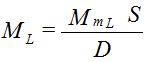
Obtain the MPN/L value (ML) of the corresponding test sample using Equation 2.
MmL is the MPN/ml value in Step 1.7, S is the Assay Sample Volume, and D is the Volume of Original Water Sample Assayed.
Calculate the upper confidence limit/L by substituting the CLumL value for the MmL value. Calculate the lower confidence limit/L by substituting the CLlmL value for the MmL value.
Report MmL values of 0 as ≤ 1/D. For example, ≤ 0.002 MPN/L (≤ 1/500 L) for groundwater samples.
Calculate the MPN and 95% confidence limit values for each Lab Fortified Blank and Lab Reagent Blank by first multiplying the values/ml obtained in the calculator by S and then dividing the result by 0.3.
הגישה מוגבלת. התחברו או התחילו תקופת ניסיון כדי לצפות בתוכן זה.