その自然の病原体菌 marinumを使用して大人のゼブラフィッシュ モデルひと結核にプロトコルを紹介します。抽出された DNA と感染したゼブラフィッシュの内臓からの RNA は、抗酸菌の合計負荷魚と qPCR で宿主の免疫反応を明らかにする使用できます。
このコンテンツを表示するには、JoVEへの購読が必要です。 または、無料トライアルをお申し込みください。
この記事について
サマリー
要約
結核は現在毎年 170 万の死と 1040 万感染症を引き起こして最悪人間の病原体であります。この細菌への露出は、滅菌感染から積極的に進んで致命的な病気に至るまで人間の広い疾患のスペクトルを発生します。最も一般的な形式は、無症候性ですが、劇症疾患に再アクティブ化する可能性がある潜在的な結核です。アダルト ゼブラフィッシュとその自然の病原体菌 marinum結核の幅広い疾患のスペクトルを研究に該当するモデルであると証明した最近。重要なは、自発的な待機時間再活性化と抗酸菌感染症の適応の免疫反応はこのモデルで学ぶことができます。この記事で大人ゼブラフィッシュ、内臓抗酸菌荷重および量的な PCR によるホストの免疫反応の測定のための核酸の抽出のためのコレクションの実験的感染症法について述べる。社内の開発、 M. marinum -特定の qPCR の試金は非分裂、休止状態または最近死んだ抗酸菌から DNA が検出されるも、伝統的なめっきより敏感。DNA と RNA の両方は同じ個体から抽出した、病気の状態とホストと病原体の遺伝子発現との関係を研究することが可能です。結核成人ゼブラフィッシュ モデルはこうしてホスト病原体の相互作用を研究する、応用性・非哺乳類体内システムとしてそれ自身を示します。
概要
ゼブラフィッシュ (動脈分布) は生物医学研究で広く使用されている動物モデル、一般的な脊椎動物の生物学のための受け入れられたモデルです。ゼブラフィッシュひと疾患モデル研究の多くの分野で採用され、感染症や免疫学的いくつか細菌3のウイルス感染4癌1から心疾患2までの障害,5します。 さらに、ゼブラフィッシュ胚の子宮 ex開発したゼブラフィッシュ人気モデル発生生物学6および毒物学7,8。
感染生物学分野を含む研究の多くの分野で光学的に透明なゼブラフィッシュ幼虫はよく使用されます。最初の免疫細胞は、原始マクロファージが検出された9と 24 h ポスト受精 (hpf) 内で表示されます。好中球は、約 33 hpf10を表示する次の免疫細胞です。ゼブラフィッシュ幼虫は感染症の初期段階と適応免疫細胞11の不在で自然免疫の役割を研究するため可能。ただし、アダルト ゼブラフィッシュ機能的適応免疫システムは感染実験のため複雑さの追加レイヤーを提供します。T 細胞は、3 日後に受精12、および B 細胞の機能性抗体を生成することが 4 週間ポスト受精13周り検出できます。大人のゼブラフィッシュは哺乳類の自然免疫と適応免疫のすべての主要なカウンター パートです。魚の immune systems と人間の主な違いは、リンパ組織の解剖学のように同様の抗体アイソタイプで発見されます。ゼブラフィッシュの人間が 5153 つしか抗体クラス14があります。骨髄とリンパ節のない場合は、魚の第一次リンパ器官は脾臓と胸腺16腎臓、腎臓と腸の二次リンパ器官17としています。自然免疫と適応セルその完全免疫の武器とのこれらの相違にもかかわらず大人のゼブラフィッシュは宿主-病原体相互作用の研究のための非常に適用可能な簡単に使用できる、非哺乳類モデルです。
ゼブラフィッシュは、結核18,19,20,21,22を勉強する実行可能なモデルとして確立されている最近。結核は、結核菌によって引き起こされる空気中の病気です。世界保健機関によると、結核は 2016 年に1.7の百万の死を引き起こしたし、単一の病原体世界23死の主要な原因は。マウス24,25、ウサギ26ヒト以外の霊長類27が最も有名な動物モデル各面しますが、結核研究の制限。人間の病気が最も酷似の結核感染症非ひと霊長類モデルがこのモデルを使用して、重大な倫理的配慮のため限定。他の動物モデルは、結核病の病理に影響を与えるの宿主特異性によって妨げられます。おそらく結核をモデリングで最大の問題は人間の病気で感染や病気の結果の広いスペクトル: 結核は潜在的なアクティブ、再アクティブ化された感染症28 への耐性を滅菌に至る非常に異質病気、ハードを再現し、模型実験できます。
結核菌 marinumは、85% のアミノ酸のアイデンティティの29〜 3,000 相同タンパク質と結核の近親です。M. marinumは、ゼブラフィッシュ肉芽腫、その内臓19、30での結核の特徴を作り出す自然感染します。結核の研究で使用される他の動物モデルとは異なりゼブラフィッシュは多くの子孫を作り出す、限られたスペースのみ必要で、重要なは、後発の脊椎結核モデルでは neurophysiologically。M. marinum感染はひと結核19,の病気の結果のスペクトルを密接に模倣した大人のゼブラフィッシュの潜伏感染、アクティブな病や抗酸菌症のも殺菌を引き起こすまた、31,32しますここでは、 M. marinumを腹腔内に注入し、抗酸菌の負荷とゼブラフィッシュから免疫を測定する定量的 PCR を使用して大人のゼブラフィッシュの実験的結核症モデル法について述べる。組織サンプル。
アクセスが制限されています。このコンテンツを表示するにはログインするか、トライアルを開始してください。
プロトコル
すべてのゼブラフィッシュ実験は、動物実験委員会フィンランド (ESAVI/8245/04.10.07/2015) によって承認されています。メソッドは、行為 (497/2013) とフィンランドの科学又は教育のために使用される動物の保護に関する政府令 (564/2013) に従って実行されます。
1. 培養菌 marinumの
注: 結核菌 marinum は、人間の表面的な感染症を引き起こす可能性のある病原体は、のこの菌に作業を開始する前にバイオハザード廃棄物処分の安全と地域のガイドラインをご覧ください。
- 文化 7 h 10 M. marinumプレートを添加した 10 %oadc (オレイン酸、アルブミン、デキスト ロース、カタラーゼ) 濃縮及び 0.5 %v/v 29 ° C でグリセリンの少なくとも 5 日間。2 週間ごとに冷凍庫から新鮮な細菌を取り、1 週間おきに新しいプレートに転送によってM. marinum文化を維持します。
注: M. marinumは水生生物に感染する天然魚の病原体や細菌とゼブラフィッシュ株式を汚染しないための予防策を講じることが重要です。感染したゼブラフィッシュと細菌で汚染された項目が繁殖施設から分離することにあります。 - 滅菌 1 μ L 接種ループを使用して無菌 7 H 9 の 10 mL を含む細胞培養用フラスコにM. marinum
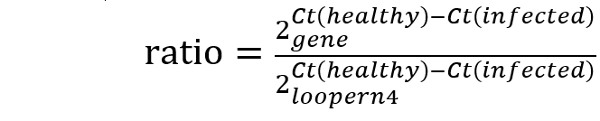
アクセスが制限されています。このコンテンツを表示するにはログインするか、トライアルを開始してください。
結果
天然魚の病原体菌 marinumゼブラフィッシュの臓器に感染し、組織学的肉芽腫19全身性感染症を生成します。大人のゼブラフィッシュは、腹腔内注入によるm. marinumに感染しています。DNA や RNA を抽出、およびテンプレートとして DNA を使用して量的なポリメラーゼの連鎖反応 (qPCR) による抗酸菌の負荷を測定します。法の概要を図 1に示します。
抗酸菌感染魚の使用の最初の数は、感染症の結果の重要な決定要因です。M. marinum (~ 2,000 CFU) の高い伝染の線量は、抗酸菌の負荷は、細菌負荷を平均約 500 万細菌 (図 2 a) 最終的に魚を殺すに到達するまでを増やし続ける進歩的な病気につながります。低...
アクセスが制限されています。このコンテンツを表示するにはログインするか、トライアルを開始してください。
ディスカッション
ここで実験感染成人ゼブラフィッシュ組織から抽出した DNA から抗酸菌の負荷を測定する qPCR ベースのアプリケーションについて述べる。このアプリケーションは、プライマー 16S 23S rRNA スペーサー シーケンス40を中心に設計に基づいています。魚サンプルの全抗酸菌荷重は、培養抗酸菌の知られている数から抽出され、その 1 つの細菌が任意の時点でそのゲノムの 1 つのコピーを持っていれば DNA から作製した標準曲線を使用して推定されます。M. marinum -qPCR の検出限界は約 100 コロニー形成単位18。伝統的なめっきと比較して方法の明確な利点は、両方のアクティブおよび非分裂の休止状態の細菌を検出できることです。さらに、このアプローチによるゼブラフィッシュ組織から培養皿上の汚染成長の共通の問題が回避されます。ただし、DNA をテンプレートとして使用すると、測定したコピーのいくつかが非常に最近死亡した細菌の DNA 由来することができることが可能です。核酸ベースのプロトコルの重要な利点は、両方 DNA と...
アクセスが制限されています。このコンテンツを表示するにはログインするか、トライアルを開始してください。
開示事項
著者が明らかに何もありません。
謝辞
この作業によって、フィンランド文化財団 (H.L.)、タンペレ結核財団 (H.L.、l.-m. v.、M.M.H.、m. p.)、フィンランドの結核協会 (Suomen Tuberkuloosin Vastustamisyhdistyksen Säätiö) (H.L. の基礎をサポートされていますM.M.H.、m. p.)、ねんどろいど Jusélius 財団 (m. p.)、エミール ・ アールト財団 (M.M.H.)、ジェーンと Aatos Erkko 財団 (融点) とフィンランド アカデミー (融点)。その技術支援のレーナ Mäkinen、ハンナ レーナ ・ ピッポ、ジェナ ・ Ilomäki を認めた著者は、彼らのサービスのタンペレ ゼブラフィッシュ研究室を認めます。
アクセスが制限されています。このコンテンツを表示するにはログインするか、トライアルを開始してください。
材料
| 名前 | 会社 | カタログ番号 | コメント |
|---|---|---|---|
| Mycobacterium marinum | American Type Culture Collection | ATCC 927 | |
| Middlebrock 7H10 agar | BD, Thermo Fisher Scientific | 11799042 | |
| Middlebrock OADC enrichment | BD, Thermo Fisher Scientific | 11718173 | |
| Middlebrock 7H9 medium | BD, Thermo Fisher Scientific | 11753473 | |
| Middlebrock ADC Enrichment | BD, Thermo Fisher Scientific | 11718173 | |
| Tween 80 | Sigma-Aldrich | P1754 | |
| グリセロール | Sigma-Aldrich | G5516-500ML | |
| GENESYS20 分光光度計 | サーモフィッシャーサイエンティフィック | ||
| リン酸緩衝生理食塩水錠 (PBS) | Sigma-Aldrich | P4417-50TAB | |
| フェノールレッド | Sigma-Aldrich | P3532 | |
| 27 G 針 | Henke Sass Wolf | 4710004020 | |
| 1 mL シリンジ | Henke Sass Wolf | 4010.200V0 | |
| Omnican 100 30 G インスリン針 | ブラウン | 9151133 | |
| 3-アミノ安息香酸エチルエステル (pH 7.0) | Sigma-Aldrich | A5040 | |
| 1.5 mL 均質化チューブ | Qiagen | 13119-1000 | |
| 2.8 mm セラミックビーズ | Qiagen | 13114-325 | |
| エタノール、ETAX Aa | Altia | ||
| 2-プロパノール | Sigma-Aldrich | 278475 | |
| クロロホルム | VWR | 22711.290 | |
| グアニジン チオシアン酸 | Sigma-Aldrich | G9277 | FW 118.2 g/mol |
| クエン酸 | ナトリウムSigma-Aldrich | 1613859 | FW 294.1 g/mol |
| Tris (遊離塩基) | Sigma-Aldrich | TRIS-RO | FW 121.14 g/mol |
| TRI 試薬 | 分子研究センター | TR118 | グアニジンチオシアン酸フェノール溶液 |
| PowerLyzer24 ホモジナイザー | Qiagen | ||
| Sonicator m08 | Finnsonic | ||
| Nanodrop 2000 | Thermoフィッシャーサイエンティフィック | ||
| SENSIFAST No-ROX SYBR、グリーンマスターミックス | バイオライン | BIO-98005 | |
| qPCR 96 ウェルプレート | BioRad | HSP9601 | |
| 光学透明フィルム | BioRad | MSB1001 | |
| C1000 サーマルサイクラー、CFX96 リアルタイムシステム | BioRad | ||
| RNase AWAY | サーモフィッシャーサイエンティフィック | 10666421 | 除染試薬 RNaseを除去 |
| DNase I | サーモフィッシャーサイエンティフィック | EN0525 | |
| 逆転写マスターミックス | Fluidigm | 100-6298 | |
| SsoFast Eva グリーンマスターミックス | BioRad | 172-5211 |
参考文献
- Zhao, S., Huang, J., Ye, J. A fresh look at zebrafish from the perspective of cancer research. Journal of Experimental & Clinical Cancer Research. 34, 80(2015).
- Bournele, D., Beis, D. Zebrafish models of cardiovascular disease. Heart failure reviews. 21 (6), 803-813 (2016).
- Torraca, V., Mostowy, S. Zebrafish Infection: From Pathogenesis to Cell Biology. Trends in cell biology. 28 (2), 143-156 (2018).
- Varela, M., Figueras, A., Novoa, B. Modelling viral infections using zebrafish: Innate immune response and antiviral research. Antiviral Research. 139, 59-68 (2017).
- Goody, M. F., Sullivan, C., Kim, C. H. Studying the immune response to human viral infections using zebrafish. Developmental and comparative immunology. 46 (1), 84-95 (2014).
- Thisse, C., Zon, L. I. Organogenesis--heart and blood formation from the zebrafish point of view. Science. 295 (5554), 457-462 (2002).
- Eimon, P. M., Rubinstein, A. L. The use of in vivo zebrafish assays in drug toxicity screening. Expert Opinion on Drug Metabolism & Toxicology. 5 (4), 393-401 (2009).
- Sukardi, H., Chng, H. T., Chan, E. C. Y., Gong, Z., Lam, S. H. Zebrafish for drug toxicity screening: bridging the in vitro cell-based models and in vivo mammalian models. Expert Opinion on Drug Metabolism & Toxicology. 7 (5), 579-589 (2011).
- Wittamer, V., Bertrand, J. Y., Gutschow, P. W., Traver, D. Characterization of the mononuclear phagocyte system in zebrafish. Blood. 117 (26), 7126-7135 (2011).
- Harvie, E. A., Huttenlocher, A. Neutrophils in host defense: new insights from zebrafish. Journal of leukocyte biology. 98 (4), 523-537 (2015).
- Yoshida, N., Frickel, E., Mostowy, S. Macrophage-Microbe interactions: Lessons from the Zebrafish Model. Frontiers in Immunology. 8, 1703(2017).
- Langenau, D. M., et al. In vivo tracking of T cell development, ablation, and engraftment in transgenic zebrafish. Proceedings of the National Academy of Sciences of the United States of America. 101 (19), 7369-7374 (2004).
- Lewis, K. L., Del Cid, N., Traver, D. Perspectives on antigen presenting cells in zebrafish. Developmental and comparative immunology. 46 (1), 63-73 (2014).
- Hu, Y., Xiang, L., Shao, J. Identification and characterization of a novel immunoglobulin Z isotype in zebrafish: Implications for a distinct B cell receptor in lower vertebrates. Molecular immunology. 47 (4), 738-746 (2010).
- Danilova, N., Bussmann, J., Jekosch, K., Steiner, L. A. The immunoglobulin heavy-chain locus in zebrafish: identification and expression of a previously unknown isotype, immunoglobulin Z. Nature immunology. 6 (3), 295-302 (2005).
- Zapata, A., Diez, B., Cejalvo, T., Frias, C. G., Cortes, A. Ontogeny of the immune system of fish. Fish & shellfish. 20 (2), 126-136 (2006).
- Traver, D., Paw, B. H., Poss, K. D., Penberthy, W. T., Lin, S., Zon, L. I. Transplantation and in vivo imaging of multilineage engraftment in zebrafish bloodless mutants. Nature immunology. 4 (12), 1238-1246 (2003).
- Hammaren, M. M., et al. Adequate Th2-Type Response Associates with Restricted Bacterial Growth in Latent Mycobacterial Infection of Zebrafish. Plos Pathogens. 10 (6), e1004190(2014).
- Parikka, M., et al. Mycobacterium marinum Causes a Latent Infection that Can Be Reactivated by Gamma Irradiation in Adult Zebrafish. PLoS Pathog. 8 (9), 1-14 (2012).
- Tobin, D. M., et al. Host Genotype-Specific Therapies Can Optimize the Inflammatory Response to Mycobacterial Infections. Cell. 148 (3), 434-446 (2012).
- Lesley, R., Ramakrishnan, L. Insights into early mycobacterial pathogenesis from the zebrafish. Current opinion in microbiology. 11 (3), 277-283 (2008).
- Berg, R. D., Ramakrishnan, L. Insights into tuberculosis from the zebrafish model. Trends in molecular medicine. 18 (12), 689-690 (2012).
- World Health Organization. WHO Global tuberculosis report 2017. , Available from: http://www.who.int/tb/publications/global_report/en/ (2017).
- Ordonez, A. A., et al. Mouse model of pulmonary cavitary tuberculosis and expression of matrix metalloproteinase-9. Disease Models & Mechanisms. 9 (7), 779-788 (2016).
- Kramnik, I., Beamer, G. Mouse models of human TB pathology: roles in the analysis of necrosis and the development of host-directed therapies. Seminars in Immunopathology. 38 (2), 221-237 (2016).
- Manabe, Y. C., et al. The aerosol rabbit model of TB latency, reactivation and immune reconstitution inflammatory syndrome. Tuberculosis. 88 (3), 187-196 (2008).
- Pena, J. C., Ho, W. Monkey Models of Tuberculosis: Lessons Learned. Infection and immunity. 83 (3), 852-862 (2015).
- Cadena, A. M., Fortune, S. M., Flynn, J. L. Heterogeneity in tuberculosis. Nature Reviews Immunology. 17 (11), 691-702 (2017).
- Stinear, T. P., et al. Insights from the complete genome sequence of Mycobacterium marinum on the evolution of Mycobacterium tuberculosis. Genome research. 18 (5), 729-741 (2008).
- Swaim, L. E., Connolly, L. E., Volkman, H. E., Humbert, O., Born, D. E., Ramakrishnan, L. Mycobacterium marinum infection of adult zebrafish causes caseating granulomatous tuberculosis and is moderated by adaptive immunity. Infection and immunity. 74 (11), 6108-6117 (2006).
- Myllymaki, H., Bauerlein, C. A., Ramet, M. The Zebrafish Breathes new Life into the Study of Tuberculosis. Frontiers in Immunology. 7, 196(2016).
- Luukinen, H., et al. Priming of Innate Antimycobacterial Immunity by Heat-killed Listeria monocytogenes Induces Sterilizing Response in Adult Zebrafish Tuberculosis Model. Disease Models and Mechanisms. 11, (2018).
- Sar, A. M., Abdallah, A. M., Sparrius, M., Reinders, E., Vandenbroucke-Grauls, C., Bitter, W. Mycobacterium marinum strains can be divided into two distinct types based on genetic diversity and virulence. Infection and immunity. 72 (11), 6306-6312 (2004).
- Madigan, M., Martinko, J. Brock Biology of Microorganisms. , (2016).
- Nüsslein-Volhard, C., Dahm, R. Zebrafish:a practical approach. , Oxford University Press. Oxford. (2002).
- Anonymous Stanford University Protocols. , Available from: http://med.stanford.edu/labs/vanderijn-west/Protocols.html (2018).
- Vanhauwaert, S., et al. Expressed Repeat Elements Improve RT-qPCR Normalization across a Wide Range of Zebrafish Gene Expression Studies. Plos One. 9 (10), e109091(2014).
- Hammaren, M. M., et al. Adequate Th2-Type Response Associates with Restricted Bacterial Growth in Latent Mycobacterial Infection of Zebrafish. Plos Pathogens. 10 (6), e1004190(2014).
- Oksanen, K. E., et al. An adult zebrafish model for preclinical tuberculosis vaccine development. Vaccine. 31 (45), 5202-5209 (2013).
- Roth, A., Fischer, M., Hamid, M. E., Michalke, S., Ludwig, W., Mauch, H. Differentiation of phylogenetically related slowly growing mycobacteria based on 16S-23S rRNA gene internal transcribed spacer sequences. Journal of clinical microbiology. 36 (1), 139-147 (1998).
- Rajararna, M. V. S., Ni, B., Dodd, C. E., Schlesinger, L. S. Macrophage immunoregulatory pathways in tuberculosis. Seminars in immunology. 26 (6), 471-485 (2014).
- Vynnycky, E., Fine, P. The natural history of tuberculosis: the implications of age-dependent risks of disease and the role of reinfection. Epidemiology and infection. 119 (2), 183-201 (1997).
- Cobat, A., et al. Two loci control tuberculin skin test reactivity in an area hyperendemic for tuberculosis. Journal of Experimental Medicine. 206 (12), 2583-2591 (2009).
- Delogu, G., Goletti, D. The Spectrum of Tuberculosis Infection: New Perspectives in the Era of Biologics. Journal of Rheumatology. 41, 11-16 (2014).
- Abel, L., et al. Genetics of human susceptibility to active and latent tuberculosis: present knowledge and future perspectives. Lancet Infectious Diseases. 18 (3), E75(2018).
- Guryev, V., et al. Genetic variation in the zebrafish. Genome research. 16 (4), 491-497 (2006).
- Brown, K. H., et al. Extensive genetic diversity and substructuring among zebrafish strains revealed through copy number variant analysis. Proceedings of the National Academy of Sciences of the United States of America. 109 (2), 529-534 (2012).
アクセスが制限されています。このコンテンツを表示するにはログインするか、トライアルを開始してください。
再版と許可
