
Guest Editors

Markus Tschopp
Cantonal Hospital Aarau and University of Bern
Dr. Markus Tschopp is chief of service at the Department of Ophthalmology, Cantonal Hospital Aarau, and a scientist at the University of Bern, Switzerland. He received his M.D. degree from the University of Zurich in 2006. He also did his master of science on visual system of zebrafish at the University of Zurich. In addition to his service as an M.D., he is working on retinal regeneration using adult zebrafish as a model organism. He was always fascinated that some animals can regenerate large parts of the body - including complex structures as the retina - and others cannot. He contributed to the retinal regeneration field with key publications regarding TGF beta signaling. In 2016, Dr. Markus Tschopp was granted a fund that helped him and Dr. Cavit Agca to initiate and perform drug screens in order to elucidate the dedifferentiation and regeneration capacity of mammalian Muller glia cells. Recently, he performed species comparisons of Muller glia and microglia between zebrafish and mouse to better understand the mechanisms that underlie retinal regeneration.
Cavit Agca
Sabanci University
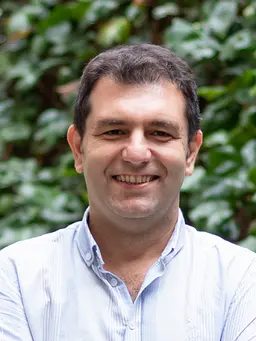
Dr. Cavit Agca has received his B.S. in Molecular Biology and Genetics from Bogazici University in 2001 and his PhD from Department of Cell Biology and Anatomy, Louisiana State University Health Sciences Center, New Orleans in 2008. During his PhD in developmental biology, he has worked under the supervision of Dr. William H. Klein in the Department of Biochemistry and Molecular Biology, at the University of Texas, M.D. Anderson Cancer Center on the Sea Urchin Genome Project (SUGP) identifying the sea urchin orthologs of mammalian retinal genes and elucidating their expression pattern in early embryos and adult tube feet. After this project, he continued to work in Dr. Klein`s lab as a postdoc on evolutionary perspectives of vision. Afterward, he has worked under the supervision of Dr. Christian Grimm in the Department of Ophthalmology, at the University of Zurich. Dr Agca`s main focus was to identify the mechanisms related to endogenous neuroprotection in the retina. He has discovered the cis-regulation of Lif mRNA stability in Muller cells and redox signaling as the main regulator in this mechanism which was a key finding connecting redox signaling and neuroprotection in the retina. This work was awarded Ophthaward 2016 for Jury`s choice prize in Switzerland. On October 2014, he moved to Basel to work with Dr. Albert Neutzner at University Hospital Basel on a novel retinal gene therapy targeting the OPA1 gene in Autosomal Dominant Optic Atrophy (ADOA) using artificial transcription factors. At the time, Dr. Agca also initiated a study deciphering the dedifferentiation capacity of Muller cells together with Dr. Markus Tschopp. Since 2019 September, Dr. Agca has been at Sabanci University, Istanbul as a faculty member. He is now establishing a research program regarding gene therapy applications and regenerative approaches.
Collection Overview
One of the biggest challenges for any blinding disease is the availability of the treatment options. In majority of the blinding diseases, neuroprotective approaches that will slow down or halt neuronal cell loss and at the same time maintain the function of retinal neurons is given priority as a treatment option. However, most of the time neuroprotective options alone are not sufficient to stop ongoing neuronal loss, or the disease is diagnosed at a very late stage where vision has already deteriorated. Therefore, regenerative approaches become crucial to regain vision of patients that already have severe neuronal loss.
This method collection aims to improve and share methodologies that are necessary and novel for scientists in retinal regeneration field. One of the most interesting research areas in the retinal regeneration field is to elucidate the dedifferentiation capacity of Muller glia in mammalians. In this collection, we will invite methodologies including Muller glia and related animal models for studying the regeneration and dedifferentiation processes in the neural retina. Since the methods in the regeneration field are improving with new findings and technologies related to stem cell biology, this collection will also invite techniques and improvements in retinal organoids and methods for the establishment of drug screens that improves regeneration and dedifferentiation capacities in retina.
Articles


Abstracts
Adult retina explant co-culture to study regeneration
Stephane Belin*1
1Universite Grenoble Alpes