Alan Saul
Affiliation: Augusta University, Medical College of Georgia
Dr. Alan Saul is a neurophysiologist who studies how the brain processes time. He did his undergraduate work at Caltech, working with Drs. Jack Pettigrew, Max Delbruck, Fred Thompson, and Roger Sperry. He then lived in the Central African Republic as a Peace Corps Volunteer. After teaching at an alternative high school, he got sucked back into academia and got an MS at West Virginia University, working with Dr. Paul Brown on cat dorsal horn physiology and kitten visual cortical plasticity, and with Dr. Ken Showalter on traveling waves in a chemical system. Following another year of teaching, he did PhD work at Brown University with Dr. Jerry Daniels on brief monocular experience after dark rearing in kittens. After a postdoc with Dr. Max Cynader at Dalhousie University, studying adaptation in single cells in cat visual cortex, he went to the University of Pittsburgh to work with Dr. Allen Humphrey. He showed that the lateral geniculate nucleus generates a range of response timing, providing cortex the timing used to create direction selectivity. He also demonstrated timing aftereffects in visual cortical simple cells. In Augusta, he showed that eye position could be measured precisely, recorded from lagged cells in awake monkey LGN, and demonstrated that timing is systematically altered around fixational saccades. He developed novel methods of recording electroretinograms in animals and humans.
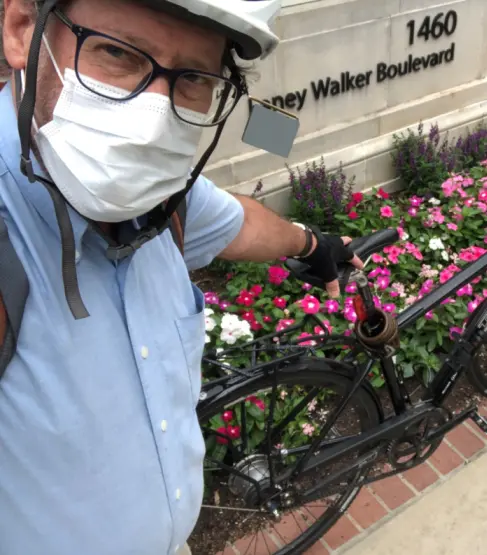
Outside of science, he works on the musical history of Eric Dolphy and Booker Little, gets around by bike, and enjoys mushrooms, hot peppers, and good beer.