Dit protocol is een uittreksel uit Liu et al. Een temperatuurgradiënttest om thermische voorkeuren van Drosophila-larven te bepalen, J. Vis. Exp. (2018).
1. Temperatuurverloop instellen
- Eenrichtingsgradiënt voorbereiden
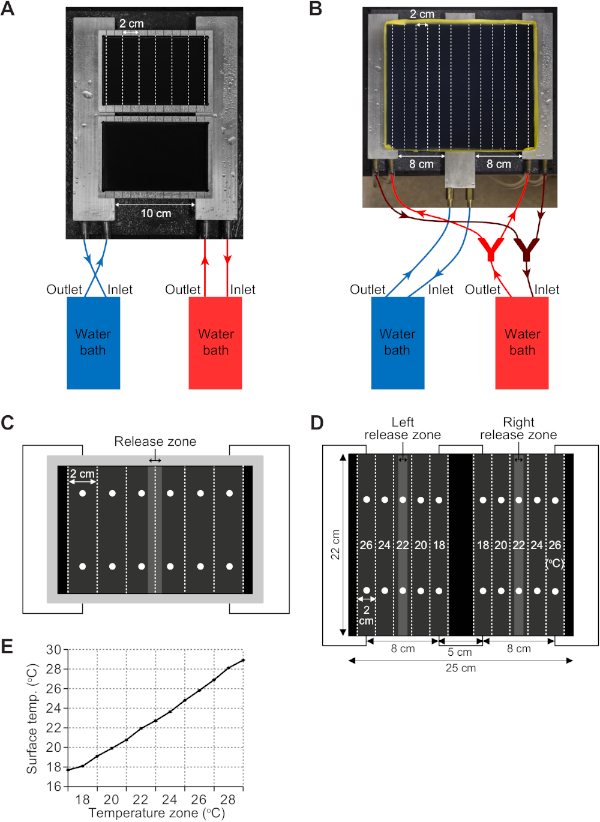
- Om tijdens de test een vochtige omgeving te creëren, plaatst u de twee aluminium blokken die zijn verbonden met twee waterbaden op natte papieren handdoeken, gescheiden door 10 cm (figuur 1A).
- Zet de twee waterbaden ~2 uur aan voordat u de test start om voldoende tijd te hebben voor de temperatuur van de aluminiumblokken om te equilibreren.
OPMERKING: Het wordt aanbevolen om een schijnexperiment uit te voeren om de temperatuur van elk waterbad te bepalen die nodig is om de gewenste lineaire temperatuurgradiënt te bereiken. Enkele typische temperatuurparen om de waterbaden in te stellen staan vermeld in tabel 1. Houd er echter rekening mee dat de oppervlaktetemperaturen worden beïnvloed door de omgevingstemperatuur. De lengte van de buizen beïnvloedt ook de temperaturen omdat er koeling in de buizen is. De lengte van de slang in onze opstelling is 1,5 m.
- Magnetron 100 ml van 1% agarose op de high-power instelling in een 500 ml ronde breed-mond fles en giet 25 ml / assay plaat op een vlakke benchtop. Bereid twee testplaten voor, die tegelijkertijd op de aluminium blokken kunnen worden geplaatst (figuur 1A).
- Nadat de agarose is gestold (10-20 minuten), wrijft u elk agaroseoppervlak voorzichtig in met een standaard keukenspons of een melaminespons om het agaroseoppervlak enigszins grof te maken, zodat bij het spuiten van water op de agarosegel een glad dun watermembraan ontstaat en er geen waterdruppels ontstaan.
- Dompel de platen volledig onder in een container met gedestilleerd water totdat de test klaar is om te worden uitgevoerd om te voorkomen dat de platen uitgedroogd raken.
- Een bidirectioneel verloop voorbereiden (optioneel)
- Om een vochtige omgeving te creëren tijdens de test, plaatst u drie aluminium blokken van 8 cm uit elkaar(figuur 1B)op natte papieren handdoeken.
- Zet de twee waterbaden ~2 uur aan voordat u de test start om voldoende tijd te hebben voor de temperatuur van de aluminiumblokken om te equilibreren.
OPMERKING: Het wordt aanbevolen om een schijnexperiment uit te voeren om de temperatuur van elk waterbad voor de bidirectionele gradiënt te bepalen. Enkele typische temperatuurparen om de waterbaden in te stellen staan vermeld in tabel 2. Houd er echter rekening mee dat de oppervlaktetemperaturen worden beïnvloed door de omgevingstemperatuur. De lengte van de buizen beïnvloedt ook de temperaturen omdat er koeling in de buizen is. De lengte van de slang in onze opstelling is 1,5 m.
- Om te voorkomen dat de agarose uit de plaat morst, wikkelt u de randen van de aluminium plaat in met labeltape om een 10 mm hoge wand te vormen (afbeelding 1B).
- Met behulp van de high-power instelling, magnetron 200 ml van 1% agarose in een 500 ml ronde breed-mond fles en giet 120 ml op een assay plaat.
- Nadat de agarose is gestold (~ 30 min), wrijft u elk agaroseoppervlak voorzichtig in met een standaard keukenspons of een melaminespons om het agaroseoppervlak enigszins grof te maken, zodat bij het spuiten van water op de agarosegel een glad dun watermembraan ontstaat en er geen waterdruppels ontstaan.
- Dompel de testplaten volledig onder in een container met gedestilleerd water totdat de test klaar is om te worden uitgevoerd om uitdroging te voorkomen.
- Eenrichtingsgradiënt instellen
- Bereid reagentia en voorwerpen voor op een bankje naast het verlooptestapparaat (zie de materiaaltabel).
- Om een efficiënte temperatuuroverdracht te bevorderen, vult u eventuele openingen tussen de aluminium blokken en de testplaten door water te spuiten op de interface tussen de blokken en de plaat.
- Verwijder met handschoenen de testplaten uit het waterreservoir. Als er water tussen de agarosegel en de plaat binnendringt en hobbels op het oppervlak veroorzaakt, verwijder dan het water met een P1000-micropipet.
- Plaats de assayplaten op de aluminium blokken zodat de afbakeningen die zich op 2 cm van beide randen bevinden precies overeenkomen met de randen van de aluminium blokken(figuur 1A,C).
- Spuit water op het oppervlak van de plaat (een dun watermembraan dat het agaroseoppervlak bedekt, is voldoende) om uitdroging van de agarosegel te voorkomen. Zorg ervoor dat het watermembraan continu is en vrij van waterdruppels, omdat larven gevangen kunnen raken in waterdruppels.
- Bedek het verloopsysteem met een kartonnen doos om waterverdamping te verminderen en de temperatuur van het geloppervlak te helpen stabiliseren. Wacht 5-10 minuten om de temperatuur te laten gelijken.
- Controleer de oppervlaktetemperatuur op 12 punten op de plaat (figuur 1C). Voer twee metingen uit binnen elke zone om vast te stellen of er al dan niet variabiliteit is binnen een zone. Zorg ervoor dat de temperatuur op beide plaatsen binnen ± 0,2 °C van de gewenste temperatuur ligt.
OPMERKING: Variabiliteit binnen een zone treedt meestal op omdat de exacte afstanden van de twee plekken tot de rand van de aluminium blokken niet identiek zijn. Pas de positie van de plaat op de aluminium blokken aan om ervoor te zorgen dat de afbakeningen die zich op 2 cm van beide randen bevinden, precies overeenkomen met de randen van de aluminium blokken.
- Als de gemeten temperatuurgradiënt afwijkt van de gewenste gradiënt, verhoogt of verlaagt u de temperatuurinstelling(en) van het waterbad en controleert u de oppervlaktetemperatuur opnieuw na de temperatuur van de stabilisatie(s) van het waterbad(en).
- Bedek het verloopsysteem met een kartonnen doos tot het begin van de test.
- Bidirectioneel verloop instellen (optioneel)
- Bereid reagentia en voorwerpen voor op een bankje naast het verlooptestapparaat (zie de materiaaltabel).
- Spuit water op de oppervlakken van de drie aluminium blokken om een efficiënte temperatuuroverdracht van de aluminium blokken naar de testplaten te bevorderen door eventuele openingen tussen de oppervlakken te vullen.
- Verwijder de testplaten voorzichtig uit het waterreservoir en plaats ze op de aluminium blokken. Als er water tussen de agarosegel en de plaat binnendringt, waardoor er bultjes op het oppervlak kunnen ontstaan, verwijder dan het water met een P1000 micropipet.
- Plaats de testplaat op de aluminium blokken zodat de middellijnen van de eerste en laatste zones van beide randen exact overeenkomen met de randen van de twee aluminium blokken aan de zijkant(afbeelding 1B,D).
- Spuit water op het oppervlak van de plaat (een dun watermembraan dat het agaroseoppervlak bedekt, is voldoende) om uitdroging van de agarosegel te voorkomen. Zorg ervoor dat het watermembraan continu is en vrij van waterdruppels, omdat larven gevangen kunnen raken in waterdruppels.
- Bedek het verloopsysteem met een kartonnen doos om waterverdamping te verminderen en de temperatuur van het geloppervlak te helpen stabiliseren. Wacht 5-10 minuten om de temperatuur te laten gelijken.
- Controleer de oppervlaktetemperatuur op twee punten langs de middellijn van elk van de 10 zones (figuur 1D). Voer twee metingen uit binnen elke zone om vast te stellen of er al dan niet variabiliteit is binnen een zone. Zorg ervoor dat de temperatuur op beide plaatsen binnen ± 0,2 °C van de gewenste temperatuur ligt.
OPMERKING: Variabiliteit binnen een zone treedt meestal op omdat de exacte afstanden van de twee plekken tot de rand van de aluminium blokken niet identiek zijn. Pas de positie van de plaat op de aluminium blokken aan om ervoor te zorgen dat de middellijnen van de eerste en laatste zones die het dichtst bij elke rand liggen, precies overeenkomen met de randen van de twee aluminium blokken aan de zijkant.
- Als de gemeten temperatuurgradiënt afwijkt van de gewenste gradiënt, stelt u de temperatuurinstelling(en) van het waterbad in en controleert u de oppervlaktetemperatuur opnieuw na de temperatuur van de stabilisatie(s) van het waterbad(en).
- Bedek de blokken met een kartonnen doos tot het begin van de test.
2. Assay en berekening
- Verwijder de kartonnen doos en controleer de oppervlaktetemperatuur van de gel onmiddellijk voordat u de larven naar de plaat brengt. Minimaliseer de tijd dat de kartonnen doos open is om te voorkomen dat de temperatuur-equilibratie wordt verstoord. Als het oppervlak droog is, spuit dan een kleine hoeveelheid water op het oppervlak.
- Verdeel 150 ± 50 larven in de buurt van het midden van elke plaat (tussen zones 3 en 4 van de 6 zones) voor de single-directionele gradiënt (releasezone; Figuur 1C).
OPMERKING: Verdeel voor de bidirectionele gradiënt 200-400 larven over de middelste zone van elke helft (figuur 1D).
- Plaats een microplaatdeksel over elke testplaat om te voorkomen dat de larven eruit kruipen. Bedek de opstelling met een kartonnen doos om blootstelling aan licht te voorkomen, wat de larvekeuze op de agarosegel kan beïnvloeden.
OPMERKING: Voor de bidirectionele gradiënt hoeft het niet nodig te zijn om de plaat met een deksel te bedekken, omdat de plaat groter is en de voorkeurstemperatuur van de larven zich in de middelste zone bevindt. Bijgevolg hopen zich weinig larven op aan de randen en hebben ze de mogelijkheid om eruit te kruipen.
- Laat de test 10-30 minuten doorgaan voor de single-directionele gradiënt en gedurende 15-35 min voor de bidirectionele gradiënt, afhankelijk van de leeftijd van de larven (Tabel 3).
- Verwijder de kartonnen doos en het deksel van de microplaat. Fotografeer de platen van bovenaf met een digitale camera. Maak twee foto's van elke testplaat, zodat de onderzoeker degene kan kiezen met een beter contrast en helderheid voor analyse.
- Verwijder alle larven van de testplaten en overal buiten de platen door aspiratie.
- Reinig de testplaten, de buizen en de celzeef grondig met gedestilleerd water. Hergebruik de testplaten die die dag zijn bereid, tenzij het oppervlak van de agarose is beschadigd.
- Bereken de procentuele verdeling van larven in elke zone.
- Open de fotografische afbeelding van de testresultaten met behulp van software waarmee markeringen aan de afbeelding kunnen worden toegevoegd. Om de testzones aan te geven, tekent u om de 2 cm verticale lijnen op basis van de afbakeningen op de testplaat.
- Tel het aantal larven in elke zone en noteer de aantallen. Tel geen larven in gebieden op 0,5 cm van een van de muren. De gel is dikker in de buurt van de muren en de oppervlaktetemperaturen zijn niet lineair in deze regio's.
- Bereken voor de gradiënt in één richting de procentuele verdeling in elke zone als volgt:
(aantal larven in een bepaalde zone van 2 cm)/ (totaal aantal larven in 6 zones) x 100.
- Bereken voor het bidirectionele verloop de procentuele verdeling in elke zone als volgt:
(aantal larven in een bepaalde zone van 2 cm)/ (totaal aantal larven in 5 zones aan elke kant van de helling) x 100.