This video demonstrates a co-incubation assay used to study how bacterial strains compete in a shared environment. It is widely applied in microbiology to identify mechanisms, such as contact-dependent or contact-independent killing, that drive these interactions.
Een abonnement op JoVE is vereist om deze inhoud te bekijken. Log in of start vandaag met uw gratis proefperiode.
Methodenartikel
Coincubation Assay for Studying Competitive Interactions Between Bacterial Strains
779 weergaven
⸱
26 september 2025
In dit artikel
Samenvatting
Protocol
- Coincubating strains (Figure 1B, C)
- Mix the reference strain and competitor strain in a 1:1 ratio (v/v) by adding 100 μL of each strain (normalized to OD 1.0) to a labeled 1.5 mL centrifuge tube. As a control, mix the reference strain with a differentially tagged version of itself (reference strain pVSV102 + reference strain pVSV208). This control is required for later statistical analysis to determine whether the presence of a competitor strain impacts the growth of the reference strain. Vortex the mixed-strain culture for 1-2 s.
NOTE: This step may require optimization as the starting ratio can significantly impact results and may need to be adjusted. - Repeat step 1 for each biological replicate. After completing this step, there should be a total of eight mixed-strain tubes: four biological replicates with differentially-tagged reference strains (control), and four biological replicates with differentially-tagged reference and competitor strains (experimental).
- Spot 10 μL of each control and experimental mixture onto Petri plates containing LBS agar; these culture spots will be used for fluorescence microscopy after the incubation.
- Allow the spots to dry completely on the bench until all liquid has been absorbed into the agar, and incubate the Petri plates at 24 °C for 24 h. A minimum of 15 h is required for V. fischeri strains tagged with pVSV102 and pVSV208 to grow to a high enough cell density to visualize green fluorescent protein (GFP) and red fluorescent protein (RFP), respectively, at the population level using a fluorescence dissecting microscope. Here, we use a 24 h incubation for imaging mixed spots.
NOTE: It is important to use plates that are not too moist or too dry. If the plates are too moist, the coincubation spots will not be absorbed into the agar plate; avoid using plates poured on the same day. If the plates are too dry, small waves or cracks may form on the agar surface, making the coincubation spots irregular in shape.
- Mix the reference strain and competitor strain in a 1:1 ratio (v/v) by adding 100 μL of each strain (normalized to OD 1.0) to a labeled 1.5 mL centrifuge tube. As a control, mix the reference strain with a differentially tagged version of itself (reference strain pVSV102 + reference strain pVSV208). This control is required for later statistical analysis to determine whether the presence of a competitor strain impacts the growth of the reference strain. Vortex the mixed-strain culture for 1-2 s.
Toegang beperkt. Log in of start een proefperiode om deze inhoud te bekijken.
Resultaten
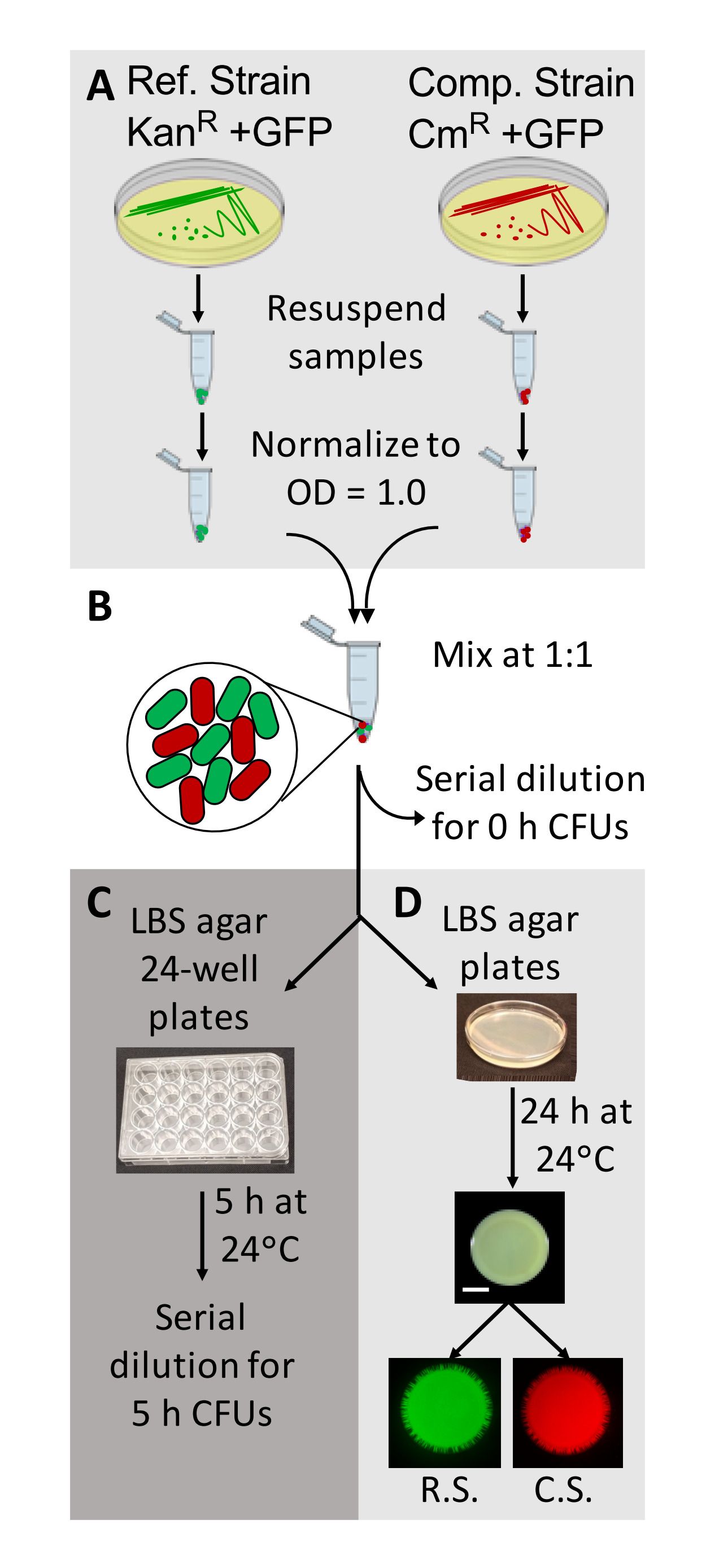
Figure 1: Flowchart illustrating the coincubation assay. (A) Bacterial strains harborin...
Toegang beperkt. Log in of start een proefperiode om deze inhoud te bekijken.
Materialen
| Naam | Bedrijf | Catalogusnummer | Opmerkingen |
|---|---|---|---|
| 1.5 mL Microcentrifuge Tubes | Fisher | 05-408-129 | |
| 10 μL multichannel pipette | |||
| 100 μL multichannel pipette | |||
| 300 μL multichannel pipette | |||
| 10 μL single channel pipette | |||
| 20 μL single channel pipette | |||
| 200 μL single channel pipette | |||
| 1000 μL single channel pipette | |||
| 24-well plates | Fisher | 07-200-84 | sterile with lid |
| petri plates | Fisher | FB0875713 | sterile with lid |
| TipOne 0.1-10 μL starter system | USA Scientific | 1111-3500 | 10 racks |
| TipOne 200 μL starter system | USA Scientific | 1111-500 | 10 racks |
| TipOne 1000 μL starter system | USA Scientific | 1111-2520 | 10 racks |
| LBS media | |||
| 1M Tris Buffer (pH ~7.5) | 50 mL 1 M stock buffer (62 mL HCl, 938 mL DI water, 121 g Trizma Base) | ||
| Agar | Technical Fisher | DF0812-17-9 | 15 g (Add only for plates) |
| DI water | 950 mL | ||
| Sodium Chloride | Fisher | S640-3 | 20 g |
| Tryptone | Fisher | BP97265 | 10 g |
| Yeast Extract | Fisher | BP9727-2 | 5 g |
