The visualized empowerment nursing pathway was associated with better nutritional status, oral mucositis recovery, self-management ability, and quality of life than routine nursing care in lymphoma patients with chemotherapy-induced oral mucositis.
Onderzoeksartikel
Visualized Empowerment Nursing Pathway for Nutritional Outcomes in Lymphoma with Chemotherapy-Induced Oral Mucositis: A Retrospective Cohort Study
In dit artikel
Samenvatting
Samenvatting
This study examined the effect of an empowerment nursing model on the nutritional status of patients with lymphoma who developed oral mucositis during chemotherapy and further developed a visualized implementation pathway. A total of 133 patients with lymphoma who received chemotherapy and developed oral mucositis between March 2024 and October 2025 were included. Based on previous nursing records, 62 patients who had received an empowerment nursing model centered on "assessment-identification-goal setting-training-implementation-feedback-continuing management" were assigned to the study group, while 71 patients who had received routine nursing were assigned to the control group. After baseline adjustment, the study group showed more favorable Patient-Generated Subjective Global Assessment (PG-SGA) and Nutritional Risk Screening (NRS) 2002 scores, body weight, body mass index (BMI), serum nutritional markers, dietary intake, self-management, symptom burden, and quality-of-life outcomes than the control group, while the change in oral mucositis grade and the visual analog scale (VAS) pain score also favored the study group. After false-discovery-rate correction, ulcer duration, mucosal healing time, and length of hospital stay remained shorter in the study group, whereas the differences in malnutrition rate, oral nutritional supplement use, and medication-use duration were no longer significant. These findings suggest that the visualized empowerment nursing pathway was associated with better nutritional status and oral intake, faster recovery from oral mucositis, and stronger self-management ability.
Inleiding
Lymphoma comprises a heterogeneous group of malignancies originating from the lymphohematopoietic system, with varied clinical manifestations and treatment responses1. In recent years, survival outcomes for patients with lymphoma have improved due to continued advances in immunochemotherapy, targeted therapy, and supportive care. Even so, nutritional deterioration, increased infection risk, and impaired quality of life during chemotherapy remain prominent clinical concerns2. Epidemiological data show that in 2022, approximately 550,000 new cases of non-Hodgkin lymphoma and about 260,000 related deaths occurred worldwide, indicating that this disease still imposes a substantial burden3. Most patients with lymphoma require multiple cycles of combined chemotherapy. During treatment, bone marrow suppression, gastrointestinal reactions, and oral mucosal injury may overlap, leading to reduced food intake, insufficient nutritional intake, and increased physiological consumption, which may then affect tolerance to subsequent therapy4. Among these complications, oral mucositis is relatively common in patients with lymphoma receiving chemotherapy. Its occurrence is associated with direct injury to oral epithelial cells caused by chemotherapeutic drugs, the release of inflammatory factors, decreased immune function, and changes in the oral microecology5. Studies have shown that the incidence of oral mucositis is about 40% among patients with hematological tumors receiving high-dose chemotherapy. In adult patients with malignant tumors undergoing chemotherapy, the incidence of oral mucositis can vary considerably depending on treatment regimen, tumor type, baseline oral condition, and assessment criteria6,7. This complication is not limited to local oral injury. As mucosal congestion, erosion, ulceration, and pain worsen, patients may develop dysphagia, taste changes, fear of eating, and sleep disturbance. Severe cases may require analgesic treatment, anti-infective therapy, or nutritional support, and may even lead to chemotherapy delay or dose adjustment8.
Meanwhile, malnutrition is also an important issue during the treatment of hematological tumors. Studies have reported that the incidence of malnutrition in patients with hematological tumors can exceed 30%, and malnutrition is closely associated with infection, prolonged hospitalization, reduced treatment tolerance, and decreased quality of life9,10. Oral mucositis and impaired nutritional status are therefore closely linked. Together, they may compromise treatment continuity and the quality of recovery in patients with lymphoma.
At present, clinical nursing for chemotherapy-related oral mucositis mainly focuses on oral cleaning, mouth-rinse guidance, pain assessment, dietary education, and symptom management11. Although these measures have clinical value, several shortcomings remain in practice. For example, nursing content is often delivered as separate measures, and oral care, nutritional intervention, and symptom monitoring are not always connected in a continuous way. Between chemotherapy cycles, patients may also be unable to recognize early symptoms, adjust their diet, record their nutritional intake, or report abnormalities, so some problems go undetected and unmanaged until they worsen. With increasing clinical demand, the empowerment nursing model has been used more widely. This model starts with patients' needs and practical problems and improves their understanding of the disease and treatment-related complications through health education, skills training, shared decision-making, dynamic feedback, and family collaboration, thereby encouraging active participation in self-management12,13. For patients with lymphoma undergoing chemotherapy and complicated by oral mucositis, empowerment nursing may help transform traditional one-way nursing education into a continuous, interactive, and feedback-based management process. It may also support more stable behavioral patterns in oral care, dietary choices, symptom observation, and cooperation with nutritional support.
Therefore, to promote the clinical application of empowerment nursing, this study constructed a visualized implementation pathway for the empowerment nursing model, integrating oral care, nutritional support, symptom monitoring, behavioral feedback, and continuing management into an interconnected nursing process. At the same time, nutritional status, intake compliance, and recovery from oral mucositis were observed from multiple perspectives, allowing the intervention content, key nodes, and possible mechanisms to be presented more clearly. Accordingly, the primary objective was to determine whether the visualized empowerment pathway was associated with better nutritional status and oral mucositis recovery than routine nursing; we hypothesized that integrating oral care, nutritional management, symptom monitoring, and feedback within a single staged pathway would improve both outcomes, while the simultaneous evaluation of pathway fidelity and patient outcomes represented the main novelty of the study.
Protocol
Ethics statement
The study protocol was reviewed and approved by the Shanxi Provincial People's Hospital ethics committee (No. 1357/02/2022). All study data were anonymized before extraction and analysis, and the requirement for written informed consent was waived.
Study design
We conducted a single-center retrospective cohort study. Both nursing approaches were used during the same study period, and group assignment was based on the nursing model documented for each eligible hospitalization rather than on treatment before or after a calendar-based implementation date. The study population comprised patients with lymphoma who received chemotherapy and developed oral mucositis at the Department of Hematologic Oncology of Shanxi Provincial People's Hospital between March 2024 and October 2025. The study therefore evaluated nursing management and recovery after oral mucositis had developed, rather than the prevention of mucositis occurrence. All data were obtained from existing medical and nursing records in the hospital. Patients were grouped according to the nursing model implemented during hospitalization, as documented in the nursing records. Patients were classified in the study group when the nursing plan explicitly documented implementation of the visualized empowerment pathway; completion of every pathway component was not required for classification. Of the 62 patients in this group, 51 (82.26%) had complete closed-loop documentation, and 11 had partial implementation, which was retained for the implementation-fidelity analysis. Patients whose records documented routine nursing without the empowerment pathway were classified as controls, whereas records in which the nursing model could not be determined were excluded. Patient identifiers were checked before analysis to ensure that everyone was included only once.
Screening criteria for study participants
Inclusion criteria: ① patients pathologically, immunohistochemically, or cytologically diagnosed with lymphoma, including Hodgkin lymphoma and non-Hodgkin lymphoma; ② age ≥18 years; ③ patients who received chemotherapy, immunochemotherapy, or combined treatment containing cytotoxic drugs in the Department of Hematologic Oncology of our hospital between March 2024 and October 2025; ④ patients who developed oral mucositis during or after chemotherapy, with clear documentation in nursing records, progress notes, or adverse event records; ⑤ patients with relatively complete main outcome data, including at least oral mucositis grade, nutritional score, body weight or body mass index (BMI), and serum albumin.
Exclusion criteria: ① patients who already had severe oral ulcers, oral infection, oral leukoplakia, recurrent aphthous ulcers, or other oral diseases that could interfere with the assessment of oral mucositis before chemotherapy; ② patients who had previously received or were concurrently receiving head and neck radiotherapy, and in whom it was not possible to determine whether oral mucosal injury was mainly caused by chemotherapy; ③ patients with severe liver failure, renal failure, cardiac insufficiency, or other end-stage diseases that could affect nutritional metabolism; ④ patients with other malignant tumors or severe wasting diseases; ⑤ patients without an evaluable post-care assessment of oral mucositis and nutritional status; ⑥ patients whose nursing model records were unclear, making it impossible to determine whether they had received routine nursing or empowerment nursing pathway management; ⑦ patients with severe missing data in major observation indicators, making them unsuitable for statistical analysis.
Nursing content
Routine nursing in the control group
After admission, the responsible nurses provided routine education in accordance with departmental procedures, including disease-related information, chemotherapy precautions, oral hygiene methods, and dietary precautions. After patients developed oral mucositis, nurses observed the oral condition and recorded pain in response to changes in the disease, and implemented mouth-rinse care, mucosal protection, analgesia, anti-infective treatment, and nutritional support according to medical orders. Regarding oral care, patients were routinely instructed to clean their mouths with a soft-bristled toothbrush and to avoid spicy, rough, overheated, or irritating foods. For patients with obvious oral pain, reduced intake, or dysphagia, nurses recorded symptom changes and reported them to physicians in a timely manner. Nutritional care was generally based on dietary guidance, with patients advised choosing high-calorie, high-protein, and easily digestible foods. When patients developed obvious insufficient intake, weight loss, or increased nutritional risk, oral nutritional supplementation, enteral nutrition, or parenteral nutrition was provided according to medical orders. Overall, nursing in the control group primarily involved observing symptoms, providing routine education, and implementing medical orders. No fixed empowerment pathway or staged goal-feedback mechanism was found in the nursing records.
Empowerment nursing model and visualized implementation pathway in the study group
Based on the severity of oral mucositis, nutritional risk, and self-management ability, a continuous nursing process was constructed around assessment, identification, goal setting, training, implementation, feedback, and continuing management. The nursing content included special assessment of oral mucositis, individualized nutritional guidance, oral care skills training, dynamic symptom feedback, family collaboration, and continuing management after discharge. The specific implementation pathway is shown in Table 1.
Data collection
Data extraction was independently completed by two researchers who had received unified training. Baseline was defined as the first eligible assessment recorded after oral mucositis was identified and before initiation of the nursing model for that episode, whereas post-care values were taken from the final eligible assessment before discharge. Because the interval between these assessments depended on the clinical course and hospitalization, the observation period was not strictly standardized across patients and was therefore taken into account when interpreting the findings. Using a predesigned data extraction form, the researchers collected general information, disease-related data, chemotherapy-related data, nursing model information, oral mucositis-related indicators, nutritional status indicators, dietary intake indicators, self-management indicators, quality-of-life indicators, inflammatory and immune indicators, and clinical outcome indicators. Use of oral nutritional supplements, enteral or parenteral nutritional support, analgesic treatment, anti-infective treatment, chemotherapy delay, and chemotherapy dose adjustment were also extracted. Detailed chemotherapy regimens, corticosteroid exposure, and granulocyte colony-stimulating factor use were not consistently available in the retrospective records and, therefore, could not be included as covariates.
Observation indicators
(1) Nutritional status indicators. These included Nutritional Risk Screening (NRS) 2002 score, Patient-Generated Subjective Global Assessment (PG-SGA) score, BMI, body weight change, serum albumin, prealbumin, hemoglobin, upper arm circumference, grip strength, and incidence of malnutrition14,15. An NRS 2002 score ≥3 was defined as nutritional risk. A PG-SGA score ≥4 indicated the need for nutritional intervention, and a score ≥9 indicated the need for active nutritional intervention. (2) Dietary intake and nutritional support indicators. These included daily energy intake compliance rate (actual intake reaching at least 80% of the target amount prescribed by physicians, recommended by dietitians, or recorded in the medical record), protein intake compliance rate, oral intake (ordinary diet, soft diet, semi-liquid diet, liquid diet, and almost unable to eat orally), changes in dietary texture, use of oral nutritional supplements, enteral nutrition support rate, and parenteral nutrition support rate. (3) Oral mucositis was graded according to the World Health Organization (WHO) oral mucositis scale documented in the nursing records; the same 0–4 grading system was used for all included assessments, and grades 3–4 were defined as severe oral mucositis16. The extracted outcomes also included oral pain visual analog scale (VAS) score, ulcer duration, mucosal healing time, and the proportion of patients with mucositis-related eating restriction17. (4) Self-management ability and nursing compliance indicators. These included oral care implementation rate, compliance rate of mouth-rinsing or toothbrushing frequency, nutrition record completion rate, health knowledge mastery score, self-efficacy score, and family collaborative participation. (5) Symptom burden, quality of life, and nursing experience. These included fatigue, nausea and vomiting, dysphagia, dry mouth, sleep disturbance, and pain-related effects. (6) Inflammatory, immune system, and hematological indicators. C-reactive protein, neutrophil count, lymphocyte count, and neutrophil-to-lymphocyte (NLR) ratio were collected. (7) Clinical outcomes and safety indicators. These included chemotherapy delay (failure to proceed with the next cycle of chemotherapy as originally scheduled because of oral mucositis, infection, nutritional deterioration, bone marrow suppression, or other treatment-related adverse reactions), chemotherapy dose adjustment, infection, anti-infective medication use, analgesic medication use, length of hospital stay, unplanned readmission (readmission within 30 days after discharge due to oral mucositis, infection, feeding difficulty, nutritional deterioration, or chemotherapy-related adverse reactions), and discharge outcome.
Statistical methods
Continuous variables were assessed for normality and are presented as mean ± standard deviation or median (interquartile range), as appropriate, while categorical variables are presented as counts and percentages. For continuous outcomes measured both before and after care, the primary between-group analysis was performed using analysis of covariance (ANCOVA), with the post-care value as the dependent variable, nursing group as the fixed factor, and the corresponding baseline value as a covariate; adjusted mean differences with 95% confidence intervals were reported. Because oral mucositis grade is ordinal, change from baseline was compared using the Mann-Whitney U test, with rank-biserial correlation reported as the effect-size measure. Categorical outcomes were compared using the χ2 test or Fisher's exact test, with risk ratios and 95% confidence intervals reported where appropriate. Medication-use duration was analyzed only among patients who received the corresponding medication and was expressed as median and interquartile range. To account for multiple testing, all reported between-group outcome comparisons and the satisfaction analysis were included in a single Benjamini-Hochberg false-discovery-rate correction; q < 0.05 was considered statistically significant. Because this retrospective study included all eligible patients identified during the predefined study period, no a priori sample-size calculation was performed. All tests were two-sided.
Resultaten
Case screening and comparison of baseline data
During the study period, 198 potentially eligible patients were screened. 65 patients were excluded: 9 because of pre-existing oral conditions that could interfere with mucositis assessment, 6 because of previous or concurrent head and neck radiotherapy, 7 because of severe end-stage organ disease, 5 because of another malignancy or severe wasting disease, 12 because no evaluable post-care assessment was available, 11 because the nursing model could not be reliably classified, and 15 because of major missing outcome data. A total of 133 unique patients were therefore included, comprising 62 in the study group and 71 in the control group. There were no statistically significant differences between the two groups in age, sex, lymphoma type, Ann Arbor stage, Eastern Cooperative Oncology Group (ECOG) performance status, or chemotherapy cycle (P > 0.05, Table 2).
Implementation of the visualized pathway for the empowerment nursing model
Within the study group, implementation records were available for most components of the empowerment pathway, and complete closed-loop documentation was present in 51 of 62 patients (82.26%), while the remaining 11 patients had partial implementation. Because routine nursing records were not structured around the same pathway components, Table 3 was used to describe implementation fidelity within the study group rather than to compare documentation quality between groups.
Comparison of core nutritional status outcomes
Baseline nutritional indicators were comparable between groups. After adjustment for the corresponding baseline values, the study group had lower PG-SGA and NRS 2002 scores and more favorable body weight, BMI, albumin, prealbumin, hemoglobin, upper arm circumference, and grip strength than the control group, and all of these differences remained significant after false-discovery-rate correction (q < 0.05). Body weight decreased from 60.87–59.63 kg in the control group but changed only from 60.43–60.21 kg in the study group, corresponding to an adjusted between-group difference of 1.00 kg (95% CI 0.44–1.57, q = 0.001). The post-care malnutrition rate was numerically lower in the study group (38.71% vs. 56.34%), but this comparison did not remain significant after correction (P = 0.042, q = 0.068; Table 4).
Comparison of dietary intake and nutritional support
Before care, the two groups showed no differences in energy intake, protein intake, oral intake, or dietary texture score (P > 0.05). After baseline adjustment, energy intake compliance, protein intake compliance, oral intake, and dietary texture score were more favorable in the study group, and all four differences remained significant after false-discovery-rate correction (q < 0.001). Oral nutritional supplement use was numerically higher in the study group (62.90% vs. 45.07%), but the difference did not remain significant after correction (P = 0.040, q = 0.066); enteral and parenteral nutritional support also did not differ between groups (Table 5).
Comparison of oral mucositis severity and recovery
The distribution of change in WHO oral mucositis grade favored the study group (q = 0.008), and the baseline-adjusted VAS pain score was also lower (adjusted mean difference -0.75, 95% CI -0.91 to -0.59, q < 0.001). Ulcer duration and mucosal healing time were shorter by 1.69 days and 1.71 days, respectively, and both differences remained significant after false-discovery-rate correction. Severe oral mucositis, eating restriction, and analgesic intervention did not differ significantly between groups (Table 6).
Comparison of self-management ability and nursing compliance
Before care, oral care implementation rate, compliance rate of mouth-rinsing or toothbrushing frequency, nutrition record completion rate, health knowledge mastery score, self-efficacy score, and family collaborative participation were comparable between the two groups (P > 0.05). After baseline adjustment, all continuous self-management outcomes favored the study group, while family collaborative participation was also higher; all differences remained significant after false-discovery-rate correction (q < 0.001, Table 7).
Comparison of symptom burden, quality of life, and nursing experience
After adjustment for the corresponding baseline values, fatigue, nausea and vomiting, dysphagia, dry mouth, and sleep quality scores were lower in the study group, whereas the quality-of-life score was higher; all six comparisons remained significant after false-discovery-rate correction (q < 0.001, Figure 1). The overall satisfaction rate (90.32% vs. 82.28%) did not differ significantly between groups (χ2 = 2.612, P = 0.106, q = 0.141).
Comparison of inflammatory, immune, and hematological indicators
After baseline adjustment, C-reactive protein was lower in the study group than in the control group (adjusted mean difference -4.45, 95% CI -5.56 to -3.35, q < 0.001), whereas neutrophil count, lymphocyte count, and NLR did not differ significantly between groups (Figure 2).
Comparison of clinical outcomes and safety indicators
Length of hospital stay was shorter in the study group than in the control group (14.18 ± 4.06 vs. 16.06 ± 4.58 days; mean difference -1.88 days, 95% CI -3.37 to -0.38, q = 0.024). Among patients who received anti-infective or analgesic medication, treatment duration did not differ significantly between groups after reanalysis, and no significant between-group differences were observed in chemotherapy delay, dose adjustment, infection, febrile neutropenia, medication use, 30-day readmission, chemotherapy completion, or mucositis healing status at discharge (Table 8).
Overall, the study group showed more favorable baseline-adjusted nutritional, dietary intake, oral mucositis recovery, self-management, symptom, quality-of-life, C-reactive protein, and length-of-stay outcomes than the control group, whereas several categorical clinical outcomes and medication-use measures did not differ significantly after false-discovery-rate correction.
DATA AVAILABILITY:
The raw data of this study have been uploaded as Supplementary File 1.
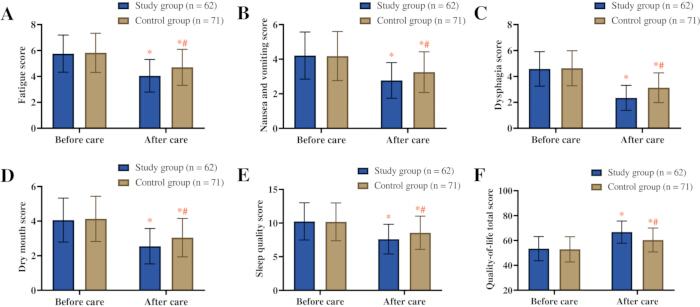
Figure 1: Changes in symptom burden and quality of life before and after care in the control and study groups. (A) Fatigue score, (B) nausea and vomiting score, (C) dysphagia score, (D) dry mouth score, (E) sleep quality score, and (F) quality-of-life total score. * and # indicates a significant baseline-adjusted between-group and within-group differences after false-discovery-rate correction, q < 0.05. Please click here to view a larger version of this figure.
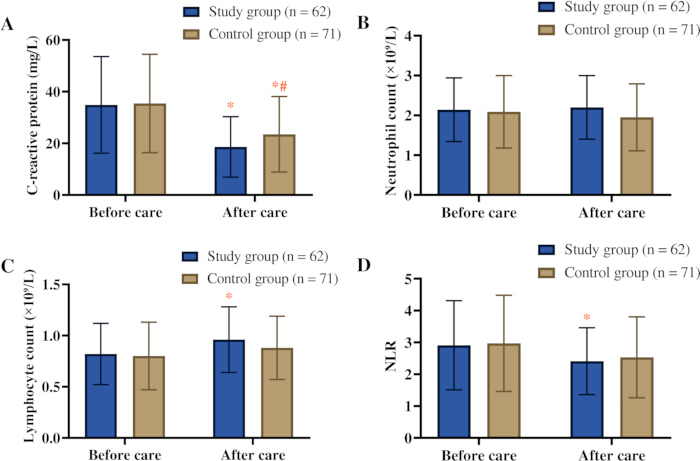
Figure 2: Changes in inflammatory, immune, and hematological indicators before and after care in the control and study groups. (A) C-reactive protein (mg/L), (B) neutrophil count (×109/L), (C) lymphocyte count (×109/L), and (D) neutrophil-to-lymphocyte ratio (NLR). * and # indicates a significant baseline-adjusted between-group and within-group differences after false-discovery-rate correction, q < 0.05. Please click here to view a larger version of this figure.
| Implementation step | Main assessment or nursing content | Empowerment focus | Implementation approach | Recording and evaluation indicators |
| Initial assessment | Assessment of oral mucosal condition, pain severity, food intake, dietary texture, nutritional risk, self-management ability, and family support | To identify the patient's current major problems and nursing needs | Bedside assessment, nursing assessment form, nutritional risk screening | Oral mucositis grade, VAS score, NRS 2002, PG-SGA, oral intake |
| Problem identification | Identification of oral pain, worsening ulceration, eating restriction, insufficient nutritional intake, and inadequate oral care implementation | To help patients understand the relationship between symptoms and nutritional status | Nurses summarized problems based on assessment results and communicated them with patients | Nursing problem records, risk stratification results |
| Goal setting | Development of goals for daily oral care frequency, mouth-rinse performance, pain control, energy and protein intake, and nutrition recording | To shift patients from passive receipt of care to active participation in management | Nurses worked with patients and family members to set staged goals | Pathway sheet, bedside education sheet, goal completion records |
| Skills training | Guidance on soft-bristled toothbrush use, mouth-rinsing methods, oral mucosal self-checking, eating strategies during pain, and dietary texture selection | To improve practical skills and self-care ability | Bedside demonstration, visual education, process-based guidance | Oral care implementation rate, compliance rate of mouth-rinsing or toothbrushing frequency |
| Nutritional management | Stratified guidance based on BMI, nutritional score, serum protein, pain severity, and food intake | To promote oral intake and reduce further nutritional deterioration | Small frequent meals, soft high-protein diet, oral nutritional supplementation, and nutritional support when necessary | Energy intake compliance rate, protein intake compliance rate, dietary texture score, ONS use |
| Dynamic feedback | Continuous observation of mucositis grade, pain score, food intake, dietary texture, body weight, and laboratory indicators | To identify unmet goals in time and adjust nursing priorities | Daily review of records, feedback to patients, and reporting to physicians or dietitians when necessary | Dynamic symptom feedback records, nursing goal adjustment records |
| Family collaboration | Guidance for family members to participate in meal preparation, oral care supervision, symptom observation, and reporting of abnormalities | To extend nursing support and improve continuity of home-based implementation | Family members received education and participated in the nursing plan | Family collaborative participation records, discharge guidance records |
| Continuing management | Reinforcement of oral care, dietary adjustment, nutritional supplementation, symptom warning signs, and follow-up requirements before discharge | To maintain nursing measures during chemotherapy intervals | Discharge guidance, follow-up records, abnormal symptom feedback | Continuing-care guidance records, readmission status, oral mucosal recovery |
Table 1: Visualized implementation pathway of the empowerment nursing model in the study group. The table summarizes the seven linked stages of the pathway-assessment, identification, goal setting, training, implementation, feedback, and continuing management, and the corresponding oral-care, nutritional-support, symptom-monitoring, family-collaboration, and follow-up activities applied after oral mucositis was identified.
| Study group (n = 62) | Control group (n = 71) | Statistic (t/χ2) | P value | |
| Age (years) | 55.84 ± 10.73 | 56.41 ± 11.26 | -0.298 | 0.766 |
| Male | 35 (56.45) | 40 (56.34) | <0.001 | 0.989 |
| Female | 27 (43.55) | 31 (43.66) | — | — |
| Hodgkin lymphoma | 7 (11.29) | 8 (11.27) | <0.001 | 0.997 |
| Non-Hodgkin lymphoma | 55 (88.71) | 63 (88.73) | — | — |
| Ann Arbor stage I-II | 20 (32.26) | 24 (33.80) | 0.036 | 0.850 |
| Ann Arbor stage III-IV | 42 (67.74) | 47 (66.20) | — | — |
| ECOG score | 1.42 ± 0.64 | 1.45 ± 0.67 | -0.274 | 0.784 |
| Chemotherapy cycles | 3.18 ± 1.21 | 3.24 ± 1.27 | -0.287 | 0.774 |
Table 2: Baseline demographic and clinical characteristics of the study group (visualized empowerment nursing pathway, n = 62) and control group (routine nursing, n = 71). The table presents between-group comparisons before pathway-based care, including age, sex, lymphoma type, Ann Arbor stage, Eastern Cooperative Oncology Group (ECOG) performance status, and chemotherapy cycle. Data are presented as mean ± SD for continuous variables and n (%) for categorical variables.
| Indicator | Study group (n = 62) |
| Completed specialized oral mucositis assessment | 60 (96.77) |
| Completed dynamic nutritional risk assessment | 58 (93.55) |
| Had explicit staged nursing goal records | 55 (88.71) |
| Completed oral care skills guidance | 59 (95.16) |
| Completed individualized dietary guidance | 57 (91.94) |
| Had daily intake or nutrition records | 53 (85.48) |
| Had dynamic symptom feedback records | 56 (90.32) |
| Had family collaborative management records | 49 (79.03) |
| Had discharge continuing-care guidance records | 54 (87.10) |
| Complete closed-loop management records | 51 (82.26) |
Table 3: Implementation fidelity of the visualized empowerment nursing pathway in the study group (n = 62). The table reports documentation of individual pathway components and overall closed-loop implementation; 51 patients had complete closed-loop documentation, and 11 had partial implementation. Percentages use the 62 study-group patients as the denominator. This table is descriptive and does not represent a comparison with the control group. Data are presented as n (%).
| Outcome | Time point | Study group (n = 62) | Control group (n = 71) | Effect estimate (95% CI) | P value | q value |
| PG-SGA score | Before care | 8.63 ± 2.21 | 8.79 ± 2.34 | — | 0.688 | — |
| After care | 6.13 ± 1.86 | 7.34 ± 2.12 | aMD −1.07 (−1.24 to −0.90) | <0.001 | <0.001 | |
| NRS 2002 score | Before care | 3.48 ± 0.92 | 3.52 ± 0.94 | — | 0.818 | — |
| After care | 2.74 ± 0.77 | 3.18 ± 0.85 | aMD −0.41 (−0.56 to −0.27) | <0.001 | <0.001 | |
| Body weight (kg) | Before care | 60.43 ± 8.92 | 60.87 ± 9.17 | — | 0.778 | — |
| After care | 60.21 ± 8.72 | 59.63 ± 8.90 | aMD 1.00 (0.44 to 1.57) | <0.001 | 0.001 | |
| BMI (kg/m²) | Before care | 21.76 ± 2.38 | 21.69 ± 2.45 | — | 0.865 | — |
| After care | 21.70 ± 2.31 | 21.25 ± 2.37 | aMD 0.38 (0.25 to 0.51) | <0.001 | <0.001 | |
| Albumin (g/L) | Before care | 34.82 ± 4.16 | 34.57 ± 4.29 | — | 0.736 | — |
| After care | 37.06 ± 3.92 | 35.48 ± 4.11 | aMD 1.35 (1.15 to 1.54) | <0.001 | <0.001 | |
| Prealbumin (mg/L) | Before care | 164.72 ± 36.52 | 162.41 ± 38.07 | — | 0.722 | — |
| After care | 194.28 ± 33.48 | 176.35 ± 36.19 | aMD 15.79 (14.16 to 17.41) | <0.001 | <0.001 | |
| Hemoglobin (g/L) | Before care | 105.86 ± 14.30 | 104.92 ± 15.08 | — | 0.714 | — |
| After care | 108.15 ± 13.92 | 105.47 ± 14.73 | aMD 1.83 (1.24 to 2.42) | <0.001 | <0.001 | |
| Upper arm circumference (cm) | Before care | 24.18 ± 2.41 | 24.09 ± 2.36 | — | 0.824 | — |
| After care | 24.25 ± 2.34 | 23.91 ± 2.31 | aMD 0.25 (0.08 to 0.42) | 0.004 | 0.007 | |
| Grip strength (kg) | Before care | 22.43 ± 5.72 | 22.19 ± 5.64 | — | 0.805 | — |
| After care | 23.11 ± 5.36 | 21.83 ± 5.47 | aMD 1.05 (0.73 to 1.37) | <0.001 | <0.001 | |
| Malnutrition, n (%) | Before care | 39 (62.90) | 46 (64.79) | — | 0.821 | — |
| After care | 24 (38.71) | 40 (56.34) | RR 0.687 (0.473 to 0.999) | 0.042 | 0.068 |
Table 4: Baseline and post-care core nutritional outcomes in the study group (visualized empowerment nursing pathway, n = 62) and control group (routine nursing, n = 71). Continuous data are presented as mean ± SD and categorical data as n (%). For continuous outcomes, post-care between-group differences were estimated using analysis of covariance (ANCOVA), with the corresponding baseline value included as a covariate, and are reported as adjusted mean differences with 95% confidence intervals (CIs); categorical outcomes were compared using the χ2 test or Fisher's exact test, as appropriate. P values are unadjusted, whereas q values were obtained using the Benjamini-Hochberg false-discovery-rate (FDR) procedure, with q < 0.05 considered statistically significant. Abbreviations: PG-SGA, Patient-Generated Subjective Global Assessment; NRS 2002, Nutritional Risk Screening 2002; BMI, body mass index.
| Outcome | Time point | Study group (n = 62) | Control group (n = 71) | Effect estimate (95% CI) | P value | q value |
| Energy intake compliance rate (%) | Before care | 61.34 ± 14.82 | 60.76 ± 15.13 | — | 0.824 | — |
| After care | 80.51 ± 12.34 | 72.42 ± 13.82 | aMD 7.59 (6.75 to 8.43) | <0.001 | <0.001 | |
| Protein intake compliance rate (%) | Before care | 58.72 ± 15.35 | 57.96 ± 15.81 | — | 0.779 | — |
| After care | 77.86 ± 12.90 | 69.36 ± 14.24 | aMD 7.84 (6.96 to 8.72) | <0.001 | <0.001 | |
| Oral intake as proportion of usual intake (%) | Before care | 54.63 ± 16.28 | 53.91 ± 16.76 | — | 0.802 | — |
| After care | 76.34 ± 13.40 | 66.82 ± 15.15 | aMD 8.90 (8.15 to 9.66) | <0.001 | <0.001 | |
| Dietary texture score | Before care | 2.37 ± 0.81 | 2.34 ± 0.84 | — | 0.82 | — |
| After care | 3.45 ± 0.74 | 3.00 ± 0.79 | aMD 0.42 (0.30 to 0.55) | <0.001 | <0.001 | |
| Use of oral nutritional supplements, n (%) | Before care | 18 (29.03) | 19 (26.76) | — | 0.771 | — |
| After care | 39 (62.90) | 32 (45.07) | RR 1.40 (1.01 to 1.92) | 0.04 | 0.066 | |
| Enteral nutrition support, n (%) | Before care | 4 (6.45) | 5 (7.04) | — | 0.892 | — |
| After care | 8 (12.90) | 12 (16.90) | RR 0.76 (0.33 to 1.75) | 0.52 | 0.53 | |
| Parenteral nutrition support, n (%) | Before care | 3 (4.84) | 4 (5.63) | — | 0.838 | — |
| After care | 5 (8.06) | 12 (16.90) | RR 0.48 (0.18 to 1.28) | 0.128 | 0.165 |
Table 5: Baseline and post-care dietary intake, dietary texture, and nutritional-support outcomes in the study group (visualized empowerment nursing pathway, n = 62) and control group (routine nursing, n = 71). Continuous data are presented as mean ± SD and categorical data as n (%). Continuous post-care outcomes were compared using ANCOVA with adjustment for the corresponding baseline value, whereas categorical nutritional-support outcomes were compared using the χ2 test or Fisher's exact test, as appropriate. P values are unadjusted, and q values are Benjamini-Hochberg FDR-adjusted, with q < 0.05 considered statistically significant.
| Outcome | Time point | Study group (n=62) | Control group (n=71) | Effect estimate (95% CI) | P value |
| Oral mucositis grade | Before care | 2 (1–2) | 2 (1–2) | — | 0.777 |
| After care | 1 (1–1) | 1 (1–1) | — | — | |
| Change in oral mucositis grade | After vs. before care | −1(−1 to −1) | −1 (−1 to 0) | r_rb = -0.252 | 0.005 |
| Grade III–IV oral mucositis, n (%) | Before care | 11 (17.74) | 14 (19.72) | — | 0.771 |
| After care | 3 (4.84) | 8 (11.27) | RR 0.43 (0.12 to 1.55) | 0.179 | |
| VAS pain score | Before care | 4.32 ± 1.18 | 4.41 ± 1.25 | — | 0.686 |
| After care | 2.05 ± 0.93 | 2.86 ± 1.07 | aMD -0.75 (-0.91 to -0.59) | <0.001 | |
| Eating restriction due to oral mucositis, n (%) | Before care | 45 (72.58) | 53 (74.65) | — | 0.787 |
| After care | 17 (27.42) | 29 (40.85) | RR 0.67 (0.41 to 1.10) | 0.104 | |
| Need for analgesic medication intervention, n (%) | Before care | 26 (41.94) | 31 (43.66) | — | 0.841 |
| After care | 15 (24.19) | 25 (35.21) | RR 0.69 (0.40 to 1.18) | 0.167 | |
| Ulcer duration (d) | Observation period | 6.48 ± 2.37 | 8.17 ± 2.91 | MD -1.69 (-2.60 to -0.77) | <0.001 |
| Mucosal healing time (d) | Observation period | 8.42 ± 2.85 | 10.13 ± 3.36 | MD -1.71 (-2.79 to -0.63) | 0.002 |
Table 6: Oral mucositis severity, pain, and recovery outcomes in the study group (visualized empowerment nursing pathway, n = 62) and control group (routine nursing, n = 71). Oral mucositis grade and change in grade are presented as median (interquartile range), continuous data as mean ± SD, and categorical data as n (%). Between-group differences in changes in oral mucositis grade are reported using the rank-biserial correlation coefficient (r_rb). Post-care between-group differences in VAS pain score were estimated using analysis of covariance (ANCOVA), with the corresponding baseline value included as a covariate, and are reported as adjusted mean differences (aMDs) with 95% confidence intervals (CIs). Categorical outcomes are reported as risk ratios (RRs) with 95% CIs, and ulcer duration and mucosal healing time as mean differences (MDs) with 95% CIs. P values are unadjusted, whereas q values were obtained using the Benjamini-Hochberg false-discovery-rate (FDR) procedure, with q < 0.05 considered statistically significant. VAS, visual analog scale.
| Indicator | Time point | Study group (n = 62) | Control group (n = 71) | Effect estimate (95% CI) | P value | q value |
| Oral care implementation rate (%) | Before care | 58.34 ± 14.62 | 57.81 ± 15.04 | — | 0.838 | — |
| After care | 86.33 ± 10.40 | 72.42 ± 13.84 | aMD 13.49 (12.35 to 14.63) | <0.001 | <0.001 | |
| Compliance rate of mouth-rinsing or toothbrushing frequency (%) | Before care | 55.71 ± 15.35 | 54.96 ± 15.82 | — | 0.781 | — |
| After care | 84.72 ± 10.82 | 70.18 ± 14.52 | aMD 13.93 (12.79 to 15.06) | <0.001 | <0.001 | |
| Nutrition record completion rate (%) | Before care | 32.65 ± 17.44 | 31.93 ± 18.12 | — | 0.817 | — |
| After care | 75.28 ± 14.05 | 48.57 ± 17.61 | aMD 26.09 (24.45 to 27.73) | <0.001 | <0.001 | |
| Health knowledge mastery score | Before care | 61.29 ± 10.47 | 60.73 ± 10.92 | — | 0.765 | — |
| After care | 84.37 ± 8.42 | 72.85 ± 9.96 | aMD 11.05 (10.50 to 11.60) | <0.001 | <0.001 | |
| Self-efficacy score | Before care | 58.37 ± 9.82 | 57.94 ± 10.11 | — | 0.806 | — |
| After care | 78.42 ± 8.76 | 66.73 ± 9.64 | aMD 11.30 (10.63 to 11.97) | <0.001 | <0.001 | |
| Family collaborative participation, n (%) | Before care | 18 (29.03) | 19 (26.76) | — | 0.771 | — |
| After care | 45 (72.58) | 25 (35.21) | RR 2.06 (1.45 to 2.93) | <0.001 | <0.001 |
Table 7: Baseline and post-care self-management ability and nursing-compliance outcomes in the study group (visualized empowerment nursing pathway, n = 62) and control group (routine nursing, n = 71). Continuous data are presented as mean ± SD and categorical data as n (%). For continuous outcomes, post-care between-group differences were estimated using analysis of covariance (ANCOVA), with the corresponding baseline value included as a covariate, and are reported as adjusted mean differences (aMDs) with 95% confidence intervals (CIs). Categorical outcomes are reported as risk ratios (RRs) with 95% CIs. P values are unadjusted, whereas q values were obtained using the Benjamini-Hochberg false-discovery-rate (FDR) procedure, with q < 0.05 considered statistically significant.
| Indicator | Study group (n = 62) | Control group (n = 71) | Effect estimate (95% CI) | P value | q value |
| Chemotherapy delay, n (%) | 10 (16.13) | 19 (26.76) | RR 0.60 (0.30 to 1.20) | 0.139 | 0.171 |
| Chemotherapy dose adjustment, n (%) | 7 (11.29) | 13 (18.31) | RR 0.62 (0.26 to 1.45) | 0.259 | 0.274 |
| Infection, n (%) | 10 (16.13) | 20 (28.17) | RR 0.57 (0.29 to 1.13) | 0.097 | 0.14 |
| Febrile neutropenia, n (%) | 5 (8.06) | 10 (14.08) | RR 0.57 (0.21 to 1.58) | 0.274 | 0.284 |
| Use of anti-infective medication, n (%) | 14 (22.58) | 24 (33.80) | RR 0.67 (0.38 to 1.17) | 0.153 | 0.181 |
| Duration of anti-infective medication use (d)* | 4.50 (3.25–6.00), n = 14 | 6.00 (4.75–8.00), n = 24 | r_rb = -0.315 | 0.107 | 0.141 |
| Use of analgesic medication, n (%) | 15 (24.19) | 25 (35.21) | RR 0.69 (0.40 to 1.18) | 0.167 | 0.188 |
| Duration of analgesic medication use (d)* | 4.00 (3.00–4.50), n = 15 | 4.00 (4.00–6.00), n = 25 | r_rb = -0.360 | 0.056 | 0.086 |
| Length of hospital stay (d) | 14.18 ± 4.06 | 16.06 ± 4.58 | MD -1.88 (-3.37 to -0.38) | 0.014 | 0.024 |
| 30-day unplanned readmission after discharge, n (%) | 6 (9.68) | 12 (16.90) | RR 0.57 (0.23 to 1.44) | 0.224 | 0.243 |
| Chemotherapy completed as scheduled, n (%) | 52 (83.87) | 52 (73.24) | RR 1.15 (0.96 to 1.37) | 0.139 | 0.171 |
| Oral mucositis not healed at discharge, n (%) | 18 (29.03) | 32 (45.07) | RR 0.64 (0.40 to 1.03) | 0.057 | 0.086 |
Table 8: Clinical outcomes and safety indicators in the study group (visualized empowerment nursing pathway, n = 62) and control group (routine nursing, n = 71). Data are presented as n (%), mean ± SD, or median (interquartile range), as appropriate. Effect estimates are reported as risk ratios (RRs), mean differences (MDs), or rank-biserial correlations (r_rb), with 95% confidence intervals (CIs) where applicable. P values are unadjusted; q values are Benjamini-Hochberg FDR-adjusted, with q < 0.05 considered statistically significant.
Supplementary File 1. Please click here to download this File.
Discussie
Based on previous medical and nursing records, this study analyzed the application effect of the empowerment nursing model and its visualized implementation pathway in patients with lymphoma undergoing chemotherapy and complicated by oral mucositis. Compared with routine nursing, the study group showed more favorable post-care trends in nutritional risk, oral intake, oral mucositis recovery, self-management ability, symptom burden, and some clinical outcomes. These findings suggest that empowerment nursing does not simply increase the frequency of health education. More importantly, it brings together oral care and nutritional support, which are often implemented separately, into a continuous management process through assessment, goal setting, skills guidance, behavioral feedback, and continuing management. Compared with routine nursing, which was largely symptom-triggered and focused on general education and implementation of medical orders, the visualized pathway added predefined assessment, shared goal setting, skills training, family participation, and structured feedback; unlike oral-care programs focused primarily on mucositis symptoms, it also linked mucositis management directly with nutritional monitoring and self-management.
Improvement in nutritional status was one of the main findings of this study. During chemotherapy, patients with cancer often develop nutrition-impact symptoms such as oral ulcers, dysphagia, loss of appetite, nausea, and vomiting, which may lead to insufficient oral intake18. The empowerment nursing pathway emphasizes early assessment and dynamic feedback, allowing nurses, patients, and family members to identify reduced intake and increasing nutritional risk at an earlier stage. With daily intake goals, intake records, and timely adjustments to dietary plans, patients become more involved in nutritional management, and nutritional interventions are more likely to translate into daily behavior. Previous studies have suggested that the effect of nutritional intervention in patients with cancer is closely related to timing, individualization, and continuous follow-up, which is consistent with our findings19. Baseline-adjusted analyses also showed modest but significant differences in body weight, BMI, upper arm circumference, and grip strength. In particular, body weight decreased by approximately 1.24 kg in the control group but by only 0.22 kg in the study group, yielding an adjusted between-group difference of 1.00 kg; this pattern is more consistent with short-term preservation of nutritional status than with substantial weight gain. PG-SGA and NRS 2002 scores showed larger relative changes in the present study; however, these tools capture different dimensions of nutritional status, with NRS 2002 incorporating nutritional status, disease severity, and age, whereas PG-SGA additionally captures weight change, food intake, nutrition-impact symptoms, functional status, metabolic requirements, and physical findings20.
The improvement in dietary intake further helps explain the changes in nutritional outcomes. After the intervention, the study group had better energy intake compliance, protein intake compliance, oral intake, and dietary texture score, suggesting that empowerment nursing mainly worked by maintaining and improving oral intake rather than relying solely on enteral or parenteral nutrition support. Reduced intake in patients with oral mucositis is not determined only by ulcer area or the degree of mucosal injury. Anticipated pain, previous unpleasant eating experiences, inappropriate food choices, and concern about symptom aggravation may also affect intake21,22. Through bedside demonstration, visual education, and staged feedback, empowerment nursing helped patients choose cool, soft, high-protein foods according to pain severity and adopt strategies such as small, frequent meals, pain management before eating, and oral nutritional supplementation23. Although oral nutritional supplement use was numerically higher in the study group, this difference did not remain significant after false-discovery-rate correction, while enteral and parenteral nutritional support were also similar between groups; the more consistent finding was therefore the improvement in actual energy, protein, and oral intake rather than greater reliance on artificial nutritional support.
The oral mucositis-related findings also support the value of this nursing pathway. The change in oral mucositis grade favored the study group, as did pain score, shorter ulcer duration, and mucosal healing time. Several components of the intervention may have contributed to this effect. First, special assessment may have facilitated earlier recognition of mucosal changes, allowing nursing measures to begin while the injury was still mild or moderate. Second, standardized oral hygiene, mouth-rinse guidance, and mucosal protection may have reduced local irritation and secondary oral complications. Third, pain management and dietary texture adjustment may have reduced discomfort during eating and pain-related food avoidance; these measures are consistent with guideline-based oral care during cancer therapy11.
Previous studies on chemotherapy-related oral mucositis have shown that structured education and oral-care guidance can reduce mucositis severity and support symptom management during treatment, which is consistent with the present findings24,25. Still, severe oral mucositis, eating restriction, and analgesic medication did not differ significantly between groups after care. This may be related to the limited number of severe cases, insufficient sample size, and the relatively limited detail of symptom-change records in this retrospective study. Further validation is therefore needed.
The improvement in self-management ability in the study group indicates a shift from passive receipt of nursing care to active participation in disease management. The value of empowerment nursing lies not in repeatedly telling patients, "what they should do", but in helping them understand their own problems, master specific methods, and recognize the effects of behavioral change through feedback. Oral complications related to cytotoxic therapy may vary in timing and duration and can require supportive care during and after chemotherapy26. Nurse supervision during hospitalization alone may be insufficient to support continued self-management after discharge or between chemotherapy cycles. In this context, greater family collaboration in the study group may have strengthened continuity in home-based dietary preparation, symptom monitoring, and oral care supervision.
Symptom relief and quality-of-life improvement may have resulted from several linked changes. As oral pain decreased, patients became more confident in eating, and improved oral intake may have helped relieve fatigue and treatment-related discomfort. The visualized pathway and staged goals also gave patients a clearer understanding of the care process and recovery trajectory, reducing uncertainty stemming from symptom fluctuations. Evidence for nurse-led self-management interventions on quality of life and self-efficacy remains mixed, although peer-support interventions have shown benefits for both outcomes in patients with cancer27,28. These findings provide context for, but do not establish the mechanism underlying, the quality-of-life difference observed in the study group. The overall satisfaction rate did not differ significantly, which may partly reflect the ceiling effects commonly observed in satisfaction measures. Because dichotomization can reduce variation in satisfaction data, continuous satisfaction scores may be more sensitive to between-group differences in nursing experience29.
The findings regarding inflammatory, immune, and hematological indicators should be interpreted with caution. Although C-reactive protein was lower after care in the study group, this finding should not be attributed to a single mechanism; chemotherapy-induced oral mucositis involves inflammatory signaling, and poorer nutritional status in hematological malignancies has also been associated with systemic inflammation5,9. Length of hospital stay remained shorter in the study group after false-discovery-rate correction, whereas medication-use duration, chemotherapy delay, infection, and unplanned readmission did not differ significantly between groups. These findings suggest a possible reduction in the hospitalization burden, but they do not support a broader conclusion that the pathway reduced major treatment-related complications; larger prospective studies are needed for confirmation.
This study has several limitations. First, it was a single-center retrospective study in which the nursing model was determined by routine clinical practice rather than random allocation; consequently, unmeasured factors such as patient motivation, clinical complexity, nurse experience, staffing or shift patterns, education level, baseline family support, and treatment characteristics may have influenced both receipt of the empowerment pathway and the observed outcomes, and comparability of the measured baseline variables cannot exclude residual selection or indication bias. Second, clinical and nursing documentation was not standardized prospectively, and the empowerment pathway itself encouraged more structured recording; differential documentation between groups may therefore have introduced information or detection bias. The interval between baseline and post-care assessment was also not strictly standardized, while exclusion of patients without an evaluable post-care assessment may have introduced additional selection bias if early discharge was related to disease severity. Detailed chemotherapy regimens, corticosteroid exposure, and granulocyte colony-stimulating factor use were not consistently available and could not be adjusted for. In addition, because eligibility requires documented oral mucositis, this study cannot determine whether the pathway prevents mucositis or reduces its incidence among the broader population receiving chemotherapy. Finally, the retrospective sample size was determined by the number of eligible records rather than by an a priori sample size calculation. Multicenter prospective studies with standardized assessment intervals, more comprehensive treatment data, and longer follow-up are needed to confirm these associations.
In conclusion, the empowerment nursing model and its visualized implementation pathway were associated with reduced nutritional risk, improved oral intake, faster recovery from oral mucositis, and enhanced self-management ability in patients with lymphoma undergoing chemotherapy and complicated by oral mucositis. By integrating oral care and nutritional support into a clearer nursing process through continuous assessment, goal setting, skills training, dynamic feedback, and continuing management, this model showed good clinical feasibility.
Openbaarmakingen
The authors declare that there is no conflict of interest regarding the publication of this paper. No artificial intelligence (AI) tools were used to assist in the writing of this manuscript.
Dankbetuigingen
All scientific content, statistical analyses, references, and interpretations were reviewed and verified by the authors, who take full responsibility for the final manuscript. No funding was received for this publication.
Materialen
| Naam | Bedrijf | Catalogusnummer | Opmerkingen |
|---|---|---|---|
| Analgesic medications | Chartwell RX, LLC | Lidocaine Hydrochloride Oral Topical Solution USP 2% (Viscous), 100 mL; NDC 62135-712-42 | Representative topical oral analgesic/local-anesthetic candidate. The manuscript only states analgesia according to medical orders; verify the actual formulary drug(s) used. |
| Anti-infective medications | Genus Lifesciences Inc. | Nystatin Oral Suspension USP 100,000 units/mL, 60 mL; NDC 64950-372-06 | Representative oral antifungal candidate. The manuscript only states anti-infective treatment according to medical orders; verify the actual agent(s), including any systemic anti-infectives. |
| CTCAE v5.0 oral mucositis grading | National Cancer Institute (NCI), U.S. NIH | CTCAE Version 5.0 (2017; MedDRA 20.1) | CTCAE v5.0 'Mucositis oral' grading criterion; added because the manuscript lists CTCAE 5.0 as an alternative grading system used in records. |
| Disposable gloves | Ansell | MICRO-TOUCH® Nitrile, size M code 6034302 | Representative powder-free nitrile examination glove candidate for infection prevention during oral care; glove size/product used clinically may vary. |
| Electronic medical record system | Winning Health Technology Group / Shanxi Winning Software (publicly linked candidate) | Winning Health EMR/HIS platform; exact deployed module/version to verify | Public sources link Shanxi Provincial People's Hospital with Shanxi Winning/Winning Health information-system projects. This is the best-supported vendor candidate; confirm the exact 2024–2025 EMR/HIS product/version with hospital IT. |
| NRS 2002 screening form | ESPEN / Kondrup et al. | NRS 2002; DOI 10.1016/S0261-5614(02)00214-5; PMID 12765673 | Nutritional Risk Screening 2002 method used for nutritional-risk screening. |
| Nutritional intake record sheet | Department of Hematology, Shanxi Provincial People's Hospital | Study-specific departmental intake record sheet; no commercial catalog | Used for recording daily intake/goal attainment in the empowerment pathway; verify any internal form code if applicable. |
| Oral care education materials | Department of Hematology, Shanxi Provincial People's Hospital | Study-specific departmental visual education material; no commercial catalog | Visual oral-care/empowerment-pathway education material described in the manuscript; verify any internal document/form code if the department assigns one. |
| Oral mucosal protective agent | Alliance Pharmaceuticals Limited | Gelclair® Concentrated Oral Gel; MPC ELZ012; EAN 5024403001506 | Representative bioadherent oral mucosal protective gel for oral mucositis; 21 × 15 mL sachets. Candidate to be checked against the medication/nursing record. |
| Oral nutritional supplements | Abbott Nutrition (Abbott Laboratories) | Ensure® Plus Therapeutic Nutrition, Vanilla 237 mL; List No. 64905 | Representative institutional oral nutritional supplement candidate for high-energy nutritional support; verify the actual ONS brand/formulation used. |
| Penlight/medical examination light | Rudolf Riester GmbH | e-xam® LED 2.5 V, black, with tongue blade holder; 5131-01 | Representative diagnostic penlight candidate for throat/oral-cavity examination; verify the actual ward device. |
| PG-SGA assessment form | Pt-Global / Faith D. Ottery, MD, PhD | PG-SGA© (copyrighted instrument; research/publication permission required) | Patient-Generated Subjective Global Assessment for nutritional-status evaluation. Verify the exact language/version used in the hospital record. |
| Soft-bristled toothbrush | Sunstar Americas, Inc. | GUM Technique Deep Clean Soft, Compact 525; SKU 00070942006293 | Representative web-verified soft-bristled toothbrush candidate for oral hygiene care; verify the actual ward brand/model against nursing records. |
| SPSS Statistics 27.0 | IBM | Version 27.0.x; IBM PID 5725-A54 | Statistical-analysis software; version 27.0 is explicitly stated in the manuscript. |
| Sterile saline mouth rinse | B. Braun Medical Inc. | 0.9% Sodium Chloride Irrigation, USP; Product Code R5200-01 (1000 mL) | Representative sterile 0.9% saline candidate for bland oral rinsing/cleansing; verify the actual hospital-pharmacy product. |
| Thermometer | Welch Allyn (Baxter) | SureTemp® Plus 692; Model SURETEMP692 | Representative hospital oral/axillary/rectal thermometer candidate for fever/infection monitoring; verify the actual ward model. |
| Tongue depressor | Puritan Medical Products | 25-705 | Representative 6-inch sterile senior wood tongue depressor for oral-cavity examination. |
| Visual Analog Scale (VAS) form | Huskisson EC / The Lancet | DOI 10.1016/S0140-6736(74)90884-8; PMID 4139420 | Pain-intensity assessment method reference used to identify the non-commercial VAS form. |
| WHO oral mucositis grading criteria | World Health Organization | WHO Offset Publication No. 48; ISBN 9241700483 (1979) | WHO Handbook for Reporting Results of Cancer Treatment; added because the manuscript states WHO oral-mucositis grading was used in medical/nursing records. |
Referenties
- Lewis WD, Lilly S, Jones KL. Lymphoma: diagnosis and treatment. Am Fam Physician. 2020;101(1):34-41.
- Hübel K. Lymphoma: new diagnosis and current treatment strategies. J Clin Med. 2022;11(6):1701.
- Sun K, et al. Global landscape and trends in lifetime risks of haematologic malignancies in 185 countries: population-based estimates from GLOBOCAN 2022. EClinicalMedicine. 2025;83:103193.
- Watson C, et al. Exploring the burden of short-term CHOP chemotherapy adverse events in post-transplant lymphoproliferative disease: a comprehensive literature review in lymphoma patients. J Drug Assess. 2020;10(1):18-26.
- Ji L, et al. Roles of Toll-like receptors in radiotherapy- and chemotherapy-induced oral mucositis: a concise review. Front Cell Infect Microbiol. 2022;12:831387.
- Sabancı A, et al. Impact of periodontal status on the oral mucositis in patients receiving high-dose chemotherapy. Clin Oral Investig. 2022;26(10):6341-6346.
- Padure A, et al. Oral mucositis in adult cancer patients undergoing chemotherapy: six-month on-treatment follow-up. J Clin Med. 2024;13(19):5723.
- Singh V, Singh AK. Oral mucositis. Natl J Maxillofac Surg. 2020;11(2):159-168.
- Stauder R, Augschoell J, Hamaker ME, Koinig KA. Malnutrition in older patients with hematological malignancies at initial diagnosis - association with impairments in health status, systemic inflammation and adverse outcome. Hemasphere. 2020;4(1):e332.
- Crestani MS, Grassi T, Steemburgo T. Methods of nutritional assessment and functional capacity in the identification of unfavorable clinical outcomes in hospitalized patients with cancer: a systematic review. Nutr Rev. 2022;80(4):786-811.
- Elad S, et al. MASCC/ISOO clinical practice guidelines for the management of mucositis secondary to cancer therapy. Cancer. 2020;126(19):4423-4431.
- Marzorati C, Bailo L, Mazzocco K, Pravettoni G. Empowerment from patient's and caregiver's perspective in cancer care. Health Psychol Open. 2018;5(2):2055102918815318.
- Kim SH, Choe YH, Kim DH. Patient empowerment in cancer care: a scoping review. Cancer Nurs. 2024;47(6):471-483.
- Trujillo EB, et al. Malnutrition risk screening in adult oncology outpatients: an ASPEN systematic review and clinical recommendations. JPEN J Parenter Enteral Nutr. 2024;48(8):874-894.
- de Pinho NB, et al. High prevalence of malnutrition and nutrition impact symptoms in older patients with cancer: results of a Brazilian multicenter study. Cancer. 2020;126(1):156-164.
- Villa A, Vollemans M, De Moraes A, Sonis S. Concordance of the WHO, RTOG, and CTCAE v4.0 grading scales for the evaluation of oral mucositis associated with chemoradiation therapy for the treatment of oral and oropharyngeal cancers. Support Care Cancer. 2021;29(10):6061-6068.
- Ioroi T, et al. Ibuprofen gargle for chemo- or chemoradiotherapy-induced oral mucositis: a feasibility study. J Pharm Health Care Sci. 2020;6:12.
- Singh K, et al. Gastrointestinal symptoms are associated with trajectories of chemotherapy-induced nausea. Support Care Cancer. 2020;28(5):2205-2215.
- Muscaritoli M, et al. ESPEN practical guideline: clinical nutrition in cancer. Clin Nutr. 2021;40(5):2898-2913.
- Chen X, et al. The PG-SGA outperforms the NRS 2002 for nutritional risk screening in cancer patients: a retrospective study from China. Front Nutr. 2023;10:1272420.
- de Arruda JAA, et al. Influence of anxiety/depression on chemotherapy-induced oral mucositis and related quality of life: a prospective cohort study. J Psychosom Res. 2024;177:111577.
- Karlsson C, et al. Prospective study on health-related quality of life, oral mucositis and oral health on during treatment of head and neck cancer. BMC Oral Health. 2024;24(1):697.
- Qin N, et al. The effect of nutrition intervention with oral nutritional supplements on ovarian cancer patients undergoing chemotherapy. Front Nutr. 2021;8:685967.
- Elsehrawy MG, Ibrahim NM, Eltahry SI, Elgazzar SE. Impact of educational guidelines on oral mucositis severity and quality of life in oncology patients receiving chemotherapy: a quasi-experimental study. Asian Pac J Cancer Prev. 2024;25(7):2427-2438.
- Chan J, Filippi F, Filippi C. Clinical guidance for maintaining oral hygiene in patients undergoing chemotherapy or radiation therapy: a scoping review. Swiss Dent J. 2023;133(6):368-379.
- Elad S, et al. Basic oral care for hematology-oncology patients and hematopoietic stem cell transplantation recipients: a position paper from the joint task force of the Multinational Association of Supportive Care in Cancer/International Society of Oral Oncology (MASCC/ISOO) and the European Society for Blood and Marrow Transplantation (EBMT). Support Care Cancer. 2015;23(1):223-236.
- Lanfear C, Harding S. The effectiveness of nurse-led care in supporting self-management in patients with cancer: a systematic review. J Clin Nurs. 2023;32(23-24):7996-8006.
- Zhang S, Li J, Hu X. Peer support interventions on quality of life, depression, anxiety, and self-efficacy among patients with cancer: a systematic review and meta-analysis. Patient Educ Couns. 2022;105(11):3213-3224.
- Versluijs Y, et al. Factors associated with patient satisfaction measured using a Guttman-type scale. J Patient Exp. 2020;7(6):1211-1218.