
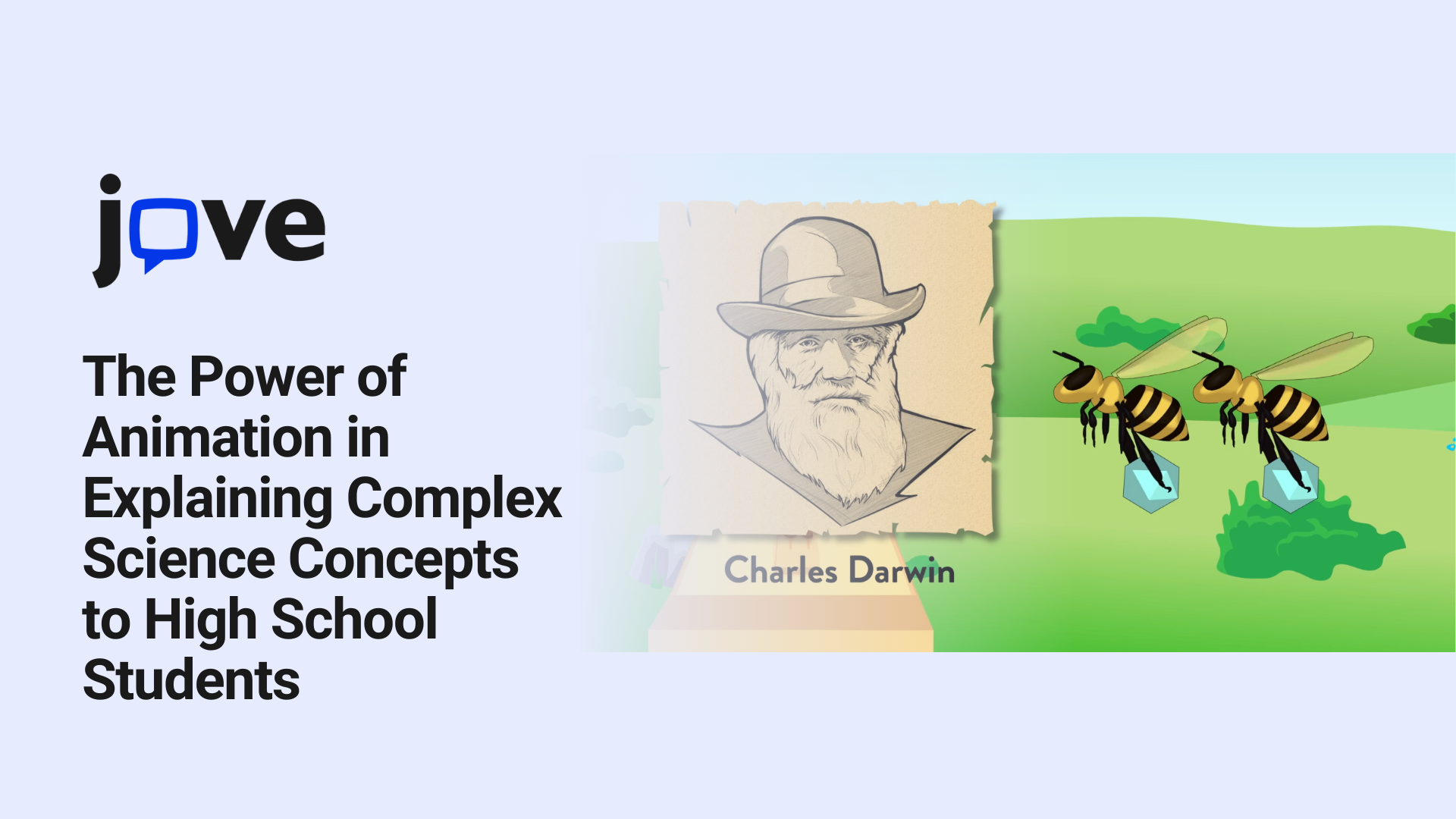
The Power of Animation in Explaining Complex Science Concepts to High School Students
Traditional science education often relies on static images, complex text descriptions, and lengthy explanations, which can make it difficult for students to grasp intricate scientific concepts. Animated science videos provide a dynamic, visual alternative that makes science more accessible, engaging, and easier to understand.
According to a 2022 study published in the Journal of Science Education and Technology, students who learned through animated science videos demonstrated a 25% improvement in concept retention compared to those using traditional text-based learning (source). This shift towards science visualization for high school students has been shown to enhance comprehension, particularly in abstract topics like physics, chemistry, and biology.
Why Animated Science Videos Are Essential for High School Education
Animated science videos provide numerous educational benefits, particularly when explaining difficult concepts in interactive science learning. Research from the Cognitive Load Theory* suggests that students learn more efficiently when information is presented in a visually dynamic way rather than through passive text or lectures (source).
*de Jong, T. Cognitive load theory, educational research, and instructional design: some food for thought. Instr Sci 38, 105–134 (2010).
Some key benefits of animated science videos in high school education include:
- Enhanced comprehension: Animations help visualize complex processes like cell division, chemical reactions, and Kinematic Equations: Problem Solving (JoVE Core: Cell Division).
- Higher student engagement:JoVE internal study shows that students who learn through animations retain information better than those using static materials (JoVE’s Video Learning Advantage).
- Support for diverse learning styles: Animated videos cater to visual and auditory learners, making science education more inclusive.
- Increased motivation: When students find lessons visually stimulating, they are more likely to stay engaged and motivated to explore scientific topics further (JoVE Science Education Library).
- A study by the International Society for Technology in Education (ISTE) found that classrooms using animated instructional videos saw a 40% increase in student engagement (source).
Steps to Effectively Use Animated Science Videos in the Classroom
To maximize the impact of animated science videos, educators should follow a structured approach to integrating them into their lesson plans.
1. Identify Key Learning Objectives
Before incorporating animations, define the specific learning goals that align with Next Generation Science Standards (NGSS) and AP Biology or Physics curricula. For example, when teaching DNA replication, use JoVE’s DNA Helix animation to visually demonstrate the process (JoVE Core: DNA Structure).
2. Choose High-Quality Animated Science Videos
Not all animations are equally effective. Select accurate, research-based animations that align with your curriculum. JoVE’s animated science videos are designed to simplify intricate topics such as:
- Photosynthesis (JoVE Core: Photosynthesis)
- Osmosis and Diffusion (JoVE Core: Diffusion and Osmosis)
3. Integrate Animations into Interactive Lesson Plans
Pair animated science videos with engaging activities like classroom discussions and fun science visualization for high school students:
- Class discussions: After watching an animation on evolution, prompt students to debate how different environmental factors drive natural selection.
- Hands-on experiments: Combine a JoVE lab manual animation with a live classroom experiment (JoVE: Enzyme Activity).
- Digital quizzes: Reinforce concepts with interactive quizzes embedded within JoVE’s video platform.
4. Encourage Cross-Disciplinary Connections
Animations allow students to see science’s real-world applications. Use videos that link chemistry, biology, and physics to everyday life, such as:
- Chemical bonds and molecular shapes in pharmaceuticals (JoVE Core: Chemical Bonding).
- Newton’s laws of motion in engineering and robotics (JoVE Core: Newton’s Laws).
5. Assess and Adapt Based on Student Feedback
Monitor student engagement and learning progress by:
- Conducting surveys on how animations enhance understanding.
- Tracking quiz scores before and after video integration.
- Allowing students to create their own science animations using tools like Tinkercad or Adobe Animate for further reinforcement.
How Animated Science Videos Improve Student Learning
- Retention rates improve by 25% when students use animated videos for science learning.
- Student engagement increases by 40% with the use of interactive educational animations.
- Difficult concepts like molecular interactions and physics laws become more accessible through visualization.
Case Study: The Impact of Animated Science Videos in High School Learning
Students who used animated science videos in their coursework scored 32% higher on assessments than those who used only traditional materials, says a study conducted by the University of Washington. The study demonstrated how animations enhance cognitive processing by breaking down step-by-step scientific processes into visually digestible formats (source).
Similarly, high schools using JoVE’s interactive science animations reported a 45% increase in student engagement and a 60% improvement in conceptual understanding (JoVE’s Video Learning Advantage).
Conclusion: The Future of Science Education Is Animated
Incorporating animated science videos into high school education is a game-changer for interactive science learning, making difficult topics accessible and engaging.. These resources simplify complex topics, enhance student engagement, and improve knowledge retention. With JoVE’s extensive collection of science animations, educators can transform their classrooms into interactive, visually immersive learning environments.
Are you ready to bring the power of animated science videos into your classroom? Explore JoVE’s video library today!

