1.6
Brick Classifications
View the full transcript and gain access to JoVE Core videos
Q1: What are the main types of bricks used in construction?
Bricks are classified into five main types based on their application: facing bricks for structural and aesthetic purposes, building bricks for hidden wall sections, hollow bricks for lighter construction, paving bricks for durable surfaces, and firebricks for high-temperature environments like fireplaces. Each type serves distinct functional and structural roles in construction projects.
Q2: How do facing bricks differ from building bricks?
Facing bricks, also called face bricks, are designed for both structural support and visual appeal, making their appearance critical. Building bricks are typically used in concealed sections of masonry walls, such as behind facing bricks, where appearance is not a priority. Both are solid units, though their intended visibility distinguishes their application.
Q3: What defines a solid brick versus a hollow brick?
Solid bricks, including facing and building bricks, must have at least 75 percent of their load-bearing surface as solid material, though they can be fully solid, cored, or frogged. Hollow bricks contain up to 60 percent void space, making them lighter. These voids in hollow bricks allow for embedding and grouting of reinforcement bars in reinforced brick masonry applications.
Q4: Why are paving bricks designed differently from other brick types?
Paving bricks are engineered to withstand abrasion and survive freeze-thaw cycles, where water infiltration does not cause damage upon freezing. This specialized design ensures durability in outdoor applications subjected to heavy foot traffic and environmental stress. Their resistance to both mechanical wear and temperature fluctuations makes them ideal for exterior surfaces.
Q5: What makes firebricks suitable for fireplace applications?
Firebricks are specialized units designed to withstand extreme heat in high-temperature environments like fireplaces. They are installed using very thin layers of fireclay mortar, which provides superior heat resistance compared to standard mortar. This combination allows firebricks to maintain structural integrity under sustained thermal stress.
Q6: How do the voids in hollow bricks benefit masonry construction?
Hollow bricks reduce overall weight while their void spaces facilitate the insertion and grouting of reinforcement bars, enhancing structural integrity. With up to 60 percent of their volume as void space, hollow bricks provide a lighter alternative to solid units without sacrificing strength when properly reinforced, making them economical for larger structures.
Q7: What is the significance of the 75 percent solid requirement for brick surfaces?
The 75 percent solid requirement for load-bearing surfaces ensures that solid bricks, whether fully solid, cored, or frogged, maintain adequate structural capacity to support building loads. This minimum threshold balances material efficiency with structural reliability, allowing manufacturers to create cored or frogged bricks that reduce weight while preserving load-bearing capability.
Explore Related Chapters

Masonry

Wood

Introduction to Concrete
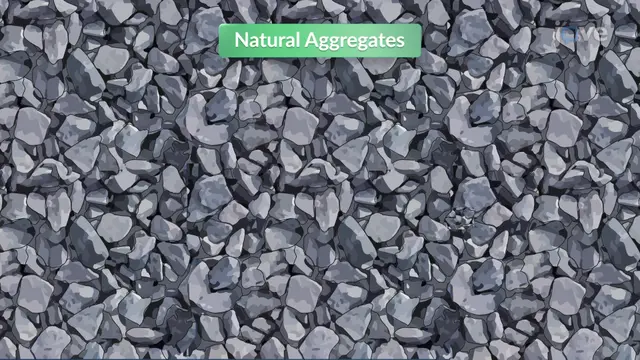
Aggregates and Water
Fresh Concrete

Strength of Concrete
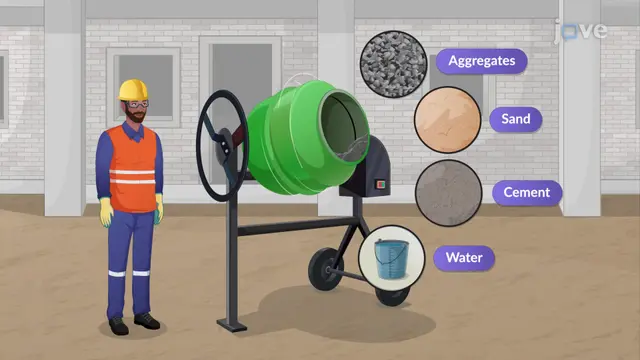
Mixing, Placing and Curing Concrete

Admixtures

Elasticity, Creep, and Shrinkage in Concrete

Permeability of Concrete

Freezing and Thawing in Concrete

Design Examples

Fluid Properties

Fluid Statics

Fluid Kinematics

Finite Control Volume Analysis

Differential Analysis of Fluid Flow

Dimensional Analysis, Similitude, and Modeling

Flow over Immersed Bodies

Open Channel Flow

Introduction to Surveying

Leveling

Angles and Directions

Traverse and Topographic Surveying

Horizontal and Vertical Curves

Global Positioning System (GPS)

Geographic Information Systems (GIS)

Now Playing
1.6 : Brick Classifications
Masonry Materials
664 Views

1.1 : Masonry
Masonry Materials
1.7K Views

1.2 : Mortar
Masonry Materials
1.0K Views

1.3 : Mortar Properties
Masonry Materials
763 Views

1.4 : Bricks
Masonry Materials
820 Views

1.5 : Brick Sizes
Masonry Materials
636 Views

1.7 : Brick Durability, Strength, and Appearance
Masonry Materials
1.0K Views

1.8 : Brick Masonry
Masonry Materials
993 Views

1.9 : Brick Cutting Techniques
Masonry Materials
1.2K Views

1.10 : Mortar Joints in Brick Masonry
Masonry Materials
752 Views

1.11 : Spanning Openings in Brick Walls
Masonry Materials
775 Views

1.12 : Reinforced Brick Masonry
Masonry Materials
3.1K Views

1.13 : Types of Building Stone
Masonry Materials
770 Views

1.14 : Quarrying of Stone
Masonry Materials
972 Views

1.15 : Stone Masonry
Masonry Materials
874 Views