A subscription to JoVE is required to view this content. Sign in or start your free trial.

Method Article

2D Co-culture of Leukemic Cells with BMSCs: A Method to Obtain Subpopulations of Leukemic Cells

1.3K views

April 30th, 2023

In This Article

Abstract

Source: Slone, W. L. et al. Modeling Chemotherapy Resistant Leukemia In Vitro. J. Vis. Exp. (2016).

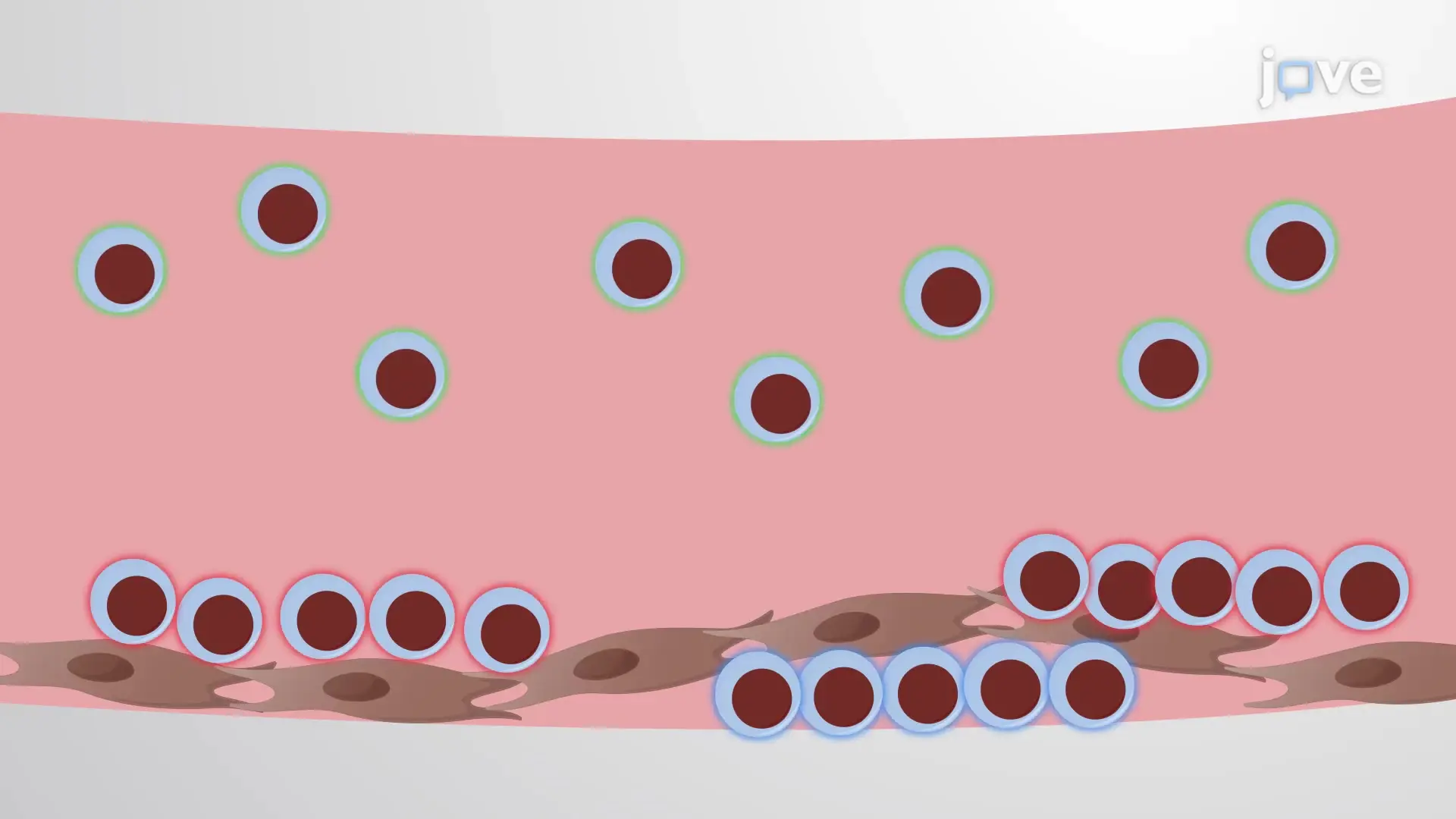
This video describes the technique for long term 2D co-culture of leukemia cells with bone marrow stromal cells to study their interaction with the bone marrow microenvironment. The 2D coculture model utilizes the acute lymphoblastic leukemia cells and the bone marrow stromal or osteoblasts that influence tumor cell phenotype. This study will support investigation of the mechanisms that underlie bone marrow supported survival of leukemic cells during chemotherapy exposure.
Protocol

1. Advanced Preparation

  1. Culturing bone marrow stromal cells (BMSC) and osteoblasts (OB).
    1. Maintain both BMSC or OB at 37 °C in 6% CO2 and grown on 10 cm tissue culture plates until 90% confluency is reached.
    2. Trypsinize BMSC or OB cells and split 1:2 onto new 10 cm plates. The cells are grown to these standards until needed for leukemic co-culturing.

2. Establishing and Maintaining Co-culture

  1. Add 5-20 x 10leukemic cells in 10 ml of tumor specific culture media onto an 80%-90% confluent BMSC or OB plate.
    NOTE: Our lab maintains co-cultures at 37 °C in 5% Oto better recapitulate the bone marrow microenvironment which has been shown to range from 1% to 7%. However, maintaining co-cultures at this oxygen tension is not critical for the establishment of the three leukemic subpopulations and is at the discretion of the lab.
  2. Every 4th day remove all but 1 ml of media (including leukemic cells in suspension) and replace with 9 ml fresh leukemic culture media. When removing 9 ml of media from plate, be careful not to disturb the bone marrow stromal cells (BMSC) or osteoblast (OB) adherent layer.
    1. Remove media by tilting plate to the side and aspirate media in the corner of the plate. Additionally, when adding fresh media, be sure to add drop wise in the corner of the plate against the sidewall to ensure minimal disruption of the BMSC or OB adherent layer.
  3. After the 12th day of co-culture, rinse leukemic cells from BMSC or OB layer by pipetting culture media from dish up and down gently over the dish approximately 5 to 10 times and then collect in 15 ml conical tube. Reseed onto new 80%-90% confluent BMSC or OB plate as described in step 2.1.
    NOTE: The gentle rinsing of the co-culture as described in step 2.3 will remove suspended and phase bright leukemic cells without disrupting the BMSC or OB monolayer. This allows only tumor cells to be transferred to the next co-culture plate. This 12 day cycle can be repeated as many times as needed based on user needs.

Access restricted. Please log in or start a trial to view this content.

Disclosures

No conflicts of interest declared.

Materials

List of materials used in this article
NameCompanyCatalog NumberComments
100 x 20 mm Cell Culture Dishes   Greiner Bio-One664160
15 ml conical centrifuge tubes  World Wide Medical Products41021037Used for cell collection
Culture Media
Osteoblast culture media   PromoCellC-27001For human osteoblast media
RPMI 1640 media   Mediatech, Inc.15-040For tumor media prepation
Adherent cells
Human Osteoblasts   PromoCellC-12720Human osteoblast were cultured according to the supplier’s recommendations.
Human Bone Morrow Stromal Cells  WVU Biospecimen CoreDe-identified primary human leukemia and bone marrow stromal cells (BMSC) were provided by the Mary Babb Randolph Cancer Center (MBRCC) Biospecimen Processing Core and the West Virginia University Department of Pathology Tissue Bank
Leukemic Cells
REH   ATCCATCC-CRL-8286REH cells were cultured according to the supplier’s recommendations and recommended media.
SD-1  DSMZACC 366 SD-1 were cultured according to the supplier’s recommendations and recommended media.

Tags

Bone Marrow Stromal CellsPhase Contrast MicroscopyCell SubpopulationsSuspended CellsPhase bright CellsPhase dim CellsAcute Lymphoblastic LeukemiaCo culture Maintenance