In this video, sulfite-reducing bacteria are cultured in a sulfite-containing agar medium, where they grow anaerobically and reduce sulfite to hydrogen sulfide, forming black precipitates with iron ions. Black colonies are isolated from the agar depth using aseptic techniques and transferred to fresh medium for continued anaerobic incubation.
A subscription to JoVE is required to view this content. Sign in or start your free trial.
Method Article
Subculturing Sulfite-Reducing Anaerobic Bacteria from an Agar Culture
944 views
⸱
September 26th, 2025
In This Article
Abstract
Protocol
NOTE: Clostridium perfringens is considered a biosafety hazard level 2 (BSL2) organism. Although not all food samples will contain C. perfringens, all cultured samples should be treated as such. All proper precautions and personnel protective equipment (PPE) should be worn at all times. Decontaminate all material prior to disposal.
1. Prepare modified RPM (Rapid perfringens medium)
- Combine 30 g/L fluid thioglycolate medium, 60 g/L gelatin, 5 g/L peptone, 5 g/L glucose, 5 g/L potassium phosphate dibasic, 3 g/L yeast extract, 1.5 g/L sodium chloride, 0.5 g/L ferrous sulfate in deionized water until evenly dispersed. We typically make 1 L batches.
- Autoclave at 121 °C for 15 min.
- Allow to cool to approximately 40 °C.
- Once RPM is cool, add D-cycloserine to a final concentration of 440 mg/L.
NOTE: Stock concentrations of D-cycloserine dissolved in sterile water at 50 mg/mL may be stored at -20 °C for future use. - Aseptically transfer 10 mL of RPM to 15 mL conical tubes. RPM can be prepared in batches and stored at 4 °C for up to one month.
- Warm RPM to 37 °C prior to use.
2. Sample collection and RPM incubation
- Transport food to the laboratory under ambient temperatures within 1 h. Food may be transported in original packaging or sterile containers. If not tested immediately, food may be stored at -20 °C until use. If available, note the type of food and the country of origin according to the packaging label, as well as any other relevant information.
- Remove approximately 1.0–2.0 g of food and transfer to a sterile Petri dish or equivalent. Finely mince with a sterile razor blade or scalpel.
- Inoculate into 10 mL of phosphate-buffered saline (PBS) in a 15 mL conical tube. Mix well.
- To select for vegetative cells, transfer 5 mL of the PBS-food mixture into a 15 mL conical tube containing 10 mL of RPM. Secure the lid tightly.
- To select for spores, heat the remaining 5 mL of PBS-food mixture at 85 °C for 15 min and then transfer to a 15 mL conical tube containing 10 mL of RPM. Secure the lid tightly.
- Vortex and invert the food-RPM cultures to ensure complete mixing.
- Tightly seal the conical tubes and wrap lids with paraffin film or plastic wrap to ensure an anaerobic environment.
- Incubate overnight (ON) at 37 °C.
- The following morning, note any turbidity or fermentation in RPM tubes.
3. TSC (Tryptose Sulfite Cycloserine) "sandwich" plating
- Inoculate ON RPM cultures into TSC agar using a “sandwich” technique (Figure 1) described below.
- Prepare TSC agar as per the manufacturer's instructions.
- Prepare the base layer of the TSC plates by transferring 10 mL of molten TSC agar to sterile Petri dishes and allow to solidify. These may be prepared in advanced and stored at 4 °C. Ensure plates are warmed to room temperature prior to use.
- For the top layer of the TSC plate, maintain the remaining molten TSC agar at 40 °C.
NOTE: Although agar's melting point is above 85 °C, molten agar solidifies around 32–45 °C.
- Carefully retrieve the ON RPM cultures and transfer 100 µL to the TSC agar base. Because of fermentation, some cultures may be under pressure. Be sure to wear all appropriate PPE.
- Spread the RPM inoculum using sterilized glass beads or cell spreader.
- Allow RPM to be "absorbed" into TSC agar for 5–10 min at room temperature.
- Carefully transfer 20 mL of molten, 40 °C TSC agar to plate using a serological pipette.
- Replace the Petri dish lid and allow TSC agar to completely solidify at room temperature.
- Invert the Petri dish and incubate at 37 °C ON.
- If serial dilutions are desired, perform dilutions of the ON RPM cultures into fresh, pre-warmed RPM prior to inoculation into TSC agar.
4. Sub-culturing of sulfite-reducing colonies
- The following morning, remove plates from incubator and examine for bacterial growth. Aerobic bacteria may be present on the surface of the agar. Anaerobic bacteria will be found growing embedded within the agar. Sulfite-reducing bacteria will turn surrounding agar black. Possible C. perfringens colonies will be black and embedded in the agar.
- C. perfringens suspected colonies will be positive for sulfite reduction and will appear black, embedded within the agar. Using a sterile, single-use eyedropper, "pluck" the black colonies from the agar and transfer to 10 mL of fresh RPM in a 15 mL conical tube. It is important that the air from the eyedropper be expelled prior to piercing agar.
- If there is a dense amount of aerobic bacterial growth on the plate's surface, use a sterile cell scraper to remove colonies from selected areas. Multiple C. perfringens-suspected colonies can be sampled from the same TSC plate into separate RPM cultures.
- Tightly secure conical tube lids and wrap in paraffin film or plastic wrap. Incubate ON at 37 °C.
Access restricted. Please log in or start a trial to view this content.
Results
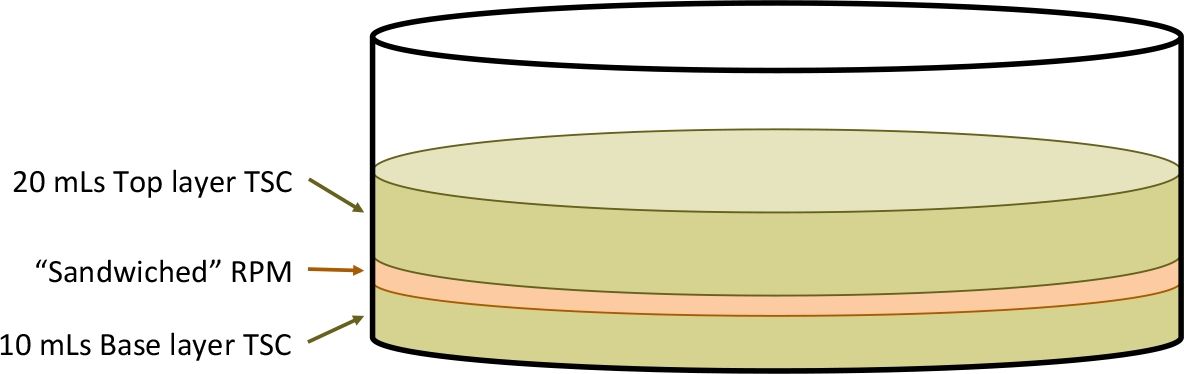
Figure 1: Schematic of TSC agar sandwich technique.
RPM media containing the C. perfring...
Access restricted. Please log in or start a trial to view this content.
Materials
| Name | Company | Catalog Number | Comments |
|---|---|---|---|
| D-Cycloserine | Sigma-Aldrich | C6880 | |
| Dextrose | Sigma Life Science | D9434-250G | |
| Disposable Transfer Pipets | any brand | Select one with slim tip like Thermo Scientific Disposable Transfer Pipets 137116M/EMD | |
| DNeasy Blood & Tissue Kits | Qiagen | 69504 | Note: numerous DNA and plasmid extractions kits were evaluated, this kit gave the most desirable results. |
| Dry Incubator | any brand | ||
| Fluid thioglycolate medium | Remel | R453452 | |
| Gelatin from porcine skin | Sigma Life Science | G1890-500G | |
| Iron (II) sulfate heptahydrate | Sigma Life Science | F8633-250 G | |
| Lysozyme from chicken egg white | Sigma-Aldrich | L6876 | Needed for DNA extraction, not provided in kit |
| Parafilm or plastic wrap | any brand | ||
| Peptone from casein and other animal proteins | Sigma-Aldrich | 70173-100G | |
| Perfringens Agar Base (TSC + SFP) | Oxoid | CM0587 | Make TSC agar according to instructions |
| Potassium phosphate dibasic | Sigma-Aldrich | P2222-100G | |
| Sodium chloride | Sigma-Aldrich | S-7653 | |
| Sterile Cell Scraper | any brand | ||
| Sterile cell Spreader | any brand | ||
| Sterile petri dishes | any brand | ||
| Yeast extract | Sigma-Aldrich | 70161-100G |
