This video demonstrates the procedure for injecting a plasmid vector carrying the gene of interest into interneuron progenitors in an embryonic brain slice, followed by electroporation for plasmid entry and gene expression. These modified progenitors can later be used for treating brain disorders.
A subscription to JoVE is required to view this content. Sign in or start your free trial.
Method Article
Agarose-Embedded Electroporation-Assisted Gene Transfer in Mouse Cortical Interneuron Progenitors
637 views
⸱
August 7th, 2025
In This Article
Abstract
Protocol
- Focal DNA injections
- Prepare a deoxyribonucleic acid (DNA) mixture of expression vectors: pCAGGs-IRES-GFP (control vector) + pCAGGs-hM3D(Gq)-IRES-RFP, at a concentration of 1 µg/µL for each vector. Add fast green solution (stock 25 mg/mL) in a 1/10 dilution.
- Fill a pulled glass micropipette (0.5 mm inner diameter and 1 mm outer diameter) with 10 µL of the DNA mixture and inject small amounts (in the 25-50 nL range) into the selected region (Medial Ganglionic Eminence or MGE/Caudal Ganglionic or CGE) of the slice (Figure 1 and Figure 2).
Access restricted. Please log in or start a trial to view this content.
Results
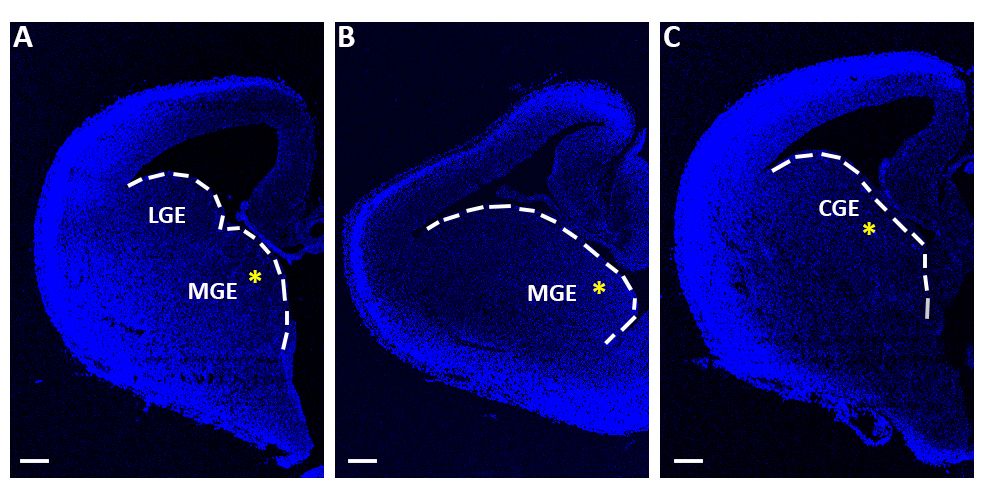
Figure 1: Representative telencephalic slices used for acute electroporation experiments. (A-C) Telencephalic slices were.......
Access restricted. Please log in or start a trial to view this content.
Materials
| Name | Company | Catalog Number | Comments |
|---|---|---|---|
| Medium/Supplements | |||
| Neurobasal medium | GIBCO (ThermoFisher Scientific) | 21103-049 | Neuron basic medium |
| Equipment | |||
| Electroporator | BTX | ECM 830 generator | |
| Injector for acute slice electroporation | Eppendorf | FemtoJet Microinjector | |
| Kite Manual Micromanipulator | WPI | KITE-M3-R | |
| Platinum Elecrode (I) | Protech International Inc. | CUY-700-1 | |
| Platinum Elecrode (II) | Protech International Inc. | CUY-700-2 | |
| Steel Base Plate | WPI | 5479 | |
| Other Material | |||
| Glass capillaries for electroporation | VWR | 1B100-4 | |
| Organ tissue culture dishes | BD Biosciences (Falcon) | 353037 |
