The goal of the protocol described in this paper is to induce compulsive-like behavior in rats for the study of obsessive-compulsive disorder (OCD). This behavior is precipitated by attenuating a signal indicating that a lever-press response was effective in producing food.
Method Article
Signal Attenuation as a Rat Model of Obsessive Compulsive Disorder
* These authors contributed equally
In This Article
Summary
Abstract
In the signal attenuation rat model of obsessive-compulsive disorder (OCD), lever-pressing for food is followed by the presentation of a compound stimulus which serves as a feedback cue. This feedback is later attenuated by repeated presentations of the stimulus without food (without the rat emitting the lever-press response). In the next stage, lever-pressing is assessed under extinction conditions (i.e., no food is delivered). At this stage rats display two types of lever-presses, those that are followed by an attempt to collect a reward, and those that are not. The latter are the measure of compulsive-like behavior in the model. A control procedure in which rats do not experience the attenuation of the feedback cue serves to distinguish between the effects of signal attenuation and of extinction. The signal attenuation model is a highly validated model of OCD and differentiates between compulsive-like behaviors and behaviors that are repetitive but not compulsive. In addition the measures collected during the procedure eliminate alternative explanations for differences between the groups being tested, and are quantitative, unbiased and unaffected by inter-experimenter variability. The major disadvantages of this model are the costly equipment, the fact that it requires some technical know-how and the fact that it is time-consuming compared to other models of OCD (11 days). The model may be used for detecting the anti- or pro-compulsive effects of pharmacological and non-pharmacological manipulations and for studying the neural substrate of compulsive behavior.
Introduction
Obsessive-compulsive disorder (OCD) is a major psychiatric disorder that manifests in 1 - 3% of the general population1,2. People suffering from OCD have recurrent, intrusive and unwanted thoughts (obsessions) and/or repetitive ritualistic behaviors (compulsions)3. The specific neuropathological mechanisms underlying OCD are still not fully understood. However, the involvement of the serotonergic4-7, dopaminergic8,9 and glutamatergic10 systems has been demonstrated in this disorder. In addition, the orbitofrontal cortex, the cingulate cortex, the basal ganglia and regions within the parietal lobe have been implicated in its pathophysiology7,11-13. Finally, life events related to fluctuations in the level of ovarian hormones (e.g., child birth, ovulation) have been reported to trigger or exacerbate OCD in women patients14-16, suggesting that ovarian hormones play a modulatory role in OCD17.
Because the mechanisms underlying OCD are poorly understood, the use of appropriate animal models that closely mimic its behavioral and neural manifestations is essential for advancing our knowledge of its biological basis. In addition, such models contribute to the development of new lines of treatment. This is especially relevant in the case of OCD, because many patients are either treatment-resistant or experience only a partial alleviation of symptoms18,19. Indeed, in recent years, genetic, pharmacological and behavioral animal models of OCD (reviewed in 20-28) have expanded and advanced our knowledge of this disorder.
One of the most extensively used behavioral animal models of OCD is the signal attenuation rat model (for review, see 29). The theoretical assumption behind the model is that a deficit in the feedback associated with a successful performance of goal-directed behaviors leads to compulsive responses30-37. The model, developed by Joel and colleagues28, is based on operant behavior in rats. During initial training, rats are rewarded with a food pellet after pressing a lever. A successful lever-press triggers in addition the onset of a magazine light and a tone. This provides the rat with feedback that the lever-press response has led to the delivery of food. Next, the ability of the stimulus to signal the delivery of the reward is intentionally decreased by repeatedly presenting it without reward (importantly, there are no levers in the box at this stage). Compulsive-like behavior emerges on the last stage of training. During this test stage, which is carried out under extinction conditions, a lever press is followed by the presentation of the stimulus but not of the food reward. “Compulsive” behavior is expressed as multiple lever-presses after which the rat does not try to collect the reward. An anti/pro-compulsive effect is expressed as a decrease/increase in the number of “compulsive” lever-presses. Since signal attenuation involves extinction, it is important to distinguish between the effects of signal attenuation and of extinction per se. Therefore in a control group (the Regular extinction group) the compound stimulus is not attenuated prior to the test stage. Treatment that has an anti/pro compulsive effect should not alter the number of “compulsive” lever-presses in this group. (for additional details, see 29).
“Compulsive” lever-presses mimic the exaggerated and unnecessary nature of compulsive behaviors displayed by OCD patients. Therefore, the signal attenuation model displays good face validity. In addition, studies conducted with this model show that it has good predictive and construct validity (reviewed in 20,21). The model’s predictive validity derives from studies showing that the compulsive lever-pressing is attenuated by drugs known to ameliorate obsessive-compulsive symptoms38,39, as well as by high frequency stimulation of the subthalamic nucleus40, which has been found to have an anti-compulsive effect in human OCD patients41,42. Moreover, several drugs that are inefficient in the treatment of OCD have been found not to exert an anti-compulsive effect in the model38,39. The model also displays good construct validity, because studies indicate that similar neural mechanisms are involved both in OCD symptomatology and in the compulsive-like behavior induced by signal attenuation in rats. Thus, the involvement of the serotonergic43-46, dopaminergic39,46 and glutamatergic47 systems, as well as the involvement of OCD-related brain areas40,44,48-50 has been demonstrated in compulsive lever-pressing. In addition, ovarian hormones have been found to modulate compulsive lever-pressing in females51. Therefore, the signal attenuation model is a powerful tool for exploring the neural substrates of OCD and for screening novel anti-compulsive therapies. For a thorough discussion of the signal attenuation model’s clinical correlates and its usefulness and application in OCD research, see 20-22,29.
Protocol
NOTE: All experimental protocols conformed to the guidelines of the Institutional Animal Care and Use Committee of Tel Aviv University, Israel, and to the guidelines of the NIH. All efforts were made to minimize the number of animals used and their suffering.
1. Animal Preparation
- House rats in a room with a 12 hr light/dark cycle.
- During the experimental procedures maintain rats on a 22 hr food restriction schedule with freely available water.
- Weigh the rats twice a week to ensure that their body weight is not reduced below 90% of the weight of free-feeding rats, based on growth curves (e.g., Harlan, http://www.harlan.com/models/spraguedawley.asp). Exclude rats whose body weight is reduced.
2. Set-up
- Use two adjacent rooms. One to be used as a “waiting room” for holding rats prior to behavioral testing, and the other for carrying out the procedure. This room will house the operant chambers.
NOTE: Make sure that rats in the waiting room are not exposed to the tones generated by the operant chambers. - Use operant chambers with grid floor and a food magazine, which delivers one 45 mg food pellet accessible through a hinged Perspex panel.
NOTE: Opening of the hinge activates a micro-switch; a 3 W light to illuminate the food magazine; two retractable levers (4 cm wide, positioned 2.8 cm from the side walls, 7.5 cm on each side of the food magazine and 5 cm from the floor); a house light located on the ceiling to illuminate the chambers; an audio signal device to produce a 80 dB, 2.8 kHz tone. - Seat the operant chambers in sound-attenuated boxes with ventilating fans mounted on the side of each box.
- Prior to the beginning of the experiment, pre-program all training stages with the exact session parameters relevant for each stage using a designated software, which computer-controls and activates the operant chambers as well as automatically records all the relevant data accumulated during the running of the experiment.
NOTE: The parameters for each training stage (magazine training, lever-press training, signal attenuation, test) are fully detailed below. The exact fashion in which these parameters are pre-programmed is dependent upon the software and hardware in use.
3. Handling and Food Restriction
- Handle rats for about 2 min daily, 5 days prior to the beginning of the experimental procedure.
- Launch a 22 hr food restriction schedule beginning on the first day of handling. Allow rats access to food for 2 hr in their home cages no sooner than half an hour after the end of handling/behavioral training.
NOTE: Ensure that rats have water ad libitum when in their home cages, and especially during the 2 hr feeding period, as they will not eat properly without water. - On the last 3 days of handling, place 20 - 30 food pellets on a small tray and place the tray in the rats home cage. Remove the tray from the cage only after each rat has been observed to consume at least two pellets.
NOTE: Later, use the pellets as reinforcement for operant training.
4. Training Procedure
- In order for the rats to get acclimated to the testing environment, transport the rats in their home cages at least 15 min prior to behavioral testing in the waiting room.
- Magazine training (days 1 - 3).
- On the 1st day of magazine training, put a sufficient amount of food pellets in the food magazine so that they are visible to the rat.
NOTE: One way to do so is to place the pellets so that they cause the hinged Perspex panel to remain slightly open. - Compute the magazine training program so that the house light is turned on automatically at the start of each trial and a single food pellet is dropped into the food magazine following a 5 sec variable delay, simultaneously with the onset of a compound stimulus consisting of the magazine light and a tone.
- Compute the compound stimulus and house light to turn off after the rat's head enters the food magazine (collected trial) or after 15 sec (uncollected trial), whichever comes first. Define each trial to be followed by a 30 sec inter-trial interval.
- Place the rats into the operant chambers and 5 min later verify manually that all of the rats have collected the pellets. If so, activate the training program. If not, allow an extra 5 min.
- Program the magazine training session to stop running either after the rat has completed 30 collected trials or after a total of 40 trials has been attained.
- On the 3rd day of magazine training ensure that the rats perform 30 collected trials out of a total of 32 trials at the most. Return rats that fail to attain this criterion to the operant chambers for another full training session at the end of the training day.
NOTE: Run rats that fail to reach this criterion following an extra session on the last day of magazine training on the morning of the first day of lever-press training. Exclude rats that fail to reach criterion.
- On the 1st day of magazine training, put a sufficient amount of food pellets in the food magazine so that they are visible to the rat.
- Lever-press training - Pre-training stage (day 4): Lever-pressing on a free-operant schedule.
- Activate the training program before placing the rats in the operant chambers. Compute the program so that the reinforced lever is present in the chamber and the house light is on during the whole training session and that the non-reinforced lever is always retracted.
NOTE: Counterbalance the side of the lever (left/right) across rats and keep constant for each rat throughout the experimental procedure. - Put some pellets on the lever and place a rat into the chamber.
- Allow the rat to explore the lever area until it incidentally presses the lever while collecting the pellets, triggering the delivery of a single food pellet and the onset of the compound stimulus.
- Compute the program so that the compound stimulus is turned off after the rat's head enters the food magazine (completed trial) or after 15 sec (uncompleted trial), whichever comes first.
- Program the session to stop running after the rat has reached 30 completed trials.
- If a rat does not reach this criterion within 30 min, put 3 - 4 pellets on the lever and wait for another 20 min. If a rat fails to complete 30 trials, return it to the operant chamber for additional training at the end of the training day.
NOTE: Run rats that fail to reach this criterion following the extra pre-training session again on the morning of the first day of lever-press training. Exclude rats that fail to reach criterion. Generally, almost all rats acquire lever-pressing after 3 sessions of pre-training (most do within the first session). However, if the animals have more difficulties in acquiring lever-pressing, use shaping. - During shaping, keep the door of the sound-attenuated box open and observe the rat in the operant chamber. When the rat approaches the lever use the software to activate the delivery of a food pellet and the onset of the compound stimulus. Do so repeatedly.
- In the beginning, reinforce the rat when it is in the vicinity of the lever, but gradually start reinforcing it only when it makes actual physical contact with the lever, and finally reinforce only attempts to press it.
NOTE: Shaping may take a while. Be as quiet as possible.
- Activate the training program before placing the rats in the operant chambers. Compute the program so that the reinforced lever is present in the chamber and the house light is on during the whole training session and that the non-reinforced lever is always retracted.
- Lever press training (days 5 - 7): Lever-pressing on a discrete trial schedule.
- Compute the program so that the start of each trial is signaled by the onset of the house light and 5 sec later, both levers are introduced into the chamber.
- Ensure that responses on the non-reinforced lever (NRL) have no programmed consequences and presses on the reinforced lever trigger the delivery of a single food pellet into the magazine, together with the presentation of the compound stimulus.
- After the rat’s head enters the food magazine or after 15 sec have elapsed the levers are retracted and the compound stimulus and house light are turned off.
- Define each trial so that it is followed by a 30 sec inter-trial interval. On the first day of lever-press training (day 5) define the compound stimulus to be turned off after 15 sec in order to facilitate acquisition of the lever-press response. On the following two days (days 6 - 7) define the compound stimulus to last only 10 sec in order to ensure that magazine entry closely follows the lever-press responses.
- Place the rats in the operant chambers, and then activate the training program.
- Program the lever-press training session to stop running either after a rat has pressed the reinforced lever (RL) and collected the food pellet (completed trial) 40 times or after a total of 60 trials has been attained.
- On the last day of lever-press training make sure rats complete 40 trials out of a total of 42 total trials at the most. If a rat fails to reach this criterion, return it to the operant chamber for an additional training session at the end of the day.
NOTE: Exclude rats that fail to reach this criterion following an extra session on the last day of lever-press training. - On the last day of lever-press training record the number of unrewarded lever presses on each trial, i.e., the number of presses following the first response on the RL (extra lever-presses).
- Randomly allocate rats to the experimental groups.
- When conducting the experimental manipulation at the time of the Test stage (e.g., in studies testing the acute effect of a drug), use analysis of variance (ANOVA) with main factors of manipulation (with manipulation/without manipulation) and Procedure (post-training signal attenuation, PTSA/regular extinction, RE, see section 4.5) to analyze the number of excessive lever presses followed by pellet collection (named excessive lever-presses-completed, ELP-C) and unpressed trials on the last day of lever-press training before the beginning of the signal attenuation stage.
- Ensure that there are no statistically significant differences between the groups in this measure.
NOTE: Typically, there are only a few rats with a high number of extra lever-presses, so compare the groups without these rats. In addition, make sure that rats that underwent extra-training are distributed between the groups as evenly as possible.
- Signal attenuation/Regular extinction (days 8 - 10).
- Run the procedure in an identical manner to magazine training on days 1 - 3 with two exceptions:
- Empty the pellet dispenser so that no food pellet is delivered to the food magazine following the onset of the compound stimulus.
- Program the relevant stage so that the compound stimulus is turned off after 10 sec and not after 15 sec.
- Make sure both the RL and NRL remain retracted during the training session.
- Ensure each signal attenuation training session to consist of 30 trials. On the last day of training make sure rats attempt to collect a food pellet (i.e., insert their head into the food magazine following the onset of the compound stimulus) no more than 14 times.
- Return rats that failed to attain this criterion to the operant chambers for an additional training session at the end of the day.
NOTE: Do not exclude rats that fail to reach criterion at this stage. - Bring the rats undergoing regular extinction to the “waiting room” and leave them in their home cages for a period equivalent to the average duration of the signal attenuation stage.
- Use a mixed ANOVA with main factors of manipulation (with manipulation/without manipulation) and Procedure (PTSA/RE) and a repeated measures factor of Session (sessions 1 - 3) to analyze the number of completed trials on the three sessions of the signal attenuation stage.
- Ensure that differences in performance at the test stage are not a result of an earlier difference.
- Run the procedure in an identical manner to magazine training on days 1 - 3 with two exceptions:
- Test (day 11): Run the procedure in an identical manner to lever-press training, but under extinction conditions, i.e., pressing the RL results in the presentation of the compound stimulus, but no food is delivered to the food magazine because the pellet dispenser is empty.
- Compute the test session to consist of 50 trials for males and 60 trials for females, because usually females still respond after 50 trials. However, if both sexes are used in the same study (recommended), then give 60 trials to all subjects.
- Collect the the number of excessive lever-presses that were not followed by magazine entry (named excessive lever-presses-uncompleted, ELP-U); the number of excessive lever-presses that were followed by magazine entry (i.e., ELP-C); the number of lever presses on the NRL; and the number of nose-pokes (i.e., the number of times the rat inserted its head into the food magazine.
- Analyze rats’ performance on the Test stage using analysis of variance (ANOVA) with main factors of manipulation (with manipulation/without manipulation) and Procedure (PTSA/RE) performed on the number of ELP-C, ELP-U, the number of completed, uncompleted and unpressed trials, and the number of nose-pokes and presses on the non-reinforced lever.
- Follow significant interactions with post hoc analysis comparing the treated group with the non-treated/control group, within each procedure.
NOTE: When the exact parameters of the manipulation are not known (e.g., the relevant drug dose, the parameters of electrical stimulation) and in order to reduce the number of animals, test the effects of the manipulation in the PTSA procedure only, using different parameters (e.g., using several drug doses). - Find the optimal parameters, that is, the parameters that exert the greatest effect on the number of ELP-U, without abolishing behavioral responding, and then run a full experimental design (PTSA and RE).
Results
The following results are based on Brimberg et al., 200752. All figures are re-printed with permission from Elsevier.
In this study we tested the behavior of Sprague Dawley (SD) male rats in the signal attenuation model. First, in experiment 1, we tested the effects of 3 doses of the selective serotonin reuptake inhibitor (SSRI) paroxetine in the PTSA procedure (n per group = 10). In the Test, paroxetine dose-dependently decreased the number of ELP-C (Figure 1A; ANOVA yielded a significant main effect of Dose, F(3,22) = 5.15, p < 0.01) and ELP-U (Figure 1B; ANOVA yielded a significant main effect of Dose, F(3,22) = 7.99, p < 0.001).
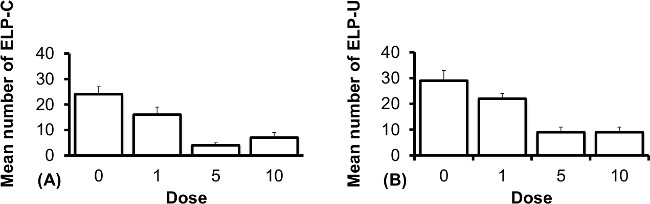
Figure 1. This figure shows a representative dose response experiment comparing the effects of various doses of the SSRI Paroxetine on ELP-C and ELP-U of male rats following signal attenuation. Mean and standard error of the number of extra lever presses that (A) were followed by magazine entry (extra lever presses in completed trials; ELP-C) and (B) were not followed by magazine entry (extra lever presses in uncompleted trials; ELP-U) of rats treated with vehicle or 1, 5 or 10 mg/kg of paroxetine on the test day of the PTSA procedure. Re-printed with permission from 52.
In experiment 2 we tested the drug dose that was the most effective in experiment 1 (5 mg/kg), in both the PTSA and RE procedures (n per group = 10). In the Test, paroxetine decreased the number of ELP-C in both the PTSA and RE procedures (Figure 2A; two-way ANOVA, main effect of Procedure, F(1,32) = 6.50, p < 0.05; main effect of Drug, F(1,32) = 8.69, p < 0.01; Procedure X Drug interaction, F(1,32) = 0.43, p = 0.52) and in addition exerted an anti-compulsive effect, i.e., decreased the number of ELP-U in the PTSA but not in the RE procedure (Figure 2B; main effect of Procedure, F(1,32) = 9.60, p < 0.005; main effect of Drug, F(1,32) = 5.75, p < 0.05; Procedure X Drug interaction, F(1,32) = 4.83, p < 0.05).
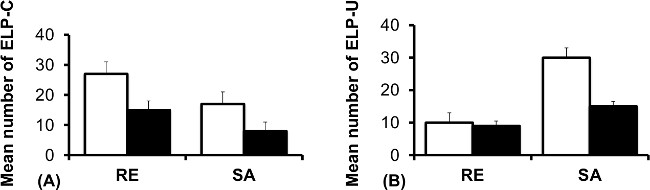
Figure 2. This figure shows a representative experiment comparing the effects of signal attenuation and regular extinction on ELP-C and ELP-U of saline- and paroxetine-exposed male rats. Mean and standard error of the number of (A) ELP-C and (B) ELP-U of rats treated with vehicle or 5 mg/kg of paroxetine on the test day of the PTSA and RE procedures. Re-printed with permission from 52.
Discussion
The signal attenuation rat model of OCD is a powerful behavioral model for the study of compulsive-like behavior. The model displays high face, predictive and construct validity20,21, and has been extensively used to study the neural substrates of this behavior39,43-45,48, its response to pharmacological manipulations38,39,43,47,53,54 and to deep brain stimulation40,46,50 and its modulation by ovarian hormones51. Thus, this model is a useful animal model for the study of OCD.
Compulsive lever-pressing in the signal attenuation model has several advantages over other experimentally induced repetitive behaviors (such as extinction burst and perseverative behaviors). First, the relevance of compulsive lever-pressing to compulsive behaviors in humans has been well established whereas the validity of other repetitive behaviors, which are often referred to as compulsive-like, is low or has never been tested20-22. Notably, behavioral repetition/perseveration is a phenomenon shared by various psychiatric disorders55-62 and therefore, proper validation of the target behavior as compulsive-like is crucial. In addition, the various behavioral measures collected during the PTSA procedure (i.e., the number of presses on the non-reinforced lever or the general number of nose-pokes the rats perform during the Test stage) help in eliminating alternative explanations for differences in compulsive lever-pressing between the groups being tested. For example, excessive lever-pressing can reflect a general increase in motor activity, in which case it will most likely be accompanied by an increase in the number of presses on the non-reinforced lever (thus, this measure also eliminates the need to test the rats in additional procedures such as the open-field test). On the other hand, manipulations which lead to a general increase in the number of nose-pokes the rats perform are likely to lead to a reduction in compulsive lever-pressing, even if they do not possess a genuine anti-compulsive effect. Additional measures collected even before the Test (excessive lever-presses during the lever-press training stage, completed trials during the signal attenuation stage) allows the experimenter to eliminate the possibility that any differences between the groups on the Test stage stem from prior differences in learning. Notably, all measures collected during the various stages of the procedure are quantitative, and therefore unbiased, not given to subjective interpretation and unaffected by inter-experimenter variability.
A disadvantage of the signal attenuation model is the fact that it requires special equipment (computer-operated operant boxes, appropriate software for the operation of these boxes, etc.). This makes it both costly and somewhat complex to perform, requiring skilled personnel, proficient both in ad-hock troubleshooting and in the day-to-day maintenance of the equipment. In addition, because the model is based on learned rather than spontaneous behavior, and because it consists of multiple stages, it is relatively time-consuming (11 days) when compared to some of the other animal models of OCD. However, in our experience, with the proper training the expertise required for performing the procedure are quite easily acquired. Also, because all equipment is computer-controlled and almost fully automatic, large groups of rats can be run efficiently and simultaneously, reducing its time-cost. In addition, results are easily calculated and do not require manual coding or any special processing. Finally, operant boxes are highly versatile, and once acquired, they can be used for various behavioral procedures in addition to signal attenuation, making them extremely cost-effective.
Another consideration, which should be taken into account when using the model, is that due to its lengthy and multi-staged nature, it may not be well suited for chronic treatments or developmental studies. In order not to affect rats’ learning in the initial stages of the behavioral procedure, administration of a chronic treatment requires a break in the procedure, which makes the procedure even more time-costly. Moreover this break cannot take place immediately before the test stage, and thus, rats administered the chronic treatment will undergo the signal attenuation stage while under the influence of the treatment, which may alter their behavior even before the test stage and make any interpretation of the results problematic. Regarding developmental studies, again, because of the model’s lengthy nature, it is impossible to use it for extremely young rats (e.g., younger than 46-day old rats on test day). In addition, rats cannot be re-tested, making in necessary to train new rats at each age studied, and excluding the possibility of using longitudinal designs.
An important aspect of the signal attenuation model which has been mentioned above is the fact that compulsive lever-pressing is modulated by fluctuations in ovarian hormone levels along the rat estrous cycle51. This aspect is important for researchers interested in studying the mechanisms by which female gonadal hormones affect compulsive behaviors. Although the effects of male gonadal hormones on compulsive lever-pressing have not been tested, these or other factors are affecting male performance in the model, as the variability of the different response measures in the model is similar in male and female rats51. Therefore, researchers, who do not aim to study the role of gonadal hormones, may use both male and female rats without measuring the level of these hormones.
In summary, despite some shortcomings of the signal attenuation rat model of OCD such as its length and the fact that it requires special equipment and some technical knowledge, it provides a sensitive and reliable way of assessing compulsive behaviors in rats. Moreover, it can differentiate between these behaviors and other repetitive/perseverative behaviors, which are not truly compulsive in nature. As such, it is an excellent model for the assessment of putative anti-compulsive therapies, and studies employing it can be used to expand our knowledge of the neural substrates of OCD, which are still not well understood.
Disclosures
The authors have nothing to disclose.
Acknowledgements
This research was supported by the Israel Science Foundation (grant No. 592/12) to DJ
Materials
| Name | Company | Catalog Number | Comments |
|---|---|---|---|
| Modular test chamber for rats | Campden Instruments Ltd. | Model 80003M | |
| Pellet trough for modular chamber | Campden Instruments Ltd. | Model 80210M-R | with head entry and door |
| Low profile retractable response lever | Campden Instruments Ltd. | Model CI4460-M | 2 levers per chamber |
| Stimulus lights | Campden Instruments Ltd. | Model 80221 | |
| Pellet dispenser | Campden Instruments Ltd. | Model 80209-45 | with 45 mg interchangeable pellet size wheel |
| Mouse nosepoke | Campden Instruments Ltd. | Model 80116S | with stimulus light |
| Sonalert audible stimulus system | Campden Instruments Ltd. | Model SC628 | |
| ABET II Complete Starter Package | Campden Instruments Ltd. | Model 88501*C | with 220 VAC/50 Hz power supply |
| Sound attenuating chamber | Campden Instruments Ltd. | Model 80600A-SAC | Equipped with a peephole and a 28 VDC ventilation fan panel |
| Animal Behavior Environment Test system (ABET) II | Lafayette Instrument Neuroscience, Indiana, USA | Model 89501 | |
| Personal computer | with a minimum 1.8 GHz Processor, running Microsoft Windows XP (SP3), or Win7 | ||
| 45 mg dust-free precision pellets | PMI Nutrition International, Indiana, USA | Formula. P/AlN-76A | Keep the containers tightly closed to protect from moisture. |
References
- Ruscio, A. M., Stein, D. J., Chiu, W. T., Kessler, R. C. The epidemiology of obsessive-compulsive disorder in the National Comorbidity Survey Replication. Mol Psychiatry. 15 (1), 53-63 (2010).
- Sasson, Y., et al. Epidemiology of obsessive-compulsive disorder: a world view. The Journal of clinical psychiatry. 58, Suppl 12. 7-10 (1997).
- Association, A. P. Diagnostic and statistical manual of mental disorders: DSM-IV. , Washington, DC. (1994).
- Murphy, D. L., et al. Genetic perspectives on the serotonin transporter. Brain Research Bulletin. 56, 487-494 (2001).
- Ozaki, N., et al. Serotonin transporter missense mutation associated with a complex neuropsychiatric phenotype. Mol Psychiatry. 8 (11), 933-936 (2003).
- Sasson, Y., Zohar, J. New developments in obsessive-compulsive disorder research: implications for clinical management. International clinical psychopharmacology. 11, Suppl 5. 3-12 (1996).
- Stein, D. J. Neurobiology of the obsessive–compulsive spectrum disorders. Biological. 47, 296-304 (2000).
- McDougle, C. J., et al. Haloperidol addition in fluvoxamine-refractory obsessive-compulsive disorder: A double-blind, placebo-controlled study in patients with and without tics. Archives of General Psychiatry. 51 (4), 302-308 (1994).
- McDougle, C. J., et al. Neuroleptic addition in fluvoxamine-refractory obsessive-compulsive disorder. The American Journal of Psychiatry. 147 (5), 652-654 (1990).
- Pittenger, C., Krystal, J. H., Coric, V. Glutamate-modulating drugs as novel pharmacotherapeutic agents in the treatment of obsessive-compulsive disorder. NeuroRx. 3 (1), 69-81 (2006).
- Menzies, L., et al. Integrating evidence from neuroimaging and neuropsychological studies of obsessive-compulsive disorder: The orbitofronto-striatal model revisited. Neuroscience & Biobehavioral Reviews. 32 (3), 525-549 (2008).
- Rotge, J. -Y., et al. Matter Alterations in Obsessive-Compulsive Disorder: An Anatomic Likelihood Estimation Meta-Analysis. Neuropsychopharmacology. 35 (3), 686-691 (2009).
- Saxena, S., Brody, A. L., Schwartz, J. M., Baxter, L. R. Neuroimaging and frontal-subcortical circuitry in obsessive-compulsive disorder. The British Journal of Psychiatry. 173 (Suppl. 35, 26-37 (1998).
- Abramowitz, J. S., Schwartz, S. A., Moore, K. M., Luenzmann, K. R. Obsessive-compulsive symptoms in pregnancy and the puerperium:: A review of the literature. Journal of Anxiety Disorders. 17, 461-478 (2003).
- Labad, J., et al. Female reproductive cycle and obsessive-compulsive disorder. The Journal of clinical psychiatry. 66 (4), 428-435 (2005).
- Maina, G., Albert, U., Bogetto, F., Vaschetto, P., Ravizza, L. Recent life events and obsessive–compulsive disorder (OCD): the role of pregnancy/delivery. Psychiatry Research. 89, 49-58 (1999).
- Uguz, F., et al. Course of obsessive-compulsive disorder during early postpartum period: a prospective analysis of 16 cases. Comprehensive Psychiatry. 48 (6), 558-561 (1016).
- Greenberg, B. D., et al. Deep brain stimulation of the ventral internal capsule/ventral striatum for obsessive-compulsive disorder: worldwide experience. Mol Psychiatry. 15 (1), 64-79 (2010).
- Eddy, K. T., Dutra, L., Bradley, R., Westen, D. A multidimensional meta-analysis of psychotherapy and pharmacotherapy for obsessive-compulsive disorder. Clinical Psychology Review. 24 (8), 1011-1030 (2004).
- Albelda, N., Joel, D. Current animal models of obsessive compulsive disorder: an update. Neuroscience. 211 (0), 83-106 (2012).
- Albelda, N., Joel, D. Animal models of obsessive-compulsive disorder: Exploring pharmacology and neural substrates. Neuroscience & Biobehavioral Reviews. 36 (1), 47-63 (2012).
- Joel, D. Current animal models of obsessive compulsive disorder: A critical review. Progress in Neuro-Psychopharmacology and Biological Psychiatry. 30 (3), 374-388 (2006).
- Fineberg, N. A., et al. Probing Compulsive and Impulsive Behaviors, from Animal Models to Endophenotypes: A Narrative Review. Neuropsychopharmacology. 35 (3), 591-604 Forthcoming.
- Eilam, D., Zor, R., Fineberg, N., Hermesh, H. Animal behavior as a conceptual framework for the study of obsessive–compulsive disorder(OCD). Behavioural Brain Research. 231 (2), 289-296 (2012).
- Ting, J. T., Feng, G. Neurobiology of obsessive–compulsive disorder: insights into neural circuitry dysfunction through mouse genetics. Current Opinion in Neurobiology. 21 (6), 842-848 (2011).
- Boulougouris, V., Chamberlain, S. R., Robbins, T. W. Cross-species models of OCD spectrum disorders. Psychiatry Research. 170 (1), 15-21 (2009).
- Korff, S., Harvey, B. H. Animal models of obsessive-compulsive disorder: rationale to understanding psychobiology and pharmacology. Psychiatric Clinics of North America. 29 (2), 371-390 (2006).
- Camilla d'Angelo, L. -S., et al. Animal models of obsessive-compulsive spectrum disorders. CNS Spectrums. 19 (01), 28-49 (2014).
- Joel, D. The signal attenuation rat model of obsessive–compulsive disorder: a review. Psychopharmacology. 186 (4), 487-503 (2006).
- Baxter, L. R. Functional imaging of brain systems mediating obsessive-compulsive disorder. Neurobiology of Mental Illness. Charney, D. S., Nestler, E. J., Bunney, B. S. , University Press. Oxford. 534-547 (1999).
- Gray, J. A., McNaughton, N. The neuropsychology of anxiety: An enquiry into the function of the septo-hippocampal system. , Oxford University Press. (1982).
- Malloy, P. The frontal lobes revisited. Perecman, E. , IRBN Press. (1987).
- Pitman, R. K. The psychobiology of obsessive-compulsive disorder. Zohar, J., Insel, T. R. , Springer Publishing Company. (1991).
- Pitman, R. K. A cybernetic model of obsessive-compulsive psychopathology. Comprehensive Psychiatry. 28, 334-343 (1987).
- Reed, G. F. Obsessional personality disorder and remembering. The British Journal of Psychiatry. 130 (2), 177-183 (1977).
- Szechtman, H., Woody, E. Obsessive-Compulsive Disorder as a Disturbance of Security Motivation. Psychological Review. 111 (1), 111-127 (2004).
- Otto, M. W. Normal and abnormal information processing: A neuropsychological perspective on obsessive compulsive disorder. Psychiatric Clinics of North America. 15 (4), 825-848 (1992).
- Joel, D., Ben-Amir, E., Doljansky, J., Flaisher, S. 'Compulsive' lever-pressing in rats is attenuated by the serotonin re-uptake inhibitors paroxetine and fluvoxamine but not by the tricyclic antidepressant desipramine or the anxiolytic diazepam. Behavioural Pharmacology. 15 (3), 241-252 (2004).
- Joel, D., Doljansky, J. Selective alleviation of compulsive lever-pressing in rats by D1, but not D2, blockade: possible implications for the involvement of D1 receptors in obsessive-compulsive disorder. Neuropsychopharmacology : official publication of the American College of Neuropsychopharmacology. 28 (1), 77-85 (2003).
- Klavir, O., Flash, S., Winter, C., Joel, D. High frequency stimulation and pharmacological inactivation of the subthalamic nucleus reduces ‘compulsive’ lever-pressing in rats. Experimental Neurology. 215 (1), 101-109 (2009).
- Fontaine, D., et al. Effect of subthalamic nucleus stimulation on obsessive—compulsive disorder in a patient with Parkinson disease. Journal of Neurosurgery. 100 (6), 1084-1086 (2004).
- Mallet, L., et al. Compulsions, Parkinson's disease, and stimulation. The Lancet. 360 (9342), 1302-1304 (2002).
- Flaisher-Grinberg, S., Klavir, O., Joel, D. The role of 5-HT2A and 5-HT2C receptors in the signal attenuation rat model of obsessive–compulsive disorder. The International Journal of Neuropsychopharmacology. 11 (06), 811-825 (2008).
- Joel, D., Doljansky, J., Roz, N., Rehavi, M. Role of the orbital cortex and of the serotonergic system in a rat model of obsessive compulsive disorder. Neuroscience. 130 (1), 25-36 (2005).
- Schilman, E. A., Klavir, O., Winter, C., Sohr, R., Joel, D. The role of the striatum in compulsive behavior in intact and orbitofrontal-cortex-lesioned rats: possible involvement of the serotonergic system. Neuropsychopharmacology. 35 (4), 1026-1039 (2010).
- Winter, C., et al. The role of the subthalamic nucleus in ‘compulsive’ behavior in rats. European Journal of Neuroscience. 27 (8), 1902-1911 (2008).
- Albelda, N., Bar-On, N., Joel, D. The role of NMDA receptors in the signal attenuation rat model of obsessive–compulsive disorder. Psychopharmacology. 210 (1), 13-24 (2010).
- Joel, D., Doljansky, J., Schiller, D. 'Compulsive' lever pressing in rats is enhanced following lesions to the orbital cortex, but not to the basolateral nucleus of the amygdala or to the dorsal medial prefrontal cortex. European Journal of Neuroscience. 21 (8), 2252-2262 (2005).
- Joel, D., Klavir, O. The effects of temporary inactivation of the orbital cortex in the signal attenuation rat model of obsessive compulsive disorder. Behavioral Neuroscience. 120 (4), 976-983 (2006).
- Klavir, O., Winter, C., Joel, D. High but not low frequency stimulation of both the globus pallidus and the entopeduncular nucleus reduces ‘compulsive’ lever-pressing in rats. Behavioural Brain Research. 216 (1), 84-93 (2011).
- Flaisher-Grinberg, S., et al. Ovarian hormones modulate ‘compulsive’ lever-pressing in female rats. Hormones and Behavior. 55 (2), 356-365 (2009).
- Brimberg, L., Flaisher-Grinberg, S., Schilman, E. A., Joel, D. Strain differences in ‘compulsive’ lever-pressing. Behavioural Brain Research. 179 (1), 141-151 (2007).
- Joel, D., Avisar, A., Doljansky, J. Enhancement of excessive lever-pressing after post-training signal attenuation in rats by repeated administration of the D1 antagonist SCH 23390 or the D2 agonist quinpirole, but not the D1 agonist SKF 38393 or the D2 antagonist haloperidol. Behavioral Neuroscience. 115 (6), 1291-1300 (2001).
- Yankelevitch-Yahav, R., Joel, D. The role of the cholinergic system in the signal attenuation rat model of obsessive-compulsive disorder. Psychopharmacology. 230 (1), 37-48 (2013).
- Clark, L., et al. Association between response inhibition and working memory in adult ADHD: A link to right frontal cortex pathology. Biological Psychiatry. 61 (12), 1395-1401 (2007).
- Cools, R., Altamirano, L., D’Esposito, M. Reversal learning in Parkinson's disease depends on medication status and outcome valence. Neuropsychologia. 44 (10), 1663-1673 (1016).
- Gauggel, S., Rieger, M., Feghoff, T. -A. Inhibition of ongoing responses in patients with Parkinson’s disease. Journal of Neurology, Neurosurgery & Psychiatry. 75 (4), 539-544 (2004).
- Hozumi, A., Hirata, K., Tanaka, H., Yamazaki, K. Perseveration for novel stimuli in Parkinson's disease: An evaluation based on event-related potentials topography. Movement Disorders. 15, 835-842 (2000).
- Huddy, V. C., et al. Impaired conscious and preserved unconscious inhibitory processing in recent onset schizophrenia. Psychological Medicine. 39 (06), 907-916 (2009).
- Itami, S., Uno, H. Orbitofrontal cortex dysfunction in attention-deficit hyperactivity disorder revealed by reversal and extinction tasks. NeuroReport. 13 (18), 2453-2457 (2002).
- Waford, R. N., Lewine, R. Is perseveration uniquely characteristic of schizophrenia. Schizophrenia Research. 118 (13), 128-133 (2010).
- Waltz, J. A., Gold, J. M. Probabilistic reversal learning impairments in schizophrenia: Further evidence of orbitofrontal dysfunction. Schizophrenia Research. 93 (13), 296-303 (1016).
Reprints and Permissions
