Diffusive convection (DC) widely occurs in natural processes and engineering applications, characterized by a series of staircases with homogeneous convecting layers and stratified interfaces. An experimental procedure is described to simulate the evolution process of the DC staircase structure, including the generation, development and disappearance, in a rectangular tank.
A subscription to JoVE is required to view this content. Sign in or start your free trial.
Method Article
Evolution of Staircase Structures in Diffusive Convection
In This Article
Summary
Abstract
Diffusive convection (DC) occurs when the vertical stratified density is controlled by two opposing scalar gradients that have distinctly different molecular diffusivities, and the larger- and smaller- diffusivity scalar gradients have negative and positive contributions for the density distribution, respectively. The DC occurs in many natural processes and engineering applications, for example, oceanography, astrophysics and metallurgy. In oceans, one of the most remarkable features of DC is that the vertical temperature and salinity profiles are staircase-like structure, composed of consecutive steps with thick homogeneous convecting layers and relatively thin and high-gradient interfaces. The DC staircases have been observed in many oceans, especially in the Arctic and Antarctic Oceans, and play an important role on the ocean circulation and climatic change. In the Arctic Ocean, there exist basin-wide and persistent DC staircases in the upper and deep oceans. The DC process has an important effect on diapycnal mixing in the upper ocean and may significantly influence the surface ice-melting. Compared to the limitations of field observations, laboratory experiment shows its unique advantage to effectively examine the dynamic and thermodynamic processes in DC, because the boundary conditions and the controlled parameters can be strictly adjusted. Here, a detailed protocol is described to simulate the evolution process of DC staircase structure, including its generation, development and disappearance, in a rectangular tank filled with stratified saline water. The experimental setup, evolution process, data analysis, and discussion of results are described in detail.
Introduction
Double diffusive convection (DDC) is one of the most important vertical mixing processes. It occurs when the vertical density distribution of the stratified water column is controlled by two or more scalar components gradients of opposite directions, where the components have distinctly different molecular diffusivities1. It widely occurs in oceanography2, the atmosphere3, geology4, astrophysics5, material science6, metallurgy7, and architectural engineering8. DDC is present in almost half of the global ocean, and it has important effects on oceanic multi-scale processes and even climatic changes9.
There are two primary modes for DDC: salt finger (SF) and diffusive convection (DC). SF occurs when a warm, salty water mass overlies cooler, fresher water in the stratified environment. When the warm and salty water lies below the cold and fresh water, the DC will form. The remarkable feature of the DC is that the vertical profiles of temperature, salinity and density are staircase-like, composed by alternant homogenous convecting layers and thin, strongly stratified interfaces. DC mainly occurs in high latitude oceans and some interior salt lakes, such as the Arctic and Antarctic Oceans, the Okhotsk Sea, the Red Sea and African Kivu Lake10. In the Arctic Ocean, there exist basin-wide and persistent DC staircases in the upper and deep oceans11,12. It has an important effect on diapycnal mixing in the upper ocean and may significantly influence the ice-melting, which recently arouses more and more interests in the oceanography community13.
The DC staircase structure was first discovered in the Arctic Ocean in 196914. After that, Padman & Dillon15, Timmermans et al.11, Sirevaag & Fer16, Zhou & Lu12, Guthrie et al.17, Bebieva & Timmermans18, and Shibley et al.19 measured the DC staircases in different basins of the Arctic Ocean, including the vertical and horizontal scales of the convecting layer and interface, the depth and total thickness of the staircase, the vertical heat transfer, the DC processes in mesoscale eddy and the temporal and spatial changes of the staircase structures. Schmid et al.20 and Sommer et al.21 observed the DC staircases by using a microstructure profiler in Kivu Lake. They reported the main structure features and heat fluxes of DC and compared the measured heat fluxes with the existing parametric formula. With computer processing speeds improving, the numerical simulations of DC have recently been done, for example, to examine the interface structure and instability, heat transfer through interface, layer merging event, and so on22,23,24.
Field observation has greatly enhanced the understanding of ocean DC for oceanographers, but the measurement is strongly limited by indeterminate oceanic flow environments and instruments. For example, the DC interface has an extremely small vertical scale, thinner than 0.1 m in some lakes and oceans25, and some special high-resolution instruments are needed. The laboratory experiment shows its unique advantages in exploring the fundamental dynamic and thermodynamic laws of DC. With a laboratory experiment, one can observe the evolution of the DC staircase, measure the temperature and salinity, and propose some parameterizations for the oceanic applications26,27. Furthermore, in a laboratory experiment, the controlled parameters and conditions are readily adjusted as required. For example, Turner first simulated the DC staircase in the laboratory in 1965 and proposed a heat transfer parameterization across the diffusive interface, which was frequently updated and extensively used in the in situ oceanic observations28.
In this paper, a detailed experimental protocol is described to simulate the evolution process of the DC staircase, including the generation, development and disappearance, in stratified saline water heated from below. The temperature and salinity are measured by a micro-scale instrument as well as the DC staircases being monitored with the shadowgraph technique. The experimental setup, evolution process, data analysis, and discussion of results are described in detail. By altering the initial and boundary conditions, the present experimental setup and method can be used to simulate other oceanic phenomena, such as the oceanic horizontal convection, deep-sea hydrothermal eruptions, surface mixed layer deepening, the effect of submarine geothermal on ocean circulation, and so on.
Access restricted. Please log in or start a trial to view this content.
Protocol
1. Working Tank
Note: The experiment is carried out in a rectangular tank. The tank includes top and bottom plates and a side wall. The top and bottom plates are made of copper with electroplated surfaces. There is a water chamber within the top plate. An electric heating pad is inserted in the bottom plate. The side wall is made of transparent Plexiglas. The tank size is Lx = 257 mm (length), Ly = 65 mm (width) and Lz = 257 mm (height). The thickness of the sidewall is 9.5 mm.
- Clean the copper plates and the Plexiglas sidewall carefully with distilled water.
- Assemble the tank with screws to ensure that the tank is water-tight.
- Set up a stainless-steel supporting frame (height of 150 mm) on an optical table and fix the tank above the frame with a heat insulating slab in between, which limits the heat leakage from the working tank to the table.
- Insert three thermistors (temperature stability of 0.01 °C) into each plate and connect them to a digital multimeter. Note these thermistors are used to monitor the temperatures of the top and bottom plates.
- Place a Micro-Scale Conductivity and Temperature Instrument (MSCTI) inside the tank and connect it to a Multifunction Data Acquisition (MDA). Fix the MSCTI to a Motorized Precision Translation Stage (MPTS).
Note: Note that the MSCTI can be moved up and down by the vertically moving, so that the temperature and salinity profiles of the working fluid are achieved. Here, the MSCTI has temperature stability of 0.01 °C and salinity stability of 1%. The MPTS has positional accuracy of 0.005 mm. - Set the parameters in corresponding software programs of the Digital Multimeter and the Multifunction Data Acquisition, such as sampling rates, data acquisition channels and storage paths. Here, set the sampling rates of the digital Multimeter and the Multifunction Data Acquisition as 1.0 and 128 Hz, respectively.
- Set the moving parameters in the software program of the MPTS, including the initial position, the lowest and highest positions, moving speed and acceleration, of the MSCTI. Here, set the moving speed and acceleration as 1 mm/s and 0.5 mm/s2, and set the lowest and highest positions as 20 and 220 mm above the bottom plate. This leads to a time period of the MPTS of 404 s for an up-down measurement. Set the initial position of the MSCTI at the lowest position.
- Keep the room temperature almost constant around 24 °C with two high-power air conditioners (working power of 3000 W).
2. Optical Apparatus
Note: During the experiment, the evolution of the DC staircase would be monitored with the shadowgraph technique, which is fulfilled with the below procedures
- Attach a piece of tracing paper (25.7 cm x 25.7 cm) on the outside of the tank.
- Use a narrow beam LED lamp as the light source. Place the light source about 5 m away from the other side of the tank, so that a nearly collimated light can be generated. Note that during the experiment the DC layered fluid structure is illuminated on the tracing paper because of the density change (corresponding to the change of index of refraction) of the fluid.
- Place a high-speed camcorder on the same side of the tracing paper. It is about 1 m away from the tank so that the layered structures with the full-size tank can be recorded.
- Set the sampling rate of the camcorder. Note that the sampling rate should be proper to capture the detail of the staircase evolutions. Here, the sampling rate of the camcorder is 25 Hz.
- Turn on the lamp and camcorder, and slightly adjust their potions and distances, to ensure that clear images can be captured by the camcorder.
3. Working Fluid
- Prepare the saline and fresh waters in two tanks.
- Join two identical rectangular tanks (tank A and tank B) by a flexible tube (10 cm in length, 6 mm in inner diameter and 10 mm in outer diameter) from the bottom of each one.
- Fill tank A with saline water, its mass concentration of salt (i.e., salinity) is 60 g/kg in this example.
- Fill the tank B with an equal volume of de-gassed fresh water, and use an electric magnetic stirrer to continuously homogenize the fluid.
- Keep the initial fluid temperature within both tanks the same as the room temperature (24 °C).
- Establish linear density stratification in the working tank.
- Use the double-tank method29 to establish an initial linear stratification of the saline water in the working tank.
- Place tank A and B at the same height, which is 30 cm higher than the working tank. Join tank B and the working tank with another flexible tube (50 cm in length, 2 mm in inner diameter and 5 mm in outer diameter) from their bottoms. Due to the fluid pressure difference in these two tanks, the fluid in tank B can be slowly injected into the working tank.
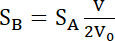
- Control the flow speed with a peristaltic pump at 0.45 mL/s. Note the whole time of water-filling for the working tank is about 3 h. Calculate the salinity at the bottom of the working tank based on29
 (1)
(1)
where SA, V and V0 are salinity of tank A, the final fluid volume of the working tank and the initial fluid volume of tank A (or B), respectively. Using the salinity at the bottom SB and the fresh water at the top, the buoyancy frequency of initial stratification N0 is
 (2)
(2)
where g is gravitational acceleration, ρ0 is reference density and β is salinity contraction coefficient. Note the N0 is calculated as 1.14 rad/s in this example.
4. Running the Experiment
- Set the boundary conditions for the working tank.
- Connect the water chamber of the top plate to a refrigerated circulator with eight uniformly distributed plastic soft tubes (150 cm in length, 10 mm in inner diameter and 15 mm in outer diameter). Note that the temperature of the top plate depends on the temperature of the refrigerated circulator. Set the temperature of the top plate to be the same as the room temperature (24 °C).
- Connect the electric heating pad inside the bottom plate to a Direct-Current Supply. Note a constant heat flux is provided to the working fluid during this experiment, which is calculated as
 (3)
(3)
where U, R, and A are the supplied voltage, electric resistance and effective area of the electric heating pad, respectively. In this example, the resistance and effective area are 44.12 ohm and 1.89×10⁻² m2. Set the supplied voltage as 60 V, so that the total heat flux Fh is 4317 W/m2.
- Turn on the camcorder to record the flow pattern.
- Turn on the Digital Multimeter, Multifunction Data Acquisition to monitor the temperature of the top and bottom plates and the temperature and salinity of fluid using the MSCTI.
- Turn on the MPTS to move the MSCTI up and down to achieve the temperature and salinity profiles of the working fluid.
- Turn on the refrigerated circulator and the Direct-Current Supply to achieve the top and bottom boundary conditions of the working fluid.
Note: Note that the whole experiment will experience the generation, development, mergence, and disappearance of the DC staircase, and it will last about 5 hours. After the disappearance of all DC staircases, turn off the Direct-Current Supply, Refrigerated Circulator, MPTS, Digital Multimeter, Multifunction Data Acquisition, and camcorder in turn.
5. Data Processing
- Shadowgraph image
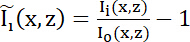
- Use a Matlab program to convert the video recorded by the camcorder to successive images for further analysis. Tailor these images to accentuate the flow pattern within the tank. Set the digital image intensity as I(x, z), where (x, z) denotes the horizontal and vertical coordinates with the origin at the bottom-left corner of the image. Note I(x, z) varies over (0, 1) with gray level of 256. Normalize each image by a background image as30
 (4)
(4)
where is the average image intensity over 10 images taken before the cooling and heating being applied,
  denotes the intensity of the ith image. In this way, the stationary defects in the images can be removed. In order to examine the temporal evolution of DC pattern, each image can be converted to a single vertical intensity fluctuation profile,
  , by calculating the image intensity fluctuation (i.e., root-mean-square of intensity) along the horizontal direction . Plot the intensity fluctuation profiles of the successive images together with increasing time to show the evolutions of the DC staircases.
- Use a Matlab program to convert the video recorded by the camcorder to successive images for further analysis. Tailor these images to accentuate the flow pattern within the tank. Set the digital image intensity as I(x, z), where (x, z) denotes the horizontal and vertical coordinates with the origin at the bottom-left corner of the image. Note I(x, z) varies over (0, 1) with gray level of 256. Normalize each image by a background image as30
- Temperature and salinity profiles
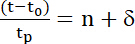
- Note in this experiment the vertical profiles of temperature and salinity of the working fluid are measured by the up-down moving MSCTI. Calculate the temporal height, h(t), of the MSCTI with the mean moving speed w, time t, the starting time t0 (corresponding to the lowest position), the lowest position hL and highest position hH, as
 (5)
(5)
where is the MSCTI moving period from lowest (highest) to highest (lowest) position, n and δ are the integral and fractional parts, respectively. Then calculate the temporal height h(t) as
 (6)
(6)
Note in Equation (6), if n is even, the MSCTI is moving up; otherwise the MSCTI is moving down. Plot the time series temperature T(t) and salinity S(t) in terms of height h(t) to get the vertical temperature and salinity profiles.
- Note in this experiment the vertical profiles of temperature and salinity of the working fluid are measured by the up-down moving MSCTI. Calculate the temporal height, h(t), of the MSCTI with the mean moving speed w, time t, the starting time t0 (corresponding to the lowest position), the lowest position hL and highest position hH, as
Access restricted. Please log in or start a trial to view this content.
Results
Figure 1 shows the schematic of the experimental setup. Its components are described in the protocol. The main parts are shown in Figure 1a and the detailed working tank is shown in Figure 1b. Figure 2 shows the temperature changes at the bottom (Tb, the red curve) and top (Tt, the black curve) plates. It is indicated that the temperature of the two plates are almost the same as th...
Access restricted. Please log in or start a trial to view this content.
Discussion
In this paper a detailed experimental protocol is described to simulate the thermohaline DC staircase structures in a rectangular tank. An initial linear density stratification of working fluid is constructed using the two-tank method. The top plate is kept at a constant temperature and the bottom one at constant heat flux. The whole evolution process of the DC staircase, including its generation, development, mergence, and disappearance, are visualized with the shadowgraph technique, and the variances of the temperature...
Access restricted. Please log in or start a trial to view this content.
Disclosures
The authors have nothing to disclose.
Acknowledgements
This work was supported by the Chinese NSF grants (41706033, 91752108 and 41476167), Grangdong NSF grants (2017A030313242 and 2016A030311042) and LTO grant (LTOZZ1801).
Access restricted. Please log in or start a trial to view this content.
Materials
| Name | Company | Catalog Number | Comments |
|---|---|---|---|
| Rectangular tank | Custom made part | ||
| Plexiglas | Custom made part | ||
| Electric heating pad | Custom made part | ||
| Distilled water | Multiple suppliers | ||
| Optical table | Liansheng Inc. | MRT-P/B | |
| Thermiostors | Custom made part | ||
| Digital multimeter | Keithley Inc | Model 2700 | |
| Micro-scale conductivity and temperature instrument (MSCTI) | PME. Inc. | Model 125 | |
| Multifunction data acquisition (MDA) | MCC. Inc. | USB-2048 | |
| Motorized precision translation stage (MPTS) | Thorlabs Inc. | LTS300 | |
| Tracing paper | Multiple suppliers | ||
| LED lamp | Multiple suppliers | ||
| Camcorder | Sony Inc. | XDR-XR550 | |
| De-gassed fresh water | Custom made part | ||
| Saline water | Custom made part | ||
| Flexible tube | Multiple suppliers | ||
| Electric magnetic stirrer | Meiyingpu Inc. | MYP2011-100 | |
| Peristaltic pump | Zhisun Inc. | DDBT-201 | |
| Refrigerated circulator | Polyscience Inc. | Model 9702 | |
| Plastic soft tube | Multiple suppliers | ||
| Direct-current power supply | GE Inc. | GPS-3030 | |
| Matlab | MathWorks Inc. | R2012a |
References
- Turner, J. S. Buoyancy Effects in Fluids. , Cambridge Univ. Press, N. Y. 367(1973).
- Schmitt, R. W. Double diffusion in oceanography. Annual Review of Fluid Mechanics. 26, 255-285 (1994).
- Turner, J. S., Gustafson, L. B. Fluid motions and compositional gradients produced by crystallization or melting at vertical boundaries. Journal of Volcanology and Geothermal Research. 11, 9S125(1981).
- Robb, L. Introduction to Ore-forming Processes. , Blackwell Publishing. 373(2004).
- Chabrier, G., Baraffe, I. Heat transport in giant (exo)planets: a new perspective. The Astrophysical Journal Letters. 661, 81-84 (2007).
- Langlois, W. E. Buoyancy-driven flows in crystal-growth melts. Annual Review of Fluid Mechanics. 17, 191(1985).
- Chen, C. -F., Johnson, D. H. Double-diffusive convection: A report on an engineering foundation conference. Journal of Fluid Mechanics. 138, 405-416 (1984).
- Griffiths, R. W. Layered double-diffusive convection in porous media. Journal of Fluid Mechanics. 102, 221-248 (1981).
- You, Y. Z. A global ocean climatological atlas of the Turner angle: implications for double-diffusion and water-mass structure. Deep Sea Research Part I: Oceanographic Research Papers. 49, 2075-2093 (2002).
- Kelley, D. E., Fernando, H. J. S., Gargett, A. E., Tanny, J., Ozsoy, E. The diffusive regime of double diffusive convection. Progress in Oceanography. 56, 461-481 (2003).
- Timmermans, M. L., Toole, J., Krishfield, R., Winsor, P. Ice-Tethered Profiler observations of the double-diffusive staircase in the Canada Basin thermocline. Journal of Geophysical Research: Oceans. 113, 1-10 (2008).
- Zhou, S. Q., Lu, Y. Z. Characterization of double diffusive convection steps and heat budget in the deep Arctic Ocean. Journal of Geophysical Research: Oceans. 118 (12), 6672-6686 (2013).
- Turner, J. S. The melting of ice in the arctic ocean: The influence of double-diffusive transport of heat from below. Journal of Physical Oceanography. 40, 249-256 (2010).
- Neal, V. T., Neshyba, S., Denner, W. Thermal stratification in the Arctic Ocean. Science. 166 (3903), 373-374 (1969).
- Padman, L., Dillon, T. M. Vertical heat fluxes through the Beaufort Sea thermohaline staircase. Journal of Geophysical Research: Oceans. 92 (C10), 10799-10806 (1987).
- Sirevaag, A., Fer, I. Vertical heat transfer in the Arctic Ocean: The role of double-diffusive mixing. Journal of Geophysical Research: Oceans. 117 (C7), (2012).
- Guthrie, J. D., Fer, I., Morison, J. Observational validation of the diffusive convection flux laws in the Amundsen Basin, Arctic Ocean. Journal of Geophysical Research: Oceans. 120 (12), 7880-7896 (2015).
- Bebieva, Y., Timmermans, M. L. An examination of double-diffusive processes in a mesoscale eddy in the Arctic Ocean. Journal of Geophysical Research: Oceans. 121 (1), 457-475 (2016).
- Shibley, N. C., Timmermans, M. L., Carpenter, J. R., Toole, J. M. Spatial variability of the Arctic Ocean's double-diffusive staircase. Journal of Geophysical Research: Oceans. 122 (2), 980-994 (2017).
- Schmid, M., Busbridge, M. Double-diffusive convection in Lake Kivu. Limnology and Oceanography. 55 (1), 225-238 (2010).
- Sommer, T., et al. Interface structure and flux laws in a natural double-diffusive layering. Journal of Geophysical Research: Oceans. 118 (11), 6092-6106 (2013).
- Carpenter, J. R., Sommer, T., Wüest, A. Simulations of a double-diffusive interface in the diffusive convection regime. Journal of Fluid Mechanics. 711, 411-436 (2012).
- Flanagan, J. D., Lefler, A. S., Radko, T. Heat transport through diffusive interfaces. Geophysical Research Letters. 40 (10), 2466-2470 (2013).
- Radko, T., Flanagan, J. D., Stellmach, S., Timmermans, M. L. Double-diffusive recipes. Part II: Layer-merging events. Journal of Physical Oceanography. 44 (5), 1285-1305 (2014).
- Scheifele, B., Pawlowicz, R., Sommer, T., Wüest, A. Double diffusion in saline Powell Lake, British Columbia. Journal of Physical Oceanography. 44 (11), 2893-2908 (2014).
- Guo, S. X., Zhou, S. Q., Qu, L., Lu, Y. Z. Laboratory experiments on diffusive convection layer thickness and its oceanographic implications. Journal of Geophysical Research: Oceans. 121 (10), 7517-7529 (2016).
- Guo, S. X., Cen, X. R., Zhou, S. Q. New parametrization for heat transport through diffusive convection interface. Journal of Geophysical Research: Oceans. 123 (2), 1327-1338 (2018).
- Turner, J. S. The coupled turbulent transports of salt and heat across a sharp density interface. International Journal of Heat and Mass Transfer. 8 (5), 759-767 (1965).
- Hill, D. F. General density gradients in general domains: the "two-tank" method revisited. Experiments in Fluids. 32 (4), 434-440 (2002).
- Zhou, S. Q., Ahlers, G. Spatiotemporal chaos in electroconvection of a homeotropically aligned nematic liquid crystal. Physical Review E. 74 (4), 046212(2006).
Access restricted. Please log in or start a trial to view this content.
Reprints and Permissions
