Here, we present a protocol to demonstrate safe, trap-vaccinate-release (TVR) techniques for carnivores susceptible to rabies.
Method Article
A Trap-Vaccinate-Release Protocol for Immunization of Skunks and Additional Rabies Vectors Against Rabies
In This Article
Summary
Abstract
Oral vaccination of wildlife against rabies via the distribution of vaccine-laden baits is used widely as a management tool in Europe and North America. Over the past several decades, successful programs have targeted important reservoirs, including coyotes, foxes, raccoon dogs, and raccoons, for prevention and control. However, other species (e.g., skunks) or certain habitats (e.g., urban) may be less amenable to oral vaccination, requiring consideration of additional strategies. Trap-vaccinate-release (TVR) is one alternate method that entails the use of live traps to capture targeted wildlife. Traps are distributed along grids in suitable, accessible habitats. Captured animals are identified by tagging, vaccinated parenterally with an inactivated commercial vaccine, sexed, aged, weighed, and released at the site of capture. Since 2001, cross-species transmission of rabies virus from bats to mesocarnivores, such as skunks, has been detected in Flagstaff, Arizona. During the past two decades, TVR has been used as a safe and effective method to prevent and control rabies during such events in this region.
Introduction
The rabies virus (RABV) is a deadly zoonotic disease that impacts human health on a global scale. The World Health Organization (WHO) reports that approximately 59,000 people are killed each year, predominantly in Asian and African countries. Additionally, 29 million people received a post-exposure vaccination each year due to being bitten by an animal. Impacts on wildlife populations cannot be accurately measured, but wildlife populations can experience high rates of mortality during outbreak events when geospatial conditions are favorable. Rosatte reported that the raccoon (Procyon lotor) population on 124 sq km (48 sq mi) declined about 71% in the months following a reported RABV outbreak1.
The control and management of RABV are essential for protecting human health, domestic animals, and vulnerable wildlife populations. Since all mammals are susceptible to the RABV, over time, RABV has adapted to several distinct mammalian species, which now act as reservoir hosts. These host species and their associated variants typically inhabit specific geographic regions. Within these regions, spillover into non-reservoir hosts does occur (cross-species transmission), but in most cases, the infected non-reservoir species do not carry the infection to other individuals in the population. A host shift is a rare event in which the virus has successfully adapted to a new host. These events are the most dangerous, as they can influence the spread of RABV and undermine any RABV management efforts put in place2.
In North America, RABV management efforts are focused on several specific terrestrial wildlife reservoir species. Oral rabies vaccination (ORV) programs have proven to be effective at managing rabies at large landscape scales. ORV utilizes aerial and hand deployment of small baits that contain an oral RABV vaccine. These baits are distributed on the landscape; any targeted wildlife that encounters these packets receives RABV vaccine orally when they bite into them. The use of ORV has been essential in the control of red fox (Vulpes vulpes) RABV in Europe3, raccoon RABV in Canada, and coyotes (Canis latrans) and raccoons in the United States4. ORV baits have proven to be a valuable tool in RABV management programs, as they can be implemented over vast regions of the landscape and reduce the number of personnel needed in management programs. One drawback of the ORV program is its ineffectiveness in successfully vaccinating skunk species. Inadequate vaccine uptake from current ORV packets seems to be the current setback for ORV effectiveness in wild skunk populations in the field5.
Trap-vaccinate-release (TVR) is an alternative rabies management tool, that is occasionally used simultaneously with ORV. The goal of TVR is to increase the number of rabies vaccinated individuals in a population. Because it requires labor-intensive trapping of animals and is more expensive than ORV per square kilometer6, TVR is done on a much smaller scale than ORV and is often applied in urban areas where many challenges to ORV exist7.
Trap-vaccinate-release of skunks in the United States has been effective in Flagstaff, Arizona, on several occasions. Since 2001, Flagstaff has experienced repeated outbreaks of big brown bat (Eptesicus fuscus) RABV variant in striped skunk (Mephitis mephitis) populations8. From 2001-2011 (in multiple distinct TVR efforts led by the US Department of Agriculture, Animal and Plant Health Inspection Service, Wildlife Services), 842 animals were trapped, vaccinated, and released, including 753 striped skunks (Wildlife Services Capture Data). Each effort stopped the bat rabies outbreaks in skunks. In 2021, this cross-species phenomenon happened again when rabid striped skunks were confirmed in two heavily urbanized regions of Flagstaff. Wildlife Services immediately coordinated and launched a TVR program in these areas to contain the outbreak in cooperation with the Coconino Department of Health Services and several state agencies. The goal of this manuscript is to safely demonstrate the steps in a TVR program targeting skunks.
The equipment required for trapping and vaccination are as follows:
TVR field equipment
A detailed list of all the equipment used can be found in the accompanying Table of Materials file. However, there needs to be some clarification on the "wooden plungers" utilized. These are handmade devices comprised of a wooden dowel for the handle. Fastened to the end of the dowl is a piece of plywood cut to the dimensions of the trap opening. Since we utilized three different trap sizes, we constructed plungers of the following dimensions (6 inches x 6 inches, 8 inches x 8 inches, 10 inches x 10 inches) (Figure 1). Additionally, trap covers are only required when working up a skunk. Trap cover material can be canvas, an old tarp, or disposable plastic sheeting like we used.
Personal protective equipment (PPE)
Field crews are required to have received pre-exposure rabies vaccinations prior to participating in any TVR program. PPE necessary for TVR work includes eye protection such as a disposable safety shield, lab goggles, or safety glasses. A disposable coverall suit is the best protection from the many different volatile compounds contained in a skunk's spray. (Note: suit not required when working up a raccoon or fox). Disposable nitrile gloves protect from various chemicals and liquids and offer protection from saliva and body fluids containing pathogens from captured animals.
Trap preparation and deployment
We utilized three sizes of live capture traps: small (7 inches x 7 inches x 24 inches), medium (9 inches x 9 inches x 26 inches), and large (10 inches x 12 inches x 32 inches) (Figure 1). Prior to traps being deployed in the field, they should be washed thoroughly with soap and water. Traps should be left out in the open air for several weeks to months to allow for odor elimination. Triggering mechanisms are tested and repaired when required prior to setting. Warning labels stating "Rabies Vector" are installed on each trap with trap wire. An additional rabies warning sign is posted in the general vicinity of each trap; this secondary warning provides general trapping information and provides program contact information. Traps are placed in or near animal travel routes and feeding locations. Locations should be selected that minimize stress to the animal, including weather-related events and disturbance by human activities. An established trapping location receives a unique name, and the location is logged in a handheld GPS unit.
Protocol
The safe handling and care of animals demonstrated in this protocol comply with the standards put in place by APHIS Wildlife Services.
1. Vaccination protocol
- Preparation
- Don PPE, including face shield/goggles, nitrile gloves, and coveralls.
- Remove a pair of numbered ear tags from the package to mark the captured animal. Record the ear tag numbers on the datasheet and place them in a resealable plastic bag labeled with the ear tag number to keep them safe and organized until they are ready to be deployed.
- Quietly and calmly approach the trap. If a skunk has been captured, use a piece of tarp, burlap, or plastic sheeting to cover the trap and shield oneself from any skunk spray.
- Carefully wrap the cover around the trap and use a steel spring clamp to secure it to the trap. Cover is not required for a raccoon or fox.
- Carefully position the trap on its end with the door of the trap facing up (towards the sky).
- Vaccination
- Once the captured animal has moved to the bottom of the trap, open the door and place the wooden plunger inside the trap on the animal's body.
- Apply gentle pressure on the animal to prevent the animal from moving freely. Use mechanical immobilization to safely vaccinate and mark the animal.
- Retrieve the rabies vaccine from the cooler and draw the correct dosage (1 mL) into the 3 mL syringe. Place the ear tags in the sandwich bag for the animal in an easily accessible location.
- Carefully pull back the cover around the trap to locate a region to administer the vaccine.
- Carefully insert the needle into the animal's muscle tissue in its hind leg and smoothly depress the plunger to administer the rabies vaccine.
- Dispose of the used syringe in a sharps container.
- Position the trap so the ears are accessible, and place one metal ear tag into the locating groove on the pliers.
- Position the open end of the ear tag over the ear and apply even and gentle pressure until the plier handles stop. Repeat the sequence on the other ear.
- With the trap on its end, remove the plunger, close the trap door, and attach the hook end of the handheld scale to the trap. Gently lift the trap and hold steady. Record the weight of the trap and animal on the datasheet.
- Lay the trap down flat and position the cover so that it is no longer wrapped around the trap but lying over the top of the trap.
- Gently lift the trap off the ground using the handle and position the handheld mirror under the trap. Using the animal's reflection in the mirror reflection, determine the sex of the animal. Record on the datasheet.
NOTE: A mirror is not necessary to sex a fox or a raccoon. - Estimate the age of the animal as either adult or juvenile. Record on the datasheet.
- Finish filling out the datasheet. A metal clipboard with a storage area best protects the sheets in inclement weather and keeps them in one place during the trapping session.
- Use a metal clamp to hold the trap door in the open position. Slowly back away and let the animal exit the trap unpressured.
- Once the animal has exited, reweigh the empty trap, ensuring that the clips and protective cover remain with it. Subtract this weight from the weight recorded earlier to calculate the animal's weight.
Results
We implemented the ground-based RABV management technique called TVR to address RABV outbreaks in the city of Flagstaff, Arizona (Figure 2). The goal of this project was not to assess TVR effectiveness but rather an emergency response to vaccinate mesocarnivores inside the RABV quarantine areas and minimize any threats to public health. From August 2021 to December 2021, several sick-acting striped skunks were reported to the Flagstaff Police Department and Flagstaff Animal Control; these skunks were subsequently euthanized and tested for RABV. Dead skunks reported by the public during this period were also submitted for testing. In total, 16 striped skunks tested positive for big brown bat RABV, 4 in west Flagstaff and 12 in east Flagstaff. In response, we initiated TVR efforts in early December 2021 and documented the following vaccination success. In west Flagstaff, we vaccinated 27 striped skunks, 3 grey foxes, and 4 raccoons. Additionally, we recaptured striped skunks on 37 occasions. In east Flagstaff, we vaccinated 106 striped skunks and 2 raccoons. Additionally, we recaptured striped skunks on 110 occasions. Trapping efforts were sustained throughout the entirety of 2022. During this period, no RABV-positive skunks were detected in either trapping area. In July and August of 2022, 3 rabid skunks were detected in a neighborhood in south Flagstaff (Figure 3). We immediately coordinated and initiated TVR in this new area, where we vaccinated 22 striped skunks, 1 hog-nosed skunk, and 10 raccoons. Recaptured animals included 34 striped skunks and 1 hog-nosed skunk. Trapping in south Flagstaff began in late July and continued throughout the remainder of 2022. In the subsequent months, no additional rabid skunks were detected in south Flagstaff. An additional 15 skunks were captured by local pest control companies outside of the TVR areas. We coordinated with the pest control companies to vaccinate the animals before they were released.
Management programs such as TVR are effective for controlling RABV because they decrease the number of susceptible individuals present in a wildlife population. The results presented here (Table 1) demonstrate how effective and successful the protocol is at vaccinating wildlife against RABV. As noted, we observed no new RABV cases after TVR was implemented. (Figure 4) TVR has a distinct advantage of direct inoculation of captured animals. By contrast, ORV cannot guarantee that targeted wildlife will uptake randomly distributed baits. TVR guarantees that every captured animal will be inoculated with the vaccine. Assessing the effectiveness of these vaccinated animals at stopping the spread of the RABV is difficult, but when we attempt to analyze the results subjectively, we can determine that any threats to public health are reduced by having 190 fully vaccinated mesocarnivores in these urban areas.
| Year | Trap-nights | Total captures | Striped Skunks | Raccoons | Grey Foxes | Hog-nosed Skunk |
| T (V) | T (V) | T (V) | T (V) | |||
| 2021 (Dec) | 180 | 4 | 4 (4) | 0 (0) | 0 (0) | 0(0) |
| 2022 | 5,343 | 367 | 346 (166) | 16 (16) | 3 (3) | 2 (1) |
| Total | 5,523 | 371 | 350 (170) | 16 (16) | 3 (3) | 2 (1) |
Table 1: Mesocarnivores vaccinated against RABV during TVR operations in Flagstaff, Arizona, during 2021-2022. T = total number of animals captured, V = number of different individuals successfully vaccinated and released.
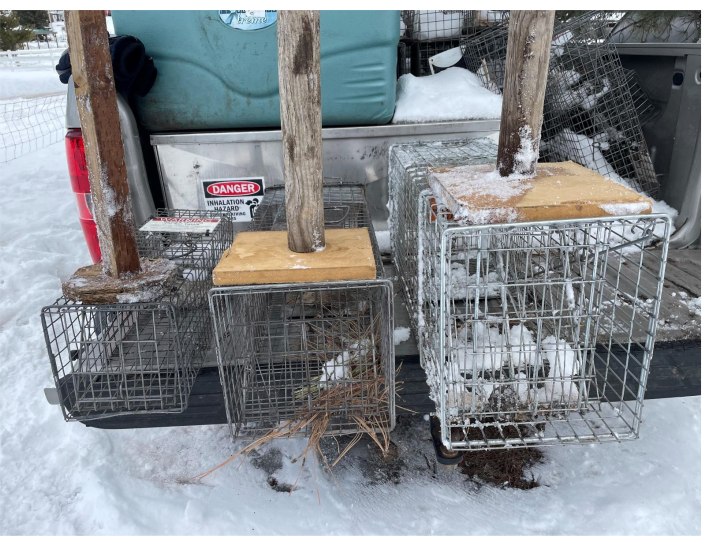
Figure 1: Trap and plunger sizes. (Left) Smallest trap 7 inches x 7 inches x 24 inches, (Middle) medium 9 inches x 9 inches x 26 inches, (Right) and large 10 inches x 12 inches x 32 inches. Please click here to view a larger version of this figure.
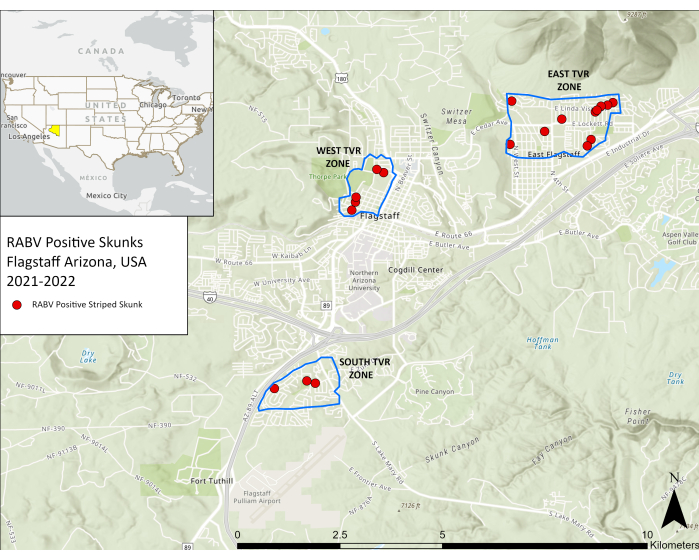
Figure 2: RABV positive skunks Flagstaff Arizona, USA 2021-2022. Map of RABV-positive skunks detected in the city of Flagstaff, Arizona, from 2021-2022. The red dots show the locations where RABV-positive skunks were detected. The blue polygons show the TVR trapping areas inside the city limits. Please click here to view a larger version of this figure.
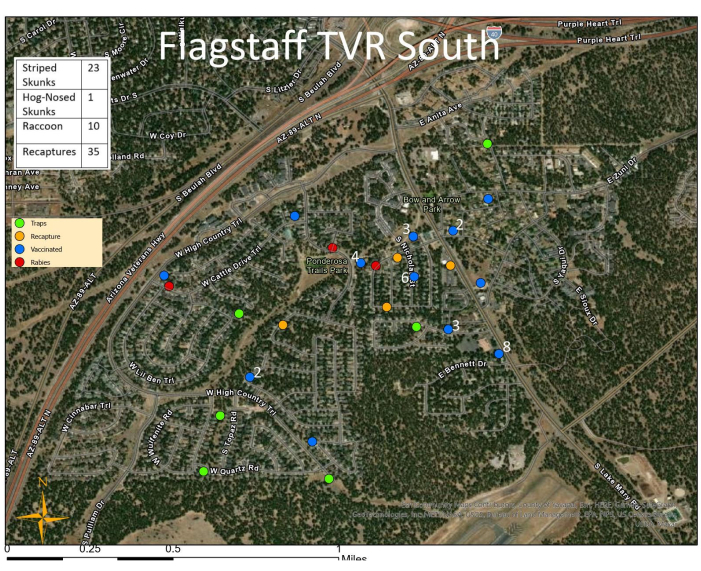
Figure 3: South Flagstaff TVR area. Aerial map of an established trapping line in south Flagstaff, Arizona, during 2021. The red dots show where rabies-positive animals were detected. The green dots show the locations of traps that have not captured any animals. The blue dots show trap locations where an animal has been successfully captured, vaccinated, and released. The white numbers near the blue dots indicate how many animals have been vaccinated at that trap site. The orange dots show trap sites that have only recaptured previously vaccinated animals. The data table shows how many species have been captured and vaccinated on this trapline. Please click here to view a larger version of this figure.
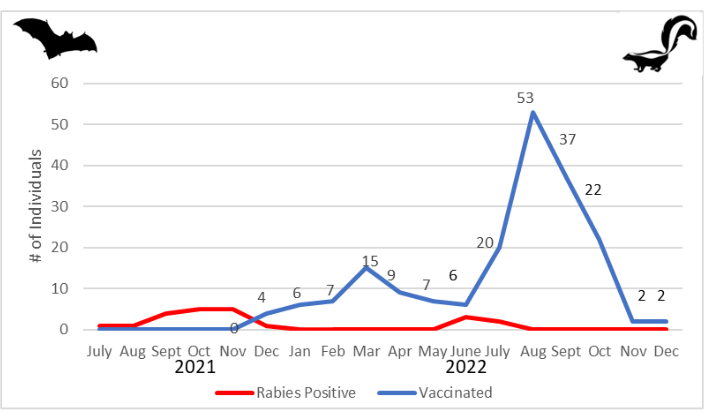
Figure 4: RABV-positive skunks and TVR vaccinations per month in Flagstaff 2021-2022. The red line represents RABV-positive animals detected in Flagstaff from July 2021 through Dec 2022. The blue line shows the number of animals vaccinated from Dec 2021 through Dec 2022. The numbers above the blue line indicate how many mesocarnivores were vaccinated for that particular month. Please click here to view a larger version of this figure.
Discussion
The Centers for Disease Control and Prevention estimates that approximately 55,000 Americans receive post-exposure prophylaxis (PEP) each year, with the average cost for each exposure around $3,6009. The main economic impacts associated with rabies are the cost of managing the disease and the treatment for preventing human fatalities after exposure. The key to reducing health issues and economic impacts is the successful vaccination of terrestrial reservoir species10. A TVR program is a management tool for intervention in outbreaks threatening human health, domestic animals, and wildlife. TVR is most effective in addressing small-scale rabies outbreaks as it is very costly and labor-intensive to employ at larger landscape scales6. Despite these drawbacks, TVR is a valuable rabies management tool that has repeatedly been shown to be effective at stopping the spread of the disease by vaccinating reservoir species11,12. The TVR protocol demonstrated in this manuscript is in response to rabies outbreaks in the city of Flagstaff, Arizona, which has experienced repeated big brown RABV outbreaks in striped skunk populations since 20018. This TVR program was based upon a TVR study conducted by Rosatte in which skunks and raccoons were intramuscularly vaccinated against rabies in metropolitan Ontario13. This protocol addressed how to safely and successfully vaccinate captured striped skunks and other mesocarnivores.
One of the most important steps in this protocol is to securely immobilize the animal. The animal needs to be secure, but the force of immobilization should not harm the animal in any way. Proper immobilization ensures the animal receives a full dose of the vaccine (1 mL) by preventing the animal from pulling away during the injection. Additionally, a secure animal is unable to bite and claw at the tools used to install the ear tags. This helps reduce the stress put on each animal by shortening the time required to process each animal.
One challenge we encountered was vaccinating and ear-tagging skunks captured in the large (10 inches x 12 inches x 32 inches) traps. This process can be difficult, as it gives the skunks more room to pull away from the sides of the trap and out of reach of the tools. This issue was even more apparent when juvenile skunks were caught. These situations required some modification of our processing technique. In these situations, we would use the wooden plunger for the small traps to trap the skunk in a corner of the trap and process them from above through the door opening. This made it possible to process the skunks, but it still proved to be challenging.
We documented skunk captures in all three-sized traps. Raccoon captures were documented in medium and large traps, and grey foxes were captured exclusively in the large traps. There is a tendency for some animals to become accustomed to the traps and be recaptured frequently. The constant movement of traps to new locations helps minimize recaptures and gives the opportunity to capture and vaccinate new individuals on the landscape.
One limitation of TVR is the size of the area that can be effectively treated. In large-scale rabies management operations, TVR is often used in conjunction with ORV to cover large areas of the landscape. TVR, by itself, covers a much smaller area and is best utilized in urban areas as a fast emergency response, or in our case, addressing rabies outbreaks in skunk populations. TVR efforts can prove to be costly as well, with estimates of $625.00 per km2 treated12. These costs can vary significantly as larger areas require more personnel and equipment, subsequently increasing costs.
Previous work determined that inoculation with 1 mL of rabies vaccine was effective at stimulating rabies antibody production in mesocarnivores14. There are several papers based on TVR that mention the vaccination of animals1,12,13,14, but we could not find any published articles offering a detailed explanation of the protocol for administering the vaccine. Therefore, we could not compare the protocol offered in this manuscript to existing methods. The materials and methods shared in this manuscript will allow field crews to deliver precise, effective vaccinations to wildlife populations. This protocol has proven effective and will continue to be used in ongoing and future TVR efforts.
Disclosures
The authors do not have any conflicts of interest to disclose. Reference in this site to any specific commercial product, process, or service, or the use of any trade, firm, or corporation name is for the information and convenience of the public and does not constitute endorsement, recommendation, or favoring by the US Department of Agriculture.
Acknowledgements
The authors would like to acknowledge Coconino County Health Services, especially Sabrina Kelley, for facilitating the implementation of the rabies quarantine. Additionally, the authors would like to recognize Dennis Slate and Richard Chipman for facilitating the TVR program and Tad Theimer for advice on trapping. The project was entirely funded by the US Department of Agriculture, Animal and Plant Health Inspection Service, Wildlife Services, and the National Rabies Program.
Materials
| Name | Company | Catalog Number | Comments |
|---|---|---|---|
| #8 x 1-1/2 in. R4 Multi-Purpose Star Drive Flat Head Screw (110 per Pack) | Home Depot | 96085 | Used to attach base to plunger push rod |
| #8 x 1-1/4 in. #2 Phillips, Wafer-Head Wood Screw (100-Pack) | Home Depot | SD8X1.25-R | Used to attach trap sign to stake |
| 2 in. x 2 in. x 8 ft. Furring Strip Board Lumber | Home Depot | 75800593 | Push rod for plunger |
| 20 G x 1.5 " needle | Kendall monoject | 8881 | Used to vaccinate animal |
| 3 mL syringe | Kendall monoject | 513934 | Used to vaccinate animal |
| 48 oz. Steel Drilling Hammer | Home Depot | MRF3LB | Used to put trap sign stake into the ground |
| 7-1/4 in. x 140-Tooth OSB/Plywood Circular Saw Blade | Home Depot | A07140A | Blade needed for circular saw to cut plywood |
| Aluminum Clipboard - Top Opening, Letter | ULINE | S-20173 | Used to record and keep datasheets |
| Circular saw | Home Depot | CSB144LZK | Used to cut wood to make plunger |
| Cold Packs - 6 oz | ULINE | S-9902 | Used to regulate temperature of the vaccine |
| Dish soap | ULINE | S-9975 | Used to clean traps |
| Dupont Tyvek protective clothing | ULINE | S-11495 | Used to protect personnel from skunk spray. Size will be dependent upon size of personnel. You can also use the non-hooded coverall S-9636. |
| Handheld GPS unit | Garmin | ETrex 32X | Used to record location of trap and captured animals |
| Handheld mirror 6 in. x 7 in. | Walmart | Equate | Used to sex animal |
| Headlamp | Home Depot | HDB32EH | To check traps before sunup |
| Jar of peanut butter | Walmart | 40 oz jar | Bait for trapping skunks. |
| Live trap for skunks | Tomahawk | 103 | Used to catch skunks |
| Live trap for skunks and other carnivores | Tomahawk | 205; 602 | Used to catch skunks and other carnivores |
| Nitrile gloves | ULINE | S-14179 | Used to protect personnel from pathogens. Size and use of powdered or non-powdered will be dependent on personnel choice. |
| ONE+ 18 V Cordless 3/8 in. Drill/Driver Kit with 1.5 Ah Battery, Charger, Hand Tools, Accessories, and Tool Bag | Home Depot | PCL201K1SB | Used to assemble signs on stakes |
| Paper Mate Profile 8 pk Ballpoint Pens 1.4 mm Bold Tip Black | Staples | 2095460 | Used to write on data sheets |
| Rabies trapping sign 9 in. x 12 in. | FedEx Office | NA | Attach to stake near trap location |
| Rabies vaccine | Boehringer Ingelheim | Imrab® | 1 mL per animal; https://www.boehringer-ingelheim.com/animal-health/companion-animals-products/rabisin-imrab#:~:text=Rabisin%C2%AE%20%2F%20Imrab%C2%AE%20is,signs%20due%20to%20rabies%20infection. |
| Rabies warning sign 4 in. x 6 in. | FedEx Office | NA | Attach to top of trap |
| Raccoon and fox ear tag | National Band and Tag Company | 1005-3 | Ear tags for raccoons and foxes |
| Raccoon and fox ear tag | National Band and Tag Company | 1005s3 | Ear tap pliers to attach ear tags to raccoons and foxes |
| Refresh 6-Pack Lunch Cooler | 4imprint.com | 155149 | Used to carry vaccine in the field |
| Roll of plastic sheeting 12 ft. x 400 ft. | 3M | 6723 | Used to calm animal and protect personnel |
| Safety goggles or disposible face shield | ULINE | S-24607 | Used to protect personnel face from skunk spray and pathogens. |
| Sanded Plywood (Common: 1/2 in. x 2 ft. x 4 ft.; Actual: 0.451 in. x 23.75 in. x 47.75 in.) | Home Depot | 300896 | Base for plunger |
| Scale 55 lb x 0.5 oz | Brecknell | Model 816965007486 | Used to weigh cage and animal |
| Sharpie Black Fine Tip Permanent Marker 1 pk | Ace Hardware | 35010 | Used to label sandwich bags |
| Sharps Container - 1 Quart | ULINE | S-15307 | Holding used syringes |
| Skunk ear tag | National Band and Tag Company | 1005-1 | Ear tags for skunks |
| Skunk ear tag applicator | National Band and Tag Company | 1005s1 | Ear tag pliers to attach ear tags to skunks |
| Tap water | NA | Used to clean traps | |
| Trap line wire | Minnesota Trap Line Products, INC | 11GA-01 | Trap wire to attach sign to trap https://www.minntrapprod.com/Snares/departments/577/ |
| Universal Forest 48 in. x 1 in. x 2 in. Wood Grade Stake 24 pk | Ace Hardware | 5606413 | Stake for trap sign |
| XM Series 3 in. Capacity Steel Spring Clamp with Handles and Tips, 3-1/3 in. Throat Depth | Home Depot | XM7 | Used to attach plastic sheeting to trap or to hold trap door open |
| Ziploc Sandwich Bags | ULINE | S-23777 | Used to hold ear tags |
References
- Rosatte, R., et al. The elimination of raccoon rabies from Wolfe Island, Ontario: animal density and movements. Journal of Wildlife Diseases. 43 (2), 242-250 (2007).
- Marston, D. A., et al. Genetic analysis of a rabies virus host shift event reveals within-host viral dynamics in a new host. Virus Evolution. 3 (2), vex038(2017).
- Freuling, C. M., et al. The elimination of fox rabies from Europe: determinants of success and lessons for the future. Philosophical Transactions of the Royal Society B: Biological Sciences. 368, 20120142(2013).
- Slate, D., et al. Oral rabies vaccination in North America: opportunities, complexities, and challenges. PLoS Neglected Tropical Diseases. 3 (12), e549-e549 (2009).
- Wohlers, A., Lankau, E. W., Oertli, E. H., Maki, J. Challenges to controlling rabies in skunk populations using oral rabies vaccination: A review. Zoonoses and Public Health. 65 (4), 373-385 (2018).
- Sterner, R. T., Meltzer, M. I., Shwiff, S. A., Slate, D. Tactics and economics of wildlife oral rabies vaccination, Canada and the United States. Emerging Infectious Diseases. 15 (8), 1176-1184 (2009).
- Elmore, S. A., Chipman, R. B., Slate, D., Huyvaert, K. P., VerCauteren, K. C., Gilbert, A. T. Management and modeling approaches for controlling raccoon rabies: The road to elimination. PLOS Neglected Tropical Diseases. 11, e0005579(2017).
- Kuzmin, I. V., et al. Molecular inferences suggest multiple host shifts of rabies viruses from bats to mesocarnivores in Arizona during 2001-2009. PLoS Pathogens. 8 (6), e1002786(2012).
- Shwiff, S. A., et al. Direct and indirect costs of rabies exposure: a retrospective study in southern California (1998-2002). Journal of Wildlife Diseases. 43 (2), 251-257 (2007).
- Shwiff, S. A., Elser, J. L., Ernst, K. H., Shwiff, S. S., Anderson, A. M. Cost-benefit analysis of controlling rabies: placing economics at the heart of rabies control to focus political will. OIE Scientific and Technical Review. 37 (2), 681-689 (2018).
- Rosatte, R. C., Power, M. J., Machines, C. D., Campbell, J. B. Trap-vaccinate-release and oral vaccination for rabies control in urban skunks, raccoons and foxes. Journal of Wildlife Diseases. 28 (4), 562-571 (1992).
- Slavinski, S., et al. Trap-vaccinate-release program to control raccoon rabies, New York, USA. Emerging Infectious Diseases. 18 (7), 1170-1172 (2012).
- Rosatte, R. C., et al. The control of raccoon rabies in Ontario Canada: Proactive and reactive tactics, 1994-2007. Journal of Wildlife Diseases. 45 (3), 772-784 (2009).
- Rosatte, R. C., Howard, D. R., Campbell, J. B., Maclnnes, C. D. Intramuscular vaccination of skunks and raccoons against rabies. Journal of Wildlife Diseases. 26 (2), 225-230 (1990).
Reprints and Permissions
