We present a protocol using the tuina manipulation simulator to perform the "Three-Manipulation and Three-Acupoint" tuina therapy for minor chronic constriction injury rats and evaluate the effective analgesic time points of tuina within 24 h by testing pain changes through behavioral analysis and changes in inflammatory factor expression using enzyme-linked immunosorbent assay.
Method Article
Characteristics of Pain Changes in Rats with Nerve Injury Within 24 hours After One-Time Tuina Intervention
Opens in a new tab
In This Article
Summary
Loading...
$$\rightleftharpoonup{xx}$$
$$\longleftharp{xx}$$,
$$\longrightharp{xx}$$,
Abstract
Loading...
$$\rightleftharpoonup{xx}$$
$$\longleftharp{xx}$$,
$$\longrightharp{xx}$$,
Tuina, as an external treatment method of traditional Chinese medicine, has been proven to have an analgesic effect on peripheral neuropathic pain (pNP) in clinical and basic research. However, the optimal time point for the analgesic effect of tuina may vary according to different injury sensations, affecting the exploration of the initiation mechanism of tuina analgesia.
The research used minor chronic constriction injury (minor CCI) model rats to simulate pNP and used the intelligent tuina manipulation simulator to simulate the three methods (point-pressing, plucking, and kneading) and three acupoints (Yinmen BL37, Chengshan BL57, and Yanglingquan GB34) for performing tuina therapy. The study evaluated the changes in pain within 24 h and the optimal time point for the efficacy of tuina analgesia in rats with minor CCI models by testing cold sensitivity threshold (CST), mechanical withdrawal threshold (MWT), and thermal withdrawal latency (TWL). Furthermore, the study evaluated IL-10 and TNF-α expression changes through Elisa detection. The results show that tuina has both immediate and sustained analgesic effects. For the three different injury sensitivity thresholds of CST, MWT, TWL, and two cytokines of IL-10 and TNF-α, the analgesic efficacy of tuina within 24 h after intervention is significantly different at different time points.
Introduction
Loading...
$$\rightleftharpoonup{xx}$$
$$\longleftharp{xx}$$,
$$\longrightharp{xx}$$,
Peripheral neuropathic pain (pNP) refers to pain caused by a lesion or disease of the peripheral somatosensory nervous system, manifested as a series of symptoms and signs, with hyperalgesia as one of the main symptoms1,2. Hyperalgesia is a heightened experience of pain caused by a noxious stimulus, including pinprick, cold, and heat3. Large epidemiological studies have been conducted, which show pNP is the most common, with a prevalence rate of 6.9%-10% in neuropathic pain4. pNP can be caused by multiple diseases, including injury of the nerve, postherpetic neuralgia, painful diabetic polyneuropathy, multiple sclerosis, stroke, cancer, etc.5. Nowadays, the main method for treating pNP is medication, but the effect is not ideal; and the side effects are significant, which is the main reason for the high economic burden on individuals and society6.
Tuina is a green, economical, safe, and effective external treatment method of traditional Chinese medicine7. Many clinical studies have proven the analgesic effect of tuina on pNP, and basic studies have verified the immediate and cumulative analgesic effects of tuina8,9. The main cumulative analgesic mechanism of tuina is to reduce the levels of inflammatory factors and inhibit the activation of glial cells10,11. The previous research confirmed the cumulative analgesic effect of tuina and found differentially expressed genes (DEGs) in the dorsal root ganglia (DRG) and spinal dorsal horn (SDH) of rats with sciatic nerve injury after 20 times of tuina treatment, mainly related to protein binding, pressure response, and neuronal projection12. In recent studies, it has been confirmed that tuina has an immediate analgesic effect and that 1-time tuina intervention could alleviate the hyperalgesia of minor CCI rats and especially ease thermal hyperalgesia more effectively13. However, the optimal time point for the analgesic effect of tuina may vary depending on the injury sensation (cold, heat, mechanical), affecting the exploration of the initiation mechanism of tuina analgesia.
Inflammatory mediators can sensitize and activate pain receptors, leading to decreased discharge thresholds and ectopic discharges, thereby contributing to peripheral sensitization14,15. After peripheral nerve injury, TNF-α is an initiator of the inflammatory response, which can promote the synthesis of inflammatory factors such as IL-10 and IL-1β, causing direct tissue inflammatory injury, stimulating local nerve endings, and causing pain16,17,18. Tuina can achieve analgesic effects by reducing the expression of inflammatory factors such as TNF-α, IL-10, IL-6, and IL-1β19,20,21. The study selected minor CCI model rats to simulate clinical pNP and selected different time points for behavioral testing of cold, thermal, and mechanical stimulation pain after a 1-time tuina intervention by cold sensitivity threshold (CST), mechanical withdrawal threshold (MWT), thermal withdrawal latency (TWL), and choose IL-10 and TNF-α in the serum by enzyme-linked immunosorbent assay (ELISA), in order to select the time point at which the analgesic effect of tuina is significant, providing a basis for the study of the initiation mechanism of tuina analgesia in the later stage.
Protocol
Loading...
$$\rightleftharpoonup{xx}$$
$$\longleftharp{xx}$$,
$$\longrightharp{xx}$$,
The Committee on Animal Protection and Use of Beijing University of Chinese Medicine (BUCM-4-2022082605-3043) approved all procedures used in this study.
1. Animals and study design
- Obtain 49 male Sprague-Dawley (SD) rats of 8-week-old, weighing 200 ± 10 g.
- Using a random number table method, divide the rats into a sham operation group (n = 7), a model group (n = 7), and immediately after tuina group (n = 7), 6 h after tuina group (n = 7), 12 h after tuina group (n = 7), 18 h after tuina group (n = 7), and 24 h after tuina group (n = 7).
2. Establishment of a rat model of minor CCI (Figure 1)
NOTE: The method of modeling the minor CCI was as described in previous studies22,23,24.
- Allow adaptive feeding of SD rat for 7 days. Let the rat fast for 2-3 h before modeling.
- Place the rat in a box filled with 3-5% isoflurane for anesthesia by an anesthesia machine. After anesthesia, apply an ophthalmic ointment to both eyes to prevent drying.
- Fix the rat in a prone position on a table, shave the fur of the right hip joint area, and disinfect the area with iodine (Figure 1B).
- Confirm the surgical plane of anesthesia by a toe pinch. Make a skin incision of approximately 0.5-1 cm along the walking direction of the sciatic nerve, bluntly separate the muscle layer, and fully expose the lower edge of the piriformis muscle (Figure 1C).
- Loosely tie an absorbable chrome intestinal suture (4-0 type) around the nerve without interrupting the blood circulation of extraneural vessels. Expose the sciatic nerve of sham group rats for 3 min without ligation (Figure 1A,D,E).
- Use a syringe without a needle to apply 1 drop of 0.9% sodium chloride solution to the sciatic nerve to help reset it. Suture layer by layer, give an appropriate amount of anti-inflammatory drug such as Amoxicillin powder, suture the muscle layer with 1 stitch, and suture the skin with 2 stitches (Figure 1F).
NOTE: From step 2.3 to step 2.6, keep 2%-3% isoflurane flowing into the mouths and noses of the rats to maintain anesthesia. - Keep the rat warm and wait for it to wake up. Return the rats to the breeding room.
3. Intelligent tuina manipulation simulator intervention (Figure 2)
NOTE: The treatment began on the 7th day after the model was established.
- Adjust the instrument parameters to a stimulation force of 4 N, a stimulation frequency of 60 times/min, and a temperature of 36 °C on the computer operation interface. Place the rat in the rat fixator and expose the location of the hind limb acupoints (Figure 2A, self-developed machine, patent No. ZL 2023 20511277.5)25.
- Activate the instrument to perform the point-pressing, plucking, and kneading methods (Table 1). Click on the Point-Pressing, Plucking, and Kneading displayed on the computer screen in the sequence on the Yinmen (BL37), Chengshan (BL57), and Yanglingquan (GB34) points (Table 2) on the model side of the rat of the tuina group (Figure 2B, C)26.
- For the tuina group, perform one intervention once a day for 1 day, with a force of 4 N, a frequency of 60 times/min, and a total of 9 min per point per method.
- Restrain the sham and model groups for 9 min, with the same number of times as the tuina group.
4. Behavioral measurement
NOTE: After the intervention, the threshold cold sensitivity threshold (CST), mechanical withdrawal threshold (MWT), and thermal withdrawal latency (TWL) were tested in the 5 tuina subgroups, model group, and sham operation group, respectively. The testing time for the model and sham groups is the same as that for the tuina group (i.e., 24 h).
- Cold sensitivity threshold (CST)
- Place the rat on an intelligent cold and hot plate pain detector with a surface temperature of 4 ± 1 °C (Click on START > SET), and cover it with a transparent plastic cage.
- Observe the rats' exploratory activities for 5 min until they have been acclimated to the transparent plastic cage.
- Observe and record the number of foot lifts in the operative side of the hind limb within the next 5 min.
NOTE: The number of foot lifts caused by changes in the rat's activity or posture is not included.
- Mechanical withdrawal threshold (MWT)
- Place the rat on the bottom surface as a grid (0.5 cm × 0.5 cm) in a test box for 15-30 min before testing.
- Move the probe of the pain (EVF 5 type) to the center of the right posterior plantar region of the rat, linearly increase the pressure by hand, and record the threshold displayed on the instrument screen when the rat lifts and licks its feet. Measure continuously 5 times, with a measurement interval of 10 min each.
- Thermal withdrawal latency (TWL)
- Place the rat in a test box with a glass bottom surface and allow it to adapt for 15 min before starting the test.
NOTE: The latent period of thermal contraction foot reflex was detected using a thermal stimulation pain instrument (PL200 type). - Set parameters: the maximum test time is 30 s, and the intensity is 50%. Click on the START and direction buttons.
- Move the infrared probe to the center of the right posterior plantar region of the rat and start the detection.
- Record the latency of the foot retraction reflex when the rat lifts and licks its feet. Measure the latency continuously 5 times, with an interval of 10 min between each measurement.
- Place the rat in a test box with a glass bottom surface and allow it to adapt for 15 min before starting the test.
5. ELISA
- Anesthetize the rat with a dose of 35 mL/100 g of 4% chlorine hydrate for intraperitoneal injection anesthesia after behavioral testing. Cut the skin and muscles longitudinally along the middle of the rat's abdomen to expose its internal organs.
- Use a ballast and needle holder for pure separation, identify the abdominal aorta, take fresh blood, and keep a sample for testing. Use a separation tube to separate the serum. Take the serum sample for immediate detection, or pack it separately and store it in a refrigerator at -80 ° C.
NOTE: Before separating, allow the blood sample to agglutinate for 30 min. - Prepare the serum of rats for the testing process and store them at room temperature (RT) for at least 30 min.
- Set up blank wells and standard sample wells for the sample to be tested. Add a total of 50 µL of the standard samples to the enzyme-linked plate. Add 40 µL of diluent first and then add 10 µL of sample to the sample well to be tested.
NOTE: When adding samples, it is necessary to add them to the bottom of the enzyme-labeled well, ensuring that they do not touch the wall of the well as much as possible, and gently shake and mix well. The blank well does not contain samples or enzyme-labeled reagents, and the other steps are the same. The final dilution of the sample is 5 times. - After sealing the plate with a sealing film, place it in a 37 °C incubator for 30 min.
- Dilute 30 times the concentrated washing solution with distilled water and set it aside.
- Remove the sealing film, pour the liquid out from the well, and shake it dry. Fill each well with washing liquid, let it stand for 30 s, and then pour it out. Repeat this step 5 times, and finally, shake it dry.
- Add horseradish peroxidase-labeled avidin (100 µL per well).
- Add 50 µL of color developer A to each well, then add 50 µL of color developer B. Gently shake and mix, and place it in a 37 °C environment for 10 min in the dark.
- Add 50 µL of the stop solution per well to terminate the reaction.
NOTE: At this point, the blue color will turn yellow. - Zero the blank wells and measure the optical density (OD value) of each well in sequence at a wavelength of 450 nm.
Results
Loading...
$$\rightleftharpoonup{xx}$$
$$\longleftharp{xx}$$,
$$\longrightharp{xx}$$,
CST: Compared with the model group, the number of foot lifts in the group 6 h after tuina was significantly reduced, and the difference was statistically significant (P < 0.05). Compared with the sham group, the number of foot lifts in the model group was significantly increased, and the difference was statistically significant (P < 0.05) (Table 3, Figure 3).
MWT: Compared with the model group, the MWT of each sub-group of tuina was significantly higher than that of the model group except for 18 h after tuina, and the MWT of the 24 h after tuina was significantly higher than that of the model group, with a statistically significant difference (P < 0.05). Compared with the sham operation group, the MWT in the model group was significantly lower, with a statistically significant difference (P < 0.01) (Table 3, Figure 4).
TWL:
Compared with the model group, there was a significant increase immediately after tuina, 6 h after tuina, and 18 h after tuina, with a statistically significant difference. Compared with the sham operation group, the model group significantly decreased, with a statistically significant difference (P < 0.01) (Table 3, Figure 5)
ELISA
IL-10: Compared with the model group, there was a significant decrease 6 h and 24 h after tuina, with a statistically significant difference (P < 0.01) (Table 4, Figure 6).
TNF-α: Compared with the model group, there was a significant decrease immediately after tuina (**P < 0.01), 6 h after tuina (**P < 0.01), and 24 h after tuina(**P < 0.05), with a statistically significant difference (Table 4, Figure 6)
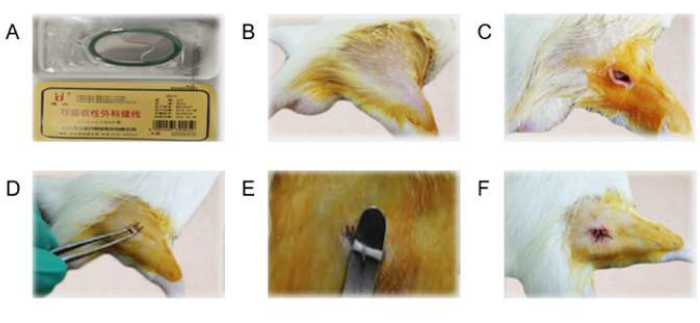
Figure 1: Establishment of a rat model of minor CCI. (A) A chromic intestinal suture (4-0).(B) Skin preparation. (C) Incision. (D) Exposing the sciatic nerve. (E) Absorbable chromic intestinal suture (4-0 type) around the nerve. (F) Suturing the muscle layer and the skin. Please click here to view a larger version of this figure.
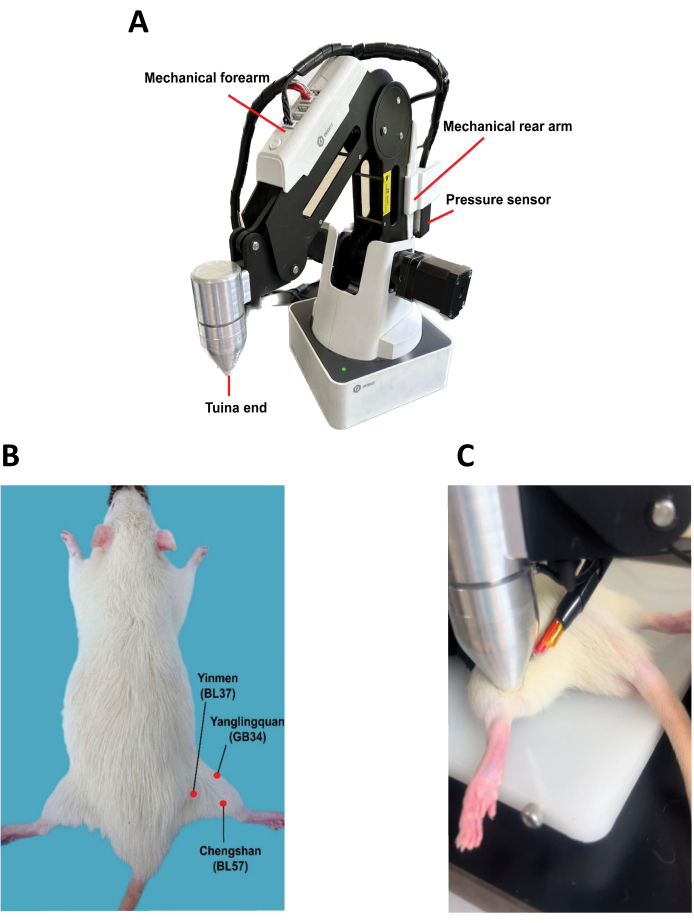
Figure 2: Intelligent tuina manipulation simulator treatment. (A) The Intelligent Tuina Manipulation Simulator (patent No. ZL ZL 2023 20511277.5). (B) The positions of Yinmen (BL37), Chengshan (BL57) and Yanglingquan (GB34). (C) Stimulating Yinmen (BL37). Please click here to view a larger version of this figure.
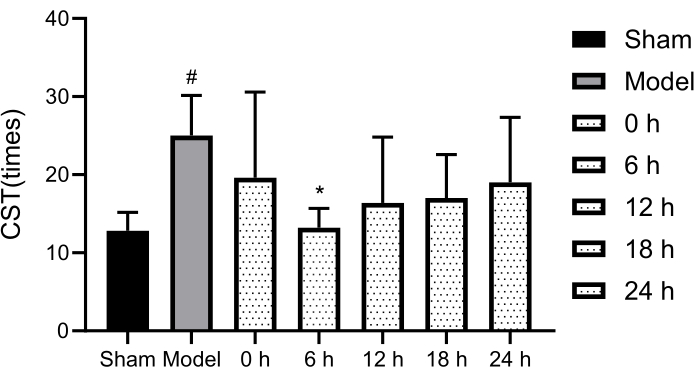
Figure 3: Results of cold sensitivity threshold (CST) of rats in each group. *P < 0.05, compared with the model group, #P <0.05, compared with the sham group. Please click here to view a larger version of this figure.
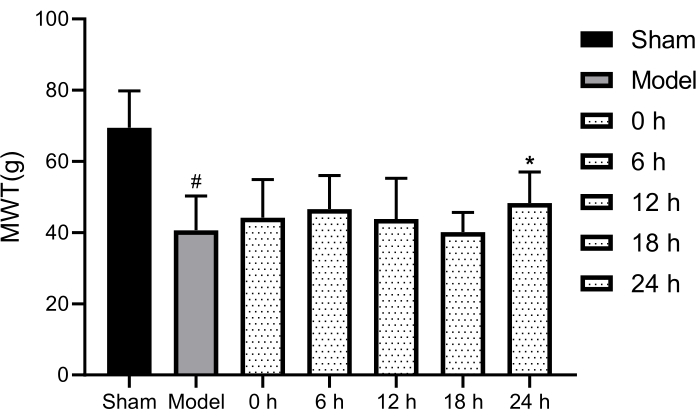
Figure 4: Results of mechanical withdrawal threshold (MWT) of rats in each group. *P <0.05, compared with the model group, #P < 0.05, compared with the sham group. Please click here to view a larger version of this figure.
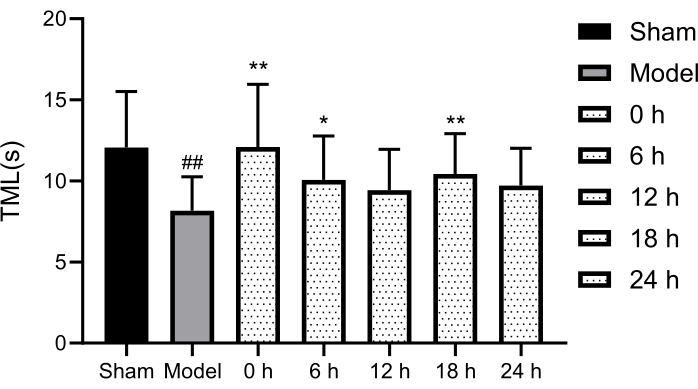
Figure 5: Results of thermal withdrawal latency (TWL) of rats in each group. *P < 0.05, **P < 0.01, compared with the model group; #P <0.05, ##P < 0.01, compared with the sham group. Please click here to view a larger version of this figure.
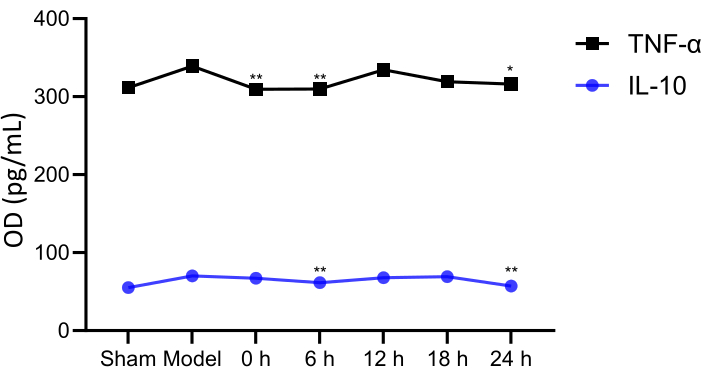
Figure 6: Changes in serum IL-10 and TNF-α levels of rats in each group (Mean ± SD, n = 7), “*P<0.05, **P<0.01, compared with the model group. Please click here to view a larger version of this figure.
| Three-Method | Methods | Classifications | Functions |
| Point-pressing | Warming and unblocking | Warming meridians and unblocking collaterals | |
| Plucking | Relaxation | Acting on the nerve trunk and treating numbness or pain in the limbs | |
| Kneading | Relaxation | Alleviating muscle spasms |
Table 1: Three methods of stimulation.
| Three-Acupoint | Acupoints | Meridians | Nerves | Muscles |
| Yinmen (BL37) | Bladder Meridian of Foot-Taiyang | Sciatic nerve trunk | Biceps femoris muscle | |
| Chengshan(BL57) | Tibial nerve | Gastrocnemius muscle | ||
| Yanglingquan(GB34) | Gallbladder Meridian of foot-Shaoyang | Common peroneal nerve | Anterior tibial muscles |
Table 2: Three acupoints used in this study.
| Sham | Model | Tuina | |||||
| 0 h | 6 h | 12 h | 18 h | 24 h | |||
| CST | 12.8 ± 2.38 | 25 ± 5.15# | 19.6 ± 10.99 | 13.2 ± 2.49* | 16.4 ± 8.41 | 17 ± 5.57 | 19 ± 8.34 |
| MWT | 69.47 ± 10.35 | 40.63 ± 9.65## | 44.19 ± 10.72 | 46.58 ± 9.47 | 42.83 ± 11.41 | 40.1 ± 5.59 | 48.33 ± 8.7* |
| TWL | 12.06 ± 3.45 | 8.16 ± 2.09## | 12.09 ± 3.86** | 10.07 ± 2.7* | 9.44 ± 2.52 | 10.42 ± 2.49** | 9.72 ± 2.29 |
Table 3: CST, MWT, and TWL results of rats in each group (Mean ± SD, n = 7). *P<0.05, **P<0.01, compared with the model group; #P<0.05, ##P<0.01, compared with the sham group.
| Sham | Model | Tuina | |||||
| 0 h | 6 h | 12 h | 18 h | 24 h | |||
| IL-10 | 55.10 ± 1.37** | 70.27 ± 6.22 | 67.28 ± 1.28 | 61.41 ± 3.36** | 67.98 ± 1.85 | 69.03 ± 6.29 | 57.16 ± 1.30** |
| TNF-α | 311.52 ± 13.45** | 339.33 ± 24.50 | 309.47 ± 8.37** | 309.99 ± 14.95** | 334.62 ± 21.85 | 319.22 ± 10.38 | 316.24 ± 8.72* |
Table 4: Changes in serum IL-10 and TNF-α levels of rats in each group(Mean ± SD, n = 7, pg/mL). *P < 0.05, **P < 0.01, compared with group model (*P < 0.05, **P < 0.01.)
Discussion
Loading...
$$\rightleftharpoonup{xx}$$
$$\longleftharp{xx}$$,
$$\longrightharp{xx}$$,
The study used the minor CCI model to simulate pNP caused by clinical sciatic nerve injury. The minor CCI model involves the continuous, chronic compression and restraint of the nerve trunk through ligation, accompanied by the gradual swelling of the ligature, resulting in edema within the sciatic nerve and forming stable chronic pain in 3-5 days27,28. In the preliminary study, the research group found that the minor CCI model group was more stable than the classical model group on the 7th day after modeling, making it more suitable for short-term experimental design. Therefore, we chose this time point for the tuina intervention.
The previous research has verified that the intelligent tuina manipulation simulator (animal) can effectively alleviate pain in rats with sciatic nerve injury after 20 sessions of tuina treatment using the "Three-Method and Three-Acupoint"29,30,31. Moreover, the research group found that tuina once can effectively alleviate the pain hypersensitivity symptoms of minor CCI rats, especially the thermal hyperalgesia13. The study adopts the point-pressing, plucking, and kneading methods as the three methods for treatment. The point-pressing method is a warming and unblocking technique that has the function of warming meridians and unblocking collaterals. The plucking method is a relaxation technique that acts on the nerve trunk and can treat numbness or pain in the limbs. The kneading method is a relaxation technique that can alleviate muscle spasms, eliminate fatigue, and relieve pain in the injured area (Table 1). The study selects Yinmen (BL37), Chengshan(BL57), and Yanglingquan(GB34) as the three acupoints for treatment (Table 2). According to the principle of acupoint selection along meridians and locally in acupuncture and moxibustion, three acupoints belong to the Bladder Meridian of Foot-Taiyang and the Gallbladder Meridian of foot-Shaoyang. According to anatomical nerve localization, Yinmen(BL37) is located on the sciatic nerve and its branches, Chengshan (BL57) is located on the tibial nerve, and Yanglingquan (GB34) is located on the common peroneal nerve. According to the anatomical muscle location, the three acupoints are located around the biceps femoris muscle, gastrocnemius muscle, and anterior tibial muscles (Table 2). Therefore, through the intervention of the three methods and three acupoints, the relevant areas of acupoint-nerve-muscle can be stimulated. In this study, after forming stable chronic pain and one intervention with tuina, behavioral changes in pain were detected, further verifying that tuina has an immediate analgesic effect and has different therapeutic significance time points for different injury receptors, providing therapeutic support for the next step in the study of tuina analgesia initiation mechanism.
The study used CST, MWT, and TWL as indicators to explore the efficacy of tuina for different injury sensations. The clinical manifestations of induced pain in pNP mainly include hyperalgesia and allodynia, namely, cold and hot stimulation-induced pain and mechanical tactile-induced pain4. Currently, the classic quantitative behavioral research indicators for these two pain sensations are CST, MWT, and TWL. In CST testing, the cold plate test, the ZH-6C intelligent cold and hot plate pain tester used in this experiment, is relatively objective, less affected by surrounding environmental factors, has constant temperature, and has high precision32,33. In basic research, Von Frey filaments are commonly used to estimate MWT, which is one of the classic indicators for evaluating neuropathic pain. It is mainly aimed at acupuncture pain induced by mechanical stimulation to evaluate mechanical tactile-induced pain in rodents34,35. The Hargreaves test uses a thermal pain stimulator to detect and evaluate the response of rodents to thermal pain sensitivity and is used to evaluate the recovery of pain sensitivity or thermal pain response after nerve injury to observe whether the animal's hind paws have a constriction reaction due to heat. The instrument detects the movement of the animal's hind paws36, and the controller will automatically turn off the infrared stop timer34, which is known as TWL. Experiments show that the sensitivity of minor CCI model rats to TWL is optimal38. Therefore, the quantitative research method for the behavior of minor CCI model rats this time is to use a cold plate experiment, electronic mechanical pricking apparatus, and thermal pricking apparatus to detect.
The significant time points of curative effects on different nociceptive sensations after early tuina intervention are different. Currently, preliminary exploration has been conducted on the clinical efficacy and mechanism of tuina analgesia. Our previous research mainly focused on the analgesic mechanism after a certain number of tuina. In the past 2 years, research has been conducted on the analgesic mechanism at the initial stage of tuina to explore how tuina analgesia is initiated. In this study, "three methods and three acupoints" were used to intervene in minor CCI model rats once. Then 5 time points were selected for CST, MWT, and TWL detection to observe the changes in temperature and mechanical tactile sensation of minor CCI model rats. This study used ELISA to detect changes in serum IL-10 and TNF-α levels of rats after behavioral testing. The results showed that after one intervention with tuina, compared with the model group, both improved immediately. This again confirmed the previous research results that tuina had an immediate analgesic effect. However, for different types of pain sensations, the time points at which the analgesic effect is significant are not the same. In terms of CST, there was statistical significance 6 h after tuina; In terms of MWT, there was statistical significance 24 h after tuina; In terms of TWL, there was significant statistical significance 6 h after tuina, and significant statistical significance immediately and 18 h after tuina; In terms of serum IL-10 level, there was a significant decrease 6 h after tuina, and 24 h after tuina, with a statistically significant difference. In terms of serum TNF-α level, there was a significant decrease immediately after tuina, 6 h after tuina, and 24 h after tuina, with a statistically significant difference. It indicates that while the analgesic effect of tuina can be sustained, there is a significant delay in the time point of efficacy for cold stimulation-induced pain and mechanical tactile-induced pain, and it is immediately effective and has a more significant and lasting efficacy for thermal stimulation-induced pain. Our lab is further exploring the changes in proteins and genes related to the transient receptor potential (TRP) proteins and genes related to cold, hot, and mechanical sensitivity, as well as other inflammatory factors such as TGF-β and IL-6, to explore the analgesic initiation mechanism of tuina further.
In summary, based on the results of this study, it can be inferred that the time points at which the proteins or pathways affected by tuina may function may be different, resulting in different time points for significant analgesic effects. Further in-depth research is needed to explore the initiation mechanism of tuina analgesia and provide a basis for clinical efficacy research of tuina.
Disclosures
Loading...
$$\rightleftharpoonup{xx}$$
$$\longleftharp{xx}$$,
$$\longrightharp{xx}$$,
No conflicts of interest, financial or otherwise, are declared by the authors.
Acknowledgements
Loading...
$$\rightleftharpoonup{xx}$$
$$\longleftharp{xx}$$,
$$\longrightharp{xx}$$,
The authors have received funding for research, writing, and publication of this paper from the National Natural Science Foundation of China (Nos. 82074573 and 82274675) and the Beijing Natural Science Foundation (No. 7232278).
Materials
| Name | Company | Catalog Number | Comments |
|---|---|---|---|
| Anesthesia machine | Ruiwode Life Technology Co., Ltd., Shenzhen, China | R500 | Animal respiratory anesthesia related equipment |
| Chromic intestinal suture | Shandong Boda Medical Products Co., Ltd., China | BD210903 | An absorbable surgical suture mainly made from collagen protein processed from the intestines of healthy young goats |
| Electronic Von Frey instrument | Bioseb, USA | BIO-EVF5 | An instrument for detecting mechanical withdrawal threshold |
| Intelligent cold and hot plate pain detector | Anhui Zhenghua Biological Instrument Equipment Co., Ltd,China. | ZH-6C | An instrument for detecting cold sensitivity threshold |
| Isoflurane | Ruiwode Life Technology Co., Ltd., Shenzhen, China | R510-22-10 | An anesthetic |
| Multi-function full-wavelength microplate reader | Molecular Devices (Shanghai) Co., Ltd. | SpectraMax M2 | An instrument for detecting optical density (OD) |
| Thermal analgesia device | Chengdu Techman Software Co., Ltd., China | PL-200 | An instrument for detecting thermal withdrawal latency |
References
Loading...
$$\rightleftharpoonup{xx}$$
$$\longleftharp{xx}$$,
$$\longrightharp{xx}$$,
- IASP taxonomy. ISAP. , Available from: https://www.iasp-pain.org/resources/terminology/#.2022 (2022).
- Baron, R., Binder, A., Wasner, G. Neuropathic pain: diagnosis, pathophysiological mechanisms, and treatment. Lancet Neurol. 9 (8), 807-819 (2010).
- Colloca, L., et al. Neuropathic pain. Nat Rev Dis Primers. 3, 17002(2017).
- Liu, Z., et al. A review on the mechanism of tuina promoting the recovery of peripheral nerve injury. Evid Based Complement Alternat Med. 2021, 6652099(2021).
- Scholz, J., et al. The IASP classification of chronic pain for ICD-11: chronic neuropathic pain. Pain. 160 (1), 53-59 (2019).
- Finnerup, N. B., et al. Pharmacotherapy for neuropathic pain in adults: a systematic review and meta-analysis. Lancet Neurol. 14 (2), 162-173 (2015).
- Field, T. Massage therapy research review. Complement. Ther Clin Pract. 24, 19-31 (2016).
- Gok Metin, Z., et al. Aromatherapy massage for neuropathic pain and quality of life in diabetic patients. J Nurs Scholarsh. 49, 379-388 (2017).
- Izgu, N., et al. Effect of aromatherapy massage on chemotherapy-induced peripheral neuropathic pain and fatigue in patients receiving oxaliplatin: An open label quasi-randomized controlled pilot study. Cancer Nurs. 42, 139-147 (2019).
- Li, Y., et al. Mild mechanic stimulate on acupoints regulation of CGRP-positive cells and microglia morphology in spinal cord of sciatic nerve injured rats. Front Integr Neurosci. 13, 58(2019).
- Liu, Z. F., et al. Tuina for peripherally-induced neuropathic pain: A review of analgesic mechanism. Front Neurosci. 16, 1096734(2022).
- Lv, T., et al. Using RNA-seq to explore the repair mechanism of the three methods and three-acupoint technique on DRGs in sciatic nerve injured rats. Pain Res Manag. 2020, 7531409(2020).
- Xing, F., et al. MZF1 in the dorsal root ganglia contributes to the development and maintenance of neuropathic pain via regulation of TRPV1. Neural Plast. 2019, 2782417(2019).
- Cohen, S. P., Mao, J. Neuropathic pain: mechanisms and their clinical implications. BMJ. 348, 7656(2014).
- Tao, Y., et al. Effect of Bo'fa method on the expression of IL-1β in peripheral serum and 5-HT2A in spinal cord of CCI model rats. Global Traditional Chinese Medicine. 10, 905-909 (2017).
- Yang, J., et al. Study on curative effect of Duhuo Jisheng decoction combined with Tuina in patients with lumbar disc herniation and changes of TXB2, TNF-α and IL-1β. Chin Arch Tradit Chin Med. 38, 44-46 (2020).
- Yao, C., et al. Effects of acupressure at 'Shenshu' (BL 23)on lumbar intervertebral disc degeneration and related pain in aging rats. Chin J Tradit Chin Med Pharm. 37, 4360-4365 (2022).
- Wang, H., et al. Exploring the mechanism of immediate analgesic effect of 1-time tuina intervention in minor chronic constriction injury rats using RNA-seq. Front Neurosci. 16, 1007432(2022).
- Yao, C., et al. Exploring the mechanism of tuina-induced central analgesia in rats with lumbar disc herniation based on the p38MAPK signaling pathway. Chin J Tradit Chin Med Pharm. 38 (07), 3348-3352 (2023).
- Li, P. Study on the effects of modified Chuanqianghuo Decoction combined with tuina and physiotherapy on shoulder joint function and inflammation in patients with shoulder joint pain. New Chinese Medicine. 54 (13), 93-97 (2022).
- Ding, C., et al. Clinical efficacy of acupuncture and moxibustion, tuina and external application of traditional Chinese medicine on lumbar disc herniation and serum TXB2, IL-1β, Comparison of IL-10 levels. Advances in Modern Biomedicine. 21 (14), 2730-2734 (2021).
- Bennett, G. J., Xie, Y. K. A peripheral mononeuropathy in rat that produces disorders of pain sensation like those seen in man. Pain. 33, 87-107 (1988).
- Grace, P. M., et al. A novel animal model of graded neuropathic pain: Utility to investigate mechanisms of population heterogeneity. J Neurosci Methods. 193, 47-53 (2010).
- Wang, H., et al. Comparison of the characteristics of minor and classic CCI models. J Chin J Comp Med. 32 (10), 1-7 (2022).
- Zhang, Y., et al. An intelligent massage and tuina technique simulator. , Beijing. CN219398169U,19393681 (2023).
- Jia, D. Effects of three methods and three points stimulation on sensory function in rats with sciatic nerve injury. , Available from: https://kns.cnki.net (2017).
- Grace, P. M., et al. Adoptive transfer of peripheral immune cells potentiates allodynia in a graded chronic constriction injury model of neuropathic pain. Brain Behav Immun. 25 (3), 503-513 (2011).
- MacDonald, D. I., et al. Silent cold-sensing neurons contribute to cold allodynia in neuropathic. Brain. 144 (6), 1711-1726 (2021).
- Pan, F., et al. Chinese tuina downregulates the elevated levels of tissue plasminogen activator in sciatic nerve injured Sprague-Dawley rats. Chinese J Integr Med. 23 (8), 617-624 (2017).
- Lv, T., et al. An investigation into the rehabilitative mechanism of tuina in the treatment of sciatic nerve injury. Evid Based Complement Alternat Med. 2020, 5859298(2020).
- Lv, T., et al. Applying RNA sequencing technology to explore repair mechanism of Tuina on gastrocnemius muscle in sciatic nerve injury rats. Chin Med J. 135 (19), 2378-2379 (2022).
- Ruan, Y., et al. An effective and concise device for detecting cold allodynia in mice. Sci Rep. 8 (1), 14002(2018).
- Kim, S. O., Kim, H. J. Berberine ameliorates cold and mechanical allodynia in a rat model of diabetic neuropathy. J Med Food. 16 (6), 511-517 (2013).
- Deuis, J. R., Dvorakova, L. S., Vetter, I. Methods used to evaluate pain behaviors in rodents. Front Mol Neurosci. 10, 284(2017).
- Ruscheweyh, R., et al. Long-term potentiation in spinal nociceptive pathways as a novel target for pain therapy. Mol Pain. 7, 20(2011).
- Hargreaves, K., et al. A new and sensitive method for measuring thermal nociception in cutaneous hyperalgesia. Pain. 32 (1), 77-88 (1988).
- Cheah, M., et al. Assesment of thermal pain sensation in rats and mice using the hargreaves test. Bio Protoc. 7 (16), 2506(2017).
- Challa, S. R. Surgical animal models of neuropathic pain: pros and cons. Int J Neurosci. 125 (3), 170-174 (2015).
Reprints and Permissions
Request permission to reuse the text or figures of this JoVE article
Request Permission