Here, we present a protocol to investigate the neurophysiological correlates of various meditation forms, including religious chanting. This method uniquely integrates fMRI eigenvector results for region selection in electroencephalogram (EEG) source analysis using k-means clustering. The results provide an in-depth understanding of the neural processes involved in repetitive religious chanting.
Method Article
Religious Chanting and Self-Related Brain Regions: A Multi-Modal Neuroimaging Study
In This Article
Summary
Abstract
This protocol presents a multi-modal neuroimaging approach to explore the potential brain activity associated with repetitive religious chanting, a widespread form of mind training in both Eastern and Western cultures. High-density electroencephalogram (EEG), with its superior temporal resolution, allows for capturing the dynamic changes in brain activity during religious chanting. Through source localization methods, these can be attributed to various alternative potential brain region sources. Twenty practitioners of religious chanting were measured with EEG. However, the spatial resolution of EEG is less precise, in comparison to functional magnetic resonance imaging (fMRI). Thus, one highly experienced practitioner underwent an fMRI scanning session to guide the source localization more precisely. The fMRI data helped guide the selection of EEG source localization, making the calculation of K-means of the EEG source localization in the group of 20 intermediate practitioners more precise and reliable. This method enhanced EEG's ability to identify the brain regions specifically engaged during religious chanting, particularly the cardinal role of the posterior cingulate cortex (PCC). The PCC is a brain area related to focus and self-referential processing. These multimodal neuroimaging and neurophysiological results reveal that repetitive religious chanting can induce lower centrality and higher delta-wave power compared to non-religious chanting and resting state conditions. The combination of fMRI and EEG source analysis provides a more detailed understanding of the brain's response to repetitive religious chanting. The protocol contributes significantly to the research on the neural mechanisms involved in religious and meditative practices, which is becoming more prominent nowadays. The results of this study could have significant implications for developing future neurofeedback techniques and psychological interventions.
Introduction
Religious chanting, a very popular practice in Eastern cultures, is often compared to prayer in Western societies1. Despite its prevalence, scientific research on the neural correlates of religious chanting remains rather limited. Sophisticated multimodal electrophysiological and neuroimaging techniques were utilized in this study to fill this knowledge gap and to explore the neural associations of chanting Amitābha Buddha, one of the most widespread and one of the oldest actively preserved religious traditions2,3. Repetitive religious chanting can serve as an effective technique in Buddhist counseling to help soothe one's mind from turbulent thoughts and emotions.
Given the high spatial resolution of functional magnetic resonance imaging (fMRI), it can be applied to overcome the limitations of traditional EEG studies4. Combining fMRI and electroencephalogram (EEG) source clustering via independent component analysis (ICA), the study identifies and groups independent components of brain activity across participants. This method introduces a novel strategy for identifying signals from mixed EEG sources or disparate sources across participants, which has been challenging due to differences in brain anatomy and electrode placement.
The form of repetitive religious chanting that was studied with this protocol involves repetitive recitation of the name of Amitābha Buddha. It is also a meditative practice that has been reported to elicit blissful sensations and transcendental experiences. Amongst different Buddhist practices, the practice of chanting Amitābha Buddha is simple and easily accessible. This practice promises rebirth in the Pure Land for all those who sincerely call upon this name, which has similarities to certain traditions in Western religion1,3.
Through multimodal neuroimaging, this study aims to provide a comprehensive understanding of the neural correlates of repetitive religious chanting. The protocol can contribute to the booming field of research on the neurophysiological effects of different religious and meditative practices.
The study hypothesized that repetitive religious chanting would lead to significant signal changes in brain regions responsible for self-related processes. Furthermore, given the positive emotions attributed to Amitābha Buddha, we hypothesized that emotional shifts would transpire during religious chanting. These effective changes are likely to coincide with modifications in peripheral physiological indicators, such as variations in multi-band heart rate variability (HRV) indices and respiration rate5.
Protocol
Ethical approval was obtained for the study from the University of Hong Kong before the experiment. All participants had signed a written consent form before attending the EEG and fMRI experiments.
1. Participant selection and preparation
- Recruit participants who have at least 1 year of meditative experience in religiously chanting Amitābha Buddha for a minimum of 15 min per day. Ensure that the age range is between 40 to 52 years old. Estimate the number of participants by power analysis. In the current study, 21 participants were recruited.
NOTE: Power analysis was conducted based on the effect sizes observed in pilot studies and existing literature on EEG and fMRI studies of meditation. Generally, within-subject design has a better power to differentiate different conditions, given that variation between subjects is usually larger. - Inform the participants about the purpose of the study and the procedures involved.
- Ensure that the participants are not depressed using the Beck Depression Inventory.
- Ensure that the participants are in good health and are not under the influence of any substances that may affect their physiological responses.
NOTE: Exclusion criteria include depression, neuropsychiatric pathology, or being under the influence of alcohol or psychoactive substances. Further, MRI-specific exclusion criteria include having a pacemaker, deep brain implants, or metal implants that are not compatible with an MRI check. - Ensure that the participants are suitable to attend the EEG/electrocardiogram (ECG)/MRI study.
NOTE: The EEG and MRI data were recorded separately. The duration of data collection differed between EEG and fMRI to optimize the data quality for each modality, considering the fatigue and comfort of participants. Our pilot study found that fMRI is more sensitive to demonstrating neural correlates, while EEG data usually had bad segments or other artifacts and needed a slightly longer duration to ensure enough data for final analysis. So, the EEG time was slightly longer than the MRI time. Different postures during EEG and fMRI data collection were necessary due to the constraints of each imaging modality. The conditions were randomized using a computer-generated randomization schedule to control for order effects. The sequence was not the same between EEG and fMRI.
2. EEG data acquisition and analysis
- Set up the 128-channel EEG and multiple physiological data recording equipment according to the manufacturer's instructions.
- Ensure participants thoroughly wash their hair before starting the EEG/ECG data acquisition.
- Ask the participants to relax and sit comfortably.
- Introduce the experiment to the participants.
- Ask the participant to do a trial version of the experiment.
- Acquire EEG data while each participant is under three different conditions: chanting Amitābha Buddha, chanting Santa Claus, and resting state, all with eyes closed. Record 10 min of EEG data in each condition.
- Save and label the data appropriately for each participant.
- Ensure that the data is stored securely with backups.
3. MRI data acquisition
- Prepare a 3.0 T MRI scanner and ensure it functions properly before starting the data acquisition. Ensure that the participant is comfortable and understands the procedure before starting the scan.
- Begin with a T1-weighted scanning sequence with the following parameters: Field of View (FoV) = 256 mm × 150 mm × 240 mm, acquisition matrix = 256 × 256, Repetition Time (TR) = 15 ms, Echo Time (TE) = 3.26 ms, flip angle = 25°, slice thickness = 1.5 mm, number of slices = 100, voxel resolution (x,y,z,) = 0.94 mm × 1 mm × 1.5 mm.
- Obtain fMRI images with gradient echo-planar imaging (EPI) using an 8-channel SENSE head coil. Set the sequence parameters as follows: FoV = 230 mm × 140 mm × 230 mm, acquisition matrix = 64 × 64, TR = 2000 ms, TE = 30 ms, flip angle = 90°, number of slices = 32, slice thickness = 3 mm, and slice gap = 1.5 mm.
- Start the fMRI data acquisition while each participant is under three conditions: religious chanting, non-religious chanting, and resting state. Record the data for the duration of each condition: each condition comprised 243 dynamic volumes, with a total duration of 8.1 min.
4. Physiological data acquisition
- Set up the physiological data acquisition system for collecting cardiac, respiratory, and other physiological data according to the manufacturer's instructions.
NOTE: EEG and physiological data were acquired at the same time. - Attach three ECG electrodes on the left and right hands and left foot, respectively.
- Set up two breath belts on the participant, one for measuring breast breath and another for measuring abdominal breath.
- Monitor the Galvanic Skin Response (GSR) and oxygen saturation levels of the participants.
- Begin the data acquisition together with EEG data collection while each participant is under three conditions: chanting Amitābha Buddha, chanting Santa Claus, and resting state, all with eyes closed.
- Save and label the data appropriately for each participant. Ensure the data is stored securely and is good enough for further analysis.
5. EEG data analysis
- Process and analyze the EEG data with appropriate software. Here, an open-source software EEGLAB was used.
- Load the data into the program. Click on File > Load Existing Dataset.
- Resample the data from 1000 Hz to 250 Hz by clicking Tools > Change Sampling Rate.
- Filter the data with a finite impulse response (FIR) filter with a passband of 0.1-100 Hz by clicking Tools > Filter the Data > Basic FIR Filter.
- Filter the data again with a notch filter with a stopband of 47-53 Hz to remove alternating current noise. Click on Tools > Filter the Data and select the option Notch filter the data instead of pass band.
- Inspect the data visually to eliminate artifacts such as eye and muscle movements by clicking Plot > Channel Data (scroll).
NOTE: Designated electro-oculography (EOG) channels can be used as a reference. - Inspect the data visually to note bad channels for removal.
- Apply spherical interpolation based on the surrounding channels to reconstruct the bad channels by clicking Tools > Interpolate Electrodes and select from the data channels.
- Execute the independent component analysis (ICA) using the runica algorithm. For this, click on Tools > Run ICA.
- Remove independent components (ICs) that correspond to eye movement, muscle noise, and line noise from the data by clicking Tools > Reject Data using ICA > Reject Components by Map.
- Reconstruct the data using the remaining Ics by clicking on Tools > Remove Components.
- Click on Tools > Filter the Data > Basic FIR Filter to filter the data with a 47 Hz low pass filter.
- Estimate the similarity of ICs and group them into functionally equivalent clusters using the STUDY functions of EEGLAB. Click on File > Create Study > Using all Loaded Datasets.
- Generate the dipole locations of each IC using the DIPFIT2 function. Click on Tools > Locate Dipole using DIPFIT 2.x > Autofit.
- Use k-means clustering to create IC clusters based on similar dipole locations (weight: 2/3) and power spectrum (weight: 1/3). Click on Study > PCA Clustering > Build Preclustering Array.
- Repeat the clustering procedure ten times, each time with a different k parameter setting. Identify the k parameter setting that generates distinctive yet reasonable clusters. Click on Study > Edit/Plot Clusters.
- Perform spectrum analysis and conduct a one-way ANOVA on all major frequency bands using the ICs from a specific cluster of interest.
NOTE: Pay particular attention to the posterior cingulate cortex (PCC), as this area has been found to decrease in centrality due to a regional increase in the endogenous generation of delta oscillations during religious chanting.
6. fMRI data analysis
- Preprocess the fMRI data using the Leipzig Image Processing and Statistical Inference Algorithms software (LIPSIA 2.2.7).
- Perform preprocessing that includes signal intensity normalization, movement correction, spatial normalization to MNI space,spatial smoothing with Full Width at Half Maximum (FWHM) = 6 mm, and temporal highpass filtering with a cutoff frequency of 1/90 Hz to remove low frequency drifts in the fMRI time series. Refer to these steps in data processing pipeline 1 (Supplementary File 1).
- Remove covariates of no interest, such as global signal fluctuations and movement parameters, by regressing them out of the data for each scanning sequence that corresponds to each of the three conditions.
- Finally, investigate whole-brain functional connectomics by applying Eigenvector Centrality Mapping (ECM), a graph theory method that identifies the most influential nodes within a network, and the ECM images from two conditions are subtracted from one another to produce the resulting contrast image. Refer to these steps in data processing pipeline 2 (Supplementary File 2).
7. ECG and other physiological data analysis
- Clean raw ECG and other physiological data via a Butterworth band pass filter and extract the inter-beat-interval (IBI) after replacing outliers with spline interpolation.
- Detrend the IBI data and compute the time/frequency domain features of the HRV (heart rate variability) using the open-source toolbox HRVAS.
- Set frequency ranges for the VLF to 0-0.04 Hz, LF to 0.04-0.15 Hz, and HF to 0.15-0.4 Hz.
- Estimate the power of selected frequency bands using the Lomb-Scargle periodogram method.
- Subject the derived HRV metrics to statistical tests using one-way repeated measures ANOVA and post hoc tests to assess differences between conditions. Set the alpha level of significance at 0.05.
- Compute other physiological data, such as breath intervals for each participant and each condition, using analysis software.
- Use the findpeaks function in the analysis software to detect the peak of the respiratory curve.
- Differentiate the inspiratory and expiratory periods, and then compute the breath rate.
- Compare the difference between conditions using one-way repeated measures ANOVA and post hoc tests.
Results
The fMRI analysis results indicated that the strongest difference in eigenvector centrality between religious and non-religious chanting was predominantly situated in the posterior cingulate cortex (PCC); see Figure 1. This finding was leveraged to evaluate and validate the selection of the EEG-independent component clustering, which similarly manifested a cluster in the vicinity of the PCC region.
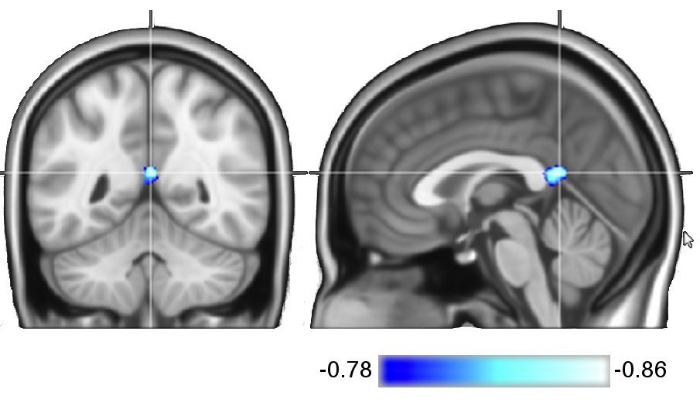
Figure 1: Multimodal neuroimaging and electrophysiological results. Eigenvector centrality mapping applied on fMRI data, revealed that the posterior cingulate cortex is the area of the brain that decreased most in centrality during religious chanting compared to non-religious chanting. This figure has been obtained with permission from Gao et al.1. Please click here to view a larger version of this figure.
The EEG-independent component clustering analysis yielded seven distinct IC clusters, each corresponding to a source of EEG activity. Notably, one of these clusters was situated in the PCC, a finding that aligns with the fMRI results (see Figure 2).
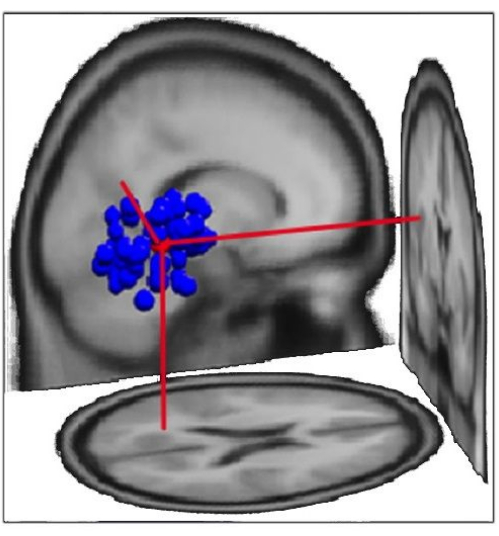
Figure 2: The EEG-independent component clustering analysis also featured a cluster in the PCC. This figure has been obtained with permission from Gao et al.1. Please click here to view a larger version of this figure.
This particular cluster was subsequently chosen for in-depth analysis, including spectrum analysis. A one-way ANOVA revealed a significant main effect of chanting on the power of the delta frequency band (1-4 Hz, see Figure 3 and Figure 4).
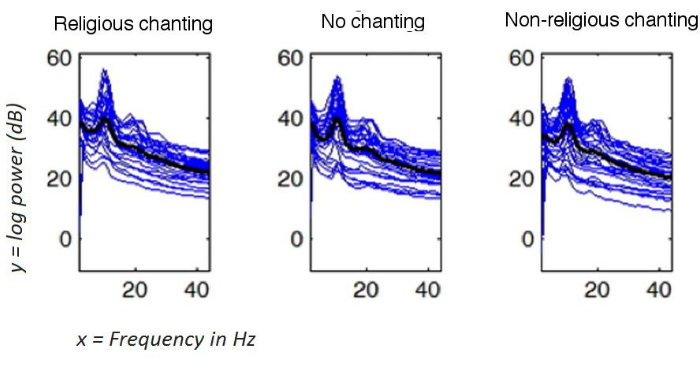
Figure 3: The one-way ANOVA revealed a significant main effect of chanting on the power of the delta-band (1-4 Hz). This figure has been obtained with permission from Gao et al.1. Please click here to view a larger version of this figure.

Figure 4: Post hoc analysis of religious chanting vs. non-religious chanting conditions. The analysis showed that religious chanting induced higher delta power than the non-religious chanting condition (p = .011). Please click here to view a larger version of this figure.
Further post hoc analysis indicated a significantly lower power of HRV during religious chanting in comparison to the no chanting condition (see Figure 5).
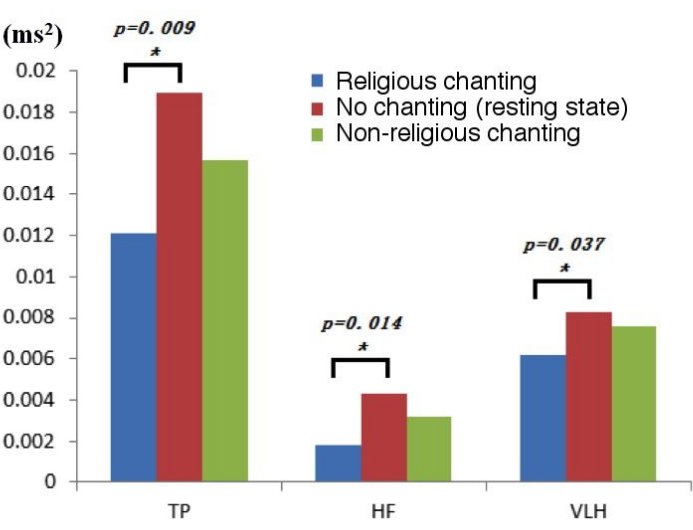
Figure 5: Post hoc analysis of no chanting resting state vs. religious chanting conditions. The analysis showed that compared to no chanting resting state, religious chanting induced lower HRV total power, lower absolute high-frequency power, and lower absolute very-low-frequency power. This figure has been obtained with permission from Gao et al.1. Please click here to view a larger version of this figure.
The findings indicate that in comparison to non-religious chanting, there is a decrease of eigenvector centrality in the PCC, probably driven by a regional surge in endogenous delta oscillations. These functional changes are independent of peripheral cardiac or respiratory activities and are not triggered by implicit language processing. Instead, they appear to be associated with experiences of transcendental bliss and a reduction in self-centered cognition.
Supplementary File 1: Data processing pipeline 1. Please click here to download this File.
Supplementary File 2: Data processing pipeline 2. Please click here to download this File.
Discussion
Although the 128-channel EEG system used was a high-density EEG system, the spatial resolution of EEG remains relatively poor compared to fMRI, and this shortcoming also affects EEG source localization accuracy, especially when multiple brain region candidates are plausible. Thus the deeper and higher spatial resolution of MRI can significantly enhance the spatial accuracy of EEG source analysis6 and guide the selection of the most important clusters for further analysis. The present protocol utilizes multimodal neuroimaging tools, including EEG, ECG, and fMRI data acquisition and analysis methods. It demonstrates a comprehensive approach to exploring the neurophysiological correlates of religious chanting and potentially other forms of mind training. A critical step in the protocol is the application of fMRI results in the EEG source analysis. The quality of the acquired EEG data remains crucial for subsequent analysis and interpretation of the results. The use of ICA and k-means clustering in the EEG data analysis, in conjunction with fMRI results, allows for a more nuanced understanding of the data7,8. The observed modulation of delta-band power during religious chanting aligns with literature suggesting delta rhythms may regulate behavior through the synchronization of neural activity. Delta wave can foster focused attention and a potential reduction in self-referential thought associated with the default mode network. This heightened delta activity, indicative of deeply restorative states, could underpin the therapeutic effects of chanting by reinforcing cognitive and emotional processing9.
The results from this study highlight a significant increase in delta-band power during religious chanting, as compared to non-religious chanting. The fMRI results indicate a strong decrease in centrality in brain regions associated with self-related processing10 during religious chanting. The results from physiological data also demonstrate the effects of religious chanting are distinct from those of non-religious chanting and rule out other potential confounding factors, including differences due to language processing, or cardiac activity. Overall, the findings imply a promising avenue towards the clinical application of religious chanting via Buddhist counseling in order to facilitate the fostering of "non-attachment"1,11,12.
Limitations include that the fMRI and EEG data were acquired from different subjects13. Secondly, given the considerable variation among subjects regarding their religious chanting experience1,14, it would be preferable if all subjects had also undergone fMRI scanning. Our future research will aim to address these limitations and to further explore the neurophysiological effects of different religious and meditative practices.
Despite these limitations, this protocol is unique in combining multimodal neuroimaging and physiological measuring tools, including EEG, ECG, and fMRI data, to provide a more comprehensive view of the neurophysiological correlates of religious chanting. This multimodal neuroimaging approach allows for a deeper understanding of religious and meditative practices, which would not be possible using methods that rely solely on one single type of data15,16.
Disclosures
The authors declare that they have no competing financial interests.
Acknowledgements
The research was supported by the National Natural Science
Foundation of China (NSFC.61841704).
Materials
| Name | Company | Catalog Number | Comments |
|---|---|---|---|
| 3.0 T Philips MRI scanner | Philips | 3.0T | MRI data acquisition device |
| EEGLAB | Swartz Center for Computational Neuroscience | 13.6.5b | EEG analysis software |
| Electroencephalogram (EEG) system | Electrical Geodesics, Inc. (EGI) | GES 200 | EEG acquisition device |
| HRVAS | Ramshur, J. | Version 1 | Plug-in for EEGLAB to process ECG data |
| HydroCel GSN 128 channels | Electrical Geodesics, Inc. (EGI) | GSN 130 | EEG cap |
| iMac 27" | Apple | Version 10.8 | Running the Netstation software |
| LabChart | ADInstruments | Version 8 | Physiological data acquisition software |
| LIPSIA | Max-Planck-Institute for Human Cognitive and Brain Sciences | Version 2.2.7 | fMRI data analysis software |
| Matlab | MathWorks | R2011a | EEGLAB is based on Matlab, statistical analysis tool for EEG data |
| Netstation | Electrical Geodesics, Inc. (EGI) | Version 3 | EEG acquisition software |
| PowerLab 8/35 | ADInstruments | PL3508 | Physiological data acquisition hardware |
| SPSS | IBM | Version 27 | Statistical analysis tool for behavior and EEG ROI data |
| Windows PC | Dell | Version 8 | Running the LabChart software |
References
- Gao, J., Leung, H. K., Wu, B. W. Y., Skouras, S., Sik, H. H. The neurophysiological correlates of religious chanting. Sci Rep. 9 (1), 4262(2019).
- Sik, H. H., et al. Modulation of the neurophysiological response to fearful and stressful stimuli through repetitive religious chanting. J Vis Exp. (181), e62960(2022).
- Gao, J., et al. Repetitive religious chanting invokes positive emotional schema to counterbalance fear: A multimodal functional and structural MRI study. Front Behav Neurosci. 14, 548856(2020).
- Saarikivi, K., Chan, T. M. V., Huotilainen, M., Tervaniemi, M., Putkinen, V. Enhanced neural mechanisms of set shifting in musically trained adolescents and young adults: converging fMRI, EEG, and behavioral evidence. Cereb Cortex. 33 (11), 7237-7249 (2023).
- Suzuki, K., Laohakangvalvit, T., Matsubara, R., Sugaya, M. Constructing an emotion estimation model based on EEG/HRV indexes using feature extraction and feature selection algorithms. Sensors (Basel). 21 (9), 2910(2021).
- Zhang, J., et al. The neural correlates of amplitude of low-frequency fluctuation: a multimodal resting-state MEG and fMRI-EEG study. Cereb Cortex. 33 (4), 1119-1129 (2023).
- Maruyama, Y., Ogata, Y., Martinez-Tejada, L. A., Koike, Y., Yoshimura, N. Independent components of EEG activity correlating with emotional state. Brain Sci. 10 (10), 669(2020).
- Bigdely-Shamlo, N., Mullen, T., Kreutz-Delgado, K., Makeig, S. Measure projection analysis: a probabilistic approach to EEG source comparison and multi-subject inference. Neuroimage. 72, 287-303 (2013).
- Harmony, T. The functional significance of delta oscillations in cognitive processing. Front Integr Neurosci. 7, 83(2013).
- Tompson, S., Chua, H. F., Kitayama, S. Connectivity between mPFC and PCC predicts post-choice attitude change: The self-referential processing hypothesis of choice justification. Hum Brain Mapp. 37 (11), 3810-3820 (2016).
- Lee, K. C. The Guide to Buddhist Counseling. , Routledge, Taylor & Francis Group. London. (2022).
- Wu, B. W. Y., Gao, J., Leung, H. K., Sik, H. H. A Randomized Controlled Trial of Awareness Training Program (ATP), a Group-Based Mahayana Buddhist Intervention. Mindfulness. 10, 1280-1293 (2019).
- Gomes, B. A., Plaska, C. R., Ortega, J., Ellmore, T. M. A simultaneous EEG-fMRI study of thalamic load-dependent working memory delay period activity. Front Behav Neurosci. 17, 1132061(2023).
- Gao, J., et al. Repetitive religious chanting modulates the late-stage brain response to fear-and stress-provoking pictures. Front Psychol. 7, 2055(2017).
- Ciccarelli, G., et al. Simultaneous real-time EEG-fMRI neurofeedback: A systematic review. Front Hum Neurosci. 17, 1123014(2023).
- Abreu, R., Nunes, S., Leal, A., Figueiredo, P. Physiological noise correction using ECG-derived respiratory signals for enhanced mapping of spontaneous neuronal activity with simultaneous EEG-fMRI. Neuroimage. 154, 115-127 (2017).
Reprints and Permissions
