This protocol describes the removal of lung specimens following a completely portal robotic lobectomy. Determining the optimal location for specimen extraction is a pertinent question, as both intercostal and subcostal routes can serve as potential extraction paths following robotic or video-thoracoscopic lobectomy. We choose subcostal lung specimen removal over intercostal removal.
Method Article
Subcostal Specimen Removal in Completely Portal Robotic Lobectomy
In This Article
Summary
Abstract
The Completely Portal Robotic Lobectomy (CPRL-4) technique is increasingly favored for lobectomy procedures due to its advancements over traditional robot-assisted lobectomy (RAL). CPRL-4 integrates a fourth robotic arm and CO2 insufflation, resulting in superior visualization within the intrathoracic cavity owing to enhanced lung deflation. While CPRL-4 effectively achieves pulmonary resection, extracting specimens typically necessitates an intercostal utility thoracotomy, which may pose risks. To address potential damage associated with this method, we introduced a subcostal trans-diaphragmatic access port during resection, later enlarging it for specimen removal post-lobectomy. This study evaluated the efficacy and feasibility of this subcostal trans-diaphragmatic specimen removal approach following CPRL-4 procedures for pulmonary malignancies, all performed by a single surgical team. The findings suggest that subcostal specimen removal post-CPRL-4 offers several advantages, including reduced risk of thoracotomy-related complications, making it a practical, feasible, and safe method. This innovation has the potential to improve outcomes and patient care in pulmonary malignancy surgeries significantly.
Introduction
A completely portal robotic lobectomy with four arms, referred to as CPRL-4, was first described by Cerfolio et al.1. CPRL-4 represents an enhanced method of robotic lobectomy, utilizing a fourth robotic arm and CO2 insufflation, in contrast to robot-assisted lobectomy (RAL). This configuration facilitates improved visualization of the intrathoracic cavity due to enhanced lung deflation2. CPRL-4 offers heightened precision and enhanced dexterity.
Robotic surgery stands as an innovation in the field of thoracic surgery. As surgeons accumulate experience, they refine existing techniques to ensure optimal application. CPRL, often viewed as a refined and modified version of RAL, employs a non-rib spreading utility thoracotomy from the outset of the surgery. RAL is considered a less complex robotic technique compared to CPRL, as it allows for tactile sensation of the tissue, palpation, comfortable access to the dissection field using traditional surgical instruments when necessary, rapid thoracotomy incision, and easier hemorrhage control in the event of vascular bleeding. Moreover, the extraction of the specimen is less contentious due to the presence of the utility thoracotomy3.
While pulmonary resection is typically performed using a complete portal method, the extraction of the specimen commonly involves an intercostal utility thoracotomy. To mitigate potential damage associated with this approach, we propose a subcostal method for extracting resected material following CPRL-4 procedures4,5. A subcostal trans-diaphragmatic incision provides access to the pleural cavity for specimen removal. Determining the optimal location for specimen extraction is essential, as both intercostal and subcostal routes can be potential extraction pathways following robotic or video-thoracoscopic lobectomy.
This study aimed to analyze and compare these two specimen-removal techniques based on hands-on experience. To the best of our knowledge, no comparative studies on this topic have been reported to date. CPRL-4 procedures for pulmonary neoplasms performed by a single surgical team at a single institution are included to investigate the efficacy and feasibility of subcostal trans-diaphragmatic specimen removal.
Protocol
The study protocol received approval from the local institutional review board (Istanbul Mehmet Akif Ersoy Thoracic and Cardiovascular Surgery Training and Research Hospital, approval no: 2018/57). Written informed consent was obtained from the patient to utilize medical data and the operation video for educational and scientific purposes. The reagents and equipment used for the study are listed in the Table of Materials. Supplementary Figure 1 depicts the surgical instruments used in the study.
1. Anesthesia
- Perform anesthesia using a standard anesthetic induction protocol (institutionally approved), which includes 0.6 mg/kg of rocuronium bromide, 0.05 mg/kg of midazolam, and 1-2 µg/kg of fentanyl.
- Apply thiopental sodium at 6 mg/kg for maintenance. Utilize selective one-lung ventilation under general anesthesia for each patient.
2. Patient positioning
- For topical sterilization, use a solution of 10% povidone-iodine.
- Drape the arm, axilla, and chest. Use sterile sheets on the rest of the body to prevent contamination.
- Place each patient in the lateral decubitus position.
- Tilt the operating table 10-20 degrees and reverse Trendelenburg 5-10 degrees.
3. Port opening
- Open the first port incision (8 mm) in the chest through the 7th-8th midaxillary intercostal space (ICS) by dissecting the cutaneous and subcutaneous tissue, enter the thoracic cavity, place the port, and use this port as the camera port (7th for upper lobectomies, 8th for lower lobectomies) (Figure 1).
- Insert the thoracoscopic camera and induce pneumothorax with heated CO2 insufflated into the thoracic cavity (37 °C, pressure/flow <10 mmHg and 8 m/s).
- Use an electronic variable-flow insufflator to control the CO2 pressure.
- Use the camera visualization as a guide and open three additional ports in the 7th-8th ICS anteriorly (8 mm), posterior axillary (12 mm - necessary for vascular stapling), and paravertebrally (8 mm).
- Ensure that the distances between the ports are approximately 9 cm for both techniques to allow smooth robotic arm function.
4. Subcostal access port opening
- Perform a 15 mm incision in the anterior end of the 11th rib as a service port.
- Use cautery to dissect the subcutaneous tissue.
- Utilize robotic camera visualization and bluntly dissect the inferior and posterior aspects of the 10th rib to reach the diaphragm.
- Perform blunt dissection via a curved clamp to separate the diaphragm from the adjacent chest wall and divide the diaphragm from its attachment to the 10th rib.
- Use an endoscopic grasper through the posterior axillary port as a guide for intrathoracic insertion of the subcostal access port (15 mm port) without damaging the peritoneum.
- Utilize this service port for stapling, aspiration, and the introduction of materials such as gauze during lobectomy.
5. Docking
- Position the robot at the posterior of the patient.
- Dock the robot after opening the ports, including the service port.
- Utilize bipolar curved forceps through the anterior axillary port.
- Employ a prograsper through the posterior axillary port. Use a tip-up grasper through the paravertebral port.
- Ensure that the first surgeon takes place at the robot console, and the second surgeon is positioned anterior to the patient.
6. Lobectomy
- Perform pneumolysis and explore the pleural cavity. Remove adhesions between the parietal pleura and pulmonary parenchyma.
- Perform hilar dissection and mediastinal lymph node dissection.
- Dissect the inferior pulmonary ligament.
- Use an endoscopic vascular stapler to staple arteries supplying the lobe that will be resected.
- Use an endoscopic vascular stapler to staple the vein draining the lobe that will be resected.
- Use an endoscopic bronchial stapler to staple the bronchi of the lobe that will be resected.
- Complete the necessary lobectomy depending on the tumor localization.
7. Subcostal specimen removal
- Extend the subcostal service port from 15 mm to 3 cm.
- Utilize the single-arm specimen extractor to remove the specimen trans-diaphragmatically via the subcostal port (Figure 2).
- Close the diaphragm opening with non-absorbable sutures (0) endoscopically.
8. Port closure
- Insert a size-24 French chest tube through the camera port.
- Inflate the lung under visualization and ensure the chest tube is not malposed.
- Suture the subcostal port using absorbable sutures (2-0) (subcutaneous muscle, subcutaneous tissue, and skin).
- Close the remaining thoracic ports with absorbable sutures (2-0) (skin).
9. Postoperative care
- Transfer the patient to the intensive postoperative care unit.
- Use nonsteroidal anti-inflammatory drugs, narcotic analgesics, and muscle relaxants for postoperative pain management.
- Assess the SF life quality score for each patient by having them fill out the SF36 life quality form6.
- Remove the thoracic drain once air and fluid drainage has ceased.
Results
From January 2014 to January 2023, information from 150 patients who underwent robotic thoracic surgery was gathered and examined retrospectively. Patients ineligible for robotic surgery included those with suspected mediastinal lymph node involvement (N2), tumors in the lobar bronchus, or chest wall involvement necessitating rib resection, as well as those needing re-thoracotomy.
Among the 150 patients who underwent robotic thoracic surgery, 106 underwent anatomic pulmonary resection at our institution. The first 20 patients underwent pulmonary resection by RAL, whereas the next 86 consecutive patients underwent pulmonary resection with CPRL-4. These 86 CPRL cases were analyzed and divided into two groups: patients whose specimens were removed traditionally via intercostal utility thoracotomy (group A, n = 32) and consecutive patients whose specimens were removed via subcostal trans-diaphragmatic incision (group B, n = 54). In group A, after pulmonary resection was complete, the anterior port was extended to a 3- or 4-cm intercostal access thoracotomy to remove the specimen from the chest.
Age, sex, body mass index, comorbidity, surgery type, operation time, blood loss, conversion rate, hospitalization duration, and postoperative complication rates were retrospectively reviewed and analyzed descriptively. The duration of each patient's operation was documented as the total docking time, console time, and closure duration. Docking time was specified as the period between the initial incision (inclusive of opening all ports, including the service port) and the moment the surgeon assumed the console position. The console time was defined as the duration between the point at which the surgeon sat at the console and the point at which the resected material was removed and the robotic arms were undocked from the patient, following bleeding and air leak control. The conversion was defined as a rib-spreading thoracotomy after the robot was undocked.
In our clinic, pain scores were routinely recorded since minimally invasive pulmonary resections were initiated. The pain levels of the patients under study were regularly assessed every 6 hours, commencing on the first day after the operation. The Visual Analog Scale (VAS) was employed to gauge patient pain scores, with 0 representing no pain and 10 indicating the most severe pain experienced by the patient. Pain scores for patients were computed over three successive postoperative days. Additionally, SF36 life quality scoring was used to evaluate the patient's quality of life in the first month postoperatively6.
Descriptive statistics, including means, medians, standard deviations, maximums, minimums, frequencies, and percentages, were employed. The distributions of variables were evaluated utilizing Kolmogorov-Smirnov tests. Mann-Whitney U tests were utilized to compare quantitative data, whereas Chi-square tests were used to compare qualitative data.Statistical analyses were performed using SPSS Statistics.
The median age of the patients was 64 years (range: 50-72 years), with 54.6% being male (n = 47). Comorbidities included coronary artery disease, hypertension, obesity, and diabetes in 26 patients (30.2%). Cervical mediastinoscopy was performed in 41 patients (47.7%), and EBUS was performed in 14 patients (16.3%). Surgical resections comprised right upper (25.6%, n = 22), right lower (32.6%, n = 28), left upper (22.1%, n = 19), and left lower (19.8%, n = 17) lobectomies. Seven patients (8.1%) underwent conversion due to arterial bleeding during robotic resection. No postoperative mortality was observed. Pathological staging included stages I (n = 34), II (n = 41), and III (n = 11) in 39.5%, 47.7%, and 12.8% of patients, respectively. Thirty-one patients (36%) experienced complications, including atrial fibrillation (n = 12), postoperative pneumonia (n = 10), and prolonged air leaks (n = 9). The mean duration of hospitalization was 6.36 ± 2.4 days (range: 3-14 days). The mean estimated blood loss was 245.5 ± 60.5. No instances of postoperative hypercarbia or acidosis due to CO2 insufflation were detected.
No statistically significant differences were observed in age, sex, body mass index, comorbidities, complications, hospital stay, intensive care unit (ICU) stay, adequate lymph node staging, tumor side or size, pulmonary resection type, and intraoperative estimated blood loss between groups A and B (Table 1). None of the patients required a postoperative ICU stay longer than 24 h. The mean tumor size was larger in group B than in group A (3.2 ± 1.8 vs. 2.62 ± 1.1) (p > 0.05). The mean docking time was significantly higher in group B than in group A (26.2 ± 5.3 vs. 17.8 ± 4.1) (p = 0.001). Although the mean console time was shorter while operation time was higher in group B than in group A, these differences were not statistically significant (p > 0.05). Regarding early-stage postoperative pain, group B had significantly lower pain scores compared to group A (Table 2) (p < 0.05). The mean clinical follow-up period was 26.4 ± 12.3 months (range: 3-44 months). There was no significant difference between the groups in terms of postoperative first-month life quality evaluation according to SF36 life quality scoring (Table 3).
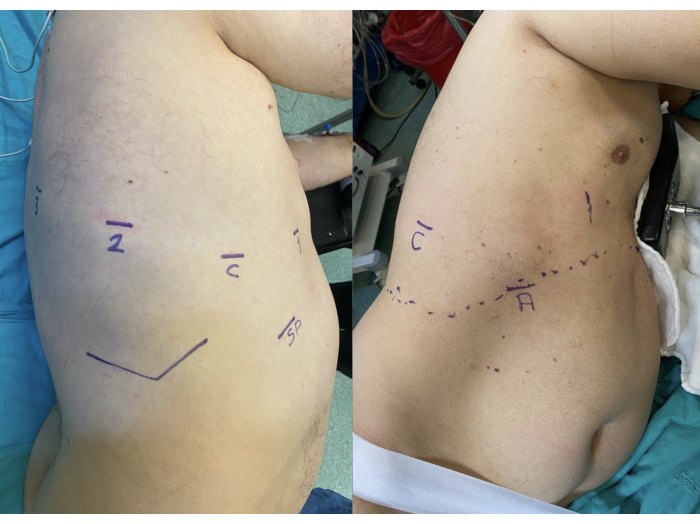
Figure 1: Localization of robotic ports and subcostal trans-diaphragmatic service port incision. Preoperatively marked port locations on the patient undergoing CPRL. Please click here to view a larger version of this figure.
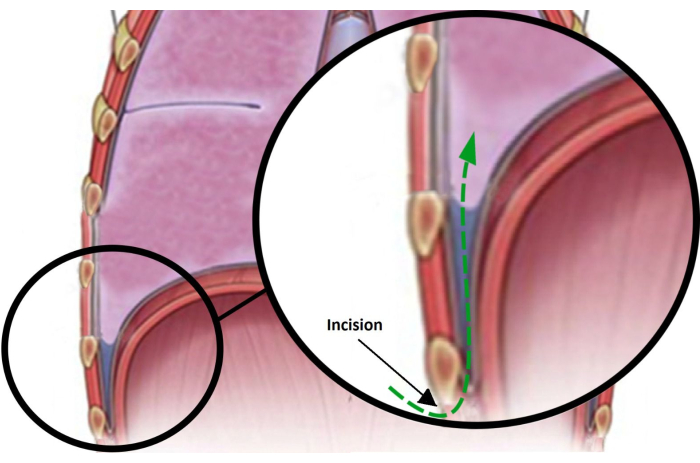
Figure 2: Illustration of the subcostal trans-diaphragmatic incision. An illustration showing the relation between the subcostal port and the diaphragm. Please click here to view a larger version of this figure.
Table 1: Comparative data on Group A and Group B. m: Mann-Whitney u test, X²: Chi-square test, RUL: right upper lobectomy, RLL: right lower lobectomy, LUL: left upper lobectomy, LLL: left lower lobectomy. Please click here to download this Table.
Table 2: Comparison of early-stage postoperative pain between the groups. VAS: Visual Analog Scale, m: Mann Whitney-U test. Please click here to download this Table.
Table 3: Evaluation of Postoperative 1-month life quality according to SF36 life quality scoring. m: Mann Whitney-U test. Please click here to download this Table.
Supplementary Figure 1: The surgical instruments used in the study. Please click here to download this File.
Discussion
The reduction of postoperative pain in patients has been a driving force for surgeons to perform endoscopic operations through small surgical incisions. Some degree of intercostal nerve damage is inevitable because the staplers, thoracoscopic camera, and other instruments are introduced through thoracoports placed in the intercostal spaces. However, utility thoracotomy, which damages the intercostal bundle, causes most of the postoperative pain in patients who receive RAL. Additionally, CO2 insufflation cannot be used because the utility incision is open to the air of the room. In contrast, the CPRL technique does not require a utility thoracotomy until the end of the procedure, which is the point at which the specimen is removed. CPRL has been sparsely reported in published literature because it is not widely used due to the need for increased robotic console surgeon experience and higher cost compared to RAL.
The most important advantages of CPRL include using an additional posterior fourth robotic arm to allow console surgeons to retract the lung by themselves and using warm CO2 insufflation to increase the size of the surgical field. The surgeon's assistance in retracting the lung is unnecessary due to the inclusion of the fourth additional robotic arm. Moreover, the use of CO2 insufflation significantly facilitates pulmonary resection. It extends the intrathoracic view by both lowering the diaphragm and compressing the parenchyma. The CO2 insufflation air pressure eases hilar dissection and the detachment of pleural adhesions; its heated insufflation reduces the visual interference caused by endoscopic cauterization. In the case of selective tube displacement, the use of CO2 insufflation protects the surgical workspace by preventing lung inflation; it also has the potential advantages of minimizing postoperative pain and reducing blood loss7. Although a higher CO2 insufflation pressure provides a better view, we did not use it with a pressure exceeding 10 mmHg due to the risk of hypercarbia8. CO2 insufflation can only be used in portal surgical approaches.
The removal of the specimen poses a challenge in CPRL, unlike in RAL, because there is no open incision to extract the resected lobectomy material. According to reported studies, at most centers that perform CPRL, the specimens are removed by enlarging the anterior port to at least 3 cm after the pulmonary resection is complete, and CO2 insufflation is no longer necessary9. Ninan et al.4 reported that extraction can be performed through a subcostal trans-diaphragmatic incision without enlarging any ports placed in the ICS. They presented a method for performing robot-assisted pulmonary lobectomy without utility thoracotomy, in combination with the trans-diaphragmatic approach, where they made a subcostal trans-diaphragmatic incision to allow access to the pleural cavity. In our institution, both removal techniques were performed in consecutive patients; we later comparatively analyzed these data to determine whether trans-diaphragmatic removal is necessary.
The removal of the specimen using a subcostal trans-diaphragmatic incision has several advantages. First, it avoids intercostal access thoracotomy and traumatizes only one intercostal neural apparatus. It is well known that intercostal extraction, even without any rib spreading, can cause chronic nerve pain and damage. In this study, postoperative life quality scores were similar, but postoperative pain was significantly less in the subcostal specimen removal group. It can be asserted that almost all group A patients stated that they had localized pain at their utility incision site, whereas the group B patients did not specify any particular port locations, including the subcostal incision. The anterior abdominal wall region has a lax tissue structure unlike that of the ICS, and in our opinion, patients do not experience localized pain in the subcostal port area due to its lax nature.
Second, this technique avoids any restricting bony structures, which may limit the extraction of large tumors. The intercostal space (ICS) is confined by two adjacent costae, which complicates the removal of tumors larger than 4 cm and large-scale specimens. Compression by the ICS may cause specimen distortion, deformation, and endobag damage10. Furthermore, lung tumors larger than the ICS pose a risk of cancer cell spillage during sample extraction from the thoracic cavity, leading to cancer cell contamination. This risk may increase with larger tumors because the tumor sample within the bag is compressed by the ICS11. In this study, endobag damage was encountered several times in group A. In some cases, lubricant products, such as catagel, were used to facilitate the smooth passage of the endobag through the ICS. In group B, no difficulties in extracting specimens of any size were experienced. The subcostal tissue's lax structure allows the service port region to loosen as the surgeon pushes the extractor out. Moreover, in the absence of CO2 insufflation, the diaphragm assists in extracting the specimen by pushing the endobag from below. This technique may be the most convenient extraction method, especially for pneumonectomy or bilobectomy specimens.
Nonetheless, the removal of the specimen using a subcostal trans-diaphragmatic incision has some disadvantages as well. First, the thoracic surgeon spends more time than usual during the docking period because of the dissection of the diaphragm. After the surgeon inserts the camera and other ports, the diaphragm is explored with the assistance of CO2 insufflation. CO2 insufflation lowers the diaphragm with its air pressure so that the surgeon can explore the diaphragm's attachment to the 10th rib. After performing endoscopic cautery dissection, the pre-peritoneal plane is divided. A 15 mm subcostal port incision is made at the anterior end of the 11th rib, which corresponds to the endoscopic diaphragm dissection. While this 15 mm port acts as a service port throughout the operation, we extend it to 3 cm after the pulmonary resection is performed. Subsequently, the subcostal service port acts as an extraction port. In this study, the docking time was significantly greater in group B, whereas there was no significant difference between the groups in terms of operation time.
Second, if the thoracic surgeon is planning to remove the specimen by subcostal trans-diaphragmatic incision, which will act as a service port during the anatomical resection, larger-sized instruments are needed because regular-sized endoscopic instruments are not long enough to perform upper lobectomies. Long roticulated endostaplers, which by the way, increase rotation capabilities, and forceps are necessary for encircling anatomical structures. Nevertheless, they are not mandatory while performing middle or lower lobectomies. In this study, upper lobectomies were not performed using this method without acquiring long endostaplers and forceps.
Postoperative pain was less with subcostal extraction, but potential benefits in terms of pain could also be offset by complications such as diaphragmatic/wound hernias if the integrity of the peritoneum is disrupted while opening the trans-diaphragmatic service port. In this study, such complications were not experienced because the peritoneum was compromised in none of the cases. Additionally, pneumoperitoneum and liver injury may be theoretical complications.
This study had several limitations. Firstly, a limited number of patients were included in both groups due to the single-institution design. Additionally, the study was retrospective in nature. Patients requiring sleeve lobectomy were not offered robotic surgery due to limited capabilities. Since the patient group was limited here, the former patients (cases treated in the early stages of the learning curve) were included in both groups. This would have helped achieve a more precise comparison of operation times.
Ultimately, it can be speculated that performing a subcostal trans-diaphragmatic incision is not a complicated process, though it significantly prolongs the docking time. Although the current experiment is based on a small study group, removing the specimen through the subcostal trans-diaphragmatic incision after CPRL is potentially useful, has several advantages, and is a practical, feasible, and safe method.
Materials
| Name | Company | Catalog Number | Comments |
|---|---|---|---|
| da Vinci Xi Endoscope with Camera, 8 mm, 0 | Intuitive Surgery | 470027 | The camera of the da Vinci robot |
Da Vinci X Robotic Trocar Robotic Trocar | Da Vinci | F13574 | Used for Da Vinci instruments |
| Endo GIA Ultra Stapler | Covidien | EGIAUSTND | Used for stapling |
| Endobag | Medtronic | US150152 | Used for specimen extraction |
| Endoscopic Aspirator | Safir Health Medical | 680395 | Used for aspiration |
| EndoWrist Maryland Bipolar Forceps | Intuitive Surgery | 470172 | Used for dissection |
| EndoWrist Prograsper | Intuitive Surgery | 470068 | Used for grasping |
| EndoWrist Tip-Up | Intuitive Surgery | 470092 | Used for grasping |
| Insufflation Tubing Set | Storz | 31210 | Used for warm CO2 insufflation |
| Medtronic 15 mm port | Medtronic | US150477 | Used for subcostal port |
| SPSS Statistics | IBM | SPSS Inc., ver 22.0, IBM, Chicago | |
| Stapler Cartridge | Covidien | EGIA45CTAWM | Used for stapling |
| Surgical Clamp | Lawton | D1755 | Used for clampage |
| Video-Assisted Thoracoscopic Surgery Grasper | Medtronic | 173030 | Used for grasping |
References
- Cerfolio, R. J., Bryant, A. S., Skylizard, L., Minnich, D. J. Initial consecutive experience of completely portal robotic pulmonary resection with 4 arms. J Thorac Cardiovasc Surg. 142 (4), 740-746 (2011).
- Gharagozloo, F., Margolis, M., Tempesta, B., Strother, E., Najam, F. Robot-assisted lobectomy for early-stage lung cancer: report of 100 consecutive cases. Ann Thorac Surg. 88 (2), 380-384 (2009).
- Veronesi, G., Novellis, P., Voulaz, E., Alloisio, M. Robot-assisted surgery for lung cancer: State of the art and perspectives. Lung Cancer. 101, 28-34 (2016).
- Ninan, M., Dylewski, M. R. Total port-access robot-assisted pulmonary lobectomy without utility thoracotomy. Eur J Cardiothorac Surg. 38 (2), 231-232 (2010).
- Oda, M., Matsumoto, I., Waseda, R., Watanabe, G. Total port-access lobectomy via a subcostal trans-diaphragmatic approach for lung cancer. Interact Cardiovasc Thorac Surg. 16 (2), 211-213 (2013).
- Brazier, J. E., et al. Validating the SF-36 health survey questionnaire: New outcome measure for primary care. BMJ. 305 (6846), 160-164 (1992).
- Novellis, P., Alloisio, M., Cariboni, U., Veronesi, G. Different techniques in robotic lung resection. J Thorac Dis. 9, 4315-4318 (2017).
- Bready, L. L. Anesthesia for laparoscopic surgery. Curr Rev Clin Anesth. 15, 133-144 (1995).
- Yang, M. Z., et al. Learning curve of robotic portal lobectomy for pulmonary neoplasms: A prospective observational study. Thoracic Cancer. 12 (9), 1431-1440 (2021).
- Yu, X. Feasibility and validity of double-arm specimen extraction method after partial lung resection in single-port thoracoscopic surgery. J Thorac Dis. 11 (9), 3769(2019).
- Nakano, T., et al. Extraction bag lavage cytology during video-assisted thoracoscopic surgery for primary lung cancer. Interact Cardiovasc Thorac Surg. 18 (6), 770-774 (2014).
Reprints and Permissions
